In 1903, a journalist named Poultney Bigelow traveled to Malone, New York, a mill town eleven miles from the Canadian border. Bigelow was in a part of the state so remote that New York's own senator had referred to it as “the Siberia of New York.”Footnote 1 Malone was the county seat of Franklin County and had a population of 10,000 residents. Still, it was not a location that New York City's journalists frequently passed through.Footnote 2 Bigelow came to Malone to explore what he called “the back door to the state of New York.” Ellis Island was the front door, where Jews, Romanians, Croats, Italians, and others entered to become citizens. But the northern reaches of New York were something else entirely, Bigelow suggested in his dispatch from the Adirondacks. They represented a land of unregulated entry and local corruption, largely off the radar of most Americans.
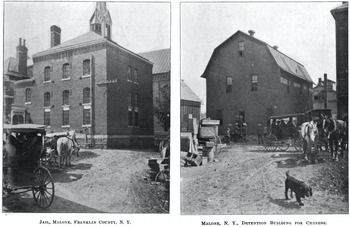
Bigelow's report focused not on the physical borderlands or the local immigration station, or even on the courthouse. Instead, it centered on the Franklin County jail, a three-story, brick structure with six steel cells that had been “properly condemned” by the State Commissioner of Prisons for its dangerous conditionsFootnote 3 (see Figure 1). The jail was overcrowded with dozens of Chinese detainees, most of whom had been apprehended after crossing the Canadian border and nearly all of whom claimed to be American citizens. The town was in the process of building a new jail or “detention house” exclusively to detain the rising numbers of Chinese migrants arriving in violation of the Chinese Exclusion Act. But after speaking with the Franklin County sheriff, Bigelow was surprised to find that town officials did not seem to resent the Chinese, or even to want to stop them from coming to Malone. The sheriff treated the Chinese “like pets” and emphasized that the Chinese were cleaner and more conscientious than American detainees, Bigelow reported. He soon discovered that the sheriff was reaping a significant income from the detention of the Chinese, earning about a dollar a week in profit from the federal government for each Chinese detainee held at the Franklin County Jail. The previous sheriff had made $20,000 on Chinese detainees from his 3 years in office.Footnote 4 “The Sheriff has therefore a direct pecuniary interest in detaining the Chinaman as long as possible,” Bigelow concluded.
The county jail and the Chinese jail (also called “Detention Building for Chinese” or “Chinese Detention House”) in Franklin County. Source: Annual Report of the Prison Association of New York for the Year 1903 (Albany: Argus Co. Printers, 1904), 42.

Even beyond the troubling financial implications of this arrangement, Bigelow suggested that there was something fundamentally odd about the situation in Northern New York. These “Chinese prisoners” claimed to be born in the United States. They were not accused of committing a crime. And yet they were sitting in American jails for months on end. Was this punishment? Was it legal? According to common law, individuals suspected of crimes were innocent until proven guilty, but in the case of the Chinese, he observed “we put them in jail first and let them prove their innocence afterwards.”Footnote 5 This was a liminal space in a literal sense: a holding zone for individuals crossing national boundaries. But it was also a liminal space in a figurative sense: a space that blurred the lines between punishment and administrative process, local authority and federal control, the prisoner and the citizen.
This article explores the United States's earliest efforts to develop an immigration detention system in Northern New York; it shows how the federal government had long relied on local communities, local elected officials, and local infrastructure to facilitate immigration law enforcement. By the early twentieth century, the Supreme Court had sharply curtailed cities’ and states’ ability to create immigration law, yet localities proved critical to carrying out immigration law.Footnote 6 A major element of this cooperation was towns and cities granting the federal government the use of local jails. Although the racialized rhetoric of the “Chinese problem” permeated border towns’ discussions of exclusion, policing, and their role in immigration law enforcement, I argue that the Chinese themselves became seen as a commodity to Northern New York communities. Immigration policing moved the Chinese from a more fluid category of “entrant” into the new category of “Chinese prisoner,” creating a form of legibility that communities could profit from. Rather than viewing Chinese prisoners as a threat to law and order, New York border towns instead them viewed as a low-risk, high-reward commodity that channeled federal money into rural communities.
The construction of “Chinese jails” in Northern New York solidified the connection between the Chinese and illegality, even as their detentions were carefully marked as “administrative” rather than criminal.Footnote 7 Mainstream racist thought at the time of the exclusion acts characterized the Chinese as docile, subservient, and “effeminate”: as a semi-slave or “coolie” race.Footnote 8 Advocates of exclusion viewed these traits as a threat to American democracy and manhood, fundamentally incompatible with an American vision of citizenship. But these characterizations were highly compatible with the traits that made a “model prisoner.” Local sheriffs noted that the Chinese created “little trouble,” were inexpensive to care for, and were considered an amenable group of inmates. Rather than fighting to rid the town of Chinese prisoners, I show how counties actively negotiated to bring in Chinese prisoners and the federal money that accompanied them, crafting arguments for why their county rather than a neighbor should be the preferred partner of the federal government. These towns did not want Chinese residents, but the Chinese prisoner filled a distinct social and economic role: his potential social threat had been neutralized by his lack of freedom, and his economic benefit outweighed his perceived danger.
This characterization was in tension with the efforts of the federal government; the Chinese might have been model prisoners to local officials but their unauthorized presence in the United States, their claims of citizenship and use of habeas corpus to assert their rights in court, and the expense of their incarcerations made them a threat to a federal agency eager to assert its enforcement power. The Chinese in Northern New York, like Chinese migrants throughout the county, successfully utilized habeas corpus claims to undercut the legal barriers posed by the Chinese Exclusion Act. Detention was a miserable affair. The food was awful. The space was poorly ventilated, with frequent outbreaks of illness including smallpox. Most men slept on the floor and children were incarcerated alongside adults. But if a Chinese migrant could survive the months of captivity, the federal government's lack of evidence to refute their claims of citizenship meant that most would eventually be discharged and could travel on to New York City, Boston, Portland, Oregon, or the other cities that they claimed as their places of birth. Detention was the physical state that accompanied the legal act of appeal—while the Chinese were detained, they were actively carving out exceptions and resisting regulation through the law.Footnote 9
Scholars have typically characterized detention of Chinese immigrants in the early twentieth century as brief, with detention beyond a couple of weeks “virtually unheard of.”Footnote 10 Much of the emphasis has been on the West Coast, and on the development of the Angel Island Immigration Station, in particular. But by the time Angel Island opened as the central site of Chinese detention in 1910, the United States had already been experimenting with other forms of detention along the Canadian border for a decade. Detentions in Northern New York were significantly longer than detentions in San Francisco, which observers ascribed to local corruption, profit incentives for sheriffs, and a lack of resources for immigration officials along the northern border. Data I compiled from jail ledger books in Northern New York's Essex County shows that the average length of detention for a Chinese migrant awaiting investigation or appeal in 1901–2 was 114 days. Scholars have estimated that the average detention at Angel Island ranged from 10 days to 1 month.Footnote 11 Despite the historiography's emphasis on Angel Island and Ellis Island, early twentieth century immigration detention infrastructure was highly decentralized. As Elliott Young writes, “[the] early history of alien detention is difficult to uncover because so much of it was handled informally by sending migrants to languish in local, state, or federal prisons or to hospitals or insane asylums.”Footnote 12 Building on Young's claim, I show that, as Northern New York became a preferred route of entry for Chinese migrants, congestion at local jails created demand for new spaces of incarceration that exclusively held immigrant prisoners. The policing of Chinese migration not only utilized the existing carceral infrastructure, it alaso catalyzed construction of new, racialized carceral spaces.
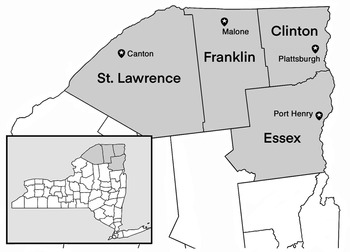
This article begins with a discussion of Chinese migrations through Northern New York, a region often identified as a hotbed of corruption and inefficiency that exemplified larger shortcomings in the federal government's Chinese exclusion enforcement strategy. The next section shows that by 1902, the number of Chinese men in the Franklin County Jail—as well as in towns such as Plattsburgh, Canton, and Port Henry, located in the other New York border counties—had grown so high that towns began creating separate, racially segregated sites exclusively to hold Chinese immigrants (see Figure 2). The New York State Prison Commission called these sites “Chinese jails” and their denizens “the Chinese prisoners.” Even as the Supreme Court insisted that deportation was a purely administrative process, the State of New York acknowledged these sites for what they were: the first wave of immigration prisons in the United States. The final section examines the trial of Sing Tuck, a case for habeas corpus brought by thirty-two Chinese men in Malone, in which the United States government won a major victory forestalling Chinese migrants’ ability to access the courts before exhausting administrative remedies. Although scholars have noted the importance of Sing Tuck as a legal precedent, I show how the case stretched the detention infrastructure of Northern New York to its limits as more than 200 Chinese migrants faced 8 months of incarceration while the case was adjudicated. As the present-day United States continues to construct a system of immigration detention that relies on both for-profit prisons and hundreds of county jails, Northern New York offers a rich example of how the early immigration service came to see local cooperation and local jails as critical to deportation and removal.
Map of Northern New York counties that held significant numbers of Chinese detainees. Map by author.

The Chinese at Malone
Chinese migrants had traversed the United States–Canada border since the passage of the 1882 Chinese Exclusion Act.Footnote 13 This 4,000-mile border posed a number of obstacles for immigration officials who sought to patrol it. It was a vast expanse, offering endless opportunities for smugglers to move across its mountain ranges, rivers, and lakes, and its two flanking oceans. Most Chinese who crossed the border traveled by trains departing from Montreal, leaving the train 6–8 miles north of the boundary line and walking across the border on foot.Footnote 14 In the years following the passage of the Chinese Exclusion Act, American policy makers expressed deep frustrations with Canada's policies toward the Chinese and their inefficiency in stemming illegal migration into the United States, arguing that Canadian laws “practically nullified…the effective work done by the [U.S.] border officers.”Footnote 15 Whereas the United States excluded categories of Chinese based on occupation and labor status, the Canadian government relied on head taxes to disincentivize immigration, imposing a $50 head tax on all Chinese laborers in 1885, which increased to $500 by 1903. These taxes proved generally ineffective in stopping migration, particularly for migrants who were aided by an outside broker.Footnote 16 From 1901 to 1903, United States immigration authorities arrested a total of 3,445 Chinese crossing from Canada into the United States. Although the Pacific Northwest received far more attention for its Chinese communities and its anti-Chinese violence, more than three quarters of the Chinese apprehended crossed the border “east of Ohio.”Footnote 17
Beginning in the first years of the twentieth century, Commissioner-General of Immigration Frank Sargent directed more attention to the networks of illegal migration that had emerged across the Canadian and Mexican borders. The “chief means of violating the law” was to cross the land boundaries and submit to arrest for having entered outside of a lawful port of entry. At their hearing before a United States immigration commissioner, the Chinese would claim that they had been born in the United States.Footnote 18 The nascent Bureau of Immigration had little recourse in proving these testimonies false; they generally attempted to discredit the witnesses by showing inconsistencies in their testimonies, and hoped that the courts would err on their side. In nearly all cases in which the courts sided with the government, the Chinese migrant would appeal the decision of the immigration officer and, if he had the resources, secure legal representation from one of the “attorneys of the class who made a specialty of such practice.”Footnote 19 In Northern New York, virtually all of the cases were taken by Robert M. Moore, described by one observer as an attorney who “knows all the ins and outs of the Chinese business better than the government officials themselves.”Footnote 20 Through its liberal appeal process, the bureau argued that the courts were in effect “doing that thing which is expressly forbidden by law and treaty, to wit, naturalizing Chinamen.”Footnote 21 Between 1895 and 1905, at least 5,714 Chinese were admitted as citizens after entering through the northern boundary.Footnote 22 Even when the United States did manage to successfully remove migrants, it was an expensive project: the greater distance between New York and China meant that deportations cost more money than removals from the West Coast and consumed a growing share of the bureau's total budget for Chinese exclusion.Footnote 23
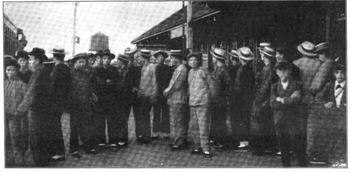
The root of the bureau's problems in Northern New York was that, in cases in which the Chinese claimed American citizenship, the district court virtually always granted habeas corpus. In September 1903, the bureau sent Special Assistant Attorney John L. Lott to Malone to observe the processing of sixty Chinese picked up by immigration officials near the border. Several of the Chinese travelers claimed that they were bound for Cuba, using Malone as a stopover location before continuing south. Several were returning laborers who held appropriate documentation. The remaining forty-five “were seeking to enter upon the pretended claim that they had been born in the United States,” Lott reported.Footnote 24 After the district court granted habeas corpus for those claiming citizenship, the detainees were allowed to meet with lawyers and interpreters; in Lott's words, “[furnishing] the opportunity to perfect the fraud” by crafting stories about family relations, birthplaces, and migration history that could be confirmed by outside witnesses.Footnote 25 The bureau argued that, because the immigration officer at Malone did not possess the singular authority to deny admission, the entire system of border law enforcement could be easily undermined. Lott concluded his report with a recommendation that the only way to stop the “gross frauds” was to close the port of Malone and to require all Chinese cases to be heard in a neighboring Vermont district where the courts had opted not to review writs of habeas corpus.Footnote 26 As exemplified in Lott's frustrated dispatch, the Bureau saw their relationship to the district courts as a critical factor dictating their success in the region—critical enough that they were willing to consider the costly project of shutting down an entire immigration station in order to drive migrants into a district where the courts may be more favorable to the Bureau of Immigration (Figure 3).
Chinese migrants at the Malone train station, 1903. Source: Collier's, September 12, 1903.

For officials concerned about violation of the Chinese Exclusion Act, Malone had been on their radar long before Lott's dispatch. In 1896, the immigration situation in Malone had become a point of national alarm when the head Chinese Inspector, Colonel Thomas J. Scharf, submitted a highly detailed report to the Secretary of the Treasury about the smuggling of Chinese through the town.Footnote 27 Scharf detailed rampant corruption among the immigration inspectors at Malone, whom he accused of allowing Chinese migrants to enter the United States without paperwork or the requisite two witnesses in exchange for payments to inspectors. According to his report, the Malone officials maintained “a suspicious intimacy” with workers from the Canadian Pacific Railway, whom he suspected of facilitating the illegal passage of the Chinese. It was a mutually beneficial arrangement, Scharf noted, as the Malone officials received cash, while the Canadian Pacific Railway secured its reputation among Chinese passengers as a reliable route into the United States.Footnote 28 Scharf's comments were resolutely denied by all involved and received little follow-up. Yet nearly 2 years later, the Malone station fired its deputy collector of customs and a number of his subordinates for taking bribes from Chinese passengers—a vindication of Scharf's claims.Footnote 29
Aside from the immigration bureaucracy, the Chinese presence in Northern New York was also of interest to another group: the New York State Commission of Prisons, an investigatory body tasked with maintaining a basic level of decency in New York's much-criticized county jails.Footnote 30 The first mention of Chinese detainees in the New York State Annual Reports of the State Commission on Prison occurred in 1898, with a note that the United States marshal for the Northern District of New York had taken three Chinese migrants crossing the border near Malone to the Monroe County Jail in Rochester.Footnote 31 By 1900, the number of Chinese entering through Malone had escalated considerably. Local media described the traffic through Malone as “inexplicable,” but for migrants whose journeys across the border were often organized by a broker, Northern New York's low rates of removal made it a reliable path.Footnote 32 When Chinese migrants arrived in Malone, they were brought to the second floor of the Franklin County Jail, where they encountered cells of about 35 square feet apiece. The jail's second floor was designed to hold twelve prisoners. At the time of the Commission's 1900 visit, they counted forty Chinese men detained in the facility. Some detainees slept in “hammock bunks,” while the majority slept on the floor. The commission discovered another forty-four Chinese men huddled in the jail attic, a space never intended to hold inmates. But perhaps the most visceral element of the jail was the smell. In a space without proper ventilation, arriving detainees were confronted with an odor that inspectors described as “overpowering” and “sickening.”Footnote 33
The overcrowded conditions at Franklin County Jail created tension between the federal government and the State Commission of Prisons. The commission noted that the county jail was obligated to take federal prisoners, but that the sheriff “[was] not compelled to receive prisoners at the jail” when it was already filled to capacity.Footnote 34 They also observed that the jail was clearly violating state laws requiring the separation and classification of prisoners: men from women, and violent offenders from non-violent offenders, but offered few suggestions for how to remedy the problem, short of stemming Chinese entry.Footnote 35 The inability of the nation to effectively enforce its immigration laws had generated a local problem that the local government had little ability to intervene in. “The conditions now prevailing,” the Prison Commission wrote, “are a discredit to Franklin County and to the State of New York and should be radically changed at once.”Footnote 36 The federal government, which had no jails of its own, saw few options other than relying on local facilities.
But while the commission bemoaned the dangerous jail conditions, a new phenomenon was concurrently rising in Malone: the birth of the town's so-called “Chinese business.” A growing number of individuals around the town were receiving federal money for “watching, arresting, keeping and examining” the Chinese.Footnote 37 Four deputy marshals who patrolled the border each received a $7,300 annual salary, while the United States commissioner received fees for each defendant, and the United States marshals received fees for each arrest.Footnote 38 Witnesses brought in from New York and Boston to testify in the Chinese citizenship cases each cost the federal government an average of $40.80 for travel and lodging. But most critically, the sheriff stood to make a significant amount of money from Chinese migration. The sheriff of Franklin County received 50 ¢ a day for the board of each prisoner. For Chinese detainees, these stays could last anywhere from 1 week to 18 months.Footnote 39 By September 1900, Sheriff Ernest Douglas held ninety-one Chinese prisoners in the Franklin County Jail, earning $45.50 per day. “The Chinese business has flourished like a green-bay tree in Malone,” observed a reporter from nearby Plattsburgh.Footnote 40 The potential profit of townspeople off of “Malone's monopoly” of the Chinese complicated the enforcement of Chinese exclusion laws.Footnote 41 If the sheriff could now make a year's salary in a single month of holding 100 Chinese prisoners, what impetus did the system have to move efficiently? In a dispatch from Malone, a journalist for New York Journal observed, “[that] the Chinese Exclusion law is being violated by shrewd men bent on making money cannot be doubted.”Footnote 42
Even amid denials and acquittals, Malone's association with corruption was hard to shake. Though the federal government could not prove a vast, region-wide conspiracy, it remained alarmed by the courts’ deferrals to habeas corpus claims and Malone's low rate of expulsion. In the autumn of 1900, United States District Attorney George B. Curtis ordered Chinese inspectors to take the forty-eight Chinese migrants detained at the Franklin County Jail to nearby Plattsburgh for examination and detention, in violation of a law mandating that migrants be tried at the commissioner nearest to their port of entry.Footnote 43 The district attorney argued that “the atmosphere in Malone is favorable to the Chinese,” and implied that the officials at Malone were actively thwarting the conviction and deportation of the Chinese. Local reports suggested that Malone officials were prepared to fight the move to Plattsburgh because it posed a substantial loss to the local economy. Malone would lose the money for railroad fare and the Chinese board at the jail, but reporters also noted that Sheriff Douglas bought rice, potatoes, and pork from Malone grocerymen—at least a few thousand dollars per year that would be ceded to Plattsburgh. When the Chinese court was in session, local hotels “reaped quite a harvest” from Chinese witnesses coming to town, as did the railroad line that served Malone.Footnote 44 Estimates put Malone's potential financial losses at $50,000 for that year alone, if the “Chinese business” moved east.Footnote 45
Upon hearing the district attorney's request, Sheriff Douglas responded that he would not “surrender the Chinese prisoners” unless the Unitted States Commissioner F.G. Paddock ordered him to do so. Paddock himself had long been a source of controversy on the Chinese legal circuit. Critics accused him of being the source of the region's low deportation rate, and of profiting off the certificates that he sold to Chinese migrants to prove that they had a right to be in the country. Paddock refused to comply with the district attorney's directive, arguing that to do so would permanently discredit the court at Malone and violate the county's jurisdiction.Footnote 46 Outranked, the district attorney soon gave up agitating for the transfer.
Several months later, a Treasury Department investigation into Malone reiterated the district attorney's request that the Chinese be transferred to another city, and within months, Plattsburgh became the main site of processing for Chinese migrants. “It is not alleged that Mr. Paddock has been guilty of any wrongdoing,” a Malone paper wrote, “but his construction of the Chinese exclusion act has been so radically different from that of treasury officials that it has been decided that no more Chinese cases shall be taken before him.”Footnote 47 Paddock published a forcible rebuke to accusations that he had mishandled the Chinese cases, instead blaming the federal government's weak evidence against the Chinese.Footnote 48 “It was practically impossible for the government to produce testimony to contradict the testimony of the defendants,” Paddock said, gesturing to the difficulty of confirming the prior locations and contacts of transient Chinese laborers. In the previous 9 months, Paddock had heard 162 Chinese cases and had deported just twenty-seven people. However, he said, in many of those cases, the district attorney failed to submit “any evidence on the part of the government at all.”Footnote 49 With Commissioner Paddock's resignation in May 1901, Franklin County was hopeful that the “Chinese business” would return to town.Footnote 50 By mid-year 1901, the Chinese had been unceremoniously reintroduced to the Franklin County Jail, likely a result of the rising number of Chinese arrests and the limited space at Plattsburgh facilities. The Brooklyn Daily Eagle reported in April 1901 that the Franklin County held an all-time high of 229 Chinese prisoners.Footnote 51
The Rise of the Chinese Jail
The decision to move Chinese detainees between Malone and Plattsburgh as controversy and allegations of corruption swirled, signaled a larger shift in the detention economy. By 1901, the rising number of Chinese migrants moving through Northern New York meant that the immigration service needed to recruit more upstate counties as collaborators in migrant incarceration. The 1901 Commission of Prisons report indicated that Chinese migrants had been committed to the county jails of St. Lawrence, Clinton, and Essex counties, alongside Franklin, and that nearly all of the jails were holding well over their maximum capacity. At the time of their annual inspections, St. Lawrence County had 131 Chinese prisoners, Clinton County had 140, Essex County had 81, and Franklin had 108.Footnote 52 The issue of overcrowding led local officials to contemplate a new approach to migrant incarceration: building separate facilities specifically to hold Chinese migrants and to court federal business.
In 1901, Plattsburgh became the first town in New York to build a facility exclusively for holding Chinese prisoners, a decision fueled by the number of inmates they received in the wake of Malone's corruption allegations. Sheriff James P. Cunningham completed the construction of the “new Chinese jail” in May and transferred eighty Chinese prisoners from the county jail to the new site. Reports described the jail as “a good deal like an Adirondack lumber camp,” with bunk beds, a long dining table, and a cook stove.Footnote 53 Over the next several years, all four New York counties holding substantial numbers of Chinese prisoners created separate sites for detaining the Chinese, distinct from the county jails. The formation of these sites served multiple ends: they kept the State Prison Commission from intervening in the dire conditions at the county jails, they ensured that counties would continue to receive profitable cohorts of detainees, and they cemented the association between the Chinese and illegality, moving the phrase “Chinese jail” firmly into the local vernacular. Once Clinton County built a Chinese jail, it put pressure on the other counties to build similar facilities in order to compete in the informal economy for Chinese prisoners.
As the detention economy expanded, all four of the Northern New York counties arrived at similar conclusions about the value of the Chinese detainees. When Plattsburgh received a train of Chinese detainees from Malone in March 1901, the town emphasized that the Chinese were, in many ways, ideal prisoners, a description that drew from racist characterizations of the Chinese, alongside a need to convey to the community that cooperation with federal immigration law enforcement was a desirable arrangement. Townspeople appeared fascinated to have ended up on a migration route: both St. Lawrence and Clinton counties reported that hundreds of locals stood outside the jail to observe and photograph the Chinese.Footnote 54 Even though the jail was undeniably overcrowded, a St. Lawrence journalist reported that the Chinese “appeared to be as much at home and as happy as if they were safely quartered in New York's Chinatown.”Footnote 55 In a particularly bold claim, one St. Lawrence newspaper suggested that the Chinese enjoyed New York jails so much that they were taking “pleasure trips” to the United States at Americans’ expense.Footnote 56 These statements had an insidious effect, as local governments insisted that they could keep the Chinese in terrible conditions with no real effect on the detainees, thus validating cost-cutting measures and reiterating the “otherness” of the Chinese detainee compared with the American prisoner. These narratives obscured the dangerous conditions that the Chinese faced in local jails, but they also obscured the intentional way the Chinese were navigating the United States legal system, a system in which a stay in jail was a route to access habeas corpus in American courts.
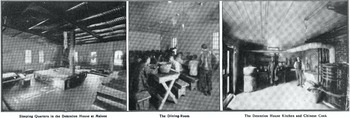
Despite the hollow insistences that jails were practically resorts, some observers reckoned quite explicitly with the ethical and political stakes of holding thousands of migrants in county and Chinese jails. In the Malone Farmer, one upstate resident expressed distress at the inefficiency of the legal system at discerning between Chinese who had been born in the United States and those making false claims to citizenship. The writer suggested that the United States government needed either to pass an even more restrictive law, disallowing even American-born Chinese from leaving the country, or to repeal the Chinese Exclusion Act altogether. The middle-ground approach, the harsh but ultimately unenforceable laws, the writer suggested, had led the United States to traffic in cruelty: “It is painful to think that in a country professedly Christian, men are being arrested and hauled to jail for no other reason than that they were not born with white skin.”Footnote 57 A reverend writing in the Western Christian Advocate made a similar point about the disparate treatment of non-white immigrants. He argued that American cities had jails filled with European immigrants “against whom actual crimes have been proven,” and yet faced no exclusion laws, while the Chinese detainees at Malone were incarcerated merely for crossing a border.Footnote 58 Others feared what the “Chinese business” said about the “character” of upstate New York towns, drawing racialized comparisons to border towns along the United States–Mexico border. “There is certainly an illegitimate conspiracy somewhere behind [the Chinese business], and the promoters of it are giving the town as unsavory a reputation abroad as any border Texas and Mexican greaser town ever had,” a Malone newspaper opined in 1900.Footnote 59 The State Commission of Prisons remained critical throughout the peak years of Chinese migration, even though Chinese jails mitigated the overcrowding at county facilities. When an inspector toured Essex County's Chinese Jail in 1901, he reported that “such herding together of any Chinaman in any of the prisons is contrary to decency. It is simply a question of money consideration for the keeper”Footnote 60 (Figure 4).
Interiors of the Chinese Detention House at Malone in 1903. Source: Collier's, September 12, 1903.

What the federal government considered to be “acceptable conditions” for holding migrant detainees was never especially clear, reflecting a nationwide dearth of standards for county jails. As competition for prisoners grew, New York counties began to make stronger claims against one another for why their county was most deserving of Chinese prisoners, often based in the quality and capacity of their jails. When news of a Clinton County facility exclusively for Chinese prisoners began to circulate in 1902, St. Lawrence County contended that the Chinese should be sent to their jail instead, boasting about the facility's sanitation, ventilation, and under-crowding.Footnote 61 The New York State Prison Commission had only limited political power to improve conditions in jails; because stays were typically thought to be brief and because jails had no rehabilitative mission, New York's more ambitious reformers and criminologists poured their energy into the state's prisons rather than its small-town jails.Footnote 62 However, as Chinese prisoners pushed Northern New York county jails exponentially over capacity, the federal government did begin to intervene in select situations, removing detainees from certain jails and distributing them among other facilities. In at least one case, detainees were removed from Malone on account of “unsanitary conditions,” causing distress among local leaders; an article from a St. Lawrence County paper observed, “[how] to get the festive Mongols back into Franklin has been a theme of politicians and newspaper men.”Footnote 63 The removal of Chinese prisoners could serve as a warning that a jail needed to improve conditions or risk losing federal boarders permanently.
Competition among counties for federal contracts also provoked rising criticism about where the influx of federal cash was going. In 1901, the federal government paid New York county jails four dollars per week for boarding each Chinese migrant. Bigelow, the reporter from Collier's wrote: “The sheriff grows fat on this sort of boarding house and is eager to get all the Chinese boarders he can find…nine-tenths of the $4 per week he gets in clear profit.”Footnote 64 However, sheriffs profiting off of the local jail was not unique to counties with federal boarders. It was a relic of the English model of jailing, and sheriffs throughout the country received set fees for tasks such as serving a summons and fulfilling a warrant of arrest, along with a nightly fee for holding inmates in jails.Footnote 65 Reformers and criminologists suggested that the fee system led to more individuals being committed to county jails for longer periods of time, and incentivized sheriffs to starve detainees to maximize the fees received for their sustenance.Footnote 66 By the early twentieth century, Americans were interrogating the role of fees in government not just for sheriffs, but for lawyers, judges, immigration bureaucrats, and other public workers.Footnote 67
Although sheriffs profiting from incarceration was not new, the boarding of federal prisoners created distinct opportunities. Unlike jailing local townspeople, jailing outsiders and non-citizens had little political cost, as these detainees were in transit and unlikely to ever become local voters.Footnote 68 And, whereas a stay for drunkenness or petit larceny might be just a few nights before release on bond, Chinese detentions regularly stretched on for 6 months and longer. Still, critics of the fee system appeared to find success in the region; Northern New York counties ended the practice long before the state of New York formally abolished fees for sheriffs in 1917.Footnote 69 Abolishment of the fee system became another point of leverage to the federal government when seeking more prisoners. In 1901, St. Lawrence County argued that, because their sheriff received a set salary, the federal government should prioritize sending prisoners there. They claimed that they were running an ethical, efficient system, in which the profits would go to the local government rather than to an individual. In early 1902, Assemblyman Halbert Stevens of Franklin County introduced a bill to make the sheriff a salaried position: “in order that there may be no shadow of doubt as to the meaning of the law it is expressly stated that the sheriff can get no extra compensation for the care of Chinese prisoners.”Footnote 70 But even as the sheriffs’ payments became more regulated, the construction of new jails opened up new pathways for locals to profit. When St. Lawrence County eventually decided to build a Chinese detention facility, United States Commissioner Fred William Dudley gave a contract for the new jail to his law partner Berne A. Pyrke, who owned a building in Port Henry that would be converted into a Chinese jail in 1904.Footnote 71
Franklin County's role as the hub of Chinese incarceration in Northern New York was cemented in 1903 when the U.S. government brokered an agreement with the Canadian Pacific Railway Company. The new policy required the railway to examine all Chinese travelers coming from steamships before delivering Chinese passengers directly to U.S. inspection stations at four designated points along the Canadian border, one of which was Malone.Footnote 72 The railroad would bear the cost of detention for each immigrant it brought to these sites, and the federal government leased a new detention building in Malone for $400 a year. Local reports described the new detention facility in mixed terms: “[the] new building makes a very comfortable place for the detained Chinamen although its windows are all barred and it is covered with iron sheathing.”Footnote 73 Officials were hopeful that consolidating Chinese migrants at a few locations would reduce the labor of negotiating with individual counties; jails gave the immigration service flexible space, but they could also require extensive relationship management between federal and local governments. Still, the new system hardly stopped unauthorized migration—Chinese migration routes and strategies adapted and evolved with each bureaucratic roadblock.
The Trial of Sing Tuck
Alongside their confidence that the arrangement with the Canadian Pacific Railway would provide a “serious check” on Chinese admissions along the northern border, there were a number of other reasons for the immigration bureaucracy to be optimistic in 1903.Footnote 74 Under Commissioner-General Sargent, the Bureau of Immigration made major strides toward centralization and professionalization, and employees expressed a new enthusiasm that the scientific and organizational tools of the agency could block the Chinese.Footnote 75 The Bureau of Immigration was reorganized under the Department of Commerce and Labor and embraced an aggressive stance on stopping immigration fraud. In Northern New York, detentions were shorter in duration; Essex County jail ledger books show that the average stay for a Chinese detainee was 65 days, a full month shorter than the average incarceration in 1902. But the immigration service did not have much more success in disproving claims of citizenship. Although they managed to deport 52 Chinese migrants from Essex County in 1903, compared with just 12 in 1902, an uptick in overall arrivals meant that the rate of removal was only about 6.5% in 1903, compared to about 15% in 1902.Footnote 76 The disjuncture between the immigration service's and the courts’ interpretation of the burden of proof remained a source of tension. If the Chinese could continue to walk across the border, file habeas claims in Northern New York, and be released with a discharge certificate, officials argued that the federal government would be incapacitated not just by a lack of evidence against the Chinese but also by the sheer volume of cases and the expense of detention.Footnote 77 The immigration service sought a way to curtail the use of habeas corpus and firmly shut the “back door” of Northern New York: when a group of 32 Chinese men crossed the Canadian border in October 1903, Sargent's immigration service saw an opportunity.
Complaints that the Chinese had practically immobilized the legal apparatus of Northern New York were central to the case of U.S. v. Sing Tuck, the landmark Supreme Court case born out of Malone.Footnote 78 As was standard, the 32 men appeared before an immigration inspector and received what The Nation derided as “a mockery of a hearing.”Footnote 79 Sing Tuck and his cohort then secured a lawyer who sued for a writ of habeas corpus, alleging that the Chinese had been deprived of their liberty without cause. The case took nearly a year to decide, during which time immigrant processing in Northern New York came to a near standstill. Immigration authorities held 200 Chinese detainees at Malone in legal limbo until the Supreme Court issued a final ruling in April 1904.Footnote 80 Following the Supreme Court's ruling against the Chinese detainees, lower federal courts began rejecting habeas corpus appeals in record numbers, signaling the influence of the case—an episode historian Lucy Salyer has described as a high point of judicial deference to the Bureau of Immigration.Footnote 81
Sing Tuck centered on the question of how the immigration service should proceed in exclusion proceedings that involved a claim of nativity. The case's legal journey began in the district court in December 1903, which ruled that immigration officials had the right to adjudicate admission and exclusion even when citizenship claims were at stake and remanded the Chinese into the custody of immigration officials at Malone. Several months later, the Court of Appeals ruled in Sing Tuck's favor, dictating that individuals claiming citizenship did not need to pursue administrative appeals and were entitled to a judicial investigation of their status. Immigration authorities were deeply exasperated. They noted that in the previous 6 months, writs of habeas corpus had been granted to 326 “alleged Chinese citizens” in Malone, as opposed to just 115 in all of San Francisco. The emphasis on the “back door” highlighted that, for all of the public scrutiny of unauthorized immigration in the Western United States, critics had only scratched the surface of the issue's scope.Footnote 82 Authorities wrote of the “barefaced perjury” in Malone's Chinese cases, and saw Sing Tuck as a last-ditch effort to maintain any semblance of control over the northern border. Thus, they appealed the case to the Supreme Court.Footnote 83
As the case wound its way through the courts, locals described the Malone detention house as “full to overflowing” and the conditions as “exceedingly bad, with a tendency to grow worse… a matter of grave concern.”Footnote 84 Meanwhile, Chinese migrants kept coming. Newspapers reported that the federal station at Malone held 168 migrants and that numbers had crept so high that authorities were once again relying on Franklin County Jail to hold 40 Chinese detainees. In November 1903, 149 Chinese migrants reached Malone and local authorities converted a vacant tannery into a makeshift detention facility.Footnote 85 As the number of migrants being warehoused in the county jail, the federal station, and the tannery rose, the stakes of Sing Tuck grew higher: the banishment or admission of hundreds of Chinese migrants stalled in Northern New York could become a powerful image of the immigration service's strength or lack thereof. The legality of the exclusion process was on the line in Sing Tuck, but the “overflowing” detention house was also cited by the federal government in its explanation of why the Supreme Court should hear the case, and again in an appeal for why the case should be moved to the top of its docket. Malone's jails were a physical embodiment of the perceived Chinese threat and the danger of the Court of Appeals’ decision.Footnote 86
Sing Tuck’s legal decision had ramifications for the future of Chinese migration, but the long legal process also had consequences for the Chinese trapped in Malone. Seventeen Chinese detainees died in the county's facilities before the conclusion of the case.Footnote 87 The commissioner of immigration described these deaths as “natural” and unavoidable, blaming the Chinese for their “peculiar habits” and for not getting sufficient exercise.Footnote 88 However, the local accounts paint a different picture. In the second week of January 1904, three Chinese men died in the detention house that was holding close to 130 people. The city of Malone sent in a doctor to investigate the conditions. Dr. R. J. Wilding conveyed that the Chinese detainees were “dangerously sick,” and several more died in the days following the doctor's visit. “The cause of the trouble seems to be crowding, overfeeding, and lack of air and exercise,” the Malone Farmer reported, noting that the Chinese had huddled for warmth in one corner of the facility.Footnote 89 In a letter to immigration authorities, the doctor observed high rates of heart disease, respiratory illness, and “congestion of the kidney and liver.” He concluded, “[while] the men are confined to such close quarters, I am afraid that there will be many more such cases.”Footnote 90 The newspaper report of detention conditions ended with a call to arms about what was occurring in Malone. “The present Chinese exclusion law and its administration is a shame upon civilized government,” the writer implored. “Some new system ought to be adopted other than the one now in operation of conflating the Celestials for months in jails or detention houses for no other cause than seeking to enter this prosperous country…there ought to be some other way of handling them other than placing them behind locked doors and barred windows.”Footnote 91 The Supreme Court's decision in Sing Tuck offered some redress to this writer's concerns, promising swifter hearings, shorter detentions, and accelerated removals.
In April 1904, Sing Tuck became the first Supreme Court decision requiring exhaustion of federal administrative remedies before an immigrant case could move to judicial proceedings.Footnote 92 Attorney Robert M. Moore, the scourge of the immigration service in Northern New York, argued the case on behalf of Sing Tuck. His argument against the immigration service was fairly straightforward: Chinese defendants who claimed to be citizens had distinct rights in the United States, foremost among them a right to habeas corpus. The process in place at Malone, where a Chinese person was asked a series of questions by an immigration inspector who then had final say over his case, was not due process of law but “a pretended trial and adjudication,” carried out by an employee who was “in no sense a judicial officer.”Footnote 93 Moore alleged that a claim of citizenship was a legal question whose jurisdiction belonged to the courts, not an administrative question whose decision could be tasked to executive officers.
The case cut to the heart of the issue in Northern New York. In instances in which an alien was excluded from the United States, the decision of the immigration officials was final and not reviewable by the courts—the crux of the plenary power doctrine. However, as Justice David Brewer noted in the dissent, this act only applied when the parties involved were aliens, and virtually all of the Chinese migrants entering through the Canadian border claimed that they were American citizens. To argue that the Chinese who claimed to be citizens were not able to access the courts suggested that all American citizens seeking to return to the United States “would be compelled to bring with him two witnesses to prove the place of birth or else be denied his right to return,” wrote Brewer. “No such rule is enforced against an American citizen of Anglo-Saxon descent, and if this be, as claimed, a government of laws and not of men, I do not think it should be enforced against American citizens of Chinese descent.”Footnote 94
The majority of the court disagreed, with seven of the nine justices ruling in favor of the immigration service. “A mere allegation of citizenship by a person of Chinese descent is not sufficient to oust the inspector of jurisdiction under the alien immigrant law and allow a resort to the courts,” the decision dictated.Footnote 95 The only way that an immigrant could receive a writ of habeas corpus after being denied entry was to appeal to the Secretary of Commerce and Labor. Justice Oliver Wendell Holmes, Jr. argued that the detention was not unlawful, given that the Chinese had done little to establish their citizenship. He further argued that such detention would not be unlawful even if the parties were citizens of the United States, as this detention was not a punishment but rather “detention during the time necessary for investigation.”Footnote 96 Although the decision effectively distanced the Chinese from due process, there were some notes of hope for attorneys like Moore: Justice Holmes refused to endorse the more restrictive rules or regulations of administrative procedures, such as allowing immigration officials to choose which witnesses would be called or to deny counsel the ability to participate in administrative hearings.Footnote 97 Although the decision stripped the Chinese of one reliable path to the courts, it did not fully remove them from procedural protections in immigration service hearings.Footnote 98
With the Sing Tuck ruling, immigration authorities in Northern New York freely declared victory over border crossers.Footnote 99 In its 1904 report, the Bureau of Immigration showed that it was more successfully deporting Chinese migrants across Northern New York counties, as the Chinese could now be excluded with only an administrative hearing; the agency noted particular success in communities where comparatively few Chinese lived, which the bureau credited to the Sing Tuck decision.Footnote 100 But despite the celebratory tone of government reports, locals noted that the end of the informal economy of Chinese smuggling would have real economic consequences for their community. At its peak, the Malone detention house employed two inspectors, eleven guards, one interpreter, two stenographers, and two janitors, for a total of eighteen employees. The immigration service expected to reduce the staff to seven following the ruling. “While closing one of the detention houses and the removing of many of the guards, some of whom had their families here, will mean a money loss to the town, very few of our citizens will regret the change,” the Ogdensburg Journal reported.Footnote 101 Although residents had frequently spoken of the economic benefits that Chinese smuggling had brought to their region, few were willing to go on record as advocating against the United States immigration service in a key legal battle. By the end of 1904, Malone officials noted that they would need to significantly reduce the operating costs of their sheriff's office, as they could no longer rely on the income brought by Chinese detainees; St. Lawrence County made a similar observation at the end of 1905, declaring Chinese prisoners “a thing of the past,” and noting that the price of boarding local detainees had increased without federal subsidies.Footnote 102
Legal and bureaucratic decisions in the years following Sing Tuck solidified that crossing the border into a community like Malone no longer represented Chinese migrants’ best chance of accessing the courts. In the 1906 case of Moy Suey v. United States, a Chinese laborer was detained in Chicago; unlike Sing Tuck and his fellow travelers, Moy Suey had been living in the United States and was not apprehended crossing a border.Footnote 103 His claim for citizenship was deemed “entirely different” than that of a person held in exclusion proceedings, and Moy Suey was able to claim due process rights. By 1908, the Bureau pushed more policing and surveillance resources into the border regions, as the legal difference between nativity claims in exclusion and deportation proceedings meant that chances of removal were higher if officials witnessed unauthorized entry.Footnote 104 With border crossings waning, the immigration service consolidated and announced plans to close the smaller immigration stations along the Canadian border, including Malone.Footnote 105 Immigration through Northern New York spiked again in 1910–11 amid rumors that the Canadian head tax for Chinese entrants would soon double, as well as a favorable Court of Appeals decision that challenged the ability of officials in Malone to arrest Chinese under general immigration law.Footnote 106 Still, the numbers of Chinese never matched the peak of the pre-Sing Tuck era.
Conclusion
Chinese migration through Northern New York fell off precipitously in the years that followed, due both to changing laws and rising Canadian head taxes. In 1923, Canada passed its own version of the Exclusion Act, all but eliminating Chinese migration across the Canadian border.Footnote 107 Several upstate observers speculated that after Sing Tuck, and in light of the new organization of immigration detention stations along the northern border, that the southern border might become the new locus of Chinese smuggling, a prediction that turned out to be largely correct. Many of the Chinese jails continued to function in some form, but they rarely held more than twenty detainees between 1906 and 1908. In 1907, St. Lawrence County and Essex County wrote open letters to their congressman, urging him to make “every honest endeavor” to bring Chinese prisoners back to their counties. Both counties stressed their loyalty in maintaining Chinese jails on behalf of the federal government at “considerable expense” during the peak years of migration, glossing over the money that the counties had reaped. The counties griped that Franklin County Jail continued to receive virtually all of the Chinese captured in Northern New York, which they declared was “discrimination against [their counties.]"Footnote 108 Others with a financial stake in migrant jailing made similar pleas: B.A. Pyrke, the lawyer who owned the jail in Port Henry, offered to reduce the rent on the Chinese jail for several months while the Canadian Legislature debated new head taxes, eager to keep the government from backing out of its real estate arrangement any sooner than necessary.Footnote 109
As immigration law evolved and quota laws made new groups vulnerable to exclusion and deportation during the 1910s and 1920s, Northern New York's detention business changed. In effect, immigration officials began asking counties to detain a growing population of white migrants. Some were women who had been trafficked for “immoral purposes.” Some were Europeans trying to evade the low quotas of their native countries. Others were Canadians who were accustomed to crossing back and forth across the border but were now deterred by literacy tests and head taxes. These changing demographics challenged the way that courts, politicians, and observers thought about immigrant detention, making the practice increasingly contentious and undesirable. Throughout the 1910s, immigration officials reported that sheriffs in New York had become reluctant to give federal authorities access to their jails, complicating the agency's enforcement efforts and leading them to imagine possibilities for new federal detention facilities.Footnote 110 The courts also re-evaluated the rights of alleged citizens, as European and Canadian immigrants confronted a legal regime created to deny Chinese migrants access to the courts.Footnote 111 With the 1922 case of Ng Fung Ho v. White, the Supreme Court recognized special protections for citizenship cases, declaring that the Fifth Amendment afforded protections to individuals who claimed citizenship in deportation proceedings.Footnote 112 The reforms in administrative law were matched with a rethinking of detention. Although few officials endorsed abandoning detention altogether, there was growing consensus that local jails were an inappropriate place for federal detainees.Footnote 113
In 1925, a Franklin County journalist described the region's detention landscape: “[here] almost daily, the Federal officers call for aliens. They are handcuffed. They are led through the main streets of this village to be photographed…[the] spotlight that plays around Ellis Island is not trained upon small county jails.”Footnote 114 The scholarship on immigration detention has largely reproduced the phenomenon observed by this writer, as we have focused nearly all of our attention on federal sites of detention rather than on the small towns and rural regions that became hubs of detention in their own right. Today, jails continue to be critical to the Immigration and Customs Enforcement (ICE)'s efforts for many of the same reasons that they were favored in the early twentieth century: jails are multipurpose spaces that offer the immigration bureaucracy a detention footprint anywhere in the United States. Renting out jail space continues to be a promising financial prospect for the approximately 669 counties with which ICE contracts for jail space, paying them nightly fees similar to the arrangement in Northern New York.Footnote 115 On the peripheries of immigration law enforcement and on the peripheries of the nation, Northern New York was a crucible where critical themes of legality, migration, and race played out in the early twentieth century. The bureaucratic negotiations on the northern border raised questions about the paradox of “administrative incarceration” that the United States would continue to wrestle with for decades to come.