Nomenclature
- CAT
-
commercial air transport
- CEO
-
chief executive officer
- ConOps
-
concept of operations
- EASA
-
European Union Aviation Safety Agency
- eMCO
-
extended minimum crew operations
- EPAS
-
European Plan for Aviation Safety
- FAA
-
Federal Aviation Administration
- GDPR
-
General Data Protection Regulation
- HCD
-
human-centred design
- ICAO
-
International Civil Aviation Organisation
- NASA
-
National Aeronautics and Space Administration
- NLR
-
Royal Netherlands Aerospace Centre
- OEM
-
original equipment manufacturer
- R&D
-
research and development
- RCO
-
reduced flight crew operations
- SPO
-
single pilot operations
1.0 Introduction
The innovative ideas of two aircraft manufacturers regarding so-called extended minimum flight crew operations (eMCO) and single pilot operations (SPO) have recently polarised the professional aviation community. The European Union Aviation Safety Agency (EASA) commissioned a research project as a base for potential subsequent rulemaking efforts [1]. The concepts of eMCO and reduced flight crew operations (RCO) aim to remove the second pilot from the cockpit of a large transport aircraft. A different concept of operations (ConOps) would compensate for the lost redundancy provided previously by the fail-safe crew design onboard by including additional advanced automation and remote operators, both located within a new technical infrastructure affecting aircraft systems as well as supportive satellite datalinks, hooks and ground facilities [Reference Schmid and Stanton2, Reference Harris3]. In this context, a potential economic benefit in saving crew costs may be the primary driver [Reference Malik and Gollnick4, Reference Graham, Hopkins, Loeber and Trivedi5], although associated additional costs for infrastructure elements and their development have been excluded from most considerations until now. It affects flight safety and consequently concerns the civil aviation regulator.
Both original equipment manufacturers (OEMs) officially approached EASA regarding the flight safety implications of eMCO and SPO. However, the public documents only state both ConOps at a high level without details. Furthermore, they inform about how a single pilot would successfully manage their physiological needs while alone on the flight deck – initially in eMCO during a specific segment in cruise when the second pilot is resting in the crew compartment, and in the long run during complete SPO (Ref. [6] D-7,Footnote 1 p. 10). Hence, eMCO constitutes an intermediate transition stage.
1.1 Pilot-union activism and media uptake
Worldwide, the prominent controversy surrounding this evolutionary [Reference Boy, Boulanger, Korb, Morel and Roussel7] crew reduction highlights how RCO implicitly affect flight safety. At the turn of the present decade, the topic has suddenly boomed across news media [Reference Landells8–Reference Winter10]. Increased public funding in science and the regulatory task force establishment on the European level have evoked this reaction from professional pilots as the stakeholders who are directly concerned with the consequences. Thus, an indignant reaction of pilot unions soared through the public space [Reference Ironside11–Reference Yau15]. Since then, pilots have ramped up to oppose industry efforts to put RCO into practice [Reference Reed16]. Their campaigns encompass ‘One means none’ by the European Cockpit Association (ECA) [17] and ‘Safety starts with 2’ by the Air Line Pilots Association (ALPA) [Reference Smith18] to inform the general public about the antecedents and consequences of flight safety in crewing.
In their opinion, flight safety could not be upheld if the traditional fail-safe crew design [19], laid out in duplex redundancy, were altered. As a consequence, human cockpit-crew flight operations can no longer fail to a safe value via a second pilot, as required for resolving pilot incapacitation. Flight safety relies on efficient crew coordination and resource management, their standard operating procedures with cross-check mechanisms, as well as a vital social component not only during long-haul flights in contemporary operations. Pilot unions have distributed their positions in informative and dedicated guidance materials to explain why and how RCO endangered flight safety [20–25]. Their own publications benefit from a lower threshold – being more widespread, readable and freely accessible – than scientific materials. The latter elaborate a single issue in depth by applying a scientific method reported in domain-specific jargon. They do not necessarily contextualise the results for industry practices or public relevance [Reference Howell and Brossard26, Reference Wang, Ji, Wang and Wang27]. Scientific literacy is expected from their audience. Nonetheless, what has caused this research-practice gap, although the topic has been subject to the applied interdisciplinary sciences for almost two decades [Reference Deutsch and Pew28, Reference Harris29]? In this context, the term reduced crew operations (RCO) refers to having one pilot at the controls onboard at some times during flight.
1.2 Scientific research on reduced crew operations
The research progress on RCO stems mainly from public institutions [Reference Schmid and Stanton2], which permitted more freedom than industrial influences would do. The term single pilot in SPO refers to having only one pilot at the controls operating the aircraft, either for specific phases or the entire flight. Research syntheses comprehensively discuss the main issues in over 75 publications [Reference Schmid and Stanton2], comprise different research branches and methodological characteristics [Reference Wang, Li, Wang and Ding30, Reference Schmid and Stanton31], and review US-based research activities [Reference Lachter, Brandt, Battiste, Matessa and Johnson32, Reference Vu, Lachter, Battiste and Strybel33]. The five main topics unfold into operational issues when designing a ConOps for ground-based remote human support; automation issues to deal with the lost redundancy of the copilot onboard; pilot incapacitation as the main hurdle toward RCO; communication and social issues prone to create boredom and fatigue, as well as certification issues that appear when attempting to regulate their operational practice [Reference Schmid and Stanton2, Reference Johnson, Lachter, Feary, Comerford, Battiste and Mogford34]. The designed solution should meet both human operator and certification requirements of flight safety, set to equivalent or higher levels [Reference Schmid and Stanton2, Reference Wilson, Harron, Lyall, Hoffa and Jones35, 36]. Its human-centred design (HCD) progresses in iterative cycles until the design solution meets user and safety requirements [37] while emphasising workload, amongst other variables, in civil transport aviation [Reference Schmid38]. Current scientific research on RCO is distant from the certification requirement by residing at rather early stages of HCD [Reference Schmid, Black, Neumann and Noy39]. Most ConOps agree on establishing support for nominal tasks such as flight planning and navigation. When a take-over of control is required, advanced automation as well as a ground-based remote operator should assist the single pilot or operate the entire aircraft [Reference Schmid and Stanton2, Reference Lachter, Brandt, Battiste, Matessa and Johnson32, Reference Vu, Lachter, Battiste and Strybel33]. The copilot would be displaced to a ground-based remote workstation [Reference Stanton, Harris and Starr40].
Nonetheless, infrastructure capabilities of datalinks would require a reliable, secure, high-bandwidth C-band satellite network in connection with an international cryptography key management [Reference Driscoll41]. Many elements of the aircraft system architectures would need to accommodate design assurance level A+ and quadruplex redundancies [Reference Driscoll42]. Hence, retrofits fail economic viability, thereby warranting the development of a new aircraft model for RCO. By means of contrast, asserting that the technology is ready without further design specification and data by referencing technology of other domains [Reference Harris3, Reference Harris29] lacks detailed argumentative evidence and empirical grounding. Until now, the higher frequency and greater capability of C-band (3,400–3,800 MHz) satellites cannot accommodate RCO, whereas higher-bandwidth Ku- and Ka-band frequencies are too susceptible to atmospheric attenuation and adverse weather conditions [Reference Kodheli43] for international RCO-related applications. The new infrastructure would be costly due to its mandatory reliance on high-reliability components. Thus, this group of technologies is available but ultimately deemed premature to be applied to RCO in serious operational practice outside research purposes. The same applies to the automated monitoring function of how well a real-time monitoring system could assess pilot health states to draw meaningful inferences regarding safe flight continuation [Reference Schmid and Stanton2]. In the end, high-stakes involvement of aviation authorities and the International Civil Aviation Organisation (ICAO) would stretch the timeline [Reference Reston, Vasquez, Brokaw, Stassen, Ghebremedhin and Chesterton44] by requiring in-depth and year-long evaluation in all details of possible failure scenarios.
Nevertheless, eMCO and SPO investigated by EASA have previously emerged as parallel concepts within research and development (R&D) at two OEMs. Their ConOps are set at a high level in advance and in isolation from previous scientific results (Ref. [45] D-2.2, chap. 1.1, p. 8). It is based on scarce information under omission of details regarding ground-based assistance, advanced cockpit design with workload alleviation means and an unknown capability to cope with pilot incapacitation. Both a scientific and industry-standard risk assessment would warrant further specification, with risk being the ‘potential of an occurrence to cause harm defined by its probability and the severity of its consequence(s)’ (Refs [46, 47], p. 12).
1.3 Involving European and global aviation regulators
The two officially anonymous OEMs are spearheading this operational path toward RCO, establishing a contrast between industry and science. Whether they might be Airbus and Dassault can be associated when reading news and combining them logically with the stage being Europe [Reference Yau15, Reference Eccles48–Reference de Bruijn50], but not stated as fact. It remains an analytical deduction.
1.3.1 EASA: rulemaking activities
Around 2022, both OEMs formally approached EASA regarding the topic, leading to a large regulatory €930,000 research project lasting about 2.5 years [1]. The primary aim was to establish a base for regulating eMCO and SPO regarding flight safety. It became the EASA-funded project RES.0028, later known as rulemaking regarding RCO as a firm part of the European Plan for Aviation Safety (EPAS 2022–2026). It aimed to deploy the latest technological developments to allow a single pilot on their own to safely operate large transport aircraft in commercial air transport (CAT) [51], initially during cruise and later during the complete flight in end-to-end SPO (Ref. [52] D-6). European feasibility considerations envisioned evaluating how and to which extent such eMCO would require changes in the regulatory framework, impact social structures on all levels and what a business model might look like [51]. During the subsequent years, the updated EPAS editions dedicated a subsection to the task RES.0028 on eMCO and SPO [53, 54], until its 2026 edition [55] merely listed it among completed tasks as a ‘single-pilot operations risk assessment framework’ without commenting any further. The research consortium mainly contained the national aerospace research institutes from the Netherlands and Germany, the Royal Netherlands Aerospace Centre (NLR) and the German Aerospace Center (DLR).
A mismatch in terminology raised professional attention: risk per se can only be evaluated when all possible failures of infrastructure and aircraft systems are known and mitigated. To do so, the technical systems need to be available to identify their issues as well as to estimate and bound their failure probabilities. The project proceeded without elements of additional advanced automation systems dedicated to eMCO or SPO in design specifications or prototypes, such as a mock-up or Wizard-of-Oz [Reference Dow, MacIntyre, Lee, Oezbek, Bolter and Gandy56] setup. Hence, the project title diverges in official language and methodological approach from applied scientific and industrial practices [Reference Spitzer, Ferrell and Ferrell57]. Apart from this locality, European rulemaking activities caught global attention from the International Civil Aviation Organization (ICAO) as early as 2022 during its triennial 41st assembly [51, 58].
1.3.2 ICAO: global imperative for flight safety
In contrast to Europe, the global consensus deferred specifying a concept of eMCO and SPO at regulatory levels [59], after having seriously considered it [58, 60]. In fact, ICAO [59] concluded that the proposal lacked maturity, a reliable solution for single-pilot incapacitation, statistical proof of increased safety, safe fatigue management within a wider context, support from scientific research conducted and published independently and an independent risk assessment. These missing results could hardly justify committing ICAO resources to further develop a ConOps. At the same time, ICAO recognised the actors of this segregated industrial trend as ‘RCO proponents’ [36, 59, 60]. The concept created many new risks to safety and security in a strained system rather than enhancing scheduling [Reference Malik and Gollnick4], a retort to the main economic argument in favour of RCO. Further on, the global assembly paraphrased the potential for regulatory capture indirectly by acknowledging that the activities of OEMs approaching EASA constitute ‘continued technological developments and innovation [that] challenge regulators in their intent to continuously foster the highest possible level of safety in air operations’ [60]. It concluded its own need to ‘explore and subsequently promote more powerful risk assessment methods and tools based on which regulators may assess the industry safety cases provided for related designs and types of operations’ as a consequence after their assembly dealt too early with eMCO in detail. Pursuing this activity would have involved the complete global assembly in developing consensus, guidance materials and a roadmap on a premature ConOps that is desired by industry. In 2022 [59] and 2025 [36], ICAO officially set the requirement for eMCO, RCO and SPO that they must demonstrate an equivalent or higher level of flight safety and security in each area that concerns the flight operations of large transport aircraft in comparison to the current benchmarks.
1.3.3 US policy on RCO
In the US, Congress, more precisely the Senate in its final voting, terminated funding for a research programme on a single-piloted cargo aircraft by rejecting and deleting the concerned section from the FAA Reauthorization Act of 2018 [61, 62]. Until now, they have actively opposed RCO, as demonstrated recently by over 150 members of Congress who demanded research-funding proposals to be rejected by the Federal Aviation Administration (FAA) and the Department of Defense [Reference Bedford63, Reference Sheehy64] to preserve the minimum crew of two. After one decade of research by the National Aeronautics and Space Administration (NASA), the US has never approximated rulemaking, which would have involved the FAA. The rest of the world is watching and not actively engaging in politics regarding RCO. Other aviation authorities have no publications on RCO publicly available yet, to the best of the author’s knowledge. What do these contrasts mean not only for Europe’s aviation and airline business, research and industry, but also for pilots and the general public? This question concerning the practical relevance regarding flight safety and its management arises among stakeholders and within the general public.
1.4 Problem statement
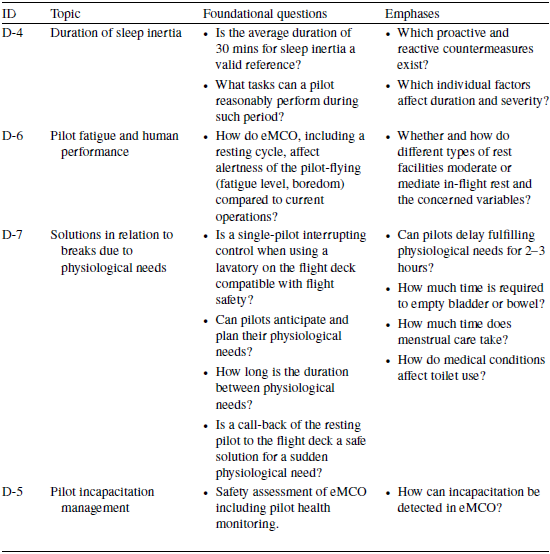
In the present article, we consider a research practice rolled out on behalf of EASA in the European rulemaking project that has reached and involved more than 4,000 professional pilots. The research consortium distributed a questionnaire (Ref. [65] D-5, pp. 40–45) as one survey online via email through airlines and pilot unions to thousands of European commercial pilots. They used the ambiguous headline ‘EASA eMCO Research is looking for input from European pilots!’ [66], which diverges from typical factual academic research outreaches to invite participants. The phrasing introduces uncertainty about the precise nature and purpose of the research. This online questionnaire (D-5, pp. 40–45) collected information on physiological needs (D-7), pilot incapacitation (medical information and interpretation about self and colleagues formulated into items), fatigue (D-5) and demographics. The response rate was 30.08% (N = 6,645; n = 1,999) after excluding 4,646 incomplete responses. After data preparation, a scientific approach would start statistical analysis on 1,999 complete datasets, defining it as the sample. The wide dissemination and high dropout rate of 69.92 % in combination with the sensitive nature of data in relation to the pilot profession calls for a scientific elaboration. In fact, subjective reports of any kind on medical incidents and details about healthy physiological needs from human participants constitute sensitive, medical health-related data. Hence, a much more cautious data-handling approach is required. Table 1 lists the research reports that encompassed the theoretical base, data collection, analysis and interpretation of the questionnaire.
The rulemaking project on eMCO and SPO

Table 1. Long description
A table with four rows and three columns. The columns are labeled ID, Topic, Foundational questions, and Emphasizes. Row 1: ID, D-4; Topic, Duration of sleep inertia; Foundational questions, 30 mins for sleep inertia a valid reference? What tasks can a pilot reasonably perform during such period? How do eMCO, including a resting cycle, affect alertness of the pilot-flying (fatigue level, boredom) compared to current operations?; Emphasizes, reactive countermeasures exist? Which individual factors affect duration and severity? Row 2: ID, D-6; Topic, Pilot fatigue and human performance; Foundational questions, How do eMCO, including a resting cycle, affect alertness of the pilot-flying (fatigue level, boredom) compared to current operations?; Emphasizes, Whether and how do different types of rest facilities moderate or mediate in-flight rest and the concerned variables? Row 3: ID, D-7; Topic, Solutions in relation to breaks due to physiological needs; Foundational questions, Is a single-pilot interrupting control when using a lavatory on the flight deck compatible with flight safety? Can pilots anticipate and plan their physiological needs? How long is the duration between physiological needs? Is a call-back of the resting pilot to the flight deck a safe solution for a sudden physiological need? Safety assessment of eMCO including pilot health monitoring.; Emphasizes, Can pilots delay fulfilling physiological needs for 2-3 hours? How much time is required to empty bladder or bowel? How much time does menstrual care take? How do medical conditions affect toilet use? Row 4: ID, D-5; Topic, Pilot incapacitation management; Foundational questions, Safety assessment of eMCO including pilot health monitoring.; Emphasizes, How can incapacitation be detected in eMCO?
What type of data did this mass survey collect about pilot incapacitation, fatigue, sleep inertia and physiological needs? Have objective and reliable methods been applied to achieve valid results? How were these data of a more sensitive legal nature processed? Can these data be interpreted based on the information provided by the methods in application? How and which ethics underlie these procedures against the notable context? How and to what extent are the results related to eMCO and SPO? To which degree are they useful to assess this stated risk or contribute to its assessment in a rulemaking process of civil aviation?
2.0 Complex integrative research synthesis
Research synthesis of public reactions to a specific research topic, here culminating in one publicly visible project, is in high demand but falls outside the standard [Reference Cooper, Hedges, Valentine, Cooper, Hedges and Valentine67] quantitative or qualitative methodological scope. Such a phenomenon appears when an apparent research-practice gap involves scientific or ethical issues, which is why it persists until a scientific uptake is accomplished and the issues are resolved. A review of this nature is treated as an atypical or complex integrative synthesis. These syntheses are scattered but not uncommon in the scientific literature when looking at the subject domains of aerospace engineering [Reference Rostami68], its human factors [Reference Reader and O’Connor69], aerospace psychology [Reference Wiegmann, Zhang, von Thaden, Sharma and Gibbons70] and air transport business and policy [Reference Raihan71]. Methods are carefully selected based on the individual research questions. The present mixed-methods approach encompasses a document-based review of the corresponding project reports, a methodological and ethical critique, recommendations for regulatory practice and governance and lessons learnt derived from them. The narrative framework is structured around the categories imposed by the research questions, which the review follows step by step. Hereby, it adheres to the principles and practices of the empirical behavioural sciences. Throughout the synthesis, the latest standard literature and central references are preferred.
3.0 Methodological critique
The mixed-methods questionnaire contained 31 items (D-5, pp. 40–45). Demographics were age categories, occupational experience in years, flight experience in hours, rank and aircraft type rating. Selective and incomplete self-reports aimed to assess, via memory performance, absolute frequencies and qualitative reminiscence of unspecified events in the past. Items asked about taking-over-control as only pilot monitoring during incapacitation, subtle and total incapacitation (with subtle incapacitation potentially being total simultaneously), feelings of illness and unfitness-to-fly, sleep inertia, controlled rest, falling asleep and physiological needs. The four questions related to physiological needs were (D-7, p. 16; D-5, p. 45):
(1) What is your approximate interval between toilet breaks during a flight? (2) Do you schedule your toilet breaks in a certain way (yes/no)? (3) What do you do in order to schedule your toilet breaks? (4) In case you have any other considerations regarding eMCO SiPO, (subtle) incapacitation, sleep inertia, fatigue or physiological needs during flight that you would like to say, please type them below.
We do not further consider item-level issues because there are overriding scientific issues with the complete questionnaire which warrant caution against analysing and interpreting the data. In such a case, a pilot study would optimise questionnaire items and scales, while a back-translation would prevent communication issues and adapt it to the multinational and multicultural context of Europe [Reference Zavala-Rojas, Saris, Gallhofer, Johnson, Pennell, Stoop and Dorer72]. Neither mitigation measure has been reported. The resulting database did not yield scientific objectivity, being a hierarchical requirement in sequence for reliability and validity, the quality criteria of empirical research, equally applicable to human factors and ergonomics in aerospace [Reference Stanton and Young73].
3.1 Data classification: a questionnaire in hindsight
Self-reports on situational variables and events in hindsight contain data biases and confounding variables without structural or statistical control. Ambiguous questioning collects spurious piecemeal information on incapacitation thoughts, fatigue and physiological needs. The collected data refer to similar but different factual events that lie unsystematically distributed in the past for each participant, unevenly frequent in varying situational contexts within and between the pilots. Thus, the questionnaire co-assesses memory decay, recall and availability bias by leading questions ambiguously evoking remembrance of past events. Furthermore, these self-reports cannot measure human behaviour reliably due to a social desirability bias [Reference de Winter, Dodou and Hancock74, Reference O’Connor, Buttrey, O’Dea and Kennedy75], because the contents relate to flight safety, professional ethos, rules and consequently potential sanctions. As such, they are intrusive and elicit concerns affecting replies [Reference Yan76]. Furthermore, situational and environmental factors of daily occupational (on-duty, off-duty) characteristics, temporary health symptoms and private life stages affect the replies at the moment of participation. An objective and reliable assessment of the psychological constructs of interest during flight would use an in-field structured questionnaire administered at a fixed point in time directly after the corresponding events or timespan. A pilot of a target population (whom to count) would engage in structured journal-keeping after flight with the same questionnaire (how to count) for a distinct time span (when to count), and include at least some well-acknowledged scales (how to compare). Simultaneously, it would collect possible confounding variables: information on environmental factors such as flight duration, time of day, eating and drinking habits before and during flight and personal countermeasures taken that might influence physiological needs. This procedure would reliably describe how often and how long lavatories were used, how long durations were in-between, and which situational variables moderate or mediate the effects.
In sum, many of the items suffered from inaccuracies and ambiguity in wording, leading to various possibilities for individual interpretation [Reference Osterlind77]. There are at least 10 double-barrelled questions containing more than one statement to reply to. In addition, the frame of reference is often missing, leaving room for different interpretations of the setting. Associated situations stretch from the last flight to short-, medium- and long-haul flights, or business-related scenes like an overnight stay at a hotel, breakfast, dinner, free time and sightseeing. In the end, this procedure mismatches epidemiological assessments, the aim it implicitly pursues regarding health-related phenomena, but does not achieve.
3.2 Sampling in the thousands: confusion with epidemiology
Applying availability sampling, a type of non-probability sampling [Reference Babbie78], denotes a way unsupported by probability theory for epidemiological purposes. It can only fulfil an exploratory research purpose by skewing the European pilot population to available and willing-to-reply participants. The result is a subpopulation. Sample sizes of thousands in psychological research are only common when standardising a thoroughly developed scale in clinical psychology or applied cognition after many cycles of research. The huge sample size cannot artificially increase the scientific quality. Scientific data collections to investigate aeromedical issues usually rely on official sources like incident and accident reports of aviation authorities [Reference DeJohn, Wolbrink and Larcher79, Reference Evans and Radcliffe80], which are less biased because they are collected after flight. Sampling in the thousands inevitably requires scientific reasoning because sampling is a careful scientific decision and process, again relying on its own methods [Reference Lohr81].
The rationale and rigorous formal method of a survey in the engineering sciences has been decontextualised and misapplied through its transposition to human participants in the context of behavioural sciences. This practice resulted in a sociological opinion poll assessing individual situational attitudes instead of epidemiological or content-related data. In engineering, a survey refers to a systematic literature review answering a research question by applying a search strategy on digital libraries, clear inclusion criteria, procedures, quality assessment checklists, data extraction strategies and a synthesis [Reference Kitchenham and Charters82]. Even in psychology, a literature review refers to ‘conducting surveys of previously published material’ (Ref. [Reference Cooper, Hedges, Valentine, Cooper, Hedges and Valentine67]: p. 4), which cannot be applied to human participants on factual topics in confusion and hindsight as if they were a static database. In contrast, the method survey in behavioural sciences methodologically consists of sampling, questionnaire design and a resulting scale to measure psychological variables to objectively, reliably and validly obtain empirical results from human participants.
Extrapolating from mass data to prevalence, frequencies and characteristics of behavioural variables is the purpose of an entire scientific discipline spanning medicine and psychology called epidemiology – the science that studies disease occurrence and health states in human populations [Reference Lash, VanderWeele, Haneuse and Rothman83]. It collects data by using a complete range of its own methods to yield objective data on diseases, applies them carefully and is not as intuitive as it may seem. This professional exercise in methodologically sophisticated counting within groups without bias on whom to count, how to count them, when to count them and how to compare them comes with several complexities that all have to be addressed specifically. However, a form of intuition appears to have guided constructing the survey to thousands of pilots. Only a representative or carefully selective sampling of preferably active pilots who are healthy, free of symptoms, syndromes or diagnosed diseasesFootnote 2 could tell about averages in the pilot population.
3.3 Preparing data for analysis: cherry picking
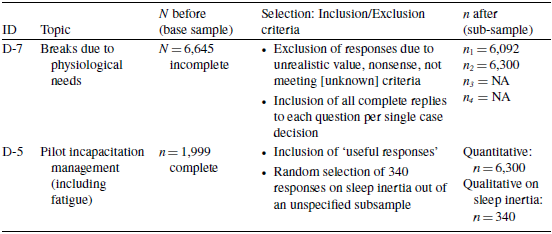
How were these data prepared for analysis? The preparation neither applied best scientific practices [Reference Osborne86] nor followed a rationale that can be deemed objective. Subjectively tainted exclusion criteria (Table 2) instead of scientific inclusion criteria misled the process into arbitrarily selecting data, question by question, resulting in several different samples. A bottom-up approach is apparent in looking first at the data, then selecting results according to a sense of utility to reply to research questions without testable hypotheses. That is not exploratory research but rather reversing the rationale of science, also known as cherry-picking [Reference Murphy and Aguinis87], ‘searching through data involving alternative measures or samples to find the results that offer the strongest possible support for a particular […] research question’. The data preparation created further sampling issues described as follows: ‘Sampling is not mere substitution of a partial coverage for a total coverage. Sampling is the science and art of controlling and measuring the reliability of useful statistical information through the theory of probability’ (Ref. [Reference Deming88], p. 2).
Inclusion/exclusion criteria in data preparation for analysis

Table 2. Long description
A table with two rows and five columns detailing inclusion and exclusion criteria for data preparation in analysis. The columns are labeled ID, Topic, N before (base sample), Selection: Inclusion/Exclusion criteria, and n after (sub-sample). Row 1: ID D 7, Topic Breaks due to physiological needs, N before 6645 incomplete, Selection Exclusion of responses due to unrealistic value, nonsense, not meeting [unknown] criteria Inclusion of all complete replies to each question per single case decision Inclusion of ‘useful responses’, n after n 1 6092, n 2 6300, n 3 N A, n 4 N A. Row 2: ID D 5, Topic Pilot incapacitation management (including fatigue), N before n 1999 complete, Selection Random selection of 340 responses on sleep inertia out of an unspecified subsample, n after Quantitative n 6300 Qualitative on sleep inertia n 340.
Furthermore, four commercial pilots who had experience in types of operations that use bladder relief solutions during flight (glider and military flight operations, general aviation) were interviewed about their physiological needs during flight (D-7, pp. 18–19) and the solutions proposed by the two OEMs. The procedure, rationale and way of questioning are unreported. Unscientific reporting impedes further transparent evaluation. Interpretation is not possible, although it had been undertaken.
3.4 Deviation from established scientific and industry methods
As introduced in Section 1.2, the concepts of eMCO and SPO, lacking scientific and industry-standard risk assessment methods, [46] cannot assess risk. Examples to iteratively progress toward it in HCD were task analyses, formal process charting methods, interface analysis methods, incident and accident analyses, design methods and prototyping [Reference Diaper and Stanton89–Reference Salmon, Stanton, Walker, Hulme, Goodie, Thompson and Read92]. The SAE International guidelines [46, 47] operate in tandem with the international standards of hardware and software design established by the Radio Technical Commission for Aeronautics (RTCA) and the European Organisation for Civil Aviation Equipment (EUROCAE) [93, 94]. They are essential when flight safety is to be addressed in comparison to its current status. A workshop attendee affiliated with Dassault recommended the use of ‘methodology that is recognised by the industry such as bow-ties’ and ‘during a deeper level of analysis, some academic recognised and demonstrated tools’(Ref. [95] D-COM-3.1, p. 13). The technical project lead from NLR passed over the factual arguments in the requests to include such methods by saying that bow-ties were mathematically identical with the scenarios of the risk assessment. This is an apples-and-oranges comparison because bow-ties [96] and the flight simulations are two different methods using their own rationales, data and settings. In contradiction, the technical project lead informed the audience straight ahead about ‘the project doesn’t have the needed level of detail to do the specific risk assessment’, after the Dassault attendee had asked ‘how the project aims to provide a valuable result concerning the fact the project is doing generic analyses for concepts that are design dependent?’ This scene describes how a gap between the theoretical research foundation and empirical practice has widened, lacking the previous results on RCO from science and established methods, simultaneously having isolated RCO and the topics of medical issues from the same. The following questions arise accordingly: How were physiological needs and incapacitation identified as primary issues to end up in a questionnaire? What purpose could these data serve?
Additional workshops were project meetings with stakeholders that did not apply a scientific design specification method of human factors. Thus, the workshops guided the project into arbitrary subjective directions by leading communication. They unsystematically listed human conditions (Ref. [97] D-2.1: June 2023 N = 6) and system-failure conditions (Ref. [98] D-3: N = 2) that affect flight safety in eMCO. Selected from them, fatigue, sleep inertia, pilot incapacitation and physiological needs became subject to general literature reviews (Ref. [99] D-4, D-5, D-6, D-7). In particular, sleep inertia lacks epidemiological studies beyond aviation [Reference Sauvet, Beauchamps and Cabon100] and forbids recommending 35 minutes as a reference to EASA based on its dedicated review and the survey (D-4). In addition, the consortium proceeded with flight simulations to evaluate the effects of crewing and nominal operations, failure conditions (both in Ref. [101] D-2.6), sleep inertia and boredom (Ref. [102] D-6.2) on variables of interest for RCO under current CAT operations. By including their flight simulators without prototypes of new systems, the experimental design can only compare within its design and technological setting. In conclusion, the term denoting project achievements (Ref. [103] D-8, Ref. [104] D-9) mismatches risk because it did not provide a general safety margin as ‘reachable level of safety’ (D-2.6, p. 3) by method. The empirical flight simulations (D-2.6, D-6.2) are beyond the present scope and would justify their own analysis. A preliminary selective hazard identification would match the venture in the context of a system safety process more closely [Reference Ericson105]. The health-related data from the questionnaire on pilot states cannot contribute to any research progress on RCO because of the two issues. Even if the flight simulator settings were RCO, the health data lack scientific integrity, as shown.
4.0 Ethical critique
These methodological deficiencies necessitate referring to the contractual and procedural obligations of the institutional code of conduct. Research including human participants of an interdisciplinary project should follow common criteria laid out in codes of the concerned liable institutions and funding bodies. The transdisciplinary All European Academies (ALLEA) European Code of Conduct for Research Integrity [106] applies across all European Union (EU)-funded initiatives and consequently to the EASA rulemaking project because it was funded under the EU’s Horizon Europe framework [1]. Such non-binding guidelines on best research practices guide scientific research, not to be confused with authoritative laws. Whereas interpretations may vary, violations clearly deviate from recommended best practices. They differentiate scientific from ethical misconduct, which can simultaneously collide with legislation. The contractual mechanism turns the conceptually non-binding ALLEA Code into legally binding criteria for research quality. It is way beyond the present scope to consider further legal frameworks or federal codes that govern settings and acts within it. Each area would represent its own analysis. Several accompanying materials like standard references and handbooks discuss research code deviations in detail [Reference Panicker and Stanley107, Reference Antes, DuBois, Panicker and Stanley108]. In high-stakes aerospace engineering, ethics additionally contain safety aspects reaching across institutions, industry and authority [Reference Harris, Pritchard, James, Englehardt and Rabins109].
4.1 Informed consent, transparency and deceptive potential
The informed consent form excluded the ConOps, explaining how pilot incapacitation, fatigue, sleep inertia and physiological needs were solved. Instead, it introduced eMCO and SPO by their terms, spelling out the acronyms and announcing it had been one survey amongst others that researchers of an EASA-funded project used to ‘assess issues and the feasibility of the implementation of both eMCO and SiPO in the EU regulatory framework’ (D-5, p. 40). Then, it listed the four health-related issues as topics. In addition, interviews, workshops and experiments gathered ‘more detailed information and ideas from the pilot communities’ with the survey on opinions. The questionnaire consisted of ‘mainly multiple-choice questions’ and some open questions, totalling 31 items. Voluntariness, anonymity of participation, confidential handling of data according to the General Data Protection Regulation (GDPR) and the option to drop out at any time had been listed. After concluding the study, all data would be disposed of, whereas data handling of dropouts (69.92%) had been omitted. A yes/no item collected agreement to and understanding of this informed consent. At the bottom, an impersonal email address utilising the project acronym without reference to the performing and liable unit was provided, in exchange for their own email address when taking up communications. The researchers operating as external contractors of EASA remained unspecified regarding affiliations. The funder is distinct from the performing organisation. Without referencing liable entities, enforcing GDPR is legally impossible because the domain ‘eMCO-SiPO’ is neither a registered organisation nor an individual. The data handling claim is legally void. However, an unregistered email domain with an incomprehensible corresponding data storage would violate core provisions of GDPR.
When reading it, pilots have two choices. Taking part gives the opportunity to obtain knowledge about why the ‘feasibility of the implementation’ of RCO calls for disclosing sensitive health-related information and events at the regulatory level. This term simultaneously implies a too-mature state of eMCO in contradiction to its current scientific progress. Implementation, ‘the act of creating a reality from a specification’ [46], consists of four elements during the development of aircraft systems [47]: information flow between the system process, which includes development assurance and safety assessment processes, to and from the item-level processes; item design/build; item integration and verification; aircraft/system integration and verification. Feasibility refers to whether something is possible, here an unspecified implementation. Neither was part of the project. These activities would be performed much later in the design process when mature prototypes are built to address their compliance with certification requirements. Thus, the text implicitly contains certification aspirations, as does the invitation [66]. It consequently misleads pilots into taking part by describing a regulatory-level developmental stage that does not exist yet. Not taking part denies pilots access to information about what is going on concerning their occupational future. Reading it confronts pilots with an ethical dilemma regarding their decision to take part.
This practice neither equals a cover story from social psychology to obtain judgements about something that too many facts would bias, nor parsimoniously introduces a topic or keeps details confidential. Social psychology makes use of deceptive cover stories to increase the interest of participants by providing a credible rationale for collecting data and demanding judgements in case of ethical justification [Reference Wilson, Westgate, Aronson, Gilbert, Fiske, Finkel, Finkel and Mendes110]. Here, missing an ethical exit by debriefing created a coercive environment when approaching pilots [Reference Mumford, Higgs, Gujar, Panicker and Stanley111]. High dropouts (69.92%) indicate that the narrative lacked something essential to capture attention, such as plausibility. Until today, the invitation and the procedure have persisted as an ethical dilemma for the participants because a professional debriefing [Reference Gluck, Swartzman and Miller112] is missing according to the reports. Pilots would have to search on their own to get to know the circumstances. SPO and eMCO were put on hold for an indefinite period and listed among finished projects [55], without explaining their scientific, ethical and industrial impact. Demanding information on events that have jeopardised flight safety in hindsight simultaneously creates an unofficial operational safety record outside the airline and an incident investigation board. These data encompass medical records and fitness to fly.
Hiding and giving unspecific spurious piecemeal information [Reference Baumrind113] on the ConOps makes the research contents and their purpose non-transparent by omission. The ethically critical and hidden suggestions of how physiological needs are imagined to be solved in eMCO take away the current freedom of the pilot over a natural and daily function of the human body: using a lavatory based on their situational and, crucially, healthy physiological needs. Put simply, to ‘pee’ or not to ‘pee’, when, and for how long is not to be negotiated because it would create another lasting coercive environment. The imagination can create suppressing thoughts and affect pilot cognition by creating worries about it. Although these are unlikely to develop into any psychological disorder, they represent the core underlying the specific-phobic component of urophobia, paruresis and parcopresis [Reference Hammelstein and Soifer114–Reference Kuoch, Meyer, Austin and Knowles116], colloquially the fear to ‘pee’ and ‘poo’. An indignation as an emotional reaction to perceived injustice [Reference Kals, Strubel, Maes, Zieris and Bruckbauer117], alongside incomprehension, could be a reason why 69.92% did not complete the survey. The suggestions on solving physiological needs behind it would scrutinise their own responsibility and consequently human autonomy over bladder, bowel and gastric functions. The four items at the bottom of the survey might have implicitly communicated it by anticipation. Furthermore, D-7 withholds the names of the two OEMs, detaching them from their suggestions about how physiological needs were solved.
The coercive environment unfolds in a top-down direction. Snowball-style sampling unsystematically distributed the survey to pilots via airlines and pilot unions. It fulfils the psychological criteria of a usual spam email on the internet: awkward prose, abnormal message structure and an implausible premise in a questionable attempt to obtain sensitive information by asserting trustworthiness [Reference Desolda, Ferro, Marrella, Catarci and Costabile118, Reference Williams, Sarno, Lewis, Shoss, Neider and Bohil119]. This spam-like email without reference to individuals collects data from the masses. However, the airlines and unions, as distributors acting on behalf of EASA, made it appear a respectable practice, although it was not.
This placed thousands of pilots in the plight of worrying about not only a future unspecified concept that might endanger flight safety, but also their personal occupational and private future and their daily physiological needs. Pilots would never have considered the needs in such detail had they not received the email. Regarding a visible cognitive preoccupation of the human participants, the unethical mass outreach lines up differently next to prominent experiments in the history of psychology that potentially affected the well-being of participants after a perceived authority had demanded ethically doubtful choices [Reference Milgram120]. Such a procedure exposed the pilots to an ethical dilemma. The driving force is the emotional and professional attachment of the pilots to their occupation and livelihood. The potential psychological harm [Reference Nebeker, Bartlett Ellis, Arigo, Panicker and Stanley121] in excessive preoccupation with worries about RCO is already evident in the worldwide emotional reaction of pilots visible in media [Reference Broderick122], public discussion and an increase in lobbying activities [Reference Reed16]. A questionnaire like this is prone to worsen negative psychological reactions that some pilots have shown already. Whether and how these worries become clinically relevant remains a separate issue, but this can result from participating in studies with ethical shortcomings [Reference Smith and Richardson123]. Since a professional debriefing has not been accomplished yet, we provide it here by rectifying disseminated misinformation [Reference Greene, de Saint Laurent, Murphy, Prike, Hegarty and Ecker124], including speculations, and by resolving the concomitant methodological and ethical shortcomings. This professional independent debriefing safeguards the aviation community by preventing further distress or psychological harm mainly at pilot and airline levels.
4.2 Data handling
Disposing of these research data necessitates a trade-off between privacy, transparency and scientific integrity in an ethical debate. The GDPR protects participants’ individual rights. An absolute assurance of safety by unlinking vulnerable populations from their data favours disposal. In contrast, integrity, transparency and replicability of science by archiving data for funding agencies and esteeming human participation and efforts contradict disposal. Ethical research requires careful planning by balancing the reasons for anonymising data against destroying them. In this case, the informed consent form mandates data disposal, after illogically introducing the contradictory argument of anonymous participation – a measure designed to retain data. The course of data handling appears illogical. Throwing away a database whose data are anonymised represents a procedural paradox. Pilots are not considered a vulnerable population, such as undocumented immigrants, victims of violence or incarcerated individuals [Reference Findley, Ghosn and Lowe125], but the protocol handles their anonymised data as if they were. We cannot tell the true reasons underlying this unusual contradictory practice. A methodologically compromised questionnaire reduced thousands of pilots to a passive database rather than employing established methods.
4.3 Anonymity diffusing responsibility and social loafing
Diffusion of responsibility [Reference Darley, Baumeister and Vohs126] systemically characterises many operations, stakeholder involvements and the project structure from top to bottom. It starts with two aircraft manufacturers, officially unnamed to date, requesting a decision from EASA associated with flight risk: the question of flight safety for eMCO and SPO is unspecified in more detail. External contractors conducted the research on their behalf but under an acronym name. Staff, company compliance, codes of conduct are the institutions’ responsibility in case of violations, the formal context of liability in a psychological setting. This differs from most of the internally and externally sponsored research projects. They operate under the project title and acronyms, including their own corporate design. In this way, EASA are distant from, rather than outside of, responsibility in case of possible consequences from violations. In turn, the commissioned researchers remained anonymous during study conduct, although their institutions retained full operational responsibilities. Only the meetings and subsequent project reports disclosed the individual identities. Hence, individual project-related activity becomes insulated from business reputation and compliance with rules of the occupational setting. Impersonal communications without individual and institutional names shape the survey invitation and the informed consent. The email address of the informed consent documentation mirrored the diffusion of responsibility by omitting both.
Regarding research quality, peer-reviewed publishing and presenting at international conferences provide valuable feedback on methodologies from independent scientific peers. The project bypassed both mechanisms, which constitute an upward social comparison to evaluate research quality. It makes scientific knowledge on a subject and its corresponding methods more accessible to revision and cohesion inside science. Thereby, it integrates work into science by assimilation to the current state. Under free choice, upward comparison dominates with a possible lateral choice reducing differences between upward and downward, whereas the latter is avoided [Reference Gerber, Wheeler and Suls127]. Free choice by social comparisons demonstrating research independence is not applicable to the eMCO-SPO project. Outsourcing the safety framework to national institutions can theoretically preserve regulatory independence. Instead of ensuring this unbiased buffer, the political mandate of EASA was transferred to the consortium by reversing the original purpose of external contracting. Leadership was divided into project and technical lead, whereas it diverged in operational conduct. Research activities were delegated across the consortium. The business procedures failed to establish a critical legal safeguard against undue industrial influence and rather precluded the opening of a scientific forum on RCO. The project’s social setting and structure prevented social comparison by creating an isolated in-group. A subjective setting emerged on individual and systemic level visible in its exclusion from scientific debate. The resulting social setting led to a diminished sense of agency at an individual level [Reference Beyer, Sidarus, Bonicalzi and Haggard128], provoking social loafing in the group. This tendency to work with less effort in a group than alone [Reference Fishbach, Gilbert, Fiske, Finkel and Mendes129, Reference Karau and Williams130] increases with in-group size [Reference Ingham, Levinger, Graves and Peckham131, Reference Karau and Williams132]. In such a group setting, members can perform below their individual capacities.
Stakeholder meetings and workshops gathered scientifically unstructured feedback from attendees selected by invitation. Internationally renowned scientists of previous and current RCO research and its methods did not attend. It is unreported who and how attendees were selected. Expert work on RCO is avoided in citation and method selection of the project. An isolated in-group setting likewise emerged in contact with stakeholders. The most important scientific criticism was passed over, as Section 3.4 demonstrates regarding the improvements an attendee from Dassault suggested. At this meeting, an anonymised polling tool explicitly identified that a ‘clear justification’ for proceeding was required (D-COM-3.1, p. 14), but was not commented upon further. Here, responsibility diffused, and the project continued despite criticism from external stakeholders and the results of the anonymised polling. These restricted lateral social comparisons proved ineffective at integrating critical feedback into the research progression. In sum, the concept of collective narcissism and its science denial [Reference Golec de Zavala133] can plausibly explain this group behaviour and dynamics.
4.4 Social-psychological dynamics in project in-group defensiveness
The group behaviour aligns with behaviours characterising a strong collective narcissism [Reference Golec de Zavala, Dyduch-Hazar and Lantos134], under which social comparisons, even at group meetings, could not function as feedback. If they had functioned, all suggestions would have been integrated to some extent into the research course of the project. Instead, meetings operating as ends in themselves serve to reinforce a group’s internal position, prioritising visibility over substantive scientific and professional content. In social identity theory, low self-esteem can prompt out-group derogation to establish positive in-group distinctiveness and enhance self-esteem [Reference Golec de Zavala135]. The phenomenon can occur among healthy and competent individuals when over-identifying with a political mandate. It is all about the process, not about the individuals.
Collective narcissism manifests as a belief in the in-group’s superiority and a biased perception of inter-group reality [Reference Golec de Zavala, Dyduch-Hazar and Lantos134]. It exhibits a tendency to protect the in-group’s positive image, including a selective construction of the past concerning the group. The eMCO-SPO consortium sought to compress almost two decades of scientific research on RCO into two official years and seven months, from 09/2022 to 04/2025 [1], with rulemaking aspiration. A ‘risky shift’ toward investigating another subject such as selective health-related issues in an isolated survey unrelated to RCO emerges more likely in such a responsibility-diffused setting. The group dynamics can be understood as a group polarisation leading to populism within science [Reference Golec de Zavala and Keenan136].
4.5 The issue of rulemaking
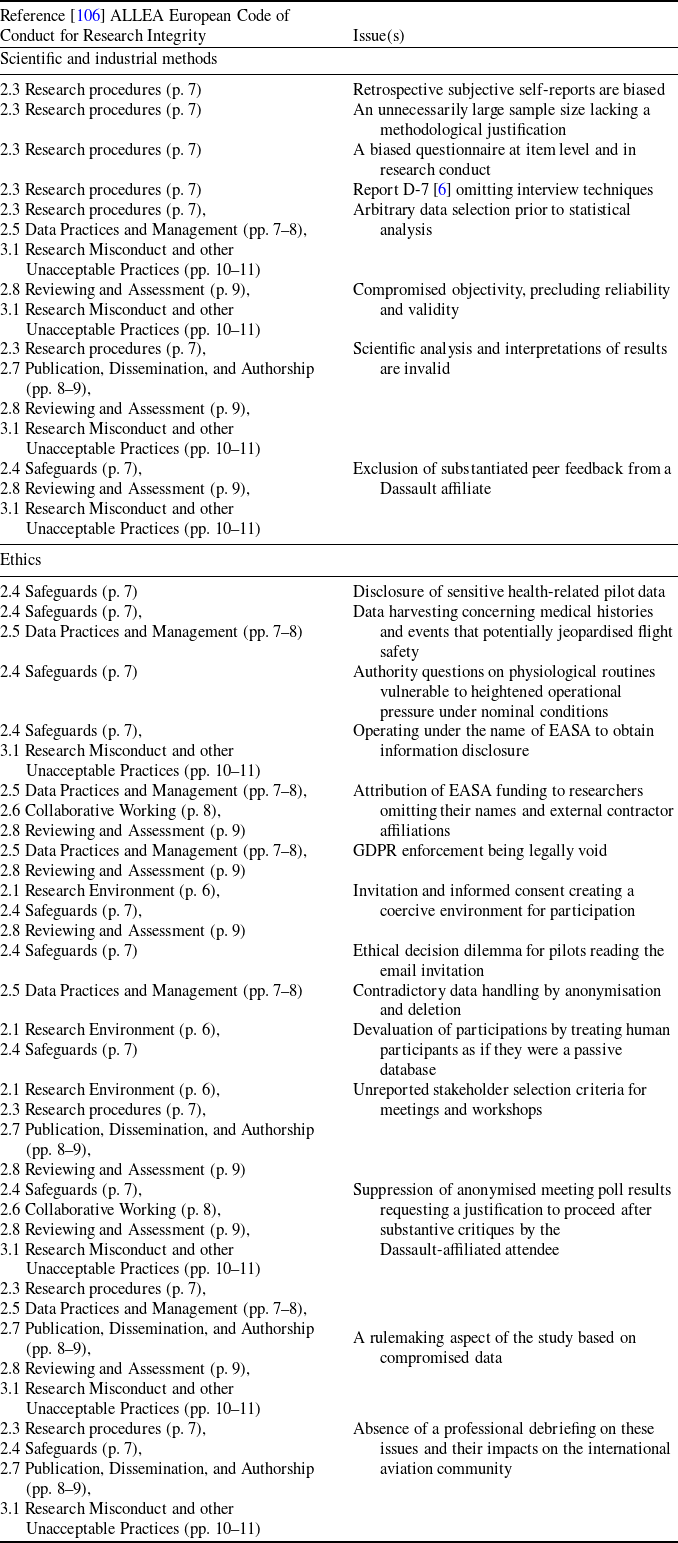
The ethical issue lies in the rulemaking purpose for which sensitive data were collected from an excessively large sample, while the topic remained isolated from RCO because its construction aimed to provide an epidemiological reply. This questionnaire study is considered unethical for several reasons that show non-compliance with the ALLEA Code [106], as shown in Table 3. The survey cannot support the common project goal of informing about flight safety of RCO or related research issues; consequently, it constitutes an inefficient and invalid part of authoritative rulemaking. It would build regulatory policies on compromised data. This major issue has not yet been communicated to the participating pilots and the international aviation community.
Summary of methodological and ethical critiques

Table 3. Long description
Table 3: A table summarizing methodological and ethical critiques. The table includes columns for specific critiques, reasons for non-compliance with the ALLEA Code, and the impact on the survey’s validity and efficiency. Each row details a different critique, such as the excessive sample size, the isolation of the topic from RCO, and the lack of communication to participants.
5.0 Regulatory and governance implications
Despite all methodological and ethical issues, the EASA rulemaking project has ultimately reached correct overall conclusions on RCO and its flight safety. The equivalent level to current flight operations could not be demonstrated (D-9). This conclusion could not methodologically result from their data, and instead has been the state of science before they commissioned the project. That is the reason why the topic has persisted in scientific research, slowly progressing there with unknown spillover to industry until that date. The project results did not meaningfully contribute to progressing RCO.
Flight simulations evaluated how modified crewing under failure conditions (both in D-2.6), sleep inertia and boredom (D-6.2) affected variables of interest. The eMCO was simulated under current CAT and flight deck conditions. Both reports document a ‘qualitative assessment of potential hazards’. D-2.6 describes two flight scenarios including eMCO segments, but misses a baseline to quantify risk or describe ‘risk’ qualitatively – a task for which a comparative experimental condition is required (D-COM-3.1, p. 12–13). The same applies to D-6.2, which contains aborted and non-aborted eMCO phases without a baseline. The experimental design cannot quantify or qualify preliminary risks because it remains decoupled from current flight safety benchmarks. It can compare measures within its design but not beyond it. It estimates potential preliminary hazards on the current flight deck under different operating rules for which the aircraft was neither designed nor certified. In formal logic, evaluating safety without a comparative reference constitutes a circular argument, given that flight safety is inherently defined relative to an established baseline. There is no absolute definition of safety or risk. Thus, probabilistic risk frameworks are traditionally utilised to govern aircraft systems design via established design assurances [93, 94]. Resource limitations do not provide a compelling justification for this omission, as prior RCO projects operating with more constraints successfully integrated baseline conditions into flight simulation studies [Reference Lachter, Brandt, Battiste, Matessa and Johnson32, Reference Bailey, Kramer, Kennedy, Stephens and Etherington137, Reference Schmid and Stanton138]. Methodological objections regarding research design are unconvincing; a sample size of N = 9 does not justify omitting a baseline reference, despite being cited as a primary constraint (Ref. [139] D-COM.3-4, p. 16). Bayesian statistical methods are available to analyse small sample sizes even more reliably than under the general linear model of the frequentist paradigm [Reference van de Schoot and Miočević140–Reference Matthews143]. Frequentist statistics linearise behavioural variables instead of preserving the characteristics of their distribution. A linearisation might not match the measured human behaviour in higher-fidelity field environments, outside experimental psychological lab phenomena, simpler in design and variable operationalisation. As a sociotechnical system increases in complexity, the behavioural artefacts it generates during use scale in complexity as well. Time series analyses could have described eMCO segments and flight events at the individual level, especially given the experimental procedure involving time-dependent events [Reference Brodersen, Gallusser, Koehler, Remy and Scott144, Reference Prado, Ferreira and West145]. The methods of the ergonomics systems thinking paradigm could have qualitatively described and compared interactions at the group level [Reference Salmon, Stanton, Walker, Hulme, Goodie, Thompson and Read92]. At this point, a retrospective review demonstrated a research rationale deviating from the current state of science.
Ultimately, this project became unable to govern any rulemaking policies on RCO. The next time EASA commissions rulemaking to external contractors, it must ensure that the very basics of quality criteria are kept, which are contractually mandated via compliance with the ALLEA Code [106]. Furthermore, the applicable design guidelines and aerospace standards should be adhered to [93, 94]. All efforts still do not guarantee that a novel, innovative design will ever reach certification requirements when a premature technological readiness level underlies some system architectures, such as the satellite bandwidth, datalink encryption and pilot health monitoring in RCO. Flight safety to seriously consider RCO through an industrial lens has been out of reach before. These technical issues are known in the scientific literature [Reference Driscoll, Roy, Ponchak and Downey146].
Although the organisational and industrial environment as well as contracting included these basics for ensuring quality, a divergence occurred when translating these mandates into the final project results. We have provided an explanation from social and organisational psychology, but our scope and space are limited. However, this publicly visible rulemaking project can serve as a research base for investigating why a research project that includes a political mandate struggles under these preconditions. The reports document conversations at stakeholder meetings, discussions, workshops, decision-making and research progress and the operational trajectory relative to contractual timelines. Organisational psychology research might find the documentation useful, which enables to select aspects for investigation. The incident could be reframed as an organisational opportunity to improve research structure. In this context, the scientific quality can be conceptualised as an emergent intra- and inter-organisational behavioural property. In this way, defensive and accusative reactions can be countered with sophistication and grounding in the main methodological and ethical critiques.
The European rulemaking course of RCO cannot be suspect to decrease pilot and public trust in aviation and their authorities [Reference Younger-Khan147] until this impact has been measured. In the end, the pilots have identified a research-practice gap, while proactively lobbying in opposition to RCO worldwide. This public controversy in the media mirrored issues with research integrity and the gap [Reference Ampollini and Bucchi148]. Culture, communication issues and a normalisation of deviance can result in regulatory capture like Boeing MAX [Reference Herkert, Borenstein and Miller149] and major accidents of the space shuttle Challenger [Reference Boisjoly, Curtis and Mellican150] and Columbia [Reference Dombrowski151]. In the RCO case, a risk of regulatory capture is diminished because rulemaking was halted, albeit driven by factors other than research quality, which ultimately yielded the appropriate operational outcome.
6.0 Lessons learned: actionable recommendations
The present case study can teach lessons applicable to many safety-relevant domains that incorporate complex sociotechnical systems. Although additional research in organisational psychology could elaborate upon these dynamics in more detail, we provide a starting point by focusing on the main improvement potentials based on the critiques. From these results, we recommend some actions.
6.1 The value of experts and CEOs: include their expertise by action
An alternative US approach has been having the (at-this-time incoming) head of the aviation authority reply to four precise questions. Their contents encompassed the potential benefits of RCO, impact on passengers’ safety, the maturity of available software in equal decision making of two well-trained pilots and flight safety considered against the current certification requirements [Reference Bedford63]. Although the hearing took place in a politicised environment [Reference Sheehy64], it aligns closely with the current state of science. Passing such questions on, as occurred in Europe, favours not being responsible for a decision by delaying an official statement to externals and making them responsible for the contents. On the other hand, EASA employees would have a conflict of interest. In short, simply interrogating a competent CEO or expert in a Q&A session can be more evidence-based, cost-efficient and effective than conducting a €930,000, ∼2.5-year research project. Depending on context, expenditures can vary, but involving experts is always a possible countermeasure. Such peer feedback, as the Dassault-affiliated attendee gave, can lead a research project to the correct direction and ensure the very basics.
6.2 The prevention of displacing industrial R&D to the regulator
One process detrimental to quality has shaped safety-related rulemaking, namely the diffusion of responsibility. It originated with the two OEMs approaching EASA to request a safety solution for eMCO and SPO. The prematurity of some of their essentially required technologies is known regarding this application [Reference Schmid and Stanton2, Reference Driscoll41]. This dynamic relates to outsourcing of regulatory risks before they have been rigorously evaluated within industrial R&D. However, this is one purpose of R&D and business in general: managing and mitigating risks in systems engineering. Thus, it questions which competences and capabilities are available at the two OEMs to translate the current state of science in an aerospace engineering application to practical industrial business. This raises the fundamental question: What were the institutional and operational conditions under which EASA decided to allocate public funds to a rulemaking task, which all other aviation authorities are free from in the context of the current state of research progress? The displacement of industrial R&D responsibilities carries immediate economic consequences and should be actively prevented. Notably, the practice yielded an indirect economic benefit for the two OEMs externalising R&D to the regulator, as it did for the contracted external institutions receiving public funds to conduct the work, although the purpose appears conceptually unviable against the state of RCO at that date.
6.3 Upgrading capabilities: institutional quality assurance mandates and oversight
The trajectory of the project establishment shows an urgent necessity to systematically improve whether and how R&D capabilities in research design, methods, statistical analyses and applicable guidelines and standards are employed at the OEMs, regulator and external contractors. Nevertheless, these lessons reach far deeper into each organisational structure, impacting many administrative and operative units across many hierarchical levels. The institutional mandate of quality assurance has at some point fallen short of ensuring that the very basics are utilised. An attempt to do so was visible at the Dassault-affiliated attendee and some pilots as externals at meetings (D-COM-3.1, pp. 12–13). While an R&D employee of an aircraft manufacturer is expected to apply these methods, including project management competencies, the pilots positively stand out by recognising and commenting on them. It is not a firm part of their usual professional education and specialisation. Research design in empirical sciences, trading off Bayesian against frequentist statistics, aerospace design guidelines and standards, human factors and ergonomics methods, epidemiology and questionnaire design need to be integrated into existing business structures, and when unavailable in some instances, updated.
6.4 Appreciation of stakeholder reactions: differentiate science from industrial interest
At first, EASA aggregated eMCO and SPO into a continental rulemaking task, prior to integrating detailed system parameters and foundational R&D methods. Then, ICAO successfully mitigated and corrected the industrial push toward RCO through its definitive flight safety imperative in 2025 [36]. At the same time, EASA put the topic indefinitely on hold. A proposed framework proved to be a superseded draft. It could not withstand the pressure of methodological, operational, and technical realities.
Whether pilot activism has ultimately reserved the pilots a place at the table during European rulemaking is unclear, but it likely contributed to the discourse, given that the international experts on RCO were absent. Although science must not be conflated with industrial lobbying, the pilots decisively provided the latest critiques on RCO and the rulemaking framework in the meetings. RCO experts could not do so even if they had been aware of the course of the topic from industry into rulemaking. Finally, pilot union activism has been an effective contributor to project-internal safety deliberations, backed by an industry affiliate and the current state of science. Almost one decade of resourceful pilot union activities is not a defensive reaction, but an in-field safety feedback to research. As such, it constitutes an essential part of public discourse on safety-related topics that takes up research-practice gaps from an operator perspective. However, the fact that an industry affiliate would have provided the most appropriate methods to establish safety metrics in a rulemaking project turns its purpose away from the political mandate. This scenario paradoxically implies that public rulemaking is contextually dependent on external industry competence to execute its tasks reliably. For this reason, research integrity deserves an explicit position in a regulatory debate, in particular when a project and its group dynamics are documented in detail. This procedural transparency allows other academic disciplines, such as organisational psychology, to take it up as a research base to identify, explain, and optimise operational aspects that caused the issues.
Looking out and forward to future flight safety, the foundational glitch in European rulemaking is likely to persist with global reach. Changing the name of R&D relating to eMCO or SPO to imaginable terms such as ‘Autonomous Cruise Support’ or ‘Cockpit Crew Assist’ will never prevent it from being permanently associated with RCO, as smart system architects can creatively rename automation or autonomy. Rebranding a failed project through terminology or marketing cannot wipe out aviation history.
Data availability statement
No datasets were generated or analysed during the study.
Funding statement
This research did not receive any specific grant from funding agencies in the public, commercial, or not-for-profit sectors.