Introduction
Somatic symptoms disorder and other disorders with prominent somatic symptoms constitute a new category in Diagnostic and Statistical of Mental Disorders, Fifth Edition (DSM-5) called “somatic symptom and related disorders.” 1 This category includes the diagnoses of somatic symptom disorder, illness anxiety disorder, conversion disorder, psychological factors affecting other medical conditions, factitious disorder, other specified somatic symptom and related disorder, and unspecified somatic symptom and related disorder. 1 According to the DSM-5, these disorders share as a common feature the prominence of somatic symptoms associated with significant distress and impairment.
We will critically examine this new classification, with special reference to its clinical flaws, and suggest an alternative trans-diagnostic approach based on the model of illness behavior.
The DSM-5 Classification of Somatic Symptom and Related Disorders
The main diagnosis, somatic symptom disorder, requires one or more distressing somatic symptoms (criterion A) and excessive thoughts, feelings, and behaviors related to these symptoms or associated health concerns (criterion B). It is assumed (criterion A) that these patients bear excessive health concerns about such symptoms. The DSM-5 justified this choice with the need to de-emphasize the role of medically unexplained symptoms.
Criterion B was also justified by the need of including positive psychological features, which are a requisite for diagnosing a mental disorder. However, psychological symptoms related to medically unexplained symptoms do not necessarily involve excessive anxiety and thoughts about the seriousness of symptoms. The persistence of distressing somatic symptoms may induce demoralization and irritability rather than anxiety about the meaning of the symptoms. In addition, the evaluation of the disproportion of thoughts on the seriousness of symptoms, as well as of time and energy spent on them (criterion B), entail a wide variability in the clinician’s judgment.Reference Sirri and Fava 2
The diagnosis of illness anxiety disorder is concerned with the preoccupation with having or acquiring a serious illness. It is characterized by absence or low intensity of somatic symptoms and health-seeking or avoidant behavior that is judged to be maladaptive. 1 The definition does not include hypervigilance to bodily symptoms but mentions that “the individual is easily alarmed about personal health status.” Thus, no insight specifiers have been introduced.Reference van den Heuvel, Veale and Stein 3 A potential problem is the lack of clarity inherent in the overlapping criteria of somatic symptom disorder and illness anxiety disorder. A broader problem is that illness anxiety disorder does not depend on the presence of somatic symptoms and clearly shares clinical characteristics with disorders in other groupings.Reference van den Heuvel, Veale and Stein 3 In addition, according to F diagnostic criterion, illness-related preoccupation is not better explained by another mental disorder (eg, somatic symptom disorder, panic disorder, generalized anxiety disorder). A potential problem, in this case, is related to the differential diagnosis. Avoidance and repetitive safety-seeking behaviors are, for instance, common in patients with obsessive-compulsive disorderReference Calkins, Berman and Wilhelm 4 and body dysmorphic disorder.Reference Veale, Gournay and Dryden 5 Similarly, the most common prodromal symptoms of panic are illness phobia, health anxiety, or fear of disease.Reference Cosci and Fava 6 Thus, the application of criterion F might reduce significantly the possibility of formulating this diagnosis and might let clinician forget that illness anxiety is a dimensional rather than a categorical construct.
In conversion disorder, the essential feature is neurological symptoms that are incompatible with neurological pathophysiology. 1 The DSM Fourth Edition (DSM-IV) criterion B concerning the presence of psychological factors preceding the initiation or the exacerbation of symptoms was removed in DSM-5. This choice seems to be inconsistent with the proposal to de-emphasize the role of medically unexplained symptoms and to include positive psychological features in the diagnoses. According to the suggested criteria, each patient with medically unexplained symptoms or deficits of voluntary motor or sensory function may satisfy the diagnosis of conversion disorder. However, about 30% of outpatients who attend neurological facilities have symptoms not explained by medical findings.Reference Stone, Carson and Duncan 7 In addition, the proposed diagnosis of conversion disorder might depend on the accuracy of the medical examinations. Certain symptoms may be prodromes of an illness that manifests itself at a later stage.Reference Cosci, Fava and Sonino 8
The essential feature of psychological factors affecting other medical conditions is the presence of clinically significant psychological or behavioral factors that adversely affect a medical condition by increasing the risk for suffering, death, or disability. 1 These factors are poorly specified and add little to the diagnostic process.
The diagnosis of factitious disorder embodies persistent problems related to illness perception and identity. 1 However, its discussion is beyond the scope of this review.
Other specified somatic symptom and related disorders and unspecified somatic symptom and related disorders include conditions for which some, but not all, of the criteria for somatic symptom disorder or illness anxiety disorder are met. 1
The DSM-5 removed the diagnosis of hypochondriasis. The majority of patients with DSM-IV hypochondriasis would be subsumed under the diagnosis of somatic symptom disorder and the remaining part under the diagnosis of illness anxiety disorder. 1 Those with somatic symptom disorder are characterized by the presence of distressing somatic symptoms, while, in patients with illness anxiety disorder, somatic symptoms are absent or, if present, are mild. The presence of somatic symptoms is the differential feature between the 2 diagnoses. Thus, the distinctive features of hypochondriasis, which include preoccupation, anxiety, bodily hypervigilance, and avoidance behaviors, were lost.Reference Sirri and Fava 9 In addition, both in somatic symptom disorder and illness anxiety disorder, disease conviction is virtually neglected and the diagnostic criteria are more representative of health anxiety than disease phobia.
Clinical Inadequacy of the DSM-5 Classification
In addition to the problems that the single diagnostic rubrics and the deletion of the diagnosis of hypochondriasis entail, there are major clinical flaws in the classification system concerned with somatic symptom and related disorders.
There are 2 major ambiguities that may result in misleading clinical indications. One is concerned with the use of the term “somatic symptom.” Even though the DSM-5 attempts to avoid the centrality of medically unexplained symptoms that occurred in the DSM-IV and acknowledges the potential occurrence of these clinical phenomena in established medical disorders, its use of the term “somatic symptoms” reflects an ill-defined concept of somatization, as the tendency to experience and communicate psychological distress in the form of physical symptoms and to seek medical help for them.Reference Lipowski 10 Anything that could not be explained by organic factors, with special reference to laboratory investigations, is thus likely to fall within the domains of somatization. For instance, conversion disorder is also named functional neurological symptom disorder. Its B diagnostic criterion states “clinical findings provide evidence of incompatibility between the symptom and recognized neurological or medical conditions,” 1 and its C criterion states “the symptom or deficit is not better explained by another medical or mental disorder.” 1 Thus, the DSM-5 maintains the misleading organic/functional dichotomy, which is based on the assumption that if organic factors cannot be identified, there should be psychiatric reasons that may be able to fully explain the somatic symptomatology. In addition, it neglects the fact that the presence of a nonfunctional medical disorder does not exclude, but indeed increases, the likelihood of psychological distress and abnormal illness behavior.Reference Härter, Baumeister and Reuter 11 This old logic that, if it is not organic, it should be psychiatric is reinforced by the fact that these diagnostic categories are defined as psychiatric, and exclusion criteria for other psychiatric disorders are endorsed. George EngelReference Engel 12 was very critical on the disease concept of functional medical disorder or medically unexplained symptoms. For instance, he regarded the view that irritable bowel syndrome is caused by psychological influences as an oversimplification.Reference Engel 12 It clashes with the nature of psychosomatic medicine itself, which is a comprehensive, interdisciplinary framework for the assessment of psychosocial factors affecting individual vulnerability, course, and outcome of any type of disease; the holistic consideration of patient care in clinical practice; and the specialist interventions to integrate psychological therapies in the prevention, treatment, and rehabilitation of medical disease.Reference Fava and Sonino 13 For instance, a very recent investigation outlined how patients with functional dyspepsiaReference Ly, Ceccarini and Weltens 14 present with stable increased cerebral cannabinoid-1 receptor availability: the “organicity” then just depends on the type of investigative methods.
A second major source of confusion in the DSM-5 classification system is given by the fact that it makes reference to abnormal illness behavior in all diagnostic rubrics, but it never provides a conceptual definition for it. PilowskyReference Pilowsky 15 characterized abnormal illness behavior as the persistence of a maladaptive mode of experiencing, perceiving, evaluating, and responding to one’s own health status, despite the fact that a doctor has provided a lucid and accurate appraisal of the situation and management to be followed (if any), with opportunity for discussion, negotiation, and clarification, based on adequate assessment of all relevant biological, psychological, social, and cultural factors. Its formulation takes into account the role of the patient–doctor interaction in determining illness behavior. If a patient was not provided adequate information about his/her medical condition and management to be followed, and develops overwhelming anxiety about his/her health, is a psychiatric diagnosis warranted? Is a problem caused by the patient or by an inadequate patient–doctor interaction?
We will thus attempt to approach the clinical issue from a different angle—the unifying viewpoint of illness behavior.
Illness Behavior
The DSM-5 does not define the concept of “illness behavior.” Mechanic and VolkartReference Mechanic and Volkart 16 defined illness behavior as “the ways in which given symptoms may be differentially perceived, evaluated, and acted (or not acted) upon by different kinds of persons.” Subsequently, MechanicReference Mechanic 17 provided the following specification: “Illness behavior refers to the varying ways individuals respond to bodily indications, how they monitor internal states, define and interpret symptoms, make attributions, take remedial actions and utilize various sources of informal and formal care.” In addition, illness behavior “shapes the recognition of illness, the selection of patients into care, the degree of compatibility between patient and physician attributions, patterns of health practice and adherence with medical advice, and the course of illness and the treatment process”Reference Mechanic 17 (p. 1208).
The simple fact that, in the presence of certain physical symptoms, some persons immediately seek medical help while others wait a long time before consulting a physician determines the likelihood of early recognition of a life-threatening disease and its prompt treatment and prognosis.Reference Sirri, Fava and Sonino 18 In addition, once the symptoms of a medical disease are experienced by a person, or he/she has been told by a doctor that he/she is ill even if symptoms are absent, this disease-related information gives rise to psychological responses that are likely to influence the course, therapeutic response, and outcome of a given illness episode. Illness behavior is one of the factors that demarcates major prognostic and therapeutic differences among patients who otherwise seem to be deceptively similar since they share the same diagnosis.Reference Sirri, Fava and Sonino 18 Thus, illness behavior is a core characterization in psychosomatic medicine and provides an explanatory model for clinical phenomena that do not find room in customary taxonomy.
Abnormal illness behavior may also be associated with psychiatric disorders. When agoraphobia is accompanied by panic attacks, hypochondriacal fears and beliefs tend to occur and remit upon treatment of the agoraphobia.Reference Fava, Kellner and Zielezny 19 When agoraphobia is not accompanied by panic attacks, illness denial prevails and explains why these patients are unlikely to seek treatment.Reference Fava, Porcelli and Rafanelli 20
According to recent reviews of the literature,Reference Sirri, Fava and Sonino 18 , Reference Sonino, Sirri and Fava 21 illness behavior may vary greatly according to illness-related, patient-related, and doctor-related variables and their complex interactions. Important lines of research have been concerned with illness perception, frequent attendance at medical facilities, healthcare-seeking behavior, treatment-seeking behavior, delay in seeking treatment, and treatment adherence.Reference Sirri, Fava and Sonino 18 , Reference Sonino, Sirri and Fava 21 A number of dimensional instruments have been developed for identifying the features of illness behavior, but they are of limited use to the practicing clinician.Reference Sirri, Fava and Sonino 18 The question is when a certain manifestation of illness behavior is worthy of clinical attention.
The Diagnostic Criteria for Psychosomatic Research
The Diagnostic Criteria for Psychosomatic Research (DCPR) were introduced in 1995 by an international group of investigators.Reference Fava, Freyberger and Bech 22 The rationale was to expand the traditional domains of the disease model by translating psychosocial variables that derived from psychosomatic research into operational tools.
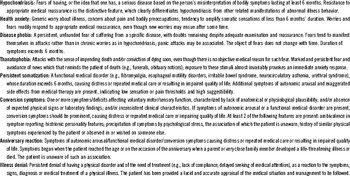
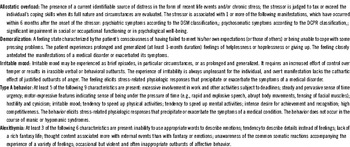
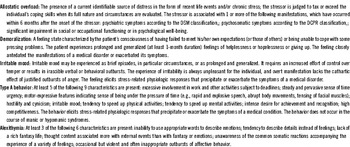
The DCPR are a set of 12 psychosomatic syndromes whose prognostic role in the development, course, and outcome of medical diseases, regardless of “organic” or “functional” nature, was documented by a large body of literature. Seven of them refer to the concept of abnormal illness behavior: persistent somatization, conversion symptoms, anniversary reaction, disease phobia, thanatophobia, health anxiety, and illness denial (Table 1). Four syndromes (ie, alexithymia, type A behavior, demoralization, and irritable mood) can be considered affective disturbances that are qualitatively different from the conventional manifestations of mood and anxiety disorders that have been observed in clinical psychiatry (Table 2).
Main characteristics of the DCPR concerning abnormal illness behavior

Clinical manifestations of psychological factors affecting medical conditions
The DCPR syndrome of functional somatic symptom secondary to a psychiatric disorder acknowledges the hierarchical relationship between functional somatic symptoms and psychiatric disorders. Symptoms of autonomic arousal frequently may be a consequence of psychiatric disorders, and high co-occurrence rates between DSM-IV somatoform disorders and both anxiety and mood disorders have been documented.Reference Hanel, Henningsen and Herzog 23 , Reference Leiknes, Finset and Moum 24
The DCPR have been widely used in medicalReference Porcelli and Guidi 25 , Reference Porcelli and Sonino 26 and psychiatricReference Tomba, Rafanelli and Grandi 27 settings. They have undergone extensive validation, as summarized in a monograph that also includes a semistructured clinical interview for their assessment.Reference Porcelli and Sonino 26 Excellent inter-rater reliability, construct validity, and predictive validity for psychosocial impairment and treatment outcome were found.Reference Porcelli and Sonino 26 , Reference Galeazzi, Ferrari and Mackinnon 28
A recent review of the literature highlighted how the DCPR system can be clinically useful for subtyping medical patients, identifying subthreshold or undetected syndromes, evaluating the burden of medical syndromes, predicting treatment outcomes, and identifying risk factors.Reference Porcelli and Guidi 25 Data from a cross-sectional assessment using DSM-IV and DCPR in 1,560 patients recruited from different medical settingsReference Fava, Guidi and Porcelli 29 yielded 3 clusters: (1) comprised one-third of patients and was characterized by a 5–8% rate of DSM-IV disorders and no DCPR syndromes; (2) comprised one-quarter of patients and was characterized by only the presence of DCPR irritability, and (3) comprised about 40% of patients and was characterized by the predominance of DCPR somatization and DSM mood/anxiety disorders.
An Alternative Clinimetric Classification System
There is clinical need to identify the manifestations of abnormal illness behavior that impair quality of life and interfere with appropriate management in both medical and psychiatric diseases. The term “clinimetrics,” introduced by Feinstein,Reference Feinstein 30 indicates a domain concerned with the measurement of clinical issues that do not find room in customary clinical taxonomy. Such issues include psychosocial variables that deserve clinical attention.Reference Fava, Tomba and Sonino 31 , Reference Fava, Sonino and Wise 32 In the framework of clinimetrics, Feinstein defined the concept of comorbidity as referring to any “additional co-existing ailments” separated from the primary disease, even in the case this secondary phenomenon does not qualify as a disease per se.Reference Feinstein 33 FeinsteinReference Feinstein 34 also remarked that, when making a diagnosis, thoughtful clinicians seldom leap from a clinical manifestation to a diagnostic end-point instead of using clinical reasoning, which goes through a series of “transfer stations” where potential connections between presenting symptoms and pathophysiological processes are drawn. Unfortunately, in psychiatric assessment, comorbidity is limited to psychiatric diagnoses, and disturbances are generally translated into diagnostic end-points. Clinicians tend to rely exclusively on “hard data,” diagnoses, excluding “soft information,” additional co-existing ailments, although this soft information can be reliably assessed and is fundamental for an adequate psychosomatic assessment.
Table 1 outlines the clinical spectrum of illness behavior that can be based on specific criteria. It includes hypochondriasis from the DSM-IV classification and other DCPR syndromes. Retaining hypochondriasis is important, since psychotherapeutic strategies had been developed and validated in randomized controlled trials.Reference Avia, Ruiz and Olivares 35 – Reference Barsky and Ahern 40 They were targeted to address resistance to reassurance, which is the key characteristic of hypochondriasis, and often entails significant clinical benefits. Anxiety is indeed present in hypochondriasis, but it is not the main feature.Reference Nakao, Shinozaki and Ahern 41 Not surprisingly, when the broad and ill-defined concept of illness anxiety (which does not differentiate between hypochondriasis and health anxiety, as depicted in Table 1) became the source of a randomized controlled trial using similar cognitive behavior strategies, there were no significant benefits in quality of life and health costs.Reference Tyrer, Salkovskis and Tyrer 42
“Health anxiety” includes a variety of worries and attitudes concerning illness and pain which are less specific than hypochondriasis and disease phobia that respond to medical reassurance. It frequently occurs among consultation-liaison psychiatry patients (21–34.6%).Reference Galeazzi, Ferrari and Mackinnon 28 , Reference Porcelli, Bellomo and Quartesan 43
Disease phobia and thanatophobia may be components of a hypocondriacal syndrome, yet they may also occur independently. Disease phobia differs from hypochondriasis for 2 characteristics of fear: specificity and longitudinal stability (fears concern a specific disease and are unlikely to be moved on another disease or organ system) and phobic quality (fears tend to manifest themselves in attacks rather than in constant worries as in hypochondriasis).Reference Fava and Grandi 44 Noyes et al Reference Noyes, Carney and Langbehn 45 also pointed out that disease phobia often results in the avoidance of internal and external illness-related stimuli, while hypochondriasis usually leads to reassurance-seeking or checking behaviors. Disease phobia is less frequent than health anxiety in medical samples, yet it was found in 19% of consultation-liaison psychiatry patients.Reference Galeazzi, Ferrari and Mackinnon 28 , Reference Porcelli, Bellomo and Quartesan 43
Persistent somatization may occur regardless of the functional/organic dichotomy. For instance, it occurred in 21% of patients with endocrine disordersReference Sonino, Navarrini and Ruini 46 and in 33.7% of patients with functional gastrointestinal disorders.Reference Porcelli, De Carne and Fava 47
The DCPR defined conversion symptoms were formulated according to Engel’sReference Engel 48 criteria (see Table 1) in terms of abnormal illness behavior.Reference Sirri and Fava 2 , Reference Porcelli, Fava and Rafanelli 49 In a sample of 1498 patients from various medical settings, DCPR conversion symptoms were found in 4.5% of subjects, while DSM-IV conversion disorder in only 0.4%.Reference Porcelli, Fava and Rafanelli 49
The anniversary reaction is a special form of somatization or conversion and is not rare, having a prevalence of 3.6% in medical patients from different medical settings.Reference Porcelli, Fava and Rafanelli 49
Illness-denying abnormal illness behavior has been ignored by nosography, even though it may entail important clinical manifestations, such as counterphobic behavior or delayed help-seeking behavior for physical symptoms.Reference Goldbeck 50 DCPR illness denial includes patients who do not acknowledge the presence or the severity of their illness. In healthy subjects, illness denial may concern one’s own vulnerability to life-threatening diseases, resulting in unsafe health habits or non-attendance to preventive screenings.Reference Sirri and Fava 2 The DSM-5 included “poor adherence” as an example of psychological factors affecting medical condition (PFAMC) interfering with the treatment of a general medical condition. However, poor adherence is not necessarily a consequence of illness denial, since it also may be the result of memory impairment or lack of understanding of the physician’s prescriptions.Reference Sirri and Fava 2 DCPR illness denial was found in 9.5% of women with breast cancerReference Grassi, Sabato and Rossi 51 and 4.6% of cardiac recipients.Reference Grandi, Sirri and Tossani 52
Another set of clinimetric information can provide specification to the vague DSM-5 category of psychological factors affecting medical conditions (Table 2).
Allostatic overload occurs when the cost of chronic exposure to stress-related fluctuating and heightened neural or neuroendocrine responses exceeds the coping resources of an individual.Reference Fava, Guidi, Semprini, Tomba and Sonino 53 It is characterized by fatigue, psychic anxiety, irritability, and initial insomnia.Reference Fava, Guidi, Semprini, Tomba and Sonino 53
The definition of demoralization integrates Frank’sReference Frank 54 demoralization syndrome and Schmale and Engel’s giving up–given up complex.Reference Schmale and Engel 55 DCPR studies report a very low prevalence of 2–5% in healthy participants and a high prevalence in the medically ill.Reference Tecuta, Tomba and Grandi 56 Demoralization and major depression can be differentiated on clinical grounds; they may occur together or independently, and major depressive disorders do not necessarily involve demoralization.Reference Tecuta, Tomba and Grandi 56
The syndrome of irritable mood is based on Snaith and Taylor’sReference Snaith and Taylor 57 definition. Irritability may be part of other psychiatric syndromes, it is always unpleasant for the individual, and its overt manifestation lacks a cathartic effect.Reference Snaith and Taylor 57 Prevalence rates of about 10–15% were found in different medical settingsReference Sirri and Fava 2 .
Type A behavior is derived from the “specific emotional complex” observed in patients with heart diseases in the late 1950s.Reference Rafanelli, Sirri and Grandi 58 It has been recognized in those at risk of coronary heart disease,Reference Friedman and Rosenman 59 but was also found in 10.8% of patients with non-cardiac diseases, suggesting the need to extend its assessment to other medical settings.Reference Sirri, Fava and Guidi 60
Alexithymia characterizes patients who have difficulties in describing feelings and differentiating them from bodily sensations, a poor fantasy life, and an “operative” way of thinking.Reference Sifneos 61 , Reference Taylor 62 It seems linked to an increased risk and a worsened outcome of several medical conditions, such as cardiovascular diseases, cancer, and gastrointestinal disorders.Reference De Vries, Forni and Voellinger 63 – Reference Porcelli, Bagby and Taylor 65 Alexithymia was also significantly associated with substance abuse, disordered eating,Reference Lumley, Neely and Burger 64 and altered immune responses to stress.Reference Honkalampi, Lehto and Koivumaa-Honkanen 66 Several methods have been developed to measure it.Reference Cosci 67
Guidi et al Reference Guidi, Rafanelli and Roncuzzi 68 found that the DCPR-based proposal allows the identification of psychological factors meaningful for the illness course in the proportion of 3:1, as compared with the new proposed DSM-5 diagnostic criteria for somatic symptom disorders, when applied to patients with heart failure. Most of the patients with somatic symptom disorders (61.5%) were diagnosed with the poorly defined PFAMC category, whereas the DCPR-based classification yielded a better specification of these psychological factors.
Conclusion
The DSM-5 seems to capture only a narrow part of the information necessary for the clinical process and to neglect important features concerning psychological factors affecting medical conditions and abnormal illness behavior. The new DSM-5 classification of somatic symptom and related disorders, although it has introduced substantial modification in diagnostic criteria, does not seem to meet the basic requirements of clinical utility in the field of psychosomatic medicine and the identification of the psychological factors that influence the course of medical disorders.Reference Porcelli and Guidi 25
In 1960, George EngelReference Engel 69 criticized the concept of disease: “The traditional attitude toward disease tends in practice to restrict what it categorizes as disease to what can be understood or recognized by the physician and/or what he notes can be helped by this intervention. This attitude has plagued medicine throughout its history and still stands in the way of physicians’ fully appreciating disease as a natural phenomenon” (pp. 471--472). The inadequacy of this concept of disease particularly applies to the DSM-5. Fava et al Reference Fava, Sonino and Wise 32 have outlined an assessment strategy that is beyond the restrictive concept of disease. A satisfactory psychosomatic assessment should have a particular reference to the role of stress, thus early and recent life events, chronic stress, and allostatic load should be carefully evaluated. Similarly, a number of factors (eg, healthy habits, psychological well-being) were shown to be implicated in the modulation of individual vulnerability to disease.
As to the high prevalence of medically unexplained symptoms, it has been suggested that it is not that certain disorders lack an explanation, but rather it is our assessment that is inadequate in most of the clinical encounters.Reference Fava, Tomba and Sonino 31 Assessment of illness behavior is a truly trans-diagnostic process and may identify issues that can be, in most cases, addressed by the physician through the provision of medical information and explanation (eg, in relation to the beliefs of patients about their illness). In a minority of cases, they can be managed by structured interventions such as psychotherapy. A systematic appraisal of individual illness behavior and the provision of appropriate responses by the physician may contribute to improving medical outcomes.Reference Sirri, Fava and Sonino 18 , Reference Evers, Gieler, Hasenbring and van Middendorp 70 , Reference Fava, Guidi, Rafanelli and Sonino 71
The current DSM-5 classification of somatic symptom and related disorders may be a source of misleading clinical assumptions and needs to be integrated with, if not substituted by, a trans-diagnostic assessment of illness behavior.
Disclosure
The authors do not have an affiliation with or financial interest in any organization that might pose a conflict of interest.