Introduction: development and indigenous people
The tendency in indigenous societies to view the development of non-living resources, such as oil, natural gas or minerals, as an unwelcomed unilateral impact by external societies has been strong (Uemura, Reference Uemura2015). It has often been called “environmental racism” and interpreted as ethnic discrimination that is deeply intertwined with environmental issues. Indeed, even if we focus our attention only on the post-war period, the correlation between the spread of uranium mines and the fact that a significant portion of the development projects has been established in the close vicinity of indigenous societies but in the absence of the indigenous people themselves presents us with a cause to consider the issue of the subordinate position of indigenous peoples. Not only that, as a lesson learnt from the Chernobyl plant nuclear disaster, we know that even if the prediction is that indigenous people will not be directly affected, radiation can exceed the expected range and have a huge effect on the livelihood of indigenous people, who live in relative proximity to nature (Ackrén & Jakobsen, Reference Ackrén and Jakobsen2015, p. 407). There are also reports that claim that such an approach in resource development, sometimes called “nuclear racism,” aside from the impact on the land and air in areas where indigenous people live, which is a consequence of uranium development, also, directly or indirectly, promotes the development of nuclear plants and nuclear weapons and implies “our responsibility as perpetrators” towards the indigenous people (Forum on Peace, Human Rights and Environment, n.d.). Thus, “we” need to accept in earnest the study by Indra Overland, which shows that 62% of enterprises that implement projects in the Arctic region are in fact not prepared to properly respect the rights of the indigenous people (Overland, Reference Overland2016).
On the other hand, the above perspective, while accurately capturing one aspect of the phenomena, in fact contains an element of confirmation bias regarding the issue of development and indigenous people since it presents an overly pastoral view of the way of life of indigenous people and places them in a subordinate position, automatically relegating their autonomy to the status of the ruled. For instance, the cases of Greenland, which we shall discuss in this paper, and Alaska show that there are also examples where indigenous people supported and carried out the development of non-living resources on their own initiative and that, leaving aside the pros and cons of such development, indigenous people are not necessarily just victims upon which development is imposed unilaterally (Inoue, Reference Inoue and Kishikami2009). It can even be said that in recent years, the collaboration between development companies and the locals has come to shape the basis of the development strategy of local governments (Kommuneqarfik Sermersooq Forvaltningen for Velfærd, Arbejdsmarked og Erhverv, 2014). Furthermore, from concrete examples of recent years, it can be seen that shaping development together with locals has become the mainstream, since companies from the field of natural resource development have been trying to avoid as much as possible unilateral interventions that ignore the local communities by holding open explanatory seminars for the purpose of gaining the understanding of those communities and by conducting environmental and social impact studies, as well as feasibility studies, that serve as the grounds for such explanations. Parallel with that, they also hire locals and educate new generations as part of their development programs (AMAP, 2017, p. 8), thus, making the presence of local residents clearly felt when planning exploitation has become the prerequisite for resource development projects of today (Sulinermik Inuussutissarsiuteqartut Kattuffiat, 2014). That is because in our times, when warnings about the burden placed on the environment by human activities are being issued, the past model of development cannot be justified any more, neither economically, politically, culturally and socially, nor from the viewpoint of morality and securing sustainability (Omura, Reference Omura2017).
In this paper, while taking into account such background and basing my argument on the case of the development of non-living resources in Greenland, I shall endeavour to shed light on phenomena concerning the relationship between development and indigenous people in the present-day world. I chose this approach because from the case of Greenland, it is possible to see a movement towards autonomous development of natural resources in which the local actor is aware of its own worldview and past with Denmark (or its historically constructed physicality). As to where Minerva’s owl will fly, the time for the development of non-living resources in Greenland is, it seems, still not ripe, so its treatment will, of course, be limited in this paper, especially in terms of data. However, on the other hand, I shall examine past studies that approach that phenomenon from the viewpoint of social sciences, and, by following the argument and sticking points in them, provide a glimpse of some aspects of the society in contemporary Greenland. Therefore, in this paper, I wish to begin with a historical understanding of the character of the development of non-living resources in the recent past by looking at recent trends in that development and by briefly examining the history of such development in Greenland. I shall then sort out what kinds of arguments have been put forth by Greenland’s self-government and elsewhere concerning the wealth obtained from the development of non-living resources and how it should be used and extrapolate the main discussion points by examining previous research from the field of political science, as well as the debates within the government. Finally, with those discussion points regarding the development of non-living resources derived from previous sections of the paper in mind, I shall, using the case of Greenland, conduct an inductive analysis of the interaction between development and the contemporary life of indigenous people.
The history of the preceding period
What I first wish to make clear is that the issue of the development of non-living resources in Greenland is not a political matter that suddenly sprung up before the eyes of its people. For those who are familiar with Greenlandic affairs, an obvious and notable past example is the exploitation of cryolite in Ivittuut, in the southern part of the island. The Danish company Øresund, which specialised in the exploitation and sales of that mineral, started commercial activities there in 1865 (Boertmann, Reference Boertmann2018, p. 10). Although, as exemplified by Øresund, the early activities aimed at exploiting non-living resources in Greenland succeeded in the excavation of cryolite itself, they remained limited in scope (in the sense that they functioned as significant economic variables but not as the most important independent variables). The reason was that making huge investments was difficult in terms of cost effectiveness since the natural environment of Greenland, which is covered by a thick sheet of ice, posed a large obstacle. For example, in Isua, where iron ore deposits were discovered by the company in 1965, up to 1968, geological maps were drawn and surveys of magnetic and gravitational forces conducted, and in the 1970s, the potential for exploitation was also examined. Furthermore, in the 1990s, another survey with a focus on hematite was undertaken. Despite all that, because of the above, the possibility of exploitation could not be improved. Thus, the range of the development of non-living resources in Greenland up till then was extremely limited.
However, recent environmental changes, such as the melting of Greenland’s ice sheet, have reduced the high natural obstacles, restricting the activities of resource development companies, and have raised the possibility of the implementation of concrete operations in the entire Greenland. Among them, as one of the early business endeavours, the KANUMAS project, established in 1989, can be mentioned. The core of that project was a consortium of companies which were given the permission to prospect, which was established by the Danish government to survey the seas northwest and northeast of the island in order to examine the possibility of exploitation of oil and natural gas. This consortium is widely known as “the KANUMAS group” and consists of several multinational oil and gas corporations: ExxonMobil, Statoil, the British Petroleum, the former Japan National Oil Corporation (now Japan Oil, Gas and Metals National Corporation), Texaco, Shell and Nunaoil. Between 1990 and 1996, the consortium gathered seismic data for more than 7,000 km2 and thus laid the foundations for concrete operations from the 2000s.
Another important event for understanding the development of non-living resources in Greenland took place in 1992 when the Geological Survey of Denmark and Greenland (GEUS) formally recorded an oil seep on Disko Island, off the mid-western coast of Greenland. After that, in the space of several years, over a vast area, many instances of oil seeping onto the surface of the Earth were observed, and the area surrounding Disko Island became a major point of entry for resource development companies. Furthermore, the excavation in Isua by the resource development company with British capital London Mining (London Mining Greenland Ltd.) deserves a special mention as the project that spearheaded the exploitation of non-living resources in Greenland since mid-2000s, as the company recorded the largest investment by any private enterprise in the history of Greenland. The activities by companies such as London Mining are the pioneering cases that paved the way for many firms in the oil and mineral business that conduct venture projects in Greenland and have shaped the trends that continue to this day (Kay & Thorup, Reference Kay and Thorup2015).
The development of non-living resources and the problem of independence
The tables below indicate the current status of the development of non-living resources in Greenland (see Tables 1 and 2) (Government of Greenland, 2017, p. 24). Greenland’s government, generally speaking, views the development of non-living resources as a good business opportunity and is strengthening its efforts both at home and abroad to encourage development projects and investment– (Government of Greenland Department of Geology, 2018) one example is the establishment of a booth at the annual convention of the Prospectors and Developers Association of Canada (PDAC), the biggest trade fair in the field of mineral exploration and mining in the world (Naalakkersuisut, n.d.a). Also, instances in which the government independently organised events for the promotion of Greenland’s development potential are innumerable (Naalakkersuisut, n.d.b).
List of mineral and petroleum licenses in Greenland, 2000–2008

List of mineral and petroleum licenses in Greenland, 2009–2017

But why is Greenland focusing on the development of non-living resources and conducting a campaign for attracting investment at home and abroad? The prime incentive, we may say, comes from the improvement in the vulnerability of Greenland’s post-war economy. In discussions of the post-war economy of Greenland, the influence of fishery products such as shrimps, halibut, codfish and crab on its economy and the proportion they have in the annual amount of exports have been often taken up as the main explanatory variables. That proportion, including processed products, has indeed been high: 95% in 1996, 87% in 2002, 88% in 2013 and 89% in 2018. By comparison, even tourism, which has lately been in the spotlight as an important resource possessed by Greenland, although the gap with fisheries has been significantly reduced, still generates only one-fifth of the revenues brought in by the fishing industry and has not, at least up till now, had a stronger impact on Greenland’s economy (Takahashi, Reference Takahashi, Minoru, Teiko and Minori2016). By introducing such a comparative viewpoint, I was able to demonstrate more clearly that the fishing industry is an important element that supports the economy of Greenland. On the other hand, however, similar to the economic aid from Denmark, which, amounting to 3.7 billion, makes up 20% of the approximately 15.9 billion kroner of Greenland’s Gross Domestic Product, the revenue brought in by fisheries too (which accounts for 3.4 billion out of the annual foreign exports amount of 3.8 billion) presents a necessary, but cannot be said to be the sufficient, condition of Greenland’s economy. Furthermore, in overall evaluations of Greenland’s economy, its vulnerability due to its dependence on fisheries, its sole industry, susceptible to the fluctuation of prices in the international market, has indeed often been pointed out.
In recent years, the desire to drastically reform the economic base and achieve economic self-reliance, and by extension, independence, for which such self-reliance is the footing, has become conspicuous in Greenland. It, parallel with the exploitation of oil and natural gas, interacts with the development of other non-living resources, such as more than 75 kinds of ores, including rear earth elements (REEs), uranium, iron ore and zinc, as well as sand, which is the main ingredient of cement (Toft, Reference Toft2019). For example, the explicitly enthusiastic statement that “the prospect of a mining project worth more than 27 billion kroner is getting the Greenland Self-Government excited” (Toft, Reference Toft2016, p. 24) aptly captures the fact that expectations regarding the high potential (or the favourable prospects) of the mining industry have permeated Greenland’s society prior to their realization. It is in particular the political nerve centre of Greenland which aspires for economic autonomy as a prerequisite for achieving the long-term goal of political independence, so attracting companies from the field of non-living resource development and securing cheap labour force are political choices of very high priority for it.
If we look only at recent developments, we can see that in the Self-Rule Act from 12 June 2009 (Act no. 473 of 12 June 2009), the ownership right of Greenlanders over non-living resources, is clearly stipulated in Article 7 and that at the same time, in Article 8, the shares of the revenue from natural resources were being revised with economic autonomy in mind. The Mineral Resource Act, which came into force in 1 January 2010 (Act no. 7 of 7 December 2009), contains the wording that clearly states that in all, except extraordinary cases when labourers not residing in Greenland must be employed for possessing special skills, local people and companies should be hired. However, the Large-Scale Projects Act, which was adopted by the parliament in 18 December 2012 (Act no. 25 of 18 December 2012), makes hiring of foreign workers possible in cases where the initial investment exceeds five billion kroner, thereby allowing for the supply of cheap labour for advancing large-scale projects. On 24 October 2013, the policy of zero tolerance regarding the excavation of uranium was removed, enabling the implementation of large-scale development projects with a view to exporting the radioactive substance abroad. On 19 January 2016, an agreement concerning the commercial export of uranium was concluded with Denmark, resulting in the issuance of the text entitled “Bilateral Nuclear Cooperation Agreement.” The purpose was, from the standpoint of the Danish Realm, to ensure that its international duty concerning nuclear non-proliferation was honoured based on the Treaty on the Nonproliferation of Nuclear Weapons (NPT) and the Convention on the Physical Protection of Nuclear Material (CPPNM) (Vestergaard, Reference Vestergaardn.d; Vestergaard & Thomasen, Reference Vestergaard and Thomasen2016). Under this framework, it was clearly stated that Denmark represented the Danish Realm when it came to guaranteeing the prevention of military usage and the physical protection of nuclear material, as well as the export of dual-use goods (transfer of dual-use technology), and that it had the power to directly conduct talks with the International Atomic Energy Agency (IAEA) regarding such Greenlandic resources. At the same time, Greenland was given the role of a collaborator in the inspection in the implementation phase, with its Department of Industry, Labor and Trade serving as the main managing subject (Vestergaard & Thomasen, Reference Vestergaard and Thomasen2016).
Greenland Minerals, formerly Greenland Minerals and Energy (GME), which is implementing a project for the development of deposits containing radioactive elements such as uranium and REEs in Kvanefjeld, has conducted consultations with Greenland’s government and local residents with a view to the aforementioned framework and has concluded a memorandum of understanding with the Chinese company Shenghe Resources Holding, which specialises in the extraction of REEs, making it commit to the processing of REEs and securing sales routes (George, Reference George2018). Reports on the environmental impact assessment and social impact assessment have also been released in preparation for the beginning of operations in 2021 (Elkjær & Lindstrøm, Reference Elkjær and Lindstrøm2018; Veirum, Reference Veirum2018). Maximum attention should be paid to the fact that in Narsaq, a town in the vicinity of Kvanefjeld, the project has, as a problem directly affecting the survival of the locals, become an object of heated debates, so much so that they have come to be known as “The War in Narsaq” (Ministry of Higher Education and Science and the Danish Agency for Science, Technology and Innovation, 2016, p. 8). Nonetheless, there, opinions such as the following can also be heard: “Considering that the project will create employment opportunities and have a tremendous impact on the economy – and this is a judgment made based on an understanding of the environmental and social impact assessments – I personally approve of the exploitation of uranium” (Rasmussen & Gjertsen, Reference Rasmussen, Gjertsen, Dale, Bay-Larsen and Skorstad2018, p. 132).
Needless to say, positions on the development of non-living resources vary greatly according to the differences in the economic interests concerning such development and the physical and psychological distance from the exploitation sites (Naalakkersuisut, 2014). Furthermore, Greenland is an island where on the vast surface of 2.16 million km2, only 56,000 people live, and where regional differences are pronounced—it has three dialectic regions (Eastern, Western and Northern). All this clearly indicates how hard it is to grasp the trends in the development of non-living resources in Greenland as a whole.
With the above caveats in mind, below, I will try to conduct an inductive analysis of the current situation regarding the development of non-living resources in Greenland by tracing it through previous research and debates within the self-government and by adding an interpretation of my own.
The development of non-living resources in Greenland, as identified on the basis of four arguments
A look at the historical body of Greenland: The history and points of dispute with Denmark
The trends in the debate regarding the development of non-living natural resources in Greenland have been directly or indirectly shaped by perspectives acknowledging Greenland’s historically constructed physicality consisting of colonization and modernization by Denmark and, furthermore, of life amid what the postcolonial situation is. Greenland was a Danish colony for more than 200 years, from 1721 to 1953. After World War II, it was integrated into Denmark, when, under the name of modernization, uniform and intense Danization was conducted. The influence exercised after the integration was different from the external governance during the colonial times, which tended to be expansive and brutal—it was one-sided in character and paternalistic, of a kind that could be termed “benevolent violence” (Seiding, Reference Seiding2009). A rethinking of own passive physicality and the adoption of own past as a kind of a drive for development are indeed as the departure points behind the motivation of self-government, which is now trying to push for new avenues for the development of non-living resources. Gad, Jacobsen and Strandsbjerg (Reference Gad, Jacobsen, Strandsbjerg, Fondahl and Wilson2017) argue that we need to understand how the activities promoting the development of non-living resources in Greenland are linked to the postcoloniality in it (Gad et al., Reference Gad, Jacobsen, Strandsbjerg, Fondahl and Wilson2017, pp. 18–19, 21). Behind that remark, I believe, is the intention to assess the significance of the new industry, the development of non-living resources, which has the potential to change the existing economic structure and thus the society, for Greenland’s historical physicality and its transformation. That is also a matter that fits well with the current context in which the genealogy of the theory of nationalism has been taken up for discussion in the study of international relations amid attempts to broadly grasp the problem of marginality that is with the context that questions postcolonial relationships, in which, on the one hand, we have the appearance and development of movements for autonomy and independence but, on the other hand, the political, economic, cultural and social master–servant relationship with the centre (central government) continues uninterrupted.
Here, as a helpful means for understanding the manifestations of Greenland’s historical physicality, I would like to quote Nauja Lynge’s remark. She points out that arguments on how Danish colonialism functioned in practice, including those regarding its merits and demerits, are hard to enumerate but that when they reach the phase where they are absorbed into Greenland’s internal politics (issues such as, e.g. present economic problems, political trends, cultural paradoxes and different current affairs stemming from ethnicity), they are often transformed into trump cards that give Greenland an advantage in political bargaining with Denmark (Lynge, Reference Lynge2019). In explaining this point, Lynge brings up the case of 22 Greenlandic children who were, as part of the post-war modernization (Danization) policy, selected, forcibly separated from their parents and enrolled in a social experiment in the 1950s, in which they were, through a collective life, exposed to education that taught them to become “good Danes” (Takahashi, Reference Takahashi2013, p. 123) and the political push since the 2000s demanding an (a new) apology for that experiment (Folketinget, 2009). Here, in line with the gist of this paper, I would like us to focus our attention on Lynge’s comment that objections against various interventions originating in Denmark’s colonial rule, such as against the above social experiment, often function as the victim’s card that surfaces either during an election campaign or when Greenland wants to get something from Denmark.
In that sense, it can be said that the comment by Gad et al., that discussions regarding the development of non-natural resources, while, as we shall see below, conforming to the context of economic autonomy and political independence, in Greenland’s postcolonial political space, serve to set the stage for the reinvention of Greenland’s status, has certain affinity with Lynge’s opinion (Gad et al., Reference Gad, Jacobsen, Strandsbjerg, Fondahl and Wilson2017, p. 20). I believe that the interpretation according to which reassessments of Greenland’s historical body are the starting points for its assertions aimed at acquiring economic autonomy and political independence on the back of non-living resource development and serve as the bargaining chip against Denmark is to a certain degree convincing.
The long-term goal of political independence and economic autonomy
The Self-Government will continue to focus on the sector of non-living resources in order to contribute to the future of Greenland’s economy. The downward trend in the value of non-living resources has been a problem for many years, but, fortunately, signs are visible that this trend is reversing. As is clear from the fact that prospection has tripled in comparison with 2016, we already feel an increase in the interest. (Naalakkersuisut, 2018a, p. 4. Italics added by the author)
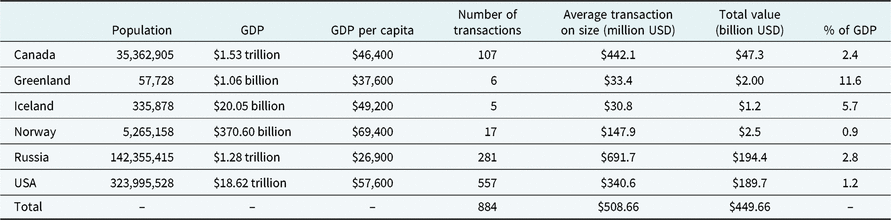
For Greenland’s physicality to be effective in real-life politics, we need to consider how the long-term goal of political independence, which is heard from Greenland’s self-government, and the economic autonomy expected to lead to it, can be linked to the political context not as a mere slogan but as an effective discourse (Rasmussen & Gjertsen, Reference Rasmussen, Gjertsen, Dale, Bay-Larsen and Skorstad2018). In accordance with the argument from the previous section, we may take the view that Greenland, as a part of its policy, brings up for discussion the historical relationship and points of dispute with Denmark on the premise that they will eventually be linked to the issues of autonomy and independence. A significant number of commentators are of the opinion that the development of mineral and energy resources (non-living resources) is one of the more obvious methods for approaching those goals (Rasmussen & Gjertsen, Reference Rasmussen, Gjertsen, Dale, Bay-Larsen and Skorstad2018, p. 128). Gad et al. explain the present political situation in Greenland by quoting the words of former Prime Minister Aleqa Hammond that Greenland’s immediate goal, set through the development of non-living resources, is a sustainable economy, which is necessary for the achievement of the long-term goal of political independence (Gad et al., Reference Gad, Jacobsen, Strandsbjerg, Fondahl and Wilson2017, Reference Gad, Jacobsen and Strandsbjerg2018). Hammond, focusing on China’s interest in Greenland’s non-living resources (see Jakobsson, Reference Jakobsson2018; Jiang, Reference Jiang2018; Lanteigne & Shi, Reference Lanteigne and Shi2019), stated that the degree of Greenland’s integration into the world’s economy would be enhanced by sharing common interests with the Chinese (see Table 3) (Gad et al., Reference Gad, Jacobsen, Strandsbjerg, Fondahl and Wilson2017, p. 18). As the Minister for Mineral Resources and Labor Market Erik Jensen has aptly explained, the effects of that can be found in the creation of new employment and the flow of the revenue from the development to the treasury (Naalakkersuisut, 2018b). Furthermore, Greenland’s Ministry of Health and Infrastructure has pointed out that tying the activities for the development of non-living resources to the building and maintaining of infrastructure on the island (e.g. the construction of a civilian airport) will serve as a guarantee for a better use of natural resources, which are limited (Departementet for Sundhed og Infrastruktur, 2014).
Chinese investment in the Arctic Ocean countries for 2012–2017 (based on Rosen & Thuringer, Reference Rosen and Thuringer2017, p. 54)

Greenland has thus opened the window of opportunity. For instance, the fact that operations by Ironbark A/S, aimed at the exploitation of Zinc, have been approved in the vicinity of a national park in North-East Greenland, where until then economic activities used to be prohibited, is a good illustration of that. This case shares many similarities with a uranium mine project in Kakadu National Park, Australia, which is often quoted in relation to the issue of development and indigenous peoples (See Kamata, Reference Kamata2002). In Greenland, at that time, the Minister for Finance, Energy and Foreign Affairs Vittus Qujaukitsoq, from the largest political party in Greenland Siumut, stated that, “The national park is the most pristine part of our country, and it is important for all animal and plant life. But we have to be flexible if new business opportunities arise.” Such a “flexible” stance is often justified in the movement towards the goal of future independence, which is now supported by new sources of revenue (Jacobsen, Reference Jacobsen2018).
On the other hand, Bjørst warns that the main narrative that emerged during the public debates regarding the exploitation of uranium is shaped by simplistic expectations regarding the development of non-living resources, which he terms “one promising boom and the other doom” (Bjørst, Reference Bjørst2016). This narrative carries the potential to impose a simple linear explanation of the development process, in which the exploitation of non-living resources is equated with employment and jobs, which is then further equated with sustainable economy and political independence, and thereby limit the exploration of other avenues for the development of Greenland (Rasmussen & Gjertsen, Reference Rasmussen, Gjertsen, Dale, Bay-Larsen and Skorstad2018, p. 137). Furthermore, Gad et al. warn that the pursuit of economic autonomy through the implementation of the development of non-living resources for the purpose of acquiring political independence may contribute to the shunning of the question of how to create a culturally and socially sustainable society (Gad et al., Reference Gad, Jacobsen, Strandsbjerg, Fondahl and Wilson2017, p. 20; Altinget, 2019). Indeed, Article 1 of the Parliament Act no.7 on mineral raw materials, dated 7 December 2009, clearly stipulates that “efforts are made to ensure that activities covered by the Act are carried out responsibly in terms of safety, health, the environment, resource utilization and social sustainability, and that are in accordance with, under similar circumstances, recognized good international practices,” but the problem is whether such regulations can function, i.e. whether the environment in which they can be implemented has been created. In fact, during the hearing regarding the “Oil and Mineral Strategy for 2014–2018,” which lays out Greenland’s strategy concerning the development of non-living resources, concerns regarding safety, health, the environment, resource utilization and social sustainability were expressed (Hybholt, Reference Hybholt2014).
Impact on nature and the environment: About “native Greenlandic rules”
Management that conforms to the native Greenlandic rules, i.e. the aggregate of indigenous/traditional Greenlandic knowledge, must be considered so that the two points discussed above do not appear in an opportunistic form but function in an organic unity with the sustainability of development (Gjertsen, Didyk, Rasmussen, Kharitonova, & Ivanova, Reference Gjertsen, Didyk, Rasmussen, Kharitonova, Ivanova, Dale, Bay-Larsen and Skorstad2018). That is the necessary condition for a full inclusion of the presence of the indigenous people to the development of non-living resources. “The aggregate of indigenous knowledge” here refers to the entirety of perception which is also called “Inuit cosmology” and which is based on the relationship in which humans and environment, humans and non-humans affect each other (Nordic Council of Ministers, 2015). Its vector of thought is different from scientific thinking, which objectifies nature (treats it as the other). Keichi Omura, based on the study of Canadian Inuit, talks about the nature of the relationship between humans and nature that is based on indigenous knowledge as “a hybrid world or humans and non-humans” (Omura, Reference Omura2017). This perspective makes clear the significance of the understanding that there is no world without humans but also no pure nature as a closed sacred realm and that humans and nature should not be treated as separate variables but as elements that can be merged (Omura, Reference Omura2017, p. 187). Political scientists have indeed held an anthropocentric view for a long time, but concepts such as treating (or not treating) nature as the other, as well as the significance of paying attention to the relationship between humans and nature, are now being actively debated (Maeda, Reference Maeda, Kuzuya and Shibasaki2018). Including indigenous thinking into the context of the development of non-living resources may encourage the creation of a mindset that is different both from the orientation that one-sidedly focuses on development and from the desire to completely conserve nature, a mindset that seeks to understand development while relativising the dualist (scientific) thinking that views humans and nature as separate entities.
Of course, we need to emphasise that the debate on the development of Greenland’s non-living resources does not necessarily assume the removal of scientific thinking. For example, at the aforementioned hearing concerning the “Oil and Mineral Strategy 2014–2018,” the Association of Greenland’s Employers (Grønlands Arbejdsgiverforening) argued that a permanent and integrative national planning commission (national planlægningskommission), i.e. the Resource Committee (Råstofråd), the purpose of which would be to provide various knowledge and information that would serve as the environmental, social and ethical basis for the decisions of the self-government, should be established. Their argument also included the idea that attempts should be made, based on the potential for close collaboration with Danish businesses and universities, to establish new companies and form clusters of non-living resource development firms to strengthen the cooperation of the two sides (Grønlands Arbejdsgiverforening, 2014). In a 2014 statement, Greenland’s Association of Municipalities (KANUKOKA) also argued that encouraging greater participation of local people and companies would have a positive future impact on the development of Greenland’s non-living resources. KANUKOKA further argued that in the future local governments should be given more responsibilities and a more active role in the sustainable development of non-living resources (KANUKOKA, 2014). This overlaps with the demands of individual local administrative units which have many development areas on their territories, including the potential sites for future mineral resource exploitation projects (Kommune Kujalleq, 2014).
Taking into account native Greenlandic rules, I believe, does not mean seeking a method of management that would impose on developers Greenland’s yardstick of the Inuit way of doing things but seeking ways on how to conduct development while sharing with Denmark a perspective that is more in line with the cultural context of Greenland and is mindful of the impact of development on the ecosystem (natural environment) and land use. In other words, these are none other but activities that urge the creation of opportunities through indigenization—a thorough application of the attitude that observes natural resources and nature from the viewpoint of subjects who coexist with it (Nordic Council of Ministers, 2015, p. 43), which many inhabitants of Greenland have developed independently through their everyday living, not only to living but also to (the development of) non-living resources (Hayashi, Reference Hayashi2014). That is, in order to contemplate the sustainability of the development of non-living resources that is based on the inclusion of the local society and the presence of indigenous people, more than anything, we need to understand non-living resources as one kind among the resources existing in nature and the environment as a whole and consider if we can put them to use in a way that does not contradict the reciprocal worldview of indigenous peoples (Honda, Reference Honda, Takakura and Yamaguchi2014) in which the acquisition, processing, use and disposal of resources are organically intertwined. This is a problem that concerns the very life of indigenous peoples and can perhaps be rephrased as the following: can indigenous people handle independently the process of acquisition, processing, use and disposal of non-living resources in accordance with their indigenous context?
In fact, we should turn attention to the existence of the mindset that development of non-living resources and indigenous knowledge are, in general, not that well suited for each other (AMAP, 2017, p. 12). Several past studies have shared the common assumption that resource development has a negative impact on (the holders of) indigenous knowledge, i.e. that the two are locked in an inverse relationship. For example, in the case of the development of a mine in southern Greenland, Kvanefjeld, it was pointed out that it could substantially erode ecosystem services through the impact on the surrounding areas of mining dust, tailings (refuse) and water contaminated with harmful substances (Frederiksen, Boertmann, Ugarte, & Mosbech, Reference Frederiksen, Boertmann, Ugarte and Mosbech2012; Wegeberg & Boertmann, Reference Wegeberg and Boertmann2016). To alleviate this problem, proposals have been put forth to utilise Greenland’s resources more effectively to achieve a better energy mix by maximizing the use of the potential of Greenland’s hydroelectric power plants and by developing non-living resources in combination with that (Hybholt, Reference Hybholt2014).
However, it should be noted that such proposals have in general been presented by those in favour of the development of non-living resources. In addition, when development of non-living resources is discussed, the awareness regarding local wisdom such as the indigenous knowledge tends not to be high (Grønlands Selvstyre, 2018, pp. 524–525), so the discussions have often been conducted centring on economic benefit as the sole evaluation standard. For example, the aforementioned idea regarding the establishment of the Resource Committee as a consulting body (WWF Denmark, 2014), which can be traced back to the 2014 report “For the Benefit of Greenland,” by Ilisimatusarfik/Grønlands Universitet (2014), envisaged the creation of an organ that would have a role similar to that of a think tank in assessing the impact on the local environment and people, but most of the discussions concerning the committee ended up focusing on issues such as the competitiveness of Greenland in the global market and the amount of revenue (Sermitsiaq, 2017) and were, thus, strongly shaped by the single-minded argument of economic benefit. In fact, the abovementioned report contains “social benefits” as one of its subtitles, but despite that, we may say that not all aspects of the multi-layered body of benefits, which includes the social ones too, have since been sufficiently considered. Finally, there is the simple but fundamental question of whether experiential decision-making which informs the Inuit way of thinking can really work well enough, considering that in contrast with the management of living resources such as whales and seals, Greenland has only limited experience in managing (large-scale) projects for the development of non-living resources (Rasmussen & Gjertsen, Reference Rasmussen, Gjertsen, Dale, Bay-Larsen and Skorstad2018, pp. 144–145).
Relations with the EU
Mayumi Kamata has pointed out that the politics regarding development and indigenous peoples has “been transformed into a domestic problem of promoting the dialog with the government” (Kamata, Reference Kamata2002, p. 136) and has tended to be “fragmented and separated” from issues such as the rights of indigenous peoples to resources, the global commitment to discussion about those rights and the building of relations with external entities (Kamata, Reference Kamata2002, p. 136).The debate regarding the development of Greenland’s non-living resources is not an exception, since, as we have already seen, it has tended to be confined to the issues within the island itself. However, in recent years, particularly in the context of the development of REE and uranium, Greenland’s relations with external subjects and especially its relationship with the EU have come under the spotlight. The building of relationship with the EU perhaps caries the potential to help balance from the outside the trend in which the development of non-living resources has tended to be confined to the issues of economy and independence, firmly embedded in Greenland’s domestic context.
Greenland joined the European Community (EC) together with Denmark in 1973 but left it in 1985. However, this was not an unconditional exit but a departure in the form of building a special relationship with the EC, marked by Greenland’s status as an “overseas country or territory” (OCT), which made possible a customs-free export of certain goods to the EC market and by the conclusion of a fishery agreement, etc. Greenland maintained open the channels for communication with the EU. In terms of the development of non-living resources a comprehensive partnership agreement called the Partnership Agreement decided in 17 July 2006 is worth noting (European Union, 2006; Naalakkersuisut, 2007). In it the strengthening of partnership was declared through the boosting of cooperation in the field of the development of non-living resources and covering the expenses for surveys and research related to it (European Commission, n.d.). In addition, as of 2010, Greenland agreed to observe the EU Protocol on Strategic Environmental Impact Assessments (SEA) (Gjertsen et al., Reference Gjertsen, Didyk, Rasmussen, Kharitonova, Ivanova, Dale, Bay-Larsen and Skorstad2018, pp. 52–53), and, in 8 June 2012, it signed a letter of intent with the EU concerning non-living resources. In it, concrete details regarding the deepening of cooperation are listed, such as the infrastructure needed for the development of mineral resources, analyses concerning investment needs, environmental surveys concerning the social impacts of mineral resource industry and mining, etc. Besides that, through the 28 October 2014 action program entitled “Programming Document for the Sustainable Development of Greenland 2014–2020” (European Commission, 2014) and the 19 March 2015 joint declaration (European Union, 2015), a long-term collaborative relationship with the EU regarding non-living resources was established.
The huge role of non-living resources in terms of the diversification of Greenland’s economy, which currently depends on a single resource (fisheries), has already been pointed out. At the same time, for the EU, which sees Greenland as an important business partner, the question of what kind of relationship to build with it is a matter of high priority (European Union, 2015, p. 2). In particular, the EU’s interest in Greenland’s non-living resources is overall high with regard to its energy mix. The European Commission assesses that Greenland possesses strong potential for 6 out of 14 critical non-living resources mentioned in the EU Raw Material Strategy (niobium, platinum group metals, REEs, tantalum, fluor and graphite), as well as a moderate potential for three more elements (antimony, gallium and tungsten).
Especially recognised in the EU is the high probability that Greenland, in light of its geological environment, may host REEs. For example, at this moment Greenland accounts for 3.44% (around 489 million tons) of the global reserves of REE, but when the five ongoing projects are included in the calculus, in several years from now, that value is expected to triple to 9.16% of the world’s REE reserves (European Commission, 2012). Furthermore, according to the Japan Atomic Industrial Forum, 102,800 kgU (metal weight) of extractable uranium has already been discovered in Greenland and when that is added to the projected reserves of 125,100 kgU, Greenland becomes one of the top 10 countries and areas of the world (Japan Atomic Industrial Forum, 2016, p. 7). For the above reasons, the EU estimates that Greenland will in the future become a mid-size supplier on the global REE market.
Thus, Greenland is gradually developing bilateral ties with the EU and is moving into a different direction from what Kamata terms “transformation into a domestic problem” and “fragmentation and separation.” Through the negotiations with the EU, Greenland is opening the window of opportunity and has come to possess a channel other than the one with Denmark, which enables it to create opportunities for shaping its own life in a way that reflects the presence of the local communities and residents. That is why the development of non-living resources in Greenland has a different character from that in other indigenous societies.
Furthermore, we may add that the bilateral arrangements with the EU, with which Greenland is rapidly deepening ties in recent years, need to be considered in connection with the problem of under what framework should resources in Greenland be handled. This is because the EU’s environmental policy (The Environmental Action Plan) emphasises low-carbon growth and the Union aims to apply that approach in a cross-disciplinary manner, i.e. in fields other than natural environment, so that the more Greenland’s reciprocal relationship with the EU deepens, the more the development of non-living resources in Greenland will have to be designed in package with considerations for the environment.
The question of development and indigenous people in the development of non-living resources in Greenland
When we sort out the above four discussion points what comes to light is that the development of non-living resources in Greenland has been adopted as a means for achieving the goals of economic autonomy and political independence. However, at the same time, when the development of non-living resources is discussed with the mindset that it can be closely tied to autonomy and independence, the danger starts to lurk that natural resources may be fenced off from other areas of life from the economic side and then coupled in a simplistic manner with the problem of independence. As we have seen above, existence is essentially multi-dimensional, but the tendency to contemplate interests by focusing only on one portion of existence forms the main part of the debates today.
The “multidimensionality of existence” we refer to here is not something that is exhausted simply by increasing the number of variables that inform existence and by thinking about existence in a more holistic way. It is particularly in this day and age, when warnings are being issued that human activities are strongly affecting the future of the planet, as exemplified by key terms such as “Anthropocene,” “planetary boundaries” and “planet politics,” that we first need to ask, as the premise of any debate, whether the natural environment, which nurtures the soil for the continuation of life, can itself function soundly or not as a whole (and if it will be able to do so in the future) and then strive to reconcile the interests of individual fields, such as economy, society and culture so that they can influence each other while overlapping (Kanie, Reference Kanie and Suzuki2015, p. 124). We can say that what this means is that if we just follow in the footsteps of the old-style development, then not only development but the Earth’s environment itself will not be able to keep going.
When we break down this thinking to apply it to the practical phase of development in Greenland, the problem boils down to the following: to what extent can the attitude that views nature and natural resources from the viewpoint of persons coexisting with them be applied and internalized in the development of non-living resources? Hayashi, through a study of sheep breeding in Greenland empirically, shows that, while striving for harmonization with nature and the ecosystem from the viewpoint of coexistence, “Greenlanders actively introduce external knowledge and technological systems if they are useful for starting a new kind of life, different from the present one” (Hayashi, Reference Hayashi2014, p. 143). According to him, this tendency to internalise is more pronounced in Greenland than among the people of Canada’s Nunavut. As Hayashi explains, “the question is whether these [external knowledge and technology] can be introduced in a way that is in harmony with the cultural and ecological conditions of that area” (Hayashi, p. 154). He also points out that there are no limitations in terms of the object to which the above applies. This means that in Greenland the internalization of external elements is not limited only to living beings.
However, as already mentioned, it is also a fact that a lot of debate in Greenland thus far has been subsumed under the rubric of the pursuit of economic benefits and the transformation of the historical body of Greenland based on them.
In that respect it is worth noting Bjørst’s question. She asked the manager of the mining firm GME during an open symposium at Greenland’s Geological Survey Institute how the exploitation of non-renewable resources (non-living resources) can be regarded as sustainable development. This is what the manager replied:
Mining of non-renewable resources is never sustainable in the sense that once the mineral resources have been mined, they are not coming back… (However) mining in a local community can provide a long-lasting benefit…So what we actually bring to Greenland is we bring jobs and we bring physical revenue for the Greenlandic government. At the end of mining in a 100 years’ time, what we leave behind is an educated workforce…we leave behind people who are no longer worrying about where the jobs will come from; no longer are they worrying about all the social problems caused by a low unemployment rate… and that is the sustainability we offer. (Bjørst, Reference Bjørst2016, p. 38, partially redacted excerpt)
Thus, the manager clearly explains that, while the development of non-living resources itself is not sustainable, by implementing development, a workforce that has acquired experience and gone through the process of social learning is created and that in itself is a contribution of resource development companies to the sustainability of Greenland’s society. This thinking perhaps unintentionally bears the potential to be linked with the notion of sustainability as development that satisfies the needs of both the present day and future generations presented by the Brundtland Commission in 1987. However, I wish to call attention to the fact that at the same time the driving factor behind it is the provision of employment and revenues to the government and that the sequence assumed—that first there needs to be an economic base and then social anxieties can be removed and the workforce educated through the accumulation of experience—is simple and linear. In that thinking, it seems, either there is no interest in the fact that sustainability is not a one-way affair and that basic human attitudes towards things are diverse or social sustainability is perceived as something that needs not to be included in the variables concerning the implementation of development.
Thus, the question of whether the Resource Committee, on which I touched in the previous section, will be institutionalised as a kind of a think-tank that conducts comprehensive evaluations of development may prove to be a turning point both in terms of thinking about the problem of internalization and in terms of the development of non-living resources and how to deal with different trends in it. This is because the establishment of the Resource Committee can be regarded, both from the perspective of resource development in Greenland and from the normative standpoint of what the use of natural resources in agreement with social currents should be like, as a useful venue in which a broad array of topics can be presented.
Moreover, attention should be paid to the fact that the EU’s environmental policy is not of the kind that is premised on the trade-off between the conventional type of economic development and environmental conservation but, rather, explores ways in which the two can coexist and a positive sum can be created, which is why it may not come in conflict with the thinking characteristic of indigenous knowledge in which humans and non-humans (the environment) are understood as one. According to the indigenous understanding characterised by a monistic, reciprocal view of things, economic growth and development should be pursued only so far as they do not cause an overflow. That view seems to be very similar to the EU’s stance which aims for a qualitative rather than quantitative progress and a more efficient use of resources, although the logical paths through which the two arrive at that perspective are different.
What the EU refers to when talking about the environment is based on the scientific thinking which operates on the premise that the object of management should be stabilised artificially. That is a perception of environment different from the indigenous understanding we noted above. However, I believe that exactly because of that the institutionalization of an organ that would carry out discussions and evaluations while incorporating such various elements inherent in development is gaining importance. When the institutionalization is carried out, the background and affiliation of members that constitute the committee will be elements that affect the quality and legitimacy of the input. This is because it is plausible that not just the opinions of policy-making elites, but also the deep understanding of the natural environment of the indigenous people, based on indigenous knowledge acquired through year-round contact with nature, its observation and a holistic and intuitive perception, will be the sine qua non of efforts to maximise the wealth obtainable from non-living resources.
Closing remarks
In this paper, by reviewing the trends in the debate on development and indigenous people and taking Greenland, which has adopted a proactive stance towards development, as a study case, I have endeavoured to shed light on the relationship between development and indigenous people in the present-day world. The task that remains is how to create an environment in which activities aimed at developing non-living resources in Greenland would not be manifested in an opportunistic form but would be organically tied to sustainable development which is in accord with the local culture, including the indigenous knowledge. The solution to this problem has not be presented yet, but the important point seems to be that a mechanism should be created in which the abovementioned process of internalization would not be confined to only one area of life, i.e. the maximization of the effects of the development of non-living resources would not be limited only to one field (with other fields excluded). The resource committee might offer a solution. Furthermore, I am of the opinion that, the EU, with which Greenland is starting to build reciprocal relations, will, as Greenland becomes a resource supplier more open to external actors, increasingly play the role of a core counterpart of Greenland.