Introduction
Frailty has been well-described in adult cardiac populations, and it has been used as a tool to quantify physiologic reserve and an individual’s ability to combat stressors. The definition of frailty developed by Fried et al identifies an individual as “frail” if they have three of the five following criteria: 1) shrinkage or body composition, 2) weakness, 3) slowness, 4) self-reported low physical activity, and 5) exhaustion. Reference Fried, Tangen and Walston1 Fried’s criteria were associated with increased mortality and more recent research suggests that frailty is also associated with additional adverse outcomes, including prolonged hospital length of stay and increased healthcare utilisation. Reference McNallan, Singh and Chamberlain2–Reference Lee, Buth, Martin, Yip and Hirsch6 In adult patients with cardiovascular disease, identification of frailty has important clinical significance: individuals identified as frail have been found to have a worse prognosis, increased mortality, increased number of cardiovascular events, increased comorbidity, and increased disability. Reference Allen, Orkaby and Justice3,Reference Lee, Buth, Martin, Yip and Hirsch6–Reference Jha, Hannu and Chang8
There is currently limited data on the significance of frailty in paediatric populations. Paediatric kidney and cancer patients who were frail had a higher risk for infection, hospitalisation, and length of stay. Reference Conroy, Zhang and Kaito9,Reference Sgambat, Matheson, Hooper, Warady, Furth and Moudgil10 Newer studies suggest that the frailty paradigm could similarly be translated to the paediatric cardiac population utilising developmentally appropriate tools. In these three small sample studies in children with pulmonary hypertension, heart failure, and complex CHD, frailty was shown to be common. Reference Panchangam, White and Goudar11–Reference Studyvin, Birnbaum and Staggs13 .
Patients with CHD are known to be at high risk for neurodevelopmental deficits and lower health-related quality of life. Reference Marino, Lipkin and Newburger14–Reference Marino, Cassedy, Drotar and Wray16 The prevalence of frailty in a large sample of high-risk paediatric and CHD population and its association with neurodevelopmental outcomes and health-related quality of life has not been studied.
The purpose of this study was to define the prevalence of frailty in a large sample of high-risk paediatric and CHD population and to assess if the presence of frailty was associated with worse neurodevelopmental and health-related quality-of-life outcomes. Aim One of this study was to determine the prevalence of frailty in a high-risk paediatric and CHD population. Aim Two was to determine which demographic and clinical factors from the patients’ medical history were associated with frailty. Aim Three assessed for differences between frail and non-frail patients by neurocognitive, psychosocial (emotional dysfunction and abnormal peer relationships), motor, and adaptive outcomes, and health-related quality of life.
Materials and methods
Study design
We conducted a single-centre cross-sectional study utilising patient data obtained during routine clinical care in the cardiac neurodevelopmental programme at Ann & Robert H. Lurie Children’s Hospital of Chicago. As part of routine nursing intake, patients were screened in all affiliated cardiology outpatient clinics for neurodevelopmental clinic referral using criteria from the American Heart Association/American Academy of Pediatrics’ scientific statement that categorised paediatric CHD patients at high risk for neurodevelopmental deficits. Reference Marino, Lipkin and Newburger14 Patients were also referred based on provider’s concern. All patients evaluated in the clinic underwent a battery of neurodevelopmental screening questionnaires, a motor assessment by a physical therapist, and structured interviews with a cardiologist, developmental behavioural paediatrician, social worker, and education specialist. This study was approved by the Institutional Review Board (IRB # 2020–3560).
Patient population
We included all patients ≥ 4 years of age with cardiac disease who were evaluated in the cardiac neurodevelopmental clinic between 6/2017 and 12/2022. Patients with incomplete physical assessment data were excluded.
Data collection
As part of routine care, physical therapy assessment and validated neurocognitive, psychosocial (emotional and social), adaptive functioning, and health-related quality-of-life surveys were administered. Clinical variables, socioeconomic data, and educational information were collected from the electronic medical record. Social determinants of health were assessed by insurance status and Childhood Opportunity Index. Physical therapy assessment included the measurement of grip strength, endurance measured by a six-minute walk test, and motor skills assessed by the Bruininks-Oseretsky Test of Motor Proficiency Second-Edition Short Form.
Study variables
Predictor
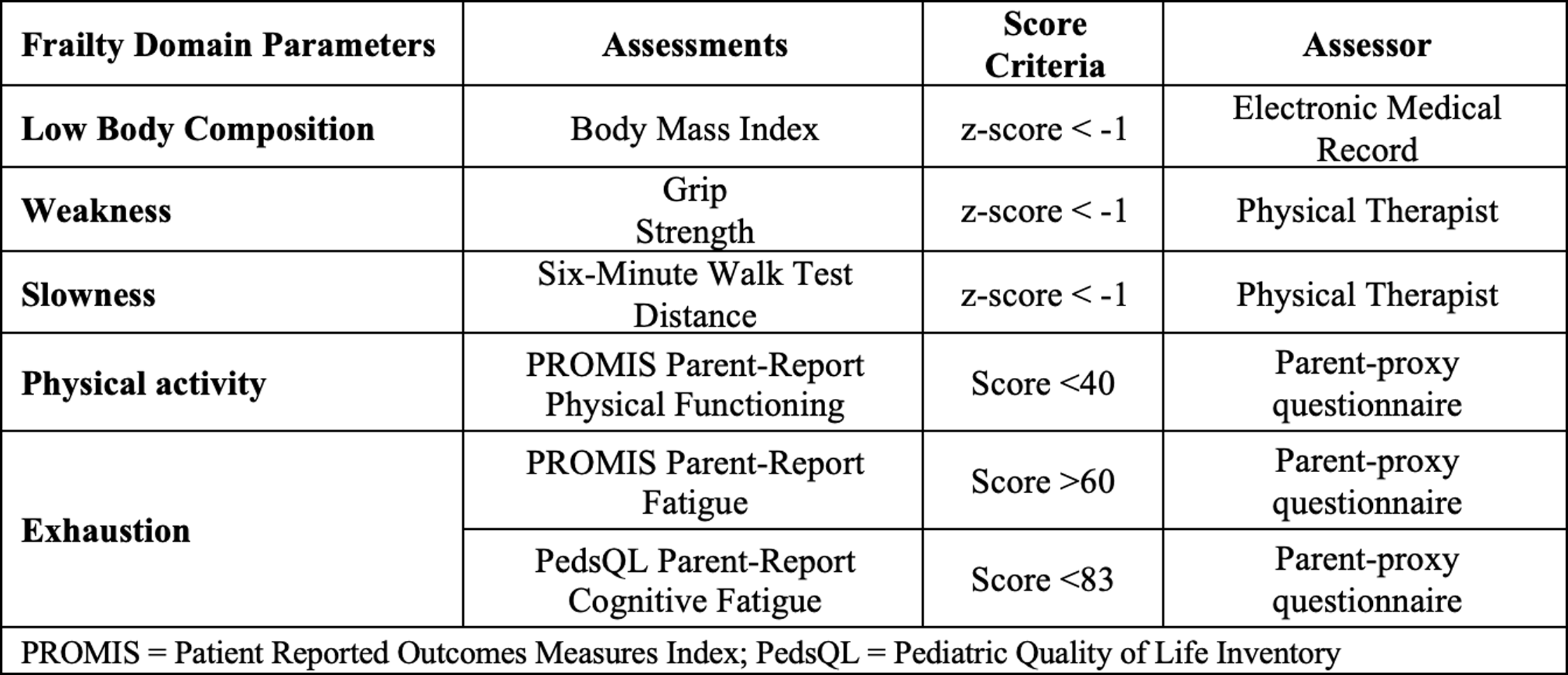
Frailty was defined as an abnormality in 3 out of 5 categories: body composition, weakness, slowness, physical activity, and exhaustion. Body composition was identified as abnormal if the Body Mass Index z-score was less than −1.0. Weakness was recognised as the grip strength of the dominant hand’s z-score less than −1.0. Six-minute walk test results were utilised to determine “slowness” if the z-score was less than −1.0. A Patient-Reported Outcomes Measurement Information System Physical Function score of less than 40 (lower scores indicating lower physical functioning) was considered abnormal physical functioning. Exhaustion was defined as a Patient-Reported Outcomes Measurement Information System Fatigue score greater than 60 (higher scores indicating greater fatigue) or a PedsQL Cognitive Fatigue score less than 83 (lower scores indicate greater fatigue) (Figure 1).
Frailty criteria.

Outcome measures
Neurodevelopmental variables included neurocognitive screening variables assessed through age-specific validated questionnaires. These included the Patient-Reported Outcomes Measurement Information System Physical Function Parent Proxy Report, Reference Cella, Riley and Stone17 Patient-Reported Outcomes Measurement Information System Fatigue Parent Proxy Report, Reference Cella, Riley and Stone17 PedsQL Cognitive Fatigue, Reference Varni, Limbers and Sorensen18 Behavior Rating Inventory of Executive Function Parent Form, Preschool (BRIEF-P), or 2 nd Edition (BRIEF-2) Global Executive Composite, Reference Gioia, Isquith, Guy and Kenworthy19 PedsQL School Functioning, Behavior Assessment System for Children Parent Scales and Self-Report Rating Scales, Reference Varni, Seid and Rode20 3 rd Edition (BASC-3) Behavioral Symptoms Index (BSI) Reference Reynolds, Kamphaus and Vannest21 Patient-Reported Outcomes Measurement Information System Parent Proxy Anxiety, Reference Cella, Riley and Stone17 Patient-Reported Outcomes Measurement Information System Parent Proxy Depression, Reference Cella, Riley and Stone17 Patient-Reported Outcomes Measurement Information System Parent Proxy Peer Relationships, Reference Cella, Riley and Stone17 Adaptive Behavior Assessment System Parent/Primary Caregiver Form or Parent Form, 3 rd Edition (Adaptive Behavior Assessment System-3) General Adaptive Composite (GAC), Reference Harrison and Oakland22 Pediatric Quality of Life Inventory Parent-Proxy Report and Child-Self Report (PedsQL), Reference Varni, Seid and Rode20 Pediatric Cardiac Quality of Life Index Child Form and Parent Form (PCQLI). Reference Marino, Shera and Wernovsky23 To determine the number of patients at risk for a poor outcome, the outcome measures were also recoded into dichotomous variables classified as either “normal” or “at risk” (one standard deviation worse than healthy controls). Reference Gerstle, Beebe, Drotar, Cassedy and Marino24
Statistical analysis
The summary statistics including frequencies (percentage), means (standard deviations), as well as medians (interquartile ranges) were used to describe the distribution of the data. Chi-Square, Fisher’s Exact, Student t, and Wilcoxon Rank Sum tests were used to test group differences between patients meeting frailty criteria and non-frail patients on all outcome variables. A p-value of < 0.05 was considered statistically and all data were analysed using SAS 9.4©.
Results
Patient population
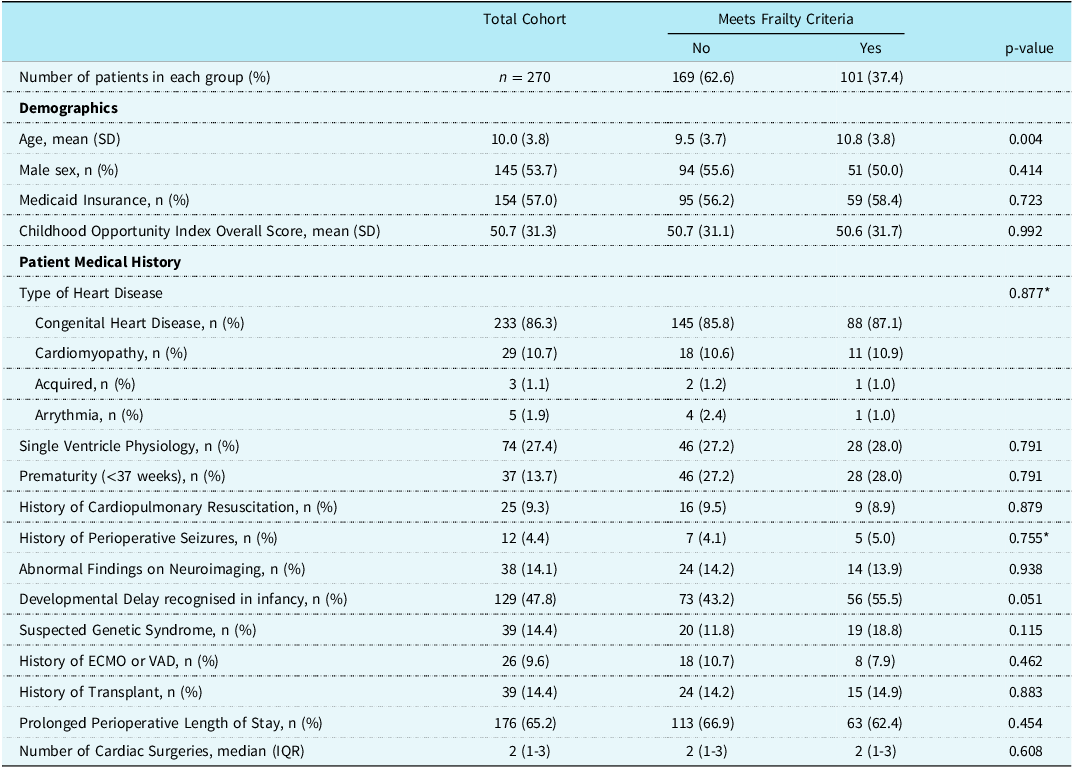
There were 458 patients ≥ 4 years of age evaluated in the cardiac neurodevelopmental clinic during the study period. Of those evaluated, 270 (59%) had complete physical assessment data and were included in the study (Table 1). The mean age of the cohort was 10 ± 3.8 years of age and 53.7% were male. Most patients (57%) had Medicaid insurance, and the mean Child Opportunity Index overall score was 50.7 ± 31.3. CHD accounted for 86.3% of patients in the cohort, with 27.4% of the total cohort having a single ventricle physiology. A minority of the cohort had cardiomyopathy (10.7%), and a small number of patients had acquired heart disease (1.1%) or arrhythmia (1.9%). Patient’s medical history was most commonly notable for a history of prolonged perioperative length of stay (65.2%), developmental delay recognised in infancy (47.8%), suspected genetic syndrome (14.4%), history of transplant (14.4%), abnormal findings on neuroimaging (14.1%), and prematurity (13.7%). Less common was a history of mechanical circulatory support with extracorporeal membrane oxygenation or ventricular assist device (9.6%), cardiopulmonary resuscitation (9.3%), or perioperative seizures (4.4%). Patients had experienced a median of 2 prior cardiac surgeries (interquartile range 1–3) at the time of clinic evaluation.
Population demographic and patient medical history descriptors and associations with frailty

p-value = probability value; n = number; % = percentage; SD = standard deviation; CHD = congenital heart disease; ECMO = extracorporeal membrane oxygenation; VAD = ventricular assist device; IQR = interquartile range. *Analysis completed using Fisher’s Exact Test.
Frailty identification
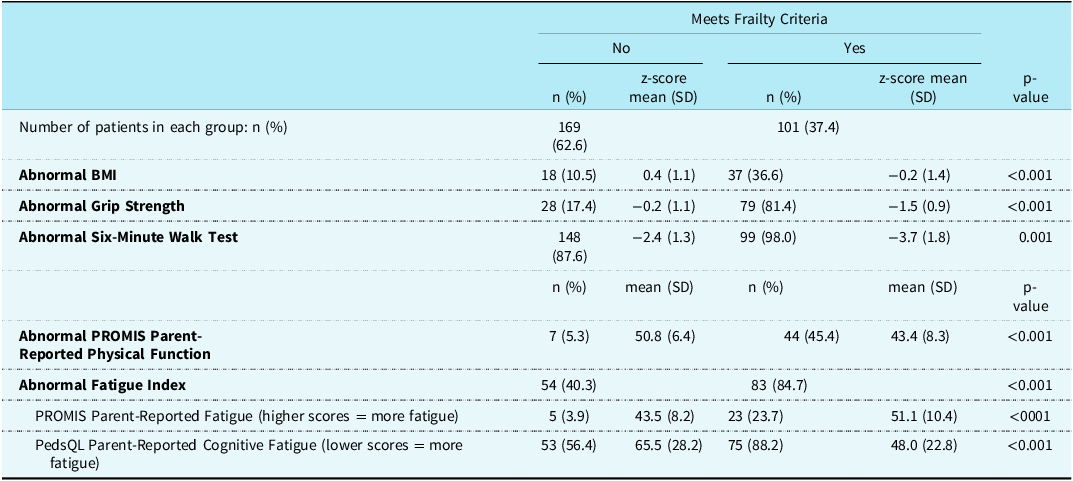
The first aim of this study was to determine the prevalence of frailty in a paediatric cohort of patients with CHD. Of the 270 patients included in the study, 101 (37.4%) were classified as frail (Table 2). As a group, patients identified as “frail” scored statistically worse than non-frail patients on all five frailty domains (lower body mass index, worse grip strength, shorter distance on the six-minute walk test, lower Patient-Reported Outcomes Measurement Information System Physical Functioning, and greater fatigue [Patient-Reported Outcomes Measurement Information System Fatigue or PedsQL Cognitive Fatigue score]). Grip strength demonstrated the greatest difference in prevalence between frail and non-frail patients with abnormally low grip strength present in 81.4% percent of frail patients compared to only 17.4% of non-frail patients (p < 0.001).
Prevalence of frailty in cohort

p-value = probability value; n = number; % = percentage; SD = standard deviation; BMI = body mass index; PROMIS = Patient Reported Outcomes Measures Index; PedsQL = Paediatric Quality-of-Life Inventory.
Demographic and patient medical history factors associated with frailty
The second aim was to determine which demographic and patient medical history descriptors were associated with frailty (Table 1). The only demographic or patient medical history descriptor that was associated with frailty was patient age. Older patients were significantly more likely to be frail (mean age 10.8 ± 3.8 years) compared to non-frail patients (mean age 9.5 ± 3.7) (p = 0.004).
Neurocognitive, psychosocial (Emotional and social), motor, and adaptive outcome associations with frailty status
The third aim was to examine whether there were differences between frail and non-frail patients in neurocognitive, psychosocial (emotional and social), motor, adaptive, and health-related quality-of-life outcomes.
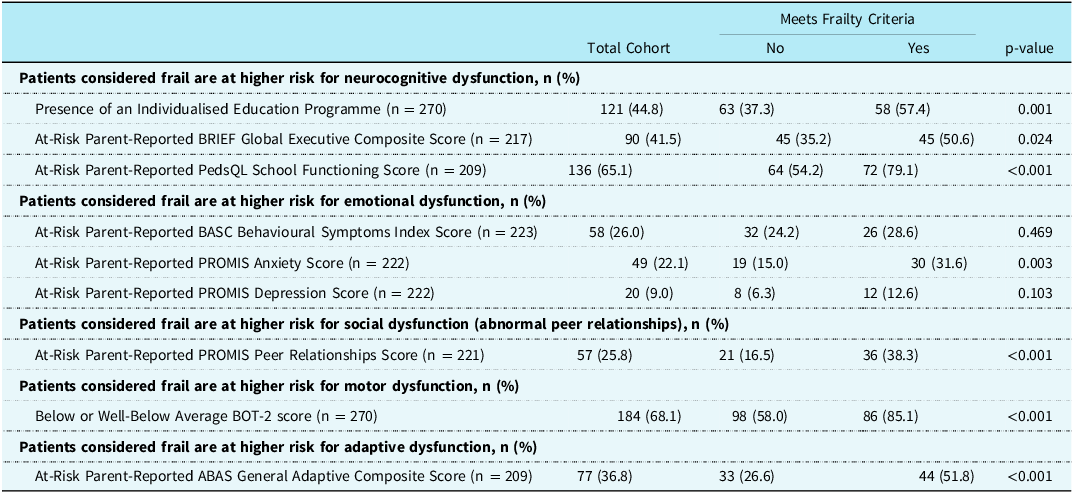
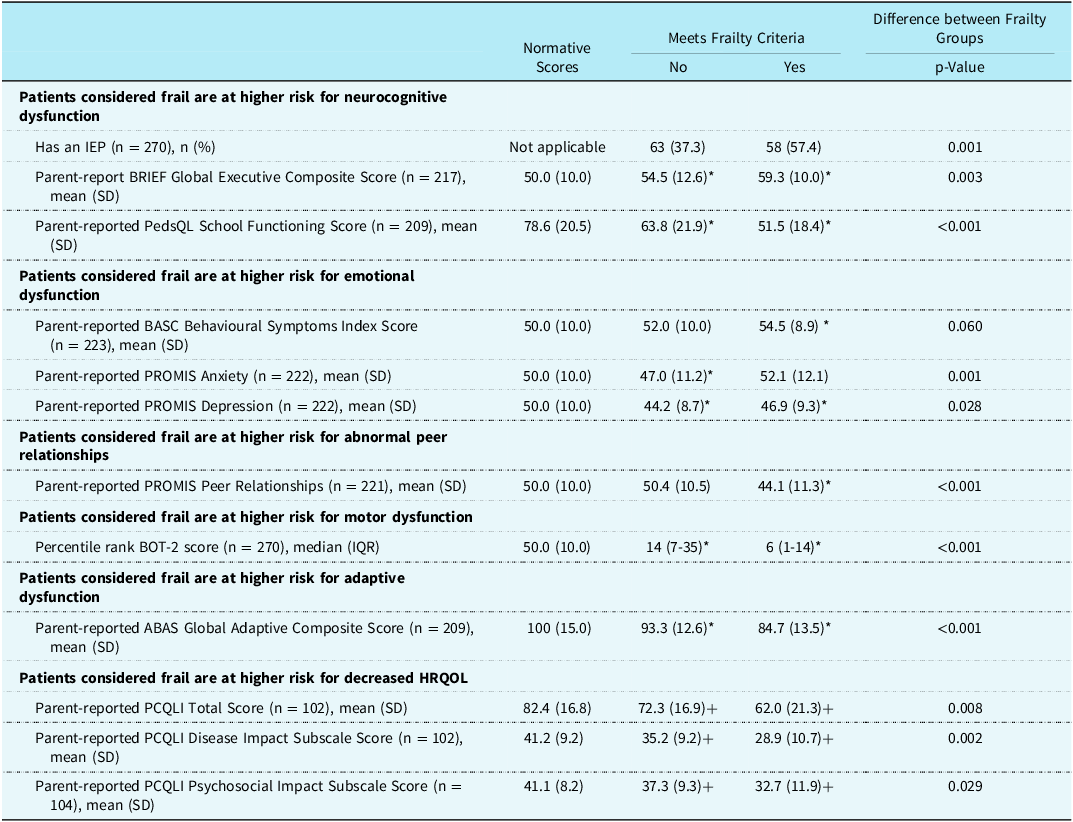
This cohort of paediatric cardiac patients was significantly impacted from a neurocognitive, psychosocial, motor, and adaptive functioning perspective (Table 3). Neurocognitive dysfunction was common with 45% of patients having an Individualized Education Program, 42% having worse executive functioning (parent-reported Behavior Rating Inventory of Executive Function Global Executive Composite), and 65% scoring worse on the parent-reported PedsQL School Functioning domain (Table 3). Twenty-five percent of the study patients were at risk for emotional dysfunction (parent-reported Behavior Assessment System for Children Behavior Symptoms Index and parent-reported Patient-Reported Outcomes Measurement Information System Anxiety), and social dysfunction (parent-reported Patient-Reported Outcomes Measurement Information System Peer Relationships). Over thirty-three percent of patients were at a higher risk for motor dysfunction on the Bruininks-Oseretsky Test of Motor Proficiency and over one-third of patients were at a higher risk for worse adaptive functioning on the Adaptive Behavior Assessment System General Adaptive Composite.
Percentage of frail and non-frail patients who are “At Risk” for worse neurocognitive, psychosocial (Emotional and social), motor, and adaptive outcomes

At-Risk defined as 1 standard deviation worse than normative mean. p-value = probability value; n = number; % = percentage; SD = standard deviation; BRIEF = Behaviour Rating Inventory of Executive Function; PedsQL = Paediatric Quality-of-Life Inventory; BASC = Behaviour Assessment System for Children; PROMIS = Patient-Reported Outcomes Measurement Information System; BOT-2 = Bruininks-Oseretsky Test of Motor Proficiency Second-Edition Short Form.
Neurocognitive dysfunction
Patients identified as frail were found to be at a significantly higher risk than non-frail patients for neurocognitive dysfunction (Table 3). Frail patients were more likely to have an Individualized Education Program [57.4% vs. 37.3% (p = 0.01)]. A higher percentage of frail patients were also more likely to have an at-risk score on the parent-reported Behavior Rating Inventory of Executive Function Global Executive Composite (p = 0.024) (Table 3). The mean score on the parent-reported Behavior Rating Inventory of Executive Function Global Executive Composite was worse for frail patients (59.3 ± 10.0) than non-frail patients (54.5 ± 12.6) (p = 0.003) (Table 4). The Behavior Rating Inventory of Executive Function Global Executive Composite Score was worse for both the frail and non-frail cohorts compared to normative controls (p < 0.001) (Table 4). A higher percentage of frail patients were more likely to have an at-risk score on the parent-reported PedsQL School Functioning domain (p < 0.001) (Table 3). The mean score of the parent-reported PedsQL School Functioning domain was worse for frail patients (51.5 ± 18.4) than non-frail patients (63.8 ± 21.9) (p < 0.001) (Table 4). The PedsQL School Functioning score was worse for both the frail and non-frail cohorts compared to normative controls (p < 0.001) (Table 4).
Mean outcome scores by frailty group on neurocognitive, psychosocial (emotional and social), motor, and adaptive outcomes

p-value = probability value; n = number; % = percentage; SD = standard deviation; BRIEF = Behaviour Rating Inventory of Executive Function; PedsQL = Paediatric Quality-of-Life Inventory; BASC = Behaviour Assessment System for Children; PROMIS = Patient-Reported Outcomes Measurement Information System, BOT-2 = Bruininks-Oseretsky Test of Motor Proficiency Second-Edition Short Form; ABAS = Adaptive Behaviour Assessment System; PCQLI = Paediatric Cardiac Quality-of-Life Index. *Statistically significantly different than healthy controls (p < 0.001). +Statistically significantly different than Mild CHD (biventricular CHD with no surgical interventions) (p < 0.001).
Emotional and social dysfunction
The percentage of patients with an at-risk score on the parent-reported Behavior Assessment System for Children-Behavioral Symptoms Index was not significantly different between frail and non-frail groups (p = 0.469) (Table 3). The mean score of the parent-reported Behavior Assessment System for Children-Behavioral Symptoms Index for frail patients (54.5 ± 8.9) was similar to non-frail patients (52.0 ± 10.0) (p = 0.060) (Table 4). The parent-reported Behavior Assessment System for Children-Behavioral Symptoms Index was significantly worse for frail patients than normative controls (p < 0.001) (Table 4).
The percentage of patients with an at-risk score on parent-reported Patient-Reported Outcomes Measurement Information System Anxiety Score was higher for frail patients than non-frail patients (p = 0.003) (Table 3). The mean score on the parent-reported Patient-Reported Outcomes Measurement Information System Anxiety Score was worse for frail patients (52.1 ± 12.1) than non-frail patients (47.0 ± 11.2) (p < 0.001) (Table 4). The parent-reported Patient-Reported Outcomes Measurement Information System Anxiety Score was significantly better for non-frail cohort than normative controls (p < 0.001) (Table 4). The parent-reported Patient-Reported Outcomes Measurement Information System Anxiety Score was not different between the frail cohort and normative controls (p < 0.001) (Table 4).
The percentage of patients with depressive symptoms was not different between frail and non-frail groups (p = 0.103) (Table 3). The mean score of the parent-reported Patient-Reported Outcomes Measurement Information System Depression Score was worse for frail patients (46.9 ± 9.3) compared to non-frail patients (44.2 ± 8.7) (p = 0.028) (Table 4). The parent-reported Patient-Reported Outcomes Measurement Information System Depression Score was significantly better in frail and non-frail cohorts than normative controls (p < 0.001) (Table 4).
Social dysfunction as measured by abnormal peer relationships was also found to be associated with the presence of frailty. The percentage of patients at risk for abnormal peer relationships was higher for frail patients than non-frail patients (p < 0.001) (Table 3). The mean score on the parent-reported Patient-Reported Outcomes Measurement Information System Peer Relationships Score was worse for frail patients (44.1 ± 11.3) than non-frail patients (50.4 ± 10.5) (p < 0.001) (Table 4). The parent-reported Patient-Reported Outcomes Measurement Information System Peer Relationships Score was significantly worse for frail cohort compared to normative controls (p < 0.001) (Table 4).
Motor dysfunction
Patients identified as frail were found to be at higher risk for motor dysfunction. A higher percentage of frail patients were more likely to have a below or well-below average score on the Bruininks-Oseretsky Test of Motor Proficiency (p < 0.001) (Table 3). The median percentile rank on the Bruininks-Oseretsky Test of Motor Proficiency was worse for frail patients (6, interquartile range 1–14) compared to non-frail patients (14, interquartile range 7–35) (p < 0.001) (Table 4). The Bruininks-Oseretsky Test of Motor Proficiency scores were worse for both the frail and non-frail cohorts compared to normative controls (p < 0.001) (Table 4).
Adaptive dysfunction
A higher percentage of frail patients were also more likely to have an at-risk score on the parent-reported Adaptive Behavior Assessment System General Adaptive Composite (p < 0.001) (Table 3). The mean score on the parent-reported Adaptive Behavior Assessment System General Adaptive Composite score was worse for frail patients (84.7 ± 13.5) compared to non-frail patients (93.3 ± 12.6) (p < 0.001) (Table 4). The Adaptive Behavior Assessment System General Adaptive Composite score was significantly worse for both the frail and non-frail cohorts than normative controls (p < 0.001) (Table 4).
Health-related quality of life
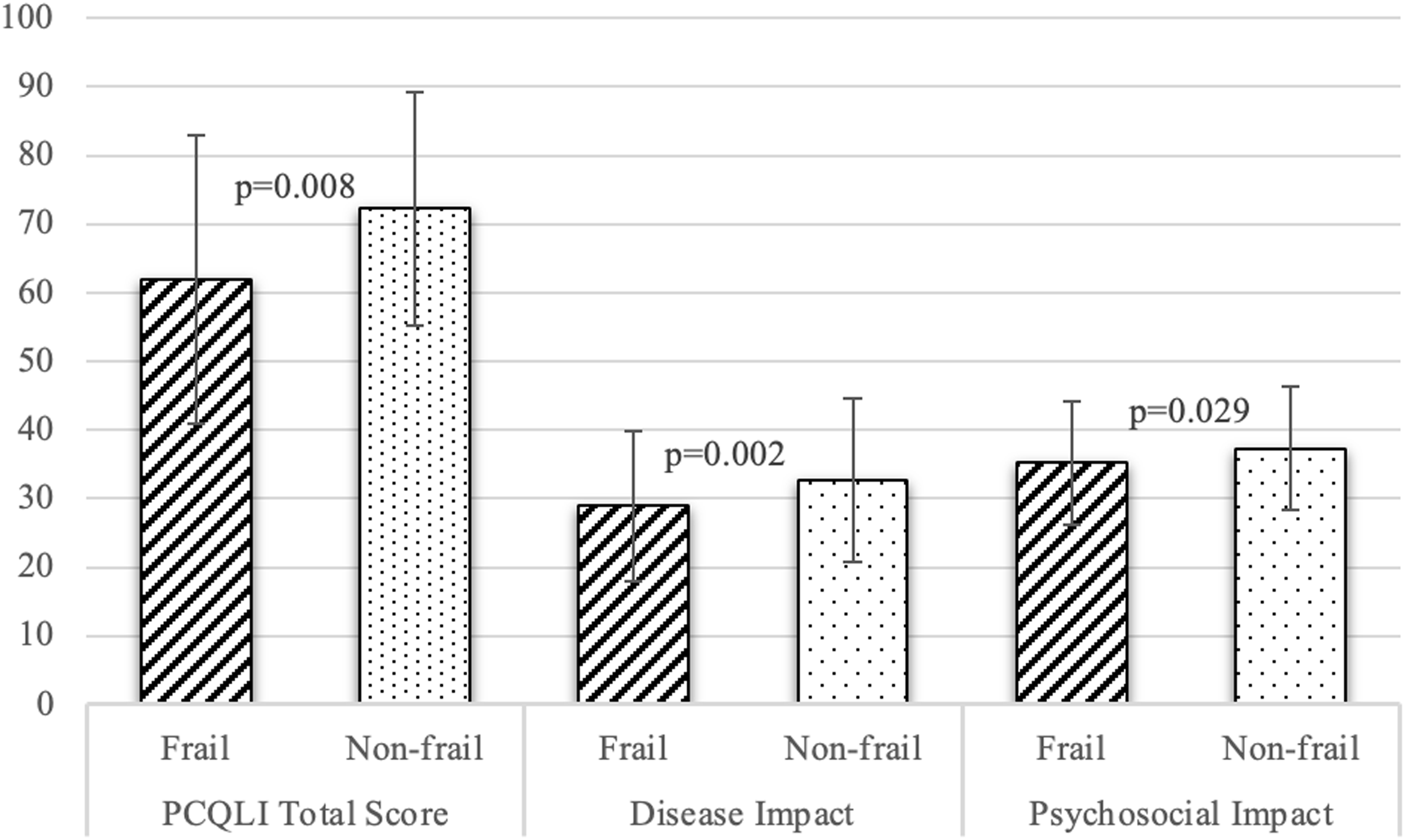
Parents of frail patients reported that their children had significantly lower health-related quality-of-life scores than parents of non-frail patients (Figure 2). The mean score on the parent-reported Pediatric Cardiac Quality of Life Inventory Total score was worse for frail patients (62.0 ± 21.3) compared to non-frail patients (72.3 ± 16.9) (p = 0.008) (Table 4). In addition, the Disease Impact subscale score for frail patients was worse than non-frail patients (28.9 ± 10.7 vs. 35.2 ± 9.2, p = 0.002). The Psychosocial Impact subscale score for frail patients was worse than non-frail patients (32.7 ± 11.9 vs. 37.3 ± 9.3, p = 0.029). The Pediatric Cardiac Quality of Life Inventory Total, Disease Impact, and Psychosocial Impact scores were all worse for both the frail and non-frail cohorts compared to a mild biventricular CHD control group Reference O’Connor, Cassedy and Wray25 (p < 0.001) (Table 4).
PCQLI total, disease impact subscale, and psychosocial subsclae scores by frailty group.

Discussion
The purpose of this study was to identify the prevalence of frailty and to determine associations between frailty and neurodevelopmental and health-related quality-of-life outcomes in a high-risk paediatric cardiac population. This is the largest study to date assessing frailty in the paediatric cardiology population. In our diverse school-age cohort of paediatric cardiac outpatients seen in a cardiac neurodevelopmental programme, approximately one-third of the patients were identified as frail. The only demographic or patient medical history descriptor that was associated with frailty was older patient age. This is the first study to identify the associations between frailty and worse neurocognitive (school and executive functioning), emotional (anxiety), social (peer relationships), motor, adaptive functioning, and health-related quality of life. These findings highlight that frailty is both prevalent and associated with adverse outcomes that may have a global long-term impact. Risk stratification for frailty may be a critical evaluation and stratification element of high-risk cardiac patients in neurodevelopmental programmes.
Frailty has been studied in numerous adult cardiology populations, including heart failure, Reference Jha, Hannu and Chang8 ventricular assist device therapy, Reference Joseph, Manghelli and Vader26 valve replacement, Reference Afilalo, Lauck and Kim27 critical illness, Reference Bagshaw, Stelfox and McDermid5 cardiac surgery, Reference Lee, Buth, Martin, Yip and Hirsch6 acute coronary syndromes, Reference Graham, Galbraith, O’Neill, Rolfson, Dando and Norris4 and cardiac arrest. Reference Allen, Orkaby and Justice3 While adult studies of cardiac patients have identified associations between frailty and important outcomes such as increased mortality, morbidity, and healthcare utilisation, Reference McNallan, Singh and Chamberlain2–Reference Richter, Guasti and Walker7 to date there is limited data on the association between frailty and equally important outcomes in the paediatric cardiac population. There is data on the presence of frailty in non-cardiac paediatric populations such as chronic kidney disease and paediatric cancer. In a study assessing frailty in paediatric chronic kidney disease, 13% of the cohort was found to be frail, and frail patients had a 3.2-fold higher odds of frequent infection and a 2.8-fold higher odds of hospitalisation. Reference Sgambat, Matheson, Hooper, Warady, Furth and Moudgil10 Similarly, a study by Conroy et al found that 6.1% of paediatric patients with cancer hospitalisations were frail and frailty was associated with increased hospital costs, in-hospital mortality, and length of stay. Reference Conroy, Zhang and Kaito9 In the paediatric cardiac population, Panchangam et al established that frailty can be quantified in children with congenital and acquired heart disease. Patients with a single ventricle, heart failure, and pulmonary hypertension had significantly lower assessments in the five frailty domains (slowness: six-minute walk test; weakness: hand-grip strength; exhaustion: fatigue; body composition: height and weight percentile, body mass index, triceps skinfold thickness; and physical activity: paediatric activity questionnaire score) compared to heart-healthy children. A single-centre small study by Studyvin et al of paediatric patients with a single ventricle physiology, heart failure, and pulmonary hypertension found that worse baseline frailty scores were associated with a greater degree of symptomatic heart failure, the greater number of ancillary specialists, increased medical comorbidities (total prescribed medications, heart failure medications per day), worse exercise performance, and worse health-related quality of life. Reference Studyvin, Birnbaum and Staggs13 While the Studyvin study investigated the association between frailty and various outcomes, neurodevelopmental outcomes were not explored. Our larger study expands the identified associations between frailty and outcomes beyond disease symptomatology, medical care utilisation, and exercise performance and explores neurodevelopmental and health-related quality-of-life outcomes. Assessing the associations between frailty and long-term neurodevelopmental impairments is important because neurodevelopmental morbidity impacts educational achievement, life-long earning potential, insurability, and health-related quality of life. Reference Ilardi, Ono, McCartney, Book and Stringer28
Paediatric studies have focused primarily on applying paediatric-specific metrics to Fried’s criteria. Similar to other paediatric cardiology studies, our study applied paediatric-specific metrics to Fried’s criteria but expanded the paediatric cardiology cohort to a more heterogenous population. Our study included patients with CHD who had open heart surgery within the first year of life or had a history of seizures, abnormal imaging, developmental delay recognised in infancy, genetic syndrome, mechanical support, and/or heart transplant. Surprisingly, despite 37.4% of patients meeting frailty criteria, frailty was not associated with any of the collected clinical variables, including the history of a heart transplant, mechanical circulatory support, history of Fontan palliation, or a number of surgeries. A study by Daelman et al in the adult CHD population found only 6% of patients met 3 out of the 5 frailty criteria (this definition for frailty was similar to the definition used in this study), but 42% met 2 out of the 5 frailty criteria. Reference Daelman, Van Bulck and Luyckx29 This study also failed to find an association between a diagnosis of complex CHD and the presence of frailty but did find an association with physiologic state and associated comorbidities. Reference Daelman, Van Bulck and Luyckx29 This suggests that frailty screening should not be limited to those with the most complex cardiac diagnoses but must consider functional status, physiologic stability, and other non-cardiac comorbidities.
Our finding that frailty in the paediatric CHD population is associated with adverse neurocognitive, psychosocial, motor, adaptive, and health-related quality-of-life outcomes highlights the need for additional frailty and multi-dimensional screening in paediatric populations. We found frailty to be associated with not only worse physical functioning but also with worse cognitive and psychosocial skills the very skills needed to successfully manage chronic disease in the long-term. Our study found frailty to be significantly associated with several neurocognitive factors, including the presence of an individualised education programme, worse executive functioning, and worse school functioning. In a study of adult patients with CHD, cognitive function was found to be protective; patients with adequate cognitive function attended more outpatient clinic visits. Reference Daelman, Van Bulck and Luyckx29 Thus, frailty may have more of a global biopsychosocial impact on developing children and adolescents than previously considered and could have an important long-term impact on patient outcomes and ability to access resources. Surprisingly, our study did not find an association between frailty and all psychosocial screeners. We only found frailty to be associated with higher anxiety but did not find frailty to be associated with higher depression or behavioural symptoms. A national cohort study of healthy adolescents found that cardiopulmonary fitness markers were worse for individuals with mental health disorders, which included anxiety, depression, and attention deficit disorder. Reference Chiang, Chuang and Chen30 This contrasts with our study, which only found frailty to be associated with anxiety. Our finding that frailty is associated with worse health-related quality of life is consistent with the findings of another paediatric frailty study and with other studies examining the relationship between physical functioning and health-related quality of life. Studyvin et al found that higher frailty scores in children and adolescents with heart disease was associated with worse health-related quality of life as measured by the PedsQL 4.0 Core scales. Reference Studyvin, Birnbaum and Staggs13 A systematic review by Drakouli et al also identified ‘limitations due to physical impairment’ as one of most common determinants of quality of life in children and adolescents with CHD. Reference Drakouli, Petsios, Giannakopoulou, Patiraki, Voutoufianaki and Matziou31 Our findings support this previous research, as frailty was associated with gross motor ability, executive dysfunction, anxiety, worse health-related quality of life, as well as worse adaptive functioning. Physical rehabilitation, including cardiac rehabilitation programmes, have studied frailty and exercise-related interventions aimed at reducing frailty. A study by Hermsen et al demonstrated that frailty is a modifiable risk factor; over 120 days, frailty scores improved as paediatric patients participated in cardiac rehabilitation and experienced post-operative recovery. Reference Hermsen, Opotowsky and Powell12 Additional research is needed to not only assess how to best modify frailty in paediatric populations but also how reductions in frailty scores impact neurocognitive, psychosocial, motor, adaptive, and health-related quality-of-life outcomes that may, in turn, have an impact on patients’ functional outcomes over the course of the lifespan.
An important limitation of our study is the lack of “complete” data. First, only 60% of eligible patients seen in our cardiac neurodevelopmental programme had ‘complete’ physical (six-minute walk test and grip strength) data and were included in this study. The COVID pandemic temporarily forced the clinic to pivot to telemedicine, which transiently limited our ability to complete some aspects of the frailty testing battery. Patients with incomplete data were no different from study patients with regards to gender, insurance, or type of heart disease. The study patients were older at 10 years of age compared to 9 years of age in those with incomplete data. In addition, some patients are unable to complete all aspects of testing due to behavioural, cognitive, and/or physical limitations. As the frailty paradigm continues to be translated to paediatrics, ongoing research is needed to identify the most appropriate and comprehensive ways to measure criteria across patients of diverse physical and cognitive abilities.
Frailty is common in school-aged patients with cardiac disease and is strongly associated with adverse neurocognitive, psychosocial, motor, and adaptive outcomes and worse health-related quality of life. Frailty was not found to be associated with clinically meaningful demographics or patient medical history. Risk stratification for frailty may be a critical element of the evaluation of high-risk cardiac patients in cardiac neurodevelopmental programmes.