Aim and reflections on historiography
The history of colonial urban space in sub-Saharan Africa is a burgeoning field of study. Still, it is highly unusual for French and British West Africa to be analysed within the same intellectual framework. This article strives to compare the French and the British practices of town planning and street naming in colonial Dakar and Lagos and to examine the relationship between these practices and the cultures of colonial regimes. The two doctrines – assimilation and indirect rule – together with practical and perceptual relations between the French, the British and the relevant indigenous societies are discussed with regard to urbanism. The landscapes of Dakar and Lagos are treated here not as simple reflections of the asymmetrical power relations inherent in the colonial situation but as dynamic ground for both physical and conceptual interactions between the involved groups.
Until recently, according to Richard Drayton, many people excused themselves from the tiring business of learning foreign names, places and languages, because of the idea that the colonizing countries were expanded from the European heart to the overseas periphery. Only now, he noted, a generation after the decolonization era, have we started to combine the histories of the former métropoles with those of their empires. That is, modern Europe has created its extra-European history no less than it was created by the latter.Footnote 1 The same line of thought was also introduced by Jane M. Jacobs, by Felix Driver and by David Gilbert, as well as by the canonical work of Edward Said.Footnote 2 Said, in his geographical inquiry into historical experience, established the idea that the earth is, in effect, one world and that cultures assume more ‘foreign’ elements than they consciously exclude. ‘Who in India or Algeria today’, asked Said, ‘can confidently separate out British or French components of the past from present actualities, and who in Britain or France can draw a clear circle around British London or French Paris that would exclude the impact of India and Algeria upon those two imperial cities?’Footnote 3
This geo-cultural understanding has not necessarily been reflected in recently published textbooks concerning urban planning. Kenneth Kolson, for example, places his narratives of modern urban design in Western Europe and North America exclusively.Footnote 4 His only reference to colonial planning thus relates to the frontier plantations of the ‘New World’. Similarly, Peter Hall opens his book by admitting a geographical problem. That is, his supposed global history is actually ‘glaringly Anglo-Americocentric’ as ‘so many of the key ideas of twentieth-century western planning were conceived and nurtured in a remarkably small and cosy club based in London and New York’.Footnote 5
Though such geographical restrictions in research are currently changing, it is still possible to say that relatively little attention has been given to the history of European planning practices in the overseas colonial territories, especially in Africa. In 1965 Janet Abu-Lughod, referring to the North African colonial urban experience, remarked that ‘so common a phenomenon has remained almost unstudied’.Footnote 6 Similarly, about forty years later, the editors of one of the recent issues (2006) of the journal Afrique et histoire on the subject of African cities noted that only in recent years have we been proceeding toward an historical perspective regarding the city in Africa. Traditionally, this domain was researched only by sociologists and anthropologists.Footnote 7
This article is intended to add another layer to the published literature that has already taken into account both the history of European planning in the overseas territories and its socio-political and cultural implications. While this literature has gradually been growing, especially in the last two decades, studies focusing on (sub-Saharan) Africa therein are still rather uncommon.Footnote 8 Several edited works, however, do bring together a collection of case studies, each of which deals with a city under one of the colonial powers (Britain, France, Italy, Japan).Footnote 9 But the task of summarizing the common, or diverse, themes of the individual chapters is most often left to the reader. Thus, this article tries to compare two colonial powers – France and Britain – with regard to their urban planning concepts and practices overseas. Moreover, it will focus on sub-Saharan Africa (a considerable number of these pioneering works deal with North Africa, mostly written in French).Footnote 10
On planning, ‘planlessness’ and colonial West Africa
Before offering some comparative reflections about the particularities of the physical infrastructure of each city and that city's attendant colonial policies of urbanism and street naming, several common features of the colonial situation in West Africa in matters of planning should be explained. Since French and British territories in West Africa were never designated as permanent white settlements due to the climatic conditions, there was relatively little friction between the white and the indigenous communities there. No colony in West Africa was regarded, like Algeria, as France d'outre mer, or was celebrated, like British India, as the jewel of the Crown Colonies. Therefore, tensions over land and resources (as well as the decolonization struggle) were generally not as intense as elsewhere in the continent.
As massive migration of white settlers was impractical in colonial West Africa, urban development occurred in response to the need for administrative and labour control along with the effective articulation of exportable surpluses through modern means of transportation, particularly the railways. For this reason, most French and British governors chose to concentrate on productive investment, and they were committed to ensuring adequate conditions for their expatriate agents rather than to improving the general living conditions of their African urban populations – an issue addressed especially after World War II.Footnote 11 Thus, while there were differences between the French centralized doctrine of assimilation and the British indirect rule approach, neither power made major economic investments in urban planning. The political doctrine was irrelevant in this regard.Footnote 12 The scarcity of resources that characterized both the French and the British colonial regimes, which were run on shoestring budgets and were chronically underfunded and understaffed, necessitated a certain order of priorities. Accordingly, the first streets to be paved, lined with trees, lighted, properly drained and regulated were those of the white residential quarters. These quarters overshadowed the ‘other’ urban parts, which were never actually considered integral parts of these cities.
Dakar, on the mainland, was officially occupied in 1857 because of its strategic position and because congestion and deterioration of living standards in the nearby island of Gorée had become intolerable. Likewise the British seizure of Lagos, marked by their 1851 bombardment of the island, was also due to strategic interests. The seizure was followed by a ten-year consular regime, which was then replaced by formal control through local governors. This formative period of the 1850s is important for the examination of these cities because it was characterized by meagre economic investments that affected the implementation of colonial urban planning schemes there. What this meant was that colonialism was simultaneously exposing both its strengths and its weaknesses. On one hand, it was characterized by extreme exertions of power on behalf of the colonial state, which enabled the enforcement of occidental modes of planning; on the other hand, it was characterized by an unmistakable weakness of control by that same state, which led to the failure of the realization of many planning ideas.
This article ends, not arbitrarily, in the 1930s. World War II constituted a turning point in the British and French colonies in sub-Saharan Africa in terms of political, administrative and economic conditions. Colonial urban planning policy, particularly after 1945, was more prominent. In the early twentieth century, European imperialism was at its climax, with Britain and France amongst the most active powers on the international level. The ‘heroic’, or ‘military’, phase of the conquest of the vast African hinterland was over, and under pax colonia, which aimed at the establishment of internal political and administrative frameworks, economic gains were promoted.Footnote 13 Under these conditions, the physical environment, as well as other aspects, particularly in colonial urban centres such as Dakar and Lagos, underwent considerable changes in order to be adapted to colonial exploitation. The basis of the infrastructure of the modern empire was laid down at this time. This period was marked in colonial planning literature as one of ‘development’, ‘betterment’, ‘efficiency’ and the like, reflecting the apparent scientific and rational facets of the colonial enterprise. The Depression and World War II, however, slowed down urban investment and development in the French colonies of sub-Saharan Africa.Footnote 14
In Lagos, the capital city and the major port city of colonial Nigeria, urban problems such as overcrowding and inappropriate residential construction had already worsened considerably by the 1930s; then, the first slum clearance schemes were executed. This was the time when the importance of professional town planning was acknowledged by the British colonial authorities, though it was mainly perceived as a cost-effective measure rather than as a contribution to the welfare of the Africans. Nevertheless, this article ends in the 1930s because the Great Depression and World War II engendered budgetary cuts that restricted the growth of town planning during the war. Only in the late 1940s did a partial application of previous planning schemes take place. Before then urban planning in Nigeria was never considered a deserving enough project for heavy government investment; moreover, there were never more than three professional town planners active at the same time in Nigeria.Footnote 15
Why Dakar and Lagos?
Dakar and Lagos have been chosen because each represented the focal point of colonial exploitation of one of the two dominant colonial regimes in Africa, the French and the British, respectively. It was in these coastal enclaves that direct rule was exercised, and the colonial administrative, economic, maritime and communication functions of the vast surrounding territories were concentrated. Dakar and Lagos were not only major colonial port cities, but they were also pre-colonial settlements where exchange and contact with both the hinterland and the West had long existed. These settlements inherently bridged and mediated between complex frontiers, at the geo-political, cultural and formal levels.
The strategic position of Dakar, the westernmost point in West Africa, was acknowledged by the French following the Crimean War and the later ‘scramble’ for Africa. Hoping that it might become the capital of the French colonial empire in West Africa, in 1862 the colonial governor Pinet-Laprade drew the first town plan for a city-to-be; a port, administrative headquarters as well as military and commercial facilities were marked. Although by the late nineteenth century the port of Dakar was already competing with the older French settlements of Saint-Louis and Rufisque, its position was dramatically enhanced when it also became the terminus for the Dakar–Saint-Louis railway line, which had been initiated in 1885, and then the Senegal–Niger line (Dakar–Bamako) which was completed in 1923. The enlarged and modified harbour, which was required for the increased and more diversified trade there in the wake of these changes, enabled Dakar to dominate the sea trade between France and West Africa. There was only one regional rival, in terms of trade value and handled tonnage: Lagos's port.Footnote 16
The designation of Dakar as the capital of the Afrique Occidentale Française (AOF) Federation in 1902Footnote 17 brought about unprecedented population growth. Government buildings, European dwellings, recreation facilities and urban infrastructure were constructed on the high plateau at the tip of the peninsula. In addition to regulations prohibiting African housing in this part of the town, a more rigorous segregationist move occurred during the 1914 bubonic plague epidemic; then, many indigenous inhabitants were resettled in the newly created outlying quarter of the Médina. As the AOF Federation became a model for central colonial government in Africa, Dakar, its capital, became a model for sub-Saharan urbanism. It was intended by the French to fulfil an international role rather than a local one, West African rather than Senegalese.
As a model space and under the colonial doctrine of assimilation, some Parisian spatial planning elements could be imported to Dakar. Generally speaking, the aim of the policy of assimilation, as asserted by the Third Republic, was to turn the colonies into an integral part of the mother country, and their populations were to be considered equal, as closely as was possible, to that of the mother country.Footnote 18 At the heart of this attitude to the colonies lay the idea of human equality which was inherent in the Revolution and the belief that French culture, together with its mission civilisatrice, was not superior to any other culture, African as well as European. Dakar was also prominent among cities in the francophone colonial world that were regarded as laboratories or ‘experimental terrains’ (champs d'expérience) in planning.Footnote 19 That is, the colonial situation especially before World War II enabled the colonial authorities to carry out, with relative freedom, plans that might never have been allowed at that time at home. Comparable freedom was still inconceivable in contemporary Paris or in any provincial centre in metropolitan France.Footnote 20
In spite of what was officially stated, the annexation of Lagos to the British Crown – the first step in the making of Nigeria into one of the most populous and wealthiest of African territories – was not a simple consequence of a philanthropic will to abolish the slave trade. There was also an economic interest there, that of controlling legitimate trade and exploiting Africa's natural resources, reaching well beyond the Niger River.Footnote 21 Thus, though the site of Lagos Island was unhealthy because of its low elevation and bad drainage – both causes of infectious diseases and malarial mosquitoes in the occasionally flooded areas – the economic and political role of Lagos increased in the wake of the British military intervention and the formal annexation of Lagos to the Crown in 1861.
A turning point in the history of the Island was the establishment of a modern communication infrastructure, including the Lagos–Ibadan railway line (1895–98). Prior to that time, though British control of Lagos was shaped as a direct rule from the start, British sanitary and planning practices in colonial Lagos were piecemeal. This is not only because colonial rule had gradually been consolidated by the late nineteenth century, but also because there was a relation between Lagos' mise en valeur and its geographic proximity to the contemporary administrative and political centre. That is, Lagos only gained some independence as a colony in 1886 when it got a governor and central administration of its own. During most of its first few decades as a British colonial settlement, Lagos was connected with other British coastal territories.Footnote 22 Therefore, not only the official European community was kept small, but colonial planning investments were also kept at a minimum.
Another turning point occurred in 1906. At that time the Colony of Lagos and the Protectorate of Southern Nigeria were fused to create the Colony and Protectorate of Southern Nigeria, with Lagos as its capital. This move necessitated further construction and improvement of wharfs; likewise the opening of the Lagos–Kano railway in 1912 and the unification of the Northern and the Southern Protectorates of Nigeria in 1914 – with Lagos again as the capital – gave rise to even more trade.Footnote 23 And, from 1917, Lagos was accorded its first representative council since it was regarded as the only First-Class Township in Nigeria under Lugard's Township Ordinance of 1917. This ordinance called for the creation of townships – areas outside native jurisdiction, governed under the policy of Indirect Rule – of First, Second and Third Classes. Each of the townships was ranked according to the number of its European residents, and the allocation of amenities was directly related to its rank.Footnote 24
Lord Lugard was the chief architect of the ‘indirect rule’ approach – that is, the British colonial doctrine as it was applied in its West African dependencies, among other places.Footnote 25 This doctrine favoured the ‘development’ by the colonial power of ‘peoples who are not yet able to stand by themselves’ on one hand and ‘the general welfare of mankind’, on the other (hence its attendant ideology called ‘dual mandate’).Footnote 26 ‘Development’ – the economic utilization of local raw materials by the colonizing country – was expected to occur virtually with the least interference in indigenous customs (hence, ‘indirect rule’). Though such a philosophy had worked, through appointed chiefs, in the Islamic emirates of Northern Nigeria, direct British control was imposed on Lagos. Nevertheless, the laissez-faire atmosphere that characterized the British decentralized political tendencies in general was also felt in contemporary Lagos; consequently, there was little evidence of specific colonial planning policy there prior to World War II.
Planting the flag, assimilation and indirect rule
Similarities between the particular local conditions regarding the official establishment of Dakar and Lagos and the respective colonial doctrine in each settlement are drawn here.
In spite of the limitations discussed above of the colonial state in West Africa, these similarities were the result of the accommodation of the political reasoning to the existing circumstances in each territory.
Pinet-Laprade's master plan for Dakar, 18 June 1862. Courtesy of Archives nationales du Sénégal.

The French occupation of Dakar-to-be in 1857, that was carried out by Léopold Prôtet, the high commander of the area, was relatively peaceful. Cap-Vert peninsula, over which Dakar extends, was then sparsely populated by Lebu villagers. Considered native to the region and mainly engaged in seasonal fishing and inland farming, this population was estimated at about 10,000 at that time.Footnote 27 Dakar (or Ndakaru) was a generic name for eleven Lebu villages that were concentrated in the southern part of the peninsula, on the margins of the Wolof Empire. Each of the villages, erected on the sandy dunes, consisted of a few hundred inhabitants. Dakar's gridiron master plan exemplified an essentially occidental and rationalistic vision. It was conceived in 1862, within the first five years of the French occupation, by Jean Marie Emile Pinet-Laprade, the then head of the local Corps of Engineers (Corps du Génie Militaire). During this process and in the subsequent decades, the Lebu population was constantly being displaced beyond the expanding margins of the city. Some of their villages, such as Hock and Kaye, experienced displacement (or, using the French colonial terminology, déguerpissement) two or even three times.Footnote 28
Pinet-Laprade's orthogonal plan of Dakar was not without precedents, to say the least, considering other contemporary colonial settlements of Spain, Portugal, Holland, England and of France itself.Footnote 29 This model, for its part, is also associated with medieval bastide towns and the Renaissance tradition, which may create the impression that Pinet-Laprade renewed nothing but the ancient principles of Vitruvius. The orthogonal plan seemed to respond to two general aims: first, to facilitate the arrangement of a settlement, especially when acquired in a faraway territory; and secondly, to foster modernization in the sense of mise en valeur as opposed to the indigenous practices. Yet, this plan tends to be regarded critically in the post-colonial literature. Some scholars maintain that its model reflected the imposition of moral and physical order both on the landscape and on the subjected populations. It also signifies, in the critics’ opinion, the actual introduction of imperial power, with the transformation of the ‘haze’ of the pre-colonial terra incognita into clearly marked lines of colonial cartographic certainty.Footnote 30
Pinet-Laprade's vision and plan exemplified Dakar's mission as an ‘imperial city’ in the French colonial imagination long before it was a city at all. These compulsive and grandiose aspects of his plan imply the assimilationist thinking that was inherent in it. This thinking also guided the general lines of Dakar's plan, which was organized around the central square of place Prôtet (today's place de l'Indépendance). This square bordered, inter alia, a church, primary schools, a court of justice, a public garden and a museum. The museum seems a somewhat unexpected idea, considering the embryonic state of the settlement at the time. Another assimilationist aspect was that the area that was planned by Pinet-Laprade, later known as Dakar-ville, was considered by the colonial authorities as the ‘prettiest area of the town’.Footnote 31 It was intended, together with the Plateau quarter that was established southwards by the early twentieth century, for habitation by the expatriate population. In spite of the fact that tens of thousands of Africans lived there as well, the expatriates regarded these quarters as ‘our streets and our boulevards’.Footnote 32 Contemporary maps testify to the unbalanced attitude of the French colonial authorities towards the African factor there. In a map of Dakar dating from 1895, Dakar-ville seems to end where it bordered on the area of indigenous huts. There is, however, an overlapping zone on the map, where some of the huts occupied the edges of Pinet-Laprade's paved arteries. This area was named ‘Native Town’. Beyond that, to the west, there is only an empty space.Footnote 33 At this stage of the establishment of Dakar, the concentrations of indigenous houses were known as ‘native town’, village indigène or village des noirs – terms which invariably denied that these neighbourhoods were integral parts of the city.
Another plan of Dakar published in 1915, for instance, is very detailed with regard to the position of all the localities in the Plateau, the privileged expatriate-quarter, and in Dakar-ville which gradually became the commercial area. Yet, this plan fails to give equivalent data for the Médina, that is, the poorly equipped indigenous quarter which had been established a year before at the north-west – this area does not seem to exist at all.Footnote 34 This fact might not be surprising considering the circumstances under which the Médina was created. The establishment of the Médina in Dakar, which was hastily carried out after the outbreak of a severe epidemic of bubonic plague in 1914, was actually intended to segregate the African from the European populations there.Footnote 35 However, the colonial authorities only managed to transfer about 8,000 Dakarois to the Médina, while about 20,000, mostly of Lebu origin, remained in sub-standard houses in Dakar-ville. One reason for this was that under the policy of assimilation, Dakar was one of the Four Communes, and its Lebu residents were considered as originaires.Footnote 36 Under these circumstances, any forced transfer could be a most embarrassing issue for the colonial state – another fact that blurs the stark view of power relations between the colonizer and the colonized in West Africa.
The town of Lagos on the eve of the British occupation, in contrast to mid-nineteenth-century Dakar, was already active as a chief regional crossroad – geographically, politically and commercially. While Cap-Vert peninsula was relatively sparsely populated, Lagos was characterized by the well-established urban traditions of the Yoruba, whose various sub-groups were almost all represented on the Island and already organized within three main quarters. The British were thus obliged to confine their own urban layer to the few relatively free spaces left on the southern strip of the Island. Dakar's master plan permitted the ‘luxury’ of creating, in advance, several spacious arteries, each 20 metres wide, that crossed the city from north to south and from west to east – a situation almost impossible, as we shall see, in congested colonial Lagos.
It seems that Lagos could have already been characterized as a polyglot or hybrid town long before the 1850s. Lagos' markets, owing much of their prosperity to the slave trade but also to products such as cloth, food and palm oil, attracted many immigrants from various parts of Nigeria-to-be and beyond. In its rich ethnic composition, Lagos was thus distinct from other pre-colonial Yoruba settlements, and as such, it should not be dismissed as a monolithic native town. Established in the sixteenth century, Isale Eko was then the first and most important Lagosian quarter. This site, on the highest point of the Island's extreme north-west (now occupied by the palace of the Oba [king] of Lagos), soon became the centre of a new prosperous village, inhabited by fishermen and farmers. The aristocracy of Awori Yoruba was gradually joined by other Yoruba groups that took part in trade; then came their chiefs. Each group settled down in an area of its own, as prescribed by the Oba.Footnote 37
By the formal annexation of Lagos in 1861 and the establishment of ‘pax Britannica’ resulting from regional Yoruba wars, new groups of immigrants, repatriates and expatriates, were attracted to Lagos. In the course of this process, Lagos was organized in the form of quarters; three distinct quarters gradually adjoined the existing Isale Eko. Indeed, the British were never directly or significantly involved in building there, as the Colonial Office sought to keep colonial intervention at a minimum, and government funds were not normally allocated for amelioration of the marshy physical infrastructure. At this stage, the British only added their own layer of settlement alongside the contemporary ones. The first quarter, Isale Eko, constituted the greatest and most populated one. Though its residents were estimated at 30,000 in 1859,Footnote 38 they were very threatened by the three minority groups residing in the three neighbouring quarters. The abolition of the slave trade, the growing scarcity of free land and the fierce competition forced on the former by new, legitimate, trade forms that had been adopted mainly by the other groups harmed their economy. The later introduction of Islam, which, unlike Christianity, was not identified with the colonial power, also became a distinctive feature of Isale Eko, already by the 1860s.Footnote 39
The second quarter, east of Isale Eko, was created after the removal of the Portuguese slave dealers in favour of legitimate trade. It was inhabited by repatriates, mostly from Brazil, Cuba and Bahia; it was renamed the Brazilian Quarter. The ‘Brazilians’ were self-emancipated slaves and captives who had been allowed to earn their living and eventually buy their freedom. Mainly of Yoruba (Egba) descent, about 3,000 of them chose to invest the rest of their savings in crossing the Atlantic towards Lagos. Others preferred other established coastal towns, such as Whydah (Ouidah) and Porto Novo. Upon their arrival in Lagos, the Brazilians naturally turned to workmanship learnt in captivity, such as building, carpentry and smithery; their status in Lagos as middle-class artisans was much higher than that of their counterparts in Brazil.Footnote 40 Some of the master builders and bricklayers were so appreciated by the later colonial administrators that they were sent to Britain for training and for employment in the Public Works Department.Footnote 41
The third residential quarter was inhabited by immigrants from Sierra Leone, duly called ‘Saros’. Most of these residents were lucky to be emancipated when they were still in the Atlantic by the British Royal Naval Squadron. Educated by missionaries while in Sierra Leone, they started their return to Yorubaland already in 1839 and established missions there. They lived in the south-western part of the town, inhabiting an area granted by the then Oba, formally called Olowogbowo (sometimes shortened to ‘Ologbo’), which means, in Yoruba, ‘the maker has taken his things back’. The allusion was to the frequent loss of commodities carried in canoes that were capsized by sweeping lagoon currents opposite its shore. The Saros brought different skills with them, as their education had included Latin and English grammar, but little or no emphasis on practical applications. Many of them were engaged in trade and import, and they managed to raise their standard of living within a short time. Later employed by the colonial administration, some of their children were sent to Britain for higher education, becoming upon their return the first generation of African lawyers, doctors, surveyors and journalists.Footnote 42
Indeed, it might be an overstatement to refer to the few grouped warehouses of the European traders who came to Lagos after 1851 as the fourth or ‘European quarter’, yet that thin strip along the southern shore of Lagos Island would consolidate within the next decades and create the Marina. From the colonizer's point of view, this area was considered a desirable and prestigious part of Lagos. At this early stage, the few European traders were not British, but French, Austrians, Germans and Italians; it was only during the next several decades that the British element became dominant. In all, the number of Europeans in Lagos was never great, reaching only 250 by the end of the nineteenth century.Footnote 43
Lagos’ built-up area and its four main quarters in the 1890s. Based on The National Archives, CO 700/ Lagos 5, plan of the town of Lagos in 1883.

While on the verge of the formal British rule, pretentious buildings of the trading firms and missions were already seen on Lagos' southern shore; this development was intriguing: the Marina site was then considered by the indigenous population as the most marginal area and thus was unpopular for residential purposes. The native name of the area was Ehin Igbeti, which means in Yoruba, ‘outside the fence’, implying that this area was not part of the inhabited town in pre-colonial times. According to oral traditions, the area had served as a dumping ground for corpses of ‘Abiku’ paupers (literally, children born to die) – a social class that was considered mysterious and not entitled to ceremonial burial.Footnote 44 This section of Lagos turned into a white-dominated area under the umbrella of the British regime. Thereafter, the Marina, once considered as no more than the back yard of Isale Eko, turned into Lagos' most significant area. Where ‘back of the town’ is, can indeed be a matter of time and changing circumstances, as exemplified in the words of a British advocate in Lagos (1924), reflecting on its past: ‘The Marina was gradually occupied by European factories, while the back of the town, known as King's [Oba's] Quarter, was occupied by Natives.’Footnote 45
Against this background, the imposition of a master plan in Lagos would have probably necessitated a considerable economic expenditure on the part of the colonial authorities, as well as ambitious motivation in matters of planning. Neither was available, but even if one or the other were, it would have constituted a contradiction of the indirect rule approach. In the following decades, physical and sanitary conditions on the marshy and populous Island were so aggravated that the cost of confronting them caused the colonial authorities to vacillate between ‘it is hardly worth trying’ and ‘it is too late’ – ending with plans to move the capital city to a better location. Indeed, it was easier to supply an appropriate urban infrastructure and amenities to the white sector only, yet, as admitted by Lugard himself in the early twentieth century, ‘segregation is also impossible in so densely populated an area [i.e. Lagos Island]. . .where the residences of Europeans and natives are already so hopelessly intermixed’.Footnote 46
At the time of the outbreak of the 1913 yellow fever epidemic in Lagos, a long and strictly confidential correspondence between Lugard and the Colonial Office started; here Lugard fostered the segregationist idea. He recommended the establishment of a ‘Segregated European Settlement’, designated both for the administrative officers and for the commercial expatriate community; likewise, he suggested two possible sites for the project. The first stretched along the lagoon south of Five Cowrie Creek, at Wilmot Point on future Victoria Island, close to the Government House and connected to Lagos' Marina by a ferry. This plan was eventually discarded since the area, which is only a little above sea level, was susceptible to flooding, and because the installation of a sewage system there would have been too costly.Footnote 47 The second proposed site was the higher land of Yaba, two miles towards the mainland, but the detailed plan was again discarded for reasons mentioned previously.
One implication of the hesitations mentioned above explains the spatial organization of administrative and ‘public’ buildings on Lagos Island; that is, of the buildings which housed the institutions intended mainly to serve the expatriate community. The laissez-faire manner of the establishment of Lagos as a colonial urban sphere engendered a decentralized organization of such buildings in those areas that were both habitable and relatively free of indigenous structures at the time of the formal occupation. This meant that many administrative edifices were placed on the Marina, among premises used by the expatriates for business or residence, whereas others were initially erected on inner available plots behind the coastal belt and among residential premises. In the course of the reclamation works on the island's various creeks and swamps more unforeseen decisions were made. For instance, governmental quarters and schools were placed around the circular Racecourse space and a distant plot for the new cemetery was allocated. Colonial Dakar, in contrast, experienced an essentially centralized spatial organization with regard to administrative and ‘public’ edifices, with its hub around place Prôtet at the centre of Dakar-ville.
Street naming and colonial doctrines in Dakar and Lagos
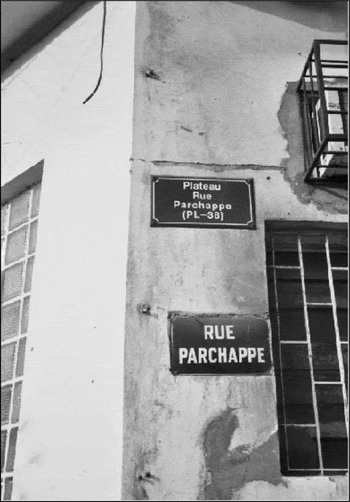
The earliest documentation of Dakar's street names and their origins was done by Claude Faure, the first archivist of the AOF. Faure listed all the street names offered by Pinet-Laprade for the city, several of which have lasted to this day.Footnote 48 Examining the list, of a few tens of names in all, two features stand out. First is the fact that most of the names relate to individuals who had played significant roles in the effective colonization of Senegal and the regions beyond it. These include the names of military and navy officers who had died in battles against local powers or of malaria and other diseases, governors, military engineers, surgeons and explorers. Amongst the latter is, for instance, rue Parchappe near place Prôtet. The second feature is that the few African street names that do exist were only designated to support the French master narrative, an aim more clearly illustrated by the first feature. Where an indigenous settlement was mentioned, it was in fact in praise of French military occupation of a fortress or a village.Footnote 49 In the case of rue de Thann, the reference was to one of the twelve pre-colonial Lebu villages in that area, which, following Pinet-Laprade's plan, was to be transferred farther inland.
Rue Parchappe in Dakar's city centre. Photograph by the author.

These two features represent the formal attitude of the colonial administration towards street names in the first stages of the establishment of Dakar. This official memory was intended to include the expatriate group almost exclusively. When the local histories had not been totally ignored, they were highly subjected to the history of the colonizer. Moreover, the newly acquired status of Dakar as the AOF's capital in 1902 only contributed to the consolidation of these toponymic tendencies. From 1904, two years after the new-capital status, four main arteries were opened in Dakar. Their names were not only metropolitan, but typically republican, such as boulevard de la République and avenue de la Liberté on the Plateau, which connected the colonial hospital with rond-point de l'Étoile; avenue Gambetta north of rond-point de l'Étoile towards avenue Faidherbe that stretched from the Médina; and the later westwards extension of the previously mentioned boulevard National. Though the colonial government was aware of the possible difficulties that a considerable amount of republican reference could cause in the early stages of the policy of assimilation, there was no apparent contradiction between the two. According to the mission civilisatrice that was rooted in the republican idea of an empire especially before World War I, Africans were expected to love France and Africa simultaneously.Footnote 50 Though the category of names of individuals connected with the region remained the most developed one until the eve of independence, the number of African names among these was exceptionally low in Dakar compared with the other AOF capitals.Footnote 51 Indeed, this toponymic symbolism that was particularly intensive in the model space of Dakar could be noted in other French colonial territories that were subjected to the assimilationist policy, such as in northern Africa.Footnote 52
Concerning Dakar's Médina, its orthogonal streets were only identified by numbers from 1 to 71, and they did not bear any names until the late colonial period.Footnote 53 Yet, two main routes in the area of the Médina did bear African names: avenue El Hadji Malik Sy and avenue Blaise Diagne. These names were not accidental. They represented those political leaders in the colony who never threatened the French colonial rule in Senegal – one was connected with its religious Islamic life and the other with the emergence of modern political movements.Footnote 54
Some commentaries imply that the local residents of Dakar had their own systems of reference to specific locations within the town, particularly in the early days of the colonial rule. Perhaps these replaced the French assimilationist terminology of street naming, or, more probably, were used side by side with it. The Dakarois references were directly related to the eleven Lebu villages of which pre-colonial Dakar was composed, and, particularly, to smaller units within them, including names of lineages and families.Footnote 55 In addition, in early colonial Dakar, the Lebu residents would occasionally refer to the first streets that were introduced by the French informally, by a landmark, since these streets constituted a big innovation in the local landscape. One example is rue Vincens, which was laid in the 1900s. Traversing the then Lebu village of Kaye and going southwards to the premier European residents on Dakar-ville, this street was referred to by the Dakarois as ‘la grand'rue’.Footnote 56 It is most probable that when the neighbouring avenues were laid, such appellations became irrelevant and gradually disappeared.
A comparison between the self-centred approach of the French to street naming in Dakar and the contemporary British one in Lagos Island is enlightening, particularly when we consider the role that the local factor was permitted to play in the naming process. This comparison is also interesting because in many ways, the central position of British Lagos – strategically, politically and symbolically – was similar to that of Dakar, its French counterpart in West Africa. Street names in British Lagos, especially those of the late nineteenth century, owed much to the indirect rule ‘laissez-fairism’ regarding planning and other issues. This decentralist tendency, and even a certain degree of indifference on the part of the British authorities as regards the naming process in Lagos Island, can be illustrated, for instance, by the following facts: the task of naming was handed over to an indigenous surveyor, Otonba Payne, who belonged to the local educated elite; and the names in his 1893 (1868) published list, comprised in all 83 streets.Footnote 57 These could be divided into three main categories: indigenous names, site-related names and eminent colonial names, in this order of predominance.
Indigenous names, usually of local rulers, chiefs and religious leaders, as well as other influential figures in Lagos' urban life, such as rich traders, constitute the majority: 65 names. Among these were King Street, referring to the residence of the Oba, the traditional ruler of Lagos; Davies Street, referring to the African who assisted in reconciling rival forces during the contemporary internal wars of the Yoruba (notice the anglophone names of Lagos' educated elite, which had no parallels among the Lebu and Wolof elite of Dakar); Faji Street and Tinubu Street, which referred to two rich Yoruba merchant ladies, in spite of the deportation of Madam Tinubu by the colonizers. Another street, Kosoko, was named after the Oba of Lagos. He was also deported by the British during their seizure of Lagos Island – but again, this did not prevent the British authorities from such naming; Onikoyi and Balogun Streets refer to names of local chiefs; and Shitta Street commemorates a wealthy trader who also built a mosque there.
Site-related street names – such as Oil Mill Street, Market Street and Palm Church Street – constituted Payne's middle group of 13 names; and typically British or colonial names constituted the smallest group of 5 names only. Among the latter were Campbell Street, which referred to one of the British consuls of the ten-year Consular Period that preceded the official seizure, and the other names were obvious, such as Victoria Street. There were also a few less obvious names that might be misleading, such as Ajele Street – ajele meaning ‘consul’ in Yoruba. Figure 4, for example, shows Ajele Street that still exists in the Marina quarter, one of the oldest quarters in Lagos Island. The Marina area on the southern coastal strip of the Island gradually became, by the late nineteenth century, an expatriate residential area.
Ajele Street on Lagos’ Marina. Photograph by the author.

It is important to note that it was an open British policy to train local surveyors, for they were cheaper and better accommodated to the West African climate.Footnote 58 W.T.C. Lawson, for instance, the assistant colonial surveyor of Lagos, proudly added ‘native of West Africa’ to his name on maps he had drawn. Though he only served colonial ends, it is clear from his detailed map of Lagos Island, prepared in 1885,Footnote 59 that many of the indigenous place names therein were preserved during the colonial and post-colonial eras. His map not only reflects the role of colonial surveyors as mediators between European spatial notions and local ones,Footnote 60 but Lawson's elaboration of Yoruba toponymy in late nineteenth-century Lagos is also distinguished for its accuracy, awareness and sensibility – unequalled by any British surveyor. It enables us to conceive of the settlement in terms of streets and built-up quarters prior to the British rule and in its first decades.
In this case, the survey did not obscure Yoruba spatial identity, but, by retaining this spatial identity side by side with European notions, the survey preserved the local terminologies and, as such, it now serves as a very helpful historical source. One can conceive of the peculiarity of this practice by comparing it to that of the autocratic approach of the French to street naming in Dakar. The incorporation of a considerable portion of indigenous toponymy to the British official memory in Lagos Island indeed corresponded with the agenda of the indirect rule. Presumably the Yoruba inhabitants of contemporary Lagos did not need to develop an alternative place or street naming system of their own to compete with or to challenge the colonial one, as was the case in contemporary Dakar.
Nevertheless in Singapore – Lagos' rich relative – the British authorities resembled the French with regard to street and place names, many of which reflected British ideological purposes and challenged local history, context and orientation. As shown by Brenda S.A. Yeoh, the dominant street names in Singapore were named after individuals who were considered important contributors to the urban life, after administrators and British royalty, and after ideal images of the English countryside. Yeoh has pointed to the christening of the streets in the city as being largely influenced by the British perception of Singapore as the capital of the Malayan states and the intersection of chief maritime routes, throughout 150 years of colonial rule.Footnote 61
Less strict in their attitude towards the symbolic implications of African street names in Lagos, the British officers were, however, keen on keeping accurate accounts of Lagos' street names during the colonial period. This practice was part of the municipal control that could be related to the frequent conflagrations, and perhaps more importantly because of tax matters. It can be understood from correspondence concerning place names in the Lagos area from the 1930s, for example, that the tax officer was usually joined by an African surveyor, who assisted him in following the constant changes in Lagos' streets and alleys. Elaborated tables listing ‘old’ and ‘new’ names, with ‘remarks’, were occasionally compiled in order to trace some of the informal changes of the purely local names.Footnote 62
One can conclude that the map of Lagos was regularly updated after such surveys, mainly for the following reasons: as a result of the formation of new residential areas within the municipal borders (such as Awunrin), which probably occurred spontaneously because of the relation between in-migration and the colonial urban presence; as a result of wrong names in previous versions of the map (such as Ogogoro versus Awoyemmi); as a result of some names that were changed by the inhabitants (such as Fatedo versus Okiti) or some names which had been misspelled in previous versions (Ojeregun versus Ajerogun); and as a result of simple omissions (Aketegba).Footnote 63 This situation testifies to a kind of chaos that was not present in contemporary, planned-in-advance, colonial Dakar. Another issue, inconceivable in then Dakar, was that the British commissioner of lands used to consult and gain the agreement of the Oba of Lagos and other chiefs before the cartographic updates took place. In fact up until the 1950s, the period of decolonization in Nigeria, street names with references to the 1900s were still negotiated.Footnote 64
Conclusion
By arguing that the character of colonial urban planning in Lagos and Dakar was in line with the colonial doctrines of the respective European powers, whether indirect rule or assimilation, this article contributes to the discourse on colonial urban space in sub-Saharan Africa in general and in West Africa in particular. In the British colonial sphere, where diversity was institutionalized through the policy of indirect rule, the making of British Lagos was adapted to prevailing conditions. The laissez-faire approach to planning, which was related to the politics that stood at the heart of the British imperial expansion, strove to minimize investment and interference in the local infrastructure. By contrast, the highly centralist approach to planning in the making of French Dakar was in line with the unitary ambition of assimilation. From the beginning, colonial Dakar experienced an authoritarian gridiron master plan that was imposed over its pre-colonial sphere, a sphere that had been regarded as tabula rasa. Perceived as a model space for the AOF, most of the indigenous population was expelled from the city centre of Dakar-ville. The French comprehensive and unidirectional planning approach could indeed be realized with relative ease in Dakar on account of the loose organization of contemporary Lebu settlement there; but its assimilative spirit in the early twentieth century was similarly imposed everywhere in spite of the often elaborate local infrastructure.Footnote 65
A comparison between Lagos and Dakar at that time is thus enlightening with regard to these two main aspects. First, the character of the pre-colonial settlement and its organization, i.e. the original settlement of Dakar consisted of few villages in the spacious sandy dunes of Cap-Vert peninsula while Lagos of the Yoruba was a congested urban centre based on slave trade. Second is the formal character of the colonial settlement. Dakar was established under the all-embracing master plan of a French serviceman. This plan was virtually applied to the existing indigenous settlement itself. The plan was also expressed through the marginalization of the African factor on contemporary maps. On the other hand, the British presence had to be incorporated in the existent Yoruba town in Lagos Island. The expatriates were required to reside on the relatively free space along the Marina area, even though this area was considered undesirable by the indigenous population of Isale Eko on account of spiritual beliefs.
Because of lax control and lack of financial resources, both characteristics of the colonial state throughout its existence, colonial authorities in Dakar were never able to accomplish their plan for neat residential segregation. In spite of the newly established quarter of the Médina following the 1914 bubonic plague epidemic, many Lebu residents remained in Dakar-ville. Similarly, the Township Ordinance of Lord Lugard (1917) strove to legislate a residential segregation between Europeans and Africans in Nigeria. However, this ordinance, as acknowledged by Lugard himself, could not be enforced on Lagos Island, which was already built-up and congested, and thus did not correspond with such plans.
By serving the actual needs and the imagery of the European sector almost exclusively, street names in Dakar highlighted the Eurocentric essence of French colonialism. They magnified the linear and the partial narrative of the conquerors as the single and the victorious one; these names contributed to the alienation of the indigenous population from what was considered the colonial urban sphere. The African factor was regarded only when it supported the colonizer's desired image, that is, in cases of submission or co-operation (e.g. Diagne, Sy). On the other hand, the British street naming practice in Lagos corresponded with their decentralist tendencies in terms of politics and economics. In general, the British rulers did not interfere with Yoruba street and place names; they incorporated the local toponymy into their official cartography, and even appointed an indigenous registrar for this purpose. The British doctrine of indirect rule, together with the aforementioned looseness of control in West Africa, did not necessitate a rigid approach towards street naming.