Outpatient parenteral antimicrobial therapy (OPAT) aims to discharge patients who can complete their antimicrobial treatment at home or in community settings.1 The first reported case occurred in the United States in 1970 in relation to the treatment of children with cystic fibrosis, and the model has since expanded worldwide.Reference Rucker and Harrison2
Several studies have shown that OPAT is safe and effective for the treatment of skin and soft-tissue infections,Reference Corwin, Toop and McGeoch3 bone and joint conditions,Reference Bernard, El and Pron4 endocarditis,Reference Amodeo, Clulow and Lainchbury5 urinary infections,Reference Bazaz, Chapman and Winstanley6 pneumonia,Reference Carratala, Fernandez-Sabe and Ortega7 central nervous system disorders,Reference Tice, Strait, Ramey and Hoaglund8 and fever in neutropenic patients receiving chemotherapy.Reference Teuffel, Ethier, Alibhai and Beyene9 OPAT improves the patient’s quality of life by returning them to their family, removing them from the hospital environment, allowing them to perform normal daily activities, and reducing their risk of infections and complications inherent in medical settings.Reference Teuffel, Ethier, Alibhai and Beyene9 When patients are consulted about OPAT, most prefer to be discharged.Reference Carratala, Fernandez-Sabe and Ortega7
The financial implications of OPAT can be evaluated directly and indirectly. The transition from in-hospital therapy to OPAT results in direct savings for the hospital. Indirect costs are also lessened due to the reduction of in-hospital complications such as recurrent infections, and quality improvement indicators are also noted with this treatment method.Reference Esposito, Leone and Noviello10 In a study of patients treated for osteomyelitis, the estimated savings represented a total of $1,873,885, or ˜$6,000 per patient removed from the hospital and sent home for completion of treatment.Reference Bernard, El and Pron4
In Brazil, the public health system is based on the Sistema Unico de Saúde (SUS), and currently, no scientific studies have been published showing a correlation between the use of OPAT and the cost reduction for patients admitted to Brazilian public hospitals. This research hypothesized that the use of OPAT in a public hospital, considering a group of medium-level complexity patients, reduces in-hospital costs and increases the availability of beds to other users of the health system. The secondary objectives were to estimate the number of beds that can be vacated by each patient who is submitted to OPAT and to simulate the risk reduction of MDR bacteria colonization or infection using this treatment method.
Methods
Setting
This study was a retrospective, observational analysis of economic data collected on the dehospitalization of patients on antibiotic therapy, as part of OPAT. Data were gathered from June 2017 to May 2020 at a public university hospital in Curitiba, State of Paraná, Brazil. The hospital is a 207-bed, tertiary-care referral center for trauma patients, with ˜1,100 inpatients and ˜4,800 patient days per month.
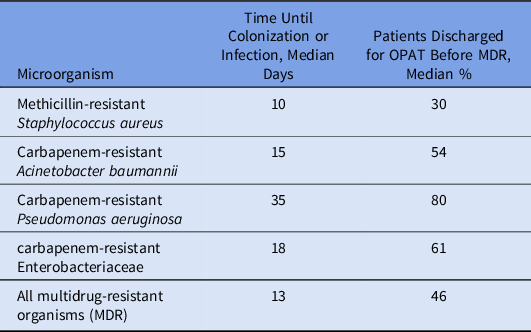
Median Time in Days of Patients in the Hospital Who Acquired Multidrug-Resistant (MDR) Bacteria and the Percentage Reduction Risk with Outpatient parenteral antimicrobial therapy (OPAT)

Antimicrobial stewardship program (ASP) and OPAT
The core members of the ASP team included 2 infectious disease physicians and a clinical pharmacist. The team is also supported by nurses, infection control practitioners, and other clinical microbiologists. The ASP implemented a restrictive policy for carbapenems and polymyxins by using a hand-filled questionnaire, withdrawing unnecessary antibiotics, prospectively auditing procedures, and evaluating feedback for all antimicrobial prescriptions. The ASP team worked full-time with the clinical pharmacist, and part-time with the infectious disease physicians during regular office hours on weekdays. All patients receiving antibiotics were included in the ASP analysis through electronic prescription data. Dosage, adjustment of treatment duration, de-escalation of treatment, route of administration, and side effects of medications were determined under the guidance of a clinical pharmacist.
OPAT was implemented in July 2017, together with the implementation of the ASP. These programs aim toward improving care results, valuing patient safety, increasing cost-effectiveness of treatments, and reducing the development of antimicrobial resistance in the hospital environment. Details of the ASP have been previously published.Reference Zequinao, Gasparetto, Oliveira, Silva, Telles and Tuon11 OPAT was used for the treatment of skin and soft-tissue inflictions, osteomyelitis, urinary tract infections, pulmonary conditions, endocarditis, and other infections according to the clinical condition at hospital discharge.
Outpatient antimicrobial options
Overall, 4 models of dehospitalization were practiced: (1) a day hospital, in which the patient is discharged with an identification document, allowing them to return to the hospital emergency room to receive the daily dose of antibiotic, until the end of treatment; (2) discharge with oral antibiotic, in which the patient is discharged with oral antibiotics supplied by the hospital to complete the treatment; (3) a home care service (SAD) in the city of Curitiba was used to provide home care for the administration of intravenous antibiotics (the drug is provided by the hospital); and (4) discharge with intravenous antibiotics that are to be administered at day-hospital for patients living outside of Curitiba.
Patient screening
During the assessment, all cases were discussed with the medical team responsible for the patients who elected for OPAT. All relevant information was collected to assess the patient’s viability for this procedure. Some important issues were evaluated before discharge: (1) patients using an alternative route for feeding; (2) the pharmacodynamic characteristics of the medications available to the specific infection and drug indicated; (3) the susceptibility profile of isolated microorganisms (if identified); (4) the location where the patient resides; (5) the financial ability of the patient to travel to the day-hospital; and (6) the ability of the team to ensure the safety of patients discharged with enteral or parental antibiotics. All patients received pharmaceutical guidance on the correct use, storage, handling of medications and on the asepsis of the hands. These guidelines were also conveyed to the responsible family member.
In cases of outpatients with intravenous antibiotics, guidance was provided to the patient and the nurse professional regarding the administration and particularities of the antimicrobial.
Variables for analysis
Several variables were included in the analysis, including the OPAT model, dispensed drugs, antibiotic cost, number of days of treatment, and total cost. Patient characteristics were also evaluated. The outcome variables included the total costs of OPAT and reduction of hospital stay. Two simulations were performed that used the risk of MDR bacterial infection or colonization (considering the reduction in hospital stay) and the breakeven curve to determine the balance between OPAT antimicrobial costs and all in-hospital costs. MDR bacteria included in this analysis were methicillin-resistant Staphylococcus aureus (MRSA), and the carbapenem-resistant Pseudomonas aeruginosa (CRPA), Acinetobacter baumannii (CRAB), and Enterobacterales (CRE).
Inclusion and exclusion criteria
To establish the study cohort, we applied the following inclusion criteria: aged 18 or older, clinical diagnosis of infection, currently on antimicrobial therapy, and showing at least 24 h of clinical improvement (clinical improvement is defined as at least 24 hours with a temperature <37.8°C, heart rate <100 beats per minute, respiratory rate <24 breaths per minute, systolic blood pressure >90 mmHg, and either arterial oxygen saturation >90% or pO2 >60 mmHg (in ambient air). The other inclusion criterion was acceptance by both the assistance team and the patient/family/caregiver. The following exclusion criteria were applied: (1) antibiotics not available outside the standard of the hospital, (2) poor adherence to treatment identified during hospitalization, and (3) family support not available when necessary.
Statistical analysis
Continuous data were presented as means or medians with respective dispersions (standard deviation and quartiles ranges). The costs were presented in US dollars ($). Frequency was presented as percentages. A cumulative risk curve was constructed for multidrug-resistant (MDR) risk according to the incidence of these microorganisms in the same period as the OPAT program.
Results
In total, 291 patients were reviewed for the OPAT program. This group represents the total number of patients who had their clinical, social, and psychological characteristics validated for inclusion in the OPAT program. Outpatients (n = 35) and high-complexity patients (n = 31) were excluded from the analysis. Ultimately, 225 patients were included in the OPAT cohort.
The hospital of the study is located at the capital of Parana State (Curitiba), the population is almost 2 million. This cohort was treated 29 homeless patients (12.9%) who came to the hospital to receive the medication every day when they are in OPAT. From the specialties of treatment, all of whom had medium-complexity conditions, and most were admitted from clinical areas (112 patients, 50.0%), followed by the surgical specialties (92 patients, 40.9%). The surgical areas represented in this cohort were orthopedic (37 patients), vascular (31 patients), general surgery (23 patients), and neurosurgery (1 patient). Clinically, the most common infections were urinary (56%) and pulmonary (32%). Osteomyelitis (28%), surgical site infection (22%), and postsurgical abscess (10%) were the most common indications for OPAT in the surgical area.
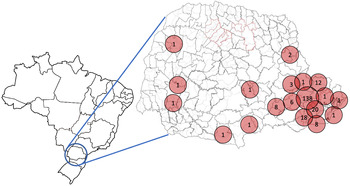
The mean patient age was 50.4±13.3 years and 69.8% were male. Most patients were treated in the same city as the hospital (Curitiba; 138 patients, 61.3%), followed by Colombo, a neighboring city (20 patients, 7.8%). In total, 76% of patients lived <25 km from the hospital, while 2.7% lived >100 km from the hospital (Fig. 1).
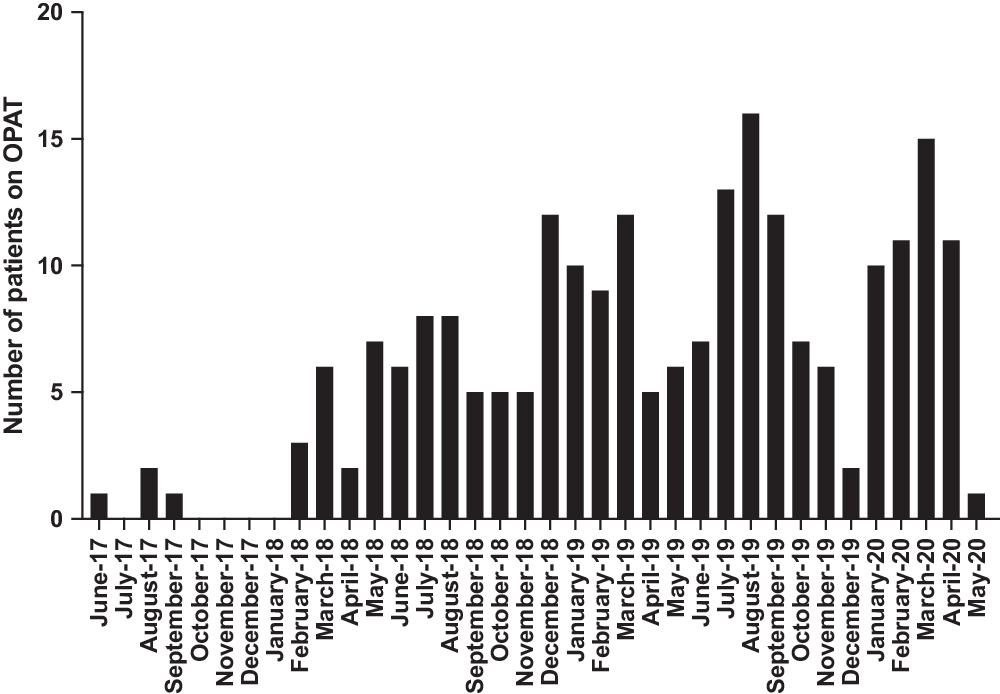
Between June and December 2017, when the work was carried out with only 1 infectious disease physician, only 4 patients were referred for OPAT. In February 2018, the program was fully constituted with the involvement of a multidisciplinary team. During the same year, 67 patients were referred (an increase of 1,600%), and this increase was amplified in 2019, when 106 patients were referred (an increase of 58%). In 2020, this number follows the same trend that characterizes the evolution of the OPAT cohort (Fig. 2).
Residence of patients under outpatient parenteral antimicrobial therapy (OPAT) cohort between 2017 and 2020. Each red circle represents the city and number of patients under OPAT. The hospital where patients began antibiotics is located in Curitiba, where most cases were followed (n = 138 patients).

Timeline of outpatient parenteral antimicrobial therapy (OPAT) with number of patients included in the program from June 2017 to May 2020.

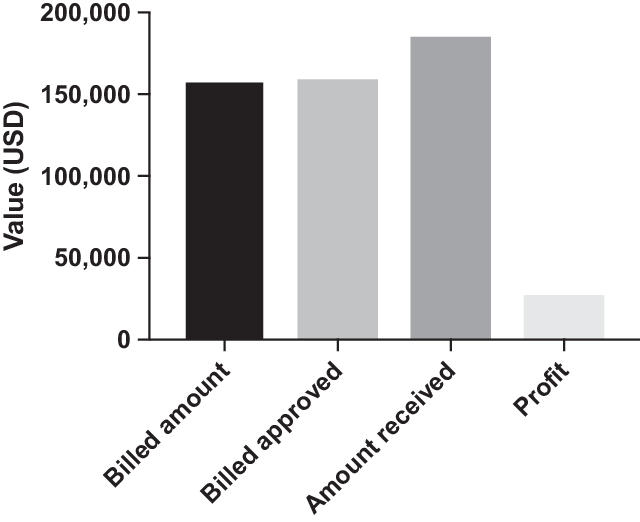
The implementation of OPAT resulted in a reduction of expenses based on the population assessed, to the order of $156,681 (49.6%), which is equivalent to an average reduction per patient of $696. This savings is related to the fact that patients with medium-complexity conditions are covered by a care package from the Brazilian public healthcare system. Therefore, the hospital earned a total of $185,087 in care of these 225 patients, and the savings from OPAT resulted in a profit of $27,304 (14.7%) (Fig. 3).
Hospital revenue received for patients under outpatient parenteral antimicrobial therapy (OPAT), and the costs with hospitalization. The profit is the difference between total costs (billed approved and amount received).

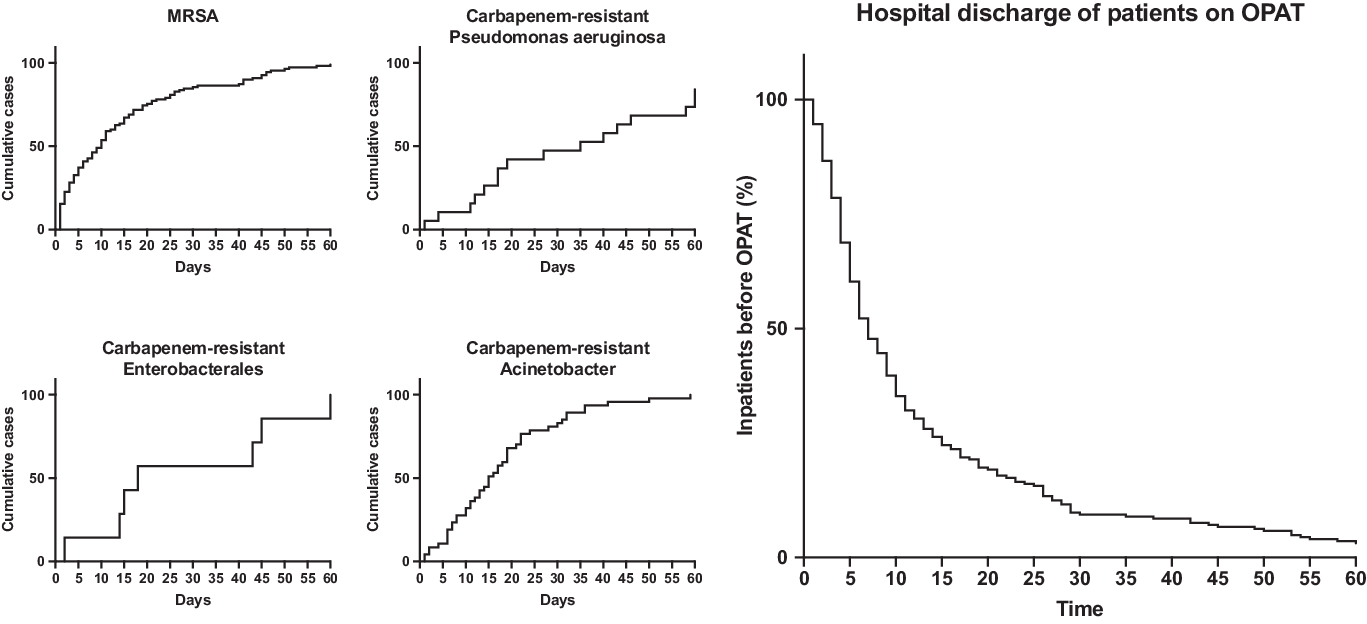
The costs of antibiotics to the patients were discounted. This supply cost a total of $2,581, an average of $11.48 per patient, equivalent to ˜30% of the cost of 1 hospital day. The average number of days in this group of patients without OPAT was estimated to be 33.5 days per patient. With the application of OPAT, this number was reduced to 15.7 days, a decrease of 53%. The median for the period of hospitalization of patients until their transition to dehospitalization through OPAT was 7 days (for the quartile 50%, 25–75) with a minimum of 4 days and a maximum of 15 days. To compare the period for acquiring infection from MDR bacteria in the hospital, data were collected from all patients hospitalized in the same period, and the medians were calculated for each MDR microorganism (Fig. 4).
Cumulative cases of multidrug-resistant (MDR) microorganisms in the hospital during the period of the OPAT. These curves were constructed to determine the reduction risk percentage of MDR infection or colonization for those patients under OPAT. The graph of length-of-stay for patients under OPAT is pictured in the right.

The 225 patients in the present population, if not referred to OPAT, would have spent a median period of 20 d in hospital based on these data; therefore, it is possible that OPAT reduces the risk of acquiring infection by MDR bacteria by transferring the treatment completion process outside of the hospital environment (Table 1).
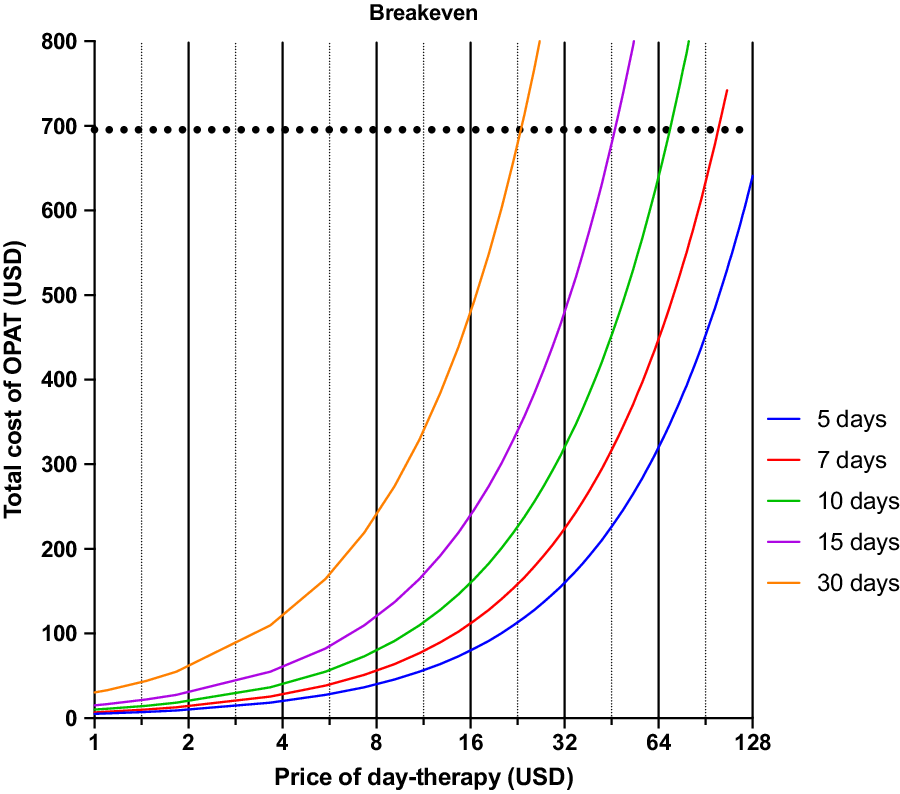
Figure 5 shows a comparison of the break-even curves between the duration of the OPAT and the daily medication costs. The dashed line represents the cutoff when the cost of OPAT is similar to that of maintaining the patient in hospital. For example, for a 5-day treatment, the maximum value per treatment day can be up to $139.27, and the maximum value per treatment day for a 30-day treatment is $23.21.
Breakeven curves to determine the maximal cost with outpatient parenteral antimicrobial therapy (OPAT) compared with the price of day therapy at different durations. The dashed line is the cutoff for the lower cost of OPAT (below dash line) and higher cost (above the line) than hospitalization.

During the study period, no deaths were reported. Readmission occurred in 13 patients (5.8%), but none due to failure of the treatment proposed in OPAT.
Discussion
As previously reported, for OPAT to be properly implemented and for its results to be useful, a number of factors involving the patient’s family environment, residential structure, and ability to understand the procedure need to be assessed, thus ensuring the correct treatment choice, considering the safety and quality of life of the patient.Reference Oliveira, Carvalho, Cimerman and Lima12,Reference Tice, Rehm and Dalovisio13 In this study, all such information was collected prior to OPAT, which decreased the risk of flaws in the treatment. No deaths or readmissions occurred.
A risk factor for any patient admitted to hospital is exposure to MDR bacteria.Reference Zhou, Fan, Lai, Tan and Zhang14 Therefore, the sooner patients can be safely discharged from the hospital, following the pre-established protocols, the less their chance of infection and the greater the benefit to the hospital. In our study, the median hospital length of stay prior to the patient entering OPAT was less than the median time of colonization or infection by MDR bacteria in the same hospital. In addition to reducing the risk of nosocomial infection, indirect benefits related to the use of OPAT were noted, such as reduced pressure-ulcer rates,26 increased hospital-bed turnover, and decreased nursing and medical service costs, medication expenses, and materials costs.Reference Esposito, Leone and Noviello10
Based on similar conclusions by other international studies, OPAT using a single professional in isolation does not achieve the desired results; a multidisciplinary approach needs to be utilized in the field to ensure all protocols are met.Reference Heintz, Halilovic and Christensen15,Reference Shah, Bergman, Graham and Glenn16 In our study, between the months of June and December 2017, the work was carried out only by 1 infectious disease physician, and the number of patients referred during this time was 4. In February 2018, the program was fully constituted with the involvement of a multidisciplinary team, during which 67 patients were referred (an increase of 1,600%), and this trend continued both in 2019, when 106 patients were referred (an increase of 58%), and into 2020.
Without the application of OPAT, the hospital would have had a direct additional cost of $156,681 for the treatment of these patients, which would pass the surplus service to a person with a disability on the order of $129,377, due to the increase in base cost of a daily hospital stay from $36 in 2018 to ˜$40 in 2019 and 2020.
Notably, this impact considers the direct cost of the hospital daily rate exclusively. Indirect impacts resulting from the use of materials and medicines are possible, as well as expenses resulting from infections by MDR bacteria, pressure ulcers, and other complications resulting from long-term nosocomial hospitalizations, which would further increase the expense. Overcrowding of public health services in Brazil is a long-standing occurrenceReference Bittencourt and Hortale17; however, OPAT has made 4,001 hospital days available to the population, with an average of 17.78 beds per patient.
The break-even point is a financial concept that defines the moment when there is no profit or loss in an operation. Based on the fact that it was possible to define the savings per patient referred to the OPAT ($696), we constructed a graph showing the correlation between the number of days of treatment and the maximum cost per day of treatment, showing the break-even point based on the treatment days of OPAT. This intersection is very important because it allows the data in this study to be extrapolated for evaluations from the perspectives of the pharmaceutical industry, supplementary health operators, and patients in private institutions, as well as for private hospital analysis.
Among the limitations of the study are the environmental considerations. The data cannot be validated externally because they depend on experience and practice in OPAT. The construction of an OPAT unit is not an independent physical structure. The success of the OPAT method is in securing a health team in which each member has a clear and well-established function, and these functions working together achieve the effectiveness observed in the treatment model.Reference Heintz, Halilovic and Christensen15 An OPAT pump could be used to deliver antibiotics for at least some patients; however, we have concerns about the social condition of our patients because we treat patients with low educational level. The use of pump system needs a minimum level of care from the patients and their relatives, which is a real social problem in Brazil.
Based on these data, it is possible to affirm that OPAT, when applied in a Brazilian public university hospital with medium-complexity patients, allowed for a significant cost savings in the operation of the hospital. A reduction in the length of stay was also achieved, leaving more beds available to serve a greater number of the population. Along with these benefits, OPAT reduced the risk of contamination of patients to MDR bacteria. This group of factors, in addition to psychological factors and quality of life, including the ability for patients to return to family life and work, demonstrate that OPAT is a safe, effective, and straightforward method that allows for significant gains in cost savings for and perceived quality by both the patient and the hospital.
Acknowledgments
Felipe Tuon is a CNPQ Reseacher.
Financial support
No financial support was provided relevant to this article.
Conflicts of interest
All authors report no conflicts of interest relevant to this article.