Introduction
This paper presents the Vasarhelyi Method of Child Art Psychotherapy (CAP)Footnote 1 and describes a survey of Child and Adolescent Mental Health Services (CAMHS) clinicians who provide clinical supervision in CAMHS to students of the MSc in CAP. Vera Vasarhelyi, the founder of the Vasarhelyi Method of CAP, began her professional life as an artist and then trained as an art therapist. Vasarhelyi designed her unique modality in consultation with Antony Cox, Professor of Child and Adolescent Psychiatry, whereas working as part of the multi-disciplinary CAMHS team at the King’s College Medical School. The Vasarhelyi Method of CAP is now taught as a University College Dublin Masters Programme (run jointly with the Mater Misericordiae University Hospital), with trainees placed for 18-month clinical attachments in CAMHS clinics in Ireland. Trainees are provided with clinical supervision in CAMHS by a senior member of the CAMHS multidisciplinary team (MDT). Students also attend CAP method-specific supervision in the university setting, which is provided by trained supervising psychotherapists as part of the MSc Programme. Trainees attend a lecture programme which focusses on child and adolescent mental health and on specific training in CAP as well as on childhood development and various methods of psychotherapy. Trainees attend personal psychotherapy and most of the trainees have previous experience working with children with emotional or behavioural difficulties.
The importance of the image in the Vasarhelyi Method of CAP
The Vasarhelyi Method of CAP places primary emphasis on the image itself and what is contained in the image – the young person’s pictorial language is used as the primary mode of communication. Vasarhelyi is also interested in the young person’s relationship to their image and how this may change over time. In the case of Claire, a 9-year-old patient, Vasarhelyi describes how images ‘… were not only instrumental in understanding and expressing the depth of her desparation, but also played a crucial role in her recovery’ (Vasarhelyi Reference Vasarhelyi1990). The images that are created are central to the process of coming to a better understanding of feelings and experiences. The method is based on the principle that visual thinking and expression have a distinctive and direct relationship with the unconscious: ‘the symbolic content of images can facilitate a unique insight into the dynamics of the unconscious, and allow the privilege of seeing hidden processes, which would otherwise remain largely inaccessible to exploration’ (Vasarhelyi Reference Vasarhelyi1990).
Context for the Vasarhelyi Method of CAP
In defining art therapy, Case & Dalley (Reference Case and Dalley2014) outline ‘Art therapy has a dual heritage from art and psychodynamic ways of thinking’. Vasarhelyi’s training as an art therapist would have incorporated these perspectives. Vasarhelyi acknowledges the importance of psychodynamic theory in the development of her method.
An exploration of the parallels that exist with psychoanalytic theory and the Vasarhelyi Method of CAP suggest a number of shared principles. Freud’s theory of the unconscious, being dynamically repressed from consciousness, stemmed from studying his patients’ visual hallucinations, for example the case of Anna O who suffered hysterical paralysis of her arm (Breuer & Freud Reference Breuer and Freud1891). The symptom originated in an image, a visual hallucination, where she saw a black snake coming out of a wall while seated beside her dying father. Anytime she saw something that reminded her of the snake hallucination her arm became paralysed. Sayers (Reference Sayers2007) discusses how this special relationship between visual thinking and the unconscious was developed by Freud in his text Psychotherapy of Hysteria (Freud Reference Freud1891; Sayers Reference Sayers2007). The power of the image to access the unconscious was also described by Jung, who discussed the ‘magical effect’ … which goes out from the images to the individual and in this way his unconscious is extended and changed’ (Jung Reference Jung1968). Jung outlined that through this process the patient achieved autonomy – ‘by painting himself he gives shape to himself’ (Jung Reference Jung1966). A simple drawing game known as the Squiggle Game was used by the psychoanalyst Winnicott in the first interview with a child as a way to make contact and communicate with children (Winnicott Reference Winnicott1971). It has been described that Winnicott’s Squiggle Game is important due to ‘the power of images to expose what is hidden yet experienced deeply’ (Presa Reference Presa2014). Similarly, Vasarhelyi emphasises the power of images in revealing otherwise invisible unconscious processes in her paper ‘What happened on Ben Nevis? Psychotherapy with pictorial means and the time aspect of pictorial thinking’. In this paper Vasarhelyi refers to Jung’s use of images with patients and the way this helped to objectify threatening contents of the unconscious by diminishing the negative impact of overwhelming thoughts and feelings (Vasarhelyi Reference Vasarhelyi1981).
Furthermore, Presa describes that during the Squiggle Game Winnicott was ‘attentive to how something offered by the child can be put to work’ (Presa Reference Presa2014). In CAP sessions, what is offered by the child in their image is at the centre of the work that takes place.
A further parallel is the role of the physical environment in therapy. The psychoanalyst, Betty Joseph, discusses the importance of the environment where sessions take place, and how the setting should provide emotional and physical space for the therapist to ‘think and feel freely and be able to observe what comes from the child and what is stirred up in him or herself’ (Joseph Reference Joseph1998). One of the core principles of the Vasarhelyi Method is the provision of the Empty Space. Not only does this allow the child to create an image without the influence of the therapist, but it also facilitates the therapist in being free from preconceptions before taking in the child’s image. This means the therapist returns to the image ready to respond to the colours and forms held within it. While tuning in to the image, he or she is noticing what has come from the child’s unconscious onto the page as well as what is ‘stirred up’ in him or herself. The image is used to help access the unconscious in the Vasarhelyi Method.
Similarly, Arlow (Reference Arlow1995) discusses the unconscious in relation to psychoanalytic theory and determinism, that is, that all behaviour has a cause and that the cause is found in the mind, ‘… mental events are not random, haphazard, accidental … thoughts, feelings and impulses are events in a chain of causally related phenomena. They result from antecedent experiences in the life of the individual. Through appropriate methods of investigation, the connection between current mental experience and past events can be established. Many of these connections are unconscious’. The Vasarhelyi Method of CAP uses the creation of an image as a ‘method of investigation’, which helps the child draw a connection between current mental experience and past events.
In their discussion of the therapeutic relationship in psychoanalytic work, Lanyado & Horne (Reference Lanyado and Horne1999) include key concepts of transference and countertransference, anxieties and defences, internal and external worlds, communication and interpretation, containment and holding (Lanyado & Horne Reference Lanyado and Horne1999). In the Vasarhelyi Method of CAP, the transference and countertransference can be understood primarily by what is contained in the image and both the child’s and the therapist’s response to it. Vasarhelyi has described changes in terms of how the child relates to their images over time, and how this signals psychic change (see the case of Claire above).
With regard to defences, Vasarhelyi states that images have easier access to the unconscious compared with words (Vasarhelyi Reference Vasarhelyi1981), therefore there is less opportunity to censor what is expressed. This point is also made by Naumburg (Reference Naumburg1966), ‘symbolic images more easily escape repression by what Freud called the mind’s censor than verbal expression’ (Naumburg Reference Naumburg1966).
In psychoanalytic psychotherapy, play may be used as a window from which to understand a child’s internal world. In CAP the image is seen as the expression of the child’s internal world.
As outlined below, in CAP, the child is considered the best interpreter of their own work. Tentative suggestions might be made by the therapist about the meaning of the image, but the child’s view is regarded as central. Careful consideration is given to the way in which such suggestions might be made and the timing of when they are made.
With regard to containment and holding, in CAP, the therapist returns again and again to the image as a way of tuning in to what is being communicated non-verbally. Whatever the child might be struggling to articulate in words is physically contained and held within the boundary of the paper. In addition, the therapist keeps the images safe from session to session and also holds them in mind from session to session.
Vasarhelyi states that in the development of her method, of great significance was the ‘cross fertilisation between disciplines’, in the MDT context, ‘which contributed to the emergence of a new theoretical framework’. Vasarhelyi continues to believe that in depth knowledge of art theory, or the practice of art, is not required in order to be an effective child art psychotherapist. Vasarhelyi values diversity in terms of the clinical background of those undertaking training in her method.
Defining principles of the Vasarhelyi Method of CAP
As with other therapeutic modalities, provision of a safe space, clear boundaries and maintenance of confidentiality are essential components. The unique features of the Vasarhelyi Method of CAP can be summarised as follows:
a. Images are used for pictorial communication as a non-verbal language: children and adolescents can find it difficult to express in words their emotions and anxieties. The Vasarhelyi Method encourages the young person to develop a pictorial formulation of their feelings with their own choice of colours and forms to express them. No external interpretation is imposed onto the child during the session and in this context the child is the expert on his/her material, not the therapist. This does not, however, abdicate all interpretive responsibility. The objective relationship of the therapist to the child’s symbolic material allows the strengthening of the conscious mind by asking exploratory questions or offering suggestions in response to the images.
b. Providing an ‘Empty Space’ both physically and emotionally helps the child to create the formulation of their own pictorial material without the conscious or unconscious influence of the therapist. To allow this, the therapist will negotiate an acceptable length of time to withdraw from the child whilst the image is created. This allows the therapist to respond with an open, unbiased mind to the image on his/her return.
c. The time aspect of pictorial thinking differs from time in chronological, verbal communication. Vasarhelyi describes ‘a recurring discrepancy between the pictorial and verbal accounts by clients of the same inner conflict’ (Vasarhelyi Reference Vasarhelyi1981). Vasarhelyi outlines how verbal accounts have a beginning, middle and end, whereas when images are created events of past-present-future can exist together. Thus, different time frames can exist simultaneously within an image. ‘… with pictures, they are instantly there, and however complex their contents might be they don’t need time to start, progress and finish … they transcend time in the sense that time is only involved in the contemplation of them; the picture itself is non-temporal’ (Vasarhelyi Reference Vasarhelyi1981). Vasarhelyi asserts that this facilitates more direct access to unconscious material, ‘We should therefore accept the limitations of the narrative mode, which belongs to the conscious ego, because for the unconscious, pictures will be the main source of expression’ (Vasarhelyi Reference Vasarhelyi1981).
d. Three semi-structured assessment sessions give the opportunity to explore the child’s own understanding of their self-image, their inner picture of their family and, in the third session, to remember early memories, which might be the key to understanding their present conflicts. Following the final assessment session the therapist meets with the young person and his/her parent(s) to negotiate either to cease or to continue therapy. Subsequent sessions are unstructured with regard to the creation of images.
Evidence for art therapy
Art therapy is generally accepted as an effective and acceptable treatment for young people with psychiatric symptoms (Reynolds et al. Reference Reynolds, Nabors and Quinlan2000). Randomised controlled trials have found some evidence that art therapy is effective in reducing aggression in children with intellectual disability (Hashemian & Jarahi 2014), reducing anger and physical aggression in children with aggressive tendencies (Alavinezhad et al. Reference Alavinezhad, Mousavi and Sohrabi2014) and is effective as an adjunctive treatment in the management of cancer (Monti et al. Reference Monti, Peterson, Kunkel, Hauck, Pequignot, Rhodes and Brainard2006, Svensk et al. Reference Svensk, Oster, Thyme, Magnusson, Sjödin, Eisemann, Aström and Lindh2009) and in the treatment of asthma in children (Beebe et al. Reference Beebe, Gelfand and Bender2010). However, many of these studies refer to various versions of art therapy, and not specifically to the Vasarhelyi Method of CAP.
Although the Vasarhelyi Method has been previously described (Vasarhelyi Reference Vasarhelyi1981 Reference Vasarhelyi1990), we noted the lack of literature to date around the use of the Vasarhelyi Method of CAP in CAMHS in Ireland. We plan to address this by performing a 360 evaluation of the current provision of the Vasarhelyi Method CAP in CAMHS with (1) a stakeholder opinion of the Vasarhelyi Method of CAP, (2) an evaluation of the opinions of parents and children and (3) finally to perform a study of how effective this method of therapy is in the treatment of disorders which commonly present to CAMHS. This is the initial study of stakeholder opinion and our specific aims were to find out (1) whether or not CAMHS teams find CAP a useful therapy modality and (2) what disorders the supervisors think it may be useful for. We hope that this study will guide our future research on the effectiveness of the Vasarhelyi Method of CAP (CAPE study) in various common disorders in children attending CAMHS. Our third and final aim (3) was to find out more information about the CAMHS teams who were hosting CAP trainees, so that we have more insight into the availability of formal psychotherapy in CAMHS.
Methods
A three-part survey of CAP clinical supervisors was devised. The first section enquired about the clinical supervisors and their experiences supervising CAP students. The second section addressed the perceived efficacy of CAP in relation to a variety of patient demographics. The third section enquired about the role of CAP in the CAMHS clinic. Tick box style quantitative questions predominated with some blank space to give more context to the answers.
A list of CAMHS clinical supervisors was obtained from the course co-ordinator and were initially contacted by mail to ask if they were willing to take part in the research. In total, 22 contacts had been given, however five had since resigned from their role as supervisors and as such were not included in the study. The clinics were in the Dublin commutable area. Participants were asked to return the survey by post; missing surveys were completed by phone, when possible. Information from the completed surveys was recorded on an Excel database and Excel was used to analyse the information collected.
Results
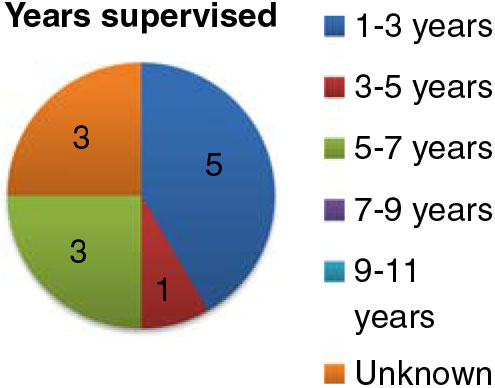
In total, 12 of the 17 (70.59%) surveys were completed. Of those completed five of the 12 supervisors (41.66%) currently had a CAP student working with them. In relation to the number of years in their supervisory role there were mixed responses. As can be seen in Fig. 1 five participants had been acting as supervisors for 1–3 years, one participant had held the position for 3–5 years, a further three had been in the position for 5–7 years and the remaining three were unsure. All supervisors thought CAP was an effective modality and that the CAP student was a valuable member of the MDT.
Clinical supervisor’s experience of the Vasarhelyi Method of Child Art Psychotherapy.

None of the respondents noted a difference in treatment efficacy based on the gender of the patient. With regard to the age ranges who derive the most benefit from CAP two respondents believed CAP to be most effective in 6–9-year olds. One respondent indicated 10–13-year olds and another said it was most effective in 6–13-year olds inclusively. One respondent believed it was most effective in the older age group of 14–17 years old. Two of the respondents stated that CAP was more effective in younger patients but that this was in relation to language barriers more so than age itself. Three supervisors noted no difference in response with relation to age.
There was no clear consensus on the average length of time until a therapeutic effect was seen. One-third of supervisors said 1–3 months, whereas a further third said 3–6 months with some adding the caveat that the time frame was dependent on the case and frequency of sessions. One participant commented that the time to effect is dependent on the patient’s diagnosis and so no one time could be given (Fig. 2).
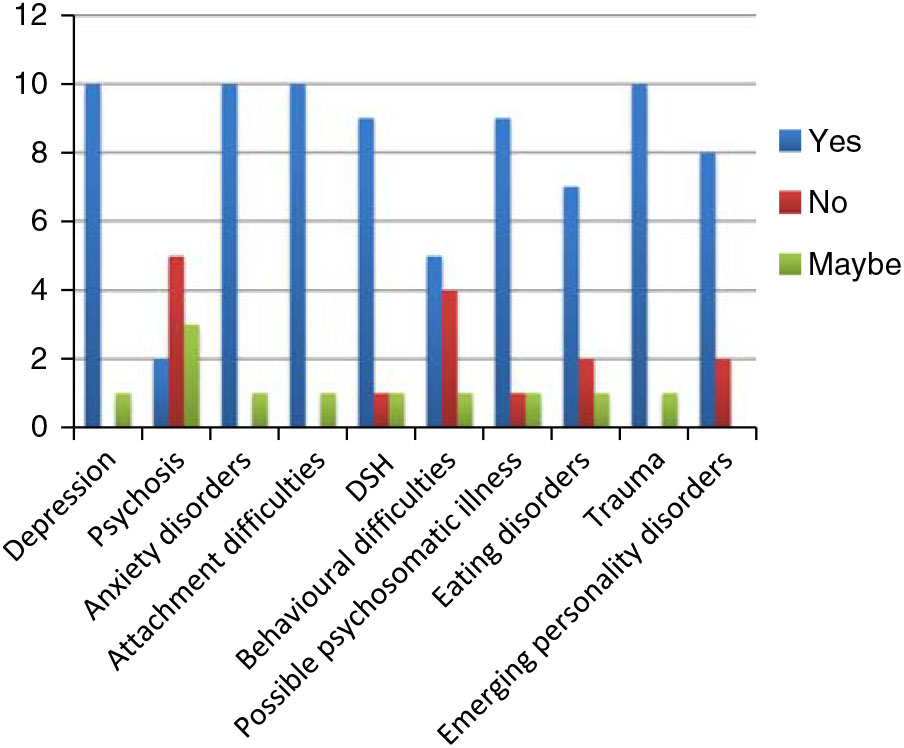
Conditions aided by Child Art Psychotherapy.
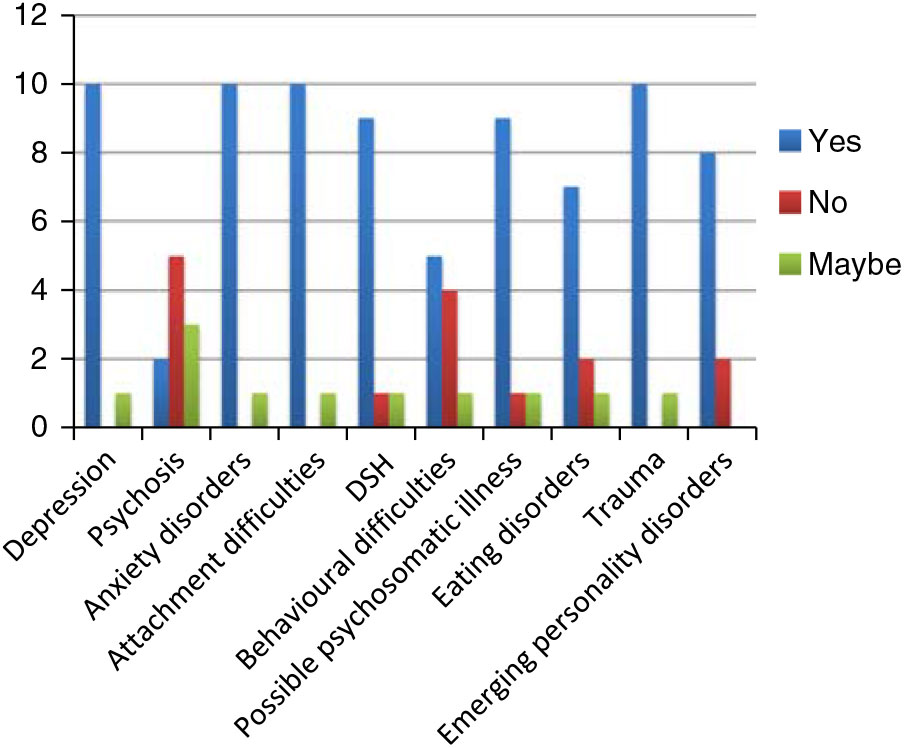
In total, 10 out of 11 supervisors (90.9%) believed CAP to be effective in the treatment of depression, anxiety disorders, attachment difficulties and trauma. Nine out of 11 (81.81%) thought that CAP was effective with deliberate self-harm (DSH) and possible psychosomatic illness. Eight of 10 (80%) supervisors said emerging personality disorders were aided by CAP with one ‘no comment’. Seven of 10 supervisors (70%) thought similarly for eating disorders with one supervisor not wishing to comment. Behavioural difficulties were only seen as being helped by CAP by five of 10 supervisors (50%) with one ‘no comment’ and only two supervisors of 10 (20%) believed it had a role in the treatment of psychosis with one no comment. One supervisor did not complete this part of the survey.
Nine of 12 supervisors (75%) believed that CAP was more effective in the treatment of internalising symptoms as opposed to externalising symptoms, with only one believing the inverse. Half the supervisors (50%) were aware of children in their service treated with CAP who have made a disclosure of child sexual abuse or a similar important disclosure during the course of their attendance at CAP.
When asked what group of patients they would generally refer for CAP anxious children, children in care who are distressed, those who have difficulties with expressive language or are selectively mute, those who had experienced trauma, eating disorders, depression and children with possible psychosomatic illness were the groups highlighted. When asked what groups of patients they would generally not refer for CAP five supervisors said acute psychosis, three said autism spectrum disorders and two said severe behavioural difficulties. One said patients with eating disorders who were not yet stable.
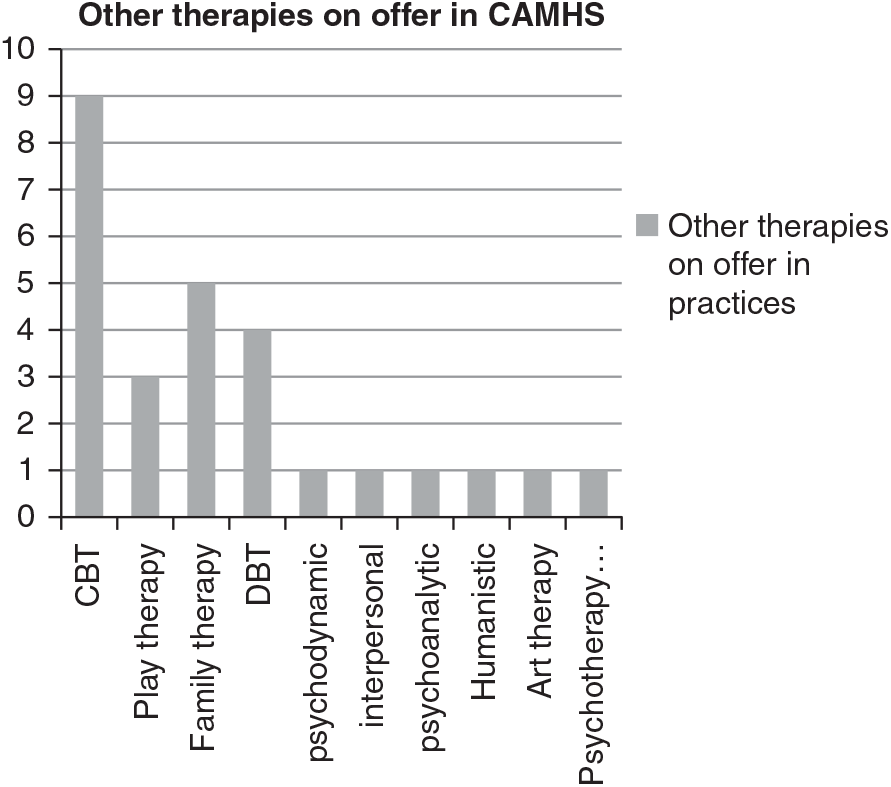
In all, 11 of the 12 supervisors had other psychotherapeutic modalities available to their practice. Cognitive Behaviour Therapy (CBT) was the most common, with it available in nine practices. Family therapy was available in five of the practices. Dialectical Behaviour Therapy (DBT) was available in four practices. Play therapy was offered in three practices. Psychodynamic psychotherapy was available in two practices. Interpersonal, psychoanalytic and humanistic psychotherapy were available in one practice each along with art therapy and an unspecified psychotherapy. This is illustrated in Fig. 3.
Other therapies on offer in Child and Adolescent Mental Health Services (CAMHS).

In all, 10 of the respondents had formal training in a psychotherapeutic modality including Cognitive Behaviour Therapy, somatic experiencing/trauma training, psychodynamic psychotherapy, psychotherapeutic, behaviour therapy, family therapy, visual psychotherapy and CAP itself; 10 of 12 respondents (83.33%) said they would use CAP regularly if it were available to them. With regard to positive experiences with the CAP service, aspects cited included: ‘the CAP students themselves’, ‘useful in preadolescent anxiety disorders’, ‘very helpful in eating disorders’ and that the three introductory sessions are very beneficial within the MDT when other modalities ‘get stuck’.
With regard to problems experienced with the CAP service, aspects cited included: a lack of proven efficacy, issues with regard to sharing of information/note keeping, the limit of three cases per therapist can present some problems and that some children just do not connect with it. It was also noted that CAP students’ knowledge of mental health disorders can be limited and the therapy can be challenging to adapt to inpatients/day hospitals as it is limited by patients time in hospital. Supervisors commenting on CAP in general said ‘We’ve found it useful especially in adolescents which we would not have expected’, ‘I have seen it work effectively with children in care who have recurrent deliberate self harm (DSH) and in psychosomatic illness’ and ‘It is a useful skill base to have on team as part of therapeutic repertoire’.
Discussion
We have described a specific method of art psychotherapy for children with mental health difficulties and have surveyed senior members of CAMHS teams using this psychotherapy. We found that stakeholders and referrers find this method a useful addition to their teams. It is interesting that 50% of those surveyed reported that they were aware of children treated with CAP who have made a disclosure of child sexual abuse or a similar important disclosure during the course of their attendance at CAP. We think this is an important finding as it suggests that CAP provides a safe supportive environment for a child to make such a disclosure. We enquired about which diagnostic conditions are referred to CAP and found that a very large proportion (80% or more) of supervisors suggested that the Vasarhelyi Method of CAP may be useful in serious mental health disorders including depression, deliberate self-harm, possible psychosomatic illness and emerging personality disorders. in all, 70% thought it may be useful for children with eating disorders; 75% of responders believed it was better for internalising symptoms than externalising symptoms. Although these findings cannot be taken as measures of effectiveness of the therapy, it should be noted that CAMHS teams have sufficient confidence in the Vasarhelyi Method of CAP to refer children and young people with very serious mental illness to CAP, most likely as an adjunctive therapy.
A previous study on referrals to individual psychotherapy within a UK-based CAMHS team found that referral-making decisions depended on ‘wider conceptions of the particular modality of therapy, particular features of the child and family referred (but not reducible to diagnostic categories), and the stage at which therapeutic work with the family has reached at the time of referral’ (Kam & Midgley Reference Kam and Midgley2006). Similarly, our study found that CAMHS teams refer a wide variety of disorders and a wide age group of children to individual CAP rather focussing on referring children with particular disorders.
As part of our survey, we noted that there was very limited access to psychodynamic, psychoanalytic and interpersonal therapy in the CAMHS teams surveyed in Ireland, and that cognitive behaviour therapy (CBT) and family therapy are more readily available than other psychotherapy modalities. We wonder if this is the situation nationally in Ireland. It is acknowledged by the UK Joint Commissioning Panel for Mental Health that therapy offered in CAMHS often follows an eclectic style, where some services are provided where the evidence base is as yet incomplete and the therapeutic alliance is important: ‘although there is a growing evidence-base for interventions with children and young people, there are still areas where the evidence-base is scant …. Importantly, both the model of interventions used (e.g., CBT, medication, family therapy) and the way the clinician works in collaboration with a family or young person (the therapeutic or working alliance) can have a significant effect on clinical outcomes’ (Joint Commissioning Panel for Mental Health Reference Hashemian and Jarahi2013). The Joint Commissioning Panel for Mental Health also recommended that CAMHS teams in the UK have psychotherapists and creative therapists, as well as other professionals. In contrast to this, CAMHS teams in Ireland do not ordinarily have these specialists on the team, and there is a reliance on training allied health professionals in psychotherapy skills rather than commissioning particular psychotherapists. CAP trainees bring broader psychotherapeutic methods to CAMHS teams, as well as bringing a psychoanalytic thinking and understanding to the team, and hence may be considered a useful addition to the CAMHS teams. It may be for this reason that one CAMHS survey respondent commented that the child art psychotherapist could help when other team members ‘got stuck’. The presence of a child art psychotherapist on a CAMHS team may go some way to address the relative lack of psychodynamic, psychoanalytic and interpersonal therapy availability on the CAMHS teams surveyed.
It should be noted psychotherapy has been shown to be an effective treatment in a study of various forms of psychotherapy delivered to over 26 000 adults with mental health difficulties in the clinical range in the UK (Stiles et al. Reference Stiles, Barkham and Wheeler2015). Various psychotherapy approaches were used including integrative (41%), person-centred (36%) and psychodynamic (23%) psychotherapy. All patients had one thing in common – they all had planned endings of their psychotherapy course. The rates of improvement were similar across all durations of treatment. As part of the Vasarhelyi Method of CAP, ending is planned by the child and therapist. We anticipate that the Vasarhelyi Method of CAP may be as effective as the psychotherapies studied in the Stiles study though further research is needed to identify if this is the case or not. Research on the efficacy of CAP is underway, but it will be some time before sufficient data are collected to allow publication of a definitive study on efficacy. We would also like to perform a study in the future on the cost effectiveness of CAP in CAMHS. In the meanwhile, this stakeholder survey gives us an important insight into the current role of CAP in CAMHS services in Ireland.
Considering the current increase in concerns about the Selective Serotonin Re-uptake Inhibitors medications in both adults and children (Malhi et al. Reference Malhi, Lingford-Hughes and Young2016) and the hesitation some parents have regarding the use of medications in their children, it is important that non-pharmacological therapies are explored as much as possible as well as pharmacological methods of treatment. In the UK, the Improving Access to Psychological Therapies (IAPT) programme supports the National Health Service in implementing National Institute for Health and Clinical Excellence guidelines for people suffering from depression and anxiety disorders. Specific guidelines are also given regarding the implementation of psychotherapy for children IAPT Programme: (Working with under 18 year olds: Guidance for Commissioners, IAPT service providers and those working in IAPT services).
It is a limitation of our study that so few supervisors were surveyed, but this reflects the small number of trainees in CAP. The response rate to our survey was higher than the response rates of other clinician surveys (Mulligan et al. Reference Mulligan, McNicholas and Moran2008; Nugent et al. Reference Nugent, Carmody and Kenny2015). It is hoped that the number of trainees will increase in the future, so there may be more supervisors to be surveyed in future research.
We conclude that, we have described the Vasarhelyi Method of CAP and shown that it is used in CAMHS clinics in Ireland as a therapeutic modality for the treatment of children with serious mental illness. In total, 75% of clinical supervisors in CAMHS believed CAP was better for internalising symptoms than externalising symptoms, and CAP is used in a broad range of disorders in children attending CAMHS in Ireland, sometimes as an adjunctive therapy. Considering that (1) there is very limited access to psychoanalytic psychotherapy or other psychotherapies in CAMHS in Ireland and (2) the modality and actual duration of psychotherapy are not considered important in effective psychotherapy, we recommend the use of the Vasarhelyi Method of CAP in CAMHS clinics.
Acknowledgements
The authors would like to thank the clinical supervisors who have completed the survey reported in this study.
Financial Support
This research received no specific grant from any funding agency or commercial or not-for-profit sectors.
Conflicts of Interest
Dr Aisling Mulligan a senior lecturer in Child and Adolescent Psychiatry in University College Dublin (UCD) and is the UCD academic leader of the Child Art Psychotherapy Masters of Science.
Ethical Standards
The authors assert that all procedures contributing to this work comply with the ethical standards of the relevant national and institutional committee on human experimentation with the Helsinki Declaration of 1975, as revised in 2008. The authors assert that ethical approval for publication of this audit was not required by their local REC.
Appendix
Child Art Psychotherapy Survey of Clinical Supervisors
1. Do you currently have a Child Art Psychotherapy Student? Yes/No
2. How many years have you supervised a Child Art Psychotherapy student?1–3 years, 3-5 years, 5–7 years, 7–9 years, 9–11 years
3. Do you think Child Art Psychotherapy is an effective treatment modality? Yes/No
4. Do you consider the Child Art Psychotherapy student to be a valuable member of your team? Yes/No
Patients:
5. What age group of patients do you think respond most to Child Art Psychotherapy?<6, 6–9 inclusive, 10–13, 14–17, not able to comment, all similar responses noted
6. In which gender do you consider child art psychotherapy to be most effective?Males, Females, Much the same
7. In your experience, how long on average does Child Art Psychotherapy take to show a therapeutic effect? <1 month, 1–3 months, 3–6 months, 6–12 months, >12 months, not able to comment
8. What conditions do you think are helped by Child Art Psychotherapy?Depression Yes/NoPsychosis Yes/NoAnxiety disorders Yes/NoAttachment difficulties Yes/NoDeliberate self-harm Yes/NoBehavioural disorders Yes/NoPossible psychosomatic illness Yes/NoEating Disorders Yes/NoTrauma? Yes/NoEmerging Personality disorders Yes/No
9. Do you think Child Art Psychotherapy is better for children with Internalising symptoms or for children with Externalising symptoms? Internalising/Externalising
10. Is there any group of patients you would not refer to Child Art Psychotherapy?
11. Is there any group of patients you generally refer to Child Art Psychotherapy?
Psychotherapy:
12. Are there any other psychotherapeutic modalities used in your practice? Yes/NoIf yes, please specify
13. Do you have formal psychotherapy training? Yes/noIf yes, please specify CBT/Psychodynamic Psychotherapy/Psychoanalytic psychotherapy/Family therapy/Art therapy/ other
14. Are there any therapies you use in adjunct to Child Art Psychotherapy?
15. Have there been any children in your service treated with Child Art Psychotherapy who made a disclosure of CSA or a similar important disclosure during the course of their attendance at Child Art Psychotherapy? Yes/No
16. If it were available to you, would you find regular use for Child Art Psychotherapy in your service? Yes/No
17. Have you had any particularly positive experiences with the Child Art Psychotherapy programme/service?
18. Have you experienced any problems with the Child Art Psychotherapy programme/service?
19. Do you have any other comments about Child Art Psychotherapy?