


1. INTRODUCTION
The absorption of high-power laser energy by plasma has been a subject of perennial attention and debate in the field of laser–plasma interaction because it offers very promising applications. The absorption process tends to become more efficient for lower plasma densities and particularly near the critical density where a significant part of the incident laser energy is absorbed in this region and the energy is transported to the dense plasma by the electrons (Klimo et al., Reference Klimo, Weber, Tikhonchuk and Limpouch2010). In the recent decades, with the advent of short-pulse high-intensity lasers, new mechanisms have been proposed to increase the nonlinear laser absorption rate which depends on the both laser parameters and plasma conditions. Knowing how a more laser energy can be converted to thermal or directed kinetic energy of plasma particles is of critical importance to advanced laser fusion schemes (Hora, Reference Hora2009), plasma-based particle acceleration (Kumar et al., Reference Kumar, Pandey and Tripathi2010; Klimo et al., Reference Klimo, Psikal, Limpouch, Proska, Novotny, Ceccotti and Kawata2011), high-harmonic generation (Singh & Gupta, Reference Singh and Gupta2014), and high-energy electron production (Sakai et al., Reference Sakai, Miyazaki, Kawata, Hasumi and Kikuchi2006; Mehdian et al., Reference Mehdian, Kargarian and Hajisharifi2014a; Reference Mehdian, Kargarian, Hajisharifi and Hasanbeigi2014b). In the present paper, we offer that the laser absorption rate is drastically affected by variation of some fundamental parameters of system such as the mass and density ratios of plasma particles due to essential effect of these parameters on the nonlinear phenomena related to the absorption such as phase-mixing and laser-scattering process. Moreover, we will present the explicit reasons for the absorption rate behavior in the sub-critical finite-size plasma by scrutinizing of these fully nonlinear phenomena. The obtained simulation results in the present paper have direct relevance to the experimental results on the laser–plasma interactions with applications to fast ignition concept and particle acceleration and also to the astrophysical environments. Physically, when a high-intensity p-polarized laser irradiates a plasma near the critical density, the nonlinear effects cause the excited electrostatic waves to become non-periodic and then wave-breaking process appears (Mulser & Schnabl, Reference Mulser and Schnabl1983; Modena et al., Reference Modena, Najmudin, Dangor, Clayton, Marsh, Joshi, Malka, Darrow, Danson, Neely and Walsh1995; Ramanik et al., Reference Pramanik, Maity and Chakrabarti2014). A plasma wave can also break at an amplitude well below its wave-breaking amplitude via a novel phenomenon called phase-mixing. This phenomenon is attributed to the space dependence of wave characteristic frequency, which may appear through varieties of nonlinear processes such as inhomogeneity, relativistic mass variation, etc. (Sengupta et al., Reference Sengupta, Saxena, Kaw, Sen and Das2009; Verma et al., Reference Verma, Sengubta and Kaw2012). It has been demonstrated that the phase-mixing phenomenon has an important role in electron energization and plasma particle heating (Maity et al., Reference Maity, Chakrabarti and Sengubta2013a; Reference Maity, Sarka, Shukla and Chakrabarti2013b). Recently, the phase-mixing phenomenon of various plasma normal modes is being investigated in different plasma systems, including electron–ion plasmas (Bulanov et al., Reference Bulanov, Esirkepov, Kando, Kogal, Hosokai, Zhidkov and Kodama2013), electron–positron–ion (e–p–i) plasma (Maity, Reference Maity2014), equal mass electron–positron plasmas (Maity et al., Reference Maity, Chakrabarti and Sengubta2013a; Reference Maity, Sarka, Shukla and Chakrabarti2013b), etc. The recent theoretical results show that in an electron–positron plasma phase-mixing occurs in shorter time than an electron–ion plasma (Maity et al., Reference Maity, Chakrabarti and Sengubta2013a; Reference Maity, Sarka, Shukla and Chakrabarti2013b). While it is shown that in e–p–i plasmas the phase-mixing time of Langmuir oscillations first decreases and then increases with increasing the ratio of equilibrium ion density to equilibrium electron density (Maity, Reference Maity2014). Another nonlinear process which can play a significant role on the absorption of laser energy in a plasma is laser scattering (Tan & Liu, Reference Tan and Liu1992). The studies on scattering of electromagnetic waves have been reported by several authors in different plasma environments, including a plasma with two ion components (Kasparek & Holzhauer, Reference Kasparek and Holzhauer1983), high-z laser-produced plasmas (Glenzer et al., Reference Glenzer, Rozmus, Macgowan, Estabrook, De Groot, Zimmerman and Wilson1999), heavy impurity ions (Desilva et al., Reference Desilva, Baig, Olivares and Kunze1992), etc. It was found that the growth of laser scattering due to the enhancement of some parameters such as plasma density, inhomogeneity of plasma, magnitude of an external magnetic field (Mehdian et al., Reference Mehdian, Kargarian and Hajisharifi2014a; Reference Mehdian, Kargarian, Hajisharifi and Hasanbeigi2014b), or inhomogeneity of background magnetic field (Maity et al., Reference Maity, Chakrabarti and Sengubta2012) increases the absorption rate of the laser pulse in infinite plasma environments. But it has different role in a finite plasma system (Mehdian et al., Reference Mehdian, Kargarian and Hajisharifi2014a; Reference Mehdian, Kargarian, Hajisharifi and Hasanbeigi2014b, Reference Mehdian, Kargarian and Hajisharifi2015). In this situation, laser absorption first increases and then decreases because of the exit of a considerable amount of laser energy from the plasma environment due to the scattering process.
In this work, we have implemented a relativistic electromagnetic 1½-dimensional particle-in-cell (PIC) code (Mehdian et al., Reference Maity, Chakrabarti and Sengubta2014a; Reference Mehdian, Kargarian, Hajisharifi and Hasanbeigi2014b) for the investigation of plasma parameter effects on the laser absorption rate in the interaction of a short ultraintensity p-polarized laser pulse with a finite-size plasma. We have spatiotemporally studied the laser absorption in a two-component plasma, having arbitrary density and mass ratios, by allowing the motion of heavy ions in the wave dynamics. The simulation box length has been considered 250 µm and plasma with a step-like density profile is located in the interval of 70 µm < x < 200 µm. The plasma density is considered under the critical density namely n < n cr. The initial temperature of the electrons is 30 eV. Simulation is performed at laser wavelength λL = 1 µm and intensity I ≥ 1018 W/cm2. The normally incident laser pulse has a sine-square profile with the peak normalized amplitude a and the pulse duration τ = 50 fs. The major constraint for this kind of simulation is the need to properly sample the classical skin depth (l s). The skin depth which is roughly equal to c/ωp (ωp is the plasma frequency) should be much larger than the selective mesh size (δx) in simulation. We use 48 superparticles per cell in the simulation box and the time step and mesh size are dt = 0.02 fs and δx = 0.01 µm, respectively. It is noted that all selected parameters which are used in this paper have been normalized.
This paper is organized as follows; Section 2 is devoted to the spatiotemporal investigation of the phase-mixing phenomenon in a two-component plasma with an arbitrary density and mass ratios. In Section 3, the laser absorption rate in a finite-size plasma is investigated relying on the space–time dependence of nonlinear phenomena related to the absorption. Finally, we conclude the paper in Section 4.
2. PHASE-MIXING PHENOMENON IN A TWO-COMPONENT PLASMA
In a plasma environment, the phase-mixing phenomenon appears when neighboring oscillators’ trajectories cross each other at a specific time (Sengupta et al., Reference Sengupta, Kaw, Saxena, Sen and Das2011; Sarkar et al., Reference Sarkar, Maity and Chakrabarti2013). This condition occurs when the wave frequency has a space dependence where different oscillators situated at different locations in space, oscillate with their local frequencies, therefore it indicates a mixing of various parts of the wave. In this situation, the phase difference between the two adjacent oscillators increases with time. The varieties of nonlinear processes such as inhomogeneity and relativistic mass variation can make the mixing of phases. It has been demonstrated that the inhomogeneity of a cold plasma causes different parts of the plasma oscillation to oscillate at different frequencies (Infeld et al., Reference Infeld, Rowlands and Torven1989) resulting in intense phase-mixing of plasma oscillations. Moreover, in a homogeneous plasma with non-massive ions, provided the background positive species are allowed to move, the phase-mixing phenomenon will also occur due to the background species respond to the pondermotive force. In this case, the background species respond to ponderomotive forces either directly or through low-frequency self-consistent fields and thereby acquire inhomogeneities in space. Such an effect has been observed in electron–positron plasmas (Maity et al., Reference Maity, Chakrabarti and Sengubta2013a; Reference Maity, Sarka, Shukla and Chakrabarti2013b). In the recent years, not only the study of effective factors on the phase-mixing phenomenon is an important issue but also investigation of the phase-mixing time has an essential importance because of its role on the occurrence of many physical phenomena. For example, the recent analytical results show that in an electron–positron plasma the phase-mixing time is shorter than an electron–ion plasma. Moreover, the obtained results on the e–p–i plasmas (Maity, Reference Maity2014) show that the phase-mixing time first decreases and then increases with the enhancement of the ratio of equilibrium ion density to equilibrium electron density by allowing ion motion in the wave dynamics. Here, we investigate the space–time evolution of nonlinear oscillation modes in a two-component plasma with arbitrary mass ratio (δ = m +/m −) and arbitrary equilibrium density ratio (α = n 0+/n 0−) having an overall charge neutrality in its equilibrium state, that is, z −n 0− = z +n 0+,where n 0− and n 0+ are the equilibrium densities of plasma ions and z +and z_ are the ionization degrees.
2.1. Mass Ratio Dependence of Phase-Mixing Phenomenon
The general distribution relation governing the oscillation electrostatic modes in a two-component plasma with arbitrary mass ratio is given by
 $$\mathop {\rm \omega} \nolimits^2 = \mathop {\rm \omega} \nolimits_{{\rm p} -} ^2 + \mathop {\rm \omega} \nolimits_{{\rm p} +} ^2 + \mathop k\nolimits^2 \mathop c\nolimits^2 $$
In this expression, assuming z + = z −(n 0+ = n 0− = n 0) leads to finding the critical density relation as
 $${n_{\rm c}} = \displaystyle{{\mathop {\rm \omega} \nolimits_{\rm L}^2 M} \over {4{\rm \pi} {q^2}}}$$
where M = m −m +/m − + m + with m_ and m + are the negative and positive ion masses, respectively and ωL is the laser frequency. Therefore, the plasma frequencies can be expressed according to this laser–plasma configuration as
 $$\mathop {\rm \omega} \nolimits_{{\rm p} -} ^2 = \displaystyle{{nM\mathop {\rm \omega} \nolimits_{\rm L}^2} \over {\mathop m\nolimits_ -}}, \quad \mathop {\rm \omega} \nolimits_{{\rm p} +} ^2 = \displaystyle{{nM\mathop {\rm \omega} \nolimits_{\rm L}^2} \over {\mathop m\nolimits_ +}} $$
where n = n 0/n c is the normalized plasma density. In order to investigate the mass ratio effects on the phase-mixing time, a PIC simulation code has been employed. The simulation results of the excited electric ×field associated with the oscillation modes has been indicated in Figure 1a for different mass ratios (δ = 5, 10, 100) with initial condition α = 1 (n 0+ = n 0−), n = 0.03 (ratio of initial equilibrium density to critical density), and α = 2 at time τ = 240. In this time, the electric field considerably has lost its periodicity for smaller mass ratio (δ = 5) than larger ratios. As a result, this shows that the phase-mixing occurs at a shorter time. Physically, in mass ratios near to δ = 1 two plasma species are affected closely by pondermotive force associated with high-power laser electric fields due to their close masses. So, neighboring oscillators’ trajectories cross in a shorter time resulting in a quicker phase-mixing. This result confirms the previous theoretical results derived in fluid approximation, including the phase-mixing phenomena in an arbitrary mass ratio cold non-relativistic plasma (Sengupta & Kaw, Reference Sengupta and Kaw1999; Maity et al., Reference Maity, Chakrabarti and Sengubta2013a; Reference Maity, Sarka, Shukla and Chakrabarti2013b).
Space evolution of (a) the normalized excited electric field for different mass ratios; black (dotted) line for δ = 100, green (dash-dotted) line for δ = 10, and brown (solid) line for δ = 5. (b) Normalized plasma density; black dotted-line for δ = 5 and green dotted line for δ = 100, and (c) space evolution of the normalized excited electric field for the large mass ratios.

The growth of spikes in the density profiles has been exhibited in Figure 1b. This figure has been depicted for the same parameters in Figure 1a. One can see the appearance and growth of spikes for smaller δ at a specific time, signifying the faster breaking of plasma oscillations. The presence of bursts in the plasma density is an important signature of phase-mixing phenomenon. The space evolution of excited electric field for large values of δ has been shown in Figure 1c. As seen in this figure the large values of δ do not have any specific effect on the phase-mixing phenomenon.
2.2. Equilibrium Density Ratio Dependence of Phase-Mixing Phenomenon
Now, we investigate the effects of equilibrium density ratio on the phase-mixing of the oscillation modes of a plasma with electron-positive ion components (i.e., z − = 1 and m − = m e) by varying the ion ionization degree, z +. In this configuration, the critical density relation [Eq. (2)] reduces to  ${n_{\rm c}} = (\mathop {\rm \omega} \nolimits_{\rm L}^2 {m_{\rm e}}/4{\rm \pi} {e^2})$ and
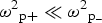 ${{\rm \omega} ^2}_{{\rm p +}} \ll {{\rm \omega} ^2}_{{\rm p\_}} $ because of m + ≫ m −; therefore
 $\mathop {\rm \omega} \nolimits_{{\rm p} -} ^{2^{\prime}} \mathop { = n^{\prime}{\rm \omega}} \nolimits_{\rm L}^2 $, where n′ = n 0e/n c with n 0e is the equilibrium electron density.
In Figure 2a, the space evolution of the excited electric field associated with oscillation modes has been indicated for different equilibrium density ratios (δ = 1, 0.5, 0.1) with initial condition n′ = 0.03 and a = 2 at τ = 180. Note, in order to apply this study findings to the real physical systems, for every density ratio (α = n 0+/n 0− = z −/z +) the considering mass ratio (δ) has been chosen such that they are physically real. As mentioned in the previous sub-section the large values of δ do not have any considerable role on the obtained results in this sub-section. As can be seen in Figure 2a, the oscillation modes break and mix up for α = 0.1 more than other values. In other word, increasing the ionization degree of ions (z +) causes the phase-mixing to occur at a shorter time. Note that the steepening and dips in the peaks of the electric field profile indicate the phase-mixing of neighboring oscillations. Meanwhile, another signature for phase-mixing is the appearance of spikes in the electron density as shown in Figure 2b. Since the pondermotive force has no effect on the ions, m + ≫ m −, but on electrons therefore increasing the electrons (i.e., increasing z +) makes phase-mixing occur at a short time. These results also agree with the findings of our previous work (Mehdian et al., Reference Mehdian, Kargarian and Hajisharifi2014a; Reference Mehdian, Kargarian, Hajisharifi and Hasanbeigi2014b).
(a) Space evolution of the normalized excited electron field for different density ratios; green (solid) line for δ = 0.1, blue (dash) line for δ = 0.5, and black (dash-dot) line for α = 1. (b) Space evolution of normalized electron density for different density ratios; δ = 0.1, 0.5, 1.
3. LASER ABSORPTION IN AN ARBIATARY MASS AND DENSITY RATIOS PLASMA
Here, using the obtained results in the previous section the behavior of laser absorption rate, achieved by PIC simulation, in a finite-size plasma with an arbitrary mass and density ratios has been explained. It has been demonstrated that in the nonlinear laser–plasma interaction regime, the nonlinear phenomena such as phase-mixing phenomenon and laser-scattering process have substantial role on the conversion of laser energy to the directed kinetic or thermal energy of the charged plasma particles. The study of laser absorption relying on the arbitrary mass and density ratios is important with regards to the presence of various plasma environments in laboratory and astrophysics.
The simulated absorption rate (A abs) versus normalized time (τ) has been indicated in Figure 3 for three different mass ratios (δ = 5, 10, 100) with initial condition α = 1, n = 0.1, and a = 2. Comparison of the curves for different values of δ for t < t c shows that a steeper slope in absorption curves (occurrence of phase-mixing phenomenon) is observed in a shorter time for smaller δ than for larger ones since the phase-mixing time reduces by decreasing δ. As can be clearly seen in this figure for a specified value of δ that the absorption rate increases with time until saturation (the maximum value). Moreover, this figure shows that for t < t c, the decrement of δ increases the absorption rate due to sooner phase-mixing and scattering of laser in the plasma while for the range of t > t c the decrement of δ decreases the absorption due to the increasing of nonlinear laser scattering from the plasma toward the vacuum. The reason of this decrease can be explained by investigation of the electric field component of laser scattered in the vacuum region shown in Figure 4. We can see in the range of t > t c for smaller value of δ, a more significant amount of light leaves the plasma environment to vacuum and cannot be absorbed any further by the plasma particles. In summary, in a finite system the absorption is larger for smaller δ in the range of t < t c whereas for t > t c this order becomes reverse. Moreover, all of the absorption curves cross each other at the specific time t c resulting the time at which laser scattering toward the vacuum becomes significant and is independent on the mass ratio.
The absorption rate versus time with a = 2, n = 0.1, and α = 1 for different values of δ.
Space evolution of the transverse electric field with a = 2 and n = 0.1, α = 1 at (a) τ = 120 < t c and (b) τ = 300 > t c.
As a worthwhile result, investigation of the electron distribution functions for different values of normalized plasma density and mass ratios shows that for specific values of n and δ a considerable number of particles with high directed energy along the laser are observed. The snapshot of the plasma ion distribution function has been shown in Figure 5 at τ = 500 for different values of normalized plasma densities (n = 0.03, 0.1) and mass ratios (δ = 10, 100). For lower density by increasing δ a large amount of laser energy is transferred to the particles in the laser direction and a population of charged particles having directed kinetic energy creates in that direction while for higher density the laser energy is mostly transferred to the plasma particles as thermal energy.
Snapshots of the electron distribution function for different mass ratios; δ = 10, 100 in plasma densities (a) n = 0.1 and (b) n = 0.03.
We next study the effects of different density ratios of two-component plasma on the transmission rate of laser energy to the plasma particles. For this purpose, we employ simulation method to obtain the dependence of absorption on α by passing time. Using this technique, the absorption rate (A abs) versus normalized time (τ) has been depicted in Figure 6 for three different values of density ratios α (e.g., α = 0.1, 0.5, 1). Comparison of the curves for different values of α shows that a steeper slope in absorption curves (occurrence of phase-mixing) is observed in a shorter time for smaller α than for larger ones. This means the phase-mixing time reduces by decreasing α. Moreover, as seen in this figure for two curves with different α, the absorption rate for the curve having smaller α is larger until they cross each other and then reverse. For example comparison of curves with α = 1 and α = 0.1 shows that the absorption rate for t < t 2 increases by decrement of α due to the sooner phase-mixing and laser scattering in the plasma, while for the range of t > t 2 the decreasing of α decreases the absorption due to the laser scattering from the plasma toward the vacuum. The reason of this decrease can be explained from the illustration of electric field component of laser (Fig. 7). As we expect in range of t > t 2 for smaller value of α, a more significant amount of scattered light leaves the plasma environment and cannot be absorbed any further by the plasma particles. Moreover, this figure shows that the time at which laser scattering toward the vacuum (being finite) is significant depends to the equilibrium density ratio. This explanation is valid for every two curves with different α. Figure 8 illustrates the snapshot of the electron distribution function at τ = 500 for different values of normalized plasma densities (n = 0.03, 0.1) and density ratios (α = 0.1, 0.5). For lower density by increasing α a considerable amount of laser energy is transferred to the electrons in the laser direction while for higher density the laser energy is transferred to the plasma particles as thermal energy.
The absorption rate versus time with a = 2, n = 0.1 for different values of α.
Space evolution of the transverse electric field with a = 2 and n = 0.1 at (a) τ = 180 < t 2 and (b) τ = 380 > t 2.
Snapshots of the electron distribution function for different density ratios; α = 0.1, 0.5 in plasma densities (a) n = 0.1 and (b) n = 0.03.
4. CONCLUSIONS
Summary, we have spatiotemporally investigated the physics of laser absorption in an arbitrary density and mass ratios of a two-component finite-size plasma by allowing the motion of heavy ions in the wave dynamics. Study of a plasma with arbitrary mass and density ratios can be a topic of considerable fundamental interest because the nonlinear processes related to laser absorption such as phase-mixing phenomenon and laser scattering have distinct dependences in different plasma environments. The investigation of these nonlinear phenomena in the plasma mediums with arbitrary mass and density ratios has been related to the many astrophysical environments. Recently, the experiments relevant to astrophysical phenomena have been done in intense laser–matter interaction systems (Shigemori et al., Reference Shigemori, Kodama, Farley, Koase, Estabrook, Remington and Turner2000; Stone & Hardee, Reference Stone and Hardee2000; Lebedev et al., Reference Lebedev, Chittenden, Beg, Bland, Ciardi, Ampleford and Gardiner2002; Mizuta et al., Reference Mizuta, Yamada and Takabe2002). This new field of science is called laboratory or laser astrophysics. Therefore, the laser absorption in the under consideration environment can be applied in the laboratory astrophysics. Moreover, the results of this paper can be applied to the experiments of laser–plasma interaction with application to the particle acceleration and fast ignition concept. Our simulation results show that a steeper slope in the absorption curves is observed in a shorter time for smaller δ than for larger ones since the phase-mixing time for waves occurs at the point where the absorption curves have a maximum gradient. Moreover, investigation of absorption curves shows for t < t c (t c is time when absorption curves cross each other) the decrement of δ increases the absorption rate due to sooner phase-mixing and laser scattering in the plasma, while for the range of t > t c the decrement of δ decreases the absorption due to the laser scattering from the plasma toward vacuum. We have also shown decreasing of density ratio α increases the absorption rate with time in a finite-size plasma as long as the laser scattering from the plasma is not considerable. The study of kinetic phase-space distributions indicates in a specific range of mass and density ratios a large amount of laser energy is transferred to the plasma particles in the longitudinal direction and a high-energy population of the charged particle in the laser direction creates. These simulation results have direct relevance to the experiments on the superintense laser–plasma interactions with applications to fast ignition concept and particle acceleration and also to laboratory and astrophysical environments.



