Introduction
There is increasing support in the literature for the concept that exposure of the fetus to adverse conditions in utero may result in developmental adaptations that permanently change the structure, physiology, metabolism and postnatal growth of the offspring.Reference Wu, Bazer, Wallace and Spencer1 Altered maternal nutrient intake in sheep resulted in offspring with glucose intolerance,Reference Oliver, Breier, Gluckman and Harding2–Reference Ford, Hess and Schwope4 altered hypothalamus-pituitary-adrenal-axis function,Reference Hawkins, Steyn and McGarrigle5–Reference Gardner, Van Bon and Dandrea7 increased adiposityReference Gardner, Tingey and Van Bon3, Reference Ford, Hess and Schwope4 and altered postnatal growth,Reference Ford, Hess and Schwope4, Reference Greenwood, Hunt, Hermanson and Bell8 Dam size could affect fetal growth through the size of the placenta, which influences the nutrient supply for the developing fetus.Reference Mellor9 Embryo transfer and cross-breeding experiments in large and small breeds of sheep,Reference Dickinson, Hancock, Hovell, Taylor and Wiener10, Reference Gootwine, Bor, Brawtal and Zenou11 horsesReference Walton and Hammond12, Reference Allen, Wilsher and Turnbull13 and pigsReference Wilson, Biensen, Youngs and Ford14 have shown that fetal growth can be altered from the normal genetic potential by differing dam size.
In addition to the in utero environment affecting the offspring’s metabolic function in later life, the postnatal growth trajectory has been found to play an important role in the development of metabolic dysfunction.Reference Desai and Hales15, Reference Cottrell and Ozanne16 For example, postnatal ‘catch-up’ growth is associated with the development of glucose intolerance in adult life,Reference Bloomfield, Oliver and Harding17, Reference Eriksson, Forsen and Tuomilehto18 cardiovascular diseaseReference Desai and Hales15 and reduced longevity.Reference Ozanne and Hales19
Our previous work has shown that maintenance nutrition of the ewe during pregnancy altered the bone mineral content/lean mass ratio of the fetal hindquarters when compared to ad libitum feeding, irrespective of dam size.Reference Firth, Rogers and Vickers20 Furthermore, we have shown that dam nutrition affected birth weight in twin-born lambsReference Kenyon, Blair and Jenkinson21 and that dam nutrition and dam size during pregnancy affected postnatal growth of the female offspring.Reference van der Linden, Kenyon and Jenkinson22 Therefore, we examined, and report in this study, the relationship between birth weight and early postnatal growth and metabolic function of 16-month-old female offspring born to dams differing in size and diet during pregnancy. We hypothesize that lower birth weight and greater postnatal growth rates until 1 year of age in female offspring born to light dams which were fed maintenance during pregnancy, would negatively affect their metabolic function at 16 months of age. In addition, we hypothesize that the pre-existing maternal body size (heavy v. light) would exacerbate or reduce the effects of maternal nutrition during pregnancy on the metabolic function of 16-month-old offspring.
Materials and Methods
The study was conducted at the Massey University Keeble Sheep and Beef farm, 5 km south of Palmerston North, New Zealand. The study and all animal-handling procedures were approved by the Massey University Animal Ethics Committee, Palmerston North, New Zealand.
Dams (G0)
Approximately 450 heavy (H) (60.8 kg ± 0.18) and 450 light (L) (42.5 kg ± 0.17) Romney dams (G0) were selected from the extremes in a commercial flock of 2900 ewes, on the basis of size, as determined by live weight, and bred using artificial insemination as previously described by Kenyon et al.Reference Kenyon, Blair and Jenkinson21 From day 21 until day 140 post-insemination, the dams were randomly allocated, within size, to ad libitum (A) or maintenance (M) nutritional regimens under New Zealand pastoral grazing conditions. The aim of the M nutritional regimen was to ensure that total ewe live weight during pregnancy increased at a level similar to that of the expected conceptus mass. The aim of the A nutritional regimen was to provide dams with unrestricted food intake and, hence, no nutritional restriction to maternal or fetal growth and development (resulting in 78.4 kg ± 0.37 v. 65.0 ± 0.35; P < 0.05; for H- and M-dams at day 140).Reference Kenyon, Blair and Jenkinson21 Pasture herbage was the only nutritional source and the average pre- and post-grazing pasture covers during the period day 21–day 140 were 1330 ± 140.0 and 804.0 ± 133.4 kg of dry matter per hectare (kg DM/ha), respectively, for the M-feeding regimen and 2304.0 ± 156.8 and 1723.3 ± 149.7 kg DM/ha for the A-feeding regimen.Reference Kenyon, Blair and Jenkinson21 From day 140 of pregnancy through to weaning, all dams and their lambs (G1) were provided with ad libitum feeding. Singleton- and twin-born lambs (female and male lambs combined) born to H-dams (n = 282) were heavier at birth (5.51 kg ± 0.05 v. 5.37 kg ± 0.05; P < 0.05; for lambs born to H- and L-dams, respectively) and weaning (32.7 kg ± 0.36 v. 31.2 kg ± 0.33; P < 0.05; for lambs born to H- and L-dams, respectively) than lambs born to L-dams (n = 217). Twin-born offspring (female and male lambs combined) born to A-dams (n = 237) were heavier at birth (5.23 kg ± 0.06 v. 4.52 kg ± 0.06; P < 0.05; for twin-born lambs born to A- and M-dams) and weaning (30.6 kg ± 0.42 v. 28.2 ± 0.41; P < 0.05; for twin-born lambs born to A- and M-dams) than lambs born to M-dams (n = 262).Reference Kenyon, Blair and Jenkinson21 After weaning, the female offspring (G1) were managed and fed to nutritional requirements as one group under New Zealand commercial farming practiceReference van der Linden, Kenyon and Jenkinson22 and the male offspring were slaughtered to obtain carcass information (to be reported elsewhere). The study, therefore, utilized a two by two factorial design: two dam-nutrition treatments (M v. A) and two dam-size treatments (H v. L). The term dam is used to refer to the G0 generation of heavy and light ewes that underwent the nutritional treatment during pregnancy. The ewe offspring (G1) born to the heavy or light dams fed either maintenance or ad libitum, will be referred to as HA-, HM-, LA-, or LM-ewes, respectively.
Ewe offspring (G1)
At 16 months of age, 48 randomly selected twin-born ewe offspring (G1) were housed indoors in two, random, consecutive batches of 24 ewes (n = 12 ewes born to the HA-, HM-, LA- and LM-dam treatment groups, as described above).Reference Kenyon, Blair and Jenkinson21 Each group of 12 ewes (G1) contained eight ewes from female-female twin sets, born to four dams (G0), and four ewes from female-male twin sets, born to four dams (G0); birth weight differences within the twin pairs were <25%.
The selected ewes were housed in a large shed, as one batch for 1 week, followed by housing in individual pens for 2 weeks prior to the metabolic challenges. Ewes had free access to water and were fed to achieve an average liveweight gain of 100 g/day (19 MJ ME/day).Reference Geenty and Rattray23 The feed was a mixture of pelleted food (500 g of 12 MJ ME/kg) and lucerne chaff (1500 g of 8.6 MJ ME/kg) (average ewe live weight prior to housing was 50 kg (±4.4 s.d.)). Ewes were fed daily between 1 and 2 pm; feed intake (offered less refusals) was recorded at 8 am each day.
Three days prior to the start of the metabolic challenges, both jugular veins were catheterized with indwelling through the needle (12 g) polyvinyl catheters after administration of local anesthetic (Lopaine, Lignocaine Hydrochloride USP. 20 mg/ml, Ethical Agents Ltd, Auckland, New Zealand); catheters were secured to the neck with tape and secured on the animal’s back under a meshed stocking. This was followed by single prophylactic intramuscular (hind leg) administration of antibiotics (Duplocillin® LA, Intervet Ltd, Newmarket, Auckland, 2 ml per 50 kg live weight). One catheter was used for hormone/metabolite administration and the other for blood collection.
After an overnight fast (food was removed between 6 and 7 pm the evening prior to the challenge), ewes were submitted to an insulin tolerance test (ITT) on day 1 (0.15 IU/kg live weight, Humulin R, Eli Lilly, Indianapolis, IN), a glucose tolerance test (GTT) on day 2 (0.17 g/kg live weight, Dextrose 40%, Bomac Laboratories LTD, Auckland, New Zealand), and an epinephrine tolerance test (ETT) on day 3 (1 μg/kg live weight, Sigma-Aldrich Inc. St Louis, MO, USA), between 8 and 9 am. Blood samples were collected in vacutainers containing ethylenediaminetetraacetic acid (BD Vacutainer Systems, UK) (5 ml) at −5, 0, 2, 10, 20, 30, 40, 50, 60 and 120 min from the insulin administration, at −5, 0, 2, 5, 10, 20, 30, 40, 50, 60, 120 min from the glucose administration and at −5, 0, 2, 5, 7, 10, 20, 45 and 60 min from the epinephrine administration. On all 3 days, ewes were re-fed after completion of the sampling. All blood samples were immediately placed on ice until centrifugation at 3000 rpm (1006 g) for 15 min. Triplicate plasma aliquots were stored at −20°C until analysis.
Assays
Plasma metabolite concentrations were measured using a Hitachi 902 autoanalyser (Hitachi High Technologies Corporation, Tokyo, Japan) using commercial kits for glucose and cholesterol (Roche, Mannheim, Germany) and non-esterified free fatty acids (NEFAs) and triglyceride (Randox Laboratories Ltd, Ardmore, Crumlin, UK). Insulin was measured by radioimmunoassay (RIA) with ovine insulin as the standard (Sigma, batch no. I9254).Reference Rumball, Harding, Oliver and Bloomfield24 The minimal detectable concentration was 0.03 ng/ml; inter- and intra-assay coefficients of variation were 14.3% and 11.5%, respectively.
Plasma cortisol concentrations were measured using mass spectrometry.Reference Rumball, Oliver and Thorstensen25 The internal standard was cortisol-d2. A 100 μl volume of internal standard (20 ng/ml in water) was added to 200 μl plasma. Steroids were extracted using 1 ml ethyl acetate. After removal of the organic supernatant, samples were dried, re-suspended in 100 μl mobile phase (80% methanol and 20% water), and transferred to high performance liquid chromatography (HPLC) injector vials. A 25 μl volume was injected onto an HPLC mass spectrometer system consisting of a Surveyor MS pump and autosampler followed by an Ion Max APCI source on a Finnigan TSQ Quantum Ultra AM triple-quadrapole mass spectrometer all controlled by Finnigan Xcaliber software (Thermo Electron Corporation, San Jose, CA). The mobile phase was isocratic, flowing at 600 μl/min through a Luna 3 μ C18 (2) 100A 250 × 4.6 column at 40°C (Phenomenex, Auckland, New Zealand). Retention time was 5.9 min. Ionization was in positive mode, and Q2 had 1.2 mTorr of argon for the steroid. The mass transitions, for internal standard and steroid, respectively, were as follows: cortisol-d2, 365.3–122.2 at 28 V, and cortisol, 363.3–121.2 at 28 V. Mean inter- and intra-assay coefficient of variation values were 11.1% and 10.6%, respectively.
Metabolic variables of the offspring (G1)
Area under the curves for all variables included the area under the baseline.
GTT
Glucose tolerance was measured as the area under the glucose curve (GluAUCGTT) and absolute insulin secretion as the area under the plasma insulin curve (InsAUCGTT) during the 120 min after the glucose administration.
ITT
Insulin resistance was measured as the area under the glucose curve (GluAUCITT) and absolute cortisol secretion was measured as the area under the plasma cortisol curve (CortAUCITT) during the 120 min after the insulin administration.
ETT
Absolute glucose (GluAUCETT), insulin (InsAUCETT), NEFA (NefaAUCETT), triglycerides (TrigAUCETT) and cholesterol (CholAUCETT) secretion were measured as the area under the curves during the first 20 min after epinephrine administration. Areas under the curves during the first 20 min were used as area under the curves during 60 min showed no relationship with birth weight or growth rates.
Birth weight and growth of the ewe offspring (G1)
The average day of birth of the lambs (G1) was 28 August 2005 and the lambs were weighed within 24 h after birth as previously described by Kenyon et al.Reference Kenyon, Blair and Jenkinson21 After weaning at the average age of 100 days, the ewe lambs (G1) were weighed monthly until 1 year of age, as previously described by van der Linden et al.Reference van der Linden, Kenyon and Jenkinson22 Growth rates of the ewe lambs (G1) were calculated for four periods: Growthwean: growth rates from birth to weaning (4 months of age); Growthpostwean: growth rates post weaning (4–7 months of age); Growthprepub: growth rate prior to onset of puberty (7–9 months of age); Growthpostpub: growth rates post puberty (9–12 months of age).
Statistical analysis
Birth weight and growth rates of the ewe lambs (G1) were analysed using the MIXED procedure26 with a linear model that included the fixed effects of dam (G0) nutrition, dam (G0) size, the interaction dam (G0) nutrition by dam (G0) size and the random effect of batch. Data are presented as least square means and their standard error (±s.e.). Area under the curves were analysed using the same mixed linear model as stated above including the fixed effects of dam nutrition, dam size, and the interaction of dam nutrition by dam size and the random effect of batch. Metabolic variables are presented as least square means and their standard error (±s.e.).
Birth weight and the four growth periods (Growthwean, Growthpostwean, Growthprepub and Growthpostpub) of the ewe offspring (G1) were regressed on their metabolic variables at 16 months of age (glucose metabolism: GluAUCGTT, InsAUCGTT and GluAUCITT; adrenal function: CortAUCITT; fat metabolism: GluAUCETT, InsAUCETT, NefaAUCETT, TrigAUCETT and CholAUCETT) for each of the dam (G0) treatment interaction (dam nutrition by dam size; HM; HA; LM; LA) with the following linear regression model:

where yklm is the metabolic variable measured on ewe (G1) l from dam (G0) treatment interaction k in batch m, β 0k and β 1k are regression coefficients describing the regression line in dam (G0) treatment interaction k, Mm is the random effect of batch m and eklm is the residual error corresponding to the observation yklm.
Multiple comparisons were performed and therefore α(0.05) was corrected using the Bonferroni correction for multiple testsReference Narum27:
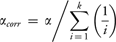
Associations were significant at αcorr = 0.02 and considered a trend αcorr = 0.05.
Thus, if a relationship within a group is significant, it is represented in a regression coefficient (β 1) that is significantly different from 0. If a relationship within a group is not significant, it is represented in a regression coefficient (β 1) that is not significantly different from 0 (regression line is horizontal).
Results
Birth weight, growth rates and metabolic variables of the ewe offspring (G1)
No dam-nutrition or dam-size effects (P > 0.10) were found on birth weight, Growthpostwean or Growthpostpub of the ewe offspring (Table 1). Growth rates from birth to weaning (Growthwean) tended (P < 0.10) to be greater in HA-offspring compared to LM-offspring. However, growth rates prior to puberty (Growthprepub) tended (P < 0.10) to be greater in LM-offspring than in HM- and LA-offspring.
The effects of heavy (H) or light (L) dams (G0) fed ad libitum (A) or maintenance (M) during pregnancy on BW (kg), growth from birth to weaning (Growthwean; g/day), growth from weaning 7 months of age (Growthpostwean; g/day), growth from 7–9 months of age (Growthprepub; g/day) and growth from 9–12 months of age (Growthpostpub; g/day) and glucose-metabolism variables at 16 months of age (GluAUCGTT and InsAUCGTT: glucose AUC and insulin AUC in response to GTT, respectively; GluAUCITT: glucose AUC in response to ITT) and fat-metabolism variables at 16 months of age (InsAUCETT 0–20 and NefaAUCETT 0–20: insulin AUC and NEFA AUC in response to ETT, respectively) of ewe offspring (G1). Table shows least square means ± s.e.

BW, birth weight; GTT, glucose tolerance test; ITT, insulin tolerance test; ETT, epinephrine tolerance test.
abSignificantly different (P < 0.05) between dam treatments and within variables;
cdSuperscripts tend to be different (P < 0.10) between dam treatments and within variables.
*Interaction of dam size by maternal nutrition was not significant (P > 0.10) for all variables.
No dam nutrition or dam size effects (P > 0.10) were found in area under the glucose (GluAUCGTT) and insulin (InsAUCGTT) curves in response to the GTT, area under the glucose curve (GluAUCITT) in response to the ITT or area under the NEFA curve (NefaAUCETT) in response to the ETT at 16 months of age (Table 1). Offspring born to LM-dams had a greater (P < 0.04) area under the insulin (InsAUCETT) curve in response to ETT than HA-offspring. In addition, HM-offspring tended (P < 0.10) to have greater InsAUCETT than HA-offspring.
Glucose metabolism of the ewe offspring (G1)
Birth weight, Growthwean and Growthpostwean were not related to GluAUCGTT, InsAUCGTT and GluAUCITT in response to the GTT and ITT, respectively, of ewe offspring at 16 months of age (data not shown).
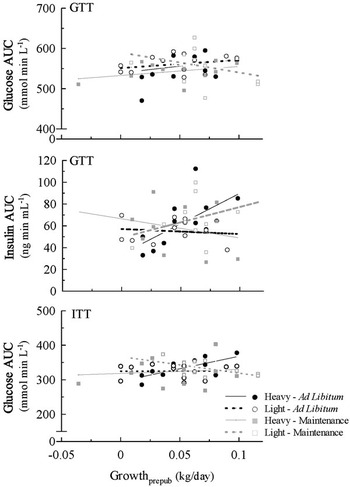
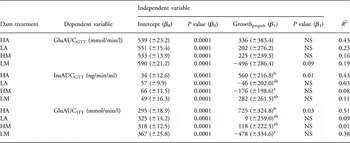
In the period before puberty, the regression coefficient (β 1) of Growthprepub on InsAUCGTT of HA-ewes was significantly (P = 0.01) different from 0, indicating that HA-ewes had increased InsAUCGTT with increasing growth rates prior to puberty (Fig. 1 and Table 2). This regression coefficient of Growthprepub on InsAUCGTT of HA-ewes was significantly different (P = 0.02) from that of HM-ewes and tended (P = 0.05) to be different from that of LA-ewes. This indicates that HA-ewes had greater InsAUCGTT with increasing growth rates prior to puberty than did HM- or LA-ewes.
Linear regressions of pre-puberty growth rates (Growthprepub: 7–9 months of age) on glucose-metabolism variables at 16 months of age (GluAUCGTT: glucose AUC and InsAUCGTT: insulin AUC in response to glucose tolerance test (GTT); GluAUCITT: glucose AUC in response to insulin tolerance test (ITT)) of ewes (G1) born to heavy or light dams (G0) fed either maintenance or ad libitum during pregnancy. Black solid line and ● heavy – ad libitum; black dotted line and ○ light – ad libitum; grey solid line and  heavy – maintenance; grey dotted line and
 light – maintenance.

Linear regression equationsFootnote * of pre-puberty growth rates (Growthprepub; 7–9 months of age; kg/day) on glucose-metabolism variables at 16 months of age (GluAUCGTT: glucose AUC and InsAUCGTT: insulin AUC in response to GTT; GluAUCITT: glucose AUC in response to ITT) of ewes (G1) born to heavy (H) or light (L) dams (G0) fed either ad libitum (A) or maintenance (M) during pregnancy

NS, non significant.
ab Significantly different (P < 0.05; using Bonferroni correction) between dam treatments and within dependent metabolic variable.
* All regression equation models are significant (P < 0.01).
Thus, for example, if HA- and HM-ewes had growth rates of 0 kg/day prior to puberty, HA-ewes would have a predicted InsAUCGTT of 34 ng min/l (34 + 560 × 0; Table 2) and HM-ewes would have an predicted InsAUCGTT of 66 ng min/l (66 ± 176 × 0; Table 2). However, if HA- and HM-ewes had growth rates of 0.1 kg/day prior to puberty, HA-ewes would have a predicted InsAUCGTT of 90.0 ng min/l (34 + 560 ± 0.1) and HM-ewes would have an predicted InsAUCGTT of 48.4 ng min/l (66 ± 176 × 0.1).
The regression coefficient of Growthprepub on GluAUCITT of HA-ewes was significantly (P = 0.03) different from 0, indicating that HA-ewes had increased GluAUCITT with increasing growth rates prior to puberty. This regression coefficient of Growthprepub on GluAUCITT of HA-ewes was significantly different (P = 0.01) from that of LM-ewes, indicating that HA-ewes had greater GluAUCITT with increasing growth rates prior to puberty than did LM-ewes.
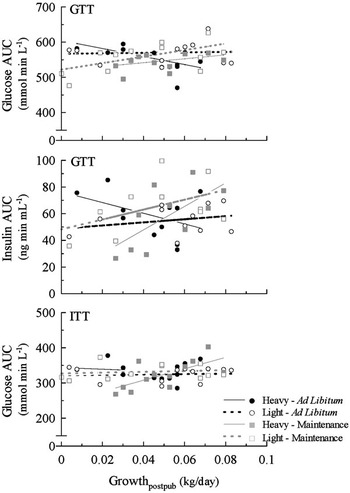
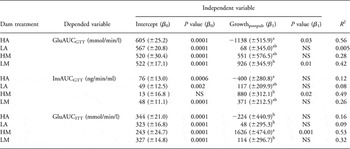
In the period after puberty, the regression coefficient of Growthpostpub on GluAUCGTT of HA-ewes was significantly (P = 0.03) different from 0, indicating that HA-ewes had decreased GluAUCGTT with increasing growth rates after puberty (Fig. 2 and Table 3). In addition, the regression coefficient of Growthpostpub on GluAUCGTT of LM-ewes was significantly (P = 0.01) different from 0, indicating that LM-ewes had increased GluAUCGTT with increasing growth rates after puberty. The regression coefficient of Growthpostpub on GluAUCGTT of LM-ewes was significantly different (P = 0.002) from that of HA-ewes, indicating that LM-ewes had greater GluAUCGTT with increasing growth rates after puberty than did HA-ewes. The regression coefficient of Growthpostpub on GluAUCGTT of HM-ewes tended to be different (P = 0.04) from that of HA-ewes, indicating that HM-ewes tended to have greater GluAUCGTT with increasing growth rates after puberty than did HA-ewes.
Linear regressions of post-puberty growth rates (Growthpostpub: 9–12 months of age) on glucose-metabolism variables at 16 months of age (GluAUCGTT: glucose AUC and InsAUCGTT: insulin AUC in response to glucose tolerance test (GTT); GluAUCITT: glucose AUC in response to insulin tolerance test (ITT)) of ewes (G1) born to heavy or light dams (G0) fed either maintenance or ad libitum during pregnancy. Black solid line and ● heavy – ad libitum; black dotted line and ○ light – ad libitum; grey solid line and  heavy – maintenance; grey dotted line and
 light – maintenance.

Linear regression equationsFootnote * of post-puberty growth rates (Growthpostpub; 9–12 months of age; kg/day) on glucose-metabolism variables at 16 months of age (GluAUCGTT: glucose AUC and InsAUCGTT: insulin AUC in response to GTT GluAUCITT: glucose AUC in response to ITT) of ewes (G1) born to heavy (H) or light (L) dams (G0) fed either ad libitum (A) or maintenance (M) during pregnancy

NS, non significant.
ab Significantly different (P < 0.05; using Bonferroni correction) between dam treatments and within dependent metabolic variable.
* All regression equation models are significant (P < 0.01).
The regression coefficient of Growthpostpub on InsAUCGTT of HM-ewes was significantly (P = 0.02) different from 0, indicating that HM-ewes had increased InsAUCGTT with increasing growth rates after puberty. The regression coefficient of Growthpostpub on InsAUCGTT of HM-ewes was significantly different (P = 0.005) from that of HA-ewes, indicating that HM-ewes had greater InsAUCGTT with greater growth rates after puberty than did HA-ewes. The regression coefficient of Growthpostpub on InsAUCGTT of HM-ewes tended to be different (P = 0.05) from that of LA-ewes, indicating that HM-ewes tended to have greater InsAUCGTT with increasing growth rates after puberty than did LA-ewes.
The regression coefficient of Growthpostpub on GluAUCITT of HM-ewes was significantly (P = 0.001) different from 0, indicating that HM-ewes had increased GluAUCITT with every kg of growth. The regression coefficient of Growthpostpub on GluAUCITT of HM-ewes was significantly different (P = 0.001) from that of HA-, LA- and LM-ewes, indicating that HM-ewes had greater InsAUCGTT with increasing growth rates after puberty than did HA-, LA- and LM-ewes.
Adrenal function of the ewe offspring (G1)
Birth weight, Growthwean, Growthpostwean, Growthprepub and Growthpostpub were not related to CortAUCITT in response to the ITT at 16 months of age (data not shown).
Fat metabolism of the ewe offspring (G1)
Birth weight, Growthwean, Growthpostwean, Growthprepub and Growthpostpub were not related to GluAUCETT, TrigAUCETT and CholAUCETT in response to the ETT at 16 months of age.
Growthwean, Growthpostwean, Growthprepub and Growthpostpub were not related to InsAUCETT.
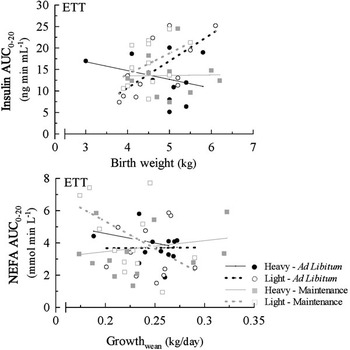
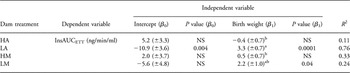
The regression coefficients of birth weight on InsAUCETT of LA-ewes (P = 0.0001) and LM-ewes (P = 0.04) were significantly different from 0, indicating that LA- and LM-ewes had increased InsAUCETT with every kg increase of birth weight (Fig. 3 and Table 4). The regression coefficient of birth weight on InsAUCETT of LA-ewes was significantly different from that of HA-ewes (P = 0.001), and HM-ewes (P = 0.01), indicating that LA-ewes had greater InsAUCETT with every kg increase of birth weight than did HA- and HM-ewes.
Linear regressions of birth weight and growth rates to weaning (Growthwean: birth – 4 months of age) on fat-metabolism variables at 16 months of age (InsAUCETT: insulin AUC and NefaAUCETT: non-esterified free fatty acids (NEFAs) AUC in response to epinephrine tolerance test (ETT)) of ewes (G1) born to heavy or light dams (G0) fed either ad libitum or maintenance during pregnancy. Black solid line and ● heavy – ad libitum; black dotted line and ○ light – ad libitum; grey solid line and  heavy – maintenance; grey dotted line and
 light – maintenance.

Linear regression equationsFootnote * of birth weights (kg) on fat-metabolism variable InsAUCETT at 16 months of age (insulin AUC in response to ETT) of ewes (G1) born to heavy (H) or light (L) dams (G0) fed either ad libitum (A) or maintenance (M) during pregnancy

NS, non significant.
ab Significantly different (P < 0.05; using Bonferroni correction) between dam treatments and within dependent metabolic variable.
* All regression equation models are significant (P < 0.01).
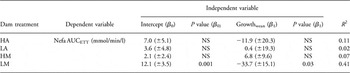
Birth weight, Growthpostwean Growthprepub and Growthpostpub were not related to NefaAUCETT at 16 months of age. The regression coefficient of Growthwean on NefaAUCETT of LM-ewes was significantly (P = 0.03) different from 0, indicating that LM-ewes had decreased NefaAUCETT with increasing growth rates prior to weaning (Fig. 3 and Table 5). This regression coefficient of Growthwean on NefaAUCETT of LM-ewes tended to be different (P = 0.03) from that of HM-ewes indicating that LM-ewes had smaller NefaAUCETT with increasing growth rates prior to weaning than did HM-ewes.
Linear regression equationsFootnote * of growth rates (from birth until 4 months of age, Growthwean: kg/day) on fat-metabolism variable NefaAUCETT at 16 months of age (NEFA AUC in response to ETT) of ewes (G1) born to heavy (H) or light (L) dams (G0) fed either ad libitum (A) or maintenance (M) during pregnancy

NS, non significant.
* All regression equation models are significant (P < 0.01).
Discussion
We hypothesized that low birth weight and greater postnatal growth rates until 1 year of age in female offspring born to light dams which were fed maintenance during pregnancy, would negatively affect their metabolic function at 16 months of age. In addition, we hypothesized that the pre-existing maternal body size (heavy v. light) would exacerbate or reduce the effects of maternal nutrition during pregnancy.
However, no relationship was found between impaired glucose homeostasis at 16 months of age and birth weight or postnatal growth up to 7 months of age in the offspring, which is consistent with other studies.Reference Oliver, Breier, Gluckman and Harding2, Reference Eriksson, Osmond, Kajantie, Forsen and Barker28
On the other hand, relationships were found between glucose homeostasis at 16 months of age and growth rates prior to puberty (Growthprepub) and growth rates after puberty (Growthpostpub). A shift in metabolism seems to have occurred. Prior to puberty, HA-ewes produced more insulin at 16 months of age (increased predicted InsAUCGTT with increasing growth rates prior to puberty) and were more insulin resistant at 16 months of age (increased predicted GluAUCITT with increasing growth rates prior to puberty) than the HM- and LM-ewes. However, no such relationship between glucose intolerance and insulin resistance at 16 months of age and growth rates after puberty was observed in HA-ewes. Interestingly, after puberty HM-ewes produced more insulin and were more insulin resistant at 16 months of age with increasing growth rates after puberty compared to the other groups. A possible explanation for the relationship observed prior to puberty in the HA-ewes, is puberty-related insulin resistance, as described in human children.Reference Amiel, Caprio and Sherwin29, Reference Moran, Jacobs and Steinberger30
Puberty-related insulin resistance is related to increased growth hormone (GH) concentrations, which stimulates anabolic growth and lipolysisReference Gower and Caprio31 and secretion of insulin-like-growth factor I.Reference Moran, Jacobs and Steinberger32 Exogenous GH administration is associated with both an elevation in circulating free fatty acids (FFAs) and a decrease in insulin sensitivity,Reference Keller and Miles33 as an elevation in FFA is associated with skeletal muscle resistance to insulin-stimulated glucose uptake. Therefore, pubertal metabolism appears to be optimized to permit or promote anabolic growth.Reference Gower and Caprio31 However, we cannot explain why the association was only observed in HA-ewes and not in the other groups. After puberty, the relationship between growth rate in early postnatal life and glucose homeostasis at 16 months of age observed in HM- and LM-ewes, is in agreement with the concept that postnatal growth and sub-optimal nutrition during pregnancy are predictors of later development of glucose intolerance and insulin resistance.Reference Symonds34 This could indicate that M-ewes, regardless of dam size, may develop glucose intolerance and insulin resistance later in life. However, the relationship between growth rate after puberty and insulin resistance (greater predicted InsAUCGTT and GluAUCITT) at 16 months was most profound in HM-ewes and significantly different from HA-ewes. This may suggest that the pre-existing dam size (H) exacerbate the effects of nutrition during pregnancy on glucose and insulin metabolism of the offspring, given that the offspring have increased growth rates after puberty.
The absolute insulin secretion after the glucose administration was positively related with growth in the offspring studied in the current study, this may indicate that no dysfunction at pancreatic level had occurred.Reference Davies, Rayman and Grenfell35 Thus, it may be more likely that the sub-cellular insulin-signaling proteins downstream of the receptor could be affectedReference Fernandez-Twinn, Wayman and Ekizoglou36 especially at adipose tissue level,Reference Gardner, Tingey and Van Bon3 as mature animals are more likely to accumulate adipose tissue than muscle tissue.
However, size of the dam did affect the area under the insulin curve in response to the ETT. Ewes born to light dams produced more insulin (increased predicted InsAUCETT) with every kg that they were heavier at birth in response to the ETT at 16 months of age. This was not observed in ewes born to heavy dams, which would produce the same amount of InsAUCETT at 16 months of age irrespective of their birth weight. This may indicate that offspring born to light dams, with greater birth weights, were ‘protected’ from the lipolytic action of epinephrine as insulin has anti-lipolytic effects,Reference Ozanne, Wang, Dorling and Petry37 therefore, possibly being more ‘thrifty’.Reference Prentice38 However, insulin is a secondary response to an epinephrine challenge, and the role of increased insulin production in response to ETT observed at 16 months of age with increasing birth weight is not fully understood.
An increase in plasma NEFA concentrations in response to catecholamines is most readily explained in terms of changes in the rate of lipolysis (mobilization of adipose tissue to NEFA and glycerol).Reference Vernon39 LM-ewes produced less NEFA (decreased predicted NefaAUCETT with increasing growth rates) at 16 months of age with increasing growth rates from birth to weaning (Growthwean) than HM-ewes. This may indicate that within the maintenance-fed group, offspring born to light dams are more ‘thrifty’,Reference Prentice38 as with increasing early postnatal growth rates, the rate of lipolysis at 16 months of age is less (smaller predicted NefaAUCETT), thus ‘sparing’ their energy reserves, which is in agreement with the relationship found between birth weight and insulin production in offspring born to light dams.
In summary, ewes born to heavy dams fed ad libitum during gestation may have showed puberty-related insulin resistance at 16 months of age with increasing growth rates prior to puberty. Post-puberty, ewes born to heavy dams fed maintenance during pregnancy, produced more insulin, and were increasingly insulin resistant at 16 months of age with increasing growth rates after puberty, in response to a glucose and insulin challenge, respectively, compared to ewes born to heavy dams fed ad libitum. These results may indicate that offspring born to dams fed maintenance during pregnancy and with greater postnatal growth rates after puberty could develop glucose intolerance and insulin resistance in later life.
Ewes born to light dams were more ‘thrifty’ at 16 months of age with every kg increase of birth weight and increasing postnatal growth rates until weaning in response to an epinephrine challenge.
Altogether, the observed relationships both between birth weight and (early) postnatal growth and the metabolic response to glucose, insulin and adrenalin challenges at 16 months of age of offspring born to heavy or light dams fed maintenance or ad libitum during pregnancy are interesting, and further research will be needed to determine the exact meaning and mechanism(s) of the observed relationships.
Acknowledgements
The authors are grateful to Massey University, Meat and Wool New Zealand and the National Research Centre for Growth and Development for providing funding assistance for this project. The senior author was funded by an AGMARDT doctoral scholarship. The authors would like to thank Florence Delassus, who assisted with all the animal work and data collection, Dr Mark Oliver, Auckland University, for his helpful advice, the team at IVABS for their help with blood collection and Eric Thorstensen, Auckland University, for the blood analyses.
Statement of Interest
None.