1. Introduction
1.1. Aim and scope
In this article, I present an integrated evolutionary model of the development of attachment and reproductive strategies in humans. The model is built on the foundations of life history theory, parental investment theory, and sexual selection; it aims to provide a significant update to current life history models of attachment formulated by Belsky and colleagues (Belsky Reference Belsky1997a; Reference Belsky, Cassidy and Shaver1999; Belsky et al. Reference Belsky, Steinberg and Draper1991) and Chisholm (Reference Chisholm1999). In particular, the model I describe is the first to explain the development of sex differences in attachment patterns, permitting tighter integration between attachment theory, human reproductive ecology, and behavioral endocrinology.
The gist of life history models of attachment (reviewed in sect. 5) is that infants and young children use their parent's caregiving behavior as an indicator of the safeness and predictability of their local environment. Attachment security is the result of this unconscious evaluation process; the degree of security experienced in the first 5–7 years is hypothesized to set development on alternative developmental pathways, and to adaptively shape the individual's future reproductive strategy. Secure attachment should lead to reproductive strategies based on late maturation, commitment in long-term relationships, and higher investment in parenting. Insecure attachment, on the other hand, should lead to strategies based on early reproduction, short-term mating orientation, and lower parental investment in a larger number of children.
My contribution extends the above-sketched theoretical framework by making a series of new points, which I briefly synthesize here.
1. Sex differences in attachment have adaptive significance. I argue that sex differences in attachment patterns arise as a result of asymmetries in parental investment and sexual selection, and that they are adaptive both in children and in adults. Previous theorists (e.g., Belsky Reference Belsky, Cassidy and Shaver1999) have tried to make adaptive sense of the differences between avoidant and ambivalent attachment, but the link between attachment patterns in childhood and adult reproductive strategies is still poorly understood. I will show that taking sex differences into account makes it possible to reconcile individual differences in insecure attachment patterns with the concept of sex-specific reproductive strategies.
2. Sex differences in attachment arise in middle childhood. I present evidence that sex differences in attachment patterns are found not only in adults but also in children, starting from about 6–7 years of age (see also Del Giudice Reference Del Giudice2008). The available data suggest a phase of sex-biased reorganization of the attachment system in middle childhood, with a majority of insecure females shifting to ambivalent attachment and most insecure males shifting to avoidant attachment.
3. Sex-related endocrine mechanisms can influence the development of attachment patterns. Finally, I propose a hypothesis about the hormonal basis of the middle childhood transition in the organization of attachment. I review evidence showing that middle childhood is marked by intense, sex-related endocrine activity, and that the interplay between sexual maturation and attachment might be deeper and more bidirectional than is currently acknowledged. This view of attachment is also consistent with recent evolutionary models of the stress response system, suggesting intriguing avenues for cross-disciplinary research.
1.2. Overview of the target article
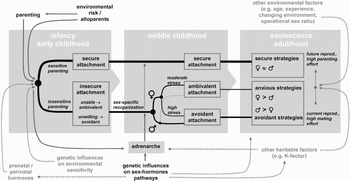
Because the idea of middle childhood as a transitional phase implies a degree of discontinuity in the development of attachment, I begin by sketching the issue of continuity versus change in attachment theory (sect. 2), and by linking it to the general biological problem of trait continuity across different life stages (sect. 3). Then, I summarize current evidence regarding sex differences in attachment, from infancy to adulthood (sect. 4). After reviewing extant life history models of attachment (sect. 5), I describe how sexual asymmetries in reproduction and sexual selection can be included in the picture to account for sex differences in reproductive strategies. I then discuss the resulting implications for attachment theory (sect. 6). Finally, I outline an updated synthesis of the development of human attachment and reproductive strategies, and explore the possible hormonal basis of the changes observed in middle childhood (sect. 7).
2. Continuity and change in attachment
2.1. Attachment as an evolved motivational system
Attachment theory, pioneered by John Bowlby (Reference Bowlby1969/1982; Reference Bowlby1973; Reference Bowlby1980), is to date the most comprehensive account of the nature and development of child–caregiver relationships. In addition, it embeds a complex theory of personality development, and has many implications for the study of social adjustment, emotion regulation, couple relationships, and psychopathology (see Cassidy & Shaver Reference Cassidy and Shaver1999, for an overview). According to attachment theory, infants are innately motivated to form selective emotional bonds with their caregivers, and organize their own behavior in order to seek and maintain proximity to them. Attachment is thus conceptualized as an innate behavioral–motivational system, with the evolved function of protecting the child from danger while motivating the caregiver to provide for the child.
Whereas the attachment system is a universal characteristic of human beings, there is much individual variation in the organization of actual attachment relationships. The systematic study of such variation started with the work of Ainsworth et al. (Reference Ainsworth, Blehar, Waters and Wall1978) and led to the concept of attachment patterns. Following early experience, infants adjust their care-eliciting behavior in order to maximize the caregiver's availability; the resulting patterns – ranging from clingy, anxious care-seeking to apparently detached and distancing behaviors – are found cross-culturally (van IJzendoorn & Sagi Reference Van IJzendoorn, Sagi, Cassidy and Shaver1999) and seem to represent the basic human ways of organizing parent–infant relationships (see Suomi Reference Suomi, Cassidy and Shaver1999, for a description of similar patterns in other primates). Individual differences in attachment relationships have profound consequences for the child's social and emotional development; hundreds of studies have been carried out to identify the causes of such differences, their developmental outcomes, and their mechanisms of change.
2.2. Patterns of attachment
A central notion in attachment theory is that relationships with caregivers become internalized as internal working models (IWMs), which are described as sets of beliefs and expectations about the self, the world, and relationships, together with rules for the direction of behavior and the appraisal of experience. IWMs guide the child's interpersonal behavior, and are at the root of individual attachment patterns, or “styles” (see Ainsworth et al. Reference Ainsworth, Blehar, Waters and Wall1978; Weinfield et al. Reference Weinfield, Sroufe, Egeland, Carlson, Cassidy and Shaver1999, for detailed descriptions). Children experiencing a consistently available, sensitive caregiver who is able to tune in to their states and feelings develop a secure attachment (labeled B); they use their caregiver as a “secure base” for exploration and, when distressed, turn to him or her for help and are easily comforted. In European and North American low-risk samples, the normative proportion of secure infants is about 65%, with remarkable consistency across different countries (see van IJzendoorn & Sagi Reference Van IJzendoorn, Sagi, Cassidy and Shaver1999, for a review).
Children who experience a rejecting, cold, and uninvolved caregiver establish an insecure–avoidant attachment pattern (labeled A): They treat the caregiver as unavailable, tend to avoid physical contact, and when distressed, don't ask for help or comfort. They are adopting a “minimizing” or “deactivating” behavioral strategy, since signalling distress and need would lead to further rejection. On average, about 25% of infants in Western samples are classified as avoidantly attached, but proportions vary in different countries.
If the caregiver is inconsistently available, alternating acceptance and rejection and being scarcely tuned to the child's needs, the child is expected to develop an insecure–ambivalent/resistant attachment (labeled C). Ambivalent children are easily distressed and ask vigorously for help and comfort, but are not easily calmed and protest angrily in order to maintain closeness with the caregiver. Their attachment strategy can be described as “maximizing,” “hyperactivating,” and overdependent, since they exaggerate their signalling of need in order to control the caregiver's behavior. The proportion of ambivalent infants is about 10% on average, again with some cross-cultural variation.
Sometimes, the child faces caregivers who are frightening or threatening in their parental behavior. Frightening behaviors can range from sudden, trance-like dissociative states, resulting from traumatic experiences or unresolved losses on the parent's side, to downright physical or sexual abuse. Such caregiver's behaviors tend to disrupt the child's attachment strategy, leading to more or less severe forms of disorganization. Disorganized children (labeled D) may show elements of the previously described attachment strategies, but they experience abnormally high levels of motivational conflict, since the caregiver is simultaneously a source of comfort and fear. This results in conflicting approach/avoidance displays, dissociative states (e.g., “freezing”), and intrusion of sudden aggressive actions directed at the caregiver (Hesse & Main Reference Hesse and Main2006; Lyons-Ruth & Jacobvitz Reference Lyons-Ruth, Jacobvitz, Cassidy and Shaver1999; Lyons-Ruth et al. Reference Lyons-Ruth, Bronfman, Parsons, Vondra and Barnett1999; Main & Hesse Reference Main, Hesse, Greenberg, Cicchetti and Cummings1990). The proportion of disorganized children is highly variable across samples, and can range from 10%–15% in low-risk families to 70% or more in extremely high-risk settings.
Attachment patterns can be described either as categorical types, as I have done here, or as dimensional constructs. While many researchers rely on assessment procedures yielding categorical three-way (ABC) or four-way (ABCD) profiles, some have proposed that a better understanding of attachment dynamics is gained by assessing individual styles as combinations of underlying dimensions, such as high–low anxiety and high–low avoidance. Many researchers adopt some combination of the two methods; in particular, attachment security and disorganization are often described (and measured) as continuums rather than categories. I will not pursue the issue further here; for an overview of the ongoing debate, see Fraley and Spieker (Reference Fraley and Spieker2003) and related commentaries (Cassidy Reference Cassidy2003; Cummings Reference Cummings2003; Sroufe Reference Sroufe2003; Waters & Beauchaine Reference Waters and Beauchaine2003).
2.3. Longitudinal studies
Internal working models (and their corresponding behavioral patterns) are thought to be somewhat persistent and self-sustaining, but, at the same time, open to revision in the face of changing relational experiences (Bretherton & Munholland Reference Bretherton, Munholland, Cassidy and Shaver1999). The question, then, is to what extent do IWMs persist (even across generations) rather than change or adjust to new conditions and life events. Of course, a detailed treatment of the issue is beyond the scope of this article; excellent reviews can be found in Grossmann et al. (Reference Grossmann, Grossmann, Zimmermann, Cassidy and Shaver1999), in the journal Child Development (2000, vol. 71), and in Grossmann et al. (Reference Grossmann, Grossmann and Waters2005). The growing consensus among attachment theorists is that stability in attachment is strongly tied to stability in caregiving conditions (e.g., Allen & Land Reference Allen, Land, Cassidy and Shaver1999; Waters et al. Reference Waters, Merrick, Treboux, Crowell and Albersheim2000). Social stressors and negative life events (such as illness or death of relatives, changes in living arrangement, parental divorce, abuse, etc.) are associated with instability of attachment patterns from infancy to early adulthood; in particular, they lower stability by increasing the likelihood of shifting from secure to insecure attachment styles during development (see Hamilton Reference Hamilton2000; Lewis et al. Reference Lewis, Feiring and Rosenthal2000; Waters et al. Reference Waters, Merrick, Treboux, Crowell and Albersheim2000; Weinfield et al. Reference Weinfield, Sroufe, Egeland and Carlson2000). On the other hand, low-risk samples in relatively stable conditions can yield high degrees of consistency between infant and adult attachment security (even in the 70% range; e.g., Waters et al. Reference Waters, Weinfield and Hamilton2000). A classic three-generation study by Benoit and Parker (Reference Benoit and Parker1994) provided an extreme example of stability, with 75% concordance between infants and their grandmothers on three-way attachment classifications. A general pattern seen in longitudinal studies is that attachment security is more stable and predictable than specific insecure strategies (e.g., avoidant or ambivalent) are. It is possible, then, that attachment security is at the “core” of lifelong IWMs, with specific A/C patterns providing a fine-tuned (and somewhat contingent) response to current caregiving style and ecological circumstances. This idea is pursued further in sections 6 and 7.
Recently, Fraley (Reference Fraley2002) performed the first meta-analysis of stability in attachment security from ages 1 to 21, and, in the same pioneering study, attempted to test two mathematical models of the underlying process of change. His results confirmed the association between psychosocial risk and stability: The overall correlations between security at age 1 year and subsequent ages were estimated at .48 for low-risk samples and .27 for high-risk samples (stability of specific attachment patterns was not assessed). Thus, this meta-analysis provided evidence of moderate stability, especially in low-risk samples; as discussed earlier, the lower stability associated with high-risk samples is not random, but reflects frequent shifts towards greater insecurity. Comparing the predictions derived from his mathematical models to the meta-analytic data, Fraley found support for a prototype model of stability, in which early security continues to influence security at later ages without being overridden; the model was tested against a so-called revisionist model, which instead assumed no persisting effect of early security. The model, of course, does not tell which factors are responsible for such prototype-like dynamics; likely candidates are early experience, strong continuity in rearing environment, and heritable genetic factors.
Evidence from twin studies shows that attachment in infants and young children is mainly influenced by shared and non-shared environmental effects (note that nonshared environmental effects may also include genotype-environment interactions, and thus do not exclude broad-sense genetic influences on attachment stability), with no or little additive genetic contribution (Bakermans-Kranenburg et al. Reference Bakermans-Kranenburg, van IJzendoorn, Bokhorst and Schuengel2004; Bokhorst et al. Reference Bokhorst, Bakermans-Kranenburg, Fearon, van IJzendoorn, Fonagy and Schuengel2003; O'Connor & Croft Reference O'Connor and Croft2001; O'Connor et al. Reference O'Connor, Croft and Steele2000; but see Finkel et al. Reference Finkel, Wille and Matheny1998). In contrast, two studies with adult twins (one using the Adult Attachment Interview [AAI] and one using the Relationships Questionnaire [RQ]; see sect. 2.4) both found moderate heritability in attachment security and style (Brussoni et al. Reference Brussoni, Lang, Livesley and Macbeth2000; Torgersen et al. Reference Torgersen, Grova and Sommersted2007). Thus, it seems that genetic factors may contribute to discontinuity rather than continuity in attachment, with additive genetic factors becoming more influent in adulthood.
2.4. The assessment of attachment from infancy to adulthood
An additional source of complexity in the study of attachment is that measures developed for a given age group typically cannot be employed at other ages. This has led to a variety of assessment methods, some based on actual behavior, some on behavior representations (e.g., stories, doll play), and others still on interviews or questionnaires. All tend to retain the core construct of attachment security, but insecure styles may be categorized in different ways that are not always directly comparable. For in-depth reviews of the topic, I refer the reader to Solomon and George (Reference Solomon, George, Cassidy and Shaver1999), Crowell et al. (Reference Crowell, Fraley, Shaver, Cassidy and Shaver1999), and Kerns et al. (Reference Kerns, Schlegelmilch, Morgan, Abraham, Kerns and Richardson2005). As children grow up, the focus of measurement tends to shift from observed behavior towards behavior representations; some tasks are predominantly verbal, whereas others include “behavioral” aspects (e.g., doll-play procedures). Nevertheless, most childhood measures can be easily mapped onto the classic ABCD classification. From adolescence on, however, two distinct approaches to the assessment of attachment exist, and they differ substantially in scope and results.
2.4.1. Measures of adult attachment
The first approach is based on interviews like the Adult Attachment Interview (AAI; see Main & Goldwyn Reference Main and Goldwyn1998). These interviews do not assess present attachment behavior, rather focusing on the “mental state” with respect to past attachment experiences, inferred by discourse analysis. The AAI categories (“free,” “dismissing,” “entangled,” and “unresolved”) refer to how the person relates to his or her own past experiences with parents, not to the way he or she behaves with present attachment figures (see Hesse Reference Hesse, Cassidy and Shaver1999). Adult AAI categories are reliably associated with the attachment classification of sons and daughters (e.g., entangled parents tend to have ambivalently attached children; see Belsky Reference Belsky, Carter, Ahnert, Grossmann, Hrdy, Lamb, Porges and Sachser2005, for a review).
The second approach, often referred to as “social psychological,” is based on self-report questionnaires and is mostly employed in research on romantic (couple) attachment. Compared with interviews, most questionnaires are conceptually closer to childhood measures, because (1) they focus on present behavior and feelings towards romantic partners, and (2) their classification of insecure attachment is modeled on the avoidant and ambivalent patterns of infancy. Analysis of many self-report attachment questionnaires reveals two robust dimensions underlying romantic attachment patterns, labeled avoidance and anxiety (Brennan et al. Reference Brennan, Clark, Shaver, Simpson and Rholes1998). Secure adults (low avoidance, low anxiety) feel it easy to get emotionally close to others, feel comfortable depending on someone else, and do not worry much about rejection. Dismissing-avoidant adults (high avoidance, low anxiety) are distancing with their partners, show a low need for intimacy and closeness, and describe themselves as self-sufficient. Preoccupied adults (low avoidance, high anxiety) report intense desire for closeness, feel uncomfortable when not being involved in close relationships, and worry about partner's rejection. Finally, fearful-avoidant adults (high avoidance, high anxiety) show a mix of desire for closeness and fear of rejection, and they report feeling uncomfortable in depending on others.Footnote 1
Interviews and questionnaires show only low to moderate correlations with one another, usually below r=.30 (Crowell et al. Reference Crowell, Fraley, Shaver, Cassidy and Shaver1999; Roisman et al. Reference Roisman, Holland, Fortuna, Fraley, Clausell and Clarke2007; Shaver et al. Reference Shaver, Belsky and Brennan2000); in addition, they seem to predict somewhat different outcomes. Roughly stated, interviews are most powerful at predicting parenting outcomes such as children's security (and indeed have been originally devised to this end), whereas questionnaires are more predictive of mating outcomes, such as couple stability, satisfaction, and sexual behavior (e.g., Bernier & Dozier Reference Bernier and Dozier2002; see further in the target article). The two aspects, of course, are not completely independent, and they show some overlap (especially on the security–insecurity dimension). There has been considerable debate on the relative merits of one approach over the other (e.g., Belsky Reference Belsky2002; George & West Reference George and West1999; Shaver & Mikulincer Reference Shaver and Mikulincer2002); in particular, questionnaire studies have been criticized because there was no evidence linking the attachment styles they measure to specific developmental antecedents (Belsky Reference Belsky2002).
3. The general problem: Trait continuity across life stages
Although seldom realized, the issue of attachment stability can be seen as an instance of a more general biological problem: that of continuity of phenotypic traits across different life stages. Attachment patterns are described as (relatively) coherent behavioral strategies, affecting not just the relationship with caregivers but also a wide range of developmental outcomes and processes, such as aggression, social competence, and emotion regulation (see Thompson Reference Thompson, Cassidy and Shaver1999, for a review). As such, they are trait-like parts of the behavioral phenotype, and are clearly capable of affecting an individual's biological fitness. As stressed by Belsky (Reference Belsky, Cassidy and Shaver1999), the ultimate fitness effects of a trait are to be understood in terms of reproduction, both of the individual itself and of its genetic relatives (the inclusive fitness concept; Hamilton Reference Hamilton1964). However, early attachment theorists (e.g., Bowlby Reference Bowlby1969/1982; Cassidy & Berlin Reference Cassidy and Berlin1994; Hinde Reference Hinde, Parkes and Stevenson-Hinde1982; Main Reference Main, Immelmann, Barlow, Main and Petrinovich1981; Reference Main1990) have selectively emphasized the survival value of attachment (i.e., eliciting protection and parental investment from caregivers), even if survival is only an intermediate (and sometimes unnecessary) step towards evolutionary fitness. Life-history theory approaches, on the other hand, focus exactly on the reproductive consequences of attachment, and I review them in section 5. Before getting to reproduction, however, it will be useful to discuss the problem of trait stability in some detail.
3.1. Discontinuity across life stages
Psychologists often assume that development is an essentially cumulative process, in which each stage builds on the preceding ones, and previous characteristics (especially in the behavioral domain) have a natural tendency to persist unless actively modified. Even if this makes intuitive sense, it is important to realize that, from the point of view of natural selection, such continuity is neither necessary nor always useful (see also Bjorklund Reference Bjorklund1997; Geary & Bjorklund Reference Geary and Bjorklund2000, for a general introduction to this topic). In many species, development involves dramatic alterations in shape and behavior, as, for example, the metamorphosis process that turns tadpoles into frogs; furthermore, many developmental transitions involve the loss or disposal of previous phenotypic characters (such as the tadpole's tail). Although humans do not undergo such radical metamorphoses as frogs, a careful look at human development does reveal many subtler examples of the same principle, both in morphology (e.g., detachment of the placenta, replacement of milk teeth, loss of brown fat in adults) and in behavior (e.g., loss of neonatal reflexes, abandonment of quadruped locomotion).
The key to understanding such apparent exceptions to the cumulative nature of development is to look at developmental traits (morphological as well as behavioral) from a fitness perspective. In order to be selected for, traits need to solve two problems: being adaptive at the present time and being adaptive in the future of the organism. Sometimes, the solution of the puzzle is to build “disposable” traits, or ontogenetic adaptations (Bjorklund Reference Bjorklund1997), which are only adaptive during certain developmental stages and are replaced or modified when necessary. In this way, development becomes “modularized,” and selection can act independently on different life stages (see Wilkins Reference Wilkins2002; West-Eberhard Reference West-Eberhard2003, for the concept of modularity in development). In altricial mammals like humans (which are born immature and undergo an extended period of parental care), some infantile traits could be selected for because they are adaptive in the context of parental care; on the other hand, the same traits might become useless, or even maladaptive, when the individual becomes independent (see also Lynch [Reference Lynch1987] for a genetic approach to the same problem). Selection is expected to act on traits such as these by rendering them transient (i.e., disposable), so that aspects of the phenotype that are no longer necessary are lost, or replaced, during maturation.
3.2. Continuity across life stages
At the same time, continuity is a major feature of development. There are many reasons for this, including continuity of environment and ecology during growth and the costs involved in switching and reshaping phenotypes (Bateson Reference Bateson2005; Boyce & Ellis Reference Boyce and Ellis2005; Ellis et al. Reference Ellis, Jackson and Boyce2006). Yet another powerful source of continuity in development, even across modularized life stages, is that it is often adaptive for an organism to rely on early outcomes to make strategic decisions about the next developmental phases it will face. A classic illustrative example comes from male dung beetles, whose development involves a neat binary switch between two alternative phenotypes (or “morphs”). The nutritional condition of a beetle's larva, determined by maternal food supply, is strongly predictive of the beetle's adult body size; body size, in turn, determines whether the individual is to develop horns (and fighting behavior) or not. The whole process is orchestrated by hormonal mechanisms. As a result, there are two kinds of males in the population: those who can afford the metabolic expense of growing horns and fighting, and those who are better off if they “decide” in time to adopt a less costly developmental strategy, together with different reproductive behaviors (Emlen Reference Emlen1997; West-Eberhard Reference West-Eberhard2003).
In this sense, previous development provides the organism with useful information, which can be used to direct the next phases in an adaptive way. Sometimes it is possible to identify developmental “switch points” between alternative pathways (see also Hagen & Hammerstein Reference Hagen and Hammerstein2005), while at other times the process looks more gradual. What is important to keep in mind is that stability in phenotypic traits is not to be taken for granted, and must always be weighted against developmental trade-offs between present and future contributions to reproductive success.
3.3. Parent–offspring conflict and the adaptive value of childhood traits
When the environment in which selection takes place includes genetic relatives of the developing organism, additional issues arise. Most relevant for the present discussion is the concept of parent–offspring conflict (Mock & Parker Reference Mock and Parker1997; Parker et al. Reference Parker, Royle and Hartley2002; Trivers Reference Trivers1974), which is the conflict of interest between parents and offspring about the amount of investment (e.g., energy, time, food) to be provided in parental care. Parent–offspring conflict follows from the fact that, while an offspring is perfectly related to itself, its relatedness coefficient with siblings (i.e., the probability of sharing an allele by common descent) is only 0.5. Although a parent optimizes its inclusive fitness by investing the same amount of resources in each offspring (all else being equal), a single offspring maximizes its own fitness by requiring a higher amount for itself, as the benefits enjoyed by siblings must be discounted by their relatedness coefficient. The bottom line is that costs and benefits of a given amount of parental investment will not affect the fitness of parents and offspring in the same way. This concept, originally formulated to explain patterns of parental investment, can actually be extended to a much more general principle: Parents and offspring will value differently every developmental outcome (including those unrelated to parenting), provided that benefits gained by one side translate into fitness costs to the other, even indirectly. Trivers (Reference Trivers1974), for example, suggested that parents and offspring can disagree about offspring's degree of altruism (towards both kin and nonrelatives), mate choice, and reproductive effort.
Following this line of reasoning, Trivers (Reference Trivers1985) suggested a non-obvious implication of the theory. He suggested that offspring should not allow themselves to be permanently influenced by parental behavior, as the genetic interest of parents ultimately differs from their own. Referring to human development, he speculated that “compliance” with parental influence should last until the end of dependency, and then be erased during puberty through a sort of personality reorganization. In this view, childhood personality traits influenced by parents (and attachment patterns certainly fall into this category) are exactly the kind of disposable behavioral phenotypes described above; they are adaptive in the limited context of parental care, but need to be modified or replaced in the transition to adulthood. The idea is quite powerful, and it has been reprised by critics of “family socialization” theories of personality development such as Harris (Reference Harris1995; Reference Harris, Ellis and Bjorklund2005) and Pinker (Reference Pinker1997) to argue that parents should not be expected to permanently shape their children's personality. However, there are a number of biological reasons to doubt a “black-and white” approach, and to predict a more balanced mix of continuity and discontinuity. First, it is true that genetic interests of parents and offspring differ, but there is still quite a lot of overlap, so that a certain degree of parental “shaping” can be expected. Second, the conflict hypothesis only applies to cases in which parental influence involves costs (or benefits) on the parents' side; cost-free parental influence is not expected to lead to this kind of conflict. Third, parental behavior can sometimes provide offspring with indirect information about the state of the local environment; in other words, offspring may use parental behavior as a proxy for external ecological conditions, even independently from the parent's willingness to provide such information (see Bateson Reference Bateson2005; Chisholm Reference Chisholm1993; Draper & Harpending Reference Draper and Harpending1982; Ellis et al. Reference Ellis, Jackson and Boyce2006).
Life history models of attachment, which predict strong continuity between attachment patterns in childhood and adult behavior, are essentially based on the latter assumption: Because parental behavior carries useful information about the local ecology, children can be responsive to their rearing environment to the point of basing their adult reproductive strategy on early attachment experience. However, it doesn't follow that a child becoming an adult should employ the same behavioral strategy which proved useful with parents in his or her early childhood. One reason is that, in humans, the attachment system is not just a care-eliciting mechanism for the young – it has also been recruited by evolution to serve as a powerful pair-bonding device in the mating couple.
3.4. The double life of human attachment
The “double life” of the attachment system, as a care-eliciting and pair-bonding device, is a central theme of the present discussion. Attachment theorists have realized from the start that infant–caregiver bonding and couple relationships share many key features, so that adult love can be properly characterized as involving an attachment dimension (in fact, intimate friendship may also be characterized as attachment relationships, so that human attachment can be said to have “multiple lives”; see, e.g., Sibley & Overall Reference Sibley and Overall2008). Research has shown that the dynamics of bond formation, separation, and loss in adults are strikingly similar to those observed in infants (for reviews, see Feeney Reference Feeney, Cassidy and Shaver1999; Hazan & Zeifman Reference Hazan, Zeifman, Cassidy and Shaver1999). Neurobiological studies also suggest that the neurochemical/neuroanatomical substrates involved are largely overlapping (see Carter Reference Carter1998; Insel Reference Insel2000; Insel & Young Reference Insel and Young2001; Leckman et al. Reference Leckman, Carter, Hennessy, Hrdy, Keverne, Klann-Delius, Schradin, Todt, von Holst, Carter, Ahnert, Grossmann, Hrdy, Lamb, Porges and Sachser2005; Panksepp Reference Panksepp1998; Pedersen et al. Reference Pedersen, Ahnert, Anzenberger, Belsky, Draper, Fleming, Grossmann, Sachser, Sommer, Tietze, Young, Carter, Ahnert, Grossmann, Hrdy, Lamb, Porges and Sachser2005).
Similarities notwithstanding, the two processes are not identical (see Simpson Reference Simpson1994), and they are subject to different selective pressures. In particular, as I discuss in depth in section 6, attachment-related traits are expected to show sex differences in adults but not in young children, so that (for example) a detached, uncommitted, low-investment relationship style would usually be more advantageous to men than to women (e.g., Kirkpatrick Reference Kirkpatrick, Simpson and Rholes1998). Behavioral correlates of attachment patterns (e.g., dependency, aggression) would also have quite different fitness consequences in infancy and in adulthood if they happened to be involved in mate choice or sexual competition. For example, fearfulness and overdependency (related to ambivalent attachment) are likely to be equally adaptive for males and females in infancy, when they only affect the regulation of parental care. In adults, however, the balance could shift dramatically: If, for example, fearful/overdependent males (but not females) were less desirable as partners, and/or less able to compete with other males for status, the fitness consequences of attachment would no longer be neutral with respect to sex. It is wise, then, to ask whether sex differences in attachment have been found, what they are, and when they appear in the course of development.
4. Sex differences in attachment
4.1. Infancy and early childhood
The first decades of attachment research were characterized by the almost complete absence of reported sex differences in attachment security and style. This was due to a prevailing focus on infants and preschoolers, who usually do not show sex differences in attachment (e.g., van IJzendoorn Reference Van IJzendoorn2000). Studies with children as old as 6 years usually find a comparable proportion of avoidant and ambivalent children in both sexes (e.g., Moss et al. Reference Moss, Rousseau, Parent, St-Laurent and Saintonge1998). The only exceptions were a few studies with high-risk samples, in which boys were found to be more frequently and/or more severely disorganized than girls (Carlson et al. Reference Carlson, Cicchetti, Barnett and Braunwald1989; Lyons-Ruth et al. Reference Lyons-Ruth, Bronfman, Parsons, Vondra and Barnett1999). Moreover, Turner (Reference Turner1991) found some behavioral differences in peer relationships between insecurely attached 4-year-old boys and girls: Insecure males were more aggressive and attention-seeking, whereas insecure females were more compliant, dependent, and affiliative.
Another report of small sex-related effects came from the meta-analysis by van IJzendoorn (Reference Van IJzendoorn2000), who found that siblings of the same sex were more likely to be both secure or both insecure, compared with mixed-sex pairs. More recently, David and Lyons-Ruth (Reference David and Lyons-Ruth2005) reconsidered sex differences in disorganization in the light of sexually dimorphic responses to stress and threat (“tend-and-befriend” versus “fight-or-flight”; Taylor et al. Reference Taylor, Klein, Lewis, Gruenenwald, Gurung and Updegraff2000; more on this in sect. 7.2.2). In a low-income infant sample, the researchers found different behavioral patterns in males and females consistent with the “tend-and-befriend” hypothesis: specifically, females responded with more approach displays than males when faced with frightening or threatening maternal behaviors.
4.2. Middle and late childhood
The picture changes dramatically when one considers middle childhood. To my knowledge, nearly all of the studies in which sex was examined have revealed significant biases in the avoidance-ambivalence dimension. This result holds across nations (to date: USA, Canada, Italy, Israel, and perhaps Hungary) and across assessment methods (questionnaires vs. doll-play procedures).
Granot and Mayseless (Reference Granot and Mayseless2001) performed a study on 113 Israeli children aged 9 to 11 years, with a doll-play task (an adapted version of the Doll Story Completion Task by Bretherton et al. Reference Bretherton, Ridgeway, Cassidy, Greenberg, Cicchetti and Cummings1990). The study focused on the relationship between attachment and school adjustment. Results showed an unanticipated sex difference: boys and girls differed significantly in their prevailing insecure patterns, with girls more often ambivalent than avoidant (18% C to 7% A on the total number of girls), and all of the insecure-organized boys classified as avoidant (27% A to 0% C on the total number of boys).
I found the same effect in an Italian sample of 122 7-year-old children (Del Giudice Reference Del Giudice2008), using a different doll-play task, the Manchester Child Attachment Story Task (MCAST; Green et al. Reference Green, Stanley, Smith and Goldwyn2000). Almost all insecure boys were classified as avoidant (27% A to 2% C), while insecure girls were mostly ambivalent (25% C to 4% A). The similarity of attachment distributions between Italy and Israel is even more striking since infant studies in Israel, but not in Italy, usually find a high proportion of ambivalent (17–37%) and a very low proportion of avoidant (0–7%) patterns (Harel & Scher Reference Harel and Scher2003; Sagi et al. Reference Sagi, Lamb, Lewkowicz, Shoham, Dvir and Estes1985; Reference Sagi, van IJzendoorn, Aviezer, Donnell and Mayseless1994; van IJzendoorn & Sagi Reference Van IJzendoorn, Sagi, Cassidy and Shaver1999). Sex effects were also apparent in the distribution of secure subtypes; boys were more often classified as secure/avoidant than secure/ambivalent (46% B/A vs. 21% B/C), and girls showed the opposite pattern (32% B/C vs. 16% B/A). However, this effect was much weaker than that observed in insecure children. In the same study, I found that boys tended to get higher disorganization scores than girls, thus confirming the findings obtained with younger children by Carlson et al. (Reference Carlson, Cicchetti, Barnett and Braunwald1989) and Lyons-Ruth et al. (Reference Lyons-Ruth, Bronfman, Parsons, Vondra and Barnett1999).
Toth et al. (Reference Toth, Szollosi, Danis, Green and Gervai2006) used the MCAST in a Hungarian sample of 84 six-year-olds. Although the sample was somewhat younger than the others cited here, their results seem to show a smaller effect in the same direction (I. Toth, personal communication, October 19, 2007). The proportion of ambivalent and avoidant girls was the same (6%), whereas in males, the proportion of avoidant children (14%) was higher than that of ambivalent ones (2%). Unfortunately, the very low frequency of non-D insecure patterns in this sample (14% overall) makes statistical comparisons uninformative (in contrast, disorganization was significantly more frequent in boys than in girls: 47% vs. 20%).
Marked sex differences in middle childhood were also found in three studies using a self-report questionnaire on attachment behaviors, the Coping Strategies Questionnaire (CSQ). The first study was performed in the United States by Finnegan et al. (Reference Finnegan, Hodges and Perry1996), with a sample of 229 children aged 8–13 years. In this study, boys reported significantly higher scores of avoidant coping, whereas girls reported more preoccupied coping. The authors noted this association with sex and attributed it to gender stereotyping.
Similar results were obtained in a Canadian study (Karavasilis et al. Reference Karavasilis, Doyle and Markiewicz2003), which investigated the relation between parenting and attachment to mother in a sample of 202 children aged 9–11 years. Boys reported more avoidant coping, while girls reported more preoccupied coping at the CSQ; both associations were statistically significant and of remarkable size.
In another US study, Corby (Reference Corby2006) administered an expanded version of the CSQ to 199 children aged 8–14 years (mean age: 11). Again, she found significantly higher avoidance scores in boys and higher preoccupation scores in girls.
The only contrasting result so far comes from a recent study in the United States by Kerns et al. (Reference Kerns, Abraham, Schlegelmilch and Morgan2007), in which the doll-play procedure used by Granot and Mayseless (Reference Granot and Mayseless2001) was administered to a sample of 52 children aged 9–11 years. In this study, (K.A. Kerns, personal communication, December 12, 2007), females were more likely to be classified as avoidant than ambivalent (35% A vs. 4% C); the same was true for males, to a lesser degree (19% A vs. 4% C). Boys were more often classified as disorganized (42% of boys vs. 4% of girls). This is the only study which departed from the overall pattern, at least for females; note, however, that sample size was substantially smaller compared to the other studies.
There are three reasons for the relatively small number of relevant studies in this age group. First, the lack of age-appropriate measures and tasks has led attachment researchers to neglect middle childhood until recently, so the sheer number of studies in this age range is much smaller than in infants or adults (Kerns et al. Reference Kerns, Tomich, Aspelmeier and Contreras2000; Reference Kerns, Schlegelmilch, Morgan, Abraham, Kerns and Richardson2005). Second, attachment studies in middle childhood often focus solely on the security–insecurity dimension, without assessing avoidant/ambivalent insecure styles. Third, many researchers still omit reporting and analyzing their data by sex, probably based on the tacit assumption that sex differences in children's attachment patterns do not exist. Hopefully, the accumulating evidence for strong sex effects in this age group will prompt more researchers to include this variable in their studies.
4.3. Adolescence and adulthood
When examining sex differences in adult attachment, the issue of measurement methods (interviews vs. questionnaires) becomes crucial. The first surveys of adult attachment styles were based on the AAI, and consistently failed to reveal any sex difference (e.g., van IJzendoorn & Bakermans-Kranenburg Reference Van IJzendoorn and Bakermans-Kranenburg1996). The same seemed to happen, at first, with questionnaire-based measures: indeed, most early studies failed to find significant sex differences in styles of romantic attachment (e.g., Collins & Read Reference Collins and Read1990; Feeney & Noller Reference Feeney and Noller1990; Hazan & Shaver Reference Hazan and Shaver1987). However, early self-report attachment measures had a categorical response format and very low reliability (Baldwin & Fehr Reference Baldwin and Fehr1995). Newer studies, employing continuous ratings, soon began to find sex effects on attachment self-reports: notably, men (on average) have higher avoidance scores and lower anxiety scores than women, or (depending on the instrument) rate themselves as more dismissing (e.g., Bartholomew & Horowitz Reference Bartholomew and Horowitz1991; Brassard et al. Reference Brassard, Shaver and Lussier2007; Brennan et al. Reference Brennan, Clark, Shaver, Simpson and Rholes1998; Kirkpatrick Reference Kirkpatrick, Simpson and Rholes1998; Picardi et al. Reference Picardi, Vermigli, Toni, D'Amico, Bitetti and Pasquini2002; Scharfe & Bartholomew Reference Scharfe and Bartholomew1994). Not all questionnaire studies found sex differences, however (e.g., Gentzler & Kerns Reference Gentzler and Kerns2004; Jang et al. Reference Jang, Smith and Levine2002).
Questionnaire studies with adults often find smaller sex differences than those reported in middle childhood, especially compared to those found with doll-play procedures. Part of this effect may depend on the lower accuracy of self-reports compared with experimenter-coded measures (distinct from psychometric reliability, which is usually high). There is, however, a more interesting explanation: When age is taken into account, it becomes apparent that sex differences are stronger in young adulthood and decline markedly approaching middle age. In a large Italian validation sample for the ECR (Experiences in Close Relationships; Brennan et al. Reference Brennan, Clark, Shaver, Simpson and Rholes1998), for example, standardized sex differences in the anxiety dimension were d=.57 at 18–20 years, d=.48 at 21–35 years, and d=−.02 at 36–65 years (Picardi et al. Reference Picardi, Vermigli, Toni, D'Amico, Bitetti and Pasquini2002). The same age-related decline of sex differences was apparent in the cross-cultural study by Schmitt et al. (Reference Schmitt, Alcalay, Allensworth, Allik, Ault, Austers, Bennett, Bianchi, Boholst, Borg Cunen, Braeckman, Brainerd, Caral, Caron, Casullo, Cunningham, Daibo, De Backer, De Souza, Diaz-Loving, Diniz, Durkin, Echegaray, Eremsoy, Euler, Falzon, Fisher, Fowler, Fry, Fry, Ghayur, Giri, Golden, Grammer, Grimaldi, Halberstadt, Haque, Hefer, Herrera, Hertel, Hitchell, Hoffman, Hradilekova, Hudek-Kene-evi, Huffcutt, Jaafar, Jankauskaite, Kabangu-Stahel, Kardum, Khoury, Kwon, Laidra, Laireiter, Lakerveld, Lampart, Lauri, Lavallée, Lee, Leung, Locke, Locke, Luksik, Magaisa, Marcinkeviciene, Mata, Mata, McCarthy, Mills, Mkhize, Moreira, Moreira, Moya, Munyea, Noller, Olimat, Opre, Panayiotou, Petrovic, Poels, Popper, Poulimenou, P'yatokha, Raymond, Reips, Reneau, Rivera-Aragon, Rowatt, Ruch, Rus, Safir, Salas, Sambataro, Sandnabba, Schleeter, Schulmeyer, Schütz, Scrimali, Shackelford, Sharan, Shaver, Sichona, Simonetti, Sineshaw, Sookdew, Speelman, Sümer, Sümer, Supekova, Szlendak, Taylor, Timmermans, Tooke, Tsaousis, Tungaraza, Turner, Vandermassen, Vanhoomissen, Van Overwalle, Van Wesenbeek, Vasey, Verissimo, Voracek, Wan, Wang, Weiss, Wijaya, Woertment, Youn and Zupanèiè2003a; see following). Thus, depending on participants' age, the size of sex differences can vary considerably. I discuss the relevance of this finding in section 7.
Schmitt et al. (Reference Schmitt, Alcalay, Allensworth, Allik, Ault, Austers, Bennett, Bianchi, Boholst, Borg Cunen, Braeckman, Brainerd, Caral, Caron, Casullo, Cunningham, Daibo, De Backer, De Souza, Diaz-Loving, Diniz, Durkin, Echegaray, Eremsoy, Euler, Falzon, Fisher, Fowler, Fry, Fry, Ghayur, Giri, Golden, Grammer, Grimaldi, Halberstadt, Haque, Hefer, Herrera, Hertel, Hitchell, Hoffman, Hradilekova, Hudek-Kene-evi, Huffcutt, Jaafar, Jankauskaite, Kabangu-Stahel, Kardum, Khoury, Kwon, Laidra, Laireiter, Lakerveld, Lampart, Lauri, Lavallée, Lee, Leung, Locke, Locke, Luksik, Magaisa, Marcinkeviciene, Mata, Mata, McCarthy, Mills, Mkhize, Moreira, Moreira, Moya, Munyea, Noller, Olimat, Opre, Panayiotou, Petrovic, Poels, Popper, Poulimenou, P'yatokha, Raymond, Reips, Reneau, Rivera-Aragon, Rowatt, Ruch, Rus, Safir, Salas, Sambataro, Sandnabba, Schleeter, Schulmeyer, Schütz, Scrimali, Shackelford, Sharan, Shaver, Sichona, Simonetti, Sineshaw, Sookdew, Speelman, Sümer, Sümer, Supekova, Szlendak, Taylor, Timmermans, Tooke, Tsaousis, Tungaraza, Turner, Vandermassen, Vanhoomissen, Van Overwalle, Van Wesenbeek, Vasey, Verissimo, Voracek, Wan, Wang, Weiss, Wijaya, Woertment, Youn and Zupanèiè2003a) performed a cross-cultural study of adult attachment in 62 cultural regions employing the Relationships Questionnaire (RQ; Bartholomew & Horowitz Reference Bartholomew and Horowitz1991). While male and female dismissiveness scores were highly correlated across samples (r=.87), males described themselves as more dismissing than women in most countries, with smaller differences in Oceania and East Asia, and no significant difference in Africa. The overall effect size was d=.18. There was substantial cultural variation in the degree of sex differences (d ranging from −.26 to .43), and it was mostly driven by female dismissiveness scores. Smaller sex differences were related to higher dismissiveness (especially in females), and both were predicted by high levels of mortality, high fertility, and high AIDS rates, but not by indexes of gender inequality and cultural stereotypes. Overall, cultural stereotypes do not seem to explain much variation in sex differences, which appear to be more closely related to levels of environmental stress: where mortality and fertility are high, women (and, to a lower extent, men) are more dismissing, and sex differences tend to become smaller. Mean age in the 62 samples ranged from 19 to 38 years (median, 22 years; reported in Schmitt et al. Reference Schmitt, Alcalay, Allensworth, Allik, Ault, Austers, Bennett, Bianchi, Boholst, Borg Cunen, Braeckman, Brainerd, Caral, Caron, , Casullo, Cunningham, Daibo, De Backer, De Souza, Diaz-Loving, Diniz, Durkin, Echegaray, Eremsoy, Euler, Falzon, Fisher, Foley, Fowler, Fry, Fry, Ghayur, Giri, Golden, Grammer, Grimaldi, Halbertandt, Haque, Herrera, Hertel, Hitchell, Hoffmann, Hooper, Hradilekova, Hudek-Kene-Evi, Huffcutt, Jaafar, Jankauskaite, Kabangu-Stahel, Kardum, Khoury, Kwon, Laidra, Laireiter, Lakerveld, Lampert, Lauri, Lavallée, Lee, Leung, Locke, Locke, Luksik, Magaisa, Marcinkeviciene, Mata, Mata, McCarthy, Mills, Mkhize, Moreira, Moreira, Moya, Munyae, Noller, Olimat, Opre, Panayiotou, Petrovic, Poels, Popper, Poulimenou, P'Yatokha, Raymond, Reips, Reneau, Rivera-Aragon, Rowatt, Ruch, Rus, Safir, Salas, Sambataro, Sandnabba, Schleeter, Schulmeyer, Schütz, Scrimali, Shackelford, Sharan, Shaver, Sichona, Simonetti, Sineshaw, Sookdew, Speelman, Spyrou, Sümer, Sümer, Supekova, Szlendak, Taylor, Timmermans, Tooke, Tsaousis, Tungaraza, Turner, Vandermassen, Vanhoomissen, van Overwalle, Vanwesenbeeck, vasey, Verissimo, Voracek, Wan, Wang, Weiss, Wijaya, Woertman, Youn and Zupanèiè2004). I correlated the mean age of each sample with the corresponding effect size d; Pearson's correlation was negative and significant (r=−.30, p=.016, N=62), showing that sex differences in dismissiveness get smaller with increasing age. (Of course, longitudinal data would be necessary to rule out cohort effects.)
5. Attachment and life history theory
5.1. Life history strategies
Life history theory (see Hill Reference Hill1993; Kaplan & Gangestad Reference Kaplan, Gangestad and Buss2005; McNamara & Houston Reference McNamara and Houston1996; Roff Reference Roff2002) is a branch of theoretical evolutionary biology, dealing with the trade-offs in the allocation of time and resources over an organism's life span. The starting point of life history theory is that time and resources are inherently limited, so organisms have to make decisions about how to invest them to optimize their fitness. The way resources are allocated constitutes the organism's life history strategy. Different ecological constraints will result in different optimal strategies, both at the between-species and at the within-species level.
The basic trade-off in life history theory is that of somatic effort versus reproductive effort. The former is defined as resources devoted to growth during development and maintenance during adulthood; it also includes the accumulation of resources that augment the reproductive potential. The latter is typical of mature stages and is distributed between mating effort (resources invested to attract mates, increasing opportunities for reproduction) and parenting effort (resources invested in raising already-conceived offspring). The balance between mating and parenting is another key trade-off in life history strategies.
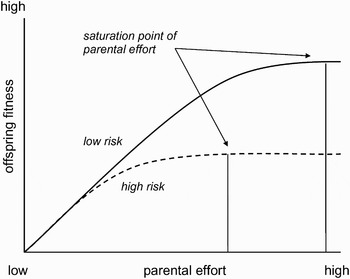
Another way to conceptualize life histories is by considering two reproduction-related trade-offs: between current versus future reproduction and between quality versus quantity of offspring (for an introduction, see Chisholm Reference Chisholm1993; Hill Reference Hill1993; Pennington & Harpending Reference Pennington and Harpending1988). The optimal solution of these trade-offs is related to the ecological pattern of extrinsic mortality, that is, mortality that cannot be prevented or diminished by altering the organism's behavior. Predation, pathogens, and warfare are usually considered extrinsic sources of mortality; but, more generally, all factors that negatively affect reproductive success independent on the organism's decisions can be considered sources of extrinsic risk (Quinlan Reference Quinlan2007). When adult mortality is high, it is adaptive to favor current reproduction by starting mating early, even at a cost for one's future reproductive potential (costs may arise, for example, because waiting longer gives higher benefits to offspring, or because reproducing earlier increases parent's mortality). When juvenile mortality is high, it pays for parents to avoid the risk of lineage extinction by producing more offspring and investing fewer resources in each (Promislow & Harvey Reference Promislow and Harvey1990; Reference Promislow and Harvey1991). In addition, high extrinsic risk means that investing in parental care has quickly diminishing returns: Since (by definition) parental effort cannot decrease extrinsic risk, offspring's fitness will not respond to parental care beyond a certain amount (the “saturation point”; see Fig. 1). Thus, elevated environmental risk favors quantity versus quality of offspring and current versus future reproduction, and selects for life histories that invest in mating at the expense of parenting (Chisholm Reference Chisholm1993; Pennington & Harpending Reference Pennington and Harpending1988; Quinlan Reference Quinlan2007).
Effect of extrinsic risk on offspring fitness as a function of parental effort (adapted from Quinlan Reference Quinlan2007). Increased extrinsic risk (dashed line) lowers the saturation point of parental effort (i.e., the point at which additional effort does not increase offspring fitness).

5.1.1. The human life history
When compared with other species, humans show many traits characteristic of an extremely “slow” life history strategy. We reproduce late, and pass through a prolonged stage of reproductive immaturity which has no equivalent in other primates (Ellison Reference Ellison2001; Flinn & Ward Reference Flinn, Ward, Ellis and Bjorklund2005). Moreover, we invest considerable time and effort in parental care, which involves a lot of teaching and social training in addition to mere energetic investment (Bjorklund & Rosenberg Reference Bjorklund, Rosenberg, Ellis and Bjorklund2005; Geary & Flinn Reference Geary and Flinn2001; Hewlett et al. Reference Hewlett, Lamb, Leyendecker, Schölmerich, Cronk, Chagnon and Irons2000). As an exception to this pattern, humans show high fertility compared with their close primate relatives, with inter-birth intervals of about 2.5–3.5 years. The peculiar pattern of human life history traits can been explained by the coevolution of a bigger brain, extended skill learning and slow growth rate in childhood, longevity, and skill-intensive foraging practices such as hunting and complex food processing. This suite of characters leads to a unique combination of high fertility and slow development, obtained through massive intergenerational transfer of resources (see Gurven & Walker Reference Gurven and Walker2006; Kaplan et al. Reference Kaplan, Hill, Lancaster and Hurtado2000; Kaplan & Robson Reference Kaplan and Robson2002). In addition to the need for extended learning of foraging abilities, the social complexity of human coalitions (and of foraging practices themselves) is thought to have further increased selective pressures for bigger brain and slower development (for an overview, see Dunbar & Schultz Reference Dunbar and Schultz2007).
5.1.2. Adaptive plasticity
As discussed earlier, humans as a species have a recognizable life history strategy, and show a distinctive pattern of life history traits. However, as in most species, there is also room for substantial variation between individuals. While some of this variation (e.g., in timing of maturation and reproduction) is heritable, organisms are also expected to embody mechanisms that evaluate the current (and expected) state of the environment and adjust their life history traits accordingly. In other words, life histories show adaptive plasticity. Mathematical models clearly show that the concept of a single “best” strategy is an illusion: what is expected (and found) is a variety of strategies, contingent on local conditions. The best strategy in a safe, predictable environment does not work well in a threatening and unpredictable one; the aim of maximizing long-term fitness can be targeted effectively only by organisms capable of context-sensitive (or state-dependent) adjustment of life history decisions (Houston & McNamara Reference Houston and McNamara1999; McNamara & Houston Reference McNamara and Houston1996). As Chisholm (Reference Chisholm1999) puts it, in the realm of life histories, “contingency rules.” The study of context sensitivity in life history decisions has always been one of the key research topics in evolutionary anthropology (e.g., Blurton Jones Reference Blurton Jones, Rasa, Vogel and Voland1989; Borgerhoff Mulder Reference Borgerhoff Mulder1989; Hill & Kaplan Reference Hill, Kaplan, Betzig, Borgerhoff Mulder and Turke1988; Low Reference Low, Cronk, Chagnon and Irons2000; Mace Reference Mace, Cronk, Chagnon and Irons2000a).
The key assumption of life history models of attachment is that, in humans, attachment relationships in infancy and early childhood (the first 5–7 years) provide the child with crucial information about the safety and predictability of his/her local environment. In turn, childhood attachment patterns are thought to translate into different reproductive strategies,Footnote 2 involving different trade-offs between current and future reproductive investment, and between mating and parenting effort. Of course, there are many other factors involved in the development of relational and sexual styles, including heritable dispositions, attractiveness, cultural practices, and the local sex ratio. The link between environmental stress, attachment, and adult reproductive strategy is thus expected to be only probabilistic (Gangestad & Simpson Reference Gangestad and Simpson2000; Schmitt Reference Schmitt2005a; see also sect. 6.4 for a more detailed discussion).
5.2. The Belsky, Steinberg, and Draper model
The first systematic attempt to reframe attachment theory from a life history perspective was made by Belsky, Steinberg, and Draper (Belsky et al. Reference Belsky, Steinberg and Draper1991), drawing on previous work by Draper and Harpending (Reference Draper and Harpending1982) on the effects of father absence on children's behavioral development. Belsky et al. noted that, in stressful conditions, parenting style becomes harsher and less sensitive and marital discord increases, causing the child to experience chronic psychosocial stress and leading to insecure attachment patterns. Insecure children thus receive crucial (albeit indirect) information about their environment: that resources are scarce and unpredictable, that people cannot be trusted, and that mating relationships tend to be short and uncommitted. This should switch development towards a reproductive style based on opportunistic interpersonal orientation, early reproduction, and low parental investment (offspring quantity vs. quality). Secure attachment/low stress, on the other hand, should lead to delayed mating, high parental investment, and a trusting and reciprocally oriented attitude. The reproductive strategies following secure versus insecure attachment are thought to be implemented by a suite of covarying traits, both behavioral/psychological (e.g., interpersonal orientation, sexual style) and somatic (e.g., accelerated sexual maturation). The result would be an adaptive polymorphism, based on condition-sensitive, developmentally contingent variation in life-history-related traits.
The theory predicted that early relational stress (and, by extension, insecure attachment) would relate to earlier maturation, earlier age of intercourse, and a tendency to entertain short-term relationships with mates. Although there is as yet no longitudinal study using attachment security to predict later maturation and sexual style, the evidence on the effects of relational stress and parenting consistently supports the main predictions made by Belsky et al. (Reference Belsky, Steinberg and Draper1991). Note, however, that the weight of heritable genetic effects in linking mating and parenting across generations has yet to be fully evaluated; for example, age at menarche is known to be substantially heritable, at least in industrialized societies (current estimates are in the .40 to .50 range; see Campbell & Udry Reference Campbell and Udry1995; Chasiotis et al. Reference Chasiotis, Scheffer, Restemeier and Keller1998; Comings et al. Reference Comings, Muhlemann, Johnson and Mac Murray2002; Kirk et al. Reference Kirk, Blomberg, Duffy, Heath, Owens and Martin2001; Moffitt et al. Reference Moffitt, Caspi and Belsky1992; Rowe Reference Rowe, Rodgers, Rowe and Miller2000a; Treloar & Martin Reference Treloar and Martin1990). For reviews of the evidence on early stress and accelerated sexual maturation, see Chisholm et al. (Reference Chisholm, Burbank, Coall, Gemmiti, Ellis and Bjorklund2005a) and Ellis (Reference Ellis2004; Reference Ellis, Ellis and Bjorklund2005). See also Chisholm et al. (Reference Chisholm, Quinlivan, Petersen and Coall2005b) for recent data on early first birth related to insecure attachment. Recently, two longitudinal studies further confirmed the effects of parent–child relationships on sexual maturation. Ellis and Essex (Reference Ellis and Essex2007) found that low-quality investment and marital conflict predicted earlier pubertal development in girls, and earlier onset of adrenarche in both sexes (see sect. 7.2). Belsky et al. (Reference Belsky, Steinberg, Houts, Friedman, DeHart, Cauffman, Roisman, Halpern-Felsher and Susman2007b) found that negative parenting predicted earlier pubertal development, but only in girls. They also found a moderating effect of early temperament, with infants low in negative emotionality showing the opposite pattern (i.e., negative parenting predicted later development; the meaning of this finding is still unclear).
The first version of the Belsky, Steinberg, and Draper theory had two main limitations. First, it treated insecure attachment as a whole, without distinction between avoidant and ambivalent strategies. Second, it assumed that the same reproductive strategy would be optimal for both males and females – an assumption that was immediately criticized by Maccoby (Reference Maccoby1991). The issue of sex differences has never been fully addressed by the theory (as noted also by Simpson Reference Simpson, Cassidy and Shaver1999), perhaps because of the lack of sex-related differences in published attachment research. On the other hand, Belsky (Reference Belsky, Cassidy and Shaver1999) provided an updated version of the model, specifically addressing the issue of possible differences between ambivalent and avoidant strategies. Belsky (Reference Belsky1997a; Reference Belsky, Cassidy and Shaver1999) argued that his original analysis (predicting low-investment, short-term mating) was in fact more relevant to avoidant attachment, which is associated with parental rejection and high-risk, unpredictable environments. Similarly, Kirkpatrick (Reference Kirkpatrick, Simpson and Rholes1998) conceptualized adult dismissiveness as a male-biased, short-term reproductive strategy. The hypothesized link between avoidance and short-term mating style is well supported by research in adult attachment. Dismissing adults are consistently found to be more promiscuous and sexually unrestrained; they are less committed in romantic relationships, are more likely to be sexually coercive, and tend to avoid intimacy with partners (reviewed in Allen & Baucom Reference Allen and Baucom2004; Belsky Reference Belsky, Cassidy and Shaver1999; Brassard et al. Reference Brassard, Shaver and Lussier2007; Feeney Reference Feeney, Cassidy and Shaver1999; Gentzler & Kerns Reference Gentzler and Kerns2004). In apparent contrast with these data, Cooper, Shaver and Collins (Reference Cooper, Shaver and Collins1998) found that avoidant adolescents of both sexes were less likely than secure ones to ever have had intercourse. However, the categorical measure they employed is likely to have misclassified as avoidant many fearful adolescents, high in both anxiety and avoidance (see Bartholomew Reference Bartholomew1990). This possibility is consistent with the study by Gentzler and Kerns (Reference Gentzler and Kerns2004), who found high avoidance and moderately high anxiety both in students reporting no intercourse and in those reporting early intercourse (before 15 years). Finally, Bogaert and Sadava (Reference Bogaert and Sadava2002) found that avoidance and anxiety both correlated with earlier age of first intercourse in women, but not in men.
In contrast with avoidant attachment (associated with a behavioral profile of self-reliance, pseudo-maturity, and aggression with peers in childhood), the ambivalent pattern is characterized by dependency, exaggeration of need signalling, behavioral immaturity, and passivity in peer relations. Belsky (Reference Belsky1997a; Reference Belsky, Cassidy and Shaver1999) speculated that ambivalent attachment was likely to develop in a form of delayed, indirect reproductive strategy. He hypothesized that ambivalent children would tend not to reach autonomy from the family, rather becoming their parents' “helpers-at-the-nest,” and enhancing their own inclusive fitness by helping to raise younger siblings. Belsky then suggested that, for this reason, ambivalent children should often be first-borns. Interestingly, a study by Vondra et al. (Reference Vondra, Hommerding and Shaw1999) lent some empirical support to this specific prediction: Infants who became ambivalent at 18 months were more likely to be firstborn (and male), whereas avoidant children were more often later-born. To date, however, there is very limited support for the “helper” hypothesis; the sexual style associated with adult anxious attachment is also more complex than the avoidant one. Preoccupied individuals eagerly look for intimate relationships, and (if males) describe themselves as less accepting of casual sex (see Allen & Baucom Reference Allen and Baucom2004; Belsky Reference Belsky, Cassidy and Shaver1999; Brassard et al. Reference Brassard, Shaver and Lussier2007; Feeney Reference Feeney, Cassidy and Shaver1999; Gentzler & Kerns Reference Gentzler and Kerns2004); however, they also experience intense and impulsive sexual attractions (Hazan & Shaver Reference Hazan and Shaver1987) and report higher frequency of infidelity (Bogaert & Sadava Reference Bogaert and Sadava2002). They are also more likely than secures to engage in unwanted sex following relational pressures and in order to keep their partner close (Impett & Peplau Reference Impett and Peplau2002; Schachner & Shaver Reference Schachner and Shaver2002). This behavioral pattern, though different from that of dismissing adults, can nevertheless result in early onset of reproduction and in a relational style characterized by multiple matings, especially in women. Indeed, attachment-anxious women (but not men) are likely to initiate sexual activity earlier in adolescence (Bogaert & Sadava Reference Bogaert and Sadava2002; Cooper et al. Reference Cooper, Shaver and Collins1998; Gentzler & Kerns Reference Gentzler and Kerns2004); and in a study of sexual fantasies, it was found that, in women, attachment anxiety predicts both more “romance” and more “unrestricted-emotionless sex” content (Birnbaum Reference Birnbaum2007). In a recent study by Jackson and Kirkpatrick (Reference Jackson and Kirkpatrick2007), anxiety showed a weak negative correlation with short-term mating orientation, and virtually no correlation with long-term orientation; in contrast, avoidance was weakly and positively related to short-term orientation, but strongly and negatively related to long-term orientation.
5.3. The Chisholm model
Chisholm (Reference Chisholm1993; Reference Chisholm1996; Reference Chisholm1999), drawing on the model of Belsky et al., proposed a complex theory of condition-dependent reproductive development based on attachment security. In Chisholm's model, attachment experiences provide children with information about the availability, sensitivity, and responsivity of their future social relations (a socioassay of their local environment). In a narrower sense, Chisholm (Reference Chisholm1993) proposed that caregiving conditions are used as a proxy for a critical life history parameter: the local mortality rate. This should lead to (unconscious) estimates of one's own expected lifespan and of the probability that one's offspring will survive, orienting towards earlier reproduction and higher mating efforts in the case of a risky environment. In addition, reproducing at a younger age means having fewer social resources (e.g., status, support networks) and, as a consequence, being less able to “make a difference” in offspring's quality; thus, early reproduction would further push reproductive strategies towards offspring quantity (vs. quality) and high reproductive rate. Intriguingly, there is evidence that insecurely attached adults tend to make shorter estimates of their own life expectancy (see Chisholm et al. Reference Chisholm, Quinlivan, Petersen and Coall2005b), and that local mortality rates do correlate with familial environments and fertility patterns (Bereczkei & Csanaky Reference Bereczkei and Csanaky2001). In Chisholm's words, parents act as “vectors” through which the risk and uncertainty of the environment is transferred to children. Recent cross-cultural analyses by Quinlan (Reference Quinlan2007; Quinlan & Quinlan Reference Quinlan and Quinlan2007b) strongly support the link between extrinsic risk factors (famine, warfare, and pathogens) and lower parental (especially maternal) investment. Furthermore, they suggest that unresponsive parenting and its developmental consequences (mating-oriented, risk-taking strategies) can influence cultural patterns related to casual sex, aggression, theft, and social hostility, thus contributing to a self-sustaining “culture of risk”.
While it is predicted that both avoidant and ambivalent children will adopt life history strategies maximizing current reproductive effort, the two attachment strategies are thought to respond to different safety threats. In the case of parents who are willing, but unable to consistently invest in offspring, for example, because of scarce resources or competing demands on parents' time, the ambivalent strategy maximizes the available investment by increasing signals of need and behaving immaturely. When parents are unwilling to invest, however, the avoidant strategy is favored, pushing towards self-reliance and protecting the child from being abandoned or abused (Chisholm Reference Chisholm1996). When insecure children grow up, they are expected to engage in low-commitment mating and low-investment parenting. Based on sexual selection theory (see further on), the model then describes two sex-specific developmental pathways leading to maximization of current reproduction (Chisholm Reference Chisholm1999). Males growing in high-risk environments should adopt a strategy based on increased sex drive, aggression, impulsivity, and risk-taking, given the evocative label of Young Male Syndrome (from Wilson & Daly Reference Wilson and Daly1985). Insecure females should mature quickly as well, and their strategy should be characterized by impulsive mate choice (based on mate's genetic quality and immediate benefits), early and frequent childbearing, and single motherhood: the Young Female Syndrome. Of course, the two strategies represent the ends of a graded continuum, rather than being all-or-none choices.
What, then, about adult attachment styles? In Chisholm's model, ambivalent and avoidant insecure patterns are differently tuned to safety threats in the caregiving environment, but have no special role after reaching reproductive maturity. It would then make sense to think of attachment styles as ontogenetic adaptations – disposable phenotypes which have no reproductive value outside the caregiving environment. This contrasts with the empirical observation that insecure adults differ considerably in attachment styles, with measurable consequences for sexual and caretaking behavior. This is the main point of divergence from Belsky's revised theory; however, neither model succeeds in fully taking into account the different adaptive consequences of a given attachment pattern for males and females.
5.4. Some theoretical refinements
5.4.1. Environmental stability and “child development theory.”
A somewhat problematic assumption in life history models of attachment is that of substantial environmental stability in the time span from early childhood to puberty. In fact, only if ecological conditions are relatively stable is it adaptive for the child to set his or her future reproductive behavior according to current indices of mortality and risk (for a critique of this assumption, see Rowe Reference Rowe, Rodgers, Rowe and Miller2000a). It is not clear to what degree ecological conditions have been (relatively) stable or fluctuating over our evolutionary history; nevertheless, the possibility of environmental fluctuations certainly reduces the reliability of parental behavior as a cue for expected risk. Belsky (Reference Belsky, Carter, Ahnert, Grossmann, Hrdy, Lamb, Porges and Sachser2005) has suggested that cross-generational instability in environmental conditions could select for genotypic diversification in sensitivity to rearing influences, with some infants being genetically predisposed to be less affected by parental behavior than others (see also sect. 6.4).
In a discussion of parental effects on pubertal timing, Ellis (Reference Ellis2004) proposed a new explanation of why low-quality parenting should accelerate the onset of puberty, which he labelled the “child development theory.” The key idea is that children are not choosing their future reproductive strategy; rather, they are using information about parental investment in order to regulate the length of childhood. In this framework, the child is not responding to indirect macro-ecological cues (such as mortality), but to direct micro-ecological cues about his or her own rearing environment. If parental care is of high quality, the child can benefit by prolonging childhood and maximizing parental investment (e.g., food, wealth, skills teaching, status). If, on the other hand, parental investment is hard to come by, it might pay to shorten childhood and reach independence from parents at an earlier age. Child development theory is not incompatible with ecological risk models; in fact, it could help explain why some decisions concerning reproductive strategies are made so early in ontogeny, and disentangle the macro- and micro-ecological levels that make up a child's environment (see also sect. 7.1.1). Moreover, it is consistent with recent data on the anticipation of adrenarche (sect. 7.2). In section 6, I argue that an additional reason for early strategy switching is the importance of sexually selected traits in the context of children's peer relationships.
5.4.2. Attachment to mother and to father: Do they provide different cues?
Although the models reviewed here focus on attachment security as a cue of ecological risk (and, in child development theory, of the future quality of parental investment), a whole literature inspired by Draper and Harpending (Reference Draper and Harpending1982) has singled out paternal investment (and, in particular, father absence) as a crucial factor influencing pubertal timing in daughters (see Ellis Reference Ellis2004, for a review). The theoretical basis for focusing on paternal investment is that paternal care, much more than maternal care, is contingent on the mating system (monogamy vs. polygyny) and on the degree of local male–male competition for status, in addition to environmental risk (see also sect. 6.2). Thus, inconsistent or detached paternal care would act as a cue that (1) mating is polygynous (Kanazawa Reference Kanazawa2001), and/or that (2) paternal investment is unreliable, is probably not crucial for successful reproduction, and should not be expected from future partners. This would prompt daughters to adopt a reproductive strategy based on early sexual maturation (which is advantageous for females in polygynous systems; see Kanazawa Reference Kanazawa2001) and low commitment in long-term relationships (since paternal investment is not forthcoming). On the male side, sons from father-absent families tend to show increased aggressiveness and hypermasculine behavior (Draper & Harpending Reference Draper and Harpending1982), which can be seen as preparation for increased male–male competition for status (the Young Male Syndrome). Consistent with the idea of the father as a vector of mating-related cues, there is also evidence that harsh or insensitive fathering has a distinctive role in predicting the onset of “conduct disorder” in boys (reviewed in DeKlyen et al. Reference DeKlyen, Speltz and Greenberg1999).
This suggests that security of attachment to mother and father may have different (and partly independent) effects on the development of boys and girls. Unfortunately, research on the developmental correlates of maternal versus paternal attachment is still carried out with virtually no reference to evolutionary hypotheses, so that the dependent variables employed in most studies lack direct biological relevance to male–male competition, status-seeking, and sexual style. Nevertheless, there is some interesting (if inconclusive) evidence of parent-specific effects: maternal attachment better predicts scholastic skills and “emotional maturity” in adolescence (Aviezer et al. Reference Aviezer, Sagi, Resnick and Gini2002), a range of measures related to play quality and interpersonal conflict resolution (Suess et al. Reference Suess, Grossmann and Sroufe1992), and “positiveness of self” in preschoolers (Verschueren & Marcoen Reference Verschueren and Marcoen1999). On the other hand, paternal attachment, sensitivity, and availability seem to be more related to anxious/withdrawn behavior in preschoolers (Verschueren & Marcoen Reference Verschueren and Marcoen1999), aggression with peers and peer rejection in middle childhood (Booth-Laforce et al. Reference Booth-Laforce, Oh, Hayoung Kim, Rubin, Rose-.Krasnor and Burgess2006; Verschueren & Marcoen Reference Verschueren and Marcoen2002), and friend support, depression, and conflict with friends in early adolescence (Lieberman et al. Reference Lieberman, Doyle and Markiewicz1999; Ducharme et al. Reference Ducharme, Doyle and Markiewicz2002; Liu Reference Liu2007). Most studies found no significant interaction with children's sex, but this may often depend on small sample size.
6. Sexual selection, parental investment, and sex differences in optimal life histories
6.1. Sex-specific life history strategies
Sexual selection (see Andersson Reference Andersson1994; Geary Reference Geary1998; Reference Geary2002) is, simply stated, natural selection following from the behavioral correlates of sexual reproduction. A character can be sexually selected in two main cases: when it is involved in same-sex competition for access to mates (intrasexual competition), and/or when it is related to mate choice by the opposite sex (intersexual choice). At a deeper level, the dynamics of sexual selection are driven by sex asymmetries in reproduction, especially those concerning parental investment (Clutton-Brock Reference Clutton-Brock1991; Trivers Reference Trivers and Campbell1972). Members of one sex, usually females, provide higher investment in offspring production, both energetically and in parenting behavior; members of the other sex (usually males) invest less, and sometimes considerably less. In some species, this can consist of just the provision of sperm to females. As a result, the investing sex becomes the “choosing” side, while the other sex engages in strenuous competition for mates.
Sexual selection and asymmetries in parental investment are intimately related to the shaping of life histories (Höglund & Sheldon Reference Höglund and Sheldon1998; Kokko Reference Kokko1997; Svensson & Sheldon Reference Svensson and Sheldon1998). Life history strategies are essentially centered on achieving maximal reproductive success, and the way to attain the latter usually differs between males and females. As a consequence, males and females within a species experience different constraints, costs, and benefits, resulting in sex-specific life history strategies. The primary sex difference is in the balance of mating versus parenting effort (see sect. 5.1), with females investing more in parenting and males spending more time and energy in finding mates. This results from the fact that males enjoy higher maximum reproductive rates (i.e., potentially, a male can reproduce much more often than a female), so their benefit in pursuing additional matings can be much higher than it is for females. In addition, because males engage in same-sex competition, they usually need more developmental time and effort than females to reach an optimal degree of competitive ability. This is obviously true for physical size and strength, but it applies just as well to other sexually selected traits: Fighting ability, social competence, and courting displays all take time and energy to develop, as do the resources and social status needed for successful competition in humans. As a result, males tend to be slow developers and typically reach maturity later than females (Ellison Reference Ellison2001; Geary Reference Geary2002).
6.2. Human reproductive ecology
What about humans? Most of the above applies to our species as well: Women invest more in offspring than men, and men show much of the standard repertoire of aggressive and status-oriented competition. Moreover, men develop more slowly than women, and tend to marry at a later age in most cultures (Eibl-Eibesfeldt Reference Eibl-Eibesfeldt1989; Ellison Reference Ellison2001; Geary Reference Geary1998; Reference Geary2002; Mace Reference Mace2000b). In addition, human reproduction features two important characteristics that, without being unique to our species, contribute to define the evolutionary landscape of sex-specific life histories: facultative paternal care and cooperative breeding.
6.2.1. Facultative paternal care
Human fathers participate in parental care of their children, sometimes rivaling mothers in the amount of investment they provide. This attenuates the asymmetry between the choosing and the chosen sex, and leads to female–female sexual competition and increased mate choice by males. However, paternal investment in humans is not an obligate trait: some men invest more and help mothers considerably, whereas others look for short-term mating opportunities and invest less in parenting (if at all). Such variation arises both between and within cultures, so paternal care in humans is best characterized as a facultative adaptation (see Geary Reference Geary and Buss2005a; Hrdy Reference Hrdy, Hewlett and Lamb2005a; Miller Reference Miller1994).
The degree of paternal investment found in a given population is determined by many factors; for example, paternal investment is expected to be enhanced if the fitness advantage conferred on offspring by the father's presence is substantial, if the opportunity for new matings is low, and if paternity certainty is high (see Geary Reference Geary and Buss2005a). Availability of new mates stands out as an especially powerful factor: A survey of four hunter-gatherer societies by Blurton Jones et al. (Reference Blurton Jones, Marlowe, Hawkes, O'Connell, Cronk, Chagnon and Irons2000) showed that mating opportunity (expressed as a function of fertile women-to-men ratio) was the strongest negative predictor of marital stability, which in turn is a major determinant of continued paternal investment across cultures (e.g., Betzig Reference Betzig1989; Draper Reference Draper1989; Furstenberg & Nord Reference Furstenberg and Nord1985; Furstenberg et al. Reference Furstenberg, Peterson, Nord and Zill1983). More generally, “father-absent” societies are characterized by aloof couple relationships, polygyny, warfare, and high levels of male competitive displays. This pattern is often seen in resource-rich ecologies, and in societies practicing low-level agriculture (Draper & Harpending Reference Draper, Harpending and MacDonald1988). A cross-cultural study by Quinlan (Reference Quinlan2007) showed that paternal and maternal care respond differently to environmental risk: Whereas maternal care decreased steadily with increasing famine and warfare, and with high levels of pathogen stress (while increasing at moderate levels), paternal involvement was negatively related to pathogen stress, and only weakly related to famine. Moreover, the local degree of polygyny seemed to partly mediate the association between pathogen stress and paternal involvement. Polygyny is strongly predicted by high pathogen stress (Marlowe Reference Marlowe2003), so in general it may covary with extrinsic risk and mediate its effects on paternal care. In polygynous societies, males contribute less to subsistence, and direct paternal care is reduced (see also Marlowe Reference Marlowe2000; Reference Marlowe2003); counterintuitively, couple stability is increased overall, probably due to the shortage of women created by polygyny (Quinlan & Quinlan Reference Quinlan and Quinlan2007a) and to the fact that polygynous men need not divorce and remarry if they can afford to acquire new wives (Marlowe Reference Marlowe2000). Couple stability, however, can well coexist with high mating effort, as shown by the lower investment in paternal care and the increased frequency of extramarital affairs in polygynous/low male provision societies (Marlowe Reference Marlowe2000).
6.2.2. Cooperative breeding and alloparental care
The second characteristic is that humans, like a small number of other primates, probably have an evolutionary history of cooperative breeding (Hrdy Reference Hrdy1999; Reference Hrdy, Hewlett and Lamb2005a; Reference Hrdy, Carter, Ahnert, Grossmann, Hrdy, Lamb, Porges and Sachser2005b; Kramer Reference Kramer2005; Mace & Sear Reference Mace, Sear, Voland, Chasiotis and Schiefenhoevel2005). Mothers living in ancestral groups were not alone in caring for their children, but could elicit alloparental care from others, especially older children and female relatives (i.e., grandmothers and aunts). The presence of maternal grandmothers and older sisters has been shown to increase child survival in many populations, with smaller but similar effects for maternal grandfathers and older brothers (reviewed in Mace & Sear Reference Mace, Sear, Voland, Chasiotis and Schiefenhoevel2005).
Cooperative breeding has been documented in many traditional societies, and shows remarkable cross-cultural invariance. In a survey of traditional cultures by Kramer (Reference Kramer2005), infants received about 50% of their daily care time from mothers, with little variation in percentage between cultures; the remaining 50% was distributed among siblings (10–33%), grandmothers (1–12%), other alloparents (3–21%), and fathers. Fathers' contribution to direct infant care was rather variable and, one would say, not very impressive, ranging from less than 1% to about 6% of time. Similar figures are found in nontraditional societies as well (e.g., Geary Reference Geary2000; Lamb et al. Reference Lamb, Frodi, Hwang, Frodi and Lamb1982: Lampert & Friedman Reference Lampert and Friedman1992). Note that I am not equating paternal investment with direct caring time; paternal investment in humans comes in many forms, including food provision, protection, teaching, and social status (Geary Reference Geary2000; Geary & Flinn Reference Geary and Flinn2001). However, these data strongly underline the importance of alloparenting in human reproductive ecology.
Hrdy (Reference Hrdy1999; Reference Hrdy, Hewlett and Lamb2005a; Reference Hrdy, Carter, Ahnert, Grossmann, Hrdy, Lamb, Porges and Sachser2005b) argued that, as happens in other cooperatively breeding primates, human mothers without available alloparents (partly synonymous with “social support”) are more likely to abandon, neglect, or even kill their children (see also Hill & Hurtado Reference Hill and Hurtado1996; Wasser & Barash Reference Wasser and Barash1983). If alloparental care is really so vital for human mothers, its absence (or low quality) should be considered a specific, major source of environmental stress; for females, the “socioassay” taken in the first 5–7 years of life should definitely include the availability of alloparents, including one's own parents and siblings. The evolutionary importance of cooperative breeding would also explain the tendency of young children to form multiple attachments, while at the same time maintaining a “special” relationship with a primary attachment figure (usually the mother) – a phenomenon labeled monotropy (see Ahnert Reference Ahnert, Carter, Ahnert, Grossmann, Hrdy, Lamb, Porges and Sachser2005; Cassidy Reference Cassidy, Cassidy and Shaver1999).
6.3. Implications for attachment theory
Because of asymmetries in parental investment and sexual selection, males and females face different trade-offs in their life history decisions. This must be taken into account by life history models of attachment, and related to expected costs and benefits of different strategies. Chisholm (Reference Chisholm1999) described sex-specific reproductive strategies under the labels of Young Male and Young Female Syndrome (sect. 5.3); in this section, I extend his analysis and those of Belsky (Reference Belsky, Cassidy and Shaver1999) and Kirkpatrick (Reference Kirkpatrick, Simpson and Rholes1998) by considering how sex-specific selective pressures and trade-offs might relate to insecure attachment styles.
6.3.1. Sex differences in the mating versus parenting balance
Current life history models link insecure attachment to a developmental trajectory of early reproduction, low commitment in long-term couple relationships, and low parental investment. However, from the above discussion, it is apparent that low parental investment involves different cost/benefit ratios for males and females. Males, much more than females, are facultative investors: for a male, low parental investment can be a very effective strategy, especially if the costs of raising a child are borne by the mother and her alloparental network. Moreover, uncertainty of paternity lowers the benefits of investing in one's (probable) offspring. The decrease in fitness following lower investment in already-born children can be compensated for by additional matings; thus, males are able (in certain conditions) to employ a zero-parenting strategy wherein virtually all resources are devoted to mating. For women, such an extreme low-investment strategy is not feasible, since they are usually the primary caregivers and infants need at least some basic parental investment to survive. Even more crucially, women's fitness does not benefit as much from mating with additional partners, given the strong limitations on female maximum reproductive rate. In other words, women cannot shift the balance between parenting and mating effort as easily as men (Archer & Mehdikhani Reference Archer and Mehdikhani2000).
In conditions of heightened environmental risk, both males and females are expected to adopt reproductive strategies focused on current reproduction and increased mating effort at the expense of parenting. However, the strategic balance in resource allocation will differ between the sexes, with males engaging in lower levels of parental effort than females. With increasing risk, the optimal investment for males will fall off rapidly because, when approaching the “saturation point” of offspring fitness, parental effort has diminishing returns (sect. 5.1), and the resources needed to increase offspring quality by a small amount can bring higher benefits if successfully diverted to mating. This is not the case for females, who cannot increase their reproductive output beyond a certain amount, nor avoid the basic (but by no means trivial) investment of pregnancy and lactation. Females will then favor a higher level of parental investment in each offspring, and are thus expected to (1) invest more than males in parental effort, and (2) try to elicit additional investment from mates and/or alloparents. Only at high levels of risk (i.e., when the saturation point becomes very low), can females meet the optimal investment even with little or no contribution from mates and/or alloparents.Footnote 3 Then, at high levels of risk, females are expected to engage in low-investment mating without demanding additional investment. On the contrary, when the environment is safe (high saturation point), the optimal level of parental investment can become very high, and both males and females can gain by investing considerably in parental effort, thus maximizing offspring quality and their own long-term fitness. However, even at low levels of risk, paternal linvestment is more contingent on the degree of polygyny and on the availability of new partners, which can considerably increase the benefit of diverting some resources from parenting to mating.
Although increasing risk generally favors quantity-oriented strategies, scarcity of social resources in absence of elevated risk could instead favor reproductive suppression (i.e., delaying reproduction until resources become available) in females (Wasser & Barash Reference Wasser and Barash1983). The same happens when energetic resources are scarce, which delays maturation and, in mature females, induces temporary suppression of fertility (see Ellison Reference Ellison2001; Ellis Reference Ellis2004). I suggest that lack of available alloparents (including potential mates) might lead to temporary reproductive suppression in women who are not adopting a low-investment strategy; this may involve behavioral correlates such as reduced sexual motivation and/or reduced interest in couple relationships (either long- or short-term). While this suggestion is openly speculative, it is crucial to keep resource scarcity as distinct as possible from environmental risk, since the two are expected to exert different effects on reproductive strategies (see also Clark & Daly Reference Clark and Daly2005).
Translating the above considerations into the framework of attachment theory, insecure males should readily adopt avoidant strategies, which are most likely to maximize their fitness in a threatening environment. Insecure females, on the other hand, should preferentially adopt anxious, care-eliciting strategies (i.e., preoccupied/ambivalent attachment). This would keep them in close contact with kin, and help spread the costs of reproduction onto relatives. In cooperative breeding systems, the “helper” strategy can coexist with the helper's own reproduction (Clutton-Brock Reference Clutton-Brock2002); thus, Belsky's hypothesis about ambivalent attachment as helping-at-the-nest (sect. 5.2) could be partly correct, although without involving delayed reproduction. Maximizing help from kin is not the only benefit of anxious attachment: In the context of couple relationships, anxious behaviors (e.g., dependence, preoccupation with intimacy and partner availability) can help to maintain closeness with one's partner, especially if the latter is avoidantly attached, and to maximize the available paternal investment (thus enacting a sort of “counter-strategy” to male avoidance). Intriguingly, an early study by Kirkpatrick and Davis (Reference Kirkpatrick and Davis1994) found that couples made up of dismissing men and preoccupied women can be long-lasting, as much as the secure-secure ones (even while enjoying less couple satisfaction). There is also evidence that preoccupied women find it especially difficult to end couple relationships, even following abuse or deceit by their partner (Henderson et al. Reference Henderson, Bartholomew and Dutton1997; Jang et al. Reference Jang, Smith and Levine2002). This is consistent with a strategy aimed at maximizing closeness and continued investment, even by reluctant or uncommitted mates. Thus, in the context of cooperative breeding, the anxious phenotype can be a useful device for adult females to extract investment and care from both relatives and mates. In this framework, females are expected to adopt male-like avoidant strategies as a second choice, tailored to high levels of environmental risk. This view is supported by the cross-cultural survey by Schmitt et al. (Reference Schmitt, Alcalay, Allensworth, Allik, Ault, Austers, Bennett, Bianchi, Boholst, Borg Cunen, Braeckman, Brainerd, Caral, Caron, Casullo, Cunningham, Daibo, De Backer, De Souza, Diaz-Loving, Diniz, Durkin, Echegaray, Eremsoy, Euler, Falzon, Fisher, Fowler, Fry, Fry, Ghayur, Giri, Golden, Grammer, Grimaldi, Halberstadt, Haque, Hefer, Herrera, Hertel, Hitchell, Hoffman, Hradilekova, Hudek-Kene-evi, Huffcutt, Jaafar, Jankauskaite, Kabangu-Stahel, Kardum, Khoury, Kwon, Laidra, Laireiter, Lakerveld, Lampart, Lauri, Lavallée, Lee, Leung, Locke, Locke, Luksik, Magaisa, Marcinkeviciene, Mata, Mata, McCarthy, Mills, Mkhize, Moreira, Moreira, Moya, Munyea, Noller, Olimat, Opre, Panayiotou, Petrovic, Poels, Popper, Poulimenou, P'yatokha, Raymond, Reips, Reneau, Rivera-Aragon, Rowatt, Ruch, Rus, Safir, Salas, Sambataro, Sandnabba, Schleeter, Schulmeyer, Schütz, Scrimali, Shackelford, Sharan, Shaver, Sichona, Simonetti, Sineshaw, Sookdew, Speelman, Sümer, Sümer, Supekova, Szlendak, Taylor, Timmermans, Tooke, Tsaousis, Tungaraza, Turner, Vandermassen, Vanhoomissen, Van Overwalle, Van Wesenbeek, Vasey, Verissimo, Voracek, Wan, Wang, Weiss, Wijaya, Woertment, Youn and Zupanèiè2003a), who found dismissiveness in women to covary with environmental risk and mortality rates, and to do so much more strongly than in males (on average, r=.40 versus r=.23). Finally, scarcity of social resources (in absence of high risk) can be expected to induce temporary reproductive suppression in females. This possibility has not been yet considered in evolutionary models of attachment, but (if supported by evidence) it would have important implications. For example, some avoidant women may be actually adopting a temporary suppression strategy (e.g., by avoiding sexual relationships altogether), and shift to anxious or secure patterns when social conditions improve; even if suppression was not related to specific attachment patterns, it could alter the expected relationship between attachment and sexual behavior.
The idea that women's reproductive strategies are highly condition-sensitive is not new and has been championed by Lancaster (Reference Lancaster, Bell and Bell1989) and Hrdy (Reference Hrdy1999; Reference Hrdy2000). Basically, they contend that, when monogamy is not a viable choice (e.g., because of low paternal investment and/or low quality of potential mates), women can adopt “facultative polyandry” as their optimal strategy. Mating with many partners allows the exchange of sexual access for immediate benefits and, even more importantly, creates a network of “possible fathers,” who can then provide protection and help, and be tolerant (non-aggressive) towards the mother's children. The theory I propose is compatible with the facultative polyandry hypothesis, while adding another layer of complexity to female strategies. Avoidant strategies can easily lead to polyandry; for reasons discussed earlier (sect. 5.2), anxious strategies can lead to multiple matings as well, while retaining an orientation to long-term commitment. Finally, some women may be actually adopting a third kind of strategy – one aimed at temporarily suppressing reproduction because of scarcity of available alloparenting and social support.
6.3.2. Intrasexual competition
There is one more reason to consider attachment in the light of sexual selection: Because attachment patterns are related to the development of personality traits (and, in general, exert a powerful organizational effect on social development), their costs and benefits should differ between males and females if the traits in question are sexually selected. Avoidant attachment, which is related to inflated self-esteem (Cassidy Reference Cassidy1988) and aggression with peers (e.g., Card & Hodges Reference Card and Hodges2003; Erickson et al. Reference Erickson, Sroufe and Egeland1985; Finnegan et al. Reference Finnegan, Hodges and Perry1996; Renken et al. Reference Renken, Egeland, Marvinney, Manglesdorf and Sroufe1989), is likely to be more adaptive for young males who need to defend their social status in anticipation of early reproduction (male–male competition); moreover, the above-mentioned traits can be attractive to females, thus contributing to mate choice (see Sadalla et al. Reference Sadalla, Kenrick and Vershure1987; Weisfeld et al. Reference Weisfeld, Bloch and Ivers1983).
The opposite applies to ambivalent attachment, which predicts fearfulness, withdrawal, and passive behavior with peers (e.g., Card & Hodges Reference Card and Hodges2003; Cassidy Reference Cassidy1988; Cassidy & Berlin Reference Cassidy and Berlin1994; Erickson et al. Reference Erickson, Sroufe and Egeland1985). These traits are not nearly as damaging for females as they are for males. For example, Morison and Masten (Reference Morison and Masten1991) found that the “sensitive-isolated” behavioral profile in middle childhood was associated with lower self-worth in males, but higher self-worth in females. Also, studies correlating attachment with externalizing (e.g., aggression, disruptiveness) and internalizing (e.g., anxiety, withdrawal) behavioral problems often find effects that are sex-specific to some degree. In the study by Renken et al. (Reference Renken, Egeland, Marvinney, Manglesdorf and Sroufe1989), avoidance predicted externalizing symptoms only in males; and Finnegan et al. (Reference Finnegan, Hodges and Perry1996) found that avoidant coping was correlated with more externalizing problems, but fewer internalizing problems in males; preoccupied coping, on the other hand, was related to higher internalizing problems in males but not in females. Ambivalent children also tend to be victimized in peer groups, especially by avoidant children, who instead take the role of bullies (Troy & Sroufe Reference Troy and Sroufe1987; Finnegan et al. Reference Finnegan, Hodges and Perry1996). Although bullying has traditionally been associated with peer rejection (e.g., Pellegrini Reference Pellegrini1995; Weisfeld Reference Weisfeld1999), being a bully is usually better than being a victim (e.g., Juvonen et al. Reference Juvonen, Graham and Schuster2003), and may be a reasonable way to secure one's place in male dominance hierarchies and gain access to social resources. Indeed, researchers are becoming increasingly aware that not all bullies are equal; especially among older children and young adolescents, there is a subgroup of aggressive children who are accorded high peer status, are rated as “cool” and attractive by girls, and date more often (e.g., Juvonen et al. Reference Juvonen, Graham and Schuster2003; Pellegrini & Bartini Reference Pellegrini and Bartini2001; Rodkin et al. Reference Rodkin, Farmer, Ruth and Acker2006). Whereas, in early childhood, aggression is associated with peer rejection (note, however, that rejection and dominance status are only weakly correlated), at later ages it becomes increasingly predictive of peer acceptance (Bukowski et al. Reference Bukowski, Sippola and Newcomb2000).
In synthesis, the overtly aggressive and self-aggrandizing style of avoidant children can provide a competitive way to gain status and dominance in male groups. The ambivalent pattern has been less studied, because of its relatively low frequency in early childhood, so it is more difficult to relate it to possible adaptive benefits for girls (at the same time, we know less about the mechanisms of dominance and status in female peer groups). What has been observed empirically is that insecure patterns are more extremely skewed in boys than in girls, and it is then possible that intrasexual competition has stronger implications for male attachment as well.
6.3.3. Why middle childhood?
Middle childhood (approx. age 7–11 years) is the human homologue of the primate juvenile phase. Children of this age, like other juvenile primates, no longer depend exclusively on parental care for survival, and can forage effectively if they need to do so. At the same time, they are still sexually immature and have limited competitive abilities (see Bogin Reference Bogin1999; Geary & Bjorklund Reference Geary and Bjorklund2000; Kramer Reference Kramer2005). In this developmental phase, the peer group becomes the child's primary interpersonal world; fight play, parenting play, and same-sex grouping all peak between 6 and 11 years of age, with little cultural variation (e.g. Geary Reference Geary1998; Reference Geary2002; Serbin et al. Reference Serbin, Powlishta and Gulko1993).
Conventional wisdom about children's peer interactions is that they allow for “safe experimentation” with adult social skills. However, childhood peer relationships also have lasting effects on people's lives, much more so than is usually realized. For example, dominance ranks in childhood tend to carry over into adolescence: In a longitudinal study by Weisfeld et al. (Reference Weisfeld, Muczenski, Weisfeld, Omark and Meacham1987), “toughness” ranks of boys at 7 years of age correlated about .70 with dominance, popularity, and leadership at age 16. Other studies found stability from childhood to adolescence in related personality traits, such as dominance and passivity (reviewed in Weisfeld Reference Weisfeld1999). Although the influence of heritable traits on these results has not been quantified (social dominance is also related to strength and physical attractiveness, and shows moderate heritability; e.g., Gottesmann Reference Gottesmann1966), it seems reasonable to consider that early outcomes, especially in the field of dominance and status, can have a lasting influence on later development. “Social inertia” is a well-known phenomenon in animal dominance hierarchies: After the first encounters settle the initial ranking, individuals tend to keep their position in the hierarchy as long as they remain in the same group, even if their hormonal levels are experimentally manipulated to match those typical of higher-ranking animals. The same manipulations, however, have dramatic effects if an individual is placed in a new, unfamiliar group (Adkins-Regan Reference Adkins-Regan2005). Human juveniles are not just “preparing” for their adult roles; they are actually establishing a starting place in the social group, which in turn will influence their future reproductive opportunities to some degree. In this phase, conflict between early behavioral strategies (influenced by parental care) and new environmental demands (driven by the peer group) could start becoming apparent, to culminate later during adolescence.
6.4. Multiple factors affecting reproductive strategies
6.4.1. Other environmental factors
A cautionary note is warranted at this point. As mentioned above, individual reproductive strategies are not completely determined by developmental factors such as attachment security and early stress. Many researchers have argued for a multifactorial view of reproductive decisions, and have described other factors affecting mating strategies: local sex ratio, pathogen load, social and economic structure, self-perceived mate value, attractiveness, and age (see Barber Reference Barber2000; Campbell Reference Campbell2000; Cashdan Reference Cashdan1996; Gangestad & Simpson Reference Gangestad and Simpson2000; Landolt et al. Reference Landolt, Lalumiere and Quinsey1995; Schmitt Reference Schmitt2005a; Schmitt et al. Reference Schmitt, Alcalay, Allik, Ault, Austers, Bennett, Bianchi, Boholst, Borg Cunen, Braeckman, Brainerd, Caral, Caron, Casullo, Cunningham, Daibo, De Backer, De Souza, Diaz-Loving, Diniz, Durkin, Echegaray, Eremsoy, Euler, Falzon, Fisher, Foley, Fry, Fry, Ghayur, Golden, Grammer, Grimaldi, Halberstadt, Herrera, Hertel, Hoffman, Hradilekova, Hudek-Kene-evi, Jaafar, Jankauskaite, Kabangu-Stahel, Kardum, Khoury, Kwon, Laidra, Laireiter, Lakerveld, Lampart, Lauri, Lavallée, Lee, Leung, Locke, Locke, Luksik, Magaisa, Marcinkeviciene, Mata, Mata, McCarthy, Mills, Moreira, Moreira, Moya, Munyea, Noller, Opre, Panayiotou, Petrovic, Poels, Popper, Poulimenou, P'yatokha, Raymond, Reips, Reneau, Rivera-Aragon, Rowatt, Ruch, Rus, Safir, Salas, Sambataro, Sandnabba, Schulmeyer, Schütz, Scrimali, Shackelford, Shaver, Sichona, Simonetti, Sineshaw, Sookdew, Speelman, Spyrou, Sümer, Sümer, Supekova, Szlendak, Taylor, Timmermans, Tooke, Tsaousis, Tungaraza, Vandermassen, Vanhoomissen, Van Overwalle, Vanwesenbeek, Vasey, Verissimo, Voracek, Wan, Wang, Weiss, Wijaya, Woertment, Youn and Zupanèiè2003b; Voland Reference Voland1998). Of course, some of these factors (e.g., sex ratio, pathogen load) are known to affect parental investment, and their effects could turn out to be partly or fully mediated by early stress and attachment; other factors (such as attractiveness and age), however, are likely to have independent effects on reproductive strategies.
For example, a cross-cultural study by Schmitt (Reference Schmitt2005a) found that, while low interpersonal trust and insecure attachment correlated with short-term mating, there were also many associations between short-term mating and “positive” traits, such as low psychological symptoms and high self-esteem – especially in males. In addition, short-term mating in men tended to increase with age, and men were on average more oriented to short-term mating, regardless of attachment style. Similar findings were reported by Egan and Angus (Reference Egan and Angus2004). They found that rate of sexual infidelity correlated positively with psychopathic traits (i.e., manipulative and egocentric behavior) and negatively with agreeableness and social desirability in both sexes; however, men who had been unfaithful at least once were higher in socially desirable personality traits such as agreeableness, extraversion, and conscientiousness. Clearly, these results support a multifactorial model of reproductive choices. Generally speaking, it must be stressed again that males have a bias towards short-term mating, probably because of the high benefit/cost ratio of this behavioral option (e.g., Buss & Schmitt Reference Buss and Schmitt1993; Schmitt et al. Reference Schmitt, Alcalay, Allik, Ault, Austers, Bennett, Bianchi, Boholst, Borg Cunen, Braeckman, Brainerd, Caral, Caron, Casullo, Cunningham, Daibo, De Backer, De Souza, Diaz-Loving, Diniz, Durkin, Echegaray, Eremsoy, Euler, Falzon, Fisher, Foley, Fry, Fry, Ghayur, Golden, Grammer, Grimaldi, Halberstadt, Herrera, Hertel, Hoffman, Hradilekova, Hudek-Kene-evi, Jaafar, Jankauskaite, Kabangu-Stahel, Kardum, Khoury, Kwon, Laidra, Laireiter, Lakerveld, Lampart, Lauri, Lavallée, Lee, Leung, Locke, Locke, Luksik, Magaisa, Marcinkeviciene, Mata, Mata, McCarthy, Mills, Moreira, Moreira, Moya, Munyea, Noller, Opre, Panayiotou, Petrovic, Poels, Popper, Poulimenou, P'yatokha, Raymond, Reips, Reneau, Rivera-Aragon, Rowatt, Ruch, Rus, Safir, Salas, Sambataro, Sandnabba, Schulmeyer, Schütz, Scrimali, Shackelford, Shaver, Sichona, Simonetti, Sineshaw, Sookdew, Speelman, Spyrou, Sümer, Sümer, Supekova, Szlendak, Taylor, Timmermans, Tooke, Tsaousis, Tungaraza, Vandermassen, Vanhoomissen, Van Overwalle, Vanwesenbeek, Vasey, Verissimo, Voracek, Wan, Wang, Weiss, Wijaya, Woertment, Youn and Zupanèiè2003b); highly attractive men may actually look for an increased number of short-term partners (Gangestad & Simpson Reference Gangestad and Simpson2000; Jackson & Kirkpatrick Reference Jackson and Kirkpatrick2007; Landolt et al. Reference Landolt, Lalumiere and Quinsey1995). Schmitt (Reference Schmitt2005a) also found a tendency for short-term mating orientation to increase in people either living with a partner or married, making it clear that commitment in a long-term relationship and high parental investment can coexist with the occasional pursuit of short-term mating opportunities (see also Geary Reference Geary1998).
6.4.2. Heritable individual differences
Individual differences in reproductive strategies are also affected by heritable genetic variation. In section 5, I mentioned findings of substantial genotypic variance in life history traits, such as pubertal maturation and age at menarche. Other researchers have tried to investigate the broader spectrum of life history strategies, and they also found support for the idea that heritable factors play an important role in shaping human reproductive styles. Figueredo et al. (Reference Figueredo, Vásquez, Brumbach, Schneider, Sefcek, Tal, Hill, Wenner and Jacobs2006) summarized their research on the “K-factor,”Footnote 4 a global measure (derived by factor analysis) accounting for a large portion (about 70–90%) of reliable variance in a broad class of life-history-related traits (such as attachment to parents, romantic attachment security, mating effort, manipulativeness, risk-taking, and altruistic feelings). In a twin study, the heritability of the K-factor was estimated at .65 (Figueredo et al. Reference Figueredo, Vásquez, Brumbach and Schneider2004), suggesting considerable genotypic influence. As the authors note, the same result also implies that a substantial portion of variance in reproductive strategy is influenced by environmental factors (and/or genotype-environment interactions).
A common evolutionary explanation of heritable individual differences in sexual strategies invokes the concept of frequency-dependent selection (e.g., Campbell Reference Campbell2000; Gangestad & Simpson Reference Gangestad and Simpson1990; Rowe et al. Reference Rowe, Vazsonyi and Figueredo1997). Genetic variation can be maintained if the resulting phenotypes are adaptive in the context of the other phenotypes present in the population. For example, if all males provided low parental investment and engaged in high competition, it could be adaptive for some of them to become less competitive and to invest more in parenting, so that genes favoring parental investment would spread; the two strategies might eventually reach an equilibrium state, each at its optimal frequency, and coexist in the population (note that more complex and “dynamical” outcomes are also possible; e.g., involving cycles in genotype frequencies). Nettle (Reference Nettle2006; Reference Nettle, Dunbar and Barrett2007) provides a good introduction to the possible sources of heritable variation in behavioral traits, including frequency-dependent selection.
The empirical data support the view that human reproductive strategies are shaped by both heritable and environmental factors, with the possibility of substantial gene–environment interaction (different genotypes showing different conditional responses to the environment). It is also possible that some genotypes are more responsive than others to environmental cues; this hypothesis of “differential susceptibility” to rearing environment was proposed by Belsky (Reference Belsky1997b; Reference Belsky, Cassidy and Shaver1999; Reference Belsky, Carter, Ahnert, Grossmann, Hrdy, Lamb, Porges and Sachser2005) in the context of early stress and attachment styles, and is gathering increasing empirical support in various domains (Belsky et al. Reference Belsky, Bakermans-Kranenburg and van IJzendoorn2007a).
7. A synthesis: Attachment and the development of reproductive strategies
I now draw upon theory and evidence presented up to this point, and outline an updated synthesis of the life-history model of attachment. First, I follow the main phases in the development of the attachment system, from infancy to adulthood (Fig. 2), highlighting the empirical predictions derived from the model at each stage. Then, I propose a hormonal basis for the middle childhood transition, discuss the evidence for the influence of sex hormones on attachment, and speculate on its implications for theory and research.
Schematic diagram of the development of reproductive strategies. Black lines represent typical developmental pathways, with thickness roughly proportional to phenotype frequency in relatively low-risk populations. The core causal relationships discussed in the text are indicated by solid arrows; dashed arrows represent other possible effects, relevant to the model but not discussed in detail here. For ease of presentation, the diagram shows high stability in attachment security across infancy and childhood. This is a simplification, as changes in security are possible throughout the lifespan. In addition, attachment strategies are depicted as discrete categories, although they are probably better described as continuous dimensions.

In dealing with insecure attachment patterns, I will focus on the avoidance/ambivalence dimensions, leaving aside the issue of disorganization. There are three pragmatic reasons for this choice: first, the literature on attachment and life histories has been mainly concerned with explaining avoidant and ambivalent patterns. Second, disorganization is in many ways orthogonal to the three-way (ABC) classification, and (especially if low to moderate) can coexist with a primary, organized pattern; thus, its effects are likely to interact with those of the avoidant/ambivalent components. Last and most important, adult attachment questionnaires do not assess disorganization or its sequelae, so that at present it is hard to track the disorganized developmental trajectory from childhood to adulthood (but see Simpson & Rholes Reference Simpson and Rholes2002, for the interesting proposal that fearful-avoidant romantic patterns may reflect disorganization). That said, I have no intention of downplaying the importance of disorganized attachment, and investigating this issue will be a crucial task for future research and theoretical work. Disorganized attachment is often related to severe levels of psychosocial stress and is characterized by sex differences from early childhood – two features that suggest high relevance to the life-history model proposed here.
7.1. Developmental phases and transitions
7.1.1. Infancy and early childhood
In infancy and early childhood, the attachment system has the function of eliciting care and protection during the period of maximal dependence on parents. For this reason, attachment styles can be expected to track caregivers' behavior quite closely, adapting to changes in environmental and parenting conditions as shown by longitudinal studies. No strong sex differences in attachment patterns are predicted (nor have been reported) in this developmental phase; as an exception, males are more often and severely disorganized than females (sect. 4.1). At the same time, young children use attachment security as a “socioassay” of their current (and expected) local ecology. Insecure attachment acts as a cue that (1) the environment is risky, possibly involving high mortality rates, and/or (2) the child should expect to receive low parental investment in the future; this includes physical resources, teaching, protection, and alloparenting. As discussed in section 6.3, the presence and availability of alloparents (including siblings, other relatives, and potential mates) could be an important cue driving female reproductive strategies, and possibly influencing attachment security and/or style in girls.
The macro- and micro-ecological cues gathered in early childhood also affect the timing of the child's transition to juvenility (marked by adrenarche; see sects. 5.2 and 7.2). Child development theory (sect. 5.4.1) suggests that low-quality parental investment should lead to shortened childhood, as recently confirmed by Ellis and Essex (Reference Ellis and Essex2007), who found that early stress anticipates adrenarche in both sexes. At the same time, insecure attachment acts as a cue of environmental risk, thus leading to current reproduction-oriented life history strategies and earlier maturation. Note that low parental investment can act as a indication of risk for two reasons: it can inform the child that extrinsic risk is generally high, but it can also mean that parents are not willing to invest in that specific child for other reasons (e.g., low phenotypic quality, presence of step-parents, cultural bias against males or females, etc.), resulting in higher mortality risk for the child itself. Of course, the likelihood of such discrimination by parents will increase when social resources are scarce and/or ecological risk is high (see also Chisholm Reference Chisholm1999). Thus, parental investment can act as a cue of risk at both the macro- and micro-ecological levels, which helps to explain why one finds variable degrees of attachment security within the same social group and the same family (another reason being genotypic variation in environmental susceptibility).
7.1.2. Middle childhood: A transitional phase
At the beginning of middle childhood, or human juvenile stage, the attachment system undergoes a phase of remarkable reorganization. The available data show that insecure children's attachment patterns become highly sex-biased, so as to switch their reproductive strategies towards sex-optimal developmental pathways. Attachment security/insecurity is a reliable index of socioecological risk, and, as such, it is retained as a relatively stable, prototype-like behavioral traitFootnote 5 (Fraley Reference Fraley2002). The specific insecure strategies adopted in early childhood, on the contrary, can be viewed as disposable phenotypes, to be modified during development if they do not suit the adaptive interest of the growing children (see sect. 3).
The most immediate selection pressure on attachment styles in middle childhood probably comes from intrasexual competition in the peer group (sect. 6.3.2). In middle childhood, children begin to fight their way through social reality, and the first outcomes can have long-lasting effects on future development – perhaps more so for insecure children, who cannot count on a protective family network to buffer them against difficulties and failures. Thus, the behavioral correlates of attachment patterns are likely to be sexually selected already at this stage. In particular, the avoidant pattern is associated with aggression, self-reliance, and inflated self-esteem – all traits that can be useful to males as a high-risk status-seeking strategy. Indeed, empirical studies in middle childhood show that nearly all insecure boys can be classified as avoidant. Girls, on the other hand, tend to shift to ambivalent styles (while in a less extreme fashion); it is less clear whether this particular pattern gives them some advantage in the peer group, or if it just anticipates adult strategies. Notably, attachment in middle childhood does not relate only to aggression: Sroufe and colleagues (Reference Sroufe, Bennett, Englund, Urban and Shulman1993) found that insecure children aged 10–11 years were more likely than secure ones to “violate gender boundaries,” which included flirting, physical contact, and sexual gestures. This is fully consistent with life-history models, and indicates that insecure strategies may relate to earlier initiation of sexual activity already in middle childhood.
A question may arise at this point: If avoidant attachment can be such a rewarding strategy for males, why don't all males (including secure ones) shift to this pattern? In fact, there is evidence that, among secure boys, a sizeable proportion shows secondary elements of avoidance (sect. 4.2; Del Giudice Reference Del Giudice2008), so this could be partly correct. However, it is not the case that successful social strategies always involve competitive status-seeking. If environmental conditions are safe and predictable, and if the local mating system favors monogamy and high paternal investment, then low-risk, cooperative strategies can be more successful in maximizing males' long-term fitness (sect. 6.3.1); lower male avoidance is predicted in this case, consistent with weaker male-male competition and reduced conflict of interest between mothers and fathers.
As mentioned in section 5.4.2, it is possible that maternal and paternal attachment play different roles in determining the behavioral strategy adopted in middle childhood. Maternal and paternal investment seem to respond differently to extrinsic risk (Quinlan Reference Quinlan2007; see sect. 6.3.1), and could, therefore, be expected to shape children's life history strategies in somewhat different ways. In particular, paternal investment can carry useful information about the local degree of male–male competition, polygyny, and paternal involvement, which could affect specific aspects of children's attachment and behavior (e.g., competitiveness and risk-taking in boys, avoidance vs. ambivalence in girls). Further research is needed to assess the merit of this hypothesis, and to make sharper predictions about the possible effects of maternal versus paternal attachment on sons and daughters.
Finally, although attachment-based models focus on environmental cueing of secure versus insecure and avoidant versus ambivalent strategies, heritable effects are also likely to influence development in this phase. As I explain in section 7.2, the physiological changes taking place in middle childhood are likely to reveal previously unexpressed genotypic variability, which could significantly affect the regulation of life-history-related traits (including attachment). In fact, heritable effects on adult romantic attachment styles have been recently found using the RSQ (Brussoni et al. Reference Brussoni, Lang, Livesley and Macbeth2000); no comparable study has been yet performed in middle childhood. Genotypic variation can affect reproductive strategies in many ways; one possibility is that the genotype influences the degree of environmental sensitivity, leading to relatively flexible versus fixed strategies, as proposed by Belsky (Reference Belsky2000; Reference Belsky, Carter, Ahnert, Grossmann, Hrdy, Lamb, Porges and Sachser2005; Belsky et al. Reference Belsky, Bakermans-Kranenburg and van IJzendoorn2007a).
7.1.3. Adolescence and adulthood
With the coming of adolescence, the attachment system finally takes on its mature function, that of regulating couple relationships and mating strategies. In general, insecure strategies can be seen as maximizing current reproductive success and privileging mating effort at the expense of parenting. However, the mating versus parenting balance entails different trade-offs for males and females (sect. 6.3.1). Insecure males are predicted to favor avoidant strategies (low parental investment, short-term and uncommitted mating), whereas insecure females are expected to show a broader range of phenotypes: they should adopt anxious, investment-eliciting strategies when environmental risk is moderate, and avoidant strategies when faced with challenging conditions. Both strategies are usually related to impulsive mating and to short-term sexual orientation in females; however, whereas avoidant women show little desire for commitment and intimacy, anxious women also show heightened desire for long-term relationships, intimacy, and romance (sect. 5.2). Female anxiety could partly act as a “counter-strategy” to male avoidance, by coupling impulsive mating (which can initially attract avoidant males) with high requests for commitment and investment. To render the picture more complex, some women may adopt a temporary strategy of reproductive suppression, possibly marked by low interest in both short- and long-term relationships, due to perceived lack of social resources. Finally, secure adolescents of both sexes are expected to follow parenting-oriented reproductive strategies maximizing future reproduction (later onset of reproduction, high commitment in couple relationships, high parental investment, and later puberty in girls).
In the present model, avoidant/ambivalent patterns after the middle childhood transition are expected to predict avoidant/anxious attachment strategies in adulthood. This would provide a developmental basis for adult measures of romantic attachment, which to date lack a clear theoretical and empirical link to childhood antecedents (Belsky Reference Belsky2002). A related prediction is that the size of sex differences in middle childhood should mirror that in the adult population. One should find larger differences in cultural regions characterized by moderate environmental risk, somewhat smaller differences in low-risk regions (because of higher security in both sexes), and the smallest differences (mostly driven by higher female avoidance) in high-risk regions. It is noteworthy that, until now, reports of marked sex differences in middle childhood all came from regions showing above-average adult sex differences in the cross-cultural study by Schmitt et al. (Reference Schmitt, Alcalay, Allensworth, Allik, Ault, Austers, Bennett, Bianchi, Boholst, Borg Cunen, Braeckman, Brainerd, Caral, Caron, Casullo, Cunningham, Daibo, De Backer, De Souza, Diaz-Loving, Diniz, Durkin, Echegaray, Eremsoy, Euler, Falzon, Fisher, Fowler, Fry, Fry, Ghayur, Giri, Golden, Grammer, Grimaldi, Halberstadt, Haque, Hefer, Herrera, Hertel, Hitchell, Hoffman, Hradilekova, Hudek-Kene-evi, Huffcutt, Jaafar, Jankauskaite, Kabangu-Stahel, Kardum, Khoury, Kwon, Laidra, Laireiter, Lakerveld, Lampart, Lauri, Lavallée, Lee, Leung, Locke, Locke, Luksik, Magaisa, Marcinkeviciene, Mata, Mata, McCarthy, Mills, Mkhize, Moreira, Moreira, Moya, Munyea, Noller, Olimat, Opre, Panayiotou, Petrovic, Poels, Popper, Poulimenou, P'yatokha, Raymond, Reips, Reneau, Rivera-Aragon, Rowatt, Ruch, Rus, Safir, Salas, Sambataro, Sandnabba, Schleeter, Schulmeyer, Schütz, Scrimali, Shackelford, Sharan, Shaver, Sichona, Simonetti, Sineshaw, Sookdew, Speelman, Sümer, Sümer, Supekova, Szlendak, Taylor, Timmermans, Tooke, Tsaousis, Tungaraza, Turner, Vandermassen, Vanhoomissen, Van Overwalle, Van Wesenbeek, Vasey, Verissimo, Voracek, Wan, Wang, Weiss, Wijaya, Woertment, Youn and Zupanèiè2003a): Italy (d=.21), Israel (d=.21), western United States (d=.26), and Canada (d=.35).
To end this section, I briefly turn to the issue of plasticity in adulthood. Current life-history models tend to confine plasticity to the first years of life, without considering how individuals may adjust their strategies later in development. Nevertheless, it is quite reasonable to assume that, given the long reproductive lifespan of humans, there is room for strategic change in adolescence and adulthood as well. Improvements in social support and in the quality of couple relationship are known to affect parenting and attachment, as noted by Chisholm (Reference Chisholm1993; Reference Chisholm1999); ultimately, changing socioecological contexts could lead adults to “revise” their reproductive strategies, with behavioral as well as physiological consequences (see also Cashdan Reference Cashdan1996). Age itself is a key variable affecting the main life history trade-offs, with likely consequences for mating and parenting strategies (e.g., Delton et al. Reference Delton, Robertson and Kenrick2006). For example, males throughout the world tend to shift from high mating effort in young adulthood to a phase of increased parental investment (Winking et al. Reference Winking, Kaplan, Gurven and Rucas2007); this transition may be especially dramatic in insecurely attached men. In section 4.3, I reported initial evidence that sex differences in attachment styles peak in late adolescence and decline towards middle age; this supports the idea that sexual selection on reproductive strategies is stronger in early adulthood, and that the relational styles of men and women become substantially more similar at later ages. Finally, researchers are beginning to study how attachment representations change following marriage and parenthood (e.g., Crowell et al. Reference Crowell, Treboux and Waters2002; Treboux et al. Reference Treboux, Crowell and Waters2004); results from this research field will be extremely useful in increasing the realism of life-history models.
7.2. Hormonal basis of the middle childhood transition
So far, I have argued that middle childhood is an important transitional period, and have provided the evolutionary rationale to support this view. However, the idea that behavioral change at this age is related to sexually selected strategies may sound strange, since this kind of transition is usually associated with the later onset of puberty. On the biological side, middle childhood appears to be characterized by stasis rather than change – perhaps a legacy of the Freudian concept of “latency.” This view is incorrect. On the contrary, middle childhood is a phase of intense (though physically concealed) endocrine development, anticipating puberty in many respects. As I show in this section, there are reasons to consider middle childhood as the actual beginning of “adult” sexual differentiation at the neurobehavioral level. The possibility that sex differences in attachment styles (precursors of reproductive strategies) are primed by such hormonal changes should definitely be considered and investigated.
7.2.1. Adrenarche
At about 6 years of age, with little difference in timing between males and females, the adrenal cortex of both sexes begins to secrete a growing amount of androgens into the bloodstream. These do not include the familiar androgen testosterone, which will begin to rise later in puberty. The main products of adrenal glands are dehydroepiandrosterone (DHEA), dehydroepiandrosterone sulfate (DHEAS), and androstenedione (A4), three chemical precursors of testosterone and estrogen. Secretion of adrenal androgens increases steadily for about 10 years, reaches a peak in early adulthood, and then slowly declines. The onset of adrenal androgen production is called adrenarche, and marks the beginning of the developmental phase known as adrenal puberty (Auchus & Rainey Reference Auchus and Rainey2004; Ibáñez et al. Reference Ibáñez, Dimartino-Nardi, Potau and Saenger2000; Palmert et al. Reference Palmert, Hayden, Mansfield, Crigler, Crowley, Chandler and Boepple2001; Spear Reference Spear2000).
Adrenal puberty is a peculiar feature of human development, absent in most other mammalian species (including primates); to date, it has only been documented in chimpanzees and gorillas, which also undergo a prolonged juvenile phase before reproduction (Ibáñez et al. Reference Ibáñez, Dimartino-Nardi, Potau and Saenger2000). DHEA and DHEAS were once thought to be “weak” androgens, because they show low affinity with androgen receptors, and as such were largely ignored by researchers. However, it has been recently discovered that brain cells (and other peripheral tissues) express the enzymes needed to convert precursors such as DHEA into “active” testosterone and/or estrogens (see Adkins-Regan Reference Adkins-Regan2005; Labrie et al. Reference Labrie, Luu-The, Belanger, Lin, Simard, Pelletier and Labrie2005). According to current estimates, such “intracrine” production of sex hormones in peripheral tissues accounts for about 75% of total estrogen in women and 50% of total androgens in men (Labrie et al. Reference Labrie, Luu-The, Belanger, Lin, Simard, Pelletier and Labrie2005). Thus, adrenal androgens contribute significantly to sex-hormone production in adults; in children, they can drive development along sex-specific developmental pathways before full reproductive maturity.
Through local conversion to testosterone and estrogen, adrenal androgens can be behaviorally active even if they have only minimal effect on bodily development (i.e., initial growth of axillary and pubic hair, increased oil in the skin, and a slight acceleration of skeletal growth). They may also exert direct behavioral effects, via neuromodulation of GABA receptors and upregulation of the androgen receptor (see Simon & Lu Reference Simon, Lu and Nelson2006). Indeed, adrenal androgens have been shown to influence brain function in laboratory animals, and are included in the family of neuroactive steroids (Spear Reference Spear2000). There is preliminary evidence that DHEAS levels may be linked to aggression in middle childhood, and high levels of DHEAS have been found in samples of children (mostly boys) diagnosed with Conduct Disorder (CD) and Oppositional Defiant Disorder (ODD; van Goozen et al. Reference van Goozen, Matthys, Cohen-Kettenis, Thijssen and van Engeland1998; Reference van Goozen, van den Ban, Matthys, Cohen-Kettenis, Thijssen and van Engeland2000). In female rodents and primates, DHEA reduces aggression, although it is still unknown whether this also applies to humans (Simon & Lu Reference Simon, Lu and Nelson2006). Hyperactivity symptoms in a sample of children with Attention Deficit Hyperactivity Disorder (ADHD) correlated with lower DHEA and DHEAS levels in a study by Strous et al. (Reference Strous, Spivak, Yoran-Hegesh, Maayan, Averbuch, Kotler, Mester and Weizman2001). Finally, it has been proposed (Herdt & McClintock Reference Herdt and McClintock2000; McClintock & Herdt Reference McClintock and Herdt1996) that adrenarche could be responsible for the onset of the first sexual/romantic attractions, usually happening at about 7–10 years of age. Thus, adrenal androgens appear to be involved in sexual differentiation and in the initiation of early reproduction-related behavior in middle childhood.
When adrenal androgens start to be secreted, and locally converted to active molecules, previously unexpressed genetic variation in the sex-hormones pathways will suddenly be uncovered and rendered effective. Such variation may include allelic variants in the many enzymes involved in hormone production, conversion, transport, reception, and degradation, all of which can potentially affect behavior. For example, sequence variants in the androgen receptor (AR) gene have been linked to life-history variables such as aggression, impulsivity, number of sexual partners, age of menarche, and likelihood of having divorced parents (Comings et al. Reference Comings, Muhlemann, Johnson and Mac Murray2002; however, the results were not replicated in a large study by Jorm et al. Reference Jorm, Christensen, Rodgers, Jacomb and Easteal2004). In addition, the activation of sex-hormone pathways is bound to interact with the organizational effects of prenatal and perinatal hormone levels. The rising levels of sex hormones in the brain, coupled with the release of sex-hormone related genetic variation, would determine a “modular” phenotypic transition between childhood and juvenility, where both sex-specific and heritable factors would come into play. This is consistent with the evidence of a relatively rapid, sex-specific reorganization of attachment patterns at about 7 years of age. But what is the relationship between sex hormones and attachment?
7.2.2. Sex hormones, stress, and attachment behavior: A complex interplay
Life-history models are usually centered on the effects of stress and attachment on sexual development: psychosocial stress and insecure attachment are expected to (1) accelerate sexual maturation (adrenarche in both sexes, and puberty in girls) and (2) affect a suite of reproduction-related behaviors (e.g., aggression, impulsivity), many of which are under the influence of sex hormones. The hypothesis I propose focuses precisely on the reverse effect, that of sexual development on attachment and, by definition, on stress regulation. Experimental evidence from nonhuman animals strongly suggests that sex hormones can directly affect attachment-related behaviors: testosterone administration dramatically reduces separation-induced distress vocalizations in chicks, quails, and guinea pigs (Bernroider et al. Reference Bernroider, Holztrattner and Rottner1996; Panksepp Reference Panksepp1998), whereas prenatal administration of estrogens seems to exert the opposite effect. In rhesus monkeys, too, prenatal testosterone has been found to influence the sex-specific development of separation vocalizations (Tomaszycki et al. Wallen Reference Tomaszycki, Davis, Gouzoules and Wallen2001; Wallen Reference Wallen2005).
In a broader perspective, there is ample evidence that sex hormones deeply interact with stress-regulation mechanisms. Taylor et al. (Reference Taylor, Klein, Lewis, Gruenenwald, Gurung and Updegraff2000) summarized a wide array of studies and argued that, in many animals (including humans), the stress response system of adults shows adaptive sexual dimorphism. The classic fight-or-flight response seems to be more characteristic of males, whereas the primary response of females is better described as “tend-and-befriend.” In other words, stress tends to induce aggression and/or avoidance in males, but it solicits caregiving (protection of offspring) and seeking of social support and affiliation in females. The prevalence of the tend-and-befriend response is thought to depend on the kind and level of experienced stressors, and on the female's reproductive status (e.g., on whether she is sexually mature, has dependent offspring, and is in a fertile phase). At the neurobiological level, this sexual dimorphism could be mediated by oxytocin and endogenous opioids, and would therefore be closely linked to the neural substrate of the attachment system (Keverne et al. Reference Keverne, Nevison, Martel, Carter and Lederhendler1999; Taylor Reference Taylor2006; Taylor et al. Reference Taylor, Klein, Lewis, Gruenenwald, Gurung and Updegraff2000). Sex hormones have a critical role in this pathway: androgens, for example, inhibit the stress-induced release of oxytocin, while estrogen enhances the anxiolytic effects of oxytocin (see Jezova et al. Reference Jezova, Jurankova, Mosnarova, Kriska and Skultetyova1996; McCarthy Reference McCarthy, Ivell and Russell1995; McCarthy et al. Reference McCarthy, McDonald, Brooks and Goldman1996). Sex hormones can also directly affect the stress system through regulation of neuroendocrine activity in the amygdala (Viau Reference Viau2002). Other mechanisms of interplay among sex hormones, stress, and aggression have been described in an evolutionary perspective by Korte et al. (Reference Korte, Koolhaas, Wingfield and McEwen2005).
It is noteworthy that the fight-or-flight versus tend-and-befriend model closely mirrors the sex differences observed in avoidant versus anxious attachment styles; in particular, anxious strategies involve heightened seeking of support and closeness, which is typical of the female response to stress. From the above discussion, it is apparent that the stress/attachment system and the sexual system can interact bidirectionally across the life cycle; for example, psychosocial stress leads to accelerated adrenarche, which, in turn, could affect the stress-regulatory pathways (already primed by early experience) with both sex-specific and genotype-dependent effects. Such positive feedback mechanism could then function as effective developmental “switches,” leading to diverging life history trajectories. Many interesting questions arise from this hypothesis. Could attachment behaviors be related to prenatal sex hormone levels (which organize early brain development)? Might the relationship become manifest only starting from middle childhood, because of the activational effects of adrenal androgens? Are sex hormones the vehicle of genetic effects on the K-factor, with its overlap with attachment and mating styles? And are atypical degrees of masculinity/femininity related to “sex-atypical” attachment patterns, for example, in highly anxious men? A preliminary study (cited in Greenberg Reference Greenberg, Cassidy and Shaver1999) found an association between ambivalent attachment and gender identity disorders in childhood, but the evidence regarding this issue is still very limited.
In summary, powerful hormonal changes take place at the start of middle childhood, and we are only beginning to understand their full implications for human development. The “hidden” onset of pubertal maturation brought about by adrenarche might be the neuroendocrine switch that begins to reorganize attachment towards its mating-related functions, even before the coming of full reproductive maturity. While this hypothesis is still speculative, it provides a starting point to investigate the relationships among attachment, reproduction, and the hormonal mechanisms that regulate life history strategies (Adkins-Regan Reference Adkins-Regan2005; Ellison Reference Ellison2001).
8. Conclusion
The study of reproductive strategies has become a fruitful, fast-expanding area of research in evolutionary psychology and anthropology. More broadly, life-history theory is emerging as a truly integrative paradigm in the study of individual differences, encompassing traditionally separated fields of inquiry such as attachment theory, the psychology of aggression and sexuality, personality theory, behavior genetics, and the anthropology of mating systems. The next frontier will be achieving integration with psychobiology and neuroscience, and this enterprise is already underway; see, for example, the evolutionary model of stress reactivity by Boyce and Ellis (Reference Boyce and Ellis2005; Ellis et al. Reference Ellis, Jackson and Boyce2006), and the work by Korte et al. (Reference Korte, Koolhaas, Wingfield and McEwen2005) on alternative phenotypes in stress regulation and aggression. I anticipate that, in this integration process, the study of sex differences and sexual selection will play an increasingly central role. Males and females face different strategic choices, and different evolutionary pressures, at each stage of their life cycle. Understanding how male and female strategies unfold (and interact) in the course of development is an essential step for appreciating the fascinating complexity and the deep evolved logic of human life histories.
ACKNOWLEDGMENTS
I am deeply grateful to Jay Belsky and Alasdair Houston for their precious comments, and for the creative and rewarding discussions we had on attachment theory and evolutionary biology. I also owe much to Jim Chisholm, Sarah Hrdy, Susan Johnson, Bruce Ellis, and an anonymous reviewer for their help in sharpening the theory, catching mistakes, and (not least) writing a much clearer paper. Kathryn Kerns and Ildiko Toth kindly shared their original data for reanalysis. Finally, Marinus van IJzendoorn, Marion Bakermans-Kranenburg, Mattie Tops, Fabiënne Naber, Cristina Becchio, Angela Ciaramidaro, Livia Colle, Elisa Grandi, Valeria Manera, and Davide Mate all provided useful feedback on previous versions of the manuscript.