





Impact statement
This systematic review is the first to explore how electronic health records (EHRs) are perceived and used by ethnically diverse groups. The review highlights significant and sensitive issues regarding the ongoing inequalities experienced by ethnically diverse groups in the healthcare system. By identifying the key barriers and facilitators to access EHRs, the findings can inform policymakers and healthcare providers in creating appropriate and inclusive mental health electronic systems. The review is contributing to improving access to and implementation of EHRs and ensuring that mental health services become more responsive to the needs of ethnically diverse groups.
Introduction
Ethnicity-based health research has increased over the past two decades; however, confusion remains on the preferred terminology, partly due to the lack of a standard definition (Williams et al., Reference Williams, Lawrence and Davis2019; Lu et al., Reference Lu, Ahmed, Lamri and Anand2022). For the purpose of this systematic review, the term ethnically diverse groups will be adopted. This construct encompasses shared cultural characteristics including religion, language, nationality and dietary practices, which collectively contribute to a sense of group identity (Bonham et al., Reference Bonham, Green and Pérez-Stable2018; Lu et al., Reference Lu, Ahmed, Lamri and Anand2022). Compared with the overall population, ethnically diverse groups demonstrate poorer health outcomes (Ajayi Sotubo, Reference Ajayi Sotubo2021), and are likely to have adverse experiences from psychological services and experience negative outcomes with their mental healthcare (Barnett et al., Reference Barnett, Mackay, Matthews, Gate, Greenwood, Ariyo, Bhui, Halvorsrud, Pilling and Smith2019). For instance, clinicians’ difficulty in delivering high-standard healthcare due to linguistic and cultural barriers (Memon et al., Reference Memon, Taylor, Mohebati, Sundin, Cooper, Scanlon and de Visser2016), may prevent ethnically diverse groups from accessing health care services. Thus, ethnically diverse groups enter healthcare services through crisis pathways, which is costly as individuals experience a delay in diagnosis and treatment for their mental illnesses (Bansal et al., Reference Bansal, Karlsen, Sashidharan, Cohen, Chew-Graham and Malpass2022). In addition, Smith et al. (Reference Smith, Bhui and Cipriani2020) highlighted that in mental healthcare, the COVID-19 pandemic increased the mental health inequalities experienced by ethnically diverse groups as access to face-to-face support became difficult with limited alternative routes to care and support. Such findings indicate ethnically diverse groups are more likely to experience mental health issues. Consequently, ethnically diverse groups are more likely to report feeling unsafe and may present inadequate knowledge regarding various healthcare settings (Harrison et al., Reference Harrison, Walton, Chitkara, Manias, Chauhan, Latanik and Leone2020).
As ethnically diverse communities may not frequently use mental health services due to the disparities these individuals face in accessing mental healthcare, such as clinicians poor understanding of the nature of cultural variations in mental health care (Bansal et al., Reference Bansal, Karlsen, Sashidharan, Cohen, Chew-Graham and Malpass2022), research has found these groups to disengage with electronic health records (EHRs) (Adams et al., Reference Adams, Harrison, Merchant, Arblaster, Bucknall, Gray, Ozavci, Wickramasinghe, Yuan and Manias2024). In modern healthcare, electronic medical records assist professionals in creating treatment plans, and simultaneously share these open medical notes with various other healthcare providers ensuring the continuity of care for these patients (Manca, Reference Manca2015). EHRs that are not accessible to patients are relevant due to restrictions and clinician practices, which can influence patient engagement and perceptions. This review will focus on patient-accessible EHRs, which are online systems allowing patients to securely view their own medical notes, treatment plans and personal health information from various health contexts such as mental health (Blease et al., Reference Blease, Kharko, Hägglund, O’Neill, Wachenheim, Salmi, Harcourt, Locher, DesRoches and Torous2021). Patients accessing their own EHRs feel empowered and in control of their own treatment (Hägglund et al., Reference Hägglund, McMillan, Whittaker and Blease2022). Access to EHRs allow individuals to open their medical notes, this improves patient safety, efficiency and enhances clinical quality (Neves et al., Reference Neves, Freise, Laranjo, Carter, Darzi and Mayer2020). For instance, Tubaishat (Reference Tubaishat2019) examined the effect of EHRs and highlighted that electronic records can increase patient safety by ensuring data is documented in full correctly and reduce medication errors.
The adoption of EHRs within the context of mental health is slow compared to other health contexts (Kariotis et al., Reference Kariotis, Prictor, Chang and Gray2022). In some cases, patients with mental health conditions experience limitations which prevent them from accessing their online records (Kariotis et al., Reference Kariotis, Prictor, Gray and Chang2025). Not all EHRs are fully accessible to patients, particularly within mental healthcare settings as these systems must store sensitive information. Moreover, when records are incomplete and lack medical information, patient’s may experience distress as missing information can lead them to relive traumatic events due to their data not being fully documented (Sheikh et al., Reference Sheikh, Cornford, Barber, Avery, Takian, Lichtner, Petrakaki, Crowe, Marsden, Robertson, Morrison, Klecun, Prescott, Quinn, Jani, Ficociello, Voutsina, Paton, Fernando, Jacklin and Cresswell2011). For instance, mental health assessments are extremely subjective and in EHRs such observations are stored in clinical note form, which may not provide a complete record of a patient’s experience (Garriga et al., Reference Garriga, Buda, Guerreiro, Omaña Iglesias, Estella Aguerri and Matić2023). Similarly, Zurynski et al. (Reference Zurynski, Ellis, Tong, Laranjo, Clay-Williams, Testa, Meulenbroeks, Turton and Sara2021) highlighted how the uptake of EHRs in mental healthcare settings is limited because structured field within EHRs cannot accommodate patients detailed narrative information. Supporting this, Schwarz et al. (Reference Schwarz, Bärkås, Blease, Collins, Hägglund, Markham and Hochwarter2021) conducted a scoping review and found service users reported adverse experiences with EHRs due to inaccurate notes and disrespectful language, which may negatively affect service user’s experiences of their mental health care. Ethnically diverse groups, who already face inequality in mental health services (Bansal et al., Reference Bansal, Karlsen, Sashidharan, Cohen, Chew-Graham and Malpass2022), may be particularly affected by incomplete or inaccurate documentation, further contributing to disengagement from healthcare.
It is important to recognise the stigma associated with mental health for ethnically diverse groups as their usage of EHRs is limited (Kariotis et al., Reference Kariotis, Prictor, Chang and Gray2022). Ethnically diverse groups are less likely to engage with their EHRs due to the stigma experienced by these individuals regarding their mental healthcare (Memon et al., Reference Memon, Taylor, Mohebati, Sundin, Cooper, Scanlon and de Visser2016). For instance, research from Memon et al. (Reference Memon, Taylor, Mohebati, Sundin, Cooper, Scanlon and de Visser2016) revealed ethnically diverse groups are hesitant in discussing their mental illnesses due to the extensive fear of being rejected and receiving negative responses from their communities. Hence, ethnically diverse groups are reluctant to acknowledge mental health symptoms, and access mental health services (Memon et al., Reference Memon, Taylor, Mohebati, Sundin, Cooper, Scanlon and de Visser2016). Blease et al. (Reference Blease, Kharko, Hägglund, O’Neill, Wachenheim, Salmi, Harcourt, Locher, DesRoches and Torous2021) aimed to understand the impact on mental health patients in accessing their electronic clinical notes. The results indicated concealing psychotherapy notes in their EHRs could lead to greater patient harm and stigmatisation. This is because EHRs are used to record sensitive data, and clinical information being missed out can be potentially stigmatising for ethnically diverse groups in the context of mental health (Knaak et al., Reference Knaak, Mantler and Szeto2017; Kariotis et al., Reference Kariotis, Prictor, Chang and Gray2022). Sensitive information in EHRs includes personal details such as psychiatric diagnoses, histories of trauma, suicidal thoughts, substance use or psychotherapy notes (Soni et al., Reference Soni, Grando, Murcko, Diaz, Mukundan, Idouraine, Karway, Todd, Chern, Dye and Whitfield2020). This information can cause concern for patients, making it essential that it is securely protected and safeguarded against manipulation, thereby supporting patients trust and willingness to continue sharing (Keshta and Odeh, Reference Keshta and Odeh2021). Consequently, these individuals are less likely to engage with EHRs despite the benefits (e.g., having more control of their healthcare). The stigma associated with mental disorders can prevent ethnically diverse groups from engaging with their healthcare due to the concern of social judgement, discrimination and rejection, which could lead individuals to conceal their mental health (Salomon et al., Reference Salomon, Blackford, Rosenbloom, Seidel, Clayton, Dilts and Finder2010).
Documenting patients’ sensitive information regarding their personal behavioural patterns and trauma in EHRs can be considered stigmatising, leaving individuals feeling alienated (Himmelstein et al., Reference Himmelstein, Bates and Zhou2022). Stigmatising language refers to words or phrases that communicate unintended negative meanings and can strengthen socially constructed power inequities and lead to bias (Shattell, Reference Shattell2009). Himmelstein et al. (Reference Himmelstein, Bates and Zhou2022) conducted a cross-sectional study which aimed to examine the occurrence of stigmatising language in hospital admission notes by assessing 48,651 patient admission notes. They found the prevalence of stigmatising language in EHRs for non-Hispanic Black patients with diabetes compared to non-Hispanic White patients. Stigmatising language may increase these groups’ disengagement with healthcare services and EHRs. Instead, making communication inclusive and avoiding labels in health records can disrupt the harmful narratives that allow health disparities to persist (Healy et al., Reference Healy, Richard and Kidia2022).
Despite stigmatising language in EHRs being an issue for ethnically diverse groups, research from Salomon et al. (Reference Salomon, Blackford, Rosenbloom, Seidel, Clayton, Dilts and Finder2010) highlighted how mental healthcare professionals expressed a low willingness to include confidential and sensitive information in EHRs; a high percentage of these professionals (83%) preferred to limit EHR access to patients. As clinicians in mental health settings would rather not input patients confidential and sensitive information in EHRs, reasons for this include clinician’s language use can positively influence clinician-patient relationships, and stigmatising language in EHRs viewed by patients could undermine trust (Desroches et al., Reference Desroches, Leveille, Bell, Dong, Elmore, Fernandez, Harcourt, Fitzgerald, Payne, Stametz, Delbanco and Walker2020; Fernández et al., Reference Fernández, Fossa, Dong, Delbanco, Elmore, Fitzgerald, Harcourt, Perez, Walker and Desroches2021; Himmelstein et al., Reference Himmelstein, Bates and Zhou2022). For example, the mistreatment of Black patients when receiving care has resulted in a lack of trust from many ethnically diverse groups in the medical systems (Armstrong et al., Reference Armstrong, McMurphy, Dean, Micco, Putt, Halbert, Schwartz, Sankar, Pyeritz, Bernhardt and Shea2008). Therefore, with nearly 60% of patients who are offered access and view their EHRs once (Himmelstein et al., Reference Himmelstein, Bates and Zhou2022), the risk of stigmatising language in EHRs may strengthen the avoidance of taking up electronic records in mental health contexts.
To our knowledge this is the first paper that reviews the experiences of patient accessible EHRs by ethnically diverse groups in mental health settings. Ethnically diverse groups are underrepresented within health and social research (Hussain-Gambles et al., Reference Hussain-Gambles, Atkin and Leese2004) and primary care services such as mental healthcare (Bansal et al., Reference Bansal, Karlsen, Sashidharan, Cohen, Chew-Graham and Malpass2022); thus, these groups experience inequality. This is concerning as EHRs usability consists of predicting suicide attempts, self-harm, and one’s first episode of psychosis, which are all significant mental health concerns (Olfson, Reference Olfson2016; Raket et al., Reference Raket, Jaskolowski, Kinon, Brasen, Jönsson, Wehnert and Fusar-Poli2020; Irving et al., Reference Irving, Patel, Oliver, Colling, Pritchard, Broadbent, Baldwin, Stahl, Stewart and Fusar-Poli2021). Research from Garriga et al. (Reference Garriga, Buda, Guerreiro, Omaña Iglesias, Estella Aguerri and Matić2023, Reference Garriga, Mas, Abraha, Nolan, Harrison, Tadros and Matic2022) explored whether there can be an appropriate identification of determining patients who may be at risk of a mental health crisis, and established the feasibility of EHRs predicting such mental health events which shows the added value of EHRs in mental health clinical practice. For this review, the term EHRs will refer specifically to EHRs that are patient accessible as these systems allow individuals to view their personal mental health records online. Still, it is necessary to include discussion on clinician’s use of EHRs and their documentation and practices of the systems and its effect on service user’s experiences of accessing their online records. This systematic review is necessary in determining whether there are potential risks to uptake EHRs in mental health settings and what benefit this could have for ethnically diverse service users. The aim of the review was to explore the perceptions of ethnically diverse groups regarding the utility of mental health EHRs and establish the perceived barriers and facilitators to access. The review questions were: How are electronic mental health records perceived and used by different ethnically diverse groups and what are the barriers and facilitators?
Materials and methods
Protocol
The review protocol was registered with the PROSPERO international prospective register of systematic reviews (CRD42023494011). The Preferred Reporting Items for Systematic Reviews and Meta-Analyses (PRISMA) guidelines were used to facilitate the development of this systematic review (Page et al., Reference Page, McKenzie, Bossuyt, Boutron, Hoffmann, Mulrow, Shamseer, Tetzlaff, Akl, Brennan, Chou, Glanville, Grimshaw, Hróbjartsson, Lalu, Li, Loder, Mayo-Wilson, McDonald, McGuinness, Stewart, Thomas, Tricco, Welch, Whiting and Moher2021).
Search strategy
An initial limited search was undertaken to identify articles on the topic. The text words contained in the titles and abstracts of relevant articles were used to develop a full search strategy. The search strategy was piloted on MEDLINE (see Supplementary Material S1 Search Strategy) and then adapted to six other databases: CINAHL, EMBASE, Scopus, PsycINFO, PubMed and Web of Science with the aid of a subject librarian.
Eligibility criteria
Included papers consisted of adult participants over the age of 18. All genders were included. Qualitative, quantitative and mixed methods studies reporting experiences of participants from ethnically diverse groups using EHRs, in mental healthcare settings were included. This systematic review was interested in ethnically diverse groups living in Western countries. The Country/Organisation for Economic Co-operation and Development (OECD) is an international organisation with 37 countries included. Papers included in the systematic review mentioned ethnically diverse groups from the listed countries on the OECD. In OECD countries, ethnically diverse groups constitute minoritised communities, and make up a smaller proportion of the total population compared with the majority group. Moreover, these ethnic groups make up less than 30% of the overall population and constitute minoritised communities in the OECD member countries, which have similar economic and social profiles. These populations often have distinct cultural practices, languages and traditions, in comparison to the majority population, and therefore are likely to have a reduced awareness of how to access healthcare. Additionally, eligible studies included service users, clients or patients accessing EHRs in a mental healthcare setting. Moreover, included papers were required to address how mental health EHRs are perceived by different ethnically diverse groups. Only studies focusing on the experience of ethnically diverse groups and usage of EHRs in mental healthcare settings were included allowing real-world experiences to be reflected. Studies which hypothetically asked participants on their perception on EHRs in mental health were excluded. The papers were required to be between 2009 and 2025. The date limits were set based on the American Recovery and Reinvestment Act 2009. This act encouraged the uptake and development of EHRs becoming widely available across the world (Honavar, Reference Honavar2020). Papers were excluded if participants were under the age of 18, did not include ethnically diverse groups from OECD countries or did not discuss mental health EHRs.
Procedure
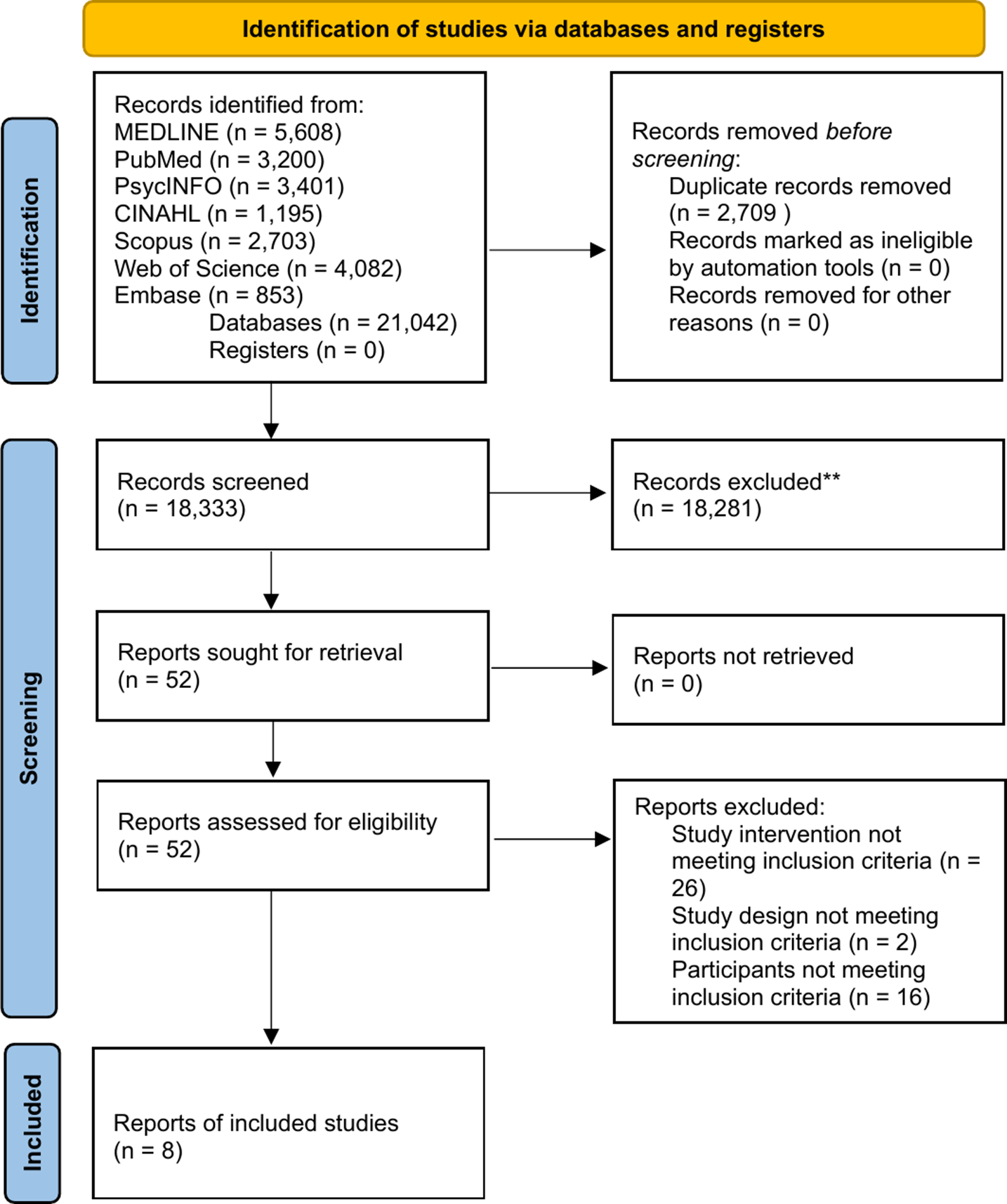
Search results were managed using Covidence software (Covidence, 2020) including the removal of duplicate entries, the screening of title and abstracts and of full texts (Figure 1). The first reviewer (AI) screened all the title and abstract papers. Up to 10% of the title and abstract of included papers were reviewed by a second reviewer (EV) and a third reviewer resolved any discrepancies (SP). The full text of selected papers was then assessed in detail against the inclusion and exclusion criteria by reviewer one (AI).
This is the PRISMA flow diagram.

Data extraction
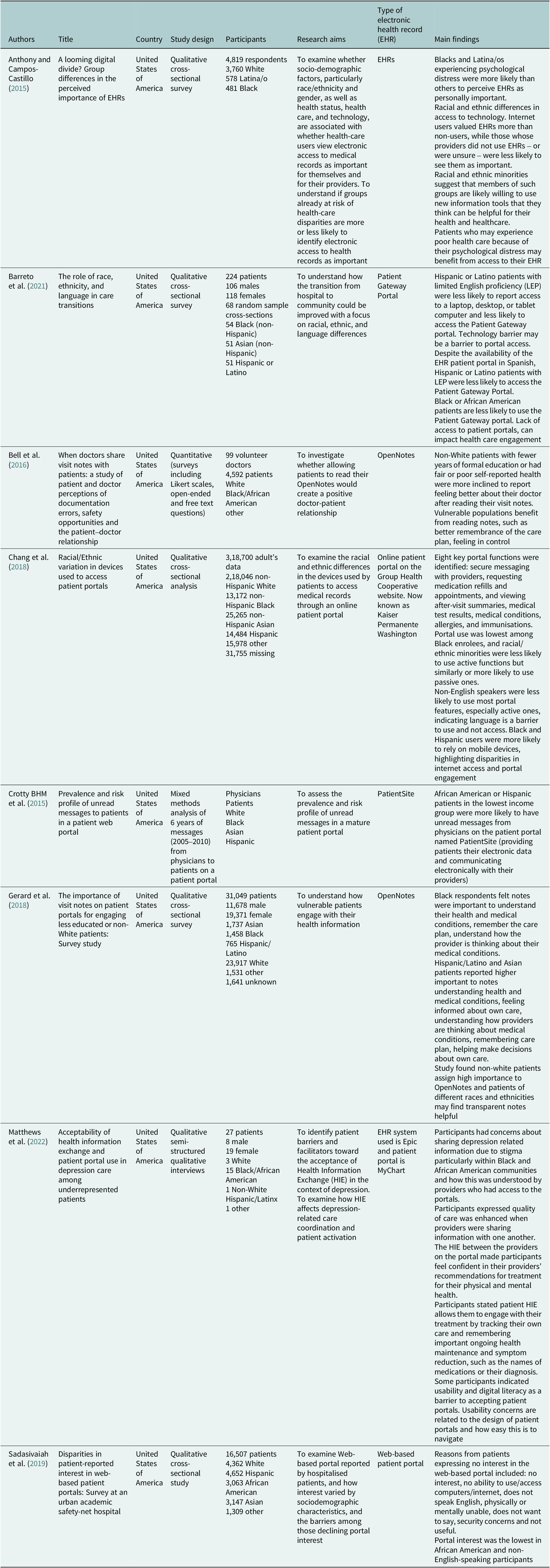
The full-text papers were examined for eligibility and assessed in detail against the inclusion criteria by AI. The data extracted from each article was completed using a standard template in Excel format and included authors details, title of the article, year of publication, country of publication, study design, participant information which included ethnicity, gender, whether participants were service users, patients or clients with access to EHRs in mental healthcare settings, research aims, type of EHR and main findings (Table 1).
Data extraction

Quality appraisal
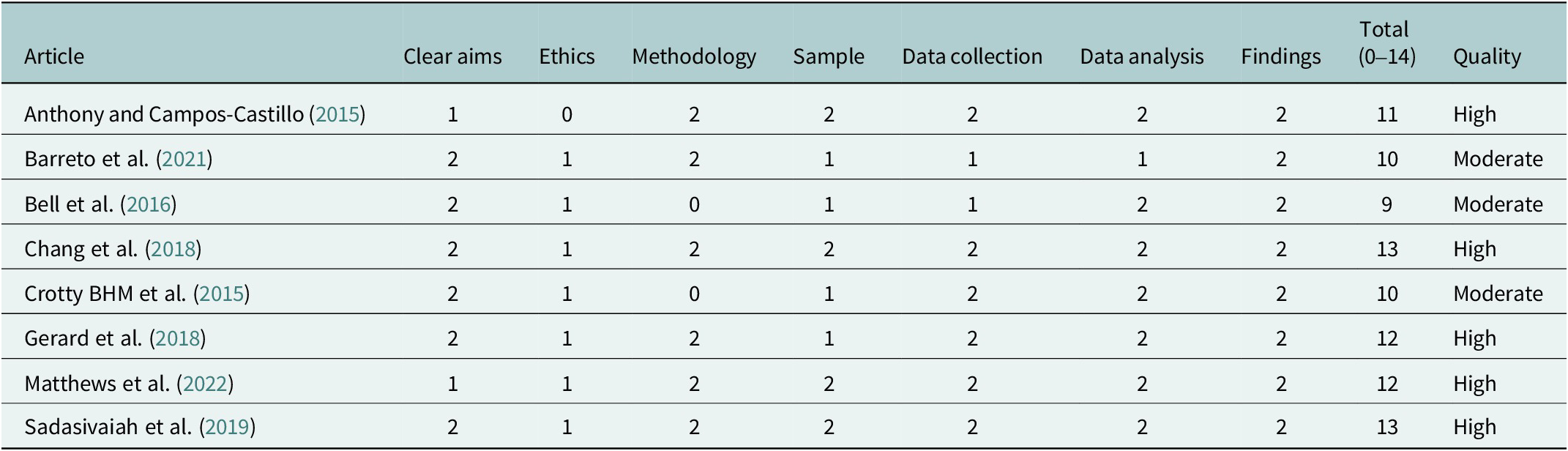
The Caldwell quality assessment tool (Caldwell and Georgina, Reference Caldwell and Georgina2011) and the Critical Skills Appraisal Programme (CASP, 2024) adapted by Surr et al. (Reference Surr, Gates, Irving, Oyebode, Smith, Parveen, Drury and Dennison2017) were used for quality appraisal of included papers. The CASP quality criteria was used to assess the methodological rigour of the included studies. The quality criteria evaluated whether the research aims and questions were clearly stated, and whether ethical considerations have been addressed in the studies. The CASP also determines the suitability of the study design in relation to the research question, including a clear rationale for its selection. Additional criteria rated the sample size, selection process and description, as well as the reliability and validity of the data collection and data analysis methods. Lastly, the CASP quality criteria evaluates the clarity and relevance of the study’s findings and discussion to ensure that conclusions are well supported. This tool allows the standardisation of quality assessment of each paper with various study designs using a series of seven questions (Surr et al., Reference Surr, Gates, Irving, Oyebode, Smith, Parveen, Drury and Dennison2017). Papers were provided with an overall quality rating score (i.e., high 11–14; medium 6–10; low score 0–5). High scores indicated the paper met most of the quality criteria, whereas papers with a low score indicated few of the quality criteria was met. All papers were assessed for quality and rated by the author AI (Table 2).
Quality appraisal

Note: Quality criteria rating: 0 = No, 1 = Partially, 2 = Yes. 0–5 = Low quality, 6–10 = Moderate quality, 11–14 = High quality.
Analysis
Data analysis was conducted using critical interpretive synthesis (CIS) (Dixon-Woods et al., Reference Dixon-Woods, Cavers, Agarwal, Annandale, Arthur, Harvey, Hsu, Katbamna, Olsen, Smith, Riley and Sutton2006). CIS provides a systematic, empirical method to combine both quantitative and qualitative research (Bales and Gee, Reference Bales and Gee2012) and involves the process of synthesis of the evidence, allowing the identification of themes to be analysed from each paper. CIS allows reflexivity and critical engagement with the literature (Dixon-Woods et al., Reference Dixon-Woods, Cavers, Agarwal, Annandale, Arthur, Harvey, Hsu, Katbamna, Olsen, Smith, Riley and Sutton2006). Themes were identified from the language in both quantitative and qualitative papers. Data was analysed iteratively. Findings from the papers in this review were refined to develop an overarching conceptual framework for the barriers, and facilitators on ethnically diverse service users accessing EHRs. Using CIS allows the review question and aims to be understood and determines how shared mental health EHRs are perceived and used by different ethnically diverse groups and what the barriers and facilitators to access consist of. During the data synthesis process, the results and themes observed were discussed among the three reviewers (AI, SP, and EV).
Results
In total, eight papers were included in the review, of which six were qualitative (Anthony and Campos-Castillo, Reference Anthony and Campos-Castillo2015; Chang et al., Reference Chang, Lyles, Jordan and Ralston2018; Gerard et al., Reference Gerard, Chimowitz, Fossa, Bourgeois, Fernandez and Bell2018; Sadasivaiah et al., Reference Sadasivaiah, Lyles, Kiyoi, Wong and Ratanawongsa2019; Barreto et al., Reference Barreto, Michael, Carter, Betancourt, Tull, Tan-McGrory and Donelan2021; Matthews et al., Reference Matthews, Savoy, Paranjape, Washington, Hackney, Galis and Zisman-Ilani2022), one was a quantitative study (Bell et al., Reference Bell, Anselmo, Darer, Elmore, Leveille, Ngo, Ralston, Delbanco and Walker2016) and one mixed methods study (Crotty BHM et al., Reference Crotty BHM, O’Brien, Bajracharya, Safran and Landon2015). The qualitative studies included five cross-sectional designs and one semi-structured interview study. The quantitative study was a survey design using Likert scales, open-ended and free text questions. The mixed methods study included monitoring patients and physician’s messages on patient portal EHRs. All studies originated from the United States (US) and were published between 2015 and 2022. Most papers included Black/African American, Hispanic, Latino and Asian ethnically diverse groups. Additionally, the types of EHRs mentioned were patient portals in five papers (Crotty BHM et al., Reference Crotty BHM, O’Brien, Bajracharya, Safran and Landon2015; Chang et al., Reference Chang, Lyles, Jordan and Ralston2018; Sadasivaiah et al., Reference Sadasivaiah, Lyles, Kiyoi, Wong and Ratanawongsa2019; Barreto et al., Reference Barreto, Michael, Carter, Betancourt, Tull, Tan-McGrory and Donelan2021; Matthews et al., Reference Matthews, Savoy, Paranjape, Washington, Hackney, Galis and Zisman-Ilani2022), two papers incorporated OpenNotes, which are EHRs allowing service users to access their clinical notes or visit reports (Bell et al., Reference Bell, Anselmo, Darer, Elmore, Leveille, Ngo, Ralston, Delbanco and Walker2016; Gerard et al., Reference Gerard, Chimowitz, Fossa, Bourgeois, Fernandez and Bell2018) and one paper included EHRs in general (Anthony and Campos-Castillo, Reference Anthony and Campos-Castillo2015).
Quality review
Five papers were rated as high quality and three papers as moderate quality based on the Caldwell quality assessment (Caldwell and Georgina, Reference Caldwell and Georgina2011) and the CASP tools (CASP, 2024) adapted by Surr et al. (Reference Surr, Gates, Irving, Oyebode, Smith, Parveen, Drury and Dennison2017). None of the papers mentioned ethical considerations such as informed consent or confidentiality awareness. Papers from Barreto et al. (Reference Barreto, Michael, Carter, Betancourt, Tull, Tan-McGrory and Donelan2021) and Bell et al. (Reference Bell, Anselmo, Darer, Elmore, Leveille, Ngo, Ralston, Delbanco and Walker2016) did not mention the inclusion criteria of their papers explicitly; however, both studies still stated how participants were recruited for the research. Crotty BHM et al. (Reference Crotty BHM, O’Brien, Bajracharya, Safran and Landon2015) did not mention how participants were recruited or the study design.
Themes
Three themes were drawn from the eight studies included in this review: language barriers to EHR access, lack of access to technology and impact of EHRs on access to care.
Language barriers to EHR access
Ethnically diverse groups are less likely to have English as their first language (Khan et al., Reference Khan, Asif and Jaffery2021) and consequently experience language barriers when engaging with EHRs. Supporting this notion, Barreto et al. (Reference Barreto, Michael, Carter, Betancourt, Tull, Tan-McGrory and Donelan2021), Chang et al. (Reference Chang, Lyles, Jordan and Ralston2018) and Sadasivaiah et al. (Reference Sadasivaiah, Lyles, Kiyoi, Wong and Ratanawongsa2019) collectively reported a lack of English proficiency was a significant barrier for patients to engage with their own mental healthcare through EHRs. Chang et al. (Reference Chang, Lyles, Jordan and Ralston2018) found Asians and Hispanics had considerably higher numbers of patients with a primary language other than English, and these patients had lower usage of the EHR patient portal compared to patients with English as a primary language. Furthermore, Chang et al. (Reference Chang, Lyles, Jordan and Ralston2018) found that patients with a primary language other than English were less likely to use the features of patient portal, such as secure messaging, the ability to request appointments, medication refills and viewing the after-visit summaries. Sadasivaiah et al. (Reference Sadasivaiah, Lyles, Kiyoi, Wong and Ratanawongsa2019) also found that non-White, non-English speakers had lower interest in patient portal due to not being able to speak English.
Lack of access to technology
With health systems using EHRs, the ability to pull and send data from mobile devices allows the requests of diverse patients with various clinical needs to be met (Shaw et al., Reference Shaw, Stroo, Fiander and McMillan2020). Barreto et al. (Reference Barreto, Michael, Carter, Betancourt, Tull, Tan-McGrory and Donelan2021) reported that despite EHR patient portals being available in the Spanish language, Hispanic and Latino patients were still less likely to report access to a laptop, desktop, tablet or computer limiting their access to the patient portals (Barreto et al., Reference Barreto, Michael, Carter, Betancourt, Tull, Tan-McGrory and Donelan2021). Sadasivaiah et al. (Reference Sadasivaiah, Lyles, Kiyoi, Wong and Ratanawongsa2019) found patients from ethnically diverse groups with no ability or understanding to use computers and access the internet were unlikely to use mental EHRs web-based portals. Chang et al. (Reference Chang, Lyles, Jordan and Ralston2018) also found Black and Hispanic portal users of EHRs were more likely to use mobile devices than a desktop to access the patient portals. Anthony and Campos-Castillo (Reference Anthony and Campos-Castillo2015) found racial and ethnic disparities in technology access which contributed to gaps in both access to and opinions about EHRs health information and communication technologies. The study highlighted ethnically diverse groups including Latino and Black groups had less access to technology, and thus, were less likely to benefit from or trust mental EHRs (Anthony and Campos-Castillo, Reference Anthony and Campos-Castillo2015).
Perceived impact of EHRs on access to care
EHRs allow the successful utilisation of health information exchange with patient’s health data being stored, retrieved and updated (Matthews et al., Reference Matthews, Savoy, Paranjape, Washington, Hackney, Galis and Zisman-Ilani2022). Supporting this notion, Matthews et al. (Reference Matthews, Savoy, Paranjape, Washington, Hackney, Galis and Zisman-Ilani2022) illustrated respondents including Black/African American and non-White Hispanic/Latino individuals found elements of patient portal beneficial as access to depression care was easier and more efficient. The messaging and scheduling features on EHR patient portals facilitated quick access to the respondent’s providers, and thus, accessibility barriers associated with reaching providers by the phone were overcome (Matthews et al., Reference Matthews, Savoy, Paranjape, Washington, Hackney, Galis and Zisman-Ilani2022). The messaging and scheduling features on the EHRs allowed patients to handle their mental health depression care in their own time, instead of relying on service providers or the doctors (Matthews et al., Reference Matthews, Savoy, Paranjape, Washington, Hackney, Galis and Zisman-Ilani2022). Furthermore, findings from Matthews et al. (Reference Matthews, Savoy, Paranjape, Washington, Hackney, Galis and Zisman-Ilani2022) demonstrated service providers receiving detailed information about patient’s current mental health data, allowed respondents to feel more confident in service providers recommendations for treatment for depression and various other medical conditions (Matthews et al., Reference Matthews, Savoy, Paranjape, Washington, Hackney, Galis and Zisman-Ilani2022). This finding is supported by Gerard et al. (Reference Gerard, Chimowitz, Fossa, Bourgeois, Fernandez and Bell2018) as they found EHRs allowed less educated and non-White patients, including Asian, Black and Hispanic/Latino ethnically diverse groups to understand their health more. More specifically, Black respondents Hispanic/Latino and Asian patients found EHRs allowed an understanding of health and medical conditions, feeling informed about their own care, recognising how providers are thinking about medical conditions, remembering care plan and helping make decisions regarding their own care (Gerard et al., Reference Gerard, Chimowitz, Fossa, Bourgeois, Fernandez and Bell2018). In line with this finding, Bell et al. (Reference Bell, Anselmo, Darer, Elmore, Leveille, Ngo, Ralston, Delbanco and Walker2016) reported African American patients benefited from reading their notes as they better remembered their care plan, became more in control and were taking medications better as prescribed. Bell et al. (Reference Bell, Anselmo, Darer, Elmore, Leveille, Ngo, Ralston, Delbanco and Walker2016) also illustrated how patients from ethnically diverse backgrounds have a distrust for the healthcare system. However, the research demonstrated sharing notes on EHRs could result in the patient and providers views being similar and may influence patient’s in perceiving their doctor positively (Bell et al., Reference Bell, Anselmo, Darer, Elmore, Leveille, Ngo, Ralston, Delbanco and Walker2016). It is also important to recognise the findings from Anthony and Campos-Castillo (Reference Anthony and Campos-Castillo2015), which revealed Black and Latino patients with psychological distress were most likely to report that the EHRs were important for themselves, even after controlling for respondents’ socio-economic status, health status, health care context and disposition toward health information. Moreover, compared to White patients, Black and Latino patients with psychological distress who were more likely to experience healthcare disparities perceived EHRs as being very important for themselves (Anthony and Campos-Castillo, Reference Anthony and Campos-Castillo2015). Supporting this notion, Anthony and Campos-Castillo (Reference Anthony and Campos-Castillo2015) highlighted that respondents’ specifically Black and Latino patients’ level of psychological distress was positively associated with perceiving EHRs as personally important. Furthermore, the paper revealed the perceived importance of EHRs for ethnically diverse groups and highlighted their willingness to use new information tools such as EHRs as they believed they could be helpful for their personal healthcare (Anthony and Campos-Castillo, Reference Anthony and Campos-Castillo2015).
Alternatively, ethnically diverse groups do present concerns of mental health-related patient portals. For instance, Matthews et al. (Reference Matthews, Savoy, Paranjape, Washington, Hackney, Galis and Zisman-Ilani2022) found exchanging information related to depression within EHRs was linked to the stigma associated with the mental illness (Matthews et al., Reference Matthews, Savoy, Paranjape, Washington, Hackney, Galis and Zisman-Ilani2022). Thus, there was a concern among ethnically diverse respondents with how their mental health-related information was used or perceived by other healthcare providers when accessing the EHRs (Matthews et al., Reference Matthews, Savoy, Paranjape, Washington, Hackney, Galis and Zisman-Ilani2022). These attitudes were more prevalent among the racially and ethnically diverse patients as respondents described fear of stigma, labelling or unauthorised disclosure of their mental illness due to health information being stored and retrieved in patient EHR portals by service providers (Matthews et al., Reference Matthews, Savoy, Paranjape, Washington, Hackney, Galis and Zisman-Ilani2022). Hence, the stigma associated with mental health illness, specifically depression, inhibited acceptance of electronic communication and information sharing in EHRs by ethnically diverse group respondents (Matthews et al., Reference Matthews, Savoy, Paranjape, Washington, Hackney, Galis and Zisman-Ilani2022).
Discussion
This systematic review explored ethnically diverse groups perceptions of the utility of mental health EHRs and reports perceived barriers and facilitators to access. Research within this field is limited, with the systematic review identifying eight relevant studies, all originating from the US. This demonstrates a lack of research on ethnically diverse groups outside the US. Limited evidence on ethnically diverse groups outside the US may reflect methodological and ethical constraints rather than low EHR adoption. For instance, asking about ethnicity within survey research is not common practice, and collecting these data vary widely (Mauro et al., Reference Mauro, Allen, Dauda, Molina, Neale and Lewis2022).
With the systematic review identifying studies all originating from the US, some have suggested that EHR implementation outside the US is slower (Kariotis et al., Reference Kariotis, Prictor, Chang and Gray2022). However, this may not be the case, as countries in northern Europe and Estonia provide patient’s access to mental health records (Bärkås et al., Reference Bärkås, Scandurra, Rexhepi, Blease, Cajander and Hägglund2021). In the US, the Health Information Technology for Economic and Clinical Health (HITECH) Act of 2009 was developed to increase EHR adoption (Adler-Milstein and Jha, Reference Adler-Milstein and Jha2017). For instance, in the US, EHR use has increased in general medical outpatient (85.9% in 2017) and inpatient (96% in 2017) settings (Spivak et al., Reference Spivak, Strain, Cullen, Ruble, Antoine and Mojtabai2021). Still, adoption may be slower among mental health facilities with less than half of all psychiatric hospitals reporting certified EHR use in 2016 (Hu et al., Reference Hu, Qu, Houser, Chen, Zhou and Yu2020).
Nevertheless, within Europe, patients have some access to their mental health records through national EHR systems (Bärkås et al., Reference Bärkås, Scandurra, Rexhepi, Blease, Cajander and Hägglund2021). For example, in Sweden, patients in mental health care accessed psychiatric notes, however, the research illustrated challenges such as errors, omissions and stigmatising language in records (Bärkås et al., Reference Bärkås, Kharko, Blease, Cajander, Johansen Fagerlund, Huvila, Johansen, Kane, Kujala, Moll, Rexhepi, Scandurra, Wang and Hägglund2023). Similarly, Honey et al. (Reference Honey, Hancock, Glover, Scanlan, Cao, Povolny, Orr, Rose, Govindasamy, Smith and Ahmadapour2024) explored the experiences of people using mental health services in Australia and found participants felt uncertain about the information held and accessed by different organisations. Participants recommended that their mental health records be collected and maintained transparently, with information used only to support their care (Honey et al., Reference Honey, Hancock, Glover, Scanlan, Cao, Povolny, Orr, Rose, Govindasamy, Smith and Ahmadapour2024). These examples highlight that EHR use in mental health settings varies internationally, and caution is needed when generalising US-based findings. Moreover, the studies by Bärkås et al. (Reference Bärkås, Kharko, Blease, Cajander, Johansen Fagerlund, Huvila, Johansen, Kane, Kujala, Moll, Rexhepi, Scandurra, Wang and Hägglund2023) and Honey et al. (Reference Honey, Hancock, Glover, Scanlan, Cao, Povolny, Orr, Rose, Govindasamy, Smith and Ahmadapour2024) did not explicitly include ethnically diverse groups, illustrating the need for research that explores these individuals’ perceptions of mental health EHRs. Ethnically diverse groups in the US differ culturally from those in other countries, and health systems vary in terms of EHR implementation and patient access.
The review found language barriers to EHR access being a barrier to accessing and utilising EHRs. This echoed in wider research. For instance, Sentell et al. (Reference Sentell, Shumway and Snowden2007) aimed to understand language barriers in mental health care and found limited English proficiency was associated with lower use of mental health care. More specifically, non-English speaking Asians and non-English-speaking Latinos were less likely to receive services compared to Asian and Latinos who speak English (Sentell et al., Reference Sentell, Shumway and Snowden2007). This reflects the finding from this review as Asians and Hispanics were more likely to experience language barriers making it difficult for these ethnically diverse groups to engage with EHRs. Such barriers indicate the need to provide translated materials and interpreter support to ensure that ethnically diverse groups can understand their medical information, which is essential for successful utilisation of EHRs (Barreto et al., Reference Barreto, Michael, Carter, Betancourt, Tull, Tan-McGrory and Donelan2021).
Moreover, it is important to recognise that English is the native language of only 7.3% of the world’s population and less than 20% can speak the language (Bahji et al., Reference Bahji, Acion, Laslett and Adinoff2023). Therefore, while language proficiency is often cited as a barrier to accessing EHRs in English speaking countries, most EHRs globally are written in local languages (Barreto et al., Reference Barreto, Michael, Carter, Betancourt, Tull, Tan-McGrory and Donelan2021; Bärkås et al., Reference Bärkås, Kharko, Blease, Cajander, Johansen Fagerlund, Huvila, Johansen, Kane, Kujala, Moll, Rexhepi, Scandurra, Wang and Hägglund2023). Linguistic barriers, therefore, affect ethnically diverse groups differently depending on the national context.
The lack of access to technology was found to be a barrier in accessing EHRs, as Black, Asian, Hispanic and Latino ethnically diverse groups were less likely to possess a device to access EHRs. Technological devices are being increasingly used in the healthcare sector, as mobile devices allow the continuous updating of patient information and improve the communication between the service providers and service users (Heponiemi et al., Reference Heponiemi, Kaihlanen, Gluschkoff, Saranto, Nissinen, Laukka and Vehko2021). For instance, Ennis et al. (Reference Ennis, Rose, Denis, Pandit and Wykes2012) explored the extent to which mental health service users have access to and skills in using various technologies. The research illustrated Black and ethnically diverse groups were more likely to access computers outside of their own homes than White individuals (Ennis et al., Reference Ennis, Rose, Denis, Pandit and Wykes2012). This suggests ethnically diverse groups should be given access to the technology if healthcare services expect individuals to access EHRs, to allow successful engagement with the services (Ennis et al., Reference Ennis, Rose, Denis, Pandit and Wykes2012). This reflects the findings from this review as Black, Hispanic and Latino ethnically diverse groups had less access to laptop, desktop, tablet or computer making it more difficult for these groups to utilise EHRs. Lack of access to the appropriate technology may be a significant barrier which contributes to the digital divide in these ethnically diverse groups attempting to access EHR portals.
It is important to recognise that barriers to lower technology access and use may be related to demographic characteristics including household income (Arcury et al., Reference Arcury, Quandt, Sandberg, Miller, Latulipe, Leng, Talton, Melius, Smith and Bertoni2017). Crotty BHM et al. (Reference Crotty BHM, O’Brien, Bajracharya, Safran and Landon2015) suggested African Americans, Hispanics and individuals with household incomes below $25,000 had more unread messages on the patient portals despite having access to a computer and the internet. Further research is required to understand the barriers these groups experience and help overcome them allowing beneficial engagement with EHR patient portals.
Stigma was found to be a perceived barrier for service users to consent to health information exchange through EHR patient portals (Matthews et al., Reference Matthews, Savoy, Paranjape, Washington, Hackney, Galis and Zisman-Ilani2022). Stigma around mental illness is prevalent within Asian, Black and African American communities (Eylem et al., Reference Eylem, De Wit, Van Straten, Steubl, Melissourgaki, Danışman, De Vries, Kerkhof, Bhui and Cuijpers2020), as this can prevent these groups from engaging with their healthcare due to the worry of social judgement, discrimination and rejection which could lead to individuals to conceal their mental health difficulties (Clement et al., Reference Clement, Schauman, Graham, Maggioni, Evans-Lacko, Bezborodovs, Morgan, Rüsch, Brown and Thornicroft2015). Thus, explaining the reviews findings of ethnically diverse groups concerns of how their mental health related information was used or perceived by other healthcare providers when accessing the EHRs (Matthews et al., Reference Matthews, Savoy, Paranjape, Washington, Hackney, Galis and Zisman-Ilani2022). Supporting this notion, Himmelstein et al. (Reference Himmelstein, Bates and Zhou2022) conducted a cross-sectional study and found that non-Hispanic Black patients notes included words such as “unwilling,” “refused,” “noncompliance” and “refuses.” Hence, stigmatising language in EHRs is often used to describe non-Hispanic Black patients which can alienate these patients and may result in adverse and inequitable health outcomes for patients (Himmelstein et al., Reference Himmelstein, Bates and Zhou2022; Bilotta et al., Reference Bilotta, Tonidandel, Liaw, King, Carvajal, Taylor, Thamby, Xiang, Tao and Hansen2024). These results illustrate negative words and labels associated with ethnically diverse groups can affect their acceptability of EHRs, and thus, safeguarding individuals against stigma could allow the expansion of EHRs in mental health settings.
Despite the barriers, this review found EHRs allowed mental health care for depression to become more efficient. Ethnically diverse groups became more informed about their own care, recognised how providers are thinking about medical conditions, remember care plans and make decisions regarding their own care due to EHR access (Gerard et al., Reference Gerard, Chimowitz, Fossa, Bourgeois, Fernandez and Bell2018; Matthews et al., Reference Matthews, Savoy, Paranjape, Washington, Hackney, Galis and Zisman-Ilani2022). Supporting this notion is research from Manca (Reference Manca2015), which suggested EHRs improve quality of care, patient outcome and safety and improve access to patient data as communication between healthcare providers and patients is enhanced. Moreover, this review found that Black and Latino patients with psychological distress who have experienced healthcare inequalities perceived EHRs as being very important (Anthony and Campos-Castillo, Reference Anthony and Campos-Castillo2015). These findings are in line with research from Hägglund et al. (Reference Hägglund, McMillan, Whittaker and Blease2022), which suggested EHR systems allow patients to feel empowered and in control of their own treatment.
Limitations and strengths
Many studies were identified in this systematic review and for this reason a fully blind review with two reviewers screening the title and abstract was not feasible. This is a limitation of the study due to potential selection bias. However, reviewer one (AI) completed the full abstract and title screening. Up to 10% of the title and abstract of included papers were reviewed by a second reviewer (EV). The third reviewer resolved any discrepancies (SP) helped ensure consistency and reliability in the screening process. The involvement of multiple reviewers and the resolution of discrepancies strengthened the rigour and credibility of the review. A further limitation is that ethnicity is not routinely collected in survey or clinical data due to ethical considerations. As discussed earlier, this may partly explain the lack of evidence from outside of the US, reflecting methodological and ethical constraints rather than differences in EHR adoption. Also, only including OECD countries is another limitation, as the review excludes information from low- and middle-income settings, where experiences with EHRs may differ significantly. This may reduce the generalisability of the findings. Moreover, this review included articles published in English and may have excluded non-English language studies that may have contributed to understanding EHR usage by ethnically diverse groups in mental health. Despite the limitations, utilising a rigorous systematic review methodology and including quantitative, qualitative and mixed-method studies are major strengths. Similarly, conducting an in-depth literature search across multiple databases reduces the risk of missing relevant studies. The systematic review also applies clear eligibility criteria, which enhances transparency and reproducibility.
Implications of the results for practice, policy and future research
The findings from this systematic review highlight implications for practice, policy and give directions for future research in improving ethnically diverse groups utilisation of mental health EHRs. Mental healthcare providers should consider ways to overcome language barriers, such as offering translated EHR systems. For instance, future research could determine whether ethnically diverse service users in mental health would benefit from translating systems on EHRs which could identify difficult terms, replace them with alternative synonyms and generate explanatory texts within the EHRs. Ethnically diverse groups lack of access to technology leading to limited understanding of the patient portals demonstrates the need of digital literacy programs empowering individuals to utilise the EHR systems effectively. Mental healthcare providers should focus on reducing technology inequalities by providing appropriate devices and increasing the availability of user-friendly EHR platforms for ethnically diverse groups. These challenges are not limited to mental health settings. For instance, language barriers, digital literacy gaps and technology inequalities may influence access and engagement with EHRs across different clinical contexts, such as primary care, chronic disease management and other health services. Policies should highlight privacy protections to relieve the concerns about stigma and the potential misuse of mental health information. Again, issues around confidentiality and trust in data security are vital for patient engagement with EHRs in general health care settings and not just in mental health. Future research should investigate the long-term impact of EHRs on mental health outcomes among ethnically diverse groups and investigate strategies to lessen stigma associated with mental EHR usage. Future research should investigate how factors such as socioeconomic status, education level and digital literacy may affect ethnically diverse groups engagement with mental health EHRs, particularly in diverse healthcare systems outside the US. Addressing these gaps can improve access to and benefits from EHRs for all ethnically diverse groups in mental healthcare.
Conclusion
EHRs research in the context of mental health is limited. The review is the first to explore how electronic mental health records are perceived and used by different ethnically diverse groups and begin to determine the barriers and facilitators to access. The current systematic review identified and included eight papers. Language barriers to EHR access were identified as a barrier for ethnically diverse groups understanding their clinical information on EHRs. Technology inequalities prevent these groups from accessing EHRs. Mental healthcare providers need to consider providing ethnically diverse groups with translated EHRs and access to the appropriate technology to overcome the barriers and encourage successful utilisation of EHRs. Stigma was also found to be a barrier among ethnically diverse groups regarding how they may be perceived due to their EHR notes. The review illustrated that ethnically diverse groups became more informed about their own care, recognised how providers are thinking about medical conditions, remembered care plans and made decisions regarding their own care due to mental health EHR access. Further work is required to reduce the barriers in utilising EHRs in mental health settings and ensure ethnically diverse groups can safely access their electronic notes.
Open peer review
To view the open peer review materials for this article, please visit http://doi.org/10.1017/gmh.2025.10063.
Supplementary material
The supplementary material for this article can be found at http://doi.org/10.1017/gmh.2025.10063.
Data availability statement
The authors confirm that the data supporting the findings of this study are available within the article and its supplementary materials.
Author contribution
AI: Methodology, formal analysis (Spivak et al., Reference Spivak, Strain, Cullen, Ruble, Antoine and Mojtabai2021; Kariotis et al., Reference Kariotis, Prictor, Chang and Gray2022), investigation, writing – original draft, project administration. SP: Conceptualisation, investigation, methodology, writing – reviewing and editing, supervision. EV: Conceptualisation, investigation, methodology, writing – reviewing and editing, supervision, funding acquisition.
Financial support
The research is a UKRI Brad-ATTAIN funded project.
Competing interests
The authors declare no conflict of interest.
Ethics statement
Ethical approval was not required for the systematic review of available and accessible literature. The protocol was registered with PROSPERO (CRD42023494011).


 Open access


Comments
Dr Eleftheria Vaportzis
Department of Psychology
University of Bradford
BD7 1DP
UK
+44 (0)12742 35554
E.Vaportzis@bradford.ac.uk
17 April 2025
To whom it may concern,
Please find attached a research article entitled “Perceptions of electronic health records by minority ethnic groups in mental health: A systematic literature review” by Ikram, Parveen and Vaportzis for your consideration.
We believe that this manuscript is appropriate for publication in Global Mental Health. It is a systematic review that explores perceptions of minority ethnic groups of the utility of mental health Electronic Health Records and establish perceived barriers and facilitators to access these records. To our knowledge there is no other paper reviewing the experiences of Electronic Health Records by minority ethnic groups in mental health settings.
The paper follows the Global Mental Health author guidelines, represents original material, has not been published before and is not under consideration for publication elsewhere. There have been no prior interactions with Global Mental Health regarding this manuscript. Each author contributed to the development of this manuscript, and the authors are in agreement with the content. There is no conflict of interest with other people or organisations.
All correspondence regarding this manuscript should be addressed to me at e.vaportzis@bradford.ac.uk
Thank you for your consideration of this manuscript.
Sincerely,
Dr Eleftheria Vaportzis