During the Medieval Climate Anomaly, populations in the Lake Titicaca Basin of the highland Andes experienced reduced precipitation, colder temperatures, and fluctuations in lake levels that altered the local environment, as indicated by nearby paleoclimate proxies (Abbott et al. Reference Abbott, Binford, Brenner and Kelts1997; Binford et al. Reference Binford, Kolata, Brenner, Janusek, Seddon, Abbott and Curtis1997; Calaway Reference Calaway2005; Melice and Roucou Reference Melice and Roucou1998; Thompson et al. Reference Thompson, Mosley-Thompson, Dansgaard and Grootes1986, Reference Thompson, Davis, Mosley-Thompson, Sowers, Henderson, Zagorodnov, Lin, Mikhalenko, Kramer Campen, Bolzan, Coe-Dai and Francou1998). Climate change during the Late Intermediate period (LIP; AD 1100–1450; also known as the Altiplano period) has been cited as one of the primary causes for collapse of the Wari and Tiwanaku civilizations, political balkanization throughout the highland Andes, and subsequent endemic conflict beginning around AD 1100 (Seltzer and Hastorf Reference Seltzer and Hastorf1990; Stanish Reference Stanish2003). Although farmers in the region have always coped with interannual climate variation, long-term climate change increases the probability of crop failure (Arkush Reference Arkush2008; Augustine Reference Augustine2010; Howden et al. Reference Howden, Soussana, Tubiello, Chhetri, Dunlop and Meinke2007).
Warfare also often leads to food procurement difficulties and nutritive hardships (Ferguson Reference Ferguson, Arkush and Allen2006; LeBlanc Reference LeBlanc, Arkush and Allen2006; Milner et al. Reference Milner, Anderson and Smith1991; Otterbein Reference Otterbein1999; Wilson and VanDerwarker Reference Wilson, VanDerwarker, VanDerwarker and Wilson2016). When laborers become soldiers and the threats to safety from violence and raids increase, concerns about local food security prompt changes in agricultural practice and foodways. Previous studies show that warfare during the LIP caused security concerns that fundamentally restructured the economy (Arkush Reference Arkush2011; Langlie Reference Langlie2018; Langlie and Arkush Reference Langlie, Arkush, VanDerwarker and Wilson2016).
Researchers working on the LIP have intensively focused on the causes, consequences, and severities of warfare in the region. We know from previous research that warfare during the LIP led people to relocate from lacustrine and riverine valley bottoms to fortified grassy hilltop villages (Arkush Reference Arkush2011; Guamán Poma de Ayala Reference Guamán Poma de Ayala1980 [1616]; Stanish et al. Reference Stanish, de la Vega, Steadman, Justo, Fry, Mamani, Seddon and Chuquimia1997). Yet, discussions of plant use during the LIP in the altiplano have speculatively drawn on climate proxies, rather than direct evidence of agricultural practice or foodways. This article characterizes LIP plant use patterns and discusses changes in plant usage from earlier Formative and Middle Horizon time periods, based on a macrobotanical analysis of samples from Ayawiri, one of the largest LIP hillforts in the altiplano. Key findings include a heavy reliance on locally grown chenopods and tubers and no evidence for trade crops like maize.
The Site: Ayawiri
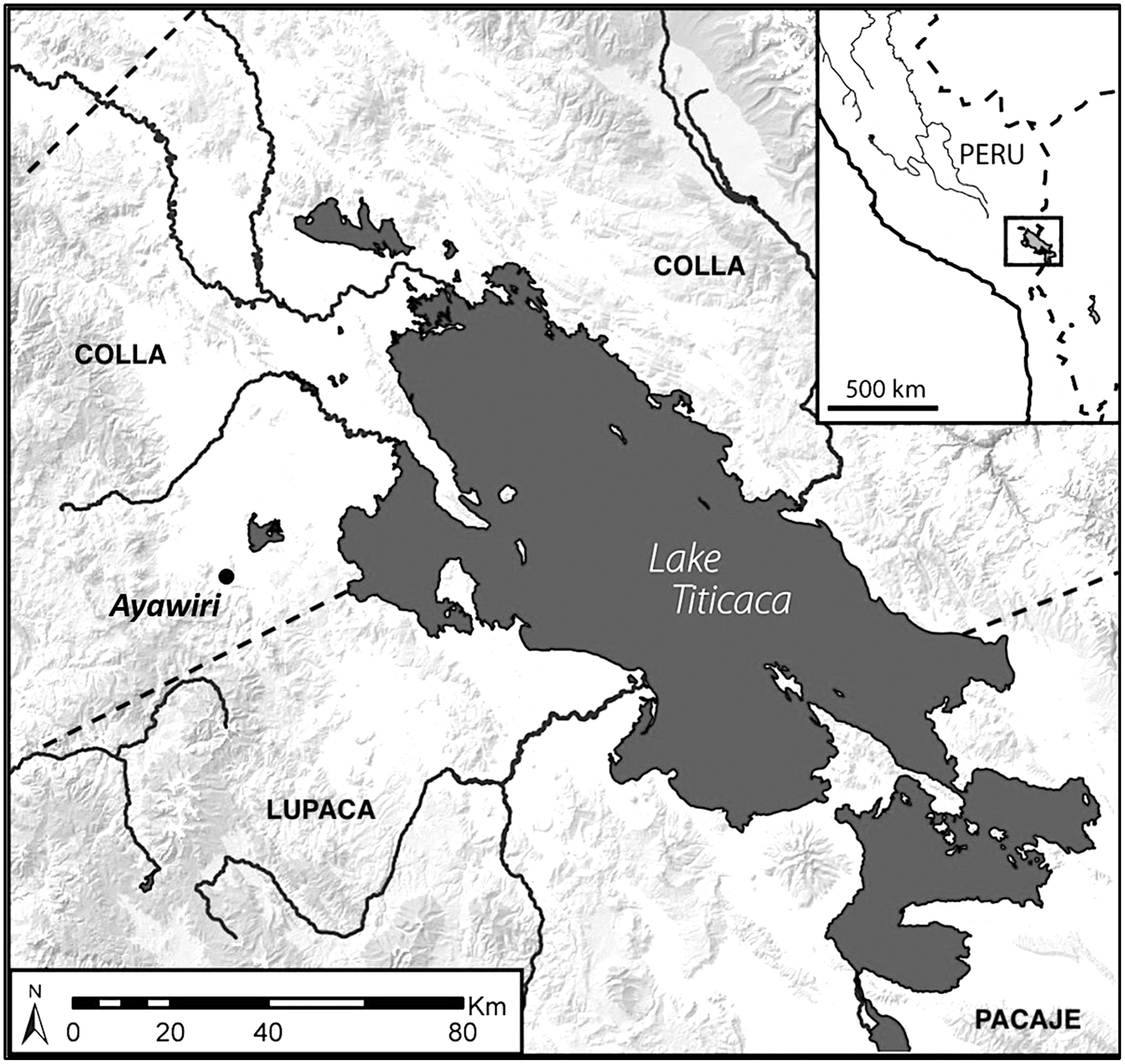
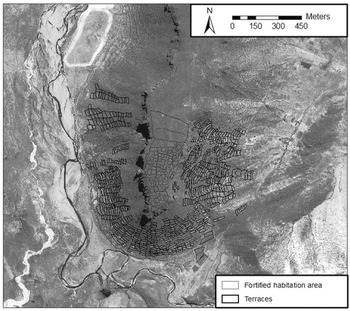
Ayawiri is located west of Lake Titicaca at an altitude of 4,100 m asl (Figure 1). The residential sector of the site covers more than 13 ha of the southern portion of a flat mesa; it is surrounded by steep, rainfed terraced hillsides that were constructed and maintained throughout the LIP (Langlie Reference Langlie2016, Reference Langlie2018; Figure 2). Ayawiri was inhabited by the Colla, an ethnic group that presided over the northern Lake Titicaca Basin during the LIP. Although Ayawiri is just one hillfort in the region, this case study is reflective of broader LIP farming adaptations. Many other Titicaca Basin hillforts are similar in layout and architecture and are also surrounded by terraced field complexes (Arkush Reference Arkush2011).
Map illustrating the location of Ayawiri in the Lake Titicaca Basin (modified from Langlie and Arkush Reference Langlie, Arkush, VanDerwarker and Wilson2016:Figure 12.1).

Map depicting the Ayawiri hillfort and surrounding terraces (modified from Langlie and Arkush Reference Langlie, Arkush, VanDerwarker and Wilson2016:Figure 12.3).

Colla agricultural adaptation did not occur in direct response to the collapse of the Tiwanaku state and the Wari Empire that marked the end of the Middle Horizon; rather, it was formulated over generations of intensifying war and climate change throughout the course of the LIP. Like other Colla hillforts, the population living in the fortress at Ayawiri during the LIP was not significant until AD 1275 according to radiocarbon data (Arkush Reference Arkush2008, Reference Arkush2018), almost two centuries after the accepted date for the failure of Tiwanaku.
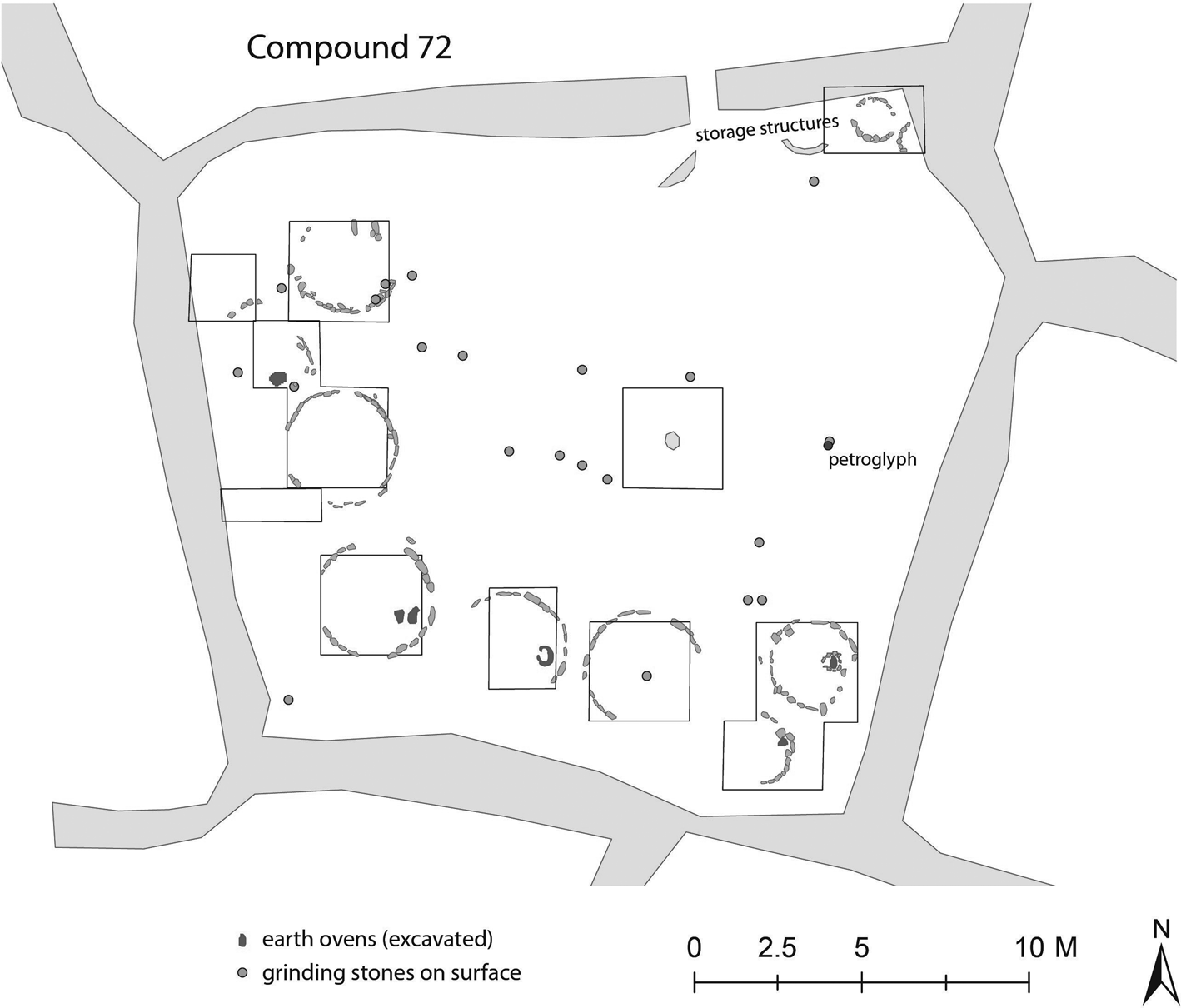
At Ayawiri, like many pukaras in the Colla region, there were concentrations of houses, kitchen structures, and storage structures that were similar in form and layout and organized into compounds separated by stacked stone compound walls packed densely onto one end of a mesa bounded by a series of defensive walls (Figure 3; Arkush Reference Arkush2008, Reference Arkush2011). There was very little wealth disparity between compounds, which possess similar goods and architecture (Arkush Reference Arkush2011, Reference Arkush2018). Sociopolitics among the Colla was seemingly heterarchical (sensu Crumley Reference Crumley1995), which is quite a departure from the hierarchy and command economies documented during the earlier Tiwanaku Middle Horizon period.
Map of a typical compound at Ayawiri with house structures, kitchen structures (identified by the presence of a cooking hearth), and storage structures around a central open-air patio (modified from Arkush Reference Arkush2018:Figure 3).

Along these same lines, the Colla at Ayawiri organized agricultural labor and logistics at the extended household level (Langlie Reference Langlie2018). This is evident in the radiating walls that ran from the top of the mesa, where Ayawiri was located, to the valley bottom, separating terraces into vertical tracts managed by extended families (apparent in Figure 2). This is also evident in the unworked and irregularly stacked fieldstones that compose the masonry of terrace retaining walls, in the lack of irrigation, and in the organic layout of the terraces that indicates a lack of centralized planning (see Langlie Reference Langlie2018 for a complete description of the terraces). The timing of the construction of agricultural terraces during the LIP points to the development of adaptive agricultural strategies during this time period (Langlie Reference Langlie2016, Reference Langlie2018). Thus, by providing a characterization of domestic plant use and foodways at Ayawiri and comparing these findings to the distributions in earlier time periods, broad economic changes over time can be documented that reflect farmers’ adaptations to new sociopolitical and ecological realities of the era.
Paleoethnobotanical Methods
Before excavations began in the domestic sector of Ayawiri in 2011, I designed a standardized paleoethnobotanical procedure as part of the excavation methods used by Proyecto Machu Llaqta. Using a blanket sampling strategy (d'Alpoim Guedes and Spengler Reference d'Alpoim Guedes, Spengler, Marston, Guedes and Warinner2014; Pearsall Reference Pearsall2000), excavators collected approximately 10 L soil samples for flotation from almost every feature and depositional event. These contexts included middens, fill above structure floors and patio floors, and six structure floors. Point soil samples (also referred to as bulk samples; d'Alpoim Guedes and Spengler Reference d'Alpoim Guedes, Spengler, Marston, Guedes and Warinner2014; Pearsall Reference Pearsall2000) were taken from smaller discrete contexts, including hearths, subfloor pits, and burials; pinch samples (also referred to as composite or scatter samples) were recovered from one tomb found in a structure and nine hearths located in structures.
I processed and floated macrobotanical samples in a modified version of a SMAP-style flotation machine (following Watson Reference Watson1976). Of these samples, 106 were fully sorted with the aim of characterizing plant use across the site and finding evidence of rare and imported taxa that would only be present in small numbers. The remaining two samples from subfloor contexts were floated but contained very large quantities of seeds. A riffle box was used to divide these samples into a manageable volume for analysis; densities were extrapolated based on the proportion analyzed to determine the total quantities of material.
Only carbonized plant remains were analyzed in this study; uncarbonized remains are not preserved because of the seasonally wet environment of the region. There were three possible modes of deposition and preservation of archaeobotanical material at Ayawiri: direct use, fuel, and seed rain. Some plants were directly used for food, medicine, and craft and construction material. These were intentionally discarded in fires or accidentally charred. Other plants were burned as fuel for cooking and warming fires. Because of the paucity of trees in the region, camelid dung is burned for fuel. In these contexts, partially masticated and undigested seeds eaten by camelids are preserved through carbonization (Hastorf and Wright Reference Hastorf and Wright1998; Miller and Smart Reference Miller and Smart1984). Less commonly, seeds could have been preserved in fires at the site through accidental inclusion due to seed rain, in which seeds are carried in by the wind or “hitchhike” on peoples’ clothing or along with other intentionally used plants. Because of overlap in the ways in which plants enter the archaeological record, archaeobotanical data may reflect all three modes of deposition. I therefore present multiple interpretations of the data when appropriate.
This study uses two standard paleoethnobotanical descriptive statistics: ubiquity (expressed as percentage presence of a taxon) and density (expressed as specimens per liter of soil; Marston Reference Marston, Marston, Guedes and Warinner2014; Miller Reference Miller, Hastorf and Popper1988; Pearsall Reference Pearsall2000). Density sheds light on differences in plant use within Ayawiri, whereas ubiquity is used to compare variation in plant use between sites, because it reduces the impact of sample size, preservation, and recovery issues on quantification as compared to density (Miller Reference Miller, Hastorf and Popper1988).
Results
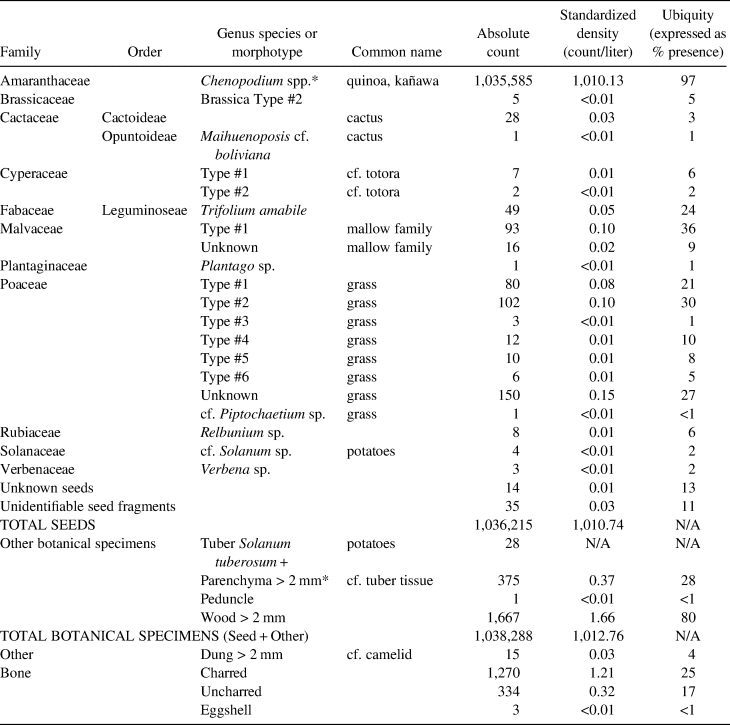
In this section, I present the types of macrobotanical remains found during analysis in alphabetical order by plant family, along with a brief summary of the known economic values of each taxon. This information is synthesized in Table 1. I also note possible modes of deposition and preservation of each taxon.
Summary Table of Macrobotanical Remains from Ayawiri.

Notes: N = 108 samples; 1,025.2 L of soil.
*Projected total +Found during excavations
Amaranthaceae
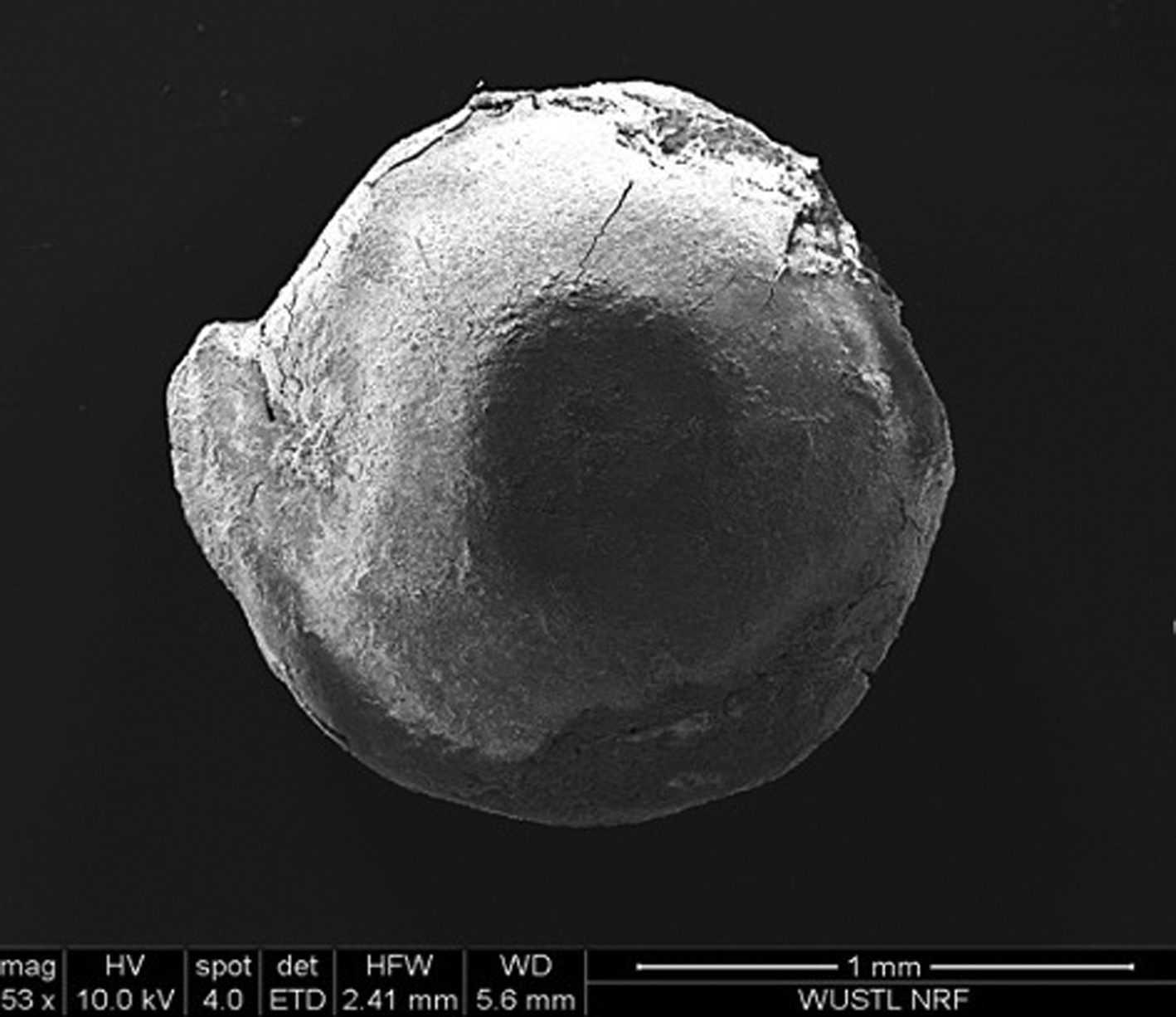
Approximately 1,035,585 chenopod seeds were found in Ayawiri macrobotanical samples (Figure 4). This total includes two dense caches of charred chenopods and whole tubers found directly below house floors. Notably, if these caches are excluded from quantification, chenopods still had the highest standardized density at 21.4 seeds per liter of soil in every other context of the site. This stands in marked contrast to wood, which has the second highest standardized density of any botanical specimen at 1.66 fragments per liter of soil processed. The crop quinoa (Chenopodium quinoa var. quinoa) and the lesser known but drought-tolerant kañawa (sometimes spelled cañihua; Chenopodium pallidicaule Aellen) were domesticated in the Andean highlands near the study region for their nutritious grains (Bruno Reference Bruno, Zeder, Bradley, Emshwiller and Smith2006; Bruno and Whitehead Reference Bruno and Whitehead2003; Wilson Reference Wilson1990). Paiko (Chenopodium ambrosioides L.) is a wild Andean species that has medicinal properties to treat parasites (Franquemont et al. Reference Franquemont, Plowman, Franquemont, King, Niezgoda, Davis and Sperling1990), and quinoa negra (Chenopodium quinoa var. melanospermum Hunz.) is a crop-companion weed suitable for fodder. Analysis of quantitative and qualitative traits of 1,017 of these chenopods from just about every context at the site—including hearths, structure floors, patio floors, and middens—and scanning electron analysis of the seed-coat thickness of 73 of these seeds indicate that Ayawiri residents were cultivating both quinoa and kañawa; residents were also meticulously weeding their fields or keeping crop stores clean based on the low presence of the quinoa negra weed type (see Langlie [Reference Langlie2019] for a full description of these data). Chenopod seeds could have been preserved at Ayawiri as residues of human food or burned in camelid dung.
SEM image of an archaeological Chenopodium quinoa seed.

Brassicaceae
Five total Brassicaceae seeds were found in Ayawiri macrobotanical samples (Supplemental Figure 1). The seeds are a Lepidium species. The Andean root crop maca (Lepidium meyenii Walp.) is grown as a cash crop in the central Peruvian highlands today; its wild ancestors still grow throughout Peru, Bolivia, and Argentina (Balick and Lee Reference Balick and Lee2002). Maca is globally sought after for its medicinal value; the powder produced from its dried roots is mixed into beverages and is also used as a stimulant and enhancer of male libido. Additionally, two native wild mustard species have been identified in botanical surveys in the altiplano, including Lepidium chichicara Desv. (Sempertegui et al. Reference Sempertegui2005) and Lepidium bipinnatifidum Desv. (Bruno Reference Bruno2008; Pestalozzi Schmid et al. Reference Hans-Ulrich Anton1998). The latter species has been noted to have medicinal properties (Brack Egg Reference Brack Egg1999) but is toxic in large quantities. The extremely low occurrence of this seed type at Ayawiri may be attributed to the fact that the wild local Lepidium spp. are toxic, so foraging camelids (and humans) probably avoided it.
Cactaceae
Twenty-nine Cactaceae seeds were identified (Supplemental Figure 2). Sweet fleshy cacti fruits are often consumed by both humans and animals throughout the New World. Spines are used for tools, the dried stems are used for fuel (specifically in the Oruro region), and these plants can form a spiny defensive hedge to keep animals away (Browman Reference Browman1989; Whitehead Reference Whitehead2007). Using the spines for tools does not involve fire or using the fruit. Thus, the seeds were probably deposited in fires as waste matter from fruit consumption or in camelid dung burned as fuel.
Cyperaceae
Nine Cyperaceae seeds were found in Ayawiri macrobotanical samples (Supplemental Figure 3). Totora (Schoenoplectus californicus C. A. Mey. Soják) is a cultivated aquatic sedge in the Cyperaceae family (Banack et al. Reference Banack, Rondón and Diaz-Huamnchuma2004; Orlove Reference Orlove1991) used as thatching for roofing material, boats, mats, tools, cordage, and animal fodder in the Titicaca Basin (Browman Reference Browman1989; Orlove Reference Orlove1991; Whitehead Reference Whitehead2007). Due to the paucity of trees in the region, totora has been a very important building material. Totora is also consumed as food (Browman Reference Browman1989; Bruno Reference Bruno2008): the white, juicy rhizome located at the base is often eaten raw. It does not have much nutritional value, but it has a very fresh-tasting flavor otherwise rare in locally available plants. Although Cyperaceae seeds are regularly found in altiplano samples, archaeobotanists have yet to come up with a way to identify them to the species level. Based on its modern use, it is highly probable that the plant was used the same way in the past and that seeds found in samples derived from totora plants.
Fabaceae
Forty-nine Fabaceae seeds identified as Trifolium amabile were found in Ayawiri macrobotanical samples (Supplemental Figure 4). Livestock often consume these wild legumes (Brack Egg Reference Brack Egg1999), and they are frequently found in camelid dung burned for fuel, indicating that llamas preferentially forage for these plants (Hastorf and Wright Reference Hastorf and Wright1998).
Malvaceae
There were 109 Malvaceae seeds in Ayawiri macrobotanical samples (Supplemental Figure 5). Bruno (Reference Bruno2014:138) notes that members of the Malva genus thrive in disturbed agricultural environments in the Titicaca Basin (Graf Reference Graf1981:364; Paduano et al. Reference Paduano, Bush, Baker, Fritz and Seltzer2003:273–274; Pestalozzi Schmid et al. Reference Hans-Ulrich Anton1998:55). As a preferred forage food of camelids in the region (Hastorf and Wright Reference Hastorf and Wright1998), these seeds may have also been preserved in burned dung.
Plantaginaceae
Only one Plantago sp. seed was found in Ayawiri macrobotanical samples. Young, tender leaves of Plantago spp. are sometimes eaten by humans in small amounts (Brack Egg Reference Brack Egg1999), although this would not necessarily lead to preservation in fires. These seeds are more likely to be preserved in burned dung.
Poaceae
Three hundred and sixty-four Poaceae seeds were identified in Ayawiri macrobotanical samples (Supplemental Figures 6–8) and include more than six distinct morphological types. Camelids heartily forage on grasses in the altiplano (Bruno Reference Bruno2008:246). Grasses are also used for fuel, rope, fiber for basketry, and thatching for roofing material (Bruno Reference Bruno2008:246–247; Whitehead Reference Whitehead2007:224). There is also a local tradition of corbel vaulted houses made from stacked grass sod blocks (Chavez Reference Chavez1998). The identified charred Poaceae seeds may derive from burned construction material, chaff used to stoke fires, or the residues of burned dung.
Rubiaceae
Eight Relbunium sp. seeds were identified. These small shrubs are found throughout the Andes (Niemeyer and Agüero Reference Niemeyer and Agüero2015). The macerated roots of a Relbunium sp. provided one of the main sources of red dye used in ancient Andean cotton and camelid fiber textile production (Cardon and Higgitt Reference Cardon and Higgitt2007). Relbunium spp. have also been noted as a common camelid forage food, even though they are not ubiquitous plants in the altiplano (Hastorf and Wright Reference Hastorf and Wright1998).
Solanaceae
Four cf. Solanum sp. seeds were identified in Ayawiri macrobotanical samples. Potatoes, in particular, were domesticated in the highland Andes (Flores et al. Reference Flores, Walker, Guimarães, Bais and Vivanco2003; Pearsall Reference Pearsall, Silverman and Isbell2008). These seeds likely arrived at Ayawiri in camelid dung burned for fuel. Alternatively, based on the low density of this taxon, Solanaceae could have arrived as seed rain.
Verbenaceae
Three Verbenaceae seeds were found in Ayawiri macrobotanical samples (see Supplemental Figure 9). The low density and ubiquity of verbena seeds indicate that it was not an economically important plant. With no known uses, this plant was likely brought to the site in dung burned for fuel or as seed rain.
Potatoes, Tubers, and Parenchyma
There were 375 parenchyma fragments in Ayawiri macrobotanical samples (see Supplemental Figure 10). Paleoethnobotanists believe that the distinct parenchyma in archaeological samples from this region is derived from tubers. Additional studies are needed to identify these fragments to the species level. No fewer than 17 species of roots and tubers belonging to at least nine plant families were domesticated in the Andes (Flores et al. Reference Flores, Walker, Guimarães, Bais and Vivanco2003). These include the potato (Solanum tuberosum L.), oca (Oxalis tuberosum Molina), mashwa (Tropaeolum tuberosum Ruiz I Pav.), ulluco (Ullucus tuberosus Caldas), and maca (Lepidium meyenii Walp.; Flores et al. Reference Flores, Walker, Guimarães, Bais and Vivanco2003; Pearsall Reference Pearsall, Silverman and Isbell2008). All of these tubers and roots are boiled or mashed in preparation for consumption. Given this preparation method and the high water content of tuber and root crops, they are rarely preserved in the archaeological record (Pearsall Reference Pearsall2000).
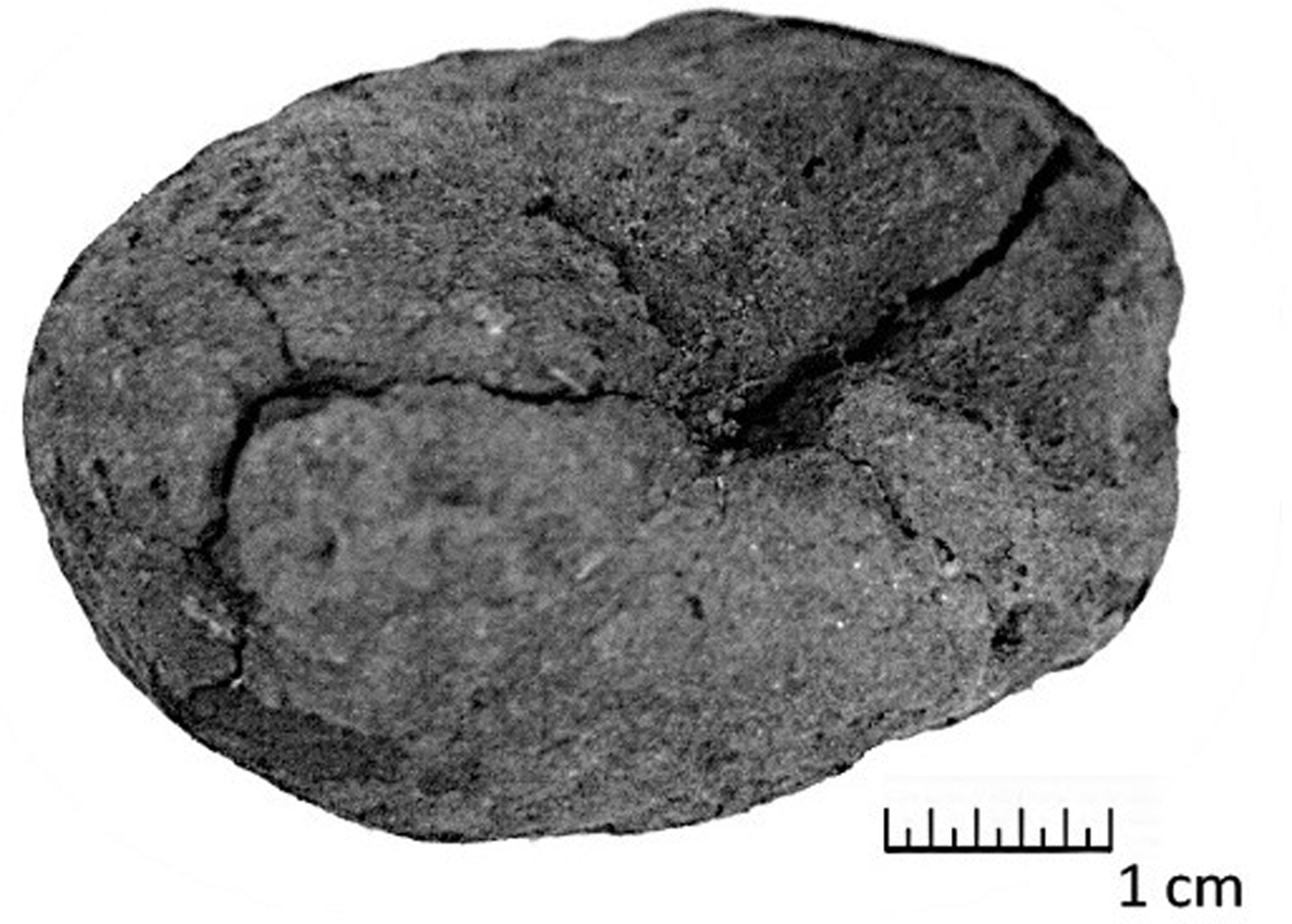
As previously mentioned, during excavations two caches of carbonized commingled crops including quinoa, kañawa, and tubers were found below house floors. From these caches, 28 charred, almost complete, small potatoes were found. These were identified as potatoes based on their intact periderm and “eyes,” or axillary buds (Figure 5). Based on the presence of these whole potatoes, we can conclude that at least a portion, if not most, of the parenchyma found is from potatoes, indicating these tubers were an important crop plant.
Photo of carbonized archaeological potato depicting the intact periderm and axillary bud.

Wood
There were 1,667 fragments of wood in Ayawiri macrobotanical samples. Today, trees are sparse in the altiplano, and palynological studies from lake sediments indicate that this pattern was well established long before the LIP (Gosling and Williams Reference Gosling and Williams2013; Paduano et al. Reference Paduano, Bush, Baker, Fritz and Seltzer2003). The landscape surrounding Ayawiri is almost completely devoid of native trees except for a few Polylepis sp.—locally referred to as keñua or kewiña—growing on the hillside near the base of the terrace complex.
Additionally, woody shrubs are predominant in the flora of the region and are common on agricultural terrace margins, on steep hillsides near the site, and on the top of the mesa just north of Ayawiri. These shrubs are referred to locally as tholas and include the species Baccharis microphylla Kunth and Tetraglochin cristatum (Britton) Rothm (Bruno Reference Bruno2008; Wright et al. Reference Wright, Hastorf, Lennstrom and Kolata2003). Because of the scarcity of trees in the altiplano, woody shrubs were likely used as a complementary fuel source to dung in prehistory throughout the region (Bruno Reference Bruno2008). Browman (Reference Browman1989) notes that the roots of tholas are occasionally consumed as a famine food, the leaves are used in teas and tonics, and the shrubs have a few medicinal uses. Without contextual data pointing to medicinal use, the recovered woody fragments were likely evidence of woody shrubs burned to fuel fires.
Interpretation
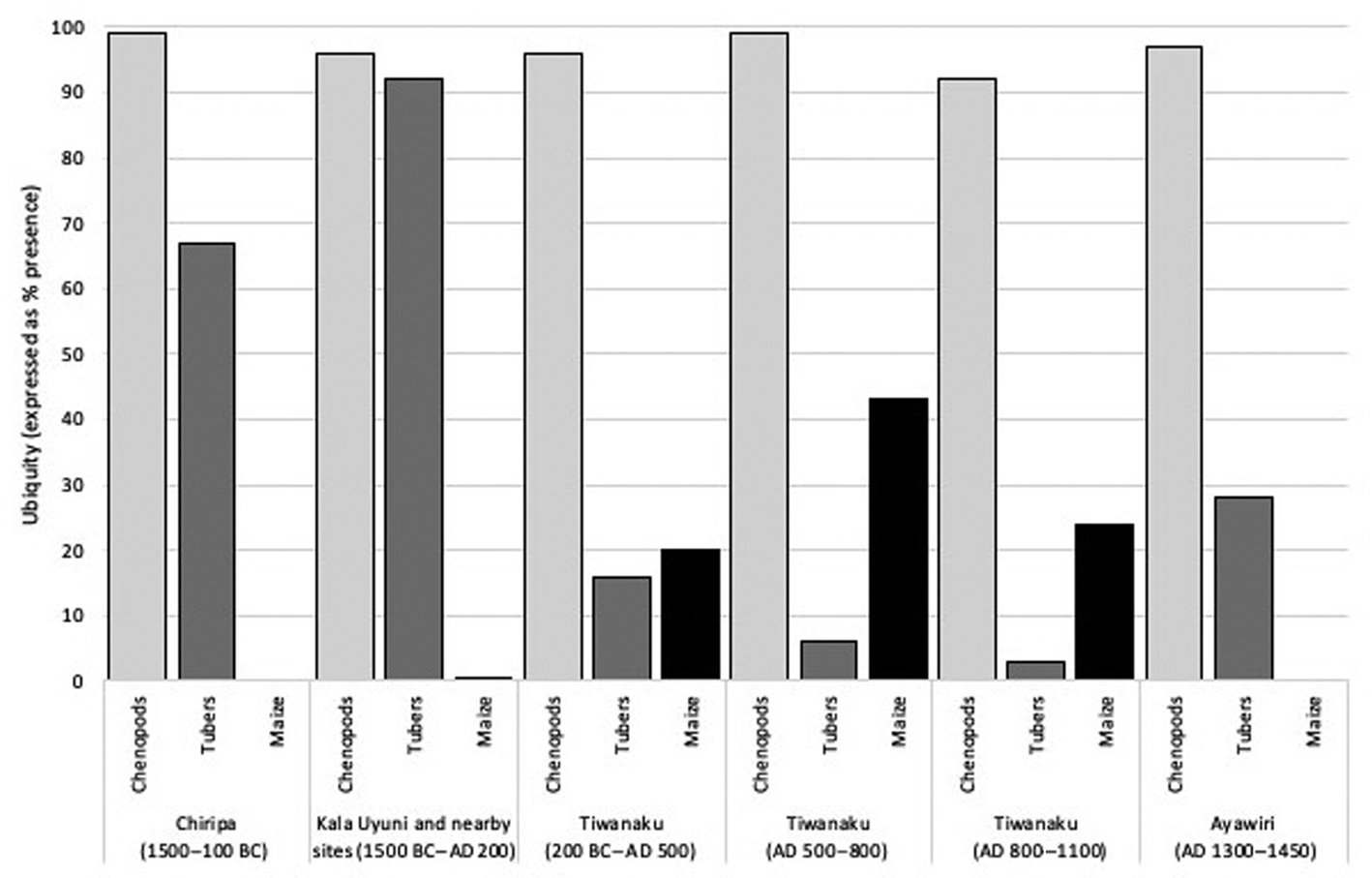
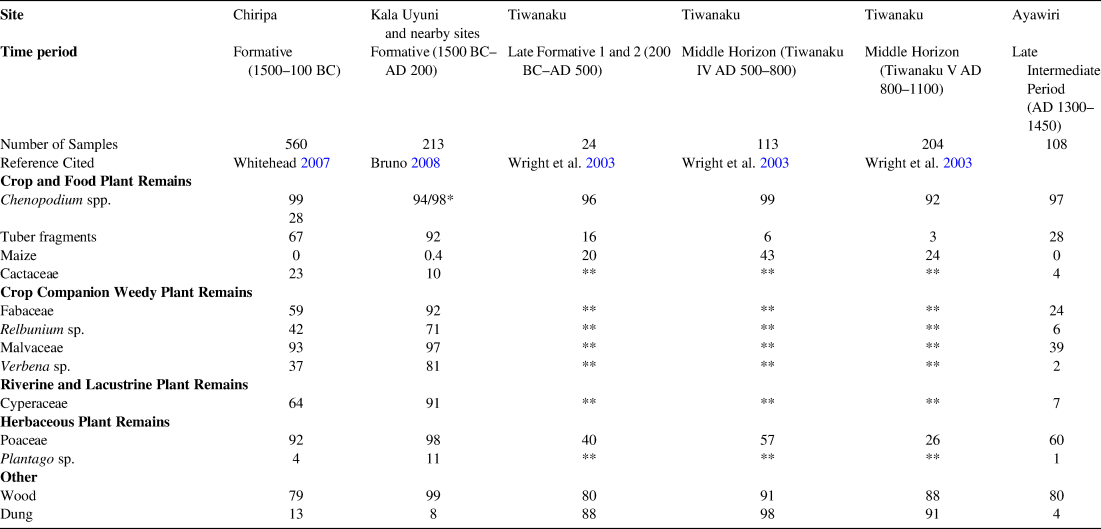
The relocation of settlements from valley bottoms during the Middle Horizon to hilltop fortresses during the LIP meant that Ayawiri residents were inhabiting a new landscape and ecosystem. After this move, residents had regular access to mountaintops and hillsides; however, reaching riverine and lacustrine resources involved quite a hike and risked exposure to raiders. Characterization of the macrobotanical taxa present at Ayawiri compared to other local macrobotanical datasets from earlier time periods illustrates how humans adapted their agricultural strategies to cope with warfare and climate changes of the era (Table 2; Figure 6).
Changes in the ubiquity of food remains through time, derived from archaeological sites located in the Lake Titicaca Basin.

Ubiquity Expressed as Percentage Presence of Plant Remains from Titicaca Basin Sites Corresponding to Different Time Periods.

*Includes Chenopodium quinoa and Chenopodium spp., respectively (morphological analysis indicates very few seeds were weedy species); data from Langlie Reference Langlie2019.
**Authors lumped these taxa into a single weedy category.
Diet
The macrobotanical remains found at Ayawiri indicate that residents primarily consumed chenopod crops, cactus fruits, and tubers, including potatoes. These plants continue to be part of a standard diet in the region today. Before humans even began domesticating these crops, natural selection resulted in hardy drought-tolerant varieties. Drawing on Bruno's (Reference Bruno2014) research, we know that famers and their crops had adapted to these conditions long before the LIP. Chenopods, in particular, have been recovered from archaeological sites throughout the Andes, including Ecuador, the Peruvian coast, central Chile, Argentina, Bolivia, and the Peruvian highlands. The economic importance of chenopods has been documented in the altiplano region as early as the Archaic and Formative periods (1500 BC–AD 500; Bruno Reference Bruno, Zeder, Bradley, Emshwiller and Smith2006; Bruno and Whitehead Reference Bruno and Whitehead2003; Eisentraut Reference Eisentraut1998; Langlie et al. Reference Langlie, Hastorf, Bruno, Bermann, Bonzani and Condarco2011). The importance of chenopod crops in the region only grew through time. At Tiwanaku and other nearby sites dating to the Middle Horizon period, Wright and colleagues (Reference Wright, Hastorf, Lennstrom and Kolata2003) found chenopods in ritual and quotidian contexts, indicating the critical cultural importance of these crops.
Even though politics, social life, and the climate changed dramatically from the Middle Horizon to the LIP, the importance of chenopods did not. Indeed, the percent presence of chenopods at Ayawiri (97%) is even higher than that found at Tiwanaku during the Middle Horizon (93%; Wright et al. Reference Wright, Hastorf, Lennstrom and Kolata2003). The ubiquity and standardized density of chenopods at Ayawiri—found in every compound, in every house structure, and just about every context—indicates that they were essential to the entire community living at Ayawiri. Residents grew and consumed chenopods that are morphologically similar to modern examples of both quinoa and the more drought-tolerant kañawa (see Langlie Reference Langlie2019).
Chenopods in the diet were complemented by potatoes and probably other tubers. Although parenchyma fragments were less common than chenopods in Ayawiri samples, these data do not provide a good indicator of the relative importance of tuber crops. Parenchyma fragments, thought to be tubers, have been found in from 3% (Wright et al. Reference Wright, Hastorf, Lennstrom and Kolata2003) to 96% of samples (Bruno Reference Bruno2008) from other nearby sites dating to earlier time periods. This variability more clearly illustrates the differential preservation of tubers than it does any quantifiable difference in tuber use.
Exceptionally preserved charred potato remains, like those that were found in the caches at Ayawiri, are a rare occurrence in the archaeological record. These remains may be evidence of charred stores of freeze-dried potatoes, called chuño. Freeze-dried potatoes can be stored for up to five years (D'Altroy Reference D'Altroy2002) and then reconstituted in soups and stews, retaining much of their caloric and nutritional benefits. Freeze-dried potatoes burn and are preserved archaeologically the same way as seeds. At the Formative period site of Chiripa, charred quinoa and chuño were found in ceremonial structures atop the mound there, along with ritual paraphernalia (Bruno and Whitehead Reference Bruno and Whitehead2003; Hastorf Reference Hastorf2017:16; Hastorf et al. Reference Hastorf, Steadman, Moore, Dean, Whitedead, Killackey, Fontenla, Machicado, Anthony, Bare and Bruno2008). Caches of quinoa found at other sites in the southern basin dating to the Formative period have also been interpreted as evidence of hearths, seed saving, or discard of unwanted weedy seeds (Bruno Reference Bruno2008:283, 488–489). The context of these caches below house floors could indicate that they were burnt storage pits. It would not be surprising that Ayawiri residents would be storing grains and potatoes in their homes. Given that nothing around the pits was burned, it is likely that the firing that took place was done as targeted and isolated burning events. Alternatively, these caches could be food offerings made before the structure was built. In this case, these findings could point to the ritual importance of quinoa and potatoes during the LIP.
Vitamin-rich leafy greens would have been available to supplement a grain-and-tuber diet. Chenopod plants are quelites that have spicy edible leaves similar in flavor and texture to arugula, and Plantago spp. can produce tender young edible leaves that can be eaten raw or added to stews. Leaves quickly disintegrate in the archaeological record; in leafy vegetable form, seeds would not regularly be included in cooking. Although these greens would have been available to residents at Ayawiri based on seeds recovered, it is unlikely that there would be an archaeobotanical trace of leafy greens due to issues of preservation.
Several crop plants were less ubiquitous in the Ayawiri assemblage compared to earlier time periods in the region. Cactus fruits, in particular, have been consumed by humans for approximately 8,000–10,000 years in the central Andes (Browman Reference Browman1989); they have been found by every archaeobotanical research project in the altiplano, indicating that humans living in the region have been consuming and using this plant since the Archaic period (Browman Reference Browman1989; Bruno Reference Bruno2008; Eisentraut Reference Eisentraut1998; Whitehead Reference Whitehead2007; Wright et al. Reference Wright, Hastorf, Lennstrom and Kolata2003). Nevertheless, differences in density and ubiquity between assemblages point to differential use or availability through time. With the intensive construction of terrace fields on the hillslopes surrounding Ayawiri for annual crop production (Langlie Reference Langlie2016, Reference Langlie2018), perennial cactus plants may have been eliminated, subsequently decreasing the availability of cactus fruits. Alternatively, the low density of cactus seeds could indicate a change in food choice or availability caused by a change in climate over time.
The crop notably missing from the Ayawiri assemblage is maize. Today, a maize variety adapted to the harsh altiplano environment is grown in small amounts near lake shores, where the microclimate of the littoral ecotopes protects the lowland crop from nighttime frosts. Generally, maize does not readily grow in the region because of persistent nighttime frosts and high elevation. Nonetheless, maize has long been valued in the altiplano. Logan and colleagues (Reference Logan, Hastorf and Pearsall2012) found microbotanical remains in ritual ceremonial contexts that date back to the Middle Formative period (800–250 BC) on the shores of the southern Lake Titicaca Basin at the site of Chiripa. Bruno (Reference Bruno2008) identified a few morphologically nonlocal charred maize kernels from secure contexts at Kala Uyuni, a Formative period site on the southern shores of Lake Titicaca. During the Middle Horizon (AD 500–1100) large quantities of imported maize from the eastern and western slopes of the Andes were a cornerstone of the local diet for residents at Tiwanaku (Hastorf et al. Reference Hastorf, Whitehead, Bruno, Wright, Staller, Tykot and Benz2006), where researchers found macrobotanical corn remains to be the second most ubiquitous crop type recovered (Wright et al. Reference Wright, Hastorf, Lennstrom and Kolata2003). Maize cupules, glumes, and kernels have been found in elite, commoner, domestic, and sacred architectural spaces at Tiwanaku. Drunk as chicha beer, maize also served as a quotidian and ritually important beverage in the past and today in the Andes. Whether drunk or consumed in soups or other recipes, maize has been an integral part of altiplano culture since the Formative period and continues to be important in the region today.
Based on the long-standing, prized use of maize, it would not have been a surprise to find that both its substantive and symbolical value endured during the LIP. Its complete absence at Ayawiri therefore points to a transformation of maize's importance and potentially a shift in sacred and profane plant use during the LIP. Perhaps trade networks broke down due to the fear of enemy attack, eliminating access to maize. Perhaps exotic perishable goods were no longer prized or valued during the LIP, and the absence of maize signals a transformation in culture and symbolism. Alternatively, the absence of maize at Ayawiri could be a result of both of these causes.
Utilitarian Plant Usage
Cyperaceae also decreased in importance during the LIP at Ayawiri based on the low ubiquity of seeds. Browman (Reference Browman1989:151) reports that at the Formative period site Chiripa in the southern Lake Titicaca Basin he found totora impressions in daub, and that Kidder and Bennet found totora thatch in the earliest levels at the site. Twelve seeds are an unusually small quantity of Cyperaceae in an archaeobotanical assemblage in the region. At other earlier sites, Cyperaceae seeds were found in up to 91% of the samples. An accidental house fire would have preserved any seeds attached to the inflorescence. Notably, it is at least an hour hike today to the nearest extant stands of totora in the valley below. Due to its limited local availability, perhaps Ayawiri residents were using it less for construction material than were residents living near littoral ecotopes where these plants thrive. Alternatively, if Cyperaceae seeds were burned in dung as the product of camelid forage food in cooking and heating fires, as is common today (Hastorf and Wright Reference Hastorf and Wright1998), then camelids had less access to wetland ecotopes during the LIP.
The lower incidence of Relbunium sp. seeds compared to other time periods in the region is possibly attributed to changes in llama grazing patterns—given that this genus is a preferred camelid forage food (Hastorf and Wright Reference Hastorf and Wright1998)—thereby resulting in a lower inclusion in dung burned for fuel. Alternatively, if Relbunium sp. plants were used as a textile red dye by Ayawiri residents, then the low density and ubiquity of this plant indicate it was less important during the LIP than previously, when higher ubiquities were reported. Numerous spindle whorls were found discarded on house floors (Arkush Reference Arkush2018; Arkush and Eyzaguirre Reference Arkush and Eyzaguirre2012, Reference Arkush and Eyzaguirre2013), indicating that residents were producing fiber within the residential area of the fort. Perhaps they substituted cochineal, a beetle commonly used to produce red colors, for relbunium dye during the LIP. Or perhaps, weavers produced fewer luxury textiles during the LIP due to the concerns of war and focused instead on making undyed quotidian pieces.
Weeds
There is a general decrease in the ubiquity of weedy seed plants at Ayawiri. There are two possible explanations: (1) residents might have intensively weeded their fields or (2) camelids might have been grazed in fields or foddered on crops more so during the LIP than in earlier time periods. Bruno and Whitehead (Reference Bruno and Whitehead2003) noted a decrease in the incidence of crop-companion weeds throughout the Formative period in the central altiplano. There were very few weedy quinoa negra-type specimens in samples that contained upward of a million quinoa seeds (Langlie Reference Langlie2019). These findings corroborate the possibility that Ayawiri farmers were intensively weeding their fields.
Because animal dung, specifically camelid dung, is used for fuel in the Andes, analysis of small weedy species sheds light on grazing behaviors (Bruno and Hastorf Reference Bruno, Hastorf, Carpiles and Tripcevich2016; Langlie and Arkush Reference Langlie, Arkush, VanDerwarker and Wilson2016; Miller and Marston Reference Miller and Marston2012). The copious amounts of chenopods found in just about every sample and in every context, combined with a decrease in the abundance and ubiquity of weedy species in the LIP, indicates that camelids were largely grazed or foddered in agricultural fields. Research has demonstrated that, during times of war, farmers intensify agriculture adjacent to areas of settlement nucleation and they abandon fields near contested frontiers to reduce their chances of being attacked or having their fields raided (Netting Reference Netting1973, Reference Netting1974). As a part of this practice, farmers may have been intensively weeding their fields to decrease plant competition and increase space for crops. Subsequently, when farmers processed crops for consumption, there would be less weedy seeds mixed in with foodstuffs.
Conclusions
Researchers have speculated that the Medieval Climate Anomaly exacerbated the difficulties of growing crops in the highland Andes during the LIP. In contrast to this supposition, since the advent of agriculture in the region farmers have developed and implemented an array of strategies to overcome environmental and climatic hardships. Bruno (Reference Bruno2014) documented farmers in the southern Lake Titicaca Basin practicing soil manipulation, management of soil quality, diversity of production, crop protection, and possibly water manipulation during the Formative period and then today. All of these strategies are aimed at increasing and ensuring crop yields from year to year. Furthermore, during the Formative period in the southern Lake Titicaca Basin, there were periods of drought; nonetheless, “farmers and herders persisted and even expanded at these moments” (Bruno Reference Bruno2014:141). This speaks to the time-tested ability of farmers to readily adapt to different situations.
At Ayawiri, the copious amounts of locally grown crops found in just about every context indicate that Colla farmers were productive. After all, it was in this harsh highland environment where these crops, including potatoes and quinoa, were originally domesticated. Farmers had also formed contingent plans to cope with interannual food shortages, such as storing quinoa and chuño for multiple years and practicing both plant agriculture and animal husbandry, so they could substitute one for the other in lean years. Although Ayawiri farmers surely endured hardships from time to time, the copious amounts of crop remains indicate that residents were, at least for a time during the LIP, successful famers. These resilient agricultural strategies speak to the resourcefulness and intelligence of farmers as active decision makers.
The inclusion of local foodstuffs in subfloor house offerings indicates that quinoa and potatoes may have held ritual importance during the LIP, whereas maize fell from favor. In comparison to the Formative period, these findings also point to a decrease in the number of food crops and in the ubiquity of all plant taxa during the LIP. Unfortunately, a comparison to the Middle Horizon is more difficult to obtain because researchers lumped weedy taxa into a single category for that time period. Archaeologists studying warfare in other parts of the world have documented a similar decline in the number of plants used associated with decreased access to fields and small ecotopes where particular plants were gathered (Kuckelman Reference Kuckelman, VanDerwarker and Wilson2016; Kurin Reference Kurin, VanDerwarker and Wilson2016; Milner Reference Milner1999, Reference Milner, Chachon and Mendoza2007; VanDerwarker and Wilson Reference VanDerwarker, Wilson, VanDerwarker and Wilson2016). Several of these researchers have also documented an associated decrease in overall human health (Kuckelman Reference Kuckelman, VanDerwarker and Wilson2016; Kurin Reference Kurin, VanDerwarker and Wilson2016; Tung et al. Reference Tung, Miller, DeSantis, Sharp, Kelly, VanDerwarker and Wilson2016) and declining nutrition (Kuckelman Reference Kuckelman, VanDerwarker and Wilson2016; Kurin Reference Kurin, VanDerwarker and Wilson2016).
But when considering this particular case of warfare, a decrease in the diversity of food plants should not necessarily correlate with a decline in general human health. Importantly, quinoa is one of the only crops in the world that provides all essential amino acids, and it is exceptionally high in protein compared to most grains (Repo-Carrasco et al. Reference Repo-Carrasco, Espinoza and Jacobsen2003; Vega-Gálvez et al. Reference Vega-Gálvez, Miranda, Vergara, Uribe, Puente and Martínez2010). Potatoes contain high amounts of carbohydrates required for day-to-day energy expenditure and important minerals such as iron and vitamins B and C (Kolasa Reference Kolasa1993). Based on this nutritional profile, there is no expectation that health would have been poor for the Ayawiri Colla, unless there were interannual food shortages. Bioarcheological analysis of human remains from the site is ongoing.
The low absolute quantity and low incidence of weedy seeds points to two, possibly interrelated, interpretations of farming practice at Ayawiri. First, farmers may have been intensively weeding their fields. Analysis of landscape use indicates a general intensification of agricultural practice in the land around the site during the LIP (see Langlie Reference Langlie2018; Langlie and Arkush Reference Langlie, Arkush, VanDerwarker and Wilson2016). Meticulously weeding fields would have ensured that crop plants were not outcompeted by weeds, thus increasing food security for those living at Ayawiri. A second explanation, which does not necessarily exclude the first one, is that camelids were grazed in fields or foddered on stored crop plants. Grazing camelids in fields or on crops near the site would have reduced risk for those living at Ayawiri (Langlie Reference Langlie2016; Langlie and Arkush Reference Langlie, Arkush, VanDerwarker and Wilson2016).
Although other researchers have pointed out that an agropastoral lifeway is flexible and resilient to interannual weather variability (for example, Browman Reference Browman1987), these paleoethnobotanical findings show that Andean agropastoral practices are also a durable subsistence strategy during times of war and climate change. Further studies are needed to understand the geographic and temporal dimensions of LIP agriculture. Rather than looking only at climate proxies and speculating on agriculture practice, it is important to look at how farmers adapted in the past. Farmers, after all, are intelligent and resourceful decision makers. Indeed, Andean agropastoral strategies have survived millennia. The landscape around Ayawiri is still being sown with quinoa and potatoes today.
Acknowledgments
I thank Elizabeth Arkush for the opportunity to be a part of Proyecto Machu Llaqta. Thank you to my colleagues and collaborators who have provided insights and inspiration for this research over the years; they include Gayle Fritz, David Browman, Christine Hastorf, Maria Bruno, Matthew Velasco, and David Mixter. I would also like to thank three anonymous reviewers for their feedback that improved the final product. Funding for mapping and excavations at Ayawiri came principally from a National Science Foundation grant (BCS-0849094/BCS-1101148) awarded to Arkush, with additional support from the Center for Latin American Studies at the University of Pittsburgh. Botanical analysis was supported by a National Science Foundation, Doctoral Dissertation Improvement Grant 1305140, and Washington University in Saint Louis Graduate School. Thank you to the Ministerio de Cultura in Peru for permitting the work at Ayawiri. I am also grateful for the friendly assistance provided by the community of Chila, the community of Tiquillaca, and many other colleagues who aided in the field. All errors are my own.
Data Availability Statement
Original samples are currently being curated in the Laboratory of Ancient Food and Farming at Binghamton University by the author. All data provided are in the results section of this article. Images of identified plant remains can be found in the supplemental materials.
Supplemental Material
For supplementary material accompanying this article, visit https://doi.org/10.1017/laq.2020.28.
Supplemental Figure 1. SEM image of archaeological Brassicaceae seed.
Supplemental Figure 2. SEM images of archaeological Cactaceae seed (left) and Opuntia sp. seed (right).
Supplemental Figure 3. SEM image of archaeological Cyperaceae seed Type #1(left) and Type #2 (right).
Supplemental Figure 4. SEM image of archaeological Fabaceae seed.
Supplemental Figure 5. SEM image of archaeological Malvaceae seed Type #1.
Supplemental Figure 6. SEM Image of Poaceae seed Type #1 (right) and Type #2 (left).
Supplemental Figure 7. SEM image of archaeological Poaceae seed Type #3 (left) and Type #4 (right).
Supplemental Figure 8. SEM image of fragmented archaeological Poaceae seed Type #5 (left) and Piptochaetium sp. seed (right).
Supplemental Figure 9. SEM of archaeological Verbena sp. seed dorsal side (left) and ventral side (right).
Supplemental Figure 10. SEM image of charred archaeological parenchyma.