


1. INTRODUCTION
The relationship between child mortality and fertility lies at the heart of demographic transition theories. A conventional view of the demographic transition is that fertility is likely to follow the decline in childhood mortality. In sub-Saharan Africa (SSA), child mortality shows a downward trend from the 1950s, yet net fertility rates remain particularly high [Bongaarts and Casterline (Reference Bongaarts and Casterline2013)]. One of the potential explanations for the slow transition is that SSA is still characterized by relatively low levels of child survival [Mason (Reference Mason1997)]. Nevertheless, as described in Mason (Reference Mason1997), fertility decline can occur at many absolute levels of mortality, depending among other things on the complexities of people’s perceptions of mortality decline.Footnote 1 Obviously, other factors than mortality are likely to contribute to the slow fertility transition in SSA. These factors are manifold – economic development, technological progress, nutrition – and interplay with each other. In the economic literature, from a theoretical standpoint, the idea that mortality decline alone is not sufficient to trigger net fertility decline can be found for instance in Doepke (Reference Doepke2005), Boucekkine et al. (Reference Boucekkine, Desbordes and Latzer2009) or in the unified growth theory [e.g., Galor (Reference Galor, Aghion and Durlauf2005)]. More recently, the attention has been directed toward the morbidity burden as one explanation for the slow fertility transition in SSA. Despite declining childhood mortality rates, the incidence of childhood diseases remains very high. The mortality transition in SSA is specific in the sense that morbidity has not declined along with mortality. Incidence of most diseases is much higher than their fatality rate [Aksan (Reference Aksan2014)]. In two recent theoretical contributions, Aksan and Chakraborty (Reference Aksan and Chakraborty2013, Reference Aksan and Chakraborty2014) identify infectious disease morbidity as the source of SSA’s sluggish demographic transition.
Additional empirical analyses of the child mortality–fertility relationship are needed in order to better understand contemporary demographic patterns in SSA. From a theoretical point of view, the effect of child mortality on fertility can be two-fold. The insurance effect (also known as the hoarding motive, the precautionary motive, or the child survival hypothesis) prevails when households anticipate that not all children will survive to adulthood. In an adverse epidemiological environment, households would have additional children in order to insure themselves against potential future losses and ensure a sufficiently large family size. The replacement effect is at work when households have an additional child replacing a dead sibling, which involves a sequential process. The replacement effect is likely to have two components, behavioral (a parental decision) and biological.Footnote 2 From an economic theory standpoint, the replacement effect, through its behavioral component, can be linked to the concept of adaptive expectations, while the insurance effect can be linked to the concept of rational expectations. Indeed, in the former, only part of the information is taken into account by households, while in the latter all available information is processed. Given the theoretical considerations underlying these two distinct effects, I argue that the replacement effect is related to individual child mortality experiences, whereas the insurance effect is related to mortality and morbidity at the community level.
The present paper uses longitudinal micro data from a Senegalese rural community and for the period 1984–2011 to analyze the effects of childhood mortality and morbidity on the fertility decision-making process. More precisely, I attempt to identify the effect of individual child mortality, and also that of community child mortality and morbidity attributable to malaria, on subsequent fertility choices. For that purpose, I estimate a series of non-linear dynamic panel data models of fertility behavior, allowing for state dependence and unobserved heterogeneity, and including the determinants of fertility as identified in the demographic and economic literature. This study attempts to capture both replacement and insurance effects of child mortality on fertility, and to assess the relative importance of unobserved heterogeneity and state dependence in explaining persistence in fertility decisions. The influence on fertility of other covariates than child mortality, for instance that of seasonal migrations, is also discussed. This paper contributes to the more general literature on health and development in Africa, where malaria remains a primary concern [Cervellati et al. (Reference Cervellati, Esposito and Sunde2017); Weil (Reference Weil2017)].
2. PREVIOUS LITERATURE
A large body of evidence suggests that fertility and child mortality are inextricably linked [Montgomery and Cohen (Reference Montgomery and Cohen1998)]. The relationship between child mortality and fertility lies at the heart of demographic transition theories, and the positive association between the two variables has been extensively documented.Footnote 3 Some of these studies focus on the short-term aspect of the child mortality–fertility relationship, and more specifically on the replacement effect. A common finding is that the replacement effect is always strictly smaller than unity, implying that a replacement strategy cannot be fully realized. Among studies providing analyses of the child-replacement hypothesis in low-income settings, only a few are able to properly identify the effect from mortality to subsequent fertility. Testing the effect of individual child mortality on subsequent fertility decisions (i.e., the replacement effect), for which a sequential process is involved, requires the use of duration models or dynamic panel data models of individual fertility.Footnote 4 Based on a hazard regression model, Hossain et al. (Reference Hossain, Phillips and LeGrand2007) analyze the sequential relationship between childhood mortality and fertility among rural Bangladeshi mothers observed over the period 1982–1993. The authors find that child mortality reduces the time to subsequent conception, providing consistent support to the child-replacement hypothesis. They further show that the replacement effect interacts with the sex of the dead child, which support the hypothesis of volitional replacement. Child-replacement effects are also shown to increase as the demographic transition progresses. Also, using a hazard model, Lindstrom and Kiros (Reference Lindstrom and Kiros2007) provide evidence for the replacement effect in Ethiopia, and show that this effect mainly occurs in the case of the most recent born child, and is limited for higher order children. Finally, Bhalotra and Soest (Reference Bhalotra and van Soest2008) find evidence of replacement behavior in India. With dynamic panel data models, the authors show that 37 in 100 children who die during the neonatal period are replaced by new births.
To date, very few micro-level fertility studies include both individual and aggregate measures of child mortality. Using Vietnamese data and a static count data model, Nguyen-Dinh (Reference Nguyen-Dinh1997) documents a small and positive effect of community-level child mortality on fertility. Analyzing marital fertility trends in the Netherlands over the period 1860–1939 with a discrete-time event history model, Schellekens and van Poppel (Reference Schellekens and van Poppel2012) show that national-level childhood mortality contributed to fertility decline. The authors argue that this pattern is mainly due to an insurance effect.
From a theoretical point of view, reproductive behaviors are not only affected by individual mortality experiences (i.e., the replacement effect), but also by the anticipation that not all children will survive to adulthood (i.e., the insurance effect). Such expectations are likely to be driven by changes in the epidemiological context, which include the risk of dying from infectious diseases. The central role of uncertainty about child survival in the demographic transition has been highlighted in several theoretical works. In the first attempt to incorporate uncertainty in a model of endogenous fertility choice, Sah (Reference Sah1991) predicts a positive impact of child mortality on fertility. Also, allowing for a stochastic infant mortality rate, Kalemli-Ozcan (Reference Kalemli-Ozcan2003; Reference Kalemli-Ozcan2008) shows that the uncertainty about child survival gives rise to a precautionary demand for children. More recently, Aksan and Chakraborty (Reference Aksan and Chakraborty2013) identify the role of the exposure to infectious disease, which has a morbidity effect even if the fatality rate is low, as a source of precautionary demand for children. Surprisingly, however, the empirical investigation of the child morbidity channel in fertility studies is very recent. Employing country-level data from SSA and disease-specific measures of morbidity, Aksan and Chakraborty (Reference Aksan and Chakraborty2013) provide evidence for the precautionary motive in a static count data model of fertility. Disaggregating child mortality into incidence and case fatality rates, the authors show that declines in child mortality reduce total fertility less where mortality and/or morbidity are high. Aksan (Reference Aksan2014) also employs a count data model of fertility, but uses individual data from the nationally representative Demographic and Health Surveys. She reaches the same result as Aksan and Chakraborty (Reference Aksan and Chakraborty2013), that is, fertility declines with community mortality only weakly at high levels of mortality and/or morbidity. The two aforementioned studies conclude that SSA’s slow demographic transition is due to the combination of continued uncertainty about child survival and poor expected health for those surviving. To my knowledge, the present paper is the first attempt to analyze the effect of community childhood morbidity on individual fertility choices within a dynamic framework, which allows to estimate the impact of mortality and morbidity on subsequent fertility.
3. DATA: THE NIAKHAR HEALTH AND DEMOGRAPHIC SURVEILLANCE SYSTEM
The rural community of Niakhar is located in the Fatick region of Senegal, 135-km east from Dakar. A Health and Demographic Surveillance System (HDSS) has been set up in eight villages since 1962, and has been extended to 22 more villages in 1983.Footnote 5 Since 1983, the geographical boundaries of the study zone comprehends a total area of 203 km2 and encompasses 30 villages. The estimated population was 43,000 in January 2012, and the Serer ethnic group comprises 97% of the population. Villages are subdivided into hamlets, which are themselves subdivided into compounds. Compounds are constituted of one or more “kitchens” (households) which bring together members of the extended patrilineal family. The average household size is approximately 13 persons. Agriculture is the main source of livelihood. Niakhar is Africa’s oldest and still operational statistical observatory, and world’s second-oldest (after Matlab, Bangladesh). Further information on the study area can be found in Delaunay et al. (Reference Delaunay, Marra, Levi and Etard2002) and Delaunay et al. (Reference Delaunay, Douillot, Diallo, Dione, Trape, Medianikov, Raoult and Sokhna2013). This is a fairly representative rural West African setting, and the study population is relatively homogeneous in terms of socio-economic characteristics. There are large variations between households regarding both fertility and child mortality rates. Hence, it is a convenient setting to analyze the relationship between these two variables.
At the onset of the HDSS, major life events such as birth histories were collected retrospectively among the individual residents of the area to serve as a baseline for the follow-up. The HDSS consists in conducting quarterly exhaustive surveys within the study area. Thoroughly reliable data on all demographic events are systematically recorded. These events include pregnancies, deaths, marriages, migrations (inside or outside the study area), as well as changes in social characteristics. Such events are also being retrospectively and then systematically collected among the immigrants as they enter the study area. Accounting of pregnancies is practically comprehensive as a result of the quarterly follow-up. Although likely limited, the possibility of under-reporting of pregnancies is still possible, especially those ending in induced abortion. Data on mortality events are reported via verbal autopsy, and causes of death follow World Health Organization’s ICD-9 classification.Footnote 6 Altogether, this results in an exhaustive and systematic monitoring of the study population.
Alongside the systematic collection of data, several cross-sectional surveys were conducted for specific purposes. This study uses two standardized surveys conducted in 1998 and 2003 to derive economic characteristics of households. In this survey, non-monetary data on living and economic conditions were collected from all households, which allows me to estimate measures of multidimensional poverty. More specifically, I estimate an index of deprivation in living standards. The dimensions taken into consideration are access to electricity, type of sanitation facilities, source of drinking water, type of cooking fuel, possession of certain assets, and flooring material of housing. This index has been calculated following the methodology outlined in Alkire and Santos (Reference Al-Qudsi2010), which is one of the international standards for the measurement of multidimensional poverty with non-monetary data.Footnote 7
The long time period of data collection allows me to conduct a longitudinal analysis of individual fertility decisions. The final sample comprises 3,435 women born between 1969 and 1986. Each woman is observed over 11 consecutive years, from her 15th to her 25th birthday.Footnote 8 Hence, women born in 1969 are observed from 1984 to 1994, and women born in 1986 are observed from 2001 to 2011. The data thus covers the period 1984–2011, for a total of 18 birth-year cohorts, resulting in a sample of 37,785 individual-year observations. This sample selection allows to compare women from different cohorts, and more specifically to test whether the replacement effect of child mortality on fertility changes for women of different generations. In the analysis, I distinguish between three different birth cohorts of 6-year intervals (1969–1974 for the earliest age group, and 1981–1986 for the latest).
The explanatory variables include the individual-level determinants of fertility in low-income settings as identified in the demographic and economic literature.Footnote 9 Descriptive statistics of some variables used in the analyses are given in Table 1. The mean numbers of children ever born and the mean number of children deceased are, respectively, 1.95 and 0.22 per woman aged 15–25.Footnote 10 These figures are declining for more recent cohorts, as shown in Figure 1. The child mortality rate is 111 per 1,000 live births to women aged 15–25. Figure 2 shows that child mortality rates decreased sharply during the period of observation (1984–2011), with the exception of a mortality peak that occurred in 1998–1999 due to cholera and meningitis outbreaks [Delaunay et al. (Reference Delaunay, Etard, Préziosi, Marra and Simondon2001)]. Each woman has temporarily migrated more than twice on average, and only 16% of the sample has never migrated during the period of study. About two-thirds of the seasonal migrations are made for economic reasons, for the most part to Dakar, the closest major urban center.Footnote 11 Detailed definitions of the variables used are given in Table 2. 5% of the women were married before age 15. Polygyny is quite common, with approximately 17% of the sample living in a polygynous household. The main purpose of establishing a polygynous household in the area of study is to facilitate a more efficient household production [Mondain et al. (Reference Mondain, LeGrand and Delaunay2004)]. Islam and Christianity are the main religions, representing respectively 77% and 22% of the sample. The occupation variable has been defined as the occupation held the longest by a woman during the observation period. Formal education is very low, with more than three-fourths of the sample having never completed primary school. As the time unit is taken to be a year, the individual longitudinal characteristics are included as dummy variables for each woman-year of the panel. These dummy variables take the value of one if an event has occurred in the year considered, and zero otherwise.
Descriptive statistics

Mean number of children ever born and mean number of children deceased to women aged 15 to 25 (by women’s birth cohort).

Mean child mortality (per 1,000 live births to women aged 15 to 25) over the observation period.

Definitions of the dependent and independent variables

Measures of child mortality and morbidity at the community level are included in further analyses. More specifically, I use annual data on malaria mortality and morbidity among the child population of the study area, which are likely to capture changes in the epidemiological context. These analyses are based on a smaller sample of 806 individuals since the epidemiological data is only available for the period 1992–2004. I exploit routine data from the health care facilities of the study area. The quality of the epidemiological data has been assessed in Munier et al. (Reference Munier, Diallo, Marra, Cot, Arduin, Ndiaye, Mboup, Gning and Chippaux2009b).Footnote 12 Three different contextual variables are used, expressed in the following forms:
 $$\begin{eqnarray*}
\text{Malaria incidence rate} & =& \frac{\sum \text{Malaria cases}_{t-1}}{\text{Child population (0--5 years)}_{t-1}} \times 1000 \\
\text{Malaria case fatality rate} & =& \frac{\sum \text{Malaria deaths}_{t-1}}{\sum \text{Malaria cases}_{t-1}} \\
\text{Malaria mortality rate} & =& \frac{\sum \text{Malaria deaths}_{t-1}}{\text{Child population (0--5 years)}_{t-1}} \times 1000 \\
& =& \text{Malaria incidence rate} \times \text{Malaria case fatality rate}
\end{eqnarray*}$$
Each of these variables is meant to capture a specific aspect of the epidemiological profile of the population. The incidence rate measures the yearly occurrence of malaria among children, and thus quantifies the risk of developing the disease. The case fatality rate – the proportion of malaria deaths among infected children – is a marker of disease severity. The mortality rate – the number of malaria deaths per 1,000 children per year – is the product of incidence and case fatality and measures the yearly risk of dying from the disease. For the period 1992–2004, on average, 222 malaria cases were reported per 1,000 children per year, among which 4.7% died from the disease, resulting in a mortality rate of about 10 per 1,000 children per year. Figure 3 shows that malaria incidence and case fatality rates exhibit large variations over the observation period, and more importantly, that they do not always move in the same direction. In fact, the correlation between malaria incidence and case fatality is markedly negative (ρ = −0.53, p < 0.001). Not surprisingly, incidence and case fatality are both positively correlated with the mortality rate (ρ = 0.23, p < 0.001, and ρ = 0.67, p < 0.001, respectively). It is worth noticing that, for the time periods during which incidence and case fatality move in opposite directions, incidence always increases with decreasing case fatality, as shown in Figure 3.Footnote 13 This statistical regularity is a common feature of SSA, where, although child mortality has declined substantially, the morbidity burden remains substantial [Aksan (Reference Aksan2014)].
Malaria incidence and case fatality rates over the observation period.

4. ECONOMETRIC METHODOLOGY
One of the main objectives of this paper is to analyze the effect of past child mortality and morbidity on fertility behaviors. Two econometric issues have to be carefully considered. The first is the potential presence of strong state dependence between past and present fertility status. Here, state dependence is presumed to be negative, that is, a birth event in year t − 1 is expected to reduce the birth probability in year t. Second, the correlation of the explanatory variables with the unobserved effects yields inconsistent parameter estimates if unobserved heterogeneity is not properly taken into account. The nature of the research question and the two issues needed to be addressed call for the use of a dynamic non-linear panel data model allowing for state dependence and unobserved heterogeneity. I thus use a dynamic correlated random effects Probit model [Wooldridge (Reference Wooldridge2005)].Footnote 14 This methodology allows me to estimate the impact of mortality on subsequent fertility.
To formalize the discussion, consider the following econometric model of fertility behavior of woman i(i = 1, . . ., n) in year t(t = 1, . . ., T):
 $$\begin{eqnarray}
P(birth_{i t} & =& 1 | birth_{i,t-1}, \ldots , z_{i}, c_{i}), \nonumber\\
& =& \Phi (z_{it} \gamma + \rho birth_{i,t-1} + c_{i}), \nonumber\\
& =& \Phi (\gamma _{1} cm_{i,t-1} + \gamma _{x} x_{i t} + \rho _{1} birth_{i,t-1} + c_{i}),
\end{eqnarray}$$
where Φ is the standard normal cumulative distribution function. The binary dependent variable, birthit , is a birth indicator. A lagged dependent variable (birth i, t − 1) is also included in the model. Notice that t = 1 corresponds to 1985 (2002) and t = T corresponds to 1994 (2011) for women in the first (last) birth-year cohort, that is, women born in 1969 (1986).Footnote 15 Past child mortality (cm i, t − 1) is the main variable of interest in the baseline model. The analysis accounts for the time required for a woman to fall pregnant and then bring the pregnancy to birth, and considers only the deaths in year t − 1 which took place at least 8 months before a birth in year t (if any), to account for premature births and minor misreporting. xit is a vector of other explanatory variables (some of these variables are constant over time). Note that zi = cmi + xi is the row vector of all non-redundant explanatory variables in all time periods, so that cmi is the 1 × T vector of child mortality indicators. This allows for correlation between the unobserved time-invariant individual effect (ci ) and child mortality status in all time periods. State dependence and unobserved heterogeneity are captured by birth i, t − 1 and ci , respectively. The unobserved effect satisfies the following assumption:
 $$\begin{equation}
c_{i} | z_{i} \sim \text{Normal}\big(\alpha _{0} + z_{i}\alpha _{1}, \sigma ^{2}_{a}\big),
\end{equation}$$
so that the distribution of the unobserved effect is conditional on any exogenous explanatory variables. σ a being the conditional standard deviation of ci , it follows that Rho = σ2 a /(1 + σ2 a ) measures the contribution of the unobserved effect in the unexplained variance of the composite error. The dynamic binary response model (equation (1)) is estimated using conditional maximum likelihood. State dependence is captured by including in the model one lag of the dependent variable (birth i, t − 1). Adding more lagged values of the dependent variable would further shorten the observation period of each woman. Yet, it is a strong assumption to consider that current fertility is influenced by the occurrence of a birth in year t − 1 but not in previous years. Perhaps more importantly, current fertility status is likely to be influenced by the number of children previously born alive to a woman, that is, previous parity. Previous parity (at each time period) is thus included in the model. The model controls for women’s age and birth cohort.Footnote 16 The model also includes a linear year trend to capture trends in fertility which may be confounding the results.
An infant death abruptly terminates breastfeeding, thereby truncating the period of postpartum amenorrhea. The mother will therefore become susceptible to pregnancy more rapidly than if the child has survived [Grummer-Strawn et al. (Reference Grummer-Strawn, Stupp, Mei, Montgomery and Cohen1998)]. Even if the household does not intend to engage in any replacement strategy, the interval to the next birth may be nonetheless shortened, particularly in societies where access to modern contraception is limited. From a statistical point of view, biological and volitional effects of child mortality on fertility are thus difficult to disentangle. Attempting to circumvent this problem, further analyses allow the past child mortality status – the main variable of interest – to take on multiple values. For instance, I distinguish between women who did not experience a child death at t − 1, women who lost a male child at t − 1, and women who lost a female child at t − 1. This allows to gain more understanding about the replacement effect and its behavioral component.
A last set of analyses includes community-level measures of malaria morbidity. Although other sources of morbidity are not controlled for, Munier et al. (Reference Munier, Diallo, Marra, Cot, Arduin, Ndiaye, Mboup, Gning and Chippaux2009b) shows that for the observation period, clinical malaria morbidity represented 39% of total morbidity in health facilities, and that malaria and non-malaria morbidity followed similar trends over time. The term community refers to the rural community of Niakhar, in which all the individuals of the sample live. These variables nonetheless exhibit both temporal variations and cross-sectional variations, as the first period of observation (the year of the 15th birthday) is not the same for all individuals in the sample.
The study does not point to an unequivocal evidence of a causal relationship from childhood mortality and morbidity to fertility. The model accounts for time-invariant heterogeneity. Yet, it is assumed that the dynamics are correctly specified, that zi is appropriately strictly exogenous (conditional on ci ) and that the complete conditional density of the unobserved effect conditional on the elements entering equation (2) is correctly specified. The paper also acknowledges the potential presence of time-varying sources of omitted variable bias (for instance, an income shock affecting both child mortality and fertility decisions). With regard to mortality and morbidity attributable to malaria, although changes in the malaria burden are conditioned by climate and ecology [Sachs and Malaney (Reference Sachs and Malaney2002); Kiszewski et al. (Reference Kiszewski, Mellinger, Spielman, Malaney, Sachs and Sachs2004); McCord et al. (Reference McCord, Conley and Sachs2010)], malaria transmission is not solely driven by climatic and ecological factors. Malaria case fatality rate is not exogenous to human intervention, although the decrease in case fatality in Niakhar is likely to be largely driven by large-scale curative interventions. Also, note that climate and ecology may affect fertility decisions via other routes than child mortality and morbidity (for instance, through an agricultural shock).
In order to ease the interpretation of parameter estimates, I also calculate average partial effects (APEs), which measure the size of the effect of the independent variables on the probability of birth. A method which allows to identify and estimate APEs even in the presence of unobserved heterogeneity is therefore required. I follow Wooldridge (Reference Wooldridge2005) to compute partial effects on the birth probability, averaged across the population distribution of the unobserved heterogeneity. A consistent estimator of the expected probability of birth with respect to the distribution of ci is
 $$\begin{equation}
N^{-1} \sum _{i=1}^{N} \Phi (z_{t} \hat{\gamma }_a + \hat{\rho }_a birth_{t-1} + \hat{\alpha }_{a0} + z_{i} \hat{\alpha }_{a1}).
\end{equation}$$
Note that the “a” subscript denotes multiplication by
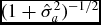 $(1+\hat{\sigma }^{2}_{a})^{-1/2}$
, and that
 $\hat{\gamma }$
,
 $\hat{\rho }$
,
 $\hat{\alpha }_{0}$
,
 $\hat{\alpha }_{1}$
and
 $\hat{\sigma }^{2}_{a}$
are the maximum likelihood estimates. Finally, I compute differences or derivatives of Expression 3 with respect to the elements of (zt, birth
t − 1) to obtain the APEs.
5. RESULTS
5.1. Baseline Model
Maximum likelihood estimates of the baseline model (equation (1)), as well as APEs, are reported in Table 3. Not surprisingly, a negative state dependence effect of lagged fertility status is found, that is, having experienced a birth in the previous year has a strong and significant negative effect on current fertility. The birth probability given that a woman had a birth in the previous year is 19.07 percentage points lower than that of a woman who did not give birth in the previous year. The estimate of the conditional standard deviation of the unobserved effect,
 $\hat{\sigma }_{a}$
, is significant and equals to 1.093. The relative importance of unobserved heterogeneity is assessed by the parameter Rho. Here, 54% of the total variance is due to the unobserved effect.
Dynamic correlated random effects Probit model of fertility behavior

Notes: + p < 0.10, * p < 0.05, ** p < 0.01, *** p < 0.001. Asymptotic standard errors in parentheses. Child mortality indicators (cmi ) and a linear year trend are included but not shown in the table. The significance level of the average partial effects corresponds to the one of the coefficient estimates.
I now turn to the analysis of the main variable of interest, the lagged child mortality status. I find that child mortality in the previous year exerts a substantial positive influence on the probability of birth in year t. The APE allows me to assess the magnitude of this effect. The likelihood of having a birth among women who have lost a child in the previous year is 13.26 percentage points higher than for women who have not lost a child in the previous year. Such highly significant positive effect is nonetheless insufficient to compensate for lost lives.
The other time-varying explanatory variables are past migration status, age, and previous parity. The model only includes temporary migrations in year t − 1 and which took place at least 8 months before the birth in year t. The parameter estimate on lagged migration status is negative and significant. More precisely, women who have migrated temporarily in the previous year are 3.80 percentage points less likely to have a birth the next year compared to women who stayed in the local area in t − 1. The coefficient estimate on the age variable is positive and significant, with each additional year increasing the probability of birth by 5.78 percentage points. Previous parity has the expected effect on current fertility, that is, the probability of birth decreases as the number of children previously born alive to a woman increases.
In order to control for observed heterogeneity and to increase explanatory power, a set of time-constant explanatory variables is included in the model. It is worth noticing that the causal effects on the birth probability of time-invariant regressors cannot be identified without assuming that they are uncorrelated with the unobserved effect. I should therefore interpret these results in terms of association. Women’s formal education is negatively associated with the likelihood of childbirth. Women living in the most deprived households, that is, deprived in each and every dimension of the calculated index, are significantly more likely to have births. Religion is found to have no significant influence on fertility decision-making. Not surprisingly, being married before the age of 15 is strongly associated with a higher likelihood of childbirth. Belonging to a polygynous household is found to be positively associated with the probability of birth. In Niakhar, the main purpose of establishing a polygynous household is to facilitate a more efficient household production [Mondain et al. (Reference Mondain, LeGrand and Delaunay2004)]. My finding could be interpreted in the same vein: having a large family would increase the value of household production. I also examine the potential influence of women’s occupation on fertility behaviors, and find that occupied women have a lower likelihood of childbirth than housewives. The women’s birth cohort variable and the linear year trend have the expected negative sign but are not significant.
To show that the external validity of the results is not limited by the sample, in which women are only observed from 15 to 25 years of age, I use three other panels to re-estimate the baseline model (Model 1). These three panels exhibit longer observation periods (namely from 15 to 30, 35 and 42 years of age, respectively), but less cross-sectional units (namely 1,823, 882, and 59 women, respectively). The results are presented in Table A1 of the appendix. The results of the three regressions remain qualitatively similar to the baseline model, particularly for the main variables of interest. Due to the small number of individuals in the last sample (women observed from 15 to 42 years of age), coefficients tend to lose significance. Concerning the magnitude of the estimates, it is worth noting that the APE of child mortality in year t − 1 increases from 13.26%-points for the 15–25 sample to 16.43%-points for the 15–30 sample and 18.66%-points for the 15–35 sample, and then decreases to 12.61%-points for the 15–42 sample (which should be treated with extreme caution as it only contains 59 women). Hence, the replacement effect tends to be slightly lower when restricting the analysis to fertility at younger ages. This may be partly due to a cohort effect, as the samples with longer observation periods progressively exclude women from the youngest birth cohorts.
5.2. Further Analyses of the Replacement Effect
To gain more understanding about the replacement effect, I also investigate a series of interactions between child mortality and other variables of interest. These interactions are included in the baseline model, and the maximum likelihood estimates are presented in Table 4. In order to assess the short-term nature of the replacement effect, Model 2 adds to the baseline model an indicator of child mortality at year t − 2. The coefficient on child mortality 2 years ago is not statistically significant, implying that the replacement effect only prevails in the subsequent year following a child’s death. This can also be related to biological factors, as a mother becomes susceptible to pregnancy more rapidly after the death of a child who was being breastfed.
Dynamic correlated random effects Probit model of fertility behavior – Extensions of Model 1

Notes: + p < 0.10, * p < 0.05, ** p < 0.01, *** p < 0.001. Asymptotic standard errors in parentheses. Child mortality indicators (cmi ) and a linear year trend are included but not shown in the table. The significance level of the average partial effects corresponds to the one of the coefficient estimates.
In Model 3, the lagged child mortality status – the main variable of interest – is allowed to take on multiple values. I distinguish between women who did not experience a child death at t − 1 (the reference group), women who lost a male child at t − 1, and women who lost a female child at t − 1. The replacement effect is found to be larger in magnitude for the loss of a male rather than a female child in the previous year, and the difference between the two coefficients is statistically significant (p < 0.10). Hence, the volitional effect interacts with the sex of the dead child, as also observed among rural Bangladeshi women [Hossain et al. (Reference Hossain, Phillips and LeGrand2007)]. Such an illustration of the preference for sons through the replacement effect sheds light on the behavioral mechanism underlying the effect of child mortality on fertility decision-making.
Model 4 allows the past child mortality status to take on several values depending on the mother’s previous parity, the reference category being women who did not experience a child death at t − 1. Results show that the replacement effect declines at higher parity levels. For instance, the replacement effect is significantly greater for the death of a woman’s first child than for a woman of parity two (p < 0.05) or three (p < 0.05).
I then test whether the magnitude of the replacement effect varies with the child’s cause of death. Model 5 distinguishes between deaths from infectious diseases (predominantly due to malaria and intestinal infections) and deaths from other diseases (predominantly neonatal and accidental deaths). I find that the replacement effect, while still positive, is significantly lower for deaths from infectious diseases (p < 0.001). This result may reflect that the exposure to infectious diseases is more closely related to the insurance effect than to the replacement motive. The replacement effect consists in a direct fertility response following the sudden death of a child, which is a sequential process. The insurance effect suggests a different timing of the fertility decision process: In a worsening epidemiological environment, parents would tend to produce more children as an insurance mechanism, but not necessarily subsequent to the actual death of a child.
Models 6 investigates whether maternal education generates a differential in the replacement effect. Here, the past child mortality variable distinguishes between women who did not experience a child death at t − 1 (the reference group), women with no formal schooling who lost a child at t − 1, and formally educated women who lost a child at t − 1. In view of the results, it seems that maternal education does not lead to replacement effects of different magnitudes, since the two coefficients are not statistically different from each other (p = 0.667). In a similar manner, Model 7 questions whether the replacement effect varies according to the mother’s marital status in the household. I find that the replacement behavior of mothers who lost a child in the previous year does not statistically differ depending on whether the mother belongs to a polygynous household (p = 0.376).
I now investigate whether the size of the replacement effect changes over time. For that purpose, Model 8 compares the replacement effect of women from different birth cohorts. The results clearly reveal a downward trend in the size of the replacement effect, which nonetheless remains positive and significant. Mothers from the 1969–1974 cohort who experienced a child death a given year have a higher probability of birth in the next year than mothers from the 1975–1980 cohort (p < 0.10), or than mothers from the 1981–1986 cohort (p < 0.01). Hence, child mortality is likely to have a smaller impact on the subsequent fertility of women from more recent cohorts. The replacement effect has a behavioral and a biological component, and it is not possible to estimate the respective shares of the two components responsible for this downward trend. Two closely related explanations are therefore suggested: (1) a behavioral change of younger generations which may highlight a socio-cultural change, (2) a decrease in the biological component of replacement attributable to the better access of younger generations to contraception (in other terms, not replacing a child can now be done in a more efficient manner).Footnote 17 Both explanations may reflect the slow but ongoing fertility transition in rural Senegal. Such a downward inter-cohort trend has also been documented elsewhere for the case of the insurance effect [Bousmah (Reference Bousmah2017)].
Finally, Model 9 investigates more thoroughly the effect of short-term migrations at year t − 1 on fertility decision-making. I show that, in comparison with women who stayed in the local area the year before, women who have migrated for economic or educational reasons are less likely to have a birth the next year, while no significant difference is found for women who have migrated temporarily for a family motive. In turn, the impact of past seasonal migration on current fertility is proved to be ultimately related to the motive for migration, and not to the absence per se.
5.3. Insurance Effects and the Child Morbidity Channel
The last set of analyses focuses on identifying the potential effects of community-level child mortality and morbidity on subsequent fertility choices. I use annual data on malaria mortality and morbidity among the child population of Niakhar. Here, I test whether contextual child mortality and morbidity affect households’ fertility decisions. I thus favor the use of lagged community characteristics, assuming that it takes time for households to process the information about the changing epidemiological context and to adjust their fertility behavior accordingly. This specification seems more realistic and in line with the theoretical considerations underlying the insurance hypothesis, which is related to a learning process. In order to disentangle mortality and morbidity effects, I include in Model 10 lagged annual measures of both malaria incidence and case fatality. The interaction between incidence and case fatality – the malaria mortality rate – is also included to test whether mortality and morbidity jointly influence the fertility decision-making process. The inclusion of these three variables is all the more important since I showed that mortality and morbidity from malaria do not always move in the same direction. Note that I still control for past individual child mortality experiences. Maximum likelihood estimates and APEs are reported in Table 5. The effects of previous individual child mortality is slightly lower in magnitude than in the baseline model (Model 1). The coefficient estimates on incidence and case fatality are both negative and significant, and the coefficient estimate on their interaction is positive and significant. Given that the interaction term is significant, looking at the main effects of incidence and case fatality is not meaningful. The results reveal that the impact of past malaria incidence on the probability of birth varies depending on the severity of the disease. I provide a graphical analysis in order to ease the interpretation of the results. Figure 4a shows the estimated relationship between past malaria incidence among children and the probability of birth for four representative values of case fatality (including its minimum and maximum observed values). Figure 4b shows the APE of past malaria incidence on the probability of birth given case fatality rates. When the case fatality rate is very low (i.e., its minimum observed value), the effect of past malaria incidence on fertility decisions is almost zero. The effect eventually becomes positive with higher case fatality rates, and increases with the severity of the disease. To sum up, the more malaria is fatal to children who are infected, the more households are likely to produce children in the next period. Finally, the results also suggest that both individual and contextual child mortality positively influence subsequent fertility decisions.
Effect of community morbidity (malaria incidence rate) on fertility given malaria case fatality rate. (a) Predicted probabilities. (b) Average partial effect.

Dynamic correlated random effects Probit model of fertility behavior – Morbidity

Notes: * p < 0.05, ** p < 0.01, *** p < 0.001. Asymptotic standard errors in parentheses. Child mortality indicators (cmi ) and a linear year trend are included but not shown in the table. The significance level of the average partial effects corresponds to the one of the coefficient estimates.
Estimating the effect of community child mortality and morbidity attributable to malaria allows to reveal the existence of an insurance strategy. Although it has been shown that, for the time period considered (1992–2004), clinical malaria morbidity represented 39% of total morbidity in health facilities, and that malaria and non-malaria morbidity likely followed similar trends [Munier et al. (Reference Munier, Diallo, Marra, Cot, Arduin, Ndiaye, Mboup, Gning and Chippaux2009b)], other sources of morbidity are not controlled for due to data availability. Thus, the estimates in Table 5 do not capture the full effect of mortality and morbidity at the community level on fertility decisions. The magnitude of the full insurance effect would likely be larger when controlling for other sources of morbidity. At the same time, the potential endogeneity issues discussed in the methodology section threaten the interpretation of coefficient estimates in terms of exact magnitude. Under these considerations, I have chosen to focus on interpreting the joint patterns of the effects of community mortality and morbidity attributable to malaria on fertility behaviors.
I choose to use contextual mortality and morbidity attributable to malaria since the transmission of this disease has been shown to be mainly driven – although not solely – by exogenous factors, namely climate and ecology [Kiszewski et al. (Reference Kiszewski, Mellinger, Spielman, Malaney, Sachs and Sachs2004)]. In order to confirm my results, Model 11 proposes to use annual rainfall as a proxy for malaria case fatality. Although rainfall is an imperfect proxy for malaria severity, it has been shown that periods of exceptionally high rainfall are usually accompanied by malaria outbreaks with high fatality rates [Kiszewski and Teklehaimanot (Reference Kiszewski and Teklehaimanot2004)]. In Niakhar, for the period 1992–2004, the coefficient of correlation between rainfall and case fatality was 0.26 (p < 0.001), while the one between rainfall and malaria incidence was 0.09 (p < 0.001). Figure 5 shows that the qualitative finding of Model 10 is confirmed: the more severe the disease, the higher the effect of malaria incidence on subsequent fertility choices.
Effect of community morbidity (malaria incidence rate) on fertility given rainfall. (a) Predicted probabilities. (b) Average partial effect.

6. DISCUSSION
In summary, this paper conducts an analysis of both replacement and insurance effects among women from the rural area of Niakhar, Senegal, and for the period 1984–2011. Non-linear dynamic panel data models of fertility behavior are estimated to analyze the effect of childhood mortality and morbidity on the fertility decision-making process. The methodology allows for state dependence and unobserved heterogeneity, and also explicitly controls for observed heterogeneity in including the determinants of fertility as identified in the demographic and economic literature. I stress the importance of distinguishing between individual and community-level measures of childhood mortality and morbidity. As a result, the analysis provide consistent support for the replacement hypothesis, as well as for the precautionary demand for children.
The analysis of the child replacement hypothesis yields several findings. First, the impact of previous period child mortality on fertility is positive, yet not sufficient enough to compensate for lost lives. The short-term nature of the replacement effect is assessed by showing that child mortality 2 years ago has no effect on current fertility, and that the effect is greater for the death of a child of lower parity order. In addition, the replacement effect is found to be larger in magnitude for the loss of a male rather than a female child. This cannot be attributable to biological factors, shedding light on the behavioral mechanism underlying the replacement effect.Footnote 18 I also show that child mortality is likely to have a smaller impact on the subsequent fertility of women from more recent cohorts, providing evidence for a downward trend in the size of the replacement effect over time. Finally, I find that the magnitude of the replacement effect varies with the child’s cause of death, being lower for deaths from infectious diseases. This result may reflect that the exposure to infectious diseases is more closely related to the insurance effect, which has a different timing.
The main findings supporting the insurance effect are as follows. My estimates reveal that community-level malaria incidence among children has a positive effect on subsequent fertility choices, and that this positive effect is stronger the more the disease is fatal to children who are infected. Therefore, the effect of the children’s risk of developing malaria is not linear and ultimately depends on the relative severity of the disease. This study is closely related to the works of Aksan and Chakraborty (Reference Aksan and Chakraborty2013) and Aksan (Reference Aksan2014), as infectious disease morbidity is identified as a source of slow fertility transition. The estimates are, however, not directly comparable. The two studies cited above employ count data models of fertility with data from several SSA countries, whereas the present work uses a dynamic panel data model of fertility with data from a rural Senegalese community. Aksan and Chakraborty (Reference Aksan and Chakraborty2013) and Aksan (Reference Aksan2014) account for the long-run health impacts of morbidity among survivors, while the present study analyses the short-term effect of morbidity – acting through the relative risk of dying from the disease. All three studies nonetheless reveal the role of the morbidity burden associated with the disease in the slow demographic transition in SSA.
APPENDIX
Dynamic correlated random effects Probit model of fertility behavior, Model 1 estimated on three different samples.



