INTRODUCTION
Production of teleosts in the marine environment is a rapidly developing aquacultural activity worldwide. In relation to the known number of fish species described, which counts more than 28 000 species (Nelson, Reference Nelson2006), relatively few of these (<400 species) are currently being propagated under artificial conditions. However, even on this constricted basis, production of marine fish in aquaculture enterprises is a prominent player on the world market. In 2010, the Atlantic salmon (Salmo salar) was produced in quantities of more than 1.5 million tonnes, milkfish (Chanos chanos) production exceeded 0.8 million tonnes and sea bass (Dicentrarchus labrax) and sea bream (Sparus aurata) rearing reached more than 450 000 tonnes (FAO, 2012). As in all other types of husbandry, infectious diseases represent one of the main obstacles for safe production securing a high level of animal welfare (Rodgers and Furones, Reference Rodgers and Furones1998; Segner et al. Reference Segner, Sundh, Buchmann, Douxfils, Sundell, Mathieu, Ruane, Jutfelt, Toften and Vaughan2012). Viral, bacterial and fungal diseases represent well known challenges to mariculture enterprises and call for special methods for successful control. Strategies rely on improved management procedures, breeding of resistant fish, chemical/medical intervention and immunoprophylaxis including vaccination, which is currently used for control of bacterial diseases. Metazoan parasites including helminths and crustaceans are also considered severe pests in mariculture enterprises and these parasites are in many cases visible to the naked eye and therefore easily diagnosed disease agents. Protozoans are limited in size and more difficult to diagnose. If infections are observed macroscopically this will be due to pathological tissue changes (hyperplasia, hypertrophy or necrosis of host tissue) induced by the protozoans. Despite the limited size of protozoans their pathogenic effects on fish may be devastating and can negatively impact on fish production. The present report provides examples of problems in marine fish farming caused by amoebae, flagellates, apicomplexans, microsporideans and ciliates.
AMOEBAE
Neoparamoeba perurans
Salmon farming in Tasmania, Europe, South America and North America suffers from infections with amoebae of the species Neoparamoeba perurans, a parasite causing amoebic gill disease (AGD) in Atlantic salmon (S. salar) in marine fish farms (Young et al. Reference Young, Crosbie, Adams, Nowak and Morrison2007; Rozas et al. Reference Rozas, Bohle, Grothusen and Bustos2012). It is one of the best documented gill diseases in salmon farming eliciting high morbidity and some mortality. Other species of Neoparamoeba have been isolated from various marine fishes (Dyková et al. Reference Dyková, Nowak, Peckova, Fiala, Crosbie and Dvorakova2007) but only N. perurans has been proven explicitly to elicit pathological reactions in fish gills (Young et al. Reference Young, Dyková, Nowak and Morrison2008). Apart from Atlantic salmon host fishes such as coho salmon (Oncorhynchus kisutch), chinook salmon (O. tshawytscha), rainbow trout (O. mykiss), ayu (Plecoglossus altivelis), sea bass (D. labrax) and turbot (Scophthalmus maximus) have been diagnosed with AGD (Nowak, Reference Nowak, Woo and Buchmann2012). Amoebae induce hyperplasia in affected gill areas where inflammatory foci, clubbing and filament fusion may occur. Diagnosis requires use of molecular tools (PCR or in situ hybridization) because light microscopy cannot differentiate between e.g. genera Paramoeba and Neoparamoeba, both carrying eukaryotic endosymbionts. Neoparamoeba perurans is a marine species and treatment can be performed by freshwater bathing but use of hydrogen peroxide treatments have shown some effects as well (Nowak, Reference Nowak, Woo and Buchmann2012). Irritation of gill epithelia following invasion by amoebae lead to IL-1beta expression followed by hyperplasia (Adams and Nowak, Reference Adams and Nowak2003) and higher infections lead to extensive inflammatory responses with infiltration of reactive cells. These reactions clearly indicate that host immune responses are activated following infection but also that they are part of the pathological reactions destroying the architecture of the gill tissue leading to decreased oxygen uptake and carbon dioxide release (Nowak, Reference Nowak, Woo and Buchmann2012). Control strategies may include breeding for resistant salmon strains but immunoprophylactic measures should be considered as well. Feeding salmon with immunostimulating feed additives, which often has been suggested to boost the fish immune system, did not show a satisfactory effect on infection levels (Bridle et al. Reference Bridle, Carter, Morrison and Nowak2005). Vaccines (immersion or injection) based on live or killed amoebae and even DNA vaccines have been tested experimentally but without showing any significant efficacy (Nowak, Reference Nowak, Woo and Buchmann2012).
DINOFLAGELLATES
Amyloodinium ocellatum
The dinoflagellate A. ocellatum has an ectoparasitic life style and has been considered a pest in marine aquaculture for decades due to its association with severe morbidity and mortality (Paperna, Reference Paperna1981; Pereira et al. Reference Pereira, Abrantes, Martins, Barata, Frias and Pereira2011; Saraiva et al. Reference Saraiva, Jeronimo and Cruz2011; Soares et al. Reference Soares, Quental-Ferreira, Moreira, Cunha, Ribeiro and Pousao-Ferreira2012). The sessile stage on fish is termed the trophont, attaching itself by rhizoids penetrating surface epithelia of gills, skin and fins of host fishes. Multiplication occurs in the environment in a cyst stage termed the tomont. Numerous infective dinospores are released from the cyst whereafter the fish can acquire additional infections (Noga, Reference Noga1987). The characteristic parasite is easily diagnosed by light microscopy but molecular diagnostic tools including PCR and sequencing of rDNA have been developed (Levy et al. Reference Levy, Poore, Colorni, Noga and Litaker2007). The pathogenic effect of the parasite is associated with severe disturbance of epithelia which evidently can lead to osmoregulatory problems in the host fish (Noga, Reference Noga1987). Effective treatment of infections has been achieved by use of auxiliary compounds containing formalin, copper and hydrogen peroxide, but experimental trials have shown that also drugs such as chloroquine chloride and a series of antibiotics have effects on A. ocellatum infections in fish (Noga, Reference Noga, Woo and Buchmann2012). Epithelial sloughing and rhizoid penetration will presumably activate a series of immune reactions which have not been fully described but the severe hyperplasia and inflammatory reactions elicited by the parasites are probably associated with extensive production of cytokines. A series of antimicrobial peptides such as HLPs (histone-like proteins) and piscidins produced in the skin of certain fish species show a clear killing effect on dinospores. It has also been shown that specific serum antibodies occur in hosts following infection and recovery (Smith et al. Reference Smith, Levy and Noga1992; Cecchini et al. Reference Cecchini, Saroglia, Terova and Albanesi2001) which at least could partly explain the dinospore-agglutinating activity of tilapia serum (Smith et al. Reference Smith, Levy, Noga and Gerig1993). Clown fish (Amphiprion frenatus) surviving from experimental infections developed acquired immunity to reinfection lasting for half a year (Cobb et al. Reference Cobb, Levy and Noga1998) which suggest that development of a protective vaccine may be a realistic future goal.
Ichthyodinium spp.
The endoparasitic dinoflagellate Ichthyodinium was previously known from wild fish and fish eggs but following the advent of cod (Gadus morhua) farming (Buchmann et al. Reference Buchmann, Dalsgaard and Larsen1993; Pedersen et al. Reference Pedersen, Buchmann and Køie1993) fish and eggs from these marine species were found to be infected by dinoflagellates during routine investigations for diseases and a tentative diagnosis based on light microscopy was made. However, a precise generic diagnosis was only recently obtained following sequencing of rDNA from the organism (Skovgaard et al. Reference Skovgaard, Meyer, Overton, Støttrup and Buchmann2010). The parasite occurs as a trophozoite in eggs and yolk sac larvae and it was initially suggested that infection could affect host survival, a suggestion, however, that could not be confirmed by Skovgaard et al. (Reference Skovgaard, Meyer, Overton, Støttrup and Buchmann2010). The absence of multiplication in eggs and larvae of cod indicated that the stimulation of immune factors is minimal and thereby pathological reactions are absent. However, Mori et al. (Reference Mori, Yamamoto, Teruya, Shiozawa, Yoseda, Sugaya, Shirakashi, Itoh and Ogawa2007) reported severe health and quality problems associated with multiplication of Ichthyodinium parasites in eggs and larvae of leopard coral grouper (Plectropomus leopardus). Control efforts using chemical or medical treatment may be difficult due to the endoparasitic nature of this parasite and the fragility and vulnerability of eggs and yolk sac larvae. Therefore it is advisable to introduce improved prophylactic hygienic measures combined with use of certified disease-free spawners, eggs and larvae in order to eliminate infections. An alternative, but still theoretical, immunoprophylactic strategy may be immunization of spawners with subsequent transfer of protective immune elements in the egg.
KINETOPLASTID FLAGELLATES
Cryptobia salmositica
The kinetoplastid flagellate C. salmositica infects Pacific salmon belonging to the genus Oncorhynchus and may cause considerable mortality in marine net pens. It has relatively low host specificity and may also infect sculpins (Cottus spp.) and Salvelinus fontinalis (Woo, Reference Woo, Woo and Buchmann2012). Although leeches (Piscicola salmositica) are known to transmit these flagellates a direct transfer from host to host under high host densities has been described. The parasite penetrates the fish surface and may remain in this microhabitat, but the main pathogenic effect is associated with extensive parasitaemia. The parasite's production of cysteine- and metallo-proteases is considered to provide the parasite with penetration tools and to be responsible for anaemia (Woo, Reference Woo1979). Inflammatory reactions lead to oedema, ascites and exophthalmia with a general decrease in physiological functions associated with lethargy and anorexia. The drug isometamidium chloride (Samorin), which is a known anti-trypanosomal compound, also exerts action against crytobiosis in certain stages but not the acute phase of the disease (Ardelli and Woo, Reference Ardelli and Woo1999). The occurrence of the flagellate in the host vascular system evidently stimulates both innate and adaptive immune responses. High antibody titres have been measured in fish surviving an infection. The alternative complement activation pathway may confer protection to naturally resistant fish. Several strategies for development of vaccines against cryptobiosis have been tested including vaccination with cultured attenuated parasites (Woo and Li, Reference Woo and Li1990), recombinant protein vaccines and DNA-vaccines (Tan et al. Reference Tan, Jesudhasan and Woo2008).
Ichthyobodo necator
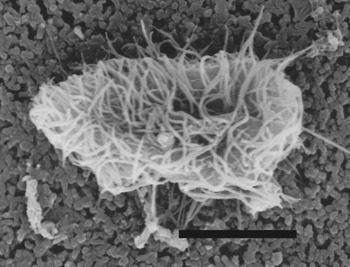
This flagellate (Fig. 1) is found both in freshwater and marine facilities. There is debate whether more than one species is involved and recent studies have provided molecular clues to differentiation of different strains and species within the genus Ichthyobodo (Isaksen et al. Reference Isaksen, Karlsbakk, Repstad and Nylund2012). The parasite infects both skin and gill epithelia and is associated with considerable morbidity and even mortalities (Urawa et al. Reference Urawa, Ueki and Karlsbakk1998). The parasite occurs in two forms, a motile and a sessile stage. The latter is probably the most pathogenic due to its attachment and penetration of host epithelia. Both stages are susceptible to auxiliary chemical compounds such as formalin and various oxidizing agents (hydrogen peroxide, sodium percarbonate, peracetic acid). The latter group will, from an environmental perspective, be needed in future production facilities should they be based on principles of sustainability. Host reactions include mucous cell involvement and hyperplasia (Urawa, Reference Urawa1992; Urawa et al. Reference Urawa, Ueki and Karlsbakk1998) and recent studies have shown that experimental infections induce T cell and IgT lymphocyte depletion in skin whereas IgM-positive lymphocytes accumulate in the infected epidermis (Chettri et al. Reference Chettri, Kuhn, Jaafar, Kania, Møller, Buchmann, Kania and Buchmann2012). Cytokine profiling indicated that the parasites initiate a TH2 –like response in rainbow trout skin being based on up-regulation of IL-4/13 and IL-10 genes. Furthermore, increased occurrence of IgM-producing lymphocytes in the skin supports this notion. Given the recent information that rainbow trout utilize IgT responses combined with T cell involvement in gills when mounting effective responses against white spot disease (Jørgensen et al. Reference Jørgensen, Heinecke, Skjoedt, Rasmussen and Buchmann2011; Olsen et al. Reference Olsen, Heinecke, Skjødt, Rasmussen, Kania and Buchmann2011) it may be worth reflecting on the possibility that manipulation of host responses towards I. necator in a similar way could increase protection from a low to an acceptable level.
Ichthyobodo necator on dorsal fin of rainbow trout. Scale bar 5 μ m. Courtesy of Dr. O. S. Møller, Zoological Museum, University of Copenhagen, Denmark.

DIPLOMONADID FLAGELLATES
Spironucleus salmonis was originally described as Hexamita salmonis; it is a common intestinal parasite in farmed rainbow trout (Buchmann et al. Reference Buchmann, Lyholt and Uldal1995) eliciting intestinal dysfunction and weight loss probably due to malabsorption (Uldal and Buchmann, Reference Uldal and Buchmann1996). Reports on extraintestinal occurrence of a diplomonadid, previously diagnosed as H. salmonis (Kent et al. Reference Kent, Fournie, Dawe, Bagshaw and Whitaker1992; Poppe et al. Reference Poppe, Mo and Iversen1992) in maricultured salmonids framed the pathological importance of diplomonadids. It was later suggested that the causative agent was a corresponding species Spironucleus barkhanus previously recorded in grayling (Thymallus thymallus) and arctic charr (Salvelinus alpinus) (Sterud et al. Reference Sterud, Mo and Poppe1998) which was suspected in the spread of the infection to Atlantic salmon and in the subsequent appearance of extra-intestinal abcesses. However, molecular studies showed that the pathogen was a closely related but new species, Spironucleus salmonicida (Jørgensen and Sterud, Reference Jørgensen and Sterud2006). The parasite's pathogenicity is associated with penetration of various tissues including muscles and it has obviously an ability to evade innate responses of salmon. Treatment of spironucleosis was previously conducted by the use of nitro-imidazoles such as metronidazole, but due to the ban of this drug in husbandry, including fish farming, alternative compounds have been tested for possible antiparasitic effects. Garlic extracts were indeed found to affect the related flagellate Spironucleus vortens (Millet et al. Reference Millet, Lloyd, Williams, Williams, Evans, Saunders and Cable2011) which suggests that alternative drugs should be tested also for S. salmonicida. Possible immunoprophylactic measures including immunostimulants and/or vaccination should be investigated. This area has many research opportunities due to the fact that the nature of the host immune response towards these diplomonadid flagellates has not yet been established.
APICOMPLEXA
A number of apicomplexan species are common in wild fish from both freshwater and marine habitats. However, reports on apicomplexan infections in maricultured fish are few. When Heuch et al. (Reference Heuch, Jansen, Hansen, Sterud, MacKenzie, Haugen and Hemmingsen2011) compared parasite infections in wild and maricultured cod (G. morhua) in Norway they detected Goussia spraguei as the only species within this group and occurring only in wild fish. However, turbot (S. maximus) farms in North West Spain were diagnosed with Cryptosporidium scophthalmi (Alvarez-Pellitero et al. Reference Alvarez-Pellitero, Quiroga, Sitja-Bobadilla, Redondo, Palenzuela, Padros, Vazquez and Nieto2004). Although no evidence for severe impact of infection was recorded, the authors showed histopathological changes of the host intestinal epithelium with leukocyte infiltration. Tissue changes associated with Cryptosporidium spp. infections mainly of juvenile farmed turbot were reported from Portugal (Saraiva et al. Reference Saraiva, Ramos, Barandela, Sousa and Rodrigues2009) where the parasite was found in bile duct epithelial cells. No experimental treatments of these infections were performed but it may be worthwhile testing if anti-coccidian compounds such as toltrazuril may have a curative effect (Schmahl et al. Reference Schmahl, Taraschewski and Mehlhorn1989). The trend for a lower prevalence and intensity with older fish suggest development of age-dependent immunity against these apicomplexans corresponding to anti-coccidian responses in birds and mammals. This suggests that further investigations on immune reactions in marine piscine hosts should be performed in order to elucidate immune mechanisms and potentials for immunoprophylactic strategies.
MICROSPORIDIA
A range of microsporidians has been detected in various maricultured fishes. One of these is Loma salmonae in salmonids (Speare and Lovy, Reference Speare, Lovy, Woo and Buchmann2012), but also Pleistophora anguillarum in Japanese eels (Anguilla japonica) (Hung et al. Reference Hung, Lo, Tseng and Kou1996) and Enterocytozoon spp. in Atlantic halibut (Hippoglossus hippoglossus) (Bergh et al. Reference Bergh, Nilsen and Samuelsen2001) have been associated with pathological reactions in farmed fishes.
Loma salmonae
Pacific salmon cultured in marine net-pens are particularly affected by L. salmonae which primarily infects gill tissue but may be found in other organs (e.g. intestine) as well. Parasite spores develop in a host cell producing relatively large whitish xenomas which rupture within weeks whereupon spores are released to the environment. Implementation of hygienic procedures including fallowing of production sites for extended time periods may be an important prophylactic strategy. Partial treatment success against the parasitosis using fumagillin, albendazole or monensin has been reported (Speare and Lovy, Reference Speare, Lovy, Woo and Buchmann2012). The inflammatory response to xenoma development is absent or minimal and restricted to a weak fibroblast migration towards the infected cell surface (Speare and Lovy, Reference Speare, Lovy, Woo and Buchmann2012). This may indicate that the parasite in this stage has an immune modulating mechanism securing fulfilment of the life cycle. However, following rupture and release of spores a marked inflammatory response develops possibly due to stimulation of damaged and exposed gill tissue by external biotic and abiotic factors. The immune response following spore release is initially based on neutrophil colonization followed by macrophage and lymphocyte attraction. Even dendritic-like cells may take part in the host response (Lovy et al. Reference Lovy, Wright and Speare2006). Humoral host responses against microsporidian parasites are known to occur. Japanese eel (Anguilla japonica) is able to mount an antibody reaction against a series of antigens in P. anguillarum (Buchmann et al. Reference Buchmann, Ogawa and Lo1992; Hung et al. Reference Hung, Lo, Tseng and Kou1996) and the combined cellular and humoral reactions may be decisive elements when developing future immunoprophylactic strategies. Feeding of hosts with immunostimulants such as beta-glucans has been described to diminish the infection severity (Guselle et al. Reference Guselle, Speare and Markham2010) but more effective methods should be considered. Fish surviving an infection achieve protection against reinfection which indicates that vaccine development may be a realistic goal. Experimental vaccines have indeed been found to protect rainbow trout (Sánchez et al. Reference Sánchez, Speare, Markham and Jones2001).
CILIATES
A suite of ciliates has been associated with disease and mortality in mariculture. Marine white spot disease caused by Cryptocaryon has been in focus due to its common occurrence in exhibition aquaria and traditional warm water fish farming. During the last two decades also scuticociliates have been shown to be aggressive invaders of host fish tissues whereas trichodinids only occasionally cause severe problems.
Cryptocaryon irritans
Cryptocaryon irritans is an endoparasite penetrating the host epidermis, feeding on sloughed cells inducing a marked proliferation of epidermal cells whereby the parasite location become macroscopically visible as white spots (Yambot et al. Reference Yambot, Song and Sung2003). This parasitic ciliate has a resemblance to the freshwater parasite Ichthyophthirius multifiliis and has a corresponding but marine life cycle. However, analyses of rDNA sequences suggest that the two ciliates are merely distantly related and the biological similarities may be due to convergent evolution (Colorni and Diamant, Reference Colorni and Diamant1993). As is known from its freshwater counterpart C. irritans also induces specific antibody production in infected fish host (Misumi et al. Reference Misumi, Lewis, Takemura and Leong2011) which suggests that immunoprophylactic measures including vaccination may be a future way of controlling the disease. Treatments using various drugs and chemicals (of which some are environmentally friendly) have been and will probably in the near future be essential ways of reducing infection levels in farms (Picón-Camacho et al. Reference Picón-Camacho, Ruiz de Ybáñez, Holzer, Arizcun and Muñoz2011).
Scuticociliates
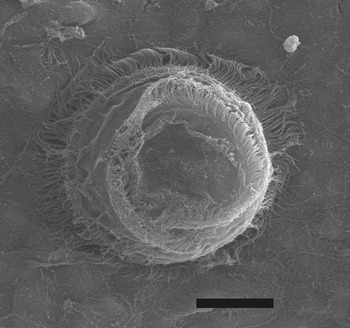
Farmed flatfishes, such as turbot (S. maximus) and olive flounder (Paralichthys olivaceus) and percids, such as sea bass (D. labrax), have been found invaded by aggressive and invasive minute ciliates (Fig. 2). Specific diagnosis of these pathogens is often hampered due to a high degree of morphological similarity between these ciliates. Recent work has synonymized two species, Miamiensis avidus and Philasterides dicentrarchi, which have been repeatedly reported to be disease agents. This was partly based on recent developments within molecular biology which have improved diagnostic techniques. The small subunit ribosomal RNA gene (SSU rRNA) has proven useful for differentiation of genera, species and strains (Song et al. Reference Song, Kitamura, Oh, Kang, Lee, Tanaka and Jung2009). As a consequence, a number of other valid species within the genera Uronema and Pseudocohnilembus have been reported as pathogens in fish. Miamiensis avidus is a histophagous parasite invading skin, gills, muscles, brain, spinal cord and gut. The parasites are facultatively parasitic and may survive and propagate in the environment which may be problematic when control measures have been implemented. Implementation of hygienic measures is the first step to prevent infection. Auxiliary substances, including formalin and hydrogen peroxide-containing compounds, are known to kill free-living stages but tissue-dwelling stages need medication that interferes with essential physiological pathways of the parasite (Iglesias et al. Reference Iglesias, Paramá, Alvarez, Leiro, Fernandez and Sanmartín2002). Feeding fish with immunostimulants can induce a general immune response which may have a controlling effect on scuticociliate infections. Among several reports Lee and Kim (Reference Lee and Kim2009) also showed that oligonucleotides (CpG-ODN) induced resistance in olive flounder against M. avidus. The infected fish raise antibody responses against the ciliates and several attempts to produce a protective vaccine have been made. Recently high protection combined with few side-effects was recorded in turbot following immunization with surface antigens of M. avidus mixed with polymeric microspheres (León-Rodríguez et al. Reference León-Rodríguez, Luzardo-Alvares, Blanco-Méndez, Lamas and Leiro2012). Although high hygienic standards and chemotherapy may be convenient control measures immunoprophylactic methods may also have a future as can be deduced from these recent vaccine studies.
Invasive scuticociliate isolated from brain of turbot. Scale bar 10 μm. Courtesy of Dr J. Bresciani, University of Copenhagen, Denmark.

Trichodina jadranica
Trichodinids (Fig. 3) are prevalent parasites both in freshwater and marine fish culture systems. Numerous species occur in most geographic regions and climatic zones from arctic cod culture (Heuch et al. Reference Heuch, Jansen, Hansen, Sterud, MacKenzie, Haugen and Hemmingsen2011) to tropical bass (Lates calcarifer) production (Rückert et al. Reference Rückert, Palm and Klimpel2008). A well-studied species is T. jadranica which is an ectoparasite with limited pathological effects on the host if the infection level is limited. However, it has the potential to harm its host severely when the parasite load reaches high levels. European eels (Anguilla anguilla) farming in recirculated water, both fresh and marine, have suffered from recurrent attacks by T. jadranica (Madsen et al. Reference Madsen, Buchmann and Mellergaard2000a ). The ciliates attach to skin, fins and gills of the European eel but do not penetrate the epidermis. With its basic disc, reinforced by a rigid cytoskeleton with contractile elements, the parasite can attach firmly to the host surface and compress the epithelial cell lining, whereby normal physiological functions (e.g. gas exchange, ammonia release) are inhibited. Lethargy, anorexia and death may result from heavy infections. Although weaker individuals in the host population seem to be the most susceptible no reports on acquired immunity are available. The ciliates feed on bacteria and organic particles which explains excessive parasite propagation in polluted water. Thus, it is known that mass occurrence of the parasite is connected to a high organic content of the fish farm water (Madsen et al. Reference Madsen, Buchmann and Mellergaard2000b ). Reducing the organic load of fish farm water by mechanical filtration is therefore a relevant management tool for prevention of infections but in acute cases auxiliary chemical compounds such as formalin have been used to reduce infection levels. Due to the environmental and health hazards connected with the use of formalin alternative compounds are recommended for control. Oxidizers including hydrogen peroxide-containing products and even garlic juice were found to be effective for elimination of these parasites (Madsen et al. Reference Madsen, Buchmann and Mellergaard2000a ).
Trichodina sp. on caudal fin of rainbow trout. Scale bar 20 μm. Courtesy of Dr J. Bresciani, University of Copenhagen, Denmark.

DISCUSSION
Future diagnostic methods
Early classical descriptions of protozoans have relied on line drawings and light microscopy photographs with written reports on morphometric observations. Later, scanning and transmission electron microscopy improved the diagnostic precision (Lom and Dyková, Reference Lom and Dyková1992) and during recent decades sequencing of selected gene regions such as rDNA and mitochondrial DNA have improved resolution even further. It is to be expected that development of sequencing techniques will allow us to obtain information of a much larger part of the genome of protozoan parasites and thereby create highly precise diagnoses. Although morphometric and molecular information is basic and indispensable for the diagnosis it should also be considered to include in vitro or in vivo infection experiments in certain problematic cases. Even small and not easily detectable mutations in a pathogen can produce very large differences in infectivity with regard to a certain host organism. Thus, a single transition in the ITS region of the helminth Gyrodactylus salaris (Jørgensen et al. 2007) is associated with profound differences in infectivity for Atlantic salmon. Likewise, a few substitutions in the genome of the bacterium Yersinia ruckeri have created a pathogen with different antigenic properties leaving old vaccines ineffective (Desmukh et al. Reference Desmukh, Raida, Dalsgaard, Chettri, Kania and Buchmann2012).
Future disease control
Chemical control
Many diseases in fish are caused by ectoparasitic protozoans invading skin, fins and gills. These organisms apply free-living life cycle stages (cysts, swarmers) which makes it possible to control the infections through water disinfection by use of substances such as copper sulphate and formalin. Due to the environmentally problematic effects of these compounds recent studies have recommended alternative uses of oxidizers such as hydrogen peroxide and related compounds (sodium percarbonate, peracetic acid).
Medical control
Several drugs with antiprotozoan effects have been developed and are available for treatment of humans and domestic animals. However, although experimental work has demonstrated marked activity against fish protozoans, their use within aquacultural enterprises is limited due to lack of licensing and to legislative restrictions. Nitroimidazoles such as metronidazole and dimetridazole show a strong effect on flagellates and ciliates and this drug group is allowed for human use but not for food production animals. Likewise, the anticoccidian drug toltrazuril can be used for prevention of ciliate infections in fish (Jaafar and Buchmann, Reference Jaafar and Buchmann2011). It is licensed for use in the poultry and pig industry but it is questionable if the drug can be licensed for aquacultural animals as well.
Management
Strict hygienic measures, quarantine practices, compulsory use of certified disease-free fish, fallowing of production sites and elimination of infective parasite stages by various filtration techniques are practices which should be used in any production system. Thus, water filtration by the use of mechanical filters may (dependent on the mesh size) remove potentially harmful tomonts of C. irritans and thereby prevent multiplication within tomocysts.
Breeding of innately resistant fish
Mechanisms involved in and responsible for innate resistance of specified stocks and species of fish towards pathogens have not been fully elucidated. However, a range of examples is available. A well-documented example is the innate resistance of several Baltic salmon strains against the ectoparasitic monogenean G. salaris (Bakke et al. Reference Bakke, Jansen and Hansen1990; Dalgaard et al. Reference Dalgaard, Nielsen and Buchmann2003; Lindenstrøm et al. Reference Lindenstrøm, Sigh, Dalgaard and Buchmann2006). In addition, susceptibility and resistance of various salmonids towards the bacterial pathogen Aeromonas salmonicida was also reported to vary significantly between salmon strains (Holten-Andersen et al. Reference Holten-Andersen, Dalsgaard and Buchmann2012). It is therefore relevant to initiate breeding programmes in order to develop strains with a low susceptibility towards pathogens including protozoans.
Immunoprophylaxis
The potential and capacity of the teleost immune system can be appreciated through recent discoveries which have suggested that immunoprophylactic measures may be significant ways to secure fish health. Some strategies in the field are based on feeding of fish with compounds often termed immunostimulants which are chemicals stimulating innate immune parameters. Other strategies apply specific immunization of their production animals against pathogens.
Immunostimulants
A series of structural molecules from various sources e.g. bacteria, yeast, fungi and lichens alone or together with synthetic products (e.g. oligonucleotides) is currently used as immunostimulants. A large group of compounds on this product shelf is the beta-glucans (Skov et al. Reference Skov, Kania, Holten-Andersen, Fouz and Buchmann2012). The immunostimulants possess pathogen- associated molecular patterns (PAMPS) which are able to stimulate different pathogen recognition receptors (PRRs) in host fishes and thereby activate innate immune reactions (Chettri et al. Reference Chettri, Holten-Andersen, Raida, Kania and Buchmann2011). These comprise among others toll-like receptors which subsequently can initiate cascade reactions which may limit or reduce infections. Results from controlled laboratory (Jaafar et al. Reference Jaafar, Skov, Kania and Buchmann2011) or field studies (Xueqin et al. Reference Xueqin, Kania and Buchmann2012) have indicated that immune elements are activated by these feed additives. Unfortunately the effect of these feed additives on parasite infection levels, such as intensities of the skin parasitizing ciliate I. multifiliis, is limited. Correspondingly, immunostimulant feeding does not result in a clear reduction of L. salmonae infection in salmonids but merely leads to a more benign course of infection (Guselle et al. Reference Guselle, Speare and Markham2010). Likewise, AGD in salmon is not diminished by in-feed immunostimulants (Bridle et al. Reference Bridle, Carter, Morrison and Nowak2005). Therefore other immunoprophylactic strategies are needed in order to secure a satisfactory fish health level.
Vaccination
Disease control in aquacultural enterprises must ideally be based on integrated systems applying high hygienic standards. This can be achieved through filtration of water (with mechanical and biological filters) securing optimal physicochemical water parameters, by breeding for resistant fish strains and feeding at an optimal level. However, additional control methods must be considered in order to avoid medication. Vaccination is an immuno-prophylactic measure which can provide the fish with a high resistance against infection. Significant results with development of antibacterial vaccines have been achieved in the Norwegian salmon industry where the use of antibiotics has been reduced by 99 % during the latest 26 years despite a 20-fold increase of the annual salmon production. High efficacies of anti-viral vaccines have also been demonstrated (Lorenzen et al. Reference Lorenzen, Einer-Jensen, Martinussen, LaPatra and Lorenzen2000) and efforts should therefore be made in order to develop antiparasitic vaccines. Due to the limited size of many protozoan parasites the cellular and humoral immunological armament in fish should have the basic ability to develop protective immunity against at least some of these pathogens. Experimental vaccines against C. salmositica (Woo, Reference Woo, Woo and Buchmann2012), L. salmonae (Sánchez et al. Reference Sánchez, Speare, Markham and Jones2001; Rodríguez-Tovar et al. Reference Rodríguez-Tovar, Becker, Markham and Speare2006) and I. multifiliis (the freshwater equivalent to C. irritans) (Alishahi and Buchmann, Reference Alishahi and Buchmann2006) have been found to be partially effective which is promising for further achievements. Cryptocaryon irritans is known to elicit antibody production in affected fish (Misumi et al. Reference Misumi, Lewis, Takemura and Leong2011) which is a valuable basis for further vaccine development. Experimental studies have also demonstrated significant activation of cellular and humoral immune factors in fish exposed to several other protozoans such as A. ocellatum (Noga, Reference Noga, Woo and Buchmann2012) and I. necator (Chettri et al. Reference Chettri, Kuhn, Jaafar, Kania, Møller, Buchmann, Kania and Buchmann2012). Thus, it is likely that production of vaccines against A. ocellatum, S. salmonicida, I. necator and L. salmonae may be realistic goals for renewed research efforts. However, it cannot be excluded that the parasites themselves or parasite-derived molecules (Jørgensen and Buchmann, Reference Jørgensen and Buchmann2011) divert the response of the host towards a less effective immune pathway and this possibility should be taken into account when designing vaccines and their adjuvants. The recent development of reagents and tools for investigating immune mechanisms in fish can create a basis for tailor-made vaccines stimulating immune mechanisms in fish hosts which can provide protection.
CONCLUSIONS AND FUTURE DIRECTIONS
Control of protozoan infections of maricultured fishes must be performed through integrated efforts applying prophylactic management methods creating a better physical environment for the captive fishes. Breeding for natural resistance and improved nutrition should also be a priority area which can add to a high health status in mariculture enterprises. Application of chemicals and drugs may be necessary tools during acute outbreaks but more sustainable methods should be implemented to avoid infections. It should be noted that vaccine development is a central task to be performed in order to exploit the high potential of the fish immune system and reach sustainability in fish farming. At present, most experimental approaches can be considered rather primitive and coarse vaccines based on crude parasite preparations may not be sufficient for obtaining protection and reaching production goals and high welfare of farmed fish. Basic research on immune mechanisms responsible for protection of fish against protozoan diseases can direct future production of tailor-made vaccines for specific parasitic diseases (Jørgensen and Buchmann, 2011). The immunological network in fish is extensive and different parasites may lead the immune reactions in directions which are not optimal for protection. It has been shown that the development of reagents and their use in a range of assays such as immunohistochemistry, immunocytochemistry, flow-cytometry, gene expression technology combined with in vivo challenge studies can improve our understanding of fish immune reactions, their diversity and potential. Due to limited cross-reactivity of reagents developed for salmonids (e.g. rabbit antibodies reacting with fish IgM) with regard to cyprinids, anguillids, percids, gadids and pleuronectids (Buchmann and Pedersen, Reference Buchmann and Pedersen1994) it is necessary to initiate these research initiatives for all the main fish taxa. Specific reagents for the major fish groups in aquaculture should be developed in order to provide a basis for elucidation of fish immune responses against protozoans in mariculture. Priorities should be reagents to describe innate, adaptive responses, cellular (macrophage, T cell and B cell markers) and humoral elements (various immunoglobulin classes, complement factors, acute phase reactants, cytokines) within these reaction pathways. This basic knowledge may eventually lead to optimization of vaccines not only for fish in mariculture but also for higher vertebrates.
ACKNOWLEDGEMENTS
This work was produced under the Danish Fish Immunology Research Centre and Network DAFINET (www.dafinet.dk) supported by the Danish Council for Strategic Research.