INTRODUCTION
Dicroceliosis, caused by Dicrocoelium dendriticum (Rudolphi, 1819) Looss, 1899 (Digenea, Dicrocoeliidae) is an important hepatic trematodosis affecting a wide range of mammals, mainly ruminants, which act as definitive hosts, in Spain and many other countries worldwide. The adult parasites live in the liver and bile ducts of the definitive hosts. The economic and health importance of dicroceliosis is mainly due to direct losses caused by liver condemnation and indirect losses due to hepatobiliary alterations produced by the parasites and the costs associated with anthelminthic treatments, unsatisfactory until now (Otranto and Traversa, Reference Otranto and Traversa2002; Manga-González et al. Reference Manga-González, Ferreras, Campo, González-Lanza, Pérez and García-Marín2004, Reference Manga-González, Quiroz-Romero, González-Lanza, Miñambres and Ochoa2010). The life cycle of D. dendriticum is extremely complex because land molluscs and ants are required as first and second intermediate hosts, respectively. At least 100 land mollusc species (Pulmonata, Stylommatophora) and 21 ant species (Formicidae) have been mentioned in the literature as first and second intermediate hosts, respectively, of D. dendriticum (Manga-González et al. Reference Manga-González, González-Lanza, Cabanas and Campo2001). In the province of León (NW Spain) morpho-anatomical studies have identified 11 species of naturally infected land molluscs with larval stages of D. dendriticum and 4 species of ants harbouring metacercariae of this parasite (Manga-González et al. Reference Manga-González, González-Lanza, Cabanas and Campo2001).
Until now, detection and identification of the larval stages of D. dendriticum in molluscs has mainly been done using stereomicroscope dissection techniques and microscope morpho-anatomical studies and, on rare occasions, chaetotaxic, histological and isoenzymatic techniques (Manga-González and González-Lanza, Reference Manga-González and González-Lanza2005). However, these studies are not sufficient as detecting the larval stages of D. dendriticum in molluscs by dissection and observation using microscope methods is time consuming. It took at least 50 days for the first observation of the parasite (as daughter sporocysts with undifferentiated germinal masses) in Cernuella (Xeromagna) cespitum arigonis molluscs experimentally infected with parasite eggs and kept in the laboratory at 20°C (González-Lanza et al. Reference González-Lanza, Manga-González, Campo and Del-Pozo1997). In addition, under field conditions this observation period is even longer, taking up to 9 months in molluscs experimentally infected in October and kept in a natural environment in a flat zone close to the city of León (Manga-González and González-Lanza, Reference Manga-González and González-Lanza2005). Morpho-anatomical identification of the larval stages of D. dendriticum in naturally infected molluscs also requires having material obtained from experimentally infected molluscs available for comparison. As the larval stages still need to develop in a second intermediate host, their identity cannot be corroborated by infecting definitive hosts. Besides this, it needs to be taken into account that the same species of molluscs can act as the intermediate hosts of other species of trematodes, which could lead to erroneous identification. Until now, identification of metacercariae in ants has been done using morpho-anatomical studies (Manga-González et al. Reference Manga-González, González-Lanza, Cabanas and Campo2001) corroborated, in turn, by infection of definitive hosts to obtain the adult parasite (Campo et al. Reference Campo, Manga-González and González-Lanza2000). However, infection of definitive hosts cannot always be carried out during epidemiological studies, which makes identification of the metacercariae found in the ants of different species, and collected in different places and at different times of year, risky. It can be deduced from the above that the data obtained in the epidemiological studies of dicroceliosis, referring to natural infection of molluscs, are not accurate, due to the false negatives which can result from late observation of the parasite, when conventional techniques are used, as well as due to the possible erroneous identification of larval stages found in molluscs and ants. Nevertheless, to apply successful strategic control programmes against dicroceliosis, prior study of its epidemiology is needed (Manga-González et al. Reference Manga-González, Quiroz-Romero, González-Lanza, Miñambres and Ochoa2010). This requires carrying out specific and early diagnosis using extremely reliable techniques to detect the presence of D. dendriticum in its definitive hosts (mammals) as well as in its first (molluscs) and second (ants) hosts.
The use of molecular biology techniques in D. dendriticum studies is scarce. The genetic variability of adults of the parasite collected from sheep of different breeds at different geographical locations (in Spain) has been studied using the random amplified polymorphic DNA (RAPD) technique (Sandoval et al. Reference Sandoval, Manga-González, Campo, García, Castro and Pérez-de-la-Vega1999). The same technique has been used to study the variation of D. dendriticum in a single cattle population in the Ukraine (Morozova et al. Reference Morozova, Ryskov and Semyenova2002). D. dendriticum and Dicrocoelium chinensis have also been molecularly characterized using partial sequencing of 18S rDNA and the internal transcribed spacer nuclear (ITS-2) and, in addition, a phylogenetic analysis has been carried out together with another 20 species of Plagiorchiidae (Otranto et al. Reference Otranto, Rehbein, Weigl, Castacessi, Parisi, Lia and Olson2007). The characterization of 28S and ITS-2 of ribosomal DNA from adult D. dendriticum collected from sheep and cattle (Italy) and D. hospes from Bos indicus (Senegal) has also been done (Maurelli et al. Reference Maurelli, Rinaldi, Capuano, Perugini, Veneziano and Cringoli2007). Recently, ITS-2 interspecific markers have been determined in adults of 4 species of trematodes from ruminants: F. hepatica, Fascioloides magna, D. dendriticum and Paramphistomum cervi, having obtained the complete ITS-2 sequence for the last 2 species mentioned (Bazsalovicsova et al. Reference Bazsalovicsová, Králová-Hromadová, Spakulová, Reblánová and Oberhauserová2010). Referring to the intermediate hosts, a DNA probe for the detection of D. dendriticum in ants was generated by Heussler et al. (Reference Heussler, Kaufmann, Glaser, Ducommum, Müller and Dobbelaere1998). However, in accordance with our information, no studies have been carried out on the use of the PCR technique to identify the larval stages of D. dendriticum in the land molluscs and ants which act as intermediate hosts. Bearing all the above in mind, the aim of this study was to develop, perfect and validate an analytical method based on PCR (polymerase chain reaction) techniques which would, on the one hand, allow precise identification of D. dendriticum in mollusc and ant intermediate hosts and, on the other, allow early detection of their infection in order to avoid false negatives. The most precise early diagnosis obtained using the PCR technique will allow a more realistic epidemiological model to be established. This will lead to the application of more effective measures for the strategic control of this parasite.
MATERIALS AND METHODS
Parasite, mollusc and ant samples from which DNA was extracted
Adult parasites
The D. dendriticum adult worms were collected from the livers of naturally infected sheep slaughtered in the León (Spain) slaughterhouse. Once the parasites were extracted, they were washed 3 times in PBS (phosphate-buffered saline, pH 7 4) and gentamicin (40 mg/l) at 37°C, frozen in liquid nitrogen and then stored at −85°C until DNA extraction. Moreover, we extracted DNA from adult specimens of: Dicrocoelium chinensis from Cervus nippon (Germany), kindly provided by Professor D. Otranto of Bari University (Italy). Adult Fasciola hepatica Linnaeus, 1758 and Calicophoron daubneyi (Dinnik, 1962) trematodes (which use freshwater molluscs in their biological cycle) were also collected from the livers of sheep and the rumen of cows, respectively, killed in the slaughterhouse, in order to test the specificity of the PCR technique designed to detect D. dendriticum. This material was frozen in liquid nitrogen and stored at −85°C until the DNA extraction.
Naturally infected molluscs
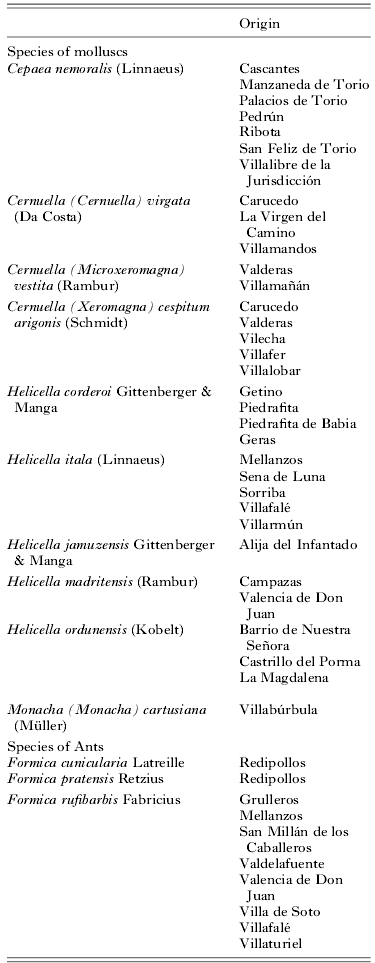
DNA was extracted from the infected hepatopancreas of numerous specimens of 10 land mollusc species (Pulmonata, Stylommatophora) collected from different parts of León province (NW, Spain) (Table 1). A sample was taken from every mollusc found under the stereomicroscope to have an infection in the hepatopancreas. The possible D. dendriticum larval stages, always daughter sporocysts, were identified under the microscope using morphoanatomical techniques. Some molluscs were also infected with branched sporocysts (in the hepatopancreas) and metacercariae (in the kidney) of Brachylaimidae sp. trematodes. These metacercariae were extracted from the kidney and kept separately from the rest of the mollusc. Infected and not-infected (control) molluscs were frozen in liquid nitrogen and then kept in a freezer at −85°C until the DNA was extracted.
Species of molluscs and ants collected from different sites in León province (Spain) naturally infected with Dicrocoelium dendriticum, confirmed by PCR

To confirm the specificity of the designed primers, DNA was also extracted from the specimens of freshwater mollusc Galba truncatula infected with larval stages of F. hepatica, C. daubneyi, Plagiorchiidae and Notocotylidae, frozen in liquid nitrogen and kept in a freezer at −85°C.
Experimentally infected molluscs
The molluscs used for the experimental infection were collected in the field from areas not frequented by ruminants. They were kept for 2 months in the laboratory and fed on lettuce ad libitum, before carrying out the experimental infection. The lack of D. dendriticum natural infection was confirmed at the end of this period by a helminthological study of 10% of the molluscs using microscopic and PCR techniques. In order to check from which post-infection (p.i.) day it was possible to detect D. dendriticum in the molluscs using PCR, 80 specimens of Cernuella (C.) virgata and Cernuella (X.) cespitum arigonis were experimentally infected with D. dendriticum eggs. These were obtained from the gall bladder of sheep killed in the slaughterhouse. Sedimentation and McMaster techniques were used to put together the infective dose of 50 eggs per snail. The molluscs were kept without food for 4 days prior to the infection, which was done individually in Petri dishes. The dose of 50 eggs per snail was placed on the bottom of each dish on filter paper. The molluscs remained in contact with this dose for 2 days and nights, long enough for them to be infected by ingestion of the eggs (González-Lanza et al. Reference González-Lanza, Manga-González, Campo and Del-Pozo1997). After this, periodic slaughter of the molluscs was carried out between Day 1 p.i. until the end of the experiment. The molluscs were kept on trays, fed on lettuce ad libitum, under controlled laboratory conditions at 20°C and 50% relative humidity. All the slaughtered molluscs were examined under the stereomicroscope to check whether infection could be observed and the degree of development of the parasites. They were then frozen in liquid nitrogen and stored at −85°C until DNA extraction.
Naturally infected ants
DNA were extracted from 3 species of Formica (Table 1) collected attached to plants (tetania) in the field in the early morning, so they were supposedly infected with D. dendriticum and hosted at least 1 brainworm of that parasite in their suboesophagic ganglion. The abdomen of these ants was checked for the presence of metacercariae by dissection under the stereomicroscope, on Petri dishes with a saline solution (0 154 m NaCl). The metacercariae found in the abdomen of each ant were extracted and counted. In some cases the abdomen and all the metacercariae found in it were stored in the same vial and the unopened head, which usually hosts a single brainworm (on rare occasions 2 or 3) separately. In other cases the metacercariae extracted from the abdomen were sorted separately in quantities of 1, 2, 3, 4, 5, 6, 7, 8, 9 and 10 to discover the sensitivity of the PCR technique we had designed. The samples mentioned above and others from non-infected ants used as controls were kept in 70° alcohol or frozen at −85°C until DNA extraction.
DNA extraction
A Biotools ‘Genomic DNA extraction kit’ was used to extract total DNA. This method is based on hydrolysis of the animal tissues in the presence of proteinase K and β-mercaptoethanol and later purification of the DNA obtained using a column with affinity resin. The sample was first homogenized in 1 ml of lysis buffer in a blade mill (Polytron PT 1600 E) for 20 sec at 4°C (in an ice bath) and then processed for each extraction. Extraction followed the instructions of the ‘Speedtools tissue DNA kit’ (Biotools, Spain). DNA was thus extracted from all the samples mentioned above.
Detection of D. dendriticum by PCR amplifying an mtDNA fragment
Mitochondrial DNA (mtDNA) was chosen as a target as it has numerous conserved zones flanked by other hypervariables of an appropriate size, as well as a defined organization of gene clusters which vary from some organisms to others. Faced with the lack of D. dendriticum sequence, the CLUSTAL W program was used to align the mitochondrial sequences (from GenBank) of 20 species of Plathelminths (2 Monogenea, 7 Digenea and 11 Cestoda), mainly those of the Digenea – Fasciola hepatica (NC_002546, sequence Accession number), Paragonimus westermani (NC_002354), Schistosoma japonicum (NC_002544), Schistosoma mekongi (NC_002529), Schistosoma spindale (NC_008067), Schistosoma mansoni (NC_002545), Schistosoma hematobium (NC_008074) – to determine the best conserved zones of the mitochondrial sequences and to design general oligonucleotides to be used in amplifying the D. dendriticum mtDNA. The pair of oligonucleotides which functioned best was that formed by:
Cox1F: 5′-TNTGTTTTTTKCCKATGCAYTA-3′
LrRNAR: 5′-TCYYRGGGTCTTTCCGTC-3′
This pair of degenerate oligonucleotides was used to amplify a fragment of 1035 bp of the D. dendriticum samples, including the coding regions of cytochrome C oxidase I (COI) and the large ribosomal RNA subunit (LrRNA). After electrophoretic separation the band was cut out of the agarose gel and purified using the Speedtools PCR clean-up (Biotools) commercial kit, in accordance with the manufacturer's instructions. These PCR products were sequenced in the Instrumental Techniques Laboratory, University of León (Spain). The sequence was then analysed using MegAlign (DNASnastar Inc., Madison, WI, USA) software following the ClustalW (DNA Star) method. The sequence was sent to the databank GenBank with Accession number JF690758.
Once this band was sequenced, a pair of internal specific primers was designed to detect the infection by D. dendriticum in the ants and molluscs. The pair consisted of a forward (Dd_HI_F: 5′GGT GTC CCG AAA GGT AGT GA 3′) and a reverse primer (Dd_HI_R: 5′ TCA CCA ATC ACC TCA AAG CA 3′) that amplified a 169 bp fragment. Amplification was carried out in a 20 μl reaction volume containing 2 μl of buffer at a concentration of 20 mm MgCl2, 750 mm Tris-HCl (pH 9 0), 500 mm KCl and 200 mm (NH4)2SO4 and 0 4 μl of 10 mm dNTP, 0 4 U DNA Polymerase (Biotools), and 2 5 μl of each specific primer at a concentration of 10 μ m. Then 1 μl of DNA was added to each reaction in the case of the molluscs, and 5 μl of DNA in the case of the ants. The reaction was done in an Applied Biosystems 2700 thermocycler. The amplification parameters consisted of initial denaturation at 92°C for 2 min, followed by 35 denaturation cycles (95°C, 30 sec), annealing (63°C, 30 sec) and extension (72°C, 1 min), with a final extension phase at 72°C for 10 min. As a positive control, 1 μl of DNA from an adult D. dendriticum parasite was used in all the analyses. The PCR products were analysed after electrophoretic separation in 1 5% agarose gels and photographed using the Gel Doc XR (Bio-Rad) image capturer. In order to check the specificity and the sensitivity of the Dd_HI_F/R primers designed for this study, DNA extracted from all the samples mentioned above were used.
Detection of D. dendriticum by PCR amplifying an ITS-2 fragment
A pair of oligonucleotides consisting of a forward (Dd_ITS-2_F: 5′ ACA CAC ACC TAG TTA TCA GAC AGG 3′) and a reverse primer (Dd_ITS-2_R: 5′ CAC CAC ACG AGA TGT TCT ACA G 3′) was designed by aligning the sequence of the ITS-2 from D. dendriticum (DQ379986), D. chinensis (AB367790), D. hospes (EF102026) and D. orientalis (EF547132), in order to discriminate between D. dendriticum and the rest of the species. A 93 bp fragment was amplified using PCR, following the protocol already described. The PCR products obtained were separated by electrophoresis and sequenced to confirm the species. The specificity of this pair of oligonucleotides (Dd_ITS-2_F/R) and the sensitivity of the PCR technique were determined by amplifying the DNA of the samples as already described.
RESULTS
Analysis of the mitochondrial DNA fragment sequence
The pair of general primers, which partly flanked the COI and LrRNA, amplified a 1035 bp fragment of adult D. dendriticum samples. This region of mitochondrial DNA includes the partial sequence of the COI (285 pb) gene in the 5′ end, the complete sequence of the tRNA-Thr (threonine) (72 pb), and part of the LrRNA sequence of the 3′ end (667 pb). The partial sequence of the COI gene ends at the TAG codon and codes for a 95-amino acid protein (aa) protein.
Specificity and sensitivity of the PCR technique by mtDNA amplification
The primers we designed (Dd_HI_F/R) amplified a 169 pb mitochondrial DNA fragment in the samples of Formica rufibarbis and Formica pratensis ants which contained D. dendriticum metacercariae in the abdomen and also in the samples of the head harbouring a brainworm of the same species of ants collected in tetania (Fig. 1). The technique designed showed great sensitivity in detecting metacercariae isolated from the abdomen of Formica rufibarbis, as it permitted detection of a single D. dendriticum metacercaria (Fig. 2). Moreover, the designed primers also amplified a 169 pb mitochondrial DNA fragment in snails experimentally infected with D. dendriticum slaughtered 62 days p.i., when they already hosted D. dendriticum daughter sporocysts, visible under the stereomicroscope in their hepatopancreas.
Products of PCR amplification of Dicrocoelium dendriticum in agarose gel with ethidium bromide, using specific mtDNA primers. (1) D. dendriticum adult. (2) Complete body of Formica rufibarbis infected in the abdomen with 52 metacercariae of D. dendriticum. (3) Abdomen of F. rufibarbis with 45 metacercariae. (4–5) Head of F. rufibarbis and of Formica pratensis, respectively, infected with brainworm of D. dendriticum. (6–7) Non-infected abdomen of Formica polyctena and Formica cunicularia, respectively. (8) Negative control.

Products of PCR amplification of Dicrocoelium dendriticum in agarose gel with ethidium bromide, using specific mtDNA primers. (1) D. dendriticum adult. (2–11) Samples containing 1, 2, 3, 4, 5, 6, 7, 8, 9 and 10 metacercariae, respectively, of D. dendriticum extracted from the abdomen of a Formica rufibarbis. (12) Negative control.

However, although the designed primers did not amplify the DNA of D. chinensis, uninfected land molluscs and ants or of F. hepatica, C. daubneyi, Plagiorchiidae and Notocotylidae, they did when the DNA of Brachylaimidae metacercariae was used. Therefore these primers are not specific for detecting D. dendriticum in land molluscs.
Specificity and sensitivity of the PCR technique by ITS-2 amplification
Analysis of the 93 pb fragment amplified with the specific primers (Dd_ITS-2_F/R) designed for this study presented 100% homology with a region of the ITS-2 gene of D. dendriticum present in the database (GenBank Accession no. DQ379986). Using the designed PCR technique we detected a band of 93 bp in the D. dendriticum adult DNA samples, hepatopancreas of molluscs experimentally and naturally infected with D. dendriticum sporocysts, as well as in the abdomen and head of infected ants collected in tetania (Fig. 3). However, this band was not detected in the DNA samples of adult D. chinensis, Brachylaimidae metacercariae or in those from uninfected control molluscs and ants (Fig. 3). Nor was it possible to amplify the DNA of adult F. hepatica and C. daubneyi, or of specimens of G. truncatula infected with larval stages of F. hepatica, C. daubneyi, Plagiorchiidae or Notocotylidae, respectively, so we can consider that the primers designed are D. dendriticum specific.
Products of PCR amplification of Dicrocoelium dendriticum in agarose gel with ethidium bromide, using specific ITS-2 primers. (1) D. dendriticum adult. (2–3) D. chinensis adults. (4) Cernuella (X.) cespitum arigonis specimen experimentally infected and slaughtered on Day 62 p.i., with D. dendriticum daughter sporocysts already visible under the stereomicroscope. (5) Helicella itala naturally infected with D. dendriticum daughter sporocysts already visible under the stereomicroscope. (6–7) Non-infected Cernuella (X.) cespitum arigonis and H. itala specimens, respectively. (8–9) Brachylaimidae metacercariae extracted from the kidney of H. itala and Cernuella (M.) vestita molluscs, respectively. (10) Negative control.

By means of the developed PCR technique (Figs 3 and 4), natural infection by D. dendriticum could be confirmed in the 10 mollusc species included in Table 1. Moreover, the PCR technique designed for amplifying the ITS-2 gene showed great sensitivity in early detection of the larval stages of D. dendriticum in experimentally infected molluscs Cernuella (X.) cespitum arigonis and Cernuella (C.) virgata, as it was possible to detect the infection from Day 1 p.i. (Fig. 5) (or the second, since the molluscs remained in contact with the infective dose for 2 days). However, it was not possible, using microscopy, to observe the infection by D. dendriticum until Days 55 and 62 p.i. in the first and the second mollusc species, respectively. On these days very localized and poorly developed daughter sporocysts containing germinal masses were detected in the hepatopancreas.
Products of PCR amplification of Dicrocoelium dendriticum in agarose gel with ethidium bromide, using specific ITS-2 primers. (1) D. dendriticum adult. (2–9) Hepatopancreas of the following species of mollusc naturally infected with D. dendriticum daughter sporocysts, visible under the stereomicroscope: Cepaea nemoralis, Cernuella (C.) virgata, Cernuella (M.) vestita, Helicella corderoi, Helicella jamuzensis, Helicella madritensis, Helicella ordunensis and Monacha (M.) cartusiana, respectively. (10) Negative control.

Products of PCR amplification of Dicrocoelium dendriticum in agarose gel with ethidium bromide, using specific ITS-2 primers. (1) D. dendriticum adult. (2–10) Cernuella (X.) cespitum arigonis mollusc specimens, experimentally infected with D. dendriticum and slaughtered 1, 3, 6, 10, 22, 27, 34, 41 and 50 days p.i., respectively, when the parasite could not yet be seen under the stereomicroscope. (11) Negative control.

This PCR technique using the ITS-2 marker also showed great sensitivity in the detection of D. dendriticum in ants, since it made it possible to detect just one single metacercaria of the parasite from the abdomen and also the brainworm in the head of the ants collected in tetania (Fig. 6).
Products of PCR amplification of Dicrocoelium dendriticum in agarose gel with ethidium bromide, using specific ITS-2 primers. (1) D. dendriticum adult. (2–3) Complete bodies of Formica rufibarbis collected in tetania containing 52 and 45 metacercariae, respectively, in the abdomen. (4–5) Head of F. rufibarbis and of Formica pratensis, respectively, infected with brainworm of D. dendriticum. (6–7) 1 and 2 metacercariae of D. dendriticum, respectively, extracted from the Formica rufibarbis abdomen. (8) Non-infected abdomen of F. rufibarbis. (9) Negative control.

DISCUSSION
The conventional techniques used to identify D. dendriticum in the intermediate hosts are insufficient and, in addition, do not allow early detection of the infection, especially in molluscs. Because of this, it is necessary to tackle the development and perfection of molecular techniques which would allow early and specific detection of the larval stages of D. dendriticum in the first and second intermediate hosts. The positive results we obtained in this study, in which the PCR technique for specific and early detection of D. dendriticum in molluscs and ants has been used for the first time, coincide with the satisfactory results obtained by some authors when using PCR techniques to detect other Digenea in their intermediate hosts, such as Schistosoma mansoni in Biomphalaria (Hanelt et al. Reference Hanelt, Adema, Mansour and Loker1997) and F. hepatica in Galba truncatula (Kozak and Wedrowicz, Reference Kozak and Wedrychowicz2010).
The PCR technique developed using the non-conserved pair of mtDNA primers demonstrated great sensitivity in the detection of the infection in the ants. This coincides with Le et al. (Reference Le, Blair and McManus2002) who had already stated that the high number of copies of the mitochondrial genome present in most cells makes highly sensitive detection of the parasite possible. Moreover, Vilas et al. (Reference Vilas, Criscione and Blouin2005) said that mtDNA is preferable to ITS to prospect for cryptic species of parasitic Platyhelminths. In the current study, the PCR designed using mtDNA has allowed us to discriminate between D. chinensis and D. dendriticum.
The PCR designed using ITS-2 did show its specificity, discriminating between D. dendriticum and D. chinensis, Brachylaimidae sp. and other trematodes (F. hepatica, C. daubneyi, Plagiorchiidae and Notocotylidae). Some authors have also used the ITS-2 ribosomal sequence to discriminate between phylogenetically very close adult parasites, such as: D. dendriticum, D. chinensis and 20 species of Plagiorchiidae (Otranto et al. Reference Otranto, Rehbein, Weigl, Castacessi, Parisi, Lia and Olson2007); D. dendriticum and D. hopes (Maurelli et al. Reference Maurelli, Rinaldi, Capuano, Perugini, Veneziano and Cringoli2007); D. dendriticum, F. hepatica, F. magna, and P. cervi (Bazsalovicsova et al. Reference Bazsalovicsová, Králová-Hromadová, Spakulová, Reblánová and Oberhauserová2010).
Amplification of the ITS-2 genetic fragment has successfully confirmed, for the first time, the natural infection by D. dendriticum in 10 different species of molluscs and 3 of ants. Moreover, according to our results it seems that with this PCR technique the parasite can be detected in the molluscs possibly from when the miracidium is released in the intestine, or once it leaves it to divide and transform into the mother sporocyst, which does not have its own wall and is located between the hepatopancreatic lobules of the mollusc. This result is very important in eliminating false negative infections, which occur when the molluscs are only examined by dissection under the stereomicroscope, because then the infection by D. dendriticum is not visible until at least 55 days p.i. in Cernuella (C.) virgata and until 62 days p.i. in Cernuella (X.) cespitum arigonis. The false negative infections increase still more when molluscs collected in the field for epidemiological studies are observed under the stereomicroscope. Thus, in research carried out over 4 years using Cernuella (X.) cespitum arigonis molluscs, experimentally infected with D. dendriticum in the laboratory, but then kept outside under natural field conditions, the minimum post-infection period to detect the larval stages under the stereomicroscope was 2 months in the experiments started in June and July. However, this period was extended by 9 months in one experiment started in October (Manga-González and González-Lanza, Reference Manga-González and González-Lanza2005).
Taking into account the results obtained by PCR in the present study, the infection prevalence obtained using microscopic techniques is inferior to the true prevalence. Therefore the previous prevalence results given by Manga-González et al. (Reference Manga-González, González-Lanza, Cabanas and Campo2001), using conventional techniques for the same species of molluscs and checked in the present study, must be higher than reported.
In conclusion, according to the results obtained in this study, the PCR technique we designed, based on using mtDNA, is appropriate and sensitive for the specific detection of D. dendriticum metacercariae in the abdomen and brainworm in the head of the infected ants. This technique permitted discrimination between D. dendriticum and D. chinensis, but not between infection by D. dendriticum and by Brachylaimidae in molluscs. Alternatively, the PCR technique we designed based on the ITS-2 fragment amplification discriminated between D. dendriticum, D. chinensis and Brachylaimidae. Moreover, this technique is specific and highly sensitive in early detection of the larval stages of D. dendriticum in molluscs, and also in the detection of D. dendriticum metacercariae in the abdomen and of the brainworm in the heads of infected ants. Therefore both PCR techniques, but mainly the latter, will be of great importance and help in identification of the parasites in their intermediate hosts and early detection of the infection. This will permit the establishment of a genuine epidemiological model and control of dicroceliosis.
ACKNOWLEDGEMENTS
We wish to express our deep gratitude to C. Espiniella, M. P. Del-Pozo and M. L. Carcedo, members of the CSIC staff at the Instituto de Ganadería de Montaña (CSIC-ULE), León, Spain, for their technical assistance.
FINANCIAL SUPPORT
This study was supported by the Spanish CICYT (Project AGL2007–62824). Martínez-Ibeas is supported by the ‘Castile and León’ Autonomy (Spain) and the European Social Funds (Contract for young researchers). Martínez-Valladares is supported by the Spanish National Research Council (CSIC) (JAE Doc Contract).