

1. Introduction
A series of government interventions at UK-wide and regional/devolved economy levels have sought to address disparities in access to broadband infrastructure. While new and improved broadband infrastructure brings new opportunities to households and firms, there has been some debate around the ability of business to reap the advantage of new opportunities connected to this evolving infrastructure. Particular debate has focussed on how far small- and medium-sized enterprises (SMEs) have taken up the challenge of effectively engaging with the resource. Regrettably, access to new infrastructure such as superfast broadband does not necessarily lead to adoption of new technologies. This has been an acute problem in the devolved economy of Wales. Here, an extensive programme of superfast roll out has occurred in a regional economic context of poor productivity growth and disparities in access to economic opportunity in different parts of Wales (particularly between the more industrialised southeast and northeast of the region, and then the more rural northwest and southwest).
This paper examines the digital maturity of a sample of Welsh SMEs. Primarily exploring how far SMEs are successfully engaging with the new opportunities available through broadband to enable a typology of firms to be developed, according to their level of engagement with digital resources. The paper explores SME perceptions of the business benefits associated with adoption of broadband enabled technologies. SMEs are shown to differ markedly in their ability to successfully engage with the broadband resource, and these differences have a series of policy implications. These differences in ability to engage with the broadband resource have been brought into sharper focus as a result of the Covid-19 crisis. This, for many Welsh SMEs, has resulted in a need to use broadband-enabled resources far more intensively than previously, or indeed to use these resources in more innovative ways.
Wales is a particularly interesting case. In common with other more peripheral regions of the United Kingdom, Wales has seen substantial investment in improving superfast broadband infrastructure (the Superfast Cymru programme). Yet potential problems of SMEs engaging with new opportunities were recognised early in the process, such that alongside the development of the physical infrastructure has been a European Union and Welsh Government funded programme [Superfast Broadband Business Exploitation (SFBBE) project] which has worked to assist firms to adopt new opportunities.Footnote 1 The programme is developed in an expectation that SMEs benefit from broadband infrastructure through changes in Information and Communication Technology (ICT) skills and investment that subsequently link to new patterns of ICT use. These changes in ICT use over time are reported in an annual Welsh Digital Maturity Survey (DMS) undertaken with support from the Welsh Government and the European Union, and much of the analysis that follows relates to these survey results.
Section 2 not only explores how SMEs might gain from having access to improved broadband infrastructure, but also explains the challenges that SMEs are expected to face in respect to the resource. Section 3 describes the data used from the Welsh Digital Maturity Survey 2019, and the specific regional context of the study. Section 4 outlines the findings from an analysis of the most recent Survey revealing how far and why SMEs might benefit from broadband infrastructure, but also highlighting differences in SME ability to take advantage of new infrastructure. Section 5 discusses the findings and concludes with practical implications from the study.
2. Broadband: Can SMEs benefit?
2.1. Why might ICT infrastructure be expected to benefit firms in general?
ICT infrastructure lies at the heart of the modern digital economy providing firms with the opportunity to interact with customers, access new markets and operate business processes efficiently (OECD, 2017). In recent years, digital networks have been deployed in most regions with a focus on connecting businesses (and households) and ensuring firms and regions are not ‘left behind’ in moves towards digitalisation of economic activity (Malecki and Moriset, Reference Malecki and Moriset2008). Recent data suggest that superfast broadband (defined as download speeds in excess of 30 megabits per second) is now available to premises across 95 per cent of the United Kingdom (Ofcom, 2019). Broadband speeds are expected to increase further as policy priorities and broadband operators replace older copper networks with fibre optic networks in most areas.
Other indicators suggest that SMEs are increasingly engaging with broadband infrastructure with some 84 per cent of UK firms with 10 or more employees having access to a website (ONS, 2019). This transition towards digital use by firms has been reflected in the growing use of software applications for most business processes, including, for example, accounting and finance, marketing, project management, logistics and e-commerce (Henderson, Reference Henderson2017). While questions have been raised about the potential economic impact of faster broadband speeds for some time (Kenny and Kenny, Reference Kenny and Kenny2011), such connections have been identified as being important to the location decisions of businesses (Mack and Grubesic, Reference Mack and Grubesic2009a; Tranos and Mack, Reference Tranos and Mack2015) as well as the wider economic development prospects of firms and regional economies (Fornefeld et al., Reference Fornefeld, Delaunay and Elixmann2008; Jung and López-Bazo, Reference Jung and López-Bazo2020).
2.2. Problems for SMEs in engaging with the resource?
There has been a tendency for SMEs to lag behind larger firms in their adoption of digital technologies (OECD, 2017; Price et al., Reference Price, Shutt and Sellick2018). SMEs face a number of challenges to both connect and also to make best use of digital technologies. Access to infrastructure, for example, has traditionally favoured larger firms’ ability to locate close to broadband networks, and pay for private ‘leased line’ connections (Thomas, Reference Thomas2015). In contrast, many SMEs are reliant on the general deployment of broadband by private operators. This has naturally tended to focus on urban areas where economies can be achieved in subscriber demand (Mack and Grubesic, Reference Mack and Grubesic2009b). SMEs in rural and harder to reach areas have tended to have more limited access, often with inferior broadband speeds and with poorer quality of connection (Grubesic and Mack, Reference Grubesic and Mack2016). To address this problem, policymakers (and private operators) have sought to improve availability for SMEs and households for those areas lacking superfast broadband (Henderson and Roche, Reference Henderson and Roche2020).
Other challenges facing by SMEs relate to their lower engagement with the digital technologies enabled by broadband (Thomas et al., Reference Thomas, Miller and Simmons2015). A common pattern has been larger firms adopting digital technologies at a faster pace and making use of a wider range of technologies (OECD, 2017). This, in part, is related to the traditionally high upfront costs associated with ICT equipment that has acted as an adoption barrier for many SMEs, relative to large firms. The emergence of cloud-based technologies, however, has provided SMEs with greater flexibility in managing their access to ICT resources. Indeed, some have argued that such technologies make it ‘easier and cheaper than ever for anyone anywhere to be an entrepreneur and to have access to the best infrastructure of innovation’ (Ross and Blumenstein, Reference Ross and Blumenstein2013, 39).
Digital skills represent a further area where SMEs lag their larger counterparts in the adoption and use of digital technologies. Here, research has noted the challenges faced by SMEs in areas such as business owner motivation and confidence, business digital skills deficiencies and concerns such as cybersecurity (Lloyds Bank, 2019). Indeed, this is a longstanding issue. Spurge and Roberts (Reference Spurge and Roberts2005, 522), nearly two decades ago, noted that while SMEs had increasingly been able to access broadband networks, they had not ‘been equipped with the tools [and] are not equipped with skills to use them effectively’. This is reflected in SME concerns about the cost and complexity of appointing external ICT experts (Neirotti et al., Reference Neirotti, Raguseo and Paolucci2018).
The challenges SMEs facing in engaging with digital technologies have also been found to have sectoral characteristics with highly uneven deployment across different sectors (Calvino et al., Reference Calvino, Criscuolo, Marcolin and Squicciarini2018). This can reflect the differing abilities of firms to digitise business assets (IT equipment and physical assets), digital usage (engaging with customers and suppliers digitally) and digital work skills (Ghandi et al., Reference Ghandi, Khanna and Ramaswamy2016). Sectors reporting the highest level of digital maturity include ICT services and business and professional service sectors with others such as construction reporting lower levels of digital usage (Ghandi et al., Reference Ghandi, Khanna and Ramaswamy2016).
2.3. What is the process through which SMEs benefit from access to broadband?
Benefitting from broadband requires SMEs to develop their digital capabilities alongside digital resources such as broadband connections and ICT hardware and software (Grubesic and Mack, Reference Grubesic and Mack2016). Time and learning have also been long identified as important requirements to build digital competency (Bharadwaj, Reference Bharadwaj2000), suggesting a temporal and practice dimension to business digitalisation. Such capabilities relate both to the knowledge of SME owner and access to skilled IT staff (Ross et al., Reference Ross, Beath and Goodhue1996), but also the presence of high skills levels with a business (Mack and Faggian, Reference Mack and Faggian2013). This highlights the importance of SMEs adopting digital technologies across their business activities, and adapting to the emergence of new technologies (Arvanitis and Loukis, Reference Arvanitis and Loukis2009; Colombo et al., Reference Colombo, Croce and Grilli2013).
Adoption of widely available digital technologies such as email, website and basic e-commerce tools, while important for firms to engage in the digital economy, may not be sufficient alone to develop competitive advantage (Giotopoulos et al., Reference Giotopoulos, Kontolaimou and Korra2017). That is, it may be possible for competitors to readily adopt similar technologies. This points to the importance of SMEs developing competencies and resources that are rare and difficult to copy. Engaging in business innovation through digital adoption and use represents one area where SMEs can potentially develop unique capabilities (Gray, Reference Gray2006; Zammuto et al., Reference Zammuto, Griffith, Majchrzak and Dougherty2007). Such benefits may include the development of new and improved products and services (Zammuto et al., Reference Zammuto, Griffith, Majchrzak and Dougherty2007). It may also enable experimentation in business models, allowing many firms to supplement their traditional offline activities with a stronger digital presence (Gupta, Reference Gupta2018). In addition to product and business model forms of innovation, digitalisation has been found to offer SMEs new ways to communicate with suppliers and partners (Corso et al., Reference Corso, Martini, Pellegrini and Paolucci2003). These increased opportunities to interact with customers across multiple digital platforms may also offer greater potential to take user views into account in the innovation process (Rogers, Reference Rogers2016).
Despite the rhetoric of the transformative potential of digitisation, many SMEs have tended to adopt digital technologies incrementally (Lehner and Sundby, Reference Lehner, Sundby and Harteis2018). Evidence suggests that while many SMEs have adopted basic digital technologies (OECD, 2017), there is potential for greater productivity benefits from more advanced adoption of digital technologies (Colombo et al., Reference Colombo, Croce and Grilli2013). The emergence of new forms of digital technologies in areas such as artificial intelligence (AI), 3D printing and robotics (OECD, 2017) suggests that the evolution of digital technologies will be an ongoing challenge for many SMEs, as they seek to maintain and develop their capabilities and gain productivity benefits. Digitalisation has further potential to impact on the competitive landscape for SMEs, as new entrants to the market can emerge from outside a regional context (Bell and Loane, Reference Bell and Loane2010). This suggests a need for research to examine digitalisation within business through longitudinal analysis.
3. Context and data
Between 2012 and 2017, the Welsh Government implemented the £425 million Superfast Cymru programme, part-funded through the European Regional Development Fund (ERDF). For the Welsh Government, intervention in the broadband space was partly linked to concerns over the persistent productivity weaknesses of the Welsh economy. There were also concerns that uneven access to and use of broadband could exacerbate disparities between different parts of Wales. The improvements to broadband infrastructure were linked to Welsh Government strategies such as Taking Wales Forward Footnote 2 and the Prosperity for All: Economic Action Plan. Footnote 3 These plans argued that firms required access to the best quality digital infrastructure, but also that it was critical to understand that access might not necessarily be linked to increases in business value. This led to interventions under the SFBBE programme which was developed to assist SMEs to adopt technologies leveraged by the superfast broadband resource in particular. The programme of support included workshops and tailored business advice to SMEs across Wales. Part of the SFBBE programme included intelligence gathering on SME take-up and adoption of new technology to inform the evolution of the support interventions. A core data gathering tool is the annual Digital Maturity Survey of Welsh SMEs. This is a regular survey of SMEs and their adoption and use of digital technologies in Wales. The Survey is intended to understand the transition toward digitalisation of business processes and the benefits that are enabled by superfast broadband.
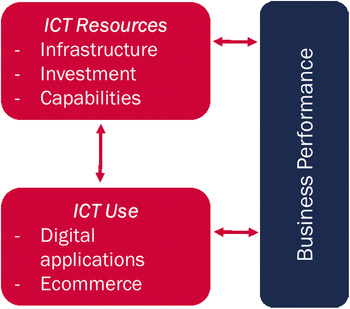
The framework for the Digital Maturity Survey is set out in figure 1. This was developed from a review of research on SME adoption of ICT and digital technologies. The Survey was designed to reveal the processes through which SME performance is shaped by the adoption of broadband, the level of resources and the use of broadband-enabled applications. From figure 1, ICT resources includes infrastructure (broadband adoption), investment in physical assets, software and services, skills training and staff capabilities. Such resources are viewed as a key source of advantage for SMEs and evolve SME ability to make effective use of digital technologies.
(Colour online) Digital Maturity Survey framework

ICT use reveals how SMEs make use of digital technologies in their business processes. The scope of digital technologies in use has been a significant growth area in recent years with the digital maturity of SMEs explained by the growing adoption of superfast broadband, and enabled technologies such as cloud computing.
SME performance reveals something of the impact of gaining access to ICT resources. Impact is assessed by perceived changes in sales, profits, employment and innovation activity in the SME. The framework then allows for interactions between the different elements of digital maturity that is ICT resources, ICT use and SME performance.
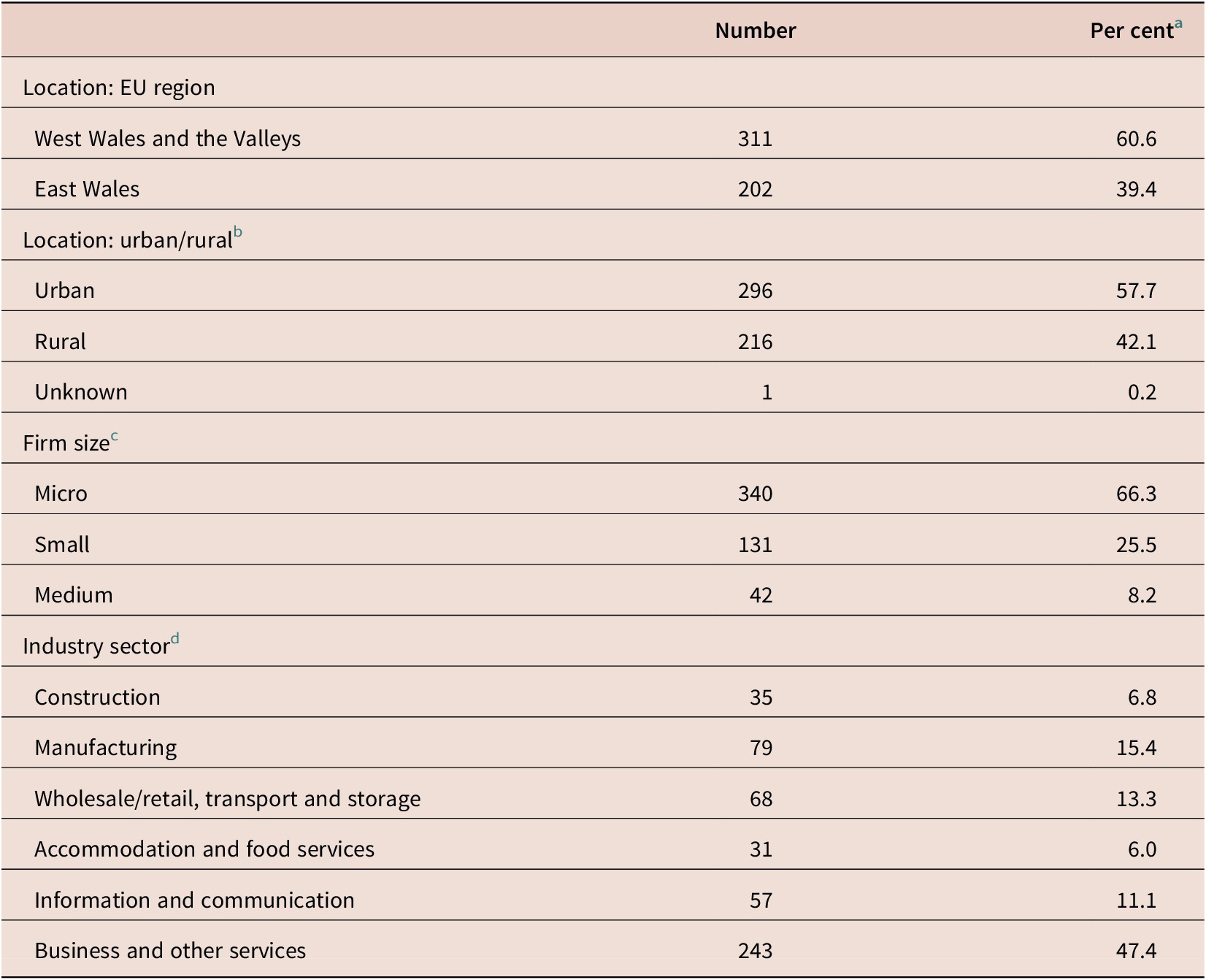
The fourth iteration of the Digital Maturity Survey was undertaken in 2019. The 2019 Survey collected a representative sample of SMEs in Wales (see table 1). To achieve a sample representative of major industry sectors and three sizes of SMEs, that is micro (0–9 employees), small (10–49 employees) and medium (50–249 employees), a stratification method was used. The post stratification weights were then applied to the responses to reflect the breakdown of firm size and industrial structure of the Welsh economy. The survey sample was created with the aid of Bureau van Dijk’s FAME database and was disseminated using an online questionnaire via the Qualtrics survey platform. The survey link went out by e-mail to 6076 SMEs and achieved a response rate of 8.4 per cent. As businesses who displayed interest in completing the online survey were deemed more likely to be those with greater digital engagement, the results could have had an upward bias in terms of digital maturity. To aid in counteracting this potential problem, a number of survey interviews were completed face-to-face at business events, and over the phone. The support of research partners (Business Wales, Superfast Business Wales, the 22 Welsh local authorities, Federation of Small Businesses Wales and Institute of Directors Wales) was utilised to raise awareness and promote the survey. A total of 513 responses were achieved.Footnote 4
Digital Maturity Survey (2019) Breakdown of responses

a Percentages may not sum due to rounding.
b Postcodes were utilised to classify respondents by the 2011 Census rural-urban classification (A1-F2), available at https://onsdigital.github.io/postcode-lookup/ (retrieved on 22 Jan. 2019).
c Micro businesses have 0–9 employees, small: 10–49 employees and medium: 50–249 employees.
d Industry sectors refer to SIC 2007 categories and are listed in the table as F, C, G, H, I, J and K–S, respectively.
4. Key findings
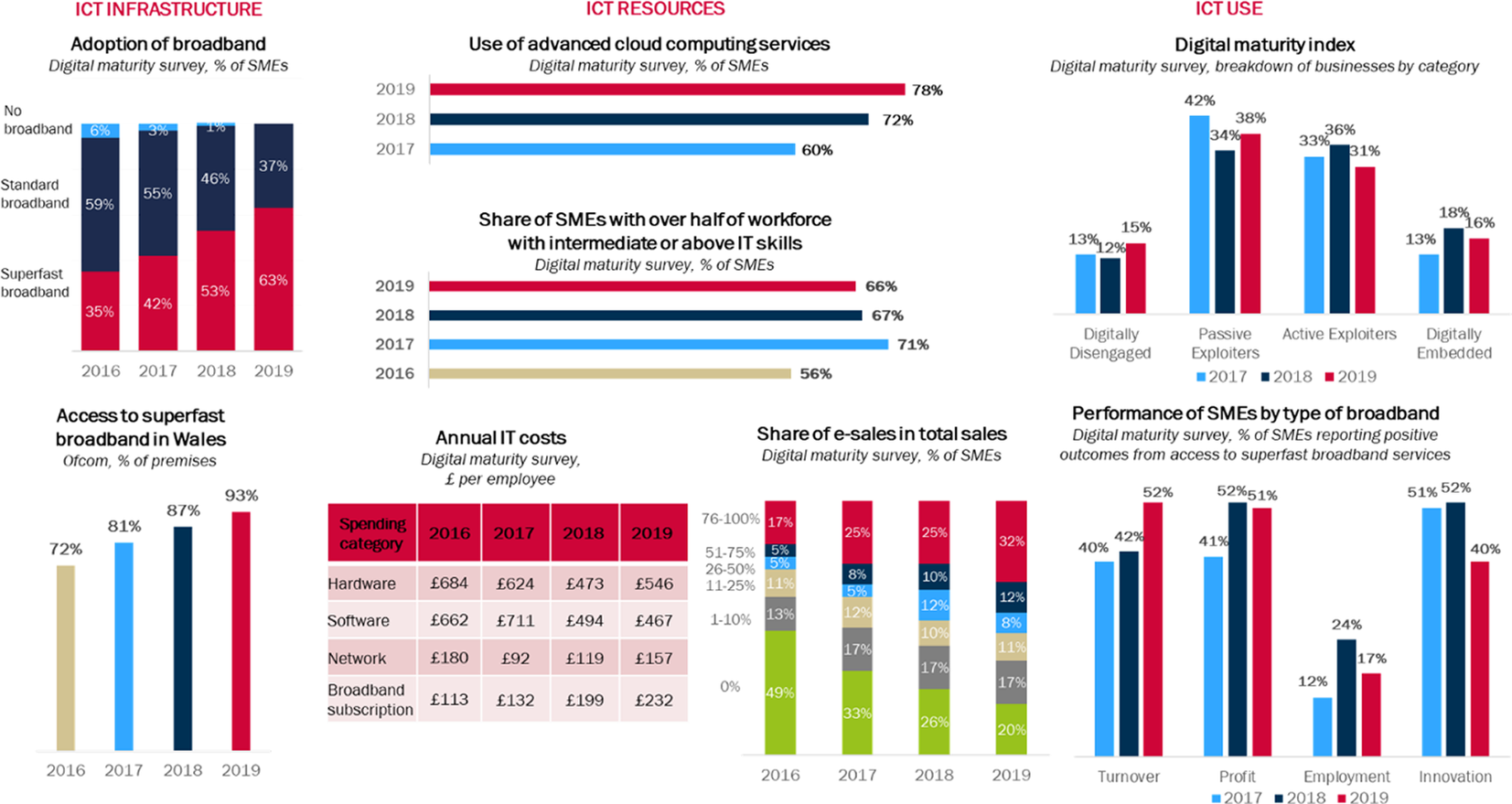
In what follows some key findings from the 2019 Survey are discussed, and where possible, some comparisons with prior years of the Digital Maturity Survey (2017 and 2018) are provided. The findings are categorised under issues of ICT infrastructure, ICT resources available to SMEs, and then some perspectives are provided on ICT use and benefits. Figure 2 provides a simple ‘dashboard’ of selected main findings from the 2019 Survey in terms of ICT infrastructure, ICT resources and ICT use.
(Colour online) Basic dashboard of Digital Maturity Survey results

4.1. ICT infrastructure
Particularly, encouraging in the time series of Digital Maturity Surveys was a steady increase in the proportion of surveyed SMEs that have gained access to superfast broadband. In 2019, figure 2 reveals that some 63 per cent of SMEs were using superfast broadband. This reflects the more widespread availability of the resource. Further analysis here revealed that there had been more take-up of superfast by SMEs in North Wales and South East Wales (both 68 per cent), with less in South West Wales (49 per cent) and Mid Wales (48 per cent). This might simply reflect variation in availability, but also reflect differences in industry structure with firms in some sectors more alert to the benefits offered by the superfast resource.
By industry sector (not separately shown in figure 2) adoption of superfast broadband was higher in the Information and communication (76 per cent), business and other services (67 per cent) and construction sectors (also 67 per cent). Lower shares of SMEs with superfast broadband were found in the accommodation and food services sector (46 per cent). Variation across sector and geography in terms of superfast take-up is seemingly an issue, particularly as by 2019, most of the region’s firms, in principle, should have been able to gain access to superfast services. More encouraging is the proportion of rural businesses adopting superfast broadband (also not separately shown in figure 2), but with this increased by 20 percentage points, from 37 per cent in 2018 to 57 per cent in 2019. For Wales these trends are important, with lower levels of productivity found in in the North West and South West of the economy, and in the more rural areas. The Survey reveals some reduction in the divide between rural and urban areas in adoption of superfast broadband.
4.2. ICT resources
The presence of a dedicated ICT budget is expected to signal something of the engagement of SMEs with ICT resources, and its importance in business development. Just 8 per cent of surveyed SMEs in 2019 revealed that they had a dedicated ICT budget, and with the smallest firms (micro-businesses) least likely to have a dedicated ICT budget, at just under 8 per cent, (but with these being the majority of firms, hence with the largest weighting in the sample) as compared to 15 per cent of small-sized businesses. Not surprisingly, the Survey revealed that it is SMEs in information and communication and business and other services who were most likely to have an ICT budget (17 and 15 per cent, respectively of SMEs in these sectors).
Annual ICT infrastructure and training investment per full-time worker is shown in the figure 2 dashboard. An average of £546 per full time equivalent employee was spent annually on hardware related items in 2019, an increase of 15 per cent from 2018. Contrastingly, spend on software fell by nearly 6 per cent, to £467, during the same time period. Network and broadband subscription spend per employee has steadily increased in the 2017–2019 period. This possibly links to more SMEs transitioning toward cloud-based applications. In these cases, in order to gain the benefits from cloud computing, high connection speeds and quality of connection are critical.
A further indicator of resources available to SMEs internally relates to how far those engaged with SMEs have ICT skills. Clearly, in some cases, this will be in terms of the qualifications of the firm principle given the micro-size of many firms in the Survey. Figure 2 shows that in 2019, two-thirds of SMEs (66 per cent) had at least half of their employees with intermediate or above ICT skills (i.e., intermediate computer skills include the working knowledge of the operations of the internet and email, computers, word processing, graphics and multimedia and spreadsheets and databases). In 2019, the sectors with the highest concentration of SMEs with intermediate or above ICT skills were information and communication (90 per cent) and business and other services (79 per cent). The comparative proportion for accommodation and food services businesses was two-in-five (40 per cent). There is strong variation in ICT skills by sector, and this also links through to where SMEs in these sectors are located. For example, a higher proportion of Wales’ ICT and financial and business service providers are located in the south east of the economy. However, encouraging here is that around two-thirds of both rural businesses (64 per cent) and urban businesses (68 per cent) revealed having at least half of their employees with intermediate or above IT skills.
4.3. ICT use
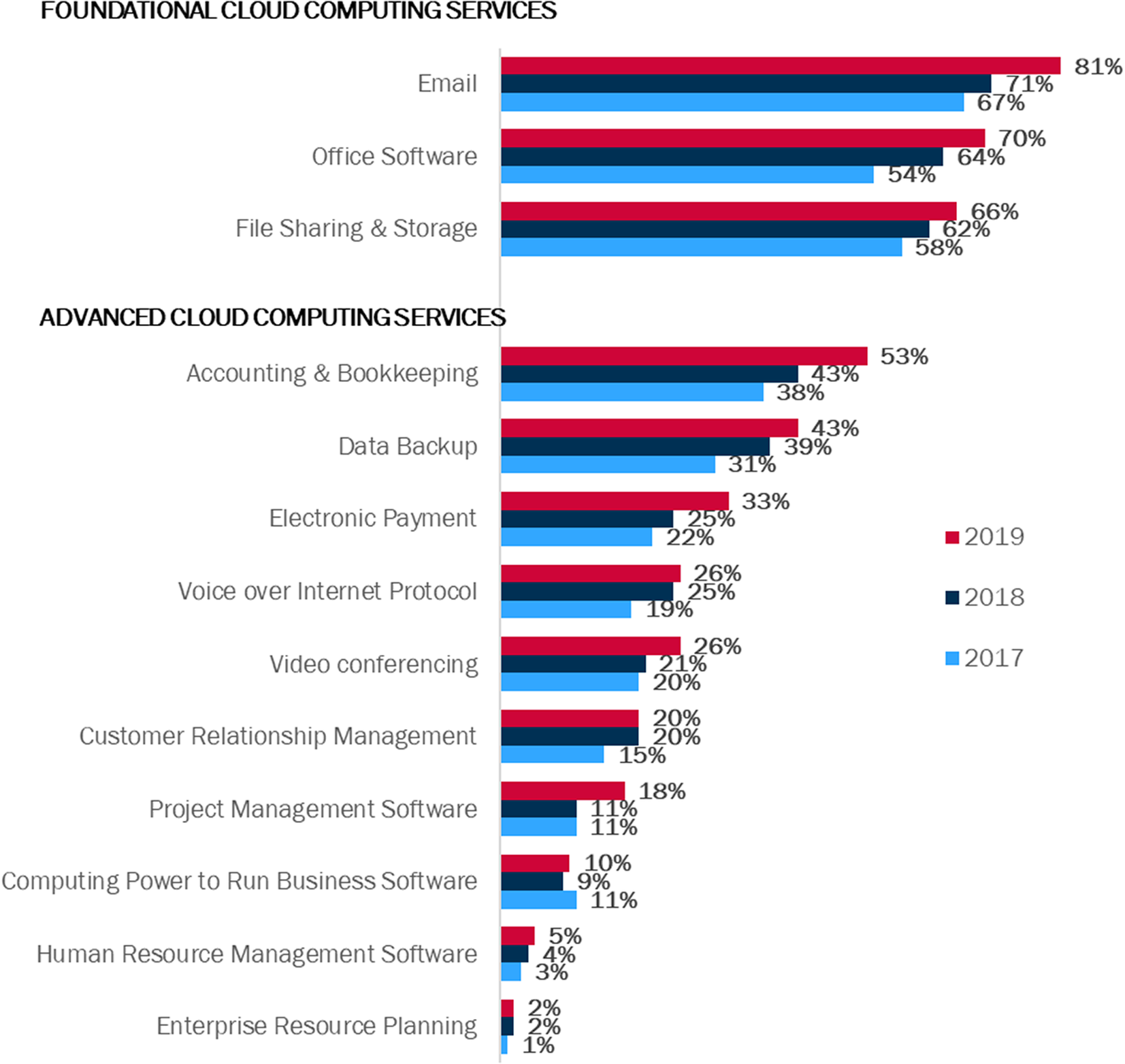
The Survey distinguishes between the use of basic, foundational cloud computing services (digital tools such as email, office software and file sharing/storage) and advanced cloud computing services. ‘Advanced’ services are defined as: accounting and book-keeping; data back-up; Voice over Internet Protocol; electronic payment; video conferencing; customer relationship management; project management software; computing power to run business software; human resource management software; and enterprise resource planning. The use of advanced cloud computing services is steadily increasing. Figure 2 reveals that the proportion of respondents using at least one advanced cloud computing service increased by 6 percentage points to 78 per cent in 2019.
Figure 3 provides more detail on this aspect revealing that responding SMEs reported increases in use of most advanced cloud computing services in the year to 2019. For example, the proportion of SMEs using cloud-based accounting bookkeeping services, electronic payment and project management software all saw marked increases when the findings of the Survey for 2019 were compared to those of 2018. SMEs in information and communication (87 per cent), manufacturing (85 per cent) and business and other services (82 per cent) were most likely to use advanced cloud services in 2019. Accommodation and food services businesses were the least likely to report using cloud services (44 per cent). Further analysis of the Survey returns showed that there was a higher propensity for use of advanced cloud services in medium-sized firms as opposed to small and micro-sized firms.
(Colour online) Proportion of businesses using cloud computing services, by category (% of SMEs)
Source: Digital Maturity Survey for Wales, 2019

SMEs were additionally asked in 2019 about use of internet of things (IoT); AI; and additive manufacturing (e.g., 3D printing). The percentage of SMEs reporting using them in 2019 were 6, 2 and 1 per cent, respectively.
The Digital Maturity Survey for 2019 reveals (see figure 2) marked increases in the proportion of SMEs doing more than three quarters of their business online. In terms of sector, construction and business and other services SMEs were the least likely to sell online with just over a third of SMEs in both of these sectors (34 per cent) reporting no online sales. Information and communication and accommodation and food services businesses were most likely to report deriving a higher proportion of sales online. Further analysis of these findings reveals that micro-sized SMEs were most likely to service between 76 per cent and 100 per cent of their sales online. Indeed around 37 per cent of micro SMEs were in this category. The comparative percentages for small and medium-sized businesses were just 16 and 2 per cent, respectively.
In terms of purchases transacted online, the Survey revealed that around 30 per cent of SMEs undertook 76 per cent or more of their total purchases (in value terms) online. Further analysis of the data here showed that the smaller the SME, the more likely they were to purchase online. For example, close to 50 per cent of micro SMEs transacted more than 50 per cent of their total purchases online, in comparison to 28 per cent of small businesses and 5 per cent of medium-sized businesses.
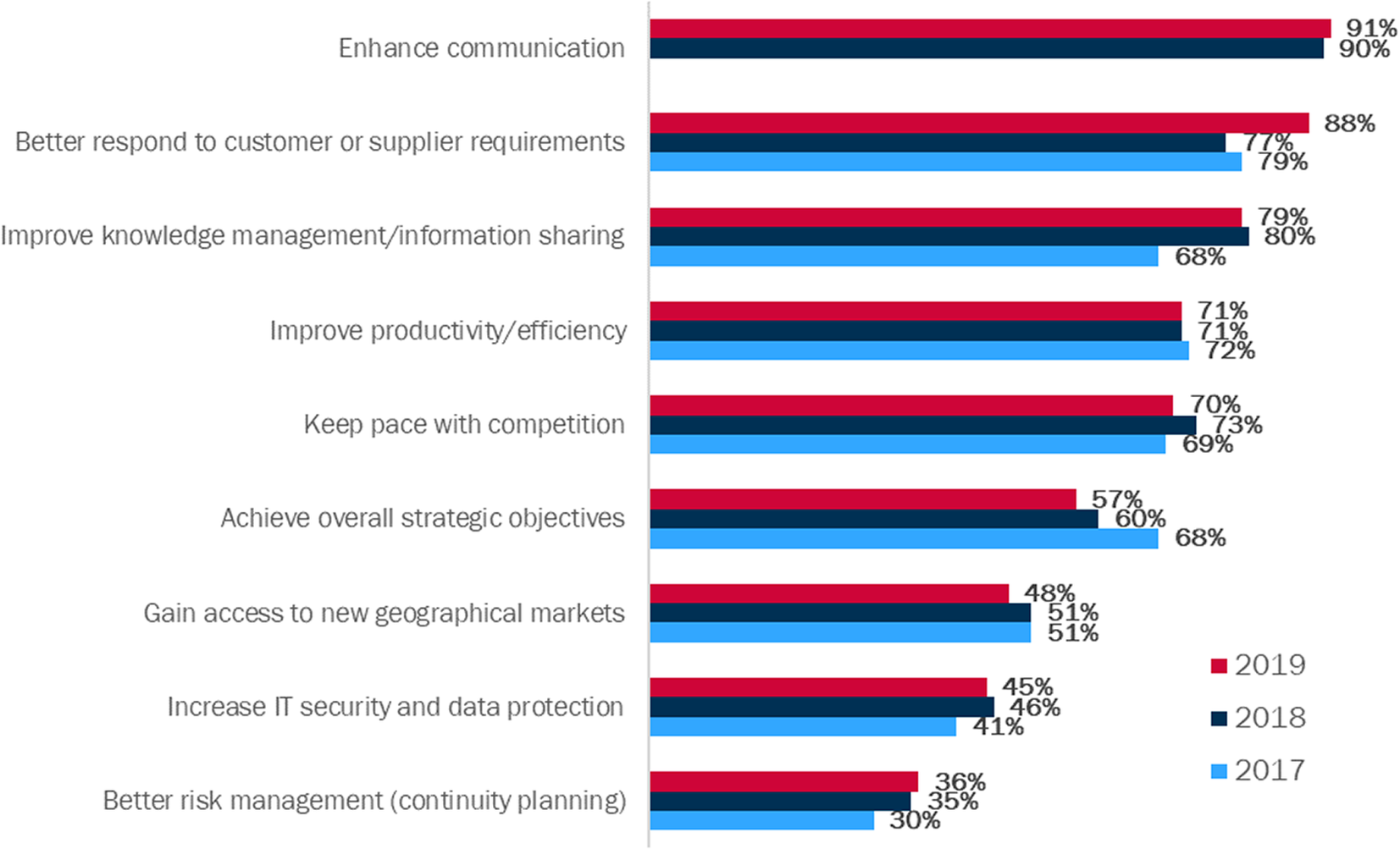
The ways in which ICT is used is expected to lead to a series of benefits for firms that are successful adopters. Figure 4 summarises the benefits as perceived by responding SMEs to the 2019 Survey. Firms perceived benefits of using broadband in terms of enhancing communication (91 per cent), enabling them to better respond to customer or supplier requirements (88 per cent) and improve knowledge management/information sharing (79 per cent).
(Colour online) Benefits of broadband-enabled services (% of SMEs)

The Survey questioned SMEs on the outcomes they had experienced through the use of broadband or superfast broadband. Figure 2 reveals the proportion of surveyed SMEs reporting positive outcomes in terms of turnover, profit, employment and innovation from adopting superfast broadband. For example, over 50 per cent of SMEs indicated that turnover had increased due to exploiting access to superfast broadband speeds, and around one-in-six businesses (17 per cent) reported the positive outcome of an increase in employment resulting from superfast broadband use.
4.4. Examining digital maturity
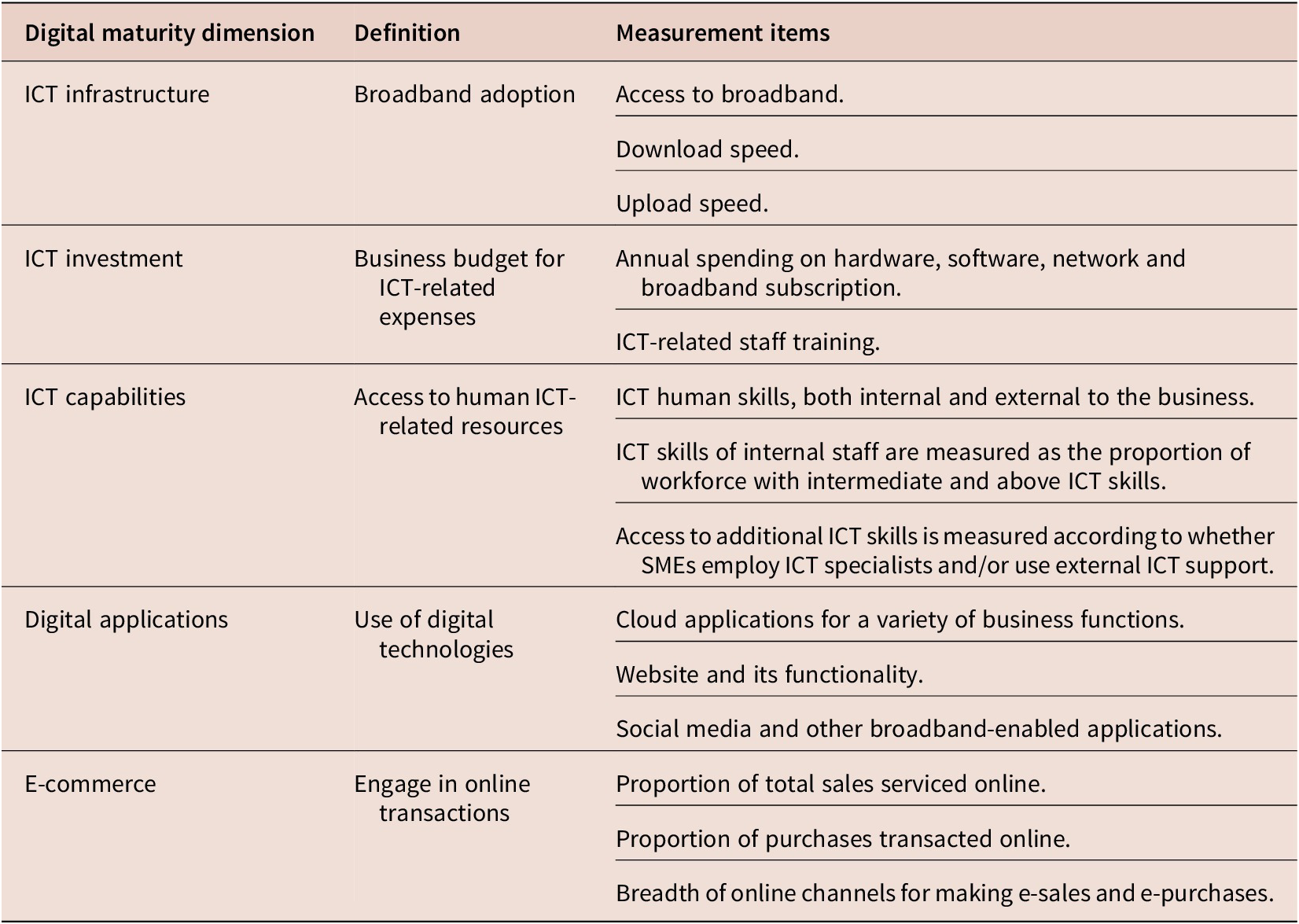
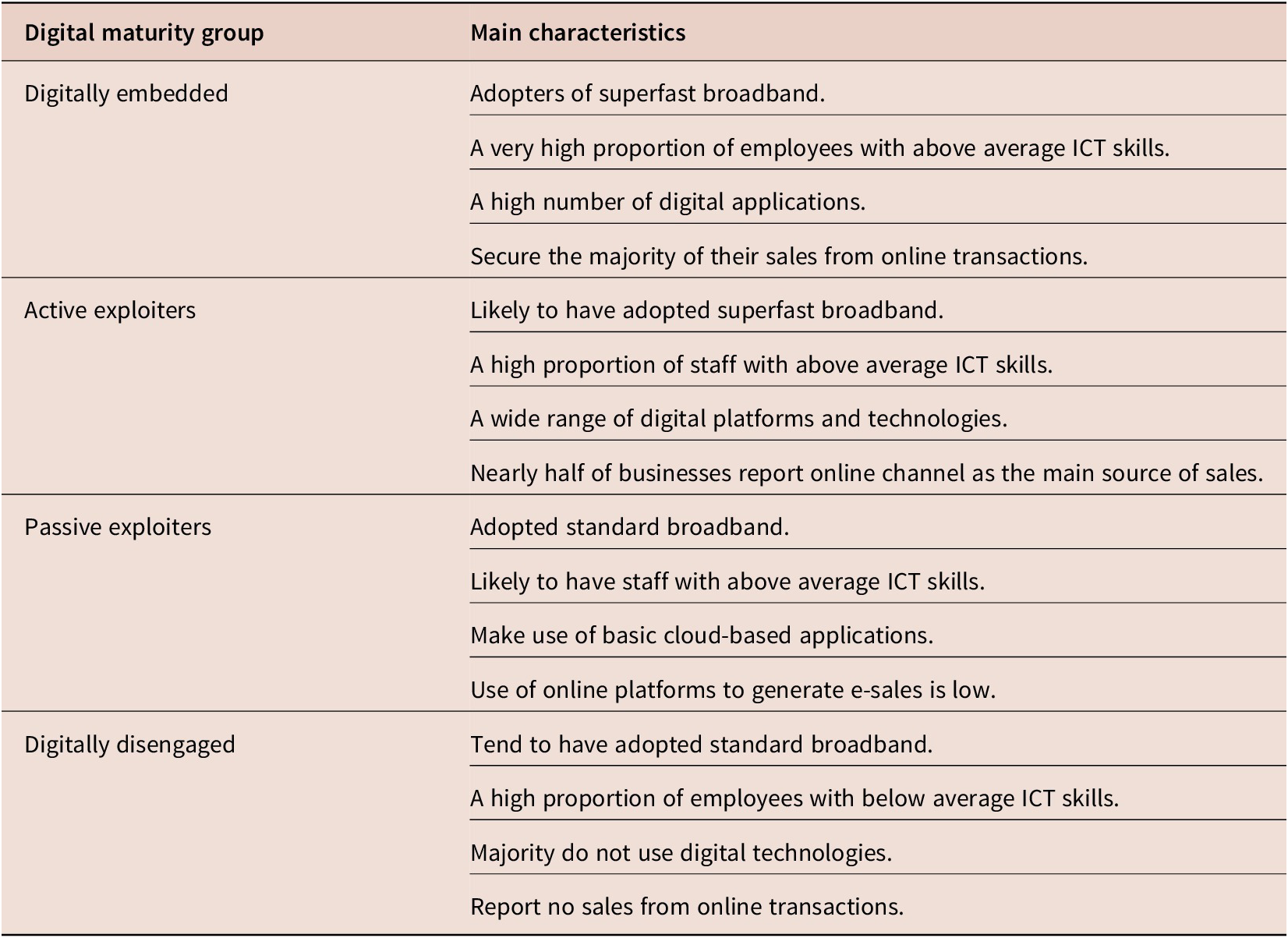
One of the purposes of the Digital Maturity Survey is to develop a digital maturity index alongside the main dimensions of digital maturity revealed in figure 1. Table 2 summarises the survey components that contributed to the developed index. Of the 513 SMEs who participated in the DMS, the resulting four groups were labeled by the level of their digital maturity as digitally embedded, active exploiters, passive exploiters and digitally disengaged, respectively. Table 3 summarises the main characteristics of the different digital maturity groups.
Definition and measurement of digital maturity dimensions

Main characteristics of the digital maturity groups

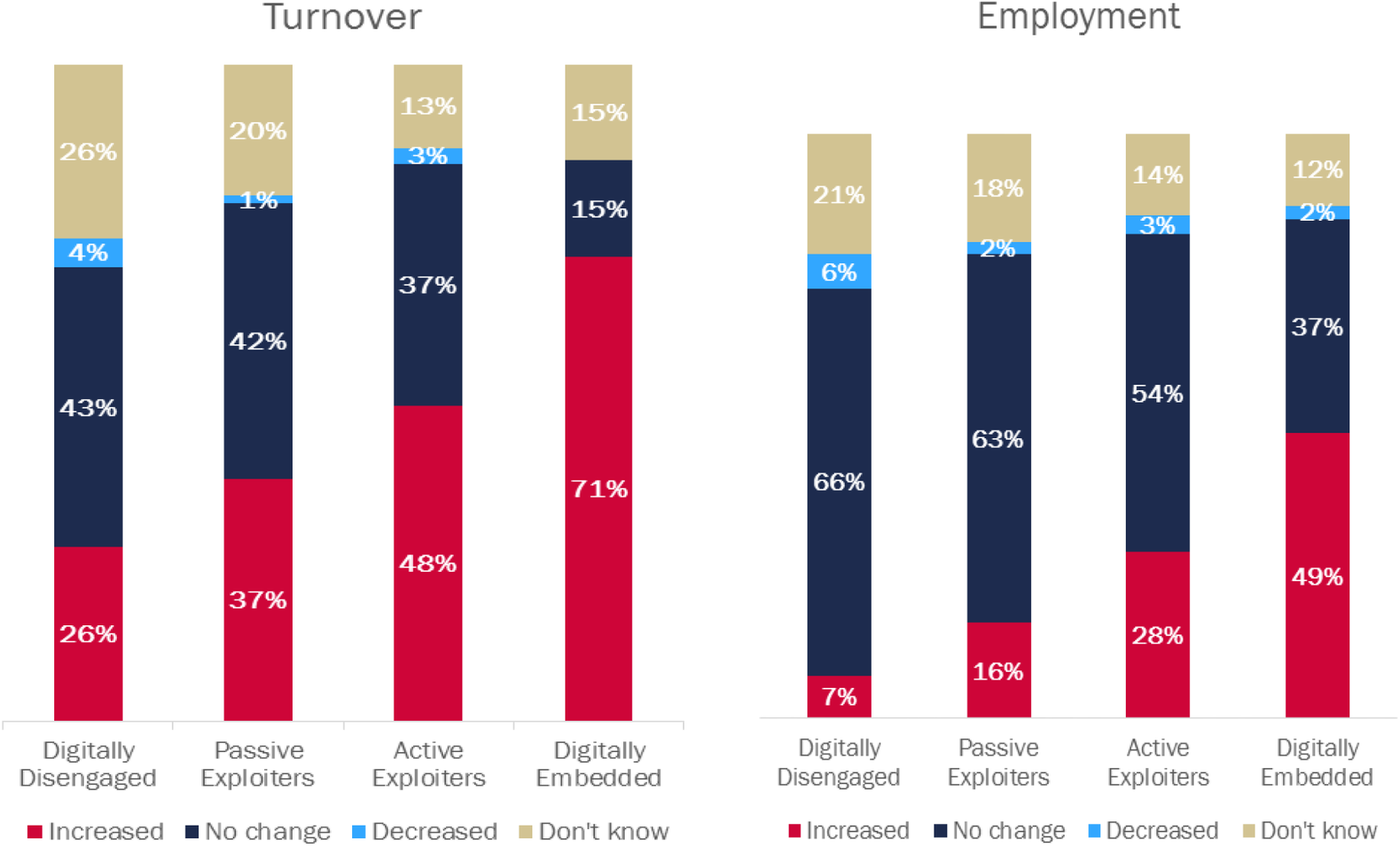
ICT, education and transportation are the sectors found to have the greatest proportion of digitally mature businesses (digitally embedded and active exploiters). While other services, agriculture and construction have the lowest percentages of digitally mature businesses. These differences among SMEs in different sectors of the economy are an important issue in the context of government interventions. Such variations partly reflect different levels of technology opportunity in sectors, but lower levels of digitally embedded SMEs found in sectors such as manufacturing, where there is potential to be highly productive, would seem to be a real concern. Equally important is the pattern of business performance. Figure 5 reveals, for example, that in 2019, some 71 per cent of firms that were characterised as digitally embedded, reported an increase in sales in respect of broadband adoption. Where firms were typified as digitally disengaged, the proportion falls to just 26 per cent; similar patterns are evident in firms that were seeing an increase in employment in the year. Figure 5 shows that around half of firms with the characteristics of being most digitally embedded had reported an increase in employment in the year.
(Colour online) Effect of broadband adoption on turnover and employment
Source: Digital Maturity Survey for Wales, 2019

5. Discussion and conclusion
While broadband infrastructure for firms has seen marked improvements in Wales, the findings in this paper highlight strong diversity in adoption of opportunities leveraged by superfast broadband in particular. While some of the small versus large firm barriers to engagement with digital technology in terms of high upfront fixed costs are reducing, there remain marked differences in adoption, often even within the same sector. In the Welsh case differences in adoption cannot be simply related to technological opportunity or rural/urban location. As suggested earlier in this paper, work has already pointed to the digital challenges faced by SMEs in areas such as business owner motivation and confidence. It is precisely in this area where government intervention such as the SFBBE project can have real value. Notwithstanding, the continued unevenness in rates of engagement with the technology are a concern, particularly in the context of the recent poor productivity tale of the Welsh economy. It is expected that the Covid-19 crisis will strongly mark out those SMEs who have been more successful in engagement with broadband resources. Further work in Wales is seeking to investigate the extent to which better past engagement with these resources affected SME resilience during 2020, particularly in hardest hit sectors such as tourism, accommodation and food services. There is encouraging evidence from the Digital Maturity Survey that where small firms have, in the past, led in terms of adoption (i.e., digitally embedded or active exploiters) they appear to be characterised by stronger performances in terms of sales and employment. Establishing the actual links between ICT infrastructure, ICT use and improved small business productivity in the Welsh case will be an ongoing project of interest.
The findings here also suggest that the ‘easy’ adoption of technologies such as basic email, website and e-commerce tools merely provide a gateway to digital opportunity. Competitive advantage for small firms will link to ‘scarcer’ digital competencies and resources leading to new innovation. The review suggested that the greatest productivity benefits are associated with more advanced adoption of digital technologies including areas such AI, 3D printing and IoT (OECD, 2017) and with the Digital Maturity Survey revealing that SME engagement with these technologies is quite low. There is then an important question of how far policymakers in Wales can support SMEs to respond to the ongoing digital transition, and assist them to upgrade to more advanced digital technology. In this respect, and sitting squarely alongside the challenge of ensuring a high quality digital network and broadband connections for SMEs, are challenges in terms of skills development. Interventions in Wales such as the SFBBE project are delivered in a context of rapidly emerging technologies such as cloud computing, and the growing integration of advanced technologies such as AI and analytical tools for Big Data. While many SMEs can now make use of ‘foundational’ digital technologies, there may be an increasing challenge of using more advanced technologies. Here, there are signs that private sector actors are complementing (or perhaps displacing) government intervention. For example, this can be in the form of introducing online and face-to-face support for SMEs in the area of digital technologies (e.g., Amazon Academy, Google Digital Garage and Facebook Business) and this may be an opportunity for public and private sectors to work together in supporting digital skills among the SME base in Wales and other regions (Henderson, Reference Henderson2020).
While Welsh SMEs increasingly use superfast broadband resources, the scene is dynamic, requiring continual firm transformation and waves of new adoption, and new waves of intervention support. Faster high-speed fibre-based connections are needed for new cloud computing applications and data transfer. Wales (see OFCOM, 2019) as well as the United Kingdom (OECD, 2020) lag behind many states on the availability of such connections. Moreover, the issue of ICT infrastructure increasingly embraces mobile aspects. Here, responsibility for mobile telecommunications is a reserved issue for the UK government, but Wales has increasingly sought to ensure that planning, highways and other devolved regulations facilitate the rapid deployment of mobile (4G and 5G) infrastructure. This is a pointer to persistent regional challenges in terms of ensuring harder to reach, rural businesses benefit from mobile broadband and then better access to business opportunity. Indeed, in the Welsh case there is strong interest in how far new digital infrastructure and adoption might assist rural areas of Wales to ‘catch up’.
These findings suggest that many SMEs are experiencing a transition toward increasingly sophisticated use of digital technologies. They highlight the ongoing need for research to examine its implications for both SME performance and wider economic impacts. The persistence of the challenges faced by businesses implies that it will be important for research to also examine the potential for public–private intervention to assist with this transition. Such research is likely to be ever more important in the post-coronavirus pandemic era, where the important role of digital technologies in supporting social and economic activity has been highlighted.
Financial support
Financial support for this research was provided by the SFBBE project, part funded by the ERDF through the Welsh Government.