Specific Event Identifiers
-
a: Event Type: Social Disaster, War
-
b: Event Onset Date: 2022
-
c: Location of Event: Ukraine, Chernihiv Area
-
d: Geographic Coordinates of Chernihiv City in Latitude, Longitude, Elevation: Latitude: 51.5055 N, Longitude: 31.2849 E, Elevation 416 ft
-
e: Dates of Observations Reported: April 16 – May 28, 2022
-
f: Response Type: Medical Relief
Introduction
War has both immediate and long-term public health consequences: people can be killed or injured from violence itself, or they can develop health problems stemming from the traumatic experience of war and the scarcity of access to adequate health care. Reference Goto, Guerrero, Speranza, Fung, Paul and Skolauskas1 Some deaths are not combat-related, but instead are the result of the wider effects of conflict on public health – effects that linger long after the war has ended. Reference Ghobarah, Huth and Russett2
The Russian invasion of Ukraine brought catastrophic suffering and health consequences for the civilian population, as well as damage and destruction to health infrastructure such as hospitals, clinics, or ambulatories. The war causes an insufficient number of medical personnel and medical equipment with growing patient loads caused by the conflict. Most hospitals rarely have stocks of drugs and consumables beyond a few days due to storage-space constraints and the cost of keeping large inventories. Reference Lee3
On February 24, 2022 at 5:00am, Kyiv and other Ukrainian cities were hit by SS-26 Iskander, SS-N-27 Sizzler (Russian name “Kalibr”) missiles, Russian troops invaded the country, and some territories of counties were occupied. When war began, Russian troops attacked health systems and some fragments of health facilities were damaged by explosive weapons.
During first days, health, protection, and humanitarian needs had been identified and prioritized. The most pressing health needs during the first week were specified with Emergency Medical Service, critical (essential) medicines, as well as health supplies and equipment. At that time, priority needs for hospitals were: (1) suture material; (2) blood; (3) hemostatic sponges; (4) oxygen supplies; (5) drainage tubes; (6) surgical clamps; (7) needle holders; (8) equipment for electrosurgery; and (9) vacuum-assisted closure/VAC devices and accessories.
Urgent needs were defined as trauma care; primary care; and essential medicines with medicines for pain, anesthetics, and antibacterial; as well as medical supplies. Humanitarian needs included: (1) adequate food; (2) safe water; (3) life-saving medicine; (4) health service; (5) durable shelters for internally displaced persons (IDPs); (6) non-food items such as household necessities; and (7) access to education for children and adolescents. 4,5
Over the next two weeks, health system needs associated with health worker death due to firearms wounds or explosions, hospitals damages, medical assistance, and psychological supports to kids had been evaluated. 6,7
On Day 30, hospitals needs were recognized as anti-infective agent (ointment) for eyes, medicine acting on airway, antiemetics and antinauseants, medicines affecting coagulation antithrombotic agents, human immunoglobulins: anti-rabies serum, tetanus-antitoxin, blood products and plasma substitute, and solutions for parenteral nutrition. 8
The needs for emergency and primary medical care, medicines, and sanitation and hygienic supplies for local communities were set after the areas were de-occupied by Ukrainian Health Authorities together with medical personal from different International Humanitarian Health Organizations. National and international mobile clinics (MCs) were established and involved local inhabitants’ medical assistance. Each MC consisted of coordinator (physician or nurse), one physician, one psychologist, one pharmacist, one logician, a driver, and included essential medicines and hygiene supplies for local inhabitants. These clinics were deployed in remote local medical ambulatory areas upon prior agreement with local authorities and public health authorities.
Methods
The study methodology is based on the experience of medical assistance and health response planning to rural populations in the de-occupied territory. The information related to the missions was obtained in the field during a twelve-day mission in April-May 2022. Patient visit data were generated from the documented medical logs and medical records which had been completed for every person.
Descriptive statistics methods such as the grouping and distribution for this research were undertaken using Microsoft Office 2019, Excel (Microsoft Corp.; Redmond, Washington USA) with data analysis. These methods have been applied to describe out-patient characteristics and show a need for medicines and medical equipment in MCs. All patients were divided by age, sex, and diagnosis according to International Classification of Diseases-10 (ICD-10). Distribution of patients by age had identified several groups: (1) under five years old; (2) 5-14 years; (3) 15-39 years; (4) 40-59 years; and (5) ≥ 60 years.
Data collection did not cause damage or harm to patients, as well as any personal information wasn’t included in the study design. This research has been approval by Ethics Review Committee of Shupyk National Healthcare University (Kyiv, Ukraine) under identification number № 4 03.04.2023. Information was conducted in compliance with scientific, methodological, ethical, and legal norms.
Results
Patient Characteristics
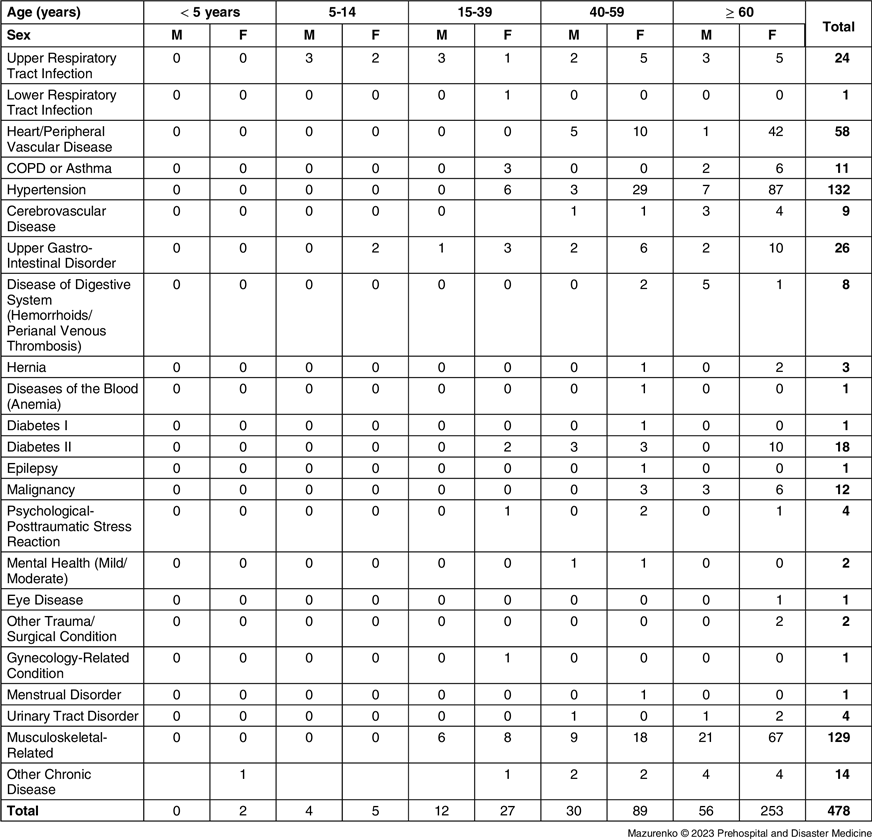
During the twelve-day mission, a total of 478 out-patients visited the MC. Of these, 102 (21.3%) persons were males and 376 (78.2%) persons were females (Table 1).
Mobile Clinic Patients Visit Distribution According to Diagnosis

Abbreviation: COPD, chronic obstructive pulmonary disease.
Children under five years old were totaled two (0.4%); 5-14 years were nine (1.9%); 15-39 years were 39 (24.9%), with 12 (30.8%) male and 27 (69.2%) female specifications. The cohorts older than 60 years consisted of 309 (64.6%) people, including 56 (18.1 %) male and 253 (81.9%) female.
Medical Diagnoses
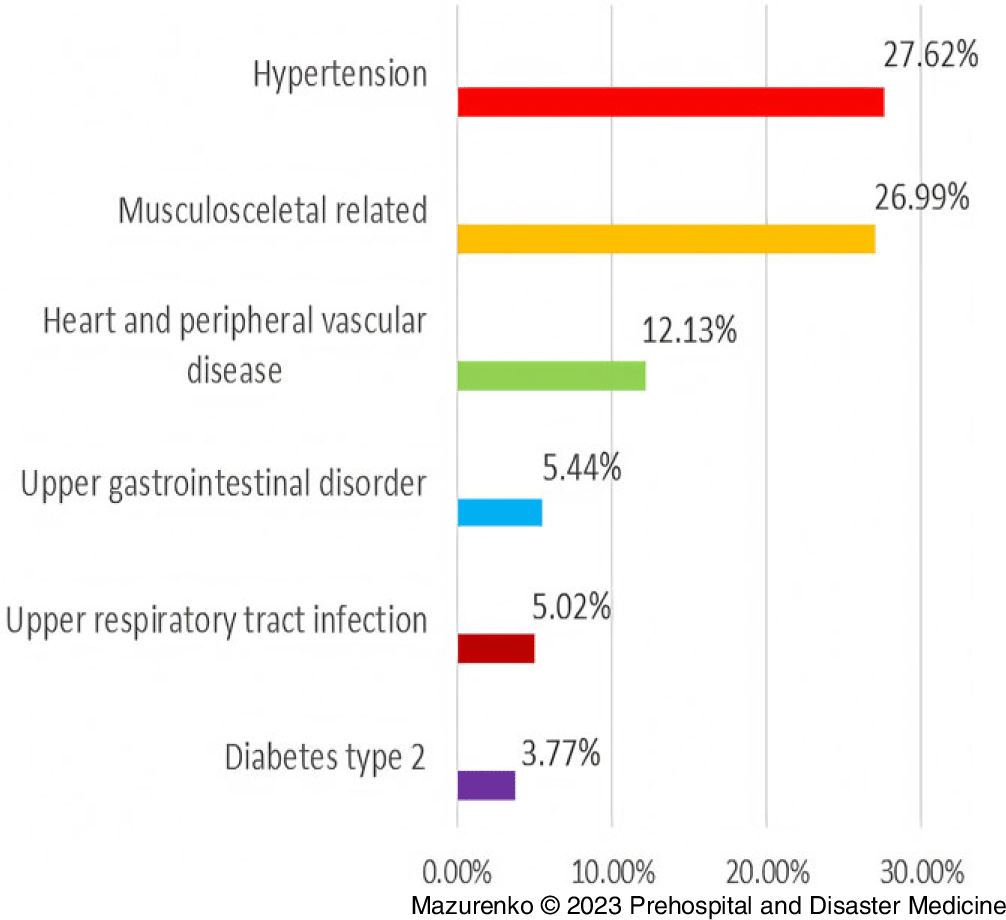
Together, hypertension (27.62%), musculoskeletal-related (arthritis) diseases (26.99%), heart and peripheral vascular diseases (12.13%), upper gastrointestinal disorder (5.44%), upper respiratory infection (5.02%), and diabetes Type-2 (3.77%) had completed 81.0% of total patients visits (Figure 1). Other diagnoses such as lower respiratory tract infection, diagnoses of the digestive system (hemorrhoids and perianal venous thrombosis), chronic obstructive pulmonary disease/COPD or asthma, eye diseases, gynecology-related condition, menstrual condition, and urinary tract disorder were distributed almost equally (0.21%-2.51%) among the patient population.
Mobile Clinic Patients’ Medical Diagnosis.

Hypertension
These studies clearly showed that 27.79% of the evaluated adult patients were persons with hypertension (blood pressure [BP] more than 140/90mmHg 9,Reference Kario10 ). Most of them (65.9%) were woman over 60 years old.
Patients reported about problems under Russians troops’ occupation: (1) weakened BP control by medical personal; (2) physical and psychological exhaustion; (3) insomnia; (4) lack of access to medications; (5) bad access to health facilities due to destruction; (6) poor diet; and (7) strong changes of their living style.
Despite the fact that all patients could use self-measured BP, the main reason for visiting was to check their BP by medics (“white coat” effect) and get the necessary medication therapy.
Musculoskeletal Disorder
Musculoskeletal disorder was the second most frequent health problem encountered by the MC. Damage to the musculoskeletal system is considered one of the main causes of morbidity and disability world-wide. The burden of musculoskeletal system illness is increasing due to the increase in the aging of the population. Reference Lewis, Gómez Álvarez, Rayman, Lanham-New, Woolf and Mobasheri11
Out of 478 patients, 129 (26.99%) were diagnosed with a musculoskeletal disorder. This health problems were categorized as low back pain in 87 (67.4%), neck pain in seven (5.4%), osteoarthritis in 34 (26.4%), and one (0.8%) as psoriatic arthritis. Among patients in this group were predominantly females older than 60 years.
Neurological testing to identify radicular syndrome had been used and non-steroidal anti-inflammatory drugs (NSAID) were provided.
Other Heart and Peripheral Vascular Diseases
Cardiovascular disease and related death tend to occur more frequently after disaster. Reference Babaie, Pashaei, Naghipour and Faridaalaee12 A total of 12.13% of visits to the MC were patients with heart and peripheral vascular disease. Among them prevailed women older than 60 years (75%) with ischemic heart disease and/or arrythmia.
All patients before wartime were under supervision by a general practitioner or cardiologist and received the necessary treatment. That is why most of the patients were looking for medicines and asking about chances to get an advanced consultation by a cardiologist at the specialty care clinic.
Upper Respiratory Infection
The burden of upper respiratory tract infection was very large in stable setting. An acute respiratory infections pattern appeared across different type of crisis. Reference Piotrowicz, Semeniv and Kupis13,Reference Bellos, Kim, O’Brien, Qazi, Gayer and Checchi14 Respiratory diseases, which include cold, bronchitis, and influenzas-like illness, are the leading cause of out-patient treatment and are responsible for 25%-30% of infectious disease hospitalizations in army personnel. Out-patients with upper respiratory infection were recorded in 5.02 % of total persons who visited the MC. These persons associated the occurrence of acute respiratory infections due to a long stay in the shelters in the time of shelling or air attacks. Highest level of morbidity (41.7%) was fixed among females older than 40 years old.
Upper Gastrointestinal Disorders
Gastrointestinal diseases have been identified in many studies on disaster-related diseases. These disorders have with various problems being encountered, especially in the acute (the first three days after the onset of a disaster), subacute (approximately the first two weeks after the onset of a disaster), and chronic phases. The problems in the acute phase concern food security and nutrition, while those in the subacute phase concern constipation and diarrhea. Reference Tominaga, Nakano, Hoshino and Hiraishi15
Twenty-six patients (5.44%) with peptic ulcer, acute, or chronic gastritis visited the clinic. Among this group were five males and 21 females. Seven patients (26.9%) had firstly encountered with signs and symptoms of gastrointestinal disorders.
Patients with experience of peptic ulcer asked for acid blockers antacids or proton pomp inhibitors medicines and for life style regime recommendations.
Among new patients, patients were identified who were taking NSAID, acetylsalicylic, or used alcohol and tobacco products, and were provided medical recommendations.
Diabetes
Diabetes Type-2 in adults were fixed in 18 (3.77%) persons: 13 females and five males, and diabetes Type-1 was ascertained in one female. Glycemic control was not achieved for most of the patients during the occupation. That is why a blood glucose test was performed for each patient who was in need or asked to do it. The glycemic target was - fasting blood glucose < 8.3mmol/liter (or < 150mg/dl). Any severe cases of hyperglycemia were not fixed. Patients under 60 years administered metformin or glibenclamide; senior patients (over 60; 62.5%) administered gliclazide. Life style and dietary recommendations had been provided for each patient. Patients with diabetes pointed that they faced with access to oral hypoglycemic agents or insulin, glucose meters, and individual mailing.
Discussion
The presented work shows the vast majority of requests for medical assistance regarding noncommunicable diseases (NCDs). Notably, NCDs kill 41 million people each year, which is equivalent to 74% of all deaths globally. Reference Babaie, Pashaei, Naghipour and Faridaalaee12,Reference Piotrowicz, Semeniv and Kupis13 Health systems in many post-conflict settings have difficulty responding to existing NCDs. 16,Reference Kabir, Karim, Islam, Romero and Billah17
Since the Russian invasion of Ukraine on February 24, 2022, more than six million Ukrainians, including hundreds of thousands of older people, have sought safety abroad. These older refugees have a mean of 2.5 diseases each, the most frequent of which are cardiovascular diseases, followed by gastrointestinal, respiratory, musculoskeletal, and genitourinary diseases. It has been estimated that the expected absolute incidence is greatest for pulmonary disorders, followed by cardiovascular, ocular musculoskeletal, and genitourinary disorders. Reference Piotrowicz, Semeniv and Kupis13
In 2013, NCDs resulted in more than 50% of mortalities in the Gaza Strip, where the health system suffers from extreme chronic resource shortage and the population has experienced long-lasting conflicts, resulting in a high economic and social burden on the health care sector from chronic conditions. Reference Roberts, Patel and McKee18,Reference Mosleh, Aljeesh, Dalal, Eriksson, Carlerby and Viitasara19
The World Health Organization (WHO; Geneva, Switzerland) experts published a report in 2014 regarding the prevalence of NCDs for the population living inside Syria. The report showed that cardiovascular diseases had the highest percentage of NCDs with almost 25% of all the cases; after that were cancer with nine percent, chronic respiratory diseases with two percent, diabetes with one percent, and five percent had communicable maternal or perinatal and nutritional conditions; eight percent had other NCDs, while war-related injures had a significantly high percentage for approximately 50%. 20
In 2018, cross-sectional research studies of NCD prevalence among Syrian refugees demonstrated that over one-half of the refugees reported at least one of the five main NCDs, which are: hypertension, cardiovascular disease, diabetes, chronic respiratory diseases, and arthritis. Among the refugees, arthritis had the highest prevalence (60%), followed by hypertension (47%), chronic respiratory diseases (38%), cardiovascular disease (3.3%), and diabetes (3.3%). Over one-half (50.4 %) of refugees and host community households (60.2%) reported a member with one of the five NCDs. Reference Rehr, Shoaib and Ellithy21–Reference Akik, Ghattas, Mesmar, Rabkin, El-Sadr and Fouad24
Hypertension and cardiovascular diseases have increased after major disasters because of the psychological stress and environmental changes and will persist until the disrupted behavioral and biological circadian rhythm is restored. Reference Chellappa, Vujovic, Williams and Scheer25 This research also confirmed that hypertension prevalence takes first place among other NCDs.
Among communicative diseases were fixed respiratory disease, which included cold, bronchitis, and influenza-like illness. Thus, after natural disasters among civilian population, pneumonia (59.0%) was the most frequent cause of admission for pulmonary disease, followed by acute exacerbation of COPD (16.5%), asthma attacks (8.4%), and progression of lung cancer (6.8%). Reference Yamanda, Hanagama and Kobayashi26 Among military personal, respiratory infections are the leading cause of out-patient treatment and are responsible for 25%-30% of infectious disease hospitalizations in army personnel. Because of crowded living conditions, harsh environment, over-exertion, psychological stress, mixing of people from diverse geographic locations, and exposure to respiratory pathogens in disease-endemic areas, soldiers and newly mobilized troops are at particularly high risk for respiratory disease morbidity. Acute respiratory diseases are the principal reason for out-patient treatment and hospitalization among military personnel, with an incidence exceeding that of the adult civilian population by up to three-fold. Adenoviruses, influenza A and influenza B viruses, Streptococcus pneumoniae, Streptococcus pyogenes, coronaviruses, and rhinoviruses have been identified as the main causes of acute respiratory infections among the military population. Although infective pathogens have been extensively studied, a significant proportion of illnesses (over 40%) have been due to unknown causative agents. 27,Reference Korzeniewski, Nitsch-Osuch, Konior and Lass28
A major disaster had a significant effect on diabetes management and exacerbated existing disparities. Diabetes is a chronic disease with many comorbidities, including hypertension and lipid abnormalities. Disruption of health care provisions and medications is likely to have both a short-term and a long-term impact on this condition. Reference Fonseca, Smith and Kuhadiya29
Limitations
The information related to the medical assistance in the de-occupied territory has limitations as a result of the on-going war. More specific information will follow in a more definitive work. This research was conducted only in 14 rural settlements just from one of the de-occupied regions of country. That is why as a limitation, the insufficient sample size for statistical measurement has been identified. Furthermore, observation was not conducted on a constant 24 hours basis and access to the past health history of every patient was absent. This research will be continued and more specific information will follow in a more definitive work.
Conclusion
The mission of the MC and its facilities in the Ukraine was caused by the war and the destruction of the medical infrastructure. The service provided by it were similar to other mission-serve victims of other emergencies and disasters outside Ukraine.
In de-occupied rural territories, severe shortages of essential medicine, access to advanced medical services, and significant decline of living standards were identified. All needs were identified as priority medical and humanitarian needs. Health responders could be ready for medical assistance to patients with NCDs after an area is de-occupied, as well as to support a person with psychological reactions. The most frequent reasons, more than 80.0%, for medical facility visits among civilian population in de-occupied territory are hypertension, musculoskeletal, gastrointestinal, and respiratory disorders. More than one-half of MC visitors (66.8%) asked for non-opioids and non-steroids anti-inflammatory medicines due to musculoskeletal disorder; additionally, at least one-third of persons asked for sedatives and sleep-inducing medicines. These data clearly demonstrate that MCs must be equipped by BP monitor, stethoscope, pulse oximeter, and diabetes testing kit glucose with essential medicines.
Conflicts of interest
The authors declare no conflict of interest.