Implications
The recent decline in fertility and longevity of dairy cows worldwide is a worrying trend that is common across the dairy industry and must be addressed in order to ensure a successful future of dairy enterprises. Research efforts have focussed on the identification of polymorphisms in genes underlying quantitative trait loci that have a significant effect on animal performance. Here, two autosomal genes for mitochondrial function were found to have significant associations with growth, fertility, milk production and survival in dairy cows.
Introduction
Growth, fertility and milk production are highly important inter-related quantitative genetic traits that are potential targets for marker-assisted selection to improve performance in dairy herds. Producers of Holstein–Friesian cows generally aim to breed animals at approximately 15 months of age to enter the dairy herd at around 2 years of age (Wathes et al., Reference Wathes, Brickell, Bourne, Swali and Cheng2008). Dairy heifers should therefore reach sexual maturity in sufficient time to allow several oestrous cycles before first breeding (Donovan et al., Reference Donovan, Bennett and Springer2003; Brickell et al., Reference Brickell, Bourne, McGowan and Wathes2009a). Poor growth is one of the main reasons for heifer culling (Kossaibati and Esslemont, Reference Kossaibati and Esslemont1997) and can significantly increase age, both at first breeding and at calving (Brickell et al., Reference Brickell, Bourne, McGowan and Wathes2009a and Reference Brickell, McGowan and Wathes2009b). Inadequate growth or excessive body condition are also risk factors for maternal dystocia and can have detrimental influences on fertility and milk production in the first lactation (Ettema and Santos, Reference Ettema and Santos2004). Furthermore, conformational traits such as stature and weight are strongly correlated with longevity, which ultimately impact upon the lifetime production, fertility and health of the cow (Klassen et al., Reference Klassen, Monardes, Jairath, Cue and Hayes1992).
Growth, fertility and milk production are all dependent on the efficient functioning of the mitochondrial system, reflecting the importance of metabolic homoeostasis. This process is significantly challenged after calving, when the mobilization of fat stores is necessary to provide extra energy at the commencement of lactation. This results in a period of negative energy balance (NEB) and loss of body condition, which adversely affects fertility (Beam and Butler, Reference Beam and Butler1999; Wathes et al., Reference Wathes, Fenwick, Cheng, Bourne, Llewellyn, Morris, Kenny, Murphy and Fitzpatrick2007 and Reference Wathes, Brickell, Bourne, Swali and Cheng2008). This study focused on two genes that play a key role in the control of energy metabolism: mitochondrial transcription factor A (TFAM; Bos taurus, autosome 28) and uncoupling protein 2 (UCP2; Bos taurus, autosome 15).
TFAM is an autosomal gene encoding a histone-like protein essential for transcription and replication of mitochondrial DNA (Jiang et al., Reference Jiang, Kunej, Michal, Gaskins, Reeves, Busboom, Dovc and Wright2005; May-Panloup et al., Reference May-Panloup, Vignon, Chretien, Heyman, Tamassia, Malthiery and Reynier2005). As this protein is directly involved in mitochondrial functionality, polymorphic variants in the gene have the potential to affect intracellular energy production and subsequently a multitude of downstream processes. Polymorphisms in TFAM have previously been associated with subcutaneous fat depth and marbling in beef cattle (Jiang et al., Reference Jiang, Kunej, Michal, Gaskins, Reeves, Busboom, Dovc and Wright2005). Uncoupling proteins (UCPs) are a family of five mitochondrial transporter proteins that are located on the inner mitochondrial membrane and play an important role in energy homeostasis (Echtay, Reference Echtay2007). These proteins mediate the transport of protons across the inner mitochondrial membrane, dissipating the proton motive force that drives ATP production by acting as proton ‘leaks’ (Echtay, Reference Echtay2007). These leaks are thought to regulate thermogenesis, energy metabolism, control of body mass and the attenuation of reactive oxygen species production (Echtay, Reference Echtay2007). UCP2 is expressed in many tissues including skeletal muscle, white adipose tissue, pancreatic islet cells and the nervous system (Jia et al., Reference Jia, Zhang, Ge and Jois2009). This protein is thought to play a significant role in the development of obesity and diabetes by affecting lipid metabolism, energy balance and body weight (BW) regulation (Fleury et al., Reference Fleury, Neverova, Collins, Raimbault, Champigny, Levi-Meyrueis, Bouillaud, Seldin, Surwit, Ricquier and Warden1997; Zhang et al., Reference Zhang, Baffy, Perret, Krauss, Peroni, Grujic, Hagen, Vidal-Puig, Boss, Kim, Zheng, Wheeler, Shulman, Chan and Lowell2001). Polymorphisms in this gene have previously been associated with lean meat yield, yield grade, average backfat and BW in beef cattle (Sherman et al., Reference Sherman, Nkrumah, Murdoch, Li, Wang, Fu and Moore2008), suggesting that UCP2 variants may also influence economically important traits in the dairy cow.
Here, we have studied single nucleotide polymorphisms (SNPs) in TFAM and UCP2 and investigated their associations with traits relating to size/growth, milk yield, fertility and survival in UK dairy cows.
Material and methods
Animals and phenotypic data
Information on animals, farms and phenotypic measurements has been described previously by Brickell et al. (Reference Brickell, McGowan and Wathes2009b). Briefly, Holstein–Friesian heifers (n = 509) born between August 2003 and October 2004 on 18 commercial UK dairy farms and primarily one research farm (with three groups) were recruited for this study. This provided a total of 21 cohorts of animals (mean cohort size 22, range 15 to 30 animals per cohort). These farms provided a range of management practices representative of those commonly encountered on dairy farms in the United Kingdom.
BW, height at withers, crown rump length (CRL) and heart girth were measured at approximately 1 month (28 ± 0.8 days), 6 months (184 ± 0.8 days, prepubertal) and 15 months (452 ± 2.8 days, postpubertal at the start of the service period) of age. These size measurements were used to assess heifer growth during the rearing period up to 15 months of age.
Fertility was assessed for each animal before first calving and during first and second lactation. For nulliparous heifers, age at first service (based on either the date of first artificial insemination (AI) or date of first exposure to a bull) and age at first conception were recorded. For those animals in which AI was used exclusively, the number of services required for conception was recorded. Conception was defined as whether an animal conceived (validated by a positive pregnancy diagnosis or a subsequent calving date) or failed to conceive after at least one insemination. The total number of AI services given included heifers which conceived as well as heifers that failed to conceive and were subsequently culled. Further details with regard to the fertility of the heifers in the trial have been published previously (Brickell et al., Reference Brickell, Bourne, McGowan and Wathes2009a).
During first and second lactation, age at calving, the number of days from calving to the commencement of luteal activity (based on twice weekly milk progesterone measurement (Bulman and Lamming, Reference Bulman and Lamming1978)) and the number of days from calving to first service were recorded. For animals which conceived, the number of services required for conception, number of days from calving to conception, the prevalence of the animal being in calf 100 days after calving and the calving interval were recorded.
Milk production traits were analyzed for each animal in the first and second lactation by measuring the number of days in milk, total milk produced, average milk production per day, 305-day milk yield and the peak daily milk yield. These values were obtained from monthly records provided by commercial milk recording services.
Animals were recruited onto the study at birth and were monitored until the end of their second lactation or until the time of death or culling. The number of records used in each analysis varied depending on the availability of information on the traits and SNP.
Blood sampling, DNA extraction and genotyping
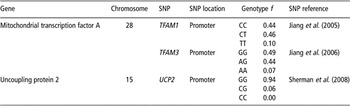
Genotyping of the SNP was carried out by Igenity (Merial Animal Health, Ltd, Harlow, Essex, UK). Blood samples from each animal were collected from the jugular vein (at 6 months of age) or from the coccygeal vein or artery (at 15 months of age) under the UK Animals (Scientific Procedures) Act of 1986. Whole blood was spotted onto Whatman FTA cards (Whatman International Ltd, Maidstone, Kent, UK) and allowed to air dry. Three 2.0 mm punches were taken from each sample using a Harris Uni-Core puncher and cutting mat (Whatman International Ltd). The puncher was washed in ethanol and dried thoroughly after each sample to avoid cross-contamination. Punches were added to 1.5 ml eppendorf tubes (Fisher Scientific, Loughborough, Leicestershire, UK) and 189 μl of FTA Purification Reagent (Whatman) and 1 μl of 20 mg/ml Proteinase K (Qiagen, Crawley, West Sussex, UK) were added, followed by an incubation at 56°C for 1 h. After the incubation, the punches were washed twice with Tris EDTA (ethylene diamine tetra-acetic acid) buffer (10 mM Tris-HCl, 0.1 mM EDTA, pH 8.0) and 50 μl of H2O were added to release the DNA by incubation at 96°C for 5 min. Genotyping of the SNP was carried out by Eurofins Medigenomix GmbH, Martinsried, Germany; using iPLEX biochemistry on a MassARRAY Compact Analyzer (Sequenom Inc., San Diego, CA, USA) according to the manufacturer's protocols. This approach was based on allele-specific primer extension reactions, whereby base identification was observed using matrix-assisted laser desorption ionization tome of flight mass spectrometry. Details of the SNP used in this study are given in Table 1.
Gene, SNP location, genotype frequency and references

SNP = single nucleotide polymorphism; f = frequency; C = cytosine; T = thymine; G = guanine; A = adenine.
Statistical analysis
The genotype frequencies of each polymorphism were examined for deviations from Hardy–Weinberg equilibrium within the population using the χ 2-test. For SNP with genotypes represented by fewer than five animals, the Freeman–Halton extension of Fishers exact test was carried out (Freeman and Halton, Reference Freeman and Halton1951). The extent of linkage disequilibrium between pairwise genotype combinations was also determined by calculating the correlation coefficient (r 2) in Haploview software (Barrett et al., Reference Barrett, Fry, Maller and Daly2005).
Association analyses were carried out using a range of models. In all instances, model suitability was analyzed by evaluating the distribution of residuals, the size of the residual variance, differences in log likelihood values and the Bayesian information criterion (for models (1) and (2) only).
For the growth analyses (BW, CRL, height and girth), measurements were analyzed initially at the three separate time periods with the following model (1):

where Y = size/growth measurement; μ = overall mean; HYSBi = fixed effect of the ith herd – year – season of birth (i = 1 to 34); Σ1zbizagez = regression of the age of the cow (age) in days described by the ith herd – year – season of the regression coefficient (b), where z = 1 to 2; SNPj = the jth genotype of the SNP (j = 1 to 3); Ak = kth random genetic effect of the animal modelled using an inverse relationship matrix obtained from pedigree information and eijk = random residual error.
The three growth measurements were also analyzed collectively using regressions to model the changes in growth over time. Investigations into the type of curve (orthogonal v. spline) and order of polynomial were conducted. After initial tests, age was again fitted within herd – year – season (to account for any differential effects of growth within the farm) and also within SNP. The model (2) used in subsequent analyses was:
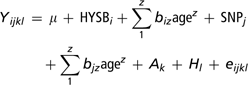
where Σ1zbizagez = regression of the age of the cow (age) in days described by the ith herd – year – season of the regression coefficient (b), where z = 1 to 4; Σ1zbjzagez = regression of the age of the animal (age) in days described by the jth order of the SNP of the regression coefficient (b), where z = 1 to 4 and Hl = the animal permanent environmental effect (all other abbreviations as before).
Production traits (days in milk, total milk, milk per day, 305-day milk yield, daily peak milk yield) were analyzed separately in each lactation using the following mixed model (3):

where Y = production trait analyzed; μ = overall mean; HYSCi = fixed effect of the ith herd – year – season of calving (i = 1 to 36); AC = age at calving; SNPk = fixed effect of the kth genotype of the SNP (k = 1 to 3); Al = lth random animal effect and eijkl = random residual error.
Fertility traits (age at first service, total number of AI services, conception, services required for conception, age at first conception, age at calving, commencement of luteal activity postpartum, days to first service, days to conception, the prevalence of the animal being in calf 100 days after calving and the calving interval) were analyzed for each lactation separately using model (4):

where Y = fertility trait analyzed; μ = overall mean; HYSCi = fixed effect of the ith herd – year – season of calving (i = 1 to 36); SNPk = fixed effect of the kth genotype of the SNP (k = 1 to 3); Al = lth random animal effect and eijkl = random residual error. For commencement of luteal activity postpartum, days to first service, days to conception, the prevalence of the animal being in calf 100 days postpartum and the calving interval, an additional fixed effect of the age at calving was fitted. In all cases, fixed effects were only fitted if they made a significant reduction in the residual variance (P < 0.20).
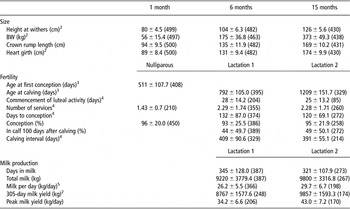
The traits analyzed in this study were transformed where necessary to normalize their distribution as indicated in Table 2. In addition, residuals were checked for a homogenous distribution. Observations on conception and the prevalence of the animal being in calf 100 days after calving were class variables (1 = yes/0 = no) and were therefore analyzed using a binary model. The scale for binary traits was related to the linear predictor using a logit link function of the form μ/(1 − μ). Means testing for these traits were carried out on the underlying scale and predicted means were calculated using the inverse link function 1/(1 + exp(−p)) where p was the linear predictor on the underlying scale. All analyses were performed using ASREML version 2.0 (Gilmour et al., Reference Gilmour, Gogel, Cullis and Thompson2006).
Mean phenotypic values for the traits investigatedFootnote 1

1 Values are presented as mean ± s.d. Values in parenthesis are the number of records analyzed.
2 Measurement transformed using √x.
3 Measurement transformed using 1/(x).
4 Measurement transformed using log10(x).
5 Measurement transformed using x2.
For each cow, pedigree information for the preceding three generations was collected from the Holstein UK website (www.ukcows.com), creating a total pedigree containing 2251 animals. There were 93 (±6.0) sires (5.4 sires per heifer, range = 1 to 32) and 181 (±1.8) maternal grandsires (2.0 maternal grandsires per heifer, range = 1 to 11).
Genotype effects for significant associations were calculated using the prediction function in ASREML using the fixed effects in models (1) to (4). For model (2), interactions between age and herd – year – season were fitted as single factors as described by Gilmour et al. (Reference Gilmour, Gogel, Cullis and Thompson2006) and predictions were made at 1, 6 and 15 months of age. Significant differences between the genotype predictions were analyzed using the t-test and standard errors of differences were calculated for each pair of means tested.
A false discovery rate (FDR) was calculated to account for multiple testing, whereby significance was achieved at an FDR q value <0.10 as described by Mosig et al. (Reference Mosig, Lipkin, Khutoreskaya, Tchourzyna, Soller and Friedmann2001).
Survival analysis
Differences between genotypes in the number of animals that survived until the end of their second lactation for each SNP were measured by Kaplan–Meier survival analysis using the Statistical Package for the Social Sciences 17.0 (SPSS Inc., Chicago, IL, USA). Censored animals were those cows that survived until the end of their second lactation. The proportions of cows censored were compared using the Cox proportional hazards regression model. The fixed effects of the herd and sire of the animal were initially included in the analyses, but were found to have a non-significant effect on survival (P > 0.20) so were removed from the final model.
Results
Genotype frequencies, linkage disequilibrium and descriptive statisitcs
Details on the SNP and genotype frequencies are reported in Table 1. Allele frequencies of all SNP were distributed according to the Hardy–Weinberg equilibrium expected values (Barrett et al., Reference Barrett, Fry, Maller and Daly2005). Analysis of the two TFAM SNP (TFAM1 and TFAM3) showed that they were in close linkage disequilibrium (r 2 = 0.85) and therefore only TFAM3 was studied further. The UCP2 SNP had a highly skewed genotype frequency, with the majority (94%) of animals having the GG genotype and only 6% having the CG genotype. The homozygous CC genotype was absent from the study.
The phenotypic size measurements relating to growth, fertility and milk production are shown in Table 2. BW increased from 56 kg at 1 month of age to 373 kg at 15 months of age, before first service. The mean age at first conception for nulliparous heifers was 511 ± 5.3 days (n = 408), and the mean age at first and second calving was 792 ± 5.3 days (n = 395) and 1209 ± 8.4 days (n = 329), respectively. Approximately, half of the heifers in this study (210/450, 47% of the total served at 15 months of age) were served exclusively by AI. Fertility (based on services per conception) was generally better in nulliparous heifers compared with fertility in first and second lactation. For milk yield, cows in their first lactation averaged 26.2 ± 0.3 kg/day with a peak daily milk yield of 34.2 ± 0.5 kg/day and a 305-day milk yield of 8767 ± 100 kg.
Association and genotypic results relating to growth
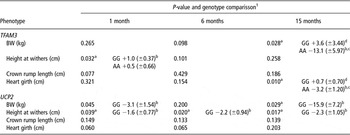
Association analyses for the growth parameters analyzed at individual time periods are presented in Table 3. To determine the influence of different genotypes, the heterozygotes were used as a reference to calculate the effects that both homozygotes had on the particular trait. For TFAM3, significant associations were observed with BW at 15 months of age, where AA animals were significantly smaller than the heterozygotes at 15 months of age. For height at withers, significance was achieved at 1 month of age, whereby GG animals were 1.0 (±0.37) cm taller than heterozygotes. For heart girth, AA animals were significantly smaller than heterozygotes by 3.2 (±1.20) cm and GG homozygotes were also smaller. No significant associations were observed with CRL; however, a trend of association was present at 1 month of age.
Probability values and genotype comparisons for significant associations (P < 0.05) between TFAM3 and UCP2 with juvenile growth in dairy heifers measured at individual time points

TFAM3 = mitochondrial transcription factor A; UCP2 = uncoupling protein 2; G = guanine; A = adenine; FDR = false discovery rate.
For significant associations, the heterozygotes were used as a reference to calculate the differences between homozygotes.
1Predicted means of each genotype at 1, 6 and 15 months of age. Values are presented as the mean (±s.e. of difference).
aSignificant after correction for FDR (q < 0.10).
bHomozygote significantly different to heterozygote (P < 0.05).
c,dSignificant differences between the two homozygotes (c < d, P < 0.05).
For UCP2, no CC animals were present in the population, so this genotype could not be assessed. The GG animals were the predominant genotype (94%) and were consistently smaller than heterozygotes, reaching significance for birth weight at 1 and 15 months of age and height at withers at 1, 6 and 15 months of age.
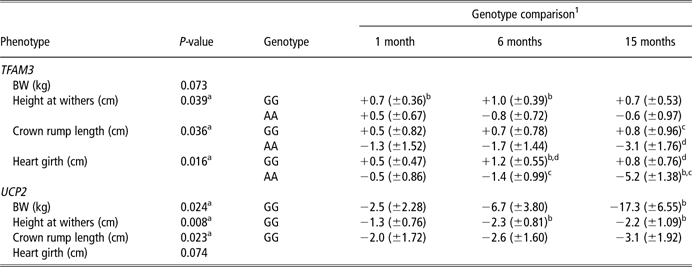
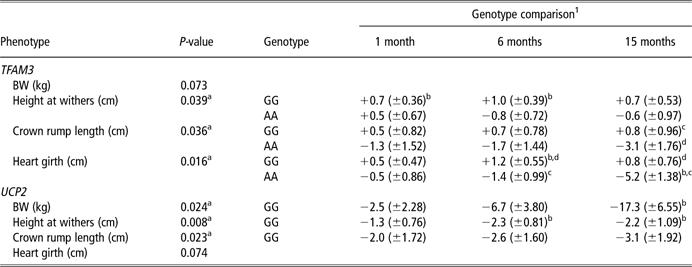
Similar results were also found for the combined analyses (Table 4), whereby growth was studied collectively at 1, 6 and 15 months of age (model (2)). TFAM3 and UCP2 were both significantly associated with all size traits (P < 0.05), apart from TFAM3 with BW and UCP2 with girth, where results were significant at P < 0.10. For TFAM3, GG homozygote heifers were consistently taller, longer and had a larger heart girth than the heterozygotes at all time points, reaching significance for height at 1 month (by 0.7 cm) and height and girth at 6 months of age by 1.0 cm and 1.2 cm respectively. The AA homozygotes were generally the smallest with a significantly smaller heart girth at 15 months of age (by 5.2 cm).
Probability values and genotype comparisons for significant associations (P < 0.05) between TFAM3 and UCP2 with juvenile growth in dairy heifers, using a regression model including all three time points
TFAM3 = mitochondrial transcription factor A; UCP2 = uncoupling protein 2; G = guanine; A = adenine; FDR = false discovery rate.
The heterozygotes were used as a reference to calculate the differences between homozygotes.
1Predicted means of each genotype at 1, 6 and 15 months of age. Values are presented as the mean (±s.e. of difference).
aSignificant after correction for FDR (q < 0.10).
bHomozygote significantly different to heterozygote (P < 0.05).
c,dSignificant differences between the two homozygotes (c < d, P < 0.05).
For UCP2, heifers with the GG genotype were smaller than the CG heterozygotes, being significantly lighter and shorter than heterozygotes at 15 months of age by 17.3 kg and 2.2 cm, respectively. Although these differences were significant, these results should be treated with some caution as only 6% of animals had the CG genotype for comparison.
For the combined analysis (model (2)), random regressions could not be fitted on the animal and permanent environmental effects. Any attempts to fit a random regression caused the model to fail to converge, which was most likely due to the fact that only three measurements were taken for each animal.
Association and genotypic results relating to fertility
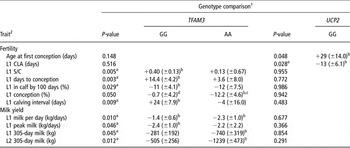
The only SNP found to have a significant association with nulliparous heifer fertility was UCP2. The GG homozygotes were significantly older at first conception than heterozygous animals by 29 days. Otherwise, SNP genotype did not influence age at first service, services per conception or age at first calving for heifers in the study (data not shown).
The TFAM3 genotype was, however, strongly associated with fertility in the first lactation, with the AG heterozygotes performing consistently better. Cows with the GG genotype required significantly more services per conception (by 0.40), took significantly longer to conceive (by 14 days) and were significantly less likely to be in calf by 100 days (by 11%). Those that did conceive again had a 24-day longer calving interval. Cows carrying the AA genotype also tended to experience worse fertility than heterozygotes in the first lactation; however, significance was only achieved when considering the proportion of animals conceiving (AA animals were 12% less likely to conceive than heterozygotes). This may be due to the small number of animals with the AA genotype (7% of the starting population). It may, however, also indicate dominance of the A allele.
There was also only a small population of heterozygote GC UCP2 cows for comparison with the predominant GG genotype, so no major effects on fertility according to genotype were detected for this SNP. However, cows with the GG genotype started to cycle on average 13 days earlier than heterozygotes after first calving. No significant effects were found in relation to fertility traits for either SNP in the second lactation. This may in part be due to the reduced number of animals left at this stage of the study. Furthermore, the results in second lactation may be subject to culling bias, as information from first lactation was not included in these analyses (records were analyzed in each lactation separately).
Association and genotypic results relating to milk yield
There were no significant associations detected between the SNP studied and days in milk or total milk (data not shown). Despite this, both the GG and AA homozygotes of TFAM3 had lower milk production than the heterozygotes in first lactation (Table 5), with significantly lower milk per day (by 1.4 and 2.3 kg/day respectively), peak milk output (by 2.4 and 2.2 kg/day respectively) and 305-day milk yield (by 281 and 740 kg respectively). In second lactation, only 305-day yield was significantly affected, with GG and AA homozygotes both having a reduced yield by 505 and 1239 kg respectively. However, this result may be subject to culling bias, as information from the first lactation was not included in the second lactation analyses. The UCP2 SNP was not associated with milk production, but only 6% (n = 20/329) of the animals that entered the second lactation were heterozygotes, so numbers were too low to enable firm conclusions to be drawn.
Phenotypic values, probability values and genotype comparisons for significant associations (P < 0.05) between TFAM3 and UCP2 with fertility and milk production traits in cows

TFAM3 = mitochondrial transcription factor A; UCP2 = uncoupling protein 2; G = guanine; A = adenine; CLA = commencement of luteal activity; S/C = services per conception; L1 = first lactation; L2 = second lactation; FDR = false discovery rate.
The heterozygotes were used as a reference to calculate the differences between homozygotes.
1Predicted means of each genotype. Values are presented as the mean (±s.e. of difference).
2CLA, S/C, L1 and L2.
aSignificant after correction for FDR (q < 0.10).
bHomozygote significantly different to heterozygote (P < 0.05).
c,dSignificant differences between the two homozygotes (c < d, P < 0.05).
Survival analysis
Complete information was available for 393 animals as to either the cull date or survival through to the end of their second lactation. Of the animals monitored, 65% failed to complete their second lactation. During first lactation, the main reasons for culling were infertility (43%) and lameness/skeletal problems (29%), whereas in second lactation, the majority of animals were culled due to infertility (40%), or died or were culled as a result of infections and metabolic disorders (37%).
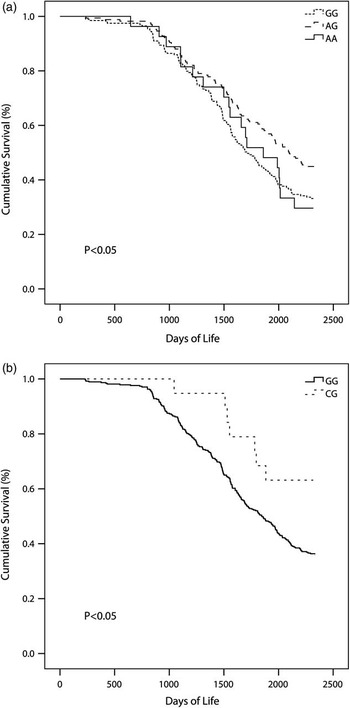
For TFAM3, fewer GG animals survived until the end of their second lactation than AG animals (P = 0.042; Figure 1). Only 33% (n = 66/199) of GG homozygotes completed a second lactation, compared with 44% (n = 74/167) of the heterozygotes (P = 0.014) and 30% (n = 8/27) of AA homozygotes.
Kaplan–Meier analysis showing the proportion of animals surviving from birth through to the end of the second lactation according to (a) the TFAM3 SNP and (b) the UCP2 SNP.

For UCP2, proportionately more GG animals were culled before third calving (64%, n = 241/377) than the CG heterozygotes (37%, n = 7/19; P = 0.035). Of the GG animals failing to reach the end of their second lactation, 8% were culled or died before first calving, and 38% were culled during the first or second lactation. However, only 6% of animals had the CG genotype and therefore these results should be interpreted with caution.
Discussion
TFAM is a mitochondrial gene which is directly involved in energy production (Holloway et al., Reference Holloway, Bonen and Spriet2009) and therefore has the potential to affect multiple downstream systems (Kolath et al., Reference Kolath, Kerley, Golden and Keisler2006). TFAM SNP have not been widely studied to date; however, Jiang et al. (Reference Jiang, Kunej, Michal, Gaskins, Reeves, Busboom, Dovc and Wright2005) found significant associations between a SNP in the TFAM promoter and marbling scores and subcutaneous fat depth in beef cattle, suggesting an involvement with fat metabolism. To our knowledge, this study is the first to show significant associations between TFAM and important growth, fertility, milk yield and survival traits in dairy cows. In summary, the GG homozygotes for TFAM3, comprising 49% of the starting population, were larger throughout the growing period (from 1 to 15 months of age) at both the individual time periods and when analyzed collectively. Although the results were generally consistent between models (1) and (2), some differences were observed. For example, model (2) suggested a significant association with CRL during the juvenile growth period; however, only a trend of significance was observed with model (1) at 30 days of age. This difference was probably due to different statistical approaches, especially so in model (2), whereby a polynomial on age within the SNP genotype and a permanent environmental effect were fitted, which could not be fitted in model (1). Furthermore, analyzing the genotype substitution effects for CRL revealed no significant differences between the heterozygote and either homozygote in both models; however, in model (2), the two homozygotes were significantly different from each other at 15 months of age. Further work is clearly warranted to confirm this association in a larger study.
In terms of fertility, GG animals of TFAM3 had worse fertility and produced less milk in both lactations than the AG heterozygotes. Animals with the GG genotype were consequently more likely than the heterozygotes either to be culled or die throughout the study. This difference was particularly evident during the second lactation, so fewer animals survived to start a third lactation. The minority (7%) AA homozygotes were generally smaller as heifers, had slightly worse fertility and also produced less milk. Most of these results remained significant after the calculation of FDR, thus strengthening the evidence for the associations found. Although there were effects on growth, the relationship with survival only became evident once animals had entered the milking herd (Figure 1). The hypothesized roles for TFAM in regulating energy metabolism may thus affect the ability of the cow to adapt to postpartum NEB. TFAM mRNA is first expressed in bovine embryos at the morula stage of development, so could also influence fertility via a role in early embryo development (May-Panloup et al., Reference May-Panloup, Vignon, Chretien, Heyman, Tamassia, Malthiery and Reynier2005).
Genetic selection has enabled the breeding of cows with significantly increased milk yields but at the same time fertility has declined, due to the negative genetic correlations between yield and fertility (Veerkamp et al., Reference Veerkamp, Koenen and De Jong2001). There has also been a negative trend in lifespan such that the average lifespan achieved in many Holstein dairy herds is currently below three (Hare et al., Reference Hare, Norman and Wright2006; Haworth et al., Reference Haworth, Tranter, Chuck, Cheng and Wathes2008). Longer herd lives are, however, more profitable (Jagannatha et al., Reference Jagannatha, Keown and Van Vleck1998) and can contribute to a reduction in greenhouse gas emissions through the reduced number of replacement heifers that need to be reared (Garnsworthy, Reference Garnsworthy2004). Our data show that cows heterozygous for TFAM3 produce more milk, have better fertility and survive longer. This indicates a clear advantage for maximizing the heterozygotic population of dairy cows for this SNP, although it is not possible to do this without also producing the less favourable homozygotes. It is also interesting to note that milk per day exhibits overdominance as both homozygotes of TFAM3 had significantly lower yields than the heterozygote.
UCPs also play a key role in the regulation of energy metabolism at a cellular level (Echtay, Reference Echtay2007). In ruminants, as in other species, UCP2 is expressed in many tissues including skeletal muscle, white adipose tissue and the nervous system (Jia et al., Reference Jia, Zhang, Ge and Jois2009) suggesting it has an important role in moderating energy balance (Fleury et al., Reference Fleury, Neverova, Collins, Raimbault, Champigny, Levi-Meyrueis, Bouillaud, Seldin, Surwit, Ricquier and Warden1997; Zhang et al., Reference Zhang, Baffy, Perret, Krauss, Peroni, Grujic, Hagen, Vidal-Puig, Boss, Kim, Zheng, Wheeler, Shulman, Chan and Lowell2001). Therefore, this gene is particularly interesting in relation to its effects on postpartum NEB and subsequently fertility and longevity in the dairy cow.
In our study population, the GG genotype for the UCP2 SNP predominated at 94%. The less common CG heterozygotes were larger as heifers, had a reduced age at first conception but took longer to return to cyclicity after calving in first lactation. The interval to the commencement of luteal activity is known to increase in cows experiencing a greater nadir in the depth of their NEB, associated with a higher loss of body condition (Beam and Butler, Reference Beam and Butler1999; Wathes et al., Reference Wathes, Fenwick, Cheng, Bourne, Llewellyn, Morris, Kenny, Murphy and Fitzpatrick2007). Despite this, animals with the GG genotype were significantly less likely to survive until the end of their second lactation than the CG animals. This difference was particularly evident after first calving.
Previous studies have reported associations between UCP2 SNP and yield grade, backfat and BW in beef cattle (Sherman et al., Reference Sherman, Nkrumah, Murdoch, Li, Wang, Fu and Moore2008) and type 2 diabetes, obesity and insulin release in humans (reviewed by Jia et al., Reference Jia, Zhang, Ge and Jois2009). Furthermore, UCP2 has been mapped to a region of human chromosome 11 that is linked with hyperinsulinaemia and obesity (Fleury et al., Reference Fleury, Neverova, Collins, Raimbault, Champigny, Levi-Meyrueis, Bouillaud, Seldin, Surwit, Ricquier and Warden1997). This strengthens the evidence that UCP2 is directly involved in controlling energy balance and may therefore explain the associations reported here. Further studies are thus clearly warranted to elucidate the role of UCPs in energy homeostasis and their potential effects on economically important traits in the dairy cow.
Acknowledgements
We are grateful to Defra and DairyCo for funding the collection of the phenotypic data used in this study and to all the farmers and veterinary surgeons who participated in the study. AMC was supported by a BBSRC CASE award. We would also like to thank Merial Animal Health Ltd for acting as CASE partners and undertaking the genotype analysis.