In the second half of the twentieth century, two central vectors emerged in equality policy in Western public education: The first and more common was “leveling up”—that is, establishing a policy priority to strengthen academically “weak” students, who were often concentrated in disadvantaged communities, thus enabling them to access the same spectrum of educational opportunities as academically “stronger” students. The second, which provoked more controversy, was “leveling down,” or limiting the advantages available within the public education system to financially privileged students or those deemed “gifted,” and thus reducing the gap between the upper and lower strata in public education.Footnote 1
These contrasting approaches each arose from a different theoretical basis: Leveling up relied on justice and fairness concepts formulated in twentieth-century political thought.Footnote 2 Through this lens, “equality of opportunity” in education was framed as a vital good because of the benefit it provided to the least-advantaged members of society.Footnote 3 On the other hand, while the practice had existed previously in various forms, the research and theoretical foundation of leveling down began to develop only in the 1980s, rooted mainly in the fields of sociology, philosophy, and education law.Footnote 4 A first premise of leveling down is that education is a positional good, whose value is derived not only from its absolute quantity but from its relation to the education of others. The relative value of education determines that if a small portion of the public has exclusive access to better school education, such as prestigious private schooling, the public school-educated majority is less favorably positioned to compete for employment or admission to higher education; therefore, in this circumstance, the majority’s ability to benefit from the basic education provided to them is fundamentally impaired.Footnote 5 Likewise, if most of the public holds only a high school matriculation diploma, holders of bachelor’s degrees enjoy a clear advantage in their ultimate access to resources and positions of power.
The second premise is that the field of education is just one site, among several, of an “arms race” between social classes, with the higher classes striving to gain an advantage within social sorting processes.Footnote 6 In practice, this involves pursuing various forms of educational differentiation, which ultimately provide an edge in higher education institutions and the labor market. However, differentiation carries substantial social costs. Tammy Harel Ben Shahar, who has made a significant contribution to the legal theorization of leveling-down logic in Israeli education, has explained that the educational “arms race” leads to wasteful resource investment in preparatory lessons, for example, and excessive pressure on children to meet schools’ competitive selection conditions. This competitiveness marginalizes other important aspects of education that are not measurable, as they are more subjective and less readily quantifiable, such as art and civic studies, and consequently, it adversely affects children’s development and well-being.Footnote 7
These two factors—the positional nature of education and the reality of the educational “arms race”—trigger the demand to limit the opportunity to attain advantages within the system. By restraining the ability of affluent families to create a significant gap in their favor through public education, leveling down works toward the goal of ensuring an equal and just society for the benefit of all.Footnote 8
To apply these theoretical matters to the case study examined in this article, it is also necessary to understand some historical context, namely the profound changes in European socioeconomic conditions and production in the postwar era and the educational and cultural revolution spawned by those changes. Up until the 1950s, a cultural divide existed in European societies between the majority, who completed only primary education or less, and a privileged minority, who studied in secondary school and continued on to vocational or academic studies. However, in most European societies, the postwar economy saw a dramatic shift in the balance across sectors—away from agricultural occupations toward the industrial and service professions, which demanded higher levels of education. Consequently, families of all classes sought to increase their children’s educational attainment in order to secure their economic futures.
Moreover, within the context of the general expansion of the welfare state during this period, secondary and academic education came to be seen as a universal social right. Following the logic of this wave of reform, the age of compulsory education was raised and access to secondary education increased. In developed countries like Germany, France, and Britain, the number of those eligible for secondary school certificates grew accordingly, and the proportion of university students in society increased dramatically from a negligible minority of less than 0.33 percent in various countries in the 1940s to a rate of 1.5-3 percent by the end of the 1980s.Footnote 9
As those at the bottom tried to move upward, those at the top continued to increase their educational distinction and entrench their advantage. In response to the profound educational inequality, leveling up gained broad consensus among liberals across the political spectrum, while leveling down was more characteristic of social-democratic politics.Footnote 10 Supporters of leveling down focused their efforts on public education in particular. In their support for converting selective (achievement-based) institutions into comprehensive schools, they pursued a common goal: a public system with good-enough schools open to all students, maintaining a cross-class and cross-identity encounter.Footnote 11
Despite its historical uniqueness as a Middle Eastern nation state and immigrant-absorbing country, and despite the fact that its economy and democratic regime were far less developed at the time than the European countries it took as its model, Israel experienced a similar social dynamic within its education system. Until the 1970s, matriculation certificate holders in Israel were a minority that enjoyed significant educational distinction. But the rate of eligibility for matriculation rose in the last third of the twentieth century, and the impetus to attain educational distinction by acquiring a university academic degree increased accordingly.Footnote 12
During the 1960s it became clear that the unofficial segregation between middle- and working-class Jewish students, reinforced by cultural and ethnic cleavages, was leading to the entrenchment of inequality. Decision-makers responded with the institution of school integration—a policy that, as will be explained in detail below, represented the deliberate intent to inhibit the middle class and its educational advantages, not as an end in itself but in order to achieve the primary aim of a more egalitarian educational system. While it predates the theoretical formulations of leveling down, this reform policy reflects the principles of leveling down and can contribute to the understanding of the historical characteristics of this phenomenon.
Inequality in Public Education in Israeli Immigrant Society
The early years following the formation of the State of Israel were marked by high levels of immigration, which combined with class and cultural tensions to hold critical implications for the education system. By 1954, the number of immigrants absorbed exceeded the number of original residents recorded in 1948.
The expansion of the education system to meet the growing need was shaped by a class and ethnic divide within Jewish immigrant society. The two largest groups among the newly arrived immigrant population were Jews from Europe, who had survived the Holocaust, and Jews arriving from Islamic countries. The children of these families were funneled into both the education system of the veteran Yishuv (the preexisting Jewish community from the British Mandate period, consisting mainly of Jews of European origin) and a network of elementary schools rapidly established in neighborhoods and immigrant settlements as educational infrastructure for immigrant absorption.Footnote 13
During the 1950s, primary education grew almost fourfold, following the large waves of immigration. This system was characterized by immeasurably deep inequality between schools and between students. With a few exceptions, experienced and well-trained teachers, who were mostly of European origin, did not respond to repeated calls from the government to apply for positions in immigrant schools and teach these immigrant children.Footnote 14
In the political discussion on education policy during those years, there was a clear overlap between class and ethnicity: Jews from the emerging middle class were mostly of European origin, and decision-makers therefore generally conflated the two groups under the ethnic label “Ashkenazi Jews”; Jews from the working and lower classes, most of whom came from Islamic countries, were generalized in parallel as “Mizrahi Jews” (“Jews of Eastern descent”). In education policy discussions during that period, the overlap between “strong” students and the Ashkenazi middle class, and between “weaker” students and the Mizrahi working class was almost taken for granted. It is beyond the scope of this paper to address the complex ethnic and class structure of Israeli society, and therefore the concepts used in the discussion rely on the generalizations found in the political discourse of the 1960s.Footnote 15 It is also important to note that this article does not deal with the complex and distinct history of education policy for the Arab minority in Israel, which was almost completely excluded from decision-making processes and suffered from direct and indirect discrimination in resource allocation in the first decades of the state’s existence.Footnote 16
Unlike primary education, which was universal and served as an avenue to instill shared identity and values for the purposes of Israeli nation-building, secondary education was not a government priority in the early years.Footnote 17 To determine who would be eligible for tuition assistance in secondary education, the Ministry of Education introduced the “Seker test” in 1955, an achievement exam conducted in the final year of primary school; the results of this exam, combined with family income level, were major factors in determining the extent of school tuition subsidization. The exam became a fate-determining mechanism for students and contributed to ethnic and class disparities.Footnote 18 Significant weight was also given to reference letters provided by local teachers and principals as part of the high school admissions process. Together, these screening mechanisms reinforced the selective nature of secondary education.Footnote 19
This selectivity was of a piece with the broader dualistic welfare policy, which primarily benefited the veteran population, mostly those of European origin, and discriminated against new immigrants, most of them Jews from Islamic countries, as well as Arab citizens of Israel.Footnote 20 In education, the veteran population retained key positions and shared a common language and culture with Ashkenazi immigrant parents, which led to their systematic preference. Concurrently, evidence points to prejudiced attitudes on the part of teachers toward Mizrahi students, which resulted in low expectations. In addition, immigrant parents were not always aware of the implications of such prejudices for their children’s educational trajectory.Footnote 21
However, in the 1950s, reflecting the broader global trends noted above, growing demand from parents put pressure on the state to expand access to the purported right of secondary education.Footnote 22 Indeed, between 1956 and 1965, a series of public, party, and other committees operated in Israel with this aim but ultimately failed to promote a comprehensive reform that would make secondary education available to all. Rather than implementing a comprehensive approach, the Ministry of Education preferred to engage in a leveling-up policy of affirmative action, strengthening Mizrahi and other students from low socioeconomic backgrounds and improving their access to the existing selective system by suppling more generous tuition subsidies and a variety of dedicated programs. However, these policies resulted in no overall improvement, as achievement gaps between Ashkenazi students from the middle class and Mizrahi students from the lower classes remained stark.Footnote 23
The 1968 Reform in Israel: The Planning Stage
The 1965 Israeli parliamentary elections were marked by a broad consensus on both the right and left in favor of extending compulsory education to include at least part of secondary schooling. Following the victory of the Labor Party, Zalman Aranne, who had been minister of education under the previous (also Labor-led) government, made this issue a condition of his continuing on for another term, issuing an ultimatum for the establishment of a parliamentary committee (in the style of the British system the government took as its model) charged with reaching a final decision on the education reform. Despite the opposition of the teachers’ union, Prime Minister Levi Eshkol and the rest of the party leadership accepted Aranne’s demands, since Eshkol needed Aranne’s political support to form the government.
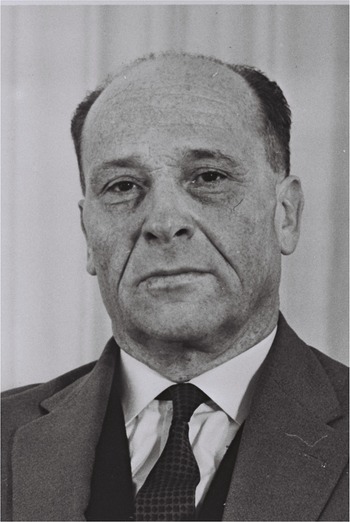
Zalman Aranne (1899-1970), minister of education (portrait, 1954). Photograph from the National Photo Collection of Israel, Government Press Office. Source: Wikimedia Commons, https://commons.wikimedia.org/wiki/File:Zalman_Aranne.jpg.

The Political Decision on Educational Reform
Thus, after a series of government meetings and a majority decision, the Parliamentary Committee for Examining the Structure of Education was born. Publicly, it was known as the Rimalt Committee, named after its chairman, MP Elimelech Rimalt, a member of the center-right Gahal alliance and Aranne’s partner in supporting educational reform.Footnote 24 In dozens of meetings, held between June 1966 and May 1968, the committee—composed of MPs from most of the house factions—heard representatives of the Ministry of Education, teacher and principal organizations, experts from abroad, researchers, and representatives of local municipalities.Footnote 25 Eventually, the committee decided in favor of a broad reform of school structure and the extension of compulsory education in Israel to age fifteen. An analysis of these meetings may shed some light on the policy of leveling down, which was championed by Aranne and supported by various members of the committee.
The Motives for Reform
The existing structure is not good… It results in boys transferring to secondary school only at age fourteen, which is not good because it’s too late… They remain in small neighborhood schools, and consequently ethnically segregated schools, within their own ethnic community.Footnote 26
At its inception, the Rimalt Committee addressed what was termed “the ethnic problem,” referring to the educational and social gaps between students of European origin and those of Asian and African origin. A significant proportion of the latter tended to drop out of school and had a substantially lower level of academic achievement. Because of the decisive influence of formal education on the Israeli economy, these educational disparities translated into income inequality and impaired social mobility.Footnote 27 According to Ministry of Education data from 1966, approximately two-thirds of Mizrahi students did not continue their studies after the ninth grade. In fact, of the students who began their studies in the first grade, only about 15 percent eventually obtained a high school matriculation certificate, most of them Ashkenazi students. The ministry feared publishing these statistics due to their social volatility, and asked committee members to avoid leaking them to the press.
Officials in the Ministry of Education understood that existing efforts to nurture “disadvantaged” students and provide them with government-funded programs had not yielded satisfactory results. In their reports to the committee, these officials warned that, in light of the anticipated increase in the number of Mizrahi students in the education system, the gaps would continue to widen without comprehensive reform. Education Minister Aranne further cautioned that unless the education system received an immediate shakeup addressing inequality, socio-ethnic tensions would escalate to the point that civil war would eventually erupt in Israel.Footnote 28
Beyond this urgent message, Aranne viewed educational reform as a component of the broader development of the welfare state: “We are now living in an era where social reform is an ongoing process,” he declared in a meeting in July 1966. In identifying Israel’s priorities, he listed “the nationalization of land, water, light and power” in the same breath as cooperative production, progressive taxation, and social legislation.Footnote 29 From this distinctly social-democratic position, he led the committee in developing the reform, aiming at improving system achievements and increasing the integration of Mizrahi students in secondary education. These measures, in retrospect, marked the opening stage of a broader shift in the Israeli welfare state. In the years following 1967, this process culminated in the creation and expansion of a more universalist-oriented social welfare system. Politically, this expansion reflected the Labor-led government’s comprehensive response to the social crisis that resulted from the economic recession of 1966–1967, a crisis that threatened its political hegemony.Footnote 30
Recommendations of the Rimalt Committee
The Rimalt Committee ultimately recommended a reform comprising two complementary approaches: first, expanding access to secondary education, particularly among Mizrahi students, following a leveling-up approach; second, a leveling-down process allowing the Ministry of Education to limit the ability of the middle classes to open up avenues for attaining an educational advantage in public education. In its efforts toward both these ends, the reform’s primary action was the reorganization of the Israeli education system into three schools: primary school for grades 1-6, middle school for grades 7-9, and high school for grades 10-12.Footnote 31 Among these three, the middle school was essentially a new type of educational institution, designed according to the Swedish, American, and British models as their characteristics were understood in Israel: a comprehensive educational framework to serve as a link between basic primary education and advanced secondary education that aimed to prepare students for higher education, and to abolish the Seker examination. This reform is known in Israeli education circles as “the structural reform” or “the 1968 reform,” referring to the year of its parliamentary approval.
Together with the structural change, the reform plan borrowed from the British comprehensive school model developed under Education Secretary Anthony Crosland of the Labour Party, specifically the principle of regional school assignment.Footnote 32 Whereas previously, acceptance and admission were based on achievement screening and financial capability, students at the newly formed middle schools were to be assigned on a geographical basis encompassing diverse neighborhoods across each city. This integration process at the middle school level was intended to break down social barriers for all students and change classroom composition for those who until then had been forced to study in segregated frameworks that held them back.
Indeed, the 1966 Coleman Report, a US government assessment of the damaging educational impact of segregated schooling, had a significant influence on the implementation of integration in Israel. Toward the end of Aranne’s tenure, a ratio of 60 percent veteran-born students (mostly Ashkenazi) to 40 percent “disadvantaged” students (mostly Mizrahi) would officially become the desired mix for integration in middle schools, partly influenced by the report.Footnote 33 Yet despite this formula and a series of recommendations from the Rimalt Committee for implementing the reform, the execution process was more influenced by the complex interactions between the Ministry of Education, local municipalities, and city schools. The contradictory incentives and objectives of these actors lay at the foundation of the extensive debate during the committee’s deliberations.
The reform also included a series of other historic improvements to the system, including the addition of elective classes (an element borrowed from the Swedish model), the construction of educational infrastructure such as school buildings, laboratories, and libraries, the institution of improvements to teacher training, and the imposition of new academic qualifications for teachers.
The Collision of Political Interests in Leveling-Down Policy
The concept of the “merging of exiles” between Ashkenazi and Mizrahi Jews (the Israeli term for what is better known as the “melting pot”) enjoyed significant political support during the 1950s and 1960s.Footnote 34 Thus, in the process of the committee drawing up its recommendations, there was a wide consensus behind the aspects of the educational reform that aimed at leveling up—that is, improving the educational conditions of Mizrahi students and strengthening their social and educational integration within the broader system. On the other hand, Zalman Aranne’s groundbreaking intention to incorporate dimensions of leveling down within the reform collided with the interests of the middle and upper classes, represented in the Rimalt Committee by principals of prestigious high schools as well as some MPs standing in for upper-middle-class parents. The latter, faced with the uniform format of the integrative and non-selective middle school, countered by proposing to also maintain other options for secondary education such as selective schools. During the committee sessions, a warning was sounded that should the plan go forward without these options, middle-class parents might begin to find ways to evade participation in the integrative middle schools.
Until the 1968 reform, middle-class families throughout the country who sought distinction through academic advancement had enjoyed almost complete freedom in choosing their desired educational frameworks for their children. As early as the first third of the twentieth century, several selective high schools modeled after the Central European gymnasium were established in Palestine, led by Zionist educational entrepreneurs who acted at the request of urban-middle-class Jewish families. These esteemed selective institutions produced graduates who went on to join the ranks of Israel’s political, social, and cultural leadership class. The most renowned among them were Leyada in Jerusalem, the Herzliya Gymnasium in Tel Aviv, and the Reali School in Haifa.Footnote 35 After the establishment of the State of Israel, these schools’ gravitational force in political and cultural life drew internal and external comparisons to aristocratic high-status schools such as Eton in Britain.Footnote 36
With the introduction of residential registration zones in grades 7-9 of the middle school, the leadership of the Ministry of Education aspired to extend the dictates of comprehensive education to veteran institutions that had hitherto employed a selective admissions process. At the same time, ministry officials were aware of the shortage of educated manpower in the Israeli economy, and of the central role of selective high schools in training future generations of academics.Footnote 37 The leadership of the high schools, for their part, supported the reform and sought to benefit from its resources—in terms of construction and teaching budgets—but also identified the limitations it would place on student selection. The Rimalt Committee therefore discussed at length whether comprehensive and integrative education would be all-encompassing—that is, whether it would apply to schools whose prestige rested on their selectivity.
Baruch Ben-Yehuda, the legendary principal of the Herzliya Gymnasium, proposed to the Rimalt Committee that his school be allowed to continue accepting students who were children of graduates of the school, contrary to the restrictions of registration zones. He argued that such a proposal would help maintain the historical connection between the school and its families.Footnote 38 However, the discussions surrounding this collision of interests illustrated the committee’s significant support for leveling down. In the case of the Herzliya Gymnasium, MP Rachel Tzabari from the Labor Party, the first Mizrahi female member of the Israeli parliament, opposed the idea that the gymnasium would remain a “closed club” and that established institutions would preserve their privilege. She argued that Ben-Yehuda’s proposal was contrary to the interests of children from poor neighborhoods in south Tel Aviv, and that the goal of the reform was to create equality and integration so that “children from south Tel Aviv would also come” to the Herzliya Gymnasium. Tzabari further opposed the suggestion to establish a “good school” similar to the Herzliya Gymnasium in the southern neighborhoods, because she knew that children from the established northern neighborhoods of Tel Aviv would not attend such an institution.Footnote 39 Ultimately, Tzabari reflected the political consensus in the city. A busing arrangement was introduced, transporting students from the southern part of the city to schools in the north.Footnote 40
In the Ministry of Education and among heads of education departments in large cities, there was an agreement that all selection should be abolished, not only in new middle schools but in existing schools that had previously conducted selective admissions to their middle school classes. Some opponents of the reform doubted the seriousness of the ministry’s intentions and argued that integration would lead to “the flight of strong parents” of the Ashkenazi middle class from comprehensive integrated education, whether by finding ways to bypass their assigned registration zones or simply leaving for other neighborhoods.Footnote 41 To make this argument, they invoked the phenomenon of “White flight,” a matter of worldwide experience especially prevalent in the United States.Footnote 42 On the other hand, supporters of the reform, led by MP Elimelech Rimalt himself, believed that “parental choice” should not always dictate policy, meaning that fear of “White flight” should not be a determinant.Footnote 43
Elimelekh Rimalt (1907-1987), Rimalt Committee chairman (portrait, 1969). Photograph from the National Photo Collection of Israel, Government Press Office. Source: Wikimedia Commons, https://commons.wikimedia.org/wiki/File:ELIMELECH_RIMALT_1969.jpg.

Ultimately, the committee understood that the Ministry of Education did not propose to wage an all-out war on parents. The intention was not to punish noncompliance but rather to condition the benefits of the reform on the requirements of integration, though even this threatened to provoke unrest.Footnote 44 I will explain later how the ministry sought to prevent protest against the middle schools under these circumstances.
Against Separate Gifted Education and Private Education
Another prominent component of the leveling-down policy was the firm opposition of the Ministry of Education under Aranne to the creation and nurturing of private schools and elitist frameworks for gifted students. This was not a unanimously held value in the field of education. Professor Zvi Adar, head of the School of Education at the Hebrew University, argued before the Rimalt Committee in the middle of 1967 that comprehensive education should not apply to everyone and that diverse solutions were preferable for addressing diverse needs; in his view, in addition to existing prestigious schools, special schools should be established for particularly gifted students, even if this would deepen educational gaps.Footnote 45 In contrast, Aranne and others from the ministry opposed the idea of separate education for the gifted in an immigrant society in its early stage of nation-building: “Such a school for the gifted,” argued the minister, “within all the complexity we have here in this country … I reject this thing completely, with regard to Israel.”Footnote 46
This position was shared by committee members from the left and some from the liberal right.Footnote 47 It also received reinforcement from European figures, such as the Swedish Social Democratic education minister Ragnar Edenman, who visited Israel at the end of April 1966 and met extensively with Aranne. In an interview with an Israeli newspaper, Edenman emphasized the social advantages of comprehensive education and asserted that separate education for the gifted was a danger to democracy, an argument perhaps deduced from the inequality and segregation to which separate gifted education contributed.Footnote 48 Aranne likewise saw the potential danger of private schools serving as an escape valve from integrated schooling and thus undermining the comprehensive nature of the reform; consequently, he completely rejected the possibility that his ministry would support them financially. His director general clarified that even if private schools were to receive official accreditation, the lack of financial support from the ministry would ensure that they remained a limited phenomenon.Footnote 49
Support for All-Encompassing Integration
While opponents of full integration emphasized free choice, the promotion of academic excellence, and respect for existing privileged institutions’ academic legacies, supporters held as their first principle the more universal concept of equality. Joseph Bentwich, for example, the former principal of the Reali School in Haifa, expressed strong support for universal integration, unlike other high school principals who appeared in front of the committee. He proposed abolishing selection and implementing the comprehensive school model across the entire educational system, such that all students would learn together. He emphasized the foundations of equality in the reform and also supported the abolition of matriculation examinations, arguing that student achievements throughout the country should not be measured by the same standard.Footnote 50 In late 1968, when the reform moved to a practical track, the mayor of Haifa, Abba Hushi, argued that registration zones should apply to the selective high schools in the city, with the Reali school at their forefront, since “the public pays from its money to maintain [such schools].”Footnote 51
Rimalt also opposed the proposal to exempt prestigious high schools from integration: He argued that without educational integration between poor neighborhoods and luxury neighborhoods, educational gaps would remain unchanged. Rimalt did not completely oppose the existence of selective schools at the margins of public education, but he emphasized that selection should be reduced “so that it would not be so great” and so that children from different backgrounds “would be together.”Footnote 52 Two other members of Rimalt’s center-right party who participated in the committee supported the idea of integration but did not advocate its promotion through leveling down and the abolition of selection: In their view, the freedom of private secondary schools and the need to promote outstanding students were more important.Footnote 53
Ability Grouping: Preventing Protest from the Middle Class
While registration zones were designed to prevent institutional separation between Mizrahi and Ashkenazi students as part of Aranne’s urgency to remove barriers to integration, the reform program also instituted ability grouping, in which students in the same classroom were separated into groups based on achievement. This was designed to be a central component in middle schools in the specific subjects of English, mathematics, and language arts, introducing the differentiation that was lacking in primary education.Footnote 54 The justification for using this method was based on existing worldwide experience with comprehensive education reforms, the considerable popularity of ability grouping among teachers, and the claim that it primarily benefited weaker students. While the Ministry of Education attributed its inclusion to a desire to prevent dropout rates and advance weaker students, this educational method was controversial in 1960s Israel.Footnote 55 Although none of the committee participants completely rejected its use, various speakers found it difficult to ignore the fact that ability grouping contradicted the purpose of integration and cross-socio-ethnic classroom encounters.Footnote 56
Moreover, an examination of the committee’s protocols suggests that the introduction of ability grouping was essentially a political response by the Ministry of Education to anticipated class unrest—in effect a “class compromise” to balance the egalitarian foundations of integration. Precisely because the ministry seriously intended to apply registration zones to middle schools in Israeli cities, a mechanism was needed to reduce pressures by protecting the “advanced student” within these schools and thus to minimize the “White flight” phenomenon. Aranne himself explained in July 1966 that middle schools would be based on heterogeneous classrooms but would strive for balance in student composition so that “backward student would not suppress advanced student.”Footnote 57 A year later, the supervisor of secondary education in the Ministry of Education mentioned that the reform was created not “only to solve the ‘merging of exiles’ issue” but also to increase “educational achievements” and ensure that “talented children, capable of serious study” within comprehensive education “would not be harmed by learning with other children.”Footnote 58 Middle school separation based on achievement was, in fact, planned as an increasingly expanding separation: In seventh-grade classes, only one-third of study hours would incorporate ability grouping, but by ninth grade, learning in ability groups would be expanded to two-thirds of the weekly curriculum.Footnote 59 The expansion of ability groupings within the plan for integration may indicate that there was a desire to meet the needs of parents, who cared more about achievement than about cross-class and interethnic encounters.
Debate Aftermath: Implementation of the Reform
The structural reform of Israeli education, which carried the banner of both comprehensive education and socio-educational integration, was gradually implemented following its parliamentary approval in the summer of 1968. Minister of Education Zalman Aranne, who had resolutely promoted the reform, left office in December 1969 and was not substantially involved in its implementation except in a few cities.Footnote 60 Aranne, who saw the reform as an urgent social and political necessity, had expected it to advance at a rate of fifty middle schools opening per year. Although by 1974 that target rate had not quite been reached, the rate was nevertheless relatively quick, with approximately thirty middle schools on average opening per year.Footnote 61 By the beginning of the twenty-first century, most large and medium-sized cities had adopted the new middle school model, making it the predominant framework of the Israeli education system.
More affluent families also benefited from the expansion of compulsory education, which effectively abolished tuition fees in ninth grade. The middle class was further placated by the ministry’s compromise on the issue of ability grouping, not to mention the few elite schools that, even during Aranne’s period, were permitted to replace geographical registration zones with a defined quota of students admitted for the purposes of integration. But this change came at a price: The more educated and established stratum now experienced restrictions on the use of public resources for schools that wished to segregate themselves from standard public education in order to pursue an educational advantage.
The broad socio-political consensus, expressed in Aranne’s policy and in the majority opinion of the Rimalt Committee, was the recognition of the ideological and political necessity of the absorption of immigrants through leveling down, not just leveling up. During Aranne’s tenure, government support for this approach was clear and openly declared, with broad agreement on the need to advance students who had until then been left behind. Consequently, in the early years of the reform, the Israeli Supreme Court backed this policy and rejected petitions from parents against integration directives.Footnote 62 School staff support for integration and the trend toward equality was also a widespread phenomenon across Israel in the last third of the twentieth century.Footnote 63
While the ministers of education who served in the years after Aranne were less and less committed to the leveling-down foundations of the reform, they were neither willing nor able to uproot it completely. They did, however, demonstrate a growing commitment to the middle-class interest in fortifying the advantages of more advanced students, a process that I intend to elaborate on in a future article.Footnote 64 Additionally, as the implementation of the reform progressed, so did the pressure on the Ministry of Education to increase the use of ability grouping, despite the fact that evidence-based research had been accumulating that showed this tactic preserved and even widened achievement gaps.Footnote 65
In the 1970s, separate frameworks for gifted students were established in response to demands from middle-class parents. With the intensification of the neoliberal privatization trend in the education system, registration zones were gradually abolished in a significant number of Israeli cities from the 1990s onward, undermining the dominance of leveling-down policy. Nevertheless, decades after the Rimalt Committee held its deliberations, some remnants of leveling down, rooted in the logic of reform policy, remained in the education system, especially in places where discrimination was particularly tangible.Footnote 66
Conclusion
This article examined the incorporation of leveling down in education policy during the 1960s, focusing on the 1968 structural reform of Israeli education as a central case study. Even prior to the implementation of this reform, signs of its political dialectic were evident: The expansion of the right to education, aimed at leveling up and broadening access to secondary education, led to the social diversification of middle and high schools—a deliberate and declared effort toward class and ethnic integration. To strengthen this integration and its associated bridging of achievement gaps, the Ministry of Education sought to limit escape routes from the public education system, thus ensuring that the upper classes would not increase their academic advantage but would continue to be an integral part of comprehensive education. This policy of leveling down imposed deliberate costs on more economically established families, yet the Ministry of Education was also prepared to make certain compromises in order to reduce their resistance to integration.
This article demonstrated a typical issue in education policy: the need to reconcile conflicting social objectives in the planning stages of reform. Within this context, the rate of support for leveling down marked the social-democratic orientation of the decision-makers in 1960s Israel. Alongside a middle school integration policy that was designed to limit processes of student selection among prestigious secondary schools, the Israeli Ministry of Education sought to prevent the opening of elitist frameworks for gifted students and private schools. The policy dictated that the placement of students in middle schools would be dictated by place of residence rather than student achievement or parental choice. Ultimately, the Ministry of Education and the Labor-led government in the 1960s were willing to “exact a price” from the strong to reduce educational gaps. This trend persisted for several decades until it gradually weakened toward the end of the twentieth century with the rise of neoliberal privatization.
Viewed in terms of the theoretical background of leveling down and its associated goals and ideology, the 1968 Israeli education reform enhances the discussion surrounding educational equality. This kind of historical struggle represents a clear conflict between the social-democratic prioritization of a more egalitarian society, and the neoliberal aspiration to guarantee the freedom of the affluent to preserve and even increase their advantage. The usefulness of applying this lens to the Israeli case suggests that other studies of post-1945 education reform might also benefit from applying a similar interpretive framework. Expanding the historical discussion on the politics of education can thus contribute to a deeper understanding of the processes of building the historical welfare state and the role of education within it, sharpening contemporary questions about education policy in the twenty-first century.
Amir Aizenman is a postdoctoral fellow at Tel-Hai University of Kiryat Shmona in the Galilee and teaches political education and history at Oranim Academic College. He wishes to thank Adam Hefetz, Amir Goldstein, and Shani Sladowsky for their helpful and insightful comments, and the HEQ reviewers and the Editorial Board for their constructive feedback, which helped sharpen the argument and refine the focus of the discussion.