Introduction
Lewy body dementia (LBD) is the second most prevalent form of neurodegenerative dementia. The term LBD encompasses two overlapping clinical syndromes, dementia with Lewy bodies (DLB) and Parkinson's disease dementia (PDD), which are conservatively estimated to contribute to 4.2–7.5% (Vann Jones and O'Brien, Reference Vann Jones and O'Brien2014) and 3.1–4.1% (Aarsland et al., Reference Aarsland, Zaccai and Brayne2005) of all dementia, respectively. Notably, it has been reported that caregivers of people with DLB experience greater distress because of behavioral symptoms than in Alzheimer's dementia (AD) (Svendsboe et al., Reference Svendsboe2016). Compared with other forms of dementia, LBD patients display an increased risk of mortality (Oesterhus et al., Reference Oesterhus, Soennesyn, Rongve, Ballard, Aarsland and Vossius2014), earlier nursing home admissions (Rongve et al., Reference Rongve, Vossius, Nore, Testad and Aarsland2014), raised risk of falling (Komatsu, Reference Komatsu2013), and reduced quality of life (Figari-Jordan et al., Reference Figari-Jordan2012). Therefore, while LBD is not as common as AD, its relative burden on service users, their caregivers, and society is substantial.
Although much work has gone into the development of pharmacological therapies for LBD (Stinton et al., Reference Stinton2015), as yet there are no disease-modifying treatments available. Management of neuropsychiatric symptoms in people with LBD is challenging. Recurrent well-formed visual hallucinations and delusional beliefs are common in LBD, but parkinsonism and severe neuroleptic sensitivity mandate minimizing use of antipsychotics. Limitations of available pharmacological interventions for LBD, especially for non-cognitive symptoms, include lack of high quality evidence for their efficacy (Stinton et al., Reference Stinton2015), poor tolerability, and the potential risks of serious adverse effects. Hence, non-pharmacological interventions often play an important role in clinical management of people with LBD. Systematic research evaluating non-pharmacological interventions for LBD is sparse, and pertinent prevailing evidence is not readily available to interested clinicians. A recent systematic review has reported the impact of exercise therapy in LBD (Inskip et al., Reference Inskip, Mavros, Sachdev and Fiatarone Singh2016), but it did not include other non-pharmacological interventions for LBD, such as transcranial direct current stimulation (tDCS) (Elder et al., Reference Elder2016), deep brain stimulation (DBS) (Freund et al., Reference Freund2009; Barnikol et al., Reference Barnikol2010), electroconvulsive therapy (ECT) (Takahashi et al., Reference Takahashi, Mizukami, Yasuno and Asada2009), or repetitive transcranial magnetic stimulation (rTMS). Updated knowledge regarding these non-pharmacological interventions may help clinicians to formulate comprehensive care plans for people with LBD. Therefore, we aimed to carry out the first comprehensive systematic review of the efficacy of all reported non-pharmacological interventions for cognitive and non-cognitive symptoms of LBD.
Methods
Study design
The protocol of this systematic review has been registered (PROSPERO protocol registration number: CRD42016049642), and is available online (www.crd.york.ac.uk/PROSPERO/).
Inclusion criteria
We employed broad inclusion criteria, and considered all eligible original studies regardless of their quality or design. (i) Population: Studies investigating individuals of any gender, age, and ethnicity with a clinical diagnosis of LBD were considered. Therefore, studies focusing on treatment of individuals with Parkinson's disease (PD) without dementia were not included. Additionally, studies which assessed an intervention in any form of dementia without separately reporting outcomes for LBD were not included. These studies were not included because of prior publication of comprehensive systematic reviews on non-pharmacological interventions for people with PD (Hindle et al., Reference Hindle, Petrelli, Clare and Kalbe2013) and for behavioral symptoms of dementia (Abraha et al., Reference Abraha2017). Animal studies were not included. (ii) Interventions: Studies investigating any non-pharmacological intervention for LBD were included. These included: physical and occupational therapy, exercise, social interaction, cognitive therapy, mindfulness, behavioral therapy, bright light therapy, tDCS, DBS, ECT, rTMS, music therapy, and other potential alternative therapies. These interventions were included regardless of whether they were acute or long-term. (iii) Comparison: No restrictions were applied. (iv) Outcomes: No restrictions were applied in order to avoid excluding relevant studies.
Search strategy
A systematic search was performed in December 2016 using the following six databases: MEDLINE, PsycINFO, CINAHL, EMBASE, Cochrane Central Register of Controlled Trials, and OpenGrey. The search strategy was comprised of both “Population” AND “Intervention” terms. These terms were searched in titles and abstracts of papers and gray literature. “Comparison” and “Outcome” terms were not used to ensure better search sensitivity. The population search terms used were: (“Parkinson*” AND “dementia”) OR (“Lewy” AND “dementia”). The intervention search terms used were: “exercise” OR “physical therapy” OR “occupational therapy” OR “social interaction” OR “cognitive therapy” OR “cognitive treatment” OR “mindfulness” OR “behavioral therapy” OR “behavioral treatment” OR “bright light therapy” OR “pet therapy” OR “education*” OR “music therapy” OR “transcranial direct current stimulation” OR “transcranial magnetic stimulation” OR “deep brain stimulation” OR “electroconvulsive therapy” OR “alternative therapy” OR “non-pharmacological treatment” OR “non-pharmacological intervention” OR “non-pharmacological approach”. We did not specify any language limits, and we included non-English articles in the search strategy. However, only one non-English paper was identified as relevant (Fujiwara et al., Reference Fujiwara, Honda, Ito and Koyama2004).
Study selection
Screening followed several steps, the first of which was merging of duplicates using Mendeley Desktop 1.17.1 (Mendeley Ltd., London, UK). After this, papers with titles unrelated to dementia or PD were excluded, with subsequent exclusion of papers with abstracts which did not mention the use of any non-pharmacological intervention. This was followed by exclusion of full text articles found to be ineligible, more specifically this involved excluding: articles focused on interventions for PD excluding or not controlling for PDD, articles focused on interventions for dementia excluding or not controlling for LBD, and articles providing insufficient details on their methods or outcomes. Ultimately, full text articles assessed to be eligible by the authors were reviewed, resulting in the inclusion of suitable articles in the systematic review.
Quality assessment
Quality and potential likelihood of bias of eligible studies were assessed using the CARE criteria checklist (Gagnier et al., Reference Gagnier2013) for case reports, and the Effective Public Health Practice Project (EPHPP) Quality Assessment Tool for Quantitative Studies (Thomas et al., Reference Thomas, Ciliska, Dobbins and Micucci2004) for trials. We did not find any eligible qualitative studies. Studies were second-marked by independent raters, with any scoring inconsistencies resolved through discussion.
Data extraction
For each study deemed eligible for inclusion, extraction of the following data categories took place: (i) Study design: Studies were either considered experimental (randomized control trials (RCT), non-randomized control trials (NRCT) and uncontrolled trials (UCT)), or observational (case reports, case series, cross-sectional, case-control, prospective or retrospective cohort). (ii) Intervention or exposure: Method, frequency, intensity, and duration of each study's non-pharmacological intervention were assessed. (iii) Cohort: Cohort was classified by any combination of diagnosis, age, gender, living or not living in the community, Unified Parkinson's Disease Rating Scale (UPDRS) (Martinez-Martin et al., Reference Martinez-Martin, Gil-Nagel, Gracia, Gomez, Martinez-Sarries and Bermejo1994) or other mobility scores, Mini-Mental State Examination (MMSE) (Folstein et al., Reference Folstein, Folstein and McHugh1975) or other cognitive test scores, and medications being taken. (iv) Outcome: Outcomes were classified according to the measurement test or tool used, mean differences between groups, effect sizes, confidence intervals (CI), and statistical difference between groups, if such data were available.
Data synthesis
Studies were initially grouped on the basis of types of employed non-pharmacological interventions. They were regrouped on the basis of outcomes relevant to cognitive, neuropsychiatric, and motor symptoms of LBD. We assessed the levels of evidence using guidelines from the Oxford center for Evidence-Based Medicine (OCEBM-Levels-of-Evidence-Working-Group, 2011).
Results
Identified studies
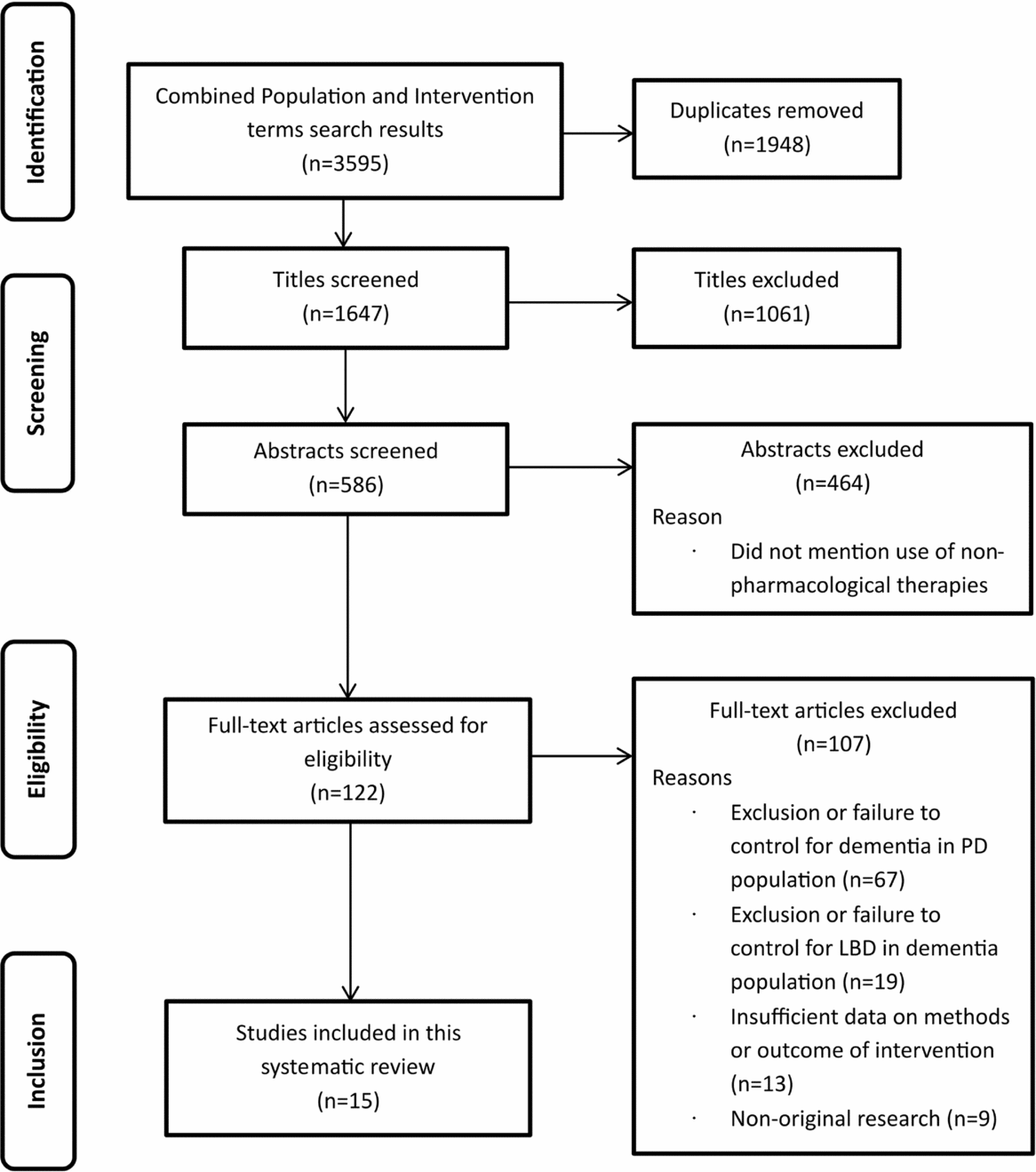
Figure 1 outlines the study selection process in the Preferred Reporting Items for Systematic Reviews and Meta-Analyses (PRISMA) format. A joint search of EMBASE, MEDLINE, and PsycINFO unveiled 2,171 papers. A further 1,075 papers were found on CINAHL, while 323 were found on Cochrane Central Register of Controlled Trials, and 26 were found on OpenGrey. The 15 eligible articles included a single-blind RCT that included only 4 people with PDD (Telenius et al., Reference Telenius, Engedal and Bergland2015), 3 UCT (Rochester et al., Reference Rochester, Burn, Woods, Godwin and Nieuwboer2009; Takahashi et al., Reference Takahashi, Mizukami, Yasuno and Asada2009; Elder et al., Reference Elder2016), and 11 case reports (Hayden and Camp, Reference Hayden and Camp1995; Loher et al., Reference Loher, Krauss, Wielepp, Weber and Burgunder2002; Rasmussen et al., Reference Rasmussen, Russell, Kung, Rummans, Rae-Stuart and O'Connor2003; Fujiwara et al., Reference Fujiwara, Honda, Ito and Koyama2004; Freund et al., Reference Freund2009; Barnikol et al., Reference Barnikol2010; Ciro et al., Reference Ciro, Hershey and Garrison2013; Gil-Ruiz et al., Reference Gil-Ruiz2013; Tabak et al., Reference Tabak, Aquije and Fisher2013; Dawley, Reference Dawley2015; Kim et al., Reference Kim, Jeon, Lee and Paek2017).
PRISMA flow diagram of the systematic review.

Quality of included studies
When assessing quality of experimental trials, all four identified studies received weak or moderate global rating on the EPHPP quality assessment tool (see supplemental digital content (SDC)-1, available as supplementary material attached to the electronic version of this paper at http://journals.cambridge.org/ipg). Failure to control for confounders was a common limitation. In the case of exercise interventions, blinding is difficult to achieve because of the nature of intervention. Case report quality also varied, ranging from 11/28 (Barnikol et al., Reference Barnikol2010) to 23/28 (Dawley, Reference Dawley2015) on the 2016 CARE criteria checklist (see SDC-2). Despite five case reports scoring 20/28 or greater, one should note that case reports are inherently susceptible to selection, detection, and reporting biases. This may skew perception of efficacy, especially when outcomes from several case reports are assessed as a group.
Participant characteristics
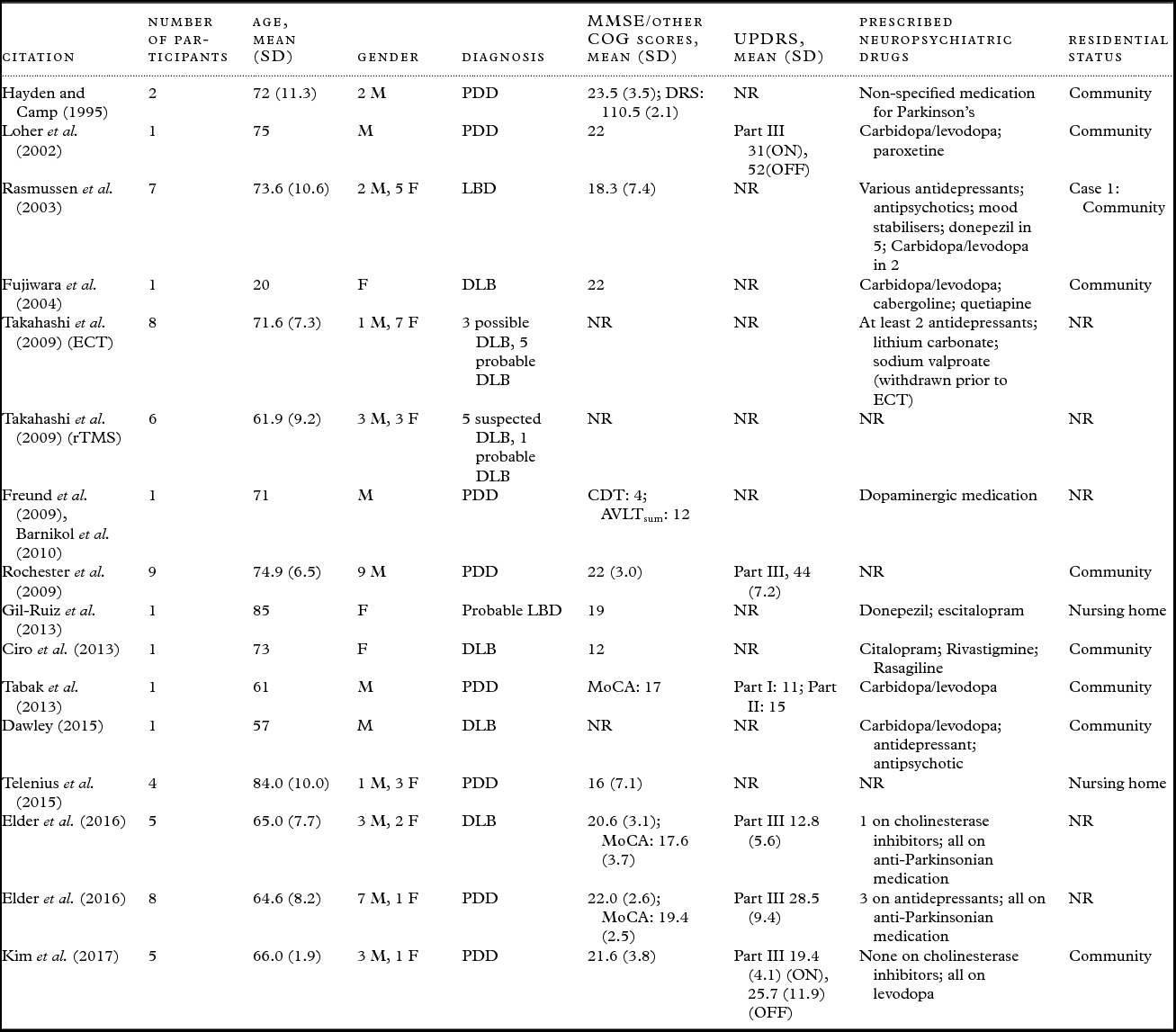
In total, 61 individuals with LBD were included in this review. There were 31 with PDD, 22 with DLB, and 8 individuals who are only described as having LBD. Table 1 presents further details of the individuals with LBD. Notably, the same individual has been assessed in two case reports for different outcomes following the same intervention (Freund et al., Reference Freund2009; Barnikol et al., Reference Barnikol2010) and thus has been assessed as a single person. Data on 4 PDD patients were obtained from a systematic review (Inskip et al., Reference Inskip, Mavros, Sachdev and Fiatarone Singh2016) due to primary data being reported as an average across 170 dementia patients (Telenius et al., Reference Telenius, Engedal and Bergland2015). Participants were predominantly men (57.4%), and mean age was 70.3 years (95% CI 64.8–75.8). Scores indicating baseline cognitive function were reported for various tests including MMSE (n = 44, mean = 2.0, SD = 13.8), and Montreal Cognitive Assessment (MoCA) (Nasreddine et al., Reference Nasreddine2005) (n = 14, mean = 19.9, SD = 13.0). Years since dementia onset was reported only in six studies (n = 22, mean = 2.4, SD = 4.3). Five studies have reported years since onset of PD (n = 18, mean = 7.8, SD = 10.1). In most studies, individuals took neuropsychiatric medications during the intervention period. However, two studies did not report whether participants were also taking medication (Rochester et al., Reference Rochester, Burn, Woods, Godwin and Nieuwboer2009; Takahashi et al., Reference Takahashi, Mizukami, Yasuno and Asada2009).
Characteristics of individuals with LBD included in this systematic review

Data given as mean or individual values where appropriate. Figures rounded to one decimal place. Note that demographic data from Telenius et al. (Reference Telenius, Engedal and Bergland2015) was unavailable for the four PDD participants and thus was acquired from a systematic review which had obtained results directly from the authors (Inskip et al., Reference Inskip, Mavros, Sachdev and Fiatarone Singh2016). AVLT = Auditory Verbal Learning and Memory Test; CDT = clock drawing test; COG = cognitive assessment; DLB = dementia with Lewy bodies; DRS = Mattis Dementia Rating scale; ECT = electroconvulsive therapy; F = women; M = men; MCI = mild cognitive impairment; MMSE = Mini-Mental State Examination score; MoCA = Montreal Cognitive Assessment; NR = not reported; PDD = Parkinson's Disease Dementia; rTMS = repetitive transcranial magnetic stimulation; UPDRS = Unified Parkinson's Disease Rating Scale (Part I = mood and cognition, Part II = activities of daily living, Part III = motor).
Efficacy of ECT
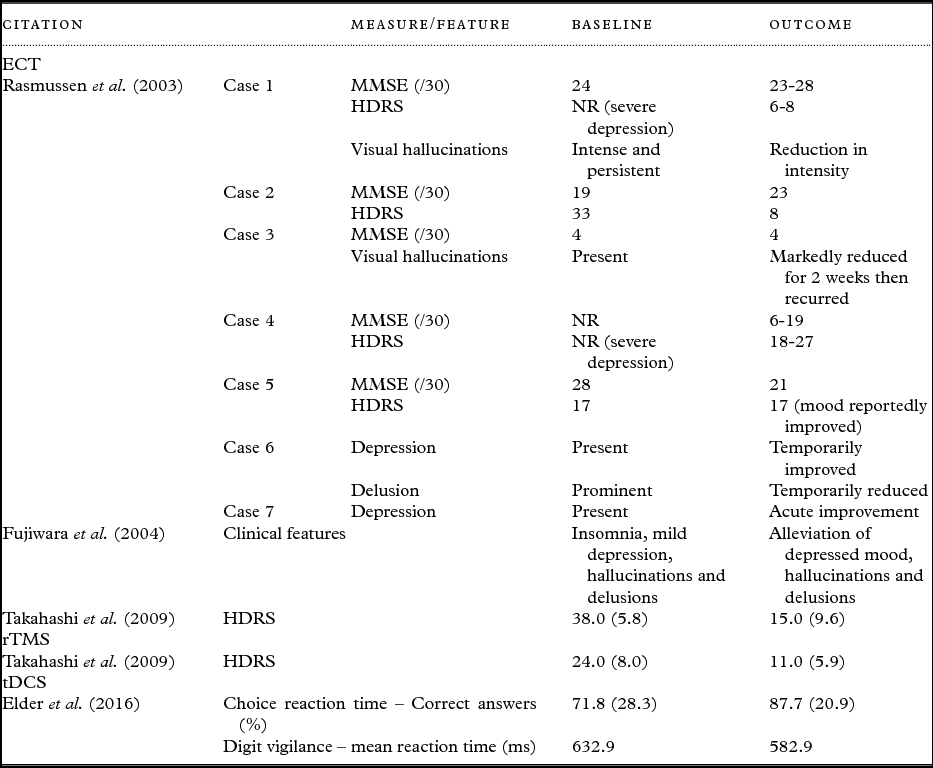
The highest level of evidence for benefits of ECT in treating depressive symptoms of LBD comes from the uncontrolled study in which the Hamilton Depression Rating Scale (HDRS) score (Hamilton, Reference Hamilton1960) was observed to decrease significantly (p < 0.005) from 38.0 (SD = 5.8) to 15.0 (SD = 9.6) (Takahashi et al., Reference Takahashi, Mizukami, Yasuno and Asada2009) (Table 2). The evidence for improvement of psychotic symptoms in people with LBD following ECT is limited, with one case series indicating reduction in hallucinations following ECT in two out of seven individuals with LBD (Rasmussen et al., Reference Rasmussen, Russell, Kung, Rummans, Rae-Stuart and O'Connor2003) and another case report observing reduction in hallucinations and paranoid delusions following ECT (Fujiwara et al., Reference Fujiwara, Honda, Ito and Koyama2004) (see SDC-3).
Reported outcomes following electroconvulsive therapy, repetitive transcranial magnetic stimulation and transcranial direct current stimulation in people with Lewy body dementia (n = 35)

Figures rounded to one decimal place. ECT = Electroconvulsive therapy; HDRS = Hamilton Depression Rating Scale; MMSE = Mini-Mental State Examination; NR = not reported; rTMS = repetitive transcranial magnetic stimulation; tDCS = transcranial direct current stimulation.
Efficacy of DBS
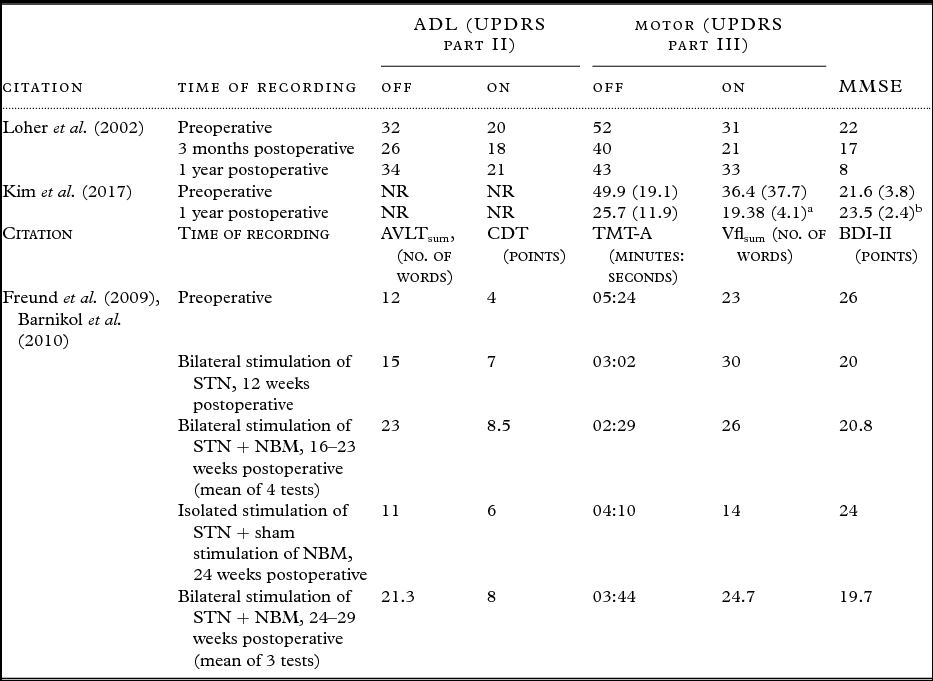
A case report examining the effects of bilateral stimulation of the subthalamic nucleus (STN) and the nucleus basalis of Meynert (NBM) in PDD has supported the efficacy of DBS in treating cognitive deterioration (Freund et al., Reference Freund2009) (Table 3). Improvements in Auditory Verbal Learning and Memory Test (Lezak et al., Reference Lezak, Howieson, Bigler and Tranel2012) and other tests of cognitive functions have been reported (Table 3). A case report has reported minor improvement in Beck Depression Inventory (BDI-II) scores in a PDD patient following DBS of both STN and NBM (Freund et al., Reference Freund2009). While the efficacy of DBS for motor symptoms of PD is well established (Baizabal-Carvallo and Alonso-Juarez, Reference Baizabal-Carvallo and Alonso-Juarez2016), there is less evidence for its effect in LBD specifically. A case series has reported motor benefits of DBS in LBD. Improvements in UPDRS motor scores were observed following bilateral STN DBS. However, motor improvements lasted only 2–3 years in four individuals with LBD (Kim et al., Reference Kim, Jeon, Lee and Paek2017) (see SDC-4).
Outcomes following deep brain stimulation in people with Lewy body dementia at time points relative to electrode implantation (n = 7)

Numbers within parentheses indicate standard deviations. Figure rounded to one decimal place. ADL = activities of daily living; AVLT = Auditory Verbal Learning and Memory Test; BDI-II = Beck's depression inventory; CDT = clock drawing test; DBS = deep brain stimulation; MMSE = Mini-Mental State Examination; NBM = nucleus basalis of Meynert; NR = not reported; On/Off = On/Off phase of levodopa-related motor fluctuation; STN = subthalamic nucleus; TMT-A = trail making test-part A; UPDRS = Unified Parkinson's Disease Rating Scale; Vfl = verbal fluency.
aAverage of four patients as "case 5" ceased medication following surgery.
bAverage of four patients as MMSE was not measured in "case 4" post-intervention.
Note that for results from Kim et al. (Reference Kim, Jeon, Lee and Paek2017), "case 3" was too dysarthric for assessment at 12 months, so data from 6 months postoperative have been used instead of 12 months.
Efficacy of rTMS
An uncontrolled study evaluating the efficacy of rTMS to treat depressive symptoms in people with LBD has reported statistically significant reduction of HDRS scores (p < 0.005) following rTMS (Takahashi et al., Reference Takahashi, Mizukami, Yasuno and Asada2009). The study has reported reduction of HDRS scores from 24.0 (SD = 8.0) before the intervention to 11.0 (SD = 5.9) after the intervention (Table 2). The efficacy of rTMS in treating other symptoms of LBD has not been evaluated systematically so far (see SDC-3).
Efficacy of tDCS
Evidence supporting efficacy of tDCS in ameliorating cognitive symptoms of LBD comes from an uncontrolled study in which 13 patients underwent stimulation of the left dorsolateral prefrontal cortex (Table 2). Performance of attention and visuoperceptual tasks was assessed before and after treatment, with percentage of correct answers and the mean reaction time for digit vigilance being seen to improve significantly (Table 2). However, changes in visuoperceptual task performance were not statistically significant (Elder et al., Reference Elder2016). There has not been any study evaluating the efficacy of tDCS in managing non-cognitive symptoms of LBD (see SDC-3).
Efficacy of physical exercise
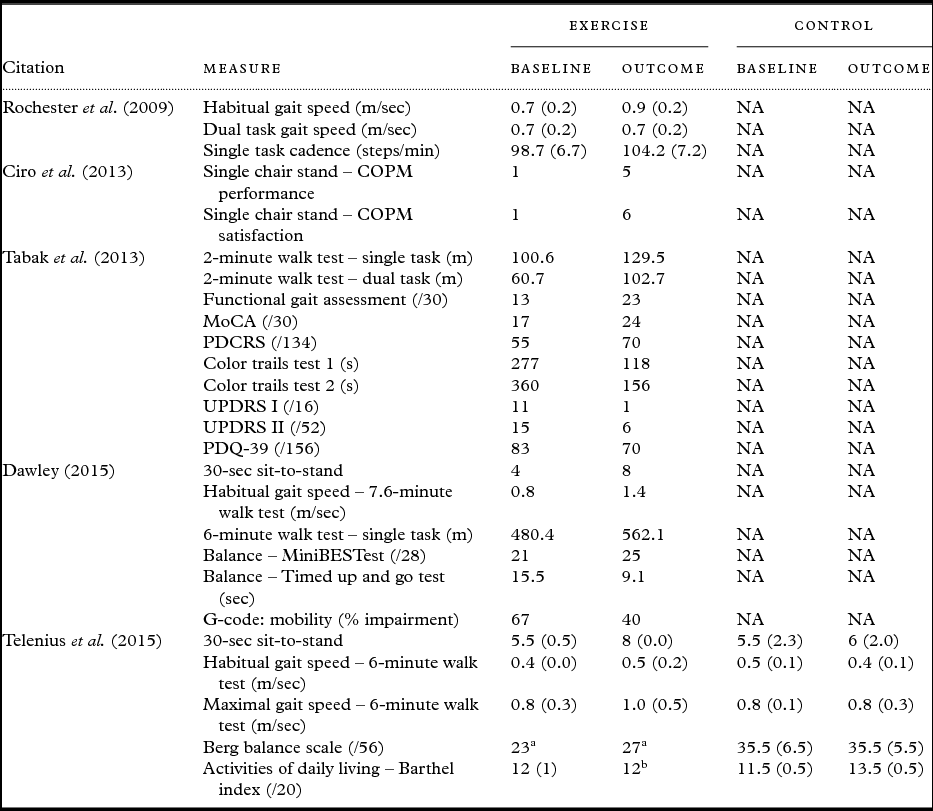
Physical exercise is the most studied psychosocial intervention in people with LBD. Evidence supporting the benefits of exercise on cognition in PDD comes from a case report presenting an eight-week program of stationary cycling. Improvements in executive functions were observed using MoCA and PD cognitive rating scale (Pagonabarraga et al., Reference Pagonabarraga, Kulisevsky, Llebaria, Garcia-Sanchez, Pascual-Sedano and Gironell2008). Exercise has been reported to increase mood and cognition (UPDRS part I) scores, and to reduce the time needed to complete color trails tests 1 and 2 (Messinis et al., Reference Messinis, Malegiannaki, Christodoulou, Panagiotopoulos and Papathanasopoulos2011; Tabak et al., Reference Tabak, Aquije and Fisher2013) (Table 4). Of all non-pharmacological interventions for motor symptoms of LBD, exercise-based interventions have the best available evidence supporting their efficacy. However, there has not been any trial exclusively recruiting people with LBD. A subset of PDD patients (n = 4) in an RCT, where participants undergoing the high intensity functional exercises program (Littbrand et al., Reference Littbrand, Rosendahl, Lindelof, Lundin-Olsson, Gustafson and Nyberg2006) were compared with a light activity control, has provided evidence for minor improvements in sit-to-stand function and habitual and maximal gait speed. Exercise may improve balance, measured by the Berg balance scale (Telenius et al., Reference Telenius, Engedal and Bergland2015; Inskip et al., Reference Inskip, Mavros, Sachdev and Fiatarone Singh2016) (see SDC-5).
Reported outcomes in studies assessing the impact of physical activity in people with Lewy body dementia (n = 16)

Figures rounded to one decimel point. COPM = Canadian Occupational Performance Measure; MoCA = Montreal Cognitive Assessment; NA = not applicable; PDCRS = Parkinson's Disease Cognitive Rating Scale; PDQ-39 = Parkinson's Disease Questionnaire-39; UPDRS = Unified Parkinson's Disease Rating Scale (part I = mood and cognition, part II = activities of daily living).
aResult only reported for first intervention participant.
bResult only reported for second intervention participant.
Other non-pharmacological interventions
Spaced retrieval memory training has been attempted as an intervention in PDD (n = 2), though only one participant was able to successfully complete motor and motor-verbal tasks at final recall testing (Hayden and Camp, Reference Hayden and Camp1995). Additionally, one case report observed amelioration of “mirror sign” associated with LBD, following an environmental intervention (Gil-Ruiz et al., Reference Gil-Ruiz2013).
Discussion
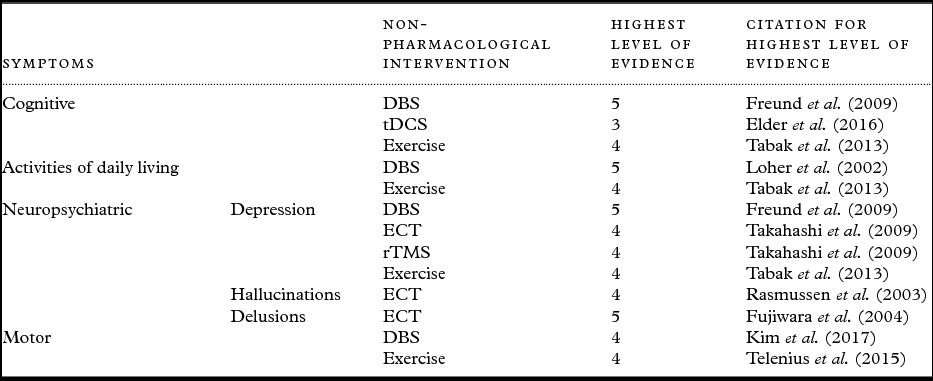
This systematic review is the first to comprehensively assess the efficacy of all reported non-pharmacological interventions in people with LBD, and it conformed to the PRISMA guidelines (Moher et al., Reference Moher, Liberati, Tetzlaff, Altman and Group2009). Table 5 summarizes the best available evidence for the efficacy of non-pharmacological interventions in treating various symptoms of LBD. The best available evidence supporting efficacy of non-pharmacological interventions is not robust. Currently available studies are small in scale. They often lack appropriate controls, and most of them have not accounted for potential confounding factors. Because of the lack of data homogeneity, secondary to the varying interventions assessed, and low quality of available literature, we could not perform meta-analysis. However, this preliminary evidence, together with the limitations of currently available pharmacological interventions, indicate the need to consider potential non-pharmacological interventions while planning comprehensive clinical care of people with LBD, and to plan pertinent research in future.
Oxford Centre for Evidence-Based Medicine levels of evidence for the efficacy of non-pharmacological interventions for various symptoms of Lewy body dementia

“Motor” refers to Parkinsonian motor symptoms such as bradykinesia and resting tremor. DBS = deep brain stimulation; ECT = electroconvulsive therapy; rTMS = repetitive transcranial magnetic stimulation; tDCS = transcranial direct current stimulation; level of evidence 3 = non-randomized controlled cohort/follow-up study; level of evidence 4 = case-series, case-control studies, or historically controlled studies; Level of evidence 5 = mechanism-based reasoning.
ECT is a non-pharmacological intervention that is readily available to many specialist psychiatric services treating people with LBD. While ECT has been associated with transient cognitive deficits in late-life depression, current evidence does not suggest long-term deleterious effects on cognition (Kumar et al., Reference Kumar, Mulsant, Liu, Blumberger, Daskalakis and Rajji2016). Furthermore, a systematic review of the effects of ECT in PD and depression, found depression improving in 93.1% of patients, with 94% remaining free from cognitive decline (Borisovskaya et al., Reference Borisovskaya, Bryson, Buchholz, Samii and Borson2016). Extrapolating this evidence may support the safety of ECT in people with LBD. However, only one of three studies assessing ECT in LBD reported significant improvement in depression, and the study did not report post-ECT cognitive test results (Takahashi et al., Reference Takahashi, Mizukami, Yasuno and Asada2009). Though there has not been any study suggesting hastening of cognitive decline by ECT in LBD, there is a need for studies investigating long-term cognitive effects of ECT in people with LBD. Considering the efficacy of ECT in ameliorating severe depression and psychosis in older people with PD, ECT may be a potential treatment option for people with LBD, especially those who do not tolerate pharmacological interventions, with severe neuropsychiatric symptoms leading to active risks to self and others. The need for large robust trials evaluating the efficacy of ECT in treating such neuropsychiatric symptoms in LBD cannot be overemphasized.
Similarly, significant improvement of depressive symptoms in people with DLB following rTMS has been reported, but the report did not mention their post-rTMS cognitive functioning (Takahashi et al., Reference Takahashi, Mizukami, Yasuno and Asada2009). A recent meta-analysis has found rTMS to be superior to sham-rTMS in reducing depressive symptoms in people with PD, with antidepressant effects similar to that of selective serotonin reuptake inhibitors, and concurrent improvement in motor function (Xie et al., Reference Xie2015). Another systematic review has found rTMS to have no significant impact on cognition (Lage et al., Reference Lage, Wiles, Shergill and Tracy2016). There has not been any double blind RCT evaluating the efficacy and safety of rTMS in reducing depressive symptoms in people with LBD, despite the need for such a trial. While attentional improvements have been reported in people with LBD following tDCS, it is important to note that removal of outliers could have influenced the results (Elder et al., Reference Elder2016). Anodal tDCS over the prefrontal cortex has previously shown efficacy in improving executive functions in people with PD (Boggio et al., Reference Boggio2006; Pereira et al., Reference Pereira2013; Cappon et al., Reference Cappon, Jahanshahi and Bisiacchi2016). Hence, the efficacy of tDCS on executive functions of people with LBD requires further systematic investigation.
DBS involves an invasive neurosurgical procedure, and is therefore not feasible in many psychiatric settings treating people with LBD. While DBS is used clinically for medication-refractory motor symptoms in PD, PDD is often considered a contraindication in DBS, partially due to the risk of postsurgical cognitive decline, particularly upon STN stimulation (Massano and Garrett, Reference Massano and Garrett2012). However, this systematic review identified four case reports reporting benefits of DBS in PDD. Freund et al. (Reference Freund2009) suggest that cognitive improvements observed in their patient were due to the effects of stimulating residual cholinergic projections and cell bodies in NBM. While it is not clear if NBM DBS alters progression of LBD, preclinical studies have suggested possible disease-modifying mechanisms such as increased secretion of nerve growth factor (Hotta et al., Reference Hotta, Kagitani, Kondo and Uchida2009) and enhanced neurogenesis (Jeong et al., Reference Jeong, Lee, Lee, Chang, Kim and Chang2014). We came across two ongoing RCTs (Foltynie, Reference Foltynie2017; Godefroy et al., Reference Godefroy, Defebvre, Jean-Luc, Krystkowiak and Delasayette2017) evaluating the efficacy of NBM DBS to treat cognitive symptoms of DLB. Results of these trials have not been published so far. Due to the nature of the intervention, difficulties in obtaining informed consent, and the likelihood of end-stage complications, it is important to consider on an individual basis whether DBS can be justified as a treatment option, particularly for those with moderate or severe LBD.
Several physical, cognitive, and quality-of-life outcome improvements have been reported in people with LBD receiving exercise-based interventions. Post-intervention increase in gait speed of 0.2 m/sec or more has been reported in four studies, and this exceeds reported moderately clinically significant change of 0.14 m/sec in PD cohorts (Hass et al., Reference Hass2014). A large, clinically important effect in UPDRS part II scores following stationary cycling intervention has been reported (Tabak et al., Reference Tabak, Aquije and Fisher2013). A 50-m improvement in a 6-minute walk test indicates moderately clinically significant change in geriatric populations, and an 82-m improvement has been reported in a DLB patient following an exercise-based intervention (Steffen and Seney, Reference Steffen and Seney2008; Dawley, Reference Dawley2015; Inskip et al., Reference Inskip, Mavros, Sachdev and Fiatarone Singh2016). There is currently level 4 evidence to support the efficacy of exercise-based interventions to improve cognition, activities of daily living, motor symptoms, and depressive symptoms in people with LBD. Although the prevailing evidence is not robust, practicability, potential benefits, and minimal risk for serious adverse effects indicate the need to include exercise-based interventions in the comprehensive clinical care of people with LBD. The importance of further research on this topic cannot be overemphasized. Efficacy of other psychosocial interventions including psychoeducation and carer-based interventions has not been systematically investigated in LBD, and there is urgent need to design pertinent trials.
Studies evaluating non-pharmacological interventions for LBD are few, and they do not provide high-level evidence. Apart from the evidence supporting the use of acetylcholinesterase inhibitors for the management of cognitive symptoms of LBD, high-level evidence for the efficacy of available pharmacological interventions in people with LBD is also sparse (Stinton et al., Reference Stinton2015). Considering the magnitude of burden on people with LBD, and on their caregivers, there is a clinical need to formulate individualized comprehensive care plans including both pharmacological and non-pharmacological interventions. There is an urgent need to expand pertinent evidence base. Among the 122 full-text articles that were identified, 86 (70.5%) were considered ineligible because of their exclusion of or failure to control for PDD in PD cohorts, or for LBD in dementia cohorts. It is high time to reconsider the eligibility criteria excluding people with LBD, and to design trials specifically investigating people with LBD. Non-pharmacological intervention trials deal with unique methodological challenges (Boutron et al., Reference Boutron, Moher, Altman, Schulz, Ravaud and Group2008). Special attention should be given to standardizing different components of the intervention, tailoring the intervention for the needs of individual participants, describing the expertise of intervention providers, and the choice of an appropriate control group. Non-pharmacological interventions that have shown promise in the management of PD may be investigated in people with LBD (Hindle et al., Reference Hindle, Petrelli, Clare and Kalbe2013). Ultimately, robust complex intervention trials evaluating the efficacy of combined pharmacological and non-pharmacological interventions are needed to develop comprehensive clinical guidelines for the management of people with LBD.
Conflict of interest
All authors except Prof Dag Aarsland do not have any competing interests to declare. Prof. Aarsland has received research support and/or honoraria from Astra-Zeneca, H. Lundbeck, Novartis Pharmaceuticals, and GE Health, and serves as paid consultant for H. Lundbeck, Eisai, and Axovant.
Description of authors’ roles
H. Morrin and Anto P. Rajkumar conceived this study, and wrote the protocol for the systematic review. H. Morrin, T. Fang, and D. Servant carried out the systematic review including the quality assessment of identified studies. H. Morrin wrote the initial draft of the manuscript. All authors were involved in the critical revisions of the manuscript.
Acknowledgments
This research was supported by the Student Selected Components (SSC) program of King's College London, London, UK.
Supplementary material
To view supplementary material for this article, please visit https://doi.org/10.1017/S1041610217002010