Upper limb difference refers to the congenital absence or malformation, or absence due to surgical or traumatic amputation, of any part of the arm or hand (Reference Smith1). Congenital upper limb difference is present at birth and can, in rare instances, involve multiple limbs (Reference Smith1). Acquired amputations can be the result of cancer, trauma, or severe infections, such as meningococcal septicemia (Reference Smith1). Upper limb difference can have both a physical and psychological effect on a child (Reference Smith1). However, nonuse rates of upper limb prostheses among children can be as high as 50 percent (Reference Shida-Tokeshi, Bagley and Molitor2). Studies have found that children believe that prostheses do not help function, are uncomfortable, are unreliable, are too heavy, and are not aesthetically acceptable (Reference Routhier, Vincent, Morissette and Desaulniers3–Reference Donovan-Hall7).
There has been an increasing emphasis on the importance of involving users of devices when designing technology used both within and outside of healthcare settings (Reference Allsop, Holt, Levesley and Bhakta8). Furthermore, increasing recognition of children's rights has led to children more frequently being asked for their opinions on the health services and treatment they receive (Reference Sinclair and Franklin9).
Nesset and Large (Reference Nesset and Large10) argued that involving children in the design of products resulted in software that truly met the children's needs. They suggested that likes and dislikes were revealed which were contrary to the researchers’ preconceived ideas about the children and would have remained unknown without their involvement.
Light et al. (Reference Light, Page, Curran and Pitkin11) and Rigby et al. (Reference Rigby, Ryan, From, Walczak and Jutai12) incorporated the views and preferences of children into the design of assistive equipment and Cooke (Reference Cooke13) involved children in the design of a hospital building using play sessions, interviews, and focus groups to elicit their views. Weightman et al. (Reference Weightman, Preston and Holt14) involved children with cerebral palsy in the development of devices for upper limb therapy using a range of methods, including the traditional approaches of questionnaires and interviews to explore their views, and peer-tutoring methods to test the usability of the devices. Although they found interviews and questionnaires to be useful, the researchers believed that these methods were commensurate with a marginalizing power relationship, with the adults being in the position of power when asking the questions. They suggested this could be addressed by giving children some choice and control over how they participate.
Research involving children in prosthesis development has explored the development priorities of prosthesis users of all ages, combining the findings from adult and child populations (Reference Atkins, Heard and Donovan15;Reference Biddiss and Beaton16). This approach does not fully appreciate children's needs and views as unique to those of adults. Design priorities can vary substantially between adults and children, suggesting there are distinct requirements for pediatric users (Reference Biddiss and Beaton16).
In addition to involving children and adolescents (the users of upper limb prostheses), it is important to consult with other stakeholders (parents/carers and professionals), as they will have different levels of expertise and different goals for using the devices (Reference Shah and Robinson17). Comprehensive consideration of the needs of all stakeholders is essential if better devices are to be developed (Reference Shah and Robinson18).
Many authors have emphasized the impact of involving the parents and providing them with guidance and information, on the child's acceptance of a prosthesis, yet there is a paucity of research that involves parents in the development of prostheses for children (Reference Nichols, Rogers, Clark and Stamp19). Postema et al. (Reference Postema, van der Donk, van Limbeek and Rijken20) found that, when parents were disappointed with the functional capabilities, appearance, and weight of upper limb prostheses, or believed that they were not adequately involved in decision making, this increased the likelihood that the child would not use the prosthesis. These findings infer that parental encouragement may positively affect a child's use of prostheses and supports the notion that parents should be involved in the development of prostheses for children and adolescents. Additionally, if professionals find it difficult to prescribe or fit a prosthesis or provide training for use, children are likely to experience greater problems (Reference Rycroft-Malone21–Reference Peerdeman, Boere and Witteveen23).
The field of Human Computer Interaction (HCI) is significantly further ahead than healthcare in involving children in product design (Reference Glushko24). The BRIDGE method is an HCI methodology for involving children as equal stakeholders in the design process (Reference Iversen and Brodersen25). This approach argues that, providing consideration is given to context, collaborationn and cultural sensitivity, children do not need to participate in product design in a fundamentally different way to adults (Reference Iversen and Brodersen25). The BRIDGE method views children as experts in their everyday lives, using their experiences as a starting point for the design process (Reference Iversen and Brodersen25). It is the responsibility of the researcher to understand the viewpoints of the children participating through using methods which enable them to express their views (Reference Iversen and Brodersen25).
However, a central driving belief behind the methodology is that designing a new technology requires active participation of all stakeholders, and not just the user of the device (Reference Iversen and Brodersen25). In the case of upper limb prostheses for children, this will include the parents and multidisciplinary healthcare professionals working with the child, as well as the child (taking into account the entire context of the technology's use). A multidisciplinary team is important in this approach to ensure that children's novel ideas can be gleaned, while being feasible to manufacture, prescribe, and use (Reference Nesset and Large10). Advances in three-dimensional (3D) printing permit rapid development of new and inexpensive prostheses in response to participants’ views. The 3D printing facilitates an iterative approach to device development, which is central to the BRIDGE methodology. An iterative approach is fundamental in including participants’ views in prosthesis design.
The current study responds to the high nonuse rates and dissatisfaction by involving children (and other stakeholders) in the development of new upper limb prosthetic devices.
The aims of the current study were to understand the views of children and adolescents with upper limb difference, their parents, and professionals on the usefulness of upper limb prosthetic devices and how they could be improved; and develop and improve devices using qualitative techniques and iterative prototyping (using 3D printing) within the BRIDGE methodology.
METHODS
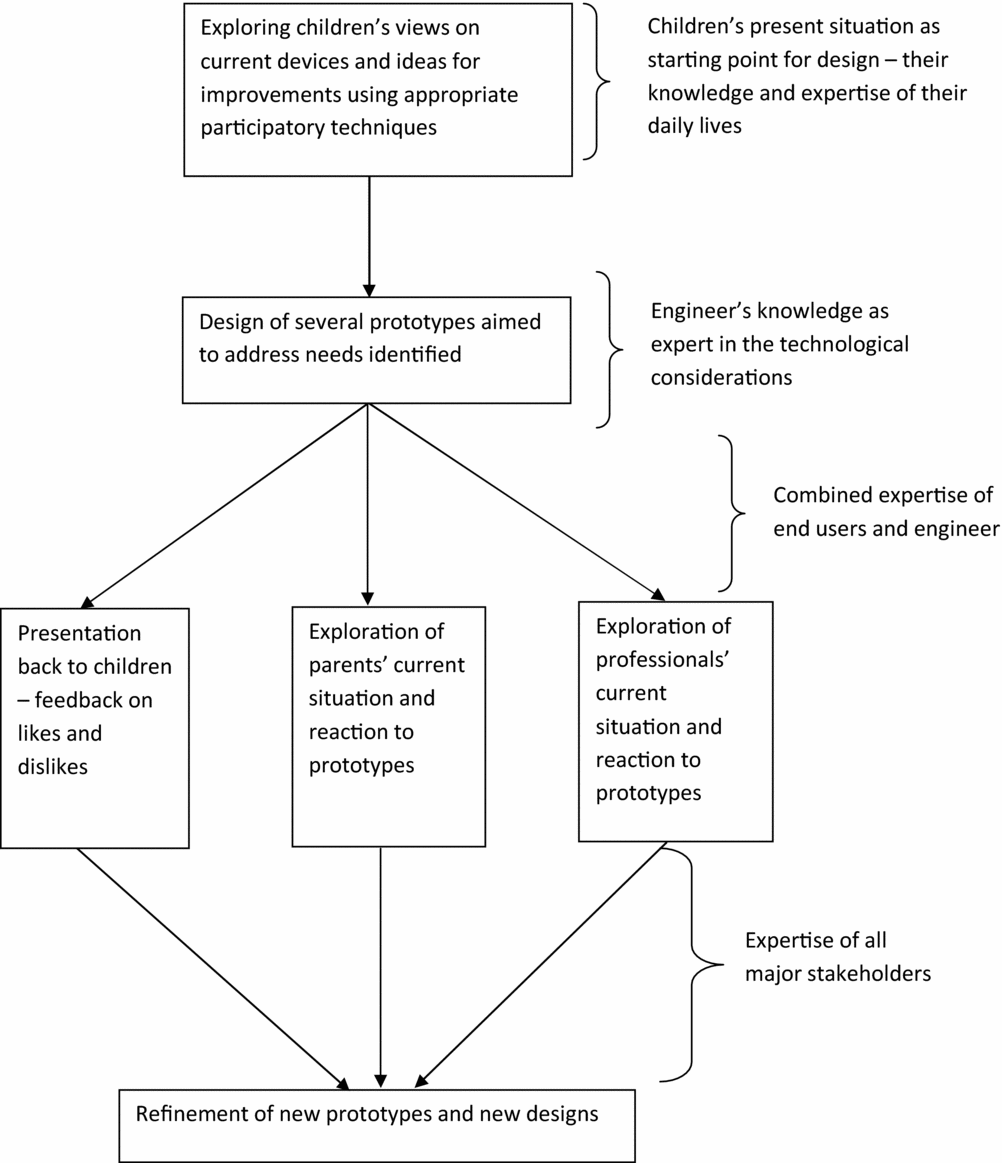
The study applied the BRIDGE methodology to the design of children's upper limb prostheses. Figure 1 outlines the overall research process within the framework of the BRIDGE methodology. Ethical approval for the various stages of this study was granted by the University of Southampton's Faculty of Health Sciences Ethics Committee (FoHS-ETHICS-2011-056; FoHS-ETHICS 2011–075; ID 1224).
Overall research process within the framework of the BRIDGE methodology.

Participants
Total sample size was thirty-four, including eight children and adolescents with upper limb difference, nine parents, eight prosthetists, and nine occupational therapists (OTs). Parents and children were recruited through a charitable organisation (Reach Charity Ltd: http://reach.org.uk/). Professionals were recruited by means of conferences and professional networks, and worked at seven different limb clinics in England.
Design
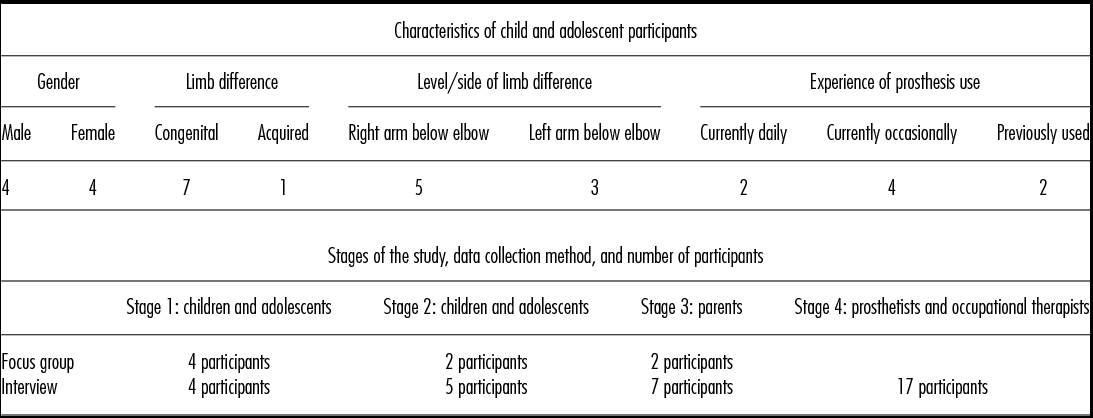
The study followed a multi-stage design using focus groups and semi-structured interviews (with thematic analysis) to understand children's, parents’, and professionals’ views on upper limb prostheses, develop devices responding to these views and gain feedback on the devices. Children and adolescents and their parents were offered the choice to participate in a focus group or individual interview. Focus groups were not used with the professionals as the professional world of paediatric upper limb prosthetics in the United Kingdom is small and close-knit, which may have resulted in participants being reluctant to answer honestly and openly. Table 1 provides an outline of the demographic characteristics of the children and adolescents who participated and information about the number of participants for each data collection technique in the different stages of the study.
Characteristics of Participants (Children and Adolescents) and Stages of the Study, Data Collection Method, and Number of Participants

Techniques for Developing Prototypes
The prototypes were developed using 3D printing (specifically, additive manufacturing), which is a form of rapid prototyping technology (RPT). RPT provides a means of quickly producing solid, 3D prototypes from 3D computer aided design files. Additive manufacturing is a cost-effective method of RPT based on ink-jet technology, where a 3D structure is built up, layer by layer, in 2D slices. This enables a complete prototype to be created in one printing process. An Objet Connex350 3D printer was used because of its versatile range of printable engineering plastics and multi-material jetting technology.
RESULTS
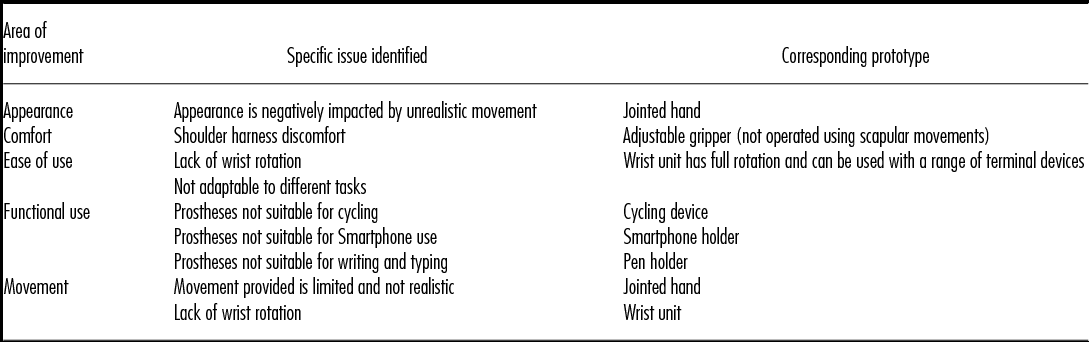
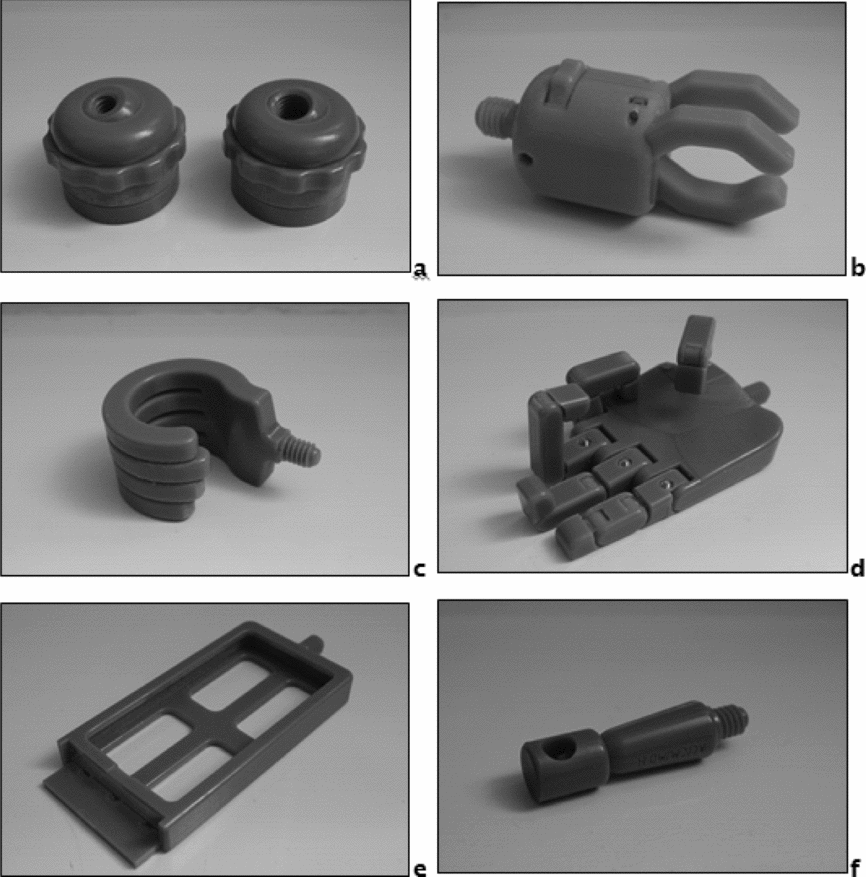
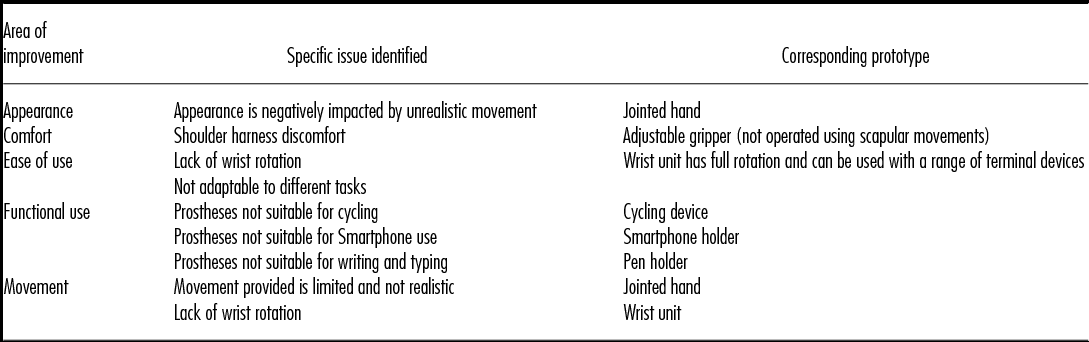
In stage 1 of the research, children and adolescents identified several characteristics of prostheses that they would like to see improved: appearance, comfort, ease of use, functional use, and movement. The second stage of the process involved developing five task-specific terminal devices and an adjustable wrist unit to support each of these devices; these were designed and fabricated by the second author of this study. See Table 2 for information about the different characteristics requested by the participants and the prototype that attempts to provide it. See Figure 2 for photographs of the prototypes. Stages 3, 4, and 5 involved gaining an understanding of all of the stakeholders’ feedback on the prototypes. This feedback has been combined and linked to each device with direct quotes (using pseudonyms but with real ages) from the different participants.
Area of Improvement, Specific Issue, and Prototype Aimed to Address It
Prototype devices developed (a: adjustable wrist unit; b: adjustable gripper; c: cycling appliance; d: jointed hand; e: Smartphone holder; f: pen holder).

Views of the Newly Developed Prototypes:
Adjustable wrist unit
Improved wrist rotation was identified by the children and adolescents as a desired development:
“I think if [the wrist] bends any way you want quite easily, that'd be [. . .] good” (Gareth, aged 15)
Designing it to work within a modular system provides choice concerning the use of task-specific devices. Modularity also takes into consideration the impact of growth. The adjustable wrist unit (Figure 2a), based on the ball and socket joint, comprises a fully rotatable and lockable wrist unit that supports a range of functional devices. The device consists of three parts: the wrist mount, the rotation ball and the friction cup. When the friction cup is screwed down over the wrist mount, the rotation ball becomes sandwiched firmly between the wrist mount and the inner surface of the friction cup, locking it securely in place. Unscrewing the friction cup slightly allows the rotation ball to be freely rotated in all axes. A ridged ring around the perimeter of the friction cup makes it easier to grip with the unaffected hand when loosening and tightening.
When presented to participants for feedback, all stakeholder groups believed that the device provided realistic movement (particularly in angulation [flexion/extension and radial/ulnar deviation] and rotation). Additionally, parents believed the device would lock in place securely which they reported was important for safety reasons. However, although some participants (across all groups) believed the device would be easy to use, others thought it would be difficult due to its lack of spontaneity. Weight, size, and shape were identified as potentially problematic by the professionals but these were not attributes that concerned the children and adolescents or parents.
Adjustable gripper
Children and adolescents acknowledged the need for a gripper-type hand for dexterous tasks, but commented that available devices were uncomfortable and cumbersome, with particular reference to the discomfort caused by harnesses (Figure 2b):
“I've always found those round the shoulder ones too hard to use because [. . .] it's really itchy against your skin and it's horrible.” (Chris, aged 12)
An adjustable gripper was designed and fabricated to incorporate a moveable digit rotating between two fixed digits. The device is operated with the unaffected hand using the ridged thumb wheel. The device provides a locked and secure grip between the adjustable and fixed digits.
All groups believed that the device could be useful in specific activities (playing instruments, woodwork) and that it provided a strong grip. However, they also believed it was unattractive, heavy, slow and tiring to operate. The children and adolescents identified that this device could be useful as a substitute prosthesis if their primary device was being altered or repaired. This demonstrates that being without a device has an impact on the children and adolescents.
Cycling appliance
Participants identified it was important to have a device for cycling due to needing to look over both shoulders (and this being made difficult by unilateral upper limb difference), problems with using brakes one-handed and the need to wear a prosthesis to cycle at a standard required by the cycling proficiency test (Figure 2c):
“I have to get [a prosthesis] for my cycling test [. . .] I think I'm going to have two brakes on the same side but I've got to wear a prosthetic.” (Emma, aged 9)
This motivated the design of a simple cycling appliance, which is a handlebar attachment shaped like a curled hand. The diameter of the inner grip can be redesigned using RPT to match the diameters of a range of handlebars.
All groups agreed that a device for cycling would be very useful as it is an activity that children with upper limb difference commonly have difficulties with. However, all were concerned about the lack of a quick-release mechanism and the risk this could present. OTs believed the device did not look attractive. The children and adolescents, however, were not concerned as, due to its task-specificity, they would not be using it for cosmetic reasons.
Jointed hand
A jointed hand was developed based on the comments of children and adolescents that currently available passive prostheses do not have realistic movement (Figure 2d). The movement of the prosthesis was identified by the children and adolescents as the reason it is noticeable that it is not a real hand:
“They look like a hand [but] they don't exactly move like a hand.” (James, aged 8)
The hand was designed based on the dimensions of Snyder et al. (Reference Snyder, Spencer, Owings and Schneider26) for an average 8-year-old male child, as these were the most recent published dimensions available at the time. The hand includes independent movement of all the fingers and thumb. It was designed as a conceptual piece to promote discussion among the children during follow-up sessions, demonstrating the introduction of technical expertise which may challenge children's current thoughts about the possibilities for developing prosthetic devices.
Participants also identified that they would like prostheses to have fingers that move individually instead of only having one grip to replicate the natural movement of a hand as closely as possible:
“An opposable thumb and a lot more dexterity [. . .] and I think it would be really good if your fingers could move separately.” (Anna, aged 14).
Through further design, it would be possible to automate finger and thumb movement as either a body-powered or myoelectric device.
All groups enjoyed the fluid movement that this device offered but were concerned that it should have softer, rounder edges to improve the appearance. Professionals suggested it could be used for gesturing or even holding objects, combining aesthetics and function.
Smartphone holder
Difficulties in using computer and communication technology is an issue that the participants identified as important (Figure 2e):
“I play loads of video games that require two hands and I can't play them which is really annoying.” (David, aged 10).
Additionally, Smartphones were identified as potentially posing a difficulty for young people with unilateral upper limb difference as a prosthetic hand would not be tactile enough to operate a touch screen device. However, neither would it be able to hold a device securely or comfortably over long periods of time. A Smartphone holder was designed to support an iPhone4/4S, but using RPT, these dimensions could be quickly changed to produce new versions for any mobile phone, tablet, or multimedia device. The phone slots into the holder and is secured by closing the hinged lid at the top.
Some of the children and adolescents believed they would use a device to hold their Smartphone as they currently believed nervous about dropping and breaking it. Others, however, believed that they managed to use their phone without a device, having developed their own strategies (such as, placing their phone on a table to type). It was believed that this device would hold a phone securely while looking “cool” or being a gimmick.
Pen holder
Children and adolescents identified that a prosthesis should help with the fine motor activities of writing and typing (Figure 2f):
“What would be really, really magic would be if it could write.” (Emma, aged 9).
“It would be good if they could make a hand that you'd be able to like touch type with” (Anna, aged 14).
A two-part holder was designed consisting of a tapered tubular body, threaded at each end, and an adjustable clamp. The adjustable clamp has a hole to support a pen or other writing device up to a maximum external diameter of 10 mm which, when screwed down onto the body of the holder, clamps the writing implement securely in place.
Although professionals could identify potential benefits of this device for their clients, the children and adolescents believed that it would not really be necessary for them. All groups, however, believed it could benefit bilateral amputees and could be adapted for use in a range of activities (such as typing and arts and crafts).
Combining Participants’ Views to Develop Key Themes
The feedback from participants on the prototypes developed led to the identification of five broad themes relating to prosthesis development: that they should be quick and easy to use, inconspicuous, versatile, have natural movement, and be safe and secure.
Theme 1: Quick and easy to use
Children and adolescents explained that the device has to be quick and easy to use because it has to make performing the task more convenient than doing it using their residual limb. Professionals echoed this, explaining that anything that is a “hassle” to use is likely to be unsuccessful for children. Participants believed that the method of screwing devices in and out of the wrist device was too time-consuming and that operating it could be too complicated and tiring.
Theme 2: Inconspicuous
Some participants believed the Smartphone holder looked “cool” and would not draw attention as it looks similar to other Smartphone covers. Others, however, believed due to its size it may in fact draw attention. Participants also reported the three-point grip, writing device and cycling appliance looked unrealistic and believed they could be improved if they looked more like a hand or had the suggestion of fingers. Participants believed this would prevent them from attracting unwanted attention from strangers.
Theme 3: Versatile
The interchangeability of the terminal devices in the wrist unit was seen as positive by some participants as it was believed this was an improvement on needing to have more than one prosthesis (for different functions). Some participants (particularly the professionals) reported, however, that having a range of terminal devices may be difficult for a child to manage as they may potentially have several to carry around. Professionals and parents suggested this could be burdensome for children and may result in them forgetting or losing their devices. Terminal devices that were versatile for use in several activities were viewed more favorably by professionals. However, the child participants did not reflect this view as they believed the different devices could be kept in different places depending on where they would be used, reducing the necessity to carry a range of devices at all times.
“You wouldn't always have to carry them around, only if you needed to use them. The iPhone one could just go in a pocket. . . I guess you could wear one on your hand that was for general things and carry the more specific ones with you. And the writing one you could just keep it in your locker at school or work so you wouldn't really need to carry it around.” (Anna, aged 14).
Theme 4: Moves naturally
Participants liked the natural movement of the jointed hand. They reported that devices that require operation with the unaffected hand are less appealing (such as the wrist device and dial-operated three-point grip) because it is not natural or instinctive to operate them in this way. They expressed a preference for devices which can be operated with the residuum only. It was reflected by professionals that children tend to prefer devices they can use in an instinctive, spontaneous manner rather than those that require planning and higher cognitive processes for operating. This idea is embodied in the hierarchical control of a myoelectric prosthesis.
Theme 5: Safe and secure
Participants reported that it is important that the device they are using can be relied upon to securely hold an item. They believed that the dial-operated 3-point grip and Smartphone holder provided this. All participants were concerned about the safety of the cycling appliance and expressed a need for it to have a quick release mechanism in case the user fell off their bicycle when using it. Parents expressed a concern that children with unilateral upper limb difference have to be particularly careful not to injure their sound limb as that can have a huge impact on their function.
“It's difficult because one time he got his arm trapped at school, his good arm, and it was in a sling for 2 days and he couldn't do anything. So when someone's got a disability you're extra careful with what they have.” (Mother of James, aged 8).
DISCUSSION
This study represents the first stage in the development of new prosthetic devices: continual, iterative development will be required to reach the stage at which they can be commercially manufactured. However, involving users from this early stage ensures that the point of departure for the design is the users’ own views, experiences and expertise. The findings support previous work (Reference Routhier, Vincent, Morissette and Desaulniers3–Reference Donovan-Hall7) that prostheses for children need to be lighter, more comfortable, more useful and more attractive. Using this methodology has also highlighted that prostheses should be safe, quick and easy to use; and natural (in both appearance and movement).
This demonstrates the value of involving children in the development of prostheses and medical technology generally. The participants demonstrated an ability to engage fully in the study and share unique insights which may not have been gleaned through other methods. Children have been enabled to express their views on matters they may not routinely be consulted on, allowing them to exert more control over matters affecting them, as well as recognizing them as equally able to impart insightful knowledge and experience.
Iversen and Brodersen (Reference Iversen and Brodersen25) used the BRIDGE method to involve children in the design process for information technology applications. The current study is the first to apply the methodology to healthcare technology and has demonstrated how this method can be successfully applied to a range of stakeholders and in a health technology domain. Having an awareness of the issues relevant to all users is important to prosthesis design because they can impact on the use or nonuse of the devices. Prosthetists and OTs have expressed the belief that involving children and parents in designing and choosing prostheses leads to feelings of ownership and, subsequently, reduces nonuse of devices (Reference Sims27). Taking the views of any of the stakeholders in isolation may lead to a neglect of important influences that impact on prosthesis use.
Appreciating the involvement of children reflects the ethos of the BRIDGE methodology: children are experts in their daily lives and design cannot happen without the involvement of these experts (Reference Iversen and Brodersen25). The current study has demonstrated that this approach to participatory design can produce rich and relevant data in the context of health technology design. Additionally, a consequence of involving children in the design process is that they will gain experience of these ways of working with adults, which will enable their learning and development for future participation (Reference Iversen and Brodersen25).
Using prototype devices and requesting feedback on them is a tangible way of demonstrating to participants that they have been actively listened to through interpreting and constructing meanings from the information shared by participants. 3D printing provides a method of rapidly producing a model for the visualization of these interpretations and constructions. Being able to validate a new idea or concept at an early stage in the design process using 3D printing also prevents costly mistakes at later stages.
The technical advantages of 3D printing were demonstrated in more complex designs, such as the adjustable wrist unit and the gripper hand, where it was possible to assemble fully functioning (moving) parts and test complex mechanical design concepts. This further allows for a quick and cost effective evaluation of whether a manufactured part will function as designed and allows design refinements and adjustments to be made to meet an individual's needs. The 3D printing may prove to be a useful manufacturing technology in the development of new prosthetic devices, particularly in the case of bespoke, customizable solutions. Using the BRIDGE methodology with RPT techniques has led to several recommendations for the development of new devices.
Cost-Effective Task Specific Devices
Participants identified that it would be useful to have prosthetic devices for cycling, writing, typing, computer use, self-care, and grooming. Devices should also be designed with durability in mind due to the environments in which children use prostheses and the activities for which they use them.
Modular Devices
The prototypes designed in this study were fabricated to work in a modular system. Modularity affords a device greater versatility (identified as important by participants) as its use can be altered through changing specific features. Modular devices can also be more adaptable to a child's growth and development, as certain aspects can be altered without the need for an entirely new device.
Comfort
Comfort was identified as an important feature of prostheses, with the harnesses on body-powered devices described by participants as uncomfortable and itchy. The scope for the current study was to develop terminal devices, but future device development needs also to focus on improving comfort for the wearer: an otherwise highly useful device may go unworn if it causes pain or discomfort. Device development may also benefit from focusing on reducing the weight of particular components to reduce discomfort. However, another way of addressing this concern may be to provide appropriate training that gradually prepares a child for the increased weight of a prostheses.
Reflection on Data Collection Methods
This study demonstrates that focus groups and interviews are appropriate tools for the collection of qualitative data with children. Qualitative methods enable participants to influence the agenda of the research interview or direction of focus group discussion, ensuring that the factors that are important to them are highlighted to the researcher in the participants’ own words (Reference Crow and Burton28). This is especially important when researching such a personal experience as an individual's use of healthcare technology. Triangulation of data by examining the views of a range of stakeholders enhances the credibility of the findings from this study as multiple perspectives were sought, reducing any potential influence of the researcher's own beliefs and philosophies (Reference Knafl, Breitmaye and Morse29).
Although valuable data regarding participants’ views on the prototypes was gained through conversational methods, the data gathered could have been enhanced by the use of audio-visual recording. This would have provided additional information on the way participants interacted with the prototypes and how easy they found them to operate in practice.
CONCLUSION
The study has led to the development of several prototypes of cost-effective task-specific prosthetic devices that are suitable for further development and refinement. Use of RPT in conjunction with stakeholder perspectives can lead to improved design in prostheses and health technologies more broadly. Inclusion of users of devices, and improvements in design, should result in wider use of such technologies. For children with upper limb difference, this could lead to improvements in physical and psychological well-being. The development of upper limb prostheses needs to continue to involve users, and other stakeholders, to ensure future designs consider the needs and wants of users as well as technological advancements.
CONFLICTS OF INTEREST
The authors have nothing to declare.