Introduction
The opioid crisis and the concurrent rise in antimicrobial resistance (AMR) present major public health challenges in the United States. Opioid Use Disorder (OUD) has contributed to over 564,000 deaths between 1999 and 2020, and multidrug-resistant organism (MDRO) infections claim more than 35,000 lives annually. 1,2 Gomes et al conducted a study that showed an increase in hospital admissions for severe infections among patients with OUD over 6 years from 2013 to 2019. Reference Gomes, Kitchen and Tailor3 This trend has direct implications for critical care settings, highlighting that patients with OUD are at increased risk for complications from MDR infections. Factors contributing to this risk include opioid-induced immunosuppression, malnutrition, high-risk behaviors, and social factors such as housing insecurity and restricted or inconsistent healthcare accessibility. Reference Farnsworth, Lloyd and Jean4–Reference Stefanovic, Matic and Ritchie7 In their review, Farnsworth et al demonstrated the association between OUD and infections, implicating the health disparities and systemic biases encountered by patients with OUD, such as limited access to healthcare, stigmatization, and racial inequalities, significantly impact the timely diagnosis and management of infections. Reference Farnsworth, Lloyd and Jean4 These barriers contribute to delays in seeking care and receiving appropriate treatments, which can lead to a higher severity of illness at presentation and poorer outcomes as compared to patients without OUD.
Infections related to MDROs are an increasing issue in the healthcare setting and are often linked to longer hospital stays, increased mortality, and escalating healthcare costs. Reference Nelson, Hyun, Jezek and Samore8 Despite the opioid crisis and increasing AMR in the U.S., there is a knowledge gap pertaining to the prevalence and risk factors of MDRO in critically ill patients with OUD. Although previous studies have provided data regarding the prevalence, incidence, and predictors of MDROs among different populations, their specific correlation specifically with OUD diagnoses remains unclear. Reference Gross, Van Schooneveld and Olsen9–Reference AbuSara, Tayyeb, Matalka, Almomani, Abaza and Nazer11 Hence, existing data may not be directly applicable to patients with OUD admitted to an ICU due to their distinct clinical, demographic, and behavioral features. By identifying the predictors of MDRO isolation, healthcare providers can better tailor prevention strategies and optimize empiric antimicrobial therapy selection with the goal of improving patient outcomes.
Methods
Study design and setting
This study employed a retrospective, multicenter, cohort design to examine critically ill patients with OUD admitted to any ICU in a large academic medical center in four regions located in Arizona (AZ), Florida (FL), Minnesota (MN), and multiple midwest (MW) sites in both Minnesota and Wisconsin. In total, these locations comprise data from 272 ICU beds. We evaluated hospitalization records between January 1, 2018, to July 31, 2023. The primary outcome was isolation of an MDRO during an infection-related ICU admission with only the first admission being included for each patient identified as eligible during the study period. Our goal was to evaluate non-interventional predictors including demographics, comorbidities, and past medical history and their influence on MDRO prevalence.
Population and sample
The study included adults (aged >18 years) with a diagnosis of OUD, admitted to an ICU with bacterial infection, and with positive culture growth from cultures collected within 48 hours of admission. The requirement for culture collection within 48 hours of admission was applied to attempt to select a cohort with infections presumed not to have been acquired within our institution. Patients were excluded if they did not undergo microbiology testing, were pregnant, or had substance use disorders other than opioid use disorder (OUD).
Definitions
MDRO isolation in this study was defined as identification and/or isolation of MDRO in a specimen collected from an anatomic location consistent with the identified infectious source. Specific MDROs collected included methicillin-resistant Staphylococcus aureus (MRSA), vancomycin-resistant enterococci (VRE), enterobacterales demonstrating phenotypic resistance indicative of extended-spectrum beta-lactamase (ESBL) production, carbapenem-resistant enterobacterales, carbapenem-resistant Acinetobacter species, and Stenotrophomonas maltophilia. Pseudomonas aeruginosa was defined as MDR if it was resistant to at least one drug in three of the following antibiotic groupings: piperacillin/tazobactam or ticarcillin/clavulanate, ceftazidime or cefepime, carbapenems (ie, imipenem or meropenem), aminoglycosides (gentamicin, tobramycin, amikacin), fluoroquinolones (ciprofloxacin and levofloxacin). Reference Gomes, Kitchen and Tailor3,Reference Dinh, Saliba and Saadeh12,Reference Kalil, Metersky and Klompas13 Medications for Opioid Use Disorder (MOUD), which include methadone, buprenorphine, or naltrexone, were extracted from the EHR using the current home medication list. Reference Wakeman, Larochelle and Ameli14 Presence of immunodeficiency was defined according to ICD-10 codes, including general immunodeficiency (D84.9), drug-induced immunodeficiency (D84.821), antibody deficiency with near-normal immunoglobulins or hyperimmunoglobulinemia (D80.6), ataxia telangiectasia (G11.3), DiGeorge syndrome (D82.1), hyper-IgE syndrome - AD STAT3 (D82.4), and WHIM syndrome (D70.8). HIV disease was defined as a documented history of HIV in patients assigned the ICD-10 code B20, B97.35, and Z21. Mental health disorders included anxiety, depression, and post-traumatic stress disorder (PTSD). Housing insecurity was assessed by ICD-10 code Z59.0 and EHR review for indications of unstable housing using relevant keywords (eg, homeless, lack of housing, living in shelter, etc).
Data collection
We extracted data, including laboratory data, clinical notes, and demographic information, from an internal ICU data repository and Electronic Health Record (EHR). Patients were categorized into two groups based on isolation of an MDRO.
Statistical analysis
We used descriptive statistics to summarize patient demographics, clinical characteristics, comorbidities, and past medical history, utilizing frequencies, proportions, medians, and interquartile ranges, as appropriate. Univariate logistic regression screened for significant associations between each independent variable and the MDRO isolation outcome, identifying potential predictors. Subsequently, Least Absolute Shrinkage and Selection Operator (LASSO) regression was used to refine the multivariable analysis to construct the predictive model addressing potential overfitting and ensuring only the most pertinent predictors were retained. LASSO regression is known for its ability to enhance model reliability and robustness, penalizing the absolute size of the regression coefficients, and effectively shrinking some coefficients towards zero. Reference Musoro, Zwinderman, Puhan, Ter Riet and Geskus15 Therefore, factors with non-zero coefficients, which indicate a stronger association with MDRO infections, were included, whereas less influential factors were removed. Reference Musoro, Zwinderman, Puhan, Ter Riet and Geskus15,Reference Shipe, Deppen, Farjah and Grogan16 We evaluated the goodness-of-fit for the final model using the Hosmer-Lemeshow test, with a non-significant result (P > .05) indicating a well-fitting model. The model’s discrimination ability was assessed through the c-statistic, aiming for a value of 0.7 or higher, which indicates effective differentiation between patients with and without MDR infections.
Measures
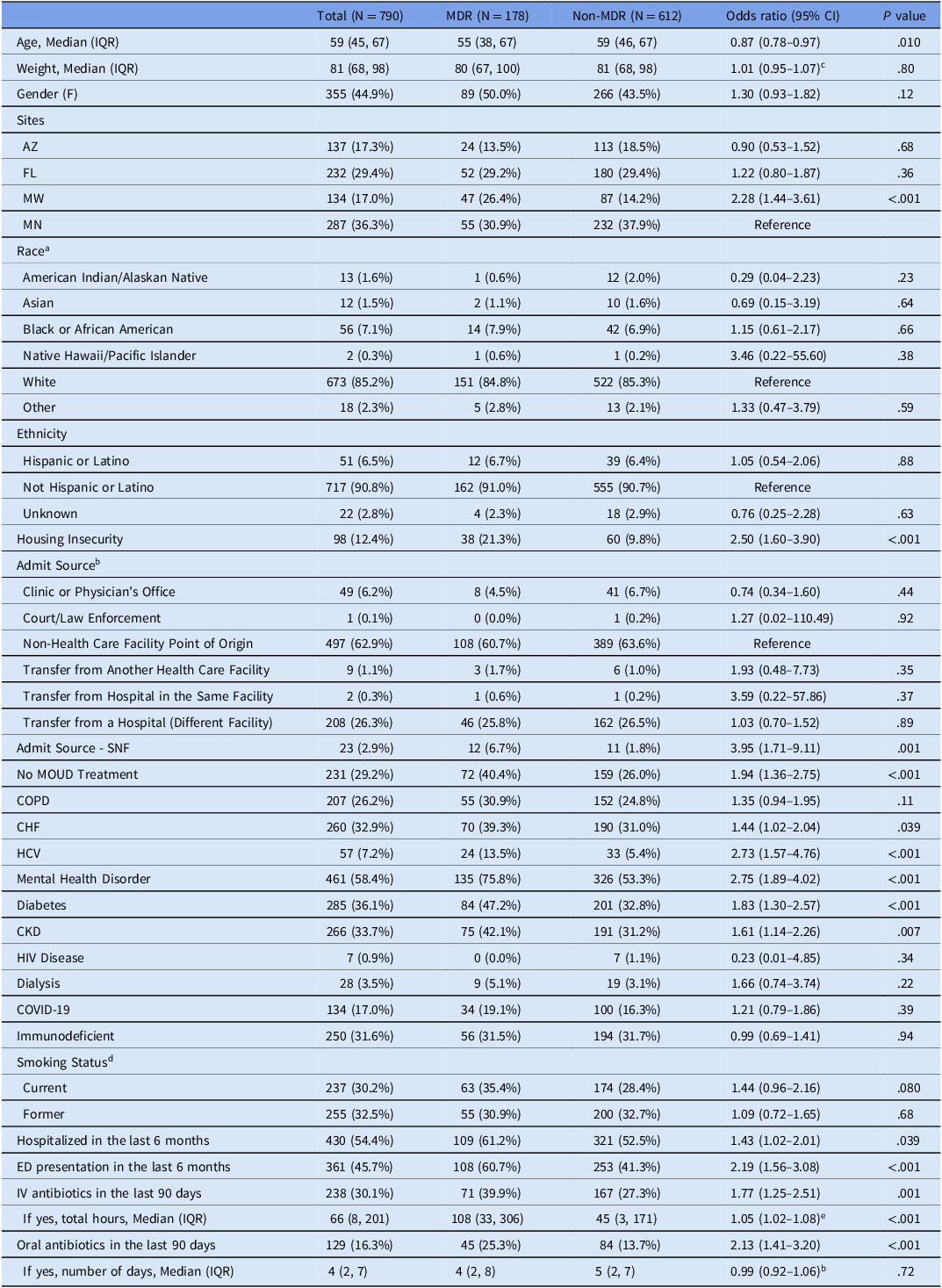
Patient demographics, clinical characteristics, comorbidities, and past medical history were collected as shown in Table 1. Age and weight were recorded as continuous variables and gender, medical history details, housing status, and healthcare exposure, such as admission to skilled nursing facility (SNF) and emergency department (ED) visit in the previous 6 months, as binary variables. Medical history details such as treatment with MOUD, history of chronic obstructive pulmonary disease (COPD), congestive heart failure (CHF), HCV, diabetes, chronic kidney disease (CKD), dialysis, COVID-19 infection and presence of immunodeficiency were also collected as binary variables. Race and smoking status were categorical variables.
Summary of variables and univariate analysis results for multidrug-resistant organism (MDRO) isolation predictors

a Data missing for 16 patients.
b Data missing for 1 patient.
c Per 10-unit increase.
d Data missing for 5 patients.
e Per day.
AZ, Arizona; FL, Florida; MW, Midwest; MN, Minnesota; SNF, Skilled Nursing Facility; MOUD, Medication for Opioid Use Disorder; COPD, Chronic Obstructive Pulmonary Disease; CHF, Congestive Heart Failure; HCV, Hepatitis C Virus; CKD, Chronic Kidney Disease; HIV, Human Immunodeficiency; COVID-19, Coronavirus Disease 2019.
Healthcare and medication exposure-related data encompass binary variables of recent hospitalization or ED visits. Prior antibiotic exposure was collected as both a binary variable and, if present, further summarized as a continuous variable of duration of intravenous (IV) and/or oral antibiotics received in the last 90 days.
Results
Prevalence of MDR infection
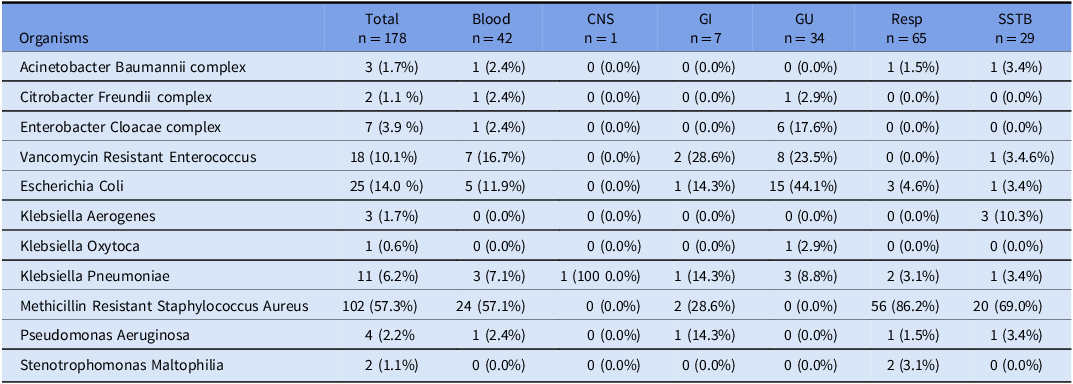
The study cohort included 790 total patients, with MDRO isolation occurring in 178 (22.5%) patients within the study period. Table 2 illustrates the distribution of MDROs across various culture sites among the 178 patients comprising the MDRO cohort. MRSA was predominantly isolated from respiratory samples, whereas E. coli was most frequently identified in genitourinary cultures.
Distribution of multidrug-resistant organisms (MDROs) across culture sites and organ systems

Blood, bloodstream; CNS, central nervous system; GI, gastrointestinal; GU, genitourinary; Resp, respiratory; SSTB, skin, soft tissue, and bone.
Univariate analysis
Univariate analysis revealed significant geographic variability in MDRO prevalence, with FL and MW sites demonstrating notably higher rates compared to other regions (Table 1). The median age ranged from 57 to 60 years across the sites. Gender distribution was even, with slightly more males than females across all locations (Supplemental Table A). The presence of unhoused individuals, particularly noted at the MN site, along with diverse admission sources, significantly influenced MDRO infection rates. Critical conditions such as heart failure, hepatitis C, and diabetes were associated with increased MDRO prevalence. Over half of all patients included were found to have mental health disorders, with a higher frequency of mental health disorders identified in patients found to be infected with MDROs. Key risk factors for higher MDRO isolation included recent hospitalizations, antibiotic use, and the absence of MOUD treatment.
Multivariable analysis
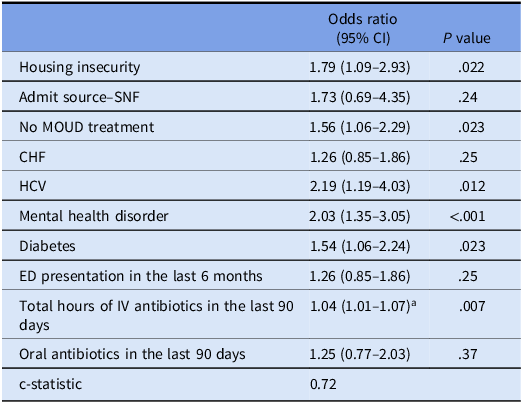
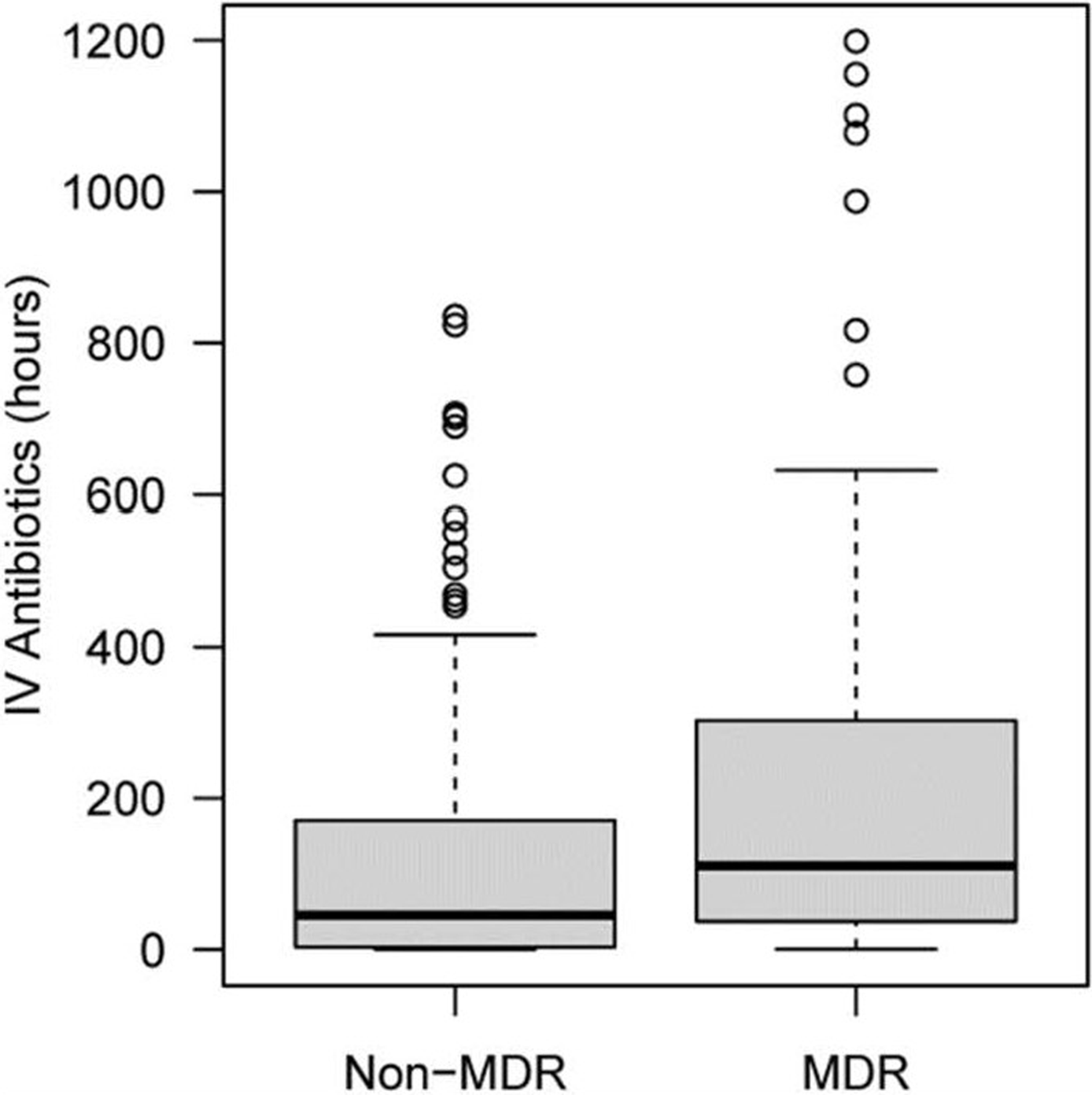
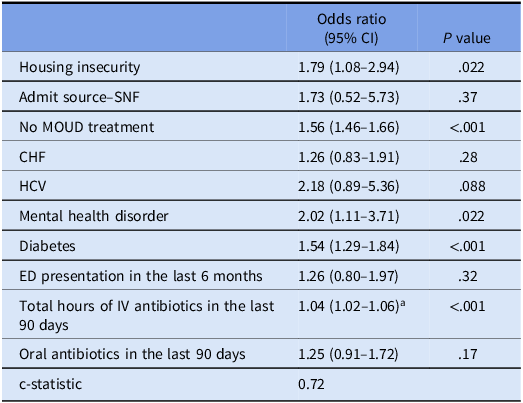
The multivariable analysis, refined through a LASSO regression model is shown in Table 3. Identified several predictors of MDRO isolation. Housing insecurity, lack of MOUD treatment, HCV infection, diabetes, and mental health disorders were robustly associated with increased MDRO risk. The influence of intravenous antibiotic use over the last 90 days also remained significant (Figure 1). Notably, some factors like CHF and admission from an SNF did not maintain significance in the multivariable context. The refined model, including random effects for site variations as shown in Table 4, highlighted slight changes in the significance and odds ratios of predictors such as HCV. Consistent c-statistics of 0.72 across both models indicate good model performance.
Multivariable model of predictors for multidrug-resistant organism (MDRO) isolation selected using Least Absolute Shrinkage and Selection Operator regression

a Per 24 hours (counting those without as 0).
SNF, skilled nursing facility; MOUD, medication for opioid use disorder; CHF, congestive heart failure; HCV, Hepatitis C Virus.
Duration of intravenous antibiotic use in patients with and without MDR Organism in the preceding 90 days. This figure illustrates the comparison of intravenous antibiotic usage in the preceding 90 days (in hours) between patients who had MDRO infections and those who did not. Error bars represent the variability within groups. MDR, multidrug-resistant.

Multivariable model of predictors for multidrug-resistant organism isolation selected using Least Absolute Shrinkage and Selection Operator regression with random effects for site

a Per 24 hours (counting those without as 0).
SNF, skilled nursing facility; MOUD, medication for opioid use disorder; CHF, congestive heart failure; HCV, Hepatitis C Virus.
Discussion
Predictors including sociodemographic determinants, medical comorbidities, and healthcare exposures were observed to increase the likelihood of MDRO isolation amongst a cohort of patients with OUD admitted to the ICU for infectious indications. Housing insecurity nearly doubles the odds of MDRO isolation. This association might be influenced by environmental factors such as crowded shelters and inadequate hygiene facilities, which foster infectious diseases. Previous research shows unsafe living conditions are associated with a higher prevalence of infectious diseases, including those resistant to treatment. Reference Mosites, Hughes and Butler17,Reference Fazel, Geddes and Kushel18
Conditions such as HCV infection, mental health disorders, and diabetes were identified as predictors of MDRO isolation in critically ill patients with OUD. The observed association with HCV aligns with previous literature, which reports a higher prevalence of HCV with MDRO infections, reinforcing this correlation. Reference Hofmeister, Rosenthal and Barker19,Reference Olaru, Beliz Meier and Mirzayev20 Additionally, in the multivariable model for MDRO infections that incorporated a random effect for site, HCV emerged as a predictor with an odds ratio of 2.18 (0.89–5.36), suggesting a substantial but variable impact across sites (P = .088) that may reflect local demographics.
Mental health conditions including anxiety, depression, and PTSD were associated with increased MDRO isolation risk. This association may reflect compromised personal care and high-risk behaviors. Prior research indicates that mental health disorders increase infection risk but their specific link to MDRO isolation remains unexplored. Reference Song, Fall and Fang21–Reference Shi, Ren, Jin and Li24
Similarly, our findings indicate that diabetes is an associative predictor of MDRO infections among critically ill patients with OUD. Poorly managed diabetes, compromising immune function and requiring frequent healthcare interactions, likely increases exposure to MDRO pathogens. Reference Carrillo-Larco, Anza-Ramírez and Saal-Zapata25,Reference Liu, Ren, Zhai, Kong, Chen and Chang26
Our findings also revealed geographic variability in MDRO prevalence, with FL and MW sites showing higher odds of isolation compared to MN. This may reflect regional differences in populations, healthcare practices, or environmental factors. However, when adjusted for individual-level factors and site-level variability through a random effect, these geographic differences were accounted for. This highlights the importance of individual-level predictors such as housing insecurity, lack of MOUD, diabetes, and IV antibiotic exposure, which consistently increase MDRO isolation across sites. These data enhance our understanding of how populations and healthcare environments may influence infection risks.
We found IV antibiotic use in the preceding 90 days is associated with an increased risk of MDRO isolate, with each day of IV antimicrobial therapy associated with a 4% increase in the odds of MDRO isolation. This finding aligns with evidence that extended antibiotic exposure increases resistance risk, emphasizing the vital role of antimicrobial stewardship. Reference Pradubkham, Suwanpimolkul, Gross and Nakaranurack27 While the association of oral antibiotic use in the last 90 days was not statistically significant (OR: 1.25; 95% CI: 0.77–2.03; P = .37), it may still influence resistance trends. Furthermore, our results indicate the absence of MOUD is associated with increased MDRO infection risk (OR = 1.56; 95% CI: 1.06–2.29; P = .023). The use of MOUD may indicate prioritized personal care or access to healthcare services, highlighting the need for comprehensive treatment to lower health risks. This finding aligns with consensus that integrating addiction treatment into medical management of substance use disorders is crucial for improving health outcomes. Reference Baddour, Weimer and Wurcel28
Implications
Our study identifies predictive associations that highlight the susceptibility of individuals with OUD to MDROs, underscoring the need for targeted public health and clinical strategies. It suggests that initiatives aimed at reducing barriers to appropriate housing could correlate with lower rates of MDRO infections, likely due to improved living conditions and sanitation. Additionally, enhancing access to mental health services and MOUD treatment may be linked with reduced MDRO isolation risk, emphasizing the role of comprehensive healthcare approaches. The importance of robust antimicrobial stewardship programs and ongoing research to monitor resistance patterns is also highlighted, necessitating a collaborative approach among healthcare providers, public health officials, and policymakers. Importantly, our study was conducted across 272 ICU beds in four geographically diverse regions and included facilities ranging from critical access hospitals to major academic medical centers. These insights provide actionable guidance for targeted interventions such as improved housing support, enhanced MOUD access, informed empiric therapy selection, and strengthened stewardship efforts to reduce MDRO risks among critically ill patients with OUD.
Strengths
Our study leverages a comprehensive dataset from 790 individuals across varied regions of the country to predict risks tied to sociodemographic factors and conditions like HCV, CHF, and diabetes. Patients were incorporated who had cultures obtained within 48 hours of ICU admission, minimizing the impact of hospital-acquired infections and focusing on factors present prior to and at the time of admission. The inclusion of a random effect for site in our multivariable analysis accounted for geographic variability and allowed for a clearer understanding of individual predictors of MDRO isolation. While FL and MW sites demonstrated higher odds of MDRO isolation in univariate analysis, the adjusted model revealed that housing insecurity, lack of MOUD, diabetes, and IV antibiotic exposure were robust predictors across all sites. This approach highlights the importance of adjusting for site-level variability in multicenter studies to identify consistent risk factors.
Limitations
This study is accompanied by several limitations inherent to retrospective analyses, including potential biases from unknown confounders and recall issues, particularly for variables such as housing status among individuals with substance use disorders. Our exploration of antibiotic use as a risk factor did not account for the range of spectrum of activity of each antibiotic exposure or explore historical resistance patterns, which might have provided deeper insights. The identification of OUD relied on documentation in the problem list within EHR and ICD code F11, which may not fully align with DSM-5 criteria, potentially leading to misclassification. We also did not account for additional substance use disorders or carceral history, which are known risk factors for MRSA transmission, nor did we evaluate mental health conditions beyond anxiety, depression, and PTSD. Furthermore, our study did not collect data on socioeconomic status or healthcare insurance coverage, which could have provided deeper insights into the access to care and health outcomes among different demographic groups. These omissions limit our ability to fully understand all potential MDRO risk factors and the broader impacts of these variables on healthcare access and outcomes among unhoused individuals with OUD. As with any regional data of this nature, it is possible that broad generalizability of all of our study findings may be limited given regional variability in key features of our population or findings, such as OUD rates, housing insecurity, and antimicrobial resistance rates. Additionally, the analysis was restricted to each patient’s first eligible admission during the study period, possibly overlooking variability in MDRO identification across multiple admissions. Lastly, the COVID-19 pandemic, which overlapped with two years of the study period, likely influenced admission and practice patterns, introducing additional variability that could impact the generalizability of our findings.
Conclusion
This study highlights key factors associated with MDRO isolation among critically ill patients with OUD, emphasizing that these findings represent associations rather than causation. We observed that housing insecurity was linked to nearly double the risk of MDRO isolation, while comorbidities such as hepatitis C, mental health disorders, and diabetes were associated with amplified risk. Similarly, prolonged IV antibiotic use and the absence of MOUD treatment were identified as risk factors, underscoring the importance of antimicrobial stewardship and integrated addiction care. These associative predictors highlight the need for targeted interventions addressing social and medical vulnerabilities. Future research should focus on validating these predictors across diverse populations and developing robust risk assessment tools to identify high-risk patients. Additionally, understanding the long-term impacts of MDRO infections, evaluating public health strategies, and exploring interventions aimed at reducing housing insecurity, improving mental health care, and integrating substance use treatment with infection control measures are critical steps to enhance outcomes for this at-risk population.
Supplementary material
The supplementary material for this article can be found at https://doi.org/10.1017/ice.2025.64
Acknowledgments
The authors would like to extend their gratitude to Molly F. Franke for her invaluable guidance and support in shaping the study’s structure and design. Her expertise was invaluable in formulating the research topic and methodology, which greatly influenced the foundation and progress of this research.
Financial support
This research did not receive any specific grant from funding agencies in the public, commercial, or not-for-profit sectors.
Competing interests
None of the authors declare any conflicts of interest.