


“Do we truly believe that ALL red-state residents are ignorant racist fascist knuckle-dragging NASCAR-obsessed cousin-marrying road-kill-eating tobacco-juice-dribbling gun-fondling religious fanatic rednecks; or that ALL blue-state residents are godless unpatriotic pierced-nose Volvo-driving France-loving left-wing Communist latte-sucking tofu-chomping holistic-wacko neurotic vegan weenie perverts?”
—Dave Barry, December 18, 2004
Conflict is central to democracy. The legitimacy of democratic outcomes requires that political options be contested. And yet it also rests on the premise that each side in any given controversy perceives the opposition as having some reasonable foundation for its positions. When citizens end up on the losing side in any given contest, whether of policy positions or of candidates, ideally they should perceive the opposition as having some basis for its positions, however mistaken, shortsighted, or benighted that perspective might seem.
Given that few people speak directly to political advocates of opposing views, how do Americans come to perceive that reasonable people may disagree on any given political controversy? Some theorize that mass media, and television in particular, serve this purpose most regularly in the United States (Calhoun 1988; Page 1996). Political discourse that reaches citizens through television is widely believed to be the major means by which citizens learn the rationales for opposing perspectives. The central questions motivating this study are: (1) Does televised political discourse familiarize viewers with rationales for oppositional political perspectives? and (2) If so, does it thereby enhance the extent to which oppositional views are perceived as legitimate? Secondarily, this study also sheds light on a broader, more intransigent question that has plagued the study of media and politics since the advent of television: What difference does it make that most of what people experience of public discourse in the political world reaches them through television?
This study focuses on the implications of televised political discourse for how citizens feel about the “other side,” that is, the candidate or policy position that is not their preferred option. Although this outcome is far less studied than how citizens form political preferences, it is arguably of equal importance to the stability of a political system. Without the acquiescence of those on the losing side, democratic government could not continue peaceably. And without some degree of respect for oppositional views, it is doubtful that the losers in any given contest would tolerate the winners for long. Some might argue that it is respect for the process, not for oppositional perspectives, that compels those on the losing side to continue, but a process that produces outcomes that seem totally without justification is unlikely to persist.
Because of the strong traditional focus in election research on explaining preferences, empirical studies of people's attitudes toward the opposition are limited (for an exception, see Anderson et al. 2005). However, as scholars have become increasingly concerned over the last decade about potential polarization within the American electorate, more attention has been focused on how much citizens despise the opposition, as well as how much they like their own candidate or party. At present, there is far more consensus on the existence of polarization among political elites than among the mass public (e.g., Nivola and Brady 2006). Nonetheless, some evidence is suggestive of declining respect for oppositional views. For example, at least since the Eisenhower administration, the gap between Republican and Democratic citizens' approval of the president has never been as wide as it has become under George W. Bush (Jacobson 2007). Until recently, the partisan difference in approval ratings had never exceeded 70%; since 2004, such large gaps between perceptions of opposing partisans have become commonplace. Feeling thermometer ratings also show a pattern of increased differences between individuals' feelings toward conservatives and liberals (Fiorina 1999; Jacobson 2000). Based on open-ended questions, Hetherington (2001) likewise reports that more Americans now have positive things to say about one party and negative things to say about the other.
Many scholars have blamed mass media, and television in particular, for promoting polarization (e.g., Prior 2007; Wilson 2006). A variety of different theories have been used to suggest that television either helps or hurts the cause of mutual respect among oppositional political forces. But the underlying assumption in all cases is that ideally television should publicly air the rationales behind opposing sides of a controversy, so that eventual losers in a given controversy can become familiar with the reasons or arguments that ultimately were judged to be stronger. As the most public of all contexts for political discourse, television could serve “to ensure that no one could see the end result as arbitrary rather than reasonable and justifiable, even if not what he or she happened to see as most justifiable” (Fearon 1998, 62).
In this study, I focus on the unique visual perspective that television provides on politicians and political advocates, and offer a theoretical framework for understanding how televised political discourse may serve to either increase or decrease the legitimacy that partisans grant to oppositional political views. My findings suggest that television certainly has the capacity to educate viewers about oppositional positions and to increase the perceived legitimacy of oppositional views; however, the extremely intimate perspective that it provides on political disagreement ultimately undermines its ability to serve these ends.
TELEVISION AS A MEDIUM FOR POLITICAL DISCOURSE
Television has both advantages and disadvantages as a source of exposure to oppositional perspectives. On the one hand, television is less subject to the constraints of parochialism that plague face-to-face interactions. The limited potential for accomplishing this end in the realm of face to face discourse has led many to suggest that for most people, most of the time, exposure to opposing political perspectives happens via mass media (Calhoun 1988; Mutz and Martin 2001; Page 1996). Television transcends time and space to reach large, heterogeneous audiences so that less insular perspectives are made more widely available (Meyrowitz 1986). Moreover, television's propensity to present controversial material in a point-counterpoint fashion ensures that at least some opposing perspectives are heard.
Perhaps in a country as large as the United States, “We must accept a division of labor: that is, delegate the jobs of studying policy and addressing the public to a small set of representative or surrogate deliberators, perhaps to professional policy experts and communicators” (Page 1996, 4). Page suggests that the only practical solution is for professional communicators such as politicians, policy advocates or journalists to act for and represent the deliberation of ordinary citizens. If this is the only practical solution, then at least through television oppositional views can reach citizens who are third-party observers of others' conflicting views.
On the other hand, it is probably naïve to expect exposure to oppositional views through television to easily convince partisans that the opposition is worthy. Watching others discuss opposing perspectives on television is qualitatively different from participation in face-to-face discussion, and even the evidence on face-to-face deliberation is mixed in what it suggests about the likelihood of positive outcomes (see Mendelberg 2002). Moreover, many such presentations on television are not discussions at all, but rather successive airings of opposing positions that viewers can passively watch, but in which they cannot participate.
Mere exposure to alternative perspectives is only a first step along the road to attributing legitimacy to opposing views. After viewing the typical point-counterpoint format of so much televised political discourse, do citizens come away with a sense that the opposition has a legitimate basis for its views, or do viewers become still more convinced that the opposition is ill-motivated and/or unjustifiable? Not all televised political conflict is cut of the same cloth. For this reason I turn next to variations in televised political discourse and the differences these variations may make to the effectiveness of televised political discourse in legitimizing oppositional views.
EFFECTS OF “IN-YOUR-FACE” DISAGREEMENT
Can mass media make up for what Americans lack in face-to-face exposure to political discourse and thereby enhance the perceived legitimacy of the political opposition? There is ample room for skepticism on this point given the current nature of televised political discourse. Granting legitimacy to those with whom one has significant differences of opinion is a complex and cognitively difficult task (see Gilbert 1991). Two relatively common characteristics of televised political discourse may make this potential benefit less likely.
First, much of the political discourse that transpires on television is highly uncivil in tone. As Wilson (2006, 18) notes, “Once the media talked to us; now they shout at us.” The usual social norms for politeness among those expressing differences of political opinion in face-to-face settings are routinely ignored on television (Mutz and Reeves 2005). Production values and intense market competition put a premium on conflict and drama. As a result, political advocates may come across as nasty, boorish sorts, particularly to those who do not find their views persuasive. Further, incivility in televised political disagreements has been shown to decrease trust in government and politicians relative to equivalent disagreements that transpire more politely (Mutz and Reeves 2005). Clearly, there is something about incivility that rubs Americans the wrong way (see also Hibbing and Theiss-Morse 2002). But previous research does not speak to the issue of whether viewers learn anything from listening to the opposition, or whether they come away with an enhanced appreciation for the merits of the other side as a result of their viewing.
What is known about incivility—whether in political discourse or some other context—is that it heightens levels of arousal (see Geen 1975; Mutz and Reeves 2005). Arousal is closely tied to levels of attention, so one might expect uncivil political discourse to be especially well remembered. Indeed, those involved in the production of political television routinely argue that lively and passionate debate is a necessary ingredient for a successful political television program. Anything less is too boring to attract the attention of television audiences (see, e.g., Christianson 1986, Bradley et al. 1992, Christianson et al. 1986).
Beyond incivility, televised political discourse is also unique in the impression of intimacy that it creates. Few people will ever be physically as close to the public figures shown in televised political discourse as viewers feel themselves to be when watching television. As television cameras have become smaller, less obtrusive, and increasingly powerful due to technological advances, it has become common to show talking heads engaged in political repartee from an extremely close perspective.1
Television cameras were initially so large and heavy that they were entirely stationary, at times with a fixed focal length. In the head shots that characterize much of televised political discourse today, the cameras are zoomed in so close that even portions of the speaker's head are routinely cut off and out of frame.
The distance between people has important consequences for how a person reacts to another, and this is particularly true with respect to the physical distance between two people who do not agree. For example, in one study individual subjects were shown a mock survey supposedly filled out by the person the subject was about to meet. The surveys were rigged to convince each subject that the confederate's attitudes were either very similar to or highly dissimilar from his or her own, based on random assignment. Not surprisingly, a person assumed to be dissimilar in opinions was systematically less liked than one assumed to be similar. More interestingly, a second manipulation randomly assigned subjects to conditions in which the confederate sat unusually close to the subject, or across the table from him. When the confederate sat abnormally close to the subject, violating the norms for personal space, close physical distance interacted with attitude similarity to intensify attitudes toward the confederate (Middlemist, Knowles, and Matter 1976; see also Schiffenbauer and Schiavo 1976; Storms and Thomas 1977).
This pattern of reactions to interpersonal distance has been well documented in the realm of face-to-face interaction. Dissimilarity breeds dislike, and closeness generally intensifies whatever kind of reaction—positive or negative—a person has to another person or object. This intensification of affect appears to be produced by the greater arousal that physical closeness produces (e.g., Middlemist, Knowles, and Matter 1976; Smith and Knowles 1979). Higher arousal levels signal a greater intensity of emotional reaction, and the valence of the person or object—whether they are liked or disliked—produces the label that is assigned to that intensification.
If one extends this same logic to television, it suggests that perhaps less physical distance—even when manifested through television cameras as the mere appearance of greater physical closeness between viewer and political advocate—has important consequences for how people react to the political discourse they see on television. Filmmakers have long recognized the potential for facial close-ups to intensify emotional reactions in the audience. As Russian film director Sergei Eisenstein (1940/1974) described it, “A cockroach filmed in close-up seems on the screen a hundred times more terrible than a hundred elephants captured in long shot.” The close-up creates a sense of spatial intimacy that often violates individuals' boundaries for personal space, particularly when close contact with the person on the screen is undesirable. The conventions of television and film editing purposely seek to recreate familiar perceptual phenomena. Moreover, many editing devices “acquire … meaning by approximating some feature of real world experience. In the case of shot tightness being used as an intensifier, the aspect of experience being replicated is surely the greater involvement that comes with increased proximity to people and objects …” (Messaris 1994). Many of the conventions used in television are based on analogies to real world experiences, so it should not be surprising that people react similarly to them.
Empirical evidence has largely corroborated these observations. For example, a person appearing on a large-screen television (and thus having the appearance of being larger and closer to the viewer) is more likely to invoke a violation of the viewer's sense of personal space than one on a smaller screen (Lombard 1995). Likewise, Reeves and Nass (1996) find that viewers' levels of attention and recall respond to mediated simulations of interpersonal distance (manipulated through the use of close-ups versus long shots, and through the size and distance of the image from the viewer) in much the same way that they do to interpersonal distance in face-to-face contexts (see also, Lombard et al. 2000).
Importantly, the sense of threat experienced by television viewers is not likely to be a cognitive acknowledgment of some real threat; after all, few people would claim they feel imminent danger from a politician on a television screen. Instead, it is a subconscious feeling of threat based on the perception of being physically very close to someone who is disagreeable, and who thus presents an unwelcome invasion of personal space (Persson 1998). Sullivan and Masters (1987) have similarly argued that by creating a facsimile of real world visual experience, the visual element of television encourages “gut reactions” on the part of viewers, emotional reactions that are not mediated by cognitive assessments.2
IN-YOUR-FACE POLITICS: A THEORETICAL FRAMEWORK
What does political television's tendency to violate everyday norms of civility and personal space imply about its ability to serve as a source of information about a legitimate opposition? To the extent that political advocates of the opposing side create the impression of being uncomfortably close when featured in televised discourse, and/or unusually impolite, viewers should experience higher levels of emotional arousal. Arousal is, however, a double-edged sword. On one hand, some level of arousal is absolutely necessary in order to produce attention to the content of political discourse.3
Extremely high levels of emotional arousal can be overwhelming, and interfere with the encoding of message content (e.g., Loftus and Burns 1982). Thus the relationship between emotional arousal and recall is sometimes curvilinear; recall is low at both the low and the extreme high ends of the arousal spectrum, and highest in the midrange (e.g., Gilligan and Bower 1984). At the highest arousal levels, people may remember the main point but are unlikely to recall details. However, in the case of politics, the range of potential arousal is likely to be attenuated at the high end, thus making the reactions characteristic of the extremely high levels of arousal unlikely.
From a more positive, constructive angle, this theoretical framework suggests the conditions under which televised discourse might improve perceptions of the perceived legitimacy of the opposition. To the extent that televised political discourse is able to draw viewer attention, without intensifying opponents' already negative views toward one another, greater oppositional legitimacy should result. So under what conditions should exposure to televised political discourse have positive versus negative or neutral consequences for perceptions of the legitimacy of the opposition?
Relative to not watching at all, I expect televised exposure to oppositional perspectives to enhance the extent to which viewers are aware of oppositional arguments, regardless of the way in which these views are presented. The logic of this expectation is straightforward: no matter how arguments are presented, exposure to political discourse cannot reduce the level of awareness people have about arguments promoted by disliked candidates or about the rationales for what seem to them disagreeable policy positions. Viewers are likely to become more aware of oppositional perspectives from viewing.
But based on related psychological research, the increased arousal from “in-your-face” discourse also should intensify the negative affect viewers have for disliked people and political positions. When political advocates promote viewpoints with which a viewer disagrees, and do so in an “in-your-face” manner (i.e., uncivil discourse viewed from an intimate camera perspective), such presentations should detract from the legitimacy that citizen-viewers accord those oppositional perspectives. Just as in the face-to-face psychology experiment described above, non-like-minded people and policies should be even less well liked when viewers are forced to experience disagreeable views from a highly intimate, “in-your-face” perspective. Likewise, well-liked people and their perspectives may be even more positively regarded as a result of the up-close and personal perspective.
Because this theoretical framework involves a complex, multistep process, it is most easily evaluated by breaking it down into a series of specific hypotheses that build on one another. The first hypothesis is that close-up camera perspectives and incivility will both increase levels of emotional arousal. Mutz and Reeves (2005) found evidence supportive of this impact from incivility, but evidence to date on the effects of camera perspective is limited. Because the two additional hypotheses rest on this first hypothesis, it is crucial to validate it before examining the anticipated effects that arousal may have on awareness of oppositional rationales and their perceived legitimacy.
A second hypothesis following from the first is that heightened arousal will increase levels of recall. Thus the same independent variables that increase arousal—incivility and close-up camera perspectives— also should enhance awareness of oppositional views that are heard via television. A third and final hypothesis is that close-up camera perspectives will interact with levels of civility in the same fashion as in the face-to-face experiment conducted by social psychologists. Relative to not watching at all, or to a medium camera perspective, close-up camera perspectives will intensify viewers' reactions to opposing political arguments and candidates. When they are presented in a likeable, civil fashion, viewers will see those arguments in favor of the opposition as even more legitimate, whereas viewers who witness an uncivil exchange will perceive the opposition as having even less legitimate rationales for their views than they would have otherwise.
RESEARCH DESIGN
For purposes of examining these hypotheses, it was necessary to manipulate the camera perspective on the exact same political discourse, as well as to vary the level of civility expressed while holding all else constant. Toward that end, televised political discourse was presented to subjects in a laboratory setting using three experiments with adult subjects. In order to gain greater control over rival hypotheses and disentangle the effects of political substance versus presentation, the two independent variables were manipulated independently so that there were four versions of televised political discourse that differed in (1) whether the camera perspective suggests greater or lesser personal space between the viewer and the political advocates, and (2) the extent of civility/politeness in expressions of political differences.
In order to create political discourse suitable for these purposes, professional actors were hired, and a professional studio talk show set was used to tape an informal political discussion between what were said to be two congressional candidates. Subjects were told the candidates were running for an open congressional seat in a faraway state. A moderator intervened at times predetermined by a script and addressed questions to the two candidates. Participants were simply asked to watch the program for 20 minutes and were told that they would be asked some questions about it after it was over.
The candidates held opposing views on each issue. In order to present literally the same political content in the civil and uncivil versions of the debate, the actors stuck closely to a script.4
The script drew on arguments from interest groups that were for and against eight different issues. All issues had been in the news at the time of the taping of the mock talk show and remained topical at the time of the experiments.
Experiment 1 involved discussions of restrictions on tobacco advertising, taxing Internet sales, the repeal of the Glass-Steagall Act affecting financial industries, and whether candidate qualifications should include previous public service experience. Experiment 2 incorporated discussions of restrictions on tobacco advertising, free trade, taxing internet purchases, and on whether previous public service/political experience is an asset or a liability for a member of Congress. Experiment 3 utilized discussions of NASA funding, insurance coverage for mental health, Internet privacy policies, and free trade.
The candidates expressed exactly the same issue positions in the same words in both the civil and uncivil versions of this program, and they offered exactly the same arguments in support of their positions. The only departures from the script that were allowed for purposes of creating the variance in civility were nonverbal cues (such as rolling of the eyes) and phrases devoid of explicit political content (such as “You have completely missed the point here!”). The candidates in the uncivil condition also raised their voices and interrupted one another. In the civil version, the politicians spoke calmly throughout and were patient and respectful while the other person spoke.
To ensure that these relatively subtle differences adequately manipulated civility, pretest subjects were asked to rate the candidates on scales ranging from quarrelsome to cooperative, friendly to hostile, and rude to polite. The uncivil versions of the issue exchanges were consistently perceived as significantly less polite, more quarrelsome, and less friendly. As a manipulation check, respondents in each of the actual experiments also were asked to rate the candidates on these same scales. As in the pretest, these items confirmed that both candidates were seen as significantly more hostile and rude in the uncivil conditions than in the civil ones.
The camera perspective manipulation was made possible by shooting both the civil and uncivil tapings using four simultaneous cameras. For each exchange of opinions, one camera maintained a medium-range shot of the speaker's upper body, while another camera maintained a tight facial close-up of the same person. Two additional cameras did the same for the other candidate. The tapes were later edited using the same conventions as for a typical talk show. After an initial long shot established the set and the location of the candidates and moderator, the subsequent shots were almost exclusively tight close-ups in close-up version. In the medium version, the same event was simply shown from the perspective of cameras that had backed in their framing of the participants, and no tight close-ups of the candidates were included in the medium camera version. This process produced four different versions of the same political discourse that were either civil or uncivil in tone, and that either created the impression of moderate physical distance between the viewer and candidates or a close-up “in-your-face” experience of the same conflict.
Procedures
Procedures were roughly the same in all experiments. Participants were recruited through temporary employment agencies and community groups and either the group treasury or the participants were compensated for their time.6
Subjects from temporary employment agencies were compensated at the hourly rate they had previously agreed on with the agency. Participants from civic groups participated as a fund-raising activity for their organizations. Their hourly rates varied based on whether they were coming to campus to participate in strictly this particular study, or a series of studies over several hours.
The first experiment was designed to determine whether camera perspective and televised incivility produce reactions similar to what physical distance and disagreement produce when experienced in person. Toward that end, Experiment 1 utilized a powerful Latin-square design and a small sample of 16 subjects, each of whom experienced all four possible conditions formed by crossing incivility/civility and close/medium camera distance. By using four different video segments, each focused on discussion of a different issue controversy, it was possible for the each respondent to view all four possible treatment combinations, without viewing the same content in more than one condition. The assignment of issue controversies to conditions was random for each respondent, as was the order of their presentation.
The Latin-square design is particularly advantageous for studying arousal because individual differences in arousability tend to be quite large, thus making the within-group variance extremely large. The Latin-square design allows comparisons of each subject to their own mean level of arousal across the four conditions, and thus enabled greater statistical power in examining whether viewers' levels of arousal varied systematically due to close-ups and incivility. Given that four different video segments were used, the results are also unlikely to depend on the peculiarities of any individual presentation.
Arousal was measured using skin conductance levels (SCL) assessed by attaching two electrodes to the palm of each subject's nondominant hand while he or she watched the videotapes. Skin conductance is one indicator of sympathetic activation (Hopkins and Fletcher 1994), and has been widely used in studies investigating emotional responses to media (see Lang 2000; or Reeves and Nass 1996, for examples). Data collection began at the start of each presentation, with a 10-second period of baseline data recorded while the screen was blank prior to the start of each debate segment. The intensity of emotional reactions to these stimuli forms the theoretical basis for the subsequent effects. However, given that all subjects were in all of the four conditions, the within-subject design of Experiment 1 did not allow assessments of the effects of these manipulations on the perceived legitimacy of oppositional views.
To address that question, Experiment 2 utilized a large sample of 155 participants who were exposed to only one of the four possible experimental conditions formed by crossing civility/incivility with close-up versus medium camera perspective. Participants were randomly assigned to watch 20 minutes of televised political discourse that covered four different issue disagreements. This between-subject design facilitated the use of post-test measures of recall and of the legitimacy accorded to the other side. In addition, Experiment 2 included a control group in order to determine whether citizens' perceptions of the legitimacy of the opposition benefit from, or are harmed by, televised political discourse relative to not watching at all. The participants randomly assigned to the control group watched a nonpolitical program for the same amount of time that the treatment groups watched the issue debates.7
The control presentation was an instructional video entitled Free Throw Secrets, in which Dr. Tom Amberry, the “world's best free throw shooter,” shares his methods.
Dependent Variables
Three main concepts were measured in this study. Arousal was tapped using the SCL data described earlier, which was sampled from subjects every 10 milliseconds, and then averaged for each subject within each experimental condition.8
For each subject, separate time series were created that normalized individual SCL data relative to baseline recordings. This was done because baseline SCL varies considerably across people, and because the major analysis interest is in changes in SCL relative to an initial state. After within-subject normalization, data were aggregated across subjects and issues to produce separate time series for the four conditions in the experiment.
These responses were coded by two independent coders, producing a reliability of .90 for the number of unique arguments generated.
A third concept, Perceptions of the legitimacy of the opposition, was operationalized in two ways. First, I assessed people's feelings toward the politicians they most and least favored in order to get a sense of whether the size of the gap between the preferred and the nonpreferred candidate was affected by the experimental manipulations. When people retain a degree of respect for the opposing candidate, this supports the notion of a legitimate opposition and works against the potential for polarization. This measure was based on the difference between the subjects' feeling thermometer ratings of the two candidates. For a political process to create legitimacy, it must foster preferences for one candidate without demonizing the opposition. Thus the attitudes people hold toward their nonoptimal candidates also matter because some portion of the time they can expect their government leaders to be other than their preferred candidates (see Bowler and Donovan 2003). Given that people react negatively to those with whom they disagree, this theory predicts that they should react particularly negatively toward candidates they do not like when those people violate norms for civility and distance.
A second measure of the perceived legitimacy of the opposition involved a series of closed-ended questions assessing respondents' perceptions of the legitimacy of the two candidates' arguments. After completing the open-ended portion of the post-test questionnaire, participants were asked to judge the general strengths and weaknesses of a list of arguments, regardless of the respondents' own personal views on the issue. For each of the four issue segments they viewed, the closed-ended items listed six of the arguments that were featured in the program (three made by each candidate). Subjects were then asked to label each argument as a “Very strong argument, somewhat strong argument, a somewhat weak argument, or a very weak argument.” Although people naturally rate the arguments in support of their own side of an issue as stronger than those on the other side; the key question is whether in your face politics alters the level of legitimacy accorded to the opposition. These items were used to create indexes indicating respondents' assessments of the legitimacy of arguments made on behalf of the issue positions they themselves favor, as well as the legitimacy of arguments on the opposing side. The scales used to tap these dependent variables all achieved respectable levels of reliability (see Appendix A).
RESULTS
Experiment 1
To what extent does “in-your-face” political discourse increase viewers' levels of emotional arousal? Figure 1 shows the average skin conductance level for each of the four experimental conditions in the Latin square design. Consistent with expectations, there were clear differences between conditions for both experimental factors. Uncivil public discourse was significantly more arousing than civil versions of the same discussions (t = 14.38; df = 1,299; p < .001). The analysis of different camera perspectives likewise confirmed that close-ups of the exact same events were significantly more arousing to viewers than the same event shown using medium shots (t = 28.90; df = 1,299; p<.001).

Emotional Arousal by Civility and Camera Perspective (Experiment 1)
As anticipated, uncivil exchanges of political views featuring tight close-ups were most arousing of all, and highly civil exchanges shown through medium shots were least arousing. Given that politics is not a highly arousing topic for most people, these differences may well explain why audiences are willing to watch so-called “shout shows” on television. Mutz and Reeves (2005) reported a puzzling finding suggesting that people reported a greater intent to watch uncivil programs than civil ones, yet the same people appeared to judge the uncivil politicians quite negatively after viewing. People may genuinely dislike the behavior they observe, and judge the participants negatively as a result, but they are clearly very arousing to watch, and all the more so when disagreement is of the “in-your-face” variety. Given their highly arousing content, attention levels to such programs are naturally quite high, whether they like them or not. But it remains to be seen whether these differential levels of arousal have implications for the processing of televised political discourse. Arousal is widely accepted as an indicator of attention, but it reveals nothing about what people learn from the content, nor the valence of people's reactions to what they learn. For these purposes, a second experiment was required.
Experiment 2
For the second study, a much larger number of participants was recruited in order to facilitate a five condition between-subjects design. With each subject in only one condition, it was possible to assess the effects of the independent variables on recall of issue arguments for own and opposing issue perspectives, as well as for effects on the legitimacy of those same arguments. Results were examined using an analysis of variance with planned contrasts between the experimental conditions and the control group, and a two-by-two full factorial analysis of variance.
Awareness of Rationales for Own and Opposing Issue Positions
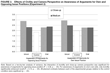
Figure 2 shows the extent of awareness of arguments supporting one's own issue positions on the right and of others' issue positions on the left. As shown in Figure 2, regardless of whether one considers recall of arguments supporting own or others' issue positions, the patterns are virtually identical. Recall of arguments was enhanced by the same factors that enhance arousal: incivility and a close-up camera perspective. For awareness of oppositional issue arguments, the interaction of incivility and close-up camera perspective was significant (F=4.36, p<.05). For awareness of arguments on one's own side, only incivility significantly enhanced recall (F=5.13, p<.05), though the pattern is very similar to the left-hand side of Figure 2. The uncivil, close-up conditions consistently stand out in producing higher levels of recall.

Effects of Civility and Camera Perspective on Awareness of Arguments for Own and Opposing Issue Positions (Experiment 2)
Focusing next on comparisons with the control conditions in the center of the left and right panels, there is clear evidence that viewers learned something about the issue controversies from watching the program, regardless of version. Analysis of variance results suggest that awareness of issue arguments on one's own side is improved by watching the experimental versions of the program, regardless of whether viewers watched civil or uncivil, close-up or medium versions. The same was true for awareness of issue arguments for the oppositional view. Those who watched the political program knew consistently more than those who did not. All planned contrasts between each of these groups relative to the control condition were significant (p<.05).
On one hand, this finding is simply consistent with previous evidence of television's capacity to inform the electorate; people learned something from watching (e.g., Baum 2003). But more specifically, it supports the notion that television may play an important role in educating the public on the views of people outside their immediate environments, and on the arguments these others use to support those oppositional positions.
Attitudes toward the Opposition
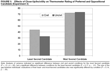
The findings thus far on both arousal and recall/awareness of oppositional views are basically supportive of the idea that televised public discourse may play an important role in making people aware of oppositional issue perspectives, and possibly in legitimizing oppositional political perspectives as well. How might one know that the opposition was seen as more legitimate as a result of viewing political discourse? Although political preferences themselves would not change, one can imagine that effective exposure to oppositional views should produce less villainization of the opposing side. Thus as a first test of this hypothesis, I examined the gap between viewer attitudes toward their preferred candidate and the alternative candidate. There is no significant pattern of attitudes toward the two individual politicians based on whether subjects viewed civil or uncivil, close-up or medium versions of the stimuli. However, as shown in Figure 3, differences in the thermometer ratings between the preferred and nonpreferred candidate confirmed the hypothesized pattern specifically when subjects were shown the close-up version of political discourse. When the uncivil candidates were shown in close-ups, the gap between evaluations of the two candidates was exacerbated, just as close-up disagreement from another live human being intensified attitudes in the laboratory. However, the very same means for subjects watching the exact same event from a medium camera perspective did not differ. Consistent with appearances, these findings produced an interaction between civility and camera distance (F=4.84, p<.05).

Effects of Civility and Camera Perspective on Difference Between Thermometer Rating of Preferred and Oppositional Candidate (Experiment 2)
In short, levels of candidate civility made a big difference when shown to viewers in an up-close and personal manner, but no difference at all from a more distant perspective. Interestingly, the findings in Figure 3 are driven primarily by differences in the evaluations of the least-liked candidates. Attitudes toward the preferred candidate did not vary significantly by condition. The greater gap between evaluations of the preferred candidate and his opposition is driven by attitudes toward the opposition. Regardless, this pattern is indicative of the same kind of polarization that concerns many observers of American politics (see, e.g., Jacobson 2007). It is troubling when the opposition is so much less liked than the preferred candidate, but as often as not, citizens will need to live under the government of someone who was not their choice.
The Perceived Legitimacy of Opposing Arguments
Relative to the control group, the people who watched televised political discourse came away from the experience better able to recount the other side's arguments as well as their own. One would hope that this result translates into a sense that theirs is not the only legitimate way to think about the political world. But open-ended recall is clearly not the same as perceiving those oppositional arguments to be legitimate ones. For this purpose, I compared means for the direct assessments of the perceived legitimacy of arguments made on both sides.
There were no significant differences by experimental condition in analyses examining the perceived legitimacy of arguments supporting one's own views. Regardless of whether political discourse was viewed from a close or medium perspective, and regardless of whether the political advocates were civil or uncivil, respondents viewed the arguments on their own side of these issues as just as legitimate. This result parallels the finding for attitudes toward most and least-liked candidates. The manipulations had no discernible effect on what respondents knew they liked.
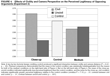
However, as with the findings on liking for candidates, the manipulations had a significant impact on perceptions of the value of the “other side.” As shown in Figure 4, the four conditions within the two-by-two factorial design produced a significant interaction between civility and camera distance (F = 6.41, p<.05). Levels of civility mattered a great deal to perceptions of the legitimacy of opposition views when subjects viewed the uncivil exchange in one of the close-up conditions. This interaction demonstrates that when viewed up close and personal, people found the very same arguments espoused in the civil version of the debate more legitimate than those in the uncivil one. If viewed from a medium camera perspective, civility made no difference.

Effects of Civility and Camera Perspective on the Perceived Legitimacy of Opposing Arguments (Experiment 2)
The presence of the control condition shown in the center of Figure 4 also makes it possible to assess whether watching this program helped or hurt the perceived legitimacy of arguments on the other side relative to not watching at all. Planned comparisons suggest that the mean in the control condition is statistically indistinguishable from the means for both of the medium conditions on the right hand side of Figure 4. But on the left-hand side of Figure 4, the mean of the close-up, uncivil condition shows significantly less perceived legitimacy than the control condition, and the mean for the close-up, civil condition indicates significantly greater perceived legitimacy relative to the control condition (omnibus F = 7.10, p<.01; contrast between civil and control, p<.01, contrast between uncivil and control, p<.001).
These contrasts make it possible to draw conclusions about the effects of viewing different styles of televised political discourse relative to not watching at all. Even though subjects in the close-up and medium conditions were viewing precisely the same exchange, the perceived proximity of the politicians led to less favorable evaluations of the disagreeable issue arguments in the uncivil exchange, and more favorable evaluations in the civil one. These results nicely mirror previous findings on the intensifying effect of physical proximity in face-to-face situations. When disagreeable issue positions are espoused by a civil person in close-up, they are viewed as more legitimate than they otherwise would be. When disagreeable positions are espoused by an uncivil person, they are viewed as less legitimate than they otherwise would be.
To summarize the results of Experiment 2, these findings suggest that television political discourse does have the capacity to improve citizens' awareness of oppositional views, and the extent to which opposition is perceived as having a legitimate basis for their views. But “in-your-face” politics is, indeed, a double-edged sword. The intimacy of the television camera can enhance the perceived legitimacy of oppositional views when they are presented in a civil manner. When they are presented in an uncivil manner, that same intimacy convinces people that the opposition is even less legitimate than they would have thought without any viewing.
Thus far these findings are limited to results from one small and one large experiment. To assess the generalizability of these findings to other populations and issue conflicts, a third experiment was conducted with a completely different set of videotaped issue discussions. Experiment 3 was designed to replicate the important findings in Experiment 2. To reduce the number of subjects required, participants were randomly exposed to one of only two conditions this time, either close-up versions of civil discourse or close-up versions of uncivil discourse. Given that these were the two conditions that produced significant differences from the control condition in Experiment 2, a similar pattern of results in Experiment 3 would lend greater confidence in these findings.
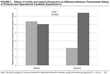
Figure 5 analyzes the results of Experiment 3 to see whether subjects in the uncivil/close-up condition systematically evaluated their least-favored candidate more poorly than subjects in the civil/close-up condition, as was the case in Experiment 2. As illustrated, there was no difference in feelings toward the candidate each subject liked the most as a result of viewing them behaving in an uncivil manner. However, the opposition is systematically judged more negatively in the uncivil condition relative to the civil one. As a result, just as in Experiment 2, the gap between the favored and the nonfavored candidate is far larger after viewing uncivil political discourse. Uncivil behavior on the part of one's own side is dismissed as mere righteous indignation in the face of an uncivil opponent; when the other side engages in similar behavior, it is a sign of their depravity. Interestingly, precisely this same kind of data on gaps between evaluations of one's own side and the opposition is cited in historical context to argue that polarization has increased in the United States (see Jacobson 2007).

Effects of Close-Up/Incivility on Thermometer Rating of Preferred and Oppositional Candidate (Experiment 3)
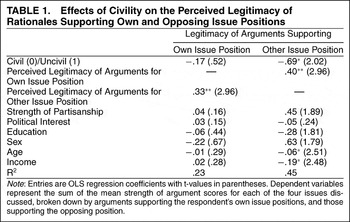
In Table 1, I use data from the legitimacy items in Experiment 3 to examine the closely related hypothesis for issues, rather than for candidates. Does exposure to close-up, uncivil discourse reduce the legitimacy attributed to oppositional arguments? The results in Table 1 illustrate basically the same pattern of results as in Figure 2. Using a regression equation that controls for a variety of demographic characteristics as well as for general awareness of the rationales for these issue positions, Table 1 suggests that incivility has no effects on the number of rationales people recall for their own side of these controversies.10
As shown Table 1, demographic variables made little difference to perceived legitimacy, and the same was true for the analyses in Figures 2 through 5. Including covariates in the analyses of variance did not change any of the key results.

DISCUSSION: REMEMBERING MORE AND LIKING IT LESS
Consistent with previous research, people do appear to learn from political television, and this includes learning about why others hold the opinions that they do. Subjects recalled significantly more rationales for oppositional views as a result of viewing even highly uncivil political discourse. For those citizens who find it difficult to fathom how others might reasonably hold views other than their own (an increasingly sizable group according to many sources), televised political discourse is undoubtedly serving an important purpose. The vicarious experience of political deliberation is bringing new arguments and perspectives to public attention.
These effects are encouraged by the kind of lively repartee that often characterizes today's political programs. Close-up perspectives on uncivil exchanges of political views are arousing for viewers to watch, and thus help to draw audiences to these programs, as well as to encourage attention and retention while viewing. To be sure, levels of attention are likely to be abnormally high in a laboratory setting, so the levels of recall reported here would probably be less impressive in real world viewing settings. On the other hand, civil and uncivil political programs would probably not draw equally sized audiences in the real world either; uncivil programs would draw larger audiences and thus have the potential to educate more viewers about oppositional views. Generalizability issues could thus cut both ways when projecting these findings to real world contexts.
When seen exclusively from this perspective, televised political discourse would seem to be in the service of a deliberative body politic. People may not be conversing with friends or neighbors who hold opposing views, but at least they hear about them on television. As the control group comparisons suggest, any exposure is better than nothing at all when it comes to what people know about why the political opposition feels the way they do. If incivility draws more interest and attention, so much the better based on this evidence alone.
But the problem inherent in this prescription becomes apparent when the analysis turns to effects on people's evaluations of those same candidates and their issue arguments. Incivility alone does not dampen enthusiasm for political advocates nor the arguments they make. However, when uncivil discourse and close-up camera perspectives combine to produce the unique “in-your-face” perspective, then the high levels of arousal and attention come at the cost of lowering regard for the other side. The “in-your-face” intimacy of uncivil political discourse on television discourages the kind of mutual respect that might sustain perceptions of a legitimate opposition. Here the pattern of findings is quite consistent; close-up perspectives on uncivil discourse routinely damage perceptions of the candidates and issue arguments that subjects are already prone to dislike; that is, attitudes toward the least-liked candidate, and the perceived legitimacy of rationales for opposing issue positions. The same pattern of effects did not occur for attitudes toward the preferred candidate, nor for perceptions of the legitimacy of arguments for the preferred issue position. In other words, by violating social norms, the political advocates increased the intensity of affect among the opposition, but remaining civil did not intensify the positive feelings viewers held toward their own side. Instead, on television as in everyday life, civility appears to be the default expectation, and it is arousing and influential only when people deviate from it. Nonetheless, the overall effect of these two patterns was to increase the magnitude of the difference that is perceived between one's own side and the opposition.
From one perspective, this pattern might call for downplaying the real-world significance of these effects; after all, what difference does it make if people have even greater dislike for candidates or ideas that they are already inclined to oppose? But the implications are important because of the need for people to be aware of, and hold some degree of respect for, people and views other than their most preferred choices. In short, these differences matter for the legitimacy of any multiparty, pluralist system. A willingness to acknowledge that there is something to be said for the other side, even when one's own views do not prevail, is essential to the kind of legitimacy that allows a democratic political system to remain stable.11
Although many understandings of the concept of legitimacy are possible, the term is used here to suggest that a person has heard the other side and granted it some degree of reasonableness as an oppositional viewpoint, despite continued disagreement. If one attributes evil, undesirable motives as the basis of explanation for another's views, or has no comprehension of the opponent's basis for differing views, then one does not perceive the opposition as legitimate.
Whether citizens have become increasingly extreme in their own policy preferences or not (see Nivola and Brady 2006, for a full discussion), these results suggest one mechanism by which citizens come to perceive that the opposition is unworthy and illegitimate. When those holding differing views violate social norms by being uncivil and disagreeable right in viewers' faces, it is all that much easier to demonize them along multiple dimensions. To recall the question Dave Barry posed before the introduction of this article, for viewers of “in-your-face” political discourse, one would have to answer with a resounding “Yes.”
On the one hand, up-close incivility and opposition on television is processed as threatening information that is worthy of attention, and viewers tend to learn something from it. This aspect of the findings counters the traditional notion that viewers will somehow selectively attend to only agreeable content (cf. Campbell et al. 1960). On the other hand, the evidence is entirely consistent with the notion that viewers selectively perceive what they are viewing. The perceived legitimacy of one's own side of a controversy is unharmed by incivility even when it is of the “in-your-face” variety. It is seen as entirely justifiable, whereas the opposition's same norm-violating behavior is judged far more harshly. Thus even if levels of exposure and attention to the content were identical, one would not expect the opposing sides of a controversy to respond to the same televised event in the same fashion.
These results also hint at possible historical changes in the way citizens respond to candidates and political advocates in an age of televisual politics. Although there is widespread agreement among political pundits that television has changed American politics in some fundamental way, scholars have been hard-pressed to figure out and document exactly how television is different from other media in its political content or implications (see e.g., Schudson 1995). Early content analyses showed that television's political content was basically the same as that of lead pieces in newspapers, thus challenging the view that television had fundamentally changed political media. Likewise, there continues to be no compelling evidence that television is consistently more powerful in persuading viewers than print media. But the content of television is more than merely the words spoken. When viewers develop a sense of intimacy with public figures whom they have never met, and with whom they may have emphatic disagreements, strong emotions are not surprising. Visual intimacy and the arousal it brings with it serve to intensify preexisting feelings. Thus one of the legacies of political television may be to damage the notion of a “worthy opposition.” To the extent that televised political discourse puts viewers unnaturally close to their political “enemies,” it intensifies negative feelings about the opposition, and does not serve the goals of consensus or compromise.
Seeing politicians argue about their disagreeable policies up-close and personal rather than from a distance intensifies citizens' negativity toward those people and ideas that they dislike. In the days when such intimate perspectives were not technologically possible, as when exposure to politicians was limited to newspapers, or when extreme close-ups of candidates were technologically difficult, the intensity of disgust that people had for those of opposing views might have remained more muted. In the political realm, television may be a primary engine of what Sennett (1977) has termed “the fall of public man.” When private relationships become indistinguishable from public ones, and public figures and politicians are routinely talking to people up-close and personal as they sit in their living rooms, then a boundary is crossed that makes our judgments of them far less impersonal. According to Sennett, the contemporary United States is overwhelmed by a “tyranny of intimacy,” meaning that private individuals feel they know public figures in intimate terms. Although Sennett's argument is not about television per se, it seems likely that the way people “meet” and experience public figures today is very different from how they were learned about and encountered in a pre-television era.
These findings also validate the important role that emotion plays in understanding the processing of political television. The effects observed in these studies depend on gut-level affective reactions. As anyone who has been cornered by a disagreeable individual at a cocktail party knows, this experience tends to be unpleasant at best. The natural reaction for most people is to want such individuals out of their faces as soon as possible. It is one thing if the person is espousing his or her disagreeable views on the other side of the room, and quite another if they insist on doing so at close range. So although television can carry the same information as any other medium, the emotional impact of televised political discourse is quite different from what one would expect from a print source, and different as well from television that frames public figures from more of a distance. Television replicates the sound and sight of human experience so that today's political advocates can, for better or worse, truly be in our faces.
APPENDIX A: CONSTRUCTION AND RELIABILITY OF INDICES
Feeling Thermometers:
“Using our “Feeling Thermometer,” where 0 means you feel extremely cold toward the candidate and 100 means you feel extremely warm toward him, how do you feel about [Candidate Name] based on viewing the talk show?”
“Using the same feeling thermometer, how do you feel about [Candidate Name] based on viewing the talk show?”
Perceived Legitimacy of Arguments
“Regardless of your own view on this issue, we would like you to tell us how strong or weak an argument you think each of the following reasons is.” All arguments listed were drawn directly from the statements made by the candidates. Three examples of the 24 items used for these purposes in each experiment include (for the issue of further regulating tobacco advertising): “The government has a legitimate interest in reducing smoking because it costs the healthcare system a huge amount of money every year.” A 4-point scale ranged from “very strong argument” (3) to “very weak argument” (0). “Cigarettes are legal, so the government should not regulate them more harshly than other products such as alcohol” (same scale as above). “Banning tobacco advertising violates the principle of free speech” (same scale).
Six separate reasons were listed for each issue: three in support of one side and three in support of the other side. The average strength ratings for items on one's own side of the issue were combined across the four issues, and the same was done for arguments supporting the side opposite the respondent's own view. Thus perceived legitimacy was based on 12 items for own side and another 12 items for the other side. Pretest issue opinion questions were used as the basis for deciding what subjects' preferences were for each issue. If a subject had no view on any given issue, then Own and Other Side were randomly assigned.
Awareness of Arguments
“What are some of the reasons [Candidate Name] gave in support of his opinion on the talk show? Please write as many as you can think of in the box below.” Coded for total number of arguments correctly recalled on Own and Other Side of issue.
This research was supported by a grant from the National Science Foundation. The author would like to thank R. Andrew Holbrook and Shiloh Krieger for their help with data collection, and special thanks are due to Byron Reeves for his help with the collection and analysis of physiological data.




Comments
No Comments have been published for this article.