Coronavirus disease 2019 (COVID-19) can infect everyone, and the infection can produce symptoms ranging from mild to severe. Some persons may be at a higher risk of contracting various illnesses caused by respiratory viruses (such as influenza) than others due to their living situation, lack of understanding, and attitude about the COVID-19 pandemic. 1
Prisoners are a vulnerable group in terms of infectious disease transmission due to a variety of factors such as overcrowding, confinement, poor sanitation, and limited access to health care. 2 These conditions are shared to some extent with other institutionalized setups; additionally, the overall health of imprisoned subjects is on average poorer than the general population, and noncommunicable diseases, which have also been associated with more severe COVID-19 complications and are now associated with COVID-19 mortality, are becoming highly reported among COVID-19 infected incarceration residents, and crowding may contribute to the spread of COVID-19 infections among the prisoners. 3 This underlying susceptibility has been exacerbated by the spread of COVID-19 across prisons, impacting both inmates and staff and creating significant problems for correctional facilities and public health agencies. 2
Furthermore, the general population’s awareness level is partially founded in their significant exposure to information on the virus supplied by the government and media since the outbreak’s inception; however, prisoners are not usually exposed to information that may influence the measure-taking practice of prevention and controlling precaution. Reference Alduraywish, Altamimi and Aldhuwayhi4 Furthermore, the convicts’ poor socioeconomic status may impact their knowledge, perception, and practice level about the epidemic. Reference Endriyas, Kawza and Alano5,Reference Yoseph, Tamiso and Knowledge6
Despite many protective measures adopted by governments throughout the world in the aftermath of this pandemic, inadequate proactive precaution and preventive measures among population segments have been reported. Reference Sakr, Ghaddar and Sheet7–Reference Baheti, Chimurkar and Varma9 Therefore, to avoid the spread of COVID-19 breakout in countries, adequate awareness, behaviors, and practices toward prevention measures are necessary. 10–Reference Singh, Sewda and Shiv12 However, in Ethiopia, prisoners are inadequately managed and overlooked in terms of raising awareness, although they are a high-risk group for contracting infectious diseases owing to their living conditions. Reference Adane, Spigt and Johanna13
Despite the fact that several research efforts on similar issues have been undertaken among students, Reference Tadesse, Melese Abebe and Tadesse14,Reference Peng, Pei and Zheng15 the general population, Reference Sakr, Ghaddar and Sheet7,Reference Lee, Kang and Knowledge16,Reference Asmelash, Fasil and Tegegne17 and health-care providers, Reference Rashid, Bashir and Tiwari18,Reference Gahlot, Singh and Verma19 there is a lack of literature on the state of knowledge, perception, and practice of inmates to ward COVID-19. As a result, the current study aimed to fill a gap in the literature, and the gap indicate the immediate need to examine prisoners’ knowledge, attitude, and practice of COVID-19 to improve targeted intervention and health education about COVID-19 among prisoners.
Methods
Study Design and Setting
A cross-sectional study design based on institutions was used with Haddiya zone prisoners in Hossana town. The research was carried out at the town of Hossana in Southern Ethiopia, which is located 232 kilometers southwest of Addis Ababa and has an average elevation of 2276 meters above sea level. The settlement has a total size of 23 km 2 and is located between 7° 33’ N latitude and 37° 51’ 06.67” E longitude. In 2011, its entire population was expected to be 89,300 residents. 20 Every year, hundreds of prisoners are imprisoned at Hadiya zone jail, which is located in town. During the data-collecting period, the jail had 750 prisoners, according to information collected from the Hadiya Zone prison authorities.
Sample Size and Sampling Procedure
The sample size is computed by taking each relevant variable’s knowledge, attitude, and practice of COVID-19 into account. As a result, the sample size calculated for the proportion of good practice derived from the previous Ethiopian study (40.7%) Reference Amsalu, Guta and Seyoum21 ; Zα/2 critical value 1.96, the margin of error of 5%, and10% nonresponse rate were considered to estimate the sample size. Finally, the minimum sample size required for this study was 407. Using the prisoner registration numbers in the prison, 407 study participants were chosen at random from a total of 750 prisoners found in Haddiya zone.
Data Collection Tool and Procedure
A data collection tool was developed in English from previous studies Reference Baheti, Chimurkar and Varma9,Reference Singh, Sewda and Shiv12,Reference Tadesse, Melese Abebe and Tadesse14,Reference Lee, Kang and Knowledge16,Reference Asmare Aynalem, Akallu and Gebregiorgis22–Reference Benor, Abera and Mandefro25 and WHO course material on emerging respiratory viruses, including COVID-19. Then face to face interview was conducted by 2 trained data collectors. The questionnaire was divided into various sections, including sociodemographic factors, knowledge, attitude, and practice assessment questions. The knowledge part consists of questions that assess awareness of COVID-19, which included symptoms of patients infected by COVID-19, routes of transmission, precautions, and risk avoidance. Two choices per question were offered to participants: “Yes”, “No”. One point was given for correct answers, while zero points were given for incorrect answers. Overall knowledge was categorized using modified Bloom’s cutoff point, as good if the score is between 80 and 100%, moderate (50 and 79%), and poor if less than 50%. The attitude was evaluated using 6 questions that have a Likert scale response; strongly agree, agree, neutral, disagree, and strongly disagree. The overall level of attitude was categorized using Bloom’s cutoff point, as positive if the score is 80-100%, neutral if the score is 60-79%, and negative if the score is < 60%. Finally, the practice of precautionary measures for COVID-19 transmission prevention was assessed using a series of questions. Thus, the total score of practice for each study participant was assessed by observation and the overall practice level was categorized using modified Bloom’s cutoff point, as good if the score is between 80 and 100%, moderate if the score is between 60 and 79%, and poor if the score is less than 60%.
Data Entry and Analysis
The STATA version 15 software was used to analyze the data. Frequencies, percentages, summary measures, tables, and graphs were used to characterize and show the study participants’ characteristics. Because knowledge, attitude, and practice were all measured on an ordinal scale, ordinal logistic regressions were used to find factors that were related to knowledge, attitude, and practice. The -2Log Likelihood for an Intercept Only (Null) model and the Full Model (with predictors) were compared in the Model Fitting Information. In addition, the likelihood ratio chi-squared test was used to determine whether the Final model is a significantly better fit. As a result, the statistically significant chi-squared statistic (P = 0005) for all models reveals that the Final model outperforms the baseline intercept-only model significantly. The Deviance and Pearson chi-squared tests provided by the Goodness of Fit ensured that both the Pearson chi-squared test and the Deviance test were nonsignificant. These findings indicate that all of the models have a decent model fit. Furthermore, the ordinal model’s assumption that the OR is equal at each threshold was tested using the proportional odds (PO) assumption. Thus, the Proportional odds assumption was evaluated for all 3 models, and the assumption was fulfilled because a nonsignificant P-value was observed. Then, both crude and adjusted proportional odds ratios (OR) with 95% confidence intervals (CI) were provided, and statistical significance was accepted for P-values less than 0.05.
Results
Socio-demographic Characteristics
Of an estimated sample of 407, a total of 404 prisoners participated in the study making a response rate of 99.26%. More than three-quarters, 342 (84.65%), of the respondents were male prisoners. The mean age of the respondents was 34.82 y with a standard deviation of ±13.50. The minimum age of participants in the study was 16 y and the maximum age was 87 y. More than three-quarters of the respondents, 336 (83.17%) were married during the study period. The majority of the respondents, 176 (43.56%), were Muslim religious followers. Regarding the residential address of the study participants, the majority of the participants, 209 (51.73%), were from rural areas and more than half, 249 (61.63%), of the respondents were farmers. When we see the respondents’ educational status, the majority of the respondents, 176 (43.56%), attained their primary education, followed by those respondents who are unable to read and write, 100 (24.75%). A total of 146 (36.14%) participants reported that they are from a family having more than 8 members. Of the respondents, 355 (87.87%) were from Hadiya ethnic group.
Knowledge of Prisoners Toward COVID-19 Transmission Prevention
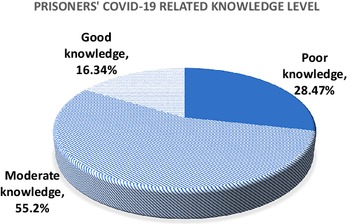
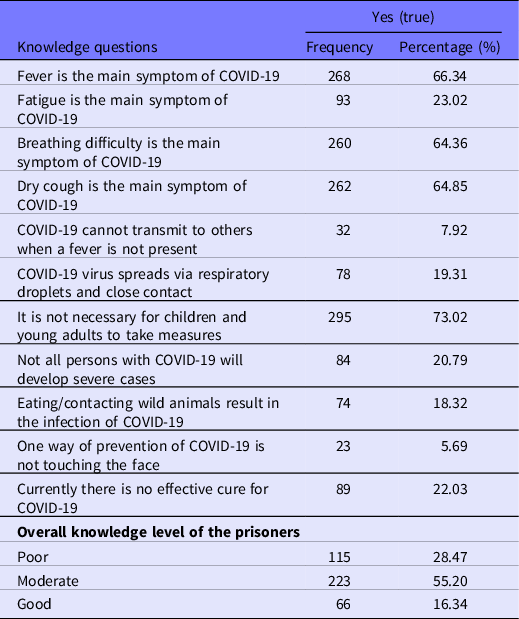
According to modified Blooms’ cutoff points, the overall magnitude of good knowledge among prisoners was 16.34% with 95% CI = 13.03% to 20.30% (Figure 1). More than half, 268 (66.34%), 262 (64.85%), and 260 (64.36%), of study participants knew that fever, dry cough, and breathing difficulty, respectively, were among the main symptoms of COVID-19 disease. Most of the study participants, 242 (59.90%) and 235 (58.17%), do not know that not all persons with COVID-19 infection will develop and become severe cases and that there is no effective cure for COVID-19 currently, respectively. More than half of the study participants, 254 (62.87%) and 262 (64.86%), do not know that COVID-19 infection can be transmitted through respiratory droplets of infected individuals and by contacting or eating uncooked animal products, respectively. More than three-quarters of study participants, 339 (83.91%), do not know whether or not a person with COVID-19 can transmit the virus to others when fever is not present. Nearly three-quarters of the participants, 295 (73.02%), stated that children and young adults need to take measures to prevent being infected and COVID-19 infection transmission (Table 1).
COVID-19 related knowledge level of prisoners in Haddiya zone, Southern Ethiopia, 2022.

Knowledge of COVID-19 transmission prevention among prisoners, Haddiya Zone, Southern Ethiopia, 2022 (n = 404)

Abbreviation: COVID-19, coronavirus disease 2019.
Source of COVID-19 Related Information
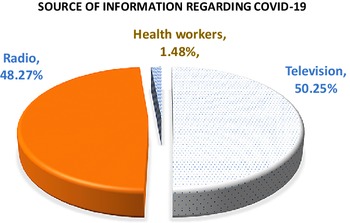
More than half of all survey participants (50.25%) knew about COVID-19 transmission and prevention methods through television, with radio being the second most prevalent broadcast media outlet delivering information to the populace (Figure 2).
Source of information regarding COVID-19 among prisoners in Haddiya zone, Southern Ethiopia, 2022.

The Attitude of Prisoners Toward COVID-19 Transmission Prevention
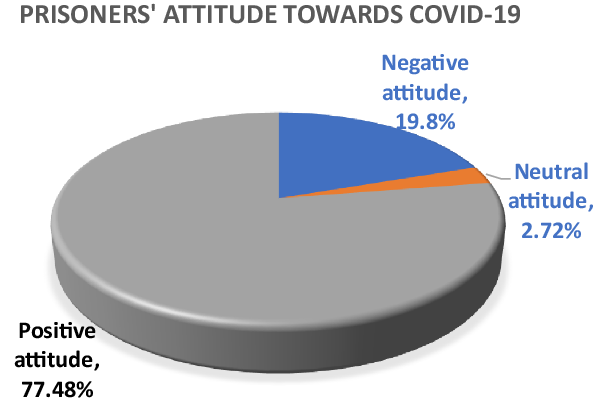
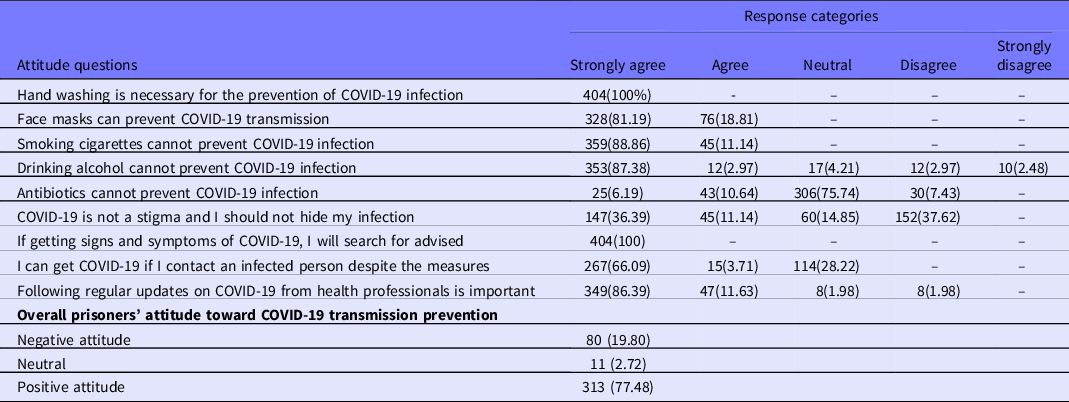
The magnitude of a positive attitude toward COVID-19 transmission prevention among prisoners was 77.48% with 95% CI (73.12% to 81.30%) (Figure 3). Of the study participants, 404 (100%) and more than three-quarters, 328 (81.19%), strongly agreed that hand washing and consistent face mask use can prevent the acquisition of COVID-19 infection, respectively. Most of the study participants, 359 (88.86%) and 353 (87.38%), strongly agreed that smoking and drinking alcohol cannot prevent and protect from acquiring COVID-19 infection, respectively. Three-quarters of the study participants, 306 (75.74%), stated that they could neither agree nor disagree with to question which says antibiotics cannot prevent COVID-19 infection, as well as most of the study participants, 152 (37.62%), disagree that COVID-19 is not a stigma and stated that they should not expose their infection if they acquire (Table 2).
Prisoners’ attitude toward COVID-19 transmission and prevention in Haddiya Zone, Southern Ethiopia, 2022.

Attitude toward COVID-19 transmission prevention of prisoners, Haddiya Zone, Southern Ethiopia, 2021(n = 404)

Prisoners’ Practice and Precautionary Measures to Halt COVID-19 Transmission
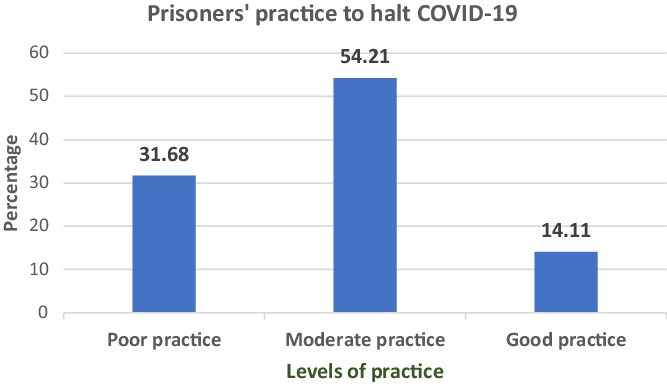
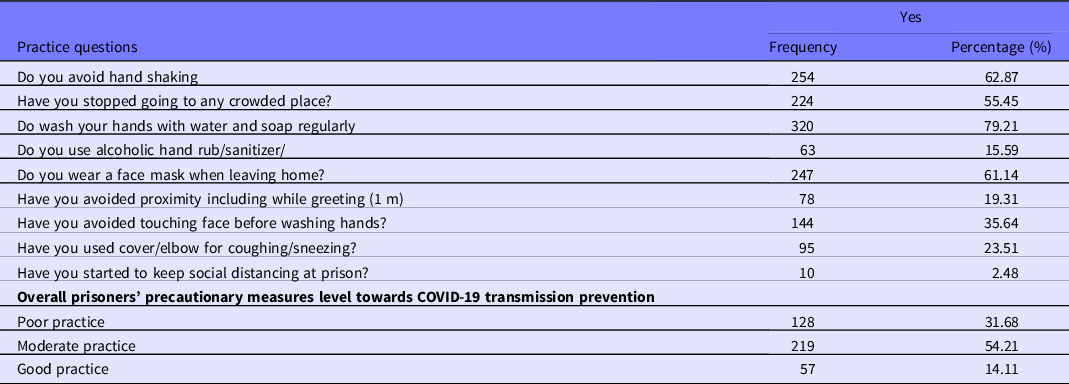
The magnitude of good practice among prisoners was 14.11% with its 95% CI = 11.03% to 17.90% (Figure 4). More than three-quarters of the study participants, 341(84.41%), stated that they do not use any alcoholic hand rub or sanitizer during the COVID-19 pandemic, and 326 (80.69%) of study participants revealed that they did not avoid proximity including greeting (at least 1 m). More than half, 260 (64.36%), of study participants revealed that they did not avoid touching their eyes, nose, and mouth with unwashed hands. More than three-quarters (76.49%) of the study participants stated that they did not use a cover or elbow while coughing or sneezing. Most all, 394 (97.52%), of the study participants revealed that they did not keep social distancing at the prison since the beginning of the COVID-19 pandemic. Among all study participant prisoners, only 247 (61.14%) prisoners used facemasks to halt COVID-19 transmission (Table 3).
Prisoners’ precautionary measures status to halt COVID-19 transmission in Haddiya Zone, Southern Ethiopia, 2022.

Practice toward COVID-19 transmission prevention of prisoners, Haddiya Zone, Southern Ethiopia, 2021(n = 404)

Multivariable Ordinal Logistic Regression (Proportional Odds Model)
Factors Associated With Knowledge of COVID- 19 Transmission Prevention
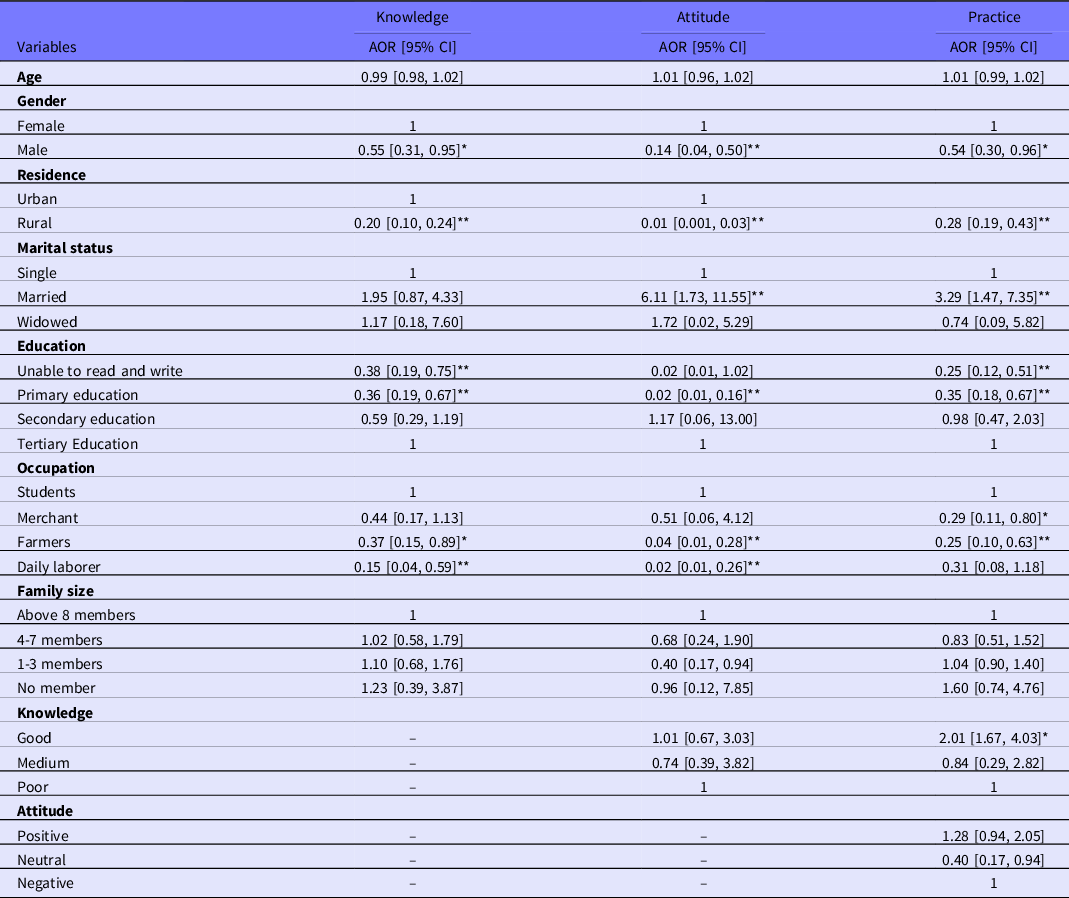
The gender, residence, educational status, and occupation of respondents have a statistically significant association with knowledge of COVID-19 transmission prevention. Specifically, after controlling for other confounder variables, the odds of having good knowledge compared with moderate or poor knowledge was 0.45 times (45%) lower for males in comparison to females (adjusted OR [AOR] = 0.55; 95% CI = 0.31, 0.95). Rural residents in comparison to urban ones had 0.80 times lower odds of having good knowledge compared with moderate or poor knowledge net of the effect of the confounders (AOR = 0.20; 95% CI = 0.10, 0.24). The odds of having good knowledge vs moderate or poor knowledge were 62% lower for those with primary education (AOR = 0.38; 95% CI = 0.19, 0.67) and 64% lower for those who were unable to read and write (AOR = 0.36; 95% CI = 0.19, 0.75) in comparison to those who had college and above educational status controlling for other confounder variables. Regarding respondents’ occupation, being a farmer reduces the odds of having good knowledge compared with moderate or poor knowledge by 63% (AOR = 0.37; 95% CI = 0.15, 0.89) in comparison to students’ net of confounder effects. Regarding respondents’ occupation, being a daily laborer lowers the odds of having good knowledge compared with moderate or poor knowledge by 85%% (AOR = 0.15; 95% CI = 0.04, 0.59) in comparison to students’ net of confounder effects (Table 4).
Multivariable proportional odds model for predictors of knowledge, attitude, and practice toward COVID-19 transmission prevention among prisoners in Haddiya Zone, Southern Ethiopia, 2022 (n = 404)

*P < 0.05; ** P < 0.01.
Abbreviations: AOR, adjusted odds ratio; CI, confidence interval; COVID-19, coronavirus disease 2019.
Factors Associated With Attitude Toward COVID-19 Transmission Prevention
The odds of having a positive attitude compared with a neutral or negative attitude were 0.86 times lower for males in comparison to females (AOR = 0.14; 95% CI = 0.04, 0.50). Rural residents in comparison to urban ones had 0.99 times lower odds of having a positive attitude compared with a neutral or negative attitude net of the effects of the confounders (AOR = 0.01; 95% CI = 0.001, 0.03). The odds of having a positive attitude vs combined neutral and negative attitude was 0.98 times lower for those with primary education (AOR = 0.02; 95% CI = 0.01, 0.16) in comparison to those who had college and above educational status controlling for other confounder variables. Regarding respondents’ occupation, the odds of having a positive attitude compared with a combined neutral and negative attitude was 0.96 times lower for a farmer (AOR = 0.04; 95% CI = 0.01, 0.28) and 0.98 times lower for a daily laborer (AOR = 0.01, 0.26) in comparison to students net of other variables’ effect. Regarding marital status, being married increases the odds of having a positive attitude vs combined negative and neutral attitude by more than 6-fold (AOR = 6.11; 95% CI = 1.73, 11.55) in comparison to being not married (single) net of confounder effects (Table 4).
Factors Associated With Precautionary Measures Toward COVID-19 Transmission Prevention
The odds of good practice compared with moderate or poor practice were 0.54 times higher for males in comparison to females (AOR = 0.54; 95% CI = 0.30, 0.96). Rural residents in comparison to urban ones had 0.28 times higher odds of good practice vs combined moderate and poor practice net of the effects of the confounders (AOR = 0.28; 95% CI = 0.19, 0.43). Odds of good practice compared with combined moderate and poor practice were 0.35 times higher for those with primary education (AOR = 0.35; 95% CI = 0.18, 0.67) and 0.25 times higher for those who are unable to read and write (AOR = 0.25; 95% CI = 0.12, 0.51) in comparison to those who had college and above educational status controlling for other confounder variables. Regarding respondents’ occupation, the odds of good practice compared with combined moderate and poor practice were 0.25 times higher for the farmer (AOR = 0.25; 95% CI = 0.10, 0.63) and 0.29 times higher for the merchant (AOR = 0.29; 95% CI =0.11, 0.80) in comparison to students net of other variables’ effect. Regarding marital status, being married increases the odds of good practice vs combined moderate and poor practice by more than 3-fold (AOR = 3.29; 95% CI = 1.47, 7.35) in comparison to being not married (single) net of confounder effects. Furthermore, and level of knowledge significantly contributed to good practice (AOR = 2.01; 95% CI = 1.67, 4.03) (Table 4).
Discussion
This pandemic is the world’s most serious public health crisis in more than a decade. Health-care systems would be strained to the breaking point, if not beyond. In prisons, outbreaks are already happening. The value of time cannot be overstated. Controlling breakouts in prisons will always be simpler than preventing them. As a result, the purpose of this study was to investigate KAP and related variables among convicts. Prisoners were not well educated on the epidemic, with 16.34% having excellent knowledge, 55.2% having intermediate awareness, and 22.7% having a low understanding of the COVID-19 pandemic; while 77.48% of detainees had a favorable opinion about COVID- 19 transmission prevention. Furthermore, the overall magnitude of good practice among convicts was 14.11%, and social demographic characteristics of the prisoners were found as predictors of knowledge, attitude, and practice toward the pandemic.
We showed that 16.34% of convicts had an overall high level of knowledge. This conclusion contradicts the findings of other studies, which indicated that the magnitude of good knowledge among study participants was high. Reference Alhazmi, Ali and Mohieldin26,Reference Sah, Shrestha and Dhakal27 Furthermore, the present level of awareness among convicts was lower than a community-based cross-sectional study report done among the general people in Addis Ababa, which found that 37.2% had adequate understanding. Reference Desalegn, Deyessa and Teka28 This disparity may be due to differences in the study population, the fact that the prisoner in this study had a low educational status, and health professionals engaged in awareness creation in the prison, as only 1.2% of the prisoner source of information in this study came from health professionals. Although the number of participants with good knowledge was limited, the majority had a moderate level of knowledge. Therefore, the degree of bad knowledge in this study is not particularly high. Similarly, the study in Iran Reference Pal, Yadav and Grover29 revealed that the majority of participants have moderate knowledge related to COVID-19 transmission prevention. The current study reveals that, while the majority of the participants had a favorable attitude, the convicts engaged in inadequate controlling and preventative practices. As a result, most knowledge-related questions need their degree of awareness of the sign and symptoms, route of transmission, severity, and screening, whereas attitudes focus on their judgments of preventative and controlling measures.
We found that respondents’ gender, residence, educational status, and employment had a statistically significant relationship with their awareness of COVID-19 transmission prevention. Males had a 45% lower likelihood of having good knowledge compared with moderate or poor knowledge. A study done in a cross-sectional survey in South Korea revealed that females have a high awareness of COVID-19 Reference Lee, Kang and Knowledge16 and Iran Reference Erfani, Shahriarirad and Ranjbar30 and Ethiopia. Reference Motta Zanin, Gentile and Parisi31 However, an inconsistent finding was reported from another study conducted in Gondar specialized hospital among medical visitors being female is significantly associated with poor knowledge level. Reference Abate and Mekonnen32 The reason for this inconsistency could be the difference in the study population.
Furthermore, after controlling for confounders, prisoners from rural areas had 0.80 times the odds of having good knowledge compared with those from urban areas. In addition, the odds of having good knowledge vs moderate or poor knowledge were 62% lower for those with primary education and 64% lower for those unable to read and write compared with those with college or higher academic status, and farmers had low knowledge about COVI-19 pandemics after controlling for other confounding factor variables. The findings are comparable with those of numerous previous research that shows that living in a rural region and having a low education level is related to poor COVID-19 infection knowledge. Reference Endriyas, Kawza and Alano5,Reference Yoseph, Tamiso and Knowledge6,Reference Lee, Kang and You33,Reference Kasemy, Babah and Zewain34 Based on these findings, the prisoners’ poor socioeconomic level was recognized as a significant factor in their low COVID-19 knowledge. And, to increase health education support programs for COVID-19 knowledge, more focused methods for certain demographic groups such as single males, those with lower education, and farmers, the majority of whom are likely to have poor educational standing, are necessary.
We found that 77.48% of people had a favorable opinion regarding COVID-19 prevention and control. Gender, residence, marital status, educational status, and employment of respondents are statistically significant predictors of COVID-19 transmission prevention knowledge. In contrast to the current study’s conclusions, other research has shown that the majority of convicts had favorable or positive sentiments regarding COVID-19 transmission prevention. Reference Sah, Shrestha and Dhakal27,Reference Usman, Ssempijja and Ssebuufu35 However, according to the results of a population-based poll performed in Iran, the majority of the general people (60.8%) held a moderate stance, Reference Moorthy, Henao Restrepo and Preziosi36 and more than 31.4% and 26% of participants in studies conducted in Iran and Rwanda, respectively, had a negative attitude toward COVID-19 transmission prevention. Reference Moorthy, Henao Restrepo and Preziosi36,Reference Bates, Moncayo and Costales37 This disparity in findings between studies might be attributed to differences in research time and target population. Furthermore, while the majority of the convicts in this study lacked expertise, their attitude toward controlling and preventing the pandemic of study participants was encouraging. This might be due to participants’ concern and desire to cooperate on preventative methods despite their lack of understanding about the pandemic.
Regarding factors associated with attitude, in the current study gender, residence, marital status, educational status, and knowledge. Thus, males, low education, and being rural residents were linked with a negative attitude toward COVID-19 prevention and in line with the findings from different other studies conducted in different parts of the world Reference Moorthy, Henao Restrepo and Preziosi36 and good COVID-19 knowledge were significantly associated with having a positive attitude toward COVI-19 transmission prevention. Socio-demographic characteristics of the respondents were still significant predictors of attitude toward the prevention and control of pandemics. This finding is supported by different studies in South Korea, Reference Lee, Kang and You33 Africa, Reference Adu, Gyan and Kwame38 and Ethiopia. Reference Yoseph, Tamiso and Knowledge6,Reference Benor, Abera and Mandefro25 Targeting and identifying socio-demographic levels of the prisoners to improve KAP toward COVID-19 prevention and control.
Furthermore, while the majority of the convicts in this study lacked knowledge, their attitude toward controlling and preventing the pandemic of study participants was encouraging. This might be due to participants’ concern and desire to cooperate on preventative methods despite their lack of understanding about the pandemic Reference Abate and Mekonnen32 and Addis Zemen Hospital, Northwest Ethiopia. Reference Akalu, Ayelign and Molla39 In addition, the above finding in the present study was in line with findings of different studies that revealed participants with appropriate COVID-19 knowledge were more likely to have a good practices. Reference Lee, Kang and Knowledge16,Reference Banik, Rahman and Sikder40 This finding is also in line with the findings from the study conducted in Ethiopia, Reference Hatabu, Mao and Zhou8 which revealed that those students with good knowledge of COVID-19 transmission prevention adhere more to precautionary measures (practice) to prevent COVID-19 transmission than their counterpart students with poor knowledge status.
The current survey found a level of good practice of 14.11%. The level of practice in this study contradicts or falls short of the findings of other investigations, with the majority of participants adopting high precautions (excellent practice) against COVID-19 transmission. Reference Alhazmi, Ali and Mohieldin26–Reference Desalegn, Deyessa and Teka28 This conclusion is contradicted by findings from research conducted in Iran and China, which revealed that the majority of study participants had a moderate degree of practice in terms of COVID-19 transmission prevention. Reference Usman, Ssempijja and Ssebuufu35,Reference Yue, Zhang and Cao41
In terms of factors linked with COVID-19 prevention and control practice, the current study found that respondents’ gender, residence, marital status, educational status, and employment had a statistically significant connection with knowledge of COVID-19 transmission prevention and control. Furthermore, the conclusion was consistent with the findings of previous research done in other parts of the globe where knowledge was a key factor of practice, Reference Usman, Ssempijja and Ssebuufu35,Reference Mohd Yusof, Rahman and Haque42,Reference Askarian, Danaei and Vakili43 and poor knowledge associated with COVID-19 transmission prevention. Reference Abate and Mekonnen32,Reference Akalu, Ayelign and Molla39 Furthermore, another study reported that being female and residing in a rural residency Reference Abate and Mekonnen32,Reference Yue, Zhang and Cao41 were significantly associated with poor practice level, which is in line with our finding.
Limitations
The temporal relationship between the outcome and the exposure cannot be ascertained due to the nature of the research design because both are studied at the same time. The Hawthorne effect, which occurs when social and behavioral researchers engage with and observe persons being investigated, influences the participants’ behavior. Because the assessment of COVID-19 prevention strategies was based on the observation of the prisoners, the study participants may be affected because they are aware that they are being studied.
Conclusions
The current study found a gap in prisoners’ awareness and practice of COVID-19 preventive and control strategies. Even though the convicts had a good attitude toward pandemic control, the percentage of practice was low. The socio-demographic profile of the prisoners was substantially related to their knowledge, attitude, and practice about the COVID-19 pandemic. Furthermore, a high level of knowledge was linked to high levels of practice in COVID-19 preventive and control measures. As a result, identifying and addressing certain socio-demographic characteristics of convicts while raising awareness would be advantageous.
Data availability
The authors confirm that the data supporting the findings of this study are available within the article.
Acknowledgment
We thank Wachemo University, the data collectors, and study participants, as well as the governor of the Haddiya Zone Jail, for their assistance and contributions throughout the study period.
Author contributions
All authors made substantial contributions to the conception and design, acquisition of data, or analysis and interpretation of data; took part in drafting the article or revising it critically for important intellectual content; agreed to submit to the current journal; gave final approval of the version to be published; and agree to be accountable for all aspects of the work.
Funding
The study is not funded.
Disclosure statement
All authors declare that they have no competing interest.
Ethics and consent
Ethical clearance was obtained from Wachemo university institutional review board. Permission will be granted town peace and security office. Verbal informed consent was obtained from each participant after providing adequate information. To maintain the confidentiality and privacy of the study participants, the name of the participants and other personal information were not identified. Besides, training and instruction were given to data collectors regarding the ethical aspect of the study. The ethical principles of the study are also in line with the Helsinki Declaration for medical sciences.