Introduction
Increasing crop diversity can reduce our reliance on just a few major food crops and improve the sustainability and resilience of agriculture in the futureReference Brummer1, Reference Glover2. With dry climatic conditions, reduced allocations of water for agriculture and increasing demands for food production from currently marginal areas, species adapted to more stressful environments are needed. In addition, alternative crops with improved efficiency of fertilizer use and reduced reliance on pesticides would improve the sustainability of our agricultural systemsReference Matson, Parton, Power and Swift3. Benefits of protection of soil from erosion, reduced leaching of water and nutrients, and additional forage for livestock could also be provided by perennial grain cropsReference Glover2, Reference Bell, Ewing and Wade4, Reference Cox, Bender, Picone, Van Tassel, Holland, Brummer, Zoeller, Paterson and Jackson5. Exploring the wild native flora provides an exciting and substantial opportunity to identify species with potential as alternative grain crops for the futureReference Morris6.
Australia, because of its arid climate and infertile and poor soils, is a good place to look for potential new grain crops adapted to harsh growing environments. Yet, the potential of Australia's native flora for use in agriculture has been relatively underexplored. Some Australian grasses and legumes have been investigated as potential pastures or forage speciesReference Lodge7–Reference Robinson, Bell, Bennett, Henry, Tibbett and Ryan13, but little work has been conducted on their suitability as grain crops. Woody legumes such as Acacia spp. could have some use as alternative sources of grainReference Lister, Holford, Haigh, Morrison and Janick14, but herbaceous species are more suited to modern broad-acre farming systems because they can be mechanically harvested and are more easily removed and rotated with other crops. One Australian grass, Microlaena stipoides, has been investigated to a limited extent for grain productionReference Davies, Waugh and Lefroy15, yet herbaceous legumes have received little attention. Rivett et al.Reference Rivett, Tucker and Jones16 examined a number of native Australian plants for their potential as grain crops and found that the legumes Hardenbergia violacea, Crotalaria cunninghamii and Kennedia nigricans warranted further examination as they possessed relatively large seeds with substantial amounts of crude protein and oil.
There are a few modern examples where efforts have been made to domesticate legumes for grain production in agricultural systems where grain legumes are/were lacking; Lupinus angustifolius (narrow-leafed lupin)Reference Buirchell and Sweetingham17, Lupinus luteus (yellow lupin)Reference Berger, Adhikari, Wilkinson, Buirchell and Sweetingham18 and Desmanthus illinoensis (Illinois bundleflower)Reference Kulakow, Benson, Vail, Janick and Simon19. Evidence with these species and advances in our understanding of crop domestication and in the technologies associated with crop breeding should allow rapid advances in the futureReference Vaughan, Balazs and Heslop-Harrison20. However, the domestication of Australian legumes may be more difficult, as there is little or no history of predomestication. This means that the net may need to be cast wide, as many species are unlikely to possess traits common to domesticated plantsReference Fuller21. While Australian aboriginals manipulated their environment to ensure food supply, notably through the use of fire, they did not generally practice agriculture in a way close to modern cultivated cropping systems. In addition, while seed grindstones have been found in many areas and there are reports of aboriginal seed collecting from grasses and of the use of seed from ~50 species of Acacia, there is no indication that the seeds of native herbaceous legumes were other than a very occasional source of foodReference Brand-Miller and Holt22. Hence, Australian native herbaceous legumes have not been subjected to the same predomestication pressures that have acted upon other species that have been cultivated by ancient peoples or were simply present (as weeds) in early agricultural systemsReference Casas, Otero-Arnaiz, Perez-Negron and Valiente-Banuet23, Reference Erskine, Smartt and Muehlbauer24.
We examined the 14 genera of Australia's native legumes that contain herbaceous species for their suitability as grain crops. While little useful information was available for many species, we found that at least nine species merit further investigation. Species identified were most likely to be adapted to the climate of Australia's semi-arid cropping regions, but they may have applications in other semi-arid environments throughout the world or in areas predicted to experience a dry climate in the future.
Approach and Desirable Plant Attributes
Among Australia's legumes, there are 14 genera that contain herbaceous species. Information was gathered on three main aspects: species distribution in arid or semi-arid climatic range; traits related to harvestability, grain size and yield potential; and grain chemistry and nutritional qualities (discussed below). Some genera also include currently cultivated grain legume crops exotic to Australia (e.g., Glycine, Vigna, Trigonella and Canavalia). This close relationship could indicate genera that possess suitable agronomic characteristics, or closely related species that may be suitable for hybridization with the cultivated crop, to either improve the agronomic traits of a wild species or transfer desirable characteristics into the cultivated species (e.g., abiotic or biotic stress tolerance)Reference Cox, Bender, Picone, Van Tassel, Holland, Brummer, Zoeller, Paterson and Jackson5. The hybridization of Australian perennial Glycine species with soybean is one such exampleReference Hartman, Wang and Hymowitz25, Reference Singh, Gupta and Singh26. Together, this information is used to identify genera and species with the most desirable attributes and the greatest immediate potential as grain crops. Information was not available for some aspects of some species, particularly in rarer or less studied species. Hence, suppositions were drawn only where sufficient information was available. Other species may also have desirable characteristics or potential in different agro-climatic conditions. Beyond the scope of this review was an assessment of the weed risk of these species. Indigenous species can be regarded as weeds when growing outside their natural range, and some species of Fabaceae are commonly mentioned in this context in Australia including some of the genera assessed in this paperReference Martyn, Tyler, Offord and McConchie27.
Potential adaptation to arid and semi-arid environments
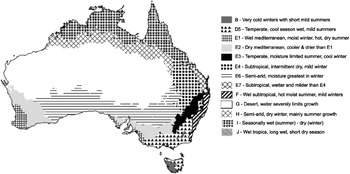
Information on the distribution of Australian native herbaceous legumes was obtained from collection locations available from the Australian Virtual Herbarium28 and matched against Australia's agro-climatic regionsReference Hutchinson, McIntyre, Hobbs, Stein, Garnett and Kinloch29. Species were prioritized if their distribution corresponded to the arid interior (G and E6) or semi-arid environments with sufficient capacity for plant growth in winter–spring (E2, E3 and E4) (Fig. 1). Species that occur in these agro-climatic regions likely possess adaptations to short or erratic growing seasons, and hot and dry climatic conditions, such as physiological drought tolerance mechanisms or reproductive strategies which enable them to avoid these stresses (e.g., rapid flowering and deep roots). Excluded from the target region were tropical (i.e., H, I1, I2, I3, J1, J2 and E7) and cold climatic (i.e. B1 and B2) regions, because plant growth is limited during winter–spring due to lack of moisture and cold, respectively. Also, Australian species from northern origins are more likely to have flowering promoted by short days (short-day plants), while long-day plants grow at higher latitudes, including the Australian agricultural zone. Short-day plants have limited potential in these southern temperate areas. Although cool-season grain crop production is common in agro-climatic regions E1 (wet ‘Mediterranean’) and D5 (cool-season and wet), the target region was restricted to the less favorable climatic regions with a shorter winter–spring growing season (i.e., E2—dry ‘Mediterranean’, E3—temperate, subhumid and E4—subtropical, subhumid). Agro-climates F3 and F4 are warm and wet environments and were also excluded as they have a few climatic stresses that reduce plant growth throughout the year. A wider species distribution was also regarded as favorable as it suggests greater adaptability and a greater capacity to exploit within species variability.
Agro-climatic regions of Australia (adapted fromReference Hutchinson, McIntyre, Hobbs, Stein, Garnett and Kinloch29). The target climatic regions include the arid and semi-arid regions too dry for field crops (i.e., G and E6) and the semi-arid cropping zone where moisture is a major growth limitation and with sufficient capacity for growth in winter–spring (i.e., E4, E3 and E2).

Harvestability
Plant traits that influence grain harvestability are critical in the domestication processReference Weeden30 and hence were considered important aspects for evaluating the agronomic potential of wild legume species. Plants with a self-supporting, erect or semi-erect growth habit and those that set pods close to the top of the plant would be most favorable for mechanical harvesting, while highly prostrate species may be difficult to harvest. Species with a twining or rambling habit were not regarded as ideal, but were not removed from consideration. Many current grain legume crops originated from ancestors with a climbing, creeping or straggling growth habit and their domestication has shortened internode length and reduced indeterminate branching (e.g., Phaseolus, Vigna, Glycine, Pisum and Arachis)Reference Smartt31. Pod dehiscence and indeterminate growth habit is ubiquitous among undomesticated legumes and domesticated grain and forage legumes alike (e.g., soybeanReference Bailey, Mian, Carter, Ashley and Boerma32 and birds-foot trefoilReference Garcia-Diaz and Steiner33). While pod indehiscence (non-shattering) overcomes some agronomic challenges, it is clear that this is not a disqualifying trait, as selection for indehiscence during domestication has occurred for most modern crops and would also occur in native Australian legumes.
Grain size and yield potential
Legume grain or seed size is obviously an important aspect as it influences the potential market uses and agronomic performance. Large seeds also offer advantages for crop establishment especially from greater depth, under greater competition (e.g., weed burden) and in low-nutrient or moisture conditionsReference Leishman, Wright, Moles, Westoby and Fenner34. Cultivated grain legumes have large seeds compared to their wild relatives and seed size has been increased substantially through active selection, and hence it is likely that the seed size of wild legumes would be smaller than that of cultivated grain legumes. For example, the seed size has increased at least tenfold in Phaseolus coccineus (French bean) and by at least fivefold in other legume speciesReference Smartt31. This is also demonstrated in the germplasm of L. angustifolius (narrow-leaf lupin), where seed size may vary substantially from 29 to 244 mg, with the ‘wild’ types generally smaller seededReference Cowling, Buirchell and Tapia35. Despite the appeal of species with larger seeds, small seeds may actually be equally appealing, especially if they contain high concentrations of a desirable product such as oils (e.g., Brassica napus, canola). Attractive small seeds or those that have special properties or novel appearance may also have a market as whole grains similar to sesame (Sesamum indicum), poppy (Papaver somniferum) or linseed (Linum usitatissimum).
Species exhibiting high overall fecundity and the capacity to self-fertilize are highly desirable. Most domesticated grain legumes are self-fertilizing with the exception of P. coccineus, Vicia faba and Cajanus cajan Reference Smartt31. Some difficulties might occur with domesticating outcrossing species due to the ability to outcross with their wild counterparts and to reintroduce undesirable traits. Species capable of self-fertilizing would be less problematic for future breeding. Annual species may have a greater overall fecundity, because their survival relies on producing viable seeds, but perennial species may be equally productive provided they flower and reproduce in their first yearReference Cox, Bender, Picone, Van Tassel, Holland, Brummer, Zoeller, Paterson and Jackson5. Many domesticated annual grain legumes have originated from a perennial life form, most likely because of the selection pressure for increasing seed yieldReference Smartt31.
Grain chemistry and nutritional qualities
Native legumes found to produce seeds with high concentrations of protein and/or oils/fats are clearly desirable. In addition, those with favorable amino acid or fatty acid profiles or the presence of unique compounds that can benefit human health may have a significant market as a health food. In most cases, little information is available on the nutritive qualities of native Australian legumes. On the other hand, a number of Australia's native legumes are known to possess potent bioactive compounds, some of which may be toxic (e.g., swainsonine and hydrogen cyanide (HCN)), but some of which have pharmaceutical functions or can provide human health benefits at the correct concentrations (e.g., furanocoumarins and phytoestrogens)Reference Bourgaud, Allard, Forlot and Guckert36, Reference Setchell37. Many cultivated grain legumes contain anti-nutritional compounds which have been lowered by breeding (e.g., alkaloids in lupins)Reference Lin, Renshaw, Luckett, Clements, Yan, Adhikari, Buirchell, Sweetingham and Yang38.
Canavalia
The genus Canavalia consists of approximately 70 species mostly of tropical origin. Several species are legume grain crops of secondary importance, including common jack-bean (Canavalia ensiformis), sword bean (Canavila gladiata) and Canavalia cathartica. Raw seeds of Canavalia contain a number of anti-nutritional factors including phenolics, tannins, saponins, concanavalin A, canavanine, cyanogenic glycosides and HCNReference Jermyn and Jones39, Reference Belmar and Morris40. Canavalia are famous for the presence of the lectin, concanavalin A which has commercial importance as a reagent in glycoprotein biochemistry and immunologyReference Rüdiger and Gabius41, Reference Sridhar and Seena42. Four species of Canavalia are found in Australia but none are endemic; Canavalia rosea, Canavalia carthartica, Canavalia sericea and Canavalia papuana. These are mostly found in tropical, coastal hinterland regions (Fig. 2a). While C. rosea is found further south than other species into the subtropics, it is mainly confined to coastal and high-rainfall areas (Fig. 2a). Because Canavalia match poorly with our target climatic regions, they are not considered further here, although they may have some potential as an adapted legume crop for the tropics. They possess large seeds and are a rich protein sourceReference Jermyn and Jones39, Reference Sridhar and Seena42.
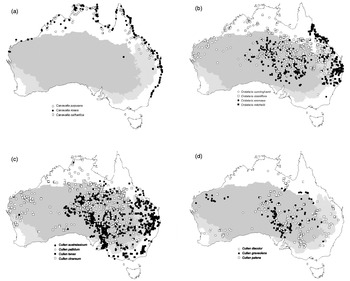
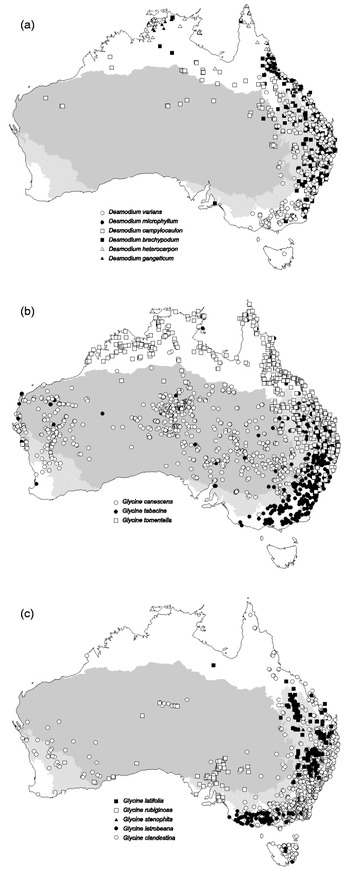
Distribution of a selection of widely distributed Australian native Canavalia (a), four native Crotalaria spp. (b) and Cullen spp. (c, d) mapped against targeted agro-climatic regions; semi-arid cropping zone (E2, E3 and E4)—light gray; and the arid interior (E6 and G)—dark gray (see Fig. 1). Data sourced from Australian Virtual Herbarium28.

Crotalaria
Crotalaria is a genus of herbaceous plants and woody shrubs commonly known as rattlepods because seeds become loose in the pod as they mature and rattle when the pod is shaken. Around 600 or more species of Crotalaria are described worldwide, mostly from the tropics with at least 500 species known from Africa; 19 species are native to Australia43. Some exotic species of Crotalaria have agronomic uses (e.g., Crotalaria spectabilis, Crotalaria ochroleuca, Crotalaria longirostrata and Crotolaria juncea (sunn hemp))43.
The Australian native Crotalaria species are mainly found in tropical regions. Four species occur further south in the target region; Crotalaria eremaea (desert rattlepod), Crotalaria mitchelli (yellow rattlepod), C. cunninghamii (green birdflower or parrot pea) and Crotalaria dissitiflora (plains rattlepod) (Fig. 2b). C. eremaea and C. cunninghamii occur mainly on sandy or well-drained soils in low-rainfall regions of central Australia44. C. mitchelli occurs on sandy soils in the tropical and subtropical areas of the east coast with >500 mm mean annual rainfallReference Cunningham, Mulham, Milthorpe and Leigh45. C. dissitiflora occurs on heavy clay soils also in the subtropics and tropics although it occurs further inland and in lower-rainfall regions than C. mitchelli Reference Cunningham, Mulham, Milthorpe and Leigh45.
Crotalaria includes annual, biennial and perennial species that can range in form from herbs to shrubs (0.3–3 m high). The four species occurring in the target region have erect or ascending habits; C. cunninghamii is an erect perennial subshrub growing to 1 m or higher, C. eremaea is an erect subshrub 0.5–1 m high, C. dissitiflora is an erect-sprawling short-lived perennial <30 cm high and C. mitchelli is an erect—decumbent woody forb about 60 cm high44. All these species flower in winter–spring (C. cunninghamii sometimes in autumn) and are generally open pollinated by insects. C. dissitiflora has been observed to shed its leaves during winterReference Cunningham, Mulham, Milthorpe and Leigh45. A notable and advantageous characteristic of these species is that flowers and pods are borne at branch ends46, which favors mechanical harvesting. Some Crotalaria shatter explosively, while pods of others are more stable and slower to shatter46.
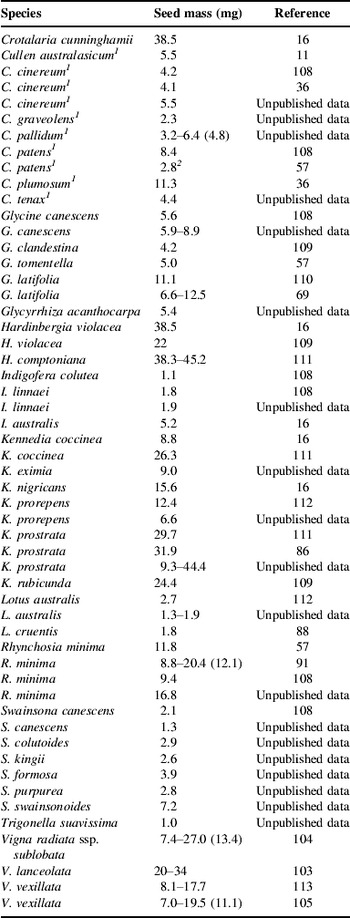
Some Crotalaria have large seeds (e.g., 38 mg in C. cunninghamii) (Table 1), while others are smaller (e.g., those of C. dissitiflora are only 2–3 mm long). Seeds are often smooth and vary in color (yellow in C. dissitiflora, greenish–gray in C. mitchelli and red–brown in Crotalaria smithiana). Due to its large seed size and substantial protein and oil content (Table 2), C. cunninghamii was previously identified as a species worthy of further investigationReference Rivett, Tucker and Jones16.
Seed size of Australian native herbaceous legumes. Means in brackets, where a range of material has been measured.

1 Indicates whole fruit (pod+seed).
2 Immature seeds harvested.
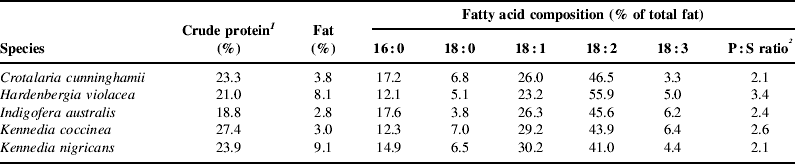
Chemical composition of seeds of some native Australian legumesReference Rivett, Tucker and Jones16. Seeds were obtained from a commercial native seed service and had presumably been collected from the wild.
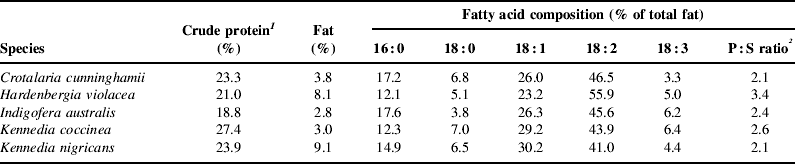
1 Protein was calculated as 5.7×%N.
2 Ratio of polyunsaturated to saturated fatty acids.
Toxic pyrrolizidine alkaloids are produced by some members of this genus and these can be poisonous to livestockReference Everist47, but whether these are present in seeds of the four species that occur in the target region is unknown. C. dissitiflora is suspected of poisoning livestock, but there is conflicting evidenceReference Cunningham, Mulham, Milthorpe and Leigh45. EveristReference Everist47 suggests that the toxicity might be lost when plants are cut. C. eremaea is often eaten by sheep, suggesting low or no alkaloid problems and C. cunninghamii is reputedly edible by humans without any indication that prior treatment is necessary44, Reference Crib and Crib48.
Overall, Australian Crotalaria seem to have a number of characteristics which suggest they warrant further investigation for their potential as grain crops. In particular, C. cunninghamii has a desirable growth habit, produces large seeds which contain high levels of protein and some oil, and does not seem to produce toxic alkaloids (Table 3). Little agronomic information was available on the other three species found in arid and semi-arid regions of Australia (i.e., C. eremaea, C. mitchelli and C. dissitiflora), but these may also warrant further investigation.
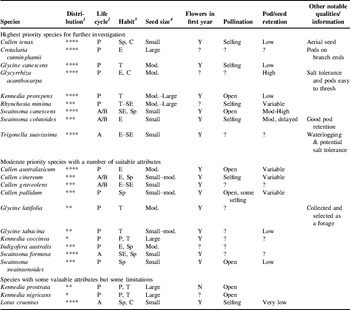
Prioritization of species for further investigation as grain legume crops. Species with little information are not included (?—indicates where information is unknown).

1 Match between species distribution and targeted agro-climates; ****—highly favorable, ***—favorable, **—moderate, *—poor.
2 P, perennial; A, annual; B, biennial.
3 E, erect; SE, semi-erect; P, prostrate; T, twining/trailing; Sp, spreading; C, clumping/crown forming.
4 Large, 10–20 mg; Mod., 5–10 mg; Small, <5 mg.
Cullen
The Cullen genus includes 32 species of which 25 are endemic to AustraliaReference Grimes49. It has been explored for forage plants in the past and again recently in AustraliaReference Dear, Li, Hayes, Hughes, Charman and Ballard11, Reference Burbridge50, Reference Bennett, Ryan, Colmer and Real51. While no species of Cullen are used commercially, the closely related Psoralea genus includes one economically important plant native to India. Psoralea corylifolia seeds have medicinal properties, which are thought to be imparted due to their content of furanocoumarin, in particular psoralen.
Cullen in Australia is widely distributed across a range of climates from summer- to winter-dominant rainfall and the average annual rainfall of the distribution across species ranges from 200 to 1300 mmReference Bennett, Ryan, Colmer and Real51. All species of Cullen occur within the target region and 12 of these species mainly occur in low-rainfall environments with an annual average rainfall ⩽400 mmReference Bennett, Ryan, Colmer and Real51. Of these species, Cullen australasicum, Cullen graveolens, Cullen pallidum and Cullen discolor mainly occurred in the lower-rainfall regions (Fig. 2c and 2d). Cullen cinereum has a slightly more tropical distribution than the other species; although, it is also found throughout the target zone (Fig 2c). Cullen species have been reported to have excellent drought tolerance where they have been evaluated as forage plantsReference Dear, Li, Hayes, Hughes, Charman and Ballard11, Reference Suriyagoda, Ryan, Renton and Lambers52. All species have a deep tap-root which may become woody in the perennial species. Roots of Cullen patens (syn. Psoralea eriantha) have been reported to penetrate to a depth of 4 m, and this was associated with the drought resistance of this speciesReference Kerridge and Skerman53. Another evident adaptation to drought is the dense coverings of glandular hairs on the leaves of some Cullen species (e.g., C. pallidum and C. patens). Strong soil-type associations are rare in many Cullen species (e.g., C. australasicum), but some species have particular preferences; for example, C. tenax seems to prefer heavy clay soils and C. pallidum is predominately found on deep sand dunes and sandy soilsReference Cunningham, Mulham, Milthorpe and Leigh45, Reference Grimes49, Reference Bennett, Ryan, Colmer and Real51.
The Australian species of Cullen include shrubs, subshrubs and herbs and a number of them have a favorable growth habit and phenology, as outlined below. Nineteen species are herbaceous or semi-herbaceous, of which 16 are perennial or short-lived perennials. C. graveolens, Cullen plumosum and Cullen walkingtonii are annual or biennialsReference Grimes49. Most Australian taxa bloom in the first yearReference Grimes49. Flowering mainly occurs in spring, but indeterminate flowering continues throughout the year provided sufficient moisture is availableReference Grimes49, Reference Kerridge and Skerman53. In a glasshouse study, Bourgaud et al.Reference Bourgaud, Allard, Forlot and Guckert36 recorded that flowering occurs around 40 days after germination in C. cinereum (about 900 degree days) and around 60 days after germination in C. plumosum (1340 degree days). Flowering of C. australasicum and C. patens is controlled by day length according to Britten and De LacyReference Britten and De Lacy54, with long-day treatments (i.e., <12–13 h dark) inducing flowering. They also found that genotypes vary in their response, indicating differences in phenological adaptations within these species. In C. australasicum, flowering and fruiting times are extremely variable in the first year, but with greater synchrony in the second yearReference Dear, Li, Hayes, Hughes, Charman and Ballard11.
Many Cullen also seem to be capable of self-pollinating. Britten and DundasReference Britten and Dundas55 found that erect types in the Psoralea patens complex (i.e., C. australasicum) were 50–75% selfing, while the prostrate and semi-erect lines (i.e., C. patens) were outcrossing only. Bourgaud et al.Reference Bourgaud, Allard, Forlot and Guckert36 noted that C. cinereum and C. plumosum are capable of self-pollinating. Using microsatellite markers, Kroiss et al.Reference Kroiss, Moody, Barker, Byrne and Ryan56 estimated the outcrossing rate in C. australasicum to be at least 3–13% and hybrids were formed with C. pallidum, but not C. discolor or C. patens.
A couple of studies have found Cullen to allocate significant resources to reproduction and produce useful amounts of seed. Bourgaud et al.Reference Bourgaud, Allard, Forlot and Guckert36 found seed yields up to 1.65 g plant−1 (47% of dry matter) from C. cinereum and 1.75 g plant−1 for C. plumosum (60% of dry matter). The higher yield from C. plumosum was due to the greater seed mass (11.3 mg), while the whole plant biomass was less than C. cinereum. The production of seeds from C. tenax has also been measured at 22 g plant−1 (4820 seeds) (Bennett, unpublished data). Kerridge and SkermanReference Kerridge and Skerman53 recorded that the reproductive parts of C. pallidum made up 42% of plant biomass when the plants were left to grow for 12 weeks.
Cullen are characterized by indehiscent (non-shattering) fruits with the seeds adherent to the pericarp (pod). Fruit sizes of Cullen typically range from 4 to 6 mg, although fruits >8 mg have been measured in C. patens and C. plumosum (Table 1). Smaller fruits (2.8 mg) were found for C. patens by Silcock and SmithReference Silcock and Smith57, but this included many immature seeds which probably reduced the average seed mass. The non-shattering nature of Cullen is advantageous for harvesting, but fruit retention on the plant is variable. SkermanReference Skerman58 reports that ripe pods of C. patens drop to the ground and seed harvesting would need to be performed by suction. The pods of several species (e.g., C. australasicum, C. patens, C. pallidum and C. discolor) fall from the plant enclosed in the calyx, which can be very hairyReference Grimes49. This, and the adherence of the seed to its pod, also poses some complications about the ability to thresh the seed of Cullen, unless processing could utilize the whole fruit. Dear et al.Reference Dear, Li, Hayes, Hughes, Charman and Ballard11 state that the seed of C. australasicum is easily threshed from the pod without damage. However, since the seed is completely adhered to the pod, it is likely that they were referring to the removal of the woolly calyx material.
No information was found on the protein or oil content of Cullen seed/fruit, but like other members of the Psoraleae family, Australian Cullen species are known to contain the furanocoumarins psoralen and angelicinReference Innocenti, Bourgaud, Piovan and Favretto59–Reference Nguyen, Bouque, Bourgaud and Guckert61. Furanocoumarins are potent photosensitizing agents that may cause phototoxic reactions, but they are also pharmaceutically useful for the treatment of skin disorders such as psoriasis, vitiligo, leukoderma and leprosyReference Innocenti, Dall'Acqua, Guiotto and Caporale62. The seeds of Australian Cullen species have been found to contain between 1000 and 8000 mg kg−1 dry weight (DW) of furanocoumarins (depending on species) and have been proposed as potential sources for pharmaceutical useReference Bourgaud, Allard, Forlot and Guckert36, Reference Nguyen, Bouque, Bourgaud and Guckert61, Reference Innocenti, Dall'Acqua, Guiotto and Caporale62. C. cinereum (syn. Psoralea cinerea) and C. plumosum were identified with the highest levels of furanocoumarins, but they have also been measured in Cullen lachnostachys (syn. Psoralea lachnostachys) and Cullen pustulatum (syn. Psoralea pustulata) and are likely to exist in many other species. The fruits generally contain the highest concentration of furanocoumarins, up to 5500 ppm in Cullen corylifolia (native to India) and the majority (>70%) of this is found in the cotyledon of the fruitReference Innocenti, Piovan, Filippini, Caniato and Cappelletti60, Reference Raghav, Kidwai, Singh, Suneja, Mohan, Kumar, Pareek, Singh and Somayajulu63. Vegetative material may also contain significant levels of furanocoumarins (up to 1600 ppm)Reference Innocenti, Piovan, Filippini, Caniato and Cappelletti60, Reference Innocenti, Cappelletti and Caporale64, which may affect the health of grazing animals by inducing photodermatitis. However, furanocoumarins also play an important role in plant health by controlling pathogens and insect activity.
In addition to furanocoumarins, some Psoralea and Cullen species can also contain the flavonoid, daidzein, which is increasingly studied because of its activity in cancer prevention and treatmentReference Bouque, Bourgaud, Nguyen and Guckert65. Daidzein has been found in the fruits of two Australian species, C. cinereum (8.2 mg g−1 DW) and C. tenax (27.5 mg g−1 DW) and was also present in their stemsReference Nguyen, Bouque, Bourgaud and Guckert61, Reference Bouque, Bourgaud, Nguyen and Guckert65. C. patens and C. cinereum were found to also contain lectins and trypsin inhibiting proteinsReference Jermyn and Jones39.
A number of Cullen species warrant further investigation for potential as grain crops (Table 3), because they are able to produce large amounts of seed of moderate size, are self-compatible, have an erect growth habit, and the ability to grow and flower in their first year. High-priority species have a reputation for high seed production (e.g., Cullen tenax and C. cinereum) or display an annual life cycle (e.g., C. graveolens). Also an exciting attribute is the likely presence of furanocoumarins which may provide a pharmaceutical market for Cullen seed. However, the problem of separating the seed from the calyx is a significant issue and their market success would rely on uses that can utilize the whole fruit.
Desmodium
Desmodium, also known as tick-trefoils or tick clovers, is a large and taxonomically confusing genus containing about 300 species of which 21 species are native to Australia43. No Desmodium species are grown as grain crops, but some are cultivated as forage for livestock (e.g., Desmodium intortum and Desmodium uncinatum) and as living mulch or green manures.
Most Australian Desmodium occur in the tropics and subtropics and only three species are distributed within the target region; Desmodium varians (slender tick-trefoil), Desmodium campylocaulon (creeping tick-trefoil) and Desmodium brachypodum (large tick-trefoil) (Fig. 3a). D. varians occurs at the furthest south in the temperate regions of Australia, but is mainly found in moister regions. D. varians is a trailing or twining perennial that can flower all year round, although flowering is usually concentrated in the warmer months. D. campylocaulon and D. brachypodum are mainly found in the inland subtropics and tropics. Both are erect and twining long-lived perennial subshrubs growing up to 60–100 cm high, which flower from late spring to autumn46. All three species have a warm-season-dominant growth pattern and seem to prefer climates where rainfall is summer-dominant.

An advantageous characteristic of Desmodium species is that their reproductive racemes are at branch ends and in some species are held well above the foliage (e.g., D. brachypodum)46. Desmodium pods also do not split or dehisce at maturity, but they have a saw-like pod with segments that separate at maturity which enclose an individual seed (known as a loment) and are individually dispersed46. No information was found on the seed constituents or the presence of toxins or other bioactive compounds in the seed of Australian Desmodium, although some Desmodium species are known to contain alkaloids in their leaves.
Overall, we consider the Desmodium species to be of marginal interest because of the little information on the agronomic and seed attributes, and their tendency toward moister- and summer-dominant rainfall environments.
Glycine
Australia is the center of diversity for the Glycine genus, which contains the most important legume grain crop worldwide, soybean (Glycine max). The 23 Glycine species native to Australia make up the subgenus Glycine, while the cultivated G. max and its ancestor Glycine soja make up the subgenus Soja, which originates in South-East Asia. Numerous attempts to hybridize wild Glycine and G. max have been made and have mainly been successful with tetraploid (2n=80) types of Glycine tomentella Reference Cox, Bender, Picone, Van Tassel, Holland, Brummer, Zoeller, Paterson and Jackson5. Australian Glycine species have been investigated for beneficial traits for soybean improvement, such as drought toleranceReference Kao, Tsai and Shih66, 2–4D resistanceReference Hart, Glenn and Kenworthy67 and resistance to diseases (e.g., Phakospora pachyrhizi, soybean rust)Reference Hartman, Wang and Hymowitz25, Reference Singh, Gupta and Singh26, Reference Burdon68. Glycine are highly palatable to stock and have been investigated for their agronomic potential as pasture species, with one variety of Glycine latifolia commercially released in AustraliaReference Jones, Brown and Coote69.
Glycine species occur across Australia, with four species widely distributed: Glycine canescens (silky glycine), Glycine tabacina (variable glycine), Glycine clandestina (twining glycine) and Glycine tomentella (rusty glycine) (Fig. 3b and c). G. canescens had the most desirable distribution as it occurred across the targeted agro-climatic zones, in particular, within the arid interior (Fig. 3b). Young plants of G. canescens have been reported to have particularly good adaptation to low-P stress, partly due to a high seed P concentrationReference Pang, Tibbett, Denton, Lambers, Siddique, Bolland, Revell and Ryan70. G. tomentella occurs within targeted regions, mainly in the subtropical, subhumid climatic zone (i.e., E4), but its distribution indicates a tendency toward more tropical adaptation, and hence was considered less suitable (Fig. 3b). G. tabacina and G. clandestina occur predominantly in regions of eastern Australia with wetter climates and were found to a lesser extent within the target regions (Fig. 3b and c). Other evidence suggests that G. tabacina is better adapted to drier environments than G. tomentella due to its smaller leaflet size, the exhibition of paraheliotropism and its ability to maintain photosynthetic gas exchange and chlorophyll fluorescence at low water availabilityReference Kao, Tsai and Shih66. Within their distribution, G. canescens and G. tomentella are commonly found on sandy soils, G. clandestina on sandy red earths and G. tabacina is more suited to heavier and deeper soilsReference Cunningham, Mulham, Milthorpe and Leigh45. Less widely distributed Glycine species that occur within the target regions include G. latifolia (subtropical regions) and Glycine rubignosa, while Glycine latrobeana was not suitable as its distribution is limited to cooler, moist environments of southeastern Australia (Fig. 3c).
All Australian Glycine are perennial twining herbs. Most are active and flower in the warmer months and usually in the first year after establishmentReference Cunningham, Mulham, Milthorpe and Leigh45. G. clandestina flowers in spring to early summer, G. tabacina in summer and G. tomentella in spring and autumn. G. canescens flowers most of the year and is highly indeterminateReference Cunningham, Mulham, Milthorpe and Leigh45. Some accessions of G. latifolia grown in Queensland are exceptionally fast to flower, ranging from 13 to 59 days to first flower in the establishment yearReference Jones, Brown and Coote69, suggesting that germplasm adapted to short growing seasons are available. In G. tomentella, Jones et al.Reference Jones, Brown and Coote69 found flowering to be day length sensitive, with flowering inhibited at longer day lengths (>16 h), but flowering was initiated with shorter day lengths (<12 h). However, variability between accessions was found. Phenology of node appearance and flowering in G. tomentella is also driven by thermal time, with flowering occurring after 60 days under warmer conditions (28/24°C day/night temperatures, i.e., 1560 degree days) and 75 days under cooler temperatures (24/20°C day/night, i.e., 1650 degree days)Reference Kenworthy, Brown and Thibou71.
Seeds of wild Glycine species are typically moderate in size (5–10 mg). Measured seed weights are often between 4 and 6 mg for G. canescens, G. clandestina and G. tomentella (Table 1). G. latifolia has larger seeds (6.6–12.5 mg) (Table 1), with seed size of the released forage cultivar Capella being 12.5 mgReference Jones, Brown and Coote69. Glycine seeds are oblong or ovoid, vary from smooth shiny to roughened dull seed coats and differ in color between species (G. canescens—olive-brown, G. clandestina—red–brown, G. tabacina and G. tomentella—purplish–black).
Surprisingly, no data on the seed composition of wild Australian native Glycine were found in the literature. Like soybean and G. soja, Australian native Glycine are known to produce isoflavones, although these have not been specifically measured in seeds. Taiwanese wild Glycine species including G. tabacina and G. tomentella were reported to have lower isoflavone concentrations in seeds compared to stems and rootsReference Lin, Lay, Wu and Thseng72. Many of these are phytoestrogens have a range of health benefits and applicationsReference Setchell37. G. canescens and G. latifolia contain genistin, daidzein and coumestrol; G. tabacina contains quercetin and kaempterol; and apigenin was found in G. tomentella, G. tabacina and G. falcata Reference Vaughan and Hymowitz73. Alkaloids have been reported in Glycine sericea Reference Aplin and Cannon74, but these are generally not considered to be a problem in Glycine.
Overall, Australian native Glycine are of significant interest for further appraisal as a grain crop. They have attractive seeds of moderate size which potentially contain chemicals with pharmaceutical applications. The major constraint for most wild Glycine is their twining/trailing habit, which is not desirable in a crop plant. Of the Glycine species, we judge that G. canescens is the highest priority for further investigation because of its distribution in arid regions of Australia (Table 3). G. latifolia, because of its larger seeds and evidence of germplasm with quick maturity, also has a number of suitable attributes. More information is required on the seed chemistry and seed yield potential of many species of native Australian Glycine. Because of their close relationship and potential for hybridization with soybean, this information would also be useful for identifying novel or advantageous traits for soybean breeding.
Glycyrrhiza
Glycyrrhiza is a genus of about 18 species, which includes only one species native to Australia, Glycyrrhiza acanthocarpa (native liquorice and native lucerne). The genus is best known for liquorice, which is the product of the roots of Glycyrrhiza glabra, a species native to the Mediterranean region. Russian liquorice (Glycyrrhiza echinata) and Chinese liquorice (Glycyrrhiza uralensis) are also cultivated, the latter being important in traditional Chinese medicine.
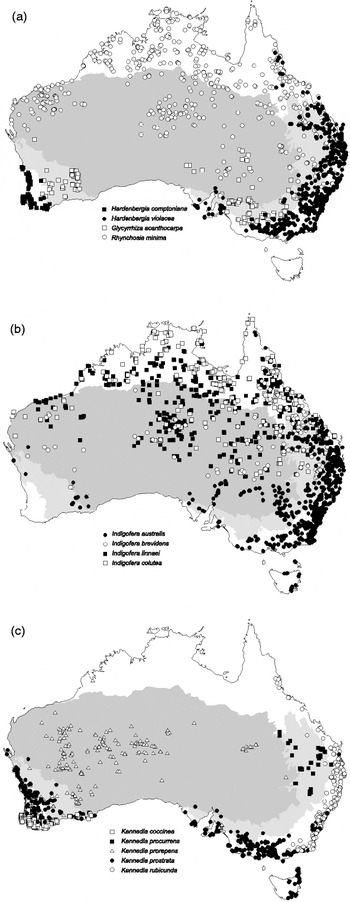
G. acanthocarpa occurs from the semi-arid to arid fringe of southern Australia's cropping regions, thus appears well adapted to water-limited environments with a winter-dominant growing season (Fig 4a). It occurs in various habitats and soil types from sandy to clay soils, but is especially common on soils prone to flooding. It has been found to be reasonably tolerant of waterlogging and saline conditions (growth reduced to 59% of control under 120 mM of NaCl solution) (Rogers and Spokes, unpublished data), but performed poorly in a series of field experiments in waterlogging-prone sites due to poor establishment and poor biomass productionReference Li, Lodge, Moore, Craig, Dear, Boschma, Albertsen, Miller, Harden, Hayes, Hughes, Snowball, Smith and Cullis75.
Australian distribution of native Rhyncosia, Glycyrrhiza and Hardenbergia spp. (a), Indigofera spp. (b) and Kennedia spp. (c) mapped against targeted agro-climatic regions; semi-arid cropping zone (E2, E3 and E4)—light gray; and the arid interior (E6 and G)—dark gray (see Fig. 1). Data sourced from Australian Virtual Herbarium28.

G. acanthocarpa is an erect to semi-prostrate to ascending perennial subshrub growing 1 m high. It flowers from early spring through to late summer and produces single-seeded pods covered in hard bristles or prickles. Advantageously, these pods are indehiscent or tardily dehiscent, which means pods do not split at maturity, or if so, quite late46. Seeds of G. acanthocarpa are kidney-shaped and attractively colored, usually olive-green, mottled with black46. Seeds are quite small, being about 2.5 mm long and about 5 mg (Table 1). No documented information was found on seed yield, seed protein or oil content, or the presence of bioactive compounds or toxins in seeds. Other exotic Glycyrrhiza are known to possess a number of medically beneficial propertiesReference Ross76; whether these active chemicals occur in the seeds of G. acanthocarpa is unknown.
Overall, we consider G. acanthocarpa to be worth further appraisal as a grain crop (Table 3). It has a suitable growth habit, its pods are indehiscent, it has moderate-sized attractive seeds and its distribution suggests a high suitability to Australia's more arid cropping regions. More information is required on the seed chemistry and seed yield potential of this species.
Hardenbergia
Hardenbergia is a genus of three species, all endemic to Australia. H. violacea (false sarsparilla, purple coral tree and happy wanderer) is widely grown as a hardy ornamental garden plant, with many cultivars available. H. violacea is a widespread species found in many habitats, although it generally tends toward higher-rainfall regions (Fig. 4a). Hardenbergia comptoniana is only found in southwestern Australia and mainly around the wetter coastal regions with mean rainfall greater than 700 mm per annum (Fig. 4a). All species are climbing vines, but sometimes can assume a subshrub form. Pods are dehiscent and in some cases these can be explosiveReference Wilson, Wilson, Seedman and Merritt77. Hardenbergia are large-seeded (22–45 mg) (Table 1) and can contain favorable concentrations of crude protein and oilsReference Rivett, Tucker and Jones16 (Table 2). Despite these positive attributes, we consider Hardenbergia to be of marginal interest as they are primarily adapted to moist environments and their twining growth habit would be a further obstacle to their development as a grain crop.
Indigofera
Indigofera is a large genus of about 700 species of which 33 are native to Australia43. They occur throughout the tropical and subtropical regions of the world, with a few species reaching the temperate zone. These are mostly shrubs, although some are herbaceous, and a few can become small trees up to 5–6 m tall. Most species are dry-season or winter deciduous. Several of the exotic species (especially Indigofera tinctoria and Indigofera suffruticosa) are commercially grown to produce the dye, indigo.
Most Australian Indigofera occur principally in the tropics and only Indigofera australis (Austral indigo), Indigofera brevidens (desert indigo), Indigofera colutea (rusty indigo) and Indigofera linnaei (Birdsville indigo) occur within our target region to any significant extent (Fig. 4b). I. australis occurs further south than the other three species and is found throughout the winter-dominant rainfall regions (Fig. 4b). I. australis and I. brevidens prefer sandy soils from granite or sandstone origin and commonly occur on granite plains and outcrops and river flatsReference Aylward, Court, Haydock, Strickland and Hegarty78.
These four Indigofera species all have favorable growth habits and winter–spring growth patterns. I. australis is a highly variable species, but is often an erect spreading shrub with flexible stems growing up to 2.5 m tall46. It flowers in winter to early spring and flowers and pods are held in leaf axils, distributed along the stem. I. brevidens and I. colutea are both smaller perennial subshrubs growing 0.4–1 m high, although I. brevidens is often spiny which may limit its suitability for agriculture46. I. colutea flowers in autumn, while I. brevidens flowers from spring to early summerReference Cunningham, Mulham, Milthorpe and Leigh45.
Indigofera seed are small with a squarish, blunt shape and the seed coat is often spotted. Seeds of I. australis appear to be larger (about 5 mg) than those of I. colutea and I. linnaei (<2 mg) (Table 1). I. australis seeds have been found to contain 19% crude protein and 2.8% oils, which was lower than other native legumes testedReference Rivett, Tucker and Jones16 (Table 2). Indigofera are also known to contain a variety of anti-nutritional or bioactive compounds such as indospicine and 3-nitropropanoic acidReference Jermyn and Jones39, Reference Aylward, Court, Haydock, Strickland and Hegarty78. I. linnaei is known to contain indospicine in its leaves and seeds which can cause a toxic condition in horses but not cattleReference Gracie79. I. australis can also contain HCN and is suspected of being toxic to grazing livestock while floweringReference Cunningham, Mulham, Milthorpe and Leigh45. Despite the presence of anti-nutritional factors, a variety of Indigofera species did not reduce the growth rate of rats fed their seed or leavesReference Aylward, Court, Haydock, Strickland and Hegarty78, indicating their potential as animal feed. Some exotic species of Indigofera actually have analgesic properties and have been used historically as anti-inflammatories and for pain alleviation (e.g., Indigofera articulata, Indigofera oblongifolia, I. suffruticosa and Indigofera aspalthoides)80. Whether these qualities are present in Australian Indigofera or if the active compounds are present in the seeds is unknown.
Of Australia's Indigofera species, I. australis appears to have the greatest potential for temperate agriculture due to its larger seeds and more southern distribution, although it has been found to have lower protein and fat content than some other native legumes (Table 3). Seeds of Indigofera may also offer some novel medicinal uses, although their chemistry still remains to be explored.
Kennedia
Kennedia have long been identified as legumes with agricultural potentialReference Millington8. In particular, Kennedia from low-rainfall wheatbelt areas of Australia have been suggested as possible forage plants (e.g., Kennedia prostrata, Kennedia stirlingii and Kennedia prorepens)Reference Cocks81–Reference Silsbury83. Yet, no species have been domesticated, although a number of them are grown as ornamentals.
The Kennedia genus contains 15 species all of which are endemic to Australia43. The most widely distributed species are K. prostrata, found across southern Australia but mainly in moister regions, and K. prorepens, found throughout the arid regions of central Australia (Fig. 4c). There are nine Kennedia species endemic to southwestern Australia, eight of these species have quite localized distributions mainly along the southern coast or higher rainfall coastal regions outside the target region (i.e., K. nigricans, Kennedia glabrata, Kennedia beckxiana, Kennedia carinata, Kennedia eximia, Kennedia stirlingii, Kennedia macrophylla and Kennedia microphylla) (not shown). The one more widely distributed western Australian species, Kennedia coccinea, is predominantly found in the high-rainfall regions, although it occurs to a lesser extent in the target regions (Fig. 4c). Silsbury and BrittanReference Silsbury and Brittan84 observed that the distribution of K. carinata corresponded to regions with a >7-month growing season and K. coccinea to regions with a 6-month growing season, while K. prostrata was found in drier regions with a shorter growing season (5 months). There are three Kennedia species only found in eastern Australia; Kennedia rubicunda has a wide distribution but mainly occurs in higher-rainfall environments along the east coast (Fig. 4c); Kennedia procurrens is found within the target region, although almost entirely within the subtropical subhumid region (E4) (Fig. 4c); and Kennedia retrorsa has a small distribution outside the target region (not shown). Kennedia species are mainly found in woodland or forest habitats and have a preference for light, well-drained soils. This adaptation to light-textured soils also suggests that they have some tolerance of drought and poor soil fertility. Two recent studies show that K. prostrata and K. prorepens seedlings grew better than some other perennial legumes under low phosphorus stress, partly due to high seed phosphorus concentrationsReference Pang, Tibbett, Denton, Lambers, Siddique, Bolland, Revell and Ryan70. However, these same studies show that these two species are particularly intolerant of high mineral soil phosphorus concentrations and thus would be suited only to low input agriculture on poor soils. A further problem with Kennedia is a high degree of seed dormancy which has proved difficult to overcome.
All Kennedia are evergreen prostrate or climbing perennials. They are herbaceous but often have woody stems at their base. Most species display indeterminate flowering from late winter into early summer with pod maturity reached about 1 month later. K. prorepens flower throughout winter beginning in autumn until late spring. Flowers are open pollinated by insects or birds. Elongated pea-like pods contain 4–50 seeds. Mature pods are dehiscent, but valves do not twist at maturity. One study has reported seed production of 200 kg ha−1 from K. prostrata at the onset of November at Merredin in the Western Australian wheatbeltReference Silsbury82. This was about 10% of the total shoot biomass at this time. However, flowering and seed production did not occur until the second growing season for K. prostrata Reference Silsbury82. This is commonly recognized in K. prostrata, while other Kennedia species (e.g., K. prorepens and K. coccinea) flower in their first year.
Kennedia have quite large seeds compared to many of the other native legumes, with many species having seeds >10 mg. Seeds up to 44 mg have been measured in K. prostrata, but the seed size in this and other species seems to be highly variable (Table 1). The chemical composition of seeds of some Kennedia species has shown them to possess high levels of protein and favorable fatty acids. K. coccinea and K. nigricans were found to have >24% protein and fatty acids consisted of 20% saturated, 30% monounsaturated and 50% polyunsaturated fats. K. nigricans (9%) had higher total fat/oil content than in K. coccinea (3%)Reference Rivett, Tucker and Jones16 (Table 2). K. prostrata seeds have also been found to contain >22% protein (N%×5.7), which was concentrated in the embryo and cotyledonReference Hocking85. The embryo and cotyledons made up only 23.7% of the seed weight compared to the testa (seed coat) which made up 75% of the seed weight and contained over 30% of its N and PReference Hocking and Kortt86. This contrasts strongly with many domesticated grain legumes, where the testa consists of a small proportion of the seed's dry matter (e.g., Pisum 10.4% and Lupinus 12.7–33.7%) and contains <5% of the seed's N and PReference Hocking85, Reference Clements, Dracup, Buirchell and Smith87. Hence, it appears that significant gains could be made in improving the total protein yield from Kennedia seed by selecting for thinner seed coat.
The thick testa in K. prostrata probably imparts the dormancy and longevity required for seeds to persist over many years. High levels of seed dormancy have also been seen in other Kennedia (over 95% seeds were dormant at maturity in K. rubicunda), which can cause problems for uniform and reliable germination that would be required in a crop. Selection for soft, thin seed coats in cultivated grain legumes has removed the dormancy imparted by a thick testa, and has enabled nutrients which might have otherwise gone to this structure to be directed to the embryoReference Smartt31.
Although no major toxicity problems have been documented with Kennedia, Rivett et al.Reference Rivett, Tucker and Jones16 found K. nigricans and K. coccinea seeds to contain significant concentrations of canavanine, 8.1 and 6.0 mol%, respectively. However, the presence of canavanine in some of these seeds should not prove an obstacle to their food use since the apparent toxicity of this compound is low.
Overall, Kennedia are an interesting genus to consider further as a grain crop. They have large seeds (up to 45 mg) with advantageous nutritional qualities, some species produce copious seeds in the first year. As with Glycine, a major constraint is their twining/trailing habit which is not favorable in a crop plant. Of the Kennedia species, K. prorepens has the most desirable distribution and appears well adapted to arid environments and hence was prioritized for further investigation (Table 3). Germplasm of K. prostrata also has some desirable adaptations to challenging environments, but its inability to flower and set seed in its first year is a major constraint (Table 3).
Lotus
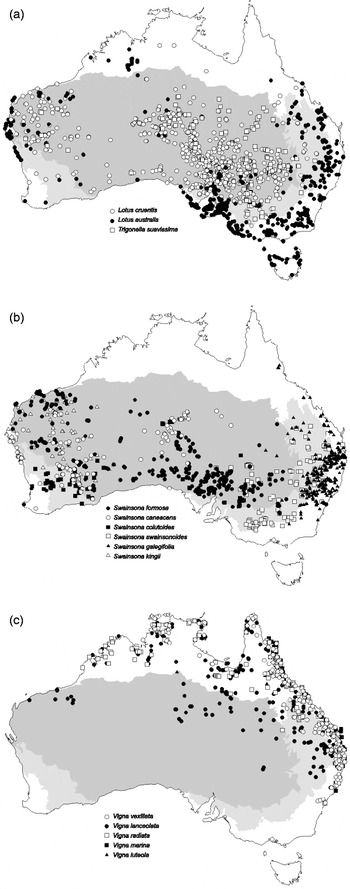
The Lotus genus (bird's foot trefoils and deer vetches) includes between 70 and 150 species (depending on author). Several species are cultivated as forage plants in many regions of the world, but not as a grain crops (e.g., Lotus corniculatus, Lotus pedunculatus and Lotus glaber). The genus is large, but only two species are native to Australia, Lotus australis and Lotus cruentus. Both L. australis and L. cruentus are found in the target region throughout southern and inland Australia, but of the two, L. cruentus may have greater adaptation to the lower-rainfall regions (Fig. 5a). Both species are found on a wide range of soil types and habitats and are considered to be drought resistantReference Cunningham, Mulham, Milthorpe and Leigh45.
Distribution of Australian native Lotus and Trigonella spp. (a), a selection of widely distributed Swainsona spp. (b) and native Vigna spp. (c) mapped against targeted agro-climatic regions; semi-arid cropping zone (E2, E3 and E4)—light gray; and the arid interior (E6 and G)—dark gray (see Fig. 1). Data sourced from Australian Virtual Herbarium28.

Both Australian Lotus species can perenniate and flower in their first year, although L. cruentus often acts as an annual and produces copious seedsReference Moles, Warton and Westoby88. L. australis has an erect-ascending habit growing up to 60 cm in height, while L. cruentus is more prostrate to ascending46. Flowering can occur all year round, but mainly occurs in spring with maturity in early to mid summer46. Plants are pollinated by insects, commonly bees, although L. cruentus appears to be reasonably self-compatible (Richard Bennett, unpublished data).
One major limitation of Lotus species for grain production is the loss of seed due to their continuous flowering and high propensity for the pod to shatter at maturity. Seed shattering (dehiscence) is a major problem for seed production in domesticated Lotus species used as forage plants and seed losses can vary between 5 and 88%Reference Garcia-Diaz and Steiner33. Lotus species are generally small seeded, with seeds weighing between 1.3 and 2.7 g (Table 1). Seed are often smooth, very round and brown colored with a mottled appearance. The content of protein, oils or other compounds in the seed from Lotus species is unknown. Both Australian Lotus species contain HCN in their shoots, which is associated with numerous cases of poisoning in cattle and sheepReference Jermyn and Jones39, Reference Cunningham, Mulham, Milthorpe and Leigh45. However, significant variability in HCN content has been identified in L. australis, enabling genotypes with low HCN to be selected and bredReference Real, Sandral, Warden, Nutt, Bennett and Kidd89. Highest concentrations of HCN are found in the leaves and flowers; concentrations are much lower in the seeds and pods and decrease as pods matureReference Gebrehiwot and Beuselinck90. Thus, HCN is unlikely to be a major difficulty in seeds of Lotus species and could actually be advantageous in vegetative parts to provide protection from insect herbivory, while the seed remains palatable.
Australian Lotus species have attracted interest as potential forage legumes for low-rainfall environmentsReference Real, Sandral, Warden, Nutt, Bennett and Kidd89, but they seem less well suited as grain crops. They have quite small seeds, and their unappealing appearance would limit their novelty as a whole-seed product. Their propensity to shatter is a major agronomic problem and the lack of interest in using more domesticated Lotus species for grain production indicates that these species have limited suitability as grain crops (Table 3).
Rhynchosia
Rhynchosia includes more than 200, mostly tropical, species, with six species native to Australia. Several species in the genus are commonly called rosary bean because of their attractive red, blue, black, mottled or bicolored seeds. The pantropical species Rhynchosia minima is highly variable and has four varieties described in Australia [var. amaliae, australis (=eurycarpa), minima and tomentosa]. R. minima has previously been investigated as a potential forage plant and with many ecotypes that vary in their adaptation and growth characteristics there is significant opportunity to exploit this speciesReference Harding, Pengelly, Cameron, Pedley and Williams91.
Most Australian Rhynchosia are restricted to subtropical and tropical regions of Australia, but the most widespread species, R. minima (snout bean), is also found across the arid regions of central Australia and commonly within the target region (Fig. 4a). R. minima is found in a variety of habitats but most often on self-mulching heavy clay soils46, Reference Harding, Pengelly, Cameron, Pedley and Williams91. However, it has been collected from sands and sandy loamsReference Harding, Pengelly, Cameron, Pedley and Williams91. It is regarded as a hardy plant and tolerant of drought.
R. minima is a slender climbing or trailing perennial herb. It germinates on summer rains and flowers during spring–summer and produces abundance of seed46, Reference Harding, Pengelly, Cameron, Pedley and Williams91. Days for flowering vary from 43 to 142Reference Harding, Pengelly, Cameron, Pedley and Williams91. Pod indehiscence was found in most accessions of Rhynchosia, but some accessions do retain seeds longer than othersReference Harding, Pengelly, Cameron, Pedley and Williams91.
Seeds of R. minima are reasonably large, kidney-shaped and grayish, brown or black and often mottled. The seed size may vary substantially, ranging from 8.8 to 20.4 mgReference Harding, Pengelly, Cameron, Pedley and Williams91. There is no information on the concentrations of protein or oils in R. minima seed, but they have been found to contain some chemicals of pharmaceutical interest including prodelphinidin (antibiotic), gallic and protocatechuic acid (antiasthmatic and antioxidant)Reference Morris6, 80.
Overall, R. minima warrants further appraisal as a grain crop (Table 3). It has large attractive seeds and is regarded as a productive seed producer. Significant variability exists in important agronomic attributes such as days to flowering, pod indehiscence and seed size, providing the potential to identify and select desirable genotypes to improve grain production. Its distribution suggests that it is tolerant of water-limited environments, but its preference for heavy clay soils restricts its applicability in some regions.
Swainsona
Swainsona includes 85 species of which 84 are endemic to Australia. The best known of these species is Swainsona formosa (Sturt's desert pea), which is grown as an ornamental flowering plant, but little is known about most of these species. Swainsona are generally found throughout the arid interior of Australia with most occurring within our target region. Many species are not widely distributed, but the more widely distributed species include S. formosa, Swainsona canescens, Swainsona colutoides and Swainsona swainsonoides (Fig. 5b). Many species also exhibit characteristics of plants adapted to dry environments such as hairy leaves and branches, and a deep tap root.
Swainsona includes plants with annual, biennial and perennial life cycles and most could be described as small subshrubs that range from prostrate to semierect92. At least a few species are winter growing which flower and set seed in spring (e.g., S. canescens). Most species seem to be predominantly open pollinated by insects or birds92, but some have a degree of self-compatibility. A few species are known to exhibit exceptional fecundity, for example, well-grown plants of S. canescens are capable of setting approximately 80,000 seeds (Bennett, unpublished data). Generally, the genus is described as dehiscent, but a number of species are known to be indehiscent or tardily indehiscent (e.g., S. canescens, S. colutoides, Swainsona pyrophila and Swainsona fraseri), where pods senesce with seeds are still enclosed. Seeds of Swainsona are usually small (<3 mg) and kidney-shaped. However, S. swainsonoides appears to have larger seeds (>7 mg) than other species (Table 1). Seeds usually have hard seed coats, which induce dormancy.
Aborigines ate at least one Swainsona species, Swainsona galegafolia (Darling pea), which was eaten green and has a similar taste to the common garden peaReference Brand, Cherikoff and Jones93. Its green seed (69% moisture content) contains 31% protein, 33% carbohydrate, 26% fiber and 6% fat (on a dry matter basis)Reference Brand, Cherikoff and Jones93. However, while 64% of the seed is edible, no information about the inedible component was provided. No information on the constituents of seed of other Swainsona was found.
Swainsona also gives its name to the toxic alkaloid swainsonineReference Jermyn and Jones39; while this is poisonous to livestock, its effect on humans is unknown. Aplin and CannonReference Aplin and Cannon74 report that the concentration of alkaloids in general (not only swainsonine) in the vegetative material of other Swainsona species was high in Swainsona rostellata, moderate in Swainsona campestris, S. canescens, Swainsona incei, Swainsona stipularis and low in Swainsona cyclocarpa, Swainsona flavicarinata and Swainsona occidentalis. Species reputedly or proven to be poisonous when grazed by livestock include Swainsona galegifolia, Swainsona sejuncta, Swainsona greyana, Swainsona lessertiifolia, Swainsona luteola, Swainsona microphylla, Swainsona oroboides and Swainsona procumbens Reference Gardiner, Linto and Applin94. Seeds of S. galegifolia and S. sejuncta contain 2900 and 1700 mg kg−1 of swainsonine, respectivelyReference Martyn, Tyler, Offord and McConchie27. There are few data on seed swainsonine concentration in other Swainsona species, but it would be expected to be negligible in species with low concentrations in vegetative material. For example, the swainsonine concentration in the stems or leaves of S. galegifolia (up to 7500 mg kg−1) and S. sejuncta (up to 5200 mg kg−1) is approximately 2.5 times the concentration in the seedsReference Martyn, Tyler, Offord and McConchie27. Thus species such as S. formosa, which have low concentrations of swainsonine in leaves (70 mg kg−1) and flowers (210–490 mg kg−1), may have very low concentrations in seedsReference Martyn, Tyler, Offord and McConchie27.
Despite the lack of information on many Swainsona species, a number of them have characteristics which suggest that they are worthy of further investigation for their grain production potential (Table 3). In particular, S. canescens and S. colutoides are high-seed-producing species, which have delayed dehiscence, an erect growth habit and are not reported to contain high concentrations of swainsonine. Being an annual species with low risk of swainsonine problems, S. formosa may also be of further interest. Some other widely distributed Swainsona species (S. swainsonoides, Swainsona purpurea and Swainsona kingii) may also have potential, but lack information.
Trigonella
Of the 80 species in the genus Trigonella, Trigonella suavissima (sweet fenugreek) is the only native of Australia43. This species has been investigated for its potential as a forage plantReference Halloran and Pennell95. Several exotic Trigonella species are important for culinary, nutritional or medical reasonsReference Acharya, Srichamroen, Basu, Ooraikul and Basu96. The most widely used is fenugreek (Trigonella feonum-graecum), which is cultivated throughout semi-arid regions of the world as an alternative multipurpose crop that can be grown for grain, forage or green manureReference McCormick, Norton and Eagles97, Reference Hymowitz, Janick and Simon98.
T. suavissima is a winter-growing annual or ephemeral, flowering between autumn and spring46. It occurs throughout inland arid environments in central Australia, where it is typically found on heavy clay soils of river banks, floodplains and depressionsReference Cunningham, Mulham, Milthorpe and Leigh45 (Fig. 5a). It is rarely found on sandy soilsReference Cunningham, Mulham, Milthorpe and Leigh45. It is particularly prevalent in inland Australia after winter–spring rains or cool-season floods, forming dense swards on flood plains. Thus, while it occurs in arid environments its ephemeral life cycle allows it to avoid severe water stress rather than tolerate water deficit. T. suavissima has also shown good tolerance of salinity compared to other native and exotic legumes, with a growth of 106% of control at 40 mM NaCl concentrationReference Rogers, Craig, Munns, Colmer, Nichols, Malcolm, Barrett-Lennard, Brown, Semple, Evans, Cowley, Hughes, Snowball, Bennett, Sweeney, Dear and Ewing99.
T. sauvissima has a desirable growth habit, being decumbent to ascending and reaching 50 cm in height46. Few agronomic data are available on the seed production potential of T. sauvissima, yet it is reputed to have a high level of fecundityReference Cunningham, Mulham, Milthorpe and Leigh45. Collected accessions of the species have flowered between 111 and 118 days after sowing, but because of its ephemeral life cyle in arid climates, it is likely that earlier flowering material exists. It is commonly pollinated by insects, but its self-compatibility is unknownReference Dear, Moore and Hughes100. A favorable attribute of T. sauvissima is that it can be indehiscent or tardily dehiscent, yet fruits are often shed from plants at maturity92, Reference Dear, Moore and Hughes100.
The seed of one tested accession of T. suavissima is small (1 mg, Table 1), substantially smaller than its grain legume relative, fenugreek (9–22 mg)Reference McCormick, Norton and Eagles97. The small seeds of T. suavissima may limit its yield potential as a grain crop. However, it could have been used as a multipurpose pasture and crop species (as for fenugreek), as it is regarded as a valuable and nutritious fodder source where it grows naturallyReference Halloran and Pennell95. There are no published studies of seed chemical composition or the presence of bioactive compounds in T. suavissima. Fenugreek contains a number of bioactive chemicals and has beneficial medicinal and nutritional qualitiesReference Bordia, Verma and Srivastava101. The presence of these qualities in T. suavissima is worth exploring.
Overall, T. suavissima is deserving of further appraisal as a grain crop (Table 3). It has a suitable growth habit and a number of desirable agronomic attributes, but in particular its distribution in arid environments suggests an ability to avoid or tolerate water stress. Its seeds potentially contain chemicals with pharmaceutical applications. The major limitation appears to be small seed size, warranting exploration for germplasm with greater seed size. More information is required on the seed chemistry and seed yield potential of this species.
Vigna
The Vigna genus contains a number of species that are widely grown as grain legumes throughout the world (e.g., mung bean (Vigna radiata), azuki bean (Vigna angularis) and cowpea (Vigna unguiculata)) and some secondary grain legumes (e.g., Vigna acontifolia (moth bean), Vigna lanceolata (pencil yam), Vigna mungo (urad bean, black gram), Vigna subterranea (Bambara groundnut), Vigna umbellata (rice bean) and Vigna vexillata (zombi pea))Reference Hymowitz, Janick and Simon98. Five species of Vigna are indigenous to Australia and one is endemic (V. lanceolata)Reference Lawn and Watkinson102. Vigna radiata ssp. sublobata is the putative progenitor to the cultivated mungbean (V. radiata) and is a native of Australia43.
Australian Vigna species are predominately tropical species or are mainly found in higher-rainfall environments (Fig. 5c). V. lanceolata is the only species that occurs to any extent in our target region. It is a highly diverse species with a number of genotypes that exhibit significant variation in important agronomic traits (e.g., seed yield, days to flowering and frost tolerance)Reference Lawn and Holland103. The key differences in agronomic traits between native Vigna and modern cultivars are longer time to flowering and maturity, smaller seed size, higher levels of hardseededness, a more prostrate and twining habit and a lower seed yield and harvest indexReference Lawn and Rebetzke104–Reference Rebetzke and Lawn106. Overall, Australian Vigna are of secondary interest to us because of their predominantly tropical distribution and others have previously investigated their agronomic potentialReference Lawn and Rebetzke104–Reference Rebetzke and Lawn106.
Conclusion
Australia has a diverse flora of herbaceous legumes and their agricultural potential and, especially, their potential to produce grain products has been little assessed. For many species, data are sparse and must also be considered with caution because of the likelihood that past studies have not adequately captured species' variability. Nevertheless, many species possess characteristics that would be useful in marginal grain growing environments due to their adaptation to arid and semi-arid climates and, sometimes, infertile soils. A major challenge for a number of species (e.g., Glycine, Kennedia and Rhynchosia) is their twining growth habit. However, this was the case in many of the progenitors of modern legume grain crops (e.g., Glycine, Vigna, Phaseolus, Pisum and Arachis)Reference Smartt31. Similarly, substantial increases in seed size and the removal of seed dormancy mechanisms have previously been achieved through plant breeding, and so while many Australian native species have small seeds, there is a potential to increase seed size. Similarly, seeds of many undomesticated legumes are likely to have a high proportion of seed coat, as seen in K. prostrata Reference Hocking and Kortt86, which if reduced could increase protein yield and reduce problems with hardseededness. Little information exists on the chemical constituents of many native Australian legumes, but some have a potential market because they possess attractive seeds (especially small-seeded species, e.g., Glycine and Glycyrrhiza) or because they possess bioactive compounds with prospects for use as natural medicines (e.g., Glycine, Cullen, Trigonella and Indigofera). While the germplasm of native legumes is currently stored in Australian Genetic Resource CentresReference Hughes, Snowball, Reed, Cohen, Gajda, Williams and Groeneweg107, it is likely that these collections do not come close to fully representing the diversity present in natural populations and any serious attempt at domestication of most native legumes would need to commence with a comprehensive collection of wild germplasmReference Bennett, Ryan, Colmer and Real51.
This paper identifies a number of species with the greatest immediate potential to be developed as alternative grain legumes; however, additional basic information on the seed constituents, phenology, breeding system and reproductive potential of these species is required to narrow the list further. This is especially necessary in genera where little current data exist (e.g., Swainsona, Glycyrrhiza and Crotalaria). This work has been initiated and some preliminary studies will be reported in a forthcoming paper. Once two or three most promising species are identified, a preliminary selection and breeding program could commence to begin the domestication process. This process could commence with a—perhaps more limited—germplasm acquisition program, but before significant gains could be made, more substantial germplasm acquisition and characterization activities would be needed. Concurrently, evidence on the potential applications and market niche for grain from these species would be required. Ongoing collaboration with the food and/or nutraceutical industry would help this process. In addition, agronomic and physiological research should focus on confirming adaptive characteristics and agronomic suitability and help to focus future breeding priorities.
Acknowledgements
We would like to thank the Rural Industries Research and Development Corporation (RIRDC) for their funding of this research. We are also grateful to Jens Berger and Jon Clements for their comments on the paper.