The Possible Distinction between “American” and “European” Ideas on Justice as a Hermeneutic Tool
In recently completed and ongoing research projects at Aalto University School of Business, we have worked on a framework for studies in justice. It has been suggested in the existing literature that a useful distinction can be drawn between “American” and “European” values, principles, and other notions that are central to moral and political philosophy. In the following, I elaborate on this idea, with the aim of casting light on the themes of this special section dedicated to issues of justice, healthcare, and well-being. My questions, then, include: Is there a way to identify a characteristically “American” influence in recent attempts to define justice (and in subsequent attempts to apply the concept to legal and political choices and to social and healthcare policymaking)? If so, how could this “American” element be located? If “European” is a better alternative, what “European” entities should replace the “American” ones? And what are the most important dimensions of justice to be considered when such questions are answered?
As my narrative will demonstrate, differences do exist. Some strands of discussions on justice can be understood better in the light of one kind of terminology, whereas other strands can be grasped more readily by using other types of language. One lesson to be learned is that justice has too many legitimate varieties and dimensions to be helpfully trapped in one mold. But in showing this to be the case, I also hope to point out some aspects and presuppositions of justice that are easily forgotten and ignored.
From Justice to “American” Justice and Back
The Core Ideas
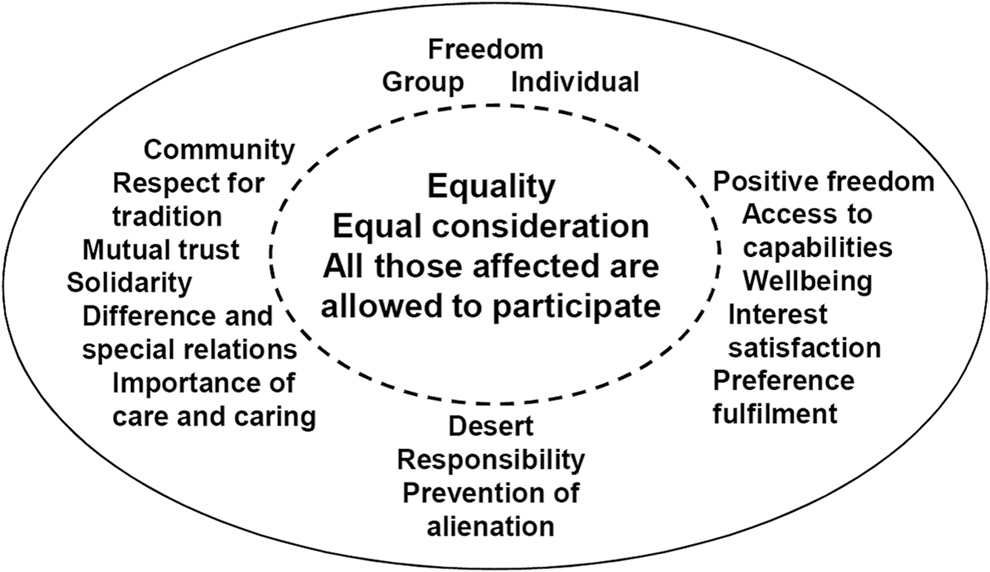
Almost everybody agrees that the hard, neutral core of justice consists of equal consideration or equal treatment. People should be seen as equal, treated with equality and equity, everyone should count for one and no one should count for more than one, and all those affected by decisions should be heard, or taken into account, when the decisions are made. Beyond this simple starting point, however, differences and disagreements abound. Some believe in the economic freedom of individuals and groups, and argue that this freedom either defines justice or strongly promotes it. Others, on the contrary, believe that regulation and state interference in the functioning of the market is just, or contributes to justice. There is also considerable disagreement on the values that support, or are supported by, justice. One group of people think in terms of impact and consequences, and maintain that justice should be measured in terms of material well-being, happiness, and need or preference satisfaction; or in terms of access to these; or access to the abilities and capabilities to achieve these. Another group of people hold that calculations such as these are a potential threat to justice, which should be understood in terms of community values and solidarity; or by reference to special relationships between individuals and care practices. These differences, and the concepts important to the competing parties, are tentatively mapped in Figure 1.
Different views on the concepts defining justice.

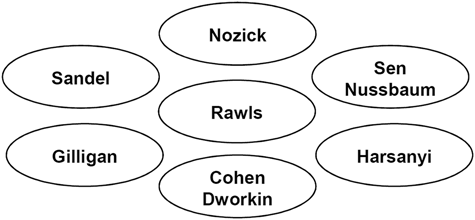
The map is very preliminary, and will be refined and redrawn below; however, the outline alone enables us to insert current theories of justice in their most probable places, and this sheds light on their relative positions and mutual tensions. Figure 2 presents some of the main “American” views by author names.
Theorists of the main “American” views on justice.

The “American” discussion on justice provides the starting point here, because it is academically well advanced and very influential. The pride of place in it is held by John Rawls, who made a point of formulating his theory around the formal concepts of equality and equal consideration, letting more substantive and ambiguous ideals such as liberty, responsibility, desert, utility, capabilities, tradition, and special relationships enter the model only through his ingenious notion of the “veil of ignorance,” a hypothetical original position in which rational agents are allowed to choose the principles of justice that should prevail in their societies. Brief accounts of the theories in operation in the “American” debate are necessary at this point, to lay the ground for the search of its “essence.”
The Theorists
Rawls, Footnote 1 in his theory of welfare liberalism, or liberal egalitarianism, postulated that the principles of justice are determined by rational individuals (his “rational individuals” pursue their own long-term interests, are risk averse, and do not envy the good luck of others when this does not affect their own situation) who are unaware of their own features, skills, abilities, and inherited positions in society. The principles that are chosen in these circumstances state, according to Rawls, that basic goods will be equally guaranteed to all, and that material inequalities are acceptable, if and only if they are attached to positions that are open to all and somehow benefit not only the immediate beneficiaries but also those who are worst off in the society in question. Whether or not these rules can be extended across national borders remains an open question, both in the Rawlsian view and many of its main competitors. Footnote 2
Robert Nozick Footnote 3 devised a libertarian model, partly as a response to Rawls. His theory is based on historico-rational entitlement: the idea that the prevailing social arrangement is just if it can be thought to derive organically from free interactions between people without violations of natural rights to life, physical integrity, and private property. The proper role of the state is to safeguard the rights of individuals against their violation by other individuals or groups. The job can be performed by a minimal, “night-watchman” state, composed of a police force, courts, and an army. For any other functions—such as education, healthcare, and social security—the state would have to collect illegitimate tax revenue from individual citizens. This is why these are best left to private enterprise and voluntary charity. Many libertarians have gone on to say that charity is more likely in nations that do not exhaust the altruism of their citizens by taxation.
Ronald Dworkin Footnote 4 and Gerald Cohen, Footnote 5 in their luck egalitarian views, took up the questions of desert and responsibility. They started from the idea that, in theory, individuals are responsible for the consequences of their choices, but not for what happens to them because of external circumstances. This can be interpreted in two ways. Either we can make the most of the choice–circumstance distinction, in which case even the most ardent welfare-state advocates must sometimes admit that those worst off have themselves caused the hardship they face, or we can say—as Dworkin and Cohen more probably meant—that in real life, the influence of circumstances on choices is so strong that the distinction cannot be meaningfully drawn in matters of social policy. In this case, the route is open for the state to compensate any disadvantages on the grounds that they are not of the citizens’ making.
John Harsanyi Footnote 6 argued, on preference utilitarian grounds, that in the best society, everyone is able to have the greatest amount of well-being, compared with other societies. As an economist, Harsanyi believed that well-being can be scientifically defined by the satisfaction of rational preferences: choices that fully informed agents would make freely and autonomously. The task of states is to take heed of the calculations of economists, and to implement policies that have the highest probability of maximizing rational preference fulfillment over time. Rights are not “natural,” as Nozick thought, but rather have to be legally defined against the background of the highest level of well-being. Responsibility, desert, freedom, and tradition should only enter deliberations instrumentally: if taking them into consideration improves the end result overall, then this is acceptable; otherwise, as is often the case, it is not.
Amartya Sen Footnote 7 and Martha Nussbaum, Footnote 8 in their jointly developed capability approach, can be seen to have taken “rational preferences” as their starting point. They argued, however, that preferences, informed and free as they may be, can be inauthentic, or “adaptive.” In their investigations of women in small Indian villages, they saw that many decisions that appeared rational in their context, were, in fact, dictated by oppressive traditions. In matters such as leaving an abusive spouse or working independently in farms or factories, the choices were based on suboptimal prevailing circumstances. To account for the distorting effect of oppressive traditions, Sen and Nussbaum advocated, first in international aid and then more widely, the promotion of essential capabilities to live safely; be healthy; control one’s life; and enjoy education, culture, religion, politics, and leisure time. Just policies should, according to them, focus on this.
Michael Sandel, Footnote 9 in his communitarian view, observed that people are primarily members of families and groups, not separate containers to be filled with well-being, capabilities, liberties, or rights. Attempts to create just societies by abstract principles or mathematical calculations fail to respect, and indeed do violate, good practices and traditions that have developed spontaneously in human interaction. A better way forward is to accept the “given” in human life and to admit that we cannot fully control our lives. This realization prompts us to acknowledge our joint liability for each other, and this in its turn promotes practices of solidarity on all levels of society. Where Sen and Nussbaum emphasize the disvalue of oppressive habits and customs, Sandel cherishes the value of good traditions. Respect for social practices that have emerged organically over time, such as our habitual altruism and solidarity, provide the best basis for political arrangements.
Carol Gilligan Footnote 10 founded her ethics of care on studies in social psychology. Laurence Kohlberg Footnote 11 had claimed in his theory of moral development that the highest levels of morality can be found in outcome-based (utilitarian) and principled (e.g., Rawlsian) ways of thinking. Gilligan argued, based on her own studies, that although this may be true about boys and men, it is most certainly not true about girls and women. The highest level of morality found in women is the formation of special relationships, with the mother–child bond being the paradigmatic example. Special relationships offer a natural foundation for caring as an activity that makes people’s lives better and should, therefore, be appreciated and fostered both in private and public spheres. According to Gilligan, the ideal of universal justice should be complemented by contextual and difference-sensitive feminist care ethics.
Some Caveats
It should be noted at this point that “American” in this discussion of justice refers to the nature of the debate rather than to the nationalities and changing working environments of the theorists listed. Cohen was Canadian and worked for long periods in the United Kingdom; Dworkin, although American born, similarly worked in the United Kingdom for years; Harsanyi was born in Hungary and partly educated in Australia; Sen is originally Indian and has worked extensively in the United Kingdom, as well as in other countries. The theories, however, have been developed to a large extent in the universities of the Northeastern United States, and they are distinctly seen as “American” when comparisons with other views are being made.
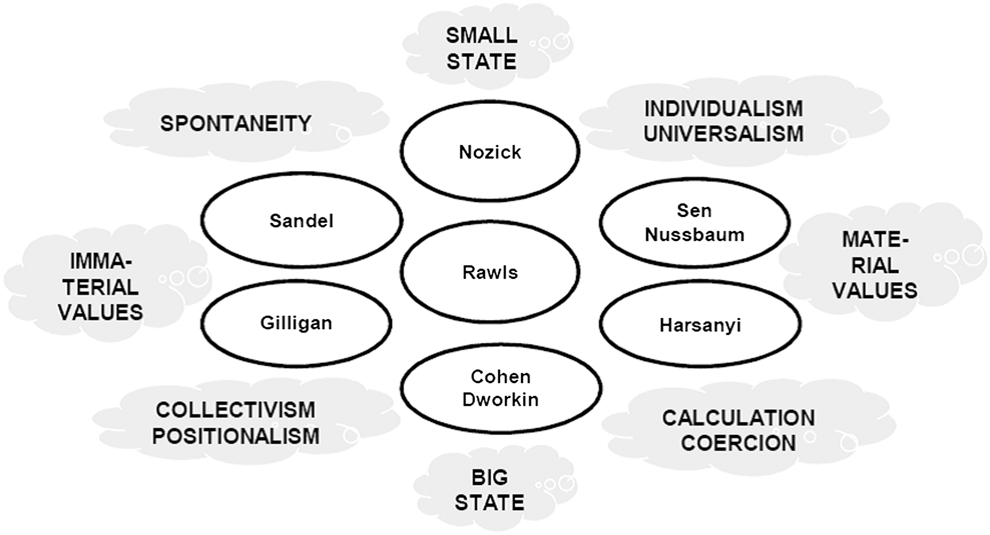
As for the positioning of these theories in the preliminary conceptual map, it is true that any one of them could be placed in the middle, with others offering opposition from their own angles. However, keeping Rawls front and center is justified by his standing in certain crucial controversies. Theories of justice have presuppositions, which are related, inter alia, to human nature and moral judgments, different kinds of values, views on the value of social engineering, and ideas about the proper size and role of the state. These are depicted in Figure 3.
Presuppositions of theories of justice.

Theories of justice range, in terms of their basic assumptions about the nature of humanity and our judgements, from individualism (human beings are essentially separate entities) to collectivism (human beings are essentially members of their social units) and from universalism (norms and values are the same for all) to positionalism (norms and values are a function of our roles in society). Nozick, Sen, Nussbaum, Harsanyi, and Rawls are universalists and individualists, whereas Gilligan and Sandel are, to varying degrees, positionalists and collectivists. Cohen and Dworkin identify themselves in the former camp, but insofar as they claim that social circumstances determine our choices, their proper place could be with the latter.
Theories of justice also show variation in the other respects illustrated in the figure. Utilitarian and other outcome-based views emphasise material values such as economic growth and well-being; ethics of care and communitarian thinking are more interested in immaterial values such as solidarity and the importance of special relationships. The economists Sen and Harsanyi, and the former socialist Cohen, are more amenable to social engineering (calculation and coercion) than Gilligan, Sandel, and Nozick; leaving Dworkin, Rawls, and Nussbaum to a slightly more undetermined place according to this criterion. At least some utilitarians and socialists, and possibly some care ethics advocates, could approve of a fully comprehensive welfare state; whereas Nozick’s theory flatly denies its justification.
Rawls, still in the midst of all this, on the whole holds a moderate position on every criterion, except individualism. Rawls did establish his theory on individual choice, and on the idea that everyone’s rationality will be satisfied by decisions made behind the veil of ignorance, but he also made clear that his model applies only to populations that share, from the outset, a sense of justice: the one characterized in his definitions of rationality and the original position. The circle representing his position on the map may or may not have to be moved more to the Northeast in the figure, but this is an object of further study within our research team.
The question of this subsection was, however: How to locate the “American” essence of these views on justice? Are we any closer to that? No and yes. If Rawls’s view sits moderately in the middle of the frame, celebrating equality and taking everything else into account in a reasonable manner, it is difficult to see what the objection would be. This cannot be the unwelcome “American” core idea that has to be criticized and perhaps removed. There are, however, alternative avenues to be explored from the “European” point of view.
Critical Alternatives
Two main options readily present themselves.
First, the focus of all these theories can be theoretically wrongly construed. They all assume that an analysis of some individual concerns, well-defined in their context; or group ties, limited to special relations or community concerns of a certain type, provide the key to considerations of justice. This can, from the viewpoint of European theories, be false. If it is, the answer needs to be found in an entirely different set of assumptions: objectively or subjectively idealistic, existentialist, critical, or poststructuralist; and even if the importance of simple individual and social concerns were accepted, the “American” way of dealing with them could be challenged. Rawls’s theory is based on a purpose-designed hypothetical contract: society is encouraged to believe that the rules laid out by rational agents (as defined by Rawls) behind the veil of ignorance (as defined by Rawls) are acceptable to all. This general type of thinking has deep roots in European philosophy, but the nature and justification of the contract has varied considerably, from the natural-law-based doctrines of Hugo Grotius Footnote 12 and Samuel Pufendorf, Footnote 13 through the laws-of-nature- and natural-rights-influenced models of Thomas Hobbes Footnote 14 and John Locke, Footnote 15 and the general-will- and universal-reason-informed views of Jean-Jacques Rousseau Footnote 16 and Immanuel Kant, Footnote 17 to the modern-day, communicative-action-founded and deliberative-democracy-advocating theory of Jürgen Habermas. Footnote 18 It is possible that, in order to create a (more) “European” notion of justice, one would need to go back to these sources, and find approaches and assumptions that are a better fit with the European mentality than Rawls’s analytic-philosophy tack and his original position, with its underlying economic rationality.
Second, it is possible that what is “reasonable” and “moderate” in Rawls’s view is not reasonable and moderate in Europe. His theory, applied to political reality, could lead to practical solutions that would not be good in terms of European values, attitudes, ideals, and interests, on one or more dimensions of justice. If this is the case, the best place for the “European” core of theoretical justice would not be in the middle of Figures 2 and 3, but somewhere else; depending on how “reasonableness” is defined in the minds of Europeans.
Some of these ideas will be tentatively developed in the next sections.
How to Find an Alternative, “European” Core of Justice in European Theories?
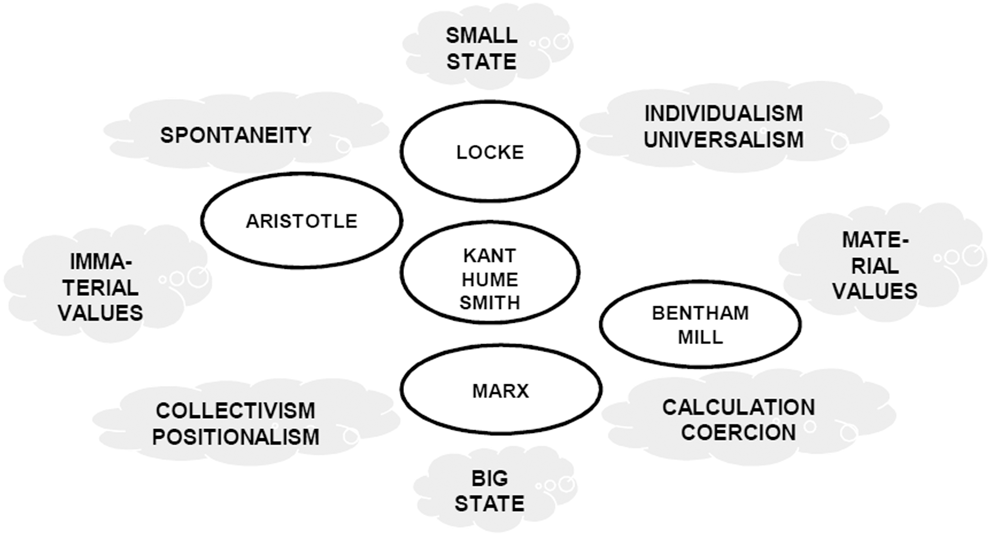
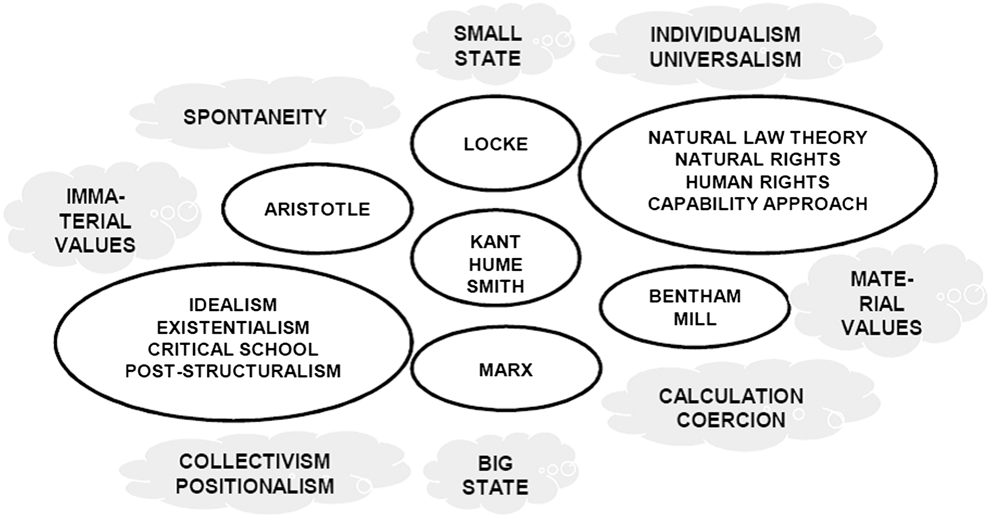
A point of clarification is needed here. Although the American notion of justice is a useful fiction, and although Rawls’s contribution should not be underestimated, it is worthwhile to remember that the theoretical map drawn in Figures 2 and 3 can easily be populated by European thinkers and traditions. Most communitarian views, some socialist models, and Nussbaum’s version of the capability approach are Aristotelian. (That Nussbaum and the others are situated at opposite ends of the individualistic-collectivistic and universal-positional continuums is a result of two different readings of Aristotle.) Nozick’s theory is based on ideas developed by Locke, Kant, and the Stoics. Harsanyi’s utilitarianism has its roots in Jeremy Bentham’s doctrine, Footnote 19 which was founded on work by Cesare Beccaria Footnote 20 and Claude-Adrien Helvétius; Footnote 21 and in John Stuart Mill’s revision, Footnote 22 inspired by Romantics including Johann Gottfried von Herder. Footnote 23 Cohen may have relied on some of the tenets of Karl Marx and Friedrich Engels, Footnote 24 and Rawls started from a premise about the general nature of justice as an artificial virtue borrowed from David Hume; Footnote 25 his description of the original position bears a distinct resemblance to Adam Smith’s notion of the impartial spectator; Footnote 26 his theory as a whole has been seen to have a Kantian flavor; and the central notion of the social contract comes from the works of Grotius, Hobbes, Pufendorf, Locke, and Rousseau. Ancient Greece and Rome, as well as modern England, France, Germany, Holland, Italy, Scotland, and Switzerland can be seen as sources of the so-called American ideas on justice. And many of the main European thinkers find easily their places on the conceptual map, presented in a revised form in Figure 4.
European philosophers on the “American” map of justice.

What about the idea, then, that all “American” theories are wrongly construed from the European point of view? The interpretations of the theorists in Figure 4 may be skewed. This idea will be explored separately in future studies, but even more interestingly, the gaps in the Northeast and Southwest show two places where radically different European models could be in operation.
Post-Kantian thinking produced a series of developments, through subjective and objective idealism in Germany and Italy, to existential, critical, and poststructuralist philosophies in Germany, France, Spain, and many other countries. Footnote 27 Georg Wilhelm Friedrich Hegel is one of the main authors of objective idealism, Footnote 28 whereas Benedetto Croce and Giovanni Gentile provide a good juxtaposition in their liberal (objective idealist, Croce) Footnote 29 and fascist (subjective idealist, Gentile) Footnote 30 views. Intriguingly, all three can be placed, in their own ways, between Aristotle and Marx, so that they occupy in some sense (although not in others) the gap in the Southwest. The same place can be further populated by Friedrich Nietzsche, Footnote 31 José Ortega y Gasset, Footnote 32 Jean-Paul Sartre, Footnote 33 Simone de Beauvoir, Footnote 34 and Hannah Arendt; Footnote 35 the Frankfurt School theorists Theodor Adorno, Footnote 36 Max Horkheimer, Footnote 37 and Herbert Marcuse; Footnote 38 and the poststructuralist thinkers Jacques Derrida, Footnote 39 Michel Foucault, Footnote 40 Gilles Deleuze, Footnote 41 Jacques Lacan, Footnote 42 Jean Baudrillard, Footnote 43 Julia Kristeva, Footnote 44 Jacques Rancière, Footnote 45 and Judith Butler. Footnote 46 Studying the differences between debates in these circles and the “American” discussion of justice could be a key to finding the “European” core. Footnote 47
Pre-Kantian, and pre-Enlightenment, thinking also continues to have an influence. A clue to filling the gap in the Northeast on the map can be derived from Nussbaum’s capability approach. Taking a departure from Sen, she has devised a list of the main capabilities that should be promoted in the name of justice. The items on her list are: life; bodily health; bodily integrity; senses, imagination, and thought; emotions; practical reason; affiliation; consideration of other species; recreation; and political and material control over one’s life. The capabilities that Nussbaum names are strikingly similar to the fundamental goods suggested by John Finnis in his neo-Thomist theory: life, knowledge, play, aesthetic experience, sociability (friendship), practical reasonableness, and religion. Footnote 48 The fact that these two theorists share common ground Footnote 49 has not been widely recognized, possibly because they differ sharply in their political views. Footnote 50 The point of the connection here is that the European approach missing from the Northeast in Figure 4 is natural law theory, with its modern links to (Aristotelian) human rights and capability thinking. Footnote 51 These possibilities are presented schematically in Figure 5.
Filling the initial gaps.

The addition of these more distinctly European theories in the opposite corners changes the picture radically. Three points are especially worth making. Existentialism, a highly individualistic creed, is now close to collectivism and ideas of a big state. This is a reminder of the fact that some of the post-idealist views, unlike naturalist ones, make a clear distinction between facts (states are big) and norms (the individual is, in principle, paramount, but becomes buried under collective trends). Natural law thinking, with its religious history, is situated close to utilitarianism, which, since Bentham and Mill, has been predominantly nonreligious. This is a reminder that they are both naturalist theories, but view “nature” very differently. The Kant, Hume, and Smith in the middle are now dissimilar to when they were originally cited to form the background of Rawls’s theory. The new emphasis is on the Kant of the epistemological turn (not just the advocate of the rational moral law), the Hume of the is–ought divide (not just the presenter of the idea that justice is human made), and the Smith of inexorable economic laws shaping world history (not just the impartial spectator ethicist).
Another interesting observation concerns the source of morality and justice. Natural law theory and its associates center on the moral truth prevailing in the world even without human intervention. Its post-idealist opposites center on the (mostly) invisible social construction of norms and values. The middle ground, however, can be a place where matters are debated, discussed, agreed upon, and disagreed about: a hub for the considered construction of norms and values by people who can be seen not only as individuals but also as members of their families, interest groups, communities, and societies, with the powers and limitations that these memberships entail.
Taking this idea seriously could be a step toward removing the non-optimal, hypothetical-contract “core” of the Rawls-inspired “American” debate on justice, and replacing it with something more “European.” Theorists who become pivotal with this line of thought are Habermas, Sen, and Axel Honneth. Habermas started out in the critical school, but soon developed his original theory of communicative action, with the ideal of “Herrshaftsfreier Diskurs” (discourse without domination) at its center. Footnote 52 Sen comes from the opposite direction of outcome-based thinking, but has refused to formulate closed lists of important capabilities on the grounds that this would not allow the model to be adjusted to new environments by means of discussion and deliberative democracy. And Honneth emphasizes dimensions beyond economic distribution, rights, and freedoms in his theory of mutual recognition, love, and solidarity. Footnote 53
Early social contract theorists—Grotius, Hobbes, Pufendorf, and others—provide some historical background to the European views. Apart from these naturalist jurisprudents, however, there are other interesting traditions that could be explored: the Renaissance humanism of Giovanni Pico della Mirandola Footnote 54 and Desiderius Erasmus Roterodamus; Footnote 55 the Enlightenment movement of Voltaire, Footnote 56 Denis Diderot, Footnote 57 Giambattista Vico, Footnote 58 Montesquieu, Footnote 59 and Rousseau; the Romanticism of Herder; and many others.
How to Find an Alternative, “European” Core of Justice in European Values?
Two decades ago, European philosophers instigated several efforts to replace the then very popular “American” principles of biomedical ethics with “European” rules or values. Footnote 60 The logic was similar to the logic employed here: Anglo-American concepts and ideals may have to give way to European ideas that are more reflective, communal, and moral than the pragmatic codes imported from the United States. (The same period also saw the beginning of efforts to define Latin American, Asian, and African approaches to ethics, especially bioethics, in opposition to Western, and mostly North American, models.) Footnote 61
The usual target of criticism was the approach introduced to the wider bioethics community by Tom Beauchamp and James Childress (coinciding with the similar findings of the Belmont Report). Footnote 62 They argued that the principles of autonomy, non-maleficence, beneficence, and justice can be used in tackling successfully all issues arising in medicine, healthcare, and the biosciences. They also said, in the model’s original formulation, that their set of principles can be founded both on the duty-based moral philosophy of Kant, and on the outcome-based ethics of Bentham and Mill. Footnote 63
The fear that American values would suppress their European counterparts if this model were accepted was obviously misplaced. The values incorporated in the four principles, and the theories on which they can, according to Beauchamp and Childress’s initial views, be based, originate from Germany and England, and can, therefore, hardly be seen to impose an external threat to indigenous European moral thinking. And although the authors have, later on, replaced ethical theories with common morality as the proper framework for their principles, they can hardly be said to have abandoned the Western roots of their model. Footnote 64
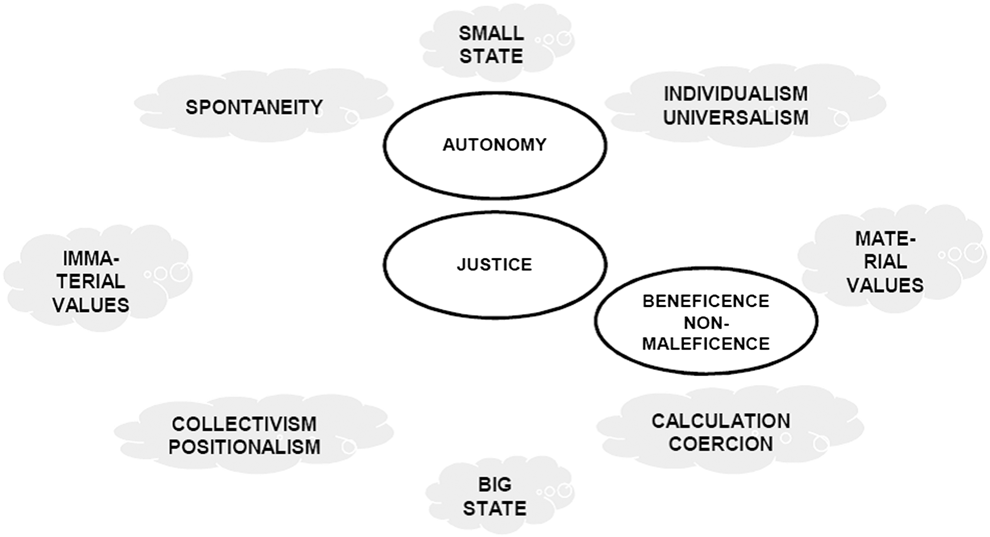
There may, however, be a sense in which the threat cannot be dismissed as entirely imaginary. This can be illustrated by placing standard interpretations of the four principles on our conceptual map, as done in Figure 6.
The four principles and justice.

One of the focal criticisms of the Beauchamp–Childress model has been that it makes, at least allegedly, autonomy in patient choices the overriding consideration. Footnote 65 This is understandable in the context of medical ethics, which in the 1970s made a strong stand against the paternalism of physicians: “The doctor always knows best” ideology. However, mere choice was not enough for those who wanted a more substantial concept of autonomy to be employed. In addition, justice was understood rather vaguely and intuitively, because it was felt, and rightly so, that the physician should not be making decisions about the just allocation of scarce medical resources. Similarly with beneficence (“Improve your patients’ health”) and non-maleficence (“Do no harm”), which were seen as good guidelines for the individual physician, but, in fear of utilitarianism (not favored at the time in the United States) not the guide for wider healthcare policies. Footnote 66 The most important flaw, in terms of European values, can, however, be seen in the gaps that the four principles leave on Figure 6.
When Beauchamp and Childress devised their model in the late 1970s, it was customary to think, at least in the English-speaking academic world, that the “deontological” and “consequentialist” moral views championed by Kant, Bentham, and Mill were the only viable options in normative ethics. This is why the authors could claim a fair degree of universality for a set of principles that could be justified by appeals to outcomes as well as to duties. But there is a third alternative that they missed at first; namely, virtue ethics, which started to (re)emerge in the 1980s and became instantly popular in Europe. Footnote 67 This “teleological” approach has its roots in the ethical teaching of Aristotle, and the work of Thomas Aquinas introduced it, in the thirteenth century, into Roman Catholic moral philosophy and theology. That Beauchamp and Childress early on failed to recognize this third way is probably the main reason for their model’s poor reception in Europe. By ignoring moral (and religious) virtues, and thereby all deliberations about the ideal nature of a good, virtuous human being, Beauchamp and Childress left their views wide open to accusations of short-sighted hedonism (the view that people’s happiness here and now is the primary moral concern), excessive individualism (the doctrine that people are always more important than the values prevailing in their communities), and sneaking nihilism (the view that all our inherited values may be wrong).
During the latter half of the 1990s, several attempts were made to identify values that would be more widely recognized in Europe than the principles of autonomy, non-maleficence, beneficence, and justice. In all these attempts, much emphasis was put on prudence, communality, and the intrinsic morality of human actions.
In a collaborative research project, funded during 1995–8 by the European Commission, Peter Kemp and 21 other partners from different European countries examined the values that could serve as a basis for better ethical decisionmaking. In their final meeting, 16 participants issued a document entitled the Barcelona Declaration, where they identified four fundamental principles, namely those of autonomy, dignity, integrity, and vulnerability. Footnote 68
In the team’s work, the concept of dignity was given the paramount role. The gist of the argument was that autonomy, although important, cannot be all there is to bioethics and biolaw, because some human beings cannot be regarded as autonomous by any reasonable account. These beings include, most significantly, embryos, fetuses, infants, the comatose, the severely cognitively impaired, and the senile. Footnote 69 When it comes to the protection of these groups, the argument goes, respect for dignity, complemented and qualified with the notions of integrity and vulnerability, is a better tool.
Another oft-quoted concept in European discussions on ethics is precaution. Footnote 70 The “precautionary principle” was first introduced in debates over environmental issues, but it has also been invoked in discussions concerning genetic engineering and healthcare provision. Footnote 71 It is designed, so its supporters say, to encapsulate the idea that scientific risk management is not always enough in cases in which irreversible harm could ensue from human activities, especially from the development and implementation of new technologies. When our actions can be harmful, but this harmfulness cannot be verified or falsified by scientific enquiry, the burden of proof is on those who propose such actions. Until further research shows that the actions do not have the suspected ill effects, they should be disallowed.
A notion that is sometimes believed to provide a remedy to the overemphasis of individualism in contemporary social ethics is solidarity. A sense of togetherness, many authors over the last decades have suggested, would offer a firmer basis to practices and regulations in society than the contract-based model of justice favored by many American philosophers. European journals of ethics have dedicated special issues to the concept of solidarity, and it has also been frequently used in political discussions. Footnote 72
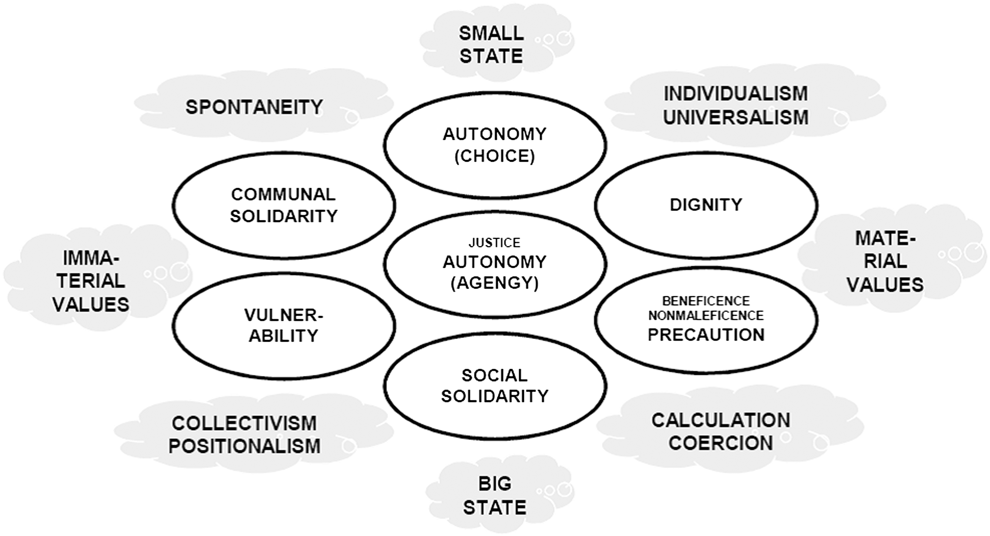
Dignity, vulnerability, precaution, and solidarity could, it can be argued, offer viable alternatives or at least additions to the four American principles. (Integrity in the model suggested by Kemp and others was mainly introduced as a dimension of dignity, so it may not be necessary to include it in the first instance.) At least their insertion on our conceptual map seems to fill it in a balanced way, as seen in Figure 7.
“European” values complementing “American” principles.

Autonomy and solidarity both occupy two spaces in Figure 7. Autonomy as freedom of choice is not dismissed, but the central role is now played by autonomy as moral agency, and individual freedom is balanced by social solidarity. Communal solidarity, perhaps in alliance with autonomy as (interrelated) agency, may grow in strength at the expense of utilitarian calculations, which have now evolved from technical risk analysis to a more substantial responsibility represented by quasi-consequentialist ideas of precaution. Respect for dignity and vulnerability complement autonomy as agency from universal and positional points of view.
That is the ideal interpretation, based on the idea that all of these values and principles are mutually compatible. This, however, may be untrue, as the deeper assumptions of the values and principles pull them into different directions.
How to Find an Alternative, “European” Core of Justice in European Attitudes?
People’s attitudes in Europe (and elsewhere) have been studied systematically for quite some time, and some of the data collected can be relevant in the search for “European” justice. Footnote 73 Because equality is often the hallmark of justice in these studies, the findings could help political decisionmakers in reversing unacceptable inequalities, while allowing acceptable ones, assuming that such a division can be drawn. For this, it would be useful to know which inequalities Europeans do find acceptable, and which ones they do not.
Empirical studies conducted, inter alia, in the European Social Survey (ESS) Footnote 74 can provide good clues here. A twofold challenge has to be faced, however. First, there is the problem of the validity of operationalization: How to find the right questions: the ones that throw light on matters of inequality? And second, there is the problem of reliability: even with valid questions, the issue of how to interpret the answers remains.
For an empirical starting point it is best to return to the conceptual map and see how different views on justice define equality. At least in the fundamental sense that like cases must be treated alike, all moral and political doctrines accept and support equality, but interpretations vary on two issues. What is the correct criterion for “being alike”? And what is the proper content of “treating alike”? These variables are positioned in Figure 8.
The positions of different views on equality.

As for the scope of equal treatment, most theories of justice profess some degree of universality, and many of them hold that at least all citizens of a nation state should be treated the same in some specified respects. Communitarian and positional views are an exception to this, focusing on members of their own communities and groups. The tension between universalism and positionalism could be a place to start empirical enquiries. Do Europeans extend the requirement of equal treatment to every human being—in Europe and globally—or do they limit it to smaller groups? The question can be specified further, because the answers will almost inevitably reflect a certain duality. In some areas (e.g., an innocent person’s right not to be tortured) attitudes are likely to be more universal than in others (e.g., an entitlement to “our country’s” social benefits). Therefore, the real question is: To what degree and in which areas of life do Europeans believe in the equal treatment of all, and to what degree and in which areas of life do they believe that inequality is justified?
As for the content of equality, theories show great variation. Libertarians would like to see the same protection of private property to be extended to every citizen, whereas luck egalitarians are more concerned with everyone’s need satisfaction. Utilitarians have two criteria for equality: that everyone is to count for one and no one for more than one in preference and welfare calculations, and that everyone ought to have one and only one vote in political elections. The capability theorists and the liberal egalitarians in the middle agree that actual opportunities to achieve important things in life are more important than abstract rights or contingent outcomes. And in the ethics-of-care corner, it is assumed that “male” rights for property and power have already been achieved, and that it is time to see to “female” interests in caregiving and special relationships. Group ties are also emphasized by communitarians, who advocate the protection of traditions and customs, perhaps including “our way of life” defined in some convenient way. ESS welfare modules could provide a good starting point in this.
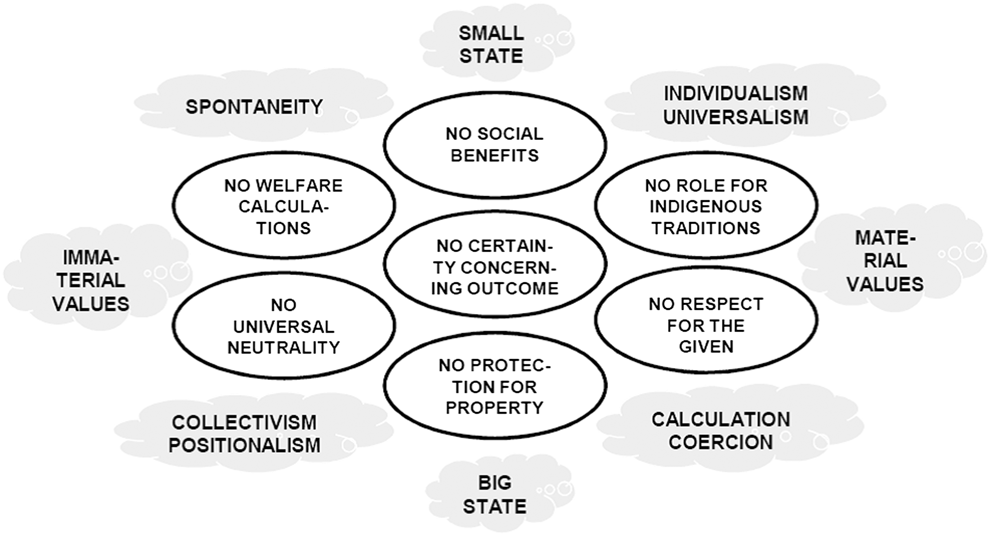
Another way of formulating the content question is negative. What is it that these theories do not want to be shared, or embraced? The main answers are presented in Figure 9.
The forms of equality that theories of justice reject.

Libertarians do not want social benefits to be redistributed by collecting tax money from the well-to-do and paying for the welfare of others. Luck egalitarians do not want private property to be safe from the redistributing actions of the state. Amidst these positions, liberal egalitarians, at least those of them inspired by Rawls, do not want to make the outcome of the social system the criterion of justice, or equality. In their insistence that adaptive preferences should not be respected, capability theorists abandon many local traditions, whereas communitarians wish to embrace at least some of them. Communitarians also tend to oppose the social engineering and calculations favored by consequentialists; who in turn would like to get rid of most traditions that are offered as intrinsically valuable guidelines. Care ethicists suggest that “universal neutrality” is not only impossible but also, as a mere idea, dangerous and conducive to bias favoring the groups that already have power. Existing ESS and other data can be used to operationalize these negative formulations further.
These considerations show what kinds of questions can shed light on European attitudes on equality. The ESS finding about public support for government intervention in securing the well-being of citizens is a case in point. The study conducted in 2008–9 showed that in 29 European countries people backed a strong government role in matters of welfare: with a score of 7–9 on a 0–10 scale. Footnote 75 There has, since, been a further suggestion that people’s preference to reduce income inequalities correlates with this support for government intervention. Footnote 76 The latter point tallies well with the conceptual map that has been used here. This is, in a sense, the continuum between the economic political right and the economic political left, roughly represented by the vertical axes in the figures.
Questions about interpretation, however, follow. It is probable that the results of the ESS accurately measure European attitudes, but what do the results mean? Can we deduce that Europeans are, on an average, 7–9 points leftist on a scale of 10, and move the center of European justice down on the map? Probably not, and this is mainly because it would take further work to translate the results of existing empirical work, often one dimensional, to match the complex reality that we are trying to capture with our multidimensional map. In the particular case of economic right and left, we would also need knowledge about the corresponding attitudes concerning taxation for the purposes of redistribution. People may want the government to take care of the poor and the unemployed, but they do not necessarily agree to share a larger portion of their gross income to achieve this.
And even with the multidimensional aspect accounted for, there is the issue that people’s attitudes can come in apparently incongruous packages. Moderate right-wing conservatism in Europe is a case in point. Persons who hold this view typically believe that some traditional ways of life are good, that the government should not interfere with the citizens’ economic endeavors, and that economic growth will provide the greatest well-being among the population. Fair enough, but these individuals may also believe, and be right in believing, that free market activities tend to corrode traditional ways of life, nationally and regionally. Are these people irrational, then? Not necessarily. In a way, this is their rationality, Footnote 77 and if we do not get stuck in the more technical definitions of rationality offered by economists (and Rawls), we can use this as a starting point for an analysis that is more realistic and empirically better informed.
There is an element of cognitive dissonance, however, in many types of political thinking. It is true that a person’s commitment to, for example, big government and small government at the same time can be explained away, partly, by dimensions of justice. One may prefer a small state role in business and a big state role in upholding moral values. But even this example does not complete the argument. When people know that economic freedom indirectly challenges traditions, and still believe in both, this has to be resolved somehow. Some kind of cognitive psychotherapy, perhaps by negotiations or discourse, could be the answer. People would have to communicate their ideas, beliefs, and attitudes to others until at least they themselves know exactly what they were proposing or opposing. Footnote 78
How to Find an Alternative, “European” Core of Justice in European (European Union) Ideals and Interests?
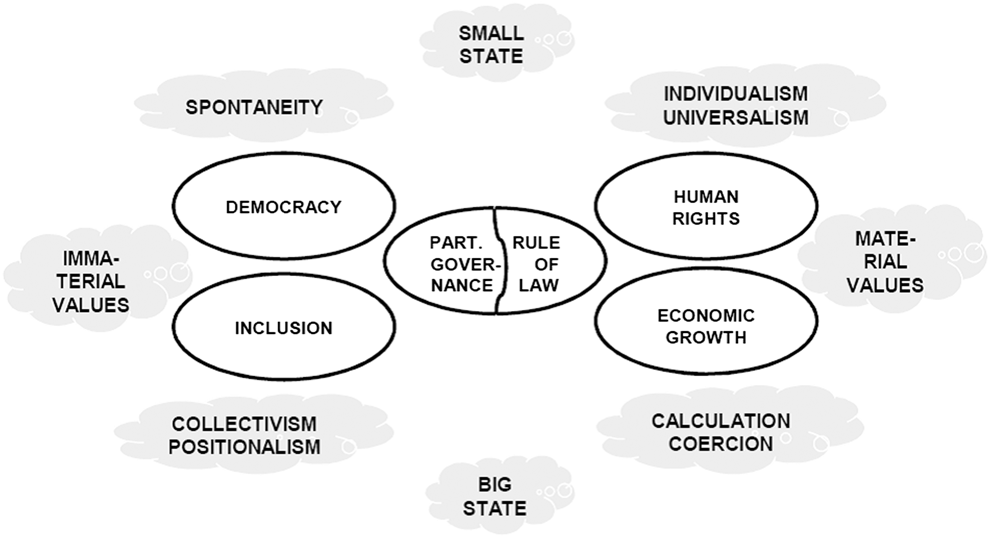
Another approach is to concentrate on widely and officially recognized European, or European Union, ideals and interests that define the framework of acceptable and unacceptable inequalities. The ideals usually listed are democracy, rule of law, and respect for human rights; whereas the interests standardly evoked are participatory governance, inclusion, and sustainable and creative economic growth. Although these may need to be elaborated, they can be used as an initial frame of reference. The way they fall into our preliminary conceptual map is depicted in Figure 10.
The positions of European ideals and interests.

It would be possible to place all these framework elements in the middle of the conceptual map, with the words “sustainable” and “creative” providing the justification for including economic growth among the more formal factors. It is, however, more interesting to read most of them as substantive claims, and to see how they can be interpreted as such.
Democracy receives content from the idea that it is a political way of listening to people as members of their historically developed communities. Inclusion of different groups in political considerations even when they are not in good bargaining positions sits naturally in the positional corner. The term “human rights” has a double meaning. As a legal instrument, human rights can fall under the rule of law as a device to protect everybody’s fundamental interests, but, in addition, some interpretations can be traced back to the natural law tradition, through a link provided by the philosophy of Jacques Maritain and his influence on Eleanor Roosevelt, the spiritual mother of the United Nations’ Declaration of Human Rights in 1948. Footnote 79 And, in a clear-headed analysis, “sustainable and creative” economic growth is still economic growth. Sustainability simply means that this growth should continue over time and over generations (which will be noted in the “dimensions” part later on), whereas creativity is simply a reference to new ways of developing businesses and economies in a changing world.
Participatory governance clearly belongs in the middle of the map, but possibly with a leaning toward the positional and communitarian direction. Utilitarianism and libertarianism do emphasize everybody’s right to be a part of political life; however, the “rational preference” approach of the former and the “entitlement” angle of the latter may, at least according to their critics, weigh the odds in favor of a certain type of participant: cool and composed, probably male, and property owning. (James Mill, Bentham’s utilitarian collaborator, publicly advocated voting rights for “all”; namely, all male household heads over the age of 40.)
Rule of law is another ideal that may have a neutral reading, placing it at the center of equality reflections. This would be the “thin” reading of the principle that puts the law above individuals and their personal endeavors. The seminal thought here is that even the king (believed to have a divine right to rule in opposing historical views) should be bound by the law. The requirements in this case are formal: law must be prospective, well known, general, equal, and certain. But there are also “thicker” readings that see law as having an inner morality. According to these, the law that should rule can consist only of “acceptable” elements, elements that are likely to be influenced by natural-law thinking. Footnote 80 These readings explain why the central circle in Figure 9 is divided, with participation leaning to the left and rule of law leaning to the right.
The role of ideals and interests in the model is to set limits to people’s initial attitudes, as unearthed empirically. Insofar as Europeans actually hold authoritarian or dictatorial views, the principle of democracy prompts one to be cautious in assessing their eventual normative and political force. Contempt for law and disregard for the basic interests of some groups go against the rule of law and respect for human rights, and should be approached with similar caution. Elitist and exclusive models of political involvement and social concern probably contradict the notions of participatory governance and inclusion; therefore, attitudes supporting these cannot be a part of the European model of justice, at least not without careful scrutiny. All these views must, however, be examined, and their weight in any new theory of justice should be carefully considered.
There is an underlying factual question that may challenge all attempts to produce a workable and effective model of European justice. It is this: Are supranational business corporations governed by the rule of law, or are they, as far as the preparation and implementation of regulations concerning their activities are concerned, above it? According to the ideals listed, they should be on a par with every other conceivable agent: citizen, noncitizen, ruler, public decisionmaker, legislator, state official, politician, union, entrepreneur, judge, expert, lawyer, police officer, medical professional, researcher, or nongovernmental organization. But are they more influential and more powerful than national governments and regional alliances such as the European Union? If they are, they can preempt efforts to control their practices.
The ideals and interests mentioned here do not explicitly take party-political left–right sides. This is reflected by the empty spaces up and down in our conceptual map. The laudable idea seems to be that although people are not allowed to be racist, sexist, or criminal, they are free to have the political views of their choice when it comes to matters such as larger and smaller state roles. But rhetorically at least, the requirement of economic growth may tip the balance toward the political right. Models of creative and sustainable growth come in various packages, but market freedom is often cited as a necessary condition for it. There are different models that need to be explored in future work, including socialist ideas of good economic growth, and, going a step further, also the alternative to perpetual material increase, the emerging notion of degrowth.
Interestingly, both market freedom and the freedom to explore new ideas (including criticisms of market freedom) were defended by John Stuart Mill in his vindication of liberalism. Leaning on the utilitarian goal of promoting general happiness, and James Mill’s psychological assumptions, he put forward two arguments for the freedom of action, speech, and choice. The first states that granting individuals the right to choose their own way encourages them to take an active part in managing their private lives and public affairs. This will then automatically translate into entrepreneurship and efficiency, which in their turn promote economic productivity, and economic productivity leads to the greatest happiness of the greatest number. Mill’s second argument was that individuality will flourish only in settings where people are free to make their own choices. Individuality, according to him, is expressed as creativity and eccentricity and these guarantee, among other things, diversity in preferred ways of doing things, and having a variety of options is conducive to the right choices that lead to the greatest happiness of the greatest number.
Some of the connections in Mill’s argumentation are more credible than others. Especially the last step is somewhat obscure without its full background. How exactly do we as a society move from variety in opinions to the right, happiness-maximizing choices? This is where Mill borrowed his father’s psychological and political theory. Footnote 81 James Mill thought that truth has the power to force itself to the center of the human consciousness. As long as it is available, among our optional beliefs, it will automatically win us over. The more beliefs the mind is presented with, the more probable it is that truth is among them, hence the importance of all possible alternatives. Both Mills also believed that a similar mechanism works in politics. A nation, or its legislature, will, of necessity, make the right choices, if the right options are among those presented.
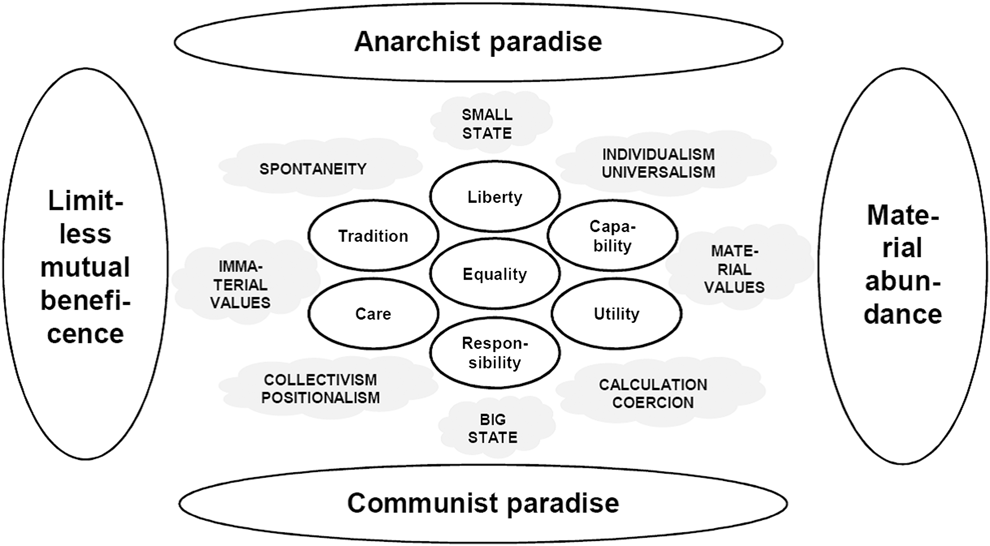
Even without this last piece of speculative psychology, Mill’s deductions can be recognized as what they are: ideologically laden narratives of how he would have wished things to be. The same observation applies to many considerations of values, ideals, and interests in debates on justice. It is important, therefore, to recognize the directions into which people’s wishes may be leaning. The main “transcendental alternatives” to justice are indicated by the “framing” ovals in Figure 11.
Transcendental alternatives to justice.

A word of explanation is called for. As for the horizontal dimension, Hume thought, and Rawls agreed, that justice is an artificial (not natural, or “out there”) virtue, and has its uses only if two conditions are met. First, people must be moderately beneficent. If they are not beneficent at all, they may not be interested in justice. And if they have limitless mutual beneficence, matters can be dealt with in a family-like manner, amicably and without the need for rules. Second, in material terms, moderate scarcity must prevail. If resources are disastrously scarce, people may just look after themselves, with no thought of others. And if material abundance prevails, distribution is not a necessary topic of conversation; by definition, all needs and wants are met as they arise.
A similar vertical dimension can also be added to the conceptual map. Nozick flirted with the idea of anarcho-capitalism, an individualistic economic interpretation of anarchism. According to anarchism, societies and their members will spontaneously improve once state structures and hierarchical power relations are abandoned. Historical setbacks may occur, but getting rid of the state would eventually lead to an ideal voluntary way of living together. Gerald Cohen, at the other end of this continuum, guides the way to socialism and beyond. Karl Marx suggested that after capitalism’s inevitable collapse, and after the transitory period of the “dictatorship of the proletariat,” all needs will be equally met in a “truly communist” society. Interestingly, this is a condition in which the bourgeoisie and the proletariat have ceased to exist, leaving room for a classless and stateless—by definition, anarchist—society to emerge.
These considerations leading to the merger of anarchism and communism lean on strong ideological presuppositions, but by making the border areas of justice in all directions visible, some light can be thrown on the traces of utopian thinking in many theories and ideals. Communitarians and libertarians sometimes talk as if giving up the ideas of social engineering and control would inevitably lead to great mutual beneficence and bliss. Serious communists are currently hard to find, but some utilitarians and socialists clearly believe that freedom or control (opinions vary) will take us to such material plenty that more abstract things need not be discussed. Francis Fukuyama exemplifies such thoughts in his vision of the “end of history”: ideological struggles are over, and the triumph of liberal democracy is nigh. Footnote 82 Faith in ideas such as this can discourage the development of models of negotiation between people with different values and interests. Footnote 83
What Dimensions of Justice should be Considered?
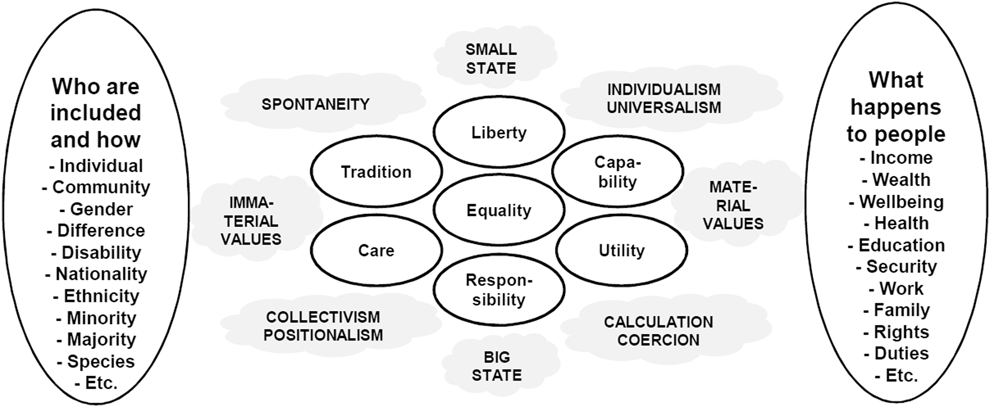
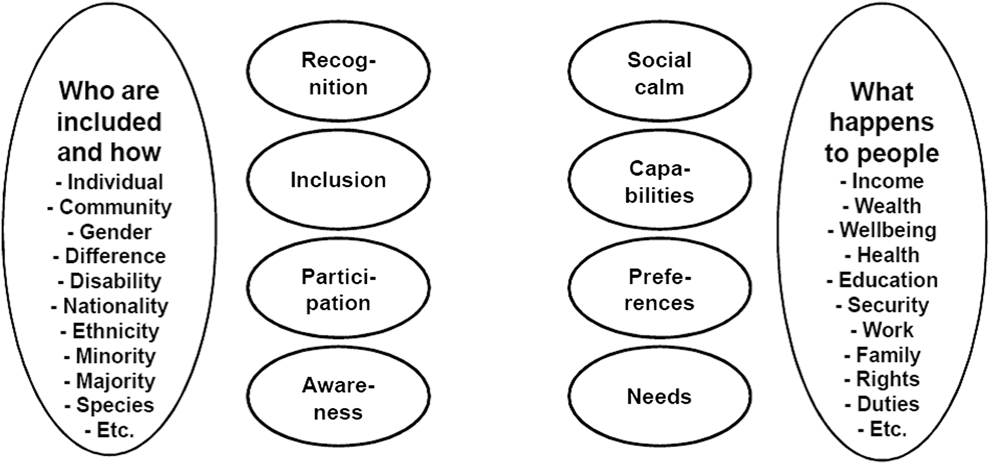
Justice has many dimensions, and these need to be taken into account in a comprehensive analysis. Footnote 84 The original formulation of the conceptual map in Figure 1 lists seven main aspects; namely, equality, freedom, responsibility, respect for tradition, importance of special relations and care, access to capabilities, and preference or interest satisfaction. Theories that focus on these have been presented in the previous sections; however, there is yet another useful division to be explored. Some of the theories emphasize the responsibility of governments and other decisionmakers for what happens to people, whereas others stress the responsibility for how people are treated and who should be included. Figure 12 illustrates this idea.
The “who” and “what” polarity in theories of justice.

Outcome-oriented views on justice, including consequentialist interpretations of libertarianism, liberal egalitarianism, and luck egalitarianism, are mainly concerned about the concrete impact of laws and social policies in terms of income, wealth, well-being, health, education, security, work, family life, rights, and duties (all of which in themselves identify substantive dimensions of justice). The theories proceed from the assumption that everybody will be included in these considerations.
Communal and relational views, including many European doctrines, question the assumption and stress the importance of identifying groups to which just arrangements should be extended. These views give precedence to people as members of communities and various other groups determined by gender, difference, disability, nationality, and ethnicity, instead of as abstract individuals. Some of these groups form minorities, others majorities; however, they all should be recognized, as should future generations and, arguably, nonhuman entities such as animals and the environment.
Two main dimensions of justice emerge from this distinction, as seen in Figure 13.
The “who” and “what” polarity specified.

In the right-hand column, utilitarianism focuses on the satisfaction of rational preferences or needs, and the capability approach focuses on the creation of positive freedoms to satisfy one’s non-adaptive preferences. Pragmatic luck egalitarians and their socialist colleagues can also advocate need satisfaction. Pragmatic libertarians who believe that social stratification leads to political unrest can agree to meet some needs or to satisfy some preferences to keep the peace.
In the left-hand column of Figure 13, interesting new categories emerge with the introduction of this distinction. Ideological libertarians argue for the identification of robust economic agents whose work creates and distributes the goods enjoyed in societies. Communitarians advocate the recognition of family, work, and other social roles that define people as members of their traditions and communities. Positionalists promote the inclusion and participation of groups that have been oppressed and ignored because of age, gender, ethinicity, sexual orientation, religion, or other difference from the perceived norm. Marxist socialists demand the self-recognition of the proletariat as a class-for-itself in the class struggle. Existentialists require personal awareness of one’s circumstances and choices, and the rejection of our false consciousness of ourselves as “the normal citizen.”
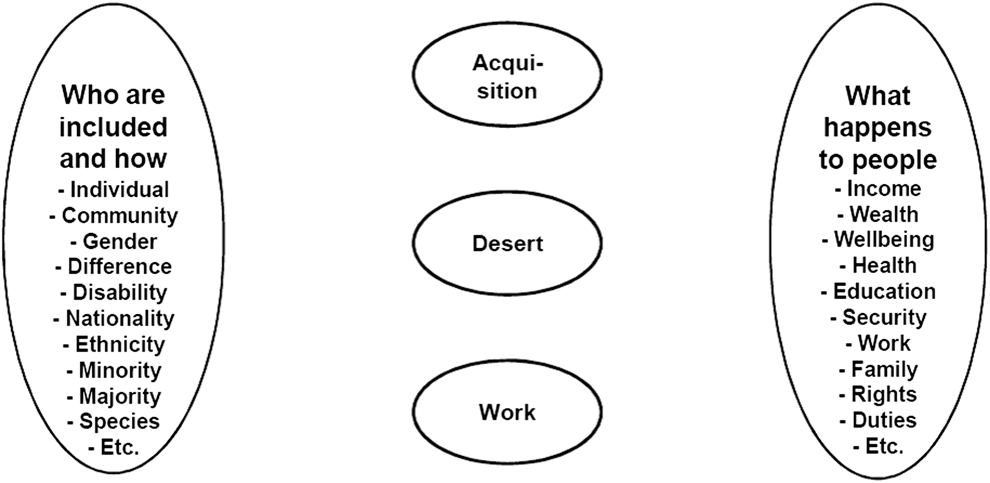
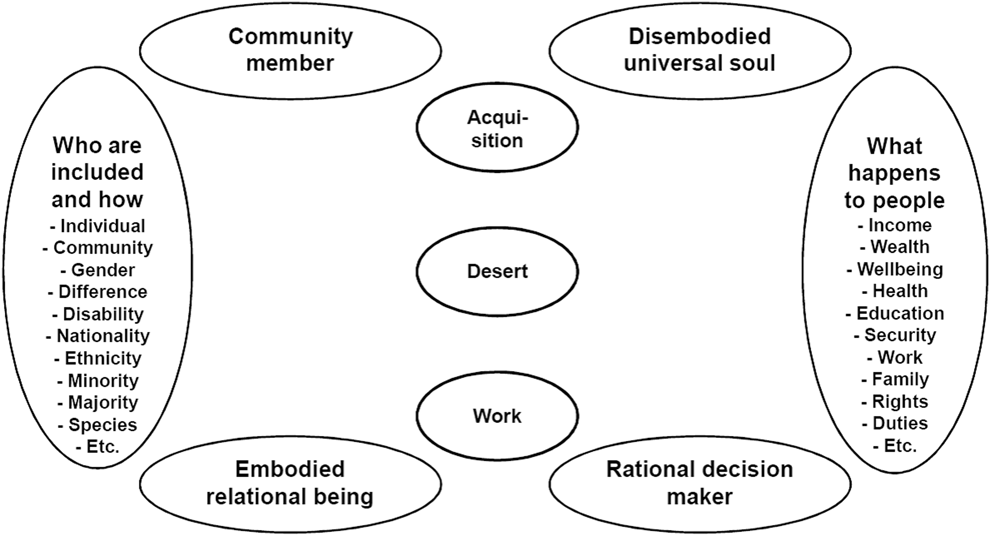
The “What?” and “Who?” considerations of justice do not necessarily engage with the also relevant “Why?” or “Under what specific criteria?” question of deciding what arrangements can be seen as just. This issue is more focal to the deontologically liberal views in the center, as depicted in Figure 14.
The deontological dimension made visible.

Libertarians and left-wing luck egalitarians (the latter taking their cue from socialism) share a belief in the importance of work (a major factor in acquisition for the former), but disagree on whose work actually produces the value to be shared, that of capitalist entrepreneurs or that of their workers. The idea of desert enters the picture with these views, and it is also visible in liberal egalitarianism. The individuals whose choices add value deserve to be rewarded. Varieties of this notion, and attitudes regarding them, are a significant factor in any comprehensive theory of justice, “European,” “American,” or otherwise.
Related to desert and rewards, some claim that inequalities in income and wealth promote a nation’s efficiency and economic prosperity. Libertarians maintain that this happens through the free market and the “invisible hand,” liberal egalitarians and luck egalitarians believe in desert-based bonuses, and utilitarians can point to empirical findings on the efficiency of incentive mechanisms, if such findings exist.
When societies with greater and lesser material inequalities have been studied in terms of economic efficiency, however, no major differences have been detected in their gross domestic products, and what is more, other indicators such as health, education, and criminality actually show better results in societies in which income and wealth inequalities are smaller. Footnote 85 Therefore, it seems that the “American” (not the only American and not only American, however) tendency to see different shares as essential to productivity are not empirically well founded, and the “European” (not the only European and not only European) idea of an equalizing welfare state might be preferable in this sense. The idea would have to be studied further, however, because better sets of incentives could well foster economic efficiency more than the ones currently in use.
Contribution-based rewards and deserts are in a far lesser role in other theories. Communitarian and positional views hold that people should be recognized according to their positions and relations; however, although these vary from person to person, they still grant everyone equal moral and political status. Utilitarian theorists can recommend a system of rewards and punishments as a means to attaining the general good; however, they accept undeserved as well as deserved benefits and detriments if their impacts are the best.
The concept of recognition and its associates become crucial when considerations are extended beyond economic welfare. It is possible to say that the language of “deserving” in the middle column in Figure 14 focuses on the recognition of people’s deeds (choice and responsibility) and the language of neutral detachment on the right focuses on the recognition of people’s needs (or preferences or abilities). But the arguably most “European” dimension can be found on the left, in the language of postsecular engagement: the appreciation of persons as social entities who may or may not have religious, ethnic, cultural, and other self-constructing affiliations and who may or may not see these as important. This is where many post-idealist, existentialist, and poststructural notions of authenticity in human beings rise to challenge more abstract ideas, as outlined in Figure 15.
What kinds of entities should be recognized?

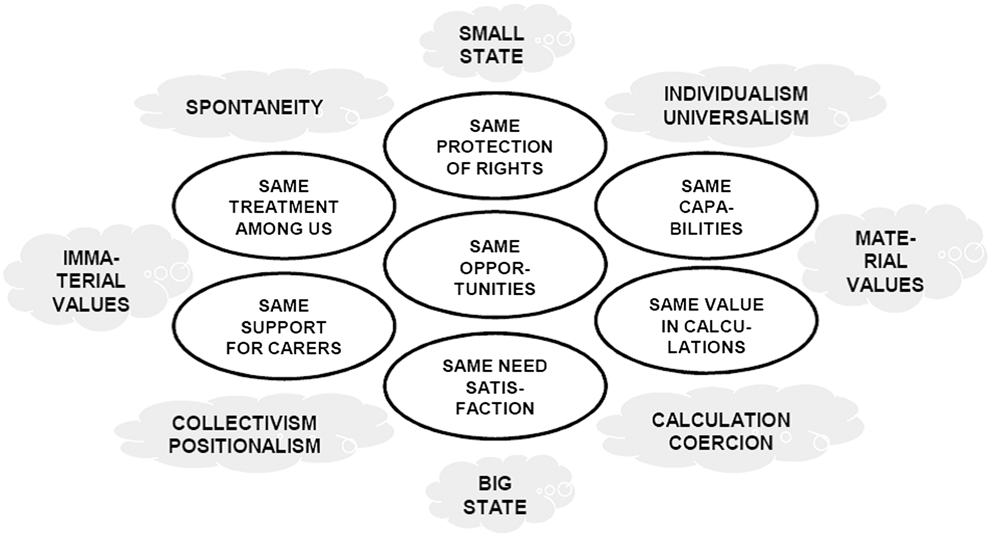
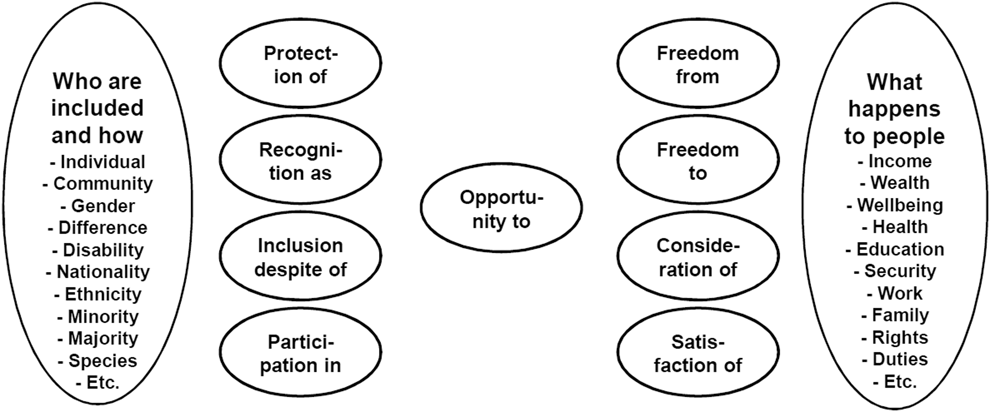
Equality and the idea of equal opportunities are also principles that need to be studied as parts of the requirements of justice. Because “equality of opportunity” is a debated concept, its varieties and alternatives need to be included as they appear in different traditions. The circled phrases in Figure 16 are middle parts of expressions of the form “Equal—of/as/in/from/to—.” (At the center, a complete formulation could be “Equal opportunity to run for public offices.”)
Varieties of equal opportunity.

For libertarians, justified equal opportunity means the protection of life, physical integrity, private property, and voluntary contracts. This makes individuals free from other people’s wrongdoings to pursue their own ends as well as they can. Capability theorists wish to do more, and to provide people with positive freedoms. They want to make people capable of achieving worthwhile goals that would have been unattainable without assistance. In many Rawls-influenced liberal egalitarian views, “equal opportunities” are an uneasy combination of negative and positive freedoms. Alternative vocabularies in this area are in dire need of further study.
Utilitarianism assigns a different, although not necessarily a lesser, role to opportunities, whichever way they are construed. The underlying credo has, since Bentham and Mill, been that freedom from constraint and ability to do things make people happier and more productive, but it is in the logic of the creed that if more happiness or preference fulfillment can be produced by coercive or unequal arrangements, the end takes precedence over the means. Socialists are prone to follow the same line of thought, arguing that actual need satisfaction is a more desirable aim than the availability of opportunities that the individual may or may not be able to exploit. What these doctrines can offer is equal consideration of everyone’s preferences and needs, but with the proviso that other people’s more important or more numerous preferences and needs may eventually guide policy decisions.
Communitarians call for the recognition of people in their communal and social roles. The village chief has to be acknowledged as the village chief, the teacher as a teacher, and the farmer as a farmer. Because people’s roles and expected contributions are different, equal consideration requires the assignment of different obligations and entitlements to them. Positionalists can, in addition to joining communitarians in the plea for role-based recognition, demand the inclusion of individuals and groups who have not traditionally been included in social and political life. In the affluent West, this has meant the gradual extension of respect beyond the initially recognized white, male, well-to-do, able-bodied, religiously mainstream, heteronormative citizens of nation states.
Recognition and inclusion are also key words when the importance of national borders for equality is discussed. Many theories of justice have been geared to address matters within one society, and it is sometimes difficult to see what their take on global affairs would be. Debates are ongoing about whether or not liberal egalitarian and luck egalitarian ideals should or could be extended to international matters. Libertarians believe in a global free market, so in that sense they expand the scope of their theory beyond state borders, and utilitarians, socialists, and capability theorists believe, in theory at least, in promoting human well-being all over the world.
The international and global dimensions add to the complexity of the considerations, when the idea of a “European” notion of justice is at stake. European countries influence economies and cultures all over the world by business activities, development projects, foreign aid, and participation in military operations. The relationship of these with justice and equality needs scrutiny. And in the opposite direction, the immigration of people from other regions to Europe has been increasing, for many reasons. Refugees and asylum seekers, protected by human rights, and other immigrants, seeking better living conditions, are both facing mounting opposition. The reasons and justifications of the hardened attitudes should be explored. There are also criminal and potentially unethical activities that cross national borders: coercive business arrangements, environmental indifference, and social oppression in general; as well as human trafficking, international organ sales, and pharmaceutical trials in less affluent countries in particular, to name a few.
With so many dimensions of justice and equality at work, it is probable that specific social and political arrangements can create just and equal conditions in some senses but not in others. This is to be expected, and it was already observed in Max Weber’s early sociological theory that class, status, and power defined people’s positions in diverse ways. Footnote 86 A more contemporary concern in this respect has been voiced by Michael Walzer, who in the 1980s drew attention to the possible threat that instead of providing suitable criteria for justice in different areas of life we may be letting one (most probably the economic) “sphere” of justice dominate all others. Footnote 87
The Way Forward?
My considerations suggest that when issues of justice and well-being are addressed in healthcare and research settings, they should be addressed in an adequately nuanced way, lest important differences of opinion, aspects, and dimensions become ignored. If only one definition of justice from my original seven is applied, the results will be ideologically predetermined. If one starts with a utilitarian view, utilitarian conclusions will be reached. If the historical roots of ethical and political doctrines are forgotten, significant background assumptions of contemporary proposals will be forgotten. For example, only a good understanding of contract theories and their heritages allows one to see the sometimes shaky grounds on which current hypothetical-contract models stand. If regulative attempts do not take into account the values, ideals, and interests that prevail in existing societies and cultures, it would be foolish to believe that wide acceptance will be gained for them. And if only one dimension of justice—material needs and opportunities, individual or communal recognition, or normative notions—is allowed to reign, reactions from other camps can be reasonably expected. This is why fairly detailed readings instead of simplified interpretations should be used in good analyses of justice and well-being in healthcare and other settings.