


1. Introduction
Geometry was a main source of inspiration for Carnap's general conventionalist conception of epistemology and philosophy of science. If space could be endowed with different metrical structures that could be considered as different ways of codifying the same topological facts, then it was at least prima facie plausible that a similar division between conventional and factual components existed in other areas of knowledge. In this paper I'd like to show that Carnap's metrical conventionalism was doomed to fail from the outset. For purely mathematical reasons the relation between the metrical and the topological structure of space cannot be described in the conventionalist manner he proposed. Different metrical structures cannot be conceived as ‘alternative languages’ that describe the same facts in different ways as he and many other Logical empiricists used to say.
Restricting one's attention to languages such as English, French, German, or Spanish, it may be plausible to assume that any of them can be used to express the same facts of the world equally well. It is a matter of convention which of them is employed. This kind of linguistic conventionalism is fairly uncontroversial and, moreover, it is pretty trivial. If one wants to find a less trivial conventionalism one has to look elsewhere. Following Poincaré the Logical empiricists concentrated on conventionalism in geometry. One may distinguish several kinds of conventionalist doctrines dealing with geometry.Footnote 1 Perhaps the simplest (nontrivial) one is that concerned with the relation between the metrical and the topological structure of space. In any case, this was the one Carnap dealt with throughout his philosophical career from Der Raum (Reference Carnap[1922] 1978) until An Introduction to Philosophy of Science (Reference Carnap1966).
In Der Raum Footnote 2 Carnap distinguished between topological matters of fact and metrical matters of convention, and attempted to elucidate their relation by the following analogy:
The transformation of a statement of matter of fact from one metrical space-form into another—e.g., from the Euclidean into one of the non-Euclidean—has been aptly compared to the translation of a proposition from one language into another. Now, just as the genuine sense of the proposition is not its presentation in one of these linguistic forms—for then its presentation in the other languages would have to appear as derivative and less original—but is merely that in the proposition which remains unaltered in translation; so too the sense of the statement of matter of fact is not one of its metrical presentations, but that which is common to all of them (the ‘invariants of topological transformations’)—and that is precisely its presentation in merely topological form. (Carnap Reference Carnap[1922] 1978, 65)
In a slogan, then, Carnap's metrical conventionalism can be put as follows: The topological structure of space is to its metrical structure as the meaning of a proposition is to its specific expression in a given language (cf. Howard Reference Howard, Giere and Richardson1996, 148). Or, with a slightly different emphasis: Two metrical geometries are merely two descriptions of the same topological facts (cf. Carnap Reference Carnap1966, 150).
In this paper, I argue that this kind of metrical conventionalism is not tenable for mathematical reasons. The relation between the metrical and the topological is of a different kind than that between the meaning of a proposition and its expression in a contingent language. Thus, the linguistic analogy quoted above is seriously misleading. To prove this contention, one has to invoke some facts from differential topology with which philosophers may not be too familiar. Nevertheless, the introduction of these mathematical tools is necessary, since the arguments that have been brought forward against Carnap's metrical conventionalism by Grünbaum, Nerlich, and others are less than conclusive (cf. Grünbaum Reference Grünbaum and Schilpp1963; Nerlich Reference Nerlich1994). In order to keep everything on the most elementary level possible, let us restrict as far as possible our attention to 2-dimensional manifolds. Analogous arguments can be formulated for higher-dimensional spaces: the untenability of metrical conventionalism is not a matter of dimension.
The outline of this paper is as follows: in Section 2 first we recall Carnap's early metrical conventionalism as presented in his dissertation Der Raum (Reference Carnap[1922] 1978). Then the theorems of Bonnet and Gauss-Bonnet are used to disprove Carnap's conventionalist theses. In Section 3 some late modifications in Carnap's metrical conventionalism are discussed. It is argued that they cannot save his account from the differential topological criticism presented in Section 2. In Section 4 the mathematical argument against metrical conventionalism is compared with some other arguments launched forward against this doctrine, to wit, Quine's anticonventionalist holism, and Friedman's and Ryckman's criticism based on the fact that metrical conventionalism seems to be incompatible with the general theory of relativity.
2. Metrical Conventionalism in Der Raum
For the following we assume the basic notions topology and the theory of differentiable manifolds to be known, see for example (James Reference James1999; Hicks Reference Hicks1971). Recall that a Riemannian manifold M is a differentiable manifold endowed with a 2-tensor field g satisfying certain familiar conditions (Hicks Reference Hicks1971, 20–21). A Riemannian manifold is denoted by (M, g) or simply by M if g is understood. If M is a Riemannian manifold the Riemannian curvature of M is a real-valued function R that assigns to every 2-dimensional subspace P of the tangent space M m of M at a point
 $m\in M$ a real number R(P). If M is 2-dimensional the Riemannian curvature R boils down to a real-valued function
 $K\thinspace{:}\thinspace M\rightarrow \mathbf{R}$ called the Gaussian curvature of M. A Riemannian manifold M is called a space form, if the Riemannian curvature R is constant, i.e., for all points m and all tangential planes P at m the Riemannian curvature R(P) is a constant K(m). M is called a space form of constant curvature if
 $K(m) =K$ for all
 $m\in M$,
 $K\in \mathbf{R}$. Depending on K one may distinguish between different types of Riemannian space forms:
Definition 1. Let (M, g) be a Riemannian manifold of constant curvature K.
i. M is a hyperbolic manifold iff K < 0.
ii. M is an elliptic manifold iff K > 0.
iii. M is a flat manifold iff K = 0.
Although in Der Raum Carnap did not explicitly define the basic concepts of differential geometry he used, it transpires from his presentation that he employed concepts such as ‘Gaussian curvature’, ‘Riemannian curvature’ or ‘space of constant curvature’ virtually in the same way as present-day mathematics. The only point Carnap was not aware of was the distinction between complete Riemannian manifolds and noncomplete Riemannian manifolds. This negligence will turn out to be crucial for the argument in this paper. Recall that a Riemannian manifold M is a metrical space in the sense of topology. A fortiori it is a topological space. Hence, one may define a Riemannian manifold to be complete if it is complete as a metrical space, i.e., all its Cauchy-sequences converge. The assumption of completeness is intuitively plausible, and, moreover, it is indispensable from an empiricist point of view: On noncomplete manifolds many bad things happen: some geodesics cannot be extended to infinity, and some points cannot be connected by a shortest geodesic.Footnote 3 Hence, for technical and conceptual reasons all Riemannian manifolds to be considered in this paper are assumed to be complete. Perhaps the simplest Riemannian manifold that is not complete, is the punctured plane, i.e., the space
 $E^{2}-\{ b\} $,
 $b\in E^{2}$. As will become evident in the following not distinguishing between complete and noncomplete manifolds lead Carnap into serious trouble.
Now let us tackle the problem whether the metrical structure g of a Riemannian manifold (M, g) can be considered as a matter of conventional stipulation or not. Consider the Euclidean plane
 $E^{2}$ endowed with its standard Riemannian metric g. Then
 $(E^{2},\,g) $ is a flat Riemannian manifold. Poincaré (and Klein) showed that
 $E^{2}$ can be endowed with a different metric g − that renders
 $(E^{2},\,g^{-}) $ a hyperbolian manifold of constant negative curvature. This means, the topology of the Euclidean plane can be thought to be induced by g and g −.
In Der Raum Carnap thought that he could do better than Poincaré and put forward two amazing contentions:
(C1). The 2-dimensional sphere
 $E^{2}$ can be endowed with a flat metric, i.e., a metric g with curvature
 $K=0$.Footnote 4
(C2). The 3-dimensional Euclidean space
 $E^{3}$ can be endowed with a metric
 $g^{+}$ of constant positive curvature
 $K> 0$.Footnote 5
Apparently Carnap took (C1) and (C2) as evidence that the metrical structure of all Riemannian manifolds was conventional in the sense of his metrical conventionalism. Moreover (C2) played an essential role for the main philosophical result of Der Raum, to wit, the justification of the modified Kantian thesis according to which Euclidean space E as a topological space is constitutive for spatial experience.
When combined with Poincaré's result, (C2) yields that the Euclidean space
 $E^{3}$ can be rendered a Riemannian space form in three essentially different ways, namely, according to (C2) one would have Riemannian manifolds (
 $E^{3}$, g), (
 $E^{3}$, g +) and (
 $E^{3}$, g −), which are flat, elliptic and hyperbolian space forms, respectively.
According to Carnap, Kant erroneously considered the manifold (
 $E^{3}$, g) as the unique spatial structure possessing experience-constituting significance. The main result of Der Raum contended that the flat manifold (
 $E^{3}$, g) should be replaced by the underlying topological space
 $E^{3}$, i.e., only the topological structure of
 $E^{3}$ was to be considered as experience-constituting while its metrical structure g was a matter of stipulation and could be chosen as flat, elliptic or hyperbolic according to one's preferences. Carnap took this kind of Kantian metrical conventionalism as a convincing evidence for conventionalism überhaupt. He considered the Riemannian metric of a manifold as a tool for conventionally arranging the underlying topological facts.Footnote 6 Regrettably, he did not care to give rigorous proofs for (C1) and (C2). Rather, he was content to point out that these claims could easily be proved by following the lines of Poincaré's proof. This cavalier attitude was to have fatal consequences: As will be explained in some detail in a moment, (C1) and (C2) cannot be proved since they are false.
As far as I am aware, (C2) has not attracted much attention although it may be considered as the upshot of early Carnap's revisionary Kantian philosophy of geometry. On the other hand, from time to time philosophers have attacked (C1). Particularly noteworthy are Grünbaum's criticism in “Carnap's Views on the Foundations of Geometry” (Grünbaum Reference Grünbaum and Schilpp1963), and Nerlich's arguments in Nerlich Reference Nerlich1994. In order to show that their arguments against (C1) are not fully satisfying we have to recall the notion of a (global) topological invariant. Let T and
 $T^{*}$ be topological spaces. A global topological invariant is a property P a topological space T has if and only if every topological space
 $T^{*}$ homeomorphic to T has P. In other words, global topological invariants are properties stable under topological transformations (homeomorphisms) (cf. Carnap Reference Carnap[1922] 1978, 39). Typical examples of global topological invariants in this sense are properties of topological spaces such as ‘being compact’, ‘being connected’, or ‘being Hausdorff’. On the other hand, it may be noted that for a metrical space M the completeness of its metric is not a topological invariant.
In order to disprove (C1) Grünbaum offered the following reductio: If
 $S^{2}$ could be endowed with a flat metric it would be homeomorphic to the plane
 $E^{2}$. This is false, since
 $S^{2}$ is “closed” and
 $E^{2}$ is “open in both directions” (Grünbaum Reference Grünbaum and Schilpp1963, 669).Footnote 7 Hence (C1) is false.
This argument is flawed. As is well-known since the beginnings of the twentieth century (cf. for instance Wolf Reference Wolf1967, Theorem 2.5.5) the flat Euclidean plane (E, g) is not the only complete 2-dimensional connected Riemannian manifold with
 $K=0$. There are other 2-dimensional flat Riemannian manifolds (M, g), for instance the flat toruses. Hence, even if
 $S^{2}$ is proved to be nonhomeomorphic to
 $E^{2}$ this does not prove that
 $S^{2}$ cannot be endowed with a flat Riemannian metric.Footnote 8
In a different vein Nerlich argues that the ‘identification’ of
 $S^{2}$ and
 $E^{2}$ via the well-known projection p from the ‘north pole’ n of
 $S^{2}$ onto
 $E^{2}$ (
 $E^{2}$ conceived as the tangent plane at the south pole of
 $S^{2}$) leads to unacceptable ‘causal anomalies’. For instance, moving a small area A over the north pole of
 $S^{2}$ amounts on the plane
 $E^{2}$ to a violation of the basic topological structure of that space, since the corresponding move on
 $E^{2}$ turns the interior of the image of A outside (cf. Nerlich Reference Nerlich1994, 184–185). In other words, the topological structures of
 $S^{2}$ and
 $E^{2}$ cannot be translated continuously by p from
 $S^{2}$ to
 $E^{2}$ and vice versa. This is true enough but leaves open the possibility that another homeomorphism exists between
 $S^{2}$ and
 $E^{2}$ different from p.Footnote 9 Of course, this is excluded by Grünbaum's argument based on the global topological invariant of compactness. But, as was argued above, this is not sufficient to refute (C1).
For this task one needs a topological distinction that is a bit more sophisticated than that between compact and noncompact spaces. Differential or algebraic topology offer a general framework to handle such problems. The strategy is to define appropriate global topological invariants sensitive to the possible Riemannian structures defined on the spaces to be considered. If one is lucky these invariants can be calculated and turn out to be different. This may be sufficient to prove that the topological structure of the space is not compatible with some stipulated metrical structure. Indeed, the classical theorem of Bonnet shows that the Riemannian curvature of a manifold is related to the topological invariant of compactness in a way that can be used to refute (C2):
Bonnet's Theorem (Hicks Reference Hicks1971, 165). If M is a complete connected Riemannian manifold with Riemannian curvature
 $K\geq a> 0$, then M is compact.
Corollary: Disproof of (C2). The Euclidean space
 $E^{3}$ cannot be endowed with a complete Riemannian metric with constant positive curvature
 $K> 0$.
Proof. If
 $E^{3}$ could be endowed with a complete Riemann metric with constant positive curvature
 $K> 0$, it would be compact by Bonnet's Theorem. But
 $E^{3}$ is not compact. Hence, such a metric does not exist.
In order to disprove (C1) one needs another topological invariant. It belongs to the kind of invariants that are defined with the aid of so-called homology theories. Informally and very roughlyFootnote 10 a homology theory can be characterized as a recipe which assigns to each topological space T an algebraic object h(T) in such a way that for homeomorphic spaces T and
 $T^{*}$ one has
 $h(T) =h(T^{*}) $. That is to say, the assignment of h(T) to T is a global topological invariant of T. The one we need is the so-called Euler-Poincaré characteristic χ(T) of T which will play an important role in the following. The precise definition of χ(T) for topological spaces need not concern us here. Be it sufficient to say that it can be conceived as a generalization of the Euler-Poincaré characteristic χ(P). For polyhedra P the Euler-Poincaré invariant χ(P) can be calculated by the Euler formula

Hence for C a cube χ(C) is calculated to be
 $\chi (C) =8-12+6=2$, and for a tetrahedron one gets
 $\chi (T) =4-6+4=2$.Footnote 11 What is important for our purposes is that for appropriate Riemannian manifolds M the Euler-Poincaré characteristic χ(M) is determined already by the curvature K of Riemannian metric g:
Theorem of Gauss-Bonnet (Hicks Reference Hicks1971, 111). Let M be a compact connected oriented Riemannian 2-manifold with Riemannian curvature function K. Then
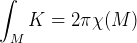 $\int_{M}K=2\pi \chi (M) $.
Corollary: Disproof of (C1). The sphere
 $S^{2}$ cannot be endowed with a metric whose curvature K is 0.
Proof.
 $S^{2}$ is a compact connected oriented 2-dimensional manifold. Hence the Theorem of Gauss-Bonnet applies. If there existed a Riemannian metric g with
 $K=0$ this would imply
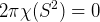 $2\pi \chi (S^{2}) =0$. But it is well known that the Euler-Poincaré characteristic
 $\chi (S^{2}) =2$ (cf. Greenberg Reference Greenberg1976, 99) Hence, such a metric cannot exist.
Summing up, Carnap's claims (C1) and (C2) have been refuted.Footnote 12 Thus, in general, the metrical structures of manifolds are not conventional with respect to the topological structures. Rather, there are nontrivial relations between the metrical structure and the underlying topological structure of M.Footnote 13 Not every kind of metric g is compatible with every kind of topological structure. Given the topological structure of a manifold M one is no longer free to assume that M can be endowed with any metric g whatsoever. It may happen that appropriate topological invariants of M are sensitive with respect to Riemannian structures to be defined on M. Hence a Riemannian metric cannot be considered as a conventional language in which the topological facts can be expressed. Some metrical languages turn out to be unsuitable for expressing some kinds of topological facts. Of course, sometimes it may happen that a topological manifold can be endowed with metrics of different types, as Poincaré showed for the plane E 2. But this is, so to speak, an exception. In other words, the relation between topology and geometry cannot be conceived as the relation between an underlying base of ‘topological facts’ conventionally described by a ‘geometric language’.
3. Limited Domains to the Rescue?
Throughout his life, philosophy of geometry played an important role in the background of Carnap's epistemology and philosophy of science. Nevertheless, he did not publish much on this topic. As far as I know, after Der Raum he explicitly dealt with geometry only in his “Reply to Grünbaum” (Reference Carnap and Schilpp1963) and in An Introduction to Philosophy of Science (Reference Grünbaum and Schilpp1966). In Chapter 15 of Introduction we find him fiddling with problems of metrical conventionalism in virtually the same way as he did more than 40 years earlier in Der Raum. With one notable exception: in Reference Carnap1966 he put greater emphasis on the local geometry of space.
He casts his argumentation in Reichenbach's well-known story of the two physicists P 1 and P 2 living on a 2-dimensional sphere
 $S^{2}$ embedded in the standard way in Euclidean 3-dimensional space. P 1 and P 2 hold different theories about the nature of their world: according to P 1 it is (the surface of) a sphere, but P 2 insists that it is a plane “in which the bodies expand and contract in certain predictable ways as they move around” (Carnap Reference Carnap1966, 147). Local constraints enter the stage in that Carnap allowed the physicists to do their investigations only in a ‘limited domain’:
The sphere is gigantic in relation to their own size; they are the size of ants, and the sphere is as large as the earth. It is so large that they never travel all the way around it. In other words, their movements are confined to a limited domain on the surface of the sphere. The question is, can these creatures, by making internal measurements on their two-dimensional surface, ever discover whether they are on a plane or a sphere or some other kind of surface? (Carnap Reference Carnap1966, 146)
Obviously, the purpose of restricting the ken of P 1 and P 2 to a ‘limited domain’ was to avoid that the ant-physicists managed to walk around their world on a great circle thereby gathering evidence that they were living on a spherical world. Since this is excluded by fiat Carnap felt justified to assume his familiar reconciliatory attitude admonishing the rival physicists to end their dispute: “There is no need to quarrel. You are simply giving different descriptions of the same totality of facts” (Carnap Reference Carnap1966, 148). Invoking Leibniz's principle of the indiscernibility of identicals, he proposed to conceive the theories of P 1 and P 2 just as two equivalent descriptions of the same world.
Against this restriction of the domain of possible experiences of P 1 and P 2 one may object that it is not compatible with an empiricist conception of science: For an empiricist it is meaningless to be engaged in investigating the global structure of the world under the presupposition that large areas of that world are principally inaccessible to empirical investigation. Rather, if it is assumed that from a God's eye point of view the domain A accessible to P 1 and to P 2 differs from the world they are living in the question concerning the global structure of the world can be meaningfully asked only for ‘their world’, i.e., the limited domain A. But then the problem Carnap wanted to eschew arises anew, no matter how limited the domain A is: one has to assume that A is a Riemannian manifold, and P 1 and P 2 are engaged in finding out what is the global structure of A. Hence the retreat to ‘limited domains’ does not help the metrical conventionalist.Footnote 14 Summing up we may assert that Carnap's metrical conventionalism is not tenable, neither in its global nor in its allegedly more local version for ‘limited domains’. Even for ants, it is a matter of fact and not a matter of convention what kind of world they are living in.
4. Conclusion
Carnap took metrical conventionalism as the paradigm for conventionalism in general. The allegedly conventional character of the metrical with respect to the topological was the driving force behind his attempts to generalize conventionalism beyond the confines of geometry culminating in his ‘principle of tolerance’ according to which even logic is to be considered as conventional.
Carnap's general conventional stance has been attacked from various quarters. Let us mention just two: In “Two Dogmas of Empiricism” (Reference Quine1951) Quine argued against the feasibility of a neat separation of conventional and factual components of empirical knowledge but without specific reference to geometry. In Quine Reference Quine1966 he addressed the case of geometry pointing out that the existence of non-Euclidean geometries per se (i.e., as uninterpreted systems) can hardly be considered as an argument in favor of a substantial conventionalism (Quine Reference Quine1966, 116–117). However, he did not explicitly deal with the allegedly conventional character of the metrical structure of space.
Another argument against Carnap's metrical conventionalism has been launched forward by Friedman, Ryckman and others. According to them this account is not in line with the general theory of relativity (GTR), see Ryckman (Reference Ryckman, Giere and Richardson1996, 200) and Friedman (Reference Friedman1999, 71ff.). As was pointed out by Einstein, the object of GTR is the space-time manifold (S, g) and not the underlying topological space S. Without the metric g there is nothing left that makes physical sense, in particular there is no residual topological space S (cf. Einstein Reference Einstein1961, 155). The ontological interdependence of space-time and matter in GTR forecloses the possibility of asserting the existence of topological structures of space-time in the absence of metrical ones dependent upon surrounding mass-energy distributions. Thus, metrical conventionalism can be blamed not to be compatible with one of the most important theories of contemporary science.
The criticism against metrical conventionalism brought forward in this paper is located on a philosophically more elementary level than the two objections just mentioned. My arguments show that metrical conventionalism is untenable for mathematical reasons. The relation between the topological and the metrical structure of space level is not conventional. Poincaré's example of the compatibility of a hyperbolic and a Euclidean metric with the same underlying topology is accidental, so to speak. In general, the metrical structure g of a Riemannian manifold (M, g) cannot be conceived as a ‘stipulation’ of a conventionally chosen language in which the topological facts are expressed. A rather drastic evidence for this claim is the fact that there are topological manifolds that do not allow any Riemannian structure at all (Kervaire Reference Kervaire1960). That is to say, the topological facts of these manifolds are such that they cannot be expressed in terms of a ‘metrical’ language. This refutes the idea that the metrical structure can be conceived as a kind of (neutral) language in which the topological meaning can be expressed. The topological and the metrical are entangled in a more complicated manner than standard metrical conventionalism imagined.



