

Traditionally, fathers have assumed a small role in child-rearing relative to mothers, both in Asian and Western societies (Quah, Reference Quah2008; Yang & Rodriguez, Reference Yang and Rodriguez2009). Stereotypically, the role of fathers in the home was often focused on financial contributions towards the family; whereas women tended to assume greater responsibility for childcare activities in the home. However, with more women entering the workforce in recent decades, couples may find themselves re-evaluating their roles in the home. According to figures from the Singapore Department of Statistics (2013a), female labour force participation rate was 58.1% in 2013, compared to just 28.2% in 1970. On the other hand, male labour force participation has declined over the years, from 81.2% in 1970 to 75.8% in 2013. Although research across cultures has shown that fathers are increasingly involved in parenting (for a review, see Shwalb, Shwalb, & Lamb, Reference Shwalb, Shwalb and Lamb2013), it is not known how the trend of increased female participation in the labour force may affect men's roles in the home, particularly on issues related to child-rearing in Singapore. This article addressed this knowledge gap by comparing fathers’ and mothers’ participation in childcare and parenting in Singapore. The focus was to compare the degree of involvement by fathers and mothers as caregivers to their children, and the ways and extent to which particular disciplinary and parenting practices were carried out. The findings reported in this article are part of a larger study on parenting conducted in Singapore (Shum-Cheung, Hawkins & Lim, Reference Shum-Cheung, Hawkins and Lim2006).
Childcare arrangements
Childcare arrangements constitute important and possibly difficult issues that parents often have to negotiate, especially if both parents would like to remain in the workforce after the birth of a child. Three common types of caregiving arrangements were identified by Herts (Reference Herts1997). Through qualitative interviews conducted with 95 employed fathers and mothers in the United States, Hertz found that the caregiving patterns adopted by these parents fell under three approaches – the mothering approach, the parenting approach and the market approach. Families which adopted the mothering approach believed that the person best suited to raise the children was the mother. In this instance, a mother either opted out of paid employment to engage in full-time childcare, or adjusted her work schedules so that her career did not interfere with caregiving. In this approach, mothers were seen as being primarily responsible for childcare. In the parenting approach, both parents were fully involved in childcare. Unlike the mothering approach, fathers too might alter their work arrangements to care for their children. In the market approach, persons were hired to care for children.
One shortcoming of the typology described by Herts (Reference Herts1997) is that it insufficiently describes prevalent childcare arrangements in Singapore, where grandparents or other members of the extended family may also contribute towards the care of young children. In a study by Kong et al. (Reference Kong, Kok, Tsoi, Wong, Tay and Yeoh1986), 200 Singaporean mothers of children between ages 7 and 10 were asked about care arrangements for their children. It was found that 26.5% of the children were cared for mainly by a non-maternal caregiver from birth to 3 years old, with grandparents playing a prominent role in the care of the child. However, no statistic was reported about fathers’ role as caregivers apart from the mother. In another study conducted in Singapore, Quah (Reference Quah1999) found that the youngest child of the parents interviewed was primarily cared for by the mother, grandparents or other family members, with only a very small proportion of fathers being involved.
This article examined how children were being cared for in contemporary Singapore, where nuclear, dual-income families are increasingly commonplace. The article describes the various childcare arrangements for children at various ages from birth. Of particular interest was the comparison between mothers and fathers as main caregivers of children. As some parents may have adopted certain childcare arrangements for practical reasons, we also asked parents and children about their preferred care arrangements and the reasons behind these preferences.
Disciplinary practices
Disciplinary practices are important in the process of socialising children to become effective members of their cultural groups. There are many ways of disciplining children, and the various types of disciplinary practices have been described under three broad categories – power assertion, love withdrawal and reasoning (Henderson & Bergan, Reference Henderson and Bergan1976; Papps, Walker, Trimboli, & Trimboli, Reference Papps, Walker, Trimboli and Trimboli1995). Power assertion involves force or threat of force to achieve compliance, such as the use of physical punishment or verbal reprimand. Love withdrawal involves emotional isolation of the child. Reasoning, also known as induction, includes drawing the child's attention to the consequences of certain behaviours, for the child and/or for other people. It is also recognised that when faced with child misbehaviour, some parents may not do anything to control it. These parents may hold the belief that the child will learn independently, rendering parental intervention unnecessary (Siegal & Cowen, Reference Siegal and Cowen1984). This approach is understood as permissive parenting, demonstrated by an absence of discipline even when a child transgresses.
Parental use of discipline is widely studied and cross-cultural perspectives are available. Research has shown that across cultures, parents used punitive disciplinary methods and believed in its efficacy (Chao & Tseng, Reference Chao, Tseng and Bornstein2002; Straus & Stewart, Reference Straus and Stewart1999; Tang, Reference Tang2006). For example, Straus and Stewart (Reference Straus and Stewart1999) reported that about 60% of the American parents interviewed had used some form of physical punishment on their children between age 9 and 12. For children in the same age group in Hong Kong, 76.5% of the mothers reported having used physical punishment, compared with 57.1% of fathers (Tang, Reference Tang2006). Studies have also suggested that parents may favour reasoning over the use of physical punishment. For example, 68.3% of Singaporean parents indicated that they would employ reasoning in the face of transgression committed by their children between age 4 and 12, compared with 31.7% who indicated that they would cane their children (Lee et al., Reference Lee, Fung, Koh, Wei, Woo and Teo2004).
The preceding literature review has shown that the use of corporal punishment is still a prevalent and acceptable approach among parents in many cultures. One of the aims of this study was to look at the prevalence of various forms of disciplinary practices in Singapore including physical methods, reasoning and non-intervention (doing nothing to discipline the child). As an extension of the study by Lee et al. (Reference Lee, Fung, Koh, Wei, Woo and Teo2004) which looked at parental discipline without specifying the nature of the misbehaviour, the current study examined parents’ disciplinary practices on a range of misbehaviour by children. Being sensitive to the context of misbehaviour may be important, as the choice of disciplinary practices may depend on the severity of the misbehaviour (Grusec & Kuczynski, Reference Grusec and Kuczynski1980; Palmérus & Jutengren, Reference Palmérus and Jutengren2004; Trickett & Kuczynski, Reference Trickett and Kuczynski1986).
In addition to examining the frequency of disciplinary practices, parents were asked to rate the effectiveness of each discipline method in the current study. Previously, what parents thought were effective discipline methods was seldom explored in tandem with how frequently parents had used those methods. The extent to which mothers and fathers used and endorsed the various disciplinary practices were compared.
Parenting practices
Research conducted on Western samples has tended to categorise parenting behaviour into the four parenting styles described by Baumrind (Reference Baumrind1968; Reference Baumrind1971) and Maccoby & Martin (Reference Maccoby, Martin, Mussen and Hetherington1983); namely authoritative, authoritarian, permissive and neglectful styles. In this typology, the authoritative style is characterised by a high degree of both warmth and control; whereas the authoritarian style is characterised by a high degree of control but little warmth. The permissive style is characterised by high warmth but low control; and the neglectful style is characterised by low degrees of warmth and control. In studies involving Western samples, authoritative parenting has been linked to a number of positive outcomes in children, such as greater academic achievement and adjustment, as well as less likelihood of getting into trouble (Lamborn, Mounts, Steinberg, & Dornbusch, Reference Lamborn, Mounts, Steinberg and Dornbusch1991; Steinberg, Lamborn, Dornbusch, & Darling, Reference Steinberg, Lamborn, Dornbusch and Darling1992). Studies which used the parenting styles typology on non-Western samples have consistently found contradicting results. For example, studies have shown that authoritative parenting may not necessarily bring about positive outcomes in children and adolescents in Singapore (Ang, Reference Ang2006; Ang & Goh, Reference Ang and Goh2006; Sim & Chin, Reference Sim and Chin2014) as well as among the immigrant Chinese population in the United States (Chao, Reference Chao2001).
A probable explanation for the inadequacy of the parenting styles typology in predicting child development outcomes in non-Western samples is that whereas warmth tends to be equated with love and care in Western societies, love and care may be evident in Asian societies without overt demonstrations of warmth. Studies have found that although Chinese parents tended to display high levels of control and restrictiveness (Chao, Reference Chao1994; Kelley & Tseng, Reference Kelley and Tseng1992; Lin & Fu, Reference Lin and Fu1990), the control and restriction seemed to arise from concern for their children's well-being, and a desire to protect their children (Chiu, Reference Chiu1987). This fits the description of the Chinese concept of guan, or training, which involves teaching children through ‘guidance and continuous monitoring of their behaviour’ (Chao, Reference Chao2000, p. 234). Training is practised out of care and love for a child. In fact, parents who do not train their children may be viewed as negligent and uncaring (Chao & Tseng, Reference Chao, Tseng and Bornstein2002). With approximately 74% of the resident population being ethnic Chinese in Singapore (Singapore Department of Statistics, 2010) the concept of training was thought to be a relevant parenting practice in Singapore.
In view of the inadequacy of the parenting styles typology in describing parenting in non-Western samples, the present study has instead opted to depict local parenting based on specific instances of parenting practices. The aim was to examine the extent to which parents adopted these practices with their children. The parenting practices reported in this article included four of the eight practices from a larger parenting study. These are training, parental involvement, warmth or acceptance and parental control. Findings from past studies suggest that these are relevant parenting concepts for samples involving Asians (Berndt, Cheung, Lau, Hau, & Lew, Reference Berndt, Cheung, Lau, Hau and Lew1993; Chao, Reference Chao2000; Lin & Fu, Reference Lin and Fu1990; Stewart, Bond, Kennard, Ho, & Zaman, Reference Stewart, Bond, Kennard, Ho and Zaman2002; Wu et al., Reference Wu, Robinson, Yang, Hart, Olsen, Porter and Wu2002). Children's views on parenting practices have rarely been included in research and thus, to rectify this, children's perceptions of their fathers’ and mothers’ parenting practices were also examined.
In summary, this study looked at the different childcare and parenting practices which were prevalent in Singapore, with a focus on comparing the extent to which these practices were used by fathers and mothers. This study extends past research, by including children's views on these childcare and parenting practices.
Method
Pilot Studies
A focus group discussion involving a convenience sample of five mothers was conducted prior to the main study, to identify areas deemed important pertaining to local parenting. Subsequently, initial versions of the questionnaire were designed by staff and advisors of the Singapore Children's Society. Two (iterative) pilot studies were conducted to test the comprehensibility of the items by parents and children. The first pilot study involved nine parents and 12 children who completed the questionnaire with the help of the first author. The parents and children provided feedback on items which they felt were ambiguous, and wording was modified accordingly. The second pilot study involved five parents and five children who commented on the revised questionnaires. Further amendments were then made to the questionnaires before the main study was carried out. None of the participants in the pilot studies were included in the main study.
Participants
The sample comprised 530 parents (248 fathers and 282 mothers) and one of their children (261 boys and 269 girls) between age 10 and 12 (M = 11.0 years, SD = 0.8 years). Parents’ ages ranged from 27 to 60 years old (M = 41.9 years, SD = 5.3 years). Chinese parents made up the majority in this sample (68.5%), followed by Malays (18.9%), Indians (8.9%) and Others (3.8%). Close to 37% of the parent–child dyads belonged to families with an average monthly household income of at least $5,000 (according to the Singapore Department of Statistics (2013b), the average and median monthly household income of resident households in 2005 was $5,934 and $4,270 respectively). All the fathers in this study were employed, and 59.3% of the mothers interviewed had a job outside of the home. Almost all of the parents (97.7%) were married. In terms of education level, 45.4% of the parents had completed secondary education, 26.4% had post-secondary qualifications, 10.1% had a Bachelor's degree, and 6.0% had a postgraduate degree.
Instruments
The questionnaires for parents and children consisted of three sections (childcare arrangements, disciplinary practices and parenting practices). The questionnaires were translated into Chinese and Malay by a professional research company, and these versions were back-translated by the first author and a colleague (who were native speakers of Chinese and Malay respectively) in order to check for accuracy. The translated questionnaires were used with non-English-speaking parents.
Childcare arrangements
Parents were asked to indicate the main and preferred care arrangements for their child (who was involved in the study) at different ages. The list of caregivers included mother, father, grandmother, grandfather, other adult relative, non-relative adult, the child's older sibling, paid worker, childcare centre or others. Children completed a similar questionnaire as their parents, but they were not asked to respond to items relating to actual care arrangements they had received from birth until age 3. This is because childrens’ recollection of events which occurred during this period was likely to be unreliable. Both parent and child provided reasons for their choice of preferred care arrangement.
Disciplinary practices
Eight forms of misbehaviour relating to moral and social-conventional transgressions were included in the questionnaire. Moral transgressions are acts that have negative consequences on persons, which could be psychological or physical (e.g. bullying); whereas social-conventional transgressions involve violations of common social rules (e.g. being impolite) (Lopez, Schneider, & S., Reference Lopez, Schneider and S.2002; Tisak & Turiel, Reference Tisak and Turiel1984). Moral transgressions are considered to be more serious in nature, given the negative consequences on another person, as opposed to a violation of social norms that may presumably do less harm. In this study, the eight forms of misbehaviour included were 1) quarrel with others; 2) fight with others; 3) bully another child; 4) vandalise objects; 5) take and keep things that do not belong to the child; 6) tell lies; 7) refuse to obey instructions; and 8) being impolite to others. Social-conventional transgressions were represented by items 7 and 8, and the remaining six misbehaviours represented moral transgressions.
Some of these transgressions were adapted from past studies (Dawber & Kuczynski, Reference Dawber and Kuczynski1999; Kelley & Power, Reference Kelley, Power, Winegar and Valsiner1992; Lopez et al., Reference Lopez, Schneider and S.2002; Papps et al., Reference Papps, Walker, Trimboli and Trimboli1995; Wu et al., Reference Wu, Robinson, Yang, Hart, Olsen, Porter and Wu2002), with the exception of quarrel with others and fight with others, which were created for the present study arising from findings of the focus group discussions. In choosing the types of transgression for inclusion in the questionnaire, the seriousness of each form of misbehaviour and their relevance to the local culture were considered.
Six disciplinary practices, as well as an option which reflected non-intervention (do nothing), were included. These were: 1) use physical punishment on the child; 2) show anger towards the child; 3) take away some of the child's privileges; 4) explain to the child what he/she has done wrong; 5) isolate the child; and 6) tell the child that s/he is not loved. These disciplinary practices included common techniques used by parents in Singapore and in other Asian societies, based on past research findings (Kong et al., Reference Kong, Kok, Tsoi, Wong, Tay and Yeoh1986). Parents were asked to rate how often they had used each of these methods in response to eight forms of transgressions (described above) committed by their child. Responses were given on a 5-point Likert scale, with 1 being never and 5 being very often. In addition, parents rated the effectiveness of each disciplinary practice, specific to the transgression types, on a 5-point Likert scale with 1 being very ineffective and 5 being very effective. Parents who indicated that their children had not engaged in the specific form of misbehaviour were not required to respond to the items pertaining to the frequency of their use of disciplinary practices.
Parenting practices
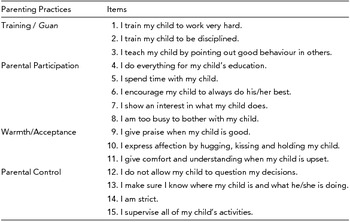
In the larger parenting study, the questionnaire on parenting practices contained 20 items that represented eight broad categories of training, encouragement of modest behaviour, shaming, parental involvement, warmth/acceptance, parental control, autonomy and exposure to religion. All of the items were adapted or adopted from past research (Block, Reference Block1983; Chao, Reference Chao1994; Gecas & Schwalbe, Reference Gecas and Schwalbe1986; Ong, Reference Ong1999; Schaefer, Reference Schaefer1965; Stewart et al., Reference Stewart, Bond, Kennard, Ho and Zaman2002; Wu et al., Reference Wu, Robinson, Yang, Hart, Olsen, Porter and Wu2002). In this article, only items related to training, parental involvement, warmth/acceptance and parental control were examined. The 15 items corresponding to the categories are shown in Table 1.
Parenting practices items and their corresponding categories

Parents were asked to indicate how often they had used each of the parenting practices on a scale of 1 to 5, with 1 being never and 5 being very often. Children also rated the same items, responding separately for their mother and father.
Procedure
Following a method approved by the Singapore Children's Society Research Ethics Committee, participants were recruited by a research company between August and October 2005. Inclusion criteria focused on being the parent of a child age 10 to 12, and being either Singaporean or a permanent resident of Singapore. Stratified sampling was done based on ethnicity and average monthly household income, to ensure that the proportions of participants represented the major ethnic (Chinese, Malay, Indian and Others) and income groups that approximated that in the local population (Singapore Department of Statistics, 2005). Eligible families were identified by the company's existing database, and any shortfall was met by contacting families listed in the Yellow Pages Singapore Residential Listings. Parents and children who met the sampling criteria were invited to a face-to-face interview conducted at premises of the research company. Each child participated in the study with either the mother or father. The voluntary nature of the study was emphasised to both parent and child participants at the point of recruitment and at the start of the interview. Participants were informed that they could withdraw their participation at any point of the interview. Consent for children's participation was obtained from their parents. Each family received a $10 shopping voucher as a token for their participation.
The interview involved asking participants a list of questions from a structured questionnaire described in the previous section. At the start of each interview, trained interviewers provided a brief overview of the questionnaire contents, including a description of the format and an illustration on how to use the rating scales. The interviewers then took the participants through every item on the questionnaire and recorded their responses accordingly. Each interview took no more than 30 minutes to complete. Parents and children completed the questionnaires in separate rooms concurrently, so that their responses were made independently.
Results
Childcare arrangements
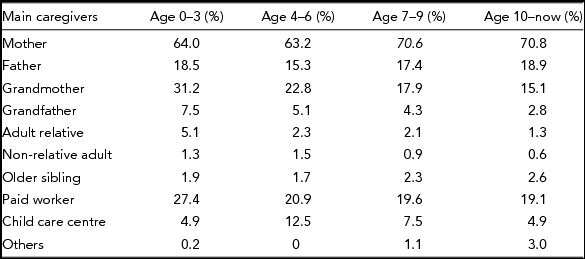
Table 2 shows the main caregivers of children at various ages as reported by parents. About two-thirds of the mothers (64.0%) were main caregivers of their children. As parents were allowed to indicate more than one main caregiver, the total column percentage may exceed 100% for each age range, as shown in Table 2.
The main caregivers for children at different ages (n = 530)
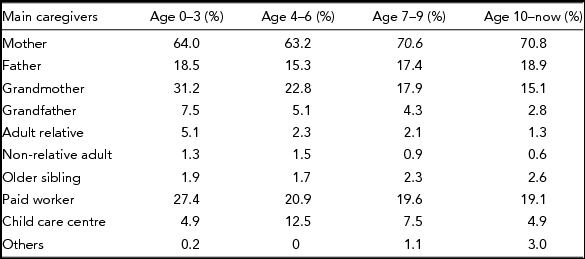
Childrens’ main caregivers were relatively consistent from the time they were born to the present, with mothers, grandmothers, paid workers and fathers being the most common caregivers. The percentage of children being cared for by fathers remained small (less than 20%) compared to mothers at any age. Paid workers’ involvement as main caregivers even exceeded the level of involvement by fathers, especially for very young children.
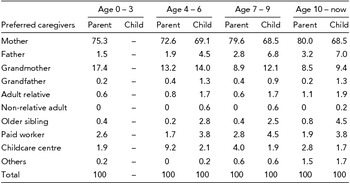
Parents’ and children's preferred caregivers were examined, and the percentages are shown in Table 3. From the perspectives of both parents and children, mothers were the most preferred caregivers across all age groups, followed by grandmothers. For these parents, mothers were the preferred caregiver because they believed that mothers knew what was best for the child, and could hence provide better care. These parents also felt that mothers could guide children in their studies and behaviour. Some parents mentioned that the mother was the preferred caregiver because it is the mother's responsibility to look after children. For children, the mother was the preferred caregiver because they felt that she understood them best, and could take better care of them. In particular, children also believed their mother could guide them in their schoolwork.
Parents’ and children's preferred care arrangements (in percentages) at different ages

Only a very small percentage (less than 4%) of parents preferred fathers as main caregivers for their children at all ages. This is despite the finding that a notable proportion of children (between 15% and 19%) were cared for mainly by their fathers (see Table 2).
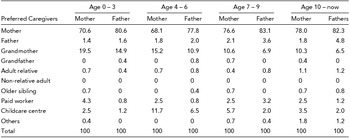
Fathers’ and mothers’ care arrangement preferences were also compared. The results are shown in Table 4. There was a low preference for fathers as main caregivers at any age, even by the fathers themselves. In fact, fathers preferred mothers to be the main caregivers of the children, more so than mothers did. Both parents also preferred grandmothers over fathers as caregivers.
Fathers’ and mothers’ preferred care arrangements (in percentages) at different ages

Disciplinary practices
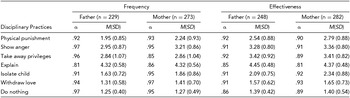
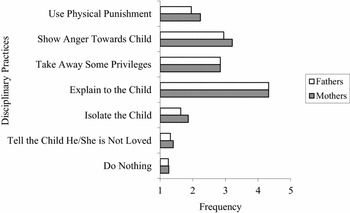
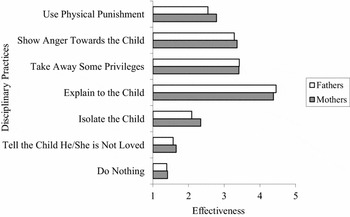
Separate two-group MANOVAs were conducted to compare fathers’ and mothers’ use and perceived effectiveness of disciplinary practices. The results showed a difference between the frequency with which fathers and mothers had used various types of disciplinary practices, F(7,494) = 3.30, p = 0.002, partial η2 = 0.05. Univariate analyses showed that fathers used less physical punishment, F(1,500) = 12.99, p < .001, d = 0.32; showed anger less often, F(1, 500) = 11.55, p = 0.001, d = 0.31; and isolated the child less frequently than mothers did, F(1, 500) = 10.28, p = 0.001, d = 0.29. Differences were also observed between mothers’ and fathers’ perceived effectiveness of disciplinary practices, F(7, 522) = 3.16, p = 0.003, partial η2 = 0.04. Univariate analyses showed that fathers considered physical punishment and isolating the child as being less effective compared to mothers, F(1, 528) = 10.81, p = 0.001, d = 0.29; and F(1,528) = 12.00, p = 0.001, d = 0.30, respectively. Descriptive statistics and coefficient alphas are shown in Table 5. The comparisons are depicted in Figures 1 and 2.
Parents’ Ratings on the Frequency and Effectiveness of Disciplinary Practices

A comparison of the use of disciplinary practices by fathers and mothers

A comparison of the perceived effectiveness of disciplinary practices by fathers and mothers

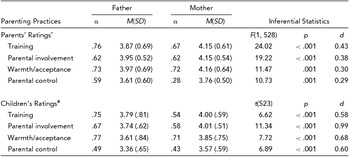
A two-group MANOVA was conducted to compare fathers’ and mothers’ use of parenting practices, and differences were found, F(4,525) = 7.58, p < .001, partial η2 = .06. Univariate analyses showed that fathers adopted all of the parenting practices less frequently compared to mothers. Results are shown in Table 6.
Parents’ and Children's Ratings on the Frequency of Parenting Practices

^A total of 248 fathers and 282 mothers responded.
#A total of 524 children responded.
Children's views on the extent to which fathers and mothers had adopted the four parenting practices were compared using paired-samples t-tests with Bonferroni adjustment (α = .01). Results showed that children perceived mothers to have engaged in all of the parenting practices to a greater extent than fathers. The results are shown in Table 6.
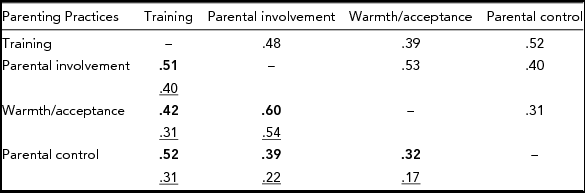
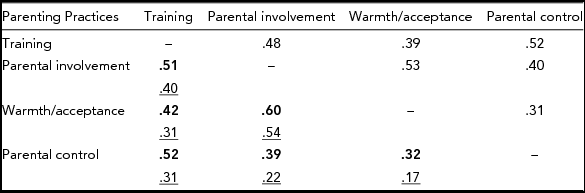
Intercorrelations among the four parenting practices were computed as an exploratory analysis. Separate analyses were conducted for parents’ and children's ratings. The results are shown in Table 7. Notably, the four parenting practices were all moderately positively correlated, and the results are similar regardless of whether the parent or child had rated the frequencies of these parenting practices.
Bivariate Correlations for Parents’ and Children's Ratings of Parenting Practices
All ps < .01.
Correlations above the diagonal are based on parents’ ratings of parenting practices (n = 530). Correlations below the diagonal are based on children's ratings (n = 530). Correlations in bold and underscore were derived from children's ratings of fathers’ and mothers’ parenting practices respectively.
Discussion
This study examined the prevalence of various childcare and parenting practices in the Singaporean context, with a focus on comparing the extent to which these practices were used by fathers and mothers. Children's views were also sought, specifically on their preferred care arrangement and how often their parents had used the different parenting practices.
For childcare arrangement, mothers were considered to be largely responsible for childcare in Singapore. Only a very small percentage of fathers were main caregivers for children, regardless of the child's age. This suggests that the mothering approach (Herts, Reference Herts1997) was still very much subscribed to in Singapore, whereby mothers made provisions to accommodate childcare duties. However, as speculated at the outset, the mothering approach alone did not adequately account for the caregiving trends in Singapore, as this study has shown that the extended family and hired helpers did provide some childcare support. Notably, grandmothers and paid workers featured prominently, and in fact more so than fathers, as main caregivers at any age. Interestingly, although a reasonable percentage of parents relied on paid caregivers (between 18% and 28% across all age groups), few parents preferred this arrangement (less than 5% across all age groups). This highlighted the disparity between parents’ preferences and actual arrangements, in light of the various practical constraints they may face.
This study has shown that, although female participation in the local labour force has increased since 1970, mothers remain chiefly responsible for childcare duties. This is consistent with Quah (Reference Quah1999), who reported that the majority of ever-married Singaporeans felt that in cases of conflicting demands, the working mother's main responsibilities are to her children, and that the mother and not the father should stay at home if a child falls ill. A similar view was raised by parents in this study, as some of them had indicated that the mother was the preferred caregiver because it is the mother's responsibility to care for children. It appears that the traditional childcare role differentiation between husband and wife remains well-entrenched in Singapore, as in other economically-developed Asian countries such as Hong Kong and Japan (Quah, Reference Quah2008). This would be a source of stress for working mothers in particular, who must juggle the demands of a career and family at the same time. Although the general trend is that across cultures, males are becoming more involved in their roles as fathers (Shwalb et al., Reference Shwalb, Shwalb and Lamb2013), mothers’ involvement still far surpassed that of fathers, as shown in the present study. It would take a substantial ideology shift before shared parenting responsibility becomes the norm in this culture.
In the present study, very few fathers nominated themselves as the preferred main caregivers of children. There are many plausible reasons for this. For example, fathers may still see their role primarily as providing financial support for the family instead of being concerned with childcare, as observed by Quah (Reference Quah1999). Parents and children interviewed in this study had reasoned that mothers were preferred over fathers as main caregivers because mothers understood children best, and could therefore provide better care. Interestingly, parents and children also tended to prefer grandmothers over fathers as main caregivers, as the former were thought to be better at child care. Research has shown that the level of participation in childcare duties by fathers was influenced by self-perceptions of proficiency in caregiving, as well as mothers’ level of support (Gaertner, Spinrad, Eisenberg, & Greving, Reference Gaertner, Spinrad, Eisenberg and Greving2007; Sanderson & Thompson, Reference Sanderson and Thompson2002). Hence, the low degree of involvement by fathers as observed in this study may have arisen from the expectations that mothers and other caregivers could provide better care for the children. This remains a speculation which future research may address by exploring the factors that prevent fathers from being more involved in childcare.
In terms of disciplinary practices, fathers were found to have used physical punishment less frequently than mothers did. Fathers also considered physical punishment to be less effective compared to mothers. Although the observed differences between fathers’ and mothers’ ratings were not large, these results were still inconsistent with the view that Asian fathers tended to fill the role of the main disciplinarian in the family, who would likely endorse and use power assertive methods (Chao & Tseng, Reference Chao, Tseng and Bornstein2002). One plausible explanation for this discrepancy is related to role differentiation between fathers and mothers (Quah, Reference Quah1999; Reference Quah2008) where mothers, more so than fathers, were expected to be involved in caring for the child. If mothers spent more time with their children, presumably the opportunities for mothers to become aware of their children's misbehaviour would also be greater. Research has shown that parents tended to use power assertive methods to a greater extent than reasoning if their children continually misbehaved (Dix & Grusec, Reference Dix, Grusec and Siegal1985; Palmérus & Jutengren, Reference Palmérus and Jutengren2004). Hence, mothers who were more involved with the care of their children may have seen sufficient instances of repeated misbehaviour, to tend to use more power assertion compared to fathers. This may also explain the greater number of mothers administering power assertive methods compared to reasoning in the study by Kong and colleagues (Reference Kong, Kok, Tsoi, Wong, Tay and Yeoh1986).
Neither fathers nor mothers rated power assertive methods (i.e. the use of physical punishment and showing anger towards a child) favourably, and did not report using them as frequently as they had used induction (reasoning). This is consistent with the findings of the study by Lee et al. (Reference Lee, Fung, Koh, Wei, Woo and Teo2004), which showed that Singaporean parents were more inclined to reason with their children than to mete out physical punishment. Although studies have found that physical punishment is quite a prevalent practice among Asian parents (e.g., Tang, Reference Tang2006), the present findings showed that physical punishment is not as commonly used as non-punitive methods like reasoning. This study has further shown that parents infrequently exercised love withdrawal when disciplining their children and they were also not likely to adopt the permissive approach when their children have misbehaved.
Mothers in the present study were perceived by both parents and children to be more controlling than fathers. Mothers were also rated higher on warmth compared to fathers. This may not be surprising, given that mothers also trained their children to a greater extent than fathers did. As the desire to train children likely stemmed from care and love for the child with the exercise of control in the process (Chao, Reference Chao1994), the higher frequencies observed of parental control coupled with a display of warmth and acceptance by mothers may seem logical. Nonetheless, as with the findings from the disciplinary practice component, the actual mean differences between fathers’ and mothers’ use of parenting practices, although statistically significant, were not large.
In this study, training was found to be positively associated with parental involvement, warmth/acceptance and parental control; regardless of whether the ratings were provided based on the perspectives of parents or children. These findings are in line with those reported by Stewart et al. (Reference Stewart, Bond, Kennard, Ho and Zaman2002), who found that parents who exercised a high degree of training tended to be perceived as warm by their children in Hong Kong, Pakistan and the United States. Interestingly, the present study also found a small-to-moderate correlation between warmth and parental control, for ratings given by parents and children. The positive correlations provided evidence that warmth and control are not necessarily incompatible practices, at least in this cultural context. In Confucian societies, training and parental control (or elements of authoritarianism as perceived in Western contexts) may be seen as a consequence of love and concern for the child, rather than rejection. Hence, it may be speculated that the negative connotations of the authoritarian component of the Baumrind model may not be apparent in Singapore. Future studies should explore this further by examining the influence of training and parental control on children's developmental outcomes.
Strengths and limitations
This study has a number of strengths. First, while children's views on childcare and parenting practices have seldom been taken into consideration in research, the present study included children's perspectives on issues that directly concerned them, with a focus on comparing their views on parenting by their father and mother. Notably, children were interviewed separately from their parents, making their views less susceptible to parental influence. Second, the current sample consisted of matched parent–child pairs from the same family. This provided a strong basis for contrasting parents’ and children's perspectives. Third, care was taken to include a comparable sample of fathers and mothers in this study, so that meaningful statistical comparisons could be made. Finally, the present study included participants from the four major ethnic groups and various income levels in Singapore, following a distribution that matched closely with that of the local population. This increases the external validity of the current findings.
The strengths of this study must be considered alongside its limitation. Specifically, this study may have under-estimated the extent to which punitive discipline and controlling parenting practices were used by parents, because face-to-face interviews were conducted. As a result, the effects of social desirability could not be ruled out. Face-to-face interviews were necessary, due to the complex nature of the questionnaire used in this study. The finding that children's views were consistent with those of their parents, particularly on the dimension on parental control, provided some assurance that social desirability likely did not skew the results obtained. Furthermore, the relatively infrequent use of punitive discipline as reported by parents in this study was comparable with the findings by Lee et al. (Reference Lee, Fung, Koh, Wei, Woo and Teo2004), who asked parents to complete a questionnaire in private. Another shortcoming is related to the less-than-satisfactory internal consistency for some parenting practices domains, particularly parental control. In hindsight, although the four items that made up the dimension included elements of parental control, these items may in fact convey different meanings. For example, ‘I supervise all of my child's activities’ is consistent with the notion of training and may be seen as positive in this culture, whereas ‘I do not allow my child to question my decisions’ is related to punitive control. Future studies should make a finer distinction between different aspects of parental control in order to increase the precision of the measure.
Conclusion
Taken together, the findings of this study showed that fathers were a lot less involved in childcare duties compared to mothers. Parents and children also perceived fathers to have engaged in the various parenting practices to a lesser degree compared with mothers, though the actual mean differences were not large. Specifically, fathers were considered to have engaged in less training, were less involved and showed less warmth towards their children, but were also not as punitive and controlling as mothers were. Although fathers have become more involved with child-rearing across different cultures (Shwalb et al., Reference Shwalb, Shwalb and Lamb2013), the level of participation in parenting by fathers was still far below that of mothers in the Singaporean context. It will probably take a substantial shift in ideology to increase fathers’ involvement to be on par with that of mothers, given that the traditional role differentiation between husbands and wives in relation to childcare seems to be very marked in Singapore.
Acknowledgements
The authors wish to thank the Singapore Children's Society under whose auspices the research was conducted.