

In the widely reprinted short story ‘Our neural Chernobyl’ (1988), science fiction author Bruce Sterling used the convention of a review of a future history of science book to offer a narrative glimpse at a potential twentieth-first century. Among the more prominent features of Sterling's brave new world is a bioengineered version of the AIDS virus that infects the population, radically augmenting cognitive abilities. Among the greatest beneficiaries of this plague are North America's raccoons, one of the few species with the prerequisite intelligence to make them susceptible to the disease. Sterling's story hints at a world where humans are increasingly forced to recognize the new raccoon ‘culture’ and their rights to political sovereignty.Footnote 1 In this paper, I reflect on the near absence of Sterling's choice of a candidate for humanity's potential intellectual peer in twentieth-century psychology. Why did the raccoon never become a viable model of behaviour within experimental psychology? This question is more than counterfactual speculation, but rather a disciplinary choice with a history.
While much urban folk knowledge would seem to lend credence to Sterling's vision, twentieth-century behavioural science offered little in the way of support, as Procyon lotor has rarely featured in its technical literature. Such neglect is not surprising considering the chorus of complaints since the 1950s that a truly comparative, multispecies psychology had largely disappeared in the United States. Most notably, in his 1949 presidential address before the Division of Experimental Psychology, Frank A. Beach declared that a truly comparative psychology had become extinct, replaced by an impoverished surrogate in the form of mere rat psychology. For Beach, an overdependence on rats as a model for human behaviour was ‘a historical accident’ with grave consequences. Studies of the rat precluded the examination of complex behaviours. Drawing on Lewis Carroll's The Hunting of the Snark, he argued that scientists had once gone looking for a truly comparative psychology, but having discovered the amiable rat the project had disappeared off the face of the earth just as the Baker in Carroll's poem had upon encountering a ‘snark’ that was a ‘boojum’.Footnote 2
Significantly, when the raccoon did appear in the behaviourist literature it was in Keller and Marian Breland's 1961 account of the limits of operant conditioning. Having received their doctoral training at the University of Minnesota under the supervision of B.F. Skinner during the Second World War, the Brelands expanded the practice of their mentor's conditioning procedures with the establishment of their commercial training venture, Animal Behavior Enterprises, in Hot Springs, Arkansas. Rejecting the industry's animal training methods centred on corporal punishment, they advocated Skinnerian positive reinforcement to instil complex performances in circus, film and theme park animals. This commercial venture put the Brelands in contact with a far greater array of organisms than the typical Skinnerian pigeon, and in 1951 they reported great success in applying his principles in the new setting.Footnote 3 Ten years later, they were less confident and reported a series of cases where misbehaving performers refused to follow their conditioning. For example, they cited the case of a ‘miserly’ raccoon trained to drop a coin into a container as part of a show who instead persisted in collecting the moneys and rubbing them together. Although the Brelands assured the reader that in general ‘raccoons condition readily’, their study led to greater credence among American psychologists in ethological claims about the tenacity of instinctive behaviour.Footnote 4
In this paper, I elucidate the historical circumstances under which the snark became a boojum. Interestingly, Beach's criticisms of his home discipline resonate with recent developments within the history, philosophy and sociology of science that emphasize the constitutive role of standardized organisms and experimental systems in the generation of knowledge within the life sciences.Footnote 5 While these studies have predominantly focused on developments within physiology and genetics, such a perspective has been complemented by historical studies examining the selection of the rat as the model organism within the behavioural sciences.Footnote 6 This paper aims to contribute to this literature by examining how a once-promising alternative fell into disrepute and was abandoned. Drawing upon published research papers, correspondence and photographs from the 1900s and 1910s, I examine both the small cohort of experimental psychologists who championed the raccoon as a viable model organism for psychology and their critics. Although the primary actors involved, Lawrence W. Cole, H.B. Davis and Walter S. Hunter, remain marginal figures in the history of the behavioural sciences, their work was linked to central disciplinary figures such as Robert M. Yerkes and John B. Watson and their major theoretical debates over method and interpretation.
Furthermore, by situating these experimental studies of the raccoon among contemporaneous, popular, natural-historical accounts of the creature, I seek to connect the literature on standardization to recent interest in ‘companion species’ and the role of the human–animal relationship in scientific investigations.Footnote 7 Living with semi-wild animals that were also frequently kept as pets generated a very different social bond than was typical in twentieth-century experimental biology.Footnote 8 Even within the surgical spaces of Ivan Pavlov's physiology laboratory a tension existed between the ‘dog-as-technology’ and the ‘dog-as-organism’. Working with research materials granted individuality and personality facilitated his shift from the physiology of digestion to the study of behaviour.Footnote 9 Historians of ethology and primatology have similarly analysed how these field sciences developed unique epistemologies and relationships with their objects of study.Footnote 10 Yet raccoons belonged neither to the managerial world of the ‘physiological factory’ nor to the naturalistic field; rather they were organisms that inhabited a borderland between these two different scientific zones.
This historical study makes visible how the lab–field boundary operated in psychology. As historian Robert Kohler has argued, laboratories and field sites are more than just geographic places; they ‘are cultural domains first and foremost, where different languages, customs, materials and moral economies, and ways of life prevail’.Footnote 11 Despite the rural birthplaces of many of the leading behaviourists, the movement was foremost a laboratory science bent on monitoring life under strictly controlled conditions in largely urban settings.Footnote 12 In contrast, those who championed the raccoon as a unique model of the evolution of the mind favoured an approached that adopted a more natural-historical sensibility. Yet these scientists were not collectors operating in the field either. Rather, by experimenting on semi-domesticated animals, they occupied a middle ground not fully recognized in either psychology or zoology. These experiments represented a tradition in science that existed on the borderlands of academic research, nature study and domestic life, a combination largely spurned within the discipline of psychology by the 1920s.Footnote 13 The raccoon's existence as an animal of these borderlands made it a captivating object of study and a source of incredulity.
The overall aim is to augment the cultural history of the behaviourist era in American psychology by examining some of forgotten alternatives.Footnote 14 In the middle decades of the twentieth century, behaviourism was the pre-eminent school of thought among American psychologists. As a movement, it sought to replace nineteenth-century introspective psychology, which studied the mind, with a more exacting science grounded in the observation of controlled and measurable behaviours. Championed by John B. Watson as the only truly natural scientific psychology, it emphasized the malleability of the subject in the form of conditioning. Before its advent as an overarching interpretive framework in the 1920s, American psychologists had tentatively begun the experimental investigation of numerous species, including apes, monkeys, cats, dogs, fish and single-celled organisms, before settling almost exclusively on rats and pigeons.Footnote 15 During this transition period, both experimental reports and synthetic reviews argued that the raccoon furnished some of the best evidence that animals may possess minds, running counter to behaviourism's central tenet. Between 1907 and 1915, both advocates and opponents of the emerging behaviourist orthodoxy conducted experiments with this organism concerning the learning process that seemed to indicate the presence of ideas. These findings were published and led to debates in leading journals and textbooks in comparative psychology. Even Watson conceded their empirical validity while confessing his inability to adequately explain their results from his own standpoint. Nevertheless, because of the technical difficulties in maintaining raccoon colonies of sufficient size to generate statistically valid results, the smaller, more manageable rat was selected as the standardized organism of choice. This practical decision led to the exclusion of certain models for conceptualizing the thinking process for several decades.Footnote 16
The raccoon as American companion species
Indigenous to the continent, the raccoon played an important economic and cultural role in a wide array of North American societies. Hunted for its fur and meat, detested by many farmers for its attacks on their crops and poultry, the raccoon also served as a popular pet at the turn of the twentieth century in both cities and rural communities. In the colonial era, the raccoon quickly became a prized commodity, being the second most sought-after pelt in the fur trade after the beaver. From the earliest European reports of the animal in the seventeenth century, it also garnered plentiful attention from natural historians.Footnote 17
In the eighteenth century, the raccoon presented a considerable challenge for Europeans attempting to place the animal properly in the natural order. In 1693, John Ray gave the raccoon the scientific name of Vulpi affinis Americana, suggesting its affinity with the fox. John Brickell dissented, arguing that the animal was a species of monkey in his Natural History of North-Carolina (1743). In the 1740 edition of his Systema Naturae, Linnaeus disagreed again, placing the raccoon in the same genus as the bear (Ursus cauda elongate). He revised his opinion in 1758, retaining the genus, but classifying the species as Ursus lotor on the basis of accounts of captive raccoons persistently dunking or washing their food in water. Linnaeus's revised opinion was likely informed by the reports of his student Pehr Kalm's travels in colonial America, but also the observations he made of his own imported pet, Sjupp, whom he acquired from the Swedish crown prince Adolf Fredrik. In 1780, Gottlieb Conrad Christian Storr granted the raccoon its current scientific nomenclature of Procyon lotor, a classification Georges Cuvier resisted well into the nineteenth century.Footnote 18
In the United States, the raccoon was closely associated with the rural poor, especially African Americans both under slavery and following emancipation. Due to its nocturnal habits, it could be hunted during the hours after sundown when the slaves were less closely supervised. Alongside possum, it formed an important source of protein in their diet.Footnote 19 In part because of these associations, the term ‘coon’ became a racial epithet after 1848. The exact origins of the slur remain uncertain, but Zip Coon was a prominent character in blackface minstrel shows. The raccoon possessed many other cultural connotations. For the Whig Party the animal served as a potent symbol during their campaigns of the 1840s to communicate their simple, rural loyalties. Tellingly, the Democrats used the same symbol to signify their political opponent's craftiness and propensity for political manipulation.Footnote 20
If the raccoon generated taxonomic confusion in the eighteenth century, there was considerably more consensus about its behavioural traits among nineteenth-century naturalists. Cunning, mischief and curiosity, nurtured by an acute sense of touch, characterized the raccoon's psychology. Numerous Native American folk traditions foreshadowed this understanding, depicting the raccoon as a deceptive and cunning trickster figure.Footnote 21 Similarly, wilderness writer Halsey Thrasher echoed the common trope among naturalists that the raccoon possessed ‘the mischievousness of the monkey’.Footnote 22 According to Clinton Hart Merriam, this behaviour derived from the nature of their intelligence: ‘their natural curiosity prompts them to examine everything within reach’. Writing for the Linnaean Society of New York, Merriam directly addressed the raccoon's status as a potential pet. Although fairly easily tamed if human-raised from infancy, the raccoons, unlike other animals, could never truly be granted their full ‘liberty’ because of ‘their innate propensity for mischief’. Unwatched, they could easily open door latches to enter the home and, driven by an insatiable appetite, destroy its contents.Footnote 23
Despite such warnings, the raccoon flourished as a pet, not only in the hinterland of woods and farms, but also in the country's major cities. In 1904, the zoologist William Temple Hornaday declared, ‘A live “Coon” makes one of the most satisfactory carnivorous pets that a boy can keep in confinement.’Footnote 24 With the comparative decline of agriculture in the second half of the nineteenth century, liberal evangelical Protestants developed new relationships with animals that eschewed the strict utility of hunting or farming. As part of a broader cultural transformation centred on domesticity and sentimentality, pet-keeping became a common pursuit wherein children, in particular, learned to express an ethic of kindness and an abhorrence of physical pain in others.Footnote 25 In the early twentieth century, the antics of urbanized raccoons were a frequent feature in amusing newspaper stories. The escaped house pet mistaken for a burglar was the most common narrative, with the press in large urban centres often recounting tales of heroic coons eluding capture by the police.Footnote 26 Other owners had more commercial uses for their pets; one Washington, DC entrepreneur was reported in 1906 to be training a squadron of chimney sweeps.Footnote 27 The raccoon's status as a pet reached an apex in 1926 when some Mississippi admirers of Calvin Coolidge sent him one to be eaten as part of his Thanksgiving meal. Instead, the president named the animal Rebecca and she soon became his favoured pet, accompanying him on daily walks as well as on a national train tour while the White House underwent renovations.Footnote 28
The rising popularity of the raccoon as a pet did little to diminish the appeal of the coon hunt as a form of leisure. Some farmers claimed to engage in the practice as a means of protecting their crops and poultry from the animal.Footnote 29 Others described the experience entirely in terms of the simple pleasures of nocturnal tramping in the woods. Accompanied by a pack of dogs, the hunter would attempt to trap a raccoon in a tree which he would then chop down, pitting the animals against one another.Footnote 30 In 1911, dog breeder J.E. Williams remarked on the growing respectability of the hunt and praised it as a manly cure for the dangers of over-civilization. Requiring ‘nerve, backbone, energy, and a touch of the strenuous life’, the hunt ‘appeals to the hustling business man, the man of affairs, who confined during the day with the cares of business, is filled to overflowing with latent energy’.Footnote 31 The hunt was not without controversy. In 1905, the president of the Western Society for the Prevention of Cruelty to Animals resigned his position following discontent regarding his participation in such a hunt.Footnote 32 This controversy made apparent the ambiguity of the raccoon's status as wild animal, vermin or companion.
By the end of the nineteenth century, Americans came to understand the raccoon as a creature ‘that prefers to live in the vicinity of civilization rather than in a wholly wild country’.Footnote 33 Unlike other species that receded in the face of human expansion, the raccoon was an evolutionary success story. It was an animal that adapted and flourished along the borderlands of humanity.Footnote 34 It existed simultaneously as the foodstuff of the poor and valued commodity for clothing, an agricultural pest and a treasured companion, a brute beast and crafty trickster. This liminal status informed the understanding of the raccoon among comparative psychologists and shaped its use as an experimental organism. For psychologists the animal seemed both to offer a natural object of investigation and to display an arguably humanlike intelligence.
The curiosity of raccoon intelligence
The question of raccoon intelligence entered the discourse of American psychology in 1907 with the publication of two nearly identical studies of the topic. In May, the Journal of Comparative Neurology and Psychology published the findings of University of Oklahoma psychologist Lawrence W. Cole. A former masters student at Harvard, Cole communicated his results to Robert M. Yerkes in the hopes of receiving a doctorate in absentia for the work. Such concerns came to a head the next year, when he was forced out of his position following a political struggle at the university upon Oklahoma being granted statehood. Cole hoped that his raccoon studies would mark him as an original researcher and help secure another position. The October volume of the American Journal of Psychology contained the doctoral research of Herbert Burnham Davis under the supervision of E.C. Sanford at Clark University. Since 1905, the two researchers had each been conducting separate studies of how the raccoon learned under captive, experimental conditions. Although marked by certain differences of style and evidence, the two studies had much in common. At the centre of each was the application of the recently developed puzzle box experiments to a novel species in order to assess its comparative place on the scale of animal intelligence.Footnote 35
Although inquiries into the potential of animal thinking had been a hallmark of philosophical psychology since the sensationalists of the late eighteenth century, Charles Darwin's arguments about the origins of human beings in lower forms of life had given the field greater credence and urgency.Footnote 36 If humans were linked to other species through a common historical narrative of development, part of the justification of natural selection involved the locating of the roots of what seemed to be particular human qualities, such as mind, reason and morals. In the early 1870s, Darwin himself published two important tomes on the mental affinities between humans and other animals. During these same years, the ill-fated tutor Douglas Spalding began to conduct experiments designed to distinguish between instinctual and learned behaviours in the early life of chicks. Later heralded as anticipating the concern of mid-twentieth-century ethology with the process of imprinting, his premature death from tuberculosis seriously curtailed his influence on debates in the Victorian era.Footnote 37
Gaining more immediate prominence was the man Darwin selected as his protégé, George Romanes. He made the collection of facts about the mental life of animals the focal point of his career. Romanes's famous ‘anecdotal’ approach, which sifted through the reports of countless observers, with its emphasis on the abstract ideas possessed by lower animals, came under attack from his own chosen successor, C. Lloyd Morgan. By 1894, Morgan had articulated his highly influential ‘canon’, in which he insisted that comparative psychologists ought not to attribute higher mental states to nonhuman animals, but rather search for simpler, more observable explanations.Footnote 38 In doing so, he successfully incorporated into an evolutionary psychology the profoundly anti-Darwinian views of the linguist Friedrich Max Müller, in particular that because nonhumans lacked language they could not possess reason; nonhumans therefore were different in kind from humans.Footnote 39 Morgan marked a shift away from the natural-historical approaches and towards an experimental style modelled on the physiological study of the reflex.Footnote 40
In terms of methodology, both Cole and Davis were situated in the American experimental tradition initiated by Edward L. Thorndike in 1898. Frustrated by his inability to get approval to conduct experiments on young children, Thorndike had turned instead to animals. Initially studying mental development in young chicks, while completing his doctorate at Columbia University he worked with the cats that made his reputation within the discipline. He built a series of puzzle boxes, wooden crates involving an increasing number of latches and locks in which the animal was placed in a state of ‘utter hunger’. To be fed, the animal had to escape from the box by successfully opening the latch or sequence of latches. The scientist observed the number of trials required for successful completion, the time required to escape, the extent to which the animal retained the associations to solve the same problem more quickly when confronted again with it, and whether the animal applied old solutions to novel situations. Thorndike interpreted his experiments as supporting Morgan's contention that nonhuman animals did not possess abstract, free ideas or reason. He emphasized that his cats could not learn to solve a puzzle box simply by observing or by being put through the act; the animal had to repeatedly solve the sequence for itself. Accordingly, ‘animal intelligence’ was understood as trial-and-error learning which involved the accumulation of specific muscular associations.Footnote 41 In this respect, Thorndike exchanged the anthropomorphism of the field for the ‘mechanicotheriomorphism’ of the laboratory.Footnote 42 In spite of their influence on the field, Thorndike's methods met with sustained criticism for their artifice. For example, McGill University physiologist Wesley Mills vividly compared this approach to enclosing ‘a living man in a coffin, lower[ing] him, against his will, into the earth, and attempt[ing] to deduce normal psychology from his conduct’.Footnote 43
Over the next decade, Thorndike's dissertation inspired much research. For example, both he and A.J. Kinnaman separately deployed a similar approach with monkeys.Footnote 44 In 1900, Clark doctoral candidate Willard S. Small fatefully examined learning in the rat using a modified version of the Hampton Court Maze rather than a puzzle box, and three years later Watson defended his dissertation at the University of Chicago on ‘the psychical development of the white rat’.Footnote 45 Although dominance of behaviourism as an interpretive framework did not occur until the 1920s, within the first ten years of the twentieth century, in terms of methods, American psychology had shifted from a discipline focused almost entirely on the introspective investigation of perception among educated adults to the study of the learning process in an increasing array of species.Footnote 46 Among these psychologists, animal intelligence served as shorthand for either consciousness in general or the level of mental attributes developed by a particular species as a whole.Footnote 47 In their formulations, they largely adhered to the nineteenth-century redefinition of intelligence as a menial task, a basic form of mental labour.Footnote 48 In the case of the raccoon, though, this mechanistic trait was inflected with the animal's cultural associations of craftiness and mischievousness. Raccoon intelligence was also understood as an exemplar of learning through lively curiosity.
Both Cole and Davis emphasized that their novelty consisted in the originality of the organism introduced into scientific psychology. When it came to experimental design, they intentionally deviated very little from Thorndike's famous exemplar. The aim of mirroring this methodology so closely was to forge ‘a tolerable basis for the relative ranking of the raccoon with reference to the animals studied by these experimenters’.Footnote 49 During this period of comparative psychology, the introduction of a novel organism was a major source of credit. Preoccupied with establishing priority, Cole kept Yerkes up to date about his research in intellectually isolated Oklahoma, and worried that ‘the man at Springfield has worked as long as I have.’Footnote 50 Such concerns were justified in light of the considerable overlap between their endeavours. Both projects sought to situate the raccoon on an evolutionary scale of intelligence ranging from the simplest organisms to humans. Importantly, both psychologists argued that this particular organism challenged the disciplinary orthodoxy that denied that lower animals possessed minds. They argued that the raccoon was second only to the monkey in intelligence among the nonhuman animals so far tested, and that each of their experiments indicated that the organism possessed ideas derived from complex forms of association, not simply from trial-and-error learning.
Unlike Thorndike, who viewed his subjects as stimulus-response machines, Cole and Davis argued that the raccoon offered a different model for the animal mind. In terms of mental apparatus, it was the governing role of curiosity that distinguished the raccoon from other mammals. Davis, whose report gave greater attention to developmental aspects, characterized the raccoon's intelligence in terms of ‘the exhibition of lively curiosity – in psychological terms, spontaneous attention and the instinct to investigate’.Footnote 51 For him, curiosity was understood as the major prerequisite for the manifestation of true intelligence. The presence of this quality had serious ramifications for how experimentation could be conducted. In contrast to Thorndike, who depended on keeping his animals in near starvation to motivate them, Davis held that his raccoons would willingly solve puzzle boxes where ‘[n]o other incentive was given than curiosity and moderate appetite’.Footnote 52 This was because ‘it would seem that the smell of the food, intensified by the complex mental activity of curiosity, in some manner lets loose a surplus discharge of motor activity’.Footnote 53 The animal's performance under experimental conditions served as one source of evidence for curiosity, but another came from the psychologist's experiences in maintaining his colony. His laboratory subject confirmed the species' folkloric reputation for ‘knavery’, as his animals eagerly explored his pockets to determine what treasures they may contain.Footnote 54
At the turn of the century, a number of psychologists argued for the importance of curiosity in the learning process. The German comparative psychologist Karl Groos had made it a central feature of his account of the evolutionary function of play. Rather than viewing this activity as the frivolous release of excess energy, Groos saw play as an instinct that prepared the young animal for the tasks expected of it in later life. Play was therefore a form of learning, its function analogous to the prominent role granted to imitation by the developmental psychologist James Mark Baldwin, who endorsed and promoted Groos's ideas in the United States. For Groos, curiosity was ‘the only purely intellectual form of playfulness’ that harnessed and directed the organism's attention.Footnote 55 As such, he saw curiosity as omnipresent in all forms of animal intelligence, particularly acute in human children and monkeys, but saturating the entire evolutionary ladder. In 1903, Clark University child psychologists G. Stanley Hall and Theodate Smith bemoaned the failure of their colleagues to systematically trace ‘the development of curiosity in either the ontogenetic or phylogenetic series’. With the exception of Romanes, they argued, few shared their commitment to understanding curiosity as the highest form of learning. They privileged curiosity because it constituted a form of attention stripped of all its utilitarian moorings, unlike the awareness solicited by hunger or the fear of pain.Footnote 56
Where some documented curiosity's presence in cats, dogs, goats, horses and cows, Cole and Davis held that it was not a common feature phylogenetically speaking.Footnote 57 As Davis argued, its ‘instinctive powers of attention and curiosity are of a high order as compared with those of other animals’.Footnote 58 They viewed the raccoon's particular strength in this arena as sustained by the species' acute sense of touch, especially in their highly dexterous hands and sensitive nose. The creature's tactile rather than olfactory orientation towards the world encouraged it to explore its surroundings physically.Footnote 59 Cole was the most vocal in his claims that this species offered a unique model of animal thinking. Put simply, raccoons learnt differently than the then standard models of cats and dogs. When it came to animal models, raccoons offered some very humanlike analogues. For example, he argued that when the raccoon used its nose as an organ of touch, it did so breathlessly, mirroring the slowing of respiration characteristic of human attention.Footnote 60 More important was their distinct performance on standardized laboratory tests. Central to the argument that nonhuman animals did not possess ideas was their inability to learn to solve a problem through passive observation or being ‘put through’ the situation by the experimenter. In such a scheme, animals did not learn with their minds, but rather through the innervation of their muscles. In this respect, he highlighted how his results with raccoons were ‘radically different from those obtained by Thorndike in his experiments with cats’.Footnote 61 As early as 1905, he was claiming that ‘they can learn by being put through an act, and now it is difficult to find a motor performance too difficult for them’.Footnote 62 Cole did not deny the importance of tactile, muscular learning, after all its ‘stamping-in power’ exerted an influence on humans as well. What he objected to was reducing all of learning in the raccoon to this single mechanism.Footnote 63 Throughout his career, he was convinced that the raccoon possessed mental imagery.
Interestingly, considering the dominance of curiosity, researchers working with raccoons also stressed the near absence of imitation in the species. For example, Cole observed that apart from periods during which they fought or played, his raccoons barely paid attention to one another. He reasoned that nature would not encourage such behaviour in a creature prone to scavenging for food; emulating another's habits and haunts would lead to an empty stomach.Footnote 64 W.T. Shepherd, his assistant at Oklahoma who later conducted doctoral research on the rhesus monkey, designed a situation to test for the presence of inferential imitation. He selected one of the raccoons and trained it to climb an incline made of poultry netting where it was repeatedly fed. During this training, he situated the remaining three raccoons so that they could observe the activity and the consistent reward. Immediately after a series of successful trials, he released each raccoon in turn to see if they would imitate the behaviour to acquire the food. This they failed to do in any consistent manner.Footnote 65 The absence of imitation was theoretically significant as advocates of organic selection, such as Baldwin and Morgan, held that this was the primary mechanism of learning. Its absence certainly relegated the raccoon back to a lower evolutionary developmental stage in the era's phylogenetic psychology.
Despite their potentially controversial claims about thinking and mind in the raccoon, this early work on raccoons initially met with an enthusiastic reception within comparative psychology circles, especially among those associated with the Journal of Comparative Neurology and Psychology. In 1908, the zoologist Herbert Spencer Jennings, known for his work on the behaviour of paramecium and other protozoa, praised the advances that Cole made over Thorndike's original experiments. Observing that ‘raccoons are either much more clever than the cats, or the methods employed were better fitted for bringing out latent possibilities’, Cole nevertheless demonstrated that learning in the species was not limited to the gradual formation of associations through trial-and-error experiences.Footnote 66 Similarly, Yerkes was unstinting in his praise, boldly proclaiming in a review article surveying the recent work of Jennings, Watson and others that the ‘results of Cole's study of the intelligence of the raccoon probably constitute the most important contribution to comparative psychology that has yet been made by a single investigator’. Their significance derived not from the experimental ingenuity of the individual involved, but from implications of the organism studied with its ability to form rapid, complex associations.Footnote 67 What unified Cole's initial supporters was a common commitment to a multispecies comparative psychology and a conviction that a wide variety of animals possessed some form of ideation.Footnote 68 Such a warm reception was rather short-lived, however, and within five years Cole would be accused of anthropomorphism, an inattention to experimenter's effects, and sloppy design by an influential cohort seeking to downplay the importance of phylogenic diversity within comparative psychology.
Faking the intelligence of raccoons
This strong advocacy of the claim that raccoons possessed ideas, a form of thinking more analogous to that of humans than other mammals, occurred at a very particular juncture in the history of the American life sciences. Interest in the animal mind was far from being confined to the boundaries of disciplinary psychology, forming, for example, an integral dimension of popular nature writing. A few months after Cole published his initial report, sitting president Theodore Roosevelt formally entered into the fray of the controversy over the ‘nature fakers’ brewing in the country's daily newspapers and middlebrow periodicals. Both an avid hunter and an early conservationist, Roosevelt added his voice to the mounting concerns about how nature was being depicted for America's youth, accusing certain ‘yellow journalists of the woods’ of perpetrating hoaxes similar to those executed by the showman P.T. Barnum a generation previously.Footnote 69 The actual debate had begun four years earlier in 1903, when the naturalist John Burroughs attacked what he felt was an increasing trend towards anthropomorphic, sentimental portrayals of wild animals in popular nature writing.Footnote 70 At stake in the debate was how best to represent the mental life and behaviour of animals. Burroughs and Roosevelt equated a failure to adhere to a strict social Darwinian ethos with an inauthentic depiction of nature. Although university-based researchers remained comparatively insulated from the controversy, it brought to the fore the theological, aesthetic and scientific issues at work in the practice of animal psychology.Footnote 71
Burroughs and Roosevelt joined together to denounce a genre that had flourished since the commercial success of Ernest Seton Thompson's Wild Animals I Have Known (1898) had led to a burgeoning market in natural-history books. These books sold well in a nation preoccupied by the place of nature in an increasingly industrial and urban world following the demise of its supposed frontier.Footnote 72 For example, during the 1890s, educators introduced nature study couched in G. Stanley Hall's developmental psychology and John Dewey's philosophy of education that encouraged hands-on learning.Footnote 73 During the same decade, biographies of individualized animals came to replace the grandiose yet gradual evolutionary epic as the dominant form of nature writing.Footnote 74 A distinct feature of this new literary genre was its controversial portrayal of animal psychology.
The main target of Burroughs's criticisms was the Reverend William J. Long, among the most prolific members of this new generation of popular writers. The Congregationalist minister regaled his young readers with the exploits of the various creatures that inhabited the countryside near his home in Stamford, Connecticut. In 1897 he received his doctorate from the University of Heidelberg, having studied philosophy, history and theology.Footnote 75 In 1902 he published a book of his observations, School of the Woods. There he argued that animal behaviour was not purely instinctual, but rather the young learned specific methods from their mothers just as human children did. For example, he claimed to have observed hawks catching fish only to drop them into smaller pools to teach their offspring to dive for them.Footnote 76 His next book contained the even more controversial observation that animals fashioned casts out of clay to mend their broken bones.Footnote 77 For Long, human and animal psychologies were only different in degree rather than in kind because both were the natural expressions of God's mind.Footnote 78
In contrast, Burroughs embraced what he called the ‘Cartesian’ view whereby all animals were rendered ‘machines in fur and feathers’. According to such a view, all animal behaviour was purely instinctual, uninformed by reason or learning. For example, at ‘some long-gone time in the history of the raccoon it seems to have been needful for it to wash its food’. This behaviour was no longer purposeful but even domesticated raccoons would replicate it without guidance.Footnote 79 To posit that animals may reason or learn specific lessons from their parents was to commit the scientific error of anthropomorphism and violate the ideal of parsimony. Moreover, he rejected the sentimentalism that characterized Long and other popular natural-history writers. For example, Burroughs chastised him for claiming that a pet raccoon buried the remains of a stolen chicken due to the animal's sense of guilt.Footnote 80
For his part, Long refused to capitulate to his opponents and took to undermining their own understanding of nature. He insisted that he had personally observed all the phenomena he reported and that he could provide affidavits from other eyewitnesses who could confirm his experiences. He argued that the study of nature was not the unique preserve of science and outright rejected taxonomy as a goal.Footnote 81 In its place he sought to document ‘the unusual things, the things that mark an animal's individuality, leaving the work of general habits and specific classification to other naturalists who know more and can do it better’.Footnote 82 When it came to Roosevelt, whom he compared to ‘a man of the stone age who sallied forth with his club to brain some beast and drag it home to display before his wives’, Long argued that the president's identity as a brutal, masculine hunter precluded him from being taken seriously as a naturalist. Armed with a rifle, he ‘never gets near enough to animals of the forest to know about them’. In contrast, he constituted himself as a humble, modest witness of nature's true complexities. Entering the woods with only a notebook and pencil allowed him to observe the strange and particular behaviours that others overlooked.Footnote 83
Even though Burroughs attempted to secure for himself the exclusive right to speak about how animals ought to be represented scientifically, a task facilitated by Long's own dismissal of science, others sought a middle ground. Most vocal in this regard was the director of the New York Zoological Garden, William Temple Hornaday. While dismissing Long as overly gullible and impressionable, Hornaday, based on his observations of captive animals and his extensive, global fieldwork, argued that behaviour could not be reduced to the instinctual. Rather ‘animals are possessed of great intelligence, that they can and do reason from cause to effect, that they do not act solely from instinct, and that they have much the same passions as men’. Casually invoking the racism of the day, he related his experiences in an Indian timber camp where the elephants ‘seemed to me to have almost as much intelligence as some of the coolies’.Footnote 84
Unsurprisingly, considering its omnipresence across the United States and its proliferation in the ecologies of forest, hinterland and city, the raccoon was a common character in these sentimental natural histories and was invoked throughout the resulting debate. In fact, the title character of the book that Long published immediately after arousing Burroughs's anger, A Little Brother to the Bear, was a raccoon. Likewise Dallas Lore Sharp, a popular nature writer praised by Burroughs, prominently featured the adventures of his tame pet raccoon Mux in his Roof and Meadow (1904). Similarly, the New Brunswick naturalist Charles C.D. Roberts, who gradually lost favour and became labelled a nature faker, wrote of the learning process among those he called ‘the little people of the sycamore’.Footnote 85 In brief, raccoon intelligence was a prominent, headline-generating matter of concern not only among psychologists, but also among journalists and popular naturalists.
In certain respects, the ways that comparative psychologists characterized raccoon intelligence was not so different in kind from how it appeared in the work of some sentimental naturalists. According to the nature writers, the raccoon was best understood as ‘shrewd’ and ‘mischievous’, marked by ‘curiosity’.Footnote 86 Long insisted that the raccoon ‘has a score of traits that place him very high among intelligent animals’.Footnote 87 For his part, Davis remained open to incorporating into his study evidence from popular and natural-historical accounts of the raccoon's development and behaviour, even criticizing Cole for not doing likewise.Footnote 88 If a common conviction of the high intelligence of raccoons and the prominent place of curiosity united nature writers and experimenters, the role of imitation distinguished them. Where Burroughs held that the behavioural repertoire of all animals was entirely instinctual, the sentimental nature writers detailed how raccoon pups learned how to fish from their parents. For example, invoking his controversial ‘school of the woods’ interpretation of animal behaviour, Long described how a young raccoon, by following his mother, ‘learns a hundred things that a coon must know: to follow the same paths till he comprehends the woods; to poke his inquisitive nose into every crack and cranny, for the best morsels on his bill of fare hide themselves in such places’.Footnote 89
In important respects, both experimentalists and sentimental nature writers cohabited with their subjects through the practice of keeping as pet a semi-wild species. Pet-keeping centred on the production of empathy for a companion species, a lesson Long repeatedly tried to impart. Even unsentimental Burroughs claimed to learn nature lessons from his pets, arguing that he uncovered deeply rooted instincts in their behaviour: ‘A coon knows how to suck an egg because he comes of a race of egg suckers, but the tame coon I had in my youth knew instantly what to do with the first pancake it ever saw.’Footnote 90 Significantly, Cole reported that his experimental program ‘was suggested to me in 1900 by the behavior of a pet coon which was kept here at a meat market that winter’.Footnote 91 Contemporaries linked these experiments to the experience of pet-keeping in other ways. A widely reprinted newspaper story portrayed Davis's puzzle box experiments as mere ‘tricks’. Although the psychologist insisted that he was not training the raccoons to perform ‘stunts’, the magazine insisted that the animals ‘under his tutelage are gradually beginning to do things that wild 'coons do not do’.Footnote 92 Such coverage blurred the boundary between scientific experimentation and entertainment. It also highlighted that the social arrangements that existed between the psychologists and their subjects were not so different from the pet-keeping nature writers. Experimenters largely lived lives of daily interaction with a species towards which they felt affection. Although officially numbered in the experimental reports, these same documents betray that they were called names such as Jack, Jim, Tom and Dolly. The Oklahoma psychologists even conducted experiments on the extent to which these subjects would respond to these humanized names.Footnote 93
While the raccoons were expected to perform certain tasks at specified times, these scientific objects partially lived the lives of pets. In 1906 Cole mailed Yerkes a series of photographs documenting his experimental wards, their cages and their behaviours. On the back of a photograph depicting two raccoons climbing up his legs to feed from his hands (Figure 1) he wrote, ‘This shows that I could handle my animals and one must take great pains to keep them tame or else fail in some of the experiments.’Footnote 94 Another portrayed a raccoon standing on its hind quarters, balanced on a bicycle seat, attentively observing the movements of Cole's hands which contained small bits food (Figure 2). Such an image captured the performative dimension of comparative research and the playfulness that existed in the relationship between psychology professor and experimental organism. Bicycle-balancing did not form part of the behavioural repertoire documented in Cole's scientific reports; rather it was an amusing trick that he wanted to show his mentor and colleague back east. Certainly the relationship was often marked by violence: when the animal did not perform as expected both psychologists documented the use of corporeal punishment.Footnote 95 Yet at a time when the national press lambasted Watson for his purposeless ‘torture’ of rats as he removed various sensory organs during the course of an experiment on maze learning, the lives of these experimental subjects were not so different from Sharp's beloved pet Mux.Footnote 96
Lawrence W. Cole demonstrating his ability to handle his animals. Robert Mearns Yerkes Papers. Manuscript and Archives, Yale University Library.
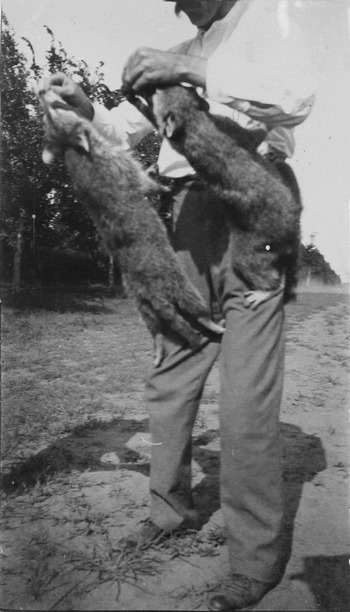
One of Cole's raccoons allegedly not performing tricks. Robert Mearns Yerkes Papers. Manuscript and Archives, Yale University Library.

Experimental use of raccoons in such a fashion complicates what the zoologist Hornaday saw as a major defect of laboratory psychology: a near exclusive focus on fully domesticated animals. Although a number of studies had been conducted on monkeys, in 1908 Hornaday cautioned that ‘the mental and moral moods and tenses of wild animals are but little known’.Footnote 97 For example, when a chimpanzee was first subjected to psychological testing soon thereafter, it was a famed circus performer, the roller skating, tuxedo-clad ‘Peter’.Footnote 98 In this context, the raccoon served as a borderland creature, kept as a pet, especially in rural areas, but without the long history of domestication characteristic of the cats and dogs typical of early comparative psychology. Moreover, both Cole and Davis noted that their experimental subjects were procured from the wild by trappers rather than from breeders.Footnote 99 These were not the standardized, inbred rats that came to dominate experimental psychology.
Particularly acute in this instance, the situation was not unique to the study of raccoons, but signified an often neglected dimension of psychology's practice. The field's history is rife with partially domestic sites of inquiry. As Yerkes noted, his experimental studies of the dancing mouse heightened his ‘appreciation of the exceptional value of the dancer as a pet and as material for the scientific study of animal behaviour’.Footnote 100 Darwin famously used observations and images of his own dog to make the case of the existence of emotions in the animal kingdom. James Mark Baldwin helped forge the modern field of developmental psychology based initially on the study of his own children in their nursery. Perhaps the most iconic example was Konrad Lorenz's ethological study of geese and other animals on his estate at Altenberg. Such arrangements blur the boundary between home and laboratory, but also point to social organization common to academic animal psychologists and popular nature writers.
Concerns about animal fakery occupied laboratory psychologists, especially following the ‘Clever Hans’ spectacle. The horse's owner claimed that it possessed the ability to count and had the creature perform these mental calculations for Berlin audiences. Although the English-language version of psychologist Oskar Pfungst's debunking of the phenomenon did not appear until 1911, his views quickly circulated in the United States. In 1905, a thorough exposé and a profile of Pfungst's methods appeared in McClure's, and the following year University of Wisconsin psychologist Joseph Jastrow published a similar account in Popular Science Monthly.Footnote 101 Watson himself reviewed the German-language edition in 1908, drawing out the moral lesson of constraining the voices of ‘those untrained but enthusiastic observers who may be filled with the desire to describe the doings of pet animals in glowing anthropomorphic terms’.Footnote 102 In Watson's retelling, the encounter became a rather simplistic narrative of naive nature faking rather than Pfungst's more complex narrative of unconscious experimenter's effects.
Furthermore, among contemporaries, experimental psychology was not understood as being outside the debates over sentiment in nature writing. For example, when the New York Times reviewed the first edition of Margaret Washburn's important textbook The Animal Mind (1908), they read her synthesis as giving credence to the opponents of Burroughs and Roosevelt in the nature-faker controversy. After all, her book included tales of
the captive spider which refused to eat flies after one smeared with turpentine had been given to it, but devoured gnats without hesitation, the raccoon with a highly developed sense of colour, the crab who could be taught to go to the dark part of an aquarium to be fed.
Yet the reviewer saw Washburn's book as casting doubt on whether the cat, the monkey or the raccoon ‘actually remembers the movements by having some image of them on its consciousness’.Footnote 103 In 1909, E.T. Brewster, a regular contributor to McClure's Magazine, attempted to end the nature-faker controversy by drawing upon the latest findings in comparative psychology. Where Long erred in assuming that animals reason, Burroughs exaggerated the role of unmodified instincts in governing behaviour. In place of their respective mechanisms, Brewster suggested the utmost importance of learned but deeply ingrained habits. While animals lacked reason entirely, the majority of human mental life consisted of habituated reaction rather than conscious, rational judgement. To make his case, Brewster cited Davis's experiments, due to their recentness and because they dealt ‘with an interesting and little-known animal’. In solving the challenges posed by puzzle boxes, ‘the coon hit the proper action by pure accident. Then, being a clever beast, he kept repeating as many of these random movements as he could remember’.Footnote 104 Through many such trials, the raccoon would acquire a habit that a chance, naive observation might confuse with directed reason.
While rejecting the powers granted to animals in Long's narratives as fantastical, academic psychologists did endow the raccoon with a distinct set of humanlike characteristics. Indeed, Brewster's account indicated that raccoons counted among the species of ‘wisest’ animals that at least ‘get into the borderland that separates reasoning from other mental processes’.Footnote 105 They shared with humans a particular instinct that guided their learning: ‘Insatiable is the curiosity of monkeys and children and coons; and the outcome of the instinct is a vast deal of useful information they would otherwise never obtain.’Footnote 106 For their part, psychologists used this curiosity to facilitate their experiments. As Cole observed, he could rely upon hunger and ‘an apparent desire to be occupied, called by several writers curiosity’ rather than fear or pain to serve as motivation to perform.Footnote 107
The ultimate legacy of the nature-faker controversy on comparative psychology was ambiguous. The very public debate certainly curtailed the kinds of claim that could be made about animal mental abilities. Yet university-trained psychologists largely rejected Burroughs's assumptions about the wholly instinctual nature of animal behaviour. For much of the twentieth century, emphasis was placed on the potential to modify behaviour through the practice of conditioning. What came out of the nature-faker controversy was a further constricting of the norms along which animal behaviour could be represented rather than of how it ought to be interpreted. The affection and affinity gestured towards in the reports of Cole and Davis would become increasingly out of place within psychology.
The behaviouristic deconstruction of raccoon intelligence
Although their work was never directly attacked by Burroughs or Roosevelt as unscientific, the broader public debate had a chilling effect on the depiction of animal psychology even prior to Watson's famous ‘behaviourist manifesto’ of 1913.Footnote 108 Echoes of the debate resonated in psychology journals over the next decade as Cole defended his position that raccoons demonstrated a rather humanlike form of intelligence compared with other mammals, one characterized by the possession of ideas. Never branded a nature faker, he nevertheless faced similar charges of anthropomorphism and sentimentalism from the early adherents of the new school of behaviourist psychology, even though their own experiments pointed to certain unique features of raccoon intelligence. If American functionalists, with their Darwin-inspired emphasis on the purposeful nature of the mind, were sceptical of the claim that animals may possess ideas, such statements were met with even more intense incredulity among the behaviourists who rejected all mental phenomena that could not be directly observed.Footnote 109
In the first decade of the twentieth century, there were three major centres for academic comparative psychology: Clark University, Harvard University and the University of Chicago.Footnote 110 The earliest raccoon researchers were affiliated with the first two institutions, but in the 1910s Chicagoans started working with the organism. When Watson left Chicago to join the faculty of Johns Hopkins University in 1908, Harvey A. Carr took charge of the animal laboratory. Never as prominent a theorist, Carr was an important supervisor of graduate students over the next three decades. Like Watson, Carr preferred the rat as a psychological model, but especially during his early career he also supported the use of other organisms. Among his earliest students was Walter S. Hunter, a graduate of the University of Texas with a strong interest in studying the biological basis of psychology.
At Carr's suggestion, he explored the use of a new technique for examining learning. Under the rubric of ‘delayed reaction’, he sought to analyse ‘typical mammalian behavior under conditions where the determining stimulus is absent at the moment of response’.Footnote 111 Inspired by Cole's glowing report about the presence of mental images in raccoons, Hunter decided to include the animal in his doctoral research.Footnote 112 He first trained a subject to associate the stimulus of a light source with the positive experience of being fed. Next the subject was constrained, but permitted to observe three light bulbs, one of which would illuminate. Following its extinguishment, he could control the duration of the delay before the subject's release. Success was defined in terms of the repeated identification of the stimulus. Under such conditions, Hunter would manipulate the duration of the delay before release to assess how long a subject could remain oriented towards a stimulus in its absence. Unlike his Oklahoma predecessor, Hunter did not devote his entire energy to a single species, but rather executed one of the most truly comparative studies of the era. Between October 1910 and April 1912 he tested twenty-two rats, two mongrel dogs, four raccoons and five young human children.Footnote 113 Because of his unfamiliarity with the raccoon, he turned to the expertise of zoo keepers like Hornaday and the Lincoln Park zoo's Cyrus DeVry to help make sense of its development and habits.Footnote 114
What Hunter uncovered during the course of his delayed-reaction experiments largely confirmed Cole's conviction that the raccoon possessed certain novel mental attributes. Unlike the typical rat that could correctly identify the stimulus source after a delay of only a single second, the raccoon could tolerate delays of up to twenty-five seconds. Such a performance paled in comparison with the two dogs, whose maximum delay reached five minutes. What impressed Hunter was not the duration of the delay, but how the organism behaved prior to its release. Most striking was ‘the similarity of the behavior of dogs and rats as well as the wide divergence of the raccoons from the other two groups of animals’. Whereas the rats and dogs needed to constantly maintain their bodily orientation towards the stimulus during the period in which it was extinguished in order to correctly identify it, the raccoon, like the human child only, could freely move about its cage during the delay. Unlike the other animals, eighty-nine percent of the raccoons' correct reactions commenced from the wrong orientation.Footnote 115 Most impressive was how active the raccoons were during the delay as they ran within the release box and clawed at it. Moreover, Hunter ‘often distracted the animals by bending down over the release box and yelling at them at the top of my voice’. The young children were similarly distracted during the delays with conversation and stories, and by being asked to draw. Under such conditions, he determined that contact with the cue could not be constantly maintained in either raccoon or human child. Both human children and raccoons could correctly respond following a period of distraction.Footnote 116
As Cole was fond of subsequently pointing out, Hunter's dissertation seemed to demonstrate empirically that raccoons exhibited some rather peculiar traits, ones not so different from those of humans. For his part, Hunter became convinced that his humans and raccoons possessed some ‘unknown intra-organic cue non-observable by the experimenter’.Footnote 117 In place of Cole's idea-filled raccoons, the nascent behaviourist suggested that the kinds of subject that could successfully reorient themselves during the delay did so with reference to ‘sensory thoughts’, most likely of a muscular-kinaesthetic nature. These sensory thoughts were theoretically distinct from Cole's proposed representational thoughts. In the parlance of the day, Hunter suggested that these were simpler ‘imageless thoughts’, which could now be understood as being ‘genetically prior’ to ideational mental imagery.Footnote 118
Hunter dedicated much of the theoretical argument in the dissertation to dismantling Cole's claims that raccoons possessed ideas in the form of mental images. He firmly rejected the suggestion that the species exhibited ‘a new type of conscious process’, arguing instead that they merely produced ‘more complex sensori-motor behavior’ than that exhibited in the more regularly studied cats, dogs and rats.Footnote 119 To further discredit Cole's claim that the raccoon possessed mental imagery, Hunter supervised a further series of experiments conducted by fellow Chicago graduate students F.M. Gregg and C.A. McPheeters that sought to replicate work on the raccoon's ability to discriminate between two series of visual stimuli.Footnote 120 They suggested that the animals did not in fact memorize and recall the specific sequences of coloured flags as Cole had earlier claimed, but rather either discriminated based solely on the first level of the sequence or, more likely, received unconscious cues from the experimenter. In other words, the Chicago students dismissed Cole as a credulous believer in his own self-produced Clever Hans phenomena.Footnote 121 While Hunter concurred that the raccoon seemed to demonstrate greater intelligence than most previous species investigated by comparative psychology, he felt that Cole did not provide an adequate accounting of the mechanism supporting this superiority.
Relocated to the University of Colorado, Cole rebuffed the claims of Hunter and his allies as well as their seeming embrace of the new ideology of ‘behaviourism’. He reiterated that his opponent's study of delayed reaction seemed to corroborate his argument that raccoons possessed a form of thinking more similar to that of humans than of other mammals. He insisted that ‘their animals behaved just as mine did’. Cole questioned why Hunter's sensori-motor imageless thought was more genetically prior and hence parsimonious than the possession of ideas.Footnote 122
Furthermore, he feared that his Chicago interlocutors risked overgeneralizing from the behaviour of a single species. Organisms like the raccoon offered new possibilities
to learn how animals differ in their behaviour, instead of denying all differences. This will help enormously, for it may enable us finally to discover a psychology of the higher animals which can explain as well as deny, which can be taken out of the laboratory and yet bear the light of day and the scrutiny of intelligent persons who observe animals.Footnote 123
Having been accused of introducing artefacts into the laboratory in the form of cues, he shot back at his opponents for lack of naturalism in their own studies. His study offered a psychology that could travel into the field rather than being confined to the laboratory. He mocked their inability to fully replicate his studies because their raccoons were not ‘toothless’, implying that the Chicagoans were less adept in managing their animals.Footnote 124 Seeing the Chicago experiments as representing the front line in the new behaviourist movement, he worried that they risked generating a laboratory psychology that could never travel outside such spaces. Publicly denouncing these trends, Cole was more sanguine in private, worrying that since ‘Carr has the weight of Chicago Univ. behind him no doubt his conclusions will be taken as final with little explanation of his evidence’.Footnote 125 Located in the geographical borderlands of territorial Oklahoma and then the intellectual backwaters of the University of Colorado, Cole complained that he lacked the cultural resources to win his war with the Chicago behaviourists.
If experimental psychologists were in agreement that the raccoon offered certain useful and unique models of learning, even while disagreeing over interpretation, why was the organism so readily abandoned? Cole's mocking suggestion that the Chicago psychologists found the raccoon physically difficult to manage was telling. In his dissertation, Hunter detailed the major practical difficulties in maintaining such a colony, especially during the spring when ‘“wanderlust” strikes them’. During such periods, the creatures would gnaw the wood and tear at the wire of their cages trying to escape, biting him when he tried to contain them.Footnote 126 Similarly, Davis documented a break-out of six of his subjects with a number of them hiding in the building's ventilation system.Footnote 127 Such events were rather common occurrences among small colonies of four to six raccoons. Cole bemoaned the ‘many days of work during which the “coons were stupid” due to their propensity to slow down during the colder, winter months’.Footnote 128 During periods of heavy teaching responsibility, he inquired whether ‘I am safe in getting rid of the coons. They are a nuisance to care for and if I have sufficient facts so that I can yield some of the fruits and I have an adequate thesis I wish to drop that work.’Footnote 129 The praise he received for his initial studies and the harsh criticisms he received from Carr's students kept him invested in the organism over the years. His former assistant Shepherd warned that raccoons exhibited too many individual differences, so experimenters had to be wary of extrapolating from a few subjects. This feature, in combination with the practical difficulties of managing a colony, meant that a statistically significant population would likely prove difficult to maintain.Footnote 130 In 1907, Yerkes praised the dancing mouse as an ideal experimental organism because it was ‘small, easily cared for, readily tamed, harmless, incessantly active, and it lends itself satisfactorily to a large number of experimental situations’.Footnote 131 In contrast, almost all of these qualities were lacking in the raccoon. If one were not firmly committed to the belief that individual species provided unique models then the far more pliable rat was a much more appealing object with which to experiment.
The snark becomes a boojum
To return to Beach's complaint, what did the discipline of psychology lose in its selection of rats and pigeons as model organisms? Did the raccoon and the experimental systems erected around it furnish alternative models of thought and behaviour neglected by the behaviourists? Certainly the initial reception of the studies of Davis, Cole, and Hunter, as well as the troublesome raccoon reported by the Brelands in 1961, indicated that the raccoon did not mesh well with behaviourist theory. In a 1914 analysis of Hunter's dissertation, Watson confessed that there was ‘no known mechanism of response which might account’ for the raccoon's ability to change bodily orientation during the delay. Where he felt that the children withstand the longer delays due to their ‘language habit’, the raccoon necessarily lacked any such mechanism. After all, a major part of what distinguished respectable science from popular nature faking since the 1890s was the denial of any form of animal language. Instead Watson suggested that it ‘seems best to reserve our attempt at explanation’.Footnote 132 Indeed, Wolfgang Köhler saw Hunter's delayed-reaction experiment as crucial evidence for the superiority of his gestalt alternative to behaviourism.Footnote 133
Despite their many disagreements over theoretical interpretation, in both the experimental-psychology and natural-history literature on learning in the raccoon discussion of two traits repeatedly recurs: the importance of touch and the role of curiosity.
The abandonment of the raccoon as a model was symptomatic of the neglect of these aspects of learning, of how behaviourism produced ignorance about them.Footnote 134 After Watson, curiosity was absent from psychological accounts of learning for several decades, until the neo-behaviourist Daniel E. Berlyne reintroduced the concept in the 1950s on the eve of the ‘cognitive revolution’.Footnote 135 At the same time as Cole and Davis celebrated the raccoon's humanlike capacity for attention, bestowed upon it by its acute sense of touch, Watson was conducting a series of experiments to demonstrate the irrelevance of such sensory particularities. Using surgically altered laboratory rats, all the organism required to reliably complete a maze were ‘kinesthetic impressions’, or the built-upon associations among sequences of muscle movements. Learning consisted solely of the habits instilled through these repeated associations.Footnote 136 Yet half a century later, University of Wisconsin neurophysiologist Wally Welker returned to the common findings of Cole and Davis and translated them into the idiom of neuroscience. From his own perspective, he affirmed their conviction that the raccoon's propensity for tactile exploration mattered; he and his team argued that it led to particular patterns of brain development.Footnote 137
For their part, the psychologists working on the raccoon as a unique model faced professional marginalization. In 1907, Watson was one of many promising young comparative psychologists, but by 1915 he had artfully secured an institutional place for himself and become the charismatic leader of a scientific movement with a definite ideology. By this time, he had secured control of a major university department, journals and the professional organization.Footnote 138 Prior to this time, Watson had expressed an interest in more naturalistic approaches, studying what he defined as the instinctual behaviour of a colony of terns in Bird Key, Florida.Footnote 139 He soon spurned such eclecticism during the course of his ‘behavioural revolution’. As a public intellectual following his dismissal from Johns Hopkins University in 1920 for marital impropriety, his statements on the ubiquity of conditioning became increasingly programmatic.
In contrast to Watson's early successes, finding academic appointments and funding that supported truly comparative projects was rare in the early decades of the twentieth century. As documented by Donald Dewsbury, the vast majority of persons who conducted doctoral research on comparative topics invariably gravitated towards applied topics.Footnote 140 Most of those persons invested in the raccoon as a model organism similarly turned to educational matters. Davis soon left academic psychology to enter the field of education, eventually serving as principal of the State Normal School and later the Training School for Teachers in Pittsburgh.Footnote 141 In 1908, Cole became embroiled in a ‘politico-religious storm’ at the University of Oklahoma that jeopardized his career. With the granting of statehood, a newly appointed board of regents sought to fill the university's faculty with Southern Methodists allied with the newly governing Democratic Party. In contrast, Cole described himself as ‘a northern man, my father lost an arm as a Union soldier and I am very proud of that fact’.Footnote 142 Like many of the faculty and the university president, he was promptly fired. Having already spent a number of years as a school principal and superintendent, he ultimately secured a position at the University of Colorado, mainly teaching educational psychology.Footnote 143 With a heavy teaching load, he repeatedly sought new positions and research fellowships to continue his research, but despite Yerkes's assurances that there were ‘several of us who have very high estimates of your character and ability’, such efforts were of little avail.Footnote 144
The exception to disciplinary marginalization was Hunter, who more readily embraced the behaviourist orthodoxy. From an initial appointment at Texas, he moved to Kansas in 1919 and then Clark in 1925, settling permanently at Brown University. Decades later, he would claim that no one, especially himself, fully embraced behaviourism and outright ‘denied instincts “in the ’20's”’.Footnote 145 Yet according to his own autobiography, by 1922 he ‘had come to the belief that behaviorism represented essentially the only adequate scientific point of view in psychology’.Footnote 146 Although Hunter and his students occasionally used the raccoon as an experimental organism at Clark during this era, they understood it as a generic stand-in for any animal, the cognitive proclivities of the species deemed uninteresting.Footnote 147 As Cole observed, his own studies were ‘published when psychology was taking the opposite tack’.Footnote 148
In important respects, a commitment to instincts, phylogenetic mental differentiation and species-specific behaviours underdetermined one's interpretation of human nature. Certainly Yerkes's brand of comparative psychology, with its emphasis on the innateness of intelligence, was connected to scientific racism and his own commitment to eugenics. Similarly his successor as director of the Yerkes Primate Laboratories, the zoologist turned neuropsychologist Karl Lashley, held lifelong segregationist beliefs.Footnote 149 Yet the advocacy of behaviourism did not necessarily lead to a more environmentalist explanation of human behaviours and abilities. In Hunter's case, a loyalty to behaviourist principles did not prevent him from pursuing research that linked heredity to intelligence in the form of ‘Indian blood’.Footnote 150
During the 1920s, the range of organisms studied in experimental psychology considerably narrowed. Even someone as dedicated to a truly comparative discipline as Yerkes came to focus on only a few species. Inspired by the successes of his former student, Gilbert Hamilton, he dedicated his energies increasingly to primatology after purchasing Chim and Panzee in 1923.Footnote 151 In 1925 he observed that ‘experimental studies in Comparative and Genetic Psychology are not spread over a wide range of organisms at present. Instead, our little group of psycho-geneticists is concentrated on the chimpanzee, the cat, and the guinea pig.’Footnote 152 Josephine Ball was one such ‘psycho-geneticist’, whom Yerkes met during his time at the National Research Council. After travelling with him to study an ape colony in Cuba, she undertook graduate work in physiological psychology with Lashley. In 1930, while pursuing postdoctoral work with the psychobiological psychiatrist Adolf Meyer, she conceived of a project for which she thought raccoons would serve as the ideal subject. The major impediment was her lack of practical knowledge about their maintenance and propensities.Footnote 153 Yerkes urged her to contact Hunter and especially Cole, who ‘years ago worked with raccoons intensively and has had invaluable experience in keeping them’, but no raccoon study emerged from Meyer's laboratory.Footnote 154 Despite the exposure to the comparative branch of the field, Ball had earlier confessed that rats ‘are the animals I feel most competent to handle’.Footnote 155 While Frank Beach clearly articulated the concern of an impoverished comparative psychology, his graduate training consisted primarily of working with rats.Footnote 156 His transformation in perspective occurred during his appointment at the American Museum of Natural History, where his institutional niche exposed him not only to biologists, but also to apes, alligators and other fauna, on a daily basis.Footnote 157
Outside the immediate confines of experimental psychology, writers continued to describe the raccoon in terms reminiscent of the sentimental naturalists. For example, in the 1930s the New Haven veterinarian and eugenicist Leon F. Whitney published a series of sketches of the animal in the pages of the Journal of Mammalogy. Based on his observations as a hunter in the woods, he insisted that ‘curiosity is one of the major characteristics of the species’.Footnote 158 Along with raccoon rancher Acil B. Underwood, he lamented the species' decline as a choice of pet and neglect as a potential laboratory subject. Because of its physical vitality, affordability, and intelligence, they argued, ‘it makes a much better subject for laboratory use than either the cat, dog, or rabbit, and is almost as good as the monkey’. The two held out hope that progress could be made in this domain as it was ‘a simple matter to raise a strain of raccoons that were as docile and reliable as the kindliest breeds of dogs’.Footnote 159
Within psychology, Yerkes continued to admire the work of his former student. In 1934 he recalled to Cole his ‘splendid work of many years ago with raccoons’. Complaining that the work failed to receive its due from a historically ignorant younger generation, he ruefully suggested, ‘To a degree you are another Mendel!’Footnote 160 While both men would have readily acknowledged the hyperbole, the compliment suggests how atypical of their time the studies of the raccoon were. In 1907 the studies of Cole and Davis marked the forefront of a truly comparative psychology.
Initially conceived as a science fiction-inspired counterfactual, the question of why the raccoon did not become a model for intelligence turns out to have a history. The raccoon posed practical challenges when it came to management and maintenance, but its behaviour also seemed to challenge certain assumptions of behaviourist theory. Its rejection as a tool for understanding learning seems to have derived from both considerations. In conclusion, I want to underscore how the raccoon operated as an organism of the borderlands in the history of psychology. Geographically, the species' greatest champion literally inhabited the borderlands of the nation. As his position at the University of Oklahoma came under threat due to the new political regime introduced by statehood, he embraced the raccoon as an opportunity to make a reputation in comparative psychology and salvage his career. These geopolitical pressures pushed Cole to publish and defend his results in print. Even for Davis and others remote from these political struggles, the raccoon occupied another set of borderlands. The experimental systems constructed around its behaviour existed in the disciplinary borderlands between the field sciences of observation and the laboratory practices of control and manipulation. This epistemic liminality was reflected in an organism procured through commercial trappers, which lived in the borderlands between wild animal and domestic pet. Comparative psychologists described the animal as possessing a mentality pictured as a borderland between reason and instinct. Celebrated by some, during the behaviourist era, this marginality largely shifted to exclusion.



