INTRODUCTION
Polychaete worms are common in benthic marine ecosystems worldwide. Despite their widespread distribution and wide range of adaptations to extreme environments, assessments of their diversity are incomplete, especially for inconspicuous forms. While there is a relatively large literature on polychaetes as bioindicators of pollution and various disturbance factors (Giangrande et al., Reference Giangrande, Licciano and Musco2005), little is still known about how polychaetes will respond to major climatic stressors, and in particular to ocean acidification (OA). OA is caused by the absorption of atmospheric CO2 into the ocean, which causes a shift in seawater carbonate chemistry and a reduction in pH. OA is predicted to decrease seawater pH 0.3–0.4 units below the present values by the end of the century (Feely et al., 2008), which is likely to affect a wide-range of marine species (Doney et al., Reference Doney, Fabry, Feely and Kleypas2009; Kroeker et al., Reference Kroeker, Micheli and Gambi2013). At present, most research suggests OA will negatively impact various biological processes, such as calcification, growth and reproduction, as highlighted by recent reviews and meta-analyses, mainly based on laboratory and mesocosm experiments (Kroeker et al., 2010; Harvey et al., Reference Harvey, Gwynn-Jones and Moore2013). While the relatively few studies conducted in naturally acidified ecosystems, such as those caused by volcanic CO2 vents, have revealed an overall reduction in diversity with ocean acidification, these studies also suggest that some species are capable of thriving in relatively low pH conditions (Kroeker et al., Reference Kroeker, Micheli, Gambi and Martz2011), including several polychaete species (Cigliano et al., 2010; Kroeker et al., Reference Kroeker, Micheli, Gambi and Martz2011; Ricevuto et al., Reference Ricevuto, Lorenti, Patti, Scipione and Gambi2012). Here, we examine the distribution and ecology of polychaetes within the family Fabriciidae along a gradient of OA caused by natural CO2 venting in a coastal system off the coast of Ischia (Tyrrhenian Sea, Italy) due to their high abundance encountered in these low pH environments and potential tolerance of OA.
Fabriciidae (Annelida, Sabellida) are small-sized worms (from 0.5 to 2 mm) that are distributed worldwide. The taxon has over 70 nominal species, mostly inhabiting shallow waters or intertidal hard substrates. A single species, Raficiba barryi (Fitzhugh, Reference Fitzhugh2001) is known to live up to 100 m depth, while Monroika africana (Monro, Reference Monro1939) and Manayunkia spp. thrive in freshwater habitats (Zenkevitsch, Reference Zenkevitsch1925; Monro, Reference Monro1939; Fitzhugh, Reference Fitzhugh1992). Previously regarded as a subfamily of Sabellidae, with the name Fabriciinae Rioja (Reference Rioja1923) (Fitzhugh, Reference Fitzhugh1989), Fabriciidae has only recently been erected as a family showing higher phylogenetic affinity to Serpulidae (sister group) than to the rest of Sabellidae, based on DNA sequence data (Kupriyanova & Rouse, Reference Kupriyanova and Rouse2008; Capa et al., Reference Capa, Huthchings, Aguado and Bott2011). The monophyly of this group is supported by a series of morphological apomorphies (derived characters or innovations), such as the absence of ventral lips, modification of abdominal uncini to an elongate manubrium, and presence of branchial hearts (Fitzhugh, Reference Fitzhugh1989). Additional apomorphies were identified by Rouse (Reference Rouse1995a, Reference Rouseb) and by Huang et al. (Reference Huang, Fitzhugh and Rouse2011) based on reproductive characters such as spermiogenesis only in the thorax, spermiogenesis in large clusters with a central cytophore, single dorsal sperm duct, sperm nuclear projection, thickening of the sperm nuclear membrane and the sperm extra-axonemal sheath. The relationships among genera were further examined using morphological data in a series of papers by Fitzhugh (Reference Fitzhugh1990a, Reference Fitzhughb, Reference Fitzhughc, Reference Fitzhugh1991, 1993, Reference Fitzhugh, Giangrande and Simboura1994, Reference Fitzhugh1995, Reference Fitzhugh1996, Reference Fitzhugh1998, Reference Fitzhugh1999, Reference Fitzhugh2001, Reference Fitzhugh2002). More recently a phylogenetic analysis has been conducted using only molecular data (Kupriyanova & Rouse, Reference Kupriyanova and Rouse2008), as well as an analysis with the molecular data integrated with morphological information (Huang et al., Reference Huang, Fitzhugh and Rouse2011).
All the Fabriciidae studied to date are gonochoric, with females storing sperm that were previously released by males into the water (Rouse, Reference Rouse1996). They are also brooders, with direct-developing larvae (Rouse & Fitzhugh, Reference Rouse and Fitzhugh1994). The limited dispersal capabilities may favour some species to reach high population densities, as recorded for Fabricia stellaris stellaris (Müller, 1774) (F. sabella sensu Fauvel, 1923) (Lewis, Reference Lewis1968). Although F. stellaris stellaris remains the most common and widespread taxon among Fabriciidae at present, it is likely that some specimens collected in the past, from the Mediterranean and other geographical zones, have been erroneously attributed to this species due to the difficulty in identifying taxa within this family and the paucity of specialists on this group.
A large number of Fabriciidae are found in the boreal hemisphere (60%), while others, mainly belonging to the genera Augeneriella (71% of the species) and Fabriciola (38% of the species), are distributed in the tropics (Giangrande & Licciano, Reference Giangrande and Licciano2004). Of the 17 currently recognized genera, eight are monotypic (Fitzhugh, Reference Fitzhugh2010). At present, nine species belonging to six genera are reported in the Mediterranean. However, Fabriciidae are rarely included in ecological surveys, and the ecology of the species is relatively unstudied. This is most likely due to their small size, comparable to meiofaunal taxa, which makes morphological examination difficult.
The volcanic CO2 vents near Ischia have been widely used as a natural laboratory to study the effects of ocean acidification on the local species and communities (Hall-Spencer et al., Reference Hall-Spencer, Rodolfo-Metalpa, Martin, Ransome, Fine, Turner, Rowley, Tedesco and Buia2008; Kroeker et al., Reference Kroeker, Micheli, Gambi and Martz2011, 2012; Porzio et al., Reference Porzio, Buia and Hall-Spencer2011; Gambi & Ricevuto, Reference Gambi and Ricevuto2012). CO2 emissions at this site provide a unique opportunity to assess the effects of acidification on marine organisms, populations and communities in their natural setting. Initial surveys of the rocky reef communities along a gradient of pH (from the most acidified areas to ambient seawater conditions) revealed a relatively high abundance of polychaetes among other invertebrates (Kroeker et al., Reference Kroeker, Micheli, Gambi and Martz2011). Over half of the polychaetes collected from the vent ecosystem belonged to the order Sabellida (Sabellidae, Fabriciidae and Serpulidae), and one species, Amphiglena mediterranea (Leydig, 1851), was the most abundant species in the most acidic areas (pH range 6.6–7.2) (Kroeker et al., Reference Kroeker, Micheli, Gambi and Martz2011, Gambi et al., unpublished data). Due to their unusually high abundance in this unique habitat, we focus our analyses on distribution and ecology of Fabriciidae collected along a gradient of OA. Our analyses reveal two species new to science and two genera previously unrecorded in the Mediterranean Sea, which we include in an updated identification key of known species of Fabriciidae in the Mediterranean Sea.
MATERIALS AND METHODS
Study site
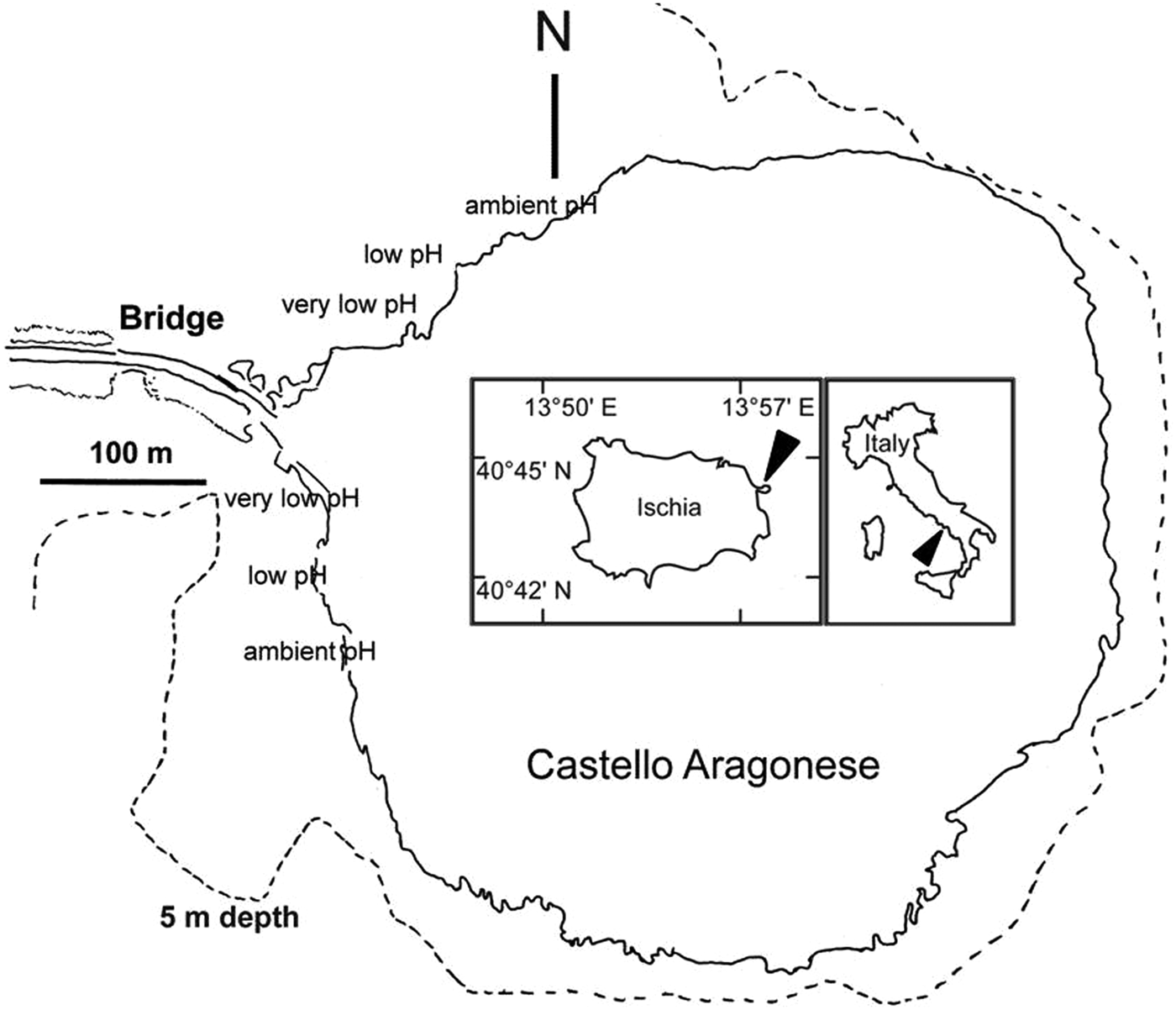
The study area is the Castello Aragonese, a small islet located on the north-east side of the volcanic island of Ischia (Tyrrhenian Sea, Italy) (Figure 1). The Castello Aragonese is connected to the main island of Ischia by a road and a bridge. On the south and north sides of the islet there are shallow areas (1–3 m depth) characterized by intense venting of gas, composed primarily (~95%) of CO2 (Tedesco, 1996; Hall-Spencer et al., Reference Hall-Spencer, Rodolfo-Metalpa, Martin, Ransome, Fine, Turner, Rowley, Tedesco and Buia2008), no sulphur present. Temperature, salinity, and oxygen concentration are similar to the shallow coastal waters of the Central Tyrrhenian Sea (Lorenti et al., Reference Lorenti, Buia, Di Martino and Modigh2005). In the areas of most intense venting on both the south and north sides of the island, the seawater next to the rocky reef substrate is highly acidified compared to the normal seawater conditions (mean pHT = 6.6–7.2; Hoffmann et al., 2011, Kroeker et al., Reference Kroeker, Micheli, Gambi and Martz2011). From these extreme low pH zones, as defined by Kroeker et al. (Reference Kroeker, Micheli, Gambi and Martz2011), there are gradients of acidification along the rocky reefs spanning approximately 150 m of the coastline on the northern and southern sides of the Castello Aragonese. Approximately 150 m from the areas of highest venting, the pHT is comparable to normal conditions (mean pHT 8.1–8.0; Kroeker et al., Reference Kroeker, Micheli, Gambi and Martz2011). Along these gradients (in both the north and south), three zones were selected: ‘extreme low pH’ (pH mean range 6.6–7.2); ‘low pH’ (7.6–7.8); and ‘ambient pH’ (normal pH conditions, 8.1–8.0). For pH measurements, we used in situ pH meters (using Honeywell Durafet® pH sensors) measuring hourly in situ pH values (see Hoffmann et al., 2011; Kroeker et al., Reference Kroeker, Micheli, Gambi and Martz2011 for more details and carbonate chemistry). Benthic invertebrates were collected in November 2008. Samples were collected from 20 × 20 cm (400 cm2) rocky reef plots at 1–1.5 m deep on continuous, rocky substrate ranging from 50° to 85° in orientation from horizontal. In order to take into consideration the spatial variability of each pH-zone identified (~50 m long), four plots were sampled in each area: the first two plots at the beginning of the pH-zone and the other two plots towards its final part (see Kroeker et al., Reference Kroeker, Micheli, Gambi and Martz2011 for more details on sampling design). We sampled a total of 24 plots (12 on the south side and 12 on the north side). Small mobile invertebrates (<5 cm) were collected using a vacuum device powered by a SCUBA cylinder (air-lift sampler in Buia et al., Reference Buia, Gambi, Dappiano, Gambi and Dappiano2004) that was placed over the plot for approximately 30 s. The remaining benthos (including all the macroalgae) was scraped off the substrate and collected for processing. The samples were placed in 4% buffered formalin for 24 h and then transferred to a 70% ethanol solution for storage. A dissecting microscope was used to separate the invertebrates from the algae.
Map of the study site at the Castello Aragonese (Ischia Island, Tyrrhenian Sea) with location of the pH gradient on the south and north sides of the islet.

The Fabriciidae were separated from the other families and examined under the stereo and compound microscopes. Drawings were made with a camera lucida mounted on the microscope, while photographs were also taken with an Axio Cam ERc5S camera mounted on a microscope Zeiss Primo Star. Due to the relatively modest number of species (six) and individuals collected over the gradient, as well as a patchy distribution for most of the species, data are not suitable for statistical analysis, nor was it possible to apply any statistical test to the abundance or diversity data. Abundance of each species was summed within the pH-zones to highlight the distribution patterns along the pH gradient.
Holotypes and paratypes of the two new species described were deposited at the MNCN (Museo Nacional de Ciencias Naturales, Madrid, Spain). The abbreviation PCZL refers to Giangrande's private polychaete Collection at the Zoological Laboratory of the Salento University, while MCG refers to Gambi's private polychaete Collection at the Stazione Zoologica Anton Dohrn (Ischia, Napoli).
RESULTS
A total of 265 specimens of Fabriciidae, belonging to six species and five genera, were collected. Two of the species, Brifacia aragonensis sp. nov. and Parafabricia mazzellae sp. nov., are new to science and belong to genera previously unreported in the Mediterranean Sea.
Distribution pattern
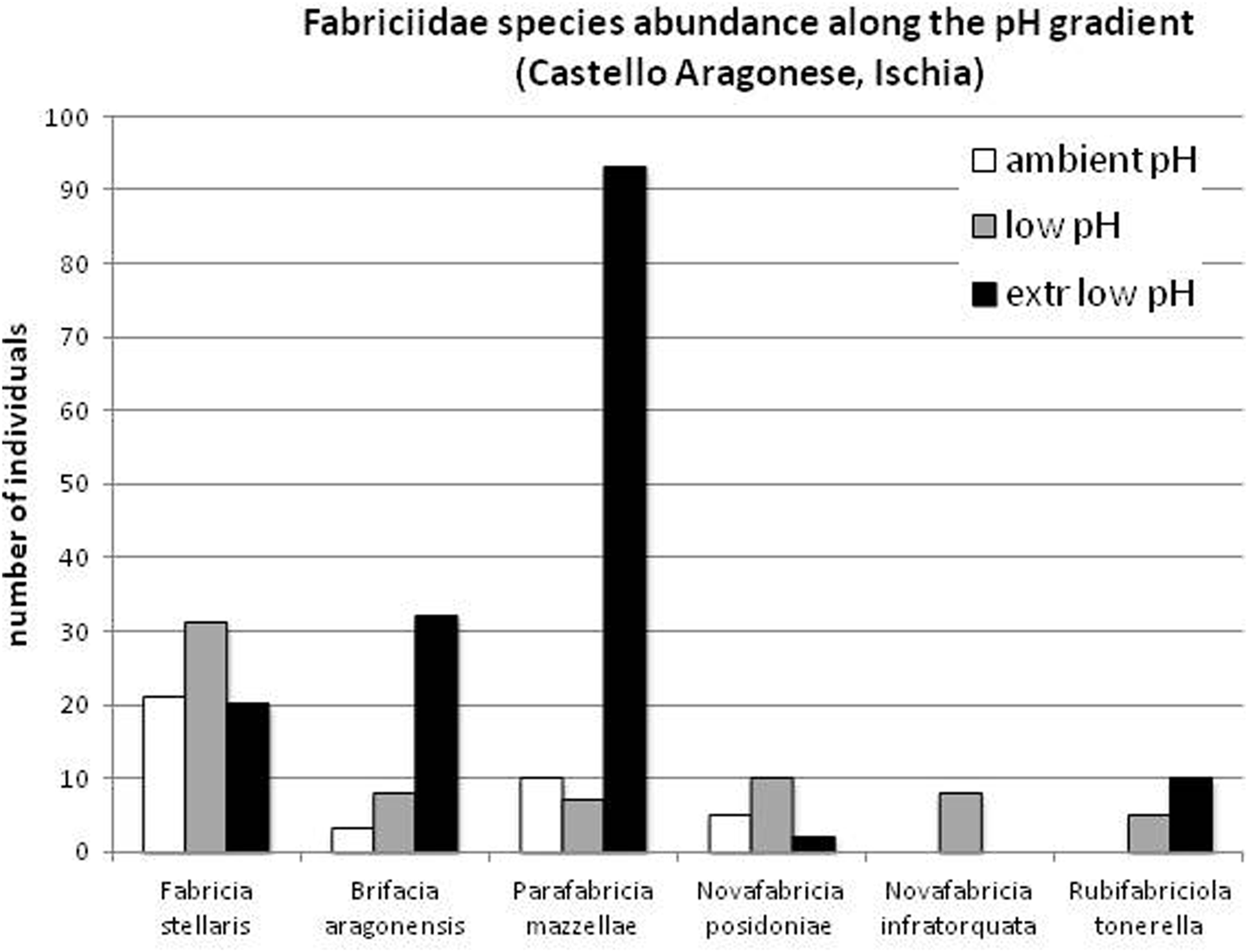
Most of the species were present across the entire pH gradient (Figure 2), with the exception of Novafabricia infratorquata (Fitzhugh, Reference Fitzhugh1983) for which only eight specimens were collected in the low pH zone in the southern site. Fabricia stellaris stellaris was present across all pH zones, including the extreme low pH zones (20 specimens). In addition, the two new taxa, Brifacia aragonensis sp. nov. and Parafabricia mazzellae sp. nov., were present in all pH zones and most abundant in the extreme low pH zones (32 and 93 specimens, respectively). The abundance pattern of these taxa in extreme low pH was more pronounced at the southern site. Parafabricia mazzellae was the most abundant taxa in the extreme low pH. Novafabricia posidoniae Licciano & Giangrande, 2004, and Rubifabriciola tonerella (Banse, 1959), were relatively scarce, although a few specimens of both taxa were collected also in extreme low pH conditions.
Fabriciidae species abundance along the pH gradient at the Castello Aragonese (Ischia).
SYSTEMATICS
Family FABRICIIDAE Rioja, Reference Rioja1923
Genus Fabricia Blainville, 1828
Fabricia stellaris stellaris (Müller, 1774). Type locality: Atlantic Ocean, Denmark.
Synonyms: Tubularia stellaris Müller, 1774; F. stellaris Blainville, 1828; T. fabricia Müller, 1776; Othonia fabricii Johnston, 1835; Amphicora sabella Ehrenberg, 1836; F. quadripunctata Frey & Leuckart, 1847; F. affinis Leuckart, 1849; F. sabella Grube, 1850; F. amphicora Quatrefages, 1865; A. fabricia Malmgren 1867; F. fabricii Bush, 1905; F. leidyi Verril, 1873; F. dubia Wesenberg-Lund, 1941; Haplobranchus atlanticus Treadwell, 1932; Fabriciola bochmanni Friedrich, 1939.
MATERIAL EXAMINED
72 specimens; ambient pH stations: N1a: 14 individuals; N1b; 2, N1c: 4; S1a: 1; low pH stations: N2a: 14, N2b: 2; N2c: 1; S2a: 14; extreme low pH stations: N3a: 1, N3b: 5; N3c: 1; N3d: 7; S3a: 1; S3c: 5. N, north; S, south; 1, ambient pH; 2, low pH; 3 extra low pH; a, b, c and d, sample replicates.
DESCRIPTION OF MATERIAL COLLECTED IN THE CASTELLO ARAGONESE AREA (TYRRHENIAN SEA)
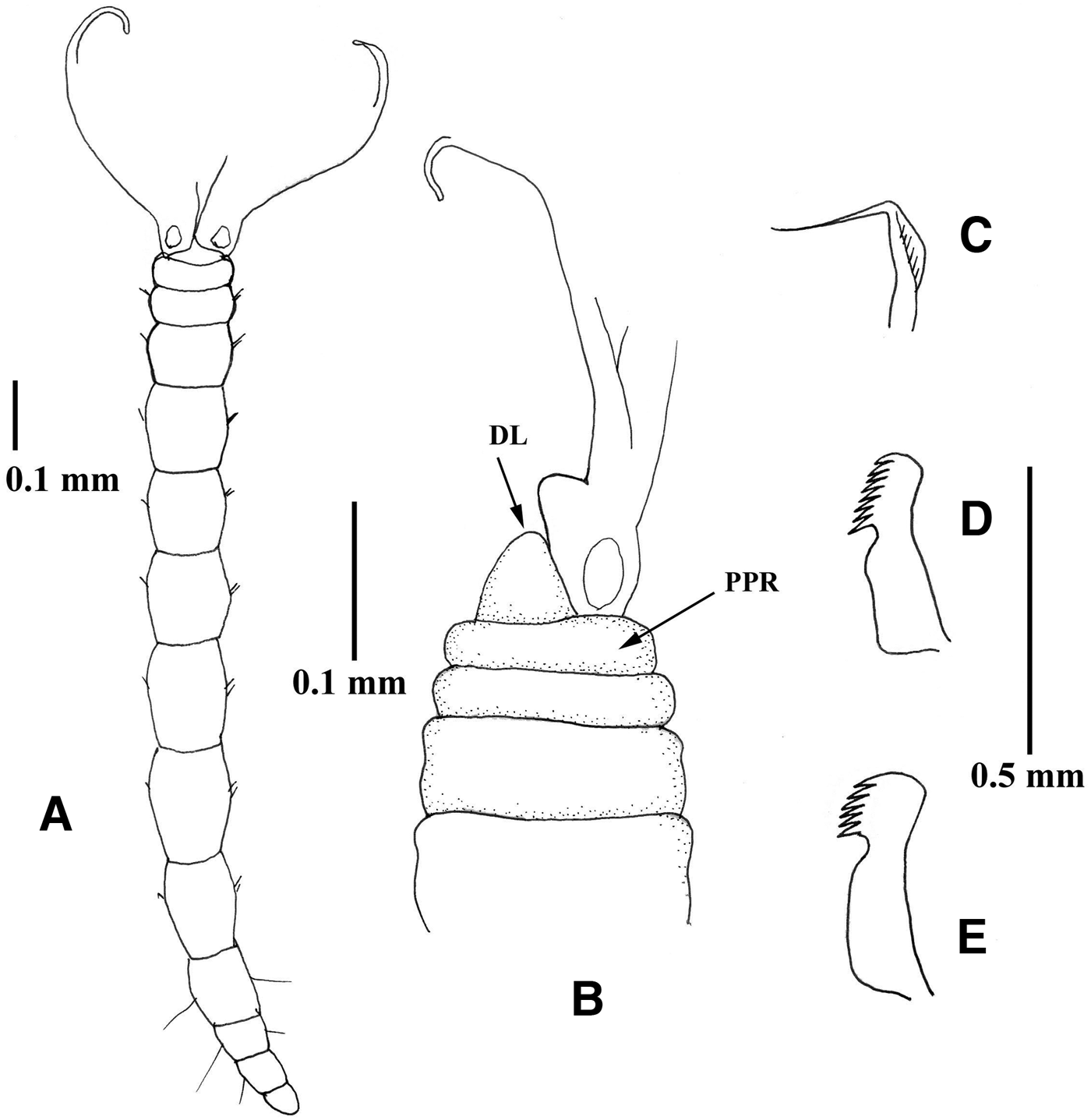
Small specimens about 1.5 mm length and 0.15 mm wide (1 mm body length), with eight thoracic and three abdominal chaetigers (Figures 3A, 4A). Three radioles per lobe. Six to eight pairs of pinnule per radiole, terminating at the same height, branchial hearts present, ventral filamentous appendages absent. Dorsal lips triangular and well developed (Figures 3B, 4B). Anterior peristomial ring wider than long, developed ventrally as a rounded conical lobe. Single pair of peristomial eyes, black and rounded. Superior thoracic notochaetae elongate, narrowly hooded, 4–6 per fascicle. Inferior thoracic notochaetae shorter and narrowly hooded in chaetigers 2–8, 2–3 per fascicle. Pseudospatulate chaetae (Figure 3C) present at chaetigers 3–7 in number of two per fascicle. Thoracic uncini acicular, 7–9 per fascicle. Abdominal modified neurochaete elongate, narrowly hooded, 2–3 per fascicle. Dentate region of abdominal uncini with 9–10 rows of teeth, 3–4 teeth per row. Handle about two times longer than dentate region (Figure 3D, E).
Fabricia stellaris stellaris: (A) entire worm dorsal view; (B) ventral view of the anterior portion of the worm, showing the dorsal lip after cutting half of the crown; (C) pseudospatulate chaeta; (D) abdominal uncinus, profile; (E) abdominal uncinus from the subspecies F. stellaris adriatica. PPR, posterior peristomial ring; DL, dorsal lip.
Photographs of the collected species in the present paper plus Fabricia stellaris adriatica: (A) F. stellaris stellaris entire; (B) F. stellaris stellaris, particular of the anterior end ventral view; (C) F. stellaris adriatica entire; (D) Brifacia aragonensis entire; (E) B. aragonensis particular of the anterior end ventral view; (F) Parafabricia mazzellae entire; (G) P. mazzellae particular of the anterior end without crown; (H) Novafabricia posidoniae entire; (I) N. posidoniae particular of the anterior end ventral view; (L) Novafabricia infratorquata entire; (M) Rubifabriciola tonerella entire; (N) R. tonerella particular of the anterior end dorsal view.
REMARKS
This genus is monotypical with most of the species previously attributed to the genus Fabricia transferred to the genus Novafabricia Fitzhugh, 1990 (Fitzhugh, Reference Fitzhugh1990a). The two genera differ mostly in the distribution of pseudospatulate chaetae of the thoracic chaetigers, that in Novafafricia can be present in chaetigers 3–5 or 3–6, while in Fabricia are distributed in chaetigers 3–7, moreover the dorsal lips in Novafabricia are reduced to low, narrow ridges or absent, while in Fabricia they are well developed (1.5 was the ratio between length of dorsal lips and length of first thoracic chaetiger).
This is the first documentation of the dorsal lips from material of F. stellaris stellaris collected in the Mediterranean Sea. They seem less developed than in specimens collected both from the North Sea and the Atlantic Ocean, as shown in Banse (Reference Banse1956). No further pictures of dorsal lips in the genus Fabricia are available after this description, Indeed, figures of this feature are very rare in literature and are not present also in the revision of Fabricia (Fitzhugh, Reference Fitzhugh1990b). Within the Mediterranean basin, another taxon is present with dorsal lips similar to Mediterranean specimens of F. stellaris stellaris: F. stellaris adriatica (Banse, Reference Banse1956). This taxon was considered a valid species by Fitzhugh (Reference Fitzhugh1990b), however, he did not discuss its systematic position due to the poor preservation of the specimens. An examination of material from the North Adriatic Sea showed that this taxon differs from F. stellaris stellaris due to a shorter branchial crown with only three pairs of pinnules (Figure 4C), pseudospatulate chaetae with shorter tips, and abdominal uncini with only six teeth in profile (Figure 3E, F). Based on these differences, we suggest it should be considered a separate taxon.
As far as reproductive features of the Mediterranean specimens of F. stellaris stellaris, we were unable to observe eggs in the available specimens, while spermatogenesis occurs in chaetigers 3–8.
HABITAT
The species lives in sediment tubes in intertidal or shallow sub-tidal areas, in vermetid reefs, within macroalgae, seagrass meadows, mussel beds and barnacles, but especially in sheltered areas with high sedimentation and high organic matter content.
DISTRIBUTION
Boreal hemisphere until the Arctic region. Mediterranean distribution: Medes Islands (Spain), Sea of Marmara (Turkey), Adriatic Sea, Tyrrhenian Sea, Ionian Sea. Records for the Antarctic and Tropical Australia waters are likely incorrect (Fitzhugh K., personal communication)
Genus Brifacia Fitzhugh, Reference Fitzhugh1998
Brifacia aragonensis sp. nov.
MATERIAL EXAMINED
43 specimens, stations: ambient pH: N1d: 2 individuals; S1c: 1; low pH: N2c: 1; N2d: 4; S2b: 2; S2c: 1; extreme low pH: N3a: 3; S3a: 2; S3b: 7; S3d: 20. Holotype from sample S3d (extreme low pH) MNCN 16.01/14697; paratypes from sample S3d (extreme low pH) deposited at MNCN 15332. Remaining specimens deposited in the PCZL collection at the University of Salento (Lecce, Italy), and in the MCG collection at the Stazione Zoologica Anton Dohrn (Ischia, Napoli).
DESCRIPTION
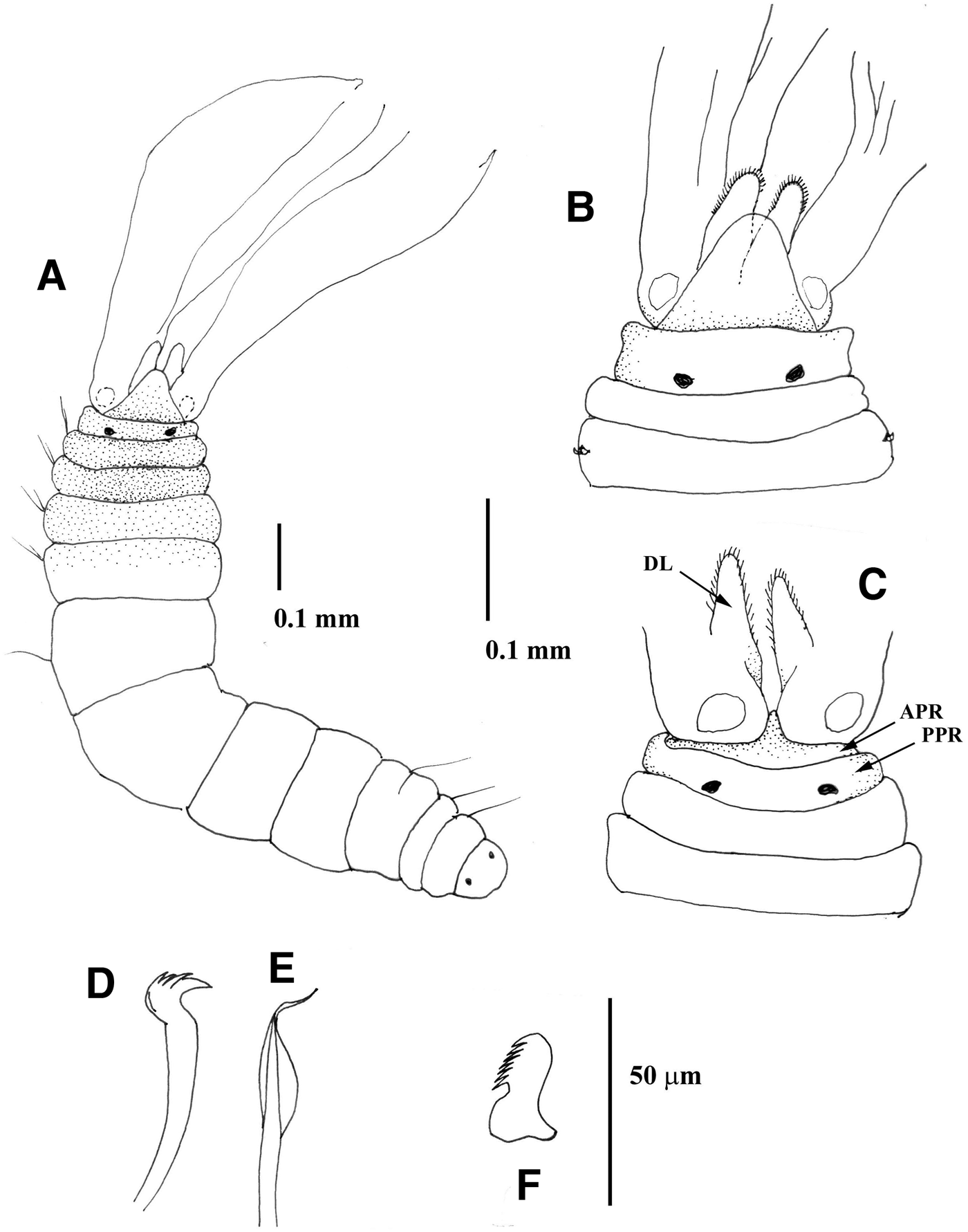
Holotype complete with 8 thoracic and 3 abdominal segments. Branchial crown length 0.5 mm, body length 1.1 mm, maximum width 0.3 mm. Body short and massive, slightly tapered anteriorly and posteriorly, with very flattened first two thoracic chaetigers (Figures 4D, 5A). Branchial crown with three pairs of radioles, each with 7–8 pairs of pinnules terminating at the same height. Branchial hearts present. Ventral filamentous appendages absent. Dorsal lips erect, well developed, triangular ridges with dorsal margins separated from proximal-most pinnules of dorsal radioles (Figures 4E, 5B, C). Anterior margin of anterior peristomial ring as a low ridge dorsally and laterally. Collar well developed ventrally as a triangular lobe (Figure 5B). One pair of black eyes along anterior margin of posterior peristomial ring. Chaetigers 5–6 longer than others. One pair of black pygidial eyes. Superior thoracic notochaetae elongate, narrowly hooded, 3 per fascicle. Inferior thoracic notochaetae of chaetigers 2 and 8 shorter and narrowly hooded, in number of 1–2 per fascicle. Only one broadly hooded pseudospatulate chaeta per fascicle (Figure 5E) present in chaetigers 3–7. Acicular uncini in chaetigers 2–8, in single row of 8–9 per fascicle, with main fang slender, single large tooth over the main fang followed by a series of small teeth; hood present (Figure 5D). Abdominal neuropodia with elongate narrowly hooded chaetae, 2–3 per fascicle. Abdominal uncini with dentate region with 7–8 rows of teeth in profile, 3–4 teeth per row, manubrium as long as dentate region slighthly expanded proximally (Figure 5F). From 18, 16 and 15 abdominal uncini in each torus, proceeding from chaetigers 9–11. Males with spermiogenesis occurring in chaetigers 4–8. Distribution of eggs was not observed.
Brifacia aragonensis sp. nov.: (A) entire worm ventral view; (B) anterior end ventral view showing the dorsal lips; (C) anterior end dorsal view showing the dorsal lips; (D) thoracic uncinus; (E) pseudospatulate chaeta; (F) abdominal uncinus. APR, anterior peristomial ring; PPR, posterior peristomial ring; DL, dorsal lip.
Dark brown pigment covering peristomal rings and the first thoracic chaetigers.
ETYMOLOGY
The species is named after the type locality, the Castello Aragonese d'Ischia. The Castello, an ancient fortress, is named after the Spanish royal dynasty from Aragona that dominated this area (1443–1504) and that rearranged the castle settlement (an ancient Roman castrum) in its present state.
REMARKS
This genus is new for Mediterranean polychaete fauna. The genus Brifacia was described for the New South Wales (Australia) for the species B. metastellaris Fitzhugh, Reference Fitzhugh1998, which was found inhabiting intertidal algal mats (Fitzhugh, Reference Fitzhugh1998). The diagnosis of the genus was identical to that of Fabricia, which is currently monotypical, except for the distribution of spermiogenesis, which in Fabricia occurs in chaetigers 3–8, and for the length of the manubrium of abdominal uncini, which in Fabricia is two times longer than the dentate regions. Dorsal lips of this new taxon are also more developed than those of F. stellaris stellaris, with a higher ratio between the length of dorsal lips and the length of the first thoracic chaetiger. Specifically, this value was 4 in B. aragonensis and about 2 in B. metastellaris. The difference in this value between the two species is because the first two chaetigers appear more compressed (more wide than long) in B. metastellaris. Indeed B. aragonensis is about half the size of B. metastellaris, although its appearance is more enlarged. Brifacia aragonensis also has a more developed ventral collar lobe, a shorter tip of broadly hooded pseudospatulate chaetae, and a smaller number of thoracic notochaetae (up to only 5 in the Mediterranean taxon, compared to 15 in the Australian taxon). Moreover, the thoracic hooks are arranged in single row, respect to the arrangement in irregular double row shown by the Australian taxon. Lastly, there are fewer abdominal uncini compared to the Australian taxon, as well as fewer teeth of the abdominal uncini (7–8 compared to 9–10).
Genus Parafabricia Fitzhugh, Reference Fitzhugh1992
Parafabricia mazzellae sp. nov.
MATERIAL EXAMINED:
110 specimens; ambient pH stations: N1d: 4 individuals; S1a: 1; S1c: 4; low pH stations: S2a: 6; S2b: 1; extreme low pH stations: N3d: 3; S3c: 4; S3d: 93.
Holotype from sample S3d (extreme low pH), MNCN 16.01/14698; paratypes from sample S3d (extreme low pH) deposited at MNCN 15333. Remaining specimens deposited in PCZL collection at University of Salento (Lecce, Italy), and MCG collection at Stazione Zoologica Anton Dohrn (Ischia, Napoli).
DESCRIPTION
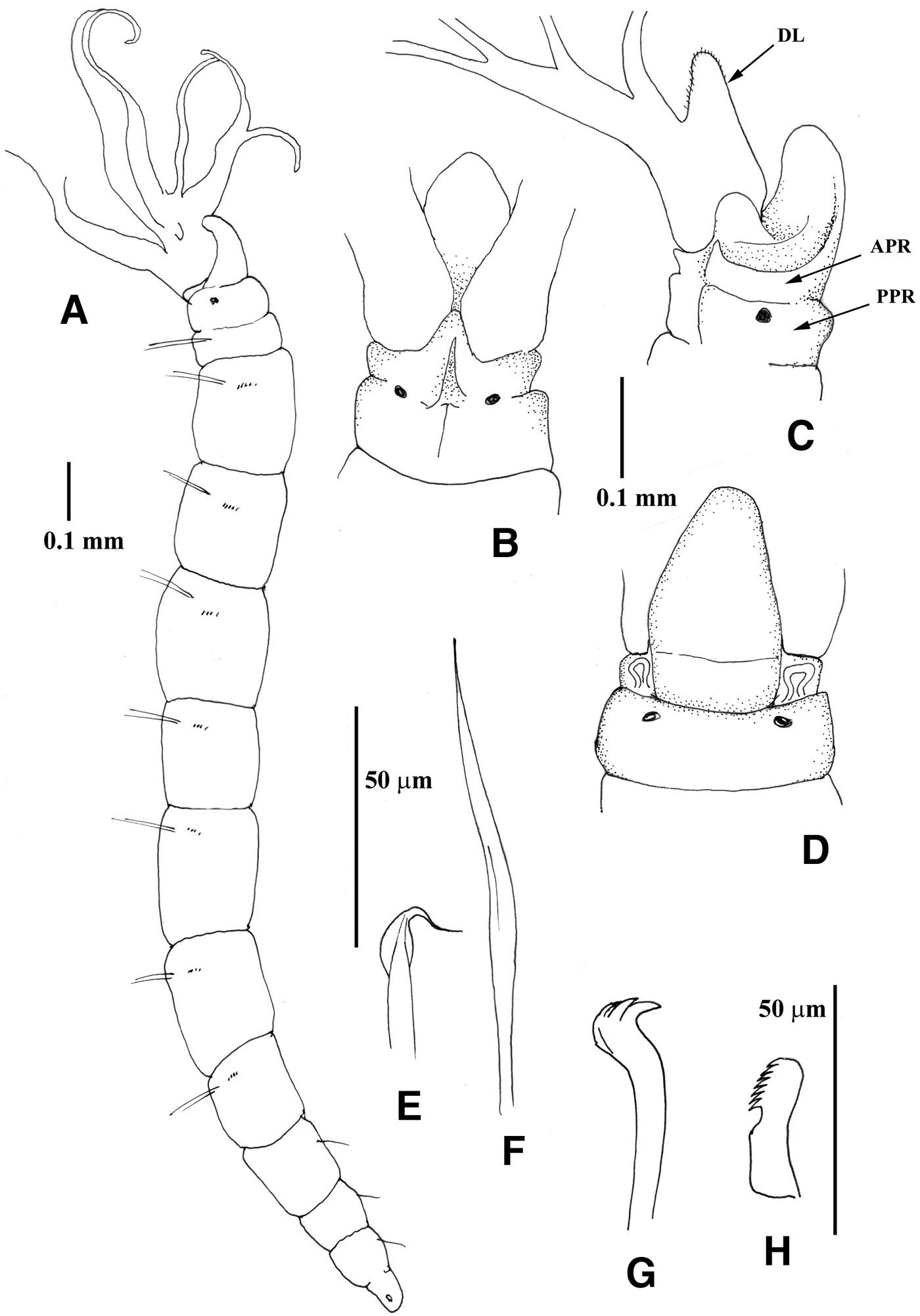
Holotype complete with eight thoracic and three abdominal segments. Branchial crown length 0.5 mm, body length 2.1 mm, maximum width 0.2 mm. Body slender (Figures 4F, 6A). Branchial crown with three pairs of radioles, each radiole with 6–7 pairs of pinnules all terminating at the tip of radioles. Branchial hearts present. Ventral filamentous appendages absent. Dorsal lips erect and well developed, distally rounded with dorsal margins separated from proximal-most pinnules of dorsal radioles (Figure 6C). Anterior margin of anterior peristomial ring with well developed ridges dorsally and laterally. Anterior peristomial ring developed ventrally as broad, thin lobe widest proximally and broadly rounded distally, at least two times longer than posterior peristomial ring (Figure 6A–D). One pair of black eyes along anterior margin of the posterior peristomial ring. First chaetiger short, all the remaining chaetigers about four times longer than chaetiger 1, giving an elongate appearance. One pair of black pygidial eyes. Superior thoracic notochaetae elongate, narrowly hooded (Figure 6F), 3 per fascicle. Inferior thoracic notochaetae of chaetigers 2 and 8 shorter and narrowly hooded, 1–2 per fascicle. One broadly hooded pseudospatulate chaeta in chaetigers 3–7 (Figure 6E). Acicular uncini in chaetigers 2–8, 10–12 per fascicle, main fang slender, single large tooth over the main fang followed by a series of small teeth; hood present (Figure 6G). Abdominal neuropodia with elongate narrowly hooded chaetae (Figure 6F), 2–3 per fascicle. Abdominal uncini with dentate region with 7–8 rows of teeth in profile, 2–3 teeth per row, manubrium 1.5 longer than dentate region (Figure 6H), in number of 18 to 25 per torus. Body wall without dark pigmentation in the anterior end of some individuals, others with just light brown pigmentation. Eggs in chaetigers 3–4. Vascular loops visible in the peristomial ring above the eyes (Figure 6D).
Parafabricia mazzellae sp. nov.: (A) entire worm ventral view; (B) particular of the anterior end dorsal view; (C) particular of the anterior end lateral view without half crown, showing the dorsal lip; (D) particular of the anterior end ventral view; (E) pseudospatulate chaeta; (F) abdominal chaeta; (G) thoracic uncinus; (H) abdominal uncinus. APR, anterior peristomial ring; PPR, posterior peristomial ring; DL, dorsal lip.
ETYMOLOGY
The species is named in memory of Dr Lucia Mazzella (head of the benthic ecology Laboratory of the Stazione Zoologica Anton Dohrn of Naples from 1986 to 1999), who initiated the first ecological studies at the Castello Aragonese area in the mid-1970s.
REMARKS
The genus was previously unreported in the Mediterranean. This genus was described from the Great Barrier Reef of Australia with the species P. ventricingulata inhabiting the intertidal algal mat (Fitzhugh, Reference Fitzhugh1992). The diagnosis of the genus was identical to that of Fabricia, except for the shape of the ventral lobe collar, which is broad and thin, and for the length of the manubrium of abdominal uncini, which is shorter than in Fabricia. The specimens from our study area were attributed to the genus Parafabricia according to the flattened appearance of the ventral collar lobe coupled with the length of the manubrium of the abdominal uncini. Parafabricia mazzellae differs from P. ventricingulata in its longer size with a more elongated appearance, in the more developed ventral lobe collar, in the longer manubrium of the abdominal uncini (however, always shorter than in the genus Fabricia), but especially in the absence of the glandular ridge on chaetiger 5. At a first superficial view its slender appearance led to identify our specimens as another monotypical genus endemic to the Mediterranean Sea, Pseudofabricia aberans Cantone, 1972, especially for the development of ventral collar lobe (Figure 4G). However, despite this apparent similarity this taxon clearly distinguishes from Pseudofabricia genus for the presence of pseudospatulate chaetae in the thorax.
Genus Novafabricia Fitzhugh, 1990
Novafabricia posidoniae Giangrande & Licciano, 2006
MATERIAL EXAMINED
17 specimens; ambient pH stations: S1b: 5 individuals; low pH stations: N2c: 10; extreme low pH stations: S3c: 2.
A description of this taxon is given in Licciano & Giangrande (Reference Licciano and Giangrande2006).
The species was described from the Tyrrhenian Sea (Ponza Island, Italy).
No differences were recorded in the material collected in the present study from previous findings. The species is easily recognizable within the genus due to the pointed ventral collar lobe (Figure 4H, I).
Novafabricia infratorquata (Fitzhugh, Reference Fitzhugh1983)
MATERIAL EXAMINED
8 specimens; low pH stations: S2c: 6; S2d: 2.
A redescription of this taxon is already present in Bick (Reference Bick2005) and in Licciano & Giangrande (Reference Licciano and Giangrande2006).
REMARKS
The present record represents the second one for the Western Mediterranean basin. The species was described in the Caribbean Sea by Fitzhugh (Reference Fitzhugh1983) and then reported in the Western Mediterranean by Bick (Reference Bick2005) and in the Eastern basin by Giangrande & Licciano (2006).
The limited number of specimens in the present study had an absence of pigmentation, similar to the observed specimens from the Eastern basin (Figure 4L) (Licciano & Giangrande, Reference Licciano and Giangrande2006). This is in contrast to what was reported by Bick (Reference Bick2005) for the Western basin, and highlights some degree of variability within this taxon.
Genus Rubrifabriciola Huang, Fitzhugh & Rouse, Reference Huang, Fitzhugh and Rouse2011
Rubrifabriciola tonerella (Banse, 1959). Type locality: Thyrrenian Sea (Italy)
MATERIAL EXAMINED
15 specimens; low pH stations: N2c: 4 individuals; S2a: 1; extreme low pH stations: N3b:1; N3c: 6; N3d: 3.
A description of this taxon is present in Bick (Reference Bick2005).
REMARKS
The genus was recently erected to accommodate several species previously ascribed to Fabriciola (Huang et al., Reference Huang, Fitzhugh and Rouse2011). The synapomorphy for this group is the presence of red eyes, which persist after fixation (in formalin) and storage in alcohol (Figure 4M, N), in addition to some unique reproductive characters (Huang et al., Reference Huang, Fitzhugh and Rouse2011). Most of the species included in this genus also have an abdominal pin-head neurochaetae. In the Mediterranean Sea, there are two known species of this genus: R. tonerella is the most common and is an autocthonous species (Banse, Reference Banse1956), while R. ghardaqa is an introduced species from the Suez Canal (lessepsian migrant), which to date has only been reported in the Southern Adriatic Sea (Zenetos et al., Reference Zenetos, Gofas, Verlaque, Cinar, Garcia-Raso, Bianchi, Morri, Azzurro, Bilecenoglu, Froglia, Siokou, Violanti, Sfriso, San Martin, Giangrande, Kataan, Ballesteros, Ramos-Espla, Mastrototaro, Ocana, Zingone, Gambi and Streftaris2011).
Here we provide an identification key for the Mediterranean genera and species of Fabriciidae, which including the two new described taxa account for a total of 8 genera and 11 species (Giangrande et al., Reference Giangrande, Licciano and Castelli2013).
KEY TO FABRICIIDAE GENERA AND SPECIES UP TO NOW RECORDED FOR THE MEDITERRANEAN SEA
1.
a. Thoracic uncini with distinct main fang surmounted by a series of small teeth. Up to four abdominal uncini and presence of short unbranched filament (ventral filamentous appendage) ............. Echinofabricia rousei
b. Thoracic uncini with tooth decreasing in size over the main fang. Only three abdominal chaetigers ............. 2
2.
a. Pseudospatulate chaetae present, thoracic uncini with only one asymmetrical large tooth over the main fang, anterior peristomial ring collar developed as a ventral lobe, ventral filamentous appendages absent ............. 3
b. Pseudospatulate chaetae absent, some genera can have flagellate chaetae but never pseudospatulate, variable shape of thoracic uncini and collar ............. 8
3.
a. Pseudospatulate chaetae in chaetigers 3–6. Dorsal lips low and fused to proximal-most pinnule. Abdominal uncini with few large teeth in profile in the dentate region ............. Novafabricia 4
b. Pseudospatulate chaetae in chaetigers 3–7. Dorsal lips well developed and separate from the proximal pinnule. Abdominal uncini with a large number of small teeth in profile in the dentate region ............. 5
4.
a. Ventral collar lobe very pointed. Manubrium of abdominal uncini as long as dentate region ............. N. posidoniae
b. Ventral collar lobe more rounded. Manubrium of abdominal uncini two times longer than dentate region ............. N. infratorquata
5.
a. Anterior peristomial ring collar broad and flattened ............. Parafabricia mazzellae
b. Anterior peristomial ring collar low, triangular ............. 6
6.
a. Manubrium of abdominal uncini at least two times longer than dentate region ............. Fabricia 7
b. Manubrium of abdominal uncini about the same length of dentate region ............. Brifacia aragonensis
7.
a. Crown long with 6–7 pinnules in each radiole ............. F. stellaris stellaris
b. Crown short with only 3 pinnules in each radiole ............. F. stellaris adriatica
8.
a. Anterior peristomial ring collar as a ventral elongate and flattened lobe. Thoracic uncini with an asymmetrical large tooth over the main fang. Ventral filamentous appendages very short ............. Pseudofabricia aberans
b. Anterior peristomial ring collar developed as a membranous collar, thoracic uncini with two large symmetrical teeth over the main fang ............. 9
9.
a. Membranous collar with a dorsal gap, ventral filamentous appendages long as radioles, peristomial red eyes present also after fixation ............. Rubifabriciola 10
b. Membranous collar entire all around, ventral filamentous appendages absent ............. Pseudofabriciola 11
10.
a. Collar higher ventrally, thoracic flagellate chaetae present ............. R. tonerella
b. Collar at the same height dorsally and ventrally, dorsal gap very wide ............. R. gardaqa
11.
a. Pygidium enlarged ............. P. analis
b. Pygidium elongated ............. P. longipyga
DISCUSSION
Fabriciidae were particularly abundant and diverse in the study area. Almost all species collected were distributed across the entire acidification gradient, including the most acidified zones (extreme low pH), with the exception Novafabricia infratorquata. The species belonging to genus Novafabricia Fitzhugh, 1990 appear to be more sensitive to low pH, since N. posidoniae were also less abundant in the most acidified zones, although this trend cannot be statistically tested.
By contrast the two new taxa described here (Brifacia aragonensis sp. nov. and Parafabricia mazzellae sp. nov.) were more abundant in the extreme low pH zone than in ambient pH conditions, with P. mazzellae being the most abundant among the Fabriciidae species in these zones. This trend suggests that these species are not only capable of coping with such harsh environmental conditions, but that they may actually benefit from reduced pH enviroments. This could be due to specific eco-physiological adaptation or acclimation to low pH conditions, as observed in the sabellid A. mediterranea (Calosi et al., Reference Calosi, Rastrick, Lombardi, de Guzman, Davidson, Jahnke, Giangrande, Hardege, Schulze, Spicer and Gambi2013) which was also found in high abundance in the extreme low pH zones (Kroeker et al., Reference Kroeker, Micheli, Gambi and Martz2011; Ricevuto et al., Reference Ricevuto, Lorenti, Patti, Scipione and Gambi2012). Because these fabriciid polychaetes are relatively uncommon under normal conditions (although they are often under-reported), their increased abundance in extreme low pH could also be due to increased competitive ability in the novel conditions and/or less competition with other taxa that are less tolerant of the harsh pH conditions (community compensation, Kroeker et al., Reference Kroeker, Micheli, Gambi and Martz2011). Another possible reason for the relatively high abundance of Fabriciidae in low and extreme low pH is the differences in macroalgal composition and cover among the pH zones. The diversity of macroalgae is reduced in the acidified conditions (Porzio et al., Reference Porzio, Buia and Hall-Spencer2011), and the resulting communities are quite simplified and homogeneous, dominated by filamentous algae and fleshy erect algae (Kroeker et al., Reference Kroeker, Micheli and Gambi2013), which mainly provide habitat for relatively small organisms and interstitial taxa such as Fabriciidae. Indeed, there was a high abundance of other small-sized species (e.g. A. mediterranea, various small amphipods species) and interstitial taxa (e.g. polychaete Exogoninae) in the same plots where fabriciids were abundant, which could signal that the invertebrates were responding indirectly to seawater chemistry via changes in habitat structure (Kroeker et al., Reference Kroeker, Micheli, Gambi and Martz2011; Ricevuto et al., Reference Ricevuto, Lorenti, Patti, Scipione and Gambi2012, Gambi et al., unpbublished data).
Because so little is known about the ecology of this often neglected or under-reported group of small polychaetes, it is hard to compare the results from this study with other areas of the Mediterranean. However, a high abundance of some fabriciids belonging to Fabricia and Augeneriella has been reported in other potentially physiologically stressful conditions, such as sheltered environments with a large silt input (Lewis, Reference Lewis1968) or in brackish waters (Gitay, Reference Gitay1970), while species of the genus Manayunkia are common in freshwater (e.g. M. aestuarina Bourne, 1883) or in salt lakes (e.g. M. athalassia Hutchings, Denuer & Geddes, 1981). All of these examples suggest that adaptation to stressful conditions might be a common trait within this family.
The present paper documents a higher number of fabriciids in the Mediterranean than previously recorded, bringing the current estimates to eight genera and 11 species. Both the new genera presently reported for the Mediterranean were until now considered monotypical, belonging to an assemblage of other genera, all monotypical, in which individuals have the following combination of features: (1) triangular dorsal lips; (2) inner, ventral margins of branchial lobes adjacent to the dorsal lips, as opposed to developed as ventral filamentous appendages; and (3) anterior peristomial ring collar in the form of a ventral lobe. This group includes Fabricia Blainville, 1828, Parafabricia Fitzhugh, Reference Fitzhugh1992, Brifacia Fitzhugh, Reference Fitzhugh1998 and Raficiba Fitzhugh, Reference Fitzhugh2001. Pseudospatulate chaetae are present in chaetigers 3–7 in members of Fabricia, Parafabricia and Brifacia and in chaetigers 2–8 in members of Raficiba (Huang et al., Reference Huang, Fitzhugh and Rouse2011). The cladistics analysis of Huang et al. (Reference Huang, Fitzhugh and Rouse2011) revealed that the difference among these taxa is comparable to the differences existing among species in other genera (e.g. Novafabricia). Therefore, it is likely that the monotypical status of some genera should be reconsidered. As suggested by Fitzhugh (Reference Fitzhugh2010), however, the presence of several monotypical genera characterizing this group could be an artefact of the Linnean nomenclature for the scientific recognition of taxa.
The occurrence of these two new taxa in the Mediterranean is intriguing, considering that the co-generic species of both taxa are distributed in the austral hemisphere. Such a disjunct distribution is often the result of a transoceanic dislocation, such as the one that occurred for the sabellid Laonome triangularis Murray & Hutchings, 1984 (Çinar, Reference Çinar2009), or the most recent example of Laonome calida Capa, 2007 (Capa et al., Reference Capa, van Moorsel and Tempelman2014), from Australia to the Mediterranean. The isopod genus Mesanthura Barnard, 1914 is another example of an originally-Australian taxon that was recently reported in the Mediterranean and showed features closely related to the Australian species Mesanthura romulea Poore & Lew Ton, 1986, although it was not possible to exclude the presence of a cryptic species (Lorenti et al., Reference Lorenti, Dappiano and Gambi2009). In the case of the two species identified in this study, it is difficult to imagine an introduction of these two Fabriciide to the Mediterranean, although it is not unusual that an undescribed species attracts attention only after introduction. This is the case for the sabellid Bispira polyomma, which was recently recorded by Faasse & Giangrande (Reference Faasse and Giangrande2012). However, it is more likely that both these new taxa were already present in Mediterranean but previously confused with other Mediterranean species. In particular, Brifacia aragonensis sp. nov. could easily be misidentified as Fabricia stellaris, and Parafabricia mazzellae sp. nov. as Pseudofabricia aberans Cantone, 1972.
As a whole, the limited knowledge on the actual number of species existing across the world prevents any useful biogeographical inferences. Our understanding of Fabriciidae distribution is still far from exhaustive due to the difficulty in sampling and identifying these small and cryptic taxa. For example, the genus Echinofabricia Huang, Fitzhugh & Rouse, 2011 was recently reported for Mediterranean (Giangrande et al., Reference Giangrande, Licciano and Castelli2013) based on material collected 25 years ago, when the only other species in this genus had been reported on the Hawaiian coast. Other than the Mediterraenean taxon, there are only three known species that are distributed throughout the world, including Australia. Moreover, our understanding of their distribution is complicated due to the fact that fabriciids are direct developers (Rouse & Fitzhugh, Reference Rouse and Fitzhugh1994), which increases the potential for their geographical isolation and speciation.
Finally, the occurrence and high abundance of new species in the extremely acidic conditions may also be related to the fact that unique habitats, such as the natural volcanic vents, have not been studied in great detail. As such, our understanding of the species capable of surviving in such harsh pH conditions is still scarce. Along these lines, a new Acoela interstitial worm (Philactinoposthia ischiae Nilsson, Wallberg & Jondelius, 2011) was recently described in the coarse sandy sediments in the north acidified area of the Castello Aragonese (Nilsson et al., Reference Nilsson, Wallberge and Jondelius2011). In addition, some morphological and genetic differentiation has been observed for the brown alga Sargassum vulgare, which represents one of the few macroalgae that thrives in the most acidified areas associated with the CO2 vents (Porzio et al., Reference Porzio, Buia and Hall-Spencer2011; Chiarore et al., Reference Chiarore, Patti and Buia2012). Finally, transplant experiments of selected polychaetes from the CO2 vent habitat along the pH gradient suggest that some of the species studied are either acclimated or locally adapted to low pH, showing exclusive genotypes in the acidified area (Calosi et al., Reference Calosi, Rastrick, Lombardi, de Guzman, Davidson, Jahnke, Giangrande, Hardege, Schulze, Spicer and Gambi2013). All these results suggest that the CO2 vent system of Ischia represents a unique habitat that can be used as a natural laboratory to study also the evolutionary effects of ocean acidification. The evolutionary implications of ocean acidification for diversity and adaptation of the marine biota, recently highlighted by Sunday et al. (Reference Sunday, Crim, Harley and Hart2011, Reference Sunday, Calosi, Dupont, Munday, Stillman and Reusch2013), remain, in fact, one of the main issues for future investigations on the far-reaching biological effects of one of the main aspects of oceanic global climate change.
ACKNOWLEDGEMENTS
We wish to thank Captain V. Rando, B. Iacono, M. C. Buia and L. Porzio (Stazione Zoologica Anton Dohrn, Naples) for their support during sampling on hard bottoms at the Castello Aragonese (Ischia island). We wish also to thank the referees for useful comments and suggestions for the manuscript, and K. Fitzhugh and M. Capa for advice and provision of some literature.