INTRODUCTION
Many crustaceans attach fertilized eggs to abdominal appendages and brood the eggs through embryo development. Brooding in decapods is well studied (e.g. Saigusa & Hidaka, Reference Saigusa and Hidaka1978; Forward, Reference Forward1987; Saigusa, Reference Saigusa1994; Tankersley et al., Reference Tankersley, Bullock, Forward and Rittschof2002; Darnell & Rittschof, Reference Darnell and Rittschof2010). Although decapod embryos are only physically attached to the female (Cheung, Reference Cheung1966), there is intimate chemical communication between the female and the brood (reviews: Forward, Reference Forward1987; Rittschof, Reference Rittschof1993).
In brachyuran crabs, attachment of eggs to the female during development is essential to embryo survival and successful hatching. In particular, Rhithropanopeus harrisii (Gould, 1841) embryos only survive when removed from the female if provided with highly filtered water treated with antibiotics (Forward & Lohmann, Reference Forward and Lohmann1983). Similarly, Sesarma haematocheir embryos removed from the female more than 48 h prior to hatching do not successfully hatch (Saigusa, Reference Saigusa1992). The female ensures oxygenation and waste removal in the clutch by ventilating the egg mass, which involves opening and closing the abdominal flap (review: Fernández & Brante, Reference Fernández and Brante2003). The frequency of this ventilation behaviour increases as the embryos mature (De Vries & Forward, Reference De Vries and Forward1991a; Fernández et al., Reference Fernández, Pardo and Baeza2002; Tankersley et al., Reference Tankersley, Bullock, Forward and Rittschof2002; Fernández & Brante, Reference Fernández and Brante2003). Egg mass ventilation culminates when the eggs hatch and larvae are released. At the time of larval release, the female rises on her walking legs and pumps (opens and closes the abdominal flap vigorously), which mechanically assists in egg hatching and propels the larvae into the water column (Saigusa, Reference Saigusa1982; Forward & Lohmann, Reference Forward and Lohmann1983; Rittschof et al., Reference Rittschof, Forward and Mott1985; Forward, Reference Forward1987).
There is evidence that exogenous chemicals and larval release pheromones coordinate pumping behaviour in crabs (reviews: Forward, Reference Forward1987; Rittschof, Reference Rittschof1993; Rittschof & Cohen, Reference Rittschof and Cohen2004). Timing of larval release is controlled by the embryos and assisted by the female (Forward et al., Reference Forward, Lohmann and Cronin1982, Reference Forward, Rittschof and De Vries1987; Forward & Lohmann, Reference Forward and Lohmann1983; Rittschof et al., Reference Rittschof, Forward and Mott1985, Reference Rittschof, Forward, Simons, Reddy and Erickson1989; De Vries et al., Reference De Vries, Rittschof and Forward1991) and communication between brood and female often culminates in synchronous egg hatching and larval release (review: Forward, Reference Forward1987). Larval release pheromones that stimulate pumping behaviour are present in hatch water and in crushed embryos (Forward, Reference Forward1987; De Vries & Forward, Reference De Vries and Forward1991a; Tankersley et al., Reference Tankersley, Bullock, Forward and Rittschof2002). Trypsin-like serine proteases produce these pheromones (De Vries & Forward, Reference De Vries and Forward1991b). These pheromones include small peptides with an arginine or lysine carboxyl terminus; their basic terminus is preceded by one or two neutral amino acids (Rittschof et al., Reference Rittschof, Forward and Mott1985, Reference Rittschof, Forward, Simons, Reddy and Erickson1989; Forward et al., Reference Forward, Rittschof and De Vries1987; Rittschof, Reference Rittschof1993; Rittschof & Cohen, Reference Rittschof and Cohen2004).
Despite the evidence that these peptide pheromones are involved in both egg mass ventilation and coordination of egg hatching, little is known about the location of the receptors. Sensory receptors are commonly found on the antennae, maxillipeds and legs of crustaceans (review: Derby, Reference Derby2000). However, ablation studies by De Vries et al. (Reference De Vries, Rittschof and Forward1989) showed that all normal receptor appendages could be ablated and crabs still pumped in response to larval release pheromone mimics, suggesting that receptors might be located on the thorax or the pleopods. Studies to investigate receptor location are hindered by the high potency of peptide pheromones (Forward et al., Reference Forward, Rittschof and De Vries1987; Rittschof et al., Reference Rittschof, Forward, Simons, Reddy and Erickson1989; Pettis et al., Reference Pettis, Erickson, Forward and Rittschof1993), the compressed morphology of brachyurans, and the close physical connection between the brood and all potential receptor locations on the female (De Vries et al., Reference De Vries, Rittschof and Forward1989).
Lobsters have similar complex communication and relationships between the brood and the female (Ennis, Reference Ennis1973; Branford, Reference Branford1978; Ziegler & Forward, Reference Ziegler and Forward2007a, Reference Ziegler and Forwardb). Lobsters have also been used extensively to study the neurophysiology of sensory perception (e.g. Ache & McClintock, Reference Ache and McClintock1990; Schmidt & Ache, Reference Schmidt and Ache1996; Wachowiak et al., Reference Wachowiak, Diebel and Ache1996). If the receptors coordinating egg mass ventilation and larval release behaviours could be located in lobster, they might be readily studied at the neurophysiological and biochemical levels. However, the large size of lobsters, which makes them ideal for state of the art neurophysiological and biochemical studies, is technically difficult for experimental behaviour studies that are necessary to demonstrate potential locations of receptors. Here we surveyed small shrimp species, which have the elongate morphology of the lobster and experimental advantages similar to those of small brachyuran crabs.
The goal of this study was to determine whether caridean shrimps have behaviours related to brood care that are similar to brachyurans (DeCoursey, Reference DeCoursey, Naylor and Hartnoll1979; Saigusa, Reference Saigusa1982; Forward & Lohmann, Reference Forward and Lohmann1983; De Vries & Forward, Reference De Vries and Forward1991b; Tankersley et al., Reference Tankersley, Bullock, Forward and Rittschof2002) and both clawed and spiny lobsters (Ennis, Reference Ennis1973, Reference Ennis1975; Ziegler & Forward, Reference Ziegler and Forward2007a, Reference Ziegler and Forwardb). We hypothesized that caridean shrimps would exhibit increased egg mass ventilation without additional stimulus as embryos matured, and would respond to chemical stimuli known to evoke increases in ventilation in other brooding groups. We completed the study by selecting the shrimps that were easiest to work with experimentally and performing focal stimulation studies to gain perspective on the physical location of the receptors.
MATERIALS AND METHODS
Test animals
Palaemon serratus (Pennant, 1777) were collected from high intertidal rock pools on the shore immediately in front of the Marine Biological Association Laboratory (50°21′48.74″N 4°8′22.66″W), Plymouth, UK. Crangon crangon (Linnaeus, 1758) were sorted from shrimps trawled from the River Tamar near the Calstock Viaduct (50°29′46″N 4°12′36″W). Palaemonetes vulgaris (Say, 1818) were collected from under the floating dock at the Duke University Marine Laboratory (34°43′2.76″N, 76°40′14.52″W) Beaufort, NC, USA using dip nets or from 20 cm diameter and 60 cm long 1/4 in mesh Vexar® cylinders suspended 50 cm below the surface. Palaemonetes pugio (Holthuis, 1949) were collected with dip nets from an intermediate tidal creek, Bell Creek, about 10 km from the Duke Marine Laboratory (34°47′23.61″N 76°40′7.74″W). Alpheus heterochaelis (Say, 1818) were collected from low intertidal oyster beds surrounding the Duke University Marine Laboratory (34°43″3.07″N 76°40′23.48″W). Only ovigerous animals were collected.
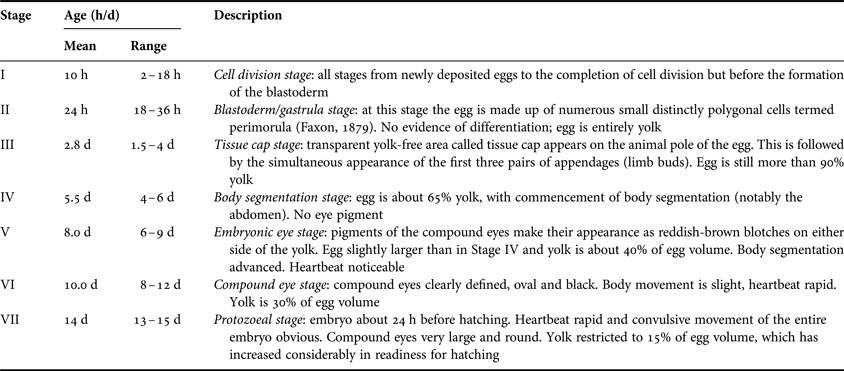
Holding conditions were tailored to each species. After capture P. serratus were moved directly to 5 cm diameter 6.5 cm high, 120 ml wide mouth specimen jars containing 50 ml of water and tested immediately. Crangon crangon were maintained at ambient temperature and light and fed chopped fish in a 40 l holding tank in the running seawater system of the laboratory. Before testing in bioassays, individuals were placed in 120 ml wide mouth jars containing 50 ml of unfiltered ambient seawater and allowed to equilibrate for 30 min. Grass shrimps (P. vulgaris and P. pugio) were held at 25°C with available light with no set period in groups of 20–50 in 20 l buckets containing about 16 l of 1 µm filtered seawater and were fed (Great Salt Lake Brand) newly hatched brine shrimps Artemia spp. daily. Snapping shrimps were held at 25°C and ambient light in 20 cm diameter 6.5 cm high finger bowls with a small oyster shell for shelter. For testing, P. vulgaris, P. pugio and A. heterochaelis were placed in 8 cm diameter 2.8 cm high culture bowls containing approximately 40 ml of 1 µm filtered seawater 1 h before tests. Stage of development of embryos was determined with a dissecting microscope after the method of Wilson (Reference Wilson1985) (Table 1).
Description of stages of embryonic development of Palaemonetes pugio (reproduced from Wilson, Reference Wilson1985).

Test solutions
All test solutions were based upon seawater. Additions to seawater were crushed egg extracts (Forward et al., Reference Forward, Lohmann and Cronin1982), arginine bradykinin (bradykinin; Sigma-Aldrich B3259), a commercially available nonapeptide used previously as a pheromone mimic (McClary, Reference McClary1997) and a shell availability cue for Calliactis tricolor (Le Sueur, 1817) (Brooks et al., Reference Brooks, Ceperley and Rittschof1995) and des-Arg9 bradykinin (Sigma-Aldrich D6769), an octapeptide missing the carboxyl terminal arginine, which is essential for biological activity in other peptide pheromone systems (review: Rittschof & Cohen, Reference Rittschof and Cohen2004).
Crushed egg extracts were made from mid- to late-stage (P. vulgaris and A. heterochaelis) or all stage (P. serratus and C. crangon) eggs with embryos. Preliminary studies indicated that ventilation responses were more pronounced using eggs with later stage embryos than with those at earlier stages of development. Ovigerous females of P. vulgaris and A. heterochaelis were abundant enough that late-stage eggs were readily available. However, ovigerous P. serratus and C. crangon were less abundant and less synchronous in development, so eggs with embryos at all stages of development were used for extracts in these species. Eggs with visible embryos were removed from the female with forceps, counted and homogenized in a volume of 0.45 µm filtered seawater to a concentration of 200 eggs/ml or 1 egg/µl. The homogenate was then centrifuged at 14,000 r/min in a microcentrifuge for 1 min. The supernate was either frozen undiluted or diluted to 0.1 egg/ml, 1 egg/ml, 2 eggs/ml, and 10 eggs/ml and frozen at −20°C in 1 ml aliquots. Stocks of bradykinin and des-Arg9 bradykinin were 10−3 M in distilled water and frozen at −20°C. Due to variation in shrimp availability and sensitivity to each test solution, different species were tested on different concentrations of both crushed eggs and bradykinin. Stocks of all solutions were diluted to appropriate test concentrations in seawater immediately before use in tests.
Behavioural observations
Observations of egg mass ventilation (Forward et al., Reference Forward, Lohmann and Cronin1982; Forward & Lohmann, Reference Forward and Lohmann1983) were based on previous studies (Forward & Lohmann, Reference Forward and Lohmann1983; Ziegler & Forward, Reference Ziegler and Forward2007a). Because shrimps ventilate the egg mass by moving the pleopods frequently and quickly, observations were made on one shrimp at a time. We scored ventilation without additional stimulus by moving a shrimp into view and then observing from a stationary position. We waited until the shrimp remained in one place for 5 s and then counted pleopod motions for a prescribed amount of time. Ventilation without additional stimulus was determined for P. pugio (N = 10), P. vulgaris (N = 10) and A. heterochaelis (N = 3–8) that were carrying broods ranging in developmental time from newly deposited to just prior to hatching. In each species, all eggs in a brood were at the same developmental stage; for each female, the developmental stage and corresponding time until hatching for the brood were determined according to the method of Wilson (Reference Wilson1985) (Table 1). The relationship between the frequency of ventilation and the time until hatching of the embryos was determined by linear regression (Microsoft® Excel® 2010 Analysis ToolPak).
Behavioural assays were used to quantify responses to crushed egg extracts and to larval release pheromone mimics. Stimuli were applied by micropipette under the centre of the egg mass, at approximately pleopod 3. Since pilot studies revealed species-specific differences in sensitivities to the test stimuli and variable resting ventilation frequencies, the volume of test stimulus varied between 5 µl and 40 µl, and the pleopod motions were counted for between 5 and 30 s, depending upon species. Shrimps that jumped out during the test were retested at the end of the stimulus series. For any given stimulus, all females were tested with each concentration. The time between trials for a given female was the time it took to test the other females; this resting time minimized stress on each animal. In every test the protocol for stimulus delivery and observation was: deliver control stimulus; observe for the prescribed interval; remove micropipette; reinsert micropipette next to shrimp; deliver test stimulus to stationary shrimp; observe. Prior to testing each stimulatory compound, the control level of ventilation for that stimulus was determined using a second delivery of seawater as the stimulus. Following this control test, each test solution was delivered after delivery of an additional seawater control. Shrimps that ventilated at least once more in response to the stimulus than to this additional seawater control were scored as increasing. The z-test for proportions (Sokal & Rohlf, Reference Sokal and Rohlf1995) compared the proportion of shrimps that increased ventilation frequency in response to the seawater control with the proportion that increased in response to the test solution. Responses of the shrimps to each concentration of a test solution were analysed separately. In cases in which the ventilation rate in the control treatment was high enough that the z-test could not detect an increase, a paired t-test (Sokal & Rohlf, Reference Sokal and Rohlf1995) was used to compare the number of ventilations/15 s in response to seawater control and test solutions.
Behavioural responses were evaluated for crushed eggs and the peptide pheromone mimic bradykinin using P. serratus (N = 10), C. crangon (N = 10), P. vulgaris (N = 30) and A. heterochaelis (N = 30). In addition, responses to bradykinin that lacks the basic carboxyterminal amino acid (des-Arg9-bradykinin) were determined for P. vulgaris (N = 30) and A. heterochaelis (N = 30). For P. serratus and C. crangon, egg masses were of a mixture of stages, as available when collected. For P. vulgaris and A. heterochaelis, egg masses were late stage. Ovigerous P. pugio repeatedly jumped out of the test container when stimuli were applied, so were not used for additional assays.
Focal stimulation of shrimp appendages
To gain insight into locations of ventilation pheromone receptors, pairs of stimuli (seawater first then crushed egg extract (200 eggs/ml)) were applied to the 1st and 5th pleopods, the head region of shrimps with known chemoreceptor activity (antennules, antennae and maxillipeds) and first walking legs (used in feeding) (Derby, Reference Derby2000) of P. serratus (N = 16 for each test). This species was used because it was the most likely to remain stationary during the tests, and rarely jumped out of the test container. In each test, 5 µl of stimulus was applied with a micropipette directly to a test body part. The order of presentation was varied systematically. Each presentation was made when the test shrimp was stationary. Upon stimulus application, the observer counted the number of ventilation movements the shrimp made in the first 5 s. Shrimps that swam during the 5 s interval were retested when at rest. Responses to seawater and test solutions were compared using a G-test for independence with H0: stimulation with extract = that of seawater (Sokal & Rohlf, Reference Sokal and Rohlf1995).
A second set of assays using P. serratus (N = 15) quantified behaviours other than egg mass ventilation that were noticed during focal stimulation. Stimuli included: (1) no stimulus; (2) 5 µl of seawater; and (3) 5 µl of 200 crushed eggs/ml. Flicking of the right antennule was counted for 5 s after 5 µl focal application to the ascetascs. Maxilliped movement and probing of the container bottom by the first walking legs was quantified following focal stimulation of the first walking legs. Without stimulation the maxillipeds were typically stationary; response to the stimulus was defined as rapid fanning of the maxillipeds. Flicking rate with seawater and extract was compared using a paired t-test (Sokal & Rohlf, Reference Sokal and Rohlf1995). Changes in maxilliped movement and probing by walking legs were compared using a G-test for independence with H0: stimulation with extract = that of seawater (Sokal & Rohlf, Reference Sokal and Rohlf1995).
In order to understand the pattern of water movement around the body parts that were stimulated in the focal stimulation assays, we conducted a series of observations using a mixture of a drop of blue food coloring in 1 ml of seawater. Following the assays, we delivered 5 µl of this dye mixture to each body part, and immediately observed the direction of motion of the dye.
Ablation experiments
Two sets of ablation experiments were conducted in order to assess whether pheromone receptors were located on the pleopods. In one set of experiments, either the first, second, or both first and second pleopods were removed from P. serratus and the ventilation response determined (N = 6 for each experiment). Ventilation response was defined as the flapping of the remaining pleopods within a short (5 s) period immediately following delivery of the stimulus. Removal of either single pleopod was considered as a control for the removal of the other, as well as the control for removal of both. Pleopods were ablated by pinching the proximal segment of the pleopod between the body and the two distal rami with forceps until the appendage autotomized. The pleopod was then removed by slow pulling of the appendage. Each appendage came free of the animal with a cluster of eggs attached to the proximal portion. Shrimps were rinsed in a litre of ambient seawater and then transferred to assay bottles. After 30 min, the shrimps were stimulated with 5 µl of crushed egg extract, which was the amount of extract equivalent to one crushed egg. The stimulus was delivered at pleopod 3 and presence or absence of ventilation observed; at this concentration all animals with intact pleopods reacted to the stimulus.
Pleopods are biramous with eggs attached to one ramus and the other ramus positioned over and touching the egg mass. In a second set of experiments with P. vulgaris (N = 11), the ramus without attached eggs was removed from all pleopods following cooling of the shrimps in an ice bath. Shrimps were held in room temperature water for 24 h prior to testing. They were tested with crushed egg extracts at concentrations of 0.1, 1, 2 and 10 eggs/ml. In these experiments the stimulus was delivered at pleopod 3.
RESULTS
Behavioural observations
VENTILATION BEHAVIOUR
Egg mass ventilation in ovigerous shrimps is characterized by fanning of the pleopods to which the eggs are attached. In the absence of added stimulus, ventilation occurs with the shrimp in a lowered posture. Ventilation is defined as bouts of fanning events, and intervals between bouts decrease as embryos develop. In the last 12 h before egg hatching shrimps ventilate nearly continuously. When shrimps are chemically stimulated at low concentrations, the ventilation posture is similar to that without chemical stimulus. With higher levels of stimulus, the posture is analogous to brachyuran larval release behaviour (Forward & Lohmann, Reference Forward and Lohmann1983): shrimps, like crabs, raise their bodies off the bottom of the dish and the ventilation bursts are more forceful and more frequent. This general behaviour is common to all shrimps tested, but is different in degree; some species ventilate more frequently than others, in the presence or absence of stimulus.
VENTILATION WITHOUT STIMULUS
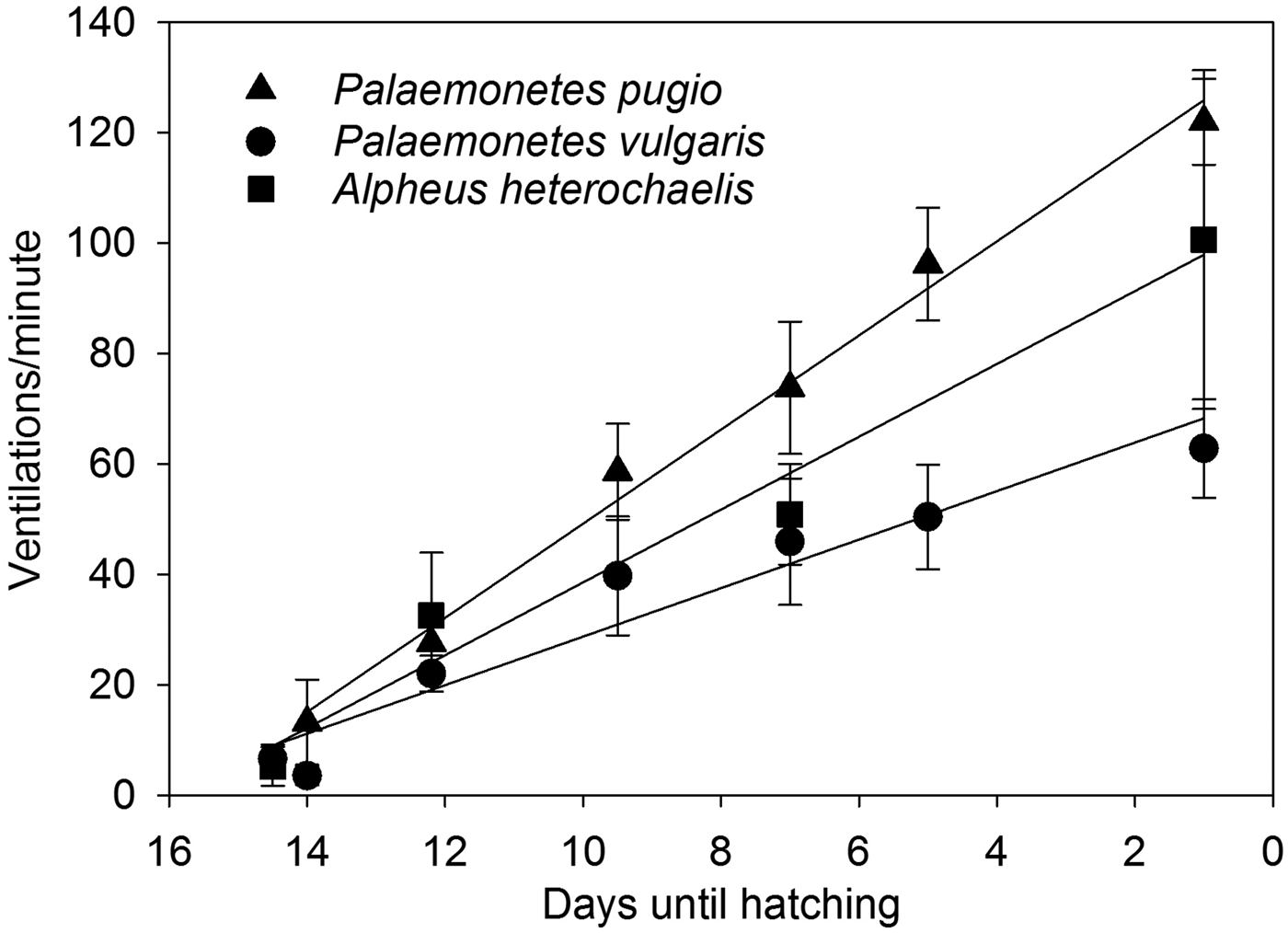
For all species tested, the mean rate of ventilation without stimulation increased linearly with decreasing time until hatching of the embryos (Figure 1). Palaemonetes vulgaris increased from less than 10 ventilations/min in the earliest stage to over 50 ventilations/min when embryos were nearing hatching (y = −4.40 + 72.7; R 2 = 0.94; P ⋘ 0.001). Palaemonetes pugio also increased nearly tenfold, from 13 to 122 ventilations/min (y = −8.53 + 134.5; R 2 = 0.99; P ⋘ 0.001). Ventilation in Alpheus heterochaelis increased similarly, from 5 to over 100 ventilations/min as the embryos developed (y = −6.6x + 104.5; R 2 = 0.97; P = 0.015; Figure 1).
Mean (±standard error) ventilation rates without additional stimulus for three shrimp species: Palaemonetes vulgaris (N =10); Palaemonetes pugio (N = 10); and Alpheus heterochaelis (N = 3–8). Days until hatching estimated from Wilson (Reference Wilson1985) for P. pugio and P. vulgaris. For A. heterochaelis, days until hatching was estimated based on developmental stages as in Palaemonetes species.
VENTILATION IN RESPONSE TO CHEMICAL STIMULI
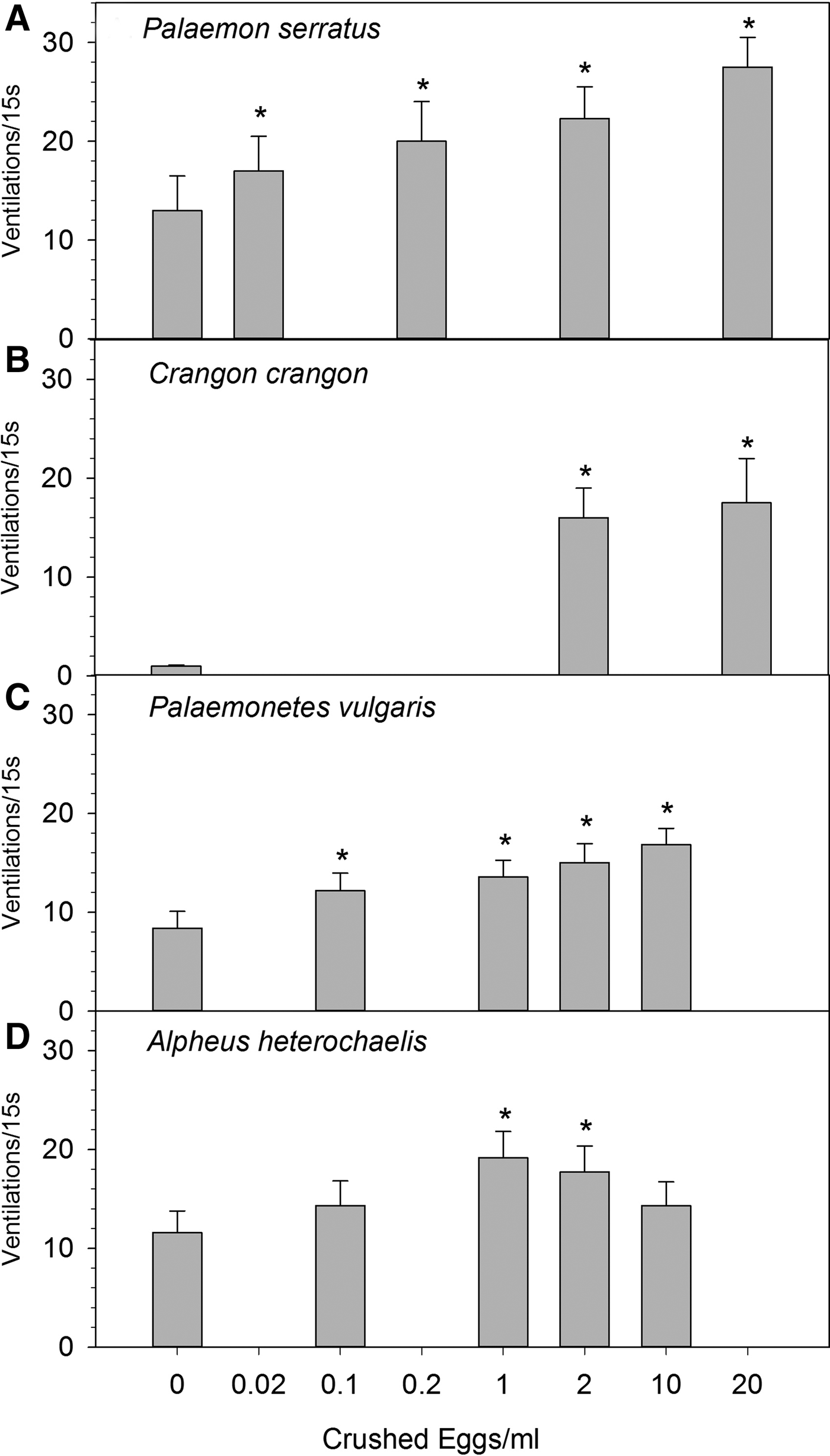
In all shrimp species, ventilation movements increased with increasing concentrations of crushed egg extract and then plateaued or decreased with higher concentrations (Figure 2). Responses for Palaemon serratus and Crangon crangon increased from 12 or fewer ventilations in the control to over 20 ventilations/15 s in the highest concentration (Figure 2A, B). For both species, in all concentrations of crushed eggs, the proportion of shrimps that increased ventilation rate in response to the stimulus was significantly higher than the proportion that increased in the control treatment (z > 1.65; P < 0.05 for all tests). Ventilation in P. vulgaris doubled from the control to the highest concentration (10 eggs/ml; Figure 2C); the proportion that increased ventilation rate in response to the stimulus was significantly higher than the proportion that increased in the control treatment for all test concentrations (z > 3.5; P < 0.01 for all tests). For A. heterochaelis, the number of ventilations/15 s increased from 12 in the control to 14 in 0.1 and 19 in 1 egg/ml, then stayed relatively constant in 2 and decreased to 14 in 10 eggs/ml (Figure 2D). Due to the relatively high ventilation rates in response to the control treatment, none of these responses were higher than their controls (z-test for proportions). However, for 1 and 2 eggs/ml, the ventilation rates (ventilations/15 s) were significantly higher than the rates in response to seawater controls (t 29 > 1.60; P < 0.005 for both).
Mean (±standard error of the mean) ventilation rates of four shrimp species stimulated with various concentrations of crushed eggs: (A) Palaemon serratus (N = 10); (B) Crangon crangon (N = 10); (C) P. vulgaris (N = 30); (D) Alpheus heterochaelis (N = 30). * indicates that proportion of individuals increasing ventilations over seawater control in response to test solution was significantly higher (P < 0.05) than proportion increasing ventilation in response to seawater control by z-test for proportions (A, B, C). Responses to seawater control administered immediately before stimulus omitted for clarity. * indicates number of ventilations/15 s significantly different from control by paired t-test (D). Not all species were tested with all concentrations; absence of bars indicates no tests performed at that concentration for that species.
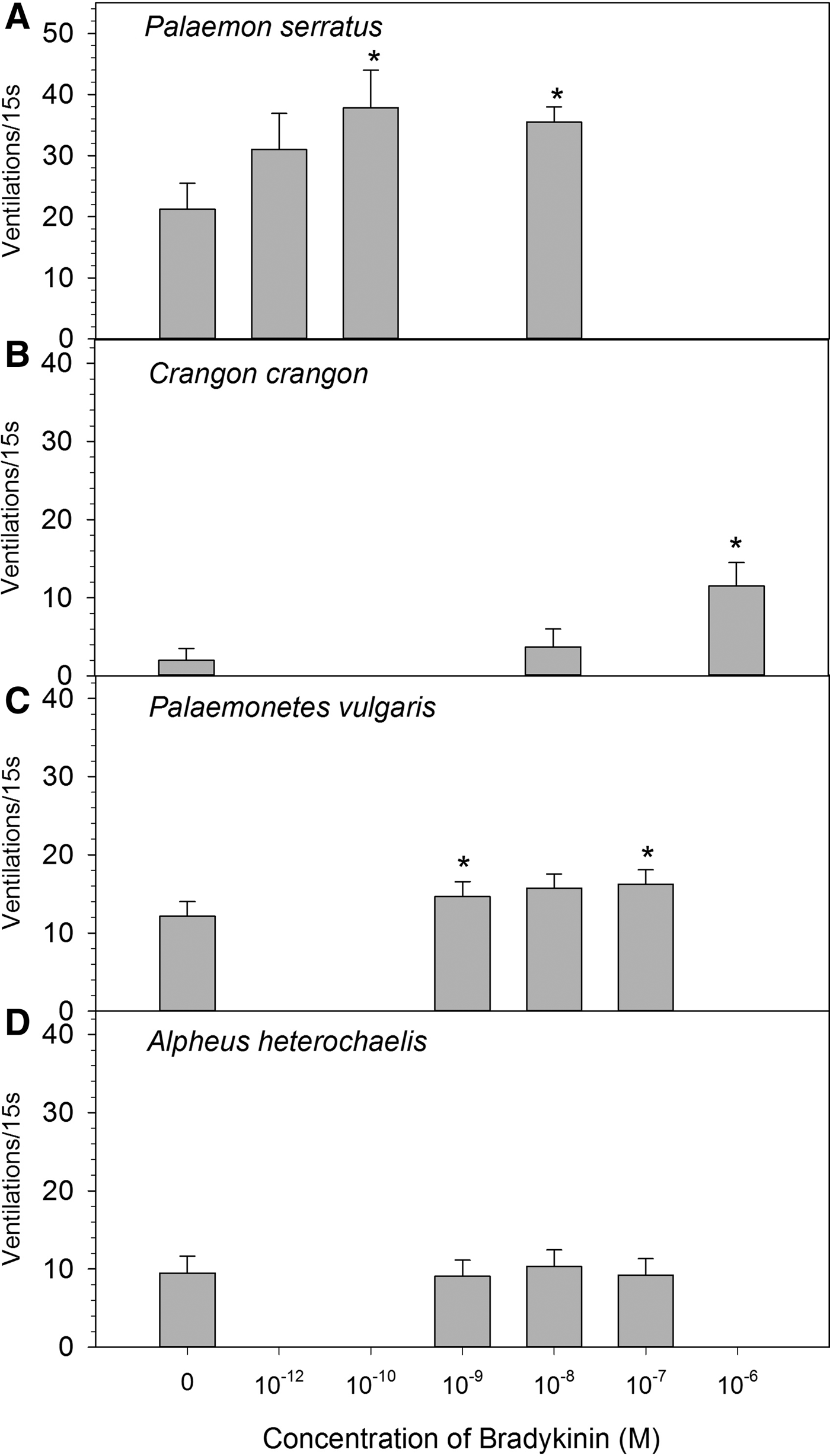
Results for assays using the pumping pheromone mimic bradykinin were similar to those for crushed eggs. Overall sensitivity varied with species, but in general ventilation rates increased with increasing concentration of bradykinin (Figure 3). The average number of ventilations increased from 10−12 M to 10−8 M for P. serratus (Figure 3A), from 10−8 M to 10−6 M for C. crangon (Figure 3B) and from 10−9 M to 10−7 M for P. vulgaris (Figure 3C). The proportion of shrimps that increased ventilation rates in response to bradykinin was significantly higher than the proportion that increased in the control treatment for 10−10 and 10−8 M in P. serratus, 10−6 M in C. crangon, and 10−9 and 10−7 M in P. vulgaris (z > 1.65; P < 0.05 in all cases). Bradykinin stimulated slightly increased ventilations/15 s in A. heterochaelis at 10−8 M; however, this increase was not statistically significant (Figure 3D).
Mean (±standard error of the mean) ventilation rates of four shrimp species stimulated with various concentrations of the peptide mimic bradykinin: (A) Palaemon serratus (N = 10); (B) Crangon crangon (N = 10); (C) Palaemonetes vulgaris (N = 30); (D) Alpheus heterochaelis (N = 30). * indicates that proportion of individuals increasing ventilations over seawater control in response to test solution was significantly higher (P < 0.05) than proportion increasing ventilation in response to seawater control by z-test for proportions. Responses to seawater control administered immediately before stimulus omitted for clarity. Not all species were tested with all concentrations; absence of bars indicates no tests performed at that concentration for that species.
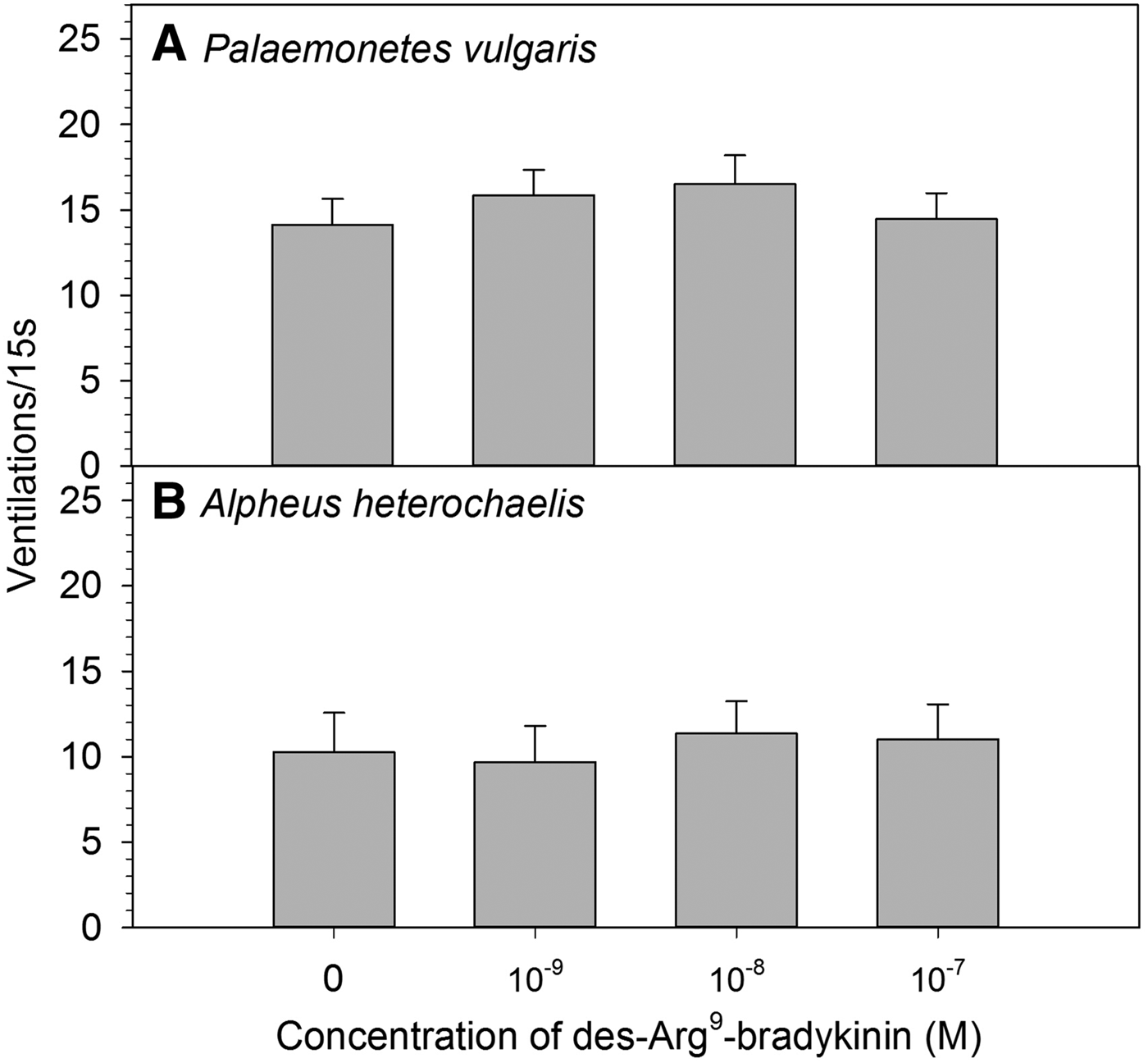
Stimulation with des-Arg9-bradykinin did not elicit significant increases in ventilation rates in either grass shrimps P. vulgaris or snapping shrimps A. heterochaelis. Grass shrimps averaged approximately 15 ventilations/15 s (Figure 4A). Snapping shrimps had a lower overall ventilation rate, averaging approximately 10 ventilations/15 s (Figure 4B). In no case were the proportions of shrimps that increased ventilation higher than those that increased in the control treatment (z < 1.6; P > 0.05 for all tests).
Mean (±standard error of the mean) ventilation rates of two shrimp species stimulated with various concentrations of des-Arg9-bradykinin: (A) Palaemonetes vulgaris (N = 30); (B) Alpheus heterochaelis (N = 30).
Focal stimulation of shrimps' appendages
The easiest species to work with, P. serratus, was used in focal stimulation studies to determine the physical location of the pheromone receptors. We observed responses to focal stimulation of the antennule, the first walking legs and the anterior and the posterior ends of the egg mass. Stimulation of the pleopod regions increased ventilation dramatically, with 16 out of 16 shrimps increasing ventilation by at least one movement with extract under pleopod 1 (Ho stimulation with extract = that of seawater G > 60, 1 df, P < 0.001) and 11 out of 16 increasing with extract under pleopod 5 (Ho stimulation with extract = that of seawater G > 25, 1 df, P < 0.001). Although not measured, observers reported that latency to response seemed less when pleopod 1 was stimulated as compared to pleopod 5. In contrast, only two of 16 shrimps tested increased ventilation in response to stimulation of the head region (not different than expected by chance, P > 0.05, by G test for independence). Finally, stimulation of the first walking legs of seven shrimps resulted in no ventilation (significantly less, P > 0.05, than expected by chance, by G test for independence).
Focal stimulation of the head region with crushed egg extract elicited increased antennular flicking rate (7.1 ±1.05 flicks/5 s vs 3.8 ±0.80 flicks/5 s with seawater; t = 2.68, 7 df, P < 0.05). None of 15 shrimps fanned their maxillipeds or probed the container when the first walking legs were stimulated with seawater. However, 14 of 15 shrimps fanned the maxillipeds in response to crushed egg extract (Ho increase was by chance rejected G > 65, 1 df, P < 0.001) upon focal stimulation of the first pair of walking legs; 12 out of 15 shrimps probed the bottom of the container (Ho increase was by chance rejected G > 50, 1 df, P < 0.001).
Results of dye studies helped to illustrate fluid movement around shrimp appendages. Dye applied to an antennule began as a bolus and generally spread to include the other antennule. When the bolus moved below the level of the rostrum it was usually rapidly swept directly forward. However, shrimps have bilateral control of gill ventilation and can stop or backflush. Dye applied to the distal portion of first walking legs from a lateral position was virtually instantaneously swept forward and parallel to the long axis of the shrimp as well as to the side, perpendicular to the long axis of the shrimp. Dye applied to the pleopods could move either to the front or to the back of the shrimp, depending on exactly how the shrimp moved its pleopods. Most of the dye applied to the 1st pleopod was instantaneously swept to the front or the back of the shrimp. Some residual dye was trapped along the carapace, where it entered the carapace via the spaces at the base of the legs and exited with the scaphognathite-generated forward respiratory current. A portion of the dye was routinely trapped by the setae on the pleopods. Stimulation of pleopod 1 likely resulted in stimulation of at least pleopod 2. Stimulation of pleopod 5 stimulated at least pleopod 4. Removal of pleopods with eggs disrupted the flow pattern from the front of the egg mass to the back, and vice versa.
Ablation experiments
Following bilateral ablation of the first or second pleopods, all six individuals of P. serratus tested ventilated the egg mass in response to crushed egg extract; all unablated animals also ventilated at the same concentration. Qualitatively, there appeared to be a delay in the response of shrimps with pleopod 1 removed. Shrimps with both sets of pleopods removed did not ventilate in response to the stimulus. However, these individuals probed the egg mass with the first walking legs upon stimulation with egg extract. In P. vulgaris the non-egg bearing portion of all pleopods was ablated. When stimulated with crushed egg extract, at least 36% (0.1 egg/ml) and as many as 82% (10 eggs/ml) of shrimps tested increased ventilation in response to stimulation with crushed egg extract. Thus, removal of the non-egg bearing ramus had no impact on ventilation behaviour.
DISCUSSION
Egg mass ventilation in caridean shrimps is similar to pumping behaviours previously described for crabs and lobsters. Results from behavioural assays on shrimps support the assertion that larval release pheromone is highly conserved and is involved in brood care throughout embryo development. Ventilation rates without stimulus increased as embryos developed, just as they do in crabs (De Vries & Forward, Reference De Vries and Forward1991a; Baeza & Fernández, Reference Baeza and Fernández2002; Fernández et al., Reference Fernández, Pardo and Baeza2002; Tankersley et al., Reference Tankersley, Bullock, Forward and Rittschof2002) and lobsters (Ziegler & Forward, Reference Ziegler and Forward2007a). All species of shrimps tested, from three families and four genera, increased ventilation with increases in concentration of crushed egg extract. In addition, all shrimps tested responded to the peptide pheromone mimic bradykinin by increasing ventilation rates. Finally, similarly to crabs (review: Rittschof & Cohen, Reference Rittschof and Cohen2004) and lobsters (Ziegler & Forward, Reference Ziegler and Forward2007b), bradykinin that lacks the basic carboxyterminal amino acid did not stimulate increases in egg mass ventilation.
In other decapods, egg mass ventilation behaviour has been ascribed to: stimulation of proprioceptors due to egg swelling in the brood (De Vries et al., Reference De Vries, Rittschof and Forward1989); detection by the brooding female of reduced oxygen levels and waste products in the egg mass (review: Fernández & Brante, Reference Fernández and Brante2003; Ziegler & Forward, Reference Ziegler and Forward2007a); and increased release of larval release pheromones as the embryos mature (Forward et al., Reference Forward, Rittschof and De Vries1987; De Vries et al., Reference De Vries, Rittschof and Forward1991). In crabs, since the abdomen is folded under the thorax, enlargement of the egg mass as the embryos mature and increase in size could stimulate abdominal proprioceptors. In shrimps, swelling eggs could cause increased ventilation by stimulating proprioceptors associated with the pleopods. It is possible that female shrimps can respond to decreased oxygen or increased waste products in the brood; brooding female shrimps (Bauer, Reference Bauer1979) and anomuran crabs (Förster & Baeza, Reference Förster and Baeza2001) have been shown to groom the egg mass with their walking legs and could detect such changes, as has been suggested by Fernández & Brante (Reference Fernández and Brante2003). It is also likely that pheromones stimulate egg mass ventilation in shrimps, since ventilation rates increased in response to higher concentrations of crushed eggs, as they do in crabs (review: Forward, Reference Forward1987; Tankersley et al., Reference Tankersley, Bullock, Forward and Rittschof2002) and lobsters (Ziegler & Forward, Reference Ziegler and Forward2007a). Additionally, since bradykinin stimulated increases in ventilation in all but one of the shrimps tested, and des-Arg9-bradykinin did not, it is likely that the pheromones involved are similar in structure to those produced by other decapods (Rittschof & Cohen, Reference Rittschof and Cohen2004; Ziegler & Forward, Reference Ziegler and Forward2007b; Darnell & Rittschof, Reference Darnell and Rittschof2010). Abdominal pumping in brachyuran crabs and pleopod pumping in lobsters have previously been considered primarily as mechanisms to aid in larval release at the time of hatching (e.g. Forward, Reference Forward1987; Tankersley et al., Reference Tankersley, Bullock, Forward and Rittschof2002; Ziegler & Forward, Reference Ziegler and Forward2007b). However, since egg mass ventilation increases as embryos develop, and is stimulated by low concentrations of crushed eggs, ventilation behaviour and the associated pheromones must be important throughout embryonic development in brooding decapods, not only at the time of larval release.
De Vries, et al. (Reference De Vries, Rittschof and Forward1991) proposed that the receptors for the larval release pheromone in brachyuran crabs were on the pleopods or associated with water flow to the gills at the base of the walking legs. The elongated morphology of shrimps allowed for separate stimulation of antennules and walking legs, as well as separate stimulation of the anterior and posterior of the egg mass. Since stimulation of the antennules/antennae and walking legs did not elicit ventilation, and ventilation occurred more immediately after stimulation of the anterior than posterior regions of the egg mass, our data support the hypothesis that the receptors are located on the thorax.
Ablation of the first two sets of pleopods stopped ventilation in Palaemon serratus, indicating that pleopods are involved. However, since P. vulgaris with the non-egg bearing portions of all pleopods removed still responded, it seems unlikely that the receptors are located on the pleopods themselves. However, it is possible that ventilation behaviour is stimulated by proprioceptors associated with the egg mass. Dye studies showed that flow patterns around shrimp appendages are complex and comparable to those observed in lobster (McPhie & Atema, Reference McPhie and Atema1984; Atema & Cowan, Reference Atema and Cowan1986). Dye movement patterns indicated that fluid is often swept forward and sometimes enters the carapace. Therefore, focal stimulation under the middle of the egg mass results in the stimulus being swept toward the base of the walking legs and up into the gills by respiratory currents. The fact that ventilation stopped without the first two pleopods, then, is likely due to a reduction in the forward-moving current in the absence of the ablated pleopods. It is unlikely that the stress of the ablation process alone caused the cessation of ventilation since neither removal of a single pleopod nor removal of parts of all five pleopods altered the ventilation behaviour. Taken together, our focal stimulation and ablation results support the hypothesis that the receptors are associated with water flow into the gills at the base of the thorax.
Behaviours and physiological responses to serine protease-generated peptides are a common theme in organisms from at least four phyla, including invertebrates (anemones, Brooks et al., Reference Brooks, Ceperley and Rittschof1995; arthropods, Rittschof, 1980b; molluscs, Rittschof et al., 1984) and vertebrates (review: Schiffmann, Reference Schiffmann1982). The features that resulted in evolution of these peptides as signal molecules lead to our conclusion that the molecular pathways that generate the peptides and their prevalence should give them the status of ecological ‘keystone molecules’ (Ferrer & Zimmer, Reference Ferrer and Zimmer2007; Zimmer & Ferrer, Reference Zimmer and Ferrer2007). As analytical techniques advance there seems to be an exciting opportunity for understanding the evolution of what has to be an ancient signaling system based on ancient conserved enzymes and their interaction with proteins associated with predictable biological consequences.
ACKNOWLEDGEMENTS
We thank Jim Welch for assistance in the field and Yasmin Von Dassow for assistance with statistical analysis. Jim Welch and two anonymous referees made valuable comments on the manuscript.
FINANCIAL SUPPORT
Funding for this work was provided by a Ray Lankester Fellowship, Marine Biological Association, Plymouth, UK, (DR). Duke University Instruction and Research (E.F., M.K.) and the Wittenberg University Faculty Research Fund Board (K.R. and K.P.).