Introduction
As recently as 2012, Tengberg (Reference Tengberg and Potts2012: 196) stated that the beginning of date palm cultivation still remained puzzling since “no wild ancestor of Phoenix dactylifera has been found and the original distribution of the species, prior to its cultivation, is poorly understood”.Footnote 1 However, genomic analyses have since revealed previously unknown populations of wild date palm in remote areas of Oman. Thus it seems that date palm domestication occurred in the eastern portion of the Arabian Peninsula (Gros-Balthazard et al. Reference Gross-Balthazard, Galimberti, Kousathanas, Newton, Ivorra, Paradis, Vigouroux, Carter, Tengberg, Battesti, Santoni, Falquet, Pintaud, Terral and Wegmann2017: 2211–18). The date palm's presence in the Mesopotamian historical record can be securely traced back to the Ubaid period, since carbonized stem fragments and date stones were identified in archaeological context from Tell el-Oueili (c. 4700–4200 B.C.) and Eridu (c. 4000 B.C.). It is believed that the date stones from Eridu belong to the date palm's domesticated species (Zohary and Hopf Reference Zohary and Hopf1994: 160). Nonetheless, it is commonly accepted by Assyriologists that Mesopotamian date plantations arose slightly later, at the beginning of the Late Uruk period, c. 3300–3100 B.C. (e.g., Nixon Reference Nixon1951: 274; Postgate Reference Postgate and Barrelet1980: 100–101). This phenomenon was allegedly connected with the emergence of a well-organised Sumerian civilisation, renowned for its temple administration that managed the workforce, irrigation works and the flow of natural resources that constituted the source of the city-states’ income. It is a well known fact that the date palm played a significant role in Mesopotamian agriculture (Powell Reference Powell1987: 150) because of its enormous productivity, which may range from 30 to 200 kilograms of dates per tree (Oudejans Reference Oudejans and Simmonds1984: 229; Zohary and Hopf Reference Zohary and Hopf1994: 157), the wide range of its byproducts and its successful adaptation to the hot, arid Mesopotamian climate, as well as to the specific soil conditions (Potts Reference Potts1997: 69; Schwab Reference Schwab1983: 150; Van De Mieroop Reference Van De Mieroop.1992: 158). From this point of view, the maximum yield of dates per tree achieved by the Ur III dynasty's gardeners, of 300 sila (c. 105 kilograms), seems impressive (Myhrman Reference Myhrman1910: 63–64; Pruessner Reference Pruessner1920: 213; Scheil Reference Scheil1913: 5–9).
Dried dates, Sumerian su11-lum/zu2-lum (Akkadian suluppû), begin to appear frequently in cuneiform texts from the Fara period (c. 2500 B.C.) onwards as temple offerings and as provisions for the workforce (Deimel Reference Deimel1928: 68; Gelb Reference Gelb1970: 85–86; Gelb et al. Reference Gelb., Steinkeller and Whiting1991: 68; Landsberger Reference Landsberger1967: 6–10; Postgate Reference Postgate1987: 115–117). It is the same with reference to “fresh dates”, Sumerian u3-hu-in/u3-hi-in (Akkadian u hinnu) (Roth et al. Reference Roth, Collins, Hunger, Jas, Meyers, Reiner and Westenholz2010: 44; Deimel Reference Deimel1932: 677; Legrain Reference Legrain1947: 242; Rubio Reference Rubio1999: 5; Postgate Reference Postgate1987: 117). However, the majority of our knowledge about Sumerian date palm cultivation comes from the Ur III and Old Babylonian periods. Ur III texts refer to date palm orchards, Sumerian gišgišimmar giškiri6, which grew together with other plant species to create multi-tiered palm gardens (Arabic bustan) probably with inter-cropping (Potts Reference Potts1997: 69). The size of the date palm orchard could vary. Economic texts frequently focus only on the number of the date palms occupying particular plots, but sometimes their acreage is also given. For example, UET 3: 1416 mentions a twelve-hectare date palm orchard (Heimpel Reference Heimpel and Owen2011: 92–93; Legrain Reference Legrain1947: 256). Meanwhile, the use of an artificial fertilization method is proven by the Laws of Hammurabi §§64–5 (Roth Reference Roth1995: 94). To our knowledge, this is the first clear record of the existence of artificial fertilization techniques in ancient Mesopotamia, dating to c. 1760 B.C. The context of laws §§64–5, after laws about planting date palms, has prompted some scholars to conclude that the date palm was proliferated by offshoots (e.g., Pruessner Reference Pruessner1920: 218).
The present study aims to meet several key objectives in relation to the date palm and date palm cultivation at the end of the Uruk period. During the Uruk IV phase (c. 3300 B.C.), the first Mesopotamian texts written in archaic script come to light. Some archaic graphemes have been identified by Assyriologists as signs representing the date palm. The aim of this paper is to investigate pictographs of the date palm (GIŠIMMAR, SA6) and their cuneiform counterparts in the light of botanical data. I aim to answer the question of whether the archaic signs may be taken into serious consideration in the discussion of the date palm tree in the Late Uruk period. I also hope to find an explanation for the peculiar subdivision of the date palm pictograph into forms now known as ZATU 230a and ZATU 230b, which took place already in Uruk IV, the earliest phase of Mesopotamian writing. As a result of my research I aim to present a basic picture of the date palm in the Late Uruk period, which is of great importance since this issue remains poorly investigated. However, before I elaborate on the research material, I present a short description of the date palm, since its morphological traits affected the shape of the archaic signs.
The date palm: Basic morphological features
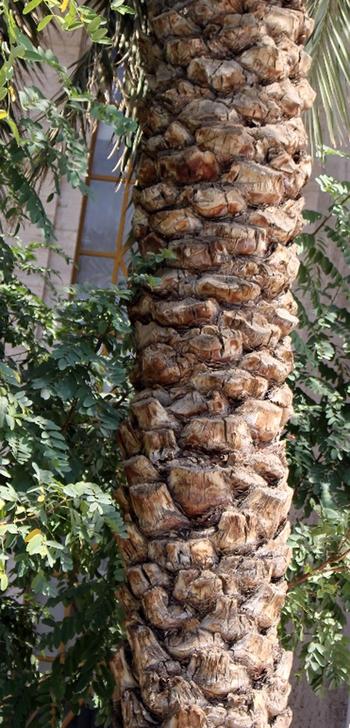
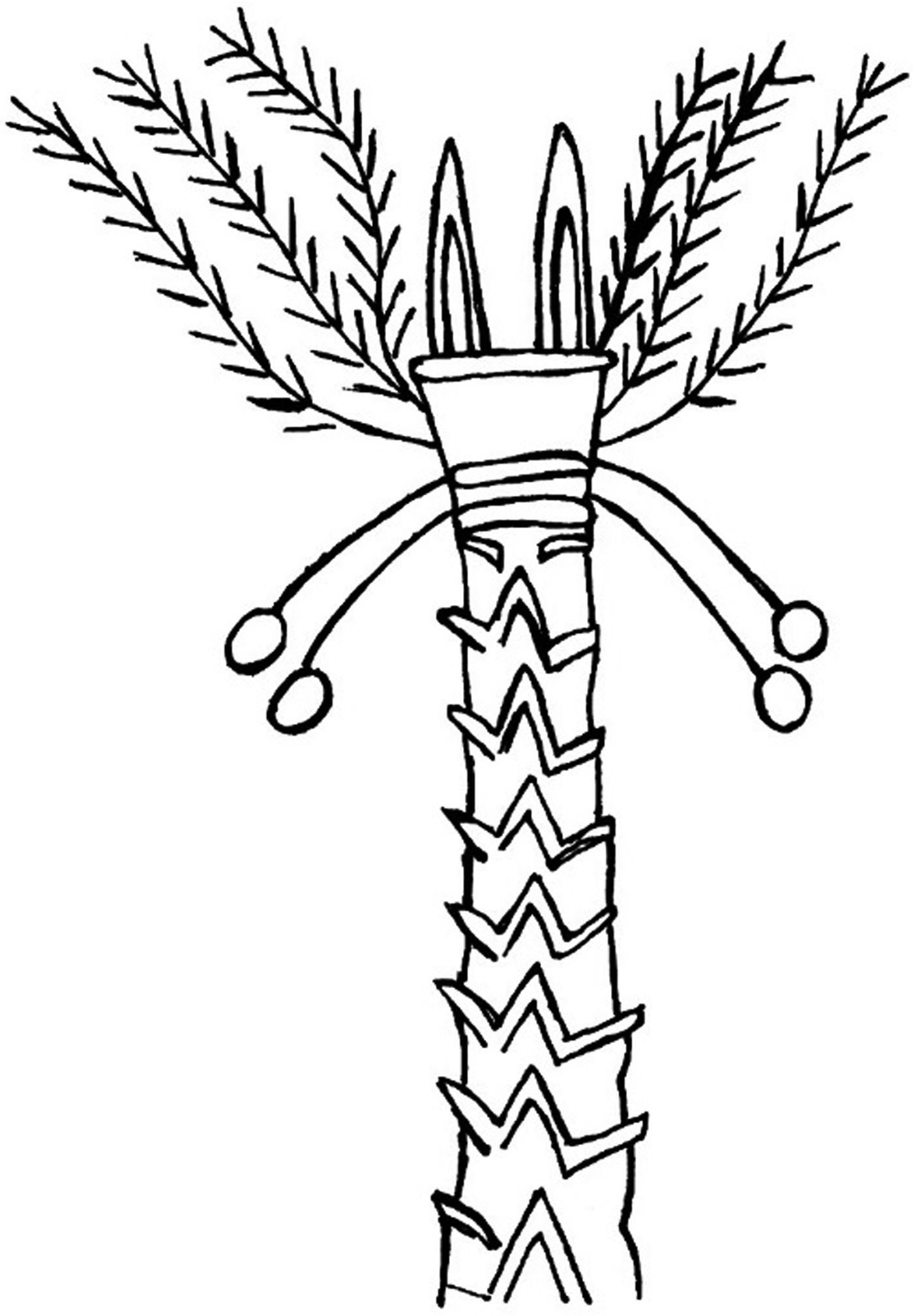
The date palm is a perennial tree of the Arecaceae family, commonly known as Palmae. It belongs to the genus Phoenix and to the species d actylifera. The date palm has a stout, erect trunk, reaching the height of 25 metres and ranging between 40 and 50 centimetres in diameter (Fig. 1). It has only one terminal bud, protected by a series of older, overlapping leaf bases and developing leaves. The trunk is brown-coloured, covered with the scars of leaf sheaths, c. 25–30 centimetres wide and c. 10 centimetres high, and the short remains of leaf bases (Dransfield Reference Dransfield, Townsend and Guest1985: 263; Hodel Reference Hodel2009: 677). The dead and dying outer fronds of the date palm are cut down each year at about a foot from its trunk. As a result of pruning, the palm trunk becomes covered with a characteristic ornamental pattern (Figs. 2–4). When the date palm is about fourteen years old it is pruned again, this time closer to the trunk, in order to get rid of the woody and expanded bases of the fronds (Dowson Reference Dowson1921: 26). It is advisable that such activity is not carried out on specimens younger than fourteen or fifteen years old, as it may kill potential sucker buds, which play a key role in the reproduction process (Dowson Reference Dowson1921: 26; El Hadrami and El Hadrami Reference El Hadrami, El Hadrami, Mohan Jain and Priyadarshan2009: 197; Omar et al. Reference Omar, Hammed, Al-Rawi and Bajaj1992: 473). The date palm is commonly propagated by two methods: sexual and asexual. In simple words, using the sexual method the date palm is grown from a seed, whereas in the asexual method it is propagated by an offshoot which usually appears on the trunk near the base of the tree (El Hadrami and El Hadrami Reference El Hadrami, El Hadrami, Mohan Jain and Priyadarshan2009: 196; Omar et al. Reference Omar, Hammed, Al-Rawi and Bajaj1992: 472–3; Rajmohan Reference Rajmohan, Mohan Jain, Al-Khayri and Johnson2011: 31). Finally, the appearance of the trunk may vary depending on the tree's variety. Some date palms have leaf bases that are prone to weathering down, leaving old specimens with a smooth trunk, whereas some remain prominent throughout the tree's lifetime (Dowson Reference Dowson1923: 19).
Date palm (drawn by M. Z. Paszke)

Date palm trunk covered with woody and extended bases of fronds (photo courtesy of S. Jedraszek, Gdansk University)

Date palm trunk covered with leaf sheath scars (photo by M. Z. Paszke)

Top of the date palm trunk with recently cut extended bases of fronds under fresh green leaves (photo by M. Z. Paszke)

The crown of the date palm comprises approximately fifty fresh pinnate, rigid lanceolate leaves, of up to 4.5 metres in length, although specimens with a dense terminal crown may be composed of up to 120 fronds. The leaves’ rachis is relatively stiff, with its side carrying multiple, sharply pointed leaflets, each up to 40 centimetres long. Generally, young and mature leaves grow upward and sideways, while dead, slowly abscising leaves turn downward, but the appearance of the fronds varies greatly in different varieties (Dowson Reference Dowson1923: 19; Dransfield Reference Dransfield, Townsend and Guest1985: 263; El Hadrami and El Hadrami Reference El Hadrami, El Hadrami, Mohan Jain and Priyadarshan2009: 195). Between the leaves, several erect spadices usually occur, which in the course of time will transform into pendulous stalks carrying dates (Dowson Reference Dowson1921: 1; Dransfield Reference Dransfield, Townsend and Guest1985: 263). It is well known that both the quantity and quality of dates are closely related to the number of green leaves in the centre of the crown, and to the removal of old ones which are less or no longer active. An insufficient number of leaves in proportion to the number of inflorescences results in a low-quality crop during the current season and in inferior inflorescence during the following year (Harhash et al. Reference Harhash, Hussein and El-Kassas1998: 365; Nixon Reference Nixon1951: 291). Experimental research conducted in orchards in the Near East has identified a beneficial pruning level, varying on the date palm cultivation, at a ratio of 8–10 leaves per bunch (Al-Sekhan Reference Al-Sekhan2009: 76; Harhash et al. Reference Harhash, Hussein and El-Kassas1998: 365–372).
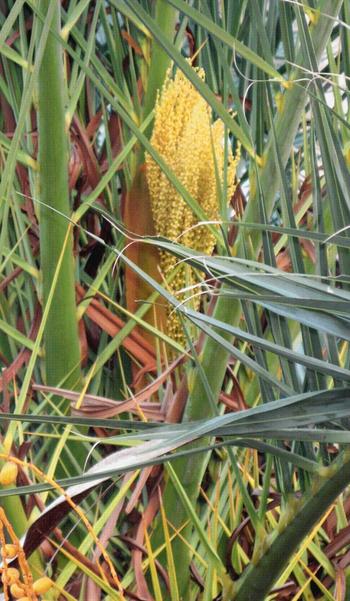
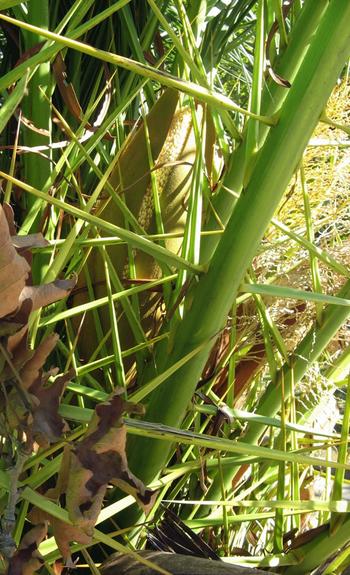
The Phoenix is dioecious, which means that it has male and female reproductive organs borne on separate individuals of the same species. Staminate and pistillate inflorescences appear on different plants, interfoliar as erect spadices (Figs. 5–7). The peduncle is short or elongated away from the leaf base, bearing a single two-keeled prophyll, or the bract at the base of the inflorescence which envelops the inflorescence in a bud. The staminate inflorescence with the peduncle can be 60 centimetres or more in length, while the brown, furfuraceous bracts are approximately 40 × 10 centimetres in size. Inside the prophyll there is a rhachilla with staminate flowers, which are borne singly or slightly grouped in a spiral along the rhachilla (Dransfield Reference Dransfield, Townsend and Guest1985: 262–263; Uhl and Moore Reference Uhl and Moore1977: 173–175).
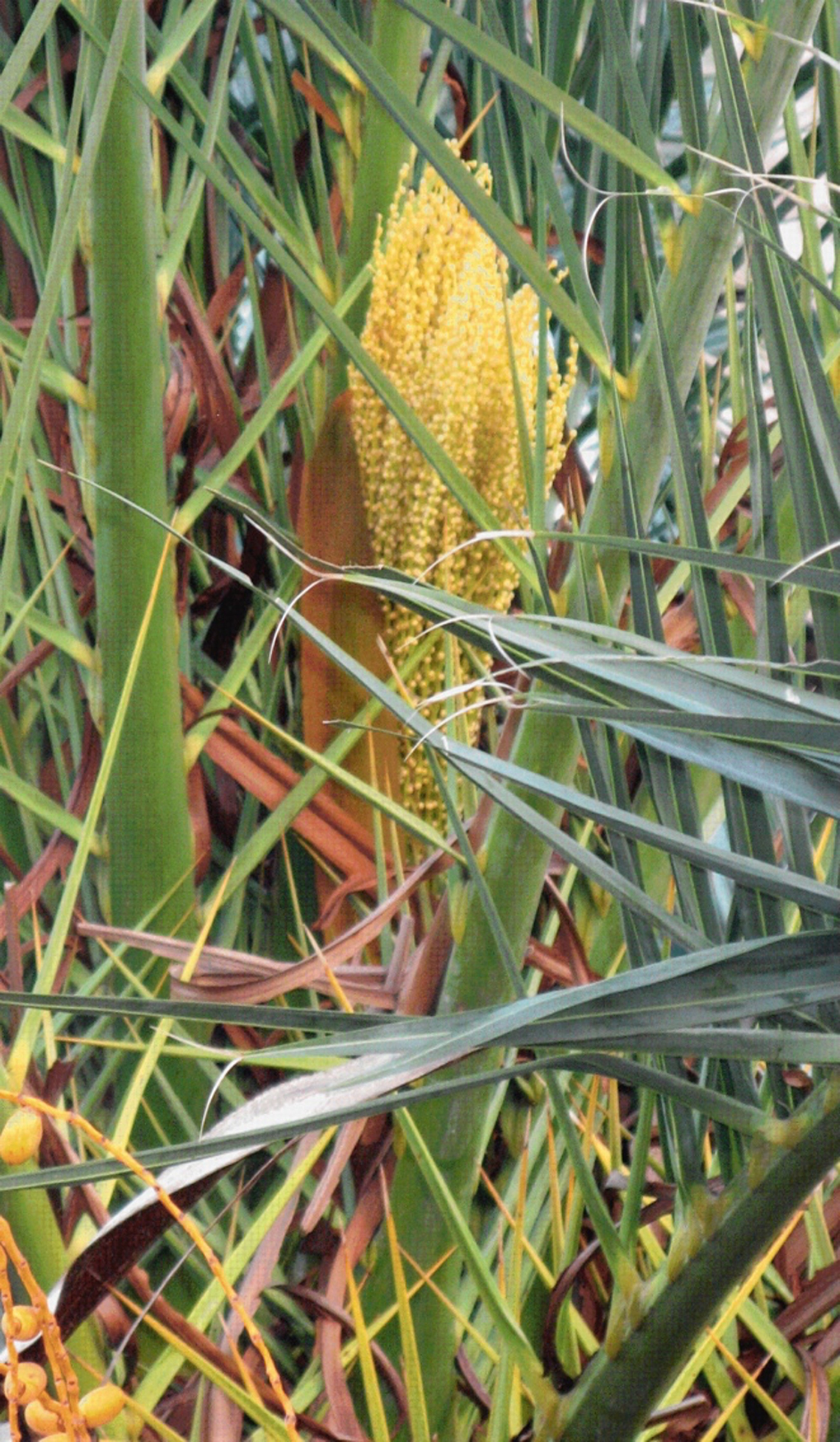
Date palm inflorescence among palm fronds during anthesis (photo by M. Z. Paszke)
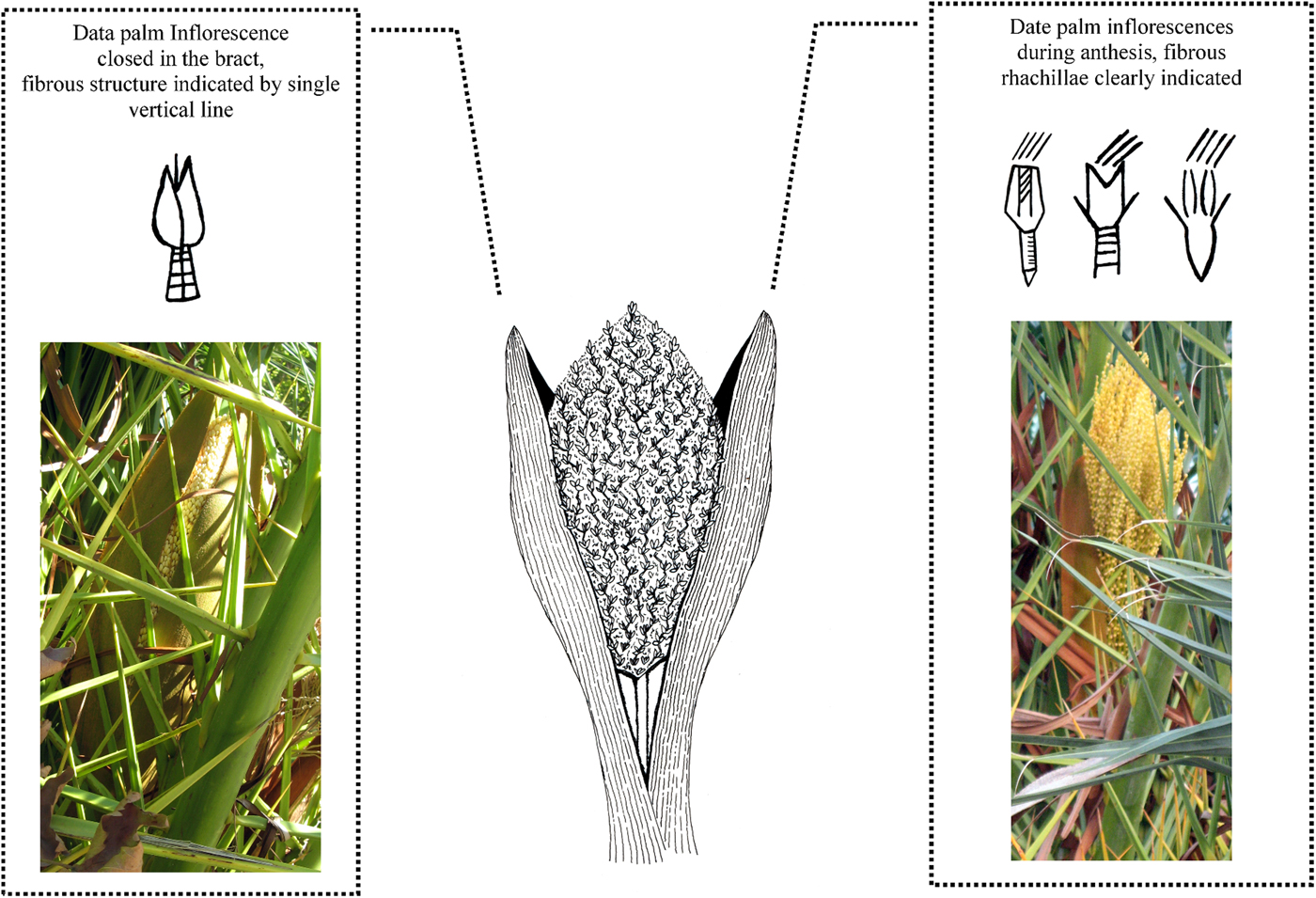
Date palm inflorescence among palm fronds closed inside the bract (photo by M. Z. Paszke)

Date palm staminate inflorescence (drawn by M. Z. Paszke)

The pistillate inflorescences are similar, but elongate greatly, from 60 to 120 centimetres, between the flowering and the fruit setting stages, so that at the end of the primary axis of the female spadix, an enormous bunch appears that bears the date cluster. From the morphological point of view, the pistillate and the staminate inflorescences differ in details. The flowers are dimorphic, with the male spathes being shorter and wider than the female ones (Chao and Krueger Reference Chao and Krueger2007: 1078; Uhl and Moore Reference Uhl and Moore1977: 175). The structural density at the end of the rachis varies in both cases, which allows the recognition of the inflorescence's sex before its opening (Bakheet and Hanafy Reference Bakheet, Hanafy, Mohan Jain, Al-Khayri and Johnson2011: 555; Zaid and de Wet Reference Zaid, de Wet and Zaid2002).
The date palm root system is composed of numerous adventitious, fibrous roots, which arise from an area at or near the base of the stem, called the root initiation zone (RIZ) (Hodel Reference Hodel2009: 680; Hodel and Pittenger Reference Hodel and Pittenger2003: 193 and 195). During the establishment growth phase, the palm base takes an obconical shape (Tomlinson Reference Tomlinson1990: 80–82). The swelling observed at the stem of the base (the “root boss”) in mature specimens of some species is the result of new root development within the stem. Most palm roots are usually found close to the base of the trunk at a depth of 30 centimetres, but smaller, feeder roots branch from these main roots, spreading outwards up to several metres (Al-Yahai and Manickavasagan Reference Al-Yahai, Manickavasagan, Manickavasagan, Mohamed Essa and Sukumar2012: 4–5; Hodel Reference Hodel2009: 680; Nixon Reference Nixon1951: 275).
Materials and methods
A total of 41 archaic pictographs and their cuneiform equivalents were investigated to trace any potential morphological similarities between the pictographic images and their natural counterparts. Additionally, some iconographic evidence showing the date palm tree in Mesopotamian art was involved in this research, to support interpretation of some key features of the date palm as observed in archaic script. The results of the investigation were compared with early twentieth-century ethnobotanical data, mainly from Iraq, in order to provide the reader with a more traditional picture of date palm cultivation than may be available nowadays.
The majority of the archaic Uruk period texts have been systematically published or republished over the past three decades, offering propitious opportunities for comparative studies. For the sake of convenience, I have adopted the standard Assyriological citation system for archaic signs (ZATU; Green and Nissen Reference Green and Nissen1987). However, due to the inconsistent, cumbersome numerical subscript conventions in this transliteration system, I will quote the signs with their full coordinates, while allowing the reader to track them down on a specific tablet. Thus, signs are here marked with capital letters and numbers denoting the following features: the name of the archaic corpus (in Latin capitals), the volume, the numeral (position on the sign-list), the tablet number and the column and line numbers. According to Green and Nissen (Reference Green and Nissen1987: 168), the list of pictographs published in ZATU presents a selection not only of the typical and representative shapes, but also of the more unusual or unique ones. Hence, they demonstrate a possible range of graphic variation. Nevertheless, one should pay attention to the shapes of the pictographs displayed in the sign lists, since some of them, as actually encountered in archaic corpuses, do not exactly match these shapes but may take a more simplified form. These subtle iconographic differences are very important when one considers the research material as botanical data. Thus, to avoid error, I investigate pictographs encountered on particular tablets rather than rely on shapes known from the sign lists to the archaic corpus.
Finally, in order to detect traits of the date palm in pictographs, it was necessary to display all the archaic signs in their natural orientation: that is, turned 90° to the right from the way Sumerologists customarily read them (Nissen et al. Reference Nissen, Damerow and Englund1993: 119–120; Powell Reference Powell1981: 425). The same convention has been adopted for the later cuneiform signs, which date from the Fara period (c. 2500 B.C.) onwards.
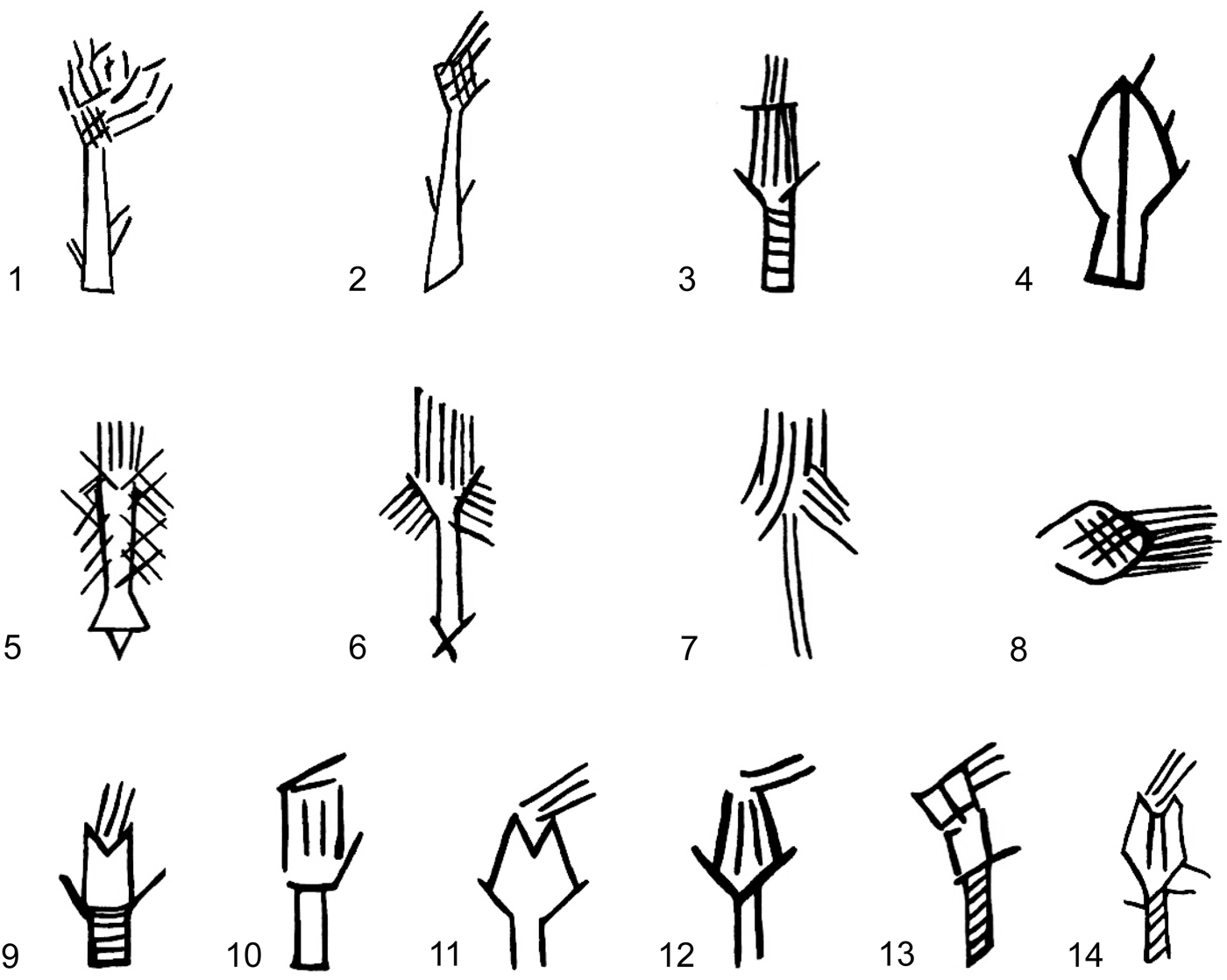
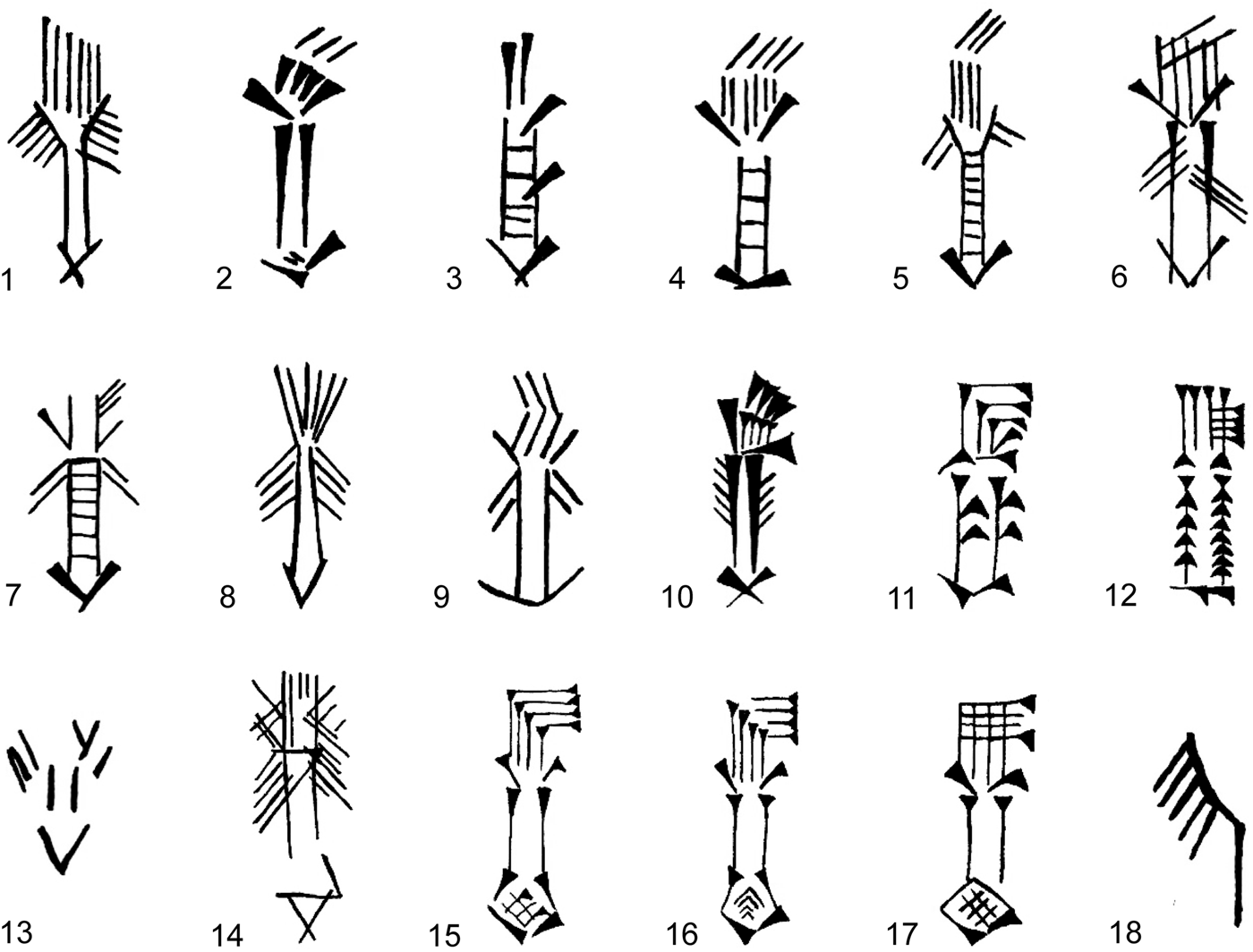
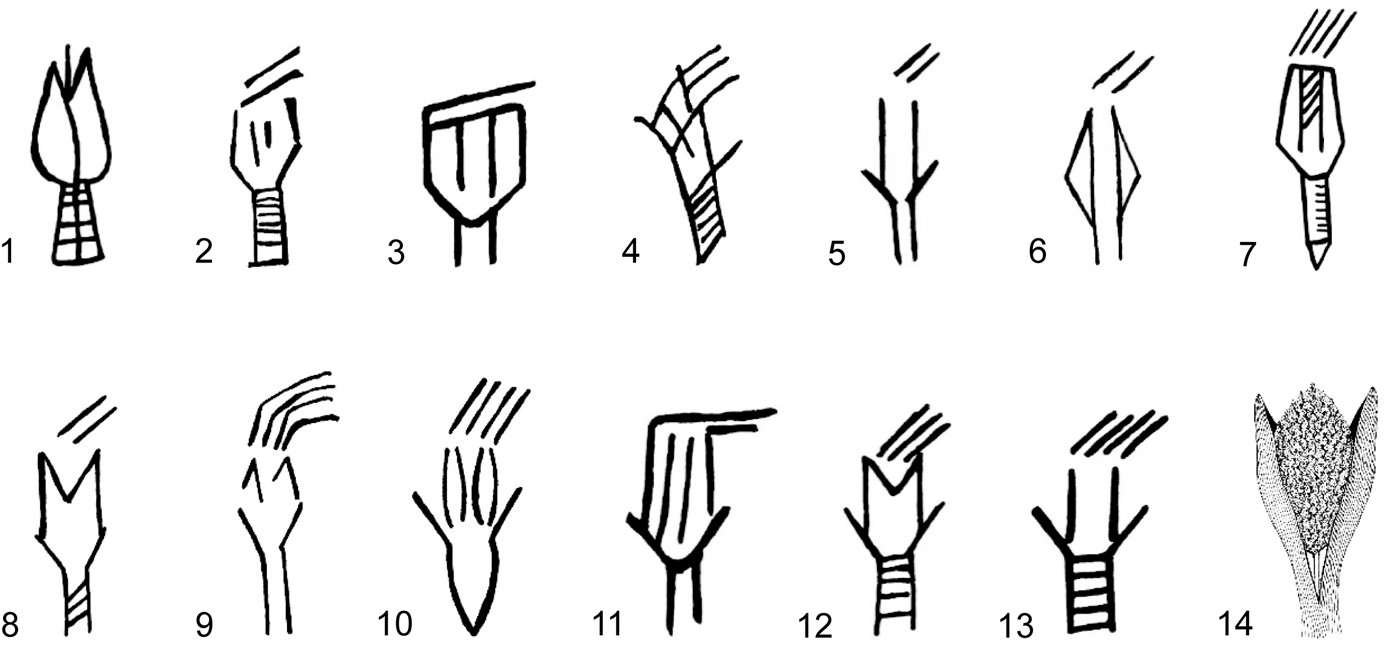
The pictograph ZATU 230 GIŠIMMAR, SA6 was roughly subdivided by Green et al. (Reference Green and Nissen1987) into two distinctive subgroups, ZATU 230a and ZATU 230b (Fig. 8). This because from the philological point of view, its variants may be suspected of bearing special phonetic, graphic or semantic significance. What is more, it is not clear which form of the sign refers to the GIŠIMMAR value, and which to the SA6 value (Green and Nissen Reference Green and Nissen1987: 168, 217). ZATU 230 is attested from both strata IV and III of the ancient city of Uruk.
Pictographs ZATU 230 a and b, GIŠIMMAR, SA6. 1–2: ZATU 230a Uruk IV; 3–4: ZATU 230b Uruk IV; 5–8: ZATU 230a Uruk III; 9–14: ZATU 230 b Uruk III (drawn by M. Paszke after Green and Nissen Reference Green and Nissen1987: 217 no. 230)

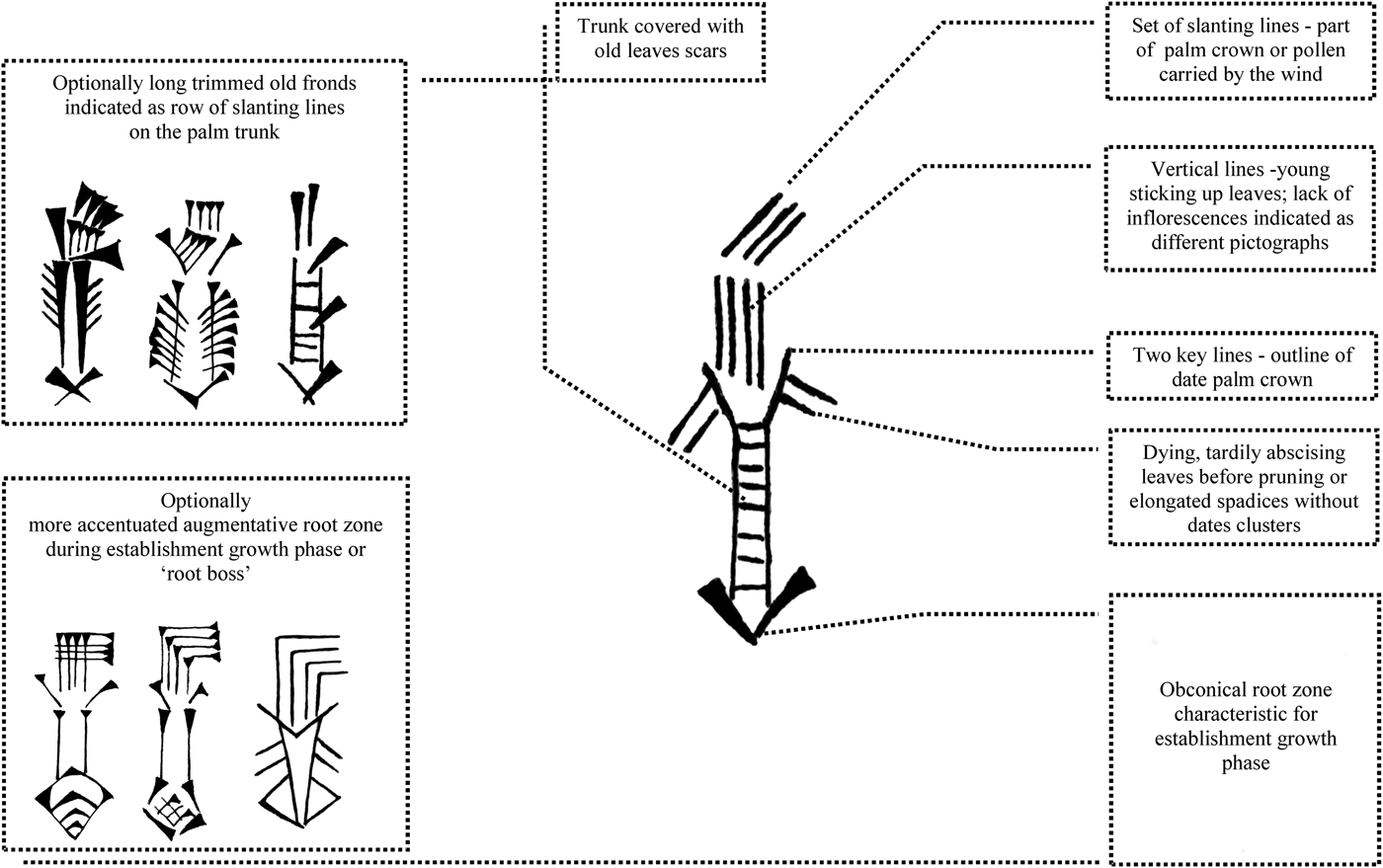
The shape of ZATU 230a in Uruk III unquestionably corresponds to the morphology of the date palm. It represents the erect trunk of the date palm, topped by its roughly feather-shaped crown, comprising two key lines, which probably denote the outline of the fronds spreading out sideways. In the middle of the tree's crown, several vertical lines represent the young, erect leaves, since the stem is the place of the shoot apex proper: leaves generating meristem, or a tissue composed of cells that are capable of dividing indefinitely and have a main function of the production of new growth. This model is best represented by the signs in Fig. 9: 1–8 and Fig. 10: 1.
Pictographs and cuneiform signs related to ZATU 230 Uruk III. 1: LATU GIŠIMMARa2 W20327, 2: O00504 “Wood List”; 2: UET II 124 no. 2 Rev; 3: UET II 124 no. 3; 4: UET II 124 no. 48; 5: UET II 124 no. 112; 6: UET II 124 no. 135 Bis; 7: UET II 124 no. 287; 8: MSVO IV GIŠIMMARa3 Tab. 42: O0206; 9: UET II 124 said to be known from seal impression U14896; 10: LAK 196; 11: Labat 356 here marked as ‘a’; 12: Labat 356 here marked as ‘b; 13: LATU GIŠIMMAR a2 W20495: O0402 only bottom part preserved; 14: LATU GIŠIMMARa2 W21208,17+ (20 + 21): O0304; 15: Rosengarten 345 here marked as ‘a’; 16: Rosengarten 345 here marked as ‘b’; 17: Rosengarten 345 here marked as ‘c’; 18: ATU 5 GIŠIMMARa2 W20335,2+ O0308 (drawn by M. Z. Paszke)

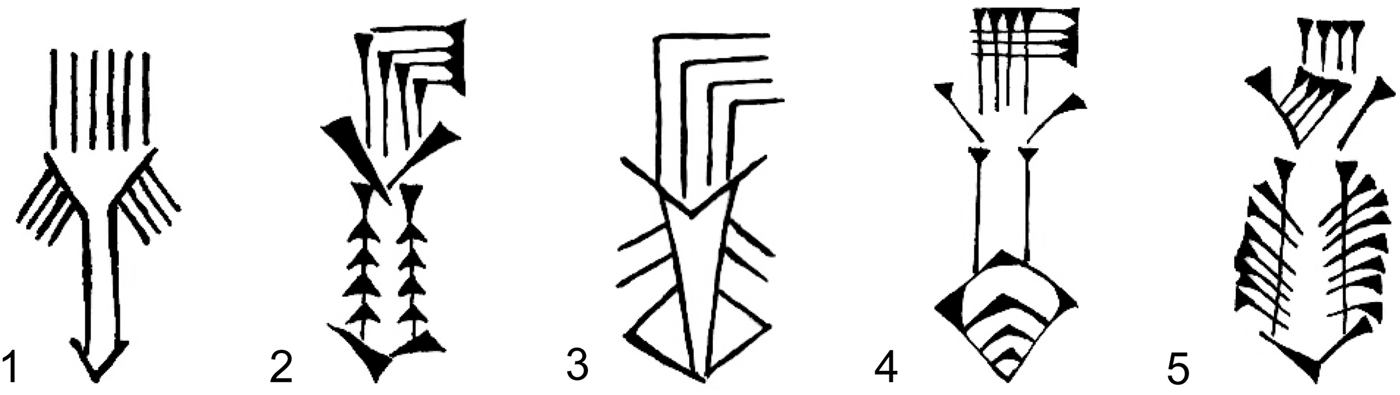
ZATU 230 Uruk III and related pictographs. 1: LATU City List Tab. 16, col.3, p. 34 sign reconstructed; 2: Labat 356 here marked as ‘c’; 3: Labat 356 here marked as ‘d’; 4: Labat 356 here marked as ‘e’; 5: Labat 356 here marked as ’f’ (drawn by M. Z. Paszke)

Some signs are provided with an additional row of slanting lines located on the top of the vertical lines, to mirror the erect leaves or even the pollen carried by the wind (Figs. 9: 2, 4–7, 9). Two key lines fused with the trunk, delimiting the outer edge of the palm crown, usually bear two or more lines going downward (Fig. 9: 1, 5–9, 18, Fig. 10: 1). These latter elements might be identified as the dying, slowly abscising leaves, which were pruned by the gardeners. The identification of those structures with elongated spadices is less plausible, because they do not terminate in date clusters. This assumption is reinforced by the fact that images of the date palm known from Mesopotamian art of the third millennium B.C. always bear abscising spadices with dates or do not bear them at all (Figs. 11–13).
Finally, the trunk of the date palm requires more attention. Some, but not all, of the aforementioned pictographs are not provided with any horizontal lines mirroring the scars of the old leaf bases (Fig. 9: 2, 6, 8, 9). Moreover, sometimes the pictographic image of the date palm bears short, slanting lines going upward, out of the segmented trunk (e.g., Fig. 9: 3). One might speculate that this diversity is due to iconographical convention or that it does not matter at all, since pictographs are largely schematic representations of objects. Nevertheless, the lack of a segmented trunk may be related to those palm varieties whose leaf bases weather down quickly, becoming smooth over the course of time. As far as the small perpendicular lines sticking out of the trunk are concerned, they seem to be related to the remains of leaf bases that had been long-pruned (Fig. 14). As mentioned above, they can not be trimmed too short since the desirable sucker bud may not appear on the trunk until the palm tree reaches the age of fifteen.
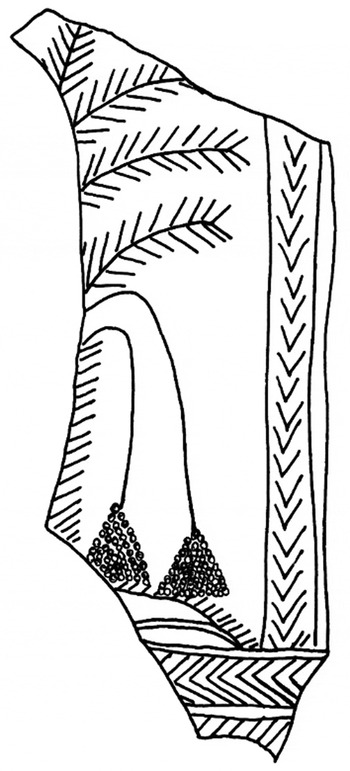
An example of this morphological feature can be seen on the incised pottery fragment from Presargonic Telloh, which depicts a date palm in the fructification phase (Fig. 11). Unfortunately, this image is not fully preserved, but it is legible enough to ascertain that the edge of the trunk consists of a vertical row of multiple small slanting lines, mirroring the woody bases of the palm fronds. In this case, the palm tree carries a dense crown and two long fruit stalks curving downwards, terminating in a triangular cluster of dates.
Date palm incised on pottery fragment from Telloh, Presargonic period (drawn by M. Paszke from de Genouillac Reference de Genouillac1934: pl. 63, no. 3)

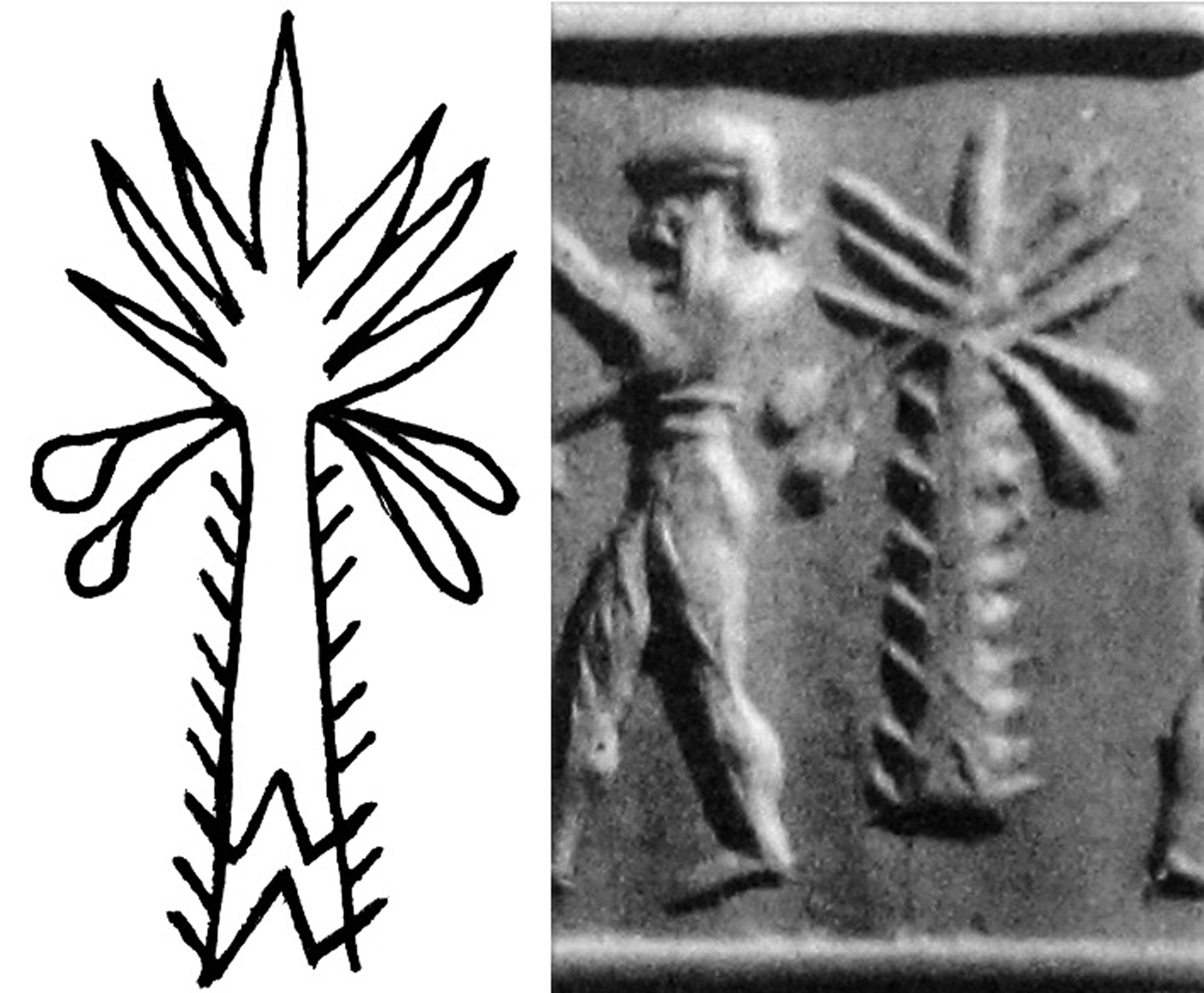
Detail of an Old Akkadian seal impression (drawn by M. Z. Paszke from Vinchon Reference Vinchon and Ader1964: pl. 4, no. 52)

Detail of an Old Akkadian seal impression (drawn by M. Z. Paszke from Amiet Reference Amiet and Porada1980: fig. II-15)

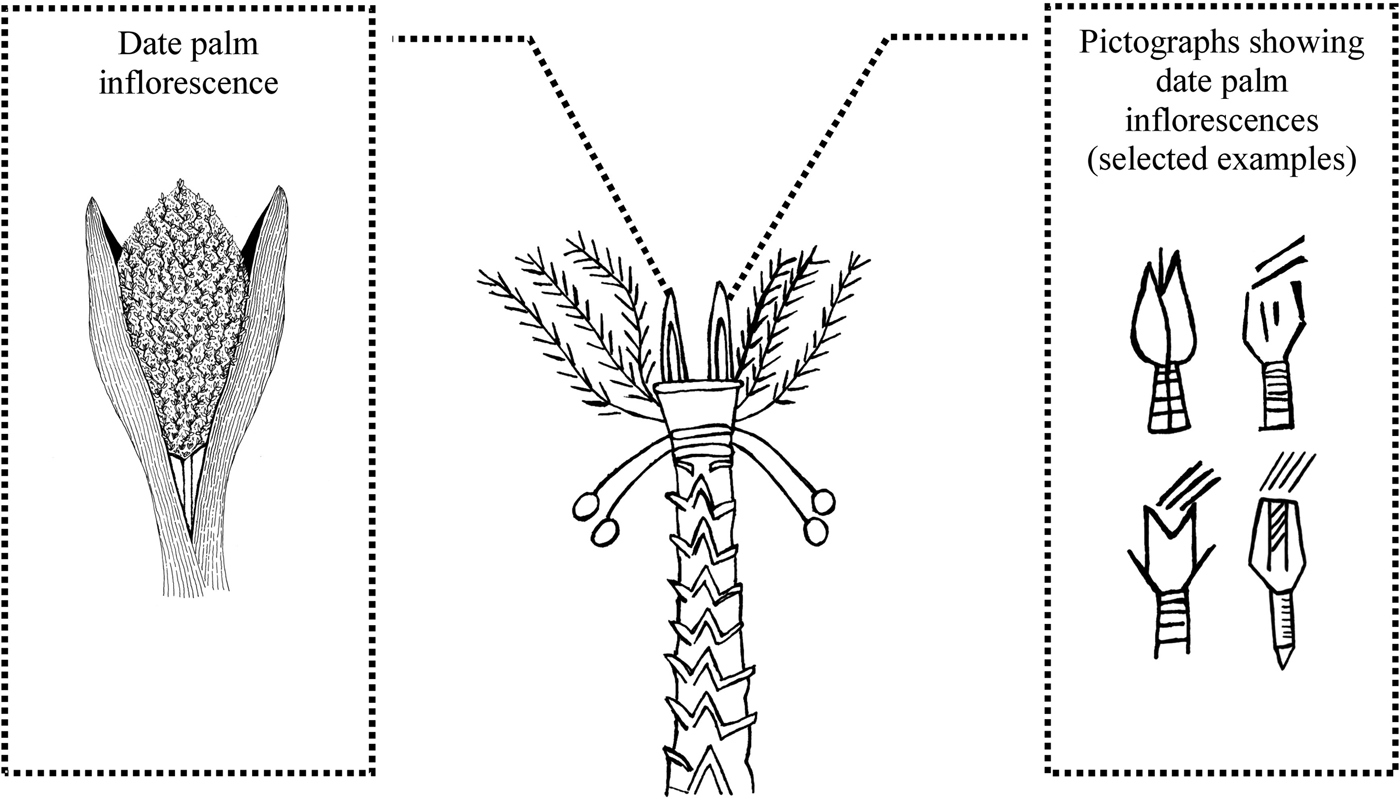
We see a similar iconographic convention in glyptic art. A seal from the Old Akkadian period, showing a mythological scene, depicts a very interesting image of the date palm (Fig. 12). Its trunk is furnished with regular rows of slanting lines on both sides. It is clearly discernible that the slanting outgrowths are linked to a triangular ornament covering the inside lower part of the trunk. These two iconographic features may be understood as part of the classical “diamond” shaped pattern covering the surface of the date palm in Mesopotamian art and architecture. A more sophisticated and naturalistic variant of this ornament is discernible on the contemporary seal of Zaganittas (Fig. 13). In this case, the trunk of the date palm is composed of regular zigzag rows, one top of the other, evidently to show the remains of the trimmed old palm leaf bases. This palm tree has a very interesting crown, consisting of six fronds (with leaflets) and four abscising spadices terminating in an oval-shaped cluster of dates. Between the fronds there are two erect, clearly separated ovoid structures. In my opinion, they should be regarded as date palm inflorescences since they do not create one terminal bud as new leaves would and are quite different when compared to the fully developed fronds nearby (Fig. 15).
Phenotypic traits of the Phoneix dactylifera L identified on selected pictographs of the date palm (drawn by M. Z. Paszke)

Vertical objects on the top of the date palm as depicted on the seal of Zaganittas and some correlations between the date palm inflorescence and its counterparts in archaic script (drawn by M. Z. Paszke)

The Phoenix traits are still visible on the cuneiform sign gišimmar LAK 196 known from the Fara period, c. 2500 B.C. LAK 196 clearly corresponds to the morphology of the date palm, being simply a modification of its pictographic predecessor (Fig. 9: 10). It bears the following phenotypic traits of the date palm: an erect trunk with the remains of long, trimmed extended fronds (side rows of vertical, short slanting lines); an elaborately organized feather-shaped crown; and a triangular lower end of the trunk rendered with two crossing wedges. The same conclusion can be made of the several gišimmar signs known from the ‘sumérien classique’ period (cf. Labat Reference Labat1988: 40, 164, no. 356) (Fig. 9: 11–12, Fig. 10: 2–5). On signs published by Labat, the pruned remains of the leaf bases are indicated by multiple wedges (Fig. 10: 5), Winkelhakens (Fig. 9: 11–12, Fig. 10: 2) or lines (Fig. 10: 3). In just one case (Fig. 10: 4) the image of the gišimmar does not bear any marks at all, perhaps corresponding to the smooth trunk of some date palm varieties.
Another feature that should be taken seriously as proof of the impact of palm phenotypic traits on the archaic and cuneiform date palm signs is the peculiar, obconical or triangular shape of the root zone of the trunk. This enigmatic structure is rendered on the pictographs in
(Fig. 9: 1–9, 13–14). However, only one pictograph, found on the archaic ‘City List’ (Fig. 9: 14), gives better insight into this issue. The lower part of this sign bears a clear articulated dilatation, joined to a conical end. It very similar to the cuneiform signs presented here as Fig. 10: 4 and Fig. 9: 15–17, which show an outstandingly well-developed, augmentative root zone. Parallel but simplified structures have been detected on gišimmar signs known from the Fara (Fig. 9: 10) and ‘sumérien classique’ periods (Fig. 9: 11, 12, Fig. 10: 2, 3, 5). They match a handful of archaic pictographs (Fig. 9: 1–8, 13, 14). The peculiar accentuated root zone seen in the archaic and later cuneiform tradition is not a colourful invention of ancient scribes but a deliberate depiction of the swelling observed at the base of the stem (the “root boss”) in mature specimens of the date palm. Hence the obconical terminal structure without the swelling would match the date palm root zone, which assumes a similar shape during the establishment growth phase (Figs. 9, 10, 14).
Pictograph ZATU 230 b (Uruk IV and III)
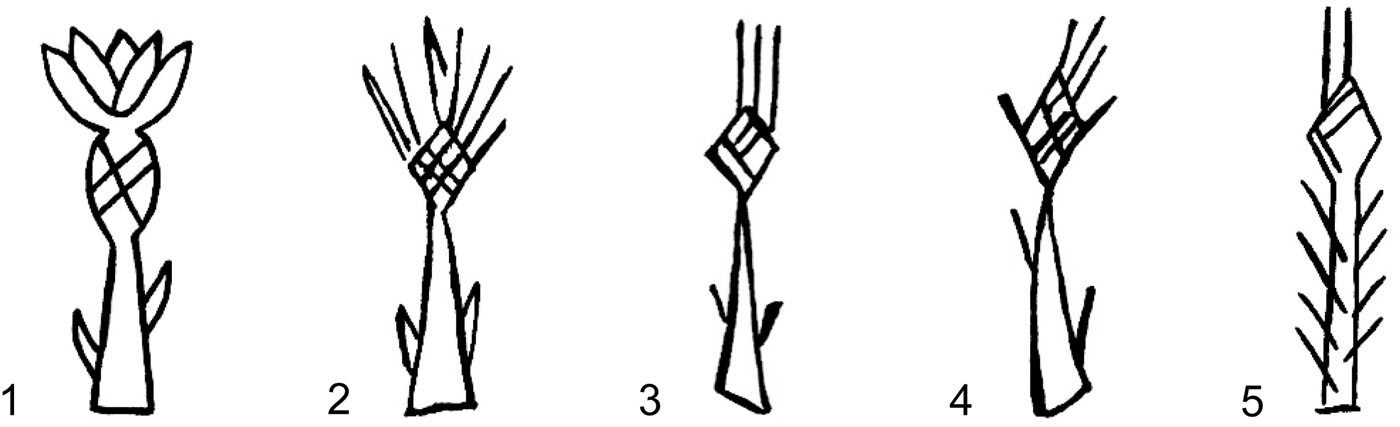
ZATU 230 b (Uruk IV and III) is known from several variants (Fig. 8: 3, 4, 9–14, Fig. 16: 1–13). It is composed of three morphological elements: the opened spathe, the fibrous inside, and the short, apparently cut stem. In one case the spathe is closed and takes an ovoid, spike-like shape (Fig. 16: 1). This object is clearly divided into pieces by two covers slightly splitting open on top. The presence of the fibrous core is indicated by the vertical line emerging between the covers.
Staminate date palm inflorescence and ZATU 230 b (Uruk IV and III) related pictographs. 1: ATU 5 GIŠIMMARb3 W6882, d: O0102; 2: LATU GIŠIMMARb1 W15897, a4 O0103; 3: LATU GIŠIMMARb1 W20266, 50: O0302; 4: LATU GIŠIMMARb1 W21253, 8: O0203; 5: MSVO IV GIŠIMMARb1 no. 4: O0202 equal to ATU no. 353, tab. 628, II 2; 6: MSVO IV GIŠIMMARb1 no. 24: O0201equal to ATU no. 352, tab. 629, II 1; 7: MSVO IV GIŠIMMARb1 no. 22: O0104 equal to ATU no. 370, tab. 631, I 3; 8: MSVO IV GIŠIMMARb1 no. 25: O0105 equal to ATU no. 353, tab. 624, I 4; 9: MSVO IV GIŠIMMARb1 no. 36: R0202 (Uqair); 10: MSVO I GIŠIMMARb1 no. 128. IM 55624: O0103; 11: ATU5 GIŠIMMARb1 W9168,h+: O0507 equal to ATU no. 352, tab. 585 V 7; 12: LATU GIŠIMMARb1 W22135, 5: O0103Unid. 78; 13: LATU ‘Metal List’ Tab. no. 14, s. 32 sign reconstructed; 14: staminate inflorescence (drawn by M. Z. Paszke)

The remaining pictographs have two split, geometric covers topped with slanting lines which are under-emphasised (Fig. 16: 2–5, 13) or more accentuated (Fig. 16: 6–9, 11, 12). Finally, the short stem of the inflorescence can be smooth (Fig. 16: 3, 9, 11) or decorated with horizontal lines (Fig. 16: 1, 2, 4, 7, 8, 12, 13). One of the objects discussed seems to be entirely opened (Fig. 16: 10). In this particular case, the ovoid bract is probably in the advanced anthesis, which is indicated by the split covers, represented by two separate lines going out sideways, and the furfuraceous inside rendered again by multiple vertical and slanting lines.
In short, the morphological features of ZATU 230b (Uruk IV, III) prompt us to the conclusion that its multiple variants may be regarded as images of the date palm's inflorescences, Akkadian rikbum, which emerge on the crown of the interfoliar as vertical spadices (Figs. 15, 16, 18). They appear in archaic script as graphically distinct pictographs, depicting the cut-off peduncle bearing the bract enveloping the inflorescence in a bud. The fibrous character of the rhachillae-bearing flowers is indicated by sets of lines inside the bract. Naturally, it is impossible to establish their sex. Since some of these inflorescences seem to be in advanced anthesis, it is possible the slanting lines above them may reflect pollen carried by the wind.
Pictograph ZATU 230a (Uruk IV)
ZATU 230a GIŠIMMAR/SA6 (Uruk IV) is known from at least three variants and has an unusual and ambiguous shape (Fig. 17: 2–4, cf. Fig. 8: 1, 2). Two of these pictographs, originally published as ATU 125–126 (Fig. 17: 3–5), were interpreted by Falkenstein (Reference Falkenstein1936: 54–55) as images of wheat, due to their resemblance to the cereals occupying the lower register of the famous Uruk Vase. However, he interpreted the sign ATU 127 (Fig. 17: 2) as the date palm gišimmar. Similarly, Nagel (Reference Nagel1966: 317) was convinced that the vertical and diagonal lines emerging from the top of ATU 125 (marked ATU 125a in his work) refer to barley's awns (possibly Fig. 17: 4). On the other hand, he also noticed that this pictograph bears an “unusual and specific stalk”, which is not a trait of the cereal's species. Indeed, this issue is complicated, since GIŠIMMARa1 in ATU 5 is quite different in proportion to the other pictographs denoting cereals and grasses known from the archaic script from Uruk.
ZATU 230a (Uruk IV) related pictographs. 1: Labat 356 here marked as ‘g’ equal to (?) ATU5 GIŠIMMARa1 W7227, d: R010; 2: ATU5 GIŠIMMARa1 W7227, d: R0101 equal to ATU no. 127, tab. 313 Rs; 3: ATU5 GIŠIMMARa1 W9578, p: O0101 equal to ATU no. 125, tab. 256; 4: ATU5 GIŠIMMARa1 W9656, el: O0101equal to ATU no. 125, tab. 248; 5: ATU no. 126, tab. 491 (drawn by M. Z. Paszke)

Putting aside all the controversies over ZATU GIŠIMMAR/SA6 230a (Uruk IV), it can still be regarded as an image of the date palm. Fig. 17: 2 may represent a kind of a stout, narrowing trunk topped with a diamond shaped, cross-hatched callosity, terminating in a row of feather-shaped lines going upwards and sideways to designate the leaves. The lack of scars for leaf sheaths might be related to those palm varieties whose leaf bases weather down readily, whereas the short slanting lines emerging from the stem may depict the remains of pruned leaf bases. It seems reasonable to conclude that those were the reasons why Labat depicted the Uruk period pictograph of the date palm in a more naturalistic manner (Fig. 17: 1). On the other hand, it is hard to establish any coherent connection between Fig. 17: 3, 4 and the traits of the date palm. They could be regarded as specimens with plicated leaves waiting to blossom or palm trees with a heavily reduced number of fronds, in order to improve the pollination and harvesting procedure. Unfortunately, a better understanding of ZATU GIŠIMMAR/SA6 230a (Uruk IV) is impossible due to the lack of comparative material.
Date palm plantations in late Uruk period: new evidence
As summarised in the introduction, it is believed that date plantations formed part of the Mesopotamian landscape as early as the Late Uruk period, c. 3300–3100 B.C. In fact, it has been very hard to support this statement with any reliable evidence. The existence of cultivated date palms at that time seems to be unquestionable but it does not prove the existence of dedicated date palm groves. I hope that the material presented here constitutes a new contribution to the understanding of date palm cultivation processes in the early stages of Mesopotmian civilization. In particular, the identification of ZATU 230 b (Uruk IV and III) as date palm inflorescences suggests that already in the late fourth millennium B.C. cultivators might have used an artificial fertilization technique, which plays a key role in the propagation of the date palm (Figs. 15, 16, 18).
Date palm inflorescence and its counterparts in archaic script. Comparison based on selected examples (created and drawn by M. Z. Paszke)

It is a well known fact that the female date palm must be artificially fertilized, because there is a very low chance that random wind-pollination will result in a heavy crop (Georgi Reference Georgi1982: 225). Both the staminate and the pistillate inflorescences play a key role in the reproduction of the date palm, because if the pollen from the male flower does not reach the female reproductive organs, the stigmae will develop into fruit of poor quality. The pollination season lasts several months, roughly from February to May depending on the climate (Dowson Reference Dowson1921: 27; Johnston Reference Johnston1904: 181). Modern date cultivators have invested a great deal of effort in improving the pollination process, using a wide range of equipment, but the ethnobotanical data suggest that ancient gardeners practised hand pollination. One of the most important benefits of artificial fertilization is the maximally efficient usage of the grove's area, because several male date palms can fertilize up to fifty female palms (Nixon Reference Nixon1951: 291; Popenoe Reference Popenoe1922: 343; Pruessner Reference Pruessner1920: 223). Artificial fertilization of the date palm was widespread among Iraqi gardeners in the early twentieth century. Dowson (Reference Dowson1921: 27) records that to ensure fertilization, the gardener took a sprig of the ripe male inflorescence and set it firmly in the middle of the female one. Entire unopened male inflorescences, enveloped by spathes, were cut from the palm just prior to ripening and extracted through an artificial incision. Afterwards, the inflorescences were left a day or more in baskets to mature and were then split up into many small sprigs. This activity was of great importance because the male and female flowers are at anthesis immediately after the bract opens, and the pollen is shed rapidly (Uhl and Moore Reference Uhl and Moore1977: 175). When the male inflorescences were ready to use, the cultivator put them into a bag and climbed up the tree, looking for the female ones. If he saw that the spathe had not yet split open, he had to make an incision and insert a ripe staminate sprig into the pistillate inflorescence. When the gardener had to fertilize a large number of palm trees within a short period of time, the pollen could be shaken out and put in a muslin bag, which was attached to a long stick. With this simple device, the pollen could effectively be spread over a large number of female inflorescences (Dowson Reference Dowson1921: 27; Gandz Reference Gandz1935: 248–249; Goor Reference Goor1967: 330; Johnston Reference Johnston1904: 181; Popenoe Reference Popenoe1922: 351–352; Sarton Reference Sarton1936: 97).
An understanding of the dioecious nature of the Phoenix dactylifera was a milestone that had great impact on date palm cultivation at the end of the Uruk period. The existence of pictographs showing date palm inflorescences in archaic script documents the shift from natural wind pollination to hand pollination. This development allowed gardeners to reduce the quantity of male trees in the groves, as several male palms could now fertilize fifty or more females. This not only economised on space and labour but also ensured a better crop. Since the custom of cutting out unopened staminate inflorescences from the palm tree prior to the anthesis is well documented, it is reasonable to judge that these inflorescences became the template for the pictograph ZATU 230b (Uruk IV).
Conclusions
The research presented here leads us to the conclusion that pictographs of the date palm tree should be considered as accurate graphic representations of Phoenix dactylifera L. The large number of morphological convergences noted between ZATU 230 a, b GIŠIMMAR, SA6 (Uruk IV, III) and the date palm do not seem to be coincidental (Figs. 14–16, 18). What is more, images of the date palm in Mesopotamian art match the pictographic graphemes, with one exception: the elongated, abscising spadices bearing dates never featured in those pictographs. The peculiar subdivision of the pictograph ZATU 230 GIŠIMMAR, SA6 in the Uruk IV phase may be explained by the hypothesis that ZATU 230 a (Uruk III), and perhaps also ZATU 230a (Uruk IV), may be seen as a date palm tree (Akkadian gišmimmaru), while ZATU 230 b (Uruk IV and III) may represent a staminate date palm inflorescence (Akkadian rikbu). The existence of the pictograph showing male date palm inflorescences implies that the Sumerians might have been using artificial fertilization. This would mean that they might have had the essential knowledge to develop a formal date palm cultivation process in large groves. The use of artificial fertilization would have had a great influence on the grove's structure. Gardeners would be able to produce a better crop by planting more female palm trees, which had been impossible when the crop depended on wind pollination. The effectiveness of this process was probably achieved by collecting the staminate inflorescences. It is reasonable to assume that in the Archaic period, female palm trees were hand-pollinated by gardeners, as corroborated by ethnobotanical examples. Some pictographs testify to trimming work, to deal with old leaf bases and decayed fronds.
Knowledge of the beginnings of date palm cultivation is still scant and must await future archaeological and historical investigation. However, botanical analyses of historical sources have revealed that Mesopotamia gardeners raised date palm farming to a higher level at the end of the fourth millennium B.C.