Psychopathology often begins in childhood and can result in chronic, life-long impairment (Beesdo, Knappe, & Pine, Reference Beesdo, Knappe and Pine2009; Kessler et al., Reference Kessler, Berglund, Demler, Jin, Merikangas and Walters2005; Last, Perrin, Hersen, & Kazdin, Reference Last, Perrin, Hersen and Kazdin1996; Rutter, Kim-Cohen, & Maughan, Reference Rutter, Kim-Cohen and Maughan2006). Elucidating developmental trajectories may pave the way for earlier intervention strategies as well as an increased understanding of the etiopathogenesis of internalizing and externalizing disorders (Pine, Reference Pine2007). While approaches that examine the biological and environmental bases of psychopathology separately have gained some traction in understanding developmental trajectories of psychopathology, approaches that integrate biological and environmental vulnerabilities across development are likely to be more effective (Beauchaine & McNulty, Reference Beauchaine and McNulty2013; Beauchaine, Neuhaus, Brenner, & Gatzke-Kopp, Reference Beauchaine, Neuhaus, Brenner and Gatzke-Kopp2008). Previous work suggests that psychopathology is rooted in complex Gene × Environment correlations and interactions that unfold across multiple domains of analysis and change over the course of development (Beauchaine & Gatzke-Kopp, Reference Beauchaine and Gatzke-Kopp2012; Bergen, Gardner, & Kendler, Reference Bergen, Gardner and Kendler2007). Most of the work in this area has focused on Gene × Environment interactions; there is much less research on interactions of other biological variables with the environment or with specific genetic polymorphisms. Identifying early neural markers that relate to the development of psychopathology, along with environmental and genetic vulnerabilities that interact with and modify these biomarkers, is likely to lead to an increased understanding of these complex developmental trajectories.
Along these lines, we previously found that harsh parenting (i.e., an environmental vulnerability) is related to increases in error-related brain activity (i.e., the error-related negativity [ERN]), and that this neural measure mediated the relationship between parenting and anxiety disorder status (Meyer, Proudfit, et al., Reference Meyer, Bress and Proudfit2014). We hypothesized that harsh parenting may, like aversive conditioning, potentiate neural sensitivity to errors and thereby increase risk for anxiety. In the current investigation, we examined whether a genetic polymorphism that has been linked to fear learning may moderate these relationships.
The ERN is a promising biomarker that has been related to both internalizing and externalizing psychopathology (Olvet & Hajcak, Reference Olvet and Hajcak2008). The ERN is a negative deflection in the event-related potential (ERP) waveform elicited by error commission at frontocentral electrode sites (Falkenstein, Hohnsbein, Hoormann, & Blanke, Reference Falkenstein, Hohnsbein, Hoormann and Blanke1991; Gehring, Goss, Coles, Meyer, & Donchin, Reference Gehring, Goss, Coles, Meyer and Donchin1993) and is thought to be generated in the anterior cingulate cortex (Debener et al., Reference Debener, Ullsperger, Siegel, Fiehler, von Cramon and Engel2005; Dehaene, Posner, & Don, Reference Dehaene, Posner and Don1994; Hoffmann & Falkenstein, Reference Hoffmann and Falkenstein2010), a region of the medial prefrontal cortex where information about threat, pain, and punishment is integrated (Shackman et al., Reference Shackman, Salomons, Slagter, Fox, Winter and Davidson2011). Individual variation in ERN magnitude is thought to index differences in sensitivity to error commission and defensive reactivity following mistakes (Hajcak, Reference Hajcak2012; Weinberg, Riesel, & Hajcak, Reference Weinberg, Riesel and Hajcak2012). In keeping with the view that individuals with internalizing and externalizing tendencies have increased and decreased sensitivity to potential threat, respectively, studies have consistently found an increased ERN among internalizing individuals and a decreased ERN among externalizing individuals For example, work in adults and children suggests that the ERN magnitude is increased in individuals characterized by internalizing disorders or traits, such as obsessive–compulsive disorder (OCD; Carrasco et al., Reference Carrasco, Harbin, Nienhuis, Fitzgerald, Gehring and Hanna2013; Endrass, Klawohn, Schuster, & Kathmann, Reference Endrass, Klawohn, Schuster and Kathmann2008; Endrass et al., Reference Endrass, Schuermann, Kaufmann, Spielberg, Kniesche and Kathmann2010; Gehring, Himle, & Nisenson, Reference Gehring, Himle and Nisenson2000; Hajcak, Franklin, Foa, & Simons, Reference Hajcak, Franklin, Foa and Simons2008; Riesel, Endrass, Kaufmann, & Kathmann, Reference Riesel, Endrass, Kaufmann and Kathmann2011; Ruchsow, Grön, et al., Reference Ruchsow, Grön, Reuter, Spitzer, Hermle and Kiefer2005), depression (Chiu & Deldin, Reference Chiu and Deldin2007; Holmes & Pizzagalli, Reference Holmes and Pizzagalli2008, Reference Holmes and Pizzagalli2010; however, see Olvet, Klein, & Hajcak, Reference Olvet, Klein and Hajcak2010; Weinberg, Klein, & Hajcak, Reference Weinberg, Klein and Hajcak2012), generalized anxiety disorder (Weinberg, Olvet, & Hajcak, Reference Weinberg, Olvet and Hajcak2010; Xiao et al., Reference Xiao, Wang, Zhang, Li, Tang, Wang and Fromson2011), heterogeneous anxiety disorders (Ladouceur, Dahl, Birmaher, Axelson, & Ryan, Reference Ladouceur, Dahl, Birmaher, Axelson and Ryan2006; Meyer et al., Reference Meyer, Hajcak, Torpey, Kujawa, Kim, Bufferd and Klein2013), OCD traits (Gründler, Cavanagh, Figueroa, Frank, & Allen, Reference Gründler, Cavanagh, Figueroa, Frank and Allen2009; Hajcak & Simons, Reference Hajcak and Simons2002; Santesso, Segalowitz, & Schmidt, Reference Santesso, Segalowitz and Schmidt2006), trait anxiety (Meyer, Weinberg, Klein, & Hajcak, Reference Meyer, Weinberg, Klein and Hajcak2012; Pourtois et al., Reference Pourtois, Vocat, N'diaye, Spinelli, Seeck and Vuilleumier2010), negative affect (Bush, Luu, & Posner, Reference Bush, Luu and Posner2000; Hajcak, McDonald, & Simons, Reference Hajcak, McDonald and Simons2004), and behavioral inhibition (Amodio, Master, Yee, & Taylor, Reference Amodio, Master, Yee and Taylor2008; Boksem, Tops, Wester, Meijman, & Lorist, Reference Boksem, Tops, Wester, Meijman and Lorist2006; McDermott et al., Reference McDermott, Perez-Edgar, Henderson, Chronis-Tuscano, Pine and Fox2009). In contrast, the ERN tends to be diminished in individuals characterized by externalizing disorders or traits, such as substance abuse (Franken, van Strien, Franzek, & van de Wetering, Reference Franken, van Strien, Franzek and van de Wetering2007; Luijten et al., Reference Luijten, Machielsen, Veltman, Hester, de Haan and Franken2014; Marhe, van de Wetering, & Franken, Reference Marhe, van de Wetering and Franken2013), attention-deficit/hyperactivity disorder (ADHD; Albrecht et al., Reference Albrecht, Brandeis, Uebel, Heinrich, Mueller, Hasselhorn and Banaschewski2008; Groen et al., Reference Groen, Wijers, Mulder, Waggeveld, Minderaa and Althaus2008; Hermann, Ziegler, Birbaumer, & Flor, Reference Hermann, Ziegler, Birbaumer and Flor2002), psychopathy (Munro et al., Reference Munro, Dywan, Harris, McKee, Unsal and Segalowitz2007; Von Borries et al., Reference Von Borries, Brazil, Bulten, Buitelaar, Verkes and De Bruijn2010), trait impulsivity (Potts, George, Martin, & Barratt, Reference Potts, George, Martin and Barratt2006; Ruchsow, Spitzer, Grön, Grothe, & Kiefer, Reference Ruchsow, Spitzer, Grön, Grothe and Kiefer2005), disinhibitory personality traits (Dikman & Allen, Reference Dikman and Allen2000), and externalizing traits (Hall, Bernat, & Patrick, Reference Hall, Bernat and Patrick2007).
Given evidence suggesting that ERN magnitude is relatively stable within children and adults across time (Meyer, Bress, & Proudfit, Reference Meyer, Bress and Proudfit2014; Weinberg & Hajcak, Reference Weinberg and Hajcak2011) and moderately heritable (Anokhin, Golosheykin, & Heath, Reference Anokhin, Golosheykin and Heath2008), this neurobehavioral trait may be useful in understanding developmental risk trajectories (Hajcak, Reference Hajcak2012). We recently found that the ERN predicts the onset of anxiety disorders in young children, even when controlling for baseline anxiety symptoms and maternal history of anxiety (Meyer, Hajcak, Torpey-Newman, Kujawa, & Klein, Reference Meyer, Hajcak, Torpey-Newman, Kujawa and Kleinin press). Although there is evidence that the ERN is stable and heritable, a large portion of the variance is unaccounted for by genetic influences (between 40% and 60%; Anokhin et al., Reference Anokhin, Golosheykin and Heath2008), suggesting that environmental factors may play an important role in the development of the ERN. Consistent with this view, we found that punishing errors results in an increase in the ERN (Meyer, Gawlowska, & Hajcak, Reference Meyer, Gawlowska and Hajcak2017; Riesel, Weinberg, Endrass, Kathmann, & Hajcak, Reference Riesel, Weinberg, Endrass, Kathmann and Hajcak2012); moreover, this effect persists following punishment, suggesting that learning experiences surrounding error commission can have a lasting impact on the ERN. During child development, one of the most important aspects of the learning environment is parenting style. Harsh parents punish their children's mistakes more intensely and frequently (Robinson, Mandleco, Olsen, & Hart, Reference Robinson, Mandleco, Olsen and Hart2001), often resulting in children's excessive concern over making mistakes (Kawamura, Frost, & Harmatz, Reference Kawamura, Frost and Harmatz2002). This led us to hypothesize that one mechanism that may contribute to an altered ERN in childhood is chronic exposure to a punitive learning environment via harsh parenting.
We recently explored this possibility in a sample of young children, finding that both observational and self-report measures of hostile parenting at age 3 prospectively predicted an enhanced ERN in children 3 years later (Meyer, Proudfit, et al., Reference Meyer, Proudfit, Bufferd, Kujawa, Laptook, Torpey and Klein2014). The same pattern of results was found in a group of preschool-aged children (Brooker & Buss, Reference Brooker and Buss2014): greater fearfulness and harsher parenting at 2 years of age predicted larger ERN amplitudes at age 4, suggesting that early learning-related experiences that relate to increased sensitivity to errors may lead to an increased ERN. Furthermore, in our study, a mediation analysis indicated that the ERN mediated the relationship between harsh parenting and child anxiety disorders, suggesting that an increased ERN may be one mechanism through which parenting influences child psychopathology (Meyer, Proudfit, et al., Reference Meyer, Proudfit, Bufferd, Kujawa, Laptook, Torpey and Klein2014).
In light of evidence that early learning experiences relate to the ERN magnitude, we were interested in exploring whether the effects of these early experiences are modulated by genetic factors in the current study. We focused on a polymorphism involved in regulating brain-derived neurotrophic factor (BDNF), a growth factor that plays an important role in learning through its influence on neuronal survival, growth, and synaptic plasticity in the central nervous system. The human genome contains a common single nucleotide polymorphism that codes for a valine to methionine substitution at codon 66 (val66met), which leads to reduced levels of BDNF (Egan et al., Reference Egan, Kojima, Callicott, Goldberg, Kolachana, Bertolino and Dean2003). Expression of the BDNF methionine allele has been associated with impairments in certain forms of learning and memory (Casey et al., Reference Casey, Glatt, Tottenham, Soliman, Bath, Amso and Levita2009; Egan et al., Reference Egan, Kojima, Callicott, Goldberg, Kolachana, Bertolino and Dean2003), as well as susceptibility to psychopathology (Neves-Pereira et al., Reference Neves-Pereira, Mundo, Muglia, King, Macciardi and Kennedy2002; Sen et al., Reference Sen, Nesse, Stoltenberg, Li, Gleiberman, Chakravarti and Burmeister2003; Sklar et al., Reference Sklar, Gabriel, McInnis, Bennett, Lim, Tsan and Owen2002). Using fear-learning paradigms, researchers have demonstrated in both mouse models and humans that carriers of the methionine allele are characterized by a deficit in extinction learning (Johnson & Casey, Reference Johnson and Casey2014; Peters, Dieppa-Perea, Melendez, & Quirk, Reference Peters, Dieppa-Perea, Melendez and Quirk2010; Soliman et al., Reference Soliman, Glatt, Bath, Levita, Jones, Pattwell and Somerville2010), which they hypothesized may relate to an increased risk for psychopathology. Moreover, these deficits can be reversed through infusion of BDNF, further supporting the notion that this growth hormone plays an important role in extinction learning (Peters et al., Reference Peters, Dieppa-Perea, Melendez and Quirk2010). If we conceptualize harsh parenting as a form of fear-learning wherein children learn to associate making mistakes with punishment, we might expect children with the methionine allele to be less able to extinguish this association, despite experiencing other situations wherein their mistakes are not punished. Furthermore, previous studies have found that parenting behaviors have a greater impact on children's psychological outcomes among youth carrying a methionine allele (Ibarra et al., Reference Ibarra, Alemany, Fatjó-Vilas, Córdova-Palomera, Goldberg, Arias and Fañanás2014; Park et al., Reference Park, Kim, Kim, Jung, Lee, Shin and Cho2014; Suzuki et al., Reference Suzuki, Matsumoto, Shibuya, Ryoichi, Kamata, Enokido and Otani2012; Willoughby, Mills-Koonce, Propper, & Waschbusch, Reference Willoughby, Mills-Koonce, Propper and Waschbusch2013). Given these findings, we hypothesized that young children with the BDNF methionine allele may be differentially impacted by harsh parenting (i.e., a more punishing learning environment) compared to children without the methionine allele.
In addition, we wished to explore whether the potential BDNF genotype and harsh parenting interaction may more closely adhere to a diathesis–stress or a differential susceptibility model. More specifically, the diathesis–stress model posits that negative developmental experiences (e.g., harsh parenting) are more likely to impact individuals with risk factors (e.g., BDNF methionine allele), which are a latent “diatheses” that can become activated (Heim & Nemeroff, Reference Heim and Nemeroff1999; Monroe & Simons, Reference Monroe and Simons1991). Alternatively, the differential susceptibility model suggests that the “risk” factor (e.g., BDNF methionine allele) is actually a plasticity factor. For example, the BDNF methionine allele may not only amplify risk for maladaptation in the context of harsh parenting but also increase the possibility of positive adaptation in the context of supportive parenting (Belsky & Pluess, Reference Belsky and Pluess2009).
In the current study, we examined the potential Gene × Environment interaction between the BDNF genotype and parenting in relation to the ERN in a longitudinal study including 201 parent and child dyads. Because we were interested in the relationship of BDNF to early learning experiences, we assessed parenting when the children were young (~3 years old) using both observational and self-report measures. During a second assessment, when children were approximately 6 years old, ERPs were recorded while children completed a go-no/go task to measure the ERN, and diagnostic interviews and questionnaires were completed with the parent to assess child psychopathology. We previously reported that both observational and self-reported harsh parenting was related to an increased ERN magnitude in these children (Meyer, Proudfit, et al., Reference Meyer, Proudfit, Bufferd, Kujawa, Laptook, Torpey and Klein2014); here, we examined the novel question of whether this relationship is moderated by children's BDNF genotype, such that children with the methionine allele would be more impacted by harsh parenting. We also planned to explore whether this interaction was more consistent with a diathesis–stress or differential susceptibility model. Furthermore, we extend previous findings by characterizing developmental trajectories that lead to both internalizing and externalizing outcomes in children. To do this, we explored two separate moderated mediation models wherein we tested whether the interaction between parenting and the BDNF genotype predicting ERN magnitude would mediate the relationship of harsh parenting to internalizing (Model 1) and externalizing disorders and symptoms (Model 2) in children. Based on previous work, we hypothesized that the full moderated mediation model predicting internalizing disorders would be significant. However, given that externalizing disorders have not previously been characterized by an enhanced ERN, we predicted that this full moderated mediation model would not reach significance. Instead, based on previous work linking harsh parenting to externalizing outcomes in children (e.g., McKee, Colletti, Rakow, Jones, & Forehand, Reference McKee, Colletti, Rakow, Jones and Forehand2008), we hypothesized there would be a direct relationship between parenting and externalizing disorders.
Method
Participants
The sample for the current study consisted of 201 (118 male) children identified through a commercial mailing list (see Olino, Klein, Dyson, Rose, & Durbin, Reference Olino, Klein, Dyson, Rose and Durbin2010 for details). An initial assessment was completed when children were approximately 3 years of age, wherein a primary caretaker brought the child into the laboratory to complete a series of tasks. At this assessment, the primary parent completed self-reports regarding parenting style and both the child and parent participated in a series of parent–child interaction tasks that provided an observational measure of hostile and supportive parenting behavior. Buccal cells were also collected from the inside of each child's cheek for genetic analysis. Three years later, when children were approximately 6 years of age, they returned to the laboratory for an EEG assessment and clinical interview and questionnaires with the parent (among a series of other tasks). As previously reported (Torpey, Hajcak, Kim, Kujawa, & Klein, Reference Torpey, Hajcak, Kim, Kujawa and Klein2012), EEG data from 87 out of 413 children were not included in the analyses (69 due to committing 5 or fewer errors, 16 due to having 5 or fewer artifact-free error trials, 1 due to technical error, and 1 due to having an ERP value more than 3 SD from the overall mean).Footnote 1 Of the 326 children with adequate EEG data from the age 6 assessment, 280 mothers completed questionnaires regarding their parenting style and the Teaching Tasks battery.Footnote 2 Of these 280 mothers and children, 201 children had adequate DNA for genetic analysis.Footnote 3 In the final sample of 201 children,Footnote 4 the mean age at the first assessment was 3.56 (SD = 0.27) and 6.04 (SD = 0.38) at the second assessment. Eighty-seven percent of the children were Caucasian, 1% Asian, 5% Hispanic, 1% African American, and 6 % identified as other. The study was approved by the Stony Brook Institutional Review Board and completed with consent of the participants.
Procedures and measures
Observed parental hostility
At the first assessment, the parent who accompanied the child to the laboratory (93% mothers) and the child participated in a session that included a modified version of the Teaching Tasks Battery (Egeland et al., Reference Egeland, Weinfield, Hiester, Lawrence, Pierce, Chippendale and Powell1995). This battery included six standardized tasks (e.g., block building and book reading) that were designed to elicit various parent and child behaviors. Parental hostility was defined as a parent's expression of anger, frustration, and/or criticism toward her child. Behavioral examples include blames child for mistakes or emphasizes child's failures, frequent use of harsh or negative tone, parroting, or hurtful mimicking of child. Coders rated parents' hostile behavior on a 5-point scale for each task, and these ratings were averaged across tasks (M = 1.18, SD = 0.31, range = 1.0–3.00). Coders were unaware of self-reported parenting style. Interrater reliability (based on 55 assessments) and internal consistency (intraclass correlation = 0.83, α = 0.76) was acceptable.
Each task took between 3 and 5 min. In the first task, the parent and child read and discussed a short book. In the second task, the parent encouraged her child to name as many things with wheels as possible during a 4-min period. In the third task, the parent and child were required to build large square blocks from a set of smaller blocks. In the fourth task, the parent helped the child match game pieces based on color and shape. In the fifth task, the parent assisted the child in completing a maze by turning knobs on an Etch A Sketch. In the sixth task, the parent presented the child with a small gift, and then the parent and the child played with the toy together.
Self-reported parenting style
The primary parent also completed the Parenting Styles and Dimensions Questionnaire (PSDQ; Robinson et al., Reference Robinson, Mandleco, Olsen and Hart2001) at the first assessment. The PSDQ contains 37 items. Parents rate each item on a scale from 1 (never) to 5 (always), measuring three parenting styles: authoritative (high control, high warmth), authoritarian (high control, low warmth), and permissive (low control, high warmth). The factors' internal consistencies (authoritative: α = 0.82, authoritarian: α = 0.75, permissive: α = 0.74) were acceptable. Observed parental hostility and the PSDQ authoritarian factor (M = 20.26, SD = 4.87) were significantly, albeit modestly, correlated (r = .19, p < .001). As aggregate measures of parenting from multiple sources have been shown to be more consistent and generalizable than single measures (Bögels & van Melick, Reference Bögels and van Melick2004), we z-scored and combined the PSDQ authoritarian factor and observed hostile parenting score to derive an index reflecting both self-reported and observed parenting (i.e., harsh parenting; M = 0.05, SD = 1.52, range = –2.22 to 5.95).
Diagnostic interviews
As previously reported (Meyer et al., Reference Meyer, Hajcak, Torpey, Kujawa, Kim, Bufferd and Klein2013), the Preschool Age Psychiatric Assessment (Egger, Ascher, & Angold, Reference Egger, Ascher and Angold1999) was used to assess a range of disorders from the DSM-IV (American Psychiatric Association, 2000) in children at the second assessment when they were 6 years old. The Preschool Age Psychiatric Assessment is a semistructured parent-report interview with good psychometric properties (see Egger et al., Reference Egger, Erkanli, Keeler, Potts, Walter and Angold2006). The interview focuses on the previous 3 months to maximize recall. For this report, we aggregated internalizing disorders (N = 73; specific phobia, separation anxiety disorder, social phobia, generalized anxiety disorder, OCD, agoraphobia, major depressive disorder, and dysthymia) and externalizing disorders (N = 25; ADHD and oppositional defiant disorder). Fourteen children had comorbid internalizing and externalizing disorders. Interviews were conducted face-to-face with parents by master's-level psychologists. A second diagnostician rated audiotapes of 35 interviews for reliability, oversampling for psychopathology. Kappas ranged from acceptable to excellent: any anxiety disorder (0.89), separation anxiety (1.00), specific phobia (0.79), agoraphobia (1.00), any depressive disorder (0.64), ADHD (0.64), and oppositional defiant disorder (0.87). In the statistical models, children were dichotomously coded as either meeting or not meeting criteria for having an internalizing disorder (Model 1) or an externalizing disorder (Model 2).
Children's internalizing and externalizing symptoms
Parents completed the Child Behavior Checklist (CBCL; Achenbach & Edelbrock, Reference Achenbach and Edelbrock1981) as a measure of their children's internalizing and externalizing symptoms. The CBCL is a 113-iten parent-report checklist assessing emotional and behavioral problems in children over the past 6 months, which are rated on a scale from 0 (not true) to 2 (very or often true). In the current study, we focused on composite internalizing and externalizing symptom scores.
Genotyping
Buccal cells were collected from the inside of each child's cheek for genetic analysis during the first laboratory visit. The Qiagen DNA Micro-Kit (Qiagen Valencia, CA) was used to isolate genomic DNA (gDNA) from individual buccal cells according to manufacturer instructions (see Hayden et al., Reference Hayden, Klein, Dougherty, Olino, Dyson, Durbin and Singh2010, for details). Individual gDNA isolates were used to genotype the val66met polymorphism in the BDNF gene using the amplified refractory polymerase chain reaction–restriction fragment length polymorphism method described by Sheikh, Hayden, Kryski, Smith, and Singh (Reference Sheikh, Hayden, Kryski, Smith and Singh2010). In the current sample, 94 children (47%) were homozygous for the val/val genotype, 97 (48%) were heterozygous, and 10 (5%) were homozygous for the met/met genotype. Because of the relative infrequency of the met/met genotype in Caucasian samples (and the associated lower power), analyses compared children with the val/val genotype with those with at least one methionine allele (Hayden et al., Reference Hayden, Klein, Dougherty, Olino, Dyson, Durbin and Singh2010).
EEG task and materials
As previously described (Meyer et al., Reference Meyer, Hajcak, Torpey, Kujawa, Kim, Bufferd and Klein2013; Torpey et al., Reference Torpey, Hajcak, Kim, Kujawa and Klein2012), a go/no-go task was administered using Presentation software (Neurobehavioral Systems, Inc.). The stimuli were green equilateral triangles presented in one of four different orientations for 1200 ms in the middle of the monitor. On 60% of the trials, triangles were vertically aligned and pointed up, 20% were vertically aligned and pointed down, 10% were tilted slightly to the left, and 10% were titled slightly to the right. Children were told to respond to upward-pointing triangles by pressing a button, and to withhold a response to all other triangles. Following the presentation of the triangle, a small gray fixation cross was displayed in the middle of the monitor for between 300 and 800 ms before the next trial began. Children completed four blocks of 60 trials each.
Psychophysiological recording
The Active Two system (Biosemi, Amsterdam) was used to acquire EEG data, and 32 Ag/AgCl-tipped electrodes were used with a small amount of electrolyte gel (Signa Gel; Bio-Medical Instruments Inc., Warren, MI) at each electrode position. All data were sampled at 512 Hz. The ground electrode during acquisition was formed by the common mode sense active electrode and the driven right leg passive electrode.
Data were processed offline with a Brain Vision Analyzer (Brain Products, Gilching, Germany). EEG data were rereferenced to the nose and high- and low-pass filtered at 1.0 and 30 Hz, respectively. EEG segments of 1500 ms were extracted from the continuous EEG, beginning 500 ms prior to responses. Data were then corrected for eye movements and blinks (Gratton, Coles, & Donchin, Reference Gratton, Coles and Donchin1983), and artifacts were rejected if any of the following criteria were met: a voltage step of >50 μV between data points, a voltage difference of 300 μV within a single trial, or a voltage difference of <0.5 μV within 100-ms intervals. After this, data were visually inspected for remaining artifacts. ERP averages were created for error and correct trials, and a baseline of the average activity from –500 to –300 ms prior to the response was subtracted from each data point.
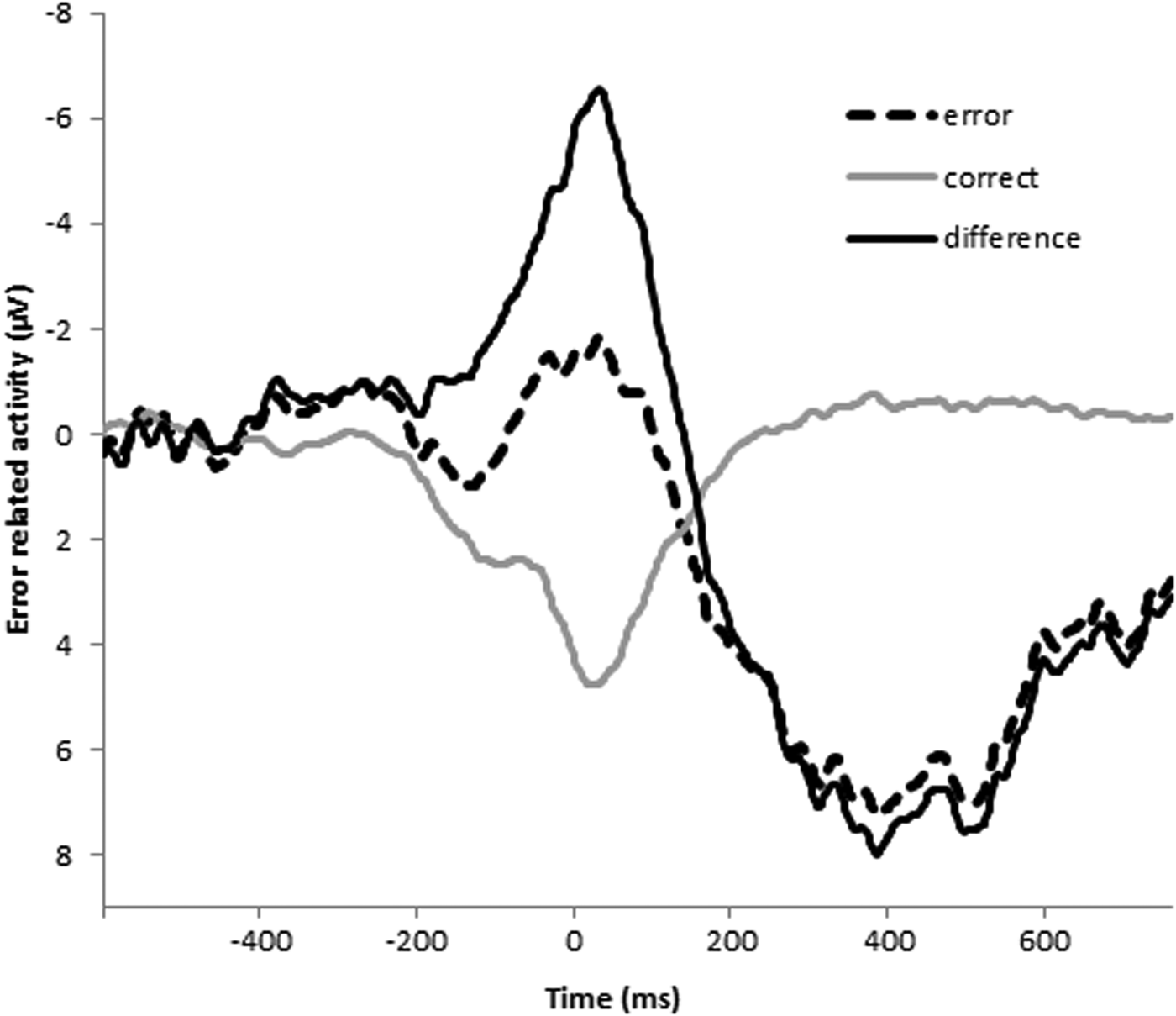
ERP and behavioral results in the full sample have been previously reported (Torpey et al., Reference Torpey, Hajcak, Kim, Kujawa and Klein2012). The ERN and correct-related negativity (CRN) were scored as the average voltage in the window between 0 ms and 100 ms after response commission on error and correct trials, respectively; the CRN and ERN were quantified at Fz, where error-related brain activity was maximal. The change in ERN (ΔERN), thought to reflect error-specific activity, was calculated by subtracting the CRN from the ERN.
All statistical analyses were conducted using SPSS (Version 17.0) general linear model software, with Greenhouse–Geisser correction applied to p values with multiple degrees of freedom, repeated-measures comparisons when necessitated by violation of the assumption of sphericity. The Pearson correlation coefficient (r), one-way analyses of variance, and chi-squares (χ2) were used to examine associations between all study variables.
We used a nonparametric bootstrapping method (MacKinnon, Lockwood, & Williams, Reference MacKinnon, Lockwood and Williams2004) to examine whether the BDNF polymorphism moderated the relationship between harsh parenting and error-related brain activity. After this, we used a bootstrapping test to explore the extent to which the BDNF polymorphism moderated the mediation of error-related brain activity on the relationship between parenting and child psychopathology. This approach has been shown to be more statistically powerful than other tests of moderated mediation (MacKinnon, Lockwood, Hoffman, West, & Sheets, Reference MacKinnon, Lockwood, Hoffman, West and Sheets2002). To test for moderated mediation, we used an SPSS macro (Process: Preacher & Hayes, Reference Preacher and Hayes2004), which provided a bootstrap estimate of the indirect effect between the independent and dependent variable, an estimated standard error, and 95% confidence intervals for the population value of the indirect effect. When confidence intervals for the indirect effect do not include zero, this indicates a significant indirect effect at the p < .05 level. Direct and indirect effects were tested using 5,000 bootstrap samples. Process uses ordinary least squares methods for estimating two-way interactions in moderation models and estimates regions of significance using the Johnson–Neyman technique. In addition, we calculated proportion of the interaction (PoI) and proportion affected (PA) values with the web-based application (Roisman et al., Reference Roisman, Newman, Fraley, Haltigan, Groh and Haydon2012; http://www.yourpersonality.net/interaction/). All variables were z-scored before being included in analyses.
Results
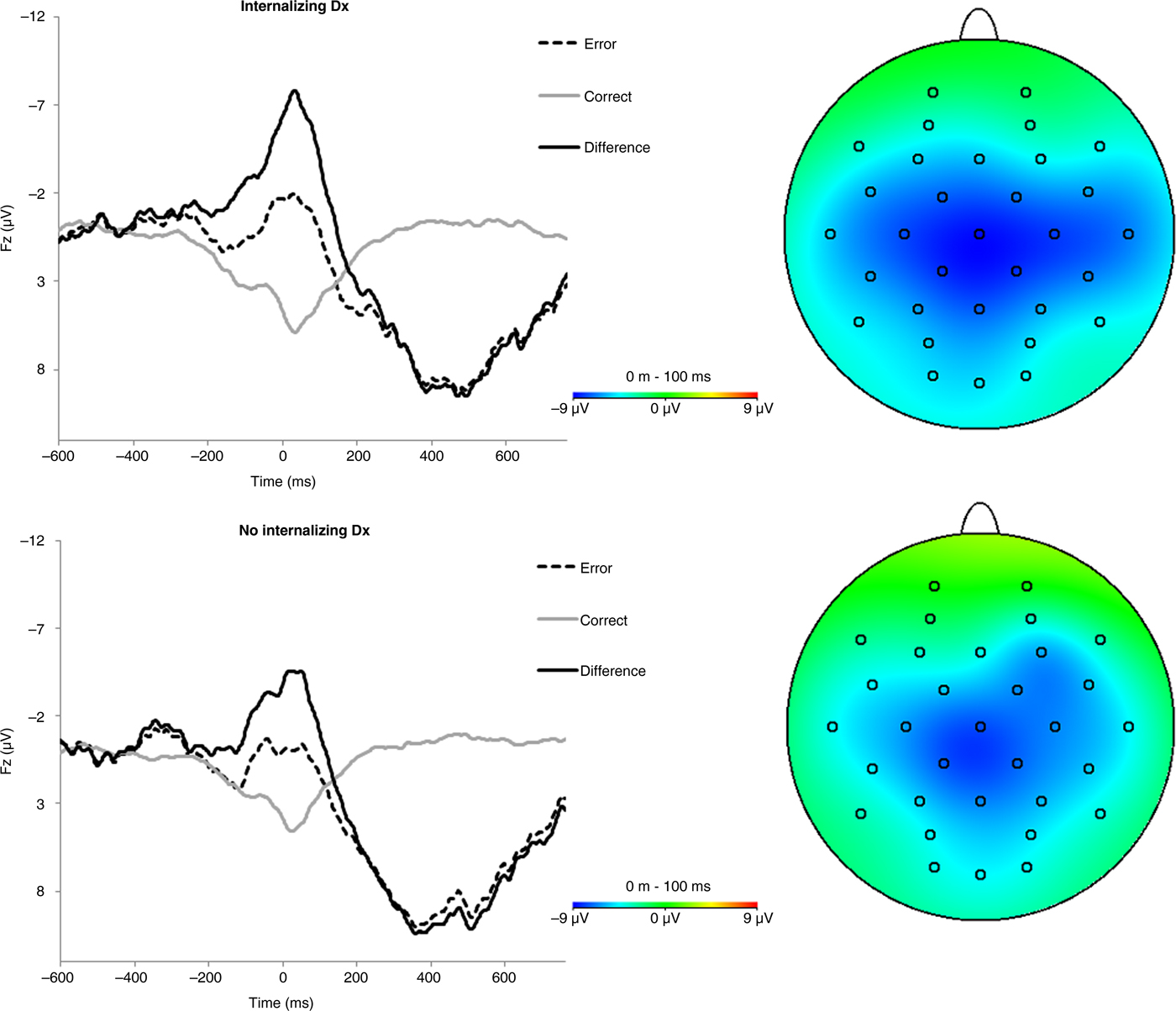
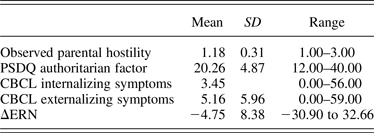
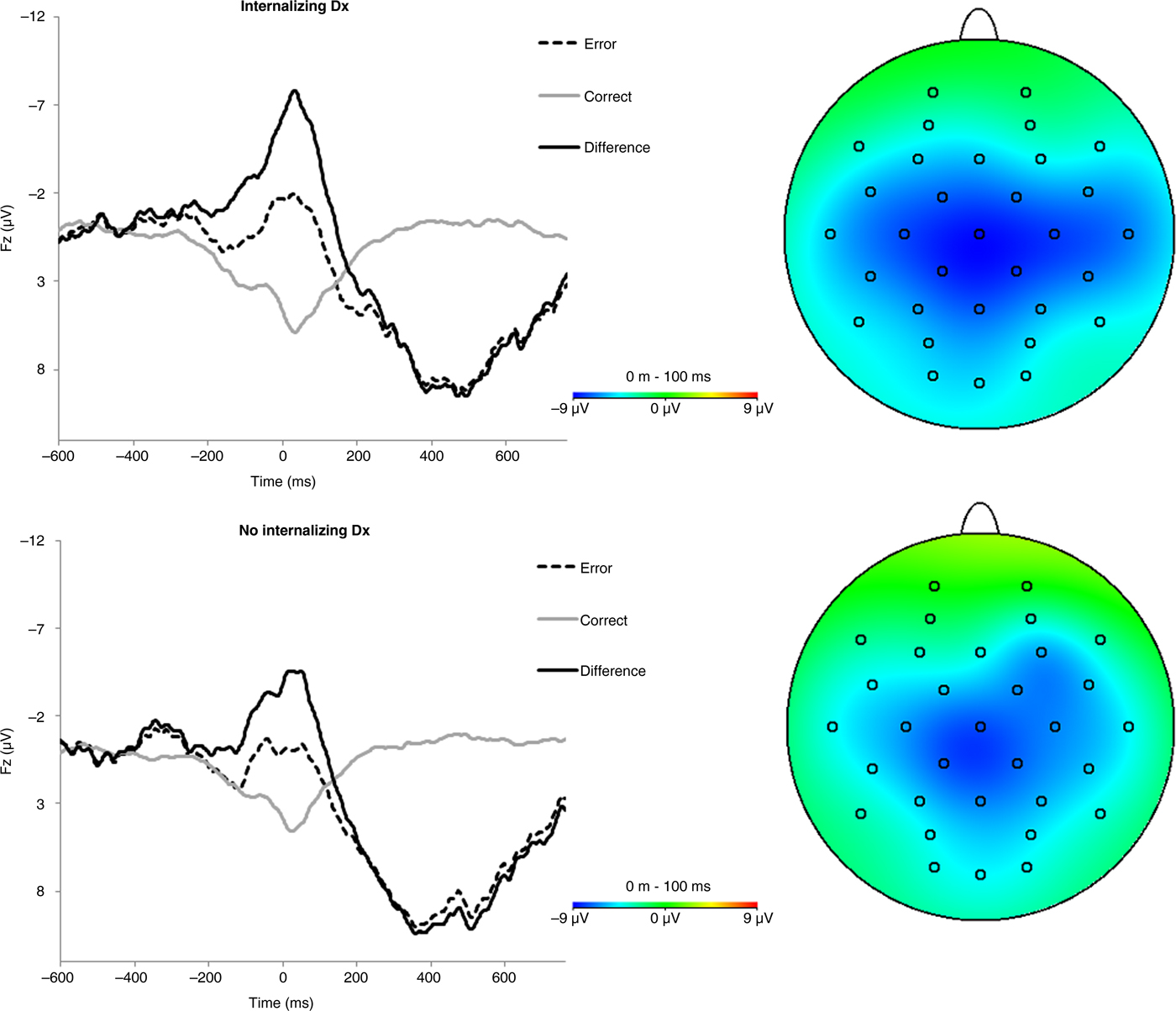
Means, standard deviations, and ranges are provided in Table 1 for all main study variables. Consistent with previous reports from the larger sample (Meyer et al., Reference Meyer, Hajcak, Torpey, Kujawa, Kim, Bufferd and Klein2013; Torpey et al., Reference Torpey, Hajcak, Kim, Kujawa and Klein2012), the ERP response was more negative following errors than correct responses, F (1, 200) = 64.61, p < .001 (see Figure 1).Footnote 5 The ΔERN was larger among children with internalizing disorders (M = –6.51 μV, SD = 8.06) compared to children without internalizing disorders (M = –3.75 μV, SD = 8.42), F (1, 200) = 5.17, p < .05 (see Figure 2), but did not differ between children with and without externalizing disorders, F (1, 200) = 0.71, p = .40. Continuous variation in CBCL internalizing and externalizing symptoms did not correlate with the ΔERN, r (199) = –.10, p = .18 and r (199) = .02, p = .79, respectively. The ΔERN also did not differ between the two BDNF genotype groups, F (1, 200) = 0.05, p = .83. As previously reported (Meyer, Proudfit, et al., Reference Meyer, Proudfit, Bufferd, Kujawa, Laptook, Torpey and Klein2014), an enhanced ΔERN in children was related to harsh parenting, r (199) = –.12, p = .08, albeit at a trend level in this smaller sample.
Response-locked event-related potential waveforms for correct (light) and error (dashed) trials, as well as the difference waveform (i.e., error minus correct, dark) for the entire sample at Fz. Negative is plotted up, and response onset occurred at 0 ms.

(Color online) Response-locked event-related potential waveforms for correct (light) and error (dashed) trials, as well as the difference waveform (i.e., error minus correct, dark) for children with internalizing disorders (top) and children without internalizing disorder (bottom). On the right, topographical headmaps are depicted for both groups, error minus correct, from 0 to 100 ms after the response.
Means, standard deviations, and ranges for main study variables

Note: PSDQ, Parenting Styles and Dimensions Questionnaire; CBCL, Child Behavior Checklist; ΔERN, change in error-related negativity.
In addition, harsh parenting did not differ by BDNF genotype group, F (1, 200) = 0.15, p = .70. While parenting did not differ between children with and without internalizing disorders, F (1, 200) = 0.04, p = .84, parents of children with externalizing disorders were characterized by a harsher parenting style, F (1, 200) = 5.98, p < .05. This was consistent with findings from CBCL symptom scores: harsh parenting did not relate to internalizing symptoms, r (199) = .04, p = .58, but did relate to increased externalizing symptoms, r (199) = .15, p < .05. In addition, rates of both internalizing and externalizing disorders were comparable between the two BDNF genotype groups, χ2 (1, N = 201) = 2.04, p = .15, and χ2 (1, N = 201) = 1.33, p = .25, respectively.
Moderation of the BDNF genotype on the relationship between parenting and child error-related brain activity
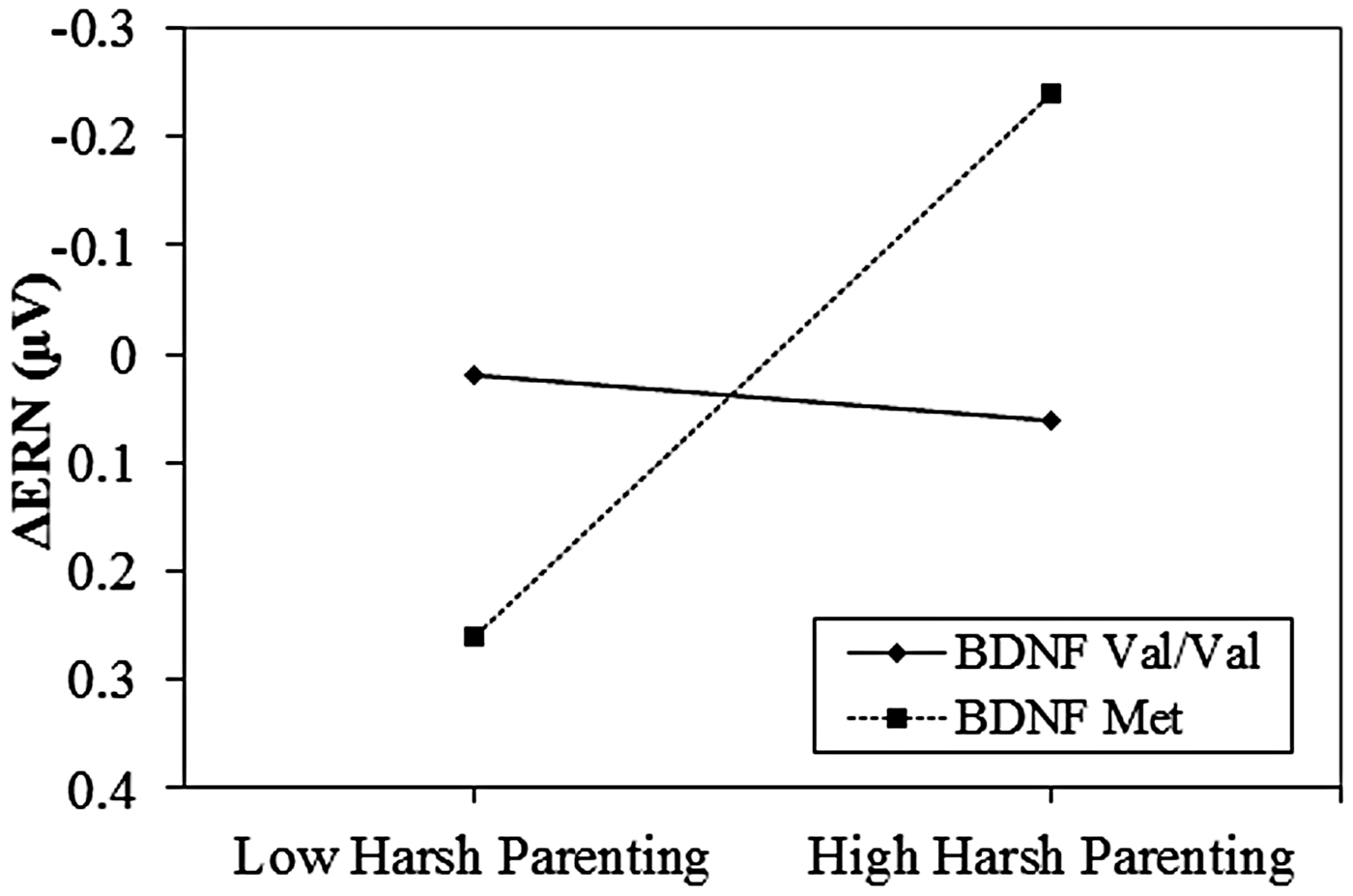
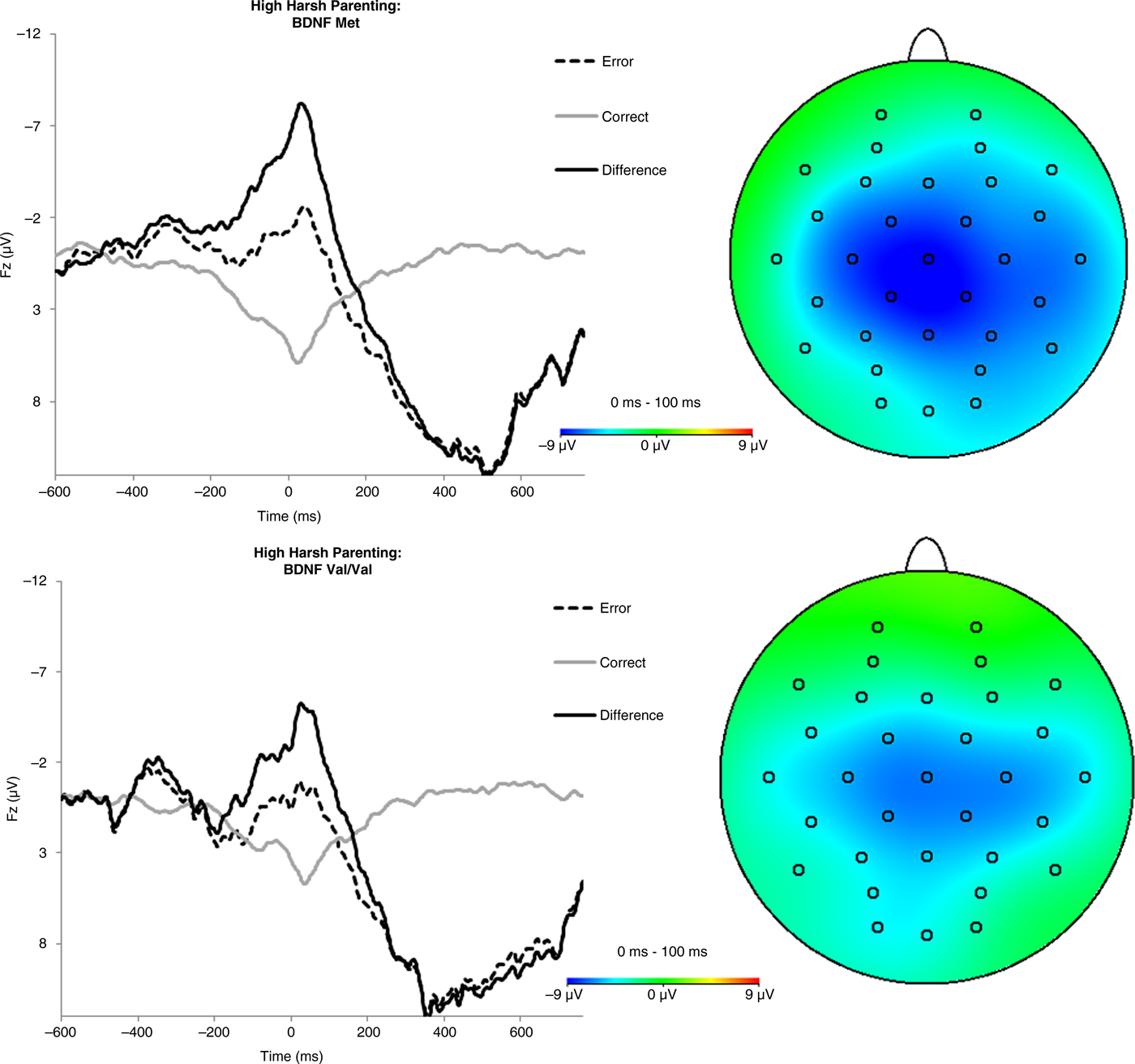
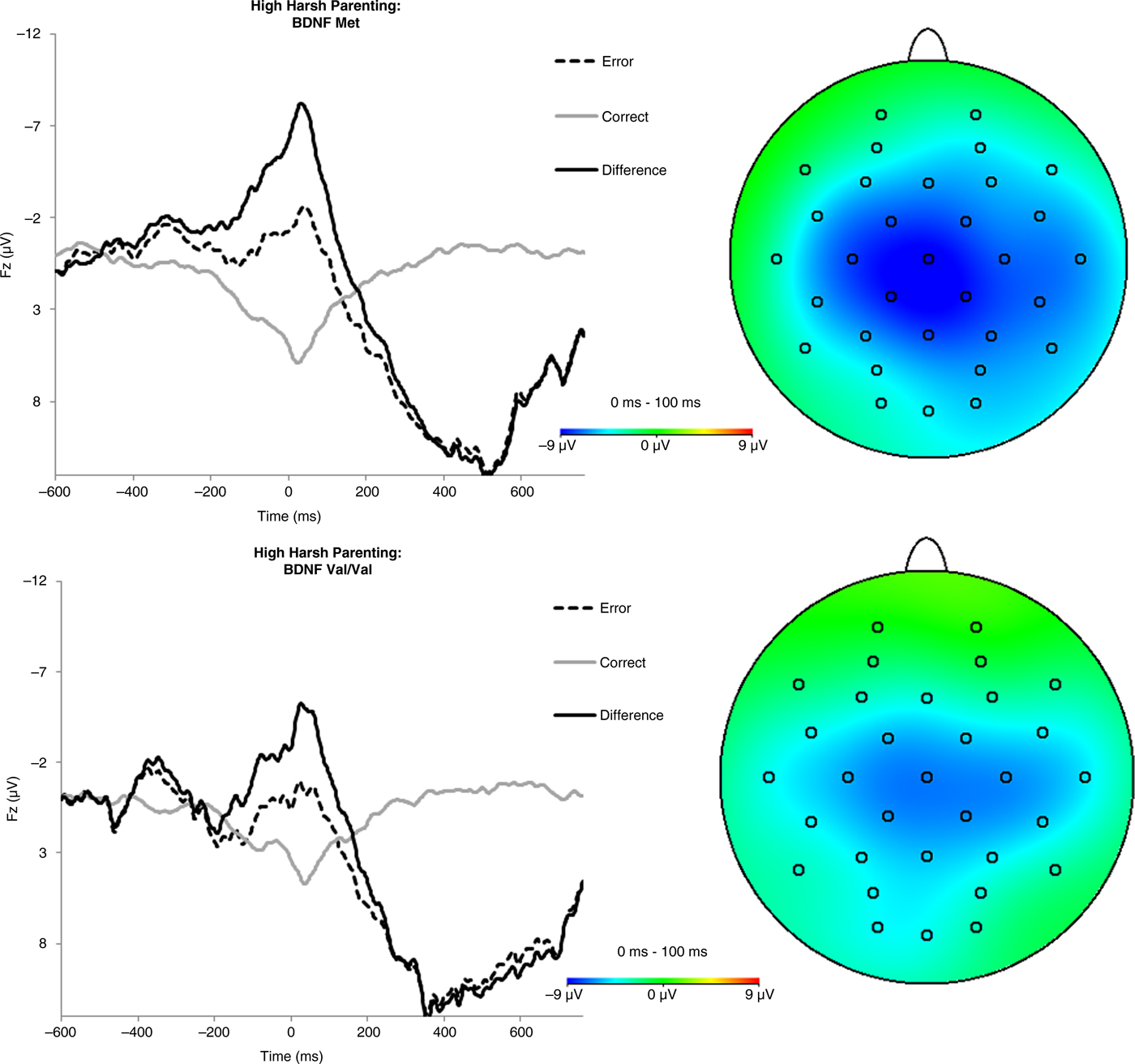
We used a nonparametric bootstrapping method (MacKinnon et al., Reference MacKinnon, Lockwood and Williams2004) to examine whether the BDNF polymorphism moderated the relationship between harsh parenting and error-related brain activity. Results suggested that while the main effects of neither the BDNF gene nor harsh parenting were significantly related to the ΔERN in this model, both ps >.8, the interaction between the BDNF genotype and harsh parenting explained a significant amount of variance in ΔERN magnitude in children, ΔR 2 = .02, F (1, 197) = 3.67, p = .05.Footnote 6 As depicted in Figure 3, among children with a methionine allele, harsh parenting was associated with an increased ΔERN, t = –2.56, p < .01, 95% confidence interval (CI) [−0.45, –0.06]. However, among children with the val/val BDNF genotype, harsh parenting was not associated with the ΔERN magnitude in children, t = 0.21, p = .84, 95% CI [−0.18, 0.23]. Probing regions of significance in the interaction indicated that differences in ΔERN magnitude between the BDNF groups were only apparent at high levels of harsh parenting (above 5.13, p < .05), with no differences evident at lower levels of harsh parenting (harsh parenting values between –2.22 and 2.26, all ps >.10). Trend-level differences were observed when harsh parenting values were between 2.27 and 5.13 (ps = .06–.10). Waveforms and topographical headmaps are depicted in Figure 4 for children with high levels of harsh parenting (median split), grouped by BDNF genotype (val/val vs. met).
Depiction of the interaction between harsh parenting and the BDNF genotype in predicting the error-related negativity in children.

(Color online) Response-locked event-related potential waveforms for correct (light) and error (dashed) trials, as well as the difference waveform (i.e., error minus correct, dark) for children with the BDNF met genotype (top) and children with the BDNF val/val genotype (bottom). On the right, topographical headmaps are depicted for both groups, error minus correct, from 0 to 100 ms after the response.
To help distinguish differential susceptibility from diathesis–stress, Roisman et al. (Reference Roisman, Newman, Fraley, Haltigan, Groh and Haydon2012) suggest that researchers utilize the PoI and PA index to help distinguish differential susceptibility from diathesis–stress, in addition to probing regions of significance. The PoI value provides an expression of the proportion of the total interaction that is represented on the left and right sides of the crossover point. The results suggested the PoI value was equal to 0.54. According to Roisman et al., PoI values close to 0.50 suggest strong evidence for differential susceptibility. Values closer to 0.00 suggest strong evidence for diathesis–stress. The PA index represents the proportion of the people differentially affected by the crossover interaction. Results suggested the PA value was equal to 0.53. According to Roisman et al., PA values close to 0.50 indicate strong evidence of differential susceptibility.
Moderated mediation model: Predicting internalizing disorders
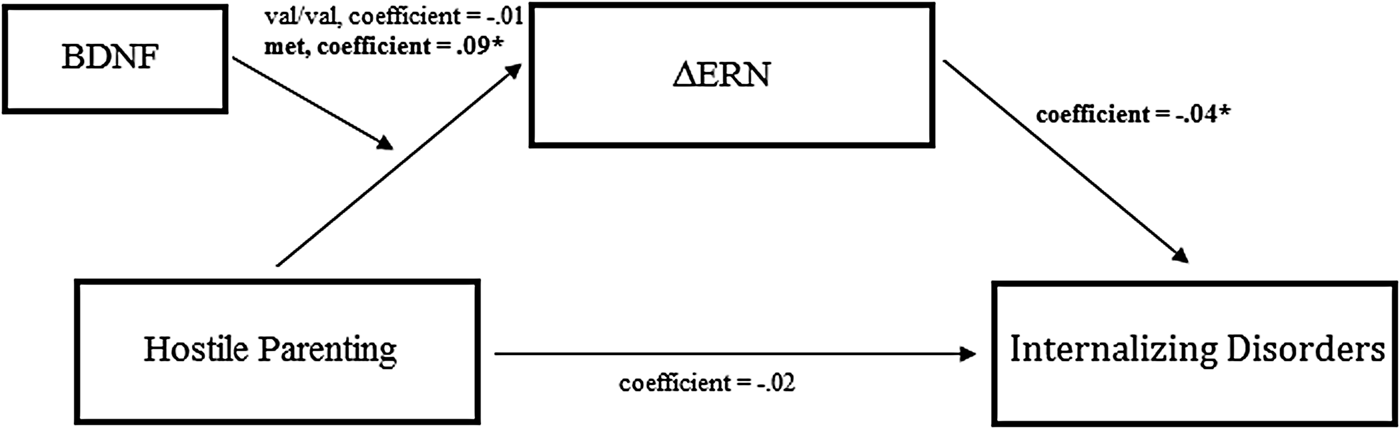
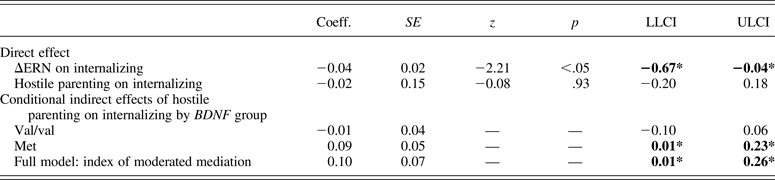
We previously reported a mediation model wherein the ΔERN mediated the relationship between harsh parenting and child anxiety disorder status (Meyer, Proudfit, et al., Reference Meyer, Proudfit, Bufferd, Kujawa, Laptook, Torpey and Klein2014). In the current study, we examined a moderated mediation model wherein the interaction between the BDNF genotype and harsh parenting predicting the ΔERN mediated the relationship between parenting and internalizing disorders in children (see Figure 5). In this model, the interaction between the BDNF genotype and harsh parenting predicted ΔERN magnitude in children (t = 1.92, coefficient = 2.30, p = .05). In addition, as can be seen in Table 2, the ΔERN predicted internalizing disorders, z = –2.21, coefficient = –0.04, p < .05, 95% CI [−0.67, –0.04]. While the direct path between parenting and internalizing disorders was not significant, z = –0.08, coefficient = –0.01, p = .93, 95% CI [−0.20, 0.18], the results supported a moderated mediation model, index of moderated mediation = 0.10, SE = 0.07, 95% CI [0.01, 0.26].Footnote 7 The pattern of the moderated mediation was consistent with the original mediation model: among children with a methionine BDNF genotype, the relationship between harsh parenting and internalizing disorders was mediated by ΔERN magnitude, effect = 0.09, SE = 0.06, 95% CI [0.01, 0.23], but this relationship was not significant among children with the val/val BDNF genotype, effect = –0.01, SE = 0.04, 95% CI [–0.10, 0.06]. In other words, the mediation of parenting to child psychopathology via error-related brain activity was contingent on the BDNF genotype, only occurring among children with at least one methionine allele.
A moderation mediation model with harsh parenting predicting internalizing disorders, wherein this relationship is mediated by the interaction between the BDFN genotype and harsh parenting predicting the magnitude of change in children's event-related negativity. *p < .05.

Moderated mediation model: Predicting internalizing disorders
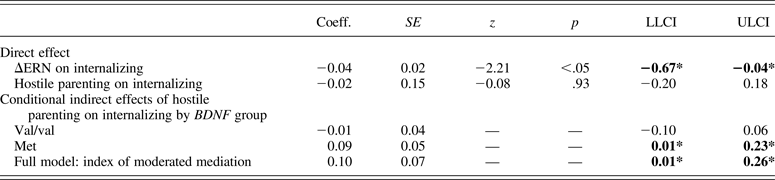
Note: ΔERN, change in error-related negativity; BDNF, brain-derived neurotrophic factor gene; Val, valine; Met, methionine; LLCI, lower level confidence interval; ULCI, upper level confidence interval.
*p < .05.
In a second version of this model, we entered CBCL internalizing symptoms as the outcome, instead of disorder status. The pattern of results was consistent with the findings reported above: the interaction between the BDNF genotype and harsh parenting predicted ΔERN magnitude (t = 1.81, coefficient = –2.25, SE = 1.24, p = .07) at a trend level. In addition, the ERN predicted internalizing symptoms, z = –2.15, coefficient = –0.08, SE = 0.03, p < .05, 95% CI [–0.144, –0.006]. In addition, while the direct path between parenting and internalizing symptoms was not significant, z = –1.23, coefficient = –0.37, SE = 0.30, p = .22, 95% CI [–0.965, 0.222], the results supported a moderated mediation model, index of moderated mediation = 0.17, SE = 0.12, 95% CI [0.015, 0.562].
Moderated mediation model: Predicting externalizing disorders
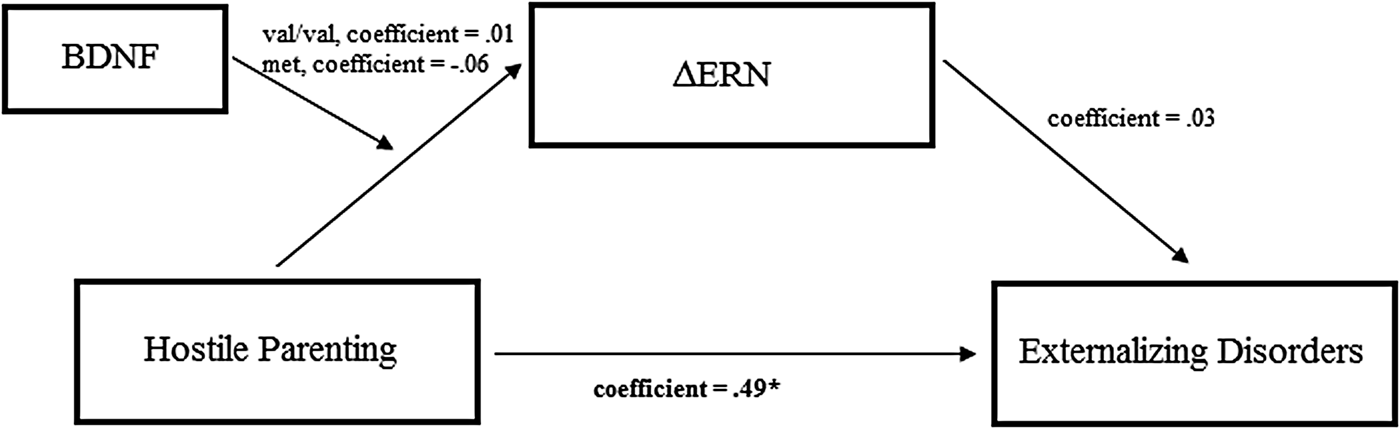
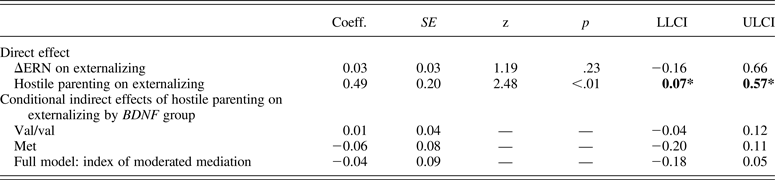
To examine specificity, we ran a second model, using the same moderated mediation pattern described above, this time predicting externalizing disorders instead of internalizing disorders (see Figure 6 and Table 3). Again, in this model, the interaction between the BDNF genotype and harsh parenting predicted ΔERN magnitude (t = 1.92, coefficient = 2.30, SE = 1.20, p = .05). However, ΔERN magnitude did not predict externalizing disorders in children, z = 1.19, coefficient = 0.49, SE = 0.19, p = .23, 95% CI [−0.16, 0.66]. Although the results did not support a moderated mediation model, index of moderated mediation = –0.04, SE = 0.09, 95% CI [–0.18, 0.05], the direct path between harsh parenting and externalizing disorders was significant, z = 2.48, coefficient = 0.49, SE = 0.20, p < .01, 95% CI [0.07, 0.57], such that harsher parenting was associated with an increased rate of externalizing disorders in children.Footnote 8
A moderation mediation model with harsh parenting predicting externalizing disorders, wherein this relationship is mediated by the interaction between the BDFN genotype and harsh parenting predicting the magnitude of change in children's event-related negativity. *p < .05.

Moderated mediation model: Predicting externalizing disorders

Note: ΔERN, change in error-related negativity; BDNF, brain-derived neurotrophic factor gene; Val, valine; Met, methionine; LLCI, lower level confidence interval; ULCI, upper level confidence interval.
*p < .05.
In a second version of this model, we entered CBCL externalizing symptoms as the outcome, instead of disorder status. The pattern of results was broadly consistent with the findings reported above: the interaction between the BDNF genotype and harsh parenting predicted ΔERN magnitude (t = 1.86, coefficient = 2.30, SE = 1.24, p = .06) at a trend level. In this model, however, ΔERN magnitude predicted externalizing symptoms at a trend level, z = 1.79, coefficient = 0.07, SE = 0.04, p = .07, 95% CI [–0.007, 0.147]. Although results did not support a moderated mediation model, index of moderated mediation = –0.16, SE = 0.15, 95% CI [–0.592, 0.065], the direct path between harsh parenting externalizing symptoms was significant, z = 2.35, coefficient = 0.78, SE = 0.33, p < .01, 95% CI [0.125, 1.430].
Discussion
Overall, the results were consistent with our hypotheses: the BDNF genotype interacted with harsh parenting such that harsh parenting only related to an increased ERN among children carrying at least one methionine allele. Among children with the BDNF val/val genotype, parenting did not relate to ERN magnitude. In addition, the mediation of parenting to internalizing disorders in children via error-related brain activity was contingent on the BDNF genotype, but this relationship was evident only among children with at least one methionine allele. Furthermore, while harsh parenting was related to an increased rate of externalizing disorders in children, the mediation via BDNF and ERN was not significant, suggesting unique mechanisms whereby parenting is related to internalizing versus externalizing outcomes in children. The pattern of results was the same whether diagnoses from a clinical interview or dimensional symptom measures from a parent report were used as the outcome variable, lending further support to the current findings.
Consistent with previous work suggesting that punishing errors has a lasting impact on the ERN (Meyer et al., Reference Meyer, Gawlowska and Hajcak2017; Riesel et al., Reference Riesel, Weinberg, Endrass, Kathmann and Hajcak2012), harsh parenting was related to an increased ERN magnitude in children (Meyer, Proudfit, et al., Reference Meyer, Proudfit, Bufferd, Kujawa, Laptook, Torpey and Klein2014). We extended previous findings in this sample by exploring whether the BDNF genotype moderated the effects of parenting in predicting the ERN, and found that parenting only related to error processing among children with a methionine allele. Previous work suggests that carriers of the BDNF methionine allele are more affected by parenting behavior (Ibarra et al., Reference Ibarra, Alemany, Fatjó-Vilas, Córdova-Palomera, Goldberg, Arias and Fañanás2014; Park et al., Reference Park, Kim, Kim, Jung, Lee, Shin and Cho2014; Suzuki et al., Reference Suzuki, Matsumoto, Shibuya, Ryoichi, Kamata, Enokido and Otani2012; Willoughby et al., Reference Willoughby, Mills-Koonce, Propper and Waschbusch2013), display deficits in extinction learning (Johnson & Casey, Reference Johnson and Casey2014; Peters et al., Reference Peters, Dieppa-Perea, Melendez and Quirk2010; Soliman et al., Reference Soliman, Glatt, Bath, Levita, Jones, Pattwell and Somerville2010), and are more susceptible to psychopathology (Neves-Pereira et al., Reference Neves-Pereira, Mundo, Muglia, King, Macciardi and Kennedy2002; Sen et al., Reference Sen, Nesse, Stoltenberg, Li, Gleiberman, Chakravarti and Burmeister2003; Sklar et al., Reference Sklar, Gabriel, McInnis, Bennett, Lim, Tsan and Owen2002). Harsh parenting may operate in a similar way as fear-learning paradigms in the lab, wherein children associate making mistakes with punishment (i.e., parental criticism). Perhaps children with a methionine allele are unable to extinguish this learned association, despite experiencing other situations in which their mistakes are not paired with punishment. The possibility that the deficit in extinction learning that characterizes BDNF methionine allele carriers underlies the association between harsh parenting and ERN magnitude in children could be explored in future studies that also measure extinction learning in the lab.
In addition, when probing regions of significance in the interaction between parenting and the BDNF genotype, results indicated that differences in ΔERN magnitude between the BDNF groups were only apparent at high levels of harsh parenting. However, findings from the PoI and PA analysis support a differential susceptibility model. This model assumes that sources of vulnerability (i.e., the BDNF methionine allele) are actually plasticity factors that not only amplify risk for maladaptation but also increase the probability of positive adaptation (Roisman et al., Reference Roisman, Newman, Fraley, Haltigan, Groh and Haydon2012). This fits with other research indicating that the BDNF methionine allele may function as a neuronal plasticity factor (Cheeran et al., Reference Cheeran, Talelli, Mori, Koch, Suppa, Edwards and Rothwell2008). This finding has implications for intervention work insofar as children with the methionine allele may be more impacted not only by hostile parenting but also by more positive parenting practices. In other words, these children may be particularly impacted by parenting and thus ideal targets for intervention strategies that include parenting components.
Children with internalizing disorders were also characterized by increased error-related brain activity. As previously discussed, this is consistent with a large body of work suggesting that individuals with internalizing disorders and traits display increased ERNs, which has been hypothesized to reflect an increased sensitivity and defensive response to errors, or perhaps more broadly, increased responding to internal sources of threat (Hajcak, Reference Hajcak2012; Weinberg et al., Reference Weinberg, Meyer, Hale-Rude, Perlman, Kotov, Klein and Hajcakin press). Inconsistent with some previous findings, we did not find a relationship between the magnitude of the ERN and externalizing disorders. One reason for this could be the relatively smaller number of children with externalizing disorders in the sample, leading to insufficient power to detect this relationship. Another reason may be the substantial comorbidity between internalizing and externalizing disorders in this sample. Consistent with this, in a post hoc analysis wherein we removed all children with internalizing disorders from the sample, children with externalizing disorders were characterized by a blunted ERN. Future work should explore the degree to which comorbidity of internalizing and externalizing psychopathology may influence error-related brain activity in children.
Extending our previous work, by examining both internalizing and externalizing outcomes, we found evidence for specificity in terms of delineating trajectories from parenting to psychopathology in children. By investigating a genotype (i.e., BDNF), an environmental factor (i.e., harsh parenting), and a neural marker (i.e., the ERN), we were able to further characterize pathways leading to divergent psychopathology outcomes (Beauchaine & McNulty, Reference Beauchaine and McNulty2013). We found that harsh parenting only related to children's error processing if children carried the BDNF methionine allele, and that this pathway explained a significant amount of variance in the relationship between harsh parenting and internalizing disorders. In contrast, this mediated pathway through the ERN did not predict externalizing outcomes, which were instead directly predicted by harsh parenting.
It is important to consider limitations of the current investigation. As previously mentioned, only 25 children in the current sample had an externalizing disorder, and we may have not had sufficient power to detect associations and/or interactions with the ERN. In addition, the amount of variance in the ERN predicted by the parenting/BDNF interaction was small (2%). While we would not expect a single genetic polymorphism to explain a large amount of variance in psychological outcomes, the clinical application of the current findings in isolation would be relatively limited. Future work might identify other interactions between risk factors and genes to be used in conjunction with the current findings.
Previous work in humans and other animals supports the notion that parenting behavior has a substantial impact on brain development and stress reactivity in offspring (Caldji et al., Reference Caldji, Tannenbaum, Sharma, Francis, Plotsky and Meaney1998; Francis, Diorio, Liu, & Meaney, Reference Francis, Diorio, Liu and Meaney1999; Kertes et al., Reference Kertes, Donzella, Talge, Garvin, Van Ryzin and Gunnar2009; Kryski et al., Reference Kryski, Dougherty, Dyson, Olino, Laptook, Klein and Hayden2013; Teicher et al., Reference Teicher, Andersen, Polcari, Anderson, Navalta and Kim2003). Some work has suggested that parenting may program biological responses to threatening stimuli through epigenetic mechanisms, allowing offspring to thrive under the unique demands of their environment (Francis et al., Reference Francis, Diorio, Liu and Meaney1999). The findings from the current study support this notion insofar as harsh parenting may increase the threatening nature of errors and thereby potentiate children's neural response to their own mistakes, especially in children with relatively less available BDNF. It is possible that other measures of threat sensitivity may also be differentially impacted by parenting as a function of BDNF genotype (e.g., startle response, amygdala reactivity, and cortisol reactivity), and these processes may then also characterize developmental trajectories leading to psychopathology. Future work should explore these possibilities.
Previous work has suggested that magnitude of the ERN increases across development (Tamnes, Walhovd, Torstveit, Sells, & Fjell, Reference Tamnes, Walhovd, Torstveit, Sells and Fjell2013), reaching adultlike levels around age 18. Although we were unable to test this in the current study, it is possible that children with the methionine allele who experienced harsh parenting early in life experienced a greater developmental increase in the ERN than other children. Future work could explore whether the normative increase in the ERN magnitude across development is greater in some subgroups of children (e.g., with the BDNF methionine allele, with harsh parents, or with increases in anxiety) than in others.
It is also important to consider that genetic and environmental influences most likely shift in importance across the life span (Bergen et al., Reference Bergen, Gardner and Kendler2007). For example, the region of the brain wherein the ERN is generated, the anterior cingulate cortex, demonstrates more environmental plasticity later in development relative to early childhood (Lenroot et al., Reference Lenroot, Schmitt, Ordaz, Wallace, Neale, Lerch and Giedd2009). In addition, previous work has suggested that BDNF levels substantially increase across development so that the deficit in BDNF levels found in methionine allele carriers may have a specific impact on learning earlier in development (Casey et al., Reference Casey, Glatt, Tottenham, Soliman, Bath, Amso and Levita2009). Parenting may also become less important across development as peer groups increase their influence on behavior (Larson & Richards, Reference Larson and Richards1991). Thus, it will be important for future work to consider both environmental and genetic factors as having a dynamic impact on outcomes across development in order to accurately characterize pathological trajectories and perhaps identify critical risk periods wherein certain factors are particularly related to subsequent outcomes.
Finally, identifying critical periods wherein specific genotypes and/or environmental influences are important may aid us in early intervention strategies (Beauchaine et al., Reference Beauchaine, Neuhaus, Brenner and Gatzke-Kopp2008). Previous work has suggested that early parenting interventions may alter the trajectory of psychopathology in at-risk children (e.g., Rapee, Kennedy, Ingram, Edwards, & Sweeney, Reference Rapee, Kennedy, Ingram, Edwards and Sweeney2010). In the future, it may be possible to target children, for example, in a certain age range, with specific genotypes (e.g., BDNF), neural risk markers (e.g., an increased ERN), and other risk factors, for early parenting interventions. By taking a targeted, or personalized, approach, we may be better able to allocate resources toward preventing life-long pathological trajectories (Shoham & Insel, Reference Shoham and Insel2011).