Introduction
The improvement of water use efficiency should be one of the most important drivers for research and innovation in irrigated agriculture. As a response to the emerging needs of relevant stakeholders (farmers, land reclamation and irrigation consortia, extension services, distribution sector, etc.), irrigation advisory services (IASs) for optimizing water management have shown rapid growth in several Italian regions. In Friuli Venezia Giulia, the most used IAS is BIdriCo (Gani et al., Reference Gani, Cicogna, Centore and Mariani2000), which estimates water requirements and suggests irrigation intervention criteria (times and volumes) using the water balance method and estimating soil moisture as a function of environmental, agronomic and farming conditions. In Emilia Romagna, developed IASs are CRITERIA and IRRINET. CRITERIA is a scalable model applicable in a range of cases, from detailed water analysis at basin level to specific agronomic case studies (Marletto et al., Reference Marletto, Zinoni, Botarelli and Alessandrini2005). It is also a component of another software program called iColt (irrigation and classification of crops by remote sensing), the operational climate service developed since 2007 by the Emilia Romagna Environmental Agency (ARPAE – SIMC) in order to monitor and predict potential water needs for crop irrigation at different geographical scales. IRRINET is a software developed by the Canale Emiliano Romagnolo (CER), Land Reclamation Consortia (Mannini et al., Reference Mannini, Genovesi and T2013), and assists farmers by providing real-time irrigation scheduling. The service started in 1984 and is now spreading into other Italian regions through the IRRIFRAME project. IRRIFRAME provides farmers with information on irrigation scheduling in terms of crop water requirements, irrigation intervals and frequency. According to the data provided by the National Association of Drainage and Irrigation Consortia (ANBI), the introduction and adoption of IRRIFRAME have been improving irrigation by saving, to date, between 15 and 25% of water and increasing the quantity and quality of agricultural production (Mannini et al., Reference Mannini, Genovesi and T2013).
Irrigation advisory services are already proven to be effective instruments for increasing water use efficiency and productivity, improving the decision-making process and reducing the information gap among involved players (Mañas et al., Reference Mañas, Ramos, Cortés, González and Córcoles1999). This is particularly true when such services are freely available to farmers and provide simple, readily available information; on the other hand, when the service is charged for and a high commitment in terms of knowledge by the user is required, issues related to cost-benefit balance can become relevant. In this scenario, there is a growing interest to investigate the farmers’ propensity to adopt irrigation systems and their preferences related to different service characteristics.
In this context, a choice experiment (CE) can be used to estimate economic values for several attributes of a product or a service (Mitchell and Carson, Reference Mitchell and Carson1989; Hanley et al., Reference Hanley, Mourato and Wright2001; Bozorg-Haddad et al., Reference Bozorg-Haddad, Malmier, Mohammad-Azari and Loáiciga2016). Among these, price allows an estimation of the trade-offs between attributes in monetary terms, thanks to marginal ‘willingness to pay’ (WTP).
In particular, the assessment of farmers’ WTP for IAS is essential to determine the degree of appreciation of these services and therefore their possible development in the near future (Svendsen and Small, Reference Svendsen and Small1990). The use of a CE distinguishes the current analysis from prior studies based on market values to estimate the benefits of irrigation management services (Price et al., Reference Price, Janmaat, Sugden and Bharati2016). Few authors have previously applied CE in this field.
Aydogdu (Reference Aydogdu2016) evaluated farmers’ WTP under water shortages for agricultural irrigation and explored potential contributing factors. The results showed that farmers are willing to pay 71.7% more than the existing price under certain conditions. Price et al. (Reference Price, Janmaat, Sugden and Bharati2016) evaluated household preferences for water services using a CE and latent class modelling techniques. Water storage systems were proposed to supplement rain-fed irrigation and augment domestic water services in communities in Nepal. Results indicated that the majority of households (0.92) had strong preferences for supplemental irrigation and that a less privileged group was interested mainly in improved domestic water services. Bozorg-Haddad et al. (Reference Bozorg-Haddad, Malmier, Mohammad-Azari and Loáiciga2016) estimated farmers’ WTP for irrigation water during shortages: the results showed that low water prices do not have any effect on water use when there is no shortage of water. Chandrasekaran et al. (Reference Chandrasekaran, Devarajulu and Kuppannan2009) used a Contingency Valuation Method to estimate farmers’ WTP for irrigation water under improved water supply conditions during wet and dry seasons of paddy cultivation in India and found that the estimated WTP for tank irrigation water was considerably less than the ‘opportunity cost’ (i.e. the benefits an individual, investor or business misses out on when choosing one alternative over another) of irrigation water. Tang et al. (Reference Tang, Nan and Liu2013) conducted a contingent valuation study on farmers’ WTP for irrigation water in China, showing low farmers’ WTP to achieve sustainable use of water. Salman and Al-Karablieh (Reference Salman and Al-Karablieh2004) estimated farmers’ WTP for groundwater resources under different conditions of water supply regime: the results showed that the water values in the region are underestimated and decision makers can impose a price level for groundwater ranging from US$0.14 to US$0.35/m3 without impacting cropping pattern or cultivated area.
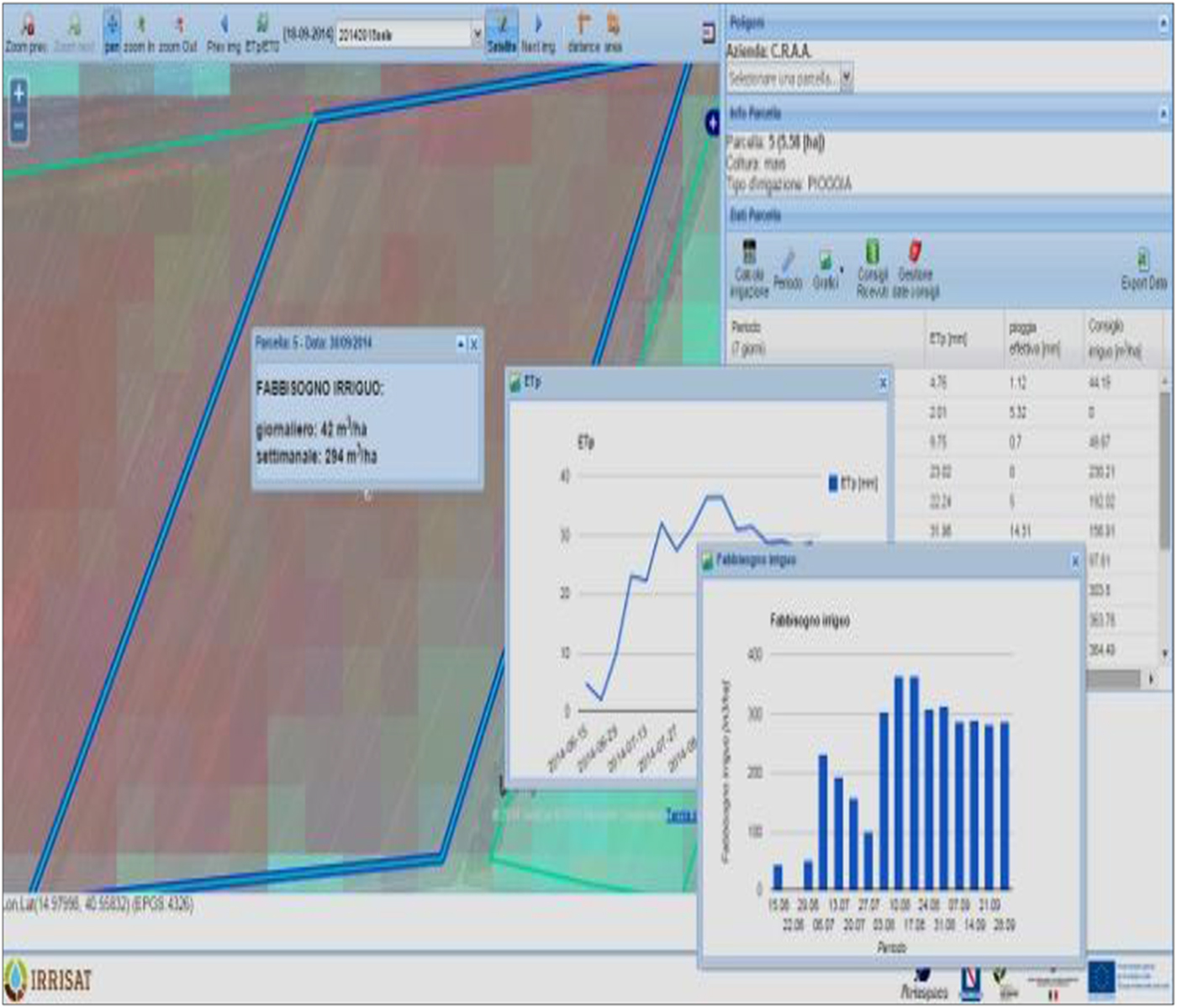
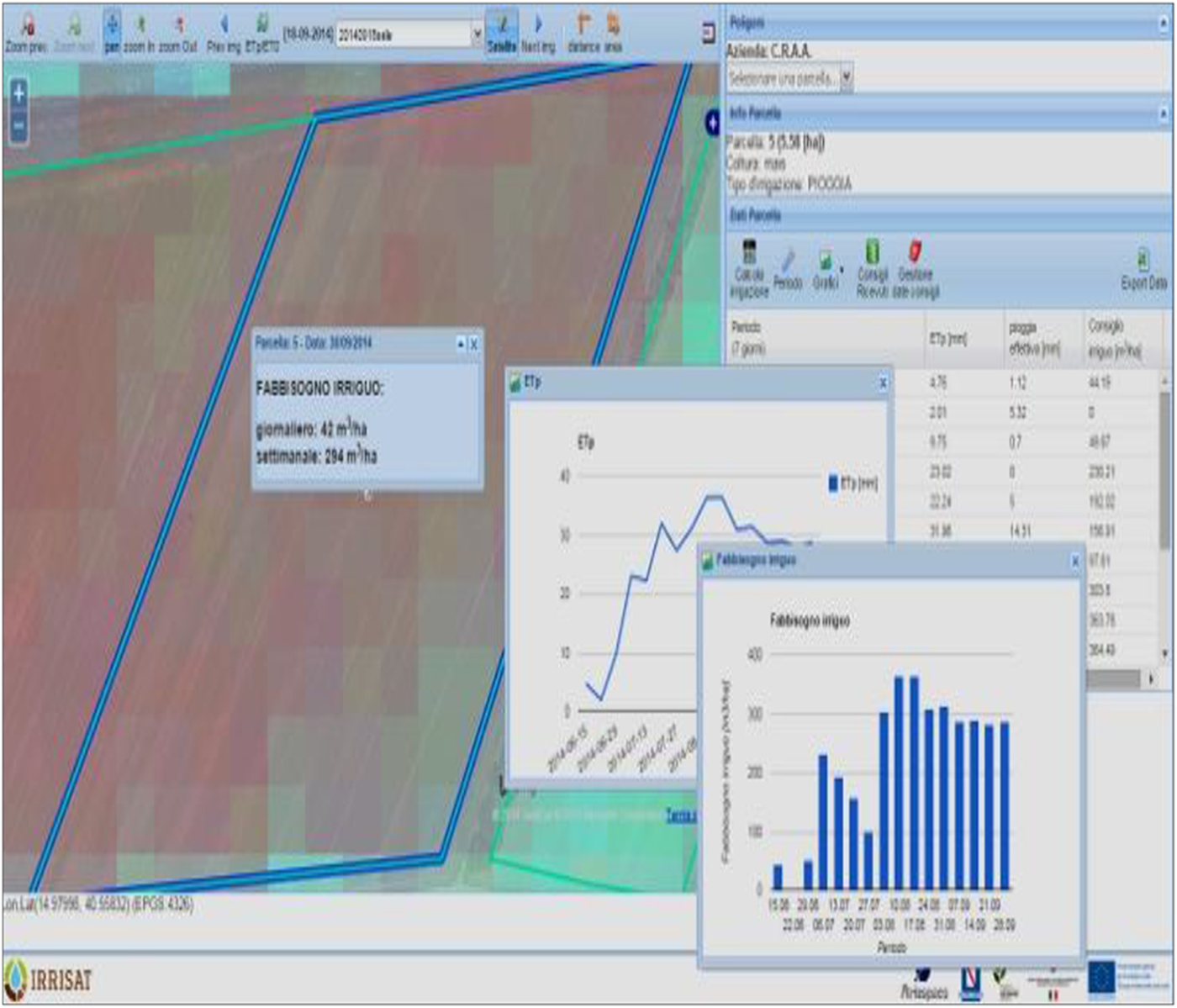
The aim of the current study was to define the preferences of farmers regarding the main characteristics and attributes of IRRISAT (Fig. 1), a fully operative satellite-based IAS provided in Campania Region, through the use of a CE.
IRRISAT.
Throughout the CE, the marginal WTP for IRRISAT attributes as well as for delivering contract characteristics was estimated. In the analysis, welfare estimates reflect both the main characteristics of the service delivery contracts (e.g. duration of contracts, price) and technical characteristics (e.g. water-saving percentage, land management unit) benefits associated with IRRISAT adoption.
Materials and methods
Case study area
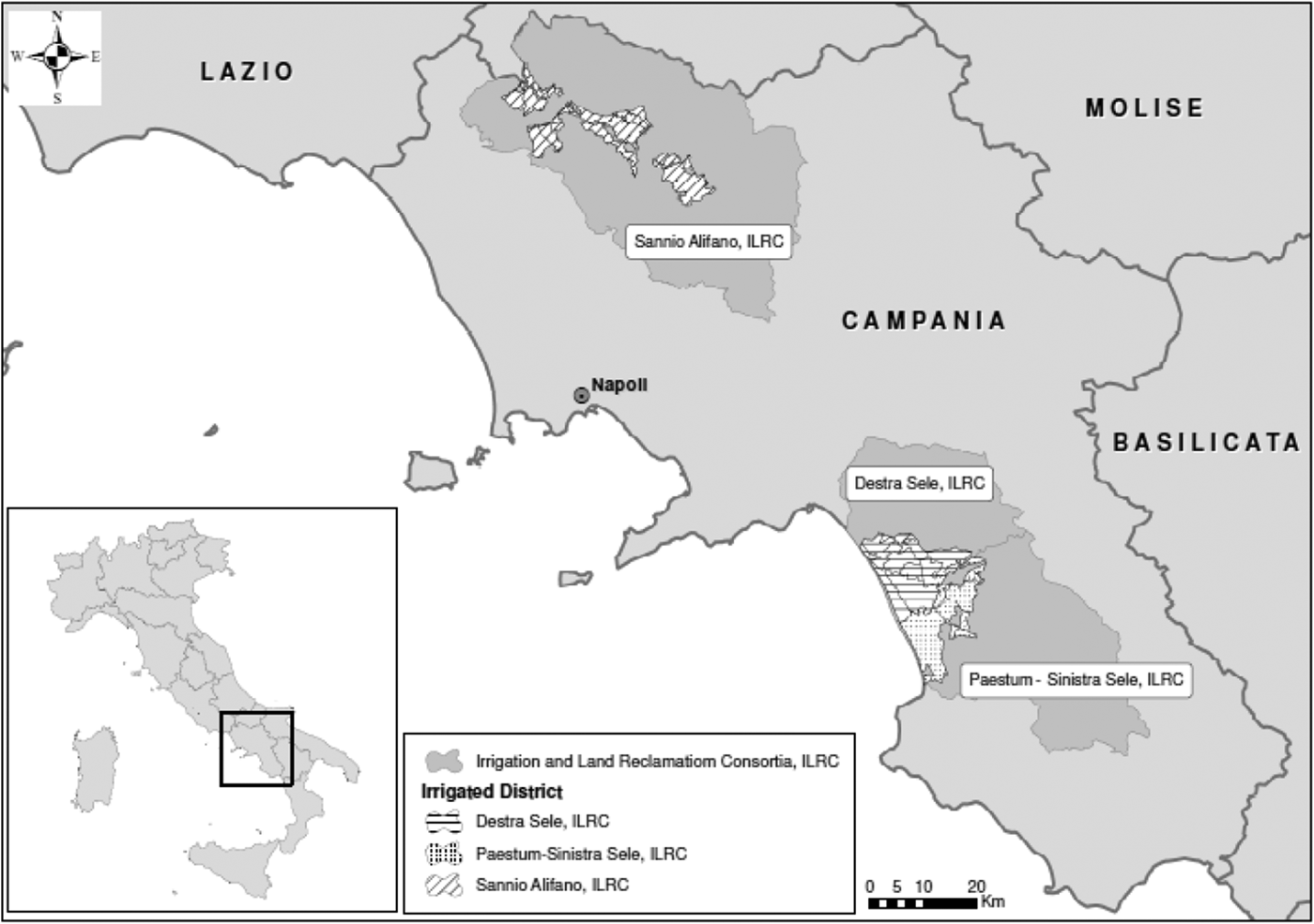
The study area covers three Irrigation and Land Reclamation Consortia (ILRC), Sannio Alifano (18 970 ha), Paestum (12 000 ha) and Destra Sele (16 375 ha), all located in Campania Region in South West of Italy (Fig. 2). The most common crops are maize and greenhouse crops. Vineyards and olives are very common, but they are not regularly irrigated. Water is mainly supplied by several pumping stations located along the main rivers of the region.
Case study area – Irrigation and Land Reclamation Consortia, ILRC.

Irrigation is provided by different systems, both under pressure (sprinkler and drip irrigation) and gravity (border and furrow irrigation), with different levels of technical efficiency.
The IAS investigated in the current study, IRRISAT, is based on near-real-time distribution of earth observation products and since 2007 it has been active over the area, providing evidence of high efficiency for water saving (up to 30%) (Vuolo et al., Reference Vuolo, D'Urso, De Michele, Bianchi and Cutting2015).
The service main products are maps of crop water requirement for the irrigated area, aggregated at different temporal scales, from weekly to monthly, and at different spatial scales, from field to farm.
The information on the amount of water required for irrigation provided by the IAS is sent out to farmers via SMS and email, as well as via IRRISAT webpage.
The study was related to 2013–2014 irrigation season, when the service has provided support to 669 farmers over an area of 55 ha.
Choice experiment
In order to optimize and customize IRRISAT, and to allow for wider use, the current research analyses farmers’ preferences for its different technical attributes and its characteristics with respect to delivering contracts. To this aim, a choice modelling approach was implemented. This approach allowed individuals to select between several service alternatives characterized by different attributes and levels. A ‘no-choice’ option was included among the alternatives (Adamowicz et al., Reference Adamowicz, Boxall, Williams and Louviere1998). Following CE procedure, farmers were asked to select their most preferred alternative among those present in a choice set.
Choice experiments are based on Lancastrian consumer theory (Lancaster, Reference Lancaster1966) and random utility theory (McFadden, Reference McFadden and Zarembka1974; Hanemann and Kanninen, Reference Hanemann, Kanninen, Bateman and Willis1999). The Lancastrian consumer theory assumes that the consumer obtains utility from the goods or services according to their corresponding attributes. The random utility theory assumes that individuals are rational, selecting the most preferred option that yields the highest utility from among the alternatives available.
Implementation of a CE comprises six stages: the first step identifies the relevant attributes of the goods/service to be evaluated. At this stage, literature review and focus groups were used to select attributes. The second step consists of assigning levels. Step 3 is designing the CE: statistical design theory was used to combine the levels of the attributes into a number of alternatives for the definition of profiles. The fourth step is the construction of choice sets; the profiles identified by the experimental design are then grouped into choice sets to be presented to respondents. The fifth step is choosing the survey and method of measuring preferences. The final stage consists of estimating the respondents’ preferences.
Relevant attributes and levels
The literature showed that the ‘expert interview by focus group’ approach used in the current study is a good methodology to obtain relevant data, especially during the exploration phase (Bogner and Menz, Reference Bogner, Menz, Bogner, Littig and Menz2009), but also to validate some hypotheses related to the attribute to use in the specific study (Zheng et al., Reference Zheng, Shen, Wang, Hong and Z2017).
Three focus groups were organized. Both farmers and consultants participated in each meeting. The topics analysed were related to what farmers require from the practice and possible gaps in knowledge on particular issues concerning IASs adoption, but also to identifying the success factors concerning their transferability to farmers in other areas of Campania provinces. Furthermore, proposing potential innovative actions to stimulate the knowledge and use of IASs to multiply positive effects within the agricultural sector was debated.
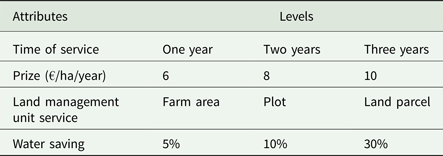
Focus group results were analysed using a qualitative approach. Three attributes and levels of IRRISAT service were identified. The first attribute is related to land management unit for IRRISAT (scale of service). Currently, the service is provided at three scales: field, cadastral parcel and entire farm, in order to meet the needs of different users (Table 1). The second attribute proposed three levels of water saving (5, 10 and 30%) that could be obtained at different prices.
Attributes and levels

The third attribute was an annual fee paid by farmers, expressed as a price (€/ha/year) for achieving a required level of IRRISAT service. Based on the specific service required, a price ranging between €6 and €10/ha/year was proposed. The range proposed for the price attribute was based on the results of a research project focused in the same study area (PLEIADEeS, www.pleiades.es and SIRIUS, www.sirius-gmes.es).
The last attribute was related to the length of the contract for the service supply, ranging from 1 to 3 years.
Experimental design and choice set
To elicit preferences on service characteristics, respondents were asked to examine a series of hypothetical alternatives of water irrigation service. Experimental design refers to the process of generating specific combinations of attributes and levels that respondents evaluate in choice questions. The choice tasks were constructed by the experimental design conducted with a fractional factorial procedure (SPSS Software).
The idea of the fractional factorial design is to include only a sub-set of all possible combinations of considered attributes. Following this approach, it is still possible to obtain useful information on the main effects and some information about interaction effects.
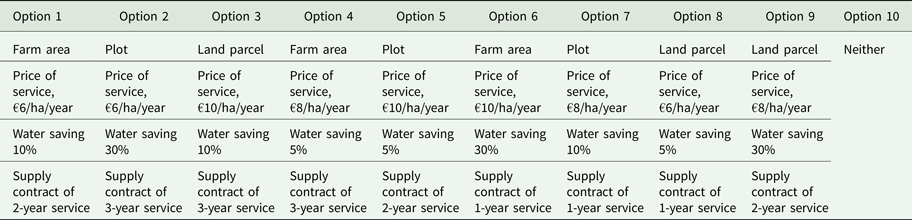
The fractional factorial samples must be balanced and orthogonal. There is no agreement in the literature on how many choice tasks should be presented in a CE (Louviere et al., Reference Louviere, Hensher, Swait and Adamowicz2000; Hensher et al., Reference Hensher, Rose and Greene2005). In the current paper, respondents faced ten choices of tasks composed of nine water irrigation service alternatives and a ‘no-choice’ option. Respondents were asked to choose the most preferred one.
The survey
The survey was carried out between April and August 2014. Using face-to-face interviews, a questionnaire was submitted to 115 farmers. Fifteen farmers did not complete the interview fully and were later rejected from the analysis of results. The questionnaire consisted of four main sections. The first section focused on general aspects, such as age of farmer, farm surface, form of ownership of the land (landholder, leaseholder) and water supply methods (sprinkler, drip irrigation, etc.). The second section of the questionnaire concerned the attitude of farmers to innovation, with special regard to the type of investments made in the past 5 years (purchase of machinery, land acquisition, building, etc.). The third part addressed the farmers’ preferences for a range of service options provided by IRRISAT (Table 2). Finally, in the fourth part of the questionnaire, the willingness to adopt innovations by farmer, together with the level of satisfaction obtained, was investigated.
IRRISAT choice set
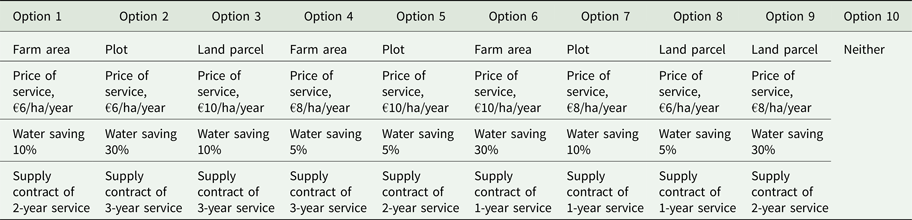
The farmers were provided with detailed information on the meaning of the attributes proposed in the questionnaire, to reduce the risk of compromising the outcome of the survey due to a misinterpretation of the questions.
The statistical model to estimate farmers preferences
Choice experiments rely on the basic idea that an individual can chose the most preferred product or service, maximizing utility, between sets including different attribute levels (Pearce et al., Reference Pearce, Atkinson and Mourato2006). Respondents will choose the alternative characterized by the most preferred attributes and levels. Specifically, concerning environmental goods, the CE provides four types of information: (i) which attributes are significant in determining the value that stakeholders (local or national public, farmers, recreational visitors to a site) place on the goods; (ii) the implied ranking of these attributes among the relevant stakeholders; (iii) the value of changing attribute in a ceteris paribus condition; and (iv) the total economic value of the goods (Hanemann and Kanninen, Reference Hanemann, Kanninen, Bateman and Willis1999). One of the attributes which is typically included in a CE study is price, as a monetary cost/benefit attribute, essential to estimate WTP for attributes (Hanemann, Reference Hanemann1984).
In the current study, a full fractional design that produced ten profiles was implemented and farmers were asked to choose the most preferred. To maximize his/her utility each i-th farmer was assumed to choose the j-th alternative with the most desired set of attributes. The probability that the farmer chooses alternative j, Y i,j = 1, among the set of other possible alternatives J is defined by the probability that the utility associated with alternative j is greater than or equal to the utility relative to the other J − 1 alternatives within the choice set:
 $$\hbox{Pr}\lpar {U_{i,j}} \rpar = \hbox{Pr}\lcub {U_{i,j} \gt \hbox{max}\lpar {U_{i,k},...,U_{i,J}} \rpar } \rcub $$
According to the random utility model, the farmers’ perceived utility associated to the j-th alternative is a linear and additive function of the attributes x j characterizing each alternative:
 $$U_{i,j} = {\rm} \beta x_j + \varepsilon _{i,j}$$
where estimated coefficients β indicate farmers preferences towards each level of the proposed attributes. Empirically, the estimates of the β parameters can be obtained by using maximum likelihood estimate of fixed-effect conditional logit as developed by McFadden (Reference McFadden and Zarembka1974). Moreover, in order to take into account the heterogeneity of preferences within the famers, β can be estimated using the random-effect conditional logit (Train, Reference Train2009), assuming β distributed within the sample according to a distribution function defined by a location (μ) and a scale (σ) parameter.
Results
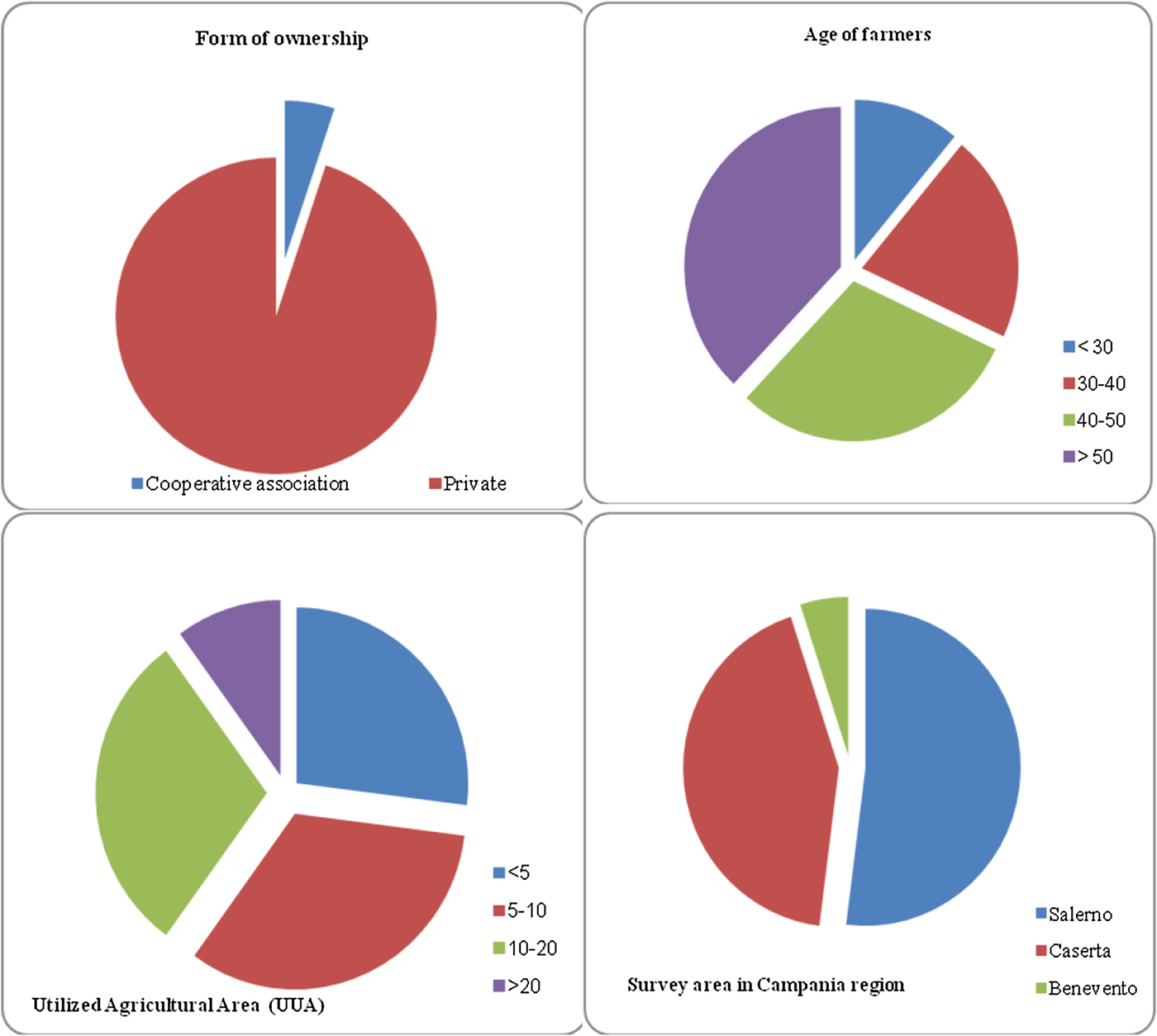
The CE considered responses from 100 farmers, mainly men (0.96). The age of respondents was between 21 and 83 years. Specifically, 0.11 of the sample was under 30 years, 0.21 between 30 and 40 years, 0.30 between 40 and 50 years and finally, 0.38 was over 50 years (Fig. 3).
Some characteristics of the interviewees.
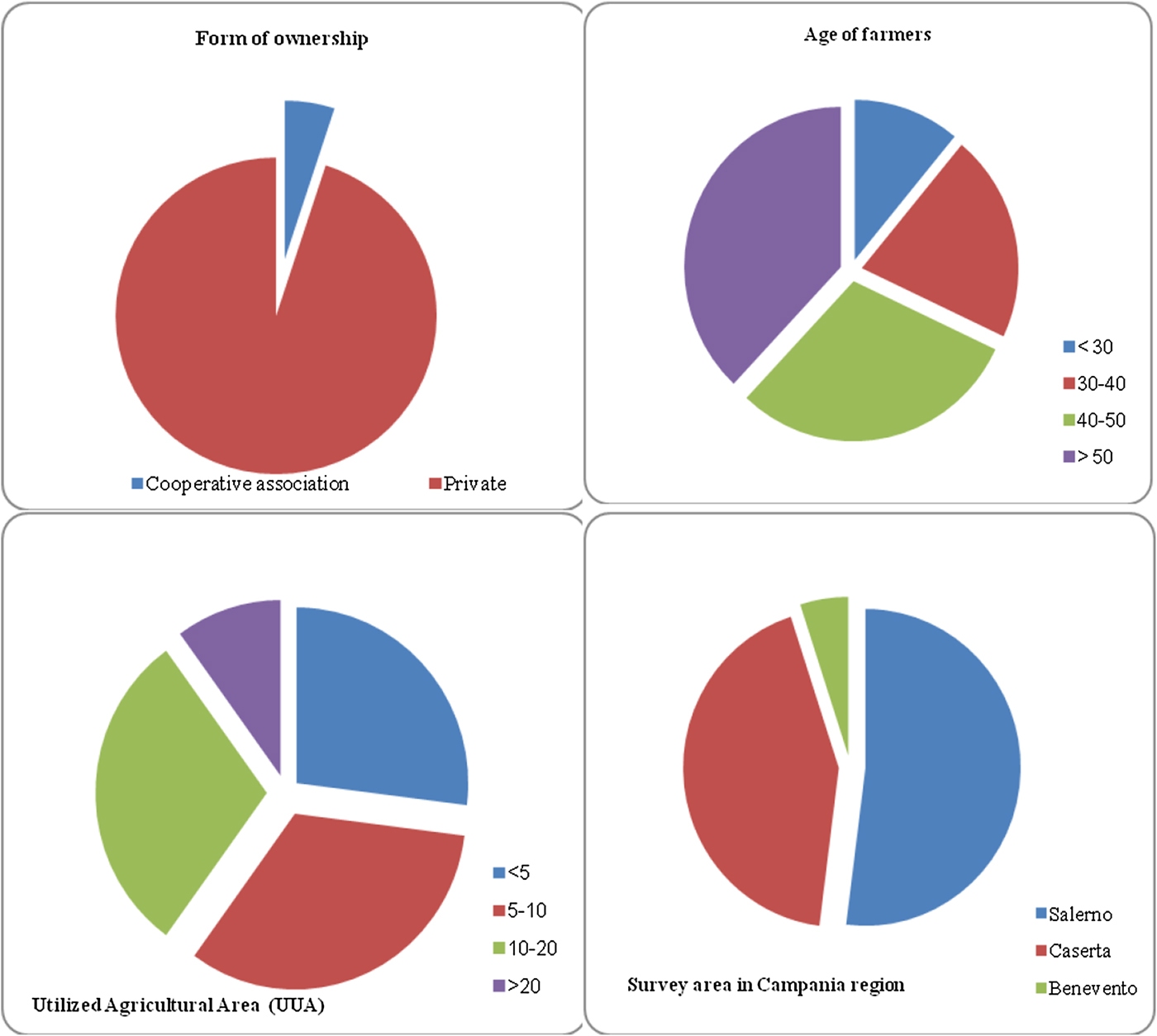
The farms were mainly individual ownership (0.95), and rarely agricultural cooperatives (0.05). The farms specialized mainly in the production of fodder and vegetables (0.68), followed by livestock (0.32). Most farms produce milk and dairy products (cheese and mozzarella).
The utilized agricultural area (UAA) for these 100 farmers was between 1.10 and 43 ha: 0.27 of farms had a UAA below 5 ha, 0.33 between 5 and 10 ha, 0.30 between 10 and 20 ha and 0.10 over 20 ha.
The sample showed strong dynamism in terms of economic investment. In recent years, 0.50 of farmers made investment in innovation on their farms. Regarding the effects of this type of investment on product and technological innovation and on farm organization, 0.44 of respondents stated a 0.33 increase in production capacity.
Nonetheless, investments in innovation have not resulted in increased exports, market share or overall employment.
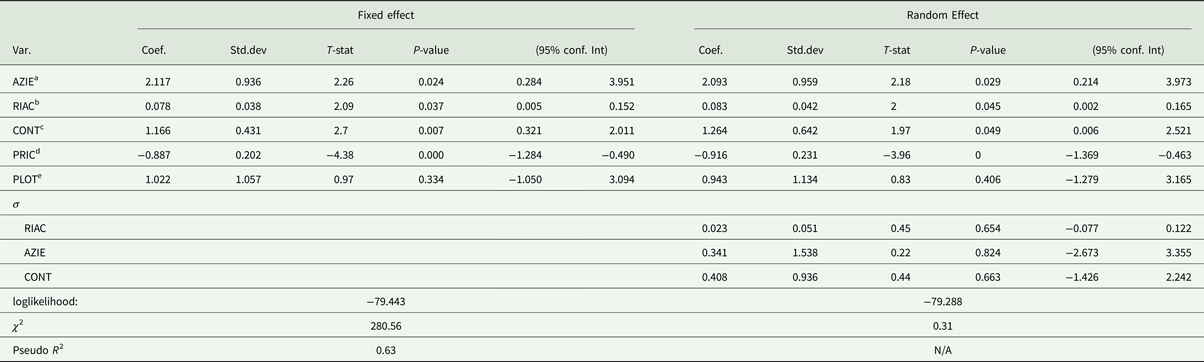
Concerning the CE (Table 3), the importance, or weight, of each attribute was assessed by estimating WTP, which measures consumers’ preferences in monetary terms (Table 4). Fixed- and random-effects conditional logit provide very similar results, although no significant preference heterogeneity across farmers was detected.
Fixed- and random-effects conditional models

a Farm.
b Water saving.
c Contract period.
d Price.
e Plot.
Willingness to pay for IRRISAT attributes

a Farm.
b Contract period.
c Water saving.
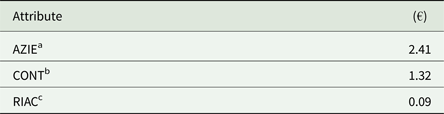
Willingness to pay was estimated as the ratio, changed sign, between the coefficient of each attribute and that attribute related to the price.
Considering the water management service, the entire area of the farm (AZIE) represents the attribute with the highest WTP (€2.49/ha/year), followed by contract period (CONT). Farmers valuate a 3-year contract with a WTP equal to €1.32/ha/year. The smallest WTP (9 cent/ha/year) is for the water-saving (RIAC) attribute.
Discussion
The results obtained through the econometric models and the positive signs of the coefficients showed that farmers’ preferences are positively influenced by scale of the service and duration of the service delivering contract. In particular, concerning the first attribute, the most preferred option was the entire area of the farm (AZIE). This level of attribute was probably preferred to the others proposed because farmers do not consider one field less important than others and because full information allows a better management programme. In fact, preferences for other attributes (field and cadastral parcel) were not statistically significant. Concerning the second attribute (CONT), the most preferred option among the three proposed (1, 2 or 3 years) was the 3-year service.
There are two possible reasons for farmers’ preference: the first is that farmers prefer not to waste time implementing the procedure for a new contract. The second is that farmers recognize the positive impact of the service on their crop production, due to an optimized irrigation management (Biswas and Venkatachalam, Reference Biswas and Venkatachalam2015).
On the other hand, water saving had little effect on farmers’ choices, thus it is probably less attractive for farmers. This attitude could be due to the low price actually paid by farmers and to a relatively large availability of water for irrigation. In a study by Chandrasekaran et al. (Reference Chandrasekaran, Devarajulu and Kuppannan2009), conducted in a research area characterized by a deficiency in water resources, results revealed that in general, the majority of farmers were willing to pay for an irrigation management system. However, this careless attitude to water saving is not justified, since EU policy, such as the Water Framework Directive, will soon introduce strict regulations by imposing water accounting systems and assigning a price for water resources, with increasing costs for farmers.
Regarding the attribute price, as economic theory describes, it was shown that farmers are willing to pay the lowest price for the service. In this respect, Molle (Reference Molle2001) stated that users in general will be more likely to pay if payment can be related to a tangible improvement of irrigation infrastructure.
Therefore, the WTP was calculated for each attribute. The results presented in Table 4 could provide relevant input for strategies related to improve adoption of water management services.
Conclusions
The methodology of economic evaluation by using CE is an extremely innovative approach in the debate about water and related services. It is important to note that CEs, such as contingent valuations or CE, are not a theory of behaviour but an analysis, based on classical economic theory, to generate behavioural data for consumers and users. The use of models of choice has been widely adopted in many research fields including transport and marketing, but it appears that the current paper is the first application to IAS valuation.
Following this approach, the current study work investigated (i) which of the attributes of IRRISAT was most important for farmers, and (ii) farmers’ WTP for the attributes proposed. The study estimated, throughout the use of a CE, the marginal WTP not only for irrigation water service (IRRISAT) attributes, as shown in previous studies (Salman and Al-Karablieh, Reference Salman and Al-Karablieh2004; Tang et al., Reference Tang, Nan and Liu2013; Bozorg-Haddad et al., Reference Bozorg-Haddad, Malmier, Mohammad-Azari and Loáiciga2016), but also for delivering contract characteristics.
The results showed that the interest of farmers is mainly addressed to the scale at which the service is provided (farm scale) and to the duration of the supply contract (3 years). Regarding the first, the results showed a preference for having the service at farm scale, while as regards the second attribute (contract duration), the study highlighted the propensity of farmers to the 3-year contract. These two preferences confirm the high level of appreciation of IRRISAT among farmers who already used it and expressed their willingness to have the service provided for the whole farm, as they consider each field equally important, and for longer time.
On the other hand, concerning water saving, this attribute affects farmers’ preferences less. This result is comparable to those found in other studies (Salman and Al-Karablieh, Reference Salman and Al-Karablieh2004; Tang et al., Reference Tang, Nan and Liu2013) where the price of water is always underestimated. Nevertheless, it would be interesting to repeat the experiment in the coming years, when systems of water accounting will probably be imposed and high prices will be assigned to water, with increasing costs for farmers. Regarding the price (cost attribute), farmers showed a preference for the services offered at a lower cost. This confirms the expectations of experimental design, where the cost of the service was perceived as a strategic element for the adoption of the service by farmers.
In conclusion, the current experiment demonstrated that the advisory service is well appreciated by farmers for irrigation management at farm level, and that they will pay for that. Even if the water-saving attribute does not affect farmers’ preferences, service for water management goes hand in hand with a mechanism for possible production certification characterized by water-sustainability standards. This strategy is already applied in many developed and developing countries and its benefits for farmers are an increased access to market, increased productivity and reduced cost of production through careful application of pesticide and fertilizer (Mekonnen et al., Reference Mekonnen, Hoekstra and Becht2012).
Nevertheless, as shown in the literature (Salman and Al-Karablieh, Reference Salman and Al-Karablieh2004; Tang et al., Reference Tang, Nan and Liu2013), cost remains a critical factor that must be considered for implementation of the IAS on a wider scale.
Acknowledgements
The authors wish to thank the team of Irrigation Land Reclamation Consortia of Sannio Alifano (in particular its Director Ing. Massimo Natalizio), Paestum and Destra Sele, for their support during the operational campaign in the study area. The authors also thank Mr F.L. Tascone, GIS spatial analyst at CREA for helping them with the GIS maps.
Financial support
This work was supported by the EU Rural Development Plan of Campania Region 2007–2013, Measure 124 ‘Health Check’, granted by D.R.D. n. 44 of 14 June 2010 ‘IRRISAT’.
Conflicts of interest
None.
Ethical standards
Not applicable.