Introduction
Poultry production is one of the most advanced industries in the livestock sector (Asyifah et al., Reference ASYIFAH, ABD-AZIZ, PHANG and AZLIAN2012) and relies on complex feed production processes. The ban on animal proteins in poultry diets in some regions has led to an increase in demand for vegetable protein sources (Kocher et al., Reference KOCHER, CHOCT, PORTER and BROZ2002). Soybean meal (SBM) is the most commonly used vegetable protein source for poultry feed, due to its suitable amino acid profile. Although soybean (Glycine max) is primarily grown for oil for the human food industry, the meal can be fed to poultry as full-fat or after oil extraction.
Soybeans contain a number of anti-nutritive factors (ANF), such as trypsin (protease) inhibitors, lectins (Newkirk, Reference NEWKIRK2010), phytate, non-starch polysaccharides (NSP) and oligosaccharides (Jezierny et al., Reference JEZIERNY, MOSENTHIN and BAUER2010), which contribute to a reduction in nutrient utilisation. Anti-nutritional factors elicit their negative effects via different mechanisms, including binding to digestive enzymes and nutrients or increasing gut viscosity (Ao, Reference AO2011). Due to the presence of carbohydrase inhibitors, such as pectins and NSP (Karr-Lilienthal et al., Reference KARR-LILIENTHAL, KADZERE, GRIESHOP and FAHEY2005; Choct et al., Reference CHOCT, DERSJANT-LI, MCLEISH and PEISKER2010), energy from soybeans is poorly utilised by chickens (Ao, Reference AO2011). Pierson et al. (Reference PIERSON, POTTER and BROWN1980) noted that the low metabolisable (ME) of soybean meal in poultry is due to the poor digestibility of the carbohydrate fraction. Because of approximately 65-80% of the total phosphorus in the soybean seed is bound to phytic acid or phytate, most of the minerals, particularly phosphorus (P) is biologically unavailable because poultry do not possess endogenous phytase to digest the complex (Lall, Reference LALL1991; NRC, 1994).
Heat treatment is generally considered an effective approach to inactivate ANF, but some of these compounds, e.g., phytate, oligosaccharides and antigenic proteins, cannot be reduced or decreased by heating (Ao, Reference AO2011). Although Campbell and Schöne (Reference CAMPBELL and SCHÖNE1998) suggested that trypsin inhibitors and lectins in soybeans could be inactivated by heat, Clemente et al. (Reference CLEMENTE, JIMENEZ, MARIN-MANZANO and RUBIO2008) reported that Birk Inhibitors (BBI), a group of trypsin inhibitors, exhibit considerable resistance to heat treatment.
The nutritional value of commercial SBM can be affected by the use of excessive heat (Moure, et al., 2006), there may be health risks associated with the residual solvents that are used to extract the oil (O'Quinn et al., Reference O'QUINN, KNABE, GREGG and LUSAS1997), and the price of SBM could be affected by the degree of processing and transportation costs (Newkirk, Reference NEWKIRK2010; Shi et al., Reference SHI, LU, TONG, ZOU and WANG2012). The solution to these problems may lie with the optional use of microbial feed enzymes, e.g., phytase and protease, which have been developed and used to improve the digestibility of nutrients through reducing the impact of ANF (Yadav and Sah, Reference YADAV and SAH2005; Ao, Reference AO2011). Microbial enzymes are routinely used by the poultry meat industry to improve the quality of diets and growth and feed efficiency (Amerah et al., Reference AMERAH, GILBERT, SIMMINS and RAVINDRAN2011).
There has been a considerable amount of research regarding the use of microbial enzymes in poultry nutrition (Abudabos, Reference ABUDABOS2010), but there is still limited information on their effects in diets containing raw full-fat soybeans (ASA, 2004). The objective of this paper is to review the findings on the efficacy of supplementing soybean-containing diets with feed enzymes, particularly protease and phytase, in an effort to reduce the impact of anti-nutrients and thereby improve the nutritional value of such diets.
Physiochemical properties of soybeans in relation to their nutritional value
Information regarding the physical and chemical properties of feed ingredients enables the development of interventions to improve the nutritional value of the ingredients (McDonald et al., Reference MCDONALD, GREENHALGH, EDWARDS and MORGAN2002). Soybeans are leguminous plants with numerous uses. Although the crop is primarily grown for oil, soybean meal can also be fed to animals, especially non-ruminants, as full-fat or after extracting the oil. Of the legume seeds, soybean meal has the highest level of crude protein and the best amino acid profile, with only 6% crude fibre (Dei, Reference DEI2011). The amino acids of SBM are highly digestible in all types and ages of poultry (Newkirk, Reference NEWKIRK2010). Although SBM has highly digestible amino acids and a high lysine content (Pettigrew et al., Reference PETTIGREW, SOLTWEDEL, MIGUEL and PALACIOS2008), there are still variations in the chemical and nutritional composition among the sources and the varieties of soybeans (Grieshop et al., Reference GRIESHOP, KADZERE, CLAPPER, FLICKINGER, BAUER, FRAZIER and FAHEY2003).
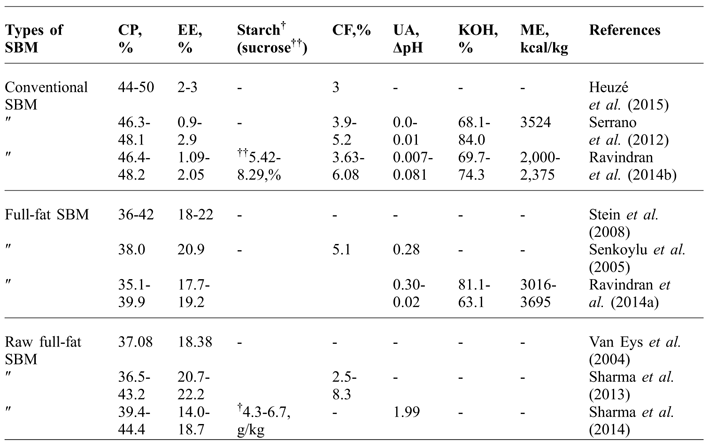
The nutrient composition and quality assessment values for conventional, full-fat and raw whole SBM are shown in Table 1. The maximum (50.0%) and minimum (36.5%) CP values are usually associated with conventional and raw full-fat SBM, respectively. As expected, full-fat meal contains more (20.9%) ether extract than other preparations, and crude fibre is the lowest (3.0%) in commercial SBM.
The importance of soybean meal in poultry nutrition
Soybean cake or soybean chips are the direct product after most of the oil is extracted from whole soybeans by pressure or solvents, and SBM is derived from grinding the soybean cake, chips or flakes. SBM is marketed on its crude protein content or by the sum of protein and oil (Heuzé et al., Reference HEUZÉ, TRAN and KAUSHIK2015). Soybean meal may be prepared from dehulled material prior to oil extraction, and the hulls may be added back at the end of the process.
The nutritional composition and some quality parameters of full-fat, raw whole soybeans and conventional soybean meals.

KOH= protein solubility testing method; UA= urease activities; †= starch; † †= sucrose.
SBM supply fluctuates (Shi et al., Reference SHI, LU, TONG, ZOU and WANG2012) due to transportation and long processing procedures, and the cost of SBM has been continuously rising (Newkirk, Reference NEWKIRK2010; Shi et al., Reference SHI, LU, TONG, ZOU and WANG2012). In addition, SBM is usually extracted with hexane, which is non-biodegradable, and this has associated health risks for consumers (O'Quinn et al., Reference O'QUINN, KNABE, GREGG and LUSAS1997). Although typical SBM could have up to 85% ileal digestibility of CP, the average values from different batches and origins ranged between 75.2 and 82.3%. The reason for this variation might be due to differences in quality (Pettersson and Pontoppidan, Reference PETTERSSON and PONTOPPIDAN2013).
Due to differences in the origin of SBM, a wide variability in amino acid digestibility has been reported by Ravindran et al. (Reference RAVINDRAN, ABDOLLAHI and BOOTWALLA2014b). Other research scholars (Ghazi et al., Reference GHAZI, ZOHAIR, AL-MAKTARI and AMER2012; Ao, Reference AO2011) have however suggested that by supplementing the selected exogenous enzymes the digestibility of SBM could be improved.
Options for improving the nutritional value of soybeans
The nutritional value of SBM can be affected by many factors, such as region grown, cultivar, and the way the meal is processed (Nahashon et al., 2013). Therefore, stakeholders need to examine the range of options for improving both feed quality and animal performance, which can reduce the costs of broiler production and reduce pollution (Ghazi et al., Reference GHAZI, ZOHAIR, AL-MAKTARI and AMER2012).
In addition to developing new breeds of soybean crops with low anti-nutrient contents, treating the raw seeds with heat or supplementation with new-generation microbial enzymes are common options that are currently used to improve the nutritional value of SBM-containing feeds for poultry. The livestock industry needs to utilise biotechnological techniques, such as genetic modification of feedstuffs or feed additives (enzymes), to improve nutrient balances for maximum feed utilisation.
Full-fat soybean meal
Full-fat soybean meal typically contains hulls and is produced by different methods, including extrusion, cooking/autoclaving, roasting/toasting, micronising and jet-sploding, to reduce/inactivate the ANF from the whole seed (Dei, Reference DEI2011). Full-fat soybean is characterised by low crude protein (36-42%) and high fat (18-22%), which make it a good source of quality protein and energy for non-ruminant animals (Stein et al., Reference STEIN, BERGER, DRACKLEY, FAHEY, HERNOT and PARSONS2008). Apart from being high in oil, full-fat soybean meal has almost the same excellent amino acid (AA) profile as conventional SBM, and sometimes the digestibility of AA in full-fat soybeans is greater than that of extracted sources (Pahm and Stein, Reference PAHM and STEIN2007).
Because full-fat soybeans contain more fat than extracted soybean meals (Newkirk, Reference NEWKIRK2010); they can be an excellent source of energy for poultry (ASA, 1997; Willis, Reference WILLIS2003). Woodworth et al. (Reference WOODWORTH, TOKASH, GOODBAND, NELSSEN, O'QUINN, KNABE and SAID2001) also reported that the concentrations of DE and ME in full-fat soybeans are greater than in extracted SBM.
Due to the development of new varieties of soybeans with limited or lower levels of ANF, the use of full-fat soybean meal is increasing (Gu et al., Reference GU, PAN, SUN and QIN2010). Partially replacing commercial SBM with full-fat meal obviates the cost of transporting the beans to the oil-extraction plant and shipping the meal back to distributors and to the end users (Newkirk, Reference NEWKIRK2010). Full-fat SBM is becoming more popular where it is locally grown and where there are no local oilseed processing plants.
The oil that is extracted from soybeans is widely used to supplement soybean-based diets for broiler chickens and growing turkeys as a feed-grade fat to increase energy density and improve the efficiency of feed utilisation (Sell et al., Reference SELL, TENESACA and BALES1979). This is costly for producers. Hence, it would be more cost-effective to use full-fat SBM, which can replace both conventional SBM and the soybean oil supplement. However, users are still wary of using full-fat meal for birds because chickens may deposit the fat in the carcass (Newkirk, Reference NEWKIRK2010). MacIsaac et al. (Reference MACISAAC, BURGOYNE, ANDERSON and RATHGEBER2005) suggested that properly heated full-fat soybeans can be used in all poultry diets, but excessive heating denatures important nutrients, especially amino acids (Lokuruka, Reference LOKURUKA2011). Treating whole soybeans with heat is expensive and time consuming.
There is considerable information regarding the use of raw beans in feeds for poultry, and research indicates that tolerance to ANF depends partially on the age of the birds (Johri, Reference JOHRI2005). Barletta (Reference BARLETTA2011) reported that exogenous feed enzymes could help to break down the ANF present in many feed ingredients for poultry and pigs and promote the use of raw full-fat SBM for birds.
Raw full-fat soybean meal
Various scholars (Liu et al., Reference LIU, RAFIQ, TZENG and ROB1998; Newkirk, Reference NEWKIRK2010; Erdaw et al., Reference ERDAW, PEREZ-MALDONADO, BHUIYAN and IJI2015a; Reference ERDAW, PEREZ-MALDONADO, BHUIYAN and IJI2015b) have reported that feeding raw SBM with high levels of trypsin inhibitors and lectins negatively affects pancreatic function, the growth of birds and feed efficiency. Mogridge et al. (Reference MOGRIDGE, SMITH and SOUSADIAS1996) reported that the consumption of raw beans increased the size of the pancreas (0.80 vs 0.37% of live weight) and the duodenum (1.35 vs 1.06% of live weight) and reduced feed consumption and growth of the chicks (66 vs 97 g/14 d). Similarly, ASA (2004) reported that diets based on raw beans reduced feed consumption and live weight and also decreased the feed conversion indices by 14, 35, and 53%, respectively.
Because some ANF are heat-labile, such as Kunitz trypsin inhibitors and lectins, heat treatment is always recommended before feeding to improve the nutritional value of raw full-fat soybeans (ASA, 1997) although Clemente et al. (Reference CLEMENTE, JIMENEZ, MARIN-MANZANO and RUBIO2008) suggested that Bowman-Birk trypsin inhibitors are heat-stable. Commercial SBM from varying sources, processed at different heating intensities, were recently tested for their protein quality parameters, such as TI, UA and KOH, and they were found to be significantly different (Ravindran et al., Reference RAVINDRAN, ABDOLLAHI and BOOTWALLA2014b).
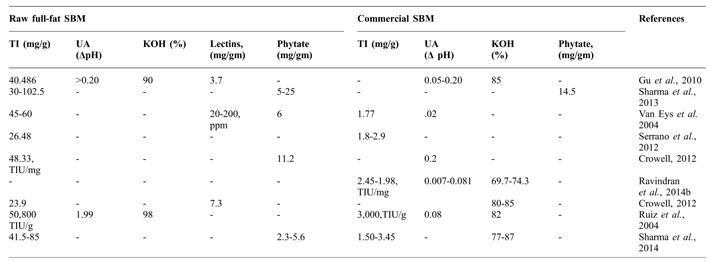
Another method that has been suggested to reduce ANF in grains, including soybeans, is grinding. This type of process primarily disrupts the cell-wall structure of oilseeds and thereby increases the exposure of nutrients to digestive enzymes (Meng et al., Reference MENG, SLOMINSKI, CAMPBELL, GUENTER and JONES2006). The level of ANF negative impact on non-ruminant animals will expectedly vary, and so the supplemental level of microbial enzymes must be considered. As indicated in Table 2, the maximum protein solubility (KOH) value of raw full-fat SBM is 98%, whereas the maximum value of KOH for commercial SBM is approximately 87%. The concentration of trypsin inhibitors (TI) in raw full-fat soybeans ranges from 23.9 to 85.0 mg/g, whereas the maximum TI value for commercial SBM is 3.45 mg/g.
For birds fed diets containing raw soybeans, feed consumption rate is reduced by as much as 14%, live weight gain drops by up to 15%, and the feed conversion rate decreases by approximately 53% (ASA, 2004). Palacios et al. (Reference PALACIOS, EASTER, SOLTWEDEL, PARSONS, DOUGLAS, HYMOWITZ and PETTIGREW2004) added that chicks fed on diets containing any variety of raw soybeans gained less weight.
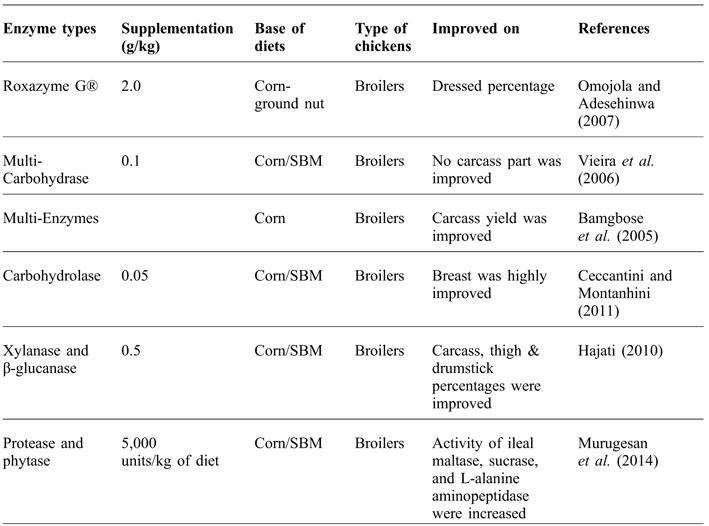
Response of birds fed diets supplemented with different microbial enzymes.
Dietary protease inhibitors in soybeans and their response to microbial proteases
Natural trypsin inhibitors, also known as serine protease inhibitors (serpins), are the largest and most diverse family of protease inhibitors. There are two main types of trypsin inhibitors: Kunitz trypsin inhibitors (KTI), which are the larger and stronger inhibitors of trypsin, and Bowman-Birk inhibitors (BBI), which are much smaller and inhibit both trypsin and chymotrypsin (DiPietro and Liener, Reference DIPIETRO and LIENER1989).
Trypsin inhibitors and lectins are found in raw SBM and inhibit protease enzymes in the digestive tract, thereby reducing the activity of trypsin and chymotrypsin and reducing protein digestion in non-ruminant animals as well as in young ruminants (Liener, Reference LIENER1994). Protease inhibitors cause an increase in both pancreatic cell number (hyperplasia) and size (hypertrophy) (Liener, Reference LIENER1995). Protease inhibitors in raw soybeans negatively affect endogenous proteases (Mogridge et al., Reference MOGRIDGE, SMITH and SOUSADIAS1996).
Birds fed raw SBM had low performance and hypertrophy of the pancreas (Mogridge et al., Reference MOGRIDGE, SMITH and SOUSADIAS1996; Perez-Maldonado et al., Reference PEREZ-MALDONADO, MANNION and FARRELL2003; Newkirk, Reference NEWKIRK2010). Trypsin inhibitors are rich in sulphur-containing amino acids and can create stress and cause a deficiency of methionine, which is the first limiting amino acid.
In a trial using different varieties of commercial soybeans and raw, full-fat SBM, Clarke and Wiseman (Reference CLARKE and WISEMAN2005) demonstrated that amino acid digestibility varied widely, but it did not correlate with TIA levels. Barth et al. (Reference BARTH, LUNDING, SCHMITZ and HAGEMEISTER1993) reported that a diet with raw soybean meal caused significant endogenous protein losses.
Proteases are protein-digesting microbial enzymes that break down both stored proteins and proteinaceous anti-nutrients in vegetable proteins (Barletta, Reference BARLETTA2011). Regardless of dietary protein or energy concentrations, protease supplementation has been shown to improve the feed efficiency and digestibility of CP and fat (Freitas et al., Reference FREITAS, VIEIRA, ANGEL, FAVERO and MAIORKA2011) and thereby reduce nitrogen excretion (Oxenboll et al., Reference OXENBOLL, PONTOPPIDAN and FRU-NJI2011). Protease can reduce the impact of certain anti-nutritional proteins, such as trypsin inhibitors, on non-ruminant animals (Pettersson and Pontoppidan, Reference PETTERSSON and PONTOPPIDAN2013). Yadav and Sah (Reference YADAV and SAH2005) reported that the inclusion of dietary protease improves the digestibility of crude proteins in the diet and improves body weight gain in broilers, and Rada et al. (Reference RADA, LICHOVNIKOVA and FOLTYN2014) showed that supplementation of protease enzymes improved carcass yield. Protease has the capacity to improve amino acid digestibility (Liu et al., Reference LIU, SELLE, COURT and COWIESON2013) and thereby improve the feed: body gain ratio of birds (Freitas et al., Reference FREITAS, VIEIRA, ANGEL, FAVERO and MAIORKA2011). The digestibility of CP and starch increases in broilers fed diets supplemented with protease at most concentrations (Angel et al., Reference ANGEL, SAYLOR, VIEIRA and WARD2011; Selle et al., Reference SELLE, LIU, CAI and COWIESON2013), each protease type has its own specificity and mode of action, and hence the yield patterns of amino acids vary widely among feedstuffs.
Cowieson and Adeola (Reference COWIESON and ADEOLA2005) found that a combination of phytase and protease improved nutrient retention and performance by 14%, which was supported by the later findings of Murugesan et al. (Reference MURUGESAN, ROMERO and PERSIA2014). However, Cowieson and Ravindran (Reference COWIESON and RAVINDRAN2008) reported that there was no interaction between diets and enzyme products containing xylanase, amylase and protease in terms of ileal digestibility of nitrogen and amino acids.
Jiang et al. (Reference JIANG, ZHOU, LU, HAN and WANG2008) reported that endogenous pancreatic proteases, e.g., trypsin and lipase, were not affected by supplementing exogenous amylase; rather, their intestinal activity was improved.
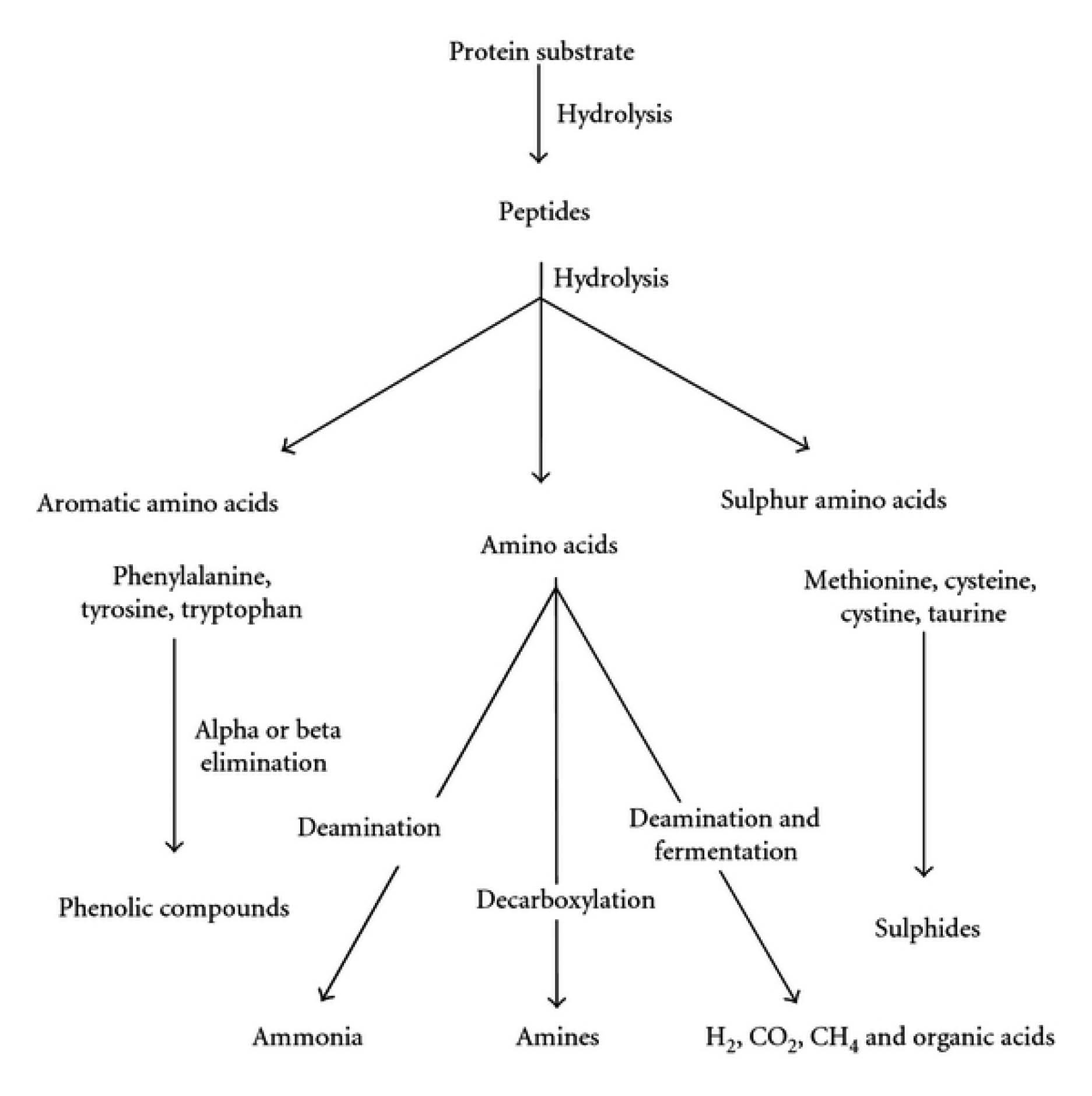
As shown in Figure 1, the mechanism of substrate hydrolysis, especially protein by protease, is initiated by break-up of the large molecules into peptides and then into amino acids. Amino acids are metabolised into different end-products, e.g., ammonia, amines and organic acids. Although the majority of amino acids are synthesised into animal proteins, some of the end-products, including phenolic compounds, ammonia, amines, sulphides, organic acids and other gases, are excreted by the animal.
mechanism of protease hydrolysing its substrates adopted from: http://www.open-access-biology.com/probiotics/hughes/f1.gif
Dietary phytate (phytic acid) and the use of supplementary microbial phytase in soybean diets
Phytate or phytic acid (myo-inositol hexaphosphate) is a compound that contains bound phosphorus and other minerals and is found in most plants, including corn and soybeans (Raboy, Reference RABOY2009). Pallauf and Rimbach (Reference PALLAUF and RIMBACH1997) reported that most of the P in plants is contained in phytic acid or its salts, which are known as phytates. Phytate is associated with a number of anti-nutritional effects; for example, phytate chelates with minerals (cations) and proteinaceous anti-nutrients and thereby reduces protein availability (Liu et al., Reference LIU, RAFIQ, TZENG and ROB1998). Phytate and non-starch polysaccharides (NSP) in plant-based diets are the two major anti-nutrients that are poorly digested by poultry and swine. They also interfere with the digestion of other nutrients (Ravindran et al., Reference RAVINDRAN, SELLE and BRYDEN1999).
Because phytic acid and NSP are not heat-labile, unlike some protease inhibitors and lectins, supplementing diets with exogenous phytase is very necessary (Dourado et al., Reference DOURADO, PASCOAL, SAKOMURA, COSTA and BIAGIOTTI2011). However, the efficacy of supplementation in chicken feeds depends mainly on the rate of inclusion rate as well as the age and genotypes of the birds (Singh, Reference SINGH2008). Feed enzymes are used to assist the break-down of ANF in many feed ingredients for poultry and pigs (Barletta, Reference BARLETTA2011). Currently, around two-thirds of pig and poultry feeds globally contain supplemental phytase, and this is yielding economic benefits (Barletta, Reference BARLETTA2011). Selle et al. (Reference SELLE, RAVINDRAN, CALDWELL and BRYDEN2000) suggested, however, that vegetable proteins and cereal sources are different in their response to phytase supplementation in terms of amino acid digestibility.
Supplementing microbial phytase in corn-soybean based diets for poultry has proven effective in improving protein, amino acid and energy utilisation (Rezaei et al., Reference REZAEI, BORBOR, ZAGHARI and TEIMOURI2007). Phytase supplementation in corn-soybean based broiler diets has been shown to improve digestibility and intake of nutrients (Santos et al., Reference SANTOS, HRUBY, PIERSON, REMUS and SAKOMURA2008) and performance (Chen et al., Reference CHEN, DUAN, WANG, ZHANG and ZHOU2013).
Srinath et al. (Reference SRINATH, RAVINDER, KONDAL, MALLIKARJUNA, CHINNI and REDDY2012) was able to show a higher release of inorganic phosphorus in an in vitro trial through the use of phytase. Good performance of broiler chickens fed phytase-supplemented diets might be due to an increased availability of phosphorus and other nutrients. This may help to reduce the excretion of proteins as waste and directly reduce nitrate accumulation in the bedding materials, thereby minimizing ammonia production in poultry houses. Consequently, this contributes to the good health of birds and reduces environmental pollution (Cabahug et al., Reference CABAHUG, RAVINDRAN, SELLE and BRYDEN1999; Oxenboll et al., Reference OXENBOLL, PONTOPPIDAN and FRU-NJI2011).
However, Adeola and Sands (Reference ADEOLA and SANDS2003) in their review reported that information regarding phytase-induced effects on protein and amino acid utilisation in pig and poultry feeds was conflicting at that point in time. Selle and Ravindran (Reference SELLE and RAVINDRAN2007) added that there was no consensus among scholars as to whether phytase in poultry feed enhanced protein and energy utilisation or not, and Peter and Baker (Reference PETER and BAKER2001) concluded that phytase supplementation, at any level, had no effect on any measure of chick performance, nor on any measure of protein utilisation. Kashani et al. (Reference KASHANI, MOHEBBIFAR, HABIBIAN and TORKI2014) added that phytase supplementation had no beneficial effect on the productive performances of laying hens and egg quality traits. These studies disagree regarding the effectiveness of microbial phytase on protein and amino acid utilisation and factors that regulate these effects, for example, types of feed ingredients, the dose of microbial phytase used in the diets or the type of microbial phytase used as a supplement.
The responses of birds fed diets supplemented with selected microbial enzymes are shown in Table 3. Birds fed diets supplemented with a cocktail (protease and phytase) show increased activities of ileal maltase, sucrase, and L-alanine aminopeptidase (Murugesan et al., Reference MURUGESAN, ROMERO and PERSIA2014). Various researchers have reported a positive response in meat yield with the supplementation of different enzymes and enzyme combinations (Bamgbose et al., Reference BAMGBOSE, AWOSANYA, OJO and OSO2005; Omojola and Adesehinwa, Reference OMOJOLA and ADESEHINWA2007; Hajati, Reference HAJATI2010).
Carbohydrase enzyme inhibitors in soybeans
Soybeans contain a high concentration of carbohydrates, including NSP and oligosaccharides (Zdunczyk et al., Reference ZDUNCZYK, JANKOWSKI, JUSKIEWICZ and SLOMINSKI2011). Carbohydrates make up approximately 35% of soybean seeds and 40% of SBM. Half of percentage is non-structural, in the form of oligosaccharides, and a small amount is structural polysaccharides, known as pectic polysaccharides (Karr-Lilienthal et al., Reference KARR-LILIENTHAL, KADZERE, GRIESHOP and FAHEY2005). The fibre component of the seed consists primarily of NSP, which have anti-nutritive effects (Choct et al., Reference CHOCT, DERSJANT-LI, MCLEISH and PEISKER2010).
Raffinose and stachyose are two types of short-chain oligosaccharides that make up approximately 5-7% of the soybeans. They are not digested, and cause digestive disturbances and depressed growth (Choct et al., Reference CHOCT, DERSJANT-LI, MCLEISH and PEISKER2010). The concentrations of galactosides vary from 0.5 to over 2.5% in SBM (Zdunczyk et al., Reference ZDUNCZYK, JANKOWSKI, JUSKIEWICZ and SLOMINSKI2011), and at high level, galactosides may produce anti-nutritional effects in poultry (Zdunczyk et al., Reference ZDUNCZYK, JANKOWSKI, JUSKIEWICZ and SLOMINSKI2011).
Some selected anti-nutrients in raw full-fat and commercial SBM.
TI=trypsin inhibitors; UA=urease activity; KOH= protein solubility; TIU= trypsin inhibitor units.
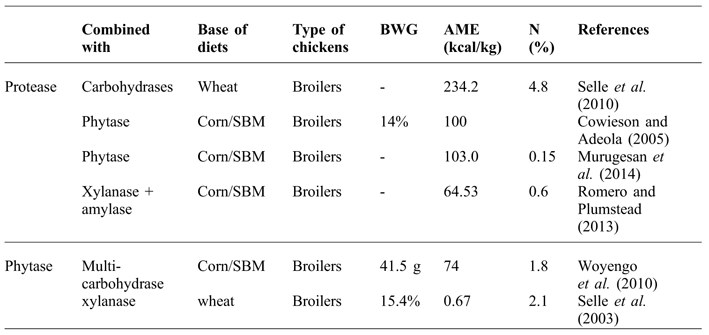
Pectins are glycoproteins, which promote the binding of carbohydrate-containing molecules to the epithelial cells of the intestinal mucosa, which negatively affects the performance of birds. As shown in Table 4, supplementation of a wheat-based diet with a cocktail of enzymes (protease + carbohydrases) increased the AME value by 234.3 kcal/kg and N retention by 4.5%.
For corn/SBM based diets, supplementation with protease + phytase increased the AME value by 103.0 kcal/kg and N retention by 0.15%. Birds fed diets (corn/SBM based) supplemented with phytase + multi-carbohydrase improved their BWG by 45.1 g, AME value by 74.0 kcal/kg and N retention by 1.8%. From these research reports, one can conclude that microbial enzymes are most effective when they are combined; however, such results need to be supported by economic analyses.
Response of birds fed diets supplemented with enzymes combinations (cocktail).
AME= Apparent Metabolisable energy; BWG= body weight gain; N= retained nitrogen.
Socioeconomic and biophysical benefits of improving the nutritional value of soybeans for poultry
Feed cost is considered the primary variable cost in poultry production (Ravindran, Reference RAVINDRAN2013). Due to the ban of animal proteins from inclusion in feed in some regions (Van Harn and Veldkamp, Reference VAN HARN and VELDKAMP2011), vegetable protein is becoming an important source of feed for poultry (Ravindran, Reference RAVINDRAN2013), and SBM remains the most important and preferred source of high quality protein for animal feed manufacturing (FAO, 2014).
Conventional SBM constitutes approximately 69% of the total world output of protein feedstuffs (Oil-World, 2010; Crowell, Reference CROWELL2012). Approximately 85% of the world's soybeans are processed into SBM and oil (Soya-tech, 2003). As animal proteins are increasingly being excluded from animal feeds, soybean-based feeds are becoming more popular, as it is the best vegetable protein source in terms of quality (Banaszkiewicz, Reference BANASZKIEWICZ2011). The inclusion level of SBM ranges from 25% in chick diets to 30-40% in diets for older broilers and laying hens (McDonald et al., Reference MCDONALD, GREENHALGH, EDWARDS and MORGAN2002; Willis, Reference WILLIS2003).
According to Araba and Dale (Reference ARABA and DALE1990), proper processing of vegetable proteins like SBM could result in improved growth when fed to non-ruminant animals. Performance and cost-benefit results of broiler chicks fed processed soybean diets were better than those of birds fed unprocessed soybeans (Aletor and Olonimoyo, Reference ALETOR and OLONIMOYO1992). However, Mojtaba (Reference MOJTABA2008) questioned whether or not the benefit always outweighs the processing cost. Currently researchers are of the view that future improvements in the nutritional value of soybeans for birds will be achieved using alternative methods, such as genetic engineering of enzymes (Ghazi et al., Reference GHAZI, ZOHAIR, AL-MAKTARI and AMER2012; Ao, Reference AO2011).
Conclusions
Because the supply of processed SBM is fluctuating and the product is becoming increasingly expensive, there is a growing interest for the use raw, full-fat SBM in poultry diets. Supplementation of such feeds with exogenous enzymes such as phytase and protease is required to improve the nutritional value of such meals and to reduce production costs, as chickens fed diets containing raw SBM supplemented with microbial protease and phytase showed improved performance. This is due to the effects of such enzymes on stored proteins as well as proteinaceous anti-nutrients in raw SBM, and new-generation exogenous phytase products are more effective in breaking down phytic acid. It is likely that there are differences in the quality of different sources of raw soybean seeds, as has been shown for commercial SBM and its varying responses to enzyme supplementation.