Introduction
Background
Hand hygiene is one of the most effective, affordable, and easy ways to prevent the spread of infections in the community. Many infections are transmitted through contact with contaminated hands, even if they appear clean. Reference Acun and Kahraman1,2 Harmful microorganisms can be passed from person to person through touch without realizing it. To prevent this, regular hand hygiene is essential, regardless of the situation. Globally, the importance of hand hygiene remains an urgent issue.
Hand hygiene becomes even more critical during emergencies such as natural disasters, pandemics, or public health crises. During the COVID-19 pandemic, awareness of hand hygiene has increased, and many people have improved their hygiene practices thanks to increased education and awareness campaigns. Reference Acun and Kahraman1 However, hand hygiene should not only be seen as an emergency response; it is a vital behavior that contributes to long-term public health and economic benefits. 2
Disasters like earthquakes can severely restrict access to water and hygiene services. This lack of resources leads to poor hygiene conditions, especially in temporary shelters, which increases the risk of infection. Organizations such as World Health Organization (WHO; Geneva, Switzerland), United Nations Population Fund (UNFPA; New York USA), and United Nations Children’s Fund (UNICEF; New York USA) have developed hygiene strategies for post-disaster settings, but these plans often face barriers such as lack of resources and awareness, which can reduce their effectiveness. 3–5
Hand hygiene can be difficult to maintain in emergency situations. Standardized hygiene practices are often difficult to follow due to environmental challenges. While it is impossible to predict disasters and prepare primary prevention measures in advance, secondary measures such as water, sanitation, and hygiene (WASH) should be addressed quickly; WASH is essential for health protection, especially in disaster situations where access to clean water and sanitation may be disrupted. 2 Emergency kits should include hand washing supplies, such as soap or alcohol-based disinfectants, and education programs on hand hygiene should be implemented in affected areas, especially in schools, health facilities, and other public spaces. Following these guidelines can prevent many health problems.
Turkey is a country frequently exposed to emergencies such as floods, fires, storms, and earthquakes. The recent earthquake on February 6, 2023 was particularly devastating, affecting 11 provinces and causing massive displacement. More than nine million people were affected, and many are now living in temporary shelters such as tents and container cities. As a result of this mass displacement, the demand for water, sanitation, and health services has greatly increased. 3,4,6
Living in public areas following a disaster increases the risks of stress, poor hygiene, and environmental problems. Reference Izumikawa7 Hand washing after a disaster is crucial to prevent the spread of infections and can significantly reduce the health impacts of disasters. 8 Research emphasizes that hand hygiene is one of the easiest and most effective ways to prevent infection. Reference Ahmed, Malik and Memon9,10 However, promoting hand hygiene in disaster settings requires different approaches compared to non-emergency situations. These include ensuring access to clean water, providing sanitation services, and implementing health promotion and education programs. Reference Mavrouli, Mavroulis, Lekkas and Tsakris11 In Turkey, authorities have warned against using tap water in earthquake-affected areas as it may not be safe for consumption or hand washing. Reference Karadoğan and Çakır12–14 Despite these challenges, it is still vital to maintain hand hygiene even under limited conditions. In the absence of water, alcohol-based hand sanitizers should be used as an alternative. 10,15
Research shows that post-disaster hand hygiene can effectively reduce disease outbreaks such as diarrhea and cholera. Reference Curtis, Schmidt and Luby16–Reference Luby, Agboatwalla and Feikin18 Guidelines emphasize the importance of promoting appropriate hand hygiene in disaster settings, identifying barriers, and understanding the factors that influence these practices. 2,10,19,20
Objectives
This study aims to determine the prevalence of hand hygiene practices, to compare pre- and post-disaster behaviors, to identify influencing factors in different situations, and to explore barriers and facilitators in post-disaster settings.
Research Questions
What is the prevalence of hand hygiene practices among disaster-affected individuals?
What are the factors affecting hand hygiene behaviors in individuals after a disaster?
Methods
Study Design
This research utilized a mixed-methods design integrating both quantitative and qualitative research approaches to provide a comprehensive understanding of hand hygiene practices. This combination of methods provides a more holistic perspective on the topic.
Location and Duration
The study was conducted from April 1 through September 1, 2024 in Gaziantep, Hatay, Osmaniye, and Adana, the provinces most affected by the February 2023 earthquake in Turkey.
Population and Sampling
The study targeted individuals staying in container cities in earthquake-affected areas. Container cities are temporary housing areas established using pre-fabricated containers designed to provide essential living facilities, such as sleeping areas, kitchens, and sanitation units, for individuals affected by disasters. These settlements are systematically organized to resemble urban layouts and are intended for medium-term use during recovery periods. The total population consisted of 56,244 people and was distributed as follows:
-
Gaziantep Nurdağı Container City: 12,000 people;
-
Gaziantep Islahiye Osmangazi Container City: 450 people;
-
Hatay Kırıkhan Beyazıdi Bestami Container City: Approximately 35,000 people living in 1,050 containers;
-
Osmaniye Karaçay Container City: 7,250 containers accommodating approximately 20,000 people; and
-
Adana Şambayadı Container City: 1,244 people.
The sample was selected using a 30x30 cluster sampling method commonly used in humanitarian emergencies. Reference Shrestha, Malla and Kazama21 This involved a two-stage process: Stage 1 - 30 clusters (container cities) were selected; Stage 2 - 30 households were selected in each cluster, resulting in a planned sample size of 900 households and approximately 3,600 people. Considering the individuals who could drop out of the study, 3,900 individuals were selected for the sample.
A randomization method was used to select the container cities. As a first step, a list of all container cities that could be included in the study was created. There are 29 container cities in total. All container cities were numbered. For random selection, the Python programming language (Python Software Foundation; Wilmington, Delaware USA) was used to randomly select among the numbers in the list. Of the 29 container cities on the list, five were randomly selected.
The questionnaire-based survey included demographic characteristics (eg, age, gender, education level); hand hygiene behaviors (eg, frequency, duration, and barriers); and access to hygiene resources. The survey was conducted through face-to-face interviews by trained field researchers.
Qualitative Sampling
The selection of five container cities was based on a randomization process to ensure a representative sample. A list of all 29 container cities was created, and random sampling was conducted using Python programming to select five container cities. The geographical and demographic representativeness of the selected container cities was evaluated, ensuring they were reflective of the broader population affected by the earthquake. The number of participants for the qualitative interviews was determined by purposive sampling to ensure diverse representation across demographics such as age, gender, education level, economic status, and duration of residence in container cities. Data collection continued until theoretical saturation was reached, meaning no new themes or information emerged from subsequent interviews. Theoretical saturation was achieved when no new themes, categories, or insights emerged from the interviews, indicating that the collected data sufficiently represented the diversity of participants’ experiences and perspectives.
For the qualitative component, focus group interviews were conducted with 17 participants (nine women, eight men) selected through voluntary participation. After each interview or data collection process was completed, the data were immediately analyzed. In this way, recurring themes and newly emerging information in the collected data were immediately recognized. Data collection continued until theoretical saturation was reached. The decision of theoretical saturation was made jointly by all researchers. Semi-structured interview questions are included in the Supplementary Material (available online only).
Data Collection Process
Data collection took place in three stages.
Survey Data
A structured data collection form was applied to assess hand hygiene practices and factors affecting these behaviors.
Education Component
Hand hygiene brochures prepared by the Ministry of Health were distributed to the participants, followed by a hand hygiene demonstration.
Focus Group Interviews
Qualitative data were collected using semi-structured interviews. A moderator and rapporteur facilitated group discussions in a comfortable and quiet space, allowing participants to express themselves freely. Interviews were conducted in semi-private spaces within the container cities, such as participants’ housing units or designated quiet areas. These locations were chosen to ensure privacy, confidentiality, and participant comfort while accommodating the logistical constraints of the field environment. Each interview lasted approximately 60-90 minutes, and the sessions were audio-recorded with the consent of the participants.
Dependent Variable
Hand Hygiene Practice Status
This measured the frequency and quality of hand hygiene practices among participants.
Independent Variables (Total 31)
Demographic Factors
Age, gender, marital status, educational level, and employment status were collected.
Health Status
Presence of chronic diseases, comorbidities, physical disabilities, and allergies were determined.
Environmental Factors
Water supply sources, drinking water supply, type of toilet facilities, and duration of access to clean water after a disaster were determined. Ready water refers to bottled water or pre-packaged water that is immediately consumable without requiring further treatment, as opposed to other sources such as well water or truck-delivered water.
Behavioral Factors
Having knowledge about hand hygiene, being able to apply hand hygiene steps, situations requiring hand hygiene, whether they have received training, and product use were ascertained.
Disaster Impact
Changes in hand hygiene practices after the earthquake, frequency of hand hygiene before and after the disaster, duration of product use, and barriers to maintaining hand hygiene were verified.
Inclusion Criteria
Inclusion criteria comprised the following: voluntary participation; being directly affected by the earthquake; living in a container city; ability to speak Turkish; and were 18 years and over.
Data Collection Tools
Data Collection Form
This form was designed based on previous studies. Reference Shrestha, Malla and Kazama21–Reference Üner, Sevencan and Başaran23 It included 36 questions covering demographics, hygiene practices, product use, and barriers to hand hygiene (Supplementary Material).
Hand Hygiene Brochure
The brochure used in this study was obtained from the Turkish Ministry of Health (Ankara, Turkey), which provides detailed guidelines on hand hygiene. 24
Semi-Structured Interview Form
The interview form consisted of five open-ended questions to investigate the factors affecting hand hygiene and was developed in accordance with existing research. Reference Shrestha, Malla and Kazama21–Reference Üner, Sevencan and Başaran23
Data Analysis
Quantitative data were analyzed using IBM SPSS Statistics 25.0 software (IBM Corp.; Armonk, New York USA). Descriptive statistics such as mean, standard deviation (SD), and frequency were used. The chi-square test was used to analyze associations between categorical variables, while the t-test was employed to compare group means for continuous variables. The specific statistical tests used for each analysis are indicated in the corresponding tables. The chi-square test was applied for categorical data, and the significance threshold was set as P < .05.
Qualitative data were analyzed using MAXQDA 22.5 software (VERBI Software; Berlin, Germany), and thematic content analysis was used to identify recurring themes and sub-themes.
Ethical Considerations
Ethics committee approval was obtained from the Ege University Medical Research Ethics Committee (Izmir, Turkey) with decision number 23-5.1T/21 and written permission was given by the relevant institutions. Participants were fully informed about the study and voluntary, informed consent was given. Confidentiality was ensured by assigning anonymized code numbers to the participants, and their data were securely stored. Participants were informed of their right to withdraw from the study at any time, and their data were destroyed in case of withdrawal. Interviews were conducted anonymously, and all data will be used for research purposes only.
Results
After excluding those who did not meet the criteria, a total of 3,634 people participated in the study. Focus group interviews were conducted with 17 participants (nine women, eight men) selected through voluntary participation.
Features Related to Container Cities
The characteristics of the container cities in the four provinces are summarized in Table 1.
Characteristics of Container City Area According to Place of Residence (n = 3,634)

Key findings in Table 1 included the following:
-
Water Supply: 60.4% of the communal water supply was from mains water, and 100% of the drinking water was from ready water.
-
Toilets: Container-type latrines were used in all container cities.
-
Access to Clean Water: Restoration of access to clean water took 9.97 (SD = 4.81) days on average and varied between provinces.
Sociodemographic Characteristics
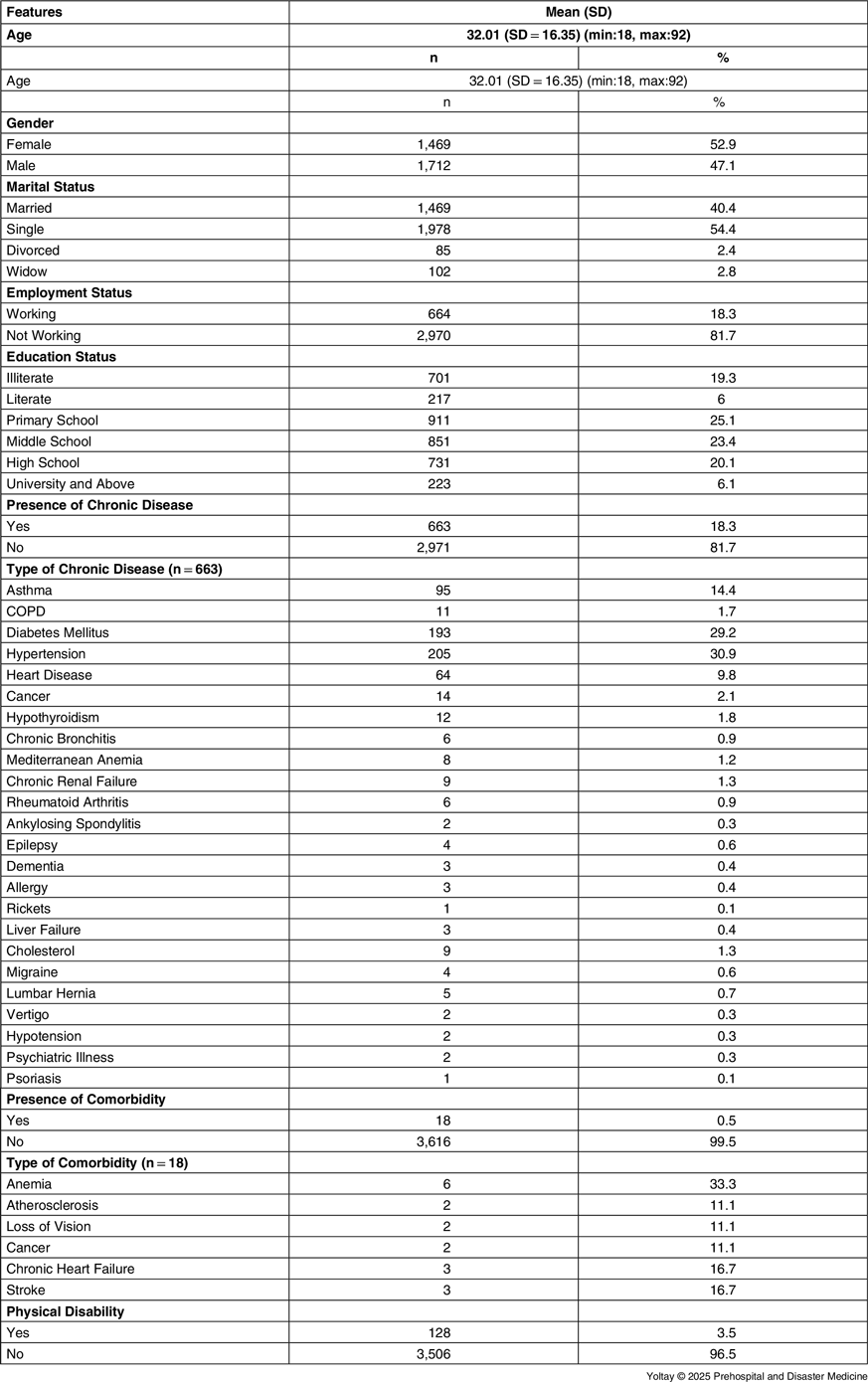
Table 2 summarizes the demographic data of 3,634 participants. Key points in Table 2 include the following. The majority of communal water supply (60.4%) came from mains water, and all drinking water was from readily available sources. Containerized latrines were used in all areas, and it took an average of 9.97 days to restore access to clean water. The average age of the participants was 32.01 years; 52.9% were female, 81.7% were unemployed, and 25.1% were primary school graduates. Most of the participants (81.7%) had no chronic disease, and 96.5% had no physical disability (Table 2).
Sociodemographic Characteristics of the Participants

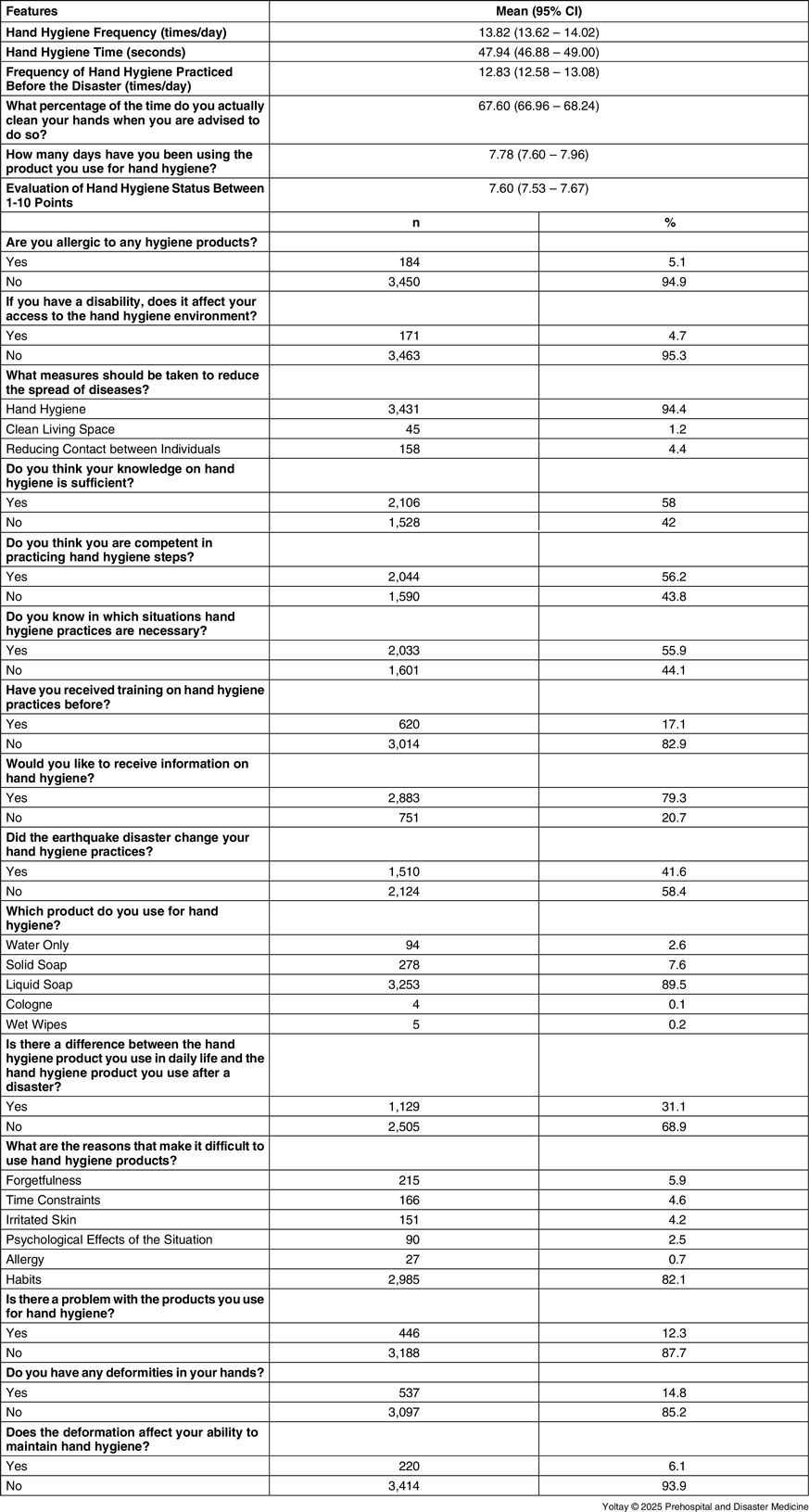
Table 3 presents data on hand hygiene habits before and after the disaster. After the earthquake, the frequency of hand washing increased slightly from 12.83 to 13.82 times per day on average, and hand washing sessions lasted 47.94 seconds on average. Participants rated their own hand hygiene as 7.60 out of 10. Most of the participants (91.2%) reported using liquid soap, and 94.9% reported that they were not allergic to hygiene products. Although 82.9% of the participants had not received formal hand hygiene training before the disaster, 79.3% of them expressed that they would like to receive more information on the subject (Table 3).
Distribution of Some Characteristics of the Participants Related to Hand Hygiene

Table 4. (Supplementary Material; available online only) shows hand washing behaviors according to different situations. Key points in Table 4 included the following:
-
Before Meals: The rate of hand washing before meals was high in all provinces, with an overall rate of 96.4%.
-
After Meals: The overall rate was 89.5%.
-
Before Using the Toilet: This rate was lower, and the overall rate was 78.3%.
-
After Using the Toilet: The rate was 85.9%.
-
After Contact with People: The overall rate was 84.2%.
-
Before Going to Sleep: Overall, 83.4% of the participants washed their hands before going to sleep.
Factors Affecting Hand Hygiene
Table 5. (Supplementary Material; available online only) explored how different factors influence hand hygiene behavior (Figure 1 and Figure 2), including:
-
Education Status: Higher levels of education were associated with better hand hygiene after meals and before using the toilet.
-
Chronic Diseases: Those with chronic diseases were more likely to practice hand hygiene before using the toilet.
-
Physical Disabilities: Those without physical disabilities practiced better hand hygiene, especially after meals and contact with others.
Comparison of Hygiene Practices by Gender.

Comparison of Hygiene Practices by Container City Area.

Table 6. (Supplemental Material; available online only) examined the relationship between various characteristics and hand washing behaviors in more detail and included:
-
Knowledge and Competence: Participants who believed they had adequate knowledge about hand hygiene were more likely to practice in all scenarios, especially before meals and after contact with others.
-
Barriers: Physical and environmental barriers, such as limited access to water or hygiene supplies, negatively affected hand hygiene practices.
-
Changes After the Earthquake: Participants who reported changes in hand hygiene practices due to the earthquake were more likely to practice good hygiene.
In addition, participants who believed that they had sufficient knowledge and competence in hand hygiene and participants who reported changes in hygiene practices due to the earthquake showed better compliance with hygiene practices. However, barriers such as limited access to clean water or hygiene materials negatively affected these practices (Table 6).
The findings highlighted significant changes in hygiene behaviors post-earthquake. For example, the proportion of participants practicing hand hygiene before every meal was 96.4%, indicating increased awareness of hygiene. However, behaviors such as hand washing before using the toilet were less frequent (78.3%), likely due to access limitations.
Participants reported various barriers to maintaining hygiene, including limited access to water (reported by 54.7%), lack of soap or hygiene products (48.6%), and crowded living conditions in container cities (32.1%). These barriers reflect the challenges faced in disaster-affected areas. Regional differences were also evident. For instance, participants from Hatay reported higher difficulty in accessing water compared to those in Gaziantep, highlighting the need for region-specific interventions.
In the qualitative analysis of this study, data were collected from focus group discussions with individuals residing in container cities in Adana, Osmaniye, Hatay, and Gaziantep following the February 6 earthquake. The analysis identified three main themes: hand hygiene habits, access to hygiene materials, and factors influencing hand hygiene practices (Figure 3).
Schematic Chart of Semi-Structured Interview Results.

Theme 1: Hand Hygiene Habits
Participants discussed how their hand hygiene habits changed before and after the earthquake. Prior to the disaster, hand hygiene was routine, especially due to the COVID-19 pandemic. However, after the earthquake, the harsh conditions in temporary shelters negatively impacted hygiene practices. Many reported washing hands in unsanitary communal facilities, which diminished their habits. Psychological and environmental challenges also contributed to the reduced frequency of hand washing in the chaotic aftermath.
Individuals affected by the earthquake stated that their hand hygiene habits were better before and after the earthquake:
Hand hygiene was a routine practice that we learned and applied better due to the Coronavirus outbreak before the earthquake (Participant [P]-6, female, 42 years old).
Individuals affected by the earthquake emphasized that their hand hygiene habits changed negatively with the February 6, 2023 earthquake:
I started to provide my hand hygiene, which I provided frequently before the earthquake, much more frequently after the earthquake in all conditions where I accessed hygiene resources (P-1, female, 29 years old).
Theme 2: Access to Hand Hygiene Supplies
This theme addressed the challenges respondents faced in accessing water and hygiene supplies after the earthquake. Many reported lacking clean water for three to ten days, making it difficult to maintain proper hand hygiene. Water scarcity led to rationing drinking water and foregoing hand washing. Additionally, hygiene items like soap and sanitizer were scarce. Although assistance eventually arrived, participants expressed concerns about the quality of the supplies:
My hand hygiene rate decreased due to container living conditions after the earthquake (P-4, male, 42 years old).
It was stated that individuals affected by the earthquake had difficulty accessing water for three to ten days after the earthquake, although it varied regionally, and this situation changed their hand hygiene habits:
We couldn’t wash our hands because water is very hard to find; we didn’t want to waste it because we use it as drinking water (P-4, male, 42 years old).
It was stated that the individuals affected by the earthquake could not have normal living conditions in the first days after the earthquake and that they acquired hand hygiene materials with the aid materials given, and this situation changed their hand hygiene habits:
Lack of soap is among the reasons that changed my hand hygiene practice after the earthquake (P-2, female, 53 years old).
Theme 3: Factors Influencing Hand Hygiene Practices
The final theme explored both individual and environmental factors that influence hand hygiene practices. At the individual level, participants emphasized emotional and psychological barriers such as trauma, grief, and fear that overshadowed hygiene concerns. Many admitted that hand washing was not a priority immediately following the earthquake. Environmental factors such as contaminated water sources, pollution from debris, and overcrowding in relief distribution centers also played a significant role in hindering proper hygiene practices. Overall, both personal and environmental challenges contributed to reduced hand hygiene behavior in the post-disaster period:
I involuntarily forgot my hygiene habits with the sadness and helplessness caused by the loss of my relatives and not hearing from them (P-2, female, 53 years old).
It was stated that hand hygiene practices of earthquake-affected individuals may be influenced by environmental factors as well as individual factors:
Due to living in a container, sometimes the water is dirty and sometimes it is cut off. I cannot always pay enough time and care for hand hygiene (P-5, female, 33 years old).
Discussion
The discussion of this study highlights the significant impact of earthquakes on public health, particularly in relation to infectious diseases, with a focus on gastrointestinal, dermal, and respiratory diseases due to a lack of hand hygiene. As seen in Turkey after the February 6 earthquake, post-disaster health surveillance and implementation of early warning systems are critical steps for monitoring and controlling infectious disease risks. In Turkey, although the Ministry of Health has reported cases of infections such as intestinal diseases and flu-like symptoms, the lack of a consistent and reliable surveillance system to update these figures poses a challenge for effective disease management. Globally, health authorities emphasize the importance of strengthening post-disaster health surveillance systems with hand hygiene as a key measure to reduce the spread of infections. Reference Najafi, Rezayat and Beyzaei25,Reference Wisner and Adams26
Container City Conditions
This study indicated that container city infrastructure largely met basic hygiene standards, which aligns with best practices in disaster response. However, regional differences and delays in restoring water access highlight the need for rapid interventions to prevent water-borne disease outbreaks. Reference Mavrouli, Mavroulis, Lekkas and Tsakris11,Reference Alexander27,Reference Uprety, Sherchan and Narayanan28
Post-disaster, hand washing frequency increased slightly from 12.83 to 13.82 times per day, with an average duration of 47.94 seconds, reflecting awareness of proper hygiene. However, extended use of the same hygiene products and resource limitations posed barriers, consistent with previous findings on the importance of adequate resources in such settings. Reference Mavrouli, Mavroulis, Lekkas and Tsakris11 Hand washing behaviors before meals, after using the toilet, and after contact with sick individuals indicate infection control awareness. Yet, barriers like forgetfulness, time constraints, and limited access to hygiene products hindered optimal practices, highlighting the need for education campaigns and better resource provision. Reference Giardina, Sorlini and Rondi29
Factors Affecting Hand Hygiene
The study found that several factors influenced hand hygiene practices, including individual knowledge, environmental barriers, and physical conditions. Participants with higher levels of knowledge were more likely to practice proper hand hygiene, while those facing barriers such as physical disability or lack of access to hygiene products were less likely to do so. The need for education and accessibility was emphasized throughout the study, with the recommendation that public health efforts should focus on raising awareness and removing practical barriers to hygiene, especially during disaster recovery periods.
Psychosocial Impact
The psychological stress and trauma experienced after the earthquake played an important role in disrupting hygiene habits. Many participants reported that the overwhelming emotional burden of the disaster over-shadowed their attention to hygiene, reflecting a common problem seen in post-disaster scenarios. Addressing these psychosocial factors through mental health support and community-based interventions can help restore and maintain hygiene standards, leading to better long-term health outcomes for disaster survivors.
Limitations
This study has several limitations. First, self-reported hand hygiene practices may introduce recall and social desirability biases, as participants might have over- or under-estimated their behaviors in stressful post-disaster conditions. Second, the study was limited to container cities in specific regions of Turkey, reducing the generalizability to other areas with different socio-economic or cultural contexts. Third, the cross-sectional design does not establish causal relationships between influencing factors and hygiene practices. Lastly, although qualitative data were gathered, the findings may not fully capture the experiences of all individuals, especially those avoiding discussions due to distress. Future research should consider longitudinal designs, direct observation, and a broader geographical scope.
Conclusion
This study provides important insights into the prevalence of and factors influencing hand hygiene practices in post-earthquake container cities in Turkey. Findings suggest that although individuals have a basic awareness of the importance of hand hygiene, multiple barriers, including access to water, hygiene supplies, and psychological stress, significantly impact their ability to maintain proper hygiene practices after a disaster. This study highlights the critical need for continued education, improved access to hygiene supplies, and psychosocial support to sustain hygiene behaviors in post-disaster settings. By addressing both physical and psychological barriers, public health interventions can be more effective in reducing the risk of infectious diseases in disaster-affected populations. Furthermore, the study emphasizes the importance of preparedness for future disasters by ensuring hygiene resources are readily available and individuals are equipped with the knowledge and skills to maintain hygiene under adverse conditions.
Conflicts of interest
Hatice Eda Yoltay: No conflict of interest; Gözde Özsezer: No conflict of interest; Gülengül Mermer: No conflict of interest; Meryem Yavuz van Giersbergen: No conflict of interest.
Supplementary Materials
To view supplementary material for this article, please visit https://doi.org/10.1017/S1049023X25101246
Author Contributions
Hatice Eda Yoltay: Conceptualization, methodology, data collection, analysis, manuscript writing, manuscript drafting, and critical revision of the manuscript.
Gözde Özsezer: Conceptualization, methodology, data collection, analysis, manuscript writing, manuscript drafting, critical revision of the manuscript, and manuscript revision.
Gülengül Mermer: Supervision, methodology, manuscript writing, and editing.
Meryem Yavuz van Giersbergen: Supervision, data interpretation, and critical revision of the manuscript.
Use of AI Technology
AI tools (ChatGPT, OpenAI) were used solely for language editing, grammatical corrections, and improving the readability of the manuscript. No AI technology was used for data analysis or content generation.