Introduction
Improving the quality of pediatric end-of-life (EOL) care has been a priority as this mostly still occurs in the acute hospital setting, often in the pediatric intensive care unit (PICU) (Crain et al., Reference Crain, Dalton and Slonim2001). The transition from aggressive curative care to palliative care can be especially abrupt and difficult to accomplish for dying children in the PICU (Sahler et al., Reference Sahler, Frager and Levetown2000; Crain et al., Reference Crain, Dalton and Slonim2001). Taking time to understand the family setup and factors that will influence decisions is important to improve the delivery of pediatric EOL care.
Previous studies report that race and ethnicity, spiritual, and religious beliefs as well as individual characteristics influence attitudes toward life-sustaining treatment (LST) (Kwak and Salmon, Reference Kwak and Salmon2007; Matsui, Reference Matsui2007). Differing views on the appropriate timing of receiving information have previously been reported (Brinchmann et al., Reference Brinchmann, Førde and Nortvedt2002; Einarsdóttir, Reference Einarsdóttir2009). Factors that have been identified by parents as important factors when making EOL decisions include their child's quality of life, the chance of getting better, the presence of pain or discomfort, the likelihood of surviving hospitalization, and what they believed their child would have wanted (Meyer et al., Reference Meyer, Burns and Griffith2002; Aschenbrenner et al., Reference Aschenbrenner, Winters and Belknap2012). Shared decision making between the healthcare team and parents, provision of adequate medical information, eliciting parental preferences and values, exploring the family's preferred role in decision making were reported to be crucial steps healthcare professionals should take (Makoul and Clayman, Reference Makoul and Clayman2006; White et al., Reference White, Bereknyei and Curtis2007). The majority of these studies have been conducted in the western part of the world. In the Asian cultural context, the topic of death is generally considered taboo (Cong, Reference Cong1998; Wan and Guo, Reference Wan and Guo2012). Asian physicians expressed discomfort in communicating with family members of dying infants about do not resuscitate (DNR) decisions (Huang et al., Reference Huang, Chen and Liu2013). In addition, parents appear to value the opportunity to discuss advance care planning in a non-crisis, non-judgmental environment (Hubble et al., Reference Hubble, Ward-Smith and Christenson2009) as grieving may influence clear decision making abilities (Cornfield and Kahn, Reference Cornfield and Kahn2012). Parents of critically ill children in Taiwan reported feeling fragile and chaotic during the process of making DNR decisions, and Liu et al. also reported difficulty communicating with parents of critically ill children as issues relating to the death of a child were deemed sensitive (Liu et al., Reference Liu, Lin and Lu2014). The aim of this study is to explore parental perspectives regarding EOL decision making in an Asian population. In order to avoid causing further emotional distress to parents of critically ill children, or bereaved parents due to the abovementioned reasons, this study was designed to interview Asian parents in a psychologically safe environment to elicit authentic responses with interviewer-conducted questionnaires.
Materials and methods
Setting and participants
This was a prospective questionnaire cohort study conducted from 2016 to 2017 in a university-based tertiary care hospital. Although the ideal target population of this study would have been parents of critically ill children, or bereaved parents of previous PICU patients, parents of children who were admitted to general pediatric wards and/or followed up in general pediatric outpatient clinics after discharge from inpatient admissions or emergency department visits for acute ailments were selected instead. These parents would have had an encounter with acute care in a hospital for their unwell child. Two trained interviewers (KXF and YKC) who were pediatric residents who have completed general pediatrics, pediatric critical care medicine and pediatric palliative care training rotations by the time of the study, invited parents of patients admitted to the general ward or seen at the outpatient clinic to participate in the study. Selection for participation was done by convenience sampling by the two clinician interviewers and was based on the patient list generated on a random weekday of each week of clinical service. On average, two to three interviews were conducted each week and selection for further participation stopped after 30 questionnaires were completed.
Questionnaire development
The first section of the questionnaire collected demographic data as well as responses on which factors would influence parental EOL decision making. The second section of the questionnaire included four different case vignettes which described common clinical scenarios encountered in the PICU with consequent EOL issues and the need for parental EOL decision making. With the first 10 questionnaires, in addition to administering the questionnaire, feedback on the case vignettes and the EOL-related questions was solicited from the parents. The majority agreed or strongly agreed that they were able to comprehend, identify, and empathize with the case scenarios and did not find it difficult to answer questions related to EOL issues. Minor amendments were made to the content of the case vignettes based on interviewer feedback. (Refer to Appendix Section (A) in Supplementary material for feedback on case vignettes and questionnaire design.)
An example of one of the case vignettes involves a previously healthy teenage boy who was brain dead after severe traumatic brain injury (Case 1). Though some may argue that in brain death, there should be little or no debate regarding withdrawing LST, in the Asian context, parents often find it difficult to accept this diagnosis, and clinicians often encounter difficulties in seeking acceptance of withdrawing LST. The general public in the East are less likely to concur that brain death is equivalent to human death (Yang and Miller, Reference Yang and Miller2015). When explaining this case vignette, both interviewers were trained to explain the dismal prognosis associated with the diagnosis. The other three case vignettes included: a child with spastic quadriplegic cerebral palsy, who was fully dependent on parents for activities of daily living, developing acute respiratory distress syndrome (ARDS) requiring high ventilatory and hemodynamic support (Case 2), a previously well child with acute viral myocarditis requiring extracorporeal membrane oxygenation (ECMO) complicated by intracranial hemorrhage (Case 3), and an infant with newly diagnosed congenital central hypoventilation syndrome (CCHS) awaiting tracheostomy and home ventilation (Case 4). Each of the case vignettes was designed to capture different themes and outcomes commonly discussed in pediatric EOL care in the PICU. The case vignettes were adapted from real-life clinical experience and were written by pediatric critical care physicians. (Refer to Appendix Section (B) in Supplementary material for detailed case vignettes.)
For each case vignette, after going through details of the clinical scenario and answering any questions from the participating parent, interviewers would then ask questions related to the case. These questions enquire about comfort with specific options to withdraw or withhold LST, perceptions of how much suffering the child was experiencing with various interventions, acceptance of eventual outcomes, preferences for receiving information on their child's condition and factors that influenced parental decisions around EOL. Responses were rated on a Likert scale of 1–5.
Questionnaires were administered in English and Mandarin (based on the participant's preferred choice of spoken language) by two trained interviewers, and responses were documented on paper questionnaires by the interviewer. Malay and Indian parents were fluent in English. If there were two parents present when informed consent was taken, one of the two parents volunteered to participate in the questionnaire. Recruited parents were allowed to decline participation at any juncture, even after the interview had begun.
The institutional ethics review board, National Healthcare Group-Domain Specific Review Board (Reference number 2015/00791), approved the study design and questionnaire. Informed consent was taken from the study participants. All completed questionnaires were anonymized after administration.
Data analysis
Descriptive analysis of participant demographic data and questionnaire responses were performed and expressed in percentage frequency distribution. Statistical analysis was performed with Microsoft Excel Version 14.7.1. Graphical presentation of data was performed where appropriate.
Results
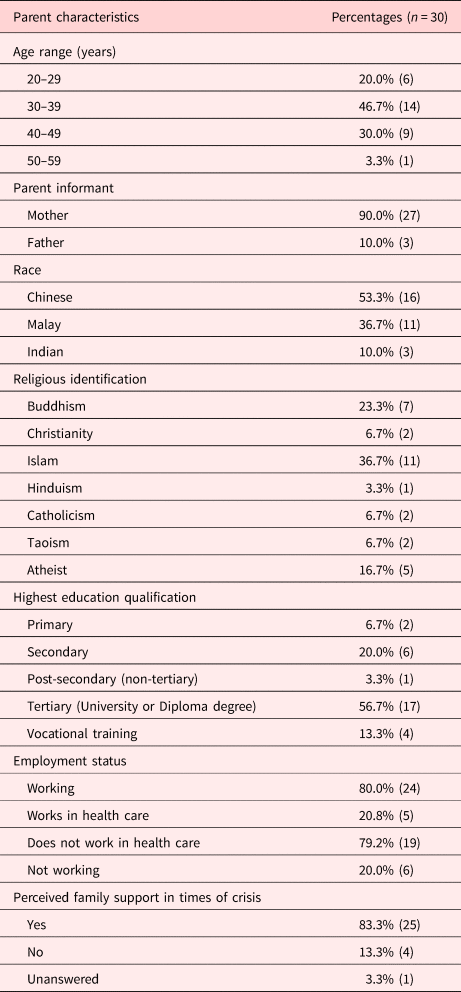
30 questionnaires were completed, each representing a different household. All parents selected for study participation were recruited successfully; no parent declined participation or withdrew after initial selection. 90% of participants were mothers and 10% were fathers. The age distribution of the parents was 46.7% between 30 and 39 years, 30% between 40 and 49 years, 20% between 20 and 29 years, and 3.3% between 50 and 59 years. Racial and religious distribution in the cohort was similar to that of our local population: 53.3% Chinese, 36.7% Malay, and 10% Indian. Other parent characteristics including education level, employment status, and family support are summarized in Table 1.
Parent characteristics (n = 30)

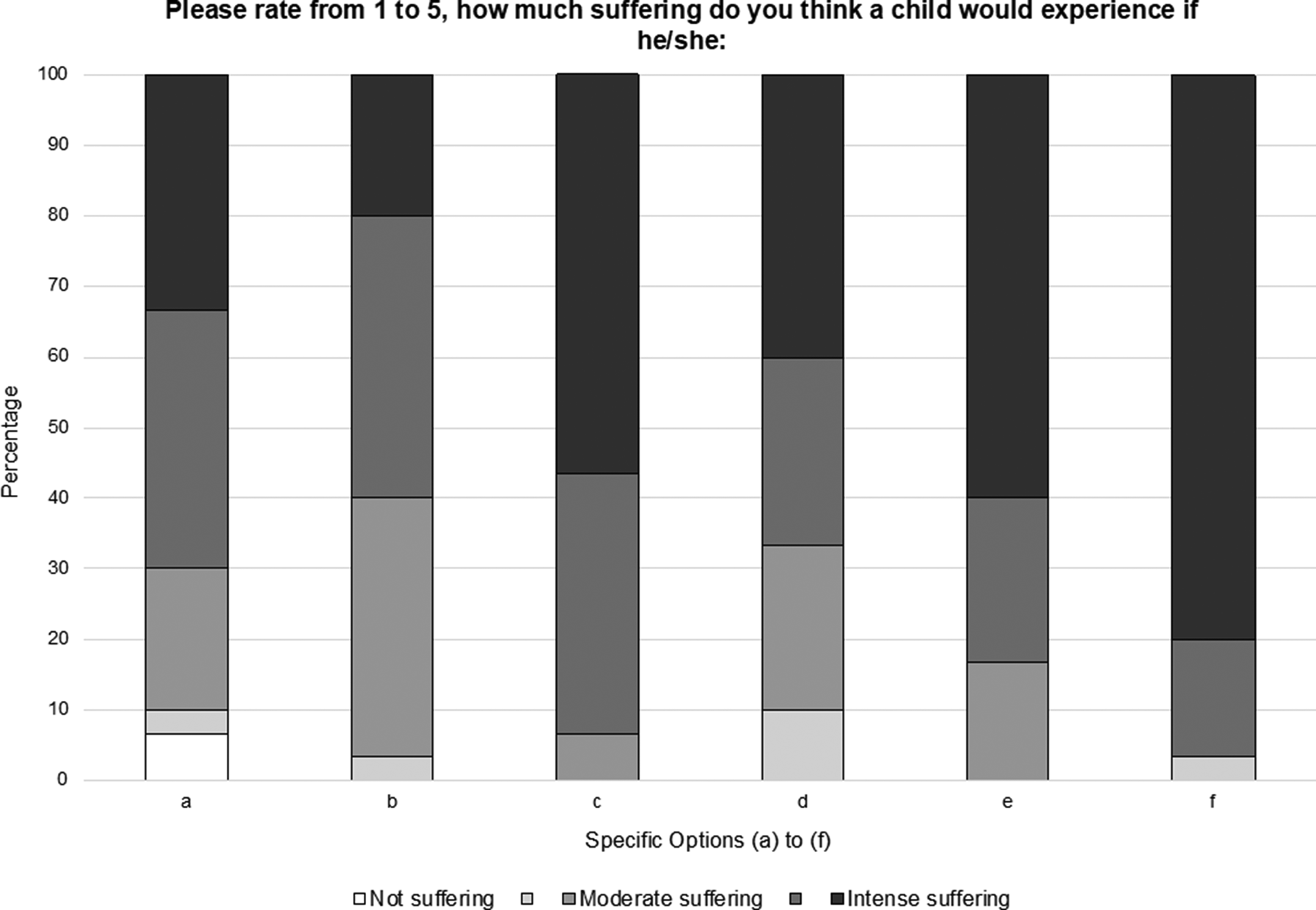
Figure 1 depicts the medical therapy or interventions in the PICU that were perceived to be causing suffering and the amount of suffering it caused. Having multiple plastic tubes entering a child's body, being bed-bound and losing the ability to perform usual daily activities, receiving hemodialysis, and extracorporeal life support were more often perceived as moderate to intense suffering by participants. Needing hemodialysis and extracorporeal life support were most often perceived as intense suffering while mechanical ventilation and parenteral nutrition appeared to be less traumatic interventions.
Parental perception of the amount of suffering experienced with different types of medical therapy or support in the PICU. Parents were asked “how much suffering do you think a child would experience if he/she”: (on a scale of 1–5, graphically represented in gray-scale shading: 1 = not suffering, 3 = moderate suffering, 5 = intense suffering): (a) Is on a breathing tube and machine, is receiving, medication to sedate him/her and is unable to communicate with you, (b) is unable to have food by mouth but is receiving nutrition through the vein (blood vessel), (c) has multiple plastic tubes entering his/her body, (d) is lying in the hospital bed all day and is not able to do his/her usual activities, (e) needs a machine to help clear waste from his/her bloodstream as his kidneys are not functioning, and (f) is on a machine to take over the function of his heart and lungs to keep him alive with tubes entering his/her chest while receiving medication to keep him/her sedated.

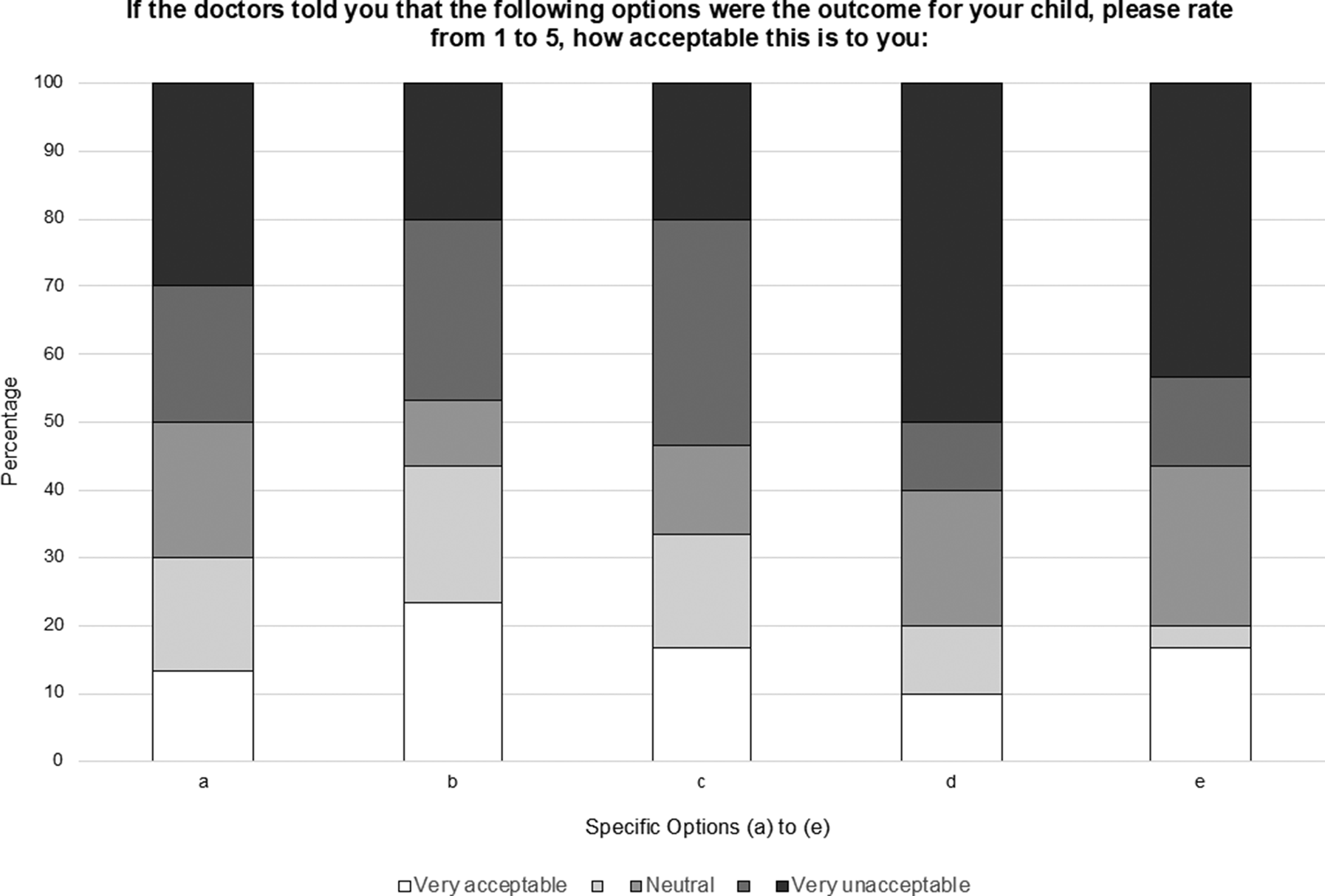
Figure 2 illustrates parental acceptability of differing medical outcomes. Specifically, options (d) and (e) were phrased to elicit how much neurodevelopmental and functional outcomes mattered to parents. Up to 50% of parents felt that it was very unacceptable for them to have a child with a poor neurological outcome after surviving a critical illness.
Parental acceptability of differing medical outcomes. Parents were asked “If you were told by the doctors that this was the outcome for your child, please rate from 1 to 5 how acceptable this is to you”: (on a scale of 1–5, graphically represented in gray-scale shading: 1 = very acceptable, 3 = neutral, 5 = very unacceptable): (a) will need a breathing machine to help him/her breathe for the long term, (b) will need help with activities of daily living like moving around, toileting, and feeding, (c) will need you to feed milk through a tube into his/her stomach for the long term, (d) will be bed-bound and not have any means of meaningful communication with you, and (e) intelligence will remain at the level of a 3-month-old baby.

Case vignettes results
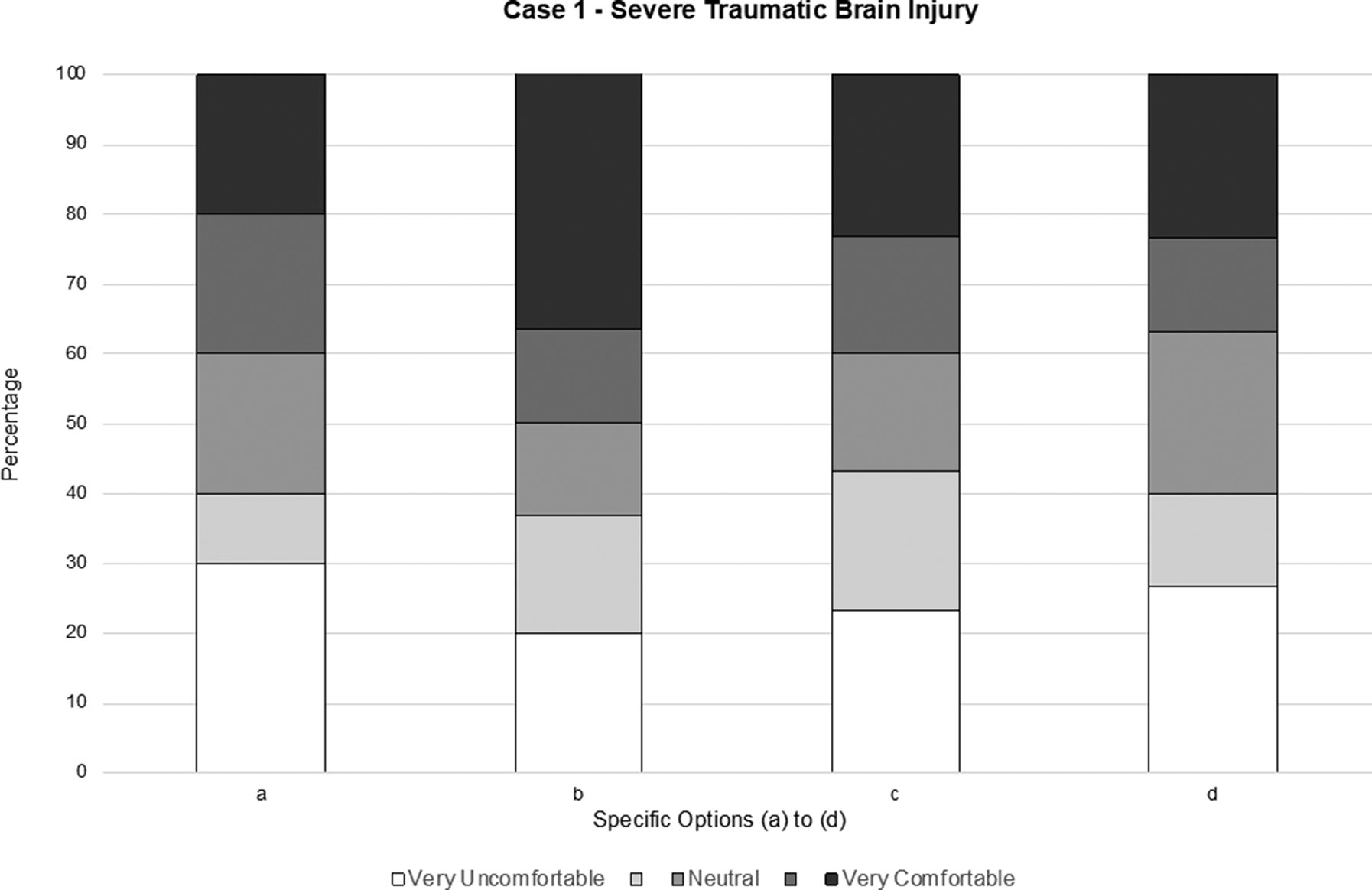
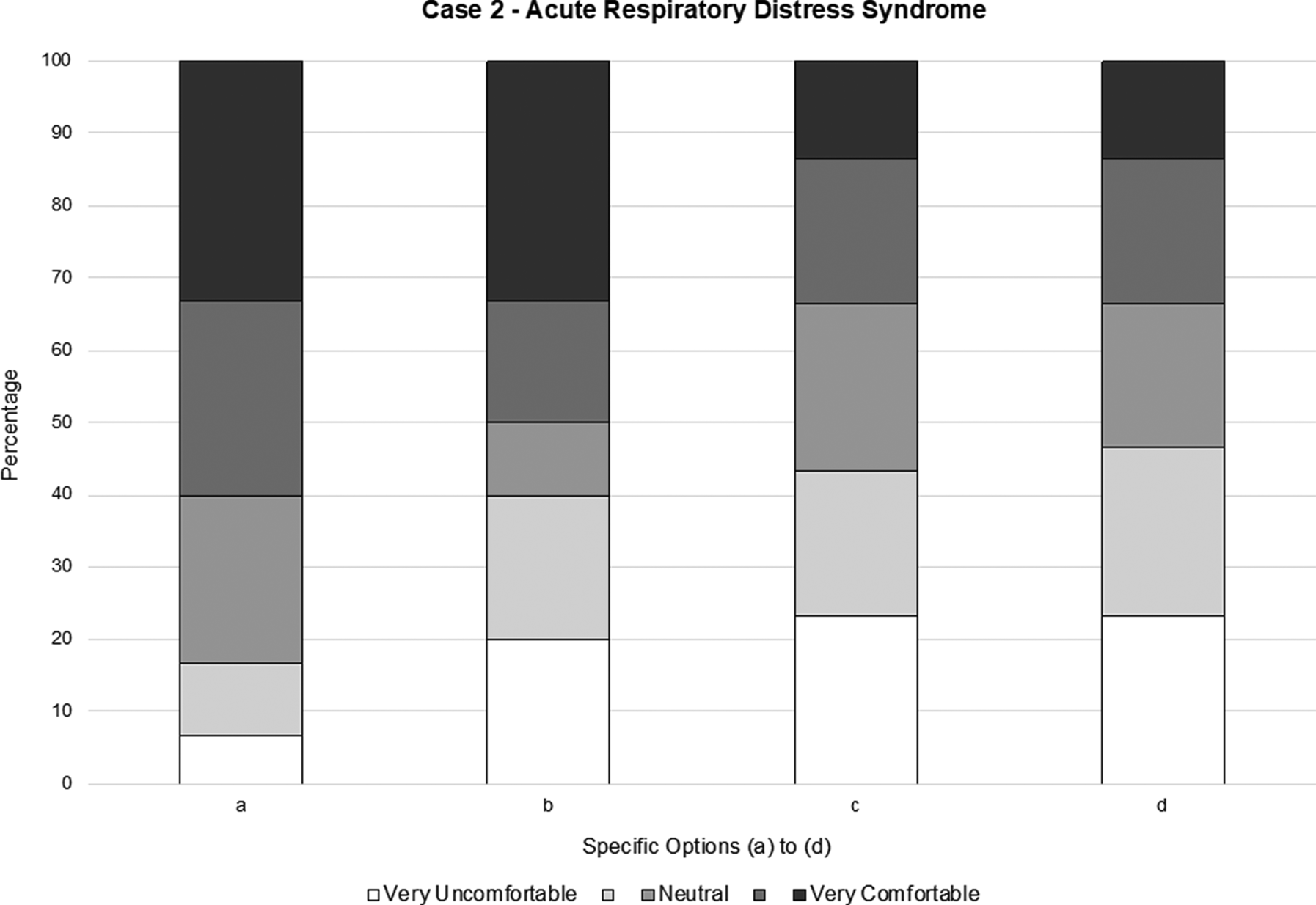
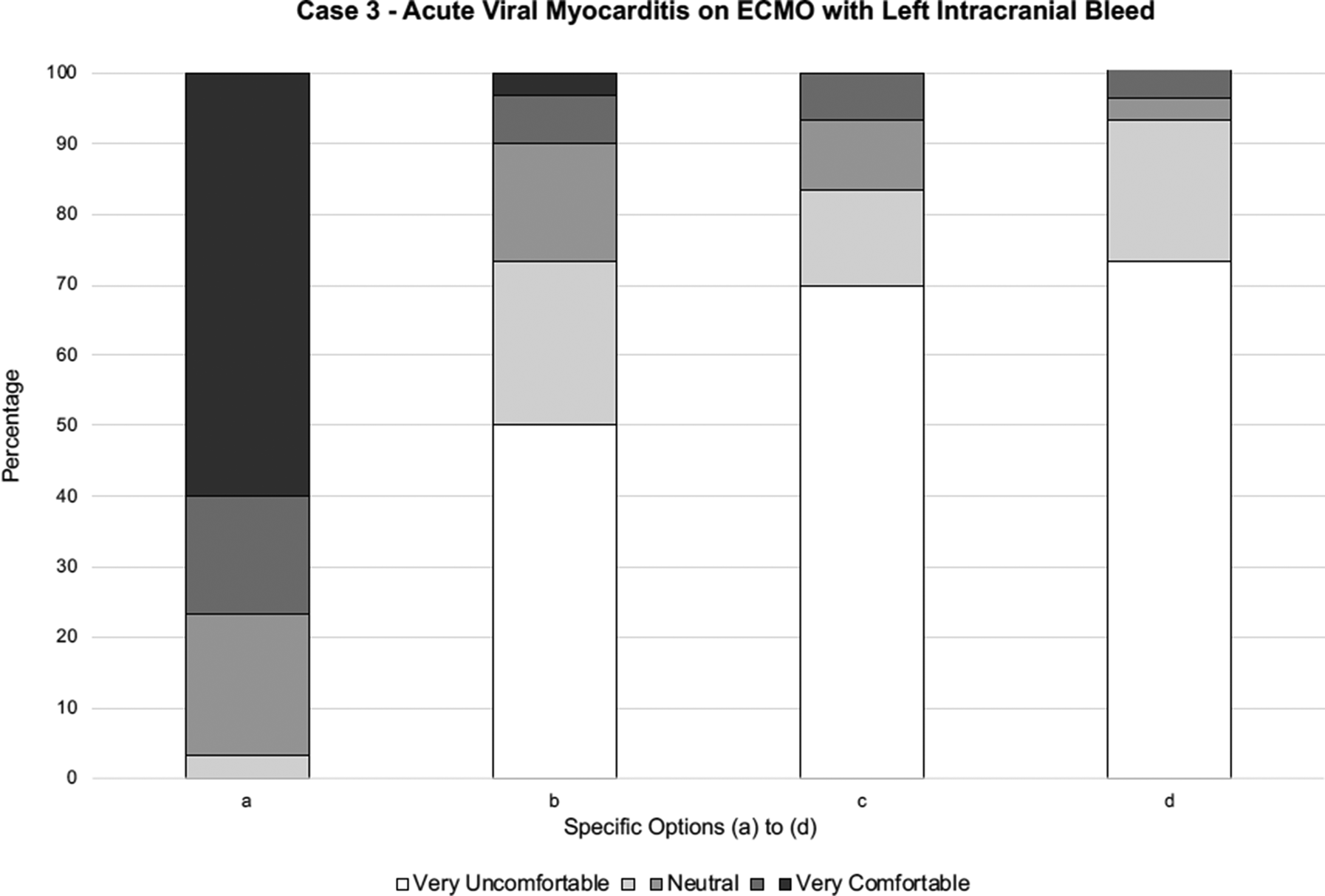
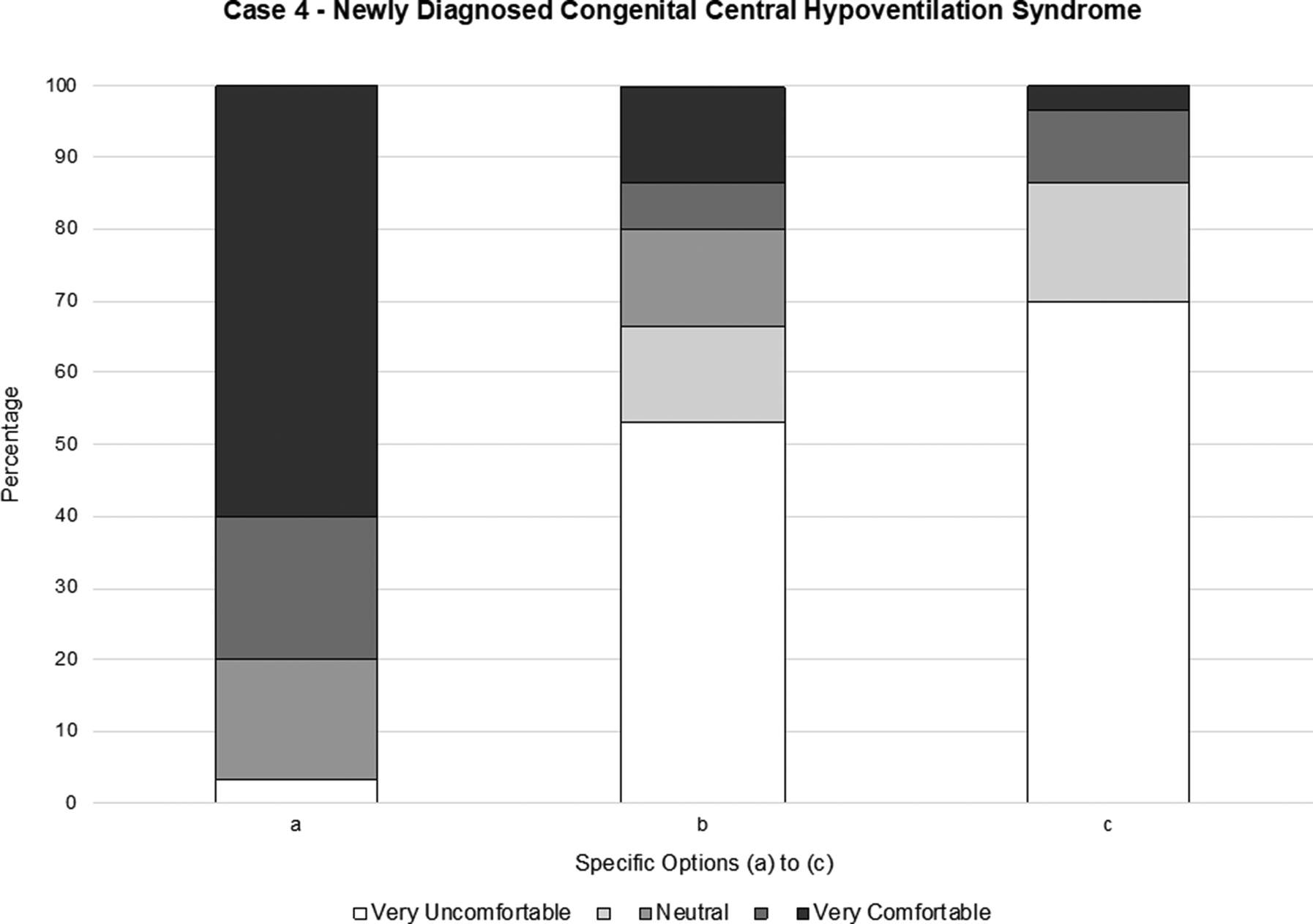
Responses to each case vignette are shown in Figures 3, 4, 5, and 6 which corresponds to Cases 1, 2, 3 and 4, respectively. In Case 1 (a teenage boy who was brain dead after sustaining a severe traumatic brain injury) and Case 2 (a girl with spastic quadriplegic cerebral palsy with ARDS), opinions on withholding or withdrawal of LST were fairly evenly spread among the categories of comfort and discomfort; this is in contrast to responses elicited for Cases 3 and 4. In Case 1, 20% of parents were very uncomfortable with withholding cardiac compressions even in the face of brain death. In Case 2, 20–23.3% of parents were uncomfortable or very uncomfortable withholding or withdrawing LST despite the poor antecedent quality of life. In Case 3 (young child with acute viral myocarditis on ECMO with left intracranial bleed), 70% of parents were very uncomfortable with the decision to withdraw LST, with none feeling very comfortable with this option. In Case 4 (infant with newly diagnosed CCHS), 70% of parents were also very uncomfortable with options of withdrawing LST. 60% of parents were very comfortable with proceeding with tracheostomy and long-term mechanical ventilation.
Case 1 — traumatic brain injury and brain death in a previously healthy teenage boy. Parents were asked how comfortable you would be with the following measures (on a scale of 1–5, graphically represented in gray-scale shading: 1 = very uncomfortable, 3 = neutral, 5 = very comfortable): (a) maintain all artificial life-support measures (including mechanical ventilation and medications to support blood pressure) as it is now, wait and see what happens, (b) if his heart stops, to not have him undergo cardiac massage by the doctors and try to restart his heart, (c) to remove his breathing tube and machine and allow nature to take its course, and (d) to stop the medication that is supporting his blood pressure and allow nature to take its course.

Case 2 — acute respiratory distress syndrome (ARDS) in a girl with spastic quadriplegic cerebral palsy. Parents were asked how comfortable you would be with the following measures (on a scale of 1–5, graphically represented in gray-scale shading: 1 = very uncomfortable, 3 = neutral, 5 = very comfortable): (a) maintain all artificial life-support measures (including mechanical ventilation and medications to support blood pressure) as it is now, wait and see what happens, (b) if her heart stops, to not have him undergo cardiac massage by the doctors and try to restart her heart, (c) to remove her breathing tube and machine and allow nature to take its course, and (d) to stop the medication that is supporting her blood pressure and allow nature to take its course.

Case 3 — acute viral myocarditis on ECMO with left intracranial hemorrhage in a previously well 4-year-old boy. Parents were asked how you would be with the following measures (on a scale of 1–5, graphically represented in gray-scale shading: 1 = very uncomfortable, 3 = neutral, 5 = very comfortable): (a) maintain all artificial life-support measures (including mechanical ventilation and medications to support blood pressure) as it is now, wait and see what happens, (b) if his heart stops, to not have him undergo cardiac massage by the doctors and try to restart his heart, (c) to remove his breathing tube and machine and allow nature to take its course, and(d) to stop the medication that is supporting his blood pressure and allow nature to take its course.

Case 4 — newly diagnosed congenital central hypoventilation syndrome in a 3-week-old infant girl. For this case, parents were asked how comfortable you would be with the following measures (on a scale of 1–5, graphically represented in gray-scale shading: 1 = very uncomfortable, 3 = neutral, 5 = very comfortable): (a) to proceed with the breathing tube insertion in the neck and plan to take her home after acquiring necessary equipment and skills, (b) if her heart stops, to not have her undergo cardiac massage and try to restart her heart, and (c) to remove her breathing tube and machine and allow nature to take its course.

Factors influencing EOL decision making
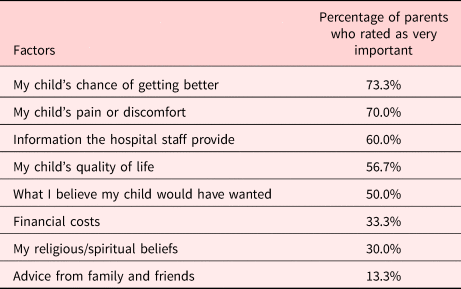
Table 2 lists factors that were important to parents when making EOL decisions. The chance of recovery and the amount of pain or discomfort that the child is experiencing were rated as very important factors in making EOL decisions.
Factors important to parents when making decisions regarding EOL, listed in descending order of importance

Communication aspects with EOL issues
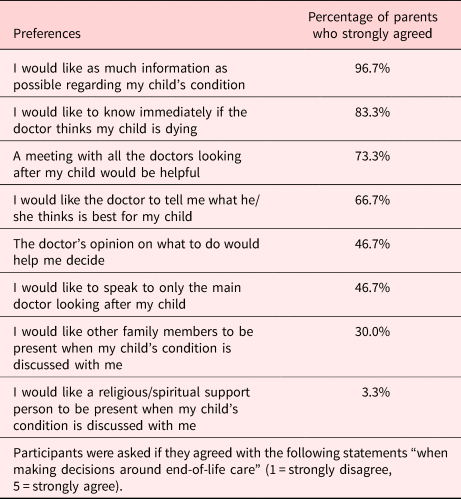
More than 90% of parents would like as much information as possible and would like to know immediately if their child was dying. Two-thirds of parents would like their doctor to tell them what they think is best for their child. Table 3 lists parental preferences when discussing EOL issues. When parents were asked whether there were other people they would like to be involved in EOL decisions for their child, 90% indicated their spouse, 40% their own parents, 23.3% their parents-in-law, and only 13.3% would involve their child's siblings and religious leaders.
Parental preferences when discussing EOL care issues, listed in the descending order of preference

Discussion
In summary, this study utilized clinical vignettes of commonly encountered critically ill children, where EOL decisions frequently need to be made, to prompt parents to think about the influences on their decision making in that particular situation. This study design was chosen to reduce distress caused to parents and to encourage participation (Cornfield and Kahn, Reference Cornfield and Kahn2012; Liu et al., Reference Liu, Lin and Lu2014). The findings suggest that Asian parents in this study sample tend to avoid active withdrawal or withholding of LST. The top three priorities for parents making EOL decisions for their children were: the chance of improvement, the presence of pain or discomfort, and information provided by healthcare staff. Parents indicated that they would prefer to know immediately if their child is at risk of dying; they also preferred to get as much information as possible from the healthcare team and thought that meeting with the healthcare team before making EOL decisions was essential to them.
It is interesting that although parents viewed the chance of recovery and the presence of pain and discomfort as the top two factors influencing their decisions regarding EOL care, a significant proportion of parents were uncomfortable with withdrawing or withholding LST even in medically futile situations such as brain death after severe traumatic brain injury (Case 1). This finding is consistent in Case 2, where a child with poor quality of life from neurological devastation is faced with yet another life-threatening critical illness. Even though most parents expressed trouble accepting a child surviving critical illness with a poor neurological outcome, about half were uncomfortable with withholding or withdrawal of LST. This conflict between the perception of suffering and acceptable outcome after critical illness, and a parent's eventual decision on EOL care is commonly observed in the PICU. In both Cases 1 and 2, parents seemed more comfortable with the option of non-escalation than withholding or withdrawing of LST. Similarly, Chan et al. reported that Asian parents tend to opt for non-escalation as opposed to active withdrawal of LST when making EOL decisions (Chan et al., Reference Chan, Cheung and Poon2016). This has also been described in other studies where Asian adult patients with cancer seem to value LST even in the face of irreversible disease (LoPresti et al., Reference LoPresti, Dement and Gold2016). In a study in Taiwan, where parents were approached to sign a DNR form by a physician in charge of the care of their child, Taiwanese parents reported in interviews that signing a DNR form made them feel guilty that they had participated in terminating their child's life (Liu et al., Reference Liu, Lin and Lu2014). Examples given were feeling like an “executioner” who had given up on their own child and signing the DNR form would dampen the will of the child to live, along with feelings of having failed as a parent. A retrospective study of Taiwanese children with cancer showed that aggressive treatment in the form of chemotherapy and intensive care were continued in almost half the patients in their last month of life. The authors hypothesize that Taiwanese parents value aggressive treatment even at the end of life in their child, although physician discomfort with disclosure of prognosis and discussing palliative care were also contributing factors (Tzuh et al., Reference Tzuh, Hung and Liu2011). They may also favor persisting with LST to avoid disapproval by the society where cultural traditions are valued strongly (Zhang et al., Reference Zhang, Chen and Gu2015). In Case 1, we found a significant proportion of parents expressing discomfort with the withdrawal of LST in the setting of a child who is brain dead. Among hospitalized patients in Kunming, China, 66% believed a brain dead person to be still alive (Wang et al., Reference Wang, Li and Zhang2013) as did 40% of professionals and government officials in Guangdong, China (Song et al., Reference Song, Cui and Gao2009). More recently, the concept of brain death has also come under increasing scrutiny due to the inherent challenge to align brain death with biological death and has become the focus of legal challenges (Truog et al., Reference Truog, Paquette and Tasker2020). These factors may explain parental discomfort with the withdrawal of LST in this case scenario.
In Case 3, the child with viral myocarditis on ECMO with left intracranial hemorrhage, and Case 4, the infant with newly diagnosed CCHS, parents were even more uncomfortable with the withdrawal of LST. This may be related to the details provided in the case where a high survival rate was quoted for the child on ECMO despite the likelihood of consequent neurological sequelae, and a prognosis of an intact cognition in the infant with CCHS. The patients in these two cases were also younger than in Cases 1 and 2 (4 years and 3 weeks old in Cases 3 and 4 respectively). Overall, this finding is consistent with the other results in this study, which revealed that chance of improvement is the top priority affecting EOL decisions as well as the value placed on neurological outcome as in the child with CCHS.
In delivering information regarding EOL, parents in this study expressed that they would like as much information about their child's condition as possible and would like to know immediately if their child was going to die. This is supported similarly by data from bereaved parents from a children's tertiary treatment center in the UK (Midson and Carter, Reference Midson and Carter2010), where while some parents had a positive experience with the quality and timing of the communication they received before their child dies, some parents preferred more preparation about the possibility that their child might die. These parents also stated that the need for information was an overriding concern and that options and choices were sometimes presented too late. However, others expressed that information should be provided only when the parents are ready to receive it, given its gravity (Brinchmann et al., Reference Brinchmann, Førde and Nortvedt2002). An evaluation of the individual parent's readiness to receive information is paramount before discussing EOL care. Parents in another study also wanted easy access to information that is not “sugar-coated” and that was truthful (Wocial, Reference Wocial2000). Therefore, avoiding a “beating around the bush” approach, as well as avoiding focusing on organ-specific therapeutic support may facilitate EOL decision making and meet the psychosocial needs of families in the face of impending death of a child (Singer et al., Reference Singer, Martin and Kelner1999).
Pain relief and minimization of discomfort and suffering were top priorities for parents. These findings are consistent with other studies (Homer et al., Reference Homer, Marino and Cleary1999; Meyer et al., Reference Meyer, Burns and Griffith2002; Sharman et al., Reference Sharman, Meert and Sarnaik2005; Aschenbrenner et al., Reference Aschenbrenner, Winters and Belknap2012). This can be perceived as a form of advocating for one's child in the absence of curative therapy. From a psychological perspective, it provides not only reassurance that one's child was kept as comfortable and pain-free as possible, but it also has important implications on managing parents’ grief and long-term adaptive coping as well (Kirschbaum, Reference Kirschbaum1996; October et al., Reference October, Fisher and Feudtner2014). Two-thirds of the parents in this study wanted to hear what the doctor felt was best for their child, and yet less than half strongly agreed that the doctor's opinion would help them decide on what to do. This may reflect the parental need to maintain autonomy in making major decisions. Choice and control are seen to be fundamental to parental coping (Solomon and Browning, Reference Solomon and Browning2005).
Asian families are generally close knit and often multigenerational, with grandparents very involved in childcare. Although this support network is important to bereaved parents (Stevenson et al., Reference Stevenson, Achille and Liben2017), it is surprising to find that parents in this study did not necessarily want to have other family members present during EOL decision making. This finding is not in keeping with previous medical literature; Confucian values of harmony-oriented and family-based ethical systems are predominant in Chinese adults making medical decisions (Cong, Reference Cong1998; Chen and Fan, Reference Chen and Fan2010). In a Taiwanese study, 38% of DNR decisions were made through collective decision making with family members (Peng et al., Reference Peng, Liu and Chen2012), and in an Indian study, extended family elders were the primary decision makers (Miljeteig et al., Reference Miljeteig, Sayeed and Jesani2009). It is plausible that parents in this study may place more value on privacy and may be more influenced by Western values of maintaining autonomy in decision making for their child (Sullivan et al., Reference Sullivan, Gillam and Monagle2015) because of the historical beginnings of Singapore, the local education system, and the impact of globalization.
In contrast to studies (Meyer et al., Reference Meyer, Burns and Griffith2002) done in predominantly Caucasian populations, parents in this study did not consider religious or spiritual beliefs an important factor in making EOL decisions, and preferred not to have religious or spiritual support during discussions or decision making. Similar to previous studies (Meyer et al., Reference Meyer, Burns and Griffith2002), the top three priorities for parents in making EOL decisions for their children were: the chance of improvement, the presence of pain or discomfort, and information provided by healthcare staff. A possible reason why quality of life was not in the top three priorities in this cohort is that it is a subjective metric, and parents only had a short time to ponder over this during the interview. They also did not have actual experience with the situations described in the vignettes.
This study has several limitations. Firstly, as the sample size is relatively small and represented mainly by mothers, the study findings would be limited in terms of its generalizability. There is evidence that Asian fathers often lead discussions on EOL issues and bear the responsibility of signing the DNR form (Liu et al., Reference Liu, Lin and Lu2014); therefore, it would be helpful to study the perspectives of both parents in future studies to evaluate the differences. Secondly, although interviewing parents of pediatric patients with minor acute illnesses avoids the potential ethical and emotional challenges in discussing EOL decisions in parents of critically ill children and/or bereaved parents in the local context, the ideal study cohort would have been the latter group, as this would clearly reflect the thoughts and perspectives of parents who have had actual experience with EOL issues in the PICU. Even though the study findings based on this sample provided a nuanced insight into parental perspectives on EOL issues and decision making, interviewing parents of critically ill children and/or bereaved parents with actual experience with EOL issues would certainly add even more depth and value to the current findings. Another limitation of the study is that responses elicited via interviewer-administered questionnaire are limited by the structured design of the questionnaire and possible interviewer bias. A qualitative component with audio or video recording of the interviews would have provided more detailed data on parental responses. Interviewer adherence to interview administration training could also be reviewed on the recordings. This would be considered for future studies. An additional limitation is that the case vignettes needed to be limited to a certain length in order to optimize attention spans of both the interviewer and participant. This limited the amount of detail that could be included to optimize comprehension of the case and development of empathy in the participant. Also, survival rates for critical illness in PICU patients are rarely clearly defined as underlying comorbidities and heterogeneity of the patient population in PICU impact the final outcome. This added a layer of complexity in ensuring parents in our study understood the case vignettes well enough to answer the related questions. Finally, as convenience sampling was utilized in the selection of participants for completion of the questionnaire, the study was subjected to selection bias.
Future directions
Most EOL research in Asia had been conducted through chart reviews or surveys of healthcare professionals (Kim et al., Reference Kim, Savage and Hershberger2019). As the awareness of pediatric EOL issues increases, it will be interesting to study if there is a difference in perspectives between parents of relatively well children compared with parents of critically ill children. Qualitative responses collected through focus group discussion would have allowed a more in-depth understanding of the decision making process and can be considered for future studies. A larger sample size, inclusion of bereaved parents, and qualitative research methods, as well as a possible multicenter approach in future research studying Asian parental perspectives in EOL issues and decision making, will clarify some of the findings in this study. This will provide guidance to healthcare workers in the PICU in terms of communicating with parents and family members and providing the best possible experience during challenging EOL situations.
Conclusion
This study provides an insight into how Asian parents perceive EOL care in pediatric critical illness. The case vignettes were able to elicit authentic parental responses in the unique circumstances of the local culture and society. Asian parents in this study express hesitancy with withdrawing and withholding LST even in the face of medical futility. This signals a difference in the comfort level of Asian parents with EOL decisions as compared with their Caucasian counterparts. The chance of improvement, the presence of pain or discomfort, and information provided by healthcare staff were key considerations in EOL decision making for Asian parents in this study. Despite the limitations of the study, this study contributes to the current body of knowledge that has largely been derived from a Caucasian population. Some findings that are inconsistent with previous literature may also indicate that the perspectives of Asian parents on EOL issues are likely to be more diverse than expected. Clinical implications of this study include improved understanding of parental perspectives and increased awareness in healthcare workers regarding parental preferences surrounding EOL discussions. This may change practices when dealing with EOL issues with Asian parents.
Supplementary material
The supplementary material for this article can be found at https://doi.org/10.1017/S1478951521000493.
Acknowledgments
We thank Dr. Dimple Rajgor for her assistance in editing, formatting, reviewing, and submitting the manuscript for publication.
Funding
The study received funding from Khoo Teck Puat – National University Children's Medical Institute (KTP-NUCMI), seed grant funding (2015).
Conflict of interest
The authors declare that they have no conflict of interest.