INTRODUCTION
The System of Rice Intensification (SRI) has been promoted for more than a decade as a set of agronomic management practices for rice cultivation that enhances yield (Ceesay et al., Reference Ceesay, Reid, Fernandes and Uphoff2006; Kabir and Uphoff, Reference Kabir and Uphoff2007; Namara et al., Reference Namara, Bossio, Weligamage and Herath2008; Sato and Uphoff, Reference Sato and Uphoff2007; Senthilkumar et al., Reference Senthilkumar, Bindraban, Thiyagarajan, Ridder and Giller2008; Sinha and Talati, Reference Sinha and Talati2007; Uphoff et al., Reference Uphoff, Fernandes, Yuan, Peng, Rafaralahy and Rabenandrasana2002; Yuan, Reference Yuan and Uphoff2002; Zhao et al., Reference Zhao, Wu, Li, Lu, Zhu and Uphoff2009), reduces water requirements (Satyanarayana et al., Reference Satyanarayana, Thiyagarajan and Uphoff2007), raises input productivity (Sinha and Talati, Reference Sinha and Talati2007), is accessible to smallholders (Stoop et al., Reference Stoop, Uphoff and Kassam2002), and is more favorable for the environment than conventional practice with its continuous flooding of paddies and heavy reliance on inorganic fertilization (Uphoff, Reference Uphoff2003). Given that water scarcity at field level affects more and more rice-growers around the world, SRI has attracted considerable interest, particularly in Asian countries.
The basic claim made for SRI is that making changes in the cultural practices for growing irrigated rice – altering the ways in which rice plants, soil, water and nutrients are managed – can lead to much more productive phenotypes (Uphoff, Reference Uphoff1999; Uphoff and Randriamiharisoa, Reference Uphoff, Randriamiharisoa, Bouman, Hengsdijk, Hardy, Bindraban, Thuong and Ladha2002). These changes include the use of much younger seedlings than are normally transplanted; planting them singly and carefully in a square pattern with wide spacing; in soil that is kept moist but not continuously saturated; and with increased soil amendments of organic matter and active aeration of the soil during weed control operations.
However, these recommendations have encountered controversy, and SRI reports of yield benefits and phenotypical changes with SRI management have been challenged on various grounds (Dobermann, Reference Dobermann2004; Latif et al., Reference Latif, Islam, Ali and Saleque2005; McDonald et al., Reference McDonald, Hobbs and Riha2006; Sheehy et al., Reference Sheehy, Peng, Dobermann, Mitchell, Ferrer, Yang, Zou, Zhong and Huang2004, Sinclair, Reference Sinclair2004; Sinclair and Cassman, Reference Sinclair and Cassman2004). The debate has been one of the most contentious in recent agronomic forums. For instance, Sheehy et al. (Reference Sheehy, Peng, Dobermann, Mitchell, Ferrer, Yang, Zou, Zhong and Huang2004), based on a theoretical model for predicting maximum yields attainable and on the results from a few field trials, concluded that the reported high yields under SRI must be due to measurement errors and that ‘SRI has no major role in improving rice production generally’. SRI results have been characterized by Sinclair (Reference Sinclair2004) and Sinclair and Cassman (Reference Sinclair and Cassman2004) as ‘unconfirmed field observations’, with the admonition that SRI offers no shortcuts to achieving large yield increases. Sheehy et al. (Reference Sheehy, Sinclair and Cassman2005) argued that the energy requirements for achieving such high yield in SRI are beyond the thermodynamic capabilities of rice plants’ photosynthesis and the crop's use of solar energy. Commenting on the effects of SRI practices, Sinclair (Reference Sinclair2004) contended that SRI's very low plant densities would lead to poor light interception, whereas high plant density is a prerequisite for enhanced light interception, growth and yield. While Dobermann (Reference Dobermann2004) accepted SRI as possibly a ‘niche innovation’ for improving rice production on poor, acidic soils with potential for Fe toxicity, but asserted it had little potential for improving yield in intensively irrigated systems with more favourable soils. More recently, the debate has focused on comparison of SRI performance with available ‘best management practices’ (BMPs) (McDonald et al., Reference McDonald, Hobbs and Riha2008; Uphoff et al., Reference Uphoff, Kassam and Stoop2008). McDonald et al. (Reference McDonald, Hobbs and Riha2008) have insisted that no significant yield advantages for SRI over BMPs have been documented experimentally except from the Madagascar trials.
Thus, significantly higher yields reported with SRI management have been dismissed as impossible or at least not scientifically demonstrated. Both the claims of SRI and the grounds for rejecting these are matters that can be empirically tested and should be investigated systematically. Some evaluations of this sort have been done previously in China (Tao et al., Reference Tao, Wang, Min and Uphoff2002; Wang et al., Reference Wang, Cao, Jiang, Tai, Zhu and Uphoff2002; Zhu et al., Reference Zhu, Chen, Zhang, Lin and Uphoff2002). But quantified physiological evaluations have not been published on the results of SRI management, comparing them with what are considered by some rice scientists to be the BMPs for rice cultivation.
SRI is referred to as methodology, not a technology or fixed set of practices (Uphoff, Reference Uphoff2003), to be tested and optimized under a range of different agro-ecological environments (Stoop et al., Reference Stoop, Uphoff and Kassam2002). This study was not designed to assess the full set of recommended SRI practices, as this would have required a more complicated set of factorial trials. Some of the management practices of recommended SRI were adopted in this study, while others were adapted to the local conditions. What is assessed here was thus not the full set of practices, which some may consider ‘original SRI’, but instead the effects of a specified sub-set of practices.
This evaluation was conducted with the same variety over three years to assess the performance of rice plants managed with these alternative practices – referred to here as modified SRI (SRIm) to indicate that this is not identical to the recommendations of SRI's originator (Laulanié, Reference Laulanié1993). A systematic comparison is made with rice plants grown according to recommended management practices (RMP) for India. This study examines the extent to which making certain changes in crop management can alter phenotypical characteristics and induce physiological changes in rice plants, assessing the effects, in any, of alternative management practices on root growth and activity, canopy development, light interception and its utilization, which contribute to differences in yield and components of yield.
MATERIALS AND METHODS
Experimental site and soil
Experiments were conducted at the Deras Farm, Mendhasal in Khurda district, Orissa, India (20°30′N, 87°48′E) during the wet season (July–November) in 2005, 2006 and 2007. Soils of the experimental site have been classified previously as Aeric Haplaquepts (Thakur et al., Reference Thakur, Roy Chowdhury, Kundu and Singh2004), being sandy clay-loam in texture (63% sand, 16% silt, and 21% clay) with pH of 5.5. The soil at the study site had organic carbon content 1.13%, total nitrogen 0.08%, available P (Olsen) 9 ppm, exchangeable K 0.20 meq/100 g soil, exchangeable Ca 4.5 meq/100 g soil, available S 14 ppm, Zn 10 ppm, and Fe 370 ppm.
Experimental design and cultural practices
The experiments were conducted using randomized complete block designs with five replicates and plot sizes of 20 m × 10 m. All the plots were surrounded by 50-cm wide bunds to prevent lateral seepage between plots, with 50-cm wide channels for irrigation and drainage. The cultivar used, Surendra (OR158–5 × Rasi), is a medium-duration (130–135 days) semi-dwarf rice variety which was released in 1999 and is recommended for Orissa state (DRD, 2006). This improved variety, which normally yields 3.5–5.0 t ha−1 (http://dacnet.nic.in/rice/RiceVarieties-09.htm), was grown under the two alternative systems of crop management: the SRIm, and the RMP proposed by India's Central Rice Research Institute at Cuttack (http://crri.nic.in/).
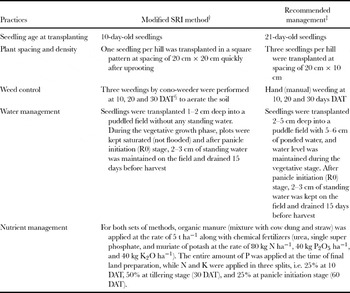
The SRI practices assessed in this study differed from original SRI practice in two ways, in the use of both organic manures and inorganic fertilizers and in plant spacing. All SRIm and RMP plots had the same soil amendments, a combination of chemical fertilizer and organic matter, and SRIm plots had somewhat closer spacing (20 × 20 cm) than original recommendations for SRI (25×25 cm) (Senthilkumar et al., 2009; Thakur et al., Reference Thakur, Choudhari, Singh and Kumar2009). There was limited local availability of large amounts of organic material, so reliance only on organic fertilization was not considered feasible; and the spacing reflected earlier evaluations of optimum plant distances under local soil and other conditions. Details of the two sets of management practices evaluated here are given in Table 1.
Crop management practices for comparative evaluation of modified SRI and recommended management practices.

†SRIm practices differ from those reported in Stoop et al. (Reference Stoop, Uphoff and Kassam2002) only in spacing of 20×20 cm (instead of 25×25 cm) and in fertilization.
‡Based on recommendations of the Central Rice Research Institute, Cuttack, India; full description of these can be found at http://crri.nic.in/
§DAT: days after flowering.
For nursery establishment, germinated seeds were broadcasted on 5, 4 and 7 July in 2005, 2006 and 2007, respectively. In the SRIm plots, 10-day-old seedlings were transplanted on 14, 13 and 16 July in these years, respectively, while in the RMP plots, seedlings from the same nurseries, when 21 days old, were transplanted on 25, 24 and 27 July in 2005, 2006 and 2007, respectively. While the seeds for both SRIm and RMP plots were germinated at the same time, the respective seedlings were planted into the main field at different times. The aim was to have the plants under both treatments reaching similar stages of growth at the same time, receiving similar sunshine hours, day length, and temperatures, and with harvesting on the same date, respectively, 18 November 2005, 16 November 2006, and 21 November 2007.
RMP plots were kept continuously flooded and irrigated whenever required in order to maintain a ponded layer of 5–6 cm depth during the vegetative stage. SRIm plot soils were kept saturated but with no standing water during the vegetative stage. Stagnant rain water from these plots was drained out, collected in a refuge, and used for irrigating these plots. After panicle initiation, both sets of plots had 2–3 cm depth of water maintained on them, and plots were drained 15 days before harvest. Weeding in SRIm plots was performed by cono-weeder to incorporate weeds into the soil and for soil aeration; RMP plots were hand-weeded. To describe rice growth stages, a rice growth staging system was followed (Counce et al., Reference Counce, Keisling and Mitchell2000).
Measurements of root dry weight and xylem exudation rate
Three hills from each replicate were randomly selected at grain depth expansion stage (R6, 110 days after germination, DAG), and root samples were collected by removing a cylinder of soil along with the hill using an auger 10 cm in diameter and 45 cm depth (Kawata and Katano, Reference Kawata and Katano1976). Roots were carefully washed, and their length and dry weight were measured (Yoshida, Reference Yoshida1981). Root volume was measured by the water displacement method of putting all roots in a measuring cylinder.
Xylem exudation rate was measured using the method of San-oh et al. (Reference San-oh, Mano, Ookawa and Hirasawa2004) at grain depth expansion stage (R6) on 23–26 October each year. From each replicate, three hills were selected, each with an average number of panicles (17±1 from SRIm and 8±1 from RMP plots). Stems were cut 10 cm from the soil surface, and pre-weighed cotton wool packed in a polythene bag was attached to the cut end of each stem with tape. After 24 hours, each bag was detached, sealed and weighed, and the weight of the exudates was calculated by subtracting the weight of the bag and pre-weighed cotton wool.
Measurements of plant dry weight, leaf area and crop growth rate
Dry weight of plant samples was determined at harvest after oven-drying at 80 °C for 72 h to reach a constant weight. To assess leaf area, three hills were randomly selected from each replicate, and the leaf area of 1 m2 ground area was measured at anthesis (R4, 105 DAG) using a leaf area meter (LICOR-3100 Area Meter). Specific leaf weight (SLW) was calculated by dividing the leaf dry weight by leaf area. Leaf area index (LAI) was calculated by dividing leaf area by the land area. Area of flag leaves, collected from three hills, was measured at grain dry down stage (R7) on 3–4 November. Three hills were collected randomly during each sampling at 10-day intervals from each replicate to calculate crop growth rate (CGR), starting from 30 DAG to 70 DAG. Crop growth rate is the gain in the weight of plants on a unit of land within a unit of time, calculated from the following equation:

Measurements of light interception by the canopy
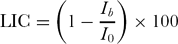
The light intensity above the canopy (I0) and at the surface of the soil under the canopy (Ib) was measured with a line quantum sensor (400–700 nm) (Model: EMS 7; SW & WS Company) on a bright sunny day between 11:30 hours and 12:00 noon at 10-day intervals from each replicate starting from planting to panicle initiation stage (R0, 70 DAG). The light intensity at the surface of the soil relative to the intensity above the canopy was measured at consecutive points at intervals of 1 m apart in the inter-row space and in the inter-hill space, respectively (San-oh et al., Reference San-oh, Mano, Ookawa and Hirasawa2004). Light interception by the canopy (LIC) was calculated, as a percentage, from the following equation:
Measurements of leaf inclination and canopy angle
Three hills at the grain dry down stage (R7, 120 DAG) were selected randomly from each replicate for measurements of canopy angle. The canopy angle (CA) was measured with a protractor using the following equation: CA (in degrees) = 180 – (θ1+ θ2), where θ1 and θ2 are the angles of inclination of the outermost tillers from a horizontal orientation on both sides. The leaf inclination was calculated after measuring the angle between the leaf blade and stem for each leaf from top to bottom (1st to 5th leaf) of a tiller.
Determination of chlorophyll in leaves
Chlorophyll (Chl) content was determined in the flag leaf at the grain dry down stage (R7, 120 DAG). Two hundred mg of fresh leaf tissue was taken and cut into small pieces, and chlorophyll pigments were extracted using 10 ml dimethyl sulfoxide (DMSO) solution at 65°C for 3 hours (Hiscox and Israelstam, Reference Hiscox and Israelstam1979), filtered through Whatman No. 1 filter paper. Absorption of the chlorophyll extract was measured using a UV-Vis Spectrophotometer (Model: Chemito, 2600) at wavelengths of 645 and 663 nm, using DMSO as the blank. Chlorophyll a, b and total chlorophyll were calculated (Hipkins and Baker, Reference Hipkins and Baker1986) and expressed as mg g−1 fresh leaf weight.
Measurement of chlorophyll fluorescence and photosynthesis rate
Flag leaves at the grain dry down stage (R7) on 4–5 November from each plot were marked to measure chlorophyll fluorescence with a Fluorescence Monitoring System (FMS-2, Hansatech). The chlorophyll fluorescence parameters measured were dark-adapted maximum photochemical efficiency (Fv/Fm) and ΦPS II at the same stage of the crop under both treatments. Prior to each set of Fv/Fm measurements, leaves were dark adapted for a period of 30 min using leaf clips. The same flag leaves were also used to measure transpiration rate, photosynthesis rate, stomatal conductance and internal CO2 concentration, using a CIRAS-2 Portable Photosynthesis System (PP Systems, U.K.). These measurements were taken on a clear sunny day (solar radiation > 1200 μmol m−2 s−1) between 10:30 and 11:00 hours before any marked reduction in photosynthesis at midday occurred.
Measurements of yield and yield components
The stage of phyllochron was determined on the basis of the number of total tillers in a hill and was adapted from the analysis of Laulanié (Reference Laulanié1993). Five hills in each plot were randomly marked at the time of planting for counting tiller number periodically at the interval of 10 days up to panicle initiation stage (R0, 70 DAG). The average number of tillers was extrapolated into phyllochrons based on the relationship between phyllochrons and tiller numbers given by Laulanié (Reference Laulanié1993), Nemoto et al. (Reference Nemoto, Morita and Baba1995), Matsuo et al. (Reference Matsuo, Futsuhara, Kukuchi and Yamaguchi1997) and Stoop et al. (Reference Stoop, Uphoff and Kassam2002).
All plants in an area of 5 m × 5 m for each replicate (25 m−2) were harvested (excluding the border rows) for determination of yield per unit area, and grain yield was adjusted to 14.5% seed moisture content. Harvest index was calculated by dividing dry grain yield by the total dry weight of aboveground parts. Average tiller number and panicle number were determined from crop harvested from a square meter area from each replication. Panicle length, number of grains per panicle and number of filled grains were measured for each panicle individually harvested from a square meter area from each replication. The percentage of ripened grains was calculated by dividing the number of filled grains by the total number of grains. All panicles from a square meter area were categorized according to their length, and a frequency distribution was plotted.
Statistical analyses
All data were statistically analysed using analysis of variance (ANOVA) as applicable to a split-plot design (Gomez and Gomez, Reference Gomez and Gomez1984). The significance of the treatment effect was determined using an F-test, and to determine the significance of the difference between the means of the two treatments, least significant differences (LSD) were calculated at the 5% probability level. Regression relationships were determined using the data analysis tool pack of MS-Excel.
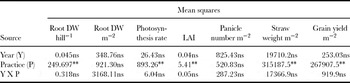
The data set for all the parameters was statistically analysed considering year as a source of variation in addition to the treatment (practice). The main effect of year and interaction effects of year × practice were not significant at p < 0.05 for any of the parameters, so the data reported in this paper are averages for three years. Mean squares for some of the important parameters are presented in Table 2.
Mean squares from analysis of variance (ANOVA) of root dry weight hill−1, root dry weight m−2, photosynthesis rate, leaf area index (LAI), panicle number m−2, straw weight m−2 and grain yield m−2.

DW: dry weight
ns: Not significant
* and **: Significant at p < 0.05 and p < 0.01, respectively
RESULTS
Dry matter accumulation, yield and crop growth rate
The dry weight of aboveground parts of individual hills under SRIm was significantly greater than that of RMP hills, although it was non-significant on a per unit area basis, when compared between the two cultivation methods (Table 3). The straw weight per unit area was significantly higher in RMP than SRIm plots but grain yield was 42% more in SRIm than in RMP. Further, harvest index was significantly higher for SRIm than RMP. Differences in grain yield between these two methods of cultivation were due principally to differences in the harvest index rather than because of differences in dry matter production.
Comparison of dry matter accumulation, grain yield, and harvest index in modified SRI and RMP.

Standard deviations are given in parentheses (n = 15).
Crop growth rate (CGR) was higher in RMP than in SRIm up to 60 DAG. However, after this CGR in RMP declined compared to that observed in SRIm (Figure 1). In the latter treatment, CGR showed a continuously increasing trend throughout the vegetative stage.
Changes in crop growth rate (CGR) with modified SRI and RMP methods during vegetative stage. Solid squares and solid triangles represent SRIm and RMP, respectively. Vertical bars represent LSD at 5%.

Yield-contributing characters
The number of panicles per hill was significantly greater in SRIm (average: 16.9 hill−1; range: 12–30 hill−1) than in hills under RMP (average: 8.6 hill−1; range: 4–12 hill−1). On the other hand, the number of panicles per unit area was not significantly different between the respective systems (SRIm: 421.7 panicles m−2, RMP: 430.0 panicles m−2) (Table 4). The average panicle length in SRIm (21.61 cm) was, however, significantly (p < 0.05) higher than panicles in RMP (18.77 cm). The longer SRIm panicles carried nearly 1.7 times more number of grain compared to panicles obtained from RMP plots, and the percentage of ripe grains and 1000-grain weight were also significantly higher in SRIm plants than RMP plants.
Comparison of yield-contributing characters in modified SRI and RMP.

Standard deviations are given in parentheses (n = 15).
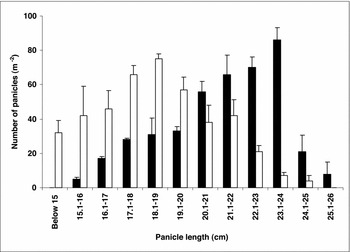
Modified SRI plots had the highest number of panicles per unit area of land that were 23.1–24.0 cm long. This was different from RMP plots whose highest number of panicles was 18.1–19.0 cm long (Figure 2). Most of the panicles (66%) in SRIm were 20.1 cm to 24.0 cm in length, while most RMP panicles (66%) were 15.1 cm to 20.0 cm long. It was noted that, with SRIm, no panicle was <15 cm length; in contrast, no RMP panicles were >25 cm long.
Frequency distribution of panicle length m−2 in modified SRI and RMP. Black and white bars represent SRIm and RMP, respectively. Vertical bars represent standard deviation: n = 421 for SRI, and n = 430 for RMP.

The relationship between panicle length and grain number in SRIm and RMP is shown in Figure 3. With SRIm management, each centimetre of increase in panicle length could accommodate 12 grains, whereas with RMP, only 6 grains could be accommodated by each additional centimetre. The alternative sets of management practices thus produced a difference in the branching of panicles, so that the structure of SRIm panicles could accommodate more grains.
Relationships between the panicle length and grain number with modified SRI (n = 81) and RMP (n = 103). Black and white squares represent SRIm and RMP, respectively.

Number of tillers and phyllochrons
The number of tillers per hill in SRIm varied from 13 to 36 (average: 17.9 tillers hill−1) whereas in RMP the number ranged from 6 to 16 (average: 9.7 tillers hill−1). On the other hand, tiller number per unit area was significantly (LSD0.05 = 11.7) lower in SRIm (448.3 tillers m−2; s.e.m. ± 4.80) than in the RMP plots (486.7 tillers m−2; s.e.m. ± 6.41). Ninety-four percent of all SRIm tillers produced panicles whereas in RMP effective tillers were significantly (LSD0.05 = 1.7) lower (89%).
Single seedlings with SRIm management produced 28 tillers before onset of anthesis; in contrast with RMP, the three plants in each hill together averaged only 13 tillers per hill (Figure 4). When the transplanting of clumps of more mature seedlings was done in RMP plots (21 DAG), the single seedlings in SRIm plots had already started their tillering; and at 30 DAG (20 days after transplanting), rapid tillering had begun with SRIm, soon overtaking the RMP treatment, as seen in Figure 4. The highest number of tillers in an SRIm hill was 36, whereas with RMP it was 16.
Changes in tiller number per hill in modified SRI and RMP method during vegetative stage. Solid squares and solid triangles represent SRIm and RMP, respectively. Vertical bars represent LSD at 5%.

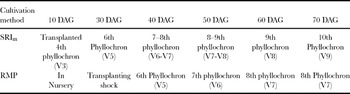
When the mean number of tillers was assessed in terms of phyllochron stages (Table 5), the average number of tillers in SRIm plots was five at 30 DAG (6th phyllochron, V5 stage). At this date, the transplanted seedlings in RMP plots were still experiencing transplant shock, and active tillering had not yet started. In RMP plots, tillering only started after 30 DAG and reached a total of five tillers by 40 DAG (6th phyllochron, V5 stage).
Comparison between numbers of phyllochronsa completed under modified SRI and RMP in trials.

aPhyllochron: The period of time in which one or more units of tiller, leaf and roots, each unit constituting a phytomer, emerges from the plant's meristematic tissue as described by Nemoto et al. (Reference Nemoto, Morita and Baba1995).
DAG: Days after germination of seed.
V-Vegetative development stages with the number of true leaves on the main stem (adapted from rice growth staging system as described by Counce et al. Reference Counce, Keisling and Mitchell2000).
By the onset of anthesis, SRIm plants had reached their 10th phyllochron stage (V9 stage) of tillering and root growth, whereas RMP plants by this time had only reached their 8th phyllochron stage (V7 stage), resulting in lower numbers of tillers per hill. RMP plants reached their 8th phyllochron (V7 stage) at about 60 DAG and remained in this same phyllochron interval up to 70 DAG, reflecting a slower rate of development.
Leaf area index and specific leaf weight
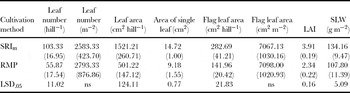
At anthesis, the number of leaves and the leaf area per hill in the SRIm treatment were significantly higher than in RMP. SRIm hills had more than twice the number of leaves and three times the total leaf area of each hill compared to hills under RMP (Table 6). Similarly, flag leaf area per hill at the grain dry down stage (R7 or dough grain stage or middle ripening stage) was significantly higher in SRIm than in RMP but there were no significant differences between treatments on a per unit area basis. However, SRIm crops had a significantly higher LAI, mainly because of an increase in the area of single leaves and because the leaves of SRIm plants had higher SLW than did RMP leaves.
Comparison of leaf number, leaf area, leaf area index (LAI), and specific leaf weight (SLW) in modified SRI and RMP at anthesis stage (R4).

Standard deviations are given in parentheses (n = 15).
Canopy structure and solar radiation interception by the canopy
Canopy structures were compared at the grain dry down stage (R7 or dough grain stage or middle ripening stage), on 3–4 November. New tillers in SRIm emerged flatter, i.e. with a greater angle from the vertical, whereas new RMP tillers emerged more upright within the clump of plants. This configuration of tiller emergence gave SRIm hills a more open-plant structure, with greater canopy angle than measured in RMP hills (Table 7). This could be attributed to the shallower planting (1–2 cm) in SRIm as well as to less crowding of SRIm plants. At the same time, we found that the angle between the leaf blade and the stem/tiller, flag leaf and panicle axis was lesser in SRIm plants than RMP plants. This meant that SRIm leaves were more erect as compared to RMP.
Comparison of leaf inclination and canopy angle at grain dry down stage (R7) under modified SRI and RMP.

Standard deviations are given in parentheses (n = 15).
†Angle between flag leaf and panicle axis.
As seen in Figure 5, during the initial growth stages (up to 40 DAG), the RMP canopy intercepted more solar radiation than did the SRIm canopy. However, beyond 50 DAG light interception in SRIm plots was significantly more than in the RMP plots. At panicle initiation stage (R0), it reached 90% in SRIm plots, while light interception by RMP canopies was only 78% at this stage.
Changes in the interception of solar radiation by the canopy in modified SRI and RMP crops during vegetative stage. Solid squares and solid triangles represent SRIm and RMP, respectively. Vertical bars represent LSD at 5%.

Chlorophyll content, chlorophyll fluorescence and photosynthesis
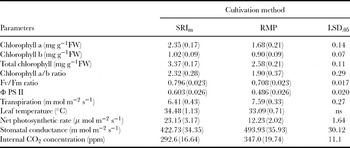
At the grain dry down stage (R7 or dough grain stage or middle ripening stage), on 3–4 November, SRIm flag leaves had significantly higher 40% more Chl a, 14% more Chl b and 31% more total Chl than RMP plants, as well as a 23% higher Chl a/b ratio (Table 8).
Comparison of chlorophyll content, fluorescence, transpiration rate, net photosynthetic rate, stomatal conductance, and internal CO2 concentration in modified SRI and RMP at grain dry down stage (R7).

Standard deviations are given in parentheses (n = 15).
At this same stage (R7 or dough grain stage or middle ripening stage), the maximum fluorescence efficiency (Fv/Fm) and the actual fluorescence efficiency (ФPS II) of flag leaves were both significantly higher in the SRIm crop compared to the RMP crop. The reduction in fluorescence efficiency from maximum to actual was significantly greater in the leaves of the crop grown under RMP compared to SRIm.
There were significant differences in flag leaf photosynthesis, internal CO2 concentration, and transpiration rate between SRIm and RMP. Net photosynthesis rate was significantly higher, and the buildup of internal CO2 concentration inside the leaf was lower, in SRIm plants than in RMP (Table 8). Concomitantly, RMP plants had a higher transpiration rate than the SRIm crop. The ratio of photosynthesis to transpiration (instantaneous water-use efficiency) was accordingly higher in SRIm compared to RMP. With the loss of one millimol of water, 3.6 and 1.6 μ mol of CO2 was fixed in SRIm and in RMP plants, respectively.
Root growth and xylem exudation rates
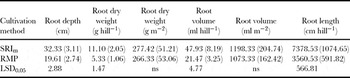
Root growth and xylem exudation rate were measured at the crop's grain depth expansion stage (R6, milk grain stage or early ripening stage) which is when active grain-filling starts. Roots per hill were nearly twice as heavy, were deeper, more than double the length and double the volume in SRIm plants (Table 9). But these root parameters were not significantly different on a per unit area basis.
Comparison of root depth, root dry weight, root volume, and root length in modified SRI and RMP crops at grain depth expansion stage (R6).

Standard deviations are given in parentheses (n = 15).
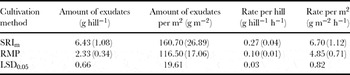
There was significantly more xylem exudate in SRIm plants at the grain depth expansion stage (R6), both per hill and per unit area (Table 10). Similarly, the rate at which these exudates were transported from the root towards the stem was higher in SRIm hills. The exudation rate per m−2 of land area was also found to be higher in SRIm plots than the RMP plots.
Comparison of xylem exudation rates in modified SRI and RMP crops at grain depth expansion stage (R6).

Standard deviations are given in parentheses (n = 15).
DISCUSSION
System of rice intensification (SRI) management includes many departures from conventionally recommended methods of rice cultivation. It proposes the use of single young seedlings, drastically lowered plant densities, keeping fields unflooded and use of a mechanical weeder which aerates the soil, all with the aim of providing optimal growth conditions for the plant, to get better performance in terms of yield and input productivity.
The data presented in this paper evaluated the performance of modified SRI plants compared with usual rice cultivation under standard irrigated conditions (RMP), not assessing any effects of organic vs. inorganic fertilization which could have further differentiated the results. The spacing used (20 × 20 cm) was less than that generally recommended for initial SRI spacing, being the distance found previously to be optimum under research-station conditions when used in conjunction with other SRI practices (Thakur et al., Reference Thakur, Choudhari, Singh and Kumar2009).
The basic question investigated was whether some combination of SRI management practices would induce any significant differences in plant growth or physiology that might tap some currently untapped production potential in rice, as suggested by Stoop et al. (Reference Stoop, Uphoff and Kassam2002). A detailed comparison has been presented here of the performance of rice plants grown with most of the recommended SRI management practices vis-à-vis that of plants raised under current RMP, having the same soil, climatic conditions, similar fertilization and with the same rice variety (genotype).
A number of previously published reports on SRI have showed enhancement of rice yield (Ceesay et al., Reference Ceesay, Reid, Fernandes and Uphoff2006; Kabir and Uphoff, Reference Kabir and Uphoff2007; Namara et al., Reference Namara, Bossio, Weligamage and Herath2008; Satyanarayana et al., Reference Satyanarayana, Thiyagarajan and Uphoff2007; Sato and Uphoff, Reference Sato and Uphoff2007; Senthilkumar et al., Reference Senthilkumar, Bindraban, Thiyagarajan, Ridder and Giller2008; Sinha and Talati, Reference Sinha and Talati2007; Zhao et al., Reference Zhao, Wu, Li, Lu, Zhu and Uphoff2009). This study found SRIm management practices increasing grain yield by 42%, from 4.49 t ha−1 to 6.38 t ha−1, while utilizing fewer seeds and less water. The dry weight of aboveground parts at harvest was greater in SRIm than RMP when compared per hill, but no significant difference was found in dry matter production when the two methods of cultivation were compared on a unit area basis (Table 3).
The divergence in grain yield between SRIm and RMP was due to differences in harvest index rather than dry matter production. For higher yield, profuse tillering is critical, with yield being determined by the number of panicle-bearing tillers per unit area, the number of grains per panicle and the weight of individual grains (Yoshida, Reference Yoshida1981). In SRIm, the number of panicle-bearing tillers per unit area by itself was not responsible for higher grain yield (Table 4). Even without significant increase in this parameter, SRIm recorded significantly higher grain yield compared to RMP.
With SRIm management, the main factors responsible for the yield enhancement in these trials were longer panicles with more grains, better grain filling and a significant increase in grain weight. SRIm had a greater percentage of longer panicles than did rice grown with recommended practices; on the other hand, RMP produced a greater percentage of shorter panicles (Figure 2). Panicles of SRIm plants accommodated more grains than RMP. For every centimetre increase in SRIm panicle length, the number of grains increased by 12, while with RMP, the corresponding increase was only 6 grains (Figure 3). The increased number of grains per unit length was the result of longer primary branches on SRIm panicles accommodating a greater number of spikelets (data not shown).
The greater straw weight at harvest from RMP plots was due to a greater number of tillers per unit area. However, with RMP the percentage of productive tillers relative to the maximum number of tillers was less than for SRIm. Using modified SRI management practices, the number of tillers produced in each hill was almost double that of RMP, even though RMP hills contained three plants instead of one. The number of tillers per m2 was lower with SRIm mainly because it had only half as many hills per m2.
When we considered the number of phyllochrons completed under each management system, it was found that many of the hills in the SRIm plots were able to reach their 9th or 10th phyllochron of growth before anthesis (R4 stage) (Table 5), thereby producing a larger number of tillers (28–34). By comparison, rice plants under conventional RMP cultivation reached only up to 13 tillers before the onset of their reproductive stage, representing the completion of no more than eight phyllochrons before anthesis.
Tillering ability in rice has a close relationship with the number of phyllochrons completed before entering the reproductive stage (Nemoto et al., Reference Nemoto, Morita and Baba1995; Stoop et al., Reference Stoop, Uphoff and Kassam2002). The duration of phyllochrons is influenced by a number of environmental factors and biophysical growing conditions for the plant: soil and ambient temperature, exposure to sunlight, spacing, nutrient availability, soil friability vs. compaction, soil moisture vs. desiccation, and soil aeration vs. hypoxia (Nemoto et al., Reference Nemoto, Morita and Baba1995). RMP rice plants, with their multiple root systems in each hill, appeared to be constrained by competition for nutrients, space and light during their later stages of vegetative growth, especially beyond 60 DAG (Table 5). RMP canopies and root systems were limited compared to those of SRIm plants as seen by their not completing more phyllochrons before anthesis. With SRIm management, individual plants with more favorable growing conditions have shorter phyllochrons, which results in more, and more productive-, tillers and larger root systems (Katayama, Reference Katayama1951). This limitation of growth during the later vegetative stage in RMP was indicated by the slowing of CGR in RMP plants after 60 DAG (Figure 1).
At anthesis, the number of leaves and the leaf area per hill were both significantly higher in SRIm than RMP; however, there was no difference in number of leaves per m2. LAI was significantly higher in SRIm plots than RMP mainly due to an increase in the size of individual leaves (Table 6). The higher SLW in SRIm plants also indicated thicker leaves compared to the leaves grown under RMP.
Rice plants under RMP had a more compact structure, with tillers that were less horizontal and leaves that were more spreading (Table 7). This, along with smaller LAI, made RMP plants less efficient in utilizing solar energy given lower light interception (Figure 3). In contrast, the SRIm plants had more open architecture, with tillers splayed out more widely, covering more ground area and more erect leaves that avoided mutual shading of leaves. These plants also had higher leaf area index due to significant increase in leaf sizes. More erect leaves are known to contribute to a higher LAI and to lead to more nitrogen storage, resulting in increased grain yield (Sinclair and Sheehy, Reference Sinclair and Sheehy1999). Sakamoto et al. (Reference Sakamoto, Morinaka, Ohnishi, Sunohara, Fujioka, Ueguchi-Tanaka, Mizutani, Sakata, Takatsuto, Yoshida, Tanaka, Kitano and Matsuoka2006) have also highlighted that erect leaves in rice can increase both biomass production and grain yield. Thus, the more erect leaves and higher LAI with SRIm appeared to contribute to higher grain production.
We further examined whether the higher solar radiation interception by SRIm plants was effectively utilized or not by comparing characteristics related to the rate of photosynthesis. A positive correlation was found between chlorophyll content, Fv/Fm and ΦPS II. A change in Fv/Fm derives from a change in the efficiency of non-photochemical quenching. Dark-adapted values of Fv/Fm reflect the potential quantum efficiency of PS II and are used as a sensitive indicator of plant photosynthetic performance. Our results showed that potential quantum yield and actual quantum yield of SRIm plants were higher than for RMP plants (Table 8). Light is more effectively utilized in the photosynthesis process in SRIm plants.
ΦPS II also gives an indication of overall photosynthesis performance (Genty et al., Reference Genty, Briantais and Baker1989). There is a strong linear relationship between ΦPS II and efficiency of carbon fixation according to Maxwell and Johnson (Reference Maxwell and Johnson2000). SRIm plants with dark green leaves had higher chlorophyll content and a higher Chl a/b ratio than conventionally managed rice. This indicated better nutrient supply received by SRIm hills compared with conventional RMP rice. This was apparently related to the larger and better functioning root systems of SRIm plants (Tables 9 and 10). Previous reports also support our finding that lighter green leaves, unless experiencing low light condition (shading), have reduced total Chl/mg fresh weight and higher Chl a/b ratio (Harper et al., Reference Harper, Gesjen, Linford, Peterson, Faircloth, Thissen and Brusslan2004; Leong and Anderson, Reference Leong and Anderson1984; Murchie and Horton, Reference Murchie and Horton1997).
High photosynthetic rate with lower CO2 concentration inside the sub-stomatal cavity in SRIm plants also suggests a more efficient carboxylation system (Table 8). The instantaneous water-use efficiency of the leaf (represented by the ratio of photosynthesis to transpiration) is a measurement of carbon gained through photosynthesis with per-unit water transpired. A higher photosynthetic rate with lower transpiration in SRIm plants indicates that they are using water more efficiently than conventionally managed, continuously flooded rice plants. There is further need to study the changes in leaf anatomy and stomatal density of SRI plants and their relationship with water and CO2 diffusion pathways.
At the grain depth expansion stage, SRIm plants had significantly larger root mass and length per plant compared to conventionally managed rice per hill. However, root mass per unit land area was not significantly different. The amount of xylem exudates and the rate at which exudates are transported from root to shoot during the active grain-filling stage, which was high in SRIm plants, is an index of root physiological activity and also affects (potentially delays) the onset of leaf senescence (San-oh et al., Reference San-oh, Mano, Ookawa and Hirasawa2004; Reference San-oh, Sugiyama, Yoshita, Ookawa and Hirasawa2006).
Research by San-oh et al. (Reference San-oh, Sugiyama, Yoshita, Ookawa and Hirasawa2006) found that rice plants with a larger number of crown roots and root apices synthesize larger amounts of cytokinins when each hill contains just one plant compared to each hill containing three plants. Our planting of one seedling per hill with SRIm methods is similar to the treatments in the experiments of San-oh and associates. It is possible that SRIm plants with better root growth and higher physiological activity would be transporting larger amounts of cytokinins (not measured here) from roots to shoot, resulting in a lower rate of leaf senescence (San-oh et al., Reference San-oh, Sugiyama, Yoshita, Ookawa and Hirasawa2006; Soejima et al., Reference Soejima, Sugiyama and Ishihara1992, Reference Soejima, Sugiyama and Ishihara1995). In SRIm plants, delayed senescence could derive from having increased root growth, higher leaf area and chlorophyll content, and perhaps by gene expression of enzymes contributing to photosynthesis during the latter part of the growth cycle (Ookawa et al., Reference Ookawa, Naruoka, Sayama and Hirasawa2004; Suzuki et al., Reference Suzuki, Makino and Mae2001).
This study was not designed to achieve or assess maximum potentials with different combinations of alternative management practices. Rather it undertook to determine whether there would be any substantial yield differences and significant phenological variations associated with the alternative management. The data presented here give considerable evidence that alterations in management practices can induce multiple, significant and positive changes in phenotype from a given rice genotype. Similar results have been reported by Zhao et al. (Reference Zhao, Wu, Li, Lu, Zhu and Uphoff2009) with regard to nitrogen use efficiency and water use efficiency. The mechanisms for evoking these changes remain to be studied and determined in satisfactory detail.
CONCLUSIONS
Our results showed that the combination of specific SRI practices, designated here as SRIm, outyielded currently recommended rice cultivation practices by 42%. Rice plants managed according to SRI precepts were able to complete more phyllochron stages and benefit from substantially larger and more active root systems. SRIm practices improved the performance of individual hills (plants) in terms of their root growth and root activity, their tillering and grain filling, canopy characteristics, chlorophyll content, light utilization for photosynthesis and water-use efficiency.
These improved characteristics enabled SRIm hills to produce longer panicles and greater proportions of longer panicles, which accommodated more filled and heavier grains. These changes more than compensated for having fewer hills per unit land area and reduced plant population with SRIm. On the other hand, crowded environments under RMP conditions both below- and above-ground, evinced more competition during their later stages of vegetative growth, as evidenced by poor root growth and slower crop growth rate. These characteristics resulted in poorer performance of several important physiological processes during reproductive growth stages. These apparently contributed to the shorter panicle length, fewer grains, higher percentage of unfilled grains and smaller-sized grains. These constraints observed in RMP plants were mitigated by a combination of SRI practices.
With SRI management, we found that even the youngest tillers were as productive as the older ones in terms of panicle length, grain number and fewer unfilled grains – something observed by the originator of SRI (Laulanié, Reference Laulanié1993). The SRI practices evaluated in this study enabled rice plants to develop more productive phenotypes with deeper roots having greater activity, larger leaves with spreading canopy for greater light interception, and delayed leaf senescence with an elevated rate of photosynthesis that ultimately lead to an improvement in harvest index for better grain yield.
In this study, SRI methods used were more productive than RMP under the conditions of our trials, and the data generated identified physiological mechanisms by which this result could be achieved. However, many further studies will be needed to gain a fuller understanding of how the respective components of SRI individually and collectively contribute to augmented grain yield under different soil and climatic conditions. Knowledge of synergistic effects between and among SRI components may help in breeding or selecting cultivars especially suitable for SRI conditions to maximize the significance of G × E interactions for better performance and greater yield. Also, this research did not investigate the possible contributions that aerobic soil biota make to these results (Randriamiharisoa et al., Reference Randriamiharisoa, Barison, Uphoff and Uphoff2006), so that domain also warrants investigation. Taking the influence of soil biota more explicitly into account could open some promising new opportunities for rice plant breeding.
Acknowledgements
The authors thank Dr Abha Mishra, School of Environment, Resources and Development, Asian Institute of Technology, Thailand, and Dr Vasilia A. Fasoula, Department of Crop and Soil Sciences, University of Georgia, Athens, for their critical reviews of the manuscript.