Eighty per cent of the Congolese population live in conditions of extreme poverty (less than US$1 a day); 71 per cent suffer from food insecurity; 57 per cent have no access to safe drinking water; and 54 per cent cannot benefit from basic health services (UNDP 2006: 3). Urban agriculture (UA), as a source of food supply and income generation, is one element of a strategy to which people may turn as they struggle to overcome food insecurity.
For 85 years (1906–91), the Générale des Carrières et des Mines (GECAMINES) (formerly Union Minière du Haut-Katanga) was the main provider of employment in Katanga Province and the main contributor of foreign exchange in the Democratic Republic of Congo (DRC). In Lubumbashi, GECAMINES had become a proxy for the state, providing public services such as health care and education (Frutchard Reference Frutchard2004). In the second half of the 1980s, GECAMINES generated an external revenue of US$1 billion a year. At that time, the company had 24,378 employees. Four years later, several factors precipitated the fall of the giant firm.
One of the GECAMINES concessionary mines collapsed in September 1990, bringing overall copper production levels down to 150,000 tons. By 2003 this had shrunk catastrophically to 8,000 tons. In 1991 and 1993, mass lootings occurred in most cities and towns. Other factors further deepened the disintegration of the mining sector. These included the predatory behaviour of government, political instability and mismanagement, international isolation of the government because of the so-called ‘Lubumbashi massacre’, and the expulsion of more than 300,000 Kasai people from Katanga Province in 1993.
As a result of the GECAMINES collapse, a great deal of the economic and social infrastructure of Katanga Province disintegrated, including the transportation system. Food was permanently in short supply and foreign exchange was officially unobtainable for all but a powerful few. The official marketing system barely functioned (MacGaffey Reference MacGaffey1991). This caused individuals and households to take matters into their own hands in seeking remedies for these problems. One result was the expansion of the informal economy. In this way the failing state and economy, emerging amid the social and political turmoil that accompanied the country's transition to independence from Belgian colonial rule, may be said to have contributed to the development of grassroots institutions and organizations, and the emergence of a parallel economy in the DRC.
For, as de Janvry (1995: 4) puts it, ‘when the state fails to deliver public goods, minimum basic needs … civil organizations may develop to fill the vacuum’. The Congolese state and its formal economy were too fragile and weak to contribute to economic growth. While standard large-scale theories have viewed the state and the market economy as key players in development, alternative theories of development see the state in the majority of developing countries as corrupt and bureaucratic. When the state ceases to function properly and the market economy fails to play its role, substitute institutions such as households may play a role at the local level (Chabal and Daloz Reference Chabal and Daloz1999; Ferguson Reference Ferguson2006). Looked at this way, development should begin locally. However, it cannot end there, because without the state's collaboration, the lot of the poor cannot be significantly improved (Friedmann Reference Friedmann1992).
The nineteenth-century German economist Johann Heinrich von Thünen was among the first to analyse and theorize the marginal productivity of agricultural land. Drawing upon the von Thünen model, academics and researchers like Moustier and Fall (Reference Moustier, Fall, Smith, Moustier, Mougeot and Fall2004) have argued that agricultural activities emerge and expand more quickly in less developed countries than in developed ones. In the model, emphasis is placed on the distance factor. This relative importance of the distance between the place of cultivation and the city underlies the system practised by contemporary Congolese urban cultivators – for if the price of transporting a product is higher than its real value, it follows that such a product should be cultivated in the city. Therefore, the von Thünen model applies particularly to less durable products like vegetables and milk that are consumed fresh. The model, it should be added, seems more applicable in developing countries where the transport infrastructure is incomplete or has failed, making the cost of transportation higher.
No recent study has explored the role of households in addressing economic chaos and instability in Lubumbashi. The aim of this article is to assess the practice of growing food crops and raising livestock in Lubumbashi. The objectives are (1) to determine the practice of cultivation in terms of what was cultivated, on what kind of land, and by whom, and to identify household strategies used to combat food insecurity; (2) to examine the experience of three categories of urban farmers; and (3) to categorize the types of urban agriculture practised in Lubumbashi.
URBAN AGRICULTURE: THE BACKGROUND
Agriculture has long served as one of the criteria distinguishing rural from urban settlements. There is evidence, however, that in many parts of the world, and from earliest times, urban agriculture has supplied foodstuffs to city populations. Despite its long history, this phenomenon came under the spotlight only recently. Even the International Labour Organization (ILO 1972) excluded agricultural activities from its definition of informal activities in the city. The neglect of the topic was reinforced by the fact that agriculture in the city was forbidden or simply declared illegal by many governments, mainly in Africa (Mougeot Reference Mougeot, Egziabeher, Lee-Smith, Maxwell, Memon, Mougeot and Sawio1994; Tinker Reference Tinker, Egziabeher, Lee-Smith, Maxwell, Memon, Mougeot and Sawio1994).
In 1996, the United Nations Development Programme (UNDP) calculated that about 800 million people in the world were engaged in urban food production, with 200 million doing so for commercial reasons. The United Nations defines urban agriculture as an activity that produces, processes and markets food and other products on land and water in urban and peri-urban areas, applying intensive production methods. In this article, we use the term urban agriculture to refer to agricultural activities (cultivation of crops, raising animals, forestry, aquaculture, and so on) practised on urban and peri-urban lands to provide food, income and employment to urban residents.
While urban agriculture is diversifying its functions in developed countries to include recreational services and waste recycling, in Asian and African countries, by contrast, UA seems to be dominated by its two primary functions: food supply and income generation. Between 20 and 60 per cent of the African urban population are estimated to be engaged in food production (UNDP 1996; Moustier Reference Moustier1998). Agriculture has been crucial in African cities. For example, in the early 1990s more than half of Dar es Salaam's residents were engaged in urban farming (Tripp Reference Tripp1997, quoted in Owens Reference Owens2010: 257); 67 per cent of Nairobi's urban families were farmers; 50 per cent of the land in Kampala was farmed; while urban gardens were both an important source of income and produced sufficient amounts to make Bamako self-sufficient in vegetables (Mougeot Reference Mougeot, Egziabeher, Lee-Smith, Maxwell, Memon, Mougeot and Sawio1994).
Despite the increasing number of urban households involved in food production, urban agriculture in the DRC has been little documented. In the late 1980s Bruneau and Bukome (Reference Bruneau and Bukome1987) investigated the spatial distribution of informal economic activities in the city of Lubumbashi. Their findings showed that one yard out of four was farmed. Almost twenty years later, a survey conducted by Petit and co-workers (Petit Reference Petit2001) identified more than 60 different informal activities in the same city, with one head of household out of six involved in farming. In 2004, the World Bank's survey found that more than 54 per cent of the 11,000 GECAMINES employees listed agriculture as the alternative economic activity they would turn to if their current job came to an end.
Beside these three studies, no other information has been documented on urban agriculture in Lubumbashi. In fact, MacGaffey and his contributors (Reference MacGaffey1991) omitted to mention urban agriculture among the informal economic activities they called ‘the real economy of the Zaïre’. These authors may not have perceived UA as a contributing factor to the economy, though Bruneau and Bukome's survey had noticed this. Instead of seeking to identify all the informal economic activities taking place in Lubumbashi, this study gains in-depth analysis by focusing only on urban agriculture as the emergent livelihood strategy in the city.
THE SOCIO-ECONOMIC SITUATION OF LUBUMBASHI CITY
Lubumbashi had 1,200,000 inhabitants in 2005, yielding an estimated density of 1,606 inhabitants per square kilometre. The increased number of unemployed people, the lack of basic infrastructures, and the anarchic occupation of urban lands were some of the consequences of this overpopulation. Lubumbashi comprises three types of area: residential areas formerly called ‘the white city’, currently occupied by Lubumbashi ward and partly by the present ‘Bel-air’; planned areas where the wards of Kamalondo, Kenya, and parts of Rwashi and Katuba are located; and unplanned areas, which are basically shanty towns (Annexe and parts of Rwashi and Katuba). While industrial economic activities dominated the residential and planned areas of the city, agricultural activities increasingly emerged in the unplanned areas.
The Lubumbashi population previously lived according to the pace, pattern and rhythm of the giant GECAMINES. This company provided its huge workforce with cradle-to-grave benefits, which included free education and free health care for family members, monthly food distribution, free housing, water and electricity, free recreational facilities, cheap loans, a retirement package and free burials (Frutchard Reference Frutchard2004: 17). The giant's collapse not only undermined these benefits but led to hundreds of other firms going bankrupt, further depressing employment in the Katanga Province. During that period (1990–3), Lubumbashi residents learned to eat animal fodder, locally called vimba.
People preferred vimba because it was affordable. Many wanted to eat it to get full because they said the vimba flour constantly rose. Fat people had weight, with flatted buttocks (a sign of famine). During this period, we only had famished people. (Mwembu Reference Mwembu, Jewsiewicki and Letourneau1998: 231–2)
At the National Railways Company (SNCC), employees remained unpaid for more than a year (Tambwe Reference Tambwe2006). The death rate soared, mainly in working-class households. Many households buried their relatives in cardboard. The bicycle was the commonest means of transport. At the same time, informal activities spread.
In 2003, the Congolese government embarked on a restructuring plan. This included the voluntary resignation of about half the company's workforce (about 11,000 workers), a structural adjustment loan that marked the re-engagement of the World Bank in DRC after an absence of ten years, and the hiring of a new international management team to run GECAMINES.
METHODOLOGY
Methods used
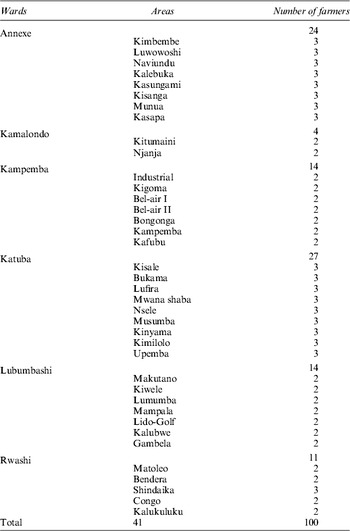
Semi-structured interviews (Walker Reference Walker1985) and observation (Stanley Reference Stanley1969) were used for data collection. Secondary data used included government and non-governmental organization documents, academic papers, Union Minière du Haut-Katanga or GECAMINES archives, books, statistical summaries, internet articles, and maps gathered from libraries. Three criteria were used: the areas and land use for cultivation; the location; and the gender of farmers. A non-probability sampling method was carried out, including snowball and judgement techniques (Warren Reference Warren, Gubrium and Holstein2002). Lubumbashi city was divided into its seven administrative wards, each of which was administratively divided into 41 areas. The area was taken as the reference point for the selection of informants.
Visual assessment revealed that urban agriculture was widespread in 17 of these areas and less visible in 24 others. Thus, three urban households were selected in each of the 17 areas. Fifty-one households were interviewed. The judgement technique was used for the selection of farmers. This technique consisted of choosing one farming household after another by skipping two to three streets, depending on the size of the area. In contrast, only two farming households were selected in each of the 24 areas where agriculture was less visible. Here, 49 households were interviewed. The snowball method was used, which consisted of locating one farmer in one area who subsequently located other farmers through her or his social networks. A total of 100 farming households were thus selected (see Table 1).
Wards and areas in which farmers were selected

Source: Fieldwork, 2004–5.
Semi-structured interviews were used to gather in-depth information and quantitative data. Informants were asked to answer questions related to the practice of cultivation; the in-depth information was used to determine the attitudes, values and meanings held by the respondents with regard to urban farming. The interviews were conducted face to face with farmers living in Lubumbashi. One field assistant was recruited. His first task was to locate the 41 areas of the city. Once there, his second task was to increase the level of confidence of female married farmers towards the researcher. Without his intervention the interviewees might have been reluctant and even suspicious when interviewed in the absence of their husbands.
In-depth questions provided information of a more qualitative nature. These interviews were conducted with farmers as well as with key informants selected from the executives of organizations such as World Vision International Congo, Service d'Appui au Développement Régional Integré (SADRI), the Food and Agriculture Organization (FAO) and the agricultural services at provincial and local levels. A lecturer from the University of Lubumbashi who is closely involved in urban agriculture was also selected. The two non-governmental organizations World Vision and SADRI actively support urban farmers in the city of Lubumbashi, distributing maize seeds and fertilizers. They also organize training sessions and encourage farmers to form agricultural associations or cooperatives in order to increase their productivity.
Use was also made of direct non-participant observation. The observer was Congolese and a Lushois (a longstanding resident of Lubumbashi). Observation included cultivated areas, types of crops cultivated and animals raised, size of farms, sorts of tools used, categories of people involved in food production, and organizations promoting urban cultivation. It also looked at the period of cultivation and the kind of life lived by farmers. Analysis consisted of describing the demographic, socio-economic characteristics of urban farmers in the city of Lubumbashi. Thereafter, factors which led Lubumbashi residents into the practice of cultivation or raising livestock were analysed and categorized. The third focus was on the impact of urban agriculture at the household level. The qualitative data from in-depth questions were transcribed and organized according to broad themes based on findings in urban agriculture literature. SPSS was selected as the appropriate software.
Limitation of the sampling method
A sample of 100 households gave a broad picture of urban farming in Lubumbashi. By selecting farmers in all the seven wards that constituted the city, and in turn subdividing these into the 41 areas, each ward and each area was represented in the sample. As shown by Conway (1967: 129), a stratified sample has the advantage of a smaller sample error. Furthermore, households were selected in each area according to visual assessment. Where urban agriculture was more prevalent, more farmers were selected. However, because the number of farmers in the city was unknown, broad generalizations on the basis of the findings could not be made.
URBAN AGRICULTURE AS SOURCE OF FOOD AND INCOME
Lubumbashi farmers
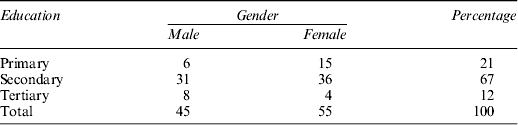
Both women (55) and men (45) practised urban agriculture. The slight predominance of women over men is explained by the fact that women are generally responsible for the household's food provision. Seventy-seven respondents were in the 34–55 age group. Fewer farmers (23) were in the higher age group (older than 55 years). With an average of six children per farming household, 29 households had less than five children, 63 households had between five and eight, and eight households were without children when the interviews were conducted. Besides children, many relatives such as nephews, nieces, parents or grandparents, sisters- and brothers-in-law, and cousins were part of the household. The smallest number of household members was ten.
Urban agriculture in Lubumbashi as we observed it was an activity that included all members of the household. However, it was dominated either by both parents or by a single parent. Even in cases where husband and wife were both involved in food production, women were the main producers. To some extent, children (teenagers) as well as adult relatives (aunts, uncles and nephews) were included. They helped in the preparation of soil, the planting of seeds or the selling of produce. Other members of the household, such as the elderly, were indirectly involved by taking care of children when their parents worked on the farm.
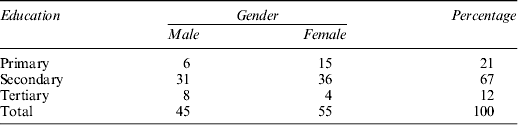
Table 2 depicts urban farmers by education level. Twenty-one farmers completed primary school, 67 farmers reached the secondary level of education, and 12 completed a tertiary level. Among the 67 secondary-school-level respondents, 36 were women and 31 were men. The 12 farmers with tertiary-level backgrounds demonstrated that even well-educated people resorted to agricultural activities rather than entering the industrial sector, which no longer offered employment opportunities. This lack of jobs in the marketplace drove university graduates to undertake income-generating and or survival activities for which they had not been trained.
Distribution of farmers by level of education and gender in the sample of 100 households
Source: Fieldwork, 2004–5.
Areas of cultivation
Land is a central factor in urban food production. However, land in Lubumbashi was not only limited but was primarily designed for development purposes. Developers claimed land to build schools, hospitals and roads, which were considered to have priority over agricultural activities in Congolese cities and towns. However, vacant open spaces in schools, hospitals and the university, alongside the streets, roads, or railways, and under power lines were occupied without any granting of formal tenure. This kind of land occupation became accepted practice. Once this land or space was cultivated, its use engendered respect and acknowledgement by other residents, and prevented encroachment or ‘takeover bids’. These farmers remained vulnerable, however, as city officials could have them removed from their land to clear the way for building development or the widening of roads.
Officially, municipal officials allocated land around Lubumbashi. They tended to favour infrastructure development at the expense of agricultural activities. However, a few ‘rich’ farmers enjoyed tenure on the land they farmed. Officially, land in the peri-urban areas of the city was valued at US$100 per hectare, but was often sold for more than that amount. The majority of Lubumbashi farmers could not afford this price and hence opted for hiring farmland from owners. In return, the farmers were required to pay about US$100 for a period of time not exceeding four years, or they had to give some of their produce to owners during the harvest season.
Farmland in the peri-urban areas diminished every year with infrastructure development. The presence of some mining firms, such as Chemaf and Rwashi Mining in the proximity of Rwashi and Annexe wards, constituted a real threat to the expansion of agricultural activities and further aggravated urban land tenure. The competition for land use coupled with the preference given to non-agricultural activities pushed some farmers to look at alternative options in the surrounding villages. Access to village land was obtained with the permission of the traditional authority or his agronomist, as well as by obtaining tenure from the municipal officials. In the case of permission from the village chief, a farmer was required to make a one-off payment of $50–100 for one hectare, giving him or her access to the land indefinitely. Alternatively, (s)he could make a verbal or written agreement to pay one or two 50 kg bags of maize or beans annually, depending on the type of crop grown, the space cultivated, and the quantity produced at harvest.
Theft of agricultural products constituted another threat to the expansion of urban agriculture. Some farmers hired the services of local security companies, particularly during the harvest period; others moved onto their farms in order to protect their produce. Meanwhile, Lubumbashi expanded in size and in the process absorbed neighbouring villages – Kalebuka, Kabulamenshi, Kikalabwamba and others – which were dominated by agricultural activities.
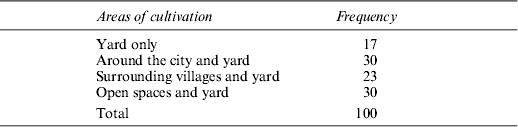
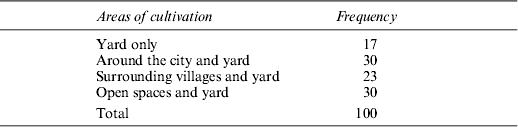
Table 3 shows that 30 per cent of farmers in the sample grew food crops on open spaces, another 30 per cent used land around the city, and 23 per cent cultivated in the surrounding villages. Almost all farmers grew some of their food in backyard gardens. Some urban farmers cultivated two different places simultaneously; in their backyard and at the periphery of the city, in the Annexe ward. This meant that people growing food crops in the Annexe were not necessarily living in this ward, but were attracted there by the fertile and available land.
Spaces under cultivation in and around Lubumbashi (2004–5) by households in the sample
Source: Fieldwork, 2004–5.
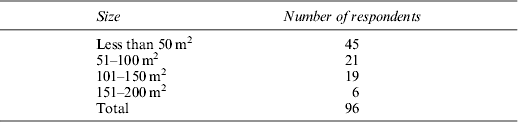
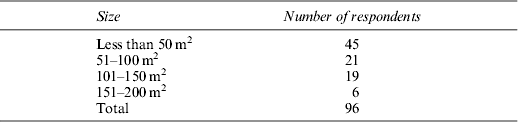
The size of maize farms was determined by the location and the main reason for which they were cultivated. Smaller plots (50–101 square metres) were mainly cultivated for home consumption within the city and bigger plots (more than 150 square metres) were found around and outside the city and used predominantly for commercial purposes (see Table 4).
Dimension of maize farms within and around Lubumbashi, 2004–5
Source: Fieldwork, 2004–5.
Main food crops cultivated and livestock raised
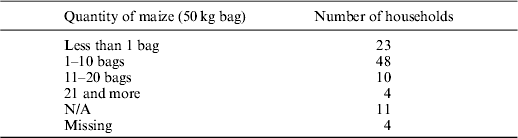
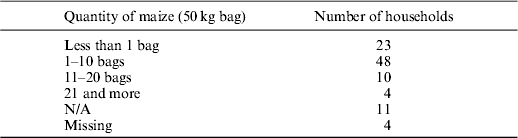
Farmers listed maize, sweet potatoes, beans, groundnuts and vegetables as crops; and sheep, goats, pigs and poultry as livestock. Lubumbashi farmers cultivated these food crops mostly for household consumption but also for commercial purposes. Maize and vegetables were the most cultivated – not unexpectedly, since Lubumbashi residents had maize flour as their staple food. Although vegetables were part of the local diet of residents, they could also constitute a valuable source of income. Most farmers living in Annexe and large parts of Katuba and Rwashi wards cultivated maize primarily for home consumption, but some sold part of their produce (see Table 5). High-income, food-secure households could afford to purchase not only land but also seeds and fertilizers.
Here are two snapshots from our interviewees:
Since GECAMINES is dead, there are no more jobs in the city. Some people are working, but how much are they earning? That is the reason why in 1993 I decided to grow maize crop around Luano Airport. Many of my neighbours were doing so and did not suffer a lot from famine like me. Since then, my maize farm helps me to feed my family. (Interview 37, March 2005)
I started growing maize crop five years ago. I also cultivate sweet potatoes and groundnuts. But I have to admit that my maize farm is what brings me a lot of money. (Interview 13, November 2004)
Quantity of maize produced in 2004 by households in the sample
Source: Fieldwork, 2004–5.
In Lubumbashi as in many other African cities, maize was the most important crop grown (Freeman Reference Freeman1991: 89). A variety of vegetables was cultivated throughout the year, during both the rainy and dry seasons. Vegetables were mainly grown in the backyard. During the rainy season, most urban farmers grew amaranth, marrow and cassava leaves. With small gardens, household consumption was the dominant purpose. The bigger the garden, the more feasible income generation became. During the dry season, Lubumbashi farmers grew cabbage and lettuce as cash crops.
Several farmers grew sweet potatoes in order to mitigate food scarcity, high food prices and food insecurity, especially during the period (from November to May) preceding the harvest season. Sweet potatoes were a valuable cash crop, and were considered by many farmers as a strategic reserve food for lean periods. Groundnuts, however, were grown almost exclusively for income generation. They were sold fresh or dried before being sold. Farmers became vendors themselves on the streets, and at the market; sometimes they were approached directly at their farms by buyers. As one interviewee said:
By selling groundnuts, I am now able to buy soap, salt, vegetable oil, and sometimes to buy food. The demand for groundnuts is growing each year in our city. (Interview 29, January 2005)
Another food crop grown was beans. Beans played a double role in Lubumbashi residents' diet: as a main meal and a condiment. When there was a surplus, beans were sold. Thirty-seven households kept poultry for commercial reasons; a small number of people (eight households) raised pigs (particularly in Kenya ward), sheep and goats. Animals as well as poultry were kept in the house. During our visits to farming households, at least one fruit tree in almost every yard was seen. Mango trees were the most often cultivated, followed by avocado trees.
THREE CASE STUDIES: THE KILAMBE, NGOY AND KADONY HOUSEHOLDS
The Kilambe household
The Kilambe household (the names are pseudonyms) represented 20 per cent of the selected households. Households falling into the Kilambe category were those who practised urban agriculture primarily for food production, but in some cases income generation too. They acknowledged that what was produced, particularly maize meal, was not enough to feed all household members at all times.
Kashika Kilambe has lived in the city of Lubumbashi since 1970. The 55 year-old-married woman has seven children, two of whom are already married and have moved out. Two of her husband's nephews and her own sisters lived with them.
Her husband worked at Taba-Congo, but had been retrenched in 1999. She then became the main food producer and breadwinner of the family. Kilambe's reasons for engagement in food production were representative of many others:
I decided to grow vegetables in the back of our yard in 1993. There was food shortage in the city, particularly maize flour. The scarcity of maize flour was coupled with the scarcity of money because of the monetary reform, which occurred that year. It became tough to feed our big family. I undertook to grow vegetables in the backyard to get fresh vegetables (sweet potato leaves and amaranth, marrow leaves) and I even sold part of my vegetables.
The farming of vegetables in the backyard permitted the household to reduce the severity of food insecurity and, at the same time, reduced expenditure on foodstuffs. Urban agriculture remained for this household a secondary source of food as long as Kilambe's husband was still working at Taba-Congo. From 1999, when Kilambe's husband lost his job, urban agriculture became the principal source of food for the household. Experience gained in the backyard garden helped Kilambe to grow a maize crop at the outskirts of the city.
A friend of mine who was growing a maize crop along Lubumbashi-Kipushi road encouraged me to start growing maize. I decided to do so. My experience in growing vegetables in the backyard was helpful for the growing of maize. The first year I produced only three (50 kg) bags of maize. The following year (2001), with the help of my husband and children, the production tripled. I realized nine bags. Now I am able to produce twelve bags of maize.
Thus what started as a survival activity (in the backyard) became a viable economic activity which produced not only food but also income, and therefore involved more members of the household (husband and children). Also, as more space was needed for the extension of agricultural activities, she got it from her friend and paid her US$50. While the main objective remained feeding the household members, the quantity of maize produced allowed Kilambe to sell part of her produce.
Of twelve bags of maize produced annually, the family consumed eight bags and the other four were sold in order to generate an income which helped to meet the rest of the family's needs. It is not enough but it is much better than nothing. My family members can afford two maize meals a day.
Even though the farming of maize brought many benefits in terms of food and money, the Kilambe household did not abandon cultivating vegetables. Rather, the household rotated different types of vegetables – such as amaranth, cassava, marrow, sweet potato leaves and cabbages. Rotation of crops allowed poor households to get a diversity of food throughout the year and reduced the risks of relying on a single crop.
As you can see, I grow maize along Kipushi road and vegetables in the backyard. In the rainy season I grow amaranth, sweet potato, marrow and cassava leaves and in the dry season I cultivate cabbages.
Expenditures on foodstuffs were drastically reduced and any surplus money from food selling was allocated to other needs of the household.
My family no longer buys maize flour and vegetables on the market. Sometimes I don't know how much they cost on the market.
Even though Kilambe recognized that her maize farm supplied essential food for the household, this was not enough to feed every member of the household at all times. Instead of three meals per day (breakfast, lunch and dinner), for example, Kilambe household members got two meals a day.
I wish to feed my children with three maize meals a day. But right now I can only afford two meals a day. You may be surprised if I tell you that my children eat meat, potatoes and rice only when there is a special event in the family, for example Christmas.
In summary, the Kilambe household grew food crops as a strategy to fight against hunger. In order to increase production, the household incorporated all members and diversified and rotated crops. Food production in Kilambe household reduced expenditure on foodstuffs, even though what was produced was not yet enough to cover all household needs. Though the Kilambe household remained fragile, the practice of urban agriculture brought a certain stability in term of food security.
The Ngoy household
The Ngoy household represented the majority of farming households interviewed (75 per cent), for whom urban agriculture was a secondary activity. Therefore, food production became a supplement to the low income earned by the household. Married and the father of six children, the 49-year-old man was employed at a Chinese store at the time of interview. At the market his wife (Kakazi Ngoy) sold vegetables grown in their backyard garden. Earning US$15 per month, Ngoy was unable to feed his family:
I earn FC7500 (US$15) per month. I have rent to pay. My two bedrooms cost me FC2500 (US$5) every month. I cannot supply enough food to my family members. The rest of the money, I mean FC5000 (US$10), can afford only five maize meals for my family – that is, one meal a day.
Low household income was one of the reasons given by urban poor people for their engagement in food production. To supplement their low salary and to reduce the severity of economic crisis, in 1993 Ngoy encouraged his wife to use the available land surrounding their yard to grow vegetables.
Our yard does not have enough space to grow vegetables. But in front of our yard, there was a small vacant land. So, I asked my wife to use it for the growing of some vegetables. Our neighbours have been doing so for a long time. She accepted because it was the only way to survive.
It was apparent that low-income households utilized any available land in the city to produce food. Since vegetables were grown around the yard, the Ngoy household no longer bought vegetables. By contrast, instead of buying bitoyo (local salted fish) and ndakala (small fish) as the main condiment in the household, the Ngoy household adopted vegetables as the main condiment. By replacing fish with vegetables, the Ngoy household's status actually declined in terms of the local cultural context, in which vegetables were consumed as an accompaniment rather than as the main condiment (Petit Reference Petit2002).
Bitoyo and ndakala have become a luxury. Therefore, the family eats more vegetables than fish as condiment. My family eats local fish (bitoyo and ndakala) two to three times a week.
By alternating the growing of different vegetables throughout the year, farming households aimed to secure their members from a meagre harvest of any one crop due to climate change or other risk factors. Ngoy explained how his wife alternates the growing of vegetables in the same garden:
My wife grows amaranth, sweet potato leaves and marrow leaves in the rainy season, primarily for home consumption, but those (cabbages) grown in the dry season are primarily sold, even though the family consumes part of the produce.
The Ngoy household, like many other households in this category, was self-sufficient in vegetables. They were sure to cultivate different kinds of vegetables. When there was a surplus of production, the surplus was sold.
My wife sells vegetables on the market. Sometimes people come to our house to buy vegetables. When she sells well, the family can afford two maize meals a day. Generally, we eat once a day.
The growing of vegetables or their sale did not solve the problem of malnutrition. Instead of sleeping on empty stomachs, urban farming allowed poor household members to get one or two more meals a day. Despite the contribution of vegetables to the household's diet, Ngoy acknowledged that his household's living conditions were not yet adequate. He recalled the time when he was working at GECAMINES. He used to receive free maize flour, oil, sugar, salt, fish, meat, and other food from his employer.
It is true that our garden helps us to get vegetables that we could not afford on the market. We also reduce our expenditures on food as we produce our essential condiments ourselves, but we still buy maize flour. Maize flour is very expensive (US$40 a 50 kg bag). It costs more than my salary (US$15). But when I was working at GECAMINES, my family was able to get three meals a day; fish and meat did not lack.
The Ngoy household considered meat as a meal that only rich people could afford. Chicken was eaten at special occasions such as birthday parties or weddings. By limiting some foods in their diet or reducing the number of meals per day, households in this category simply survived – rather than stabilizing or sustaining their living conditions.
Today although my wife grows vegetables and sells on the market, the family is still not able to buy meat and chicken. For example, we eat chicken when there is a special event such as a wedding. Actually, only rich people can afford meat.
Thus households in the Ngoy category undertook agricultural activities to supplement their low income by the use of various strategies such as reducing expenditure on food, reducing the quantity and quality of meals, restructuring to compensate for the absence of meat, potatoes and rice, but increasing the number of meals during the harvest period – all very much as a way of surviving.
The Kadony household
The Kadony household, which represented only 5 per cent of the sample, was an example of the very rare farming households primarily engaged in farming for commercial reasons. The practice of cultivation started in the city and later extended into the rural areas. In term of poverty eradication, this household was a success story.
The 55-year-old man we interviewed was a senior lecturer at the University of Lubumbashi. Married and father of several children, Kadony engaged in the growing of maize, groundnuts, cabbages, onions and sweet potatoes for several reasons: to supplement his low salary, to supply food to his household, and to finance his doctoral research.
I have been cultivating since 1989. I started growing maize and later on groundnuts for home consumption. In 1989, I produced eight bags of maize.
Considering the high level of profitability of groundnuts, Kadony decided to increase production of this crop. The result was far above his expectations.
In 1992 and 1993, I produced 60 bags of groundnuts. After the selling, I was able to buy a return air ticket (Lubumbashi–Kinshasa) to meet with my supervisor for the follow-up on my thesis. I was in need of it. The purchase of a return air ticket and my stay in Kinshasa cost almost $US2,000. My salary at that time was tenfold less.
After the academic issue was solved, Kadony decided to buy a second-hand car which he transformed into a taxi. The US$3,000 used to buy the car came from the sale of groundnuts. Since then, the household has not experienced food shortage.
Among the three sources of household expenditure described by Friedmann (Reference Friedmann1992) in his model of the household economy, the buying of a car is considered a durable investment even though it is not directly utilized for commercial use. In the event of a cash crisis, the car might be sold to help the household to move out of the crisis. The acquisition of a second-hand car certainly increased the social status of the Kadony household.
In 1998, I bought a second-hand car for commercial purposes. It cost US$3,000. Since then, my salary has become a secondary source of income in the household. It may be paid or not – I always have enough food to feed my household members and enough money to cover other household needs.
By buying a second car, also for commercial purposes, the Kadony household increased the productivity of its farms by expanding activities and hiring workers.
Thus the food-secure Kadony household showed clearly that urban agriculture can move people out of poverty, and more importantly that this activity can become a sustainable livelihood strategy. However, very few households could be included in the Kadony category. Since then, there has been no stopping senior lecturer Kadony. The household has expanded its agricultural activities outside the city, and cassava and beans have been added to the crops under cultivation.
I have added cassava and beans for household consumption. As I produce more and more maize, I have expanded my agricultural activities outside the city. I am planning to keep animals and fish, and if possible to plant fruit trees. The provincial minister of agriculture is ready to grant me 10,000 hectares of land if I pay US$500,000. I am convinced that if I get that piece of land my future is definitely in agriculture.
It is clear that the sustainability of urban agriculture is mostly dependent on the availability of land to sustain the present expansion, and also on material and financial support from government and non-governmental organizations. In Petit and Mutambwa's terms (2005: 479), the Kadony household can be classified in the category of those rare Lushois who, through the practice of cultivation, recovered from poverty or food insecurity (anafufuka) and ended up as a ‘boss’ (ngwefu) of food production.
HOUSEHOLD STRATEGIES IN RESPONSE TO FOOD INSECURITY
Households responded to food insecurity in ways that varied from incorporating household members into food production to reducing the quantity and quality of meals. Diversification of strategies was the key to reducing the impact of the crisis. The household was simultaneously a unit of consumption and a unit of production. Kilambe recognized, for example, that the involvement of her husband and children was helpful in tripling maize production from three 50 kg bags in 2000 to nine bags in 2001. The increase allowed the household members to consume two maize meals a day – and the Kilambe household no longer spent money on maize flour.
In order to expand their activities, households often moved between their backyards and land on the periphery of the city, or used land in the surrounding villages. The more space they cultivated, the more they could hope to produce. All the households interviewed preferred the diversification of crops on their farms or gardens. Two or three crops were grown on one plot. Maize was often the main crop, but was often grown with beans, vegetables or groundnuts. Urban farmers practised a rotation system. In the rainy season, for example, households grew vegetables such as amaranth, beans, cassava leaves and sweet potato leaves, while in the dry season cabbages were preferred.
Some food crops were cultivated for specific goals. A crop like groundnuts was specifically grown for commercial reasons, whatever the quantity produced. By contrast, vegetables were primarily grown for home consumption, but could also be sold. Maize was produced for both reasons. Sweet potatoes played a major role in Lubumbashi residents’ diet during the period of food shortage. The period before the next harvest (from November to May) was generally characterized by a scarcity of foods in the city, accompanied by high food prices.
On the nutritional level, the number of maize meals consumed depended on the availability of food in the household. Because of the availability of food during harvest time, households were able to eat two to three maize meals a day. Three or four months later, only one maize meal was affordable by the majority of the households interviewed. When the household could not afford more than one meal a day, they would often eat it late in the night (around 10 p.m.). This gave the household members the feeling that they had eaten for two days at the same time: the end of one day and the beginning of the next (Petit Reference Petit2002). This also meant that household members might wake up with enough energy to start the new day. Sometimes maize meal was substituted by sweet potatoes and beans.
The predominance of vegetables in Lubumbashi residents’ diet – as the principal accompaniment or condiment – was another strategy used to reduce the impact of food shortage and high food prices in the household. Some foods (meat, fish, chips and omelette) were eaten at special events (weddings and birthday parties). Abstaining from such foods at normal times allowed poor households to survive.
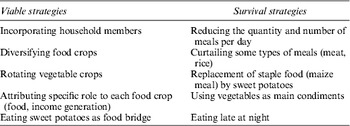
While some household strategies were viable and therefore sustainable (incorporating all household members, diversifying crops), others were merely survival measures (food reduction, replacement of maize meal by other kinds of meals such as beans and sweet potatoes, and the predominance of vegetables as the main meal). Table 6 summarizes the emergent viable and survival strategies used by Lubumbashi farmers.
Summary of household strategies in response to food insecurity

Source: Fieldwork, 2004–5.
TYPOLOGY OF URBAN AGRICULTURE
The urban agriculture literature began as a survival discourse. Only the poor were considered as farmers in urban areas. However, the involvement of middle-and high-income households in urban food production suggested that another type of urban farming was being practised (Sawio Reference Sawio, Egziabeher, Lee-Smith, Maxwell, Memon, Mougeot and Sawio1994; May and Roger Reference May and Roger1995; Mbiba Reference Mbiba1995; Webb Reference Webb1996; Hovorka Reference Hovorka2004). Since this was recognized, a binary conception of urban agriculture has been developed.
Survival urban agriculture
Aspects of survival urban agriculture include (1) its origins (economic crisis); (2) the segments of individuals and households involved in it (urban poor with female dominance); (3) its purpose (home consumption); (4) types of crops grown and livestock raised (food crops); and (5) size of plots (small-scale). The economic decline in the majority of developing countries, especially in the Southern African countries, is taken as a precondition for the emergence and expansion of urban agriculture (Drescher et al. Reference Drescher, Hagmann and Chuma1999; Nugent Reference Nugent, Bakker, Dubbeling, Guendel, Sabel Koschella and de Zeeuw2000). As a reaction to the economic decline, urban people grow food crops, raise livestock, plant fruit trees, and use open spaces all over the city, as a strategy of survival.
About 82 per cent of the farmers studied here began urban farming in the 1990s, and only 14 per cent had already started doing so in the 1970s. Each period corresponded to a specific economic crisis in the DRC. The 1970s corresponded to the rise of oil prices, which coincided with the fall in copper prices. This was followed by the closure of the Benguela railroad linking Angola to DRC and the invasions of the Katanga Province which disrupted copper mining production in 1977–8. The 1970s were followed in the 1980s by the implementation of the structural adjustment policies imposed by the International Monetary Fund and the World Bank. The 1990s, on the other hand, were characterized by a devastating economic crisis with the collapse of GECAMINES. We have seen that, as a consequence, several firms depending on GECAMINES closed, with thousands of people left unemployed. About 54 per cent of retrenched GECAMINES workers envisaged agriculture as their substitute.
Entrepreneurial urban agriculture
The major characteristics of entrepreneurial urban farming include the engagement of the middle- and high-income groups, income generation as a main objective, and plots much bigger than those practised in survival urban farming. Farmers in this category may hire an accessible, available and willing labour force; have access to good agricultural inputs, technical advice and credit, and be able to afford the cost of land. Consequently, the entrepreneurial urban farmers produce more than is needed for their own consumption.
Nine per cent of farmers in the sample lived in the residential areas of the city, which shows that Lubumbashi farmers were not all poor. Their income of more than US$50 and up to US$2,000 a month confirmed their relatively secure socio-economic status. These people used their additional resources to invest in farming to make more money rather than to obtain food. The majority of these farmers practised their activities on land of more than 150 square metres, particularly in peri-urban areas of the city or in the surrounding villages.
The traditional binary categorization of urban agriculture into the ‘survival’ and ‘entrepreneurial’ types poses problems when some characteristics of the former are found in the latter, and vice versa. For this reason and others, we believe a third type of urban agriculture exists, which we have termed ‘survival–entrepreneurial urban agriculture’.
Survival–entrepreneurial urban agriculture
The survival–entrepreneurial urban agriculture is an intermediary type of urban agriculture and reflects some characteristics of both modes. For instance, an urban farmer may cultivate a yard garden for home consumption and at the same time keep chickens for income generation. The number of people in the sample involved in food production for both home consumption and income generation (60 per cent) was sufficiently large to contradict a binary conception of urban agriculture. Groundnuts, for example, were grown for commercial reasons regardless of the farmer's socio-economic category. Also, the 37 farmers who kept chickens for income generation were not all from the middle- or high-income households.
Farmers' requests for more inputs and seeds from SADRI, World Vision International (WVI) and the FAO provided a clear indication that many of the so-called survival farmers were also involved in entrepreneurial urban agricultural activities. Given the level of poverty of the majority of people involved in food production, SADRI, WVI and FAO distributed tools such as hoes, watering cans, and pangas as well as seeds and fertilizers (NPK and urea), but in limited quantities. In 2002–3, for example, SADRI also distributed 220 tons of food to 2,250 farming households to encourage them in their actions. During the same period, WVI (Kampemba Area Development Programme) allocated agricultural credits to 475 households in the form of maize seeds and fertilizers. With an average of eight people per household, SADRI and WVI supported a total of 21,650 people in 2002–3. Both NGOs and the FAO requested farmers to be organized into farming development associations which made for easier follow-up.
There was a tendency amongst urban farmers to move from intra-urban agriculture to peri-urban agriculture in order to produce larger crops for both home consumption and income generation. It is worth noting that Bruneau and Bukome (Reference Bruneau and Bukome1987) and many other social researchers selected only garden farmers in their survey. They thus failed to recognize the existence of other categories of urban farmers.
CONCLUSION
Urban agriculture within and around the city of Lubumbashi constituted an alternative strategy for individuals and households seeking to alleviate their poverty. It supplied food while also generating income to individuals and households.
While urban agriculture was considered a financial success for the ‘Kadony type’ household (representing 5 per cent of the sample), which was able to become a food-secure household, this activity was seen as a survival strategy for the ‘Ngoy’ household (75 per cent of the sample) under prevailing living conditions. For the ‘Kilambe’ household (20 per cent of the sample), urban agriculture succeeded in stabilizing this group without raising it from poverty. Looking to the future, this household type could improve its status by addressing some internal and external stresses and shocks more effectively, with better institutional support.
Despite the FAO's estimate that the fast-increasing number of hungry people in the world passed the one billion mark in 2009, this article has demonstrated that urban agriculture can feed people and households. For urban agriculture to become an alternative to copper and cobalt in Lubumbashi, however, two basic conditions must be met: access to land, and to financial, technical and material support from the state and non-governmental organizations are crucially needed.
ACKNOWLEDGEMENTS
We are very grateful to the Faculties of Humanities and Health Sciences of the University of the Witwatersrand, Johannesburg who funded this research. We would also like to thank the reviewers of Africa for their insightful suggestions.