

Introduction
It has been estimated that about 18.1 million people suffer from cancer while almost 9.6 million of them have died of cancer in 2018 (Ref. Reference Bray1). Although various factors are involved in cancer incidence, recently, it has been revealed that non-coding RNAs (ncRNAs) are important factors in cancer prevalence (Ref. Reference Liu2). NcRNAs can be categorised into housekeeping and regulatory RNAs based on their functions (Ref. Reference Huang3). Also, regulatory RNAs can be sub-grouped into small ncRNA and long ncRNA (lncRNA) according to transcript size (Ref. Reference Huang3). lncRNAs have a length larger than 200 nucleotides and are thought to be unable to encode proteins (Refs Reference Chi4, Reference Hosseini5). Recent studies, however, have shown that some lncRNAs can encode small peptides or small proteins (Refs Reference Ji6–Reference Zhou8).
lncRNAs regulate gene transcription through three main mechanisms (Ref. Reference Bhat9). Firstly, lncRNAs act as chromatin regulators; in this pathway, lncRNAs often function as important cis- and trans-acting modulators for the expression of protein-coding genes (Ref. Reference Mao10). Furthermore, they can mediate epigenetic modification by recruiting chromatin remodelling complex to a specific chromatin locus (Ref. Reference Fejes-Toth11). Secondly, lncRNAs are also involved in transcriptional regulation; where they act as cofactors to modify the activity of transcription factors (Ref. Reference Zhao12). Various developmental genes are regulated in a similar fashion by transcribing the enhancers in the cells in which they are active (Ref. Reference Zhao12). lncRNAs can modify RNA polymerase II activity by interplaying with the initiation complex to steer the promoter (Ref. Reference Sado, Hoki and Sasaki13). For example, lncRNA dihydrofolate reductase (DHFR) forms a triplex structure with the major promoter of DHFR, inhibiting the binding of the transcriptional cofactor transcription initiation factor IID (TAFII31) (Refs Reference Blume14, Reference Martianov15). In addition, lncRNAs may affect global changes by interacting with some basic components of the RNA polymerase II-dependent transcription machinery (Ref. Reference Sado, Hoki and Sasaki13). Lastly, post-transcriptional regulation; the ability of lncRNAs to identify complementary sequences allows some specific interactions capable of regulating post-transcriptional processing of mRNAs like capping, splicing, editing, transport, translation, degradation, and stability at various control sites (Ref. Reference He16).
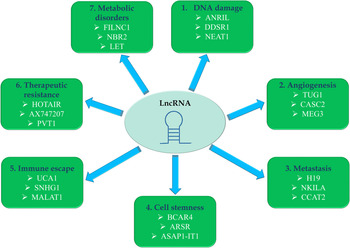
Basically, cancer is a genetic disease in which genetic changes lead to aberrant gene expression (Ref. Reference Jin17). lncRNAs play critical roles in several cancer-related cellular biological processes such as cell proliferation, apoptosis, migration, invasion and tumorigenesis (Refs Reference Wapinski and Chang18, Reference Clark and Mattick19). Many lncRNAs have been shown to be expressed aberrantly in several cancers and play key regulatory roles in cancer, including oncogenic and tumour suppressor (Ref. Reference Jin17). Furthermore, the oncogenic and tumour suppressor roles of lncRNAs include many biological processes such as DNA damage, angiogenesis, metastasis, cell stemness, immune escape, therapeutic resistance, and metabolic disorders (Fig. 1) (Ref. Reference Jin17).
The roles of lncRNAs in cancer (Ref. Reference Jin17). In the figure are schematically shown the functions of the oncogenic and tumour suppressor of lncRNAs include many biological processes such as DNA damage, angiogenesis, metastasis, cell stemness, immune escape, therapeutic resistance, and metabolic disorders. lncRNAs, long non-coding RNAs.

Identification and characterisation of the detailed lncRNAs involved in the initiation and progression of different types of cancers would be extremely beneficial for cancer diagnosis and therapy (Ref. Reference Arun, Diermeier and Spector20). Changes in expression of various lncRNAs were described to occur in different cancers, with lncRNAs being nowadays regarded as taking part in tumorigenesis and cancer development (Refs Reference Lu21, Reference Martens-Uzunova22). Given that lncRNAs can be easily detected from the body fluid by reverse transcription-polymerase chain reaction (RT-PCR), they can be utilised as appropriate diagnostic biomarkers to cancer diseases (Ref. Reference Yang, Lu and Yuan23). A number of lncRNAs are significantly up-regulated or down-regulated in different cancers (Ref. Reference Zhang24). In this study, the authors focused on collecting data on one important functional lncRNA (DLX6-AS1) that is usually found to be up-regulated in various cancers (Ref. Reference Zhang24).
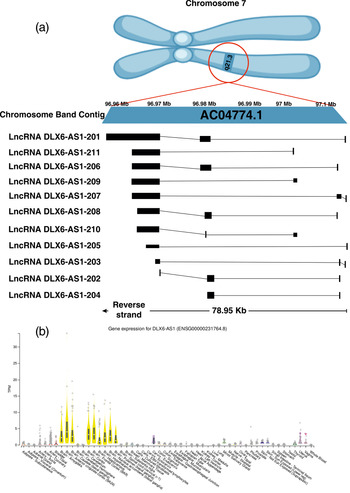
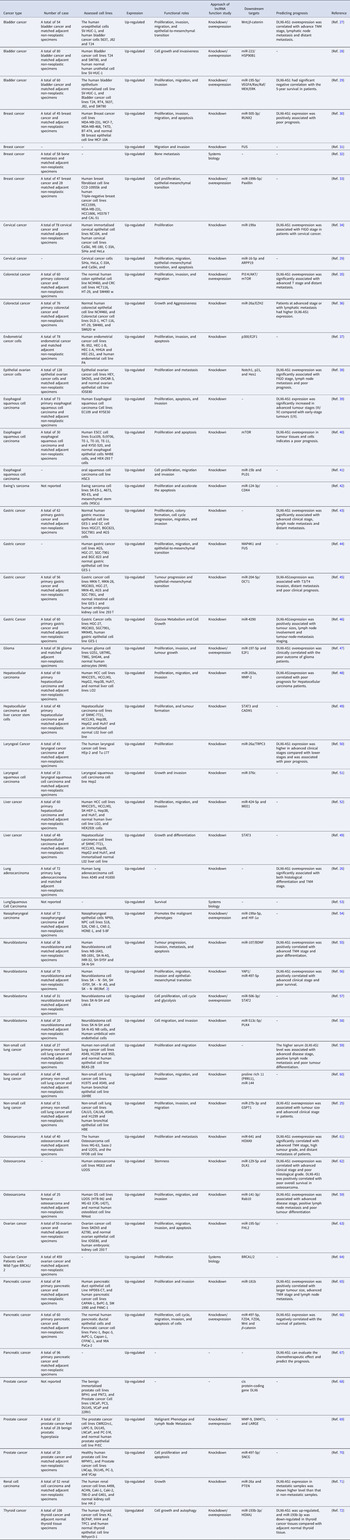
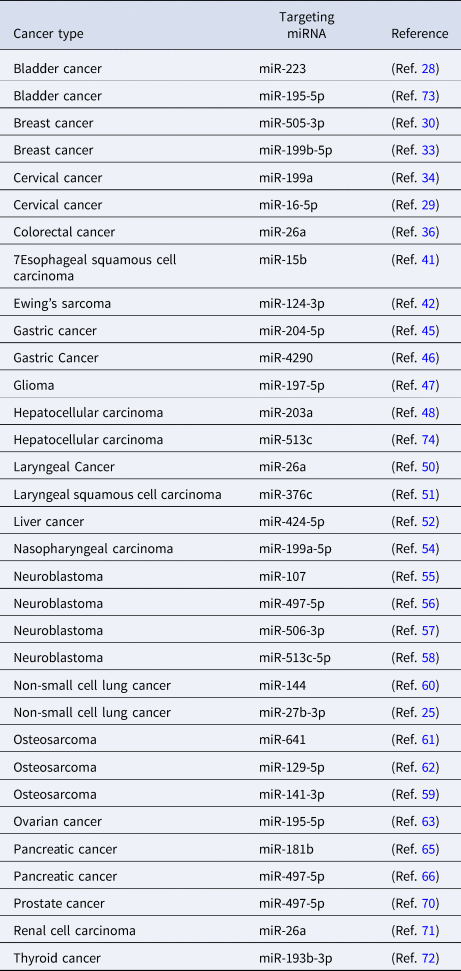
DLX6-AS1 with gene ID number NONHSAG048270.3 in the NONCODE databases (http://www.noncode.org) is located on human chromosomal region 7q21.3 (Fig. 2a) and the change of its expression induces different cancers. The start site and end site are 96955140 and 97014065 respectively, and its sequence length is 15364 nucleotides (Refs Reference Sun25, Reference Li26). Also, DLX6-AS1 gene expression in the Genotype-Tissue Expression (GTEx) database (https://www.gtexportal.org) is demonstrated in 54 tissues (Fig. 2b). According to information provided by the Ensembl database (http://www.ensembl.org/Homo_sapiens/Gene/Summary?g=ENSG00000231764;r=7:96955141-97014088), as of September 2020, DLX6-AS1 gene has 11 transcripts. DLX6-AS1 has different roles in cancer progression (i.e., tumour cell proliferation, growth, migration, epithelial-mesenchymal transition (EMT), invasion, aggressiveness and etc.) in different cancer types (Tables 1 and 2). Herein, it is our purpose to provide a concise review on current evidence associated with the role of DLX6-AS1 in different cancers, by firstly discussing the abnormal expression of this lncRNA in patient samples, followed by the description of its molecular mechanism of action and overall impact on signalling pathways leading to cancer development and progression.
DLX6-AS1 lncRNA genomic information. (a) an illustrated figure displaying DLX6-AS1 transcript information in humans. (b) a GTEx screenshot displaying DLX6-AS1 expression analysis in different cancers (https://www.gtexportal.org).

Functional characterisations of DLX6-AS1 in multiple human cancers

DLX6-AS1 as a competing endogenous RNA (CeRNA) for miRNAs in multiple human cancers

The effect of DLX6-AS1 on digestive system cancers
Esophageal squamous cell carcinoma (ESCC)
ESCC is a fatal malignancy. Despite various treatments, the prognosis of ESCC is still poor. (Ref. Reference Gertler75). A recent study revealed that DLX6-AS1 expression is up-regulated in ESCC compared to normal cells and is positively associated with differentiation grade and metastatic stage (Ref. Reference Wang39). Furthermore, it was reported that upregulated DLX6-AS1 expression was occurred in both ESCC tissue and cells and could be regarded as a poor prognosis in ESCC (Ref. Reference Tian40). Based on the mentioned evidence, DLX6-AS1 may affect metastasis and the growth of ESCC (Ref. Reference Wang39). It was validated that DLX6-AS1 could be influenced as a reliable biomarker for the diagnosis and treatment of ESCC (Ref. Reference Zhang76).
Gastric cancer (GC)
The expression of DLX6-AS1 was up-regulated in GC cells in advanced clinical stages where DLX6-AS1 can promote cancer cell proliferation as an oncogene (Ref. Reference Fu43). The silencing of DLX6-AS1 can suppress mitogen-activated protein kinase kinase kinase kinase 1 (MAP4K1) by regulating FUS RNA binding protein (FUS) expression and thus inhibiting GC cell proliferation (Ref. Reference Wu44). Qian et al. (Ref. Reference Qian46) reported that DLX6-AS1 was overexpressed in GC tissues and cell lines and it modulates glucose metabolism and cell growth in GC by targeting miR-4290 (Ref. Reference Qian46). miR-4290 was confirmed as a downstream target of DLX6-AS1, and their expression levels were inversely correlated (Ref. Reference Qian46). In their study, the suppressed GC cell malignancy upon DLX6-AS1 knockdown could be prominently reversed by 3-phosphoinositide-dependent protein kinase 1 (PDK1) overexpression (Ref. Reference Qian46). In a mouse xenograft model inoculated with GC cells the knockdown of DLX6-AS1 significantly delayed the tumour growth (Ref. Reference Qian46). Also, DLX6-AS1 might increase cell proliferation through DLX6-AS1/miR-204-5p/ organic cation transporter 1 (OCT1) pathway in GC (Ref. Reference Liang45). In the light of the available evidence, it can be suggested that DLX6-AS1 can be a crucial agent for the growth and proliferation of GC (Refs Reference Wu44, Reference Liang45).
Colorectal cancer (CRC)
DLX6-AS1 can promote the proliferation and migration of CRC cells. Zhang et al. (Refs Reference Zhang35, Reference Zhang55, Reference Zhang59, Reference Zhang61) reported that DLX6-AS1 was highly expressed in CRC with up-regulation of phosphoinositide 3-kinase (PI3 K)/AKT/mammalian target of rapamycin (mTOR) protein levels, and higher DLX6-AS1 expression was associated with both CRC proliferation and progression (Ref. Reference Zhang35). Kong et al. (Ref. Reference Kong36) showed that CRC patients at advanced stage or with lymphatic metastasis had higher DLX6-AS1 expression (Ref. Reference Kong36). One of the mechanisms was the regulation of the growth and aggressiveness of CRC cells via mediating miR-26a and a significant negative correlation between DLX6-AS1 and miR-26a was observed (Ref. Reference Kong36). It was found that, miR-26a is a tumour suppressor gene, and can inhibit the malignant biological features of CRC cells (Ref. Reference Kong36). Furthermore, with transfection of DLX6-AS1 siRNA, the growth and metastasis of CRC cells were suppressed (Ref. Reference Kong36). According to the previous data, DLX6-AS1 has a critical function in colorectal cell proliferation and migration (Refs Reference Zhang35, Reference Kong36).
Hepatocellular carcinoma (HCC)
HCC have rapid progress and metastasis so it shows poor clinical characteristics (Ref. Reference Chen77). Recent studies indicated that DLX6-AS1 has an up-regulated expression in HCC (Refs Reference Zhang48, Reference Li52). It was identified that DLX6-AS1 stimulates liver cancer via enhancing the WEE1 kinase expression by an effect on miR-424-5p (Ref. Reference Li52). Additionally, DLX6-AS1 promotes HCC carcinogenesis through the regulation of miR-203a/ matrix metalloproteinase-2 (MMP-2) pathway (Ref. Reference Zhang48). Furthermore, DLX6-AS1 induces liver cancer tumorigenesis by modulating the signal transducer and activator of transcription 3 (STAT3) signalling pathway through hypo-methylation of the cell adhesion molecule 1 (CADM1) promoter (Ref. Reference Wu49). In addition, an in vivo study conducted by Liu et al. (Refs Reference Liu2, Reference Liu32, Reference Liu50, Reference Liu74) reported that DLX6-AS1 triggered the invasion, and migration of HCC via a mechanistic regulation among miR-513c, cullin 4A (Cul4A), and annexin A10 (ANXA10). Thus, the knockout of lncRNA DLX6-AS1 hindered miR-513c-mediated Cul4A suppression and eventually enhanced the ubiquitination-dependent degradation of ANXA10, thereby inhibiting the incidence and progress of HCC (Ref. Reference Liu74). Thus, DLX6-AS1 can be used as a potential biomarker in this cancer (Refs Reference Zhang48, Reference Wu49, Reference Li52, Reference Junyu78). Additionally, an in vivo experiment conducted by Wang et al. (Ref. Reference Wang79) demonstrated that exosomal DLX6-AS1 regulates C-X-C motif chemokine ligand 17 (CXCL17) in HCC via competitively binding to miR-15a-5p to stimulate M2 macrophage polarisation, thus inducing HCC invasion, migration, and EMT (Ref. Reference Wang79).
Pancreatic cancer
Because of the difficulty in diagnosing pancreatic cancer in its early stages, this cancer has a poor prognosis with a 5-year survival rate (Ref. Reference Rawla, Sunkara and Gaduputi80). Recent studies revealed that DLX6-AS1 is expressed at high levels in several cancers such as pancreatic cancer, and it is involved in tumorigenesis and metastasis (Refs Reference An65, Reference Yang66). A study has shown that high expression of DLX6-AS1 was positively correlated with larger tumour size, advanced tumour/node/metastasis (TNM) stage and lymph node metastasis, where its knockdown dramatically impaired cancer cell proliferation, migration and invasion in pancreatic cancer (Ref. Reference An65). Furthermore, the knockdown of miR-181b as the downstream target of DLX6-AS1, reversed the suppression of cell viability, migration and invasion abilities caused by DLX6-AS1 knockdown (Ref. Reference An65). In addition, DLX6-AS1/miR-497-5p/ Frizzled Class Receptor 4 (FZD4)/ Frizzled Class Receptor 6 (FZD6)/Wnt/β-catenin signalling pathway is involved in the development of pancreatic cancer, and DLX6-AS1 may be used as a biomarker in pancreatic cancer diagnosis and treatment (Ref. Reference Yang66).
The effect of DLX6-AS1 on respiratory system cancers
Lung cancer
It has been described that expression levels of DLX6-AS1 were significantly increased in lung cancer and this high expression related to differential stages of the disease (Ref. Reference Li26). Huang et al. (Ref. Reference Huang60) showed that DLX6-AS1 induces cell proliferation and invasion while inhibits apoptosis through regulating miR-144 and up-regulation of PRR11 in non-small cell lung cancer (NSCLC) (Ref. Reference Huang60). Besides, the levels of lncRNA DLX6-AS1 as a carcinogenic marker was increased in NSCLC cells and it promoted the growth, migration and invasion of NSCLC cells in vivo and in vitro (Ref. Reference Sun25). Furthermore, Zhang et al. (Refs Reference Zhang35, Reference Zhang55, Reference Zhang59, Reference Zhang61) demonstrated that DLX6-AS1 is a potential diagnostic biomarker for NSCLC. In their study, the expression levels of DLX6-AS1 were significantly increased in tumour tissues and NSCLC cell lines compared to adjacent normal tissues and normal cell lines, respectively (Ref. Reference Zhang59). Moreover, serum DLX6-AS1 level was significantly higher in patients with NSCLC compared to healthy controls (Ref. Reference Zhang59). Another study showed that DLX6-AS1 promotes NSCLC progression by targeting the miR-27b-3p/ G1 to S phase transition 1 (GSPT1) axis, and its knockdown played a positive role in NSCLC treatment in vivo (Ref. Reference Sun25). Taken together, DLX6-AS1 may play an important role in the proliferation and invasion of lung cancer, and targeting it using biological molecules could be one of the strategies for lung cancer treatment.
Nasopharyngeal carcinoma (NPC)
In a study by Yang et al. (Refs Reference Yang, Lu and Yuan23, Reference Yang51, Reference Yang54, Reference Yang66), the expression of lncRNA DLX6-AS1 was up-regulated in NPC tissues and cells (Ref. Reference Yang54). The proliferation, migration, and invasion of NPC were enhanced by overexpression of DLX6-AS1 but inhibited by DLX6-AS1 knockdown (Ref. Reference Yang54). Furthermore, DLX6-AS1 can act as a competing endogenous RNA (ceRNA) to regulate miR-199a-5p expression and, thereby increasing hypoxia-inducible factor 1-alpha (HIF-1α) expression as a direct target of miR-199a-5p (Ref. Reference Yang54). HIF-1α expression is notably increased in the hypoxic microenvironment of solid tumours, facilitating tumour cell proliferation and metastasis (Ref. Reference Yang54). Increased expression of HIF-1α in tumour tissues may be related to the up-regulation of DLX6-AS1 and thereby inhibiting miR-199a/b-5p expression, indicating a relationship between non-coding RNAs and the tumour microenvironment (Ref. Reference Yang54).
Laryngeal squamous cell carcinoma (LSCC)
LSCC is the second most common neck and head malignancy (Ref. Reference Steuer81). Although LSCC in the early stages can be successfully treated, treatment is impossible at the advanced stages (Ref. Reference Huan82). So, the identification of lncRNAs involved in LSCC development can help to achieve rapid diagnosis and treatment (Ref. Reference Huan82). A study showed that the expression levels of DLX6-AS1 in LSCC tissues are increased and that DLX6-AS1 knockdown enhanced the expression of miR-376c in the Hep2 cells, suppressing cell growth (Ref. Reference Yang51). Liu et al. (Refs Reference Liu2, Reference Liu32, Reference Liu50, Reference Liu74) demonstrated that DLX6-AS1 had increased expression in tumour tissues compared with adjacent normal tissues and in higher clinical stages compared with lower stages (Ref. Reference Liu50). DLX6-AS1 knockdown decreased cell proliferation and affected key mitochondrial metabolic parameters in both HEp-2 and Tu-177 cells (Ref. Reference Liu50). In addition, DLX6-AS1 knockdown suppressed transient receptor potential cation channel subfamily c member 3 (TRPC3)-mediated mitochondrial calcium uptake and ROS production (Ref. Reference Liu50). They also showed that DLX6-AS1 regulates mitochondrial calcium homoeostasis, respiration, and tumour proliferation via modulating the miR-26a/TRPC3 axis in laryngeal cancer (Ref. Reference Liu50). It was suggested that DLX6-AS1 could be influenced as an effector agent for LSCC growth and development.
The effect of DLX6-AS1 on reproductive system cancers
Endometrial cancer
In a recent study, researchers found that DLX6-AS1 and DLX6 both are highly expressed in endometrial cancer cells and tissues (Ref. Reference Zhao and Xu37). DLX6-AS1 formed a triplex structure with DLX6 via interaction with p300/ E2F transcription factor 1 (E2F1) acetyltransferase and up-regulation of DLX6-AS1 and DLX6 can promote endometrial cancer progression via this novel triplex mechanism. Silencing of DLX6-AS1 and DLX6 weakened the proliferation and invasion of endometrial cancer cells and tumours, while promoting apoptosis (Ref. Reference Zhao and Xu37).
Cervical cancer (CC)
Despite reinforced screening, CC is the fourth most common cancer in women (Ref. Reference Arbyn83). Additionally, the occurrence rate of CC is significantly increasing in women (Ref. Reference Arbyn83). Therefore, understanding the molecular characteristics and causes of this cancer is very important to improve its treatment (Ref. Reference Yu84). Numerous studies have shown that lncRNAs play a regulatory role in the development of CC (Refs Reference Wang, Lin and Liu34, Reference Yu84, Reference Lee85). It has been proven that silencing DLX6-AS1 can inhibit cell proliferation and increase apoptosis in cervical cells, and the possibility of miR-199a being a target of DLX6-AS1 (Ref. Reference Wang, Lin and Liu34). Thus, it acts as a sponge for miR-199a and promotes the development and expansion of CC (Ref. Reference Wang, Lin and Liu34). Moreover, the stimulating effect of DLX6-AS1 on the progression of CC may also occur via increased expression of cAMP-regulated phosphoprotein 19 (ARPP19) upon sponging of miR-16-5p, as reported by Xie et al. (Ref. Reference Xie29). It was validated that serum exosomal lncRNA DLX6-AS1 could be considered as a prognostic biomarker for the diagnosis and treatment of CC (Ref. Reference Ding86).
Ovarian cancer (OC)
Molecular research of DLX6-AS1 verified that overexpression of this marker predicts poor prognosis in OC and DLX6-AS1 acted as a tumour promoter in cell proliferation and metastasis by modulating Notch and miRNA signalling pathway (Ref. Reference Zhang61). Therefore, it is suggested that up-regulated expression of DLX6-AS1 can lead to proliferation and metastasis of OC (Ref. Reference Zhang61). lncRNA DLX6-AS1 exacerbates the proliferation, migration, and invasion of OC via modulating four and a half lim domains 2 (FHL2) by sponging miR-195-5p (Ref. Reference Kong and Zhang63).
Breast cancer
A recent study confirmed that DLX6-AS1 acts as a biomarker in breast cancer cell growth compared to non-tumour cells (Ref. Reference Zhao30). DLX6-AS1 could enhance cell migration and invasion in breast cancer through up-regulation of FUS (Ref. Reference Wang31). In addition, DLX6-AS1 lncRNA acts as a sponge for miR-505-3p. DLX6-AS1 may lead to proliferation and invasion of breast cancer cells via miR-505-3p/ Runt-related transcription factor 2 (RUNX2) axis, which can be considered as a therapeutic target to cure breast cancer (Ref. Reference Zhao30). It was also identified that lncRNA DLX6-AS1, as a ceRNA of miR-199b-5p and paxillin, induces tumorigenesis and cisplatin resistance in Triple-negative breast cancer cells by down-regulating miR-199b-5p (Ref. Reference Du33).
The effect of DLX6-AS1 on urinary system cancers
Renal cancer
Many studies had demonstrated that lncRNAs' expression is dramatically dysregulated in renal cancer when compared to normal renal cells (Ref. Reference Li87). A study revealed that lncRNA DLX6-AS1 expression was increased in renal cell cancer compared with normal cells (Ref. Reference Zeng71). In this study, DLX6-AS1 was shown to act via suppressing miR-26a expression (Ref. Reference Zeng71). However, further research is necessary to understand the exact function of DLX6-AS1 in renal cancer occurrence and progression.
Prostate cancer
Recent studies confirmed that DLX6-AS1 is highly expressed in prostate cancer tissues and cells and has an important role in the progression of prostate cancer (Refs Reference Zhao, Liang and Sun69, Reference Zhu70). It was found that DLX6-AS1 recruits DNA methyltransferase 1 (DNMT1) to like-acetylglucosaminyltransferase (LARGE) promoter and induces the methylation of LARGE promoter to down-regulate the expression of LARGE, which finally enhances the proliferation, invasion, and metastasis of prostate cancer cells (Ref. Reference Zhao, Liang and Sun69). It was also identified that lncRNA DLX6-AS1 acts as a ceRNA of miR-497-5p and promotes the proliferation of prostate cancer cells and tumours through modulating the downstream target gene of miR-497-5p, synuclein gamma (SNCG), in vitro and in vivo (Ref. Reference Zhu70).
Bladder cancer
Bladder cancer happens more commonly in males than females and although there are different treatments for bladder cancer, the prognosis is still poor after treatment (Ref. Reference Cattrini and Boccardo88). A study reported that up-regulation of DLX6-AS1 was observed in bladder cancer tissues. The results showed that DLX6-AS1 accelerates cell proliferation in bladder cancer by the activity of the Wnt/β-catenin signalling pathway (Ref. Reference Guo27). Another study showed that there is an inverse relationship in the expression of DLX6-AS1 and miR-223 in bladder cancer cells, since silencing of DLX6-AS1 and overexpression of miR-223 stopped tumour growth (Ref. Reference Fang28). By using the DLX6-AS1 knockdown, Wang et al. (Ref. Reference Wang31) demonstrated that lncRNA DLX6-AS1 significantly affects miR-195-5p-mediated vascular endothelial growth factor A (VEGFA)/Rat sarcoma (Ras)/ rapidly accelerated fibrosarcoma (Raf/MEK)/ extracellular signal-regulated kinase (ERK) pathway, and higher DLX6-AS1 expression is associated with both bladder cancer development and progression (Ref. Reference Wang73). Therefore, it seems that this lncRNA may play a function in the bladder cancer growth process.
The effect of DLX6-AS1 on central nervous system cancers
Glioma
A recent study has explained the role of DLX6-AS1 in the disease of glioma, revealing that the expression of this lncRNA was enhanced in glioma patients' cells resulting in a poor prognosis (Ref. Reference Li, Zhang and Wu47). Due to the role of DLX6-AS1 in glioma, silencing of DLX6-AS1 expression by siRNAs inhibited tumour growth in vitro and in vivo (Ref. Reference Li, Zhang and Wu47). Additionally, DLX6-AS1 could bind to miR-197-5p as a ceRNA, thereby increasing E2F1 expression, which leads to glioma tumorigenesis (Ref. Reference Li, Zhang and Wu47). However, there are not many studies available on the role of DLX6-AS1 in glioma growth, and only one study has been published. Therefore, more studies are needed in this regard.
Neuroblastoma (NB)
NB is the most common extracranial solid malignant tumour in children and accounts for 15% of all childhood cancer deaths (Ref. Reference Colon and Chung89). The lncRNA DLX6-AS1 was up-regulated in NB tissues and cell lines, and its expression was positively correlated with advanced stages and poor outcome of NB (Ref. Reference Zhang55). Proliferation rate, migration and invasion ability, as well as EMT process of NB cells were inhibited after DLX6-AS1 knockdown, meanwhile, in vivo tumour growth was impaired after DLX6-AS1 inhibition (Ref. Reference Zhang55). In addition, DLX6-AS1 could bind directly to miR-497-5p and negatively regulate its expression, which suggested that DLX6-AS1 functioned as a ceRNA for miR-497-5p in NB (miR-497-5p has also been suggested as a tumour suppressor in other cancers) (Ref. Reference Li, Wang and Yang56). Furthermore, it was observed that the expression of signal transducer and activator of transcription 2 (STAT2) is regulated by miR-506-3p at the post-transcriptional level (Ref. Reference Hu57). On the other hand, DLX6-AS1 could bind to miR-506-3p and inhibit its expression to induce NB cell proliferation, cell cycle and glycolysis in vitro and tumour growth in vivo via STAT2 activation (Ref. Reference Hu57). Zhang et al. (Refs Reference Zhang35, Reference Zhang55, Reference Zhang59, Reference Zhang61) found that DLX6-AS1 inhibits the expression of miR-107, thereby increasing the expression of brain-derived neurotrophic factor (BDNF), as a target of miR-107 and an oncogene in NB, which leads to the progression of NB (Ref. Reference Zhang55). In addition, DLX6-AS1 promotes the progression of NB by affecting miR-513c/PLK4 axis (Ref. Reference Jia58). So, DLX6-AS1 might act as a promising therapeutic target for NB (Ref. Reference Li, Wang and Yang56).
The effect of DLX6-AS1 on other cancers
Ewing's sarcoma
It has been proven that high expression of DLX6-AS1 can lead to Ewing's sarcoma development. Ewing's sarcoma is a malignancy that is observed in children and adolescents and DLX6-AS1 could lead to tumorigenesis of Ewing's sarcoma via miR-124-3p/ cyclin-dependent kinase 4 (CDK4)-related mechanism (Ref. Reference Lei42). DLX6-AS1 acts as the sponge of miR-124-3p (Ref. Reference Lei42). miR-124-3p targets the 3’-untranslated region (UTR) of CDK4 mRNA and its expression is decreased in Ewing's sarcoma specimens and cells (Ref. Reference Lei42). Silencing of DLX6-AS1 increased the expression of miR-124-3p and inhibited the proliferation of Ewing's sarcoma cells, while promoting apoptosis (Ref. Reference Lei42).
Osteosarcoma (OS)
A study has shown that DLX6-AS1 was significantly up-regulated in OS cell lines and that it functions as a ceRNA by targeting miR-641/homeobox A9 (HOXA9) signalling pathway to promote OS cell proliferation and metastasis (Ref. Reference Zhang61). Zhang et al. (Ref. Reference Zhang62) showed that high expression of DLX6-AS1 induces OS and it is a marker of poor prognosis in OS, acting by the activation of Wnt signalling (Ref. Reference Zhang62). Results of Guo et al.'s (Ref. Reference Guo27) study showed that high expression of DLX6-AS1 enhanced Rab10 by inhibiting miR-141-3p expression and this up-regulation can subsequently increase tumorigenesis in OS (Ref. Reference Zhang59). Studies have confirmed the effect of DLX6-AS1 as an efficient agent for the OS tumorigenesis, proliferation and metastasis by targeting HOXA9/Wnt signalling pathway and verified the stimulatory ability of DLX6-AS1 in various cancer types, especially OS (Refs Reference Zhang59, Reference Zhang62).
Thyroid cancer (TC)
Many lncRNAs play an important role in the occurrence and progression of TC (Ref. Reference Feng72). In one study, Feng et al. (Ref. Reference Feng72) provide evidence that DLX6-AS1 silencing could be led to prevent thyroid carcinoma cell growth and stimulates autophagy through miR-193b-3p up-regulating and homeobox A1 (HOXA1) down-regulating (Ref. Reference Feng72). The study indicated that DLX6-AS1 exerts as a ceRNA for miR-193b-3p to target HOXA1, promoting TC tumorigenesis (Ref. Reference Feng72). Thus, DLX6-AS1 promotes TC tumorigenesis by inducing TC cell progression and suppressing autophagy and may act as an oncogene in TC (Ref. Reference Feng72).
Biological and pathological functions of DLX6-AS1 in different cancers
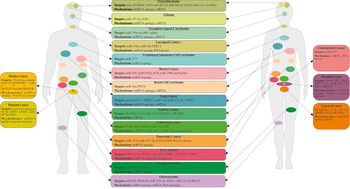
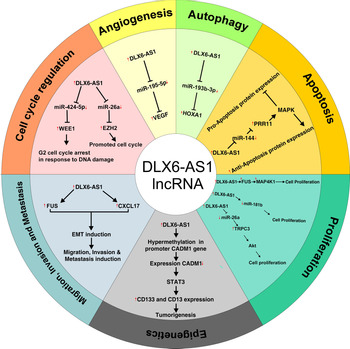
DLX6-AS1 has different molecular mechanisms of action as well as different functions in cancer (Figs 3 and 4; Table 1).
Schematic image displaying the different organs of the body where DLX6-AS1 is involved in cancer and the associated mechanisms and targets.

The schematic diagram demonstrates the different functions of DLX6-AS1 in different human cancers. DLX6-AS1 is capable of regulating angiogenesis and tumour growth by inhibiting the miR-195-5p expression. DLX6-AS1 is able to promote cancer tumorigenesis by regulating the STAT3 signalling pathway via hypo-methylation of the CADM1 promoter. Also, DLX6-AS1 can alter proliferation, migration, invasion, and metastasis through the regulation of signalling pathways and targets related to cancer. Additionally, lncRNAs can alter tumorigenesis through the regulation of apoptosis.

DLX6-AS1 has involved in cancer epigenetics. DLX6-AS1 could induce hypo-methylation of the CADM1 promoter in HCC. Methylation of the CADM1 promoter can reduce the expression of CADM1, a tumour-suppressor gene that suppresses STAT3 activation, and induce liver cancer tumorigenesis (Ref. Reference Wu49). In a similar way, DLX6-AS1 could induce methylation of the LARGE promoter and finally induce down-regulation of the expression of LARGE in prostate cancer, which enhances the proliferation, invasion, and metastasis (Ref. Reference Zhao, Liang and Sun69).
DLX6-AS1 could act as a ceRNA and competitively bind to miRNAs in different cancers to inhibit their functions (Table 2). Some of these binding partners are similar in different cancers. For example, DLX6-AS1 could bind to miR-26a and inhibit its functions in CRC, LSCC, and renal cancer to promote tumorigenesis (Refs Reference Kong36, Reference Liu50, Reference Zeng71). DLX6-AS1 acts as a ceRNA for miR-513c in HCC and NB (Refs Reference Jia58, Reference Liu74). In addition, DLX6-AS1 promotes the progression of pancreatic cancer, prostate cancer, and NB by sponging miR-497-5p (Refs Reference Li, Wang and Yang56, Reference Yang66, Reference Zhu70). Moreover, DLX6-AS1 binds to and inhibits miR-195-5p in the bladder and ovarian cancer, leading to tumorigenesis (Refs Reference Kong and Zhang63, Reference Wang73).
As mentioned above, DLX6-AS1 has involved in the pathogenesis of human cancers. DLX6-AS1 induces cell proliferation by regulation of miR-181b in pancreatic cancer (Ref. Reference An65). DLX6-AS1 could enhance MAP4K1-mediated cell proliferation by positive regulation of FUS expression in GC cells (Ref. Reference Wu44). In addition, DLX6-AS1 promotes tumour proliferation via modulating the miR-26a/TRPC3 axis in laryngeal cancer (Ref. Reference Liu50).
DLX6-AS1 has involved in the migration and invasion of different human cancers. For example, DLX6-AS1 induces invasion, migration, and EMT in HCC and NB (Refs Reference Zhang55, Reference Wang79). DLX6-AS1 could enhance migration and invasion of breast cancer cells through up-regulation of FUS (Ref. Reference Wang31). Exosomal DLX6-AS1 could regulate CXCL17 in HCC via competitively binding to miR-15a-5p, inducing HCC invasion, migration, and EMT (Ref. Reference Wang79).
DLX6-AS1 could inhibit cell apoptosis in cancer. Down-regulation of DLX6-AS1 can inhibit cell proliferation and increase apoptosis in endometrial cancer, CC, and Ewing's sarcoma (Refs Reference Wang, Lin and Liu34, Reference Zhao and Xu37, Reference Lei42). DLX6-AS1 inhibits apoptosis by regulating miR-144 and up-regulation of PRR11 in NSCLC (Ref. Reference Huang60).
DLX6-AS1 inhibited autophagy by regulating miR-193b-3p and up-regulation of HOXA1 in TC cells (Ref. Reference Feng72).
DLX6-AS1 could regulate the cell cycle in cancer cells. For example, DLX6-AS1 sponges miR-424-5p in HCC, leading to overexpression of WEE1 kinase, a G2 checkpoint kinase, leading to G2 cell cycle arrest in response to DNA damage (Ref. Reference Li52). This arrest of the cell cycle allows for DNA repair before mitotic entry in cancer cells, which often lack the G1-S checkpoint for DNA repair (Ref. Reference Matheson, Backos and Reigan90). In contrast, DLX6-AS1 promoted cell cycle and proliferation by up-regulating EZH2 through sponging miR-26a in CRC (Ref. Reference Kong36).
DLX6-AS1 could up-regulate VEGFA, a vital factor of tumour angiogenesis, in bladder cancer through sponging miR-195-5p. Therefore, DLX6-AS1 may have a potential role in tumour angiogenesis (Ref. Reference Wang73).
Conclusion
Recent studies have further confirmed that lncRNAs regulate gene expression and relates to cell invasion and tumorigenesis in different cancers. lncRNA DLX6-AS1 is overexpressed in multiple malignancies. Various studies verified that the expression of this lncRNA is correlated with advanced clinical stages, tumour size, metastasis, chemotherapeutic effect, and survival of patients in different cancers and may be used as a tumour marker for prognosis of these diseases (Table 1).
DLX6-AS1 knockdown decreased cell proliferation, migration and invasion in several cancers. The research studies demonstrated that various molecular mechanisms of lncRNAs are involved in cancer development by different signalling pathways. There seems to be a relationship between lncRNAs and miRNAs, where DLX6-AS1 acts as a ceRNA to bind to different miRNAs and inhibit their function (Table 2). Up-regulation of DLX6-AS1 results in an inhibition of the expression of different miRNAs.
Due to the lack of information about the function of DLX6-AS1 in blood cancers (Leukemias, lymphoma and myeloma), DLX6-AS1 seems to be mainly involved in solid cancers. However, more research studies are required to investigate the potential role of this molecule in blood cancers.
DLX6-AS1 is mainly overexpressed in a wide range of cancer types and it majorly acting as an oncogene in several different cancers. Knockdown of DLX6-AS1 in several cancers by using siRNAs or shRNAs reduces tumour growth or cancer cells proliferation, migration, and invasion and increases apoptosis. Targeting DLX6-AS1 using clustered regularly interspaced short palindromic repeat/caspase9 (CRISPR/ Cas9), siRNAs, shRNAs, and antisense oligonucleotides creates a new therapeutic strategy for various cancers. Finally, further investigations will promote the wider application of DLX6-AS1 in clinical prognosis and therapeutic strategies of various cancers.
Conflict of interest
The authors declare that there are no conflicts of interest.