Introduction
The symptomatic course of major depressive disorder (MDD) is variable. Some patients have only a single brief major depressive episode (MDE) but most patients will suffer several lifetime episodes (Solomon et al. Reference Solomon, Keller, Leon, Mueller, Shea, Warshaw, Maser, Coryell and Endicott1997). Between MDEs, symptom levels vary from full recovery (i.e. absence of symptoms) to a continuing clinically important level of symptoms that rarely, if ever, remit. MDE lengths can vary from weeks to years (Kanai et al. Reference Kanai, Takeuchi, Furukawa, Yoshimura, Imaizumi, Kitamura and Takahashi2003; Gilmer et al. Reference Gilmer, Trivedi, Rush, Wisniewski, Luther, Howland, Yohanna, Khan and Alpert2005). Chronic and recurrent courses of illness are associated with earlier onset, greater symptom severity, suicidality, psychiatric and medical co-morbidity, familial loading and service utilization (Gilmer et al. Reference Gilmer, Trivedi, Rush, Wisniewski, Luther, Howland, Yohanna, Khan and Alpert2005; Hollon et al. Reference Hollon, Shelton, Wisniewski, Warden, Biggs, Friedman, Husain, Kupfer, Nierenberg, Petersen, Shores-Wilson and Rush2006; Mondimore et al. Reference Mondimore, Zandi, Mackinnon, McInnis, Miller, Crowe, Scheftner, Marta, Weissman, Levinson, Murphy-Ebenez, Depaulo and Potash2006; Angst et al. Reference Angst, Gamma, Rössler, Ajdacic and Klein2009; Satyanarayana et al. Reference Satyanarayana, Enns, Cox and Sareen2009; Blanco et al. Reference Blanco, Okuda, Markowitz, Liu, Grant and Hasin2010). Longer episodes, more episodes and incomplete inter-episode recovery each suggest the need for longer-term maintenance treatment in this population (Depression Guideline Panel, 1993; APA, 2000a; Anderson et al. Reference Anderson, Ferrier, Baldwin, Cowen, Howard, Lewis, Matthews, McAllister-Williams, Peveler, Scott and Tylee2008; Nutt, Reference Nutt2010).
Recent studies have examined the prevalence and correlates of chronic and/or recurrent MDD in community and primary care settings to better understand the impact of prior course on subsequent depressive illness. Prospective longitudinal community studies have found that individuals with a chronic course of adolescent-onset MDD report less favorable adult outcomes than those with an episodic course, as evidenced by greater psychiatric co-morbidity, suicide attempts, more frequent and longer duration of treatment, and a greater number of recurrent episodes (Jonsson et al. Reference Jonsson, Bohman, von Knorring, Olsson, Paaren and von Knorring2011). A more chronic/recurrent course during adolescence (defined using a composite score based on age of onset, recurrence and duration of illness) has also been associated with poorer adult psychosocial functioning in several domains (Pettit et al. Reference Pettit, Lewinsohn, Roberts, Seeley and Monteith2009). Prospective data from adult primary care settings indicate that greater severity of MDD at baseline is associated with a more chronic course when assessed at 18-month (Vuorilehto et al. Reference Vuorilehto, Melartin and Isometsä2009) and 39-month follow-up (Stegenga et al. Reference Stegenga, Kamphuis, King, Nazareth and Geerlings2010). A recent comparison of primary care patients with single-episode versus recurrent MDD also found that symptom severity was greater among those with recurrent episodes (Roca et al. Reference Roca, Armengol, García-García, Rodriguez-Bayón, Ballesta, Serrano, Comas and Gili2011).
These studies suggest that prior course of illness is an important contributor to longer-term outcomes in MDD, but the literature in this area has been marked by numerous methodological limitations. The lack of consistent definitions of chronic and recurrent MDD makes it difficult to compare and interpret results across studies. Furthermore, many patients with chronic MDD will also experience recurrent episodes, but few studies have attempted to tease out the combined and independent contribution of these two aspects of prior course. Those studies that have examined chronic and recurrent MDD in isolation have neglected the considerable overlap between these two constructs (Klein, Reference Klein2008; Pettit et al. Reference Pettit, Lewinsohn, Roberts, Seeley and Monteith2009), whereas those that lump them together artificially conflate two related but distinct aspects of MDD.
Despite growing research interest in understanding the impact of prior course on longer-term outcomes (e.g. Kaymaz et al. Reference Kaymaz, van Os, Loonen and Nolen2008; Pettit et al. Reference Pettit, Lewinsohn, Roberts, Seeley and Monteith2009; Klein, Reference Klein2010), few studies have attempted to fully examine the extent to which recurrence and/or chronicity affect treatment outcomes in representative samples of out-patients with MDD. Data from acute treatment efficacy and longer-term maintenance trials do not adequately describe outcomes based on patients' prior course of illness. For example, many acute trials exclude chronic patients (i.e. with a current MDE of >2 years) and do not provide long-term follow-up. Longer-term maintenance trials may selectively enroll patients with recurrent depression (either with or without a chronic index episode), thereby excluding those with non-chronic non-recurrent depressions. Consequently, these studies do not provide a full picture of baseline sociodemographic or clinical features, or acute and longer-term outcomes, in representative patients over a full range of prior illness courses (i.e. single brief episode, single chronic episode, non-chronic recurrent episodes, and both chronic and recurrent episodes).
To address this information gap, we analyzed data from the Sequenced Treatment Alternatives to Relieve Depression (STAR*D) sample (Fava et al. Reference Fava, Rush, Trivedi, Nierenberg, Thase, Sackeim, Quitkin, Wisniewski, Lavori, Rosenbaum and Kupfer2003; Rush et al. Reference Rush, Fava, Wisniewski, Lavori, Trivedi, Sackeim, Thase, Nierenberg, Quitkin, Kashner, Kupfer, Rosenbaum, Alpert, Stewart, McGrath, Biggs, Shores-Wilson, Lebowitz, Ritz and Niederehe2004; Trivedi et al. Reference Trivedi, Rush, Wisniewski, Nierenberg, Warden, Ritz, Norquist, Howland, Lebowitz, McGrath, Shores-Wilson, Biggs, Balasubramani and Fava2006) (www.star-d.org) with participants defined by their prior illness course. Both acute and longer-term outcomes were obtained. Based on participant self-report and DSM-IV (APA, 2000b) definitions, we created four participant groups: those who had both a chronic (>2-year) index episode and a recurrent course (BOTH); those who had only a chronic index episode (CHRONIC-ONLY); those who had only a recurrent course (RECURRENT-ONLY); and those who had neither a chronic index episode nor a recurrent course (NEITHER). This report addresses the following questions:
(1) Do these patient groups have different baseline sociodemographic and clinical features?
(2) Do these patient groups differ in terms of acute treatment symptomatic outcomes with citalopram?
(3) Do these patient groups differ regarding longer-term treatment symptomatic outcomes with citalopram?
Method
Study overview and organization
The STAR*D trial aimed to define the next best treatment steps for out-patients with non-psychotic MDD if the initial treatment with the selective serotonin reuptake inhibitor (SSRI) citalopram did not produce an acceptable outcome (e.g. remission with acceptable tolerance). The rationale, methods and design of the STAR*D trial have been detailed elsewhere (Fava et al. Reference Fava, Rush, Trivedi, Nierenberg, Thase, Sackeim, Quitkin, Wisniewski, Lavori, Rosenbaum and Kupfer2003; Rush et al. Reference Rush, Fava, Wisniewski, Lavori, Trivedi, Sackeim, Thase, Nierenberg, Quitkin, Kashner, Kupfer, Rosenbaum, Alpert, Stewart, McGrath, Biggs, Shores-Wilson, Lebowitz, Ritz and Niederehe2004).
The study was conducted at 18 primary and 23 psychiatric care settings serving public and private sector patients. Clinical Research Coordinators (CRCs) at each Clinical Site assisted participants and clinicians in protocol implementation. Neither participants nor clinicians were masked to treatment.
Participants
From July 2001 to April 2004, STAR*D enrolled out-patients aged 18–75 years with non-psychotic MDD. All risks, benefits and adverse events associated with STAR*D participation were explained to the participants, who provided written informed consent prior to study entry. The protocol was approved and monitored by the National Coordinating Center (University of Texas Southwestern Medical Center, Dallas, TX, USA), the Data Coordinating Center (University of Pittsburgh, Pittsburgh, PA, USA), the Institutional Review Boards at each Clinical Site and Regional Center, and the Data Safety and Monitoring Board of the National Institute of Mental Health (NIMH; Bethesda, MD, USA).
Only self-declared out-patients seeking medical care were eligible; recruiting by advertisements was proscribed. Broad inclusion and minimal exclusion criteria ensured a widely representative sample of participants. Out-patients with a baseline score ⩾14 on the 17-item Hamilton Rating Scale for Depression (HAMD17; Hamilton, Reference Hamilton1960, Reference Hamilton1967) (by CRC evaluation) were eligible if their clinicians determined that out-patient treatment with an antidepressant medication was both safe and indicated. Patients were excluded if they had bipolar or psychotic disorders; a primary diagnosis of obsessive–compulsive or eating disorder; substance dependence requiring in-patient detoxification; a clear history of non-response or intolerance (in the current MDE) to, or general medical conditions (GMCs) contraindicating, any protocol medication in the first two treatment steps; or were pregnant, planning to become pregnant, or breastfeeding (Rush et al. Reference Rush, Fava, Wisniewski, Lavori, Trivedi, Sackeim, Thase, Nierenberg, Quitkin, Kashner, Kupfer, Rosenbaum, Alpert, Stewart, McGrath, Biggs, Shores-Wilson, Lebowitz, Ritz and Niederehe2004).
Diagnostic and outcome measures
Clinicians' diagnoses of non-psychotic MDD were confirmed by a checklist using DSM-IV (APA, 2000b) criteria. Prior personal and family histories, and sociodemographic and clinical information, were gathered using self-reports. The Psychiatric Diagnostic Screening Questionnaire (PDSQ; Zimmerman & Mattia, Reference Zimmerman and Mattia2001a, Reference Zimmerman and Mattiab; Rush et al. Reference Rush, Zimmerman, Wisniewski, Fava, Hollon, Warden, Biggs, Shores-Wilson, Shelton, Luther, Thomas and Trivedi2005 b) (completed at baseline) determined the presence/absence of 11 potential concurrent Axis I (psychiatric) disorders (using a 90% specificity threshold). The CRCs obtained the initial HAMD17 and the 16-item Quick Inventory of Depressive Symptomatology – Clinician-rated (QIDS-C16) and Self-report (QIDS-SR16) (Rush et al. Reference Rush, Trivedi, Ibrahim, Carmody, Arnow, Klein, Markowitz, Ninan, Kornstein, Manber, Thase, Kocsis and Keller2003, 2006 a; Trivedi et al. Reference Trivedi, Rush, Ibrahim, Carmody, Biggs, Suppes, Crismon, Shores-Wilson, Toprac, Dennehy, Witte and Kashner2004) to assess depressive symptom severity at each clinic visit. The QIDS-C16 was used to inform dose adjustments. The CRCs also completed the 14-item Cumulative Illness Rating Scale (CIRS; Linn et al. Reference Linn, Linn and Gurel1968; Miller et al. Reference Miller, Paradis, Houck, Mazumdar, Stack, Rifai, Mulsant and Reynolds1992) to gauge the severity/morbidity of GMCs relevant to different organ systems. Each of the 14 illness categories was scored 0 (no problem) to 4 (extremely severe/immediate treatment required/end organ failure/severe impairment in function). CIRS scores included Categories Endorsed (0–14) (the number of co-morbid GMCs), Severity Index (0–4) (the average severity of the categories endorsed), and Total Severity (the number of categories endorsed multiplied by the average severity).
Courses of illness were defined by participant self-report elicited by the CRC. If the index episode was >2 years, a chronic index episode was ascribed, consistent with DSM-IV. If participants had more than one episode (inclusive of the index episode), a recurrent course was ascribed. Thus, four groups were created: chronic recurrent (BOTH); chronic non-recurrent (CHRONIC-ONLY); non-chronic recurrent (RECURRENT-ONLY); and non-chronic non-recurrent (NEITHER).
Research Outcome Assessors (ROAs) not located at any clinical site collected the HAMD17 and the 30-item Inventory of Depressive Symptomatology – Clinician-rated (IDS-C30; Rush et al. Reference Rush, Gullion, Basco, Jarrett and Trivedi1996, Reference Rush, Carmody and Reimitz2000; Trivedi et al. Reference Trivedi, Rush, Ibrahim, Carmody, Biggs, Suppes, Crismon, Shores-Wilson, Toprac, Dennehy, Witte and Kashner2004) using telephone-based structured interviews in English or Spanish. Responses to items on the baseline IDS-C30 or the HAMD17 were used to estimate the presence of atypical (Novick et al. Reference Novick, Stewart, Wisniewski, Cook, Manev, Nierenberg, Rosenbaum, Shores-Wilson, Balasubramani, Biggs, Zisook and Rush2005), anxious (Fava et al. Reference Fava, Ruino, Rafanelli, Finos, Conti and Grandi2004a) and melancholic (Khan et al. Reference Khan, Carrithers, Preskorn, Lear, Wisniewski, Rush, Stegman, Kelley, Kreiner, Nierenberg and Fava2006) symptom features.
For this report, the outcomes in acute treatment were computed based on the QIDS-SR16 (primary outcome) and the HAMD17, which was obtained at baseline and at the end of acute treatment. Response was defined as either a ⩾50% reduction from baseline in the QIDS-SR16 or in the HAMD17. Remission was defined as an exit QIDS-SR16 of ⩽5 or an exit HAMD17⩽7. Of the two, we chose the QIDS-SR16 as the primary outcome for this report because it had fewer missing data than the HAMD17 and because it compares well with the QIDS-SR obtained by Interactive Voice Response (IVR) drug follow-up (Rush et al. Reference Rush, Carmody, Ibrahim, Trivedi, Biggs, Shores-Wilson, Crismon, Toprac and Kashner2006b). Participants who had missing HAMD17 ratings were assigned to the not-remitted group.
In follow-up, all of the outcomes relied on the QIDS-SR16, which was obtained by the telephone-based IVR system (Rush et al. Reference Rush, Bernstein, Trivedi, Carmody, Wisniewski, Mundt, Shores-Wilson, Biggs, Woo, Nierenberg and Fava2006 a). Relapse was defined a priori when the QIDS-SR16 by the IVR was ⩾11, which is equivalent to an HAMD17 score of ⩾14 (Rush et al. Reference Rush, Trivedi, Ibrahim, Carmody, Arnow, Klein, Markowitz, Ninan, Kornstein, Manber, Thase, Kocsis and Keller2003). The QIDS-SR16 was chosen as the primary (in fact sole) longer-term outcome because previous work (Rush et al. Reference Rush, Trivedi, Carmody, Ibrahim, Markowitz, Keitner, Kornstein, Arnow, Klein, Manber, Dunner, Gelenberg, Kocsis, Nemeroff, Fawcett, Thase, Russell, Jody, Borian and Keller2005a, Reference Rush, Bernstein, Trivedi, Carmody, Wisniewski, Mundt, Shores-Wilson, Biggs, Woo, Nierenberg and Fava2006a, Reference Rush, Carmody, Ibrahim, Trivedi, Biggs, Shores-Wilson, Crismon, Toprac and Kashnerb; Carmody et al. Reference Carmody, Rush, Bernstein, Brannan, Husain and Trivedi2006; Bernstein et al. Reference Bernstein, Rush, Carmody, Woo and Trivedi2007) has found the QIDS-SR16 by paper and pencil, and the QIDS-SR by IVR each relate highly to the QIDS-C16 (clinician rating) and the HAMD17.
Intervention and measurement-based care
The aim of treatment was to achieve symptom remission (defined by a QIDS-C16 score ⩽5 collected at each treatment visit). The protocol (Fava et al. Reference Fava, Rush, Trivedi, Nierenberg, Thase, Sackeim, Quitkin, Wisniewski, Lavori, Rosenbaum and Kupfer2003; Rush et al. Reference Rush, Fava, Wisniewski, Lavori, Trivedi, Sackeim, Thase, Nierenberg, Quitkin, Kashner, Kupfer, Rosenbaum, Alpert, Stewart, McGrath, Biggs, Shores-Wilson, Lebowitz, Ritz and Niederehe2004) required a fully adequate dose of citalopram for a sufficient time to ensure that participants who did not reach remission were truly resistant to the medication. Citalopram was selected as a representative SSRI because of the relative absence of discontinuation symptoms, demonstrated safety in elderly and medically fragile patients, once-a-day dosing, the small number of dose adjustment steps and a favorable drug–drug interaction profile (Fava et al. Reference Fava, Rush, Trivedi, Nierenberg, Thase, Sackeim, Quitkin, Wisniewski, Lavori, Rosenbaum and Kupfer2003; Rush et al. Reference Rush, Fava, Wisniewski, Lavori, Trivedi, Sackeim, Thase, Nierenberg, Quitkin, Kashner, Kupfer, Rosenbaum, Alpert, Stewart, McGrath, Biggs, Shores-Wilson, Lebowitz, Ritz and Niederehe2004).
High-quality measurement-based care was provided by use of a clinician manual (www.star-d.org), initial didactic instruction, ongoing support and guidance by the CRC, the systematic evaluation of symptoms (QIDS-C16 completed by the CRC) and side-effects [Frequency, Intensity and Burden of Side Effects Ratings (FIBSER); Wisniewski et al. Reference Wisniewski, Rush, Balasubramani, Trivedi and Nierenberg2006] at each visit to guide treatment, and a centralized treatment monitoring and feedback system (Trivedi et al. Reference Trivedi, Rush, Wisniewski, Nierenberg, Warden, Ritz, Norquist, Howland, Lebowitz, McGrath, Shores-Wilson, Biggs, Balasubramani and Fava2006, Reference Trivedi, Rush, Gaynes, Stewart, Wisniewski, Warden, Ritz, Luther, Stegman, DeVeaugh-Geiss and Howland2007).
Treatment aimed to optimally dose citalopram following dosing recommendations in the treatment manual, which also allowed individualized starting doses and dose adjustments to minimize side-effects, maximize safety and optimize the chances of therapeutic benefit for each participant. Appropriate flexibility was allowed so that participants with concomitant GMCs, substance abuse/dependence or other psychiatric disorders could be included safely in the sample.
The protocol recommended treatment visits at weeks 2, 4, 6, 9 and 12 (with an optional week-14 visit if needed). After an optimal trial (based on dose and duration), responders (defined as those with ⩾50% improvement over their baseline QIDS-C16 score) could enter the 12-month naturalistic follow-up, although all participants without remission (QIDS-C16 >5) were encouraged to enter the subsequent randomized trial. Participants could discontinue citalopram before 12 weeks if (a) intolerable side-effects required a medication change, (b) an optimal dose increase was not possible due to side-effects or participant choice, or (c) significant symptoms (QIDS-C16 ⩾9) were present after 9 weeks at maximally tolerated doses. Participants could opt to move to the next treatment level if they experienced intolerable side-effects or if the QIDS-C16 score was >5 after an adequate trial in terms of dose and duration. In follow-up, the protocol recommended that participants be seen for clinic visits every 2–3 months with measures gathered by IVR every month.
Safety assessments
In addition to the FIBSER completed by participants at each treatment visit to measure the frequency, intensity and global burden of side-effects, serious adverse events (SAEs) were monitored using a multi-tier approach involving the CRCs, study clinicians, the IVR system, the clinical manager, the safety officers, the Regional Center Directors (Nierenberg et al. Reference Nierenberg, Trivedi, Ritz, Burroughs, Greist, Sackeim, Kornstein, Schwartz, Stegman, Fava and Wisniewski2004) and the NIMH Data Safety and Monitoring Board.
Concomitant medications
Concomitant treatments were permitted for current GMCs (as part of ongoing clinical care), for associated symptoms of depression (e.g. sleep, anxiety, agitation) and for citalopram side-effects (e.g. insomnia, sexual dysfunction) based on clinical judgment. Stimulants, anticonvulsants, antipsychotics, alprazolam, non-protocol antidepressants (except trazodone ⩽200 mg at bedtime for insomnia) and depression-targeted psychotherapies were proscribed.
Statistical analysis
All analyses were based on the analyzable sample (n=2656) (Trivedi et al. Reference Trivedi, Rush, Wisniewski, Nierenberg, Warden, Ritz, Norquist, Howland, Lebowitz, McGrath, Shores-Wilson, Biggs, Balasubramani and Fava2006). Summary statistics (mean percentages) of the sociodemographic, clinical and treatment characteristics (e.g. maximum dose achieved, number of treatment visits), in addition to SAEs and side-effects, are presented by prior course of illness (PCI) status. χ2 and one-way ANOVAs compared the discrete and continuous baseline characteristics, respectively, by PCI status. Logistic regression models assessed the association of PCI with depressive symptom outcomes (e.g. remission, response), independent of the effect of Regional Center and independent of baseline differences between those with various PCIs. Kaplan–Meier curves estimated the cumulative proportion of remission and response and also the cumulative proportion of relapse by PCI. Log-rank tests were used to test for differences in the cumulative proportions among the groups. If significant differences were detected, post-hoc pairwise comparisons were made with a Bonferroni correction (p value <0.05/6 indicting statistical significance).
Results
Division of sample
Supplementary Fig. 1 shows how the study sample was generated. Of the 2876 participants who were eligible for analysis, 220 had insufficient data to define prior course of illness. Of the remaining 2656 participants, 15% (398/2656) were chronic and recurrent (BOTH), 9.7% (257/2656) were chronic but not recurrent (CHRONIC-ONLY), 60.8% (1614/2656) were not chronic but were recurrent (RECURRENT-ONLY), and 14.6% (387/2656) were neither chronic nor recurrent (NEITHER). Overall, 24.7% (655/2656) of participants had a chronic index episode regardless of recurrence, and 75.8% (2012/2656) had a recurrent course regardless of whether the index episode was chronic. Supplementary Fig. 2 shows the unique and overlapping proportions of participants in each group.
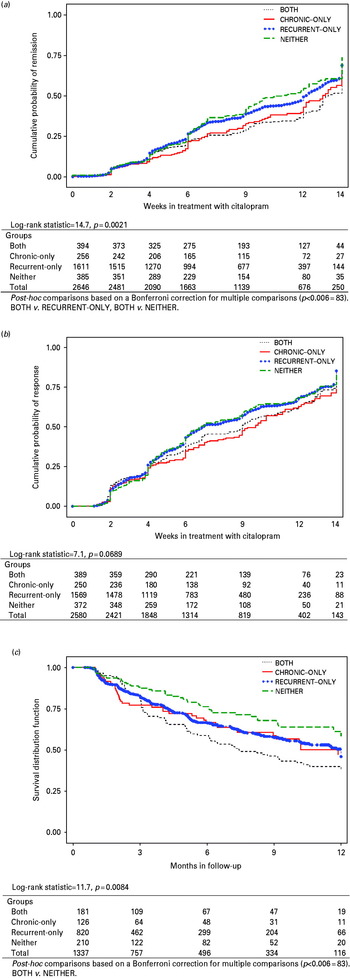
Time to (a) remission, (b) response and (c) relapse by course of illness. BOTH refers to participants with a chronic index episode and recurrent course; CHRONIC-ONLY refers to participants with a chronic index episode without a recurrent course; RECURRENT-ONLY refers to participants with a recurrent course without a chronic index episode; NEITHER refers to participants with neither a recurrent course nor a chronic index episode.

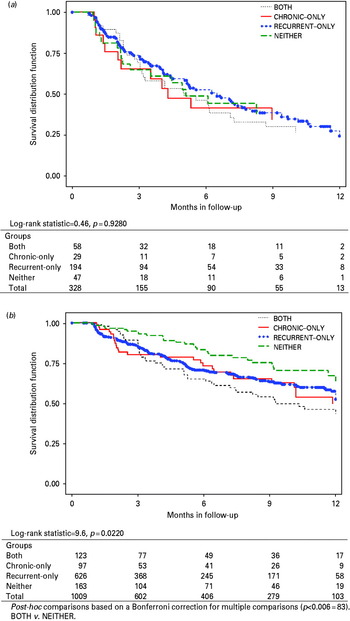
Time to relapse by course of illness: (a) non-remitted participants; (b) remitted participants. BOTH refers to participants with a chronic index episode and recurrent course; CHRONIC-ONLY refers to participants with a chronic index episode without a recurrent course; RECURRENT-ONLY refers to participants with a recurrent course without a chronic index episode; NEITHER refers to participants with neither a recurrent course nor a chronic index episode.

Baseline sociodemographic and clinical features
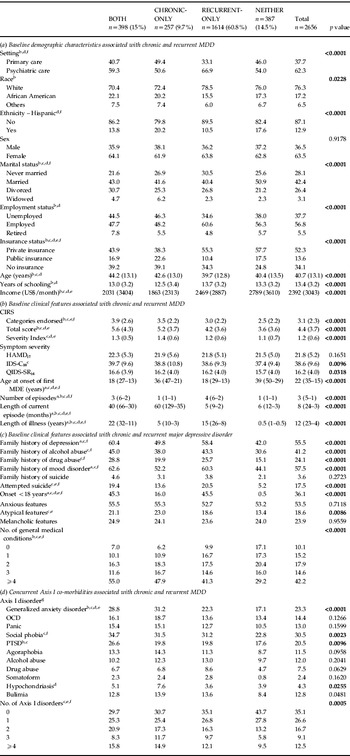
Table 1 shows the baseline sociodemographic and clinical features of the sample. In general, participants with a chronic index episode were more likely to be socially disadvantaged, whereas participants with a recurrent course were more likely to have an early age of onset and a family history of depression and substance use disorders. Participants who were BOTH chronic and recurrent tended to show the characteristics associated with each course of illness. Participants who were either chronic or recurrent were more likely to have made suicide attempts than those who were NEITHER. Participants with a recurrent course (whether or not chronic) were more likely to be found in psychiatric clinics.
Baseline sociodemographic and clinical features of the sample

MDE, Major depressive disorder; CIRS, Cumulative Illness Rating Scale; HAMD17, 17-item Hamilton Rating Scale for Depression; IDS-C30: 30-item Inventory of Depressive Symptomatology – Clinician-rated; QIDS-SR16: 16-item Quick Inventory of Depressive Symptomatology – Self-report; MDE, major depressive episode; OCD, obsessive–compulsive disorder; PTSD, post-traumatic stress disorder.
Bold indicates statistically significant values.
Values given as percentage, mean (standard deviation) or median (interquartile range).
Post-hoc comparisons based on a Bonferroni correction for multiple comparisons (p<0.0083).
a BOTH versus CHRONIC-ONLY.
b BOTH versus RECURRENT-ONLY.
c BOTH versus NEITHER.
d CHRONIC-ONLY versus RECURRENT-ONLY.
e CHRONIC-ONLY versus NEITHER.
f RECURRENT-ONLY versus NEITHER.
g Estimated by the Psychiatric Diagnostic Screening Questionnaire (PDSQ) using 90% specificity.
There were few differences between participants with BOTH features and those who were CHRONIC-ONLY. The former were more likely to be treated in psychiatric settings and to have more prior episodes (by definition), shorter episodes, a longer length of illness, a positive family history of depression, and to experience their first MDE before age 18 years.
Among those with a recurrent course, those with BOTH a chronic and recurrent course (as opposed to RECURRENT-ONLY) were more likely to be non-white, older, unemployed, and have less income and less education. They were less likely to be married or have private insurance. Participants with BOTH were also at a relative social disadvantage, and they had greater illness burden with more GMCs, more generalized anxiety and post-traumatic stress disorders, more depressive episodes, a longer index episode (as expected), fewer total depressive episodes, and a longer length of illness.
Participants with BOTH a chronic and recurrent course were most distinct from those who were NEITHER chronic nor recurrent. Participants with BOTH were older, had less income and were more likely to be divorced or uninsured, to have more suicide attempts, an earlier age of first onset, more severe depression, more depressive episodes, a longer length of current episode (as expected) and illness, a higher proportion with family histories of depression, more concurrent GMCs, alcohol or drug abuse, and more concurrent Axis I disorders (including generalized anxiety disorder, social phobia, post-traumatic stress disorder and bulimia).
When we compared the CHRONIC-ONLY and the RECURRENT-ONLY participants, the CHRONIC-ONLY were older, had less income and education, were more likely to be unemployed or treated in primary care, and were more likely to have never married or have private insurance. The CHRONIC-ONLY participants also had more GMCs and higher rates of generalized anxiety and hypochondriasis. The CHRONIC-ONLY participants reported fewer episodes and longer index episodes (by definition), and they had a considerably later age of onset and shorter duration of overall illness than the RECURRENT-ONLY group.
Acute treatment outcomes
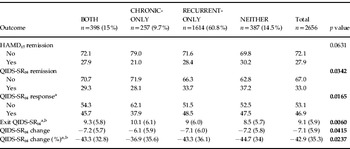
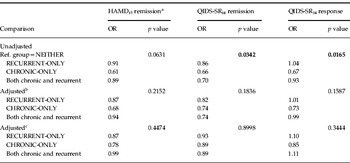
Table 2 a shows the unadjusted acute treatment outcomes by the HAMD17 and the QIDS-SR16. The groups did not differ on remission based on the HAMD17, but did on the QIDS-SR16, though no pairwise differences were identified after a Bonferroni correction for multiple comparisons. The CHRONIC-ONLY participants had significantly lower response rates and significantly less percentage change in the QIDS-SR16 than the RECURRENT-ONLY participants after Bonferroni correction. Controlling for site and baseline covariates that differentiated the course of illness groups eliminated these differences (Table 2 b).
(a) Unadjusted remission and response status by chronic and/or recurrent major depressive disorder (MDD)
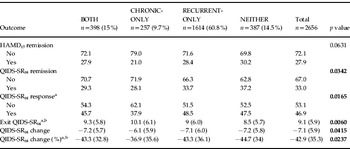
HAMD17, 17-Item Hamilton Rating Scale for Depression; QIDS-SR16, 16-item Quick Inventory of Depressive Symptomatology – Self-Report.
Bold indicates statistically significant values.
Values given as percentage or mean (standard deviation).
Post-hoc comparisons based on a Bonferroni correction for multiple comparisons (p<0.0083).
a CHRONIC-ONLY versus RECURRENT-ONLY.
b CHRONIC-ONLY versus NEITHER.
(b) Adjusted remission and response status by chronic and/or recurrent MDD

HAMD17, 17-Item Hamilton Rating Scale for Depression; QIDS-SR16, 16-item Quick Inventory of Depressive Symptomatology – Self-Report; OR, odds ratio.
Bold indicates statistically significant values.
a The baseline severity of HAMD17 is not included in the model because it does not show any differences between groups.
b Adjusted for Regional center.
c Adjusted for Regional center, clinical setting, race, ethnicity, marital status, employment status, insurance status, Cumulative Illness Rating Scale (CIRS) total score, family history of alcohol abuse, family history of drug abuse, family history of mood disorder, attempted suicide, age at onset, atypical depression, age, education, and baseline severity of QIDS-SR16.
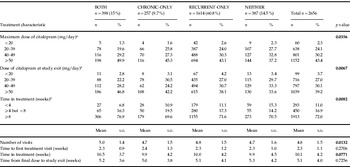
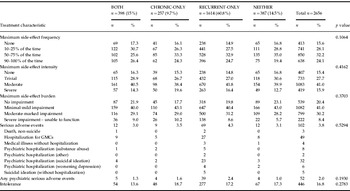
The chronic and recurrent (BOTH) group received higher doses and longer treatment than the non-chronic non-recurrent (NEITHER) group (Table 3 a). Side-effect frequency, intensity, burden and the types and frequencies of SAEs were not different among the groups (Table 3 b).
(a) Treatment characteristics in relation to symptomatic outcome by chronic and recurrent major depressive disorder (MDD)

s.d., Standard deviation.
Bold indicates statistically significant values.
Post-hoc comparisons based on a Bonferroni correction for multiple comparisons (p<0.0083).
a BOTH versus NEITHER.
(b) Adverse events, side-effects by chronic and recurrent MDD

GMC, General medical co-morbidity.
Figure 1 a shows the times to first QIDS-SR16 remission by prior course of illness. The chronic and recurrent (BOTH) participants had significantly worse acute treatment outcomes than those without a chronic index episode regardless of recurrence (NEITHER or RECURRENT-ONLY), whereas the CHRONIC-ONLY participants were intermediate. Figure 1 b shows analogous results for times to first response. Although group differences were not significant with respect to response, the general pattern was preserved. Chronic participants took longer to remit (but not significantly longer to respond) than non-chronic participants.
Among those who reached response or remission, the times to reach these goals was not different for the four groups. Average times to QIDS-SR16 remission were 6.8±4.1 weeks (BOTH), 7.4±4.1 weeks (CHRONIC-ONLY), 6.7±3.7 weeks (RECURRENT-ONLY), and 6.9±3.7 weeks (NEITHER). For the QIDS-SR16 responders, times to response were 6.0±3.8 weeks (BOTH), 5.8±3.6 weeks (CHRONIC-ONLY), 5.7±3.6 weeks (RECURRENT-ONLY), and 5.6±3.3 weeks (NEITHER).
Longer-term treatment outcomes
About half of the sample treated acutely (1337/2656) entered follow-up with a QIDS-SR16 <11. Compared to those who did not enter follow-up, those entering follow-up were more likely to be white, married, employed, privately insured, better schooled and have higher incomes. They also had less general medical co-morbidity, were less severely depressed at the beginning of acute treatment and were less likely to have family histories of depression, suicide, or alcohol or drug abuse. Rates of anxious, atypical and melancholic features were all lower, as were rates of concurrent Axis I disorders. In brief, participants who entered follow-up were more socially advantaged and exhibited less psychopathology than those who did not.
Fig. 1 c shows the probability of relapse for all participants who entered follow-up, grouped by course of illness. Participants with BOTH a chronic and recurrent course were more likely to relapse than those who were NEITHER chronic nor recurrent. Participants who were CHRONIC-ONLY or RECURRENT-ONLY had intermediate relapse rates.
Fig. 2 (a, b) show the probability of relapse for participants who entered the follow-up without full remission and those who entered in full remission respectively. For participants who were not in full remission at entry into follow-up, the course of illness was not related to likelihood of relapse, whereas it was related to likelihood of relapse for participants in full remission at follow-up entry. These differences were no longer apparent after controlling for other baseline factors that differentiated the course of illness groups (including site).
Discussion
These analyses revealed clinically important baseline differences between patient groups defined by the prior course of illness. Consistent with data from community and primary care samples (Satyanarayana et al. Reference Satyanarayana, Enns, Cox and Sareen2009; Stegenga et al. Reference Stegenga, Kamphuis, King, Nazareth and Geerlings2010), participants with chronic index episodes were generally at greater social disadvantage and suffered greater general medical and psychiatric burden than non-chronic participants, regardless of whether they had a recurrent course. Participants with a recurrent course (with or without a chronic index episode) typically had an earlier age of onset and greater familial loading for depression and substance abuse than non-recurrent participants. These data are in line with research that has shown positive associations between number of recurrent episodes, age of onset, and family history of depression (Roca et al. Reference Roca, Armengol, García-García, Rodriguez-Bayón, Ballesta, Serrano, Comas and Gili2011). Earlier onset and greater familial loading may indicate an underlying genetic vulnerability. Participants with BOTH a chronic and recurrent course differed most from those who were NEITHER chronic nor recurrent and showed the separate patterns of social disadvantage and familial loading associated with each. Participants with NEITHER a chronic nor a recurrent course had the least concurrent general medical and psychiatric burden, and were least likely to have made prior suicide attempts.
The acute treatment outcomes (unadjusted) were typically worse for those with a chronic (versus non-chronic) index episode. Participants with BOTH a chronic index episode and a recurrent course took longer to remit than non-chronic participants (regardless of recurrence). Fewer CHRONIC-ONLY participants responded acutely (37.9%) than RECURRENT-ONLY participants (48.5%). This same pattern held for other outcome indices. Chronic participants (regardless of recurrence) had lower response or remission rates than non-chronic participants. Overall, lower acute treatment benefit can be expected among some patients with chronic index episodes, but these outcome differences are modest. These differences were not due to differences in treatment. The differences in acute outcome were generally eliminated after controlling for site and other differentiating baseline variables. Thus, the differences in acute outcomes cannot be attributed solely to the course of illness. That is, a chronic course may lead to additional psychiatric and general medical burden, or vice versa. However, when taken together, chronicity and these associated burdens are associated with the worst acute treatment outcome.
As for longer-term outcomes, those who were NEITHER chronic nor recurrent had the lowest relapse rate, whereas those who were BOTH chronic and recurrent had the highest relapse rate. This difference was significant. The remaining two groups (the CHRONIC-ONLY and RECURRENT-ONLY) had intermediate outcomes. These results suggest that both chronicity and recurrence contribute to risk for relapse in an independent (additive) fashion. This finding suggests that chronicity and recurrence are associated with different mechanisms, both of which contribute to the propensity for relapse.
When we further divided the follow-up sample into those with and those without remission upon entering follow-up, these longer-term findings could be wholly attributed to the participants who entered follow-up in remission. There were no differences in relapse rates as a function of course of illness among those not in remission at follow-up entry. After controlling for other baseline factors, the differences found for those in remission were no longer apparent. Thus, differences in relapse rates may not be wholly attributable to chronic or recurrent course per se, because other features associated with different courses of illness may account for the different outcomes.
In clinical practice, then, lack of remission is predictive of relapse. However, for those who have remitted, either a chronic or recurrent course, and especially the presence of both, is predictive of relapse. Thus, special vigilance is suggested for even fully remitted patients who have had a chronic index episode or a history of recurrence. The most appropriate strategies for managing these patients have yet to be fully elucidated. For those with a recurrent course of illness, the addition of psychotherapy after successful antidepressant treatment has been shown to reduce the risk of relapse and recurrence (Guidi et al. Reference Guidi, Fava, Fava and Papakostas2011). Cognitive behavioral therapy, in particular, is an effective therapeutic option in preventing relapses for up to 6 years (Fava et al. Reference Fava, Alpert, Carmin, Wisniewski, Trivedi, Biggs, Shores-Wilson, Morgan, Schwartz, Balasubramani and Rush2004b; Conradi et al. Reference Conradi, de Jonge and Ormel2008; Bockting et al. Reference Bockting, Spinhoven, Wouters, Koeter and Schene2009). The optimal relapse prevention treatment for chronic depression is less clear. Continuation treatment using a combination of medication and cognitive behavioral therapy seems to be more effective in preventing relapse than either monotherapy (Kocsis et al. Reference Kocsis, Rush, Markowitz, Borian, Dunner, Koran, Klein, Trivedi, Arnow, Keitner, Kornstein and Keller2003), but systematic reviews to investigate the effectiveness of various treatment options are still needed to shed light on this important clinical issue (Kriston et al. Reference Kriston, von Wolff and Hölzel2010).
The strengths of our study include the analysis of a large representative sample of treatment-seeking patients with unipolar MDD and the inclusion of the full range of prior course-of-illness variables. An inherent study limitation is that some (but not all) participants who have not yet developed a chronic index episode or recurrent course at study entry will subsequently develop such a course. On the one hand, if clinically meaningful differences are found between participants with various courses of illness, they might be expected to be valid given this potential sample bias. On the other hand, failure to find differences could result from the fact that some non-chronic, non-recurrent patients will develop chronic and/or recurrent course over time.
Other limitations include the use of a self-report to diagnose concurrent Axis I and III conditions, the use of self-report to assess chronicity and recurrence (recall bias), reliance on the self-report by IVR to identify relapse, and the fact that this is a secondary analysis. Furthermore, the declaration of response, remission and relapse were all based on a single measurement occasion that covered only the past 7 days (Rush et al. Reference Rush, Kraemer, Sackeim, Fava, Trivedi, Frank, Ninan, Thase, Gelenberg, Kupfer, Regier, Rosenbaum, Ray and Schatzberg2006c). This limitation is likely to inflate the relapse rates, and also the response and remission rates. Because visit schedules were not tightly controlled in the STAR*D study, we could not easily require return visits and multiple measurements to document that at least a 2-week duration was achieved to declare relapse, response or remission. Relapse was set at a robust QIDS-SR threshold of ⩾11, which in most cases corresponds to sufficient symptoms to meet MDD criteria (equivalent to HRDS17=14).
In conclusion, a chronic index episode was found in one out of four out-patients with MDD and a recurrent course was found in about three out of four. Chronicity and recurrence are not mutually exclusive because 15% of participants had both a chronic index episode and a recurrent course. A chronic index episode was associated with social disadvantages (e.g. less education, poorer function, lower quality of life) and illness burden (e.g. co-morbidities). A recurrent course was associated with features compatible with an underlying genetic vulnerability (early onset and greater familial loading for depression and substance abuse). One possible explanation for these results is that recurrent course may be a consequence of nature (genetics) and chronicity a function of nurture (life events). Chronicity, but not recurrence, was associated with a lower likelihood of, and a longer time to, response and remission, in acute treatment. Among remitted participants, both chronicity and recurrence were associated with a higher risk for relapse in an independent and additive fashion. Although some of the differences between groups defined by course of illness were modest, the differences between those with neither versus both chronicity and recurrence argue for a different management approach based on course.
These results suggest that central nervous system mechanisms that delay the onset of remission or contribute to relapse in treatment deserve further study, particularly for patients with a chronic or recurrent course of illness. Additional work is also needed to determine the most effective approaches for continuation treatment in these populations. Although it is essential to target effective treatment for chronicity and recurrence of depression, it is important to note that the best prognosis was found in participants with neither a chronic index episode nor a recurrent history. This underscores the notion that treatment early in the course of illness may be most effective.
Note
Supplementary material accompanies this paper on the Journal's website (http://journals.cambridge.org/psm).
Acknowledgments
This project was funded by the NIMH under Contract N01MH90003 to UT Southwestern Medical Center at Dallas (PI: A. J. Rush). The content of this publication does not necessarily reflect the views or policies of the Department of Health and Human Services, nor does mention of trade names, commercial products, or organizations imply endorsement by the U.S. Government. We appreciate the support of Bristol-Myers Squibb, Forest Laboratories, GlaxoSmithKline, King Pharmaceuticals, Organon, Pfizer, and Wyeth for providing medications at no cost for this trial. We also acknowledge the editorial support of J. Kilner. None of these entities had a role in any part of the study (e.g. design, execution, data collection, analysis, interpretation of the data, writing any report, including this one). Drs Rush and Wisniewski had full access to all of the data in the study and take responsibility for the integrity of the data and the accuracy of the data analysis.
[Trial registry name: ClinicalTrials.gov. Registration identification number: NCT00021528. URL for the registry (www.clinicaltrials.gov/ct/show/NCT00021528?order=2).]
Declaration of Interest
A. J. Rush: Research support: Robert Wood Johnson Foundation; the NIMH; the Stanley Medical Research Institute. Advisory/consulting: Advanced Neuronetic Systems, Inc.; AstraZeneca; Best Practice Project Management, Inc.; Bristol-Myers Squibb Company; Cyberonics, Inc.; Forest Pharmaceuticals, Inc.; Gerson Lehman Group; GlaxoSmithKline; Healthcare Technology Systems, Inc.; Jazz Pharmaceuticals; Eli Lilly & Company; Magellan Health Services; Merck & Co., Inc.; Neuronetics; Ono Pharmaceutical; Organon USA Inc.; Personality Disorder Research Corp.; Pfizer Inc.; The Urban Institute; and Wyeth-Ayerst Laboratories Inc. Speaking: Cyberonics, Inc.; Forest Pharmaceuticals, Inc.; GlaxoSmithKline; Eli Lilly & Company; and Merck & Co., Inc. Equity holdings (exclude mutual funds/blinded trusts): Pfizer Inc. Royalty/patent, other income: Guilford Publications; Healthcare Technology Systems, Inc. S. R. Wisniewski: Research support: NIMH. Advisory/consulting: Cyberonics, Inc. S. Zisook: Research support: NIMH; Aspect Medical; PamLab. Advisory/consulting: GlaxoSmithKline. Speaking: AstraZeneca Pharmaceuticals; Forest Pharmaceuticals, Inc.; GlaxoSmithKline; Janssen Pharmaceutica Products, LP; Eli Lilly & Company; Pfizer Inc.; Wyeth Pharmaceuticals. M. Fava: Research support: Abbott Laboratories; Alkermes; Aspect Medical Systems; Astra-Zeneca; Bristol-Myers Squibb Company; Cephalon; Forest Pharmaceuticals Inc.; GlaxoSmithKline; J & J Pharmaceuticals; Lichtwer Pharma GmbH; Eli Lilly & Company; Lorex Pharmaceuticals; Novartis; Organon Inc.; PamLab, LLC; Pfizer Inc.; Pharmavite; Roche; Sanofi/Synthelabo; Solvay Pharmaceuticals, Inc.; Wyeth-Ayerst Laboratories. Advisory/consulting: Aspect Medical Systems; Astra-Zeneca; Bayer AG; Biovail Pharmaceuticals, Inc.; BrainCells, Inc.; Bristol-Myers Squibb Company; Cephalon; Compellis; Cypress Pharmaceuticals; Dov Pharmaceuticals; EPIX Pharmaceuticals; Fabre-Kramer Pharmaceuticals, Inc.; Forest Pharmaceuticals Inc.; GlaxoSmithKline; Grunenthal GmBH; J & J Pharmaceuticals; Janssen Pharmaceutica; Jazz Pharmaceuticals; Knoll Pharmaceutical Company; Eli Lilly & Company; Lundbeck; MedAvante, Inc.; Novartis; Nutrition 21; Organon Inc.; PamLab, LLC; Pfizer Inc.; PharmaStar; Pharmavite; Roche; Sanofi/Synthelabo; Sepracor; Solvay Pharmaceuticals, Inc.; Somerset Pharmaceuticals; Wyeth-Ayerst Laboratories. Speaking: Astra-Zeneca; Bristol-Myers Squibb Company; Cephalon; Forest Pharmaceuticals Inc.; GlaxoSmithKline; Eli Lilly & Company; Novartis; Organon Inc.; Pfizer Inc.; PharmaStar; Wyeth-Ayerst Laboratories. Equity holdings (exclude mutual funds/blinded trusts): Compellis, MedAvante. W. S. Gilmer: Research support: Abbott Laboratories, Aspect Medical; Forest Pharmaceuticals Inc.; Janssen Pharmaceutica; Neuronetics; Novartis; Pfizer Inc.; NIMH. Advisory/consulting: Astra-Zeneca; Bristol-Myers Squibb Company; Eli Lilly & Company; Forest Pharmaceuticals; GlaxoSmithKline; Pfizer, Inc.; Shire. Speaking: Bristol-Myers Squibb Company; Forest Pharmaceuticals; GlaxoSmithKline; Pfizer Inc.; Wyeth-Ayerst Laboratories. D. Warden: Research Support: NIMH, National Institute of Drug Abuse, NARSAD; Equity holdings: Pfizer, Bristol Myers Squib. A. A. Nierenberg: Research support: Bristol-Myers Squibb Company; Cederroth; Cyberonics, Inc.; Forest Pharmaceuticals Inc.; GlaxoSmithKline; Janssen Pharmaceutica; Lichtwer Pharma; Eli Lilly & Company; Pfizer Inc.; NIMH; National Alliance for Research in Schizophrenia and Depression, Stanley Foundation; Wyeth-Ayerst Laboratories. Advisory/consulting: Bristol-Myers Squibb Company; Eli Lilly & Company; Genaissance; GlaxoSmithKline; Innapharma; Neuronetics; Pfizer, Inc.; Sepracor; Shire. Speaking: Eli Lilly & Company; GlaxoSmithKline; Organon, Inc.; Wyeth-Ayerst Laboratories. B. N. Gaynes: Research support: NIMH; Agency for Healthcare Research and Quality; Robert Wood Johnson Foundation; the M-3 Corporation; Bristol-Myers Squibb Company; Novartis; Pfizer, Inc.; and Ovation Pharmaceuticals. Advisory/consulting: Pfizer, Inc.; Shire Pharmaceuticals; Wyeth-Ayerst. Speaking: GlaxoSmithKline. M. H. Trivedi: Research support: Bristol-Myers Squibb Company; Cephalon, Inc.; Corcept Therapeutics, Inc.; Eli Lilly & Company; GlaxoSmithKline; Janssen Pharmaceutica; NIMH; National Alliance for Research in Schizophrenia and Depression; Pfizer Inc.; Predix Pharmaceuticals; Wyeth-Ayerst Laboratories. Advisory/consulting: Abbott Laboratories, Inc.; Akzo (Organon Pharmaceuticals Inc.); Bayer; Bristol-Myers Squibb Company; Cyberonics, Inc.; Forest Pharmaceuticals; GlaxoSmithKline; Janssen Pharmaceutica Products, LP; Johnson & Johnson PRD; Eli Lilly & Company; Meade Johnson; Parke-Davis Pharmaceuticals, Inc.; Pfizer, Inc.; Pharmacia & Upjohn; Sepracor; Solvay Pharmaceuticals, Inc.; Wyeth-Ayerst Laboratories. Speaking: Akzo (Organon Pharmaceuticals Inc.); Bristol-Myers Squibb Company; Cyberonics, Inc.; Forest Pharmaceuticals; Janssen Pharmaceutica Products, LP; Eli Lilly & Company; Pharmacia & Upjohn; Solvay Pharmaceuticals, Inc.; Wyeth-Ayerst Laboratories. S. D. Hollon: Research support: NIMH. Royalty/patent, other income: Guilford Publications; Wiley.