Introduction
Functional neurological disorders (FNDs)—also called psychogenic, nonorganic, and conversion disorders—refer to such neurological symptoms as limb weakness, tremor, or seizures that are genuine but not explained by organic illness. It is a surprisingly common clinical presentation, especially in neurological services.Reference Stone, Carson and Duncan 1 The prognosis for these patients is often poor.Reference Gelauff, Stone, Edwards and Carson 2 , Reference Durrant, Rickards and Cavanna 3
In recent years, there has been a sea change in the way that health professionals consider these problems with respect relation to etiology, mechanism, and positive diagnosis (rather than being a diagnosis of exclusion). Evidence is now emerging for multidisciplinary treatment including occupational therapy,Reference Demartini, Batla, Petrochilos, Fisher, Edwards and Joyce 4 – Reference Czarnecki, Thompson, Seime, Geda, Duffy and Ahlskog 7 and for individualized physiotherapy,Reference Nielsen, Buszewicz and Stevenson 8 , Reference Nielsen, Ricciardi, Demartini, Hunter, Joyce and Edwards 9 but the topic has a low profile in OT training curricula, and there is no published material on the specific role of the OT with these patients.
The present article offers an introduction and review of FNDs for OTs. We synthesize and critically review the literature regarding the types of therapy that OTs may become involved with. We discuss a practical approach for OTs, including such areas as the role of disability aids and home adaptations. Two case studies are presented to highlight unique treatment techniques. Finally, we make some proposals for further research to better define the role of occupational therapy in the management of this common condition.
Defining and Understanding Functional Neurological Disorders
The terminology in this area can be confusing, and is broadly divided as follows:
▪ Terms that suggest a purely psychological etiology such as “psychogenic,” “conversion disorder” (from the Freudian idea that stress is converted into a symptom), and “somatization.” Conversion disorder was the dominant model during the 20th century.
▪ Terms that emphasize what the problem is “not” (e.g., nonorganic, nonepileptic, and medically unexplained).
▪ Terms focusing on mechanism, including “functional” (used in the DSM–5) and “dissociative” (used in the ICD–11).
Psychological factors are often of key importance but are not always present. This is reflected in the DSM–5 diagnostic criteria for FNDs in which a “recent stressor” is no longer required to make the diagnosis.Reference Stone, LaFrance, Brown, Spiegel, Levenson and Sharpe 10 In the present article, we will use the terms “functional” and “dissociative” as terms that, in our view, more easily allow for a biopsychosocial perspective tailored to the individual.
Functional movement disorders include limb weakness, tremor, dystonia, and gait disorders. They are not diagnoses of exclusion. Instead, they are characterized by positive clinical features on examination of motor patterns that are inconsistent with an organic etiology, such as Hoover’s sign and a tremor entrainment test, discussed further below.
Dissociative seizures usually resemble epileptic seizures with limb shaking, or they may resemble syncope (fainting) and can be defined as “episodes of impaired self-control associated with a range of motor, sensory, and mental manifestations.”Reference Rawlings and Reuber 11
Epidemiology
FNDs are common in neurologic practice and rehabilitation services. They were the second most common reason for seeing a neurologist, accounting for 16% of 3,781 new outpatients in one study covering all neurology services in Scotland.Reference Stone, Carson and Duncan 1
A study of functional limb weakness found an approximate minimum annual incidence of 4–5 per 100,000,Reference Stone, Warlow and Sharpe 12 a similar incidence as that of multiple sclerosis. Dissociative seizures account for around 1 in 7 first visits to a seizure clinic.Reference Angus-Leppan 13 FNDs are more common in women for most types of symptoms occurring at any age after mid-childhood. For these, peak incidence is in the mid-20s for dissociative seizures and in the late 30s for FMD.Reference Carson and Lehn 14
Compared with patients suffering from disease pathology, patients with functional disorders suffer from similar physical disability but increased distress and social isolation. They are only slightly more likely to be receiving disability-related state financial benefits.Reference Carson, Stone and Hibberd 15 , Reference Anderson, Gruber-Baldini and Vaughan 16
Etiology and mechanism
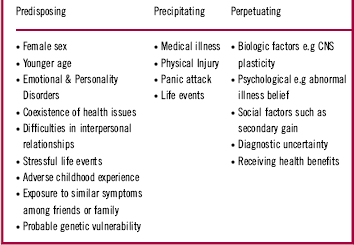
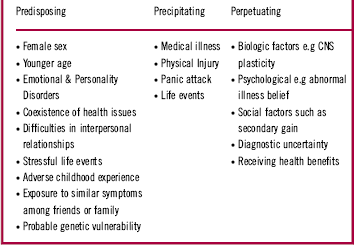
The etiology of FNDs is best understand within a biopsychosocial framework of multiple predisposing, precipitating, and perpetuating factors (Table 1).Reference Reuber 17 Importantly, there is significant heterogeneity among patients. Some have evidence of psychological trauma, which can help to understand their symptoms but is rarely the sole explanation, in the same way that smoking is rarely the only cause of stroke. Others present with similar symptoms but without psychological risk factors—for example, after experiencing a physical injury. There is no “one-size-fits-all” model.
A range of potential risk factors for FND. Patients vary widely in how relevant these various factors are and none are essential
Studies have shown that many FND patients tend to reject psychological factors as potentially causal factors even when they may be relevant, which has important implications for treatment. The reasons for this are complex and include both patient-related factors as well as health services and societal tendencies to dismiss patients perceived to have “psychosomatic complaints.”Reference Stone, Carson and Hallett 18 Successful engagement of FND patients often depends on relinquishing rigid notions that the cause or treatment of the disorder is exclusively psychological.
In new models of functional disorders, there is an equal emphasis on understanding the mechanism as well as the background risk factors. In FND patients, there is often an identifiable event at the onset, such as a physical injury or a panic attack with hyperventilation (which often induces unilateral sensory symptoms).Reference Pareés, Kojovic and Pires 19
Current models emphasize the importance of these experiences in triggering a state of abnormal focused attention, which is then promoted by both internal beliefs (e.g., “I am having a stroke”) and external information (e.g., paramedics saying “You are having a stroke“). Many patients with dissociative seizures, regardless of their vulnerability, appear to develop seizures as a conditioned response to a brief “panic” type of arousal experience.Reference Hendrickson, Popescu, Dixit, Ghearing and Bagic 20 , Reference Reuber and Brown 21 Panic symptoms (such as hyperventilation, feeling hot or scared) are more prevalent in dissociative seizures (80%) compared to generalized epileptic seizures (35%).Reference Hendrickson, Popescu, Dixit, Ghearing and Bagic 20 Additionally, the involuntary experience of a dissociative seizure temporarily removes the patient from the experience of this unpleasant arousal, just as someone with a panic attack leaves a cinema to relieve their distress. In this model, the seizure is a dissociative experience that is an adaptive and involuntary mechanism that relieves unwanted arousal and panic symptoms.
Functional imaging studies and neurophysiology are also revealing that FND patients do have abnormalities of nervous system function, which are different to neural changes seen in individuals pretending to have the same symptoms.Reference Aybek and Vuilleumier 22 , Reference Hallett 23
Positive diagnosis based on physical assessment
New diagnostic criteria for FNDs, including the DSM–5, highlight that a reliable diagnosis should be based primarily on typical positive features upon physical assessment.Reference Stone 24 Although physical diagnosis is not the role of the OT, it is essential that everyone in the multidisciplinary team understand how the diagnosis is made. Early stages of all types of therapy involve education about the diagnosis and preferably an ability to demonstrate these positive features to the patient.
Functional Movement Disorders
Research studies support the reliability of existing signs, including:
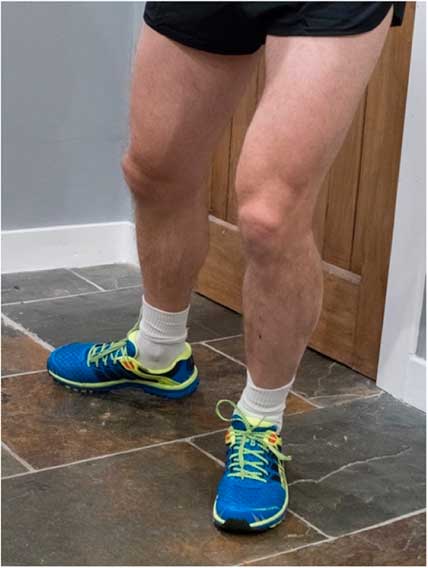
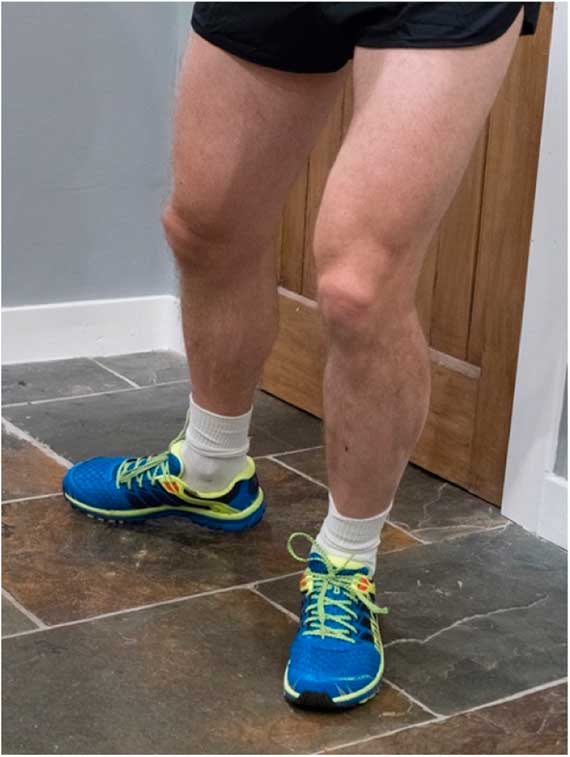
▪ A typical “dragging” gait of functional leg weakness, with the forefoot in contact with the ground (Figure 1) (see case study 1).Reference Stone, Warlow and Sharpe 12 , Reference McWhirter, Stone, Sandercock and Whiteley 25
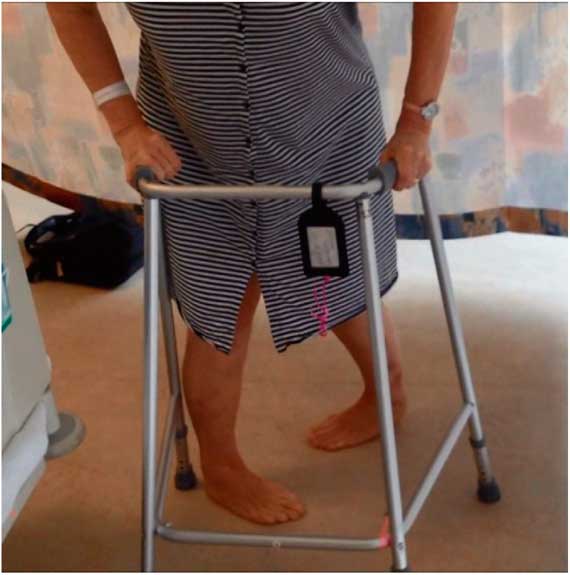
▪ A fixed dystonic posture seen in functional dystonia, typically an inverted and plantarflexed foot (Figure 2).Reference Schmerler and Espay 26
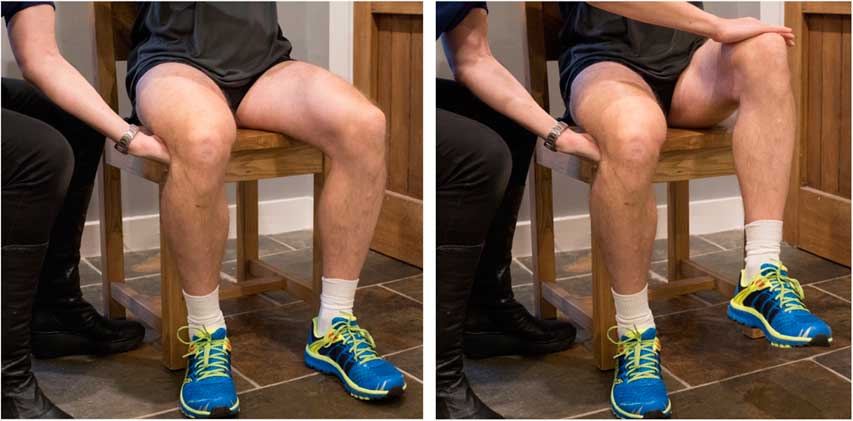
▪ Hoover’s sign (Figure 3) for functional limb weakness. Weakness of hip extension that returns to normal with contralateral hip flexion against resistance.Reference McWhirter, Stone, Sandercock and Whiteley 25
▪ The tremor entrainment test for functional tremor, where the tremor disappears transiently or changes in rhythm when copying movements made by the examiner.Reference Daum, Hubschmid and Aybek 27 , Reference Schwingenschuh, Saifee and Katschnig-Winter 28
Functional leg weakness: typical external rotation at the hip and dragging of the foot.
Bilateral Functional Leg Dystonia with typical internally rotated hip on right and bilateral fixed posture inverted ankles.

Hoovers sign is an example of a positive clinical sign of functional weakness that can be shared with the patient to aid understanding of the diagnosis and a concept of reversibility in treatment. Left: Test hip extension – it is weak; Right: Test contralateral hip flexion against resistance – hip extension has become strong.

Dissociative (nonepileptic) seizures
A metaanalysis of signs during video EEG identified the following positive signs of a dissociative seizures versus generalized epileptic seizure:Reference Avbersek and Sisodiya 29
▪ long duration of attacks (i.e., more than 3 minutes)
▪ prolonged sudden motionless unresponsiveness (e.g., >2 minutes)
▪ closed eyes (especially if resisting eye opening)
▪ crying during/immediately after an attack
▪ memory of being in a seizure
Evidence for Treatment of FNDs
The last few years have brought exciting developments in terms of evidence for treatment of FNDs. Treatment evidence encompasses multidisciplinary rehabilitationReference Demartini, Batla, Petrochilos, Fisher, Edwards and Joyce 4 – Reference Jordbru, Smedstad, Klungsøyr and Martinsen 6 and physical therapyReference Nielsen, Buszewicz and Stevenson 8 , Reference Nielsen, Ricciardi, Demartini, Hunter, Joyce and Edwards 9 for functional movement disorders as well as psychological therapies where the evidence is predominantly for dissociative seizures.Reference Goldstein and Mellers 30 – Reference LaFrance, Baird and Barry 32
Explanation
Most clinicians in this area emphasize the importance of spending time explaining the nature of the diagnosis.Reference Stone, Carson and Hallett 18 Typically, this step is often experienced as difficult by health professionals partly because clinicians often emphasize what the disorder is not (e.g., nonepileptic attacks), conduct normal tests, and then leap to assumptions about psychological etiology. An initial approach that mirrors more usual explanations in a medical setting is often more successful. This emphasizes the genuine and potentially reversible nature of the disorder, focuses on mechanism, and provides a positive diagnostic label as a signpost for further information.
A team member, for example. who can demonstrate supportively to patients that their movement can be transiently normal during these tests can provide a powerful way of convincing them of the diagnosis and helping them understand their symptoms.Reference Stone and Edwards 33 Explanation can be usefully supported by online resources (e.g., www.neurosymptoms.org, www.fndhope.org, www.fndaction.org.uk )
Physical and multidisciplinary therapy for FNDs
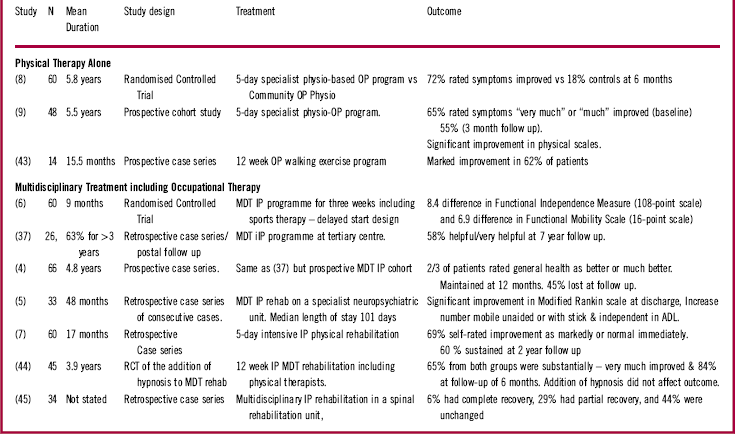
We searched for recent studies of treatment for FNDs from an existing systematic review search strategyReference Nielsen, Stone and Edwards 34 updated to 31 December 2016 (PubMed). We selected the highest-quality studies for Table 2.
Studies of Physical Therapy and Multidisciplinary Therapy (MDT) involving Occupational Therapy for Functional Movement/Motor Disorders (studies n>10). OP=Outpatient, IP=Inpatients, ADL=Activities of Daily Living
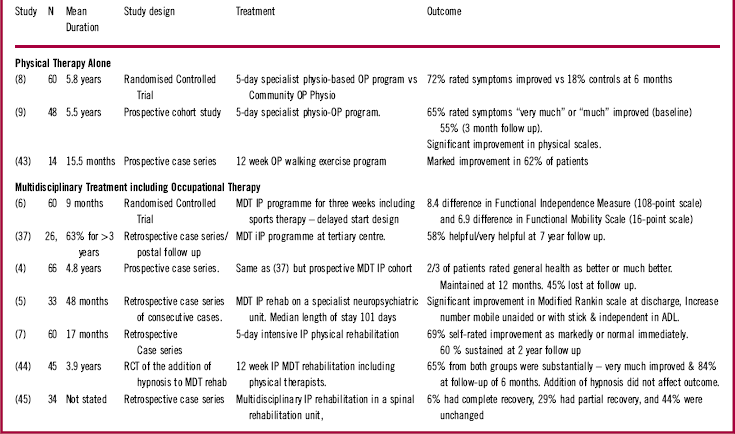
In 2015, a group of UK physiotherapists, neurologists, and psychiatrists collaborated to produce detailed consensus recommendations on the nature, content, and intensity of physiotherapy for functional motor disorders.Reference Nielsen, Stone and Edwards 34 This approach, which is different from using a generic “neuro” approach, emphasizes the importance of a consistent and supportive team approach to positive diagnosis and the process of explanation, reducing abnormal self-directed attention by distraction techniques and breaking down learned patterns of abnormal movement to then retrain normal “automatic” patterns. It also recognizes the importance of entwining education and psychological approaches. Much of the therapy described is behavioral in nature and focuses on a graded approach to increasing activity levels, as used in conditions such as chronic fatigue syndrome,Reference White, Goldsmith and Johnson 36 and could be reproduced by other allied health professionals, including OTs. Subsequent cohort studies and a recent randomized controlled trial (RCT) of these consensus recommendations have provided highly promising outcomes, even in patients with long-duration symptoms.Reference Nielsen, Buszewicz and Stevenson 8 , Reference Nielsen, Ricciardi, Demartini, Hunter, Joyce and Edwards 9
The literature on multidisciplinary rehabilitation is mostly on patients with long-duration symptoms in tertiary centers but nonetheless describe potentially good outcomes in some patients. In a delayed-treatment randomized trial from Norway, 60 patients with functional gait disorder (mean duration=9 months) were admitted to a regional rehabilitation unit for MDT including sports therapy.Reference Jordbru, Smedstad, Klungsøyr and Martinsen 6 Patients achieved high levels of independence and mobility sustained a year after treatment. Many patients returned to work, and no patients used aids or wheelchairs at follow-up, reinforcing the need to delay aid provision.
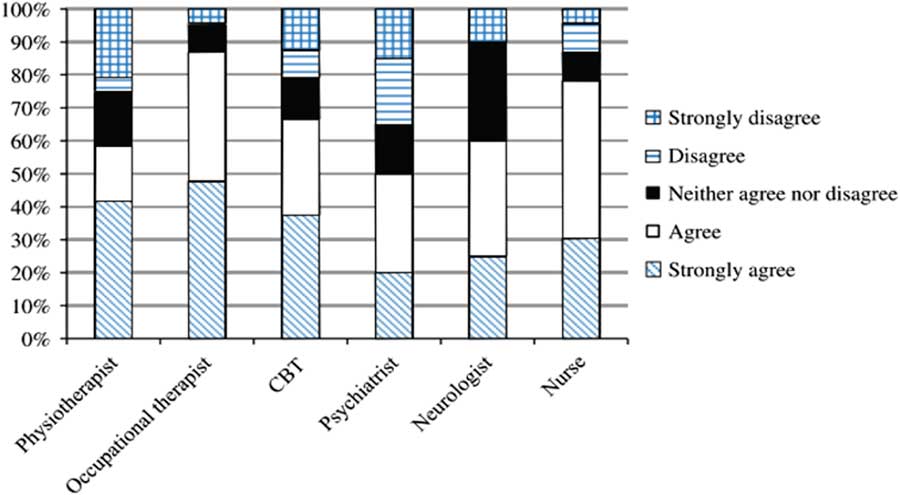
One study of an inpatient FND treatment program in London described a combination of cognitive behavioral treatment and physical therapy with behavioral activation.Reference Saifee, Kassavetis and Pareés 37 Occupational therapy was the most popular component of this treatment among participants (Figure 4). See case 1 for an example of a rehabilitation approach.
Percentage of patients who “found contact with the person useful for myself symptoms” in an inpatient study of 26 patients having MDT for functional motor disorders (37). Reproduced by permission of Springer.

Case 1: Physiotherapy and Occupational Therapy with a Cognitive Behavioral Flavor for a Functional Movement Disorder
A 28-year-old woman working full-time presented to rehabilitation services with hand and leg weakness saying that they didn't feel “part” of her (i.e., dissociation). There was neck and arm pain following an upsetting recent car crash and workplace bullying but no other neurological or psychological history.
She had positive Hoover's sign of the lower limb (Figure 4), and she dragged her left leg with the foot externally rotated (Figure 1). Other investigations including MRI brain and spine were normal. The patient was given a positive FND diagnosis with an explanation of how the signs informed diagnosis and the potential for reversibility, and was directed to self-help.
Therapy emphasized “retraining” to promote automatic movement34—for example: highlighting a “corrupted” forward gait but “preserved” backward gait, in keeping with a “software” problem rather than a “hardware” problem. In addition, throwing a softball toward the weak hand, eliciting new “automatic” finger movement; encouraging the patient to use distraction when they walk or carry out activities, with things like singing, using a games console, and playing football. Hands-on treatment was kept to a minimum. Aids were actively discouraged with open discussion of the risks of falling.
Prior plans for a stairlift and bath aids were suspended. The patient slowly improved over a 4-month period with several relapses. They were assisted back to work with the help of occupational therapy, including education of her employer.
Psychological Treatments of FNDs
The past few years have yielded RCT data for psychological therapy in FND patients. The results of an RCT of brief cognitive behavioral therapy (CBT)-guided self-help for various FNDs (n=127)Reference Sharpe, Walker and Williams 38 and liaison psychiatry input (n=23)Reference Hubschmid, Aybek and Maccaferri 39 have been cautiously positive. In patients with dissociative seizures, an RCT of 66 patients found that CBT plus standard medical care (SMC) was superior to SMC alone,Reference Goldstein, Chalder and Chigwedere 31 with a maintained effect at 6 months.
In this study, a 12-session manualized CBT included: interrupting warning signals of the seizure, engaging patients in reducing safety behaviors/avoidances, and managing unhelpful thoughts for seizure control, mood, and self-esteem issues (case 2). Another RCT of CBT-informed psychotherapy in 38 patients with dissociative seizures was also promising.Reference LaFrance, Baird and Barry 32 A larger and better-powered RCT is also now underway.Reference Goldstein, Mellers and Landau 40
Case 2: Cognitive Behavioral Therapy (CBT) for Dissociative Seizures
A 24-year-old man had a 3-year history of blackouts occurring once or twice per week characterized by motionless unresponsive episodes lasting up to 45 minutes with eyes closed. The patient experienced “warning symptoms” of feeling hot and dizzy and sweating prior to the onset of the seizure, which were “uncomfortable” but without explicit anxiety. The patient described fear of injury during a seizure and going out alone and had stopped participating in such activities as rugby and college.
OT-led 12-session CBT initially involved agenda and homework setting, consolidating the diagnosis, and orientating the patient to the CBT model. Distraction and refocusing techniques during the attack prodrome helped to start to delay the onset of episodes. As treatment progressed, the patient began to identify feelings of anxiety linked to the onset and maintenance of the events. Graded exposure was used to work on behavioral goals (e.g., to travel independently and socialize with friends and family). Steps were identified in a return to work, and barriers were problem-solved. By session 11, his seizures had diminished in frequency to once every 2 months with less anxiety as well as a return to employment and social activities.
The Importance of Occupational Therapy in FNDs
What can occupational therapists uniquely contribute to FNDs?
An occupational therapist’s dual training in physical health and mental health, and their focus on the activities of daily living (ADL) rather than diagnosis, make them uniquely placed to provide valuable interventions for FND patients, a disorder that sits at the interface between neurology and psychiatry. In such settings as acute wards and community rehabilitation teams and within social work services, the primary aim may be provision of adaptations and aids for the home to enable independence. In all these roles, knowledge of FNDs may influence a change in current practice.
The existing treatment literature highlights the efficacy of many techniques familiar to the OT: combining physical and psychological therapy,Reference Saifee, Kassavetis and Pareés 41 behavioral physical activities including graded activity/activity analysis,Reference Demartini, Batla, Petrochilos, Fisher, Edwards and Joyce 4 coping/problem-solving strategies, and retraining abnormal movement patterns during ADL.Reference Nielsen, Stone and Matthews 35
The OT’s assessment in FNDs
We suggest a focus on the following areas for FNDs:
▪ Comprehensive list of symptoms, including prompts about fatigue, pain, sleep, and memory symptoms if not volunteered.
▪ 24-hour routine inspection, especially for boom and bust behavior, interest in and enjoyment of activities and level of support from others.
▪ Current reliance (and possibly overreliance) on adaptations and aids.
▪ Gaining a clear understanding of the level of confidence of patient, family, and friends in the diagnosis of an FND, including engagement with self-help material.
▪ Obstacles to rehabilitation, including: comorbid psychological or physical conditions, work and home social stressors/reinforcers, while being careful to accept if not present.
▪ Identifying achievable goals for treatment.
▪ Providing a formulation for the patient emphasizing a positive diagnosis.
Aids/adaptations
The provision of aids and assistive equipment is an important part of occupational therapy programs, but this may harm as well as help the FND patient. Currently, treatment approaches for FNDs emphasize avoiding aids and adaptations in a patient confident about the diagnosis and engaging actively with rehabilitation, as such aids can encourage unhelpful compensatory movement patterns. In patients unable to engage in treatment, aids may be unavoidable and improve independence. We suggest reviewing the patient’s level of confidence of the diagnosis to see if previous treatment steps (including explanation, psychotherapy, and physiotherapy) need to be revisited before heading in the direction of potentially long-term disability. Involving the patient transparently in this decision allows these potential negative consequences to be highlighted.Reference Stone and Edwards 33
Plans to reduce reliance on or to stop using an aid may lead to conditioned anxiety or a panic response. This is often not articulated but demonstrated by a sudden increase in symptoms either during discussion or when the aid is first out of reach. This can be tackled by education to help along with insight followed by behavioral desensitization.
Family, Friends, and Caregivers
Similar principles relating to aids and adaptations may apply in relation to family, friends, or formal caregivers who may have become involved in helping the disabled FND patient. When there is prolonged “diagnostic limbo” before a diagnosis of an FND, caregivers may “play it safe” to avoid perceived risks to the patient. However, this may reduce the patient’s confidence in their ability to carry out daily tasks and adversely affect the nature of close relationships. During active rehabilitation, the occupational therapist can help caregivers to support a gradual move toward independence, toward learning to take risks, and restoring normalized relationships.
Work and benefits
Work-related skills could comprise getting people “work-ready”: accessing appropriate services/liaising with employers, making changes to the environment/work patterns, dealing with problem-solving issues, and developing skills—i.e., assertion in the workplace. Specific education of employers about FNDs and such accompanying comorbidities as dissociative seizures that may cause anxiety for others in the workplace may be especially valuable.
Purposeful activity
Many FND patients do not get out the house due to physical limitations, anxiety, and depression. An occupational therapist’s skill in encouraging patients to engage in everyday activities is usually engrained in their assessment and treatment goals. There are many community-based resources involving such activities as music, drawing, and socializing that have also been proven to be beneficial in terms of enhancing health and well-being and achieving independence.Reference Gutman and Schindler 42
Knowing when to limit active treatment
Many OTs have told us how difficult they find it to know when therapy should end in certain patients or describe frustration in attempting to engage some FND patients. All clinicians working in this area recognize that there are groups of patients, as there are for many disorders, who are hard to help. This may be a consequence of poor initial treatment from the diagnosing neurologist or a lack of specialist support, or may instead relate to obstacles related to the patient or their immediate environment.
To minimize problems, discharge planning starts at the onset of treatment, designing a contract with the patient and eliciting a self-management program throughout the treatment process. This self-management is helped by eventually tapering the frequency of sessions. Treatment reports and written instructions can also aid in the discharge process in patients with ongoing symptoms.
FNDs do not mean that “nothing is wrong,” and, for many patients, current treatments, even when optimized, may not be effective. Treatment contracts may be useful, including setting realistic expectations as well as rules on nonattendance, and engagement with tasks.
Summary and Research Agenda for Occupational Therapy in Relation to FNDs
We wrote this article as an introduction to the role of the OT in FNDs after requests from numerous occupational therapists. Contrary to the negativity that often surrounds this clinical topic, recent evidence suggests that occupational therapy is a natural fit for treatment of FNDs. They are common in neurological practice and should be diagnosed on positive grounds, not as a diagnosis of exclusion. There are encouraging case series and trial data regarding the role of allied health professionals in the management of FNDs for both physical and psychological therapy.
A program of research about the role of occupational therapy in FNDs is needed to complement that already developed in physiotherapy, including: the development of consensus recommendations, especially emphasizing where the role of the therapist is additive to those of other health professionals; as well as pilot and randomized treatment interventions, especially investigating the harmful or helpful role of aids and appliances and their part in helping the patient to return to work.