





Introduction
Children with cancer are at increased risk of severe infection and shock because of chemotherapy-related myelosuppression, central venous catheters, mucosal barrier injury, and immune dysfunction. Children who undergo haematopoietic stem cell transplantation are especially likely to require intensive care, and infection is among the factors associated with poor outcomes in this population. Reference Kim, Ha and Park1 In parallel, many children are exposed to therapies that may reduce cardiac reserve, especially anthracyclines. When sepsis occurs in this setting, clinicians may face a difficult attribution problem: whether hypotension, fluid intolerance, and organ dysfunction reflect distributive shock alone, pre-existing or treatment-related cardiomyopathy, sepsis-induced myocardial dysfunction, or a combination of these mechanisms.
Sepsis-induced myocardial dysfunction is increasingly recognised in paediatric critical care, but its presentation, incidence, and management in children with cancer remain poorly characterised. This population may be clinically distinct not because available studies prove a higher incidence of myocardial dysfunction, but because pre-existing treatment-related injury, systemic inflammation, anaemia, renal dysfunction, fluid exposure, and vasoactive stress can coexist and obscure both diagnosis and attribution. Current paediatric sepsis guidance addresses haemodynamic reassessment and cardiac ultrasound, whereas cardio-oncology guidance focuses primarily on treatment-related surveillance; neither provides an evidence-based pathway for acute myocardial dysfunction during sepsis in children with cancer. A dedicated evidence map is therefore needed to define what is known, identify where oncology-specific evidence is absent, and establish priorities for comparative studies.
The objective of this scoping review was to map the available literature on myocardial dysfunction and related cardiac involvement during sepsis or severe infection in children with cancer, with emphasis on populations studied, cardiac definitions and assessments, management approaches, and reported outcomes. We specifically sought to determine whether the literature supports an oncology-specific risk or phenotype; where it did not, we treated that absence as a principal evidence gap rather than inferring excess risk.
Materials and methods
Design
We conducted a scoping review using a protocol registered in Open Science Framework Registries as a Generalised Systematic Review Registration (digital object identifier: 10.17605/OSF.IO/CYQ5H). A scoping design was selected because the available literature was expected to vary substantially in study design, infection phenotype, cardiac definition, timing of assessment, and outcome reporting. The purpose was to map concepts, definitions, and evidence gaps rather than estimate incidence, compare risk with non-oncology populations, or calculate a pooled treatment effect. Reporting was guided by scoping review principles and the Preferred Reporting Items for Systematic Reviews and Meta-Analyses Extension for Scoping Reviews. Reference Tricco, Lillie and Zarin2
Eligibility criteria
Eligible records included children, adolescents, or paediatric haematology-oncology or haematopoietic stem cell transplantation populations with cancer or cancer-directed therapy and sepsis, septic shock, febrile neutropenia, bacteraemia, bloodstream infection, candidemia, or invasive fungal infection. Records also had to report a cardiac assessment or outcome, including echocardiography, ejection fraction, shortening fraction, B-type natriuretic peptide, troponin, rhythm abnormality, myocarditis, cardiomyopathy, vasoactive support, fluid responsiveness, endocarditis, or cardiac recovery. Adult-only studies, animal studies, non-infectious cardiotoxicity without sepsis or infection, and studies without cardiac or haemodynamic data were excluded from the evidence map.
Information sources and search
We searched PubMed, Embase, Scopus, Web of Science, and the Cochrane Library through June 2026. Search concepts combined paediatric terms, cancer or haematology-oncology terms, sepsis or infection terms, and cardiac terms. Search results were exported and deduplicated. Conference abstracts were eligible when they contained extractable population, infection, cardiac assessment, and outcome data.
Selection and extraction
After deduplication, titles and abstracts were screened for the three core domains: paediatric cancer population, sepsis or severe infection, and cardiac or haemodynamic assessment. Full texts or complete abstract records were reviewed for eligibility. Extracted data included country, design, population, cancer type, infection type, prior cardiotoxic exposure when reported, cardiac definition or threshold, testing modality, timing of assessment, treatment, recovery trajectory, and outcomes. Findings were summarised narratively and organised into clinically meaningful domains: myocardial dysfunction, biomarkers, haemodynamic assessment, infectious cardiac complications, and rhythm disturbances.
Results
Study selection
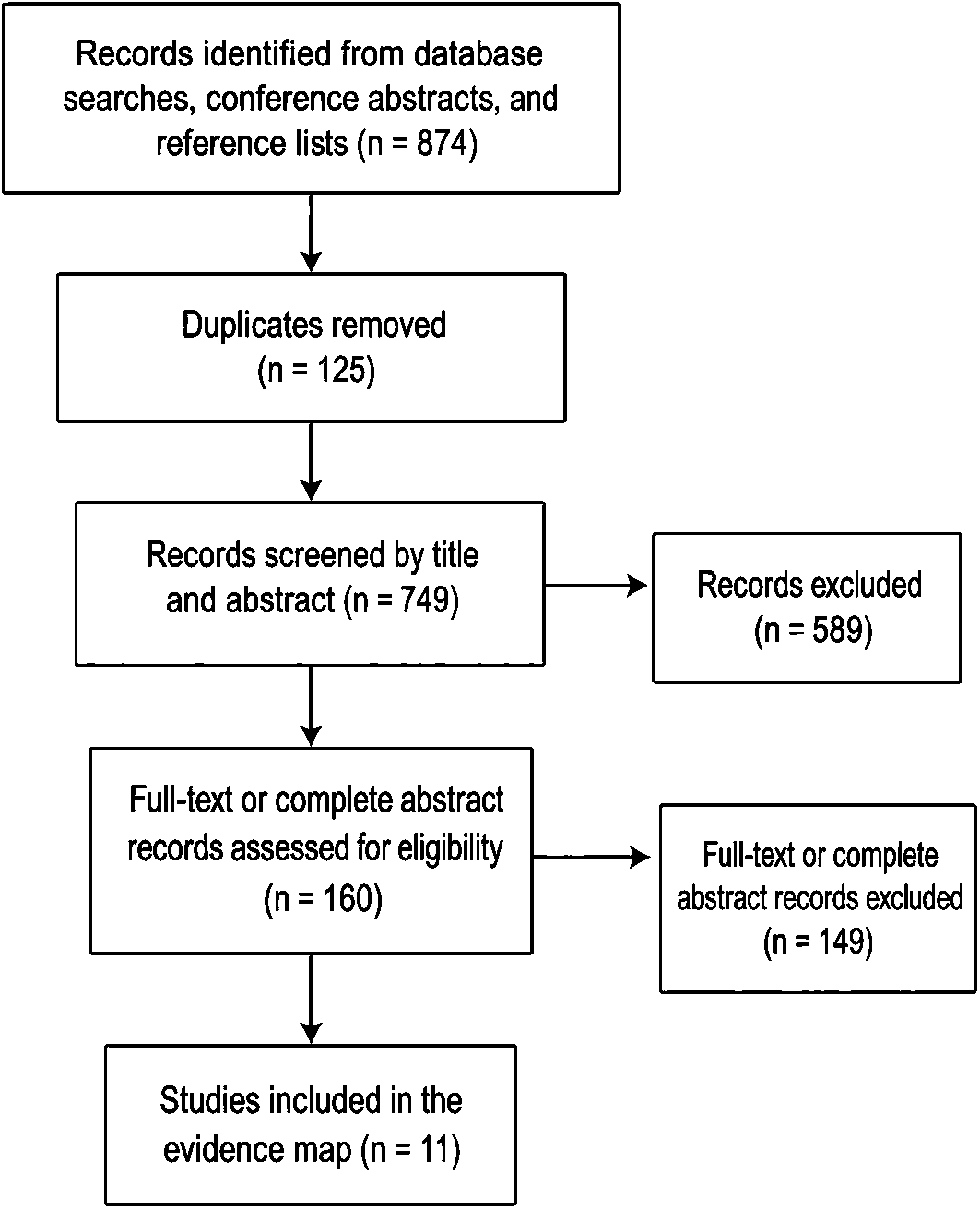
The searches identified 874 records. After removal of 125 duplicates, 749 records underwent title and abstract screening. One hundred sixty full-text or complete abstract records were assessed for eligibility, and 11 studies were included in the evidence map (Figure 1).
Study selection flow diagram. Records identified from database searches and additional sources were deduplicated, screened, and reviewed for eligibility. Eleven studies were included in the final evidence map.

Overview of included evidence
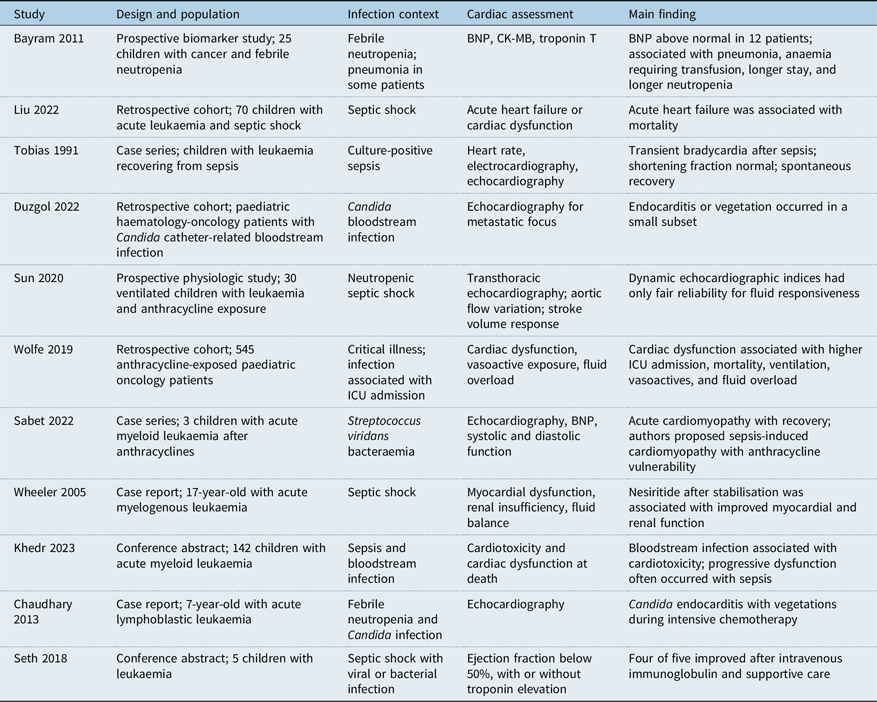
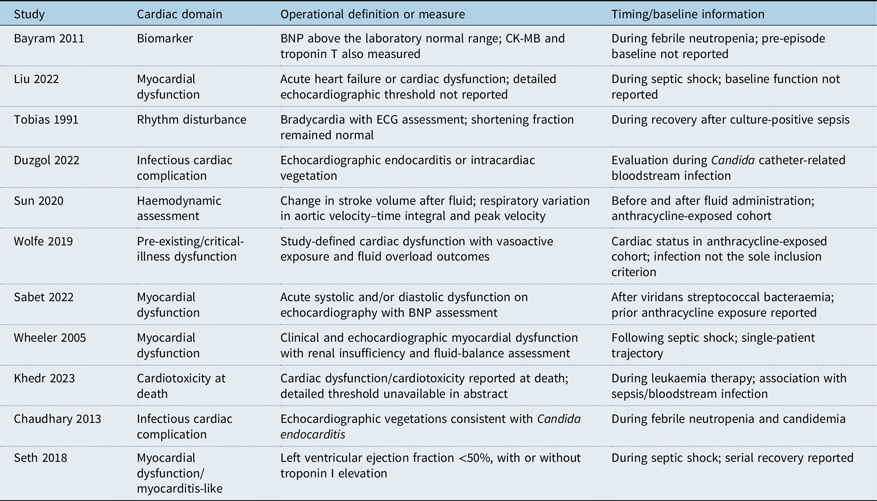
The evidence base was small and heterogeneous. Included studies comprised retrospective cohorts, prospective physiologic studies, case reports, case series, and conference abstracts. Most records focused on leukaemia, particularly acute myeloid leukaemia or acute lymphoblastic leukaemia, and several involved children receiving or previously exposed to anthracyclines. Cardiac involvement was not defined uniformly: studies used reduced ejection fraction, acute heart failure or an unspecified cardiac dysfunction label, biomarker elevation, rhythm findings, fluid responsiveness, or echocardiographic evidence of endocarditis (Tables 1 and 2). No included study directly compared the incidence of sepsis-associated myocardial dysfunction in children with cancer with that in children without cancer, and no study established cancer history or anthracycline exposure as an independent risk factor.
Included studies and extracted cardiac findings

Table 1. Long description
A table comparing studies on cardiac findings in children with cancer and infections. The table has 11 rows and 4 columns. Column headers are Study, Design and population, Infection context, Cardiac assessment, and Main finding. Row 1: Study, Bayram 2011; Design and population, Prospective biomarker study; 25 children with cancer and febrile neutropenia; Infection context, Febrile neutropenia; pneumonia in some patients; Cardiac assessment, BNP, CK-MB, troponin T; Main finding, BNP above normal in 12 patients; associated with pneumonia, anaemia requiring transfusion, longer stay, and longer neutropenia. Row 2: Study, Liu 2022; Design and population, Retrospective cohort; 70 children with acute leukaemia and septic shock; Infection context, Septic shock; Cardiac assessment, Acute heart failure or cardiac dysfunction; Main finding, Acute heart failure was associated with mortality. Row 3: Study, Tobias 1991; Design and population, Case series; children with leukaemia recovering from sepsis; Infection context, Culture-positive sepsis; Cardiac assessment, Heart rate, electrocardiography, echocardiography; Main finding, Transient bradycardia after sepsis; shortening fraction normal; spontaneous recovery. Row 4: Study, Duzgol 2022; Design and population, Retrospective cohort; paediatric haematology-oncology patients with Candida catheter-related bloodstream infection; Infection context, Candida bloodstream infection; Cardiac assessment, Echocardiography for metastatic focus; Main finding, Endocarditis or vegetation occurred in a small subset. Row 5: Study, Sun 2020; Design and population, Prospective physiologic study; 30 ventilated children with leukaemia and anthracycline exposure; Infection context, Neutropenic septic shock; Cardiac assessment, Transthoracic echocardiography; aortic flow variation; stroke volume response; Main finding, Dynamic echocardiographic indices had only fair reliability for fluid responsiveness. Row 6: Study, Wolfe 2019; Design and population, Retrospective cohort; 545 anthracycline-exposed paediatric oncology patients; Infection context, Critical illness; infection associated with ICU admission; Cardiac assessment, Cardiac dysfunction, vasoactive exposure, fluid overload; Main finding, Cardiac dysfunction associated with higher ICU admission, mortality, ventilation, vasoactives, and fluid overload. Row 7: Study, Sabet 2022; Design and population, Case series; 3 children with acute myeloid leukaemia after anthracyclines; Infection context, Streptococcus viridans bacteraemia; Cardiac assessment, Echocardiography, BNP, systolic and diastolic function; Main finding, Acute cardiomyopathy with recovery; authors proposed sepsis-induced cardiomyopathy with anthracycline vulnerability. Row 8: Study, Wheeler 2005; Design and population, Case report; 17-year-old with acute myelogenous leukaemia; Infection context, Septic shock; Cardiac assessment, Myocardial dysfunction, renal insufficiency, fluid balance; Main finding, Nesiritide after stabilisation was associated with improved myocardial and renal function. Row 9: Study, Khedr 2023; Design and population, Conference abstract; 142 children with acute myeloid leukaemia; Infection context, Sepsis and bloodstream infection; Cardiac assessment, Cardiotoxicity and cardiac dysfunction at death; Main finding, Bloodstream infection associated with cardiotoxicity; progressive dysfunction often occurred with sepsis. Row 10: Study, Chaudhary 2013; Design and population, Case report; 7-year-old with acute lymphoblastic leukaemia; Infection context, Febrile neutropenia and Candida infection; Cardiac assessment, Echocardiography; Main finding, Candida endocarditis with vegetations during intensive chemotherapy. Row 11: Study, Seth 2018; Design and population, Conference abstract; 5 children with leukaemia; Infection context, Septic shock with viral or bacterial infection; Cardiac assessment, Ejection fraction below 50 percent, with or without troponin elevation; Main finding, Four of five improved after intravenous immunoglobulin and supportive care.
BNP = B-type natriuretic peptide; CK-MB = creatine kinase-myocardial band.
Definitions and measurement of cardiac involvement across included studies

Table 2. Long description
The table presents a summary of various studies focused on cardiac involvement in children with cancer. It includes ten rows and four columns. The columns are labeled ‘Study’, ‘Cardiac domain’, ‘Operational definition or measure’, and ‘Timing/baseline information’. Each row corresponds to a different study, providing details on the specific cardiac domain investigated, the operational definition or measure used, and the timing or baseline information relevant to the study. The studies cover a range of cardiac domains such as biomarkers, myocardial dysfunction, rhythm disturbances, infectious cardiac complications, hemodynamic assessment, pre-existing/critical-illness dysfunction, and cardiotoxicity at death. The operational definitions include various measures like BNP levels, echocardiographic assessments, ECG assessments, and fluid responsiveness. The timing/baseline information specifies when and under what conditions the measurements were taken, such as during febrile neutropenia, septic shock, or after fluid administration.
Myocardial dysfunction and myocarditis-like presentations
The most direct evidence came from reports of leukaemia complicated by septic shock or bacteraemia with acute myocardial dysfunction. In the largest cohort, Liu and colleagues retrospectively analysed 70 children with acute leukaemia and septic shock and reported that acute heart failure was associated with mortality. Reference Liu, Wang and Liu3 Seth and colleagues described five children with leukaemia, septic shock, and myocarditis or myocardial dysfunction not responding to supportive care. Myocarditis was defined as ejection fraction below 50%, with or without elevated troponin I. All received antibiotics, diuretics, and inotropes; intravenous immunoglobulin was administered at 2 g/kg. Four children had normalisation of left ventricular function and were discharged on enalapril and carvedilol. Reference Seth, Seth, Meena and Gupta4
Sabet and colleagues reported three children with acute myeloid leukaemia who developed acute heart failure after Streptococcus viridans bacteraemia and anthracycline exposure. The authors proposed that anthracycline-related myocyte vulnerability may predispose to sepsis-induced cardiomyopathy. The cases were notable for persistent tachycardia before overt heart failure and near-complete recovery within weeks. Reference Sabet, Panigrahi, Chung and Dayan5
Wheeler and Tobias described a 17 year old with acute myelogenous leukaemia admitted to the ICU with septic shock, respiratory failure, myocardial dysfunction, and renal insufficiency. After stabilisation, recombinant B-type natriuretic peptide was associated with stable fluid balance, improved myocardial function, and renal recovery. Reference Wheeler and Tobias6
Biomarkers and cardiac surveillance
Bayram and colleagues measured B-type natriuretic peptide in 25 paediatric cancer patients with febrile neutropenia. Twelve patients had values above the normal range. Higher values were associated with pneumonia, anaemia requiring erythrocyte transfusion, longer hospitalisation, and longer neutropenia. This study supports the feasibility of biomarker surveillance in febrile neutropenia, although it did not establish a standardised cardiac dysfunction phenotype. Reference Bayram, Erbey, Erdem and Tanyeli7
A conference abstract by Khedr and colleagues evaluated paediatric acute myeloid leukaemia in a low- or middle-income setting and reported that cardiac dysfunction at death was frequently associated with sepsis. Bloodstream infection was associated with higher cumulative cardiotoxicity, suggesting that infection may be an important modifier of cardiac outcomes during leukaemia therapy. Reference Khedr, Gaber, Selim and Elkhaiat8
Echocardiographic haemodynamic assessment
Sun and colleagues prospectively studied mechanically ventilated children with leukaemia, anthracycline exposure, and neutropenic septic shock. Transthoracic echocardiography was used to measure respiratory variation in aortic blood flow before and after fluid administration. Sixteen children were fluid responders, and fourteen were nonresponders. Respiratory variation in aortic velocity time integral and peak velocity showed only fair reliability for predicting volume responsiveness, emphasising that conventional dynamic indices may be imperfect in this high-risk group. Reference Sun, Ren and Wang9
Critical illness, infection, and pre-existing cardiac dysfunction
Wolfe and colleagues studied anthracycline-exposed paediatric oncology patients and found that children with cardiac dysfunction had higher ICU admission rates, mortality, mechanical ventilation use, vasoactive medication exposure, and fluid overload than those without cardiac dysfunction. Although not limited to sepsis, the study identified infection as associated with ICU admission and supports the concept that cardiac dysfunction increases vulnerability during critical illness. Reference Wolfe, Reichek and Marsillio10
Infectious cardiac complications
Infectious cardiac complications were reported separately from myocardial dysfunction. Duzgol and colleagues described Candida-associated catheter-related bloodstream infections in paediatric haematology-oncology patients and identified endocarditis or intracardiac vegetation in a small subset. Chaudhary and colleagues reported Candida endocarditis in a child with acute lymphoblastic leukaemia during intensive chemotherapy and febrile neutropenia. Reference Duzgol, Kafadar and Kara11,Reference Chaudhary, Vishwanath, Pahuja and Borker12
Rhythm disturbances
Tobias and colleagues reported transient bradycardia during recovery from culture-positive sepsis in children with leukaemia. Echocardiographic shortening fraction was normal and the rhythm abnormality resolved spontaneously, suggesting a post-sepsis autonomic or conduction phenomenon rather than overt systolic dysfunction. Reference Tobias, Schleien and Haun13
Discussion
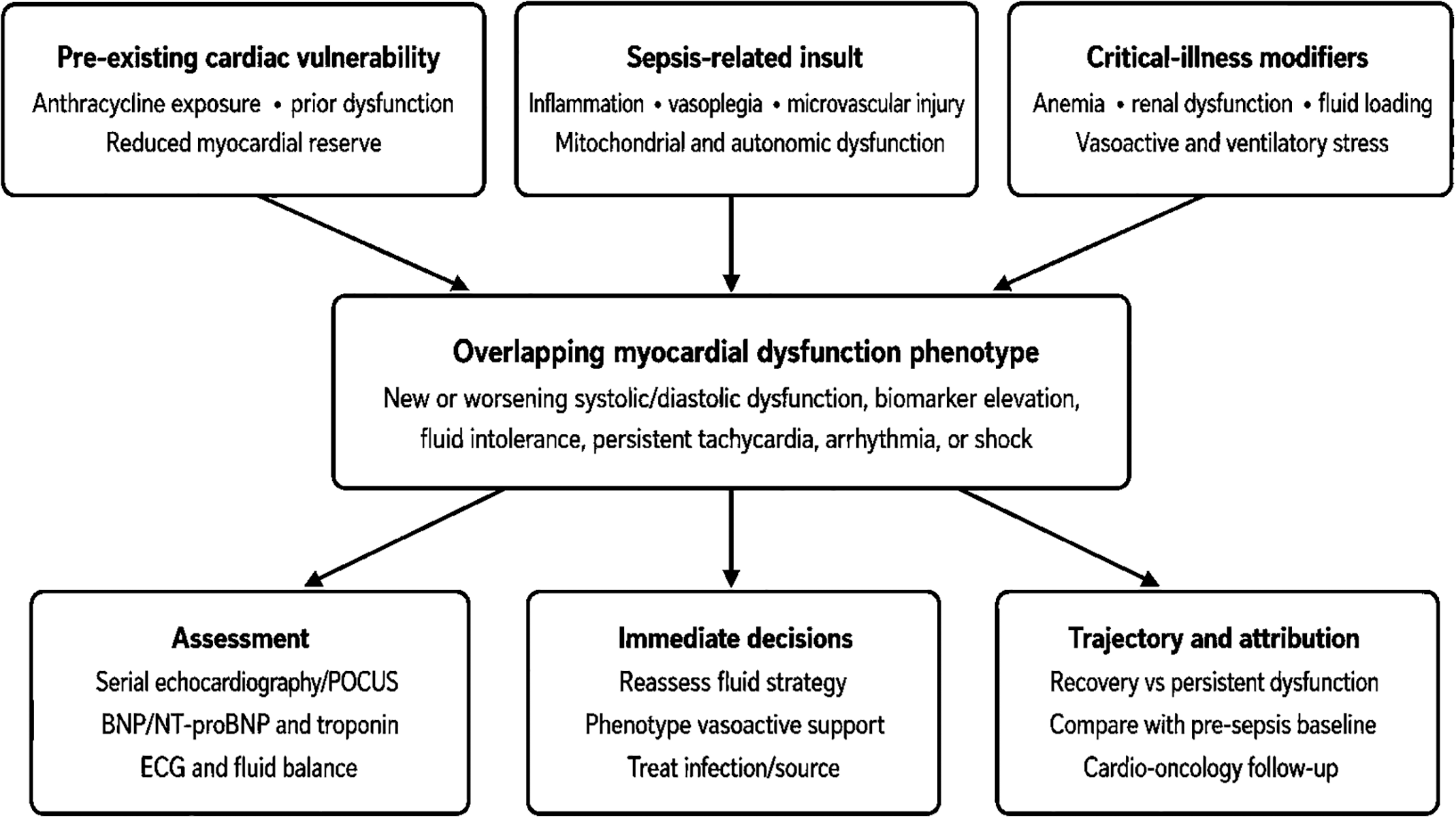
This scoping review found that cardiac involvement during sepsis in children with cancer is clinically recognised but poorly standardised. Importantly, the available evidence does not demonstrate that myocardial dysfunction occurs more frequently than in children without cancer, nor does it establish cancer history or anthracycline exposure as an independent risk factor. The contribution of this review is therefore not a claim of excess incidence. Rather, it identifies an unresolved attribution problem in a population with potentially limited cardiac reserve, maps the disparate ways cardiac involvement has been measured, and shows that the comparative studies needed to determine whether an oncology-specific phenotype exists have not been performed. The principal hypothesis generated by the evidence is an interaction between sepsis-related myocardial depression and cancer therapy-related vulnerability. In paediatric sepsis, myocardial dysfunction may be transient. In children with cancer, the same inflammatory and haemodynamic insult may occur in a myocardium previously exposed to anthracyclines or other cardiotoxic therapies and may be compounded by anaemia, renal dysfunction, fluid loading, and vasoactive therapy. This framework is biologically plausible but remains unproven because the included studies lacked appropriate non-oncology comparators, standardised baseline cardiac data, and adjusted analyses. Figure 2 presents this interaction as a conceptual model rather than a demonstrated causal pathway.
Conceptual framework for myocardial dysfunction during sepsis in children with cancer. Pre-existing treatment-related cardiac vulnerability may interact with sepsis-related inflammation and critical-illness modifiers to produce an overlapping phenotype. The framework is hypothesis generating because the included literature does not establish causality or increased incidence compared with children without cancer.

Figure 2. Long description
The diagram illustrates a conceptual framework for myocardial dysfunction during sepsis in children with cancer. It is structured as a flowchart with three main contributing factors leading to an overlapping myocardial dysfunction phenotype. The three contributing factors are pre-existing cardiac vulnerability, sepsis-related insult, and critical-illness modifiers. Pre-existing cardiac vulnerability includes anthracycline exposure, prior dysfunction, and reduced myocardial reserve. Sepsis-related insult encompasses inflammation, vasoplegia, microvascular injury, mitochondrial and autonomic dysfunction. Critical-illness modifiers include anemia, renal dysfunction, fluid loading, vasoactive, and ventilatory stress. These factors converge to produce an overlapping myocardial dysfunction phenotype characterized by new or worsening systolic/diastolic dysfunction, biomarker elevation, fluid intolerance, persistent tachycardia, arrhythmia, or shock. This phenotype leads to three outcomes: assessment, immediate decisions, and trajectory and attribution. Assessment involves serial echocardiography/POCUS, BNP/NT-proBNP and troponin, ECG, and fluid balance. Immediate decisions include reassessing fluid strategy, phenotyping vasoactive support, and treating infection/source. Trajectory and attribution involve comparing recovery vs persistent dysfunction with pre-sepsis baseline and cardio-oncology follow-up.
The evidence supports a multimodal approach to cardiac assessment while underscoring that oncology-specific thresholds are unknown. Echocardiography can characterise systolic and diastolic function, chamber size, fluid responsiveness, and endocarditis; biomarkers may identify myocardial stress or injury, and electrocardiography can define rhythm abnormalities. Persistent tachycardia, new fluid intolerance, rising vasoactive requirements, pulmonary oedema after resuscitation, persistent lactate elevation, or rhythm change may reasonably prompt assessment, particularly when a pre-illness echocardiogram is available for comparison. However, the reviewed evidence does not support routine biomarker screening, a specific echocardiographic threshold, or a treatment algorithm unique to children with cancer.
Therapeutic evidence is very limited. Reports describe inotropes, diuretics, enalapril, carvedilol, intravenous immunoglobulin, and recombinant B-type natriuretic peptide, but these observations are uncontrolled and subject to selection and publication bias. Intravenous immunoglobulin and nesiritide should therefore be regarded as hypothesis-generating observations rather than evidence-based therapy. Management should remain individualised according to infection control, haemodynamic phenotype, fluid tolerance, and established paediatric sepsis and heart failure principles.
For clinical practice, the review supports early collaboration among intensivists, cardiologists, and oncologists when children with cancer develop septic shock and signs of cardiac involvement, while avoiding the assumption that cancer itself confers a proven excess risk. For research, the priority is a comparative, prospective definition of the syndrome. Future multicentre studies should enroll oncology and appropriate non-oncology sepsis cohorts, record pre-sepsis cardiac status and cumulative cardiotoxic exposure, use prespecified echocardiographic and biomarker definitions, report assessment time, vasoactive exposure, fluid balance, organ dysfunction, and distinguish transient recovery from persistent dysfunction. This minimum dataset would allow investigators to test whether cancer therapy modifies incidence, phenotype, treatment response, or outcome.
Limitations
This review has limitations. The evidence map includes conference abstracts, case reports, and heterogeneous observational studies, several of which were not designed primarily to evaluate sepsis-associated myocardial dysfunction. Some studies focused on broader cardiac involvement, such as endocarditis or rhythm abnormality, or critical illness in which infection was only one component. Cardiac definitions and assessment timing differed substantially, baseline function and cumulative anthracycline exposure were often unavailable, and no eligible study provided a direct non-oncology comparator. Search terms may also have missed studies that reported cardiac outcomes only within tables or supplementary files. Because the evidence was clinically and methodologically heterogeneous, no pooled estimate was attempted, and no inference about increased incidence or independent risk is justified.
Conclusion
Myocardial dysfunction and related cardiac involvement during sepsis in children with cancer are under-studied. Existing reports show that dysfunction can occur and may be reversible, but they do not demonstrate a higher incidence than in children without cancer or establish an oncology-specific syndrome. The most important finding is the absence of standardised definitions, baseline cardiac characterisation, and comparative cohorts. Prospective multicentre studies are needed to determine whether prior cardiotoxic therapy modifies the incidence, phenotype, recovery, or outcomes of sepsis-associated myocardial dysfunction.
Acknowledgements
The authors acknowledge the use of ChatGPT (GPT-5.5 Thinking, OpenAI, https://chat.openai.com, accessed June 2026) to assist with language editing and manuscript formatting. The authors reviewed the source records, edited the manuscript, verified the content, and remain responsible for the final work. No non-financial support from individuals or organisations was received.
Financial support
This research received no specific grant from any funding agency, commercial, or not-for-profit sectors.
Competing interests
The authors declare none.
Ethical standard
This review used published literature and did not involve new human or animal experimentation. Formal institutional review board approval was not required.

 Open access

