Despite nearly universal concern about America's rapidly rising national debt, the United States government was $12.5 trillion in debt by the spring of 2010. Yet, few people—including college and university students—understand why we are in debt, what the many effects and dangers could be, the difficult steps necessary to reduce our deficits and debt, and the critical importance of bipartisanship and compromise. Given that young people are the nation's future and knowledge is power, what better place to raise awareness and stimulate discussion than on college campuses?
Debt is a very serious and complex problem with ramifications far beyond the $12.5 trillion-and-rising official debt. Add in unfunded benefits promised to be paid in the future and the number rises to about $56 trillion. These so-called “unfunded liabilities” have doubled during the last eight years. The financial crisis sent deficits through the roof, rising from $455 billion in 2008 to $1.45 trillion in 2009 with the Obama administration's massive stimulus package and the Troubled Assets Relief Program (TARP) under the Bush administration. Meanwhile, America's ratio of deficits to national income hit a peacetime high of 10% in 2009, and the ratio of gross debt to national income, or GDP, has risen from 57% to nearly 90% since 2001. These numbers exclude about $3 trillion in state and local government debt plus unfunded liabilities for employee pension and health care benefits, or Americans' $14 trillion in total personal debt, which is about 130% of disposable income (Congressional Budget Office 2010; Peter G. Peterson Foundation 2009; Yarrow Reference Yarrow2008, 2–3).
To put these numbers in perspective, $50 trillion is more than 100% of Americans' total net worth, and it adds up to half a million dollars in debt for every American household. Even more troubling, in the absence of fiscal reform, federal debt is poised to shoot upwards in coming decades, as the real long-term culprits are rising spending on entitlement programs such as Medicare, Medicaid, and Social Security, and insufficient tax revenues, dwarfing the deficits of the current economic crisis.
Most economists and politicians believe that long-term “structural” deficits and debt can potentially wreak havoc. But do they simply create a drag on the U.S. economy by slowly increasing interest rates, crowding out other spending, decreasing growth, and halting growth in living standards, or are they like “a category 6 hurricane,” as former Comptroller-General of the United States David Walker has said?Footnote 1 Currently, about 40% of the federal budget goes to the big three entitlements (i.e., Social Security, Medicare, and Medicaid), 16% to other mandatory spending, 5% to interest payment on the debt, 20% to defense, and 19% to domestic “discretionary” spending. Moreover, America has an additional $800 billion in “tax expenditures.” On their current growth path, entitlement programs, interest on the federal debt, and other mandatory spending programs will absorb all federal revenues at historical levels in about two decades, leaving nothing for domestic spending or defense (Peter G. Peterson Foundation 2009; Yarrow Reference Yarrow2008, 2).
However, growing debt is dangerous not only for economic reasons. It is also profoundly immoral and inequitable to spend today and pass the bills to our children and grandchildren. The trillions in debt eventually will have to be paid down, and that task will be left to future generations.
Republicans and Democrats alike recognize the perils and the urgent need to reform federal finances, but the trade-offs and sacrifices needed to put our fiscal house in order thus far have been politically too difficult to accomplish. President Barack Obama said of long-term deficits and the economic distress in 2009: “If we confront this crisis without also confronting the deficits that helped cause it, we risk sinking into another crisis down the road. We cannot simply spend as we please and defer the consequences” (Wessel Reference Wessel2009). But, as Brian Riedl of the conservative Heritage Foundation has said: “The bipartisan consensus has been to ignore the problem and let the next generation deal with it” (Riedl Reference Riedl2006).
Conservatives may emphasize that government spends too much, while liberals argue that we do not take in sufficient revenues, and both agree that entitlement spending (particularly for health care–related programs such as Medicare and Medicaid) are out of control. Yet, as Business Week said: “The deficit morass is due as much to a revenue shortfall as to excessive spending” (Business Week 2005). As a result of tax cuts, a disastrously complex and unfair tax system, and inadequate tax collection that misses hundreds of billions of dollars of owed taxes each year, revenues are too little. Because of rapid increases—primarily in America's three big “mandatory” entitlement programs—interest payments on the national debt, as well as defense and other “discretionary” spending, spending is too high. Polls often show that most Americans both want government to do more for them and to pay less in taxes and cut deficits.Footnote 2
So, we as a nation, both citizens and political leaders, need to think long and hard about the tough choices that will have to be made. How do we want to cut spending for health care and the elderly, increase taxes, and have sufficient funds to spend on the environment, transportation, national security, education, infrastructure, and other pressing national needs?
Education and informed discussion are indispensible as we consider the mounting debt and deficit coupled with the need to fund important social programs. Because most Americans, young or old, have little understanding of federal budgeting, the causes of our growing debt, the dangers it poses, or the solutions that it might call for, it is critical to disseminate the facts and begin a thoughtful national dialogue. What better place to do so than on America's college campuses?
To help inform college students about these issues, Public Agenda, a nonprofit, nonpartisan organization, has developed a free, online suite of teaching and discussion materials for its “Students Face up to the Nation's Finances” initiative (http://www.facingup.org).Footnote 3 These integrated, sophisticated, but not overly technical materials include readings, films, a slide presentation, Web links, questionnaires, and student discussion guides entitled “Health Care Costs and Reform—Public and Private,” “Social Security and an Aging Population,” “Revenues and Tax Policy,” “Government Accountability,” and the “Current Financial Crisis and Short- and Long-Term Debt.” There is also a suggested assignment for students to submit essays, videos and other digital products to their professors and Public Agenda for wider dissemination. The materials, which also include a professor's (or user's) guide, can be adopted as mini-courses within existing political science, economics, history, and other classes or used as the nucleus for more ambitious campuswide efforts. Designed to engage college students in learning and dialogue about the nature, causes, and potential consequences of our looming fiscal crisis, Students Face Up to the Nation's Finances seeks to reach hundreds of campuses to educate and energize many of America's 16 million college students and help make their voices heard on these critical issues.
As part of this effort, Public Agenda has partnered with the American Democracy Project (ADP) of the American Association of State Colleges and Universities (AASCU). The resulting initiative, called America's Future: Protecting the Fiscal Health of our Democracy, was successfully launched last year on eight campuses. The America's Future initiative is one of seven activities in the Civic Engagement in Action Series, a set of national programs designed to support and reinforce the work of the American Democracy Project (ADP). The American Democracy Project, started in 2003 as a joint effort of the AASCU and the New York Times, seeks to emphasize the role of public colleges and universities in preparing the next generation of informed, engaged citizens for our democracy. Currently involving more than 230 colleges and universities throughout the United States, the ADP has inspired the creation of hundreds of campus activities, projects, and programs.
To support the work of the participating campuses, the ADP has used the Civic Engagement in Action Series as laboratories for developing new models, approaches, and materials for fostering civic engagement. The national projects embrace a variety of topics and approaches. For example, the Series includes programs as diverse as 7 Revolutions, a study of global trends that will affect the world in dynamic ways by the year 2025; Deliberative Polling, a set of Deliberative Polls involving campus and community members; the Political Engagement Project (PEP), an initiative that strives to integrate the pedagogy of political engagement into multidisciplinary courses; and eCitizenship: New Tools, New Strategies, New Spaces, an initiative that studies how emerging technologies, particularly social networks, support and facilitate civic and political engagement. Each of these efforts includes an external partner, a set of selected AASCU member campuses, and a specific issue to be explored. The goal of each of these initiatives is to create new approaches and materials that can be used by all participating ADP schools, serving as research and development centers for the larger project.
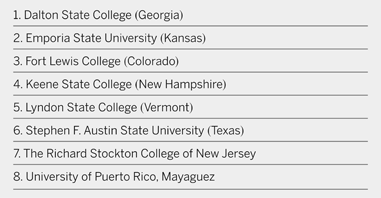
The eight campuses originally selected to participate in the America's Future initiative (see table 1) have served as laboratories for designing strategies and programs that can be used by all AASCU institutions and other colleges to educate students about our national fiscal crisis. The goal of addressing this fiscal crisis is to engage the next generation, which will have to pay these debts, and to address a nation whose finances are rapidly spinning out of control. In this initiative, the campuses consider the activities that can be undertaken to educate students and their communities about the need for bipartisan solutions to the looming fiscal crisis. The hope is that this engagement of young citizens in learning and discussion of issues related to our national debt will spur lawmakers and politicians to focus on finding solutions to avoid a potentially devastating national crisis. In the articles that follow, several America's Future Scholars from the eight campuses describe the activities taking place at their schools to fulfill this mission.
America's Future Institutions

Each America's Future campus has adopted a unique and innovative approach to creating campus programs. The following are some examples of how campuses have implemented the initiative. Dalton State University hosted events during Tax Week in which community members and students helped to raise awareness about the national debt and deficit. Emporia State University conducted a survey in which students were asked trivia questions about the debt and deficit. This survey was administered before and after on-campus programming, and the results were used to spark dialogue on campus. Fort Lewis College also created a week of themed events called “Debt Week.” During this week, national experts were invited to the campus for panel conversations, and students participated in a game in which they experimented with creating a national budget that eliminated deficit spending. Keene State College has been offering ADP-focused courses since January 2009 that are taught by an economist, Patrick Dolenc, and a political scientist, Wesley Martin. All of the courses are directed toward first-year students, and all blend national finance analysis with instruction in personal finance in the expectation that national decisions are more intelligible when they can be compared to personal decisions. Lyndon State College sponsored a YouTube video contest for students interested in presenting the issues associated with the debt and deficit in short documentary form. Stephen F. Austin State University used Public Agenda's Facing Up materials in core courses on campus and implemented a writing assignment to explore the national fiscal future in its general education courses. Richard Stockton College hosted a women's studies seminar that focused on how the national debt and deficit affect women in American society. The University of Puerto Rico, Mayaguez, has translated the Public Agenda materials into Spanish to use them for extensive on-campus programming.
The work done on these campuses is exemplary of the kind of creative, in-depth teaching and engagement about and with America's enormous fiscal problems that Public Agenda and the ADP are working to foster on many other campuses throughout the nation. In fact, Public Agenda and the University of Virginia have partnered to create high school lesson plans, which were disseminated to thousands of teachers last fall, and have held intergenerational dialogues with Generations United (GU), which may be expanded in the future with that organization and the ADP. When it comes to extremely complex public policy issues that demand sacrifice and compromise, the default is either to ignore the problem, fall into cynicism, or vaguely believe that we somehow will muddle through. The reality—as thousands of students in the America's Future Initiative are learning—is that awareness is the first step toward galvanizing other citizens and leaders to address a set of problems that, in the absence of major reforms, could lead to a grim economic future for the United States.