




No CrossRef data available.
Article contents
Long-term outcomes after the atrial switch for surgical correction of transposition: a meta-analysis comparing the Mustard and Senning procedures
Published online by Cambridge University Press: 21 January 2005
Abstract
Most adults with regular transposition (the combinations of concordant atrioventricular and discordant ventriculo-arterial connections) have undergone either the Mustard or Senning procedure in childhood. It is unclear whether adverse events differ according to the surgery performed. With this in mind, we conducted a systematic review and meta-analysis to compare long-term outcomes. We searched systematically entries to MEDLINE and EMBASE databases from January 1966 through August 2003, supplementing the search by secondary sources. Comparative studies were required to include at least 10 patients in each cohort of Mustard or Senning procedure, and to report overall survival. Data were extracted by two independent reviewers. We used a component approach to assess quality. On the basis of assessment of heterogeneity, we then used a random-effects model for pooled analyses. In all, we included seven studies, incorporating 885 patients. We found a trend towards lower mortality for the 369 patients undergoing a Mustard procedure when compared to 474 submitted to the Senning operation, with a hazard ratio of 0.63 and 95% confidence intervals between 0.35 and 1.14 (p = 0.13). This trend increased with the size of the sample (p = 0.004). Obstruction in the systemic venous pathway was more common in those having the Mustard procedure, with a risk ratio of 3.5 and 95% confidence intervals from 1.8 to 7.0 (p < 0.001), with a trend towards greater obstruction of the pulmonary venous pathway in those undergoing the Senning procedure, 7.6% vs. 3.8% (p = 0.27). A trend towards fewer residual shunts was observed for those with Mustard baffles, 7.0% vs. 14.1% (p = 0.10). Sinus nodal dysfunction, however, was more common after the Mustard procedure. Data regarding atrial tachydysrhythmias was inconclusive. Systemic cardiac failure and functional capacity, was similar. We conclude that outcomes are not uniform among patients submitted to the Mustard and Senning procedures. Knowledge of such differences may facilitate stratification of risk and follow-up.
Information
- Type
- Original Article
- Information
- Copyright
- © 2004 Cambridge University Press
Regular transposition, the segmental combination of concordant atrioventricular and discordant ventriculo-arterial connections, accounts for between 5% and 7% of all congenital cardiac malformations.1 Untreated, nine of ten infants born with the condition die within the first year of life.2 In 1959, Senning introduced the operation in which insertion of an intraatrial baffle redirected the systemic and pulmonary venous returns without the use of grafts or prostheses.3 In 1964, Mustard described an alternate technique for redirecting the venous pathways using an intraatrial pericardial patch.4 Although the arterial switch5 has now supplanted atrial redirection as the procedure of choice in many centres, the large majority of adults with transposition have had intraatrial repairs. Late complications have included sinus nodal dysfunction, atrial tachydysrhythmias, leaks across the baffle, obstruction to either the systemic or pulmonary venous pathways, or both, systemic right ventricular dysfunction, and sudden cardiac death.6–12 Reports have yielded conflicting results as to whether the type of atrial reconstruction is associated with different risks regarding specific complications and overall survival. To characterize relative benefits, and compare the complications of each approach, we performed a systematic review and meta-analysis comparing outcomes over the long term for the two procedures.
Materials and methods
Literature search and selection of studies
We made electronic searches of MEDLINE and EMBASE databases, covering the period from January 1966 through August 2003, using the following query terms: Senning, Mustard, atrial switch, or atrial baffle combined with transposition. The search was not limited to a particular language of publication. This strategy was supplemented by manual retrieval of secondary sources, including references from primary articles, and chapters from textbooks covering congenital cardiac malformations.
In the absence of randomized trials, we sought comparative observational peer-reviewed studies. Given that the primary objective was to compare overall survival in patients who had undergone either the Mustard or Senning procedures for correction of transposition, we mandated the following criterions for inclusion:
- follow-up reported for both groups of patients;
- a minimum of 10 patients per exposure category;
- provision of overall rates of survival, or sufficient data included to permit calculation of accurate estimates.
We excluded case series limited to one surgical approach, review articles, letters, editorials, and case reports. To avoid duplication, we reviewed multiple publications from the same centre(s) that met the above criterions. The manuscript reporting the greatest number of patients was retained, and smaller studies excluded. Data relating to individual patients was requested from the authors of all eligible studies.
Extraction of data and assessment of quality
Two independent reviewers extracted data from tables, text, and figures. Discrepancies were subject to checks for error, and adjudicated by discussion amongst our group. Consensus was obtained for all variables. Prespecified baseline data elements for each trial included year of publication, age at surgery, gender, weight, duration of follow-up, total number of patients, subdivisions by type of surgery, that is Mustard or Senning, and the complexity of the underlying lesion, including the association with deficient ventricular septation. Measures of outcome were overall survival, obstructions and leaks related to the baffle, atrial brady- and tachydysrhythmias, systemic ventricular failure, and functional capacity. The quality of the studies was assessed on the basis of criterions that included its design, that is retrospective or prospective, the size of the sample, the number of participating centres, whether criterions for inclusion and exclusion were detailed, accountability for losses to follow-up, and whether survival was further subclassified by presence or absence of a ventricular septal defect. Where the primary end-point was not explicitly presented as the ratio of the log hazard and its variance, estimates of these statistics were extracted from survival curves13, 14 or indirectly calculated15–17 using the methods described by Parmar et al.18
Statistical analysis
The calculated combined statistics for the primary measure of outcome was a hazard ratio for time to event data with 95% confidence intervals (CI). The decision to proceed with a random-effects, rather than using a fixed effects model, was based on testing for variations between studies. A Q-statistic greater than k − 1, or H value greater than 1, where H2 = Q/(k − 1), was considered to indicate substantial heterogeneity between the studies compared.19 The random-effects model, as described by DerSimonian and Laird,20 incorporated heterogeneity between and within studies into calculations of the common effect, and used precision weighting by the method of inverse variance.
Given the nature of non-randomized and non-blinded observational studies, we did not use a formal composite scale for assessment of quality. Instead, we favoured a “component approach”, where the importance of individual domains of quality, and the direction of potential biases associated with these domains, were examined in meta-regression analyses that modelled the logarithm of the hazard ratio as the dependent variable.21 Potential publication bias was assessed by plotting standardized effect vs. precision, using Egger's publication bias plot, and Begg's funnel plot of the logarithm of the hazard ratio and its standard error. Secondary categorical end-points reported in less than five studies were combined with weights based on the size of the samples and compared with χ2 tests. Where the primary end-point was not explicitly presented as the log of the hazard ratio and its variance, statistical analyses were performed using Stata version 7.0 (Stata Corporation, College Station, TX, USA), and SAS software Version 8 (SAS Institute, Cary, North Carolina).
Results
Selection of studies
The electronic search yielded a total of 265 articles (Fig. 1). We identified three additional potentially relevant studies through searching secondary sources and textbooks related to congenital cardiac malformations. Of these studies, 11 met the screening criterions. The 257 articles excluded were essentially review articles, case series restricted to only one surgical approach, case reports, editorials, or letters. From the 11 remaining studies, two were excluded to avoid duplication of results originating from the same centre.22, 23 One study described outcomes in 89 patients undergoing atrial redirection procedures without further subdividing the results by the Mustard and Senning operations.24 An additional study described dysrhythmias in 17 and 15 patients after the Mustard and Senning procedures, respectively, but did not include data relating to survival.25 We made contact with the authors from both these manuscripts, but their primary databases were not available. The meta-analysis was conducted on the seven remaining studies, and included a total of 885 patients.13–17, 26, 27

Figure 1. Summary of the process for selection of articles.
Populations studied
All studies were non-randomized, and included consecutive patients with transposition undergoing atrial repair within a defined time frame. One study was multicentric, involving 20 sites,26 and two were prospective in design.13, 26 In two studies, the population studied had been identified by age at time of surgery. This was less than 15 days in one,26 and less than 100 days in the other.17 Two studies excluded patients with complex transposition, defined as having one or more associated ventricular septal defects.14, 16 Other exclusion criterions were associated atrioventricular valvar abnormalities and coarctation,14 and associated anomalies other than ventricular septal defect, such as pulmonary stenosis, persistent patency of the arterial duct, and atrial defects within the oval fossa.27 One study mandated a minimum duration of follow-up of 18 months.17 The characteristics summarized are shown in Table 1.
Table 1. Overview of studies included in the meta-analysis.

Overall survival
Overall postoperative hospital mortality ranged from 3.1% to 10.0%. For the combined population undergoing atrial redirection, actuarial survival at 8–16 years ranged from 78% to 84%. Reported risk factors for death included younger age and lower birth weight at repair,26 female gender,26 presence of a ventricular septal defect,26, 27 cardiac positional anomalies,26 active dysrhythmias,27 surgery involving the left ventricular outflow tract,26 and prior banding of the pulmonary trunk.26 Causes of death were not uniformly detailed, but included sudden cardiac death,13, 14, 26, 27 cardiac failure,13–16, 26, 27 baffle obstruction,14, 26 and perioperative death following surgical revision.13,14,26
Hazard ratios from individual studies comparing overall survival following the Mustard vs. the Senning procedures are depicted in Table 2. In the study by Mahony et al.,17 no deaths were reported over a median follow-up of 2.7 years, thereby precluding calculation of an estimate of risk. A forest plot, pooling the remaining six studies, and including 369 patients undergoing the Mustard procedure, and 474 having the Senning procedure, is shown in Figure 2. As testing for heterogeneity was considered positive, the Q-statistic being 7.431, with 5 degrees of freedom (p = 0.191, H = 1.219), we pursued a random-effects model. We discovered a trend towards lower overall mortality after the Mustard compared to the Senning procedure, with a hazard ratio of 0.63 and 95% CI between 0.35 and 1.14 (p = 0.13). Hazard ratios from individual studies ranged from 0.29, with 95% CI between 0.15 and 0.58, in the multicentric prospective cohort, which provided the most precise estimate, to 5.00, with 95% CI between 0.06 and 388.6, in the study with the smallest sample.
Analysis of individual components of quality detected no differences in outcome as judged on the basis of mortality outcome for the following candidate variables:
- prospective vs. retrospective study design (p = 0.34),
- both surgical approaches performed concurrently vs. adjacent time periods (p = 0.34),
- fully detailed inclusion and exclusion criteria (p = 0.57),
- accountability for losses to follow-up (p = 0.57).
Moreover, the proportion of patients undergoing the Mustard (p = 0.42) and Senning (p = 0.25) procedures for complex forms of transposition, and the ratio of the two (p = 0.92), did not influence outcome.
The effect of the size of the sample on outcome, however, did account for a significant proportion of the heterogeneity between studies, with an adjusted R2 of 0.87 (p = 0.004). The larger the sample, the greater the relative benefit of the Mustard as opposed to the Senning procedure on total mortality (Fig. 3). The influence of size of the sample on outcome was further explored by assessing potential bias between publications. A graphical funnel plot in Figure 4 demonstrates asymmetrical results around the pooled estimate. The absence of studies with larger standard errors, in other words less precision, favouring the Mustard procedure suggests potential publication bias, resulting in underestimation of the relative benefit of the Mustard procedure on mortality.

Figure 2. Overall survival in patients submitted to the Mustard as opposed to the Senning procedure.

Figure 3. Effect of the size of the sample on the hazard ratio. Note the linear relationship between the size of the sample and the hazard ratio: as the size increases, a stronger effect is observed on overall mortality favouring the Mustard procedure.

Figure 4. Begg’s funnel plot with pseudo 95% CI for potential bias in publication. See text for discussion.
Table 2. Hazard ratios for overall survival after the Mustard versus the Senning procedures from individual studies.

Obstructions and residual shunts related to the baffle
Means of assessing, classifying, and reporting leaks and obstructions related to the baffle varied widely among studies. The most common site of obstruction was consistently reported to be the superior limb of the systemic venous pathway.14, 16, 17, 26 Obstruction of the systemic venous pathway (Table 3) was present in 35.6% of a combined 211 patients from four studies when defined as a gradient by cardiac catheterization at least 3 mmHg,14 or 5 mmHg,16, 17, 27 with a uniformly higher incidence in patients undergoing the Mustard procedure, the hazard ratio being 3.5, with 95% CI between 1.8 and 7.0 (p < 0.001). In contrast, pulmonary venous obstruction, defined as a haemodynamic gradient by cardiac catheterization of at least 5 mmHg,14, 16 10 mmHg,17 or unspecified,27 occurred in 11 of 211 combined patients, with a trend towards a lower incidence for those having the Mustard procedure, specifically 3.8% vs. 7.6% (p = 0.27).
A qualitative synthesis, and analysis of trends for the populations, revealed a predominantly higher risk for reintervention because of obstruction in the venous pathways in the early months following the initial procedure. Despite the high incidence of significant gradients across the baffle as defined above, the majority of patients was asymptomatic, and did not require surgical revision. Of a total of 554 patients from five studies that reported rates of reintervention,14, 16, 17, 26, 27 4.3% and 2.5% required revisions of the baffle because of obstruction in the systemic and pulmonary venous pathways, respectively. A greater proportion of patients undergoing the Mustard as opposed to the Senning procedure needed reintervention for systemic (9.7% vs. 3.0%, p = 0.045) but not pulmonary (p = 0.98) venous obstruction. The perioperative mortality was considerable, with 7 of 24 (29%), and 3 of 14 (21%) patients dying after reinterventions to deal with obstructions in the systemic and pulmonary venous pathways.
Data on residual shunts was reported in four studies.14, 17, 26, 27 The definitions were either not provided,26 determined by unspecified catheterization criterions,17, 27 or defined as a step-up of 8% measured with oximetry, or a shunt fraction 1.5 or greater for systemic to pulmonary shunts, and saturations of oxygen lower than 90% in the absence of pulmonary disease for pulmonary to systemic shunts.14 In the two studies14, 27 that reported leaks across the baffle separately for 113 patients undergoing the Mustard procedure, and 85 having a Senning operation, we found a trend towards fewer residual shunts after the Mustard option, 7.0% vs. 14.1% (p = 0.10). In the entire cohort of patients, only 617, 26 required surgical revision because of a leak across the baffle, with no perioperative mortality.
Table 3. Secondary outcomes after the Mustard as opposed to the Senning procedures.

Bradydysrhythmias
Substantial heterogeneity was noted with regards to definition of sinus nodal dysfunction, methods used for diagnosis, and reported frequency. Helbing et al.27 cited the Kugler criterions28 to define sinus nodal dysfunction, Bender et al.16 averaged three corrected sinus nodal recovery times, and Deanfield et al.13 defined intermittent and persistent junctional rhythm to be present if it accounted for between 10% and 50%, and greater than 50% of all heart beats, over a 24-h period on serial Holter recordings. Qualitatively, the weight of evidence suggests potentially more sinus nodal dysfunction after the Mustard procedure. In an analysis reflecting survival, Helbing et al.27 reported a significantly greater loss of sinus rhythm (p < 0.001) for those having a Mustard as opposed to a Senning procedure, at 64.4% vs. 32.6% at 5 years, and 82.2% vs. 47.3% at 16 years of follow-up. Deanfield et al.13 reported a similar trend, with loss of sinus rhythm in 35% of those having the Mustard procedure compared to 22% of patients having a Senning operation after 5 years of follow-up (p = 0.09). Bender et al.16 reported only one patient with sick sinus syndrome after the Senning operation. In one study,14 2 patients were reported to have died from bradydysrhythmias, specifically with sick sinus syndrome and atrioventricular block. In the 2 remaining studies, pacemakers were implanted in 2 of 5217 patients, and 21 of 28126 patients. The instantaneous risk for insertion of a pacemaker peaked at 2–3 years postoperatively, persisted until 5 years, and then gradually tapered.26 Risk factors included complex associated malformations in those having a Senning procedure, and prior surgical atrial septectomy.
Atrial tachydysrhythmias
Only two of the seven studies determined the presence of paroxysmal supraventricular tachycardias or atrial flutter by Holter monitoring and electrocardiographic follow-up.13, 27 Helbing et al.27 reported paroxysmal atrial dysrhythmias in 28.8% of those having the Mustard procedure, and 11.9% of patients after a Senning operation. The incidence of atrial dysrhythmias found in the cohort of patients studied by Deanfield et al.13 were 16.2% and 6.9% in patients undergoing the Mustard and Senning procedures, respectively. Actuarial rates, however, were not provided and, in both studies, the duration of follow-up was considerably longer in the patients who had undergone the Mustard as opposed to the Senning procedure, thereby obscuring analysis of comparative trends. Bender et al.16 reported that 5.6% of their entire cohort had paroxysmal atrial dysrhythmias, and 5.3% of patients in the multicentric study26 had received antidysrhythmic agents.
Right ventricular (systemic) failure and functional capacity
Data on systemic right ventricular systolic function was available from three studies,16, 17, 27 with equivalent results for the two procedures. By echocardiography, 21 of 60 patients had a moderately to severely depressed right ventricular (systemic) ejection fraction after the Mustard operation, in comparison to 23 of 62 patients undergoing the Senning procedure.27 No significant differences were found after further subdividing patients into simple (p = 0.54) and complex (p = 0.91) transposition. Right ventricular ejection fractions as determined by cineangiography were similar prior to (46 ± 2% vs. 49 ± 2%) and within 1 month postoperatively (39 ± 5% vs. 45 ± 3%) for the two operations. Mahony et al.17 reported that all their patients had enlarged right ventricles, with normal contractility by angiography.
The functional status of the patients was assessed in two studies at 9–12 years,26 and a mean of 13 years.27 In both studies, over 95% of patients were in the first or second classes of the functional classification of the New York Heart Association. Pooling these 139 patients having the Mustard operation, and 135 submitted to the Senning procedure, the proportions in the first three functional classes were 64.0% vs. 60.7%, 32.4% vs. 34.8%, and 2.2% vs. 3.0% (p = 0.81). The predicted proportional maximum exercise tolerance was likewise equivalent in 24 patients after a Mustard procedure, and 14 after a Senning operation (82.5 ± 15.1% vs. 80.0 ± 18.3%).27 Marx et al.14 reported two patients after a Senning procedure, but none after the Mustard operation, with severe systemic ventricular failure, and Helbing et al.27 noted three deaths resulting from systemic heart failure after the Mustard, and two after a Senning procedure. These patients all had significant tricuspid regurgitation. Signs of heart failure were first documented at 4 months, 9 years, and 15 years following the initial surgery.
Discussion
Although rarely performed in the current era, the Mustard and Senning procedures revolutionized the care of patients with regular transposition.3, 4 As a result, the majority of patients born with this anomaly survived beyond infancy, indeed very often with good quality of life, to adulthood.6, 8, 12 As more patients reached their adult years, however, the justified celebration of this success gave way to some dismay over the challenges posed by later morbidity and mortality. Medical caregivers face the daunting task of identifying patients at highest risk of developing late complications, with hopes to initiate preventive therapy directed towards evading adversity. Schemes for stratification of risk are sorely lacking, particularly with regards to differences between outcomes in patients who have had a Mustard as opposed to a Senning procedure.
The superiority of either surgical technique, and the relative risk of individual complications, have not been convincingly established. Proponents of the Senning procedure advance that minimal, if any, non-viable tissue or prosthetic material favours future growth and optimizes atrial function, with potential reduction in obstruction of the venous pathways and dysrhythmias.29–31 Supporters of the Mustard procedure have claimed lower mortality, reduction in systemic and pulmonary venous obstruction, and also suggest a decreased incidence of dysrhythmias.6, 32–35 As evidence, the proponents have largely relied on data utilizing one or other technique, usually based on the experience from a single centre. This systematic review, and meta-analysis, assembles available data from studies that attempt to evaluate outcomes from the two techniques in comparable populations.
Our findings indicate a trend towards improved survival in those who have undergone the Mustard procedure, further reinforced by the stronger effect as the size of the sample increases and the possible publication bias. The cause of increased mortality in patients who have undergone the Senning operation merits further consideration. The most common cause of late mortality after an intraatrial redirection has consistently been reported to be sudden death.6, 8, 36 Excess deaths observed after the Senning operation were unlikely bradydysrhythmic in nature, given that sinus nodal dysfunction occurred more frequently after the Mustard procedure. In light of inconclusive comparisons, a preponderance of late intraatrial re-entrant tachycardias, and/or atrial fibrillation, cannot be excluded for those who have undergone the Senning procedure. Indeed, documented supraventricular tachycardia is a proposed risk factor for late mortality.8, 36 Although impaired systemic ventricular function in adults with transposition has been related to late clinical dysrhythmias,7 no differences in heart failure or functional class were identified in our study. Pulmonary vascular disease also accounts for a substantial proportion of deaths after atrial redirection,8, 37 and a trend towards more pulmonary venous obstruction was noted in those who had undergone the Senning procedure.
Limitations
Pooled analyses of observational studies that lack the experimental element of random allocation to a particular intervention present particular challenges as a result of inherent biases and differences in vigil of definitions, means of assessing outcome, and designs of the individual studies.38 They may provide useful tools, nevertheless, to help understand and quantify sources of variability, summarize data, and generate hypotheses. The intention of our systematic review was to summarize the current state of knowledge, and derive the most precise assessment of effect, associated with the Mustard as opposed to the Senning procedures within the constraints of available non-controlled data. Each study was required to provide an individual estimate of effect or present sufficient data to calculate such. Studies presenting only one approach were excluded, as they inherently do not provide intra-study estimates necessary for the calculation of pooled outcomes in formal meta-analyses. To reduce the probability of producing precise but spurious results, the strategy of searching, and the criterions for inclusion, were deliberately broad, publications in all languages were considered, and potential sources of heterogeneity were carefully examined. Although actively sought, data from individual participants was not provided.
Several centres reported experience from a sequential use of one surgical technique and then the alternative. Interestingly, these shifts were not unidirectional. Procedures were adopted by surgeons in different centres in a complex pattern, with contributions from date of first report, the original centre of training of the surgeon, geographic location, influence of larger centres over smaller, publicity over early complications, technical difficulty, and increasing understanding of later complications. In addition, more complex factors may often be in play in these papers from an era of rapid expansion of a novel field. It is possible, for example, that centres experiencing difficulty with one procedure might alter their technique, and then be keen to report improved outcomes. In addition, other perioperative factors, including techniques of anesthaesia and postoperative care, were undergoing rapid evolution throughout the era of these reports.
Conclusion
Our results suggest a trend towards improved survival in patients with regular transposition who underwent a Mustard procedure. Patients undergoing the Mustard operation, nonetheless, appeared more likely to develop sinus nodal dysfunction, and obstruction within the systemic venous pathway, but were less likely to experience residual leaks across the baffle and obstruction of the pulmonary venous pathway. The perioperative mortality for patients undergoing revision of the baffle was considerable, emphasizing the importance of refinement of surgical and transcatheter therapeutic techniques. Follow-up data from multicentric studies may further refine the evaluation of long-term outcomes.
Acknowledgement
This work was supported in part by a fellowship award (P.K.) from the Canadian Institutes of Health Research.
References
Brickner ME, Hillis LD, Lange RA. Congenital heart disease in adults. Second of two parts. N Engl J Med 2000; 342: 334–342.Google Scholar
Liebman J, Cullum L, Belloc NB. Natural history of transpostion of the great arteries: anatomy and birth and death characteristics. Circulation 1969; 40: 237–262.Google Scholar
Senning A. Surgical correction of transposition of the great vessels. Surgery 1959; 45: 966–979.Google Scholar
Mustard WT. Successful two stage correction of transposition of the great vessels. Surgery 1964; 55: 469–472.Google Scholar
Jatene AD, Fontes VF, Paulista PP, et al. Anatomic correction of transposition of the great vessels. J Thorac Cardiovasc Surg 1976; 72: 364–370.Google Scholar
Wilson NJ, Clarkson PM, Barratt-Boyes BG, et al. Long-term outcome after the mustard repair for simple transposition of the great arteries. 28-year follow-up. J Am Coll Cardiol 1998; 32: 758–765.Google Scholar
Gatzoulis MA, Walters J, McLaughlin PR, Merchant N, Webb GD, Liu P. Late arrhythmia in adults with the mustard procedure for transposition of great arteries: a surrogate marker for right ventricular dysfunction? Heart 2000; 84: 409–415.Google Scholar
Gelatt M, Hamilton RM, McCrindle BW, et al. Arrhythmia and mortality after the Mustard procedure: a 30-year single-center experience. J Am Coll Cardiol 1997; 29: 194–201.Google Scholar
Silka MJ, Hardy BG, Menashe VD, Morris CD. A population-based prospective evaluation of risk of sudden cardiac death after operation for common congenital heart defects. J Am Coll Cardiol 1998; 32: 245–251.Google Scholar
Stark J, Tynan MJ, Ashcraft KW, Aberdeen E, Waterston DJ. Obstruction of pulmonary veins and superior vena cava after the Mustard operation for transposition of the great arteries. Circulation 1972; 45: I116–I120.Google Scholar
Benatar A, Tanke R, Roef M, Meyboom EJ, Van de Wal HJ. Mid-term results of the modified Senning operation for cavopulmonary connection with autologous tissue. Eur J Cardiothorac Surg 1995; 9: 320–324.Google Scholar
Kirjavainen M, Happonen JM, Louhimo I. Late results of Senning operation. J Thorac Cardiovasc Surg 1999; 117: 488–495.Google Scholar
Deanfield J, Camm J, Macartney F, et al. Arrhythmia and late mortality after Mustard and Senning operation for transposition of the great arteries. An eight-year prospective study. J Thorac Cardiovasc Surg 1988; 96: 569–576.Google Scholar
Marx GR, Hougen TJ, Norwood WI, Fyler DC, Castaneda AR, Nadas AS. Transposition of the great arteries with intact ventricular septum: results of Mustard and Senning operations in 123 consecutive patients. J Am Coll Cardiol 1983; 1: 476–483.Google Scholar
Meisner H, Feder E, Struck E, Silva AZ Jr, Sebening F. Transposition of great arteries: atrial inversion – the Senning versus the Mustard procedure. Arq Bras Cardiol 1982; 38: 385–388.Google Scholar
Bender HW Jr, Graham TP Jr, Boucek RJ Jr, Walker WE, Boerth RG. Comparative operative results of the Senning and Mustard procedures for transposition of the great arteries. Circulation 1980; 62: I197–I203.Google Scholar
Mahony L, Turley K, Ebert P, Heymann MA. Long-term results after atrial repair of transposition of the great arteries in early infancy. Circulation 1982; 66: 253–258.Google Scholar
Parmar MK, Torri V, Stewart L. Extracting summary statistics to perform meta-analyses of the published literature for survival endpoints. Stat Med 1998; 17: 2815–2834.Google Scholar
Higgins JP, Thompson SG. Quantifying heterogeneity in a meta-analysis. Stat Med 2002; 21: 1539–1558.Google Scholar
DerSimonian R, Laird N. Meta-analysis in clinical trials. Control Clin Trials 1986; 7: 177–188.Google Scholar
Jüni P, Altman DG, Egger M. Assessing the quality of randomised controlled trials. In: Egger M, Smith GD, Altman DG (eds). Systematic Review in Health Care: Meta-analysis in Context. BMJ Publishing Group, London, 2001, pp 87–108.
Meisner H, Feder E, Struck E, Yueh HH, Paek SU, Sebening F. Mustard vs. Senning procedure: a comparison of primary atrial inversion procedures in 108 patients with transposition of the great arteries. Herz 1982; 7: 259–266.Google Scholar
Feder E, Meisner H, Buhlmeyer K, Struck E, Sebening F. Operative treatment of TGA: comparison of Senning’s and Mustard’s operation in patients under 2 years. Thorac Cardiovasc Surg 1980; 28: 7–12.Google Scholar
Dupuis C, Vliers A, Binet JP, Chalant C, Breviere GM, Stijns M. Medium- and long-term results of Mustard and Senning operations in isolated transposition of great vessels. Ann Cardiol Angeiol (Paris) 1985; 34: 33–37.Google Scholar
Weidinger F, Schlemmer M, Schmidinger H, Weber H, Domanig E, Wimmer M. Dysrhythmias following the Mustard and Senning operation for transposition of the great arteries. Padiatr Padol 1987; 22: 259–266.Google Scholar
Wells WJ, Blackstone E. Intermediate outcomes after Mustard and Senning procedures: a study by the congenital heart surgeons society. Semin Thorac Cardiovasc Surg Pediatr Card Surg Annu 2000; 3: 186–197.Google Scholar
Helbing WA, Hansen B, Ottenkamp J, et al. Long-term results of atrial correction for transposition of the great arteries. Comparison of Mustard and Senning operations. J Thorac Cardiovasc Surg 1994; 108: 363–372.Google Scholar
Kugler JD. Sinus node dysfunction. In: Garson A Jr, Bricker JT, McNamara DG (eds). The Science and Practice of Pediatric Cardiology. Lea & Febiger, Philadelphia, 1990, pp 1751–1785.
Smallhorn JF, Gow R, Freedom RM, et al. Pulsed Doppler echocardiographic assessment of the pulmonary venous pathway after the Mustard or Senning procedure for transposition of the great arteries. Circulation 1986; 73: 765–774.Google Scholar
Bender HW Jr, Stewart JR, Merrill WH, Hammon JW Jr, Graham TP Jr. Ten years' experience with the Senning operation for transposition of the great arteries: physiological results and late follow-up. Ann Thorac Surg 1989; 47: 218–223.Google Scholar
Chin AJ, Sanders SP, Williams RG, Lang P, Norwood WI, Castaneda AR. Two-dimensional echocardiographic assessment of caval and pulmonary venous pathways after the senning operation. Am J Cardiol 1983; 52: 118–126.Google Scholar
Breckenridge IM, Stark J, Bonham-Carter RE, Oelert H, Graham GR, Waterston DJ. Mustard’s operation for transposition of the great arteries. Review of 200 cases. Lancet 1972; 1: 1140–1142.Google Scholar
Rodriguez-Fernandez HL, Kelly DT, Collado A, Haller JA Jr, Krovetz LJ, Rowe RD. Hemodynamic data and angiographic findings after Mustard repair for complete transposition of the great arteries. Circulation 1972; 46: 799–808.Google Scholar
Arciniegas E, Farooki ZQ, Hakimi M, Perry BL, Green EW. Results of the Mustard operation for dextro-transposition of the great arteries. J Thorac Cardiovasc Surg 1981; 81: 580–587.Google Scholar
Meijboom F, Szatmari A, Deckers JW, et al. Long-term follow-up (10 to 17 years) after Mustard repair for transposition of the great arteries. J Thorac Cardiovasc Surg 1996; 111: 1158–1168.Google Scholar
Janousek J, Paul T, Luhmer I, Wilken M, Hruda J, Kallfelz HC. Atrial baffle procedures for complete transposition of the great arteries: natural course of sinus node dysfunction and risk factors for dysrhythmias and sudden death. Z Kardiol 1994; 83: 933–938.Google Scholar
Levinsky L, Srinivasan V, Gingell RL, et al. Senning repair with ductal decompression: palliative approach to d-TGA and irreversible pulmonary vascular disease. Am Heart J 1983; 106: 409–412.Google Scholar
Stroup DF, Berlin JA, Morton SC, et al. Meta-analysis of observational studies in epidemiology: a proposal for reporting. Meta-analysis Of Observational Studies in Epidemiology (MOOSE) group. J Am Med Assoc 2000; 283: 2008–2012.Google Scholar

Summary of the process for selection of articles.
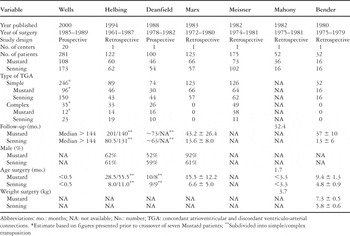
Table 1.

Overall survival in patients submitted to the Mustard as opposed to the Senning procedure.

Effect of the size of the sample on the hazard ratio. Note the linear relationship between the size of the sample and the hazard ratio: as the size increases, a stronger effect is observed on overall mortality favouring the Mustard procedure.

Begg’s funnel plot with pseudo 95% CI for potential bias in publication. See text for discussion.
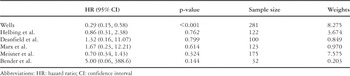
Table 2.
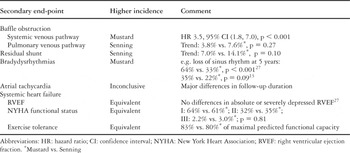
Table 3.
 You have
Access
- 156
- Cited by