Significant Outcomes
∙ Since psychiatric disorders are considered to be the leading cause of most violent acts, the present study aimed to analyze prevalence, sociodemographics, and severity of aggressive and violent behaviors in patients with any psychiatric diagnosis.
∙ Epidemiologic, sociodemographic, and clinical correlates of aggressive and violent behaviors were assessed through the Modified Overt Aggression Scale (MOAS) in 400 patients attending a post-acute psychiatric service in Milan.
∙ Results from our study indicate that mental disorders may not be necessary nor sufficient determinants of violence, and that among psychiatric patients major contributors to violent behaviors continue to be sociodemographic and economic factors.
Introduction
Violence is currently among the top 20 causes of worldwide loss of disability-adjusted living years (DALYs)Reference Wolf, Gray and Fazel1 and is projected to increase in importance by 2030, according to the World Health Organization.Reference Mathers, Fat and Boema2 Violence is responsible for 5% of all disability and 3% of health spending in the USA.Reference Vassos, Collier and Fazel3 According to the Italian National Statistical Institute (ISTAT), during the 2008–2009 period, 5.7% of Italian citizens were victims of violence. In addition, 50% of the Italian population reported being extremely influenced by crime in everyday life.4 In 2015, 31.5% of women between the ages 16 and 70 has experienced physical violence.5
Psychiatric disorders are considered to be the leading cause of most violent acts. This remains a debated and controversial issue.Reference Brennan6, Reference Warburton and Stahl7 For instance, a 30-year follow-up study of a Swedish birth cohort found that males and females with a mental disorder were at a 4.0–27.5% higher risk of committing violent acts than the general population.Reference Hodgins8 Indeed, in Italy, a recent law determining the closure of forensic hospitals has been perceived by many psychiatrists and mental health professionals as a factor that could potentially increase the number of people affected by mental disorders with legal issues.Reference Barbui and Saraceno9 Therefore, further investigation is required for the characterization of violence in psychiatric patients. In this regard, an analysis based on a dimensional approach may be preferable from a categorical perspective, since it offers better predictive measurements for the occurrence of violent and aggressive behaviors in psychiatric patients.Reference Bo, Abu-Akel, Kongerslev, Haahr and Simonsen10
A number of large-scale studies has shown a relationship between aggression and violence in many psychiatric disorders such as schizophrenia, panic disorder, personality disorder, post-traumatic stress disorder, bipolar disorders, and major depressive disorder.Reference Amoo and Fatoye11–Reference Fazel, Wolf, Chang, Larsson, Goodwin and Lichtenstein14 However, each condition should be considered separately in relation to the risk of its violent behavior.Reference Swanson, Holzer, Ganju and Jono15 Until the early 1980s, the consensus was that patients with schizophrenia were not more likely to be violent than the general population. It is now accepted that schizophrenic subjects are significantly more likely to be violent when compared to healthy controls.Reference Mitrev and Massaldjieva16 Nonetheless, the proportion of societal violence attributable to this group of patients is small.Reference Walsh, Buchanan and Fahy17 In addition, it should be considered that schizophrenia is a heterogeneous clinical syndrome, and affected individuals exhibit profound differences in variables related to violent actions. On the other hand, aggressive behavior is heterogeneous per se, which makes the assessment of patients with schizophrenia even more challenging in research contexts and in clinical practice. Clinicians should consider many contributing factors in evaluating patients’ risk of becoming violent, including personality traits, history of violent acts, paranoid beliefs, content of auditory hallucinations, substance abuse, impulsivity, suicidal acts, agitation, excitement, social circumstances, age, and gender. As a consequence, the prediction of a singular violent event is very challenging.Reference Fazel, Gulati, Linsell, Geddes and Grann12, Reference Fazel, Lichtenstein, Grann, Goodwin and Långström13, Reference Wehring and Carpenter18
The concomitant use of alcohol and/or abuse of other drugs is a factor of frequent observation in patients with acute agitation with aggressive behaviors, and there is considerable epidemiological evidence indicating a relationship between comorbid substance abuse and an increased risk of violent behaviors.Reference Fazel, Gulati, Linsell, Geddes and Grann12, Reference Fazel, Lichtenstein, Grann, Goodwin and Långström13, Reference Ferns and Cork19, Reference Zinkiewicz, Curtis, Meurer and Miller20
Great importance has been given to personality disorders as a cause of impulsive and violent acts in psychiatric patients. Poor impulse control and effective regulation, in fact, increase the risk of violence in various disorders, especially primary and comorbid substance abuse disorders. On the other hand, paranoid cognitive personality style and narcissistic injuries increase the risk of violence in personality disorders.Reference Colasanti, Natoli, Moliterno, Rossattini, De Gaspari and Mauri21, Reference Roberton, Daffern and Bucks22
Given that severe mental illness cannot independently predict future violent behaviors, the above-mentioned findings challenge the perception that mental illness is a leading cause of violence in the general population. People with mental illness were found to manifest violent behaviors more often, largely because they showed other factors associated with violence. Understanding the link between violent acts and mental disorders requires consideration of other associated variables such as substance abuse, environmental stressors, and history of violence.Reference Elbogen and Johnson23 For instance, the occurrence of violence in schizophrenia and bipolar disorders has been associated with different sociodemographic variables, including age, gender, substance abuse, and economic and social status.Reference Fazel, Gulati, Linsell, Geddes and Grann12, Reference Fazel, Lichtenstein, Grann, Goodwin and Långström13, Reference Chang and Lee24 Similar to offenders and violent individuals in the general population, violence in schizophrenia is predominantly perpetrated by young, male individuals of disadvantageous socioeconomic status.Reference Bo, Abu-Akel, Kongerslev, Haahr and Simonsen10, Reference Kim, Laurent, Capaldi and Feingold25, Reference Rodriguez, Lasch, Chandra and Lee26
Aims of the Study
The present study aimed to analyze the prevalence, sociodemographics, and severity of aggressive and violent behaviors in patients with any psychiatric diagnosis, not limited to the psychotic area. While most of the previous studies examined only patients in the acute phase, when admitted to hospital or other nursing and rehabilitation facilities, our sample consisted of patients followed by a local service during the post-acute and stabilization phases.
Materials and Methods
The study included the patients attending the post-acute service Centro Psicosociale di zona 1 (CPS1), Department of Psychiatry, Ospedale Maggiore Policlinico of Milan, Italy, over a 3-year period from January 2014 to December 2016.
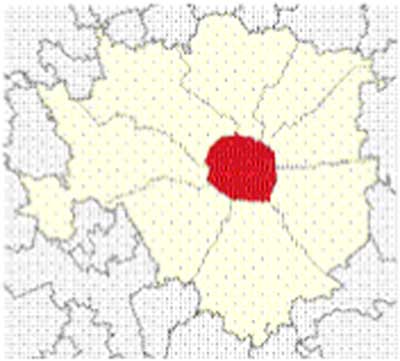
The CPS is a public psychiatric facility that provides daily assistance to patients who need pharmacological, psychological, and social support. It represents a pivotal ring in the chain of rehabilitation and mental health provided by the National Ministry of Health. Due to the local organization of mental health, the urban area of Milan is divided into different zones, and patients of each zone with mental disorders may be referred to their assigned CPS. The population of the city center is approximately 100,000 inhabitants (96,315 in the 2013, municipal data: http://www.datiopen.it/it/opendata/Comune_di_Milano_proiezioni_popolazione_per_zona_Anni_2012_2031?metadati=showall, refers to CPS1; see Figure 1.
Zone 1 of Milan.

All the psychiatric patients who attended the public psychiatric facility CPS1 were selected. In particular, inclusion criteria consisted of at least 1 psychiatric visit for each patient; those who turned to the CPS for medical advice only were excluded. Psychiatric patients with a recent criminal history and a criminal sentence were not included.
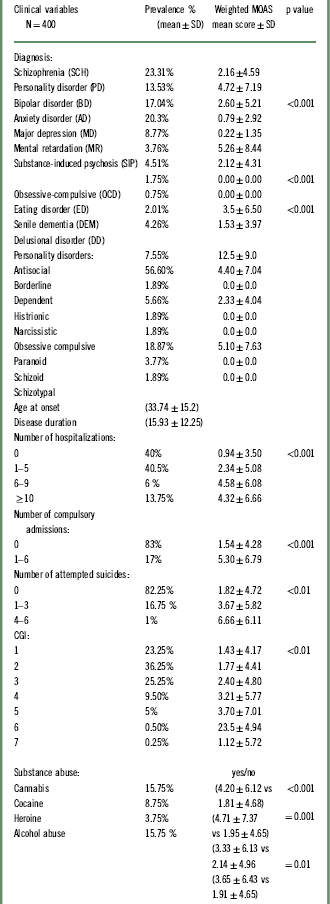
Diagnoses were formulated by 2 expert clinicians on the basis of the International Classification of Disease, 10th Edition (ICD-10)27 criteria and were divided into 11 classes: schizophrenia, personality disorder, bipolar disorder, anxiety disorder, major depression, mental delay, substance-induced psychosis, obsessive compulsive disorder, eating disorder, senile dementia, and delusional disorder. Personality disorders were further divided as follows: antisocial, borderline, dependent, histrionic, narcissistic, obsessive compulsive, paranoid, schizoid, and schizotypal (Table 1).
Clinical variables and mean weighted MOAS score (±SD) of the total sample

Anamnestic, clinical, sociodemographic, and therapeutic data were collected from the medical records. The protocol was approved by the local Ethics Committee, and written informed consent was obtained from the patients or their relatives after the study was fully described.
The severity of psychiatric illness was assessed by using the Clinical Global Impression rationg scale (CGI).Reference Busner and Targum28 The Modified Overt Aggression Scale (MOAS)Reference Yudofsky, Silver, Jackson, Endicott and Williams29–Reference He, Hong, Shao, Han and Xie31 was used to assess retrospectively any aggressive or violent behavior occurring in the week before the contact with the members of the CPS team. The MOAS scores were quantified by a member of the nursing or medical staff of the CPS, who was blind in relation to the clinical diagnosis, on the basis of his/her direct observation or the information given by relatives, friends, caregivers, and whoever was aware of any clinically relevant information about patient’s behavior.
MOAS is a semi-structured interview that evaluates 4 clusters of aggressive behavior: verbal aggression, aggression against objects, self-aggression, and aggression against others. Every subscale score ranges from 0 (no aggression) to 4 (maximum score). The subscales were weighted, as described by Kay et alReference Kay, Wolkenfeld and Murrill32: each cluster has attributed a weight from 1 (minimum) to 4 (maximum). In order to minimize the effect of verbal aggression in comparison with more severe types of aggression, each score was multiplied by a predefined coefficient of 1 for verbal aggression, 2 for aggression against objects, 3 for self-aggression, and 4 for aggression against others. The total MOAS score is the sum of the weighted scores. The prevalence of aggressive behaviors expressed the number of admissions with a score >0 in any of the MOAS subscales. The prevalence of violent behaviors was calculated considering the presence of a score >0 in one MOAS subscale other than verbal aggression (eg, aggression against objects, self-aggression, aggression against others).
Statistical analyses were conducted by means of descriptive methods, analysis of variance (ANOVA), chi-squared test, multifactor analysis of variance (Tukey’s test), regression analysis (simple regression), and logistic regression using the Statgraphic Centurion version XV program (Statpoint, Inc., The Plains, VA, USA, http://www.statgraphics.com).
Results
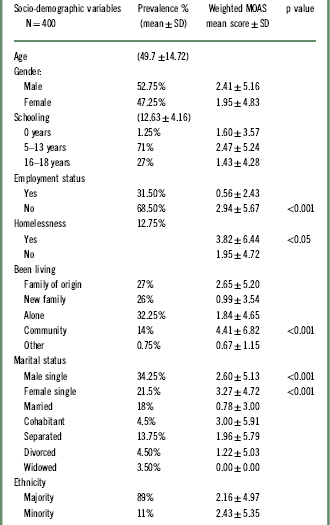
The study involved 400 patients. The main sociodemographic variables and mean weighted MOAS score (±SD) of the total sample are summarized in Table 2.
Socio-demographic variables and mean weighted MOAS score (±SD) of the total sample

The main clinical variables and mean weighted MOAS score (±SD) of the total sample are summarized in Table 1.
Prevalence of aggressive behaviors
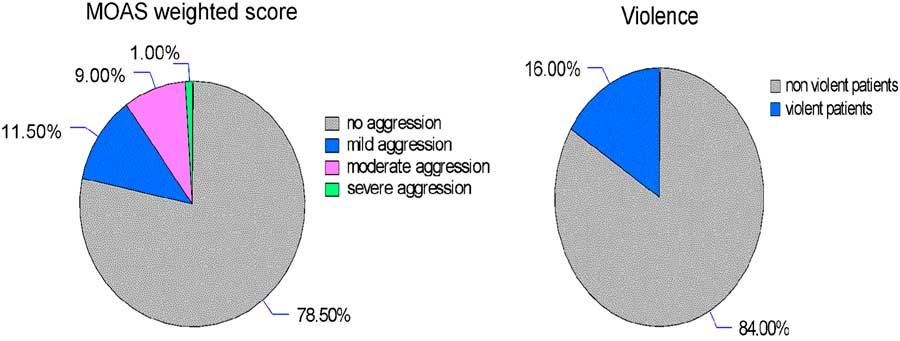
The mean weighted total MOAS score was 2.19±5 with a maximum value of 27. In particular, 21.50% of the subjects showed a MOAS score >0, 11.50% presented mild aggression (0–10 MOAS weighted score), 9% moderate aggression (11–20), and 1% severe aggression (MOAS >20). With respect to violent behaviours, 16% of patients showed a score >0 in one MOAS subscale other than verbal aggression according to violence definition (Figure 2).
The distribution of different levels of aggression and prevalence of violent patients in the total sample.

Aggressiveness and sociodemographic variables
Table 2 summarizes the mean weighted MOAS scores according to main sociodemographic variables. MOAS weighted score was negatively correlated with age of patients (r=–0.17, p<0.001). Mean weighted MOAS score was significantly higher in unemployed vs employed patients (p<0.001) as well as in patients living in severe poverty, in particular, for homeless individuals (p<0.05).
Mean weighted MOAS score was significantly higher in patients who lived in psychiatric communities than in patients who lived with their original family, their own family, or alone (p<0.001). In addition, patients who lived with their original family showed a significantly higher weighted MOAS score than patients who lived with their own family (p<0.001). Mean weighted MOAS score was significantly higher in male and female single patients compared to patients who were married (p<0.001). No significant relation with schooling and ethnicity status was found.
Recipient of aggression
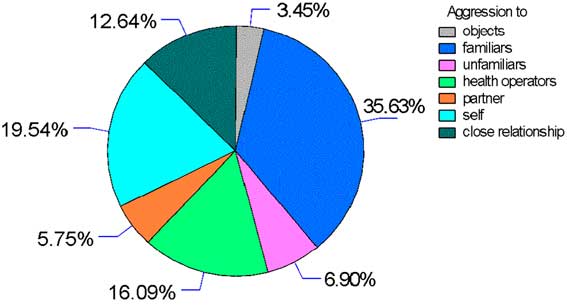
Figure 3 shows the frequency of different recipients of aggression. The highest percentage of aggressive acts was directed to family members (35.63%), followed by self-directed acts (19%) and by acts to the medical personnel (16%).
Recipients of aggression.

Aggressiveness and clinical variables
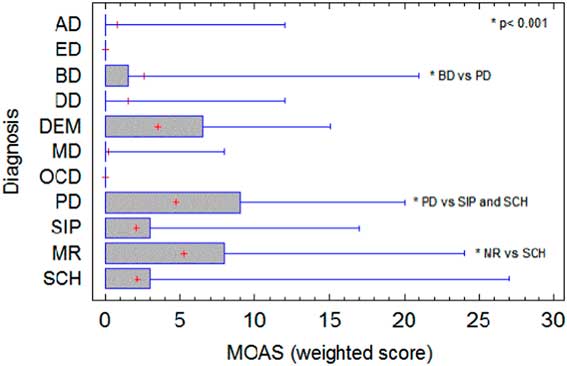
Distribution of clinical diagnosis for weighted total MOAS >0 reported a weighted MOAS score >0 most frequent in the patients diagnosed affected by schizophrenia (30%) followed by personality disorder (22%) and bipolar disorder (19%). Figure 4 shows the diagnosis-related mean weighted total MOAS scores. Patients affected by psychotic disorders (schizophrenia, bipolar disorder) had a significantly lower weighted MOAS score than those with a personality disorder (p<0.001).
The diagnosis-related MOAS weighted score: anxiety disorders (AD), eating disorder (ED), bipolar disorder (BD), depressive disorder (DD), senile dementia (DEM), major depression (MD), obsessive compulsive disorder (OCD), personality disorders (PD), substance induced psychosis (SIP), mental retardation (MR), and SCH (schizophrenia). Personality disorders, mental retardation and senile dementia showed significaltly higher MOAS weighted scores.

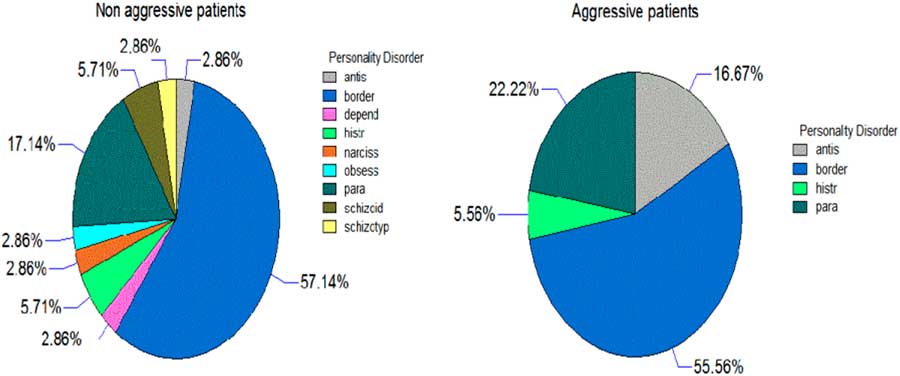
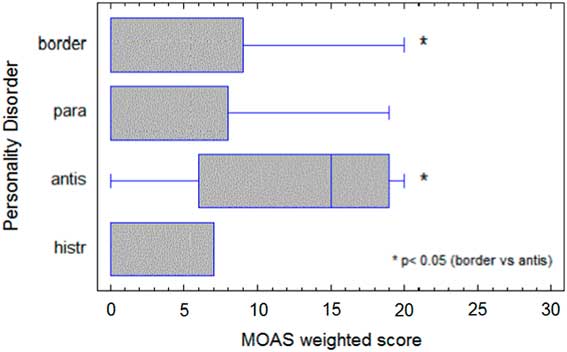
Considering personality disorders only, Figure 5 shows that those with a weighted MOAS score >0 represented only 4 out of 9 types: borderline (55.56%), paranoid (22.22%), antisocial (16.67%), and histrionic (5.56%). Thus, a weighted MOAS score >0 was most frequent in borderline patients and in paranoid patients. Moreover, Figure 6 shows that mean weighted MOAS score was significantly higher in the antisocial and borderline personality disorder patients compared to other personality disorders.
The distribution of personality disorders in aggressive and non-aggressive patients.

Personality disorder and MOAS weighted score: antisocial and borderline personality disorders showed higher weighted score.

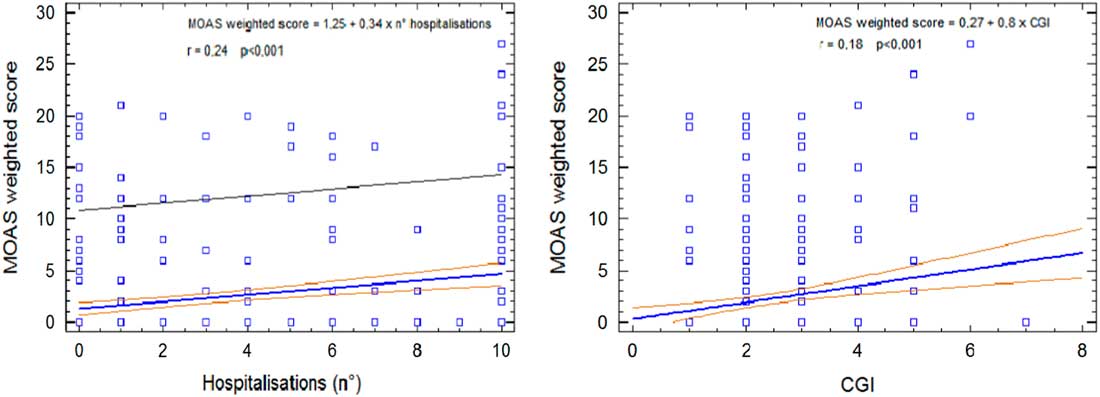
MOAS weighted score was significantly correlated with the number of hospitalizations (r=0.24; p<0.001) and with the CGI score (r=0.18; p<0.001) (Figure 7).
Severity of psychiatric clinical picture evaluated by number of hospitalizations and CGI score was significaltly correlated with MOAS weighted score.

Mean weighted MOAS score was significantly higher in the alcohol (3.65±6.43 SD vs 1.91±4.65 SD; p=0.01), cannabinoid (4.20±6.12 SD vs 1.81±4.68 SD; p<0.001), and cocaine (4.71±7.37 SD vs 1.95±4.65 SD; p<0.001) abusers than in the non-abusers but not in heroine abusers vs non-abusers (3.33±6.13 SD vs 2.14±4.96 SD).
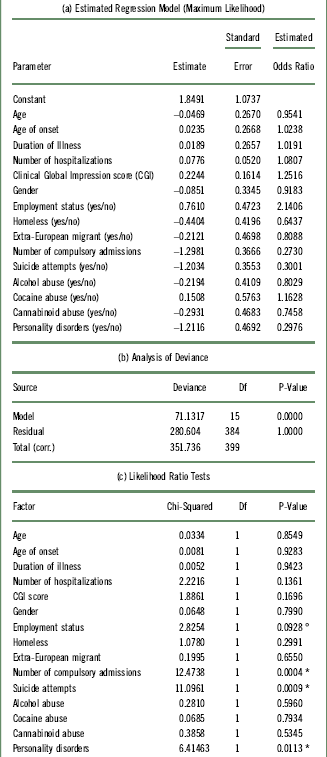
Table 3 shows the results of the logistic regression model, which considered the presence or absence of violence as a dependent variable and sociodemographic factors along with some clinical variables as independent predictive variables. The quantitative factors were age, age of onset, number of hospitalizations, and CGI score. The categorical factors were gender, employment status, homeless, non-European migrants, number of previous compulsory admissions (TSO), suicide attempts (yes/no), alcohol abuse (yes/no), cocaine and cannabinoid abuse, and personality disorders (yes/no).
Logistic regression model showing a statistically significant relationship between violence, personality disorders, compulsory admission (TSO), and suicide attempts, and unemployment status (only a trend)

Percentage of deviance explained by model=20.223.
Adjusted percentage=11.1253.
The logistic regression model showed a statistically significant relationship between the presence of violence and personality disorders (p=0.01), compulsory admission (p<0.01), and suicide attempts (p<0.01). There was a trend with unemployment status.
Discussion
Several studies have investigated the presence of violent behaviors among inpatients of psychiatric wards.Reference Colasanti, Natoli, Moliterno, Rossattini, De Gaspari and Mauri21, Reference Chang and Lee24, Reference Cornaggia, Beghi, Pavone and Barale33–Reference Amore, Menchetti and Tonti38 In contrast with a large amount of data reported for inpatients, studies with ItalianReference Pinna, Tusconi, Dessi, Pittaluga, Fiorillo and Carpiniello39, Reference Amore, Tonti, Esposito, Baratta, Berardi and Menchetti40 and internationalReference Choe, Teplin and Abram41 outpatients are lacking.
This study evaluated the severity and prevalence of aggressive and violent behaviors in patients attending the Psycho-Social Centre (CPS1), referred to the population of the central zone, the city of Milan.
The results show that an aggressive episode (on the basis of the MOAS) occurred in 21.5% of examined subjects. The average weighted score for MOAS in the whole sample was 2.2, while the maximum was 27. These are relatively low values that can be justified by the fact that users of a Psycho-Social Centre are generally clinically stabilized patients in relation to psychopathological conditions. Considering that our sample corresponds to the total number of users involved in the CPS1 over the 3-year period 2014–2016, the frequency of violent subjects is not irrelevant, especially in light of the risk for the general population including family members, colleagues, tourists, and mental health operators. This suggests that the assessment of the risk of violence and the management of aggressive behaviors is advisable also in the general population. Therefore there is need for more training on violence management and risk assessment, and support programs and measures are necessary and required not only for mental health operatorsReference Bowers42 but also for family members and co-workers.Reference Callaghan, Oud, Nijman, Palmstierna and Duxbury43
Results from our study seem to indicate that mental disorders may not be necessary nor sufficient determinants of violence, and that among psychiatric patients, major contributors to violent behaviors continue to be sociodemographic and economic factors, as with the general population. Actually, available research supports the view that the mentally ill are more often victims than perpetrators of violence.Reference Swanson, Holzer, Ganju and Jono15, Reference Stuart44, Reference Nawal, Magda, El-Leithy, Haydy and Khaled Abd45
With respect to demographic variables, our findings reveal a higher probability of violent behavior in males and young patients. These results are similar to the results of recently conducted inpatientReference Biancosino, Delmonte and Grassi34, Reference Dack, Ross, Papadopoulos, Stewart and Bowers36, Reference Mauri, Rovera, Paletta, De Gaspari, Maffini and Altamura46, Reference Di Giacomo and Clerici47 and community studies.Reference Pinna, Tusconi, Dessi, Pittaluga, Fiorillo and Carpiniello39, Reference Ellis48
One of our goals was to assess whether and how socioeconomic status can influence aggressive behaviors. To express patients’ socioeconomic status, we used several variables, which are the most frequently analyzed in the literature: housing, level of schooling, and unemployment. We also took into account ethnicity, because of its serious weight due to immigration in recent years in Italy. Among these variables, unemployment was found to be the one that correlates with aggressiveness and violence, followed by lack of fixed dwelling. This finding seems to be fully consistent with the findings from the literature.Reference Elbogen and Johnson23, Reference Markowitz49 The level of life satisfaction is linked to family situation, and socioeconomic status was found to be associated with one’s style of coping with stress and with a tendency to engage in aggressive behaviors. The higher the level of life satisfaction was, the lower the intensity of aggressive behaviors; there were also more effective styles of coping with stress.Reference Orzechowska, Florkowski, Gruszczynski and Zboralski50, Reference Conger, Conger and Martin51
One question is whether unemployment causes aggression or vice versa. Patients with psychiatric disorders already have intrinsic difficulties with employment, with the presence of aggressiveness worsening their chances of maintaining a job. The notion that unemployment is a likely strong cause or motivating factor behind violence and violent behaviors is remarkably pervasive in international cultures. It is believed that unemployment triggers participation in insurgencies, prompts people to join violent gangs, drives people to extremism, and is the primary reason behind domestic violence. More remarkable is that this idea is based more on intuition and assumption than on evidence.Reference Cramer52
In any case, the association of current work status with later violence implies that practical and measurable interventions, such as vocational training, supported employment, and other means of assisting people to find stable jobs, may help reduce violence risk.
Our study, according to literature data,Reference Dack, Ross, Papadopoulos, Stewart and Bowers36, Reference Raja and Azzoni53 shows that there was no significant difference in the mean number of years of education between aggressive and non-aggressive patients.
In the last few years, across several European cities, episodes of violence perpetrated by non-EU citizens increased, and after every crime, it was quickly reported by the media that the perpetrators had previously received psychiatric care. From here spreads the belief that non-EU citizens are more likely than Europeans to be psychopathic criminals. However, a study conducted in acute psychiatric wards in 3 center in the United Kingdom, Italy, and Greece showed that there is no common overall interaction between migration, mental health, and psychiatric service provision in the host country. In addition, ethnic minority patients were more likely to be subject to containment measures in all centers, even when their behaviors did not differ from the majority.Reference Bowers, Douzenis and Galeazzi54 According to these and others’ findings,Reference Ketelsen, Zechert, Driessen and Schulz55, Reference Lam, McNiel and Binder56 we did not find a significant association between being an ethnic minority and committing an aggressive act.
The last important issue linked to aggression and violence is the involvement of interpersonal relationships. Our results confirm the majority of studies in this area: patients living with their own new family were less aggressive than those who have lived and kept living with their family of origin.Reference Ketelsen, Zechert, Driessen and Schulz55, Reference Grassi, Peron, Marangoni, Zanchi and Vanni57 When analyzing marital status, single patients of both genders were more aggressive than all other categories.Reference Kim, Laurent, Capaldi and Feingold25, Reference Rodriguez, Lasch, Chandra and Lee26, Reference Raja and Azzoni53, Reference McNiel, Binder and Greenfield58, Reference Rhoades, Stanley, Kelmer and Markman59 There has been a higher frequency of aggressive acts in psychiatric service communities, which may be explained by the observation that community-selected patients are often the ones who can no longer be managed by their families because of their antagonistic behaviors.
The most frequent recipients of aggressive acts were family members of patients,Reference Tardiff60, Reference Catanesi, Carabellese and Guarino61 followed by healthcare staff.Reference Amoo and Fatoye11, Reference Papadopoulos, Ross, Stewart, Dack and James62, Reference Renwick, Stewart and Richardson63 These results show that interpersonal difficulties of aggressive patients emerge particularly within the family, especially in patients who still live with their family of origin and who do not have a family of their own. Clinicians should routinely evaluate past violence and work with the patient and family to prevent future violence after discharge. Family therapy or legal mediation in the context of family-related conflict might present other points of intervention given the findings linking violence to family context.Reference McFarlane, Dixon, Lukens and Lucksted64
With regard to clinical variable diagnosis, aggression was more frequently found in schizophrenic patients, but this may be biased by the fact that they represent the largest population (23.31%). On the other hand, regarding severity of aggression, higher values of MOAS were found in subjects affected by personality disorders, as reported in literature data.Reference Mauri, Rovera, Paletta, De Gaspari, Maffini and Altamura46 Among these, paranoid, antisocial, and borderline personality disorders were at higher risk of aggressive behavior and violence. Moreover, as personality disorders are frequently associated with substance abuse this constitute a major variable in aggressive behavior.Reference Fazel, Gulati, Linsell, Geddes and Grann12, Reference Fazel, Lichtenstein, Grann, Goodwin and Långström13
Indeed, there was a significant relationship between substance, alcohol abuse, and aggressive behavior. We found a statistically significant correlation between alcohol, cannabinoid, and cocaine abuse and both aggression and violence, as predicted by the disinhibiting/activating effects of these substances.Reference Patterson, DeBaryshe and Ramsey65 Conversely, opioid abuse has been found not to be correlated either with aggression or violence, in accordance with the biological effects of heroin.
Compulsory admission and involuntary treatment of mentally ill patients (called Trattamento Sanitario Obbligatorio; TSO) as a clinical variable was significantly related to patient violence. In other words, patients requiring or suffering a TSO have shown the highest levels of aggression and violence. As evidenced by the logistic regression, the number of TSO was the variable together with suicide attempts and personality disorders most correlated with violence. This is in line with the main circumstances in which TSO is required, being violent and socially dangerous patients. Indeed in Italy (law 180), TSO should be a medical practice in which danger or aggression are not foreseen as discriminating elements for its request. Hence the correlation between the high number of TSO and the high MOAS rating shows that TSO is physician, family, and society response to the aggressiveness and violence manifested by the psychiatric patients. On the other hand, compulsory admission to a psychiatric unit can be experienced as disempowering and stigmatizing by those with serious mental illness.Reference Rüsch, Müller and Lay66
The study showed a link between violence and suicide: history of aggressive behaviors, suicide attempts, and depression were significantly related to each other, and each was demonstrated to be significantly associated with altered serotonin metabolism. On the other hand, the role of 2 main constructs of human nature, aggression and impulsivity, has been discussed broadly in research and clinical practice in relation to suicide, as endophenotypes or traits of personality.Reference Gvion and Apter67, Reference Gvion and Apter68
Nonetheless, the following methodological limitations should be kept under consideration when interpreting the above-mentioned findings. The lack of reliable retrospective data made it impossible to analyze several important factors generally associated with violence, such as belonging to a violent family and having been subjected to violence and abuse in childhood.Reference Elbogen and Johnson23, Reference Swanson, Swartz, Essock and Osher69 A possible limitation but also a characterization of the study is the exclusive involvement of patients living in downtown Milan. This is the wealthier and qualitatively advantaged area of the city, so the sociodemographic variables may have been influenced by these conditions. Moreover, our study has no healthy control population.
In any case, the conclusion that contributors to violent behaviors are sociodemographic and economic factors, as is the case for the general population, is problematic. While this might well be the case for the general population, lower socioeconomic status of psychiatric patients rather might be a consequence than the cause of the usually early beginning clinical symptoms and associated aggressive behavior. In other words, psychiatric disorders with psychopathologically inherent increased aggressiveness usually have poor social and economic adjustment, leading to a pseudo-correlation between aggressiveness and socioeconomic characteristics.
We thank Marian Mora Conde for comments that greatly improved the manuscript.
Disclosures
The authors have nothing to disclose.