INTRODUCTION
Tropical reef communities are globally recognized for their high biodiversity and productivity (Mumby et al., Reference Mumby, Hastings and Edwards2007; Kiessling et al., Reference Kiessling, Simpson and Foote2010; Pimm et al., Reference Pimm, Jenkins, Abell, Brooks, Gittleman, Joppa, Raven, Roberts and Sexton2014). These tropical regions show a variety of geological and environmental features that shape different ecosystems; however a huge study effort has been made mostly in calcareous reefs, and other regions of the planet have been almost neglected. In view of the environmental challenges regarding oceans in general and the tropical reefs in particular (Halpern et al., Reference Halpern, Walbridge, Selkoe, Kappel, Micheli, D'agrosa, Bruno, Casey, Elbert, Fox, Fujita, Heinenmann, Lenihan, Madin, Perry, Selig, Spalding, Steneck and Watson2008; Rossi, Reference Rossi2013; Palumbi et al., Reference Palumbi, Barshis, Traylor-Knowles and Bay2014), research on reef assemblages in poorly studied regions is urgently required to provide scientific data for their sustainable use and environmental monitoring.
Sandstone reefs differ from a typical rocky shore and coral reefs mainly because of their gentle slope and sedimentary composition (Rabelo et al., Reference Rabelo, Soares, Bezerra and Matthews-Cascon2015). Previous studies on benthic assemblages mainly focused on Caribbean and Indo-Pacific coral reefs, and few studies have been conducted on the Tropical South-western Atlantic (TSA) reefs. Furthermore, the studies available for TSA were mostly conducted on biogenic reefs (Leão et al., Reference Leão, Kikuchi, Oliveira and Vasconcellos2010; Francini-Filho et al., Reference Francini-Filho, Coni, Meirelles, Amado-Filho, Thompson and Pereira-Filho2013; Kelmo et al., Reference Kelmo, Bell and Attrill2013; Cruz et al., Reference Cruz, Loiola, Albuquerque, Reis, Anchieta, Nunes and Reimer2015), and literature on sandstone formations is limited and focused on intertidal or shallow subtidal environments (Barradas et al., Reference Barradas, Amaral, Hernandez, Flores-Montes and Steiner2010; Rabelo et al., Reference Rabelo, Soares, Bezerra and Matthews-Cascon2015). This is remarkable, since the 4000 kilometres of coastline along TSA contain many areas with sandstone reefs, most of which remain largely unknown. Data on benthic assemblages in underwater sandstone reefs, especially in TSA (sensu Spalding et al., Reference Spalding, Helen, Gerald, Davidson, Ferdaña, Finlayson, Halpern, Jorge, Lombana, Lourie, Martin, McManus, Molnar, Recchia and Robertson2007), are still very scarce. Most of the information is focused on vagile or semi-vagile organisms (Martínez et al., Reference Martínez, Mendes and Leite2012; Freitas & Lotufo, Reference Freitas and Lotufo2015; Galvão Filho et al., Reference Galvão Filho, Araújo, Silva, Azevedo, Meirelles and Matthews-Cascon2015), and information on ecosystem engineering species (sensu Jones et al., Reference Jones, Lawton and Shachak1997) is almost non-existent (Rabelo et al., Reference Rabelo, Soares, Bezerra and Matthews-Cascon2015).
In TSA, low-latitude sandstone reefs commonly develop on the continental shelf under environmental stress factors such as high turbidity, intense sedimentation and high temperatures (Morais et al., Reference Morais, Irion, Pinheiro and Kasbohm2009; Dias et al., Reference Dias, Castro and Lacerda2013). A quantitative analysis of the reef assemblages under these harsh conditions is essential to develop a general understanding of the relationship between environmental changes and marine biodiversity (Sanders & Baron-Szabo, Reference Sanders and Baron-Szabo2005; Silva et al., Reference Silva, Leão, Kikuchi, Costa and Souza2013). In fact, assessments of benthic coverage are necessary to the establishment of useful baselines for predictions related to local or global changes, particularly in poorly known areas (Ruzicka et al., Reference Ruzicka, Colella, Porter, Morrison, Kidney, Brinkhuis, Lunz, Macaulay, Bartlett, Meyers and Colee2013). In many areas, major environmental modifications have already started, and only standardized tools can be used to obtain a good quantification and proper interpretation of these changes (Edmunds & Elahi, Reference Edmunds and Elahi2007).
Sandstone reefs provide shelter and food for commercial species (Martínez et al., Reference Martínez, Mendes and Leite2012; Freitas & Lotufo, Reference Freitas and Lotufo2015), and they are important touristic areas in TSA. Because of this ecological and socioeconomic importance, we urgently need to collect information on the benthos of these formations. The aim of this study was to provide a quantitative assessment of benthic assemblages on a tropical sandstone reef of TSA. To achieve this goal, a scuba diving-based study was performed at a depth of 22–24 m in a marine protected area (MPA) off the Brazilian coast in the summer of 2013.
MATERIALS AND METHODS
Study site
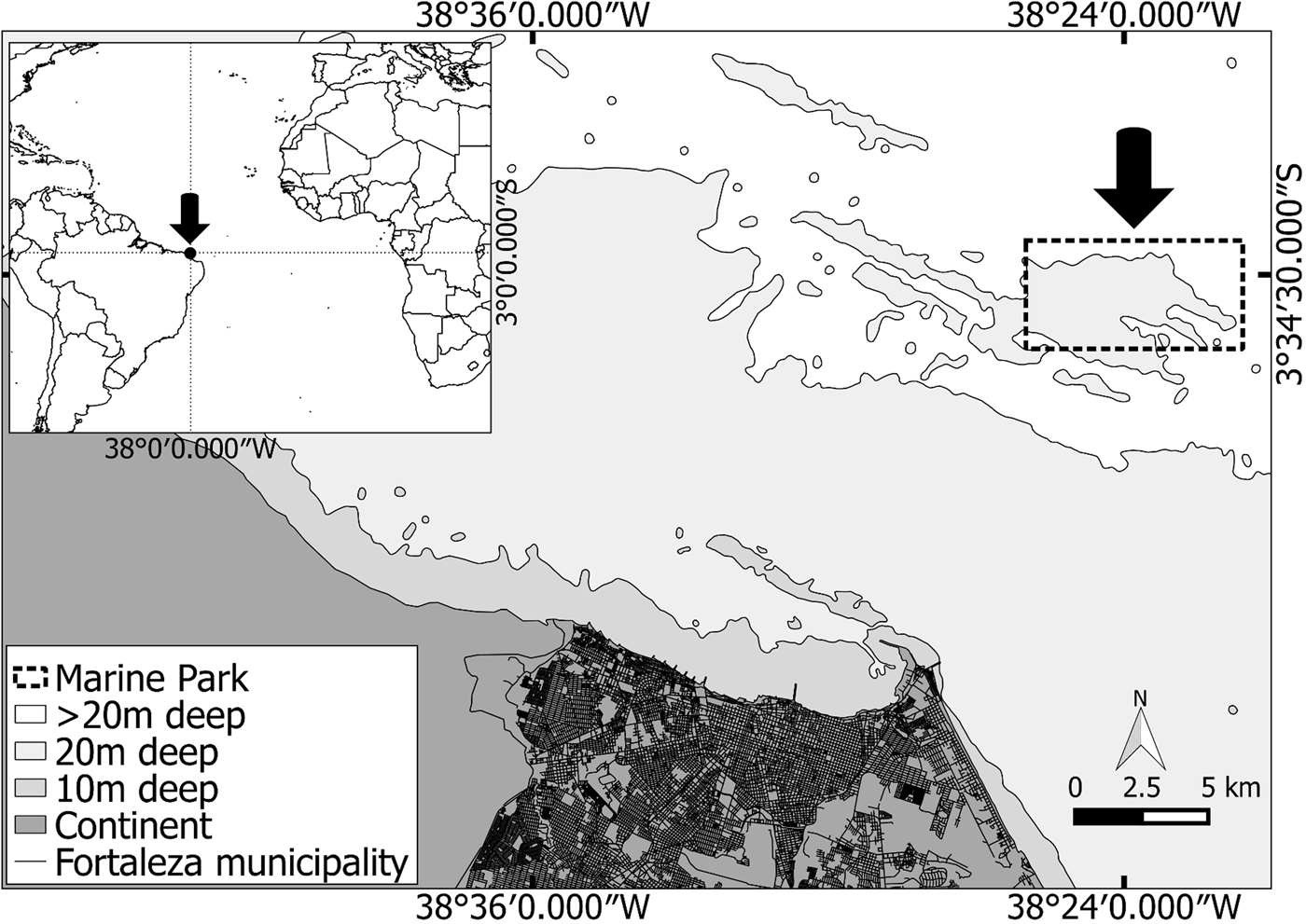
The study site was the marine protected area ‘Pedra da Risca do Meio’. It is one of the few totally submerged MPAs in TSA (Soares et al., Reference Soares, Paiva, Freitas and Lotufo2011; Santos & Schiavetti, Reference Santos and Schiavetti2014). This MPA is located 18 km from the city of Fortaleza, on the north-east coast of Brazil, and covers an area of 33.2 km2 (Figure 1). The completely submerged reefs are at depths ranging from 22 to 24 m. The reef evaluated in this study has elevations in a linear arrangement 1–2 m above the sea floor.
Location of study site. Tropical South-western Atlantic (left side) and Marine protected area (right side).

The TSA coast (sensu Spalding et al., Reference Spalding, Helen, Gerald, Davidson, Ferdaña, Finlayson, Halpern, Jorge, Lombana, Lourie, Martin, McManus, Molnar, Recchia and Robertson2007) offers diverse coastal habitats, such as coral reefs, sandstone reefs, sand beaches and dunes. The intertidal and shallow subtidal zones of this coast have sandstone reefs and beach rocks, which are rocky outcrops with flat surfaces tilted slightly seaward (Pereira et al., Reference Pereira, Ros and Bezerra2007; Freitas & Lotufo, Reference Freitas and Lotufo2015; Rabelo et al., Reference Rabelo, Soares, Bezerra and Matthews-Cascon2015). The reefs have a tabular format, and consist of sand cemented by calcium carbonate and iron oxide (Morais et al., Reference Morais, Irion, Pinheiro and Kasbohm2009).
The study site has a tropical wet and dry climate (Aw in Köppen classification), with an annual sea surface temperature (SST) ranging from 27 to 29°C (near the Earth's equator) and a highly variable precipitation regime, with frequent droughts. The rainy period extends from January to July, but in many years rain is concentrated between February and April (200 to 400 mm per month). The dry period extends from August to December, and during these months precipitation can be null, even in years of regular rainfall (Dias et al., Reference Dias, Castro and Lacerda2013).
Oceanographic and climate conditions in this semi-arid coast of TSA are different from those in the North Atlantic, eastern Brazilian Coast, and Caribbean Sea. This region exhibits oligotrophic waters, strong trade winds (mainly in the second semester), and high SST (Dias et al., Reference Dias, Castro and Lacerda2013; Teixeira & Machado, Reference Teixeira and Machado2013; Aguiar, Reference Aguiar2014). Despite the oligotrophic waters and SST favourable for coral bioconstruction, the action of trade winds and coastal currents causes strong resuspension and transport of marine sediments (Knoppers et al., Reference Knoppers, Ekau and Figueiredo1999). This renders the water turbid and inappropriate for coral reef development, in spite of low fluvial inputs (Dias et al., Reference Dias, Castro and Lacerda2013).
Sampling methods
Data collection was conducted in the summer of 2013 via linear transects. Biotic data were collected by scuba diving at a depth of 22–24 m. The point-intercept transect (PIT) method was used to analyse the reef benthic assemblages, and the belt transect (BT) method was used to assess the size of the scleractinian coral colonies.
In the PIT method, ten 60-m-long transect lines were used. These transects were distributed in pairs (first pair with transects 1 and 2, second pair with transects 3 and 4, etc.), each composed of parallel lines 2 m apart, haphazardly placed over the reef. Each transect line was analysed by one scuba diver. Quantitative assessment (presence of filamentous algae, coral, ascidians, etc.) was performed every 20 cm of each transect line, totalling 300 points per transect and 3000 points over the reef. At each point, sessile benthic organisms or sand present immediately below the transect line was recorded. Benthic coverage was classified into categories of benthic suspension feeders (corals, sponges, etc.) and morpho-functional groups of algae (filamentous, foliose, etc.), the latter following the approach of Steneck & Dethier (Reference Steneck and Dethier1994). To complement the characterization of reefs, sand covering the hard bottom was quantified to assess the area without sessile organisms. Benthic coverage of each category was measured by dividing the number of points where the taxon (or sand) occurred by the total number of PIT points. Benthic coverage is a common metric for reef monitoring because it can be determined rapidly in the field and has been used for over 50 years for many reefs worldwide (Madin & Madin, Reference Madin and Madin2015).
For the BT method, scuba divers used an underwater camera and a 50 × 50-cm quadrat to record colonies in five 60-m2 areas (each 30 m × 2 m). These areas were delimited by each pair of transect lines used in the PIT method. We aimed to evaluate the following variables along five belt transects: the number of corals (zoanthid or scleractinian) and scleractinian colony size-frequency distributions. In total, 350 photo-quadrats (N = 70 per transect) were obtained for the BT method and analysed using ImageJ and Coral Point Count with Excel Extensions.
Statistical analyses
The chi-square test was used to determine variations in benthic assemblages between PITs. Besides the general comparison of transect lines, repeated chi-square tests were used to analyse changes in each benthic category. These latter tests were performed on the basis of the frequency of each category relative to the sum of the remaining groups in each transect. Non-metric multidimensional scaling (NMDS) ordination was used to summarize spatial similarities, measured as Bray–Curtis index, in the structure of the reef benthic assemblages. The morpho-functional groups (algae and benthic fauna) and sand responsible for multivariate differences were determined using similarity of percentage analysis (SIMPER).
Pearson's correlation analyses were used to evaluate the relative influence of major non-building organisms (i.e. filamentous algae) on the abundance of key reef-building organisms (scleractinians and crustose calcareous algae). Statistical analyses were performed using R software, and differences were considered statistically significant when P < 0.05, except in the case of the repeated chi-square tests, when the Bonferroni-corrected P-value (P < 0.0083) was applied to prevent type I error.
RESULTS
Benthic coverage
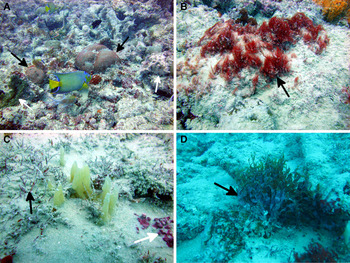
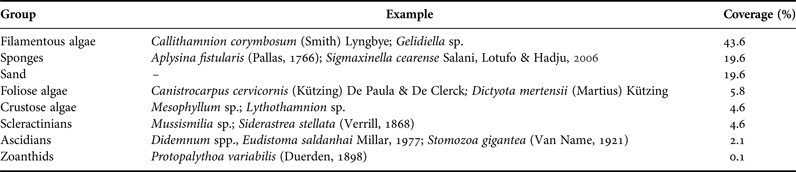
The sandstone reef under study had a diverse benthic community (Figure 2), which could be classified into eight categories: filamentous algae, sponges, sand, foliose algae, crustose algae, scleractinians, ascidians and zoanthids (Table 1). The results indicate the dominance of benthic macroalgae over the sessile benthic fauna (sponges, scleractinian corals, ascidians and zoanthids). Considering only macroalgae, filamentous species were by far the most abundant component (43.6%), followed by foliose (5.8%) and crustose species (4.6%). In general, benthic assemblages were characterized by the high coverage of filamentous algae and sponges (63.2% of coverage in total). Among benthic categories, the scleractinian corals (Siderastrea stellata and Mussismilia sp.), ascidians and the zoanthid Protopalythoa variabilis showed the lowest coverage values. Additionally, a high coverage of sand (19.6%) was observed on the reef.
Benthic assemblage on a sandstone tropical reef. (A) overview of the reefs highlighting the scleractinian coral Siderastrea stellata (Verrill, 1868) (black arrows) and sponges (white arrows); (B) the filamentous red alga Callithamnion corymbosum (Smith) Lyngbye (black arrow); (C) a filamentous red alga Gelidiella sp. (black arrow) and an unidentified calcareous red alga (white arrow); and (D) the foliose brown alga Dictyota sp.

Benthic categories, main species and coverage percentage in a SW Atlantic sandstone reef.

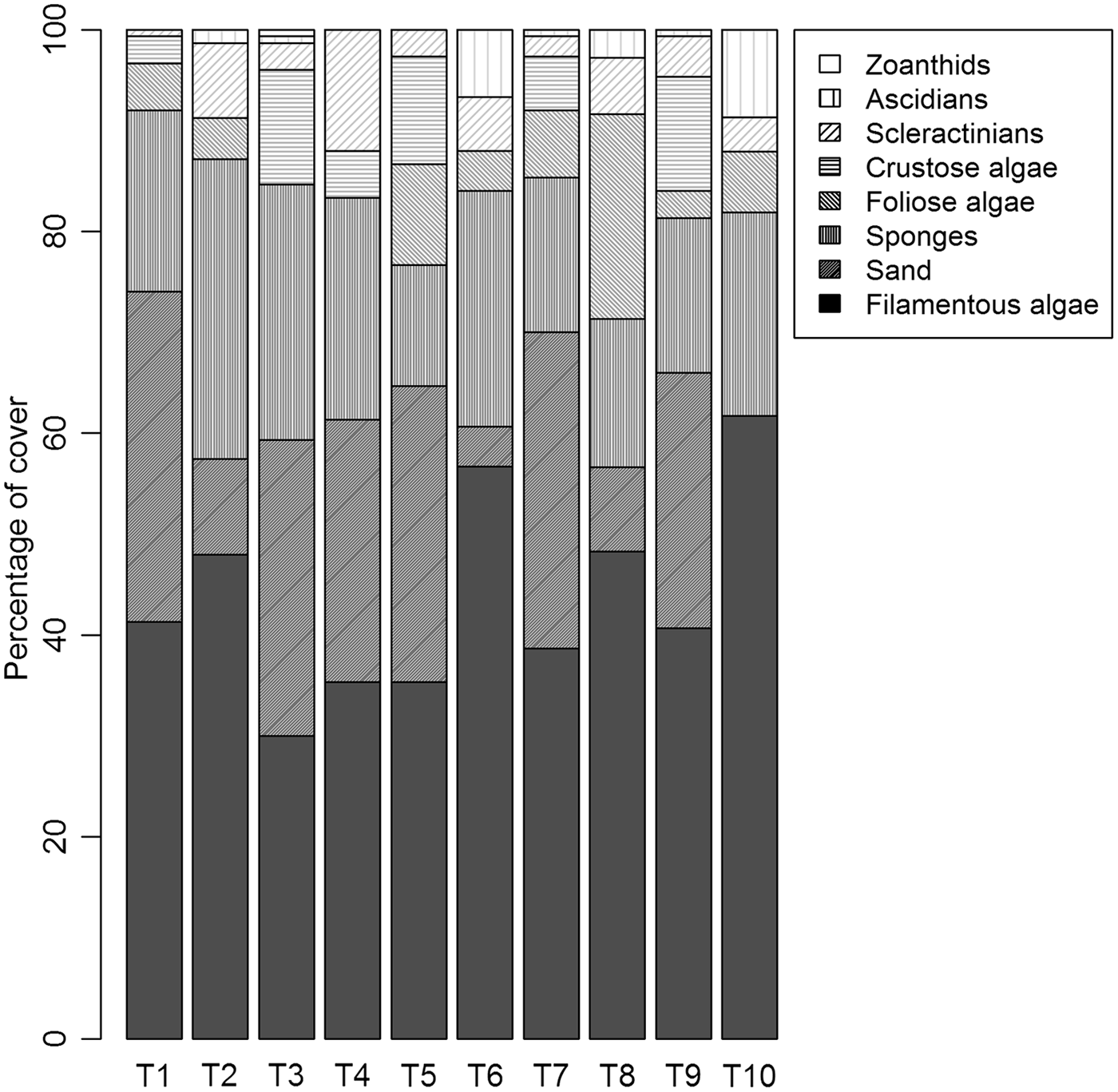
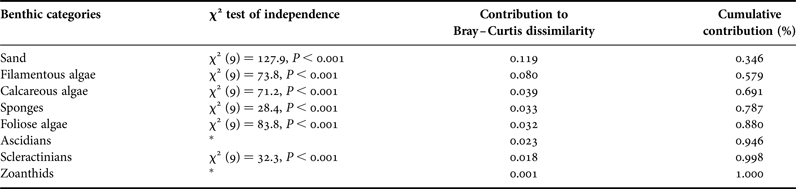
The chi-square test of independence, excluding ascidians and zoanthids because of their low benthic coverage, showed that the differences between the transect lines (PITs) were significant (χ2 = 342.8, P < 0.0001) (Figure 3). The test was repeated to determine the proportion of coverage for each group in each transect line, and the Bonferroni-corrected P-value (adjusted P = 0.0083) showed that all the tested benthic groups varied significantly between transects (Table 2).
Variation of coverage of benthic categories along 10 transects.

Chi-squared test of independence among 10 transects considering six benthic categories in a SW Atlantic sandstone reef.

Since these transects could be classified into two groups via multidimensional scaling, the table also shows the relative contribution of each category to the differentiation between these groups (i.e. results of SIMPER analysis).
*Excluded from the χ2 test due to their low benthic coverage.
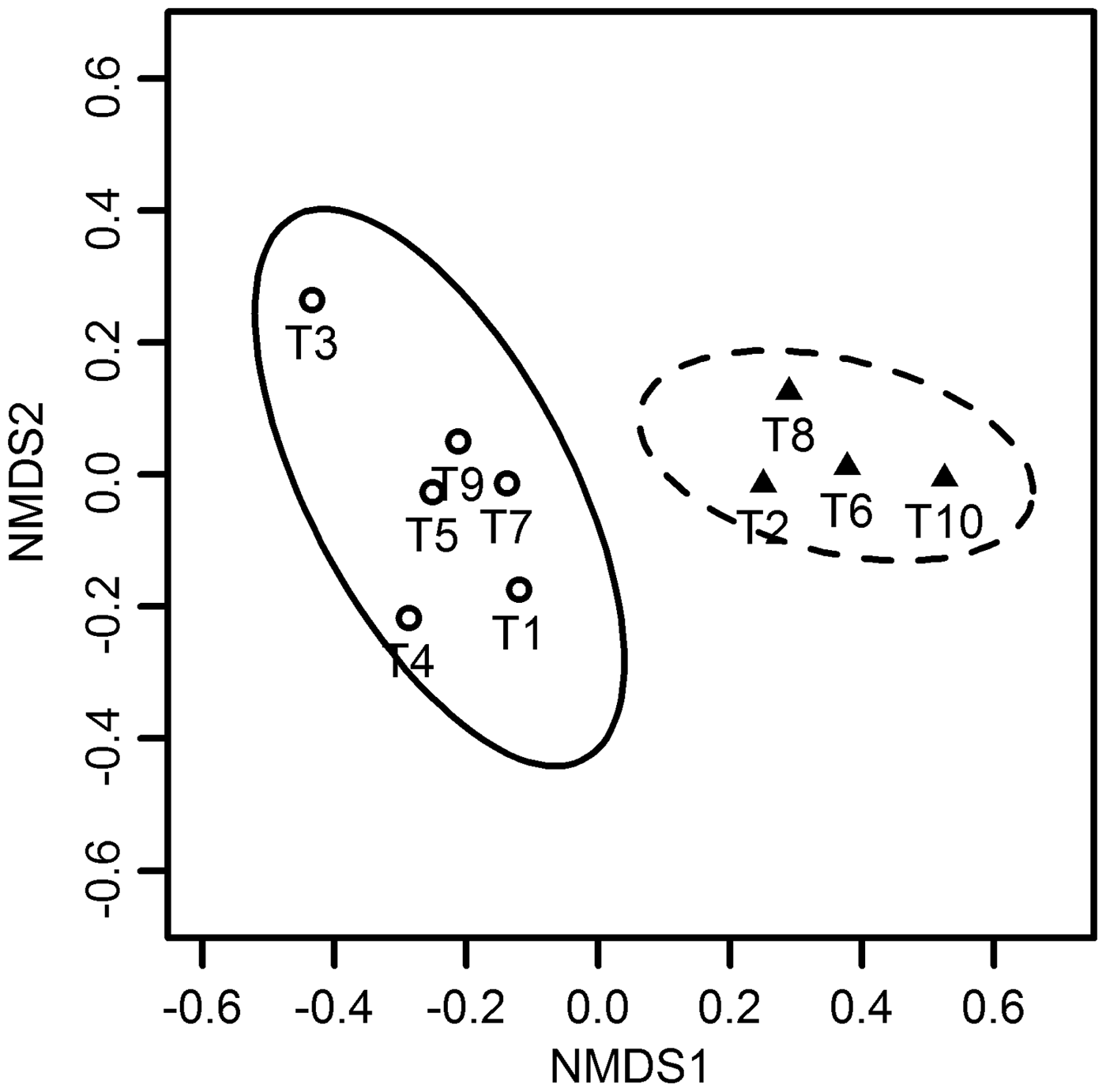
The NMDS analysis produced a two-dimensional representation (stress = 0.054) that defined two main groups (solid and dotted lines in Figure 4). The SIMPER analysis showed that these groups of transects differed with respect to the quantity of filamentous algae, calcareous algae, sponges and sand (Table 2). In general, transects 2, 6, 8 and 10 showed the lowest coverage of sand and calcareous algae and the highest coverage of filamentous algae and sponges. The reverse pattern was observed in the other group. The contribution of cnidarians (zoanthids and scleractinian corals) to the differentiation between transects was low.
Non-metric Multidimensional Scaling (NMDS) of 10 transects showing two groups: the transects circled by a solid line had a higher coverage of filamentous algae and sponges, whereas the transects circled by a dotted line had a higher coverage of sand and calcareous algae. Stress = 0.054.

Pearson's correlation analysis revealed a negative correlation between two morpho-functional groups (filamentous algae and calcareous algae; r 2 = 0.58, P < 0.05), suggesting competition between these organisms.
Scleractinian coral and zoanthid colonies
In this study, 202 colonies of Anthozoa, mainly scleractinian corals, were observed: 172 (85.5%) colonies of Siderastrea stellata; 19 (9.4%) colonies of Mussismilia sp.; and 11 (5.4%) colonies of the zoanthid Protopalythoa variabilis. The belt transects had 40.4 ± 15.3 colonies (0.67 ± 0.25 colonies per m2). Both scleractinian corals (S. stellata and Mussismilia sp.) were present in all five transects analysed, whereas P. variabilis was found in only two of the transects.
The colony size-frequency of the major coral S. stellata varied between 1.6 and 56.9 cm (mean ± SD = 12.9 ± 9.9 cm). However, most of the colonies belonged to small-diameter classes, with 83.7% exhibiting a diameter <20 cm. Because of the skewed distribution of the colony size frequency, the central trend is better conveyed by the median (instead of the mean) which was 9.8 cm.
DISCUSSION
The results of this study establish two singular findings in tropical sandstone reef description and ecosystem functioning: (1) The dominance of benthic algae (mainly filamentous algae) over benthic suspension feeders and (2) low coral diversity, as most of the coral colonies are small-sized.
The tropical subtidal reefs off TSA waters support highly diverse assemblages of macroalgae and sessile invertebrates, yet little is known about the structure of these communities. The present study has described, for the first time, the coverage of these benthic assemblages, which is one of the most important metrics for reef characterization and monitoring (Sarkar & Ghosh, Reference Sarkar and Ghosh2013; Cruz et al., Reference Cruz, Kikuchi and Creed2014; Madin & Madin, Reference Madin and Madin2015).
To discuss these results, it is necessary to understand the environmental conditions of the continental shelf where the tropical sandstone reefs are located. The study site is strongly affected by high-speed winds (Sauermann et al., Reference Sauermann, Andrade, Maia, Costa, Araújo and Hermann2003; Tsoar et al., Reference Tsoar, Levin, Porat, Maia, Hermann, Tatumi and Claudino-Sales2009) and large swell events that generate resuspension of sediments and turbidity in the pelagic zone (Knoppers et al., Reference Knoppers, Ekau and Figueiredo1999). The high percentage of sand (19.6%) found above the reef is the result of these sediment resuspensions. The modern relief of the north-eastern Brazilian Continental Shelf is commonly related to high-energy sedimentary fluxes, oligotrophic waters and hydrodynamic processes (Dias et al., Reference Dias, Castro and Lacerda2013; Teixeira & Machado, Reference Teixeira and Machado2013; Gomes et al., Reference Gomes, Vital, Bezerra, Castro and Macedo2014). According to Aguiar (Reference Aguiar2014), Secchi depth, which is related to water turbidity, is only 2 m in the first semester in the study site. This low value contrasts with the average value of 6.6 m for the entire continental shelf. Moreover, Dias et al. (Reference Dias, Castro and Lacerda2013) demonstrated a high concentration of suspended particulate matter on the inner continental shelf, with an average of 39.7 and 28 mg l−1 in the first and second semester, respectively. These data demonstrate that the studied reef sustains a very turbid-water benthic assemblage (sensu Sanders & Baron-Szabo, Reference Sanders and Baron-Szabo2005).
A high coverage of macroalgae, including filamentous algae, has previously been reported in biogenic reefs in the Tropical South-western Atlantic (Barradas et al., Reference Barradas, Amaral, Hernandez, Flores-Montes and Steiner2010; Segal & Castro, Reference Segal and Castro2011; Francini-Filho et al., Reference Francini-Filho, Coni, Meirelles, Amado-Filho, Thompson and Pereira-Filho2013), but only for environments in intertidal or shallow subtidal reefs at a maximum depth of 10 m. The present data support the hypothesis that this dominance continues at greater depths (at least 22 m) in TSA, including sandstone reefs. High-current regime and turbidity may be essential factors for understanding the dominance of these sessile organisms. In the Mediterranean, slow-growing calcareous algae are dominant (Ballesteros, Reference Ballesteros2006), and light limitation and turbidity are essential factors for understanding the absence of certain components such as scleractinian corals (Zabala & Ballesteros, Reference Zabala and Ballesteros1989). In the case of TSA, turbidity and harsh living conditions for passive suspension feeders may be the key to understanding this substrate occupation by algae.
Some filamentous algae, the main functional group in the studied reefs, have opportunistic life-history characteristics, including high surface area to volume ratios and the ability to maintain growth rates in oligotrophic waters. Another aspect is that filamentous algae are often able to recover rapidly after being partially removed by physical disturbance (Rosenberg & Ramus, Reference Rosenberg and Ramus1984; Littler et al., Reference Littler, Littler and Brooks2006), for example, re-suspension of sediments and siltation by sand in the sandstone reefs.
The results also indicate that sponges are the second morpho-functional group with the highest coverage and the first among benthic fauna. Despite their ecological importance, sponges are commonly excluded from the characterization of reef assemblages (Bell, Reference Bell2008). Bell (Reference Bell2008) suggested that the low effort to study sponge coverage is, in part, because sponges are generally less abundant in shallow-water coral reefs than other benthic reef taxa. The results demonstrate that sponges are an important component in sandstone reefs in TSA.
Two hypotheses may explain this high coverage of sponges. The first is related to the depth of the reef surveyed in this study. Pawlik et al. (Reference Pawlik, McMurray, Erwin and Zea2015) suggested that sponge coverage in shallow waters (2–8 m) is generally low and limited by physical disturbance due to turbulence from storm events. Sponges, in fact, may be deeply affected by rush hydrodynamic conditions, and the first metres of shallow waters may not be suitable for their presence. Ruzicka et al. (Reference Ruzicka, Colella, Porter, Morrison, Kidney, Brinkhuis, Lunz, Macaulay, Bartlett, Meyers and Colee2013) analysed deeper sites (10–20 m in depth) along the Florida Keys reefs and found a significant increase in sponge coverage. The second hypothesis is the resistance of sponges to environmental stressors such as sedimentation and thermal anomalies (González-Rivero et al., Reference González-Rivero, Yakob and Mumby2011). Bell et al. (Reference Bell, McGrath, Biggerstaff, Bates, Bennett, Marlow and Shaffer2015) showed that some sponge taxa are highly resilient to sedimentation, and in some cases, sedimentation has actually been shown to correlate with increased sponge coverage. Salani et al. (Reference Salani, Lotufo and Hadju2006) reported that Sigmaxinella cearense Salani, Lotufo & Hadju, Reference Salani, Lotufo and Hadju2006, a sponge endemic to the study site, was found even during periods of intense winds and sedimentation. These authors observed that during the time of strong swells (August to January), sand deposited on the top of and around sandstone reefs may be suspended in the water column and increase stress for sponges. Despite this environmental stress, these authors observed a dominance of sponges during taxonomic surveys in the reef. Kelmo et al. (Reference Kelmo, Bell and Attrill2013) showed that sponges in the Brazilian reefs became more resilient after a very stressful thermal event (El Niño, 1997/98). Both environmental factors (high turbidity and SST) were observed in the study area and may be the reason why the sponges are the best adapted suspension feeders.
Because of the little information on sponge diversity in the sandstone reefs of TSA found in the literature (to date, 37 species; Salani et al., Reference Salani, Lotufo and Hadju2006), and the absence of accurate temporal data, it is necessary to monitor over longer temporal scales the benthic coverage of this and other areas. In addition, a better taxonomic resolution and surveys are required in other reef locations to understand the dominance of sponges and to test the effects of depth and sedimentation on these organisms (Kelmo et al., Reference Kelmo, Bell and Attrill2013; Ruzicka et al., Reference Ruzicka, Colella, Porter, Morrison, Kidney, Brinkhuis, Lunz, Macaulay, Bartlett, Meyers and Colee2013).
Another remarkable result is the low coverage of reef-building organisms (around 5% coverage of corals and calcareous algae). This is consistent with the findings of previous studies in TSA waters in which the coral cover was 5–11%, depending on the anthropogenic impact (Leão et al., Reference Leão, Kikuchi, Oliveira and Vasconcellos2010). The benthic coverage of slow-growing reef-building functional groups (for example, calcareous algae and scleractinian corals) and fast-growing non-building organisms (filamentous algae) is an important metric to evaluate reef resilience and recovery (Graham et al., Reference Graham, Jennings, MacNeil, Mouillot and Wilson2015). The presence of a large quantity of sediments above the reefs is an important finding. In general, most South-west Atlantic reefs are characterized by high sedimentation rates (Castro et al., Reference Castro, Segal, Negrão and Calderon2012). Although the aim of the present study was not to test the influence of sedimentation on the benthic assemblages, the results of SIMPER suggest that sand is a relevant abiotic factor for the structure of benthic assemblages. The presence of high loads of sand is often negatively related to benthic species on rocky reefs (Díaz-Tapia et al., Reference Díaz-Tapia, Bárbara and Díez2013). Stubler et al. (Reference Stubler, Stevens and Peterson2016) found that the assemblages were primarily composed of filamentous and encrusting algae in Jamaican coral reefs, but the authors observed lower amounts of filamentous algae in locations with the highest sediment supply. Corals also have a negative relationship with the amount of sediment in certain areas (Castro et al., Reference Castro, Segal, Negrão and Calderon2012), and resuspension is a major factor that explains turbidity and species presence. Besides the potential for abrasion and burying, availability of suspended organic matter is important to understand the presence of one kind of suspension feeder or another (Rossi & Gili, Reference Rossi, Gili, Kerkey and Munger2009). In the study site, the presence of carbonates may be as high as 90% in certain areas (Castro et al., Reference Castro, Segal, Negrão and Calderon2012), with the available food being very low.
In these tropical reefs, a low coral diversity (two species) was observed, and most of the coral colonies were small-sized. The environmental characteristics of the continental shelf may explain the selection of only two resilient corals (Siderastrea stellata and Monstastrea sp.) in the study site. About 20 scleractinian species have been recorded for the entire TSA coast, and at least six of them are endemic to Brazil (Leão et al., Reference Leão, Kikuchi, Oliveira and Vasconcellos2010; Francini-Filho et al., Reference Francini-Filho, Coni, Meirelles, Amado-Filho, Thompson and Pereira-Filho2013). Sedimentation and turbidity affect benthic assemblages (Dutra et al., Reference Dutra, Kikuchi and Leão2006; Castro et al., Reference Castro, Segal, Negrão and Calderon2012) by selecting species most well-adapted to stress and consequently reducing the percentage of coverage and diversity of taxa known to be stress-sensitive, such as scleractinian corals (Fabricius, Reference Fabricius2005; Silva et al., Reference Silva, Leão, Kikuchi, Costa and Souza2013). For example, S. stellata, a species endemic to the South Atlantic, has been described to have large polyps (Menezes et al., Reference Menezes, Neves, Kikuchi and Johnsson2014) that are less susceptible to the effect of sediments (Lirman & Manzello, Reference Lirman and Manzello2009). Furthermore, this coral species is very resistant to temperature, salinity variations and water turbidity (Costa et al., Reference Costa, Sassi and Gorlach-Lira2008). In particular, Symbiodinium Clade C (present in this species) is well adapted to stressful light and thermal conditions throughout the year, which is a possible explanation for its dominance in a wide area of the Brazilian reefs (Costa et al., Reference Costa, Sassi and Gorlach-Lira2008). Corals with this Clade C are less sensitive to bleaching events (Glynn et al., Reference Glynn, Maté, Baker and Calderon2001). The other coral observed (genus Montastraea) is recognized as sediment-resistant with a high capacity for sediment removal, and it is a major component of the ‘sediment resistant coral fauna’ in the West Atlantic (Francini-Filho et al., Reference Francini-Filho, Coni, Meirelles, Amado-Filho, Thompson and Pereira-Filho2013). These corals may comprise ‘siltation assemblages’ (Sanders & Baron-Szabo, Reference Sanders and Baron-Szabo2005) in recent turbid-water reefs.
The present results on benthic coverage reflect a normal characteristic of benthic assemblages of tropical sandstone reefs, with low coverage of reef-building organisms. Holocene turbid-water benthic reef assemblages may be considered as ‘alternative states of development rather than as disturbed or restricted versions’ of clear-water tropical reefs (Sanders & Baron-Szabo, Reference Sanders and Baron-Szabo2005). In settings of prevalently high turbidity (visibility less than about 5 m), a distinct change occurs in the benthic assemblage. Total diversity and total coral cover are reduced, with an increase in the relative proportion of cover by sediment-resistant corals. Moreover, colony size ranges within wider limits, and smaller-sized specimens become more abundant (Sanders & Baron-Szabo, Reference Sanders and Baron-Szabo2005). Our results demonstrated that most of the coral colonies were small-sized and resilient. Oigman-Pszczol & Creed (Reference Oigman-Pszczol and Creed2011) observed that the large number of small-diameter colonies (similar to those found in the present study) of S. stellata is an adaptive reproductive strategy developed in environments subjected to sedimentation and turbidity stress.
In conclusion, the coverage of benthic species in this area needs to be studied further, and how sedimentation and turbidity act in these reef benthic assemblages needs to be investigated. There is little information on the distribution patterns of benthic assemblages in TSA (sensu Spalding et al., Reference Spalding, Helen, Gerald, Davidson, Ferdaña, Finlayson, Halpern, Jorge, Lombana, Lourie, Martin, McManus, Molnar, Recchia and Robertson2007), particularly in sandstone reefs. This information is important for expanding the concepts and theories of structure and dynamics of tropical reefs, which are mostly restricted to coral formations. In these sandstone reefs, some of the crucial aspects of tropical photobiology may be tested to establish baselines of warm turbid areas and to better understand how they are facing local and global changes. In particular, temporal changes in the coverage of benthic assemblages can be used as indicators of anthropogenic impacts, which would promote effective management of tropical reefs, particularly when coupled with tests of how the most prominent coral species face the lack of ideal conditions (Hoegh-Guldberg et al., Reference Hoegh-Guldberg, Mumby, Hooten, Steneck, Greenfield, Gomez, Harvell, Sale, Edwards, Caldeira, Knowlton, Eakin, Iglesias-Prieto, Muthiga, Bradbury, Dubi and Hatziolos2007). To establish a baseline against climate changes, a worldwide assessment of sandstone reefs should be included in the list of global ‘coral reef’ conservation programmes.
FINANCIAL SUPPORT
This work was supported by the National Council for Scientific and Technological Development (CNPq) (M.O.S., grant numbers 479198/2012-8, 233808/2014-0, 400916/2016-9); the INCT Tropical Marine Environments (M.O.S., grant number 565054/2010-4); and the Generalitat de Catalunya-MERS (S.R., grant number 1356).