The return of captured archives—not art—ignited debate in the Russian Duma in the spring of 1994, leading to the passage of the 1998 Federal Law “On Cultural Valuables Displaced to the USSR as a Result of the Second World War and Located on the Territory of the Russian Federation.” The 1998 law virtually nationalized the cultural spoils of war brought to the Soviet Union, without distinction among art, archives, or library books. But why was it old documents few Russians could read that caused such uproar on the Russian political front and internationally rather than canvases of Degas or Goya, or Dürer drawings many could enjoy?
Two-thirds of the French archives had already gone home before the Duma's restitution embargo. Besides, the long-hidden French archives were being returned on the basis of a bilateral diplomatic agreement signed by foreign ministers in Paris in November 1992 that had promised their return by the end of 1993. By that time Russian museum directors had not even considered the return of the Degas or Goya paintings, and Russia had already refused return of the Bremen drawings (plundered by a private soldier who had requested their return), the first “trophy” art to be exhibited in both St. Petersburg (1992) and Moscow (1993).Footnote 1 It took another six to eight years after the 1994 embargo, but France finally got most of its remaining archives in 2000 and 2002, but only 101 drawings from Bremen (less than one-fifth of those still in Russia) and stained-glass windows from Frankfurt on Oder have gone home since. Not even 1000 out of an estimated 11 or 12 million trophy books have been returned since 1991. So why is it, despite the May 1994 setback, that archival restitution (and some even before passage of the 1998 law) has been much more successful than the return of trophy art or library books?
A decade since the law was signed, there have been six cases of captured archives from the Second World War returned to Western European countries. Even before the law passed (but in accordance with its provisions) captured archives also went home to Liechtenstein (July 1996) and Great Britain (1998). The 2007 book Returned from Russia heralds the success stories for five subsequent returns: France (1994, 2000), Belgium (May 2002), and the Netherlands (December 2001, January 2003), as well as one fond with 103 files of Masonic records from Luxembourg (August 2003). In 2001, the Rothschild papers from Vienna were handed over to The Rothschild Archive in London, the only instance of restitution to a private family.Footnote 2 A sixth archival return to Austria is already progressing, with 51 of over 80 fonds (record groups) of Austrian provenance transferred to Vienna in June 2009.
What were the major factors involved in these success stories? The following analysis suggests several: Western European political pressure and Russian political expediency; the underlying support of international law, both in specific instruments and historical archival practice, with effective pressure of the International Council on Archives (ICA); the circumstances and Soviet aims of archival plunder in contrast to art; and the present contrast in political alignments and ideological imperatives. We might add the fact that Russian archivists were more anxious to return their loot than museum directors, and that archival returns were easier to negotiate than art under the terms of the 1998 law, because the receiving countries were willing to offer the more modest “compensation” Russian archivists were demanding. A final section of the article briefly singles out the captured records from several other countries remaining in Moscow, even some representing Holocaust losses, raising the question of why Russia has not facilitated their return. The factors considered in different cases may not provide a full answer to the question of why archives were returned in contrast to art, but they demonstrate some of the important elements involved, and the pattern of returns may even help raise hope for release of more archival prisoners of war.
HIGH-LEVEL FOREIGN POLITICAL PRESSURE
Political pressure and expediency, to be sure, were the most important major factors in the return of archives to Western Europe, after the extent and nature of the massive captured archival materials in Russia became known in the fall of 1991. With the collapse of the Soviet Union, new Russian leaders were looking West, and with few exceptions, Western European countries had been excluded from Soviet-period archival restitution. Besides, among the recipients of archives, only the Netherlands had a major claim for art, and so politicians were concentrating on archives.
In February 1990 in a now famous newspaper interview, “Five Days in the Special Archive,” Director Anatolii Prokopenko admitted the existence of many German records from the Third Reich in what had been the top-secret Central State Special (Osobyi) Archive (TsGOA SSSR). The Germans had already suspected as much.Footnote 3 Later in October 1990 a scandal broke about an abandoned church outside of Moscow with several million early German trophy library books, and even a few long-lost treasures from the Turgenev Russian émigré library in Paris.Footnote 4 At that same time in newly opened Moscow archives, I discovered documents with Soviet security chief Lavrentii Beria's resolutions about the May 1945 capture of French intelligence archives from a remote Gestapo/Abwehr counterintelligence center in a Czech village castle (then part of the Sudetenland) (Figure 1). Since I had no idea what had happened to the 28 freight cars of archives, I consulted the well-connected literary journalist Evgenii Kuz'min, who had tracked down the story about the abandoned trophy German books. Only a year later could he publish my interview revealing what turned out to be seven linear kilometers of records from France, among those from many other countries.Footnote 5 A week later, Osobyi Archive director Prokopenko confirmed the findings of “the well-known archival spy Grimsted”—“Archives of French Spies on Leningrad Highway,” and admitted the existence of captured archives from almost every country in Europe.Footnote 6
Patricia Grimsted at the castle in Horní Libchava (German Oberliebich) near Česká Lípa (German, Bömisch-Leipa), where the RSHA Amt IV ran a top-secret intelligence center with captured French military intelligence, security service, and other records. She discovered in 1990 a file of documents in Moscow describing the Soviet counter-intelligence SMERSH discovery of the German archival center in May 1945 and transfer of 28 freightcar loads of French records to Moscow. Most of the archives have been returned from the former Special Archive (now part of RGVA) to Paris in 1994 and 2000. Photograph by Jaro Svenceny.

Dutch March 1992 Agreement
Amid early hopes for restitution, in March 1992 the Dutch were first to sign an agreement for the return of their archives.Footnote 7 Even before the revelation of captured Western European archives in Moscow, Dutch archivists had hosted a group of reform-oriented Soviet archivists in June 1991, the first visit to the West for most of them. Three of the group soon after became directors of major Russian archives. By early 1992, Vladimir Kozlov, who was among the group, became the first post-Soviet director of the Central Party Archive and then deputy (and later chair) of the Russian archival agency Rosarkhiv. He kept telling me the Dutch should have been the first to get back their captured archives from Moscow.Footnote 8 The 1992 Dutch agreement was never ratified, however, and only 10 years later, after implementation of the 1998/2000 law and Queen Beatrix's visit to Moscow in June 2001, did most of the Dutch archives finally come home in 2002 and 2003.Footnote 9 By that time, the Dutch Foreign Ministry and art restitution specialists had essentially given up pursuing their claim for the Koenigs Collection of master drawings, although they had been displayed in Moscow and a catalog was published in 1995.Footnote 10
Unfulfilled German July 1992 Agreement
On 2 July 1992, the President of the German Federal Archives (Bundesarchiv) and the Chairman of the Russian State Archival Service (Rosarkhiv) signed an agreement whereby the Germans agreed to furnish microfilming equipment, for which they made an initial payment, so the German archives could be copied before return.Footnote 11 German politicians and even cultural leaders, it should be pointed out, were much more vocal in pressing demands for art from German state and private collections that had been hidden in secret depositories for half a century than for all of the National Socialist period captured records still in Moscow.
Just after passage of the Federal Law over presidential veto, President Yeltsin flew to meet German Chancellor Kohl in Baden-Baden in April 1997. He personally returned 11 symbolic files from the personal papers of Walther Rathenau, along with microfilms of German Communist Party records.Footnote 12 The 1998/2000 Russian law may forbid the return of any cultural valuables to Germany, but does not that same law permit the return of possessions of enemies of the Third Reich? The major fond of Rathenau papers (with 419 files) is still held in the former Special Archive and has been under contention by family heirs in Germany and Switzerland for years.Footnote 13 After all, Rathenau was assassinated in 1922 by a right-wing extremist, and his papers had been seized by the SD-Hauptamt as a prime example of a leading German Jewish politician. Should not Rathenau qualify as a victim of proto-Nazi anti-Semitism?
Unsigned Belgian 1993 Agreement
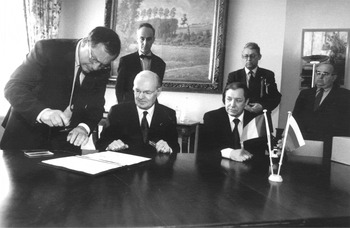
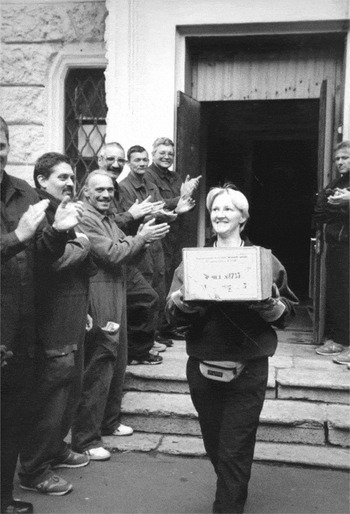
Negotiations had also started in 1992 for a large quantity of Belgian archives, three-quarters of which were military records. Signing an agreement was on the agenda when President Yeltsin visited Brussels in December 1993, but that did not happen. Only after passage of the law and several other high state visits did the Belgian archives return home 10 years later in 2002. No “trophy” art of Belgian provenance had been identified so far in Russia, so again diplomats could concentrate on the archives. They were willing to do so, given that 70% of the Belgian files being returned were military records. They had plenty of help and enthusiasm from the Amsab Institute of Social History (Ghent), whose director and chief archivist devoted considerable time to the identification and description of the socialist, Jewish, and Masonic archives of Belgian provenance in the Special Archive and other repositories in Moscow, all of which greatly facilitated the return negotiations.Footnote 14 During the transfer ceremony at the Belgian Embassy in Moscow, we all joked about the Belgian Army trucks that had come to fetch the archives (Figures 2 and 3). That first convoy from a NATO country caused a crisis of its own and delayed the transfer, when Rosarkhiv had trouble billeting foreign military personnel.Footnote 15
Official Russian-Belgian archival restitution ceremony at the Belgian Embassy in Moscow, May 2002. Belgian Embassy official Theo Cumps (standing left) stamping the transfer documents, Belgian ambassador André Mernier (seated left) with RGVA Director Vladimir N. Kuzelenkov (seated, right); standing in the rear left to right: Belgian diplomat Jan Devadder, Rosarkhiv Chief Vladimir P. Kozlov, Director of Historico-Diplomatic Department of the Ministry of Foreign Affairs, Petr V. Stegnii. Photo courtesy of Amsab Institute of Social History (Ghent)

Belgian Army staff applaud as the last box of Belgian archival files leaves the former Special Archive (now part of RGVA), Moscow, May 2002. Photo courtesy of Amsab Institute of Social History (Ghent).

French 1992 Diplomatic Agreement
When the Russian Federation emerged from a collapsed Soviet Union, many foreign policy issues surfaced, and archives were among them, especially the captured archives in Moscow. Because of their extent and state importance, the French archives in Moscow had aroused the biggest scandal and political pressure with front-page coverage in the Paris press. The French government concentrated on the return of the archives, in part to be sure, because no trophy art from France or elsewhere in Western Europe was revealed in Russia. Relatively few trophy library books from France are in Russia, although many more have been later identified in Belarus. When President François Mitterand first visited Moscow in 1992, “the archives of French spies” were on his agenda. Indeed, the return of archives to almost every country has involved high-level state visits.
Coincidentally, the offices of the ICA are based in the Archives Nationales in Paris, and ICA Executive Secretary Charles Kecskeméti, a 1956 Hungarian refugee, was quick to organize a major international meeting in Paris regarding the captured archives in Russia, and a series of other gatherings followed. However, Russian leaders preferred bilateral solutions and were already negotiating with several countries. As it turned out in the early 1990s, France was the only country with the political muscle to pull off an immediate diplomatic agreement specifically for the return of their archives, even if it took another 10 years to fulfill.
Already by November 1992, French and Russian foreign ministers recognized international customary law when they agreed for the restitution of the French archives in Moscow by the end of 1993:
In accordance with international practice, the Sides recognize the inalienable nature of public archives and shall return such of these as, being in the possession of one of the Sides, ought to belong to the other.Footnote 16
INTERNATIONAL LAW AND PRACTICE
That quoted statement in the French agreement well demonstrates the important factor of international law and practice in the return of archives. Consideration of the uniqueness of archives as legal record of the institutions, communities, or individual lives they represent underscores the long and strong tradition for archival restitution in international law, and particularly customary law.Footnote 17 While the seizure of archives during war has a long historical tradition, precedents for the postwar restitution of captured or “displaced” official records of state and private agencies have often emerged much stronger than the case for art or library books.
Already in 1961, even at the height of the Cold War, the ICA, in its annual International Conference of the Round Table on Archives (best known as the French acronym CITRA), bringing together heads of national archives throughout the world, had taken action on the importance of returning archives displaced during the Second World War. A concluding CITRA resolution in Warsaw in 1961 (with Soviet participation) addressed that specific issue:
Considering that archives are for every nation a part of the most valuable cultural property and that each nation has the right to hold its own archives;
On the bas[is] of international law and in order to promote peace and friendship among peoples;
The VIth International Conference of the Round Table on Archives deems desirable to call on archival institutions and archivists all around the world, asking them to take the suitable measures for returning to their rightful owners archives groups and documents which have been displaced during World War II.Footnote 18
That was just before the United States and Great Britain returned most of the records captured at the end of the war, particularly those of Germany. Even before that resolution, the Soviet Union, particularly under Nikita Khrushchev, had already returned many captured records to East Germany in the 1950s, and subsequently to other Warsaw Pact countries.
The Russian law under consideration makes no distinction among art, library books, or archives in terms of their potential restitution. Yet archives, and particularly state records captured in wartime and postwar occupation, have traditionally been treated distinctively under international law. Reinforcing the Hague Conventions of 1907 and 1954, UNESCO in 1976 adopted the position that “[m]ilitary and colonial occupation do not confer any special right to retain archives acquired by virtue of that occupation.”Footnote 19
Meeting in Thessalonica in 1994, when debate about the Russian cultural property law was already underway in Moscow, the annual CITRA meeting was devoted to displaced archives in international legal tradition. A CITRA resolution at the conclusion of the conference called for settlement of archives still displaced as a result of the Second World War and colonial rule, and it reaffirmed “accepted archival principles, that archives are inalienable and imprescriptible and should not be regarded as ‘trophies’ or objects of exchange.” The Russian delegation was one of the only two abstentions in an otherwise unanimous vote.Footnote 20
A strong international legal base for archival restitution is probably why the Council of Europe (CoE), in formulating conditions for Russian admittance to membership, required “distinction between types of property.” Indeed, archives were singled out for return in the fourteenth point in an “agreement of intents” the Russian Federation signed in gaining admittance in January 1996:
xiv. to settle rapidly all issues related to the return of property claimed by Council of Europe member states, in particular the archives transferred to Moscow in 1945.Footnote 21
At the same time, the CoE issued the Reference Dossier on Archival Claims in conjunction with the ICA, containing the texts of many earlier documents indicative of the strong international customary law relating to the return of archives, in addition to the statutory law of conventions.Footnote 22
LITTLE “COMPENSATION” AMONG SOVIET-CAPTURED ARCHIVES
Another factor that should be considered in the return of archives rather than art is that unlike the case with art, most of the captured archives that surfaced in Moscow in 1991 were not originally seized as trophies. In establishing his Trophy Commission and Trophy Brigades in February 1945, Stalin may have forgotten about the Hague Convention of 1907 and subsequent legal instruments prohibiting cultural plunder. But archives were rather seized for “operational” purposes, as instruments of Stalin's postwar battles against internal and external enemies of the Soviet state in the emerging context of the Cold War.Footnote 23 Following NKVD (Peoples' Commissariat of Internal Affairs) instructions in February 1945, Beria recommended to Viacheslav Molotov in April a special mission “to search thoroughly through all German archives and libraries to effect means of preservation and bring to the Soviet Union materials … that have scientific-historical and operational significance for our country.”Footnote 24
Foreign Military and Security Fonds
In contrast to the Soviet Trophy Brigades that brought back the art and library books, it was Red Army counterintelligence units (SMERSH) and special Soviet NKVD archival commandos that seized archival loot. Except for German records themselves, most of the foreign archival loot had earlier been seized by various Nazis agencies. The highest priority was the vast majority of archives transported to Moscow for obvious “operational” purposes that could hardly be interpreted as cultural “compensation.” Beria's red-penciled resolutions appear on numerous top-secret 1945 reports about archival reconnaissance.
The 28 freight cars of French archives from the Gestapo/Abwehr center in the Czech castle near Česká-Lípa were among the first to arrive in Moscow. Earlier an additional 30 freight cars of French, Belgian, and other military records were shipped to Moscow from the Heeresarchiv (Military Archive) and Abwehr intelligence center in Berlin-Wannsee. Another 30 freight train wagonloads came with other military archives in the Berlin area, including Potsdam. A similar quantity of top-level German scientific records was rushed to Moscow for the top-secret “Laboratory One” after discovery in a railroad yard near Prague. Of less operational interest were the 25 freight-car loads of European Jewish and Masonic records that were transferred later in the fall of 1945 from the key Silesian evacuation archival center of the Reich Security Main Office—RSHA (Reichssicherheitshauptamt) Amt VII in a remote Silesian village castle in Wölfelsdorf (now Polish Wilkanów), near Habelschwerdt (now Polish Bystrzyca Kłodzka). But with the Wölfelsdorf horde came important socialist files, including records of the Second International, many of them having been seized from the Paris Branch of the International Institute of Social History (Amsterdam) and Russian émigré sources in Paris, which were considered at the time as having important “scientific-historical and operational significance.”
Operational Use: A Special (Osobyi) Archive “For at Most Five Years!”
When establishment of the former top-secret Special Archive for captured foreign records (Osobyi arkhiv—TsGOA) was under discussion in August 1945, at least one Soviet archival director appropriately recognized international norms:
Our government might declare some of the other materials as our property, but … clearly the government cannot consider fonds such as those brought from Czechoslovakia, for example, as part of the State Archival Fond of the USSR. And there are more than a few such fonds. We have a right to them only until such time when questions of an international character are regulated. Such temporary rights until that time we need to use for the processing of those materials and to arrange their appropriate storage.
… In any case the archive would probably exist for only three, four, or maybe at most five years.”Footnote 25
Other archival leaders immediately excluded academic research and agreed:
Use of those fonds, in my opinion, should have an exclusively specific, limited character, namely utilization only for operational aims of the Peoples' Commissariat of Security, Internal Affairs [NKVD], Defense, and Foreign Affairs [Narkomindel]
… No scholarly research whatsoever can be carried out on the basis of those archives, and to be sure, no access whatsoever can be permitted for representatives of any scholarly institutions.
… I consider there is no need for compiling detailed inventories [opisi] of those fonds, nor is there need for arranging the files in binders with numbers, etc.Footnote 26
Five or now six decades later, rather than five years, the Special Archive no longer exists today as a separate archive: in 1999 it was absorbed by the neighboring Russian State Military Archive (RGVA). Starting in 1992, several lists of fonds for different countries were published abroad, and finally in 2001, RGVA issued its own list of captured foreign holdings from the former Special Archive, printed with German support. For the German holdings, an unofficial German web site, however, provides more detail.Footnote 27
Nonoperational Use: Jewish and Masonic Archives
In most cases annotated file-level inventories are now openly available to researchers for fonds in the former Special (Osobyi) Archive, now part of RGVA. During the Soviet period, however, inventories were not always compiled for records not needed for operational purposes, such as many of the Jewish materials, some of which were hardly described at all. For example, a 1964 preface to a survey (obzor) for one fond that contained files from three Dutch Jewish organizations states, “Since the documentary material does not have scientific or practical value, further processing work on the fond was not undertaken.”Footnote 28 A Dutch Jewish archivist came to Moscow to identify many of the files before that fond could be returned to the Netherlands in 2003. Dutch archivists have since identified numerous fragmentary misplaced files found among Jewish records received from Moscow and have recently returned them both to Austria and to the Jewish Community in Thessalonica (see Figures 5 and 7). Post-1991 foreign funding and collaborative projects have provided for many more detailed listings, including a guide to all of the Jewish fonds, with an updated English version due in the fall of 2010.Footnote 29
More than 14,000 Masonic files from all over Europe still remain intermixed in a massive collection that has never been properly sorted out; an Austrian Masonic archivist published a German translation of the Russian preliminary inventories (opisi) in 2002.Footnote 30 One encouraging exception was a significant group of Masonic files from the Netherlands that were returned with the final Dutch restitution transfer, after a Dutch Masonic archivist spent many days identifying them in RGVA.Footnote 31 Currently a Norwegian Masonic specialist is identifying those of Norwegian provenance, while many from Austria are expected to be claimed with the second batch of Austrian archives being prepared for transport.Footnote 32 Separate fonds had been established for some groups of Masonic records, especially the large collections from France. Most of the French Masonic records have gone home, although some important fragments remain.Footnote 9
Operational Use—Archival Rossica
Beria's archival scouts were also delighted to find Russian émigré fonds among the Wölfelsdorf horde. Such materials had already been prioritized by operational agencies for the identification of “anti-Soviet” or Ukrainian “bourgeois-nationalist” elements abroad. Many of them had earlier been seized by the RSHA to be used against the “Bolshevik menace.”
Most important in that regard, however, was the Russian Foreign Historical Archive (RZIA) in Prague, the capture of which merited a “special file” to Stalin himself when it arrived in Moscow in nine sealed freight wagons as a highly prized “gift of the Czech government to the Academy of Sciences of the USSR.”Footnote 33 The Academy of Sciences, to be sure, never saw those archives. In May 1946, however, NKVD Security chief Kruglov assured Zhdanov that “access for scholars would be closed,” and the documents “would be expeditiously analyzed for data on anti-Soviet activities of the White emigration to be used in operational work of organs of the MVD and MGB SSSR.”Footnote 34 The Prague materials were nevertheless deposited in a top-secret division of the Central State Archive of the October Revolution (TsGAOR SSSR), which is today part of the State Archive of the Russian Federation (GA RF). In the meantime, the holdings were distributed to over 30 different archival repositories in the USSR. Today they are valued as Russia's lost or exiled émigré culture, and Russian archivists refuse to consider any of them for restitution.Footnote 35
Later in the 1950s, other émigré materials were moved there from the Special Archive. Those more closely connected to the Bolshevik Party, including the records of the Second International that Nazi agents had seized in France, were moved to the former Central Archive of the Communist Party. Russian archival officials today also consider these to be an essential part of the Russian cultural heritage and refuse to consider restitution, even if most of them were created and long held abroad. Since 1991, they have been legally registered as part of the so-called Archival Fond of the Russian Federation. Today, Rosarkhiv will entertain claims only for records of foreign provenance that are now held in the former Special Archive (today part of RGVA).
“Trophy” archives and the Hansa Case
Only a few of the archives brought to Moscow were openly termed “compensation” at the time. As reported in December 1945, a special Soviet Archival Administration Trophy Team chose for transport “only seven wagons of the most topical fonds presenting interest for Soviet historical sciences and activities of operational organs.” Their trophy choices included the vast medieval city archives of Bremen, Hamburg, and Lübeck, representing as they did, according to a 1945 archival report, “documentation relating to the Hanseatic League with which Novgorod was associated and which is sadly lacking in Soviet repositories.”Footnote 36 In words similar to those used by Russian legislators today, Georgii Aleksandrov justified such seizures to Georgii Malenkov in December 1945: “[B]ringing them to the USSR might to some extent serve as compensation for the losses wrought by the German occupiers on scholarly and cultural institutions in the Soviet Union.”Footnote 37
Most of the medieval Hanseatic archives were returned to East Germany during the Soviet period, and the rest were returned to Germany after reunification. Thus in 1990, in exchange, a large part of the Tallinn City Archive from Estonia that had been held as hostage for others in West Germany came back to Estonia. A few damaged Hanseatic charters remain in the Manuscript Department of the Russian National Library, and a few that had been stolen from an archive in Moscow are to be found today in Novosibirsk. Because they were secret trophy materials, they could not be fully registered in the Moscow archive where they were held during the Soviet period, and when stolen, open prosecution was impossible in Soviet courts.Footnote 38
SOVIET ARCHIVAL RESTITUTION: INTERNATIONAL POLITICAL ALIGNMENTS AND IDEOLOGY IN CONTRAST
Another factor in the return of archives to Western Europe after 1991 was the reversal of the European political configuration and prevailing ideology. Soviet archivists and their leaders in the Kremlin may have had political reasons for not returning Western archives and selectively returning others to their Eastern European “brothers.” Russian archivists today may be quick to highlight restitution during the postwar Soviet decades, but only a few symbolic files were returned to Western Europe.
Starting in the late 1950s, when the Soviet Union became active in the ICA and Soviet leaders had political reasons to adopt international standards, several million files among the extensive records “rescued by the Soviet Army” were returned to Eastern Bloc nations. Some of them went home to the German Democratic Republic even before the Warsaw CITRA resolution quoted earlier, and many more afterwards. By that time most of the important operational utilization would have been completed. Even some of the Soviet-captured RSHA files (many from Gestapo and SD-Hauptamt predecessors) were turned over to the Stasi for their analysis, which is why today they are now found in Berlin, while contingent files remain in Moscow. Papers of Miklós Horthy that had escaped destruction were returned to Hungary in 1959. Chinese Communist Party records and some other files were returned to China. Public mention was never made, but the thousands of files from German Masonic lodges were returned to the German Democratic Republic (GDR), including many belonging to the Federal Republic. A few symbolic presentations were made to France and Austria in the early 1960s at the time of official state visits, and Nazi-seized records of the Norwegian royal family were also returned. Published accounts positively portrayed the Soviet role of “helping other countries reunify their national archival heritage.”Footnote 39
As Soviet archivists officially explained at the time, such restitution was “in strict adherence to international legal norms and respectful of the sovereign law of peoples and their national historical and cultural legacy.”Footnote 40 In sharp contrast, we do not find such internationally oriented legal attitudes in the rhetoric of post-1991 returns, and especially in the Russian Duma debates about the Russian law under discussion and the required compensation. Nor are such socialist ideals expressed in any of the post-1991 legal acts of transfer or conveyance. Notably, many archives of former East European brethren remain in Moscow, and Poland has not been the recipient of any files since the transfers in the 1950s, except for a few symbolic documents regarding the Katyn massacre.
POST-1991 RUSSIAN ARCHIVAL LEADERSHIP OPTS FOR RESTITUTION
Still another factor involved in the post-1991 return of archives should be seen in the orientation of Russian archivists, as already mentioned in passing earlier. Since 1991, the attitudes and plans of the new archival leaders in charge of Russian state archives have been a major factor in the return of archives. In the early 1990s the new reformist archivists in charge were quickly drawn in to the increasing pace of international archival relations. Most were quite prepared for restitution of the displaced archives in Moscow, although strictly limited to those held in what could soon be termed the former Special (Osobyi) Archive. They were no longer bound by the ideological imperatives of Soviet justification, the political imperatives of continental Cold War alignments, or of archival secrecy. Newly arrived on the international archival scene, if they had not understood the legal imperatives for archival restitution before, the vehemence of demands from their new foreign counterparts quickly increased their understanding. Even if they could not speak their language, Russian archivists were anxious for the respect of their foreign colleagues, and they were deeply embarrassed by the disapproval they experienced resulting from the long-hidden captured foreign archives in Moscow. In his report on the Paris 1992 meetings, Vladimir Kozlov, then deputy chair of Rosarkhiv, expressed scorn for the vehemence of the French demands, an attitude that continued after he assumed the chair in 1996. His memoir account, published as he was retiring from Rosarkhiv in 2009, again reflected the sensitivity with which he and some of his colleagues reacted to French demands for immediate restitution, compared to the more moderate attitude expressed by the Dutch and Belgians.Footnote 41
Unique Archives, Not “Compensation”
Like their Western brethren, Russian archivists are nonetheless professionals, as were their Soviet predecessors. They too recognize the basic uniqueness of archives as official records of state, societal organizations, communities, and individuals, and the deciding factor of provenance. Albeit in the context of restitution politics, they consider that archives should be returned to their homelands. One set of archives cannot “compensate” for another, nor can archives be “replaced in kind.” Twice-plundered French military archives may have been considered important to the Soviet regime for military intelligence or geopolitics, but after 1991, they became an embarrassment in Moscow. Belgian Jewish Community files could not replace destroyed parish registers in Kyiv, nor even other Jewish files in other cities, if Russian specialists could even read them. Nor could German Hansa records replace plundered historical records in Novgorod, even “to some extent,” as suggested when they were transported to Moscow in 1945. International lawyers may split hairs over the principle of “restitution in kind,” but this legal concept cannot be, nor has it ever been, applied to archives, which by definition remain unique legal records. Following international legal solutions at the end of the First World War that included restitution in kind for art or library books, some similar ideas were suggested after 1945, although the concept could not be agreed upon by the four victorious Allies after Russian unilateral cultural seizures from Germany.
In the early 1990s, Russian archivists were quite prepared to return the Soviet-captured archives, although on their own terms, and not without bilateral discussion and negotiations. Instead of recognizing restitution as a legal imperative, however, they preferred to bargain with individual countries one at a time, often with Soviet-style bilateral archival agreements as the aim. Indicative of initial Western-looking post-Soviet attitudes, Special Archive director Prokopenko almost immediately publicly suggested an agreement with France for return of their archives, and he was soon moved to the Russian archival agency, Roskomarkhiv (later Rosarkhiv), to help arrange one.Footnote 42 As noted earlier, during 1992 and 1993, Russian archival authorities were making progress in bilateral negotiations with several countries, although they did not want international restitution norms to dictate terms. It was Russian politicians who put a stop to the early restitution progress. Beholden as they were to public outcry and ultranationalist forces, Duma deputies accepted the dubious concept of the trophy cultural valuables (including archives) in Russia as “compensatory restitution” for the horrors, destruction, and loss of the Great Patriotic War. Although archivists certainly could not apply that principle to holdings in the Special Archive, even if after the Thessalonica CITRA, they no longer called them “trophies”.Footnote 43
Commercial Potential for “Paper Gold”
The potential benefits from Russia's massive captured archives, some archivists first thought, might have also had commercial advantages, when runaway inflation left few rubles in archival budgets, and the new business sector was draining off poorly paid archival staff, especially those with foreign languages. That was a period when many foreign specialists were decrying “commercialization” in Russian archives, with high charges for the “right to copy” as well as for copies themselves. Indeed, the Special Archive started selling copies to foreigners at prices three or four times what they were charging Russians and several times above Western standards. The French had to pay one dollar a page for photocopies of the Russian inventories of their own archives. Archivists still hoped the former top-secret repository could yield more “paper gold,” as publishers and the press rushed in for the bonanza of revelations in the “new” Russia. As was the case with other archives, several commercial projects involving the Special Archive were proposed, and one or two even started, including a short-lived commercial firm trying to claim exclusive research rights. Yet Russian archivists understood that they were dealing with archives of foreign provenance, not their own, and hence became more cautious about the legality of selling wide-scale microform publication rights, when such were proposed, despite the lure of high royalties offered for commercial microfilming. A few academic publications were forthcoming, such as the newly revealed Goebbels diaries undertaken with the Institut für Zeitgeschichte in Munich.Footnote 44
Barter for Archival Rossica in the Diaspora
Russian archival leaders may have abstained from voting on the Thessalonica resolution against archives as trophies and barter with archives. While they stopped using the popular Russian term “trophies” in connection with their captured records, there was no denying their own ambitious plans for barter. With the fall of the Iron Curtain, Russian historian-archivists partook of the tremendous surge of interest in the Russian emigration, an area long forbidden in research and publication under Soviet rule. With the approval of the Foreign Ministry, archive leaders opted to utilize the captured records they held in Moscow to demand in exchange the return of Russian émigré archives abroad, “archival Rossica” as it became known. In addition to a series of Russian émigré conferences for the diaspora in Moscow, Rosarkhiv organized its own conference at the end of 1993, proclaiming an official program on “Archival Rossica Abroad.”Footnote 45
In connection with restitution claims from abroad, Russian archivists devised a strategy of requiring receiving countries to turn over in exchange any archival Rossica uncovered in their own repositories. In the Belgian case, when one Russian émigré collection found could not legally be returned to Russia, Russian archivists settled for microfilm, and even then the return of the Belgian archives from Russia was dubbed an “exchange.”Footnote 46 In fact, almost every legal instrument, or act of conveyance, for post-1991 restitution of archives has used the term “exchange” rather than term “restitution,” which might imply a legal imperative. In addition to the required “compensation” in storage charges and other fees that legislators had already written into the projected law, they further required the receiving side to pay for microfilming the archives before return, or at least those that Russian archivists decided might by of most interest to Russian researchers. They fully recognized that the call for storage charges and compensation being drafted into the text of the law would assist their appallingly low archival budgets and radically depleted staff. Yet, it must be said to their credit that Rosarkhiv strongly opposed major concepts and wording of the cultural property law during debates in the Duma in April 1995.Footnote 47
The possibility of repatriating foreign Rossica, beneficial agreements, and other factors of compensation may well have encouraged archivists in Russia to opt for restitution in contrast to counterpart museum directors. The Pushkin Museum of Fine Arts in Moscow controls more trophy art than any other in the capital and suffered few losses in the course of German occupation, but its director, Irina Antonova, nevertheless remains one of the staunchest opponents of the restitution of art and other cultural valuables.
POLITICS AND SUCCESSFUL RESTITUTION
The Duma Debate and the “Smolensk Archive”
After the Duma sent the French trucks home empty in May 1994, legislators cited a well-known example of archival Rossica across the ocean as a pretext for their embargo. The fact that democratic, law-abiding America still held the so-called Smolensk Archive hostage in the U.S. National Archives justified Russia in not returning the French archives.Footnote 48 What they failed to mention, however, were some rather important details that emerged about the matter of the Smolensk Archive after 1991. In fact, soon after the 1961 Warsaw CITRA resolution quoted earlier, after the United States returned the captured German archives and others seized at the end of the Second World War, American archivists had offered to return the 500-plus files of the Smolensk Archive in 1963. At the height of the Cold War, however, Soviet officials refused to submit the required legal claim, which they feared “could be used in the U.S.A. as on official recognition of the authenticity of those documentary materials,” demonstrating as they did the evils of collectivization in the 1930s. Soviet archival chief Gennadii Belov explained in a communiqué to the Central Committee in 1965 that the archive contained “documents of CPSU leadership … and operational organs of the NKVD … including testimony of tolerated errors in collectivization procedures and extensive repression and brutality.” Hence, “with concurrence of the Ministry of Foreign Affairs,” he accordingly “recommend[ed] that it is not appropriate to raise with the State Department the question of the return of the Smolensk Archive.”Footnote 49
What also emerged in 1992 was the fact that the Soviets had secretly retrieved five freight train wagonloads of the Smolensk Party Archive in the spring of 1945, in the railway yards near the major evacuation research center of the Einsatzstab Reichsleiter Rosenberg (ERR) in Silesia, and rushed them back to Smolensk. But that did not prevent Soviet archivists and legislators from constantly recounting that the Americans had taken all of the Smolensk Archive across the ocean. Although the true story had already been revealed in a Moscow conference with published press commentary before the proceedings and in a monograph in the United States, politicians in the Duma preferred manipulated facts.Footnote 50 Today, we can be glad that those 500-plus Smolensk files were finally returned from Washington to Moscow, as celebrated in December 2002, then to Smolensk, and that more of the true story was revealed in a book of collected articles presented in Moscow in November 2005.Footnote 51
France: Scandal over “Compensation”
Russian archivists were understandably displeased by the U.S. failure to return the Smolensk Archive as promised in 1992 (see later), and manipulation of the facts did not help, when they were required to explain the situation to the Duma. They were indeed embarrassed by the Duma boycott that prevented finalizing the French return in 1994 and were even more embarrassed by the scandal that ensued.Footnote 52
In addition to close to half a million dollars in storage fees and microfilming charges (for archives the French thought had been lost in the war), France turned over to Russia the originals of some alienated Russian archival documents that had long been held in France. But to make the scandalous situation even worse on the Russian side, the “compensation” money already received by Rosarkhiv from France for “storage charges” and microfilming went into various speculative investments, which persisting lawsuits never recovered for Rosarkhiv. The former Special Archive (then TsKhIDK, now part of RGVA) was accordingly only able to film part of the materials that were returned to France before the Duma embargo. Reportedly, the microfilming equipment furnished by Germany to film the German records before their return to Germany was used instead to film the French materials. And to be sure under the terms of the new law, none of the German records could be returned as promised, while the Germans have had to pay dearly for subsequent copies.
Most of the archives of Western European provenance have now been returned home under terms of the 1998/2000 Russian law, which also justified Rosarkhiv charging the compensation and/or storage fees that European countries have had to provide in connection with their return. Soon after Yeltsin was forced to sign the Russian law in 1998, a new Russian decree was issued authorizing the exchange with France that would permit the rest of the French archives to go home, but even the additional transfers in 2000 did not include all of the archives of French provenance remaining in the former Special Archive. Today Russian archivists claim that in one of the still-undisclosed transfer protocols, the French agreed to turn over some additional symbolic archival Rossica. The documents at issue are some ship logs from the revolutionary period that carried fleeing Russians to Algeria. Although the ships were eventually returned to the USSR, French archivists now report that the ship logs cannot legally leave France. Apparently the substitution of photocopies or digital copies has not been negotiated, as was done in the Belgian case where microfilms were substituted for the originals. Therefore the controversy continues, and there has been no movement for the remaining French files in Moscow.Footnote 53 On the other hand, the French still do not know how many of the French military intelligence records might have been siphoned off by Soviet military agencies, or how many of the French security files may have been kept by the KGB. We can only guess that the French intelligence files on the top-level Soviet leaders noted in Soviet-captured French documents might have made it to what are now still secret files in the Presidential Archive.
Liechtenstein Archives Returned: The Lure of Archival Rossica
The first archival return from Russia, apart from France, took place in the summer of 1996 while the law on cultural valuables was still being debated. That return went through thanks a highly desirable batch of archival Rossica being offered in exchange. And perhaps worth noting, Rosarkhiv arranged the transfer to coincide with the Duma summer recess. The voluminous Liechtenstein archives seized near Vienna after the war (and forgotten in Moscow for half a century) were flown to Berne, accompanied by the head of Rosarkhiv for their trip home to the Grand Principality. A law permitting their return had first been rejected by the Russian legislature, but then the necessary approval finally went through when the archives were defined as “family papers” not needed in Russia.
More importantly, it went through because Prince Hans-Adam arranged to purchase from Sotheby's for exchange a costly collection of archival documentation relating to the assassination of the Russian imperial family in 1918. And the transaction was proposed just at the time that a Russian Commission was investigating the imperial assassination. Of special importance, the commission had wanted the ciphered telegram announcing the death of the family in Ekaterinburg in 1918! But even that hefty compensation was met by a virulent article in a government newspaper soon after the transfer, criticizing the “ill-conceived exchange,” as constituting a “tremendous detriment to Russian security, economy, and prestige.”Footnote 54
Offsetting such press criticism, the Russian Foreign Ministry gained even more diplomatically in the transaction. The transfer was formally celebrated with an exhibition of the Russian imperial archival Rossica in Moscow, opened by Foreign Minister Evgenii Primakov with Prince Hans-Adam and his wife. At that high state occasion, it was announced that Russia, Europe's largest state, formally opened diplomatic relations with one of Europe's smallest.
The high payment in barter of archival Rossica in exchange led a Vaduz newspaper to complain that Liechtenstein had to “repurchase” its archives. (Speculations about the price ranged from a quarter to a half million dollars [£100,000–£500,000 at Sotheby's in London].) Yet, archivists in other European countries saw a glimmer of hope that their documentary treasures might still come home. And that exchange turned out to be the model for the later exchange with the Rothschild family. The Rothschilds purchased a valuable collection of nineteenth-century Russian imperial love letters from Christie's, which were exchanged for the Viennese Rothschild files. The Rothschild deal took almost 10 years to negotiate and still represents the only archival return to a private family. But that exchange qua restitution had to wait until after passage of the amended Russian 1998 Law!Footnote 55 It was the first fond of Austrian provenance to be released from Moscow after 1991, but others have since followed.
Factors in Successful Returns
The archives now back in France and the Benelux countries and those of the Rothschild family, to be sure, are only a fraction of the files that were so mercilessly carted away during the war by at least five major Nazi agencies of plunder, then seized a second time by Soviet authorities. Not all of the archives of French, Belgian, or Dutch provenance identified in Moscow came home, especially examples of foreign-produced Rossica that Russian archivists refused to release, nor did many of the important printed materials that Soviet archivists had removed when processing the archives. Major foreign political pressure, the underlying support of international law, historical international archival practice as emphasized by the ICA, and new European political alignments were among the factors involved in those success stories, together with strong approval of Russian archivists and due “compensation” to meet their own demands for the return of archival Rossica from abroad.
The fact that Western nations have been willing to negotiate with the Russians under the terms of the law has been crucial to the success of what returns have taken place. Thus those archives that did come home were returned not only thanks to factors on the Russian side but also because of the willingness of individual archivists from the countries involved to spend countless hours traveling back and forth to Moscow, identifying their files and negotiating with their Russian colleagues, to say nothing of the support and encouragement of foreign state officials and diplomats involved. Many contingent French, Belgian, and Dutch archival files had been transferred to other archives in Moscow, for which Russian archivists have yet been unwilling to entertain claims. Nevertheless, despite the losses and displacements in the course of their migration, there was much to celebrate in the homecomings that the decade-long investigations and negotiations made possible. And, in strong contrast to the situation with foreign trophy books and art, most of the foreign archival holdings in Russia have been identified, particularly those in the former Special Archive, at least by country and usually by record group (i.e., creating agency) of provenance.
Austria: Progressing Returns
A chapter on the return of Austrian archives could not be included in the 2007 volume Returned from Russia, although negotiations were then underway and there had been considerable hope for transfer before press time. The Austrian holdings in RGVA were all well identified in an Austrian-compiled 1996 guide covering over one hundred fonds.Footnote 56 The fiftieth anniversary of the peace treaty with Austria was well celebrated in 2002, and the ICA held its international congress in Vienna in 2004, after which the director general of the Austrian archives became president of the ICA. The time was ripe for the Austrian archives to return home, despite provision in the 1998/2000 law prohibiting return to former Axis countries.
The only Russian-claimed cultural property in Austria, Catherine II's copy of the Giambologna (Jean de Boulonge) statue Flying Mercury, was ceremoniously returned to Pavlovsk in October 2005. The following month, a Decree of the Russian Government in November 2005 authorized the return to Austria of 51 record groups (fonds) of Austrian provenance.Footnote 57 The Russian Ministry of Culture issued a further enabling document for the return of the Austrian archives in January 2006, leading to speculation that President Putin would bring as least some symbolic files on his visit to Vienna. But Putin came to the Austrian capital empty-handed in May 2006, except for an important gas agreement that was signed during his visit.Footnote 58 In Vienna, Putin did assure representatives of the Vienna Jewish Community that their archives in Moscow would come home, although they had not been among the 51 fonds the Duma had approved in November 2005. Russian archivists had the 51 approved fonds ready for return by May 2008, but due to various bureaucratic difficulties, the Austrians did not send trucks to collect them until June 2009. In connection with the first major transfer involving 10,770 files comprising approximately eighty percent of the Austrian archives in Moscow, Austria paid “compensation” of 400,000 euros, according to an Austrian press account, calculated for storage fees, microfilming, and related charges.Footnote 58a While the archives went home through the auspices of the Austrian State Archives, the important collection some 870 early books from the Esterhazy family library in Eisenstadt in Lower Austria remain in Moscow, despite long years of negotiation for their return.
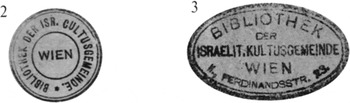
At least 30 more fonds of Austrian provenance, most of them of Jewish provenance, which had not appeared on the approved list are now being prepared for transfer later in 2010. Those to go in the next transfer include, for example, some important records from the Jewish Community in Vienna (IKG), many of which were described in a catalog published in Moscow in 2005, sponsored by the Commission for Art Recovery (New York) project in the New York-sponsored “Heritage Revealed” series.Footnote 59 Some of the Hebrew manuscripts from IKG had been transferred in the late 1940s to the Lenin Library, now the Russian State Library (RGB), while other parts of the same record group (and in a few cases, even parts of the same manuscript) remain in RGVA (Figure 4). Those manuscripts were not catalogued in the library until recently, and some were allegedly stolen and sold off to under-the-table dealers. A part of one fifteenth-century manuscript offered at auction in New York was confiscated by U.S. Customs and returned to Vienna in 2003.Footnote 60 The “Heritage Revealed” catalogs were the first attempt to describe some of the Holocaust-related Hebrew manuscripts remaining in Moscow. Austrian Jewish archivists visited Moscow to verify the identification of more in 2009. It remains unclear if the next transfer will include the Hebrew manuscripts from RGB. The vast files from Austrian Masonic lodges that had been identified as to provenance in the 1996 Austrian-published guide also remain in question, because unlike the Dutch example, no Austrian Masonic archivist has yet come to Moscow to identify them.
Book stamps of the library of the Vienna Jewish Community (IKG). Similar book stamps are found on manuscripts and archival materials throughout the fond of IKG materials in RGVA (fond 707k) and the IKG manuscripts that had been transferred to the Lenin Library in the late 1940s, now the Russian State Library (RGB). Photos courtesy of VGBIL and the Commission for Art Recovery

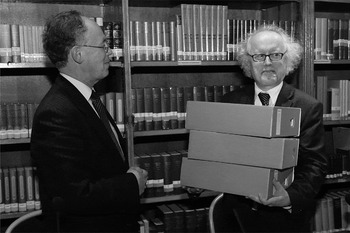
In addition to the Rothschild papers from Austria mentioned earlier, the only other Austrian Jewish archives that have already returned home were three boxes of files from various Jewish organizations that were mistakenly returned to the Netherlands. At the time of the book presentation of Returned from Russia in Vienna in March 2008, the former chief archivist of the Netherlands, Professor Eric Ketelaar, brought them with him from The Hague for presentation to his most grateful Austrian counterpart Director General of the Austrian State Archives, Lorenz Mikoletzky (Figure 5).
Professor Eric Ketelaar (left), retired National Archivist of the Netherlands, delivers three boxes of Austrian Jewish archives (inadvertently ‘returned’ to the Netherlands) to Lorenz Mikoletzky (right), Director-General of the Austrian State Archives and President of the International Council on Archives, at the Municipal Library, Vienna, March 2008. Photo by Georg Lembergh, courtesy the Vienna Municipal Library.

CONTINUING NEGOTIATIONS FOR RETURN
The story of archival homecomings is not over. While the political impetus of the early 1990s and the demands from Western Europe are mostly satisfied, archival restitution continues to remain on the Rosarkhiv agenda, because many other captured foreign records from eastern and southeastern Europe, as well as many more German ones still remain in Moscow as prisoners of war. Many countries that had been part of the communist bloc during the Cold War at one time or another received significant quantities of captured archival materials returned from Moscow. One other NATO country, however, still has significant archives in Moscow.
Greece: Jewish Community and Related Records
One of the most vocal in a series of ICA efforts to promote archival restitution, the 1994 CITRA, took place in Thessalonica, and it was devoted thematically to divided and displaced archives.Footnote 61 Not mentioned during the proceedings, however, were the dispersed records of the Thessalonica Sephardic Jewish Community, 90% of whom perished in the Holocaust (Figure 6). Undoubtedly, few if any of the world archival leaders assembled were aware that many files from Thessalonica remain in Moscow today. Some of those files even contain community registration photographs of many individuals who perished in the Holocaust. And there is a small fond of records from the Jewish Community in Athens from the former Special Archive as well.Footnote 62 The Russian State Military Archive (RGVA, successor to the Special Archive holdings) has already sold copies of the Greek files to Israel and to the Holocaust Museum (USHMM) in Washington, DC. Reportedly they subsequently wanted to charge the Greek government for another set of microfilms to be retained in Moscow (where no one can read Ladino in sephardic script in which many of the documents are written), before letting the originals return home. The Holocaust Museum has had an English-languge finding aid prepared for the copies from Moscow.Footnote 63
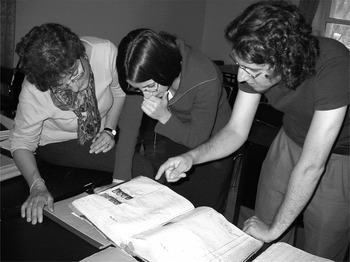
An Israeli specialist (left) and two Stanford University graduate students, Julia Phillips Cohen and Devin E. Naar, examine a Thessalonica Jewish Community register in the Russian State Military Archive (RGVA, fond 1428k) in Moscow during the European Association of Jewish Studies conference, July 2006. Devin Naar has been completing his doctoral dissertation on the Thessalonica Jewish Community and their dispersed archives. Photo by Patricia Grimsted, courtesy of RGVA

A bilateral Russian-Hellenic Joint Declaration signed in Moscow on 9 December 2004 specifically called for the return of the Jewish Community archives still in Moscow, but the Greek government was slow to submit a formal claim as required under terms of the Russian 1998/2000 law. After 10 years of negotiations, the Greek Government did submit an official claim in 2008. Specialists from the Greek Jewish Community have visited RGVA to identify the files, and both Greek and Russian archivists subsequently report progress in bilateral negotiations (as of mid-2010).
In the meantime, Dutch archivists found a few fragmentary Jewish documents from Thessalonica intermixed in Dutch Jewish files earlier returned from Berlin and Prague, as well as in fonds from RGVA devoted to Jewish organizations in the Netherlands, which were returned to The Hague from Moscow in 2003. In August 2008, Dutch archivists delivered those files to the Jewish Community in Thessalonica—the first from the twice-plundered Moscow-held Greek archives to return home (Figure 7)! And across the ocean, the YIVO Jewish Research Institute in New York City has digitized its part of the original Thessalonica Jewish archives received from Germany after World War II and has made digitized copies available to the community in Thessalonica.Footnote 64
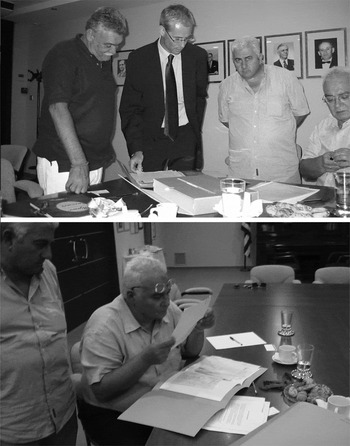
Representing the National Archives (Nationaal Archief) of the Netherlands (The Hague) Elwin Hendrikse returns 165 sheets of documents of Thessalonica provenance to the Jewish Community of Thessalonica in August 2008. The documents had been seized by the Germans during the Second World War and taken to Berlin; they were among an extensive hoard of archives the Soviets found in Silesia and took to Moscow in the fall of 1945. The Greek documents were inadvertently mixed within several fonds of Dutch provenance that were returned by Russia to the Netherlands in 2003, but some of them came with Dutch Jewish archives returned earlier from Berlin and Prague. (a) Left to right: David Saltiel, President of the Thessalonica Jewish Community; Elwin Hendrikse of the Dutch National Archives; the financial controller of the Community; and Iacov Benmayor, the Vice-president (sitting). (b) The Vice-president of the Jewish Community, Iacov Benmayor, examines one of the documents returned from The Hague, with the Community Controller looking on. Photos courtesy of Elwin Hendrikse, of the Nationaal Archief of the Netherlands, The Hague.

Poland
A separate book-length guide, prepared in bilateral archival collaboration, describes the voluminous fonds of Polish records. The Polish fonds remain in two major federal archives in Moscow: the State Archive of the Russian Federation (GA RF) houses many from Russian rule of Polish territories before 1918, while World War II–captured records are held in the former Special Archive (now part of RGVA).Footnote 65 Serious negotiations for the return of Polish archives are accordingly more complicated, although only those in RGVA would come under the 1998/2000 Russian law.
Among important Jewish fonds from Poland in RGVA is one containing 43 units of manuscripts and archival documents from the renowned Breslau Rabbinical Seminary (known in German as the Jüdische-Theologische Seminar Fränkelsche Stiftung). The Seminary no longer exists in Wrocław, but some of its extant manuscripts found by the Poles in Silesia after the war had been held and catalogued by the Jewish Historical Institute in Warsaw. A particularly valuable component of the Breslau Seminary, however, was discovered in Prague, namely, 40 Hebrew manuscripts and incunabula of the Saraval Collection. In April 2003, the Jewish Religious Community of Wrocław, legal heir to the Theological Seminary, asked the Polish Ministry of Foreign Affairs for help in recovering the collection. The Czech side agreed to return the works, and an appropriate bilateral agreement was concluded. On 7 December 2004, during a visit of the Polish President to Prague, the 40 manuscripts and incunabula were handed over, while the Czech National Library retained digital copies, now displayed on their web site.Footnote 66 Shortly afterward, the manuscripts and incunabula were returned to Wrocław, where the Jewish Community deposited them at the University Library.Footnote 67
The Breslau Hebrew manuscripts in Moscow are described in a 2003 catalog, the first published description of trophy Judaica in Russia. This includes the ones in RGVA and also some of the Breslau manuscripts that had been transferred from the Special Archive (TsGOA) to the Lenin State Library (RGB) in 1949 and are now held in the successor Russian State Library (RGB).Footnote 68 Recently more detailed SD (security police) documents about the seizure of the Breslau library in 1938 and its transport to Berlin have surfaced in the Bundesarchiv in Berlin.Footnote 69 Given Russian procedures for blanket archival restitution country by country, however, an individual claim for the Breslau manuscripts described in Moscow could not be appropriately processed by the Polish side. Negotiations for more general restitution of Polish archival materials, however, are still pending.
Czech Republic
The Czech State Archives have been very forthcoming in restitution after 1989, with a major return of Dutch Jewish Community records to the Netherlands in December 2000, while the formal claim for the Dutch archives from Russia was still pending.Footnote 70 And as mentioned earlier, the Czech National Library returned the Breslau Seminary Saraval manuscripts to Poland, but some fragmentary Czech archives still remain in Russia. An archivist from the Czech Republic surveyed files of Czech provenance in the Special Archive in 2002, and her report appeared in the Czech archival journal.Footnote 71 A few files from the papers of the lawyer, Zionist leader, and president of the Jewish Party in Czechoslovakia, Emil Margulies (1910–1936), make up the only Czech Jewish fond listed in RGVA.Footnote 72 Although hardly as significant as those from other countries, so far no arrangements have been made for the return of any of the Czech materials.
Former Yugoslavia
Five Jewish fonds remaining in RGVA contain files from the former Yugoslavia (Belgrade, Ragusa [Dubrovnik], and Zagreb) and have been described in some detail in the general guide to Jewish holdings already mentioned.Footnote 73 A group of 35 files from the fond of B'nai B'rith were among those returned to Yugoslavia in 1956, but some 60 files remain, some of which are of Greek provenance. Among the most important other groups of records, a much larger fond remains with documentation from the Committee to Aid Jewish Refugees established by the Jewish Community in Zagreb. Visiting Croatian archivists are aware of these records, but so far as is known, no formal claim proceedings under terms of the current Russian 1998 law have been initiated. Part of the problem may well be that negotiations are still pending among successor states about fate of the archival legacy of former consolidated Yugoslavia.
Germany: NS-Period Records
In sharp contrast to archives from other European countries, German records have not gone home, despite the 1992 agreement with the Bundesarchiv for their return. Their return is now prohibited under the 1998 Russian law, which the German government has refused to recognize, because of its direct conflict with Russian-German Treaty on Good Neighborliness, Partnership and Cooperation of 1990 and the Cultural Agreement of 1993. German and Russian archivists are not optimistic about a change of policy with respect to archives, given the vehemence of antirestitution sentiment in Russian political circles and in the public at large. Nevertheless, there have been some positive steps between German and Russian archivists, such as the joint project for microfilming and database description of the records of the Soviet Military Administration in Germany (SVAG/SMAD), although those are Russian agency records as opposed to records of German agency provenance. Provisions have been made for photocopies to be made of some of the concentration camp records, such as those from Sachsenhausen and Auschwitz, but the originals still remain in RGVA. More public attention has centered on the even more valuable collections of works of art from German museums and private collections still in Russia, which, as shown in several other contributions in this issue, especially those by Wolfgang Eichwede and Konstantin Akinsha on the Bremen Kunsthalle Collection, have not yet been resolved.
Be that as it may, a great deal of importance should also be placed on the extensive German NS-period wartime records held in Moscow in terms of their value for World War II and specifically Holocaust-related cultural assets research. By contrast in the 1960s, it should be remembered, the British and Americans returned to West Germany almost all the records they had captured, many from the same German agency record groups that remain in Moscow. For example, records of the RSHA (including SD and Gestapo), the Reichsarchiv and the Heeresarchiv (Military Archives) now form the basis for the appropriate record groups in the Bundesarchiv, but missing files remain in Moscow. Many of the documents in RGVA thus belong to contingent files now held in Germany, thus complicating research, even more so because many of the files in Moscow are not optimally arranged or accurately described.Footnote 74
When united with the rest of the fonds now in the Bundesarchiv, the Moscow documents could help researchers determine the fate of other displaced cultural valuables, to say nothing of displaced people. For example, it was only by identifying and obtaining copies of documents from Moscow to combine with those in Berlin, along with some from other sources, that I was able to piece together the story of the fate of upwards of one million plundered books that ended the war in four Sudeten castles now in the Czech Republic.Footnote 75
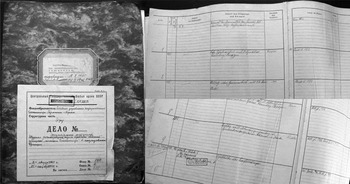
Among many other examples are reports of specific SD (security police) seizure of numerous important private archives and libraries from Paris. Not only do many SD reports on the French Communist Party and left-wing French intellectuals remain in Moscow, but they were transferred to the former Central CP archive, and today still remain classified in its successor (now the Russian State Archive of Socio-Political History—RGASPI).Footnote 76 There is a German register of all of the French archives brought to the special German RSHA French information office (Auswertungsstelle Frankreich) in Berlin (August 1940–September 1942), many of which were subsequently evacuated to northern Bohemia (then the Sudetenland), and thereby among the French archives captured by one of Beria's special squads in 1945 (Figure 8).Footnote 77 Another original German SD analysis file incorporates an original Dutch stenographic transcript of a Masonic lodge meeting in The Hague just before the German invasion, at which members were planning rescue efforts for Jews.Footnote 78
Cover and sample fold-out pages of the RSHA Amt IV register of captured French archival materials received in Berlin—‘Tagebuch der Auswertungsstelle Frankreich–Berlin, Neue Friedrichstr. 50’ (18 Aug. 1940–14 Sep. 1942), with an archival file (delo) label from the Soviet Special Archive (TsGOA SSSR) pasted on top. The open page (no. 1) indicates receipt of French Sûreté files. (RGVA, fond 500k/1/215). Photo by Patricia Grimsted, courtesy of RGVA

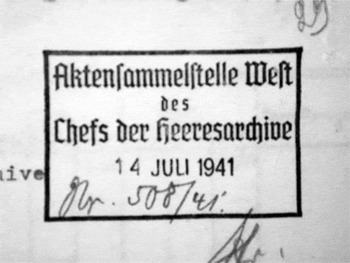
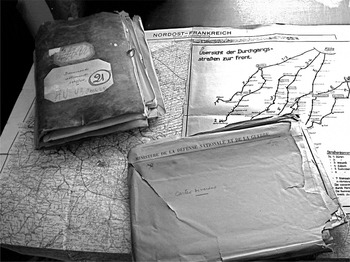
Still not returned, but of great importance in tracing wartime archival seizures, are the German inventories of the French military archives that were prepared in the top-secret Wannsee center under the Heeresarchiv (Figure 9), along with the administrative documentation from the Heeresarchiv, with documents regarding the German capture of those archives in France, Belgium, and the Netherlands. Other reports detail military-related archives removed from Poland, Ukraine, and elsewhere in Eastern Europe, all of which, together with other materials in the Bundesarchiv-Militärchiv in Freiburg, could help track archival plunder and migration during the war. Other related documents have recently turned up in Freiburg.Footnote 79 Also among German Military Archive (Heeresarchiv) records in Moscow are the original German maps and plans for the invasion of France in 1940 (Figure 10). There may be a legal hassle over which country should claim that particular file, since those plans had been captured by the French before the invasion, and they are still filed in the French Ministry of Defense envelope in which they were filed when the Germans recaptured them in Paris!Footnote 80
Official stamp of the Heeresarchiv top-secret facility in Berlin-Wannsee found on most incoming administrative documents. The records of this facility, little known before recently, are split between Moscow (RGVA) and Freiburg (Bundesarchiv-Militärarchiv). Example from RGVA, fond 1256k/2/67, folio 29. Photo by Patricia Grimsted, courtesy of RGVA

A French-captured folder of German maps and plans for the German invasion of France in June 1940 (“Documents allemands 1939/40”). The folder with documents first captured by the French, was later recaptured by the Germans in Paris, transferred to the Heeresarchiv branch in Berlin-Wannsee (the no. ‘21’ being a Wannsee number), then captured by the Soviets in Wannsee in May 1945, and now held in RGVA in Moscow (the current archival signature appears below the French and German labels). Visible to right is the French Ministry of Defence envelope in which the maps and plans are still kept in RGVA today among the captured German Heeresarchiv records. The German map of northern France in the background shows the intended assault on Paris (circled in red). (RGVA, fond 1256k/2/25) Photo by Patricia Grimsted, courtesy of RGVA

Many Russian archivists, and even more Russian politicians, are now of the opinion that German N-S period records should never go back to Germany. Quite in contrast, and by chance, when the French military records returned to Paris (Vincennes) in 1994, French archivists found five archival boxes with maps, plans, and other documents of German provenance, which they returned to the Bundesarchiv in May 1997. France, like Russia, was also brutally victimized by the Third Reich, but French military archivists today understand international professional archival standards and the historical importance of reuniting displaced archives with their archival home.Footnote 81 In addition to the 11 folders of trophy Rathenau personal papers from the Russian Foreign Ministry Archive (AVP RF) returned personally by President Yeltsin in 1997 (mentioned earlier), those are the only documents of German provenance to have been returned from Moscow since 1990.
Starting in the summer of 2008, some progress was made in identification and description of German Jewish archives in RGVA, with the official visit of several Jewish archival specialists from Berlin. But that is only a beginning, to be sure, and certainly the German Jewish archives in Moscow deserve to be among the top priority for return. Many German Masonic files and also some valuable books also remain in RGVA, and even under the 1998/2000 law, those too should come under the category of individuals and organizations victimized by the National Socialist regime.
Jewish Documentation and the Council of Europe Resolution 1205 (1999)
Worthy of particular note, in all of the country holdings already mentioned remaining in RGVA, is the extent of documentation of Jewish provenance, most of which was seized by N-S agencies in connection with their implementation of the “Final Solution,” anti-Jewish, anti-Bolshevik, and anti-Masonic research and propaganda efforts. The Holocaust-Era Assets conference in Prague under the Czech presidency of the European Union in June 2009 again brought such matters into focus, although there were no presentations emphasizing displaced cultural valuables from or still held in Russia, Ukraine, or other countries of the former Soviet Union.Footnote 82 The conference was purportedly a follow-up on the Washington Conference on Holocaust-Era Assets in 1998.
A decade ago, three years after Russia became a member of the Council of Europe, CoE Resolution 1205 (1999) made a special appeal to “the parliaments of all member states to give immediate consideration to ways in which they may be able to facilitate the return of looted Jewish cultural property.”Footnote 83 At several points, the resolution made specific mention of Russia, but the 2000 amendments to the 1998 Russian cultural property law did not take such matters into account and made it even harder for looted Austrian and especially German Jewish property to be returned. Resolutions of the Vilnius Conference of Holocaust-Era Assets in 2000 again called upon European countries to comply.Footnote 84 Although Russia remains a member of the CoE, it has shown little inclination to ease restrictions on the return of Jewish-owned archives and other cultural property.
At least in the case of Western Europe and the Rothschild family, many Jewish Holocaust–related archives already have returned, although some important Jewish and Masonic archives from France remain in RGVA. But since the 1998/2000 law and implementation procedures, there has been no attempt to single out Jewish property as distinct from any other or to suggest it be given specific attention in terms of restitution. Rosarkhiv restitution negotiations have been only on a bilateral country-by-country basis. Perhaps now, in the wake of decisions to return more Austrian Jewish archives, consideration will be given to those of Jewish provenance from Germany, as well as those from other victims of the N-S regime from other countries remaining in RGVA. As mentioned earlier, Jewish archival materials in the Special Archive were frequently left undescribed, or at best inadequately described, during the Soviet period. Since 1991 considerable foreign financial and technical assistance has brought noticeable improvements in the description of Jewish holdings, although much more is needed, just as much more is needed for art and library books from victims of the Holocaust.
United States: A Demand for Archival and Library Restitution from Russia in American Courts: The Chabad Case
Some Jewish holdings in RGVA may also elicit claims from institutions now based in the United States or from heirs of Holocaust victims who are now American citizens. But provisions for such claims are not facilitated, and are certainly not clear cut, in the 1998 Russian law. Perhaps as a result, recently a claim for restitution of records captured by Soviet authorities and now held in Moscow is being heard in U.S. courts. The potential importance of this case, with a default judgment against the Russian Federation in July 2010, explain the separate article devoted to it by Michael Bazler and Seth Gerber in this issue.
On the eve of the war, the Hassidic community of Agudas Chasidei Chabad reestablished and incorporated itself in Brooklyn after fleeing from the Soviet Union in the 1920s, and then from Poland and Latvia in the 1930s. Ever since, under the leadership of Rebbe Schneersohn and his successors, they have been trying to retrieve their library that was left behind in a Moscow warehouse, then nationalized and hidden away until the period of glasnost by the former Lenin Library (now the Russian State Library—RGB).Footnote 85 In trying to recover their library, the Chabad have appealed and won the support of many American presidents. They took their case to Russian courts in 1991 and received a favorable court decision, but RGB never implemented the Moscow court order.Footnote 86
The Chabad discovered only in the late 1990s that RGVA held some of Rebbe Schneersohn's papers that had been left in Warsaw when he fled Poland in 1939. These had subsequently been captured by the Nazis and then by the Soviets, presumably from the RSHA archival center in Silesia in 1945. Today they are held as a separate fond in the former Special Archive (now RGVA).Footnote 87 Following the success of Austrian heirs seeking restitution of art from Austria in U.S. District Court in California, the Chabad filed suit several years ago in the same court, but the case was transferred to the U.S. District Court in Washington, DC. In a December 2006 decision, the court declared its right of jurisdiction in the case of the archives. To quote a fragment of that decision,
… this Court bases its jurisdiction over Chabad's claims to the Archive on Nazi Germany's illegal appropriation of the Archive in Poland during World War II and its subsequent illegal appropriation by the Soviet Army in Poland in 1945.Footnote 88
Another step in the appeal process was heard in a U.S. District Appeals Court with an even more favorable decision for the Chabad in June 2008, suggesting the possibility that they could legally claim their library books still held in the Russian State Library (RGB) as well.Footnote 89 The judge explained that the Chabad did not have a viable alternative to pursue restitution under the terms of the Russian law, because even if they were to file a successful claim under the 1998 law, the Chabad would still have to pay dearly in compensation to retrieve their books and archive from the Russian Federation. Even before the court had finished proceedings, the Russian Federation withdrew from the case in June 2009, disputing the competency of a U.S. court to adjudicate such matters. Although the case could have potential legal implications for related claims by other American citizens for captured archives, and other cultural assets, displaced from the Second World War and still held in Russia, the fact of Russian withdrawal does not suggest this an easy route for other American claims. Nonetheless, it is now important to consider what U.S. judges have to say in the 30 July 2010 default judgment about the illegality of the Russian seizures and retention of foreign cultural assets.Footnote 90
Afterword
Quite coincidentally, one of the Chabad's earlier attempts to gain U.S. support for their claim against Russia also has ironic relevance for our analysis of archival restitution and our opening reference to the Duma embargo and debates on the Russian 1998 law. In fact, the Chabad effort, with the support of then Senator Al Gore, may well have inspired the Duma 1994 debates, and certainly the reference to the U.S.-held files from the “Smolensk Archive” (discussed earlier), which started after the Russian deputies sent the French trucks home empty. The return to Russia of the “Smolensk Archive” had been scheduled to take place during the U.S.-Russian presidential summit in Washington in May 1992. In a move of political support for the Chabad claim in Moscow, then Senator Al Gore led the U.S. Senate in March 1992 to a resolution that blocked the projected U.S. return of the “Smolensk Archive”, against the advice of the State Department and the U.S. National Archives. Undoubtedly the U.S. senators never knew that they thereby gave the Duma lawmakers an unfortunate example two years later to block the return of the French archives. The Senate resolution and continuing efforts of Vice President Al Gore held the “Smolensk Archive” hostage for the recovery of the Chabad Library from Moscow for another 10 years. The example of the “Smolensk Archive” in the United States was in fact aired in the Russian Duma debate over the 1998 law. The unfortunate deadlock in the United States, however, could be broken only a decade later in 2002, under a new U.S. president, through the efforts of the New York–based Commission for Art Recovery, in connection with their joint project to identify and describe Holocaust-related assets in Russia.Footnote 91