Introduction
Human demodicosis is a transmittable parasitic dermatosis caused by the acarine mite Demodex, which are found in human pilosebaceous follicles. There are two species of Demodex in humans: Demodex folliculorum which is approximately 0.3–0.4 mm long and has a longer opisthosoma and usually resides in the hair follicles, and Demodex brevis, which is approximately 0.2–0.3 mm long, and has a shorter opisthosoma and usually resides in sebaceous and Meibomian glands (Cheng et al., Reference Cheng, Sheha and Tseng2015). Demodex is most commonly found in the hair follicles of the nasolabial folds, the nose and eyelids, but other regions such as genital regions have also been reported in humans (Aylesworth and Vance, Reference Aylesworth and Vance1982; Ugras et al., Reference Ugras, Miman, Karincaoglu and Atambay2009). They can migrate from one follicle to another during the night as bright light can deter them from coming out of the follicles in day time (Norn, Reference Norn1971; Rather and Hassan, Reference Rather and Hassan2014). The life cycle of the Demodex mite is approximately 14–18 days from the egg to the larval stage and eventually reaches its adult stage that lasts for 5 days. The female mite may live an additional 5 days after oviposition (Rufli and Mumcuoglu, Reference Rufli and Mumcuoglu1981). The mating of the parasite takes place in the follicle opening and eggs are laid inside the hair follicles or sebaceous glands (Maraghi et al., Reference Maraghi, Rafiei and Kaydani2013). The mites can survive longer at lower temperatures (68 h at 20°C vs 23 h at 37°C in vitro) and they have better motility at 16–20°C (Zhao et al., Reference Zhao, Guo and Wu2009).
Epidemiology study of human demodicosis
Several research studies reported that the two Demodex species which can infest humans are found in all ethnic groups without any gender preference, but it may be occupation dependent (Norn, Reference Norn1971; Rufli and Mumcuoglu, Reference Rufli and Mumcuoglu1981; Lacey et al., Reference Lacey, Kavanagh and Tseng2009; Ozer et al., Reference Ozer, Karaman, Degerli, Colak, Karadan and Karci2012; Biernat et al., Reference Biernat, Rusiecka-Ziolkowska, Piatkowska, Helemejko, Biernat and Gosciniak2018). Transmission occurs by human-to-human transfer of mites through close contact (Ozer et al., Reference Ozer, Karaman, Degerli, Colak, Karadan and Karci2012). The Demodex rate of infestation in healthy individuals is about 80–90% (Enginyurt et al., Reference Enginyurt, Karaman, Cetin and Ozer2015) and the number of Demodex is positively correlated with age. Human Demodex mites are present in all age groups except in newborn infants (Akcinar et al., Reference Akcinar, Unal and Dogruman Al2018; Zhong et al., Reference Zhong, Tan, Li, Peng, Wang, Deng and Yuan2019) and the prevalence is as high as 100% in elderly people (Basta-Juzbasic et al., Reference Basta-Juzbasic, Subic and Ljubojevic2002; Vargas-Arzola et al., Reference Vargas-Arzola, Reyes-Velasco, Segura-Salvador, Marquez-Navarro, Diaz-Chiguer and Nogueda-Torres2012). Since Demodex passes to newborns through close physical contact from their parents after birth, it is postulated that due to low sebum production in their skins, infants and children have a much lower incidence of Demodex colonization compared to adults (Basta-Juzbasic et al., Reference Basta-Juzbasic, Subic and Ljubojevic2002).
Diseases associated with human demodicosis
Demodex infection has been reported to be associated with ocular and auricular conditions such as chalaza (Liang et al., Reference Liang, Ding and Tseng2014), blepharo-conjunctivitis (Liang et al., Reference Liang, Safran, Gao, Sheha, Raju and Tseng2010), blepharitis (Liu et al., Reference Liu, Sheha and Tseng2010; Salem et al., Reference Salem, El-Shazly, Nabih, El-Bayoumy and Saleh2013), otitis externa and myringitis (Klemm et al., Reference Klemm, Haroske and Wollina2009). Demodex infestation is also associated with dermatological conditions such as acne vulgaris (Karincaoglu et al., Reference Karincaoglu, Bayram, Aycan and Esrefoglu2004), pityriasis folliculorum (Patrizi et al., Reference Patrizi, Neri, Chieregato and Misciali1997; Hsu et al., Reference Hsu, Hsu and Lee2009), rosacea (Ozturkcan et al., Reference Ozturkcan, Ermertcan, Sahin and Afsar2004), perioral dermatitis (Karincaoglu et al., Reference Karincaoglu, Bayram, Aycan and Esrefoglu2004), neutrophilic sebaceous adenitis (Liaqat et al., Reference Liaqat, Wilson, Wada, Florell and Bowen2015), sebaceous adenoma (Dhingra et al., Reference Dhingra, Saroha, Gupta and Khurana2009), seborrheic dermatitis (Bikowski and Del Rosso, Reference Bikowski and Del Rosso2009), papulo-pustular eruption (Aydogan et al., Reference Aydogan, Alver, Tore and Karadogan2006), alopecia (Helou et al., Reference Helou, Avitan-Hersh and Bergman2016), androgenic alopecia (Zari et al., Reference Zari, Abdolmajid, Masood, Vahid and Yalda2008), scalp folliculitis (Fernandez-Flores and Alija, Reference Fernandez-Flores and Alija2009; Helou et al., Reference Helou, Avitan-Hersh and Bergman2016) and nipple infection (Yokoyama et al., Reference Yokoyama, Yamaguchi, Itoh, Toh, Nakagawa and Kage2014; Hoda and Cheng, Reference Hoda and Cheng2019). There are also associations with systemic conditions such as oily skin complexion (Porta Guardia, Reference Porta Guardia2015), ageing (Baima and Sticherling, Reference Baima and Sticherling2002), type II and gestational diabetes (Gokce et al., Reference Gokce, Aycan-Kaya, Yula, Ustun, Yengil, Sefil, Rizaoglu, Gultepe and Bayram2013; Keskin Kurt et al., Reference Keskin Kurt, Aycan Kaya, Karateke, Silfeler, Soylu Karapinar, Akkoca, Hakverdi and U2014), malignancy (Erbagci et al., Reference Erbagci, Erbagci and Erkilic2003; Inci et al., Reference Inci, Kaya, Inci, Yula, Gokce, Rifaioglu, Demirtas and Yengil2012; Sonmez et al., Reference Sonmez, Yalcin, Karakece, Ciftci and Erdem2013), polycystic ovarian syndrome (Benk Silfeler et al., Reference Benk Silfeler, Keskin Kurt, Kaya, Yengil, Hamamci, Okyay and and Beyazit2015), obesity (Dokuyucu et al., Reference Dokuyucu, Kara, Yula, Ustun, Bayram and Gokce2016), sickle cell anaemia (Kaya et al., Reference Kaya, Akkucuk, Ilhan, Guneri and Mumcuoglu2019), immunosuppression (Cotliar and Frankfurt, Reference Cotliar and Frankfurt2013; Yamaoka et al., Reference Yamaoka, Murota, Tani and Katayama2014; Chovatiya and Colegio, Reference Chovatiya and Colegio2016; Hitraya-Low et al., Reference Hitraya-Low, Ahmad and Cordoro2016; Hachfi et al., Reference Hachfi, Slama, Ben Lasfar, Mnif, Bellazreg, Fathallah and Letaief2019), malnutrition and low socioeconomic status (Kaya et al., Reference Kaya, Selimoglu, Kaya and Ozgen2013). Other factors such as alcohol dependency (Kokaçya et al., Reference Kokaçya, Kaya, Çöpoğlu and Elmacıoğlu2016b) and contact lens use (Jalbert and Rejab, Reference Jalbert and Rejab2015; Tarkowski et al., Reference Tarkowski, Moneta-Wielgos and Mlocicki2015) also play a part in the pathogenesis in demodicosis infection. Interestingly, Demodex infections have also been associated with psychiatric conditions such as depression (Kokacya et al., Reference Kokacya, Yengil, Kaya and Sahpolat2015) and schizophrenia (Kokaçya et al., Reference Kokaçya, Hamamcı, Çöpoglu and Kaya2016a). This may be due to the weakening of the immune system and frequently impaired social behaviours such as a lack of hygienic self-care.
Pathogenesis of human demodicosis
The pathogenesis of demodicosis involves the direct blockage of the meibomian glands (Gao et al., Reference Gao, Di Pascuale, Elizondo and Tseng2007) and skin barrier impairment of the follicles caused by the Demodex mite's mouthpiece and claws. Digestive enzymes such as protease and lipase secreted by the Demodex mites may provoke host protease-activated receptors, and may promote the expression of the anti-microbial peptide and upregulate pro-inflammatory cytokines (Bevins and Liu, Reference Bevins and Liu2007). The chitin exoskeleton of the mites, crystalline biological waste products and contaminant bacterium inside the mites such as Streptococci, Staphylococci, Bacillus cereus and Bacillus oleronius may trigger the inflammatory cascade by the toll-like receptor (TLR2) innate immunity pathway (Liu et al., Reference Liu, Sheha and Tseng2010) and may help the induction of TH9 cells via IL-4 secretion (Gazi et al., Reference Gazi, Gureser, Oztekin, Karasartova, Kosar-Acar, Derici, Artuz, Mumcuoglu and Taylan-Ozkan2019). Bacillus oleronius may increase the release of the 83 and 62 kDa proteins that activate the inflammatory responses in the host (Lacey et al., Reference Lacey, Kavanagh and Tseng2009). Bacillus cereus is strongly associated with tissue-destructive or reactive exoenzyme productions such as different kinds of haemolysins, phospholipases and enterotoxins (Tatu et al., Reference Tatu, Ionescu, Clatici and Cristea2016). An adaptive immune response such as CD4 helper T cells can infiltrate the site with other immune responding cells including macrophages and Langerhans cells (Georgala et al., Reference Georgala, Katoulis, Kylafis, Koumantaki-Mathioudaki, Georgala and Aroni2001).
Genetic predisposition is an important risk factor for human demodicosis. Patients with human leukocyte antigen phenotype HLA-Cw2 and HLA-Cw4 are more susceptible to Demodex over-proliferation due to reduction in Nk2 cells and T1 cells adaptive immunity response where those with the HLA-A2 phenotype were less susceptible (Akilov and Mumcuoglu, Reference Akilov and Mumcuoglu2003). Other haplotypes such as HLA A3-Cw4, A3-Cw2, A3-B17, A3-B35 and B35-Cw4 also showed a positive correlation with human demodicosis (Akilov and Mumcuoglu, Reference Akilov and Mumcuoglu2003). The carbohydrate-like Tn antigen expressed by Demodex and modulation of the secretion of pro-inflammatory mediators such as interleukin (IL)-8 and tumour necrosis factor (TNF)-α from the pilosebaceous unit may play a role in interfering with the innate immune response of the host to facilitate the invasion and population expansion of Demodex (Moran et al., Reference Moran, Foley and Powell2017). Moreover, infestation of mites can elevate tear cytokine levels, especially IL-1β and IL-17, which can cause inflammation of the lid margin and ocular surface in some individuals (Kim et al., Reference Kim, Chun and Kim2011a; Kim et al., Reference Kim, Lee, Chun and Kim2011c).
Methodology of this systematic review
This review will address the following objectives:
1. To examine the strengths and limitations of the current research concerning the use of tea tree oil (TTO), terpinen-4-ol (T4O), metronidazole, ivermectin, permethrin, crotamiton, lindane and miscellaneous treatments in treating human demodicosis.
2. To explore and determine the most effective treatments studied in this article for human demodicosis.
This review followed the Preferred Reporting Items for Systematic Reviews and Meta-Analyses (PRISMA) guidelines (Moher et al., Reference Moher, Liberati, Tetzlaff and Altman2009). Strategies to identify eligible studies included a systematic search of four electronic databases including Embase, PubMed, Medline and Cochrane. The search strategy covered the time period from 1970 to 2020 June 6th; therefore, this review will examine randomized control trials completed during this period in which TTO, T4O, metronidazole, ivermectin, permethrin, crotamiton, lindane, pilocarpine and miscellaneous treatments were significant in treating human demodicosis. The following search terms were used: demodicosis, Demodex, D. folliculorum, D. brevis, TTO, T4O, metronidazole, ivermectin, permethrin, crotamiton, lindane, pilocarpine, hexachlorocyclohexane (full search strategy available upon request). This search was performed with library staff to ensure inclusion of all relevant articles and Boolean operators were used with care. All references were initially reviewed by title, abstract and screened according to the following inclusion and exclusion criteria.
Inclusion criteria
Studies met inclusion criteria if they were original research; English language; prospective and retrospective data; drugs including TTO, T4O, metronidazole, ivermectin, permethrin, crotamiton, lindane, pilocarpine and miscellaneous treatments which had pharmacological significance in treating demodicosis were included; only human studies were included.
Exclusion criteria
Exclusion criteria comprised the following: review articles, theoretical discussions, conference articles, abstract articles, comment or reply articles, erratum or corrigendum. Data regarding the use of TTO, T4O, metronidazole, ivermectin, permethrin, crotamiton, lindane, pilocarpine and miscellaneous treatments not used for human demodicosis were excluded. Demodicosis not related to humans but in animals such as canine were excluded.
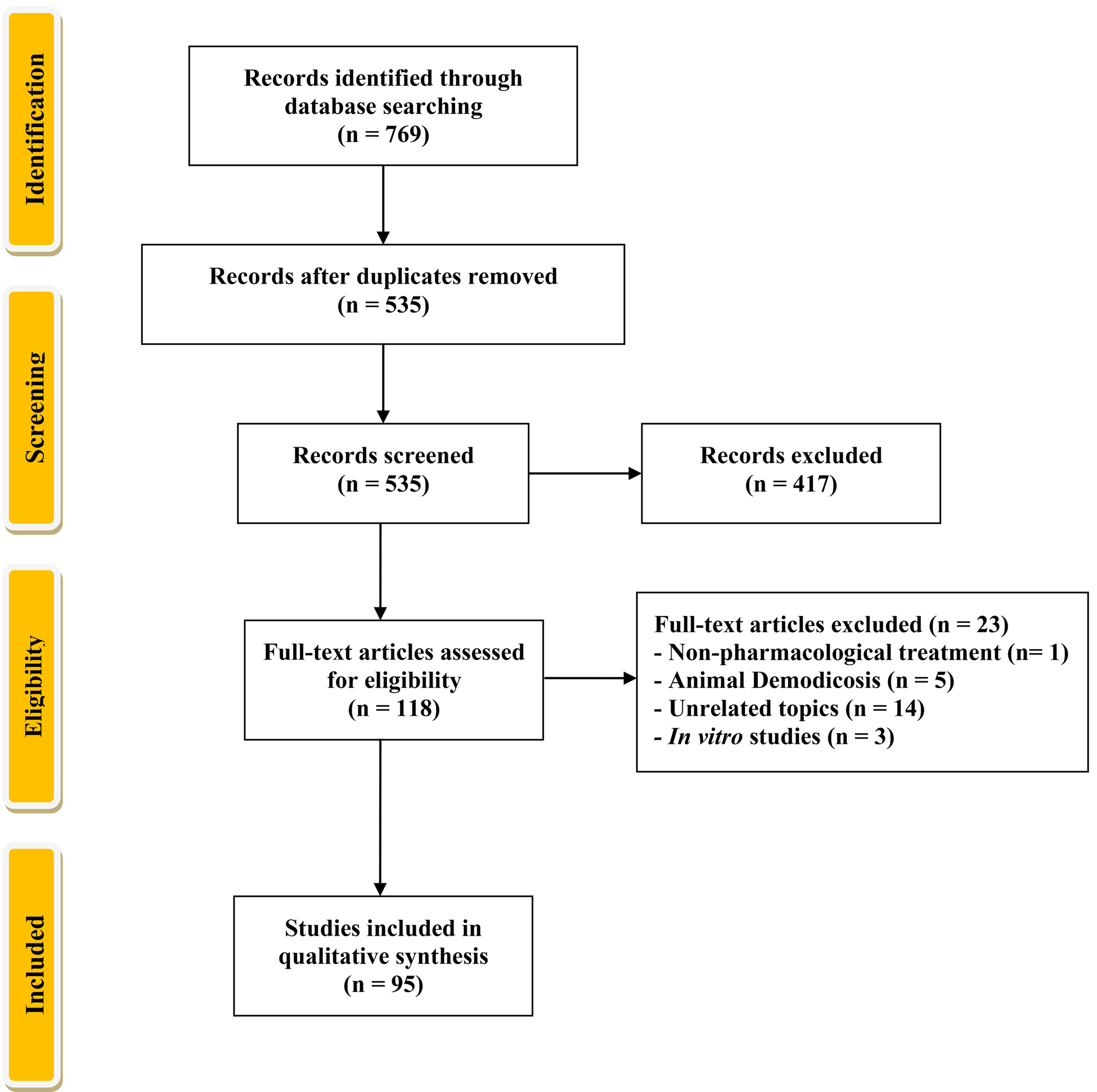
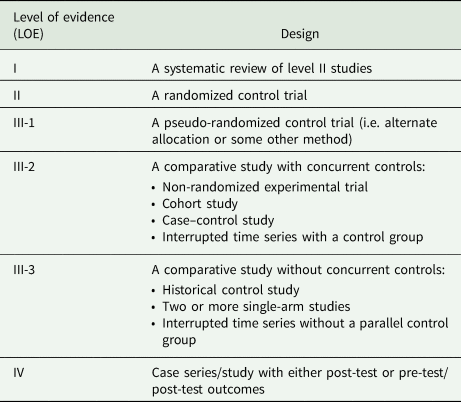
There was a total of 769 articles identified from all databases. After removal of duplicates, 535 articles remained. In all, 417 articles were excluded based on title and review of abstract. When there was uncertainty regarding the inclusion of an article, this was screened by two reviewers. A total of 118 full-text articles were selected. Twenty-three articles did not meet inclusion criteria and were removed, leaving a total of 95 articles for critical review (see Fig. 1). The best available National Health and Medical Research Council (NHMRC) level of evidence (LOE) available was II (randomized control trial). The studies were rated according to NHMRC (National Health and Medical Research Council, 2009) referred in Table 1.
PRISMA flow diagram of this systematic review.

Hierarchy of evidence provided by the National Health and Medical Research Council in Australia

Throughout this review, recommendations for specific treatments are made based on the category of LOE provided by the National Health and Medical Research Council in Australia described in Table 1 and on the highest evidence available at the time of writing. In general, recommendations of a lower Roman numeral number should be considered as having a greater LOE supporting the specific treatment.
For most of the recommendations in this article, the evidence was derived from results of a recent systematic review or meta-analysis (LOE I), randomized control clinical trials (RCTs) (LOE II), and other types of clinical trials other than RCTs (LOE III 1-3) and case series or case studies (LOE IV). There are a few randomized controlled studies and open-label trial studies published evaluating therapeutic options for human demodicosis. Recommendations for a specific treatment did not take into consideration whether the products are available in a specific country and whether it is approved for the treatment of human demodicosis by the local health governing body. Pharmaceutical products and treatment protocols in the respective countries need to be verified by the treating clinicians.
Current pharmacological management of human demodicosis
A recent systematic review and meta-analysis by Navel et al. focusing on Demodex pharmacological managements identified several systemic and topical treatments and they proposed topical TTO (5–50%) or T4O (0.1–38%) with usual lid hygiene once or twice daily for the first 3 months should be the first-line treatment (LOE I) in Demodex-related infections especially if blepharitis is present. As the adverse effects such as eyelid erythema, cutaneous eczema, itching or burning sensations in orbital and surrounding area with topical uses of TTO (5–50%) (Gao et al., Reference Gao, Di Pascuale, Li, Baradaran-Rafii, Elizondo, Kuo, Raju and Tseng2005; Gao et al., Reference Gao, Di Pascuale, Elizondo and Tseng2007; Kheirkhah et al., Reference Kheirkhah, Casas, Li, Raju and Tseng2007; Liang et al., Reference Liang, Safran, Gao, Sheha, Raju and Tseng2010; Kim et al., Reference Kim, Chun and Kim2011a; Galea et al., Reference Galea, Sharma, Srinivasan and Roberts2014; Yam et al., Reference Yam, Tang, Chan and Cheng2014; Hirsch-Hoffmann et al., Reference Hirsch-Hoffmann, Kaufmann, Banninger and Thiel2015; Nicholls et al., Reference Nicholls, Oakley, Tan and Vote2016; Karakurt and Zeytun, Reference Karakurt and Zeytun2018; Ergun et al., Reference Ergun, Saribas, Yarayici, Elmazoglu, Cardak, Ozogul, Ilhan, Karasu and Evren Kemer2019) or T4O (0.1–38%) (Tighe et al., Reference Tighe, Gao and Tseng2013; Murphy et al., Reference Murphy, O'Dwyer and Lloyd-McKernan2018; Evren Kemer et al., Reference Evren Kemer, Karaca and Ozek2020) were very rare and benign, and systemic reactions were never reported in those trials. In second-line or in severe cases, systemic treatments such as ivermectin or metronidazole could be added (LOE I), which may also decrease recurrence in complicated cases (Navel et al., Reference Navel, Mulliez, Benoist d'Azy, Baker, Malecaze, Chiambaretta and Dutheil2019). Another systematic review by Jacob et al. about Demodex-associated inflammatory skin conditions recommended metronidazole taken orally has shown efficacy in reducing Demodex density (LOE I) but the long-term outcomes of this treatment are unknown. Additionally, topical application of permethrin daily or twice daily was shown to be efficacious across multiple human dermatological studies (LOE I) but it was associated with adverse skin irritation. Crotamiton and benzyl benzoate were recommended in the same review as moderate effective treatments in reducing mite counts (LOE I) but their effects on clinical improvement are unknown. Surprisingly, TTO or T4O treatment were not investigated or mentioned in that systematic review (Jacob et al., Reference Jacob, VanDaele and Brown2019). One of the systematic reviews by Ebbelaar et al. on topical ivermectin in the treatment of papulopustular rosacea suggested that topical ivermectin 1.0% cream daily is a new and effective treatment in papulopustular rosacea because of its anti-inflammatory and acaricidal activity against Demodex mites (LOE I). Topical ivermectin demonstrated a significant reduction in inflammatory lesions compared to topical metronidazole (LOE I). Although topical ivermectin seems to be more efficacious than topical metronidazole to manage dermatological human demodicosis, with both treatment options, about 60% of patients relapsed within 36 weeks after discontinuation of treatment (Ebbelaar et al., Reference Ebbelaar, Venema and Van Dijk2018). By evaluating the results according to the systematic reviews mentioned above, TTO or T4O appear to have superior clinical outcomes compared with other treatments commercially available in terms of their efficacy and adverse effects profile.
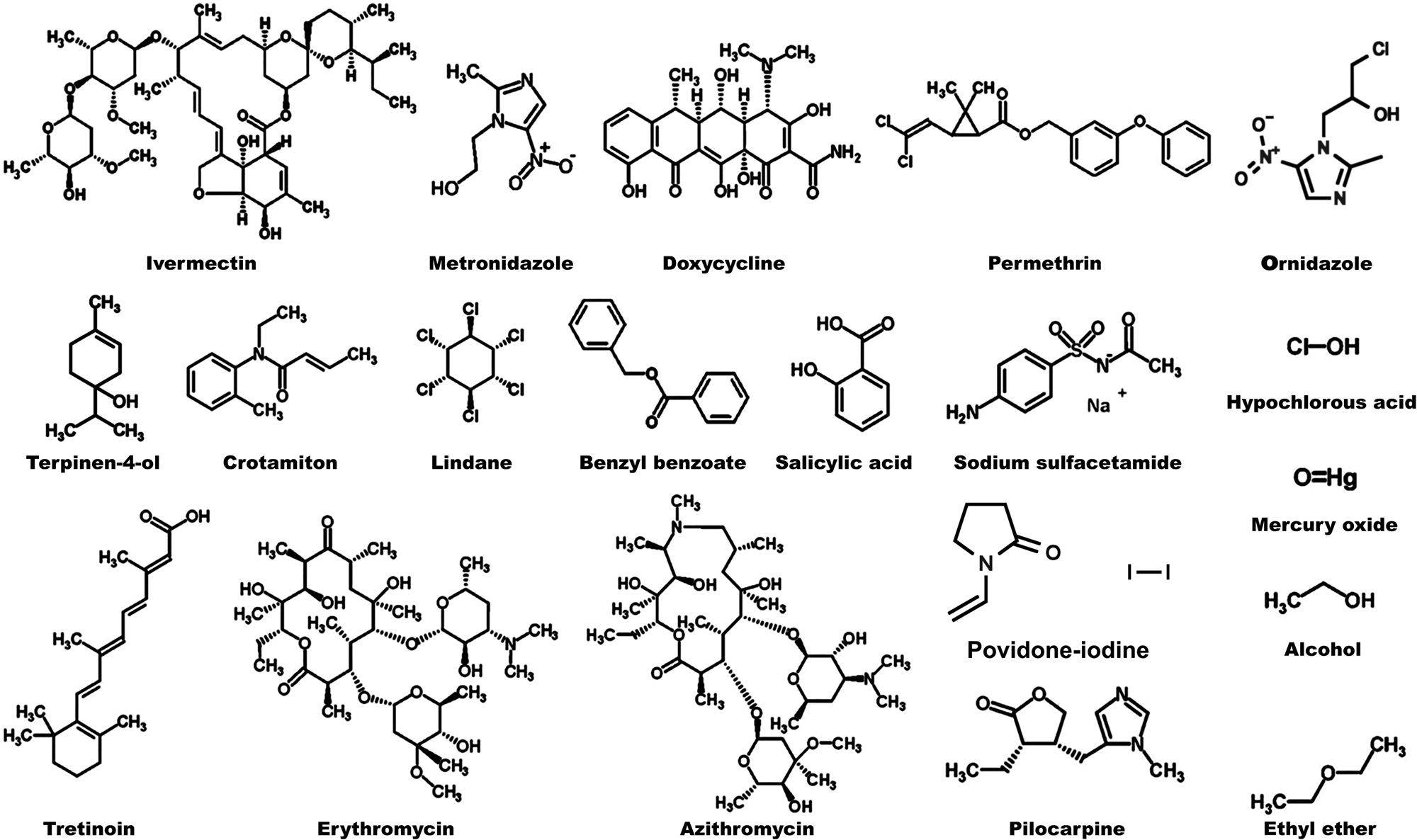
In this review, we discuss several classes of treatment in human demodicosis available in the clinical setting. TTO or T4O demonstrated complete eradication of mites and reduction of Demodex-related symptoms across many studies without any major adverse effects being reported (Gao et al., Reference Gao, Di Pascuale, Elizondo and Tseng2007; Kim et al., Reference Kim, Chun and Kim2011a; Gao et al., Reference Gao, Xu, Huang, Wang and Tseng2012; Koo et al., Reference Koo, Kim, Kim, Wee, Chun and Kim2012; Tighe et al., Reference Tighe, Gao and Tseng2013; Galea et al., Reference Galea, Sharma, Srinivasan and Roberts2014; Hirsch-Hoffmann et al., Reference Hirsch-Hoffmann, Kaufmann, Banninger and Thiel2015; Karakurt and Zeytun, Reference Karakurt and Zeytun2018). Some of the treatments other than TTO or T4O may have patient compliance issues due to the side-effects or the dosing regimens (Hirsch-Hoffmann et al., Reference Hirsch-Hoffmann, Kaufmann, Banninger and Thiel2015). So far, other than TTO and T4O, metronidazole, ivermectin, doxycycline, permethrin, crotamiton, lindane, benzyl benzoate and pilocarpine have been trialled and showed some anti-Demodex effects. The structures of the treatment molecules included in this publication are shown in Fig. 2.
The chemical structures of terpinen-4-ol, ivermectin, metronidazole, permethrin, doxycycline, crotamiton, lindane, benzyl benzoate, erythromycin, alcohol, azithromycin, ethyl ether, hypochlorous acid, mercury oxide, pilocarpine, tretinoin, salicylic acid, povidone-iodine and sodium sulfacetamide.

Tea tree oil and terpinen-4-ol
TTO is an essential oil, extracted and distillated from the leaves and terminal branches of an Australian native plant called Melaleuca alternifolia (Huynh et al., Reference Huynh, Phan, Thieu, Tran and Do2012). There are 15 major monoterpenes in TTO. They are T4O, γ-terpinene, α-terpinene, 1,8-cineole, p-cymene, terpinolene, α-terpineol, α-pinene, sabinene, aromadendrene, ledene, δ-cadinene, limonene, globulol and viridiflorol of the ISO 4730 T4O type TTO (ISO, 2017). Because of its acaricidal, anti-bacterial, anti-viral, anti-inflammatory, wound healing and immunomodulatory effects, TTO shows favourable results in managing human demodicosis (Lam et al., Reference Lam, Long, Griffin, Chen and Doery2018). T4O is the major TTO component that may competitively block the neurotransmitter terminating enzyme acetylcholinesterase (AchE) in parasites that may mediate to the arthropodicidal effect (Mills et al., Reference Mills, Cleary, Gilmer and Walsh2004); it is also a potent inhibitor of lipopolysaccharide (LPS)-induced cytokines, such as IL-1β, IL-6 and IL-10, produced by mononuclear phagocytic macrophages upon activation of TLR4 and TLR2/4; this inhibition is mediated by interfering with the NF-κB, p38 or ERK mitogen-activated protein kinase (MAPK) metabolic pathways (Nogueira et al., Reference Nogueira, Aquino, Rossa Junior and Spolidorio2014) and thereby reducing inflammation.
The anti-demodicosis effect of TTO is still not fully understood. TTO could disrupt various membranes structures of different pathogens by its lipophilic properties (Low et al., Reference Low, Kenward, Britland, Amin and Martin2017). In one of the in vitro trials, when TTO was added to suspensions containing Staphylococcus aureus cells, quick responses such as leakage of potassium ions and inhibition of cellular respiration were observed, caused by disruption of the cytoplasmic and mitochondrial membranes (Cox et al., Reference Cox, Mann, Markham, Bell, Gustafson, Warmington and Wyllie2000). Moreover, in S. aureus, autolysin activity of TTO was demonstrated due to the release of membrane-bound cell wall autolytic enzymes that resulted in cell death (Carson et al., Reference Carson, Mee and Riley2002). TTO nanoparticles can enter various cells more efficiently through the extracellular matrix, by releasing the TTO into fungus (Souza et al., Reference Souza, Lopes, Bonez, Gundel, Martinez, Sagrillo, Giongo, Vaucher, Raffin, Boligon and Santos2017) and Pseudomonas biofilms (Comin et al., Reference Comin, Lopes, Quatrin, de Souza, Bonez, Pintos, Raffin, Vaucher Rde, Martinez and Santos2016) resulting in the enhancement of antimicrobial effect (Rai et al., Reference Rai, Paralikar, Jogee, Agarkar, Ingle, Derita and Zacchino2017), as some of the Demodex species are associated with opportunistic Pseudomonas and fungal infections (Abu-Samra and Shuaib, Reference Abu-Samra and Shuaib2014; Vanam et al., Reference Vanam, Mohanram, Siv Rami Reddy, Poojari, Anuradha and Kandi2018).
In a Demodex blepharitis randomized control trial by Koo et al., 50% TTO lid scrub followed by 10% TTO daily lid scrub for 4 weeks decreased mean Demodex count from 4 to 3.2 per 8 epilated lashes and the ocular surface discomfort index (OSDI) score was reduced from 34.5 to 24.1 (LOE II). Complete eradication of Demodex was demonstrated in 23.6% of patients post-treatment in the TTO intervention group. There were no major side-effects of TTO treatment reported when the patients were doing the correct scrubbing method (Koo et al., Reference Koo, Kim, Kim, Wee, Chun and Kim2012).
One of the randomized controlled interventional treatment studies by Murphy et al. using TTO facewash contains 38% T4O in treating D. folliculorum blepharitis. Patients were given step-by-step instructions provided to subjects for nightly lid scrubs at home. OSDI decreased from 27.4 to 16.2 and the average count of D. folliculorum reduced from 4.9 to 1.9 per each eyelash (LOE II). No adverse effect was reported in this study (Murphy et al., Reference Murphy, O'Dwyer and Lloyd-McKernan2018).
In another randomized single-blinded control trial by Karakurt and Zeytun in patients with demodectic blepharitis, twice a day 7.5% TTO eyelash shampoo was recommended to the patients. Complete eradication was attained in 4 weeks in 36% of the patients who used eyelash shampoo with TTO with the average Demodex count of 6.33 per eyelash (P < 0.001) (LOE II). Ocular symptoms and average scores also reduced significantly within the 4 weeks treatment period (P < 0.001). The results demonstrated that eyelash shampoo with TTO is three times more effective at achieving full Demodex eradication compared with the TTO-free eyelash shampoo control, significantly reducing the Demodex count, and relieving ocular symptoms in patients where full reduction cannot be attained, without adverse side-effects being reported (Karakurt and Zeytun, Reference Karakurt and Zeytun2018).
One of the randomized double-blind clinical studies by Ergun et al. compared the efficacy and safety of two topical TTO-based cleansing gel formulations in the chronic blepharitis study. Patients were instructed to use the formulation twice daily for 4 weeks: cleansing gel formulation containing 3% (w/w) TTO plus calendula oil, borage oil, vitamin E, vitamin B5 <5% (w/w) in the treatment group and cleansing gel formulation containing 3% TTO only as a control group. The mean OSDI scores and the average Demodex population per eyelash decreased and fluorescein tear breakup time increased significantly in both treatment groups suggesting that basic washing gel containing only 3% TTO is also as effective as the other formula in reducing the related symptoms and complaints of patients (LOE II). No adverse effects of either formulation were reported (Ergun et al., Reference Ergun, Saribas, Yarayici, Elmazoglu, Cardak, Ozogul, Ilhan, Karasu and Evren Kemer2019).
In an open-label trial by Gao et al., topical 5% TTO ointment was used to treat ocular pruritis associated with ocular demodicosis. Twice daily lid massage with 5% TTO ointment for 5 min was recommended to patients for 4 weeks. Demodex counts decreased from 5.5 to 0.7 per 8 epilated lashes and 16 out of 24 patients were totally free of pruritis and the remaining eight patients had different degrees of relief (LOE III-2). Lid massage with 5% TTO ointment for a period of 5 min twice per day was able to stimulate mites to emigrate from the lash follicle in the same manner as 50% TTO solution performed weekly but without the side-effects such as inflammation and irritation as mentioned in this study (Gao et al., Reference Gao, Xu, Huang, Wang and Tseng2012).
Another open-label controlled trial compared treatment options for Demodex blepharitis by Hirsch-Hoffmann et al., daily topical 5% TTO ointment or 0.02% TTO foam, topical or systemic metronidazole or systemic ivermectin with daily lid hygiene only as a control group for 8 weeks. The complete eradication rate and the improvement of symptoms were 6 and 40.5% in the 0.02% TTO foam group compared to 0 and 20% in topical 5% TTO ointment, respectively (LOE III-3). No adverse effects of topical TTO formulations were reported in this study (Hirsch-Hoffmann et al., Reference Hirsch-Hoffmann, Kaufmann, Banninger and Thiel2015).
In a case series study, 5% TTO solution lid toileting followed by 5% TTO ointment at night for 12 weeks in patients with Demodex-related chronic primary conjunctivitis and dry eye disease resulted in 100 and 95% improvement of symptoms, respectively (LOE IV) (Nicholls et al., Reference Nicholls, Oakley, Tan and Vote2016). In an open-label retrospective clinical study, 50% TTO weekly lid scrub and 0.5 mL TTO shampoo lid scrub twice daily for 3 weeks had a 96.8% success rate of preventing recurrence of chalazion associated with demodicosis (LOE IV) (Yam et al., Reference Yam, Tang, Chan and Cheng2014). Another clinical study demonstrated that 50% TTO weekly lid scrub by clinicians and 0.5 mL TTO shampoo lid scrub twice daily for 1 month and then once daily thereafter is effective in eradicating ocular demodicosis (LOE IV) (Gao et al., Reference Gao, Di Pascuale, Li, Baradaran-Rafii, Elizondo, Kuo, Raju and Tseng2005). In addition, an open-label trial and a case study about Demodex blepharitis showed that eyelid cleanser containing T4O eyelid rub twice daily alone resulted in significant improvement of ocular symptoms and complete eradication of mites, respectively (LOE IV) (Tighe et al., Reference Tighe, Gao and Tseng2013; Evren Kemer et al., Reference Evren Kemer, Karaca and Ozek2020).
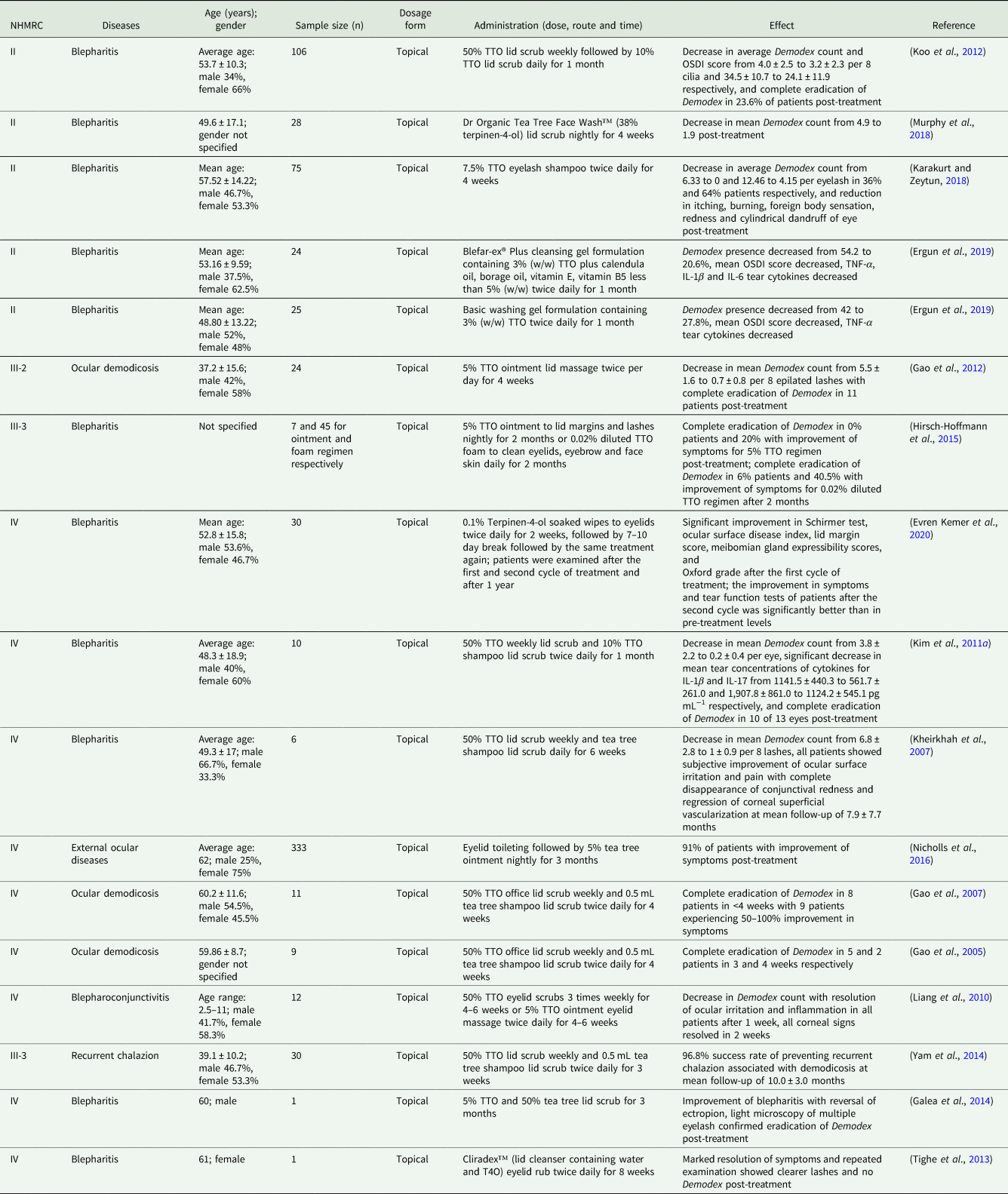
Topical TTO, typically in diluted form, is usually well-tolerated. Local adverse effects are mostly skin and ocular allergic or irritant reactions to the oil, in which irritant reactions were usually concentration dependent (Hammer et al., Reference Hammer, Carson, Riley and Nielsen2006). Contact sensitization and allergic contact dermatitis reactions have been reported for TTO at 5–10%; however, latest prevalence rates in the USA suggested that only 1.4% of patients referred for patch testing had a positive reaction to TTO (Larson and Jacob, Reference Larson and Jacob2012). Clinical resistance of Demodex to TTO or its monoterpenes constituents has not been reported (Lam et al., Reference Lam, Long, Griffin, Chen and Doery2018). The TTO and T4O dosage, direction and administration form showing effectiveness against the human demodicosis are summarized in Table 2.
TTO dosage and direction in treating human demodicosis

Metronidazole
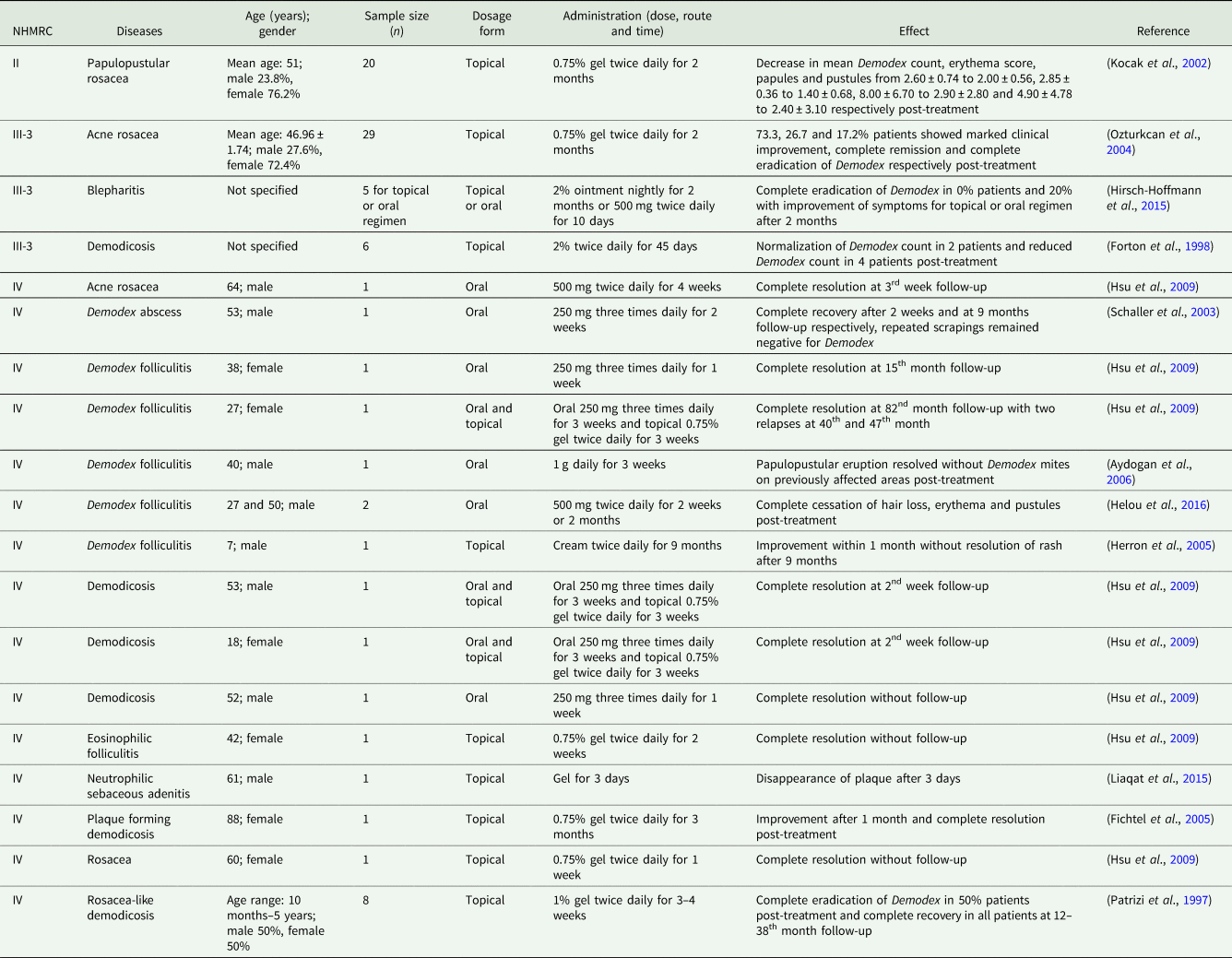
Metronidazole is a synthetic nitroimidazole derivative, which is active against parasitic and anaerobic bacterial infections by inhibiting nucleic acid synthesis thereby disrupting the DNA of microbial cells. Since Demodex infection is one of the important factors in rosacea (Holmes, Reference Holmes2013), metronidazole's mechanism of action in rosacea is related both to the agent's anti-inflammatory and anti-oxidant effects (Schaller et al., Reference Schaller, Schofer, Homey, Hofmann, Gieler, Lehmann, Luger, Ruzicka and Steinhoff2016). Metronidazole interferes with granulocytic neutrophil release of reactive oxygen species (ROS) production and inactivating existing ROS, which decreases the release of further pro-inflammatory cytokines (Narayanan et al., Reference Narayanan, Hunerbein, Getie, Jackel and Neubert2007). Topical metronidazole has demonstrated variable efficacy in various clinical studies (Kocak et al., Reference Kocak, Yagli, Vahapoglu and Eksioglu2002; Hsu et al., Reference Hsu, Hsu and Lee2009). A randomized double-blind placebo-controlled study for Demodex-related papulopustular rosacea showed that topical metronidazole 0.75% twice a day for 8 weeks could significantly improve erythema, the number of papules and pustules, and lowered the Demodex count compared to placebo (Kocak et al., Reference Kocak, Yagli, Vahapoglu and Eksioglu2002) (LOE II). In one case series on dermatological demodicosis, it was demonstrated that topical metronidazole 2% twice daily for 45 days appeared to be effective in controlling Demodex infection in terms of the Demodex count but long-term benefits and risks are unknown (Forton et al., Reference Forton, Seys, Marchal and Song1998) (LOE III-3). An open trial study on Demodex acne rosacea demonstrated that topical metronidazole 0.75% gel twice daily for 8 weeks resulted in marked clinical symptoms improvement and complete remission and eradication of Demodex (LOE III-3) (Ozturkcan et al., Reference Ozturkcan, Ermertcan, Sahin and Afsar2004). Moreover, in some report series studies of Demodex-related dermatological conditions, oral metronidazole may be effective eradicating mites and relieve the overall dermatological signs and symptoms but relapse happened post-treatment in some cases (LOE IV) (Hsu et al., Reference Hsu, Hsu and Lee2009; Helou et al., Reference Helou, Avitan-Hersh and Bergman2016). Adverse effects include the gastrointestinal side-effects such as metallic taste in the mouth, nausea, vomiting, a disulfiram-like reaction with ingestion of alcohol (Swygard et al., Reference Swygard, Sena, Hobbs and Cohen2004) and neurological side-effects such as seizure, encephalopathy and ataxia (Sunderkotter et al., Reference Sunderkotter, Herrmann and Jappe2006). Metronidazole is safe in pregnancy, breastfeeding and young infants (Hall et al., Reference Hall, Kaye, McIntosh and Steele1983; Passmore et al., Reference Passmore, McElnay, Rainey and D'Arcy1988; Einarson et al., Reference Einarson, Ho and Koren2000), although it has carcinogenic potential (Sunderkotter et al., Reference Sunderkotter, Herrmann and Jappe2006). The metronidazole dosage, direction and administration form showing effectiveness against the human demodicosis are summarized in Table 3.
Metronidazole dosage and direction in treating human demodicosis

Ivermectin
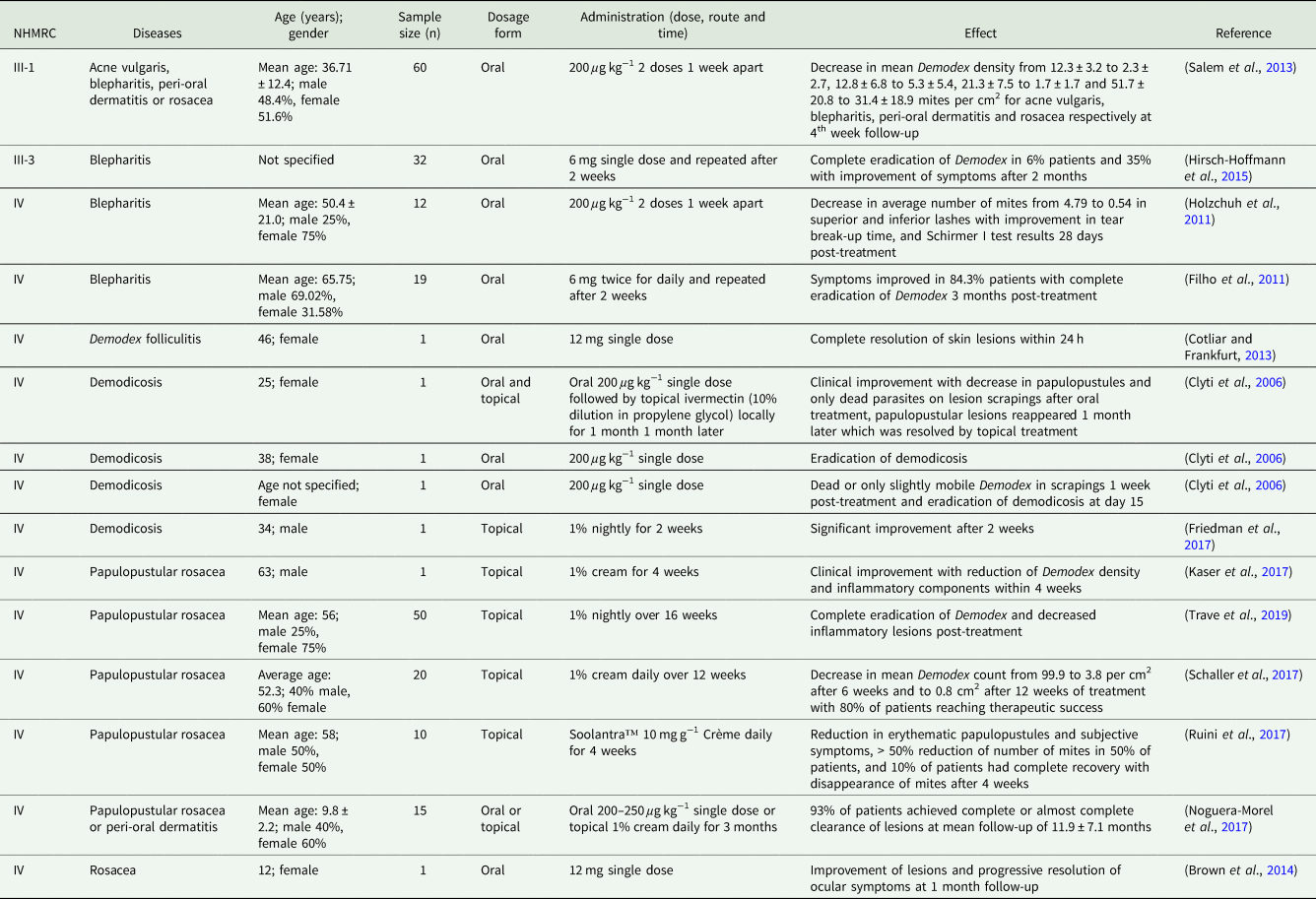
Ivermectin is a macrocyclic lactone derived from the soil bacterium Streptomyces avermectinius. Except for its well-known anti-onchocerca and anti-filarial effects in the world public health campaigns, ivermectin also demonstrates anti-parasitic activities against many other parasitic infections, such as human demodicosis. The anti-parasitic activity of ivermectin is possibly due to its selectively binding to glutamate or γ-aminobutyric acid (GABA) in the peripheral motor synapses of neurons, resulting in the permanent opening of chloride ion channels. The chloride ion influx might inhibit the neuronal and muscular activities in the parasite and subsequently cause paralysis and death of the parasite (Dourmishev et al., Reference Dourmishev, Dourmishev and Schwartz2005; Kobylinski et al., Reference Kobylinski, Foy and Richardson2012). The anti-inflammatory properties of ivermectin are likely due to the inhibition of phosphorylation of the MAPKs, JNK and p38 pathways as well as blocking the translocation of the transcription factor NF-κB that results in decreasing LPS-induced inflammation (Zhang et al., Reference Zhang, Song, Ci, An, Ju, Li, Wang, Han, Cui and Deng2008; Zhang et al., Reference Zhang, Song, Xiong, Ci, Li, Yu, Zhang and Deng2009). The reduction of LPS-induced inflammation may decrease neutrophil phagocytosis and chemotaxis, inhibit pro-inflammatory cytokines such as IL-1β, IL-8 and TNF-α, and upregulate the anti-inflammatory cytokine IL-10 (Stein et al., Reference Stein, Kircik, Fowler, Tan, Draelos, Fleischer, Appell, Steinhoff, Lynde, Liu and Jacovella2014; Abokwidir and Fleischer, Reference Abokwidir and Fleischer2015). Compared with metronidazole, ivermectin is superior in reducing inflammatory lesions, with a faster onset of action for papulopustular rosacea (Taieb et al., Reference Taieb, Khemis, Ruzicka, Baranska-Rybak, Berth-Jones, Schauber, Briantais, Jacovella and Passeron2016). The benefit of ivermectin in Demodex-related dermatological conditions is probably due to its anti-parasitic, anti-inflammatory and immunomodulatory properties. A single-blind, randomized controlled trial in patients with anterior blepharitis or skin lesions caused by Demodex evaluated the efficacy of ivermectin compared to ivermectin plus metronidazole. Two doses of ivermectin 200 μg kg−1 orally given 1 week apart or metronidazole 250 mg orally three times daily for 2 weeks in addition to the two doses of ivermectin. At week 4, there was a significant decrease in Demodex count, 71.6% showed complete remission on combined therapy, 26.7% showed marked clinical improvement and <2% of patients showed no clinical improvement, and compared favourably to those patients on ivermectin therapy alone (LOE III-1). No adverse events were reported (Salem et al., Reference Salem, El-Shazly, Nabih, El-Bayoumy and Saleh2013). An open-label trial about treatment options in Demodex blepharitis, oral ivermectin 6 mg single dose and repeated after 2 weeks improved symptoms in 35% and eradicated Demodex in 6% at 8 weeks follow-up without any adverse effects reported (LOE III-3) (Hirsch-Hoffmann et al., Reference Hirsch-Hoffmann, Kaufmann, Banninger and Thiel2015). Ivermectin can reduce the mite count (LOE IV) (Holzchuh et al., Reference Holzchuh, Hida, Moscovici, Villa Albers, Santo, Kara-Jose and Holzchuh2011; Ruini et al., Reference Ruini, Sattler, Hartmann, Reinholz, Ruzicka and von Braunmuhl2017), and relieve the Demodex-related signs and symptoms in both ocular and dermatological demodicosis (LOE IV) (Filho et al., Reference Filho, Hazarbassanov, Grisolia, Pazos, Kaiserman and Gomes2011; Friedman et al., Reference Friedman, Sabban and Cabo2017; Kaser et al., Reference Kaser, Ruini, Ezmerli, von Braunmuhl, Hartmann, Ruzicka and Reinholz2017). However, there has been one human Demodex ivermectin-resistant case reported recently (LOE IV) (Hervás Ontiveros et al., Reference Hervás Ontiveros, Hurtado-Sarrió, Udaondo, García-Delpech, Salom and Díaz-Llopis2014). Adverse effects of topical ivermectin are mostly mild. They include dermatological side-effects such as skin irritation, allergic dermatitis, exacerbation of rosacea, erythema, pruritus and general flushing (Taieb et al., Reference Taieb, Ortonne, Ruzicka, Roszkiewicz, Berth-Jones, Peirone and Jacovella2015). Systemic ivermectin treatment may result in transient and mild systemic adverse reactions including anorexia, asthenia, headache, arthralgia, myalgia, fever, eosinophilia, and maculopapular rashes (Hengge et al., Reference Hengge, Currie, Jager, Lupi and Schwartz2006). Ivermectin should be avoided in pregnancy, breastfeeding and children weighing <15 kg (Hay et al., Reference Hay, Steer, Engelman and Walton2012). The ivermectin dosage, direction, administration form showing effectiveness against the human demodicosis are summarized in Table 4.
Ivermectin dosage and direction in treating human demodicosis

Permethrin
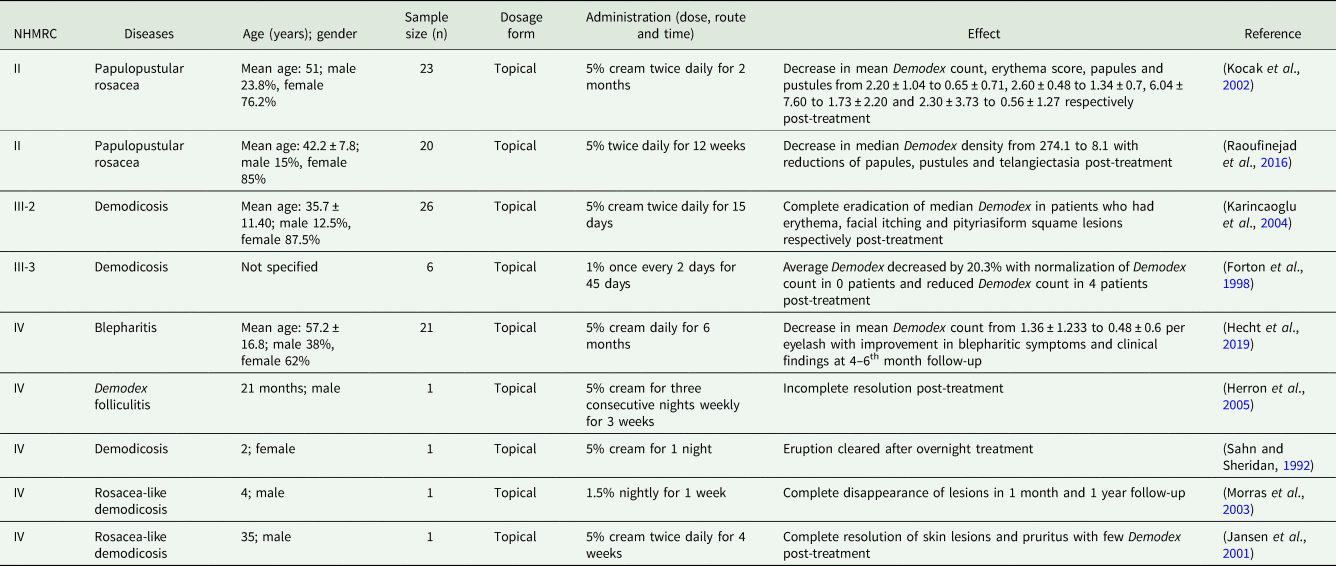
Permethrin is a synthetic pyrethroid agent derived from Chrysanthemum cinerariifolium (Casida, Reference Casida1980). It is insecticidal and scabicidal with selectively low mammalian toxicity properties (Casida, Reference Casida1980). Permethrin may slow the rate of the voltage-gated sodium channel closure of arthropods, resulting in prolonged depolarization of nerve-cell membranes that could disrupt neurotransmission, causing nerve depolarization and hyper-excitation result in muscle paralysis and death of the parasite (Zlotkin, Reference Zlotkin1999). The neurotoxic effect of permethrin on vertebrates is relatively mild compared to invertebrates due to structural differences in voltage-gated sodium channels between vertebrates and invertebrates (Zlotkin, Reference Zlotkin1999). Moreover, it may also interfere with the GABA receptor chloride ionophore complexes and neurotransmitters (Imamura et al., Reference Imamura, Hasegawa, Kurashina, Hamanishi, Tabuchi and Tsuda2000; Wang et al., Reference Wang, Martinez, Dai, Chen, Ares, Romero, Castellano, Martinez, Rodriguez, Martinez-Larranaga, Anadon and Yuan2016). The anti-demodicosis mechanism is unknown, but topical 5% permethrin twice daily for 8–12 weeks can decrease the Demodex mite count (LOE II) (Raoufinejad et al., Reference Raoufinejad, Mansouri, Rajabi, Naraghi and Jebraeili2016), and improve the erythema score (LOE II) (Kocak et al., Reference Kocak, Yagli, Vahapoglu and Eksioglu2002) and dermatological signs and symptoms (LOE IV) (Morras et al., Reference Morras, Santos, Imedio, Echeverria and Hermosa2003). One of the randomized, double-blind, placebo-controlled studies evaluated the effect of permethrin 5% cream or placebo twice daily in the management of Demodex papulopustular rosacea. From baseline to day 60, the extent of erythema, the number of papules and Demodex count showed a significant reduction in the permethrin group (LOE II). Side-effects were evaluated and no complications were reported during the study (Kocak et al., Reference Kocak, Yagli, Vahapoglu and Eksioglu2002). However, it is important to mention that while permethrin did cause some skin irritation and erythema, it did not result in discontinuation of therapy in some Demodex clinical studies (Forton et al., Reference Forton, Seys, Marchal and Song1998; Jansen et al., Reference Jansen, Kastner, Kreuter and Altmeyer2001; Morras et al., Reference Morras, Santos, Imedio, Echeverria and Hermosa2003) (LOE III-3 to LOE IV). Permethrin is poorly absorbed through the skin and the small percentage absorbed is then metabolized rapidly and excreted in the urine in the form of inactive metabolites (Tomalik-Scharte et al., Reference Tomalik-Scharte, Lazar, Meins, Bastian, Ihrig, Wachall, Jetter, Tantcheva-Poor, Mahrle and Fuhr2005). Adverse effects including dermatological effects such as pruritus, numbness, erythema, paresthesia; systematic effects such as headache, dizziness, muscle spasms, convulsions and dystonic action of the neck have been reported (Coleman et al., Reference Coleman, Gillespie and White2005; Raoufinejad et al., Reference Raoufinejad, Mansouri, Rajabi, Naraghi and Jebraeili2016). Topical use of permethrin is safe for pregnancy, breastfeeding and infants more than 2 months old (Hay et al., Reference Hay, Steer, Engelman and Walton2012). The strength, direction and administration form showing effectiveness against the human demodicosis are summarized in Table 5.
Permethrin dosage and direction in treating demodicosis

Crotamiton
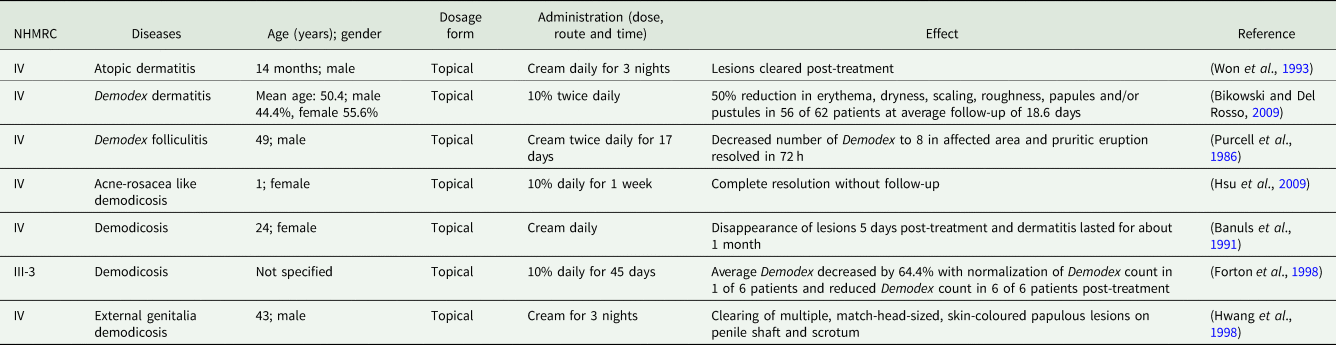
Crotamiton is a pale yellow oil with a faint amine-like odour used as an anti-scabies, anti-bacterial and anti-pruritic for many dermatological conditions (Hausen and Kresken, Reference Hausen and Kresken1988). It is a common scabies treatment recommended for newborn babies and infants (Hengge et al., Reference Hengge, Currie, Jager, Lupi and Schwartz2006). The anti-pruritic effect is believed due to crotamiton's moderate inhibition of histamine, serotonin and PAR-2 agonist that is TRPV-1 independent and produces the counter-irritation and cooling effect (Sekine et al., Reference Sekine, Satoh, Takaoka, Saeki and Yokozeki2012). Crotamiton can reduce the Demodex mite count (LOE IV) (Purcell et al., Reference Purcell, Hayes and Dixon1986) and improve the Demodex-related dermatological signs and symptoms (LOE IV) (Bikowski and Del Rosso, Reference Bikowski and Del Rosso2009; Hsu et al., Reference Hsu, Hsu and Lee2009). An open-label, randomized study with patients suffering from a variety of Demodex skin conditions showed that 10% crotamiton was applied daily for 45 days, achieved normalization of Demodex count which was observed after the treatment period in one patient only and reduction of Demodex count occurred in other participants (LOE III-3) (Forton et al., Reference Forton, Seys, Marchal and Song1998). Adverse effect included dermatological side-effects such as flushing, irritation, conjunctivitis and contact dermatitis (Hengge et al., Reference Hengge, Currie, Jager, Lupi and Schwartz2006). It is safe for pregnancy, breastfeeding and young infants (Hay et al., Reference Hay, Steer, Engelman and Walton2012). The strength, direction, administration form showing effectiveness against the human demodicosis are summarized in Table 6.
Crotamiton therapy dosage and direction in treating human demodicosis

Lindane
Lindane, also known as γ hexachlorocyclohexane or benzene hexachloride, is an organochloride of the cyclohexane family. It acts on the GABA-gated chloride channels as a neurotoxin in arthropods, leading to paralysis and death of the parasite (Turberg, Reference Turberg and Mehlhorn2015). One of the open-label, randomized trials with patients suffering from a variety of dermatological Demodex conditions demonstrated that topical lindane 1% every second day for 15 days could reduce Demodex mite count but failed to achieve normalization of mites (LOE III-3). Longer treatment is not recommended due to its potential risks of intoxication (Forton et al., Reference Forton, Seys, Marchal and Song1998). A case series study about dermatological demodicosis showed that lindane topical 1% daily for 2 weeks resulted in complete resolution of any clinical signs of pityriasis folliculorum demodicosis even at the 3 months follow-up (LOE IV) (Hsu et al., Reference Hsu, Hsu and Lee2009). The adverse effects of lindane include dermatological side-effects such as irritation and allergic contact dermatitis; as well as neurological side-effects such as insomnia, irritability, vertigo, convulsions, restlessness and collapse (Hengge et al., Reference Hengge, Currie, Jager, Lupi and Schwartz2006). Lindane needs to be avoided in pregnancy, breastfeeding and infant (Hay et al., Reference Hay, Steer, Engelman and Walton2012). The strength, direction, administration form showing effectiveness against the human demodicosis are summarized in Table 7.
Lindane therapy dosage and direction in treating human demodicosis

Miscellaneous treatments
Doxycycline
Doxycycline is a board-spectrum bacteriostatic antibiotic that inhibits the bacterial ribosomal protein synthesis unit to prevent bacteria from reproducing through the inhibition of protein synthesis. Doxycycline inhibits the production and activity of matrix metalloproteinases (MMPs, especially MMP-9) directly and kallikrein (KLK) indirectly (Kim et al., Reference Kim, Luo, Pflugfelder and Li2005; Di Nardo et al., Reference Di Nardo, Holmes, Muto, Huang, Preston, Winkelman and Gallo2016). In vitro study shows corneal epithelial cells from human telomerase immortalized corneal epithelial cell line (hTCEpi) exposed to Demodex endogenous bacterial B. oleronius proteins can upregulate the expression of many pro-inflammatory mediators including IL-1β, IL-6, IL-8, TNF-α, cathelicidin, MMP-3 and MMP-9 (O'Reilly et al., Reference O'Reilly, Gallagher, Reddy Katikireddy, Clynes, O'Sullivan and Kavanagh2012; McMahon et al., Reference McMahon, Banville, Bergin, Smedman, Paulie, Reeves and Kavanagh2016). The chitin from the exoskeleton of Demodex may activate TLR2 receptors in keratinocyte, resulting in increased IL-8, TNF-α, cyclooxygenase-2 and the inflammasome, which subsequently increased KLK-5, LL-37, cathelicidin and MMP-9 (Casas et al., Reference Casas, Paul, Lahfa, Livideanu, Lejeune, Alvarez-Georges, Saint-Martory, Degouy, Mengeaud, Ginisty, Durbise, Schmitt and Redoules2012; Woo et al., Reference Woo, Lim, Cho and Park2016). Increased MMP-9 levels have been observed in patients with ocular rosacea, and with some of these patients displaying recurrent corneal erosion, therapeutic treatment often includes the use of the doxycycline (Dursun et al., Reference Dursun, Kim, Solomon and Pflugfelder2001). In addition, the inhibition of the nitric oxide (NO) synthase activity by doxycycline might explain the anti-inflammatory action in rosacea-associated vasodilation (Woo et al., Reference Woo, Lim, Cho and Park2016). Doxycycline has been demonstrated to inhibit neutrophil activity and several pro-inflammatory reactions including those associated with phospholipase A2, endogenous NO, TNF-α, IL-6, IL-8 and IL-10 (Bikowski, Reference Bikowski2003; Baldwin, Reference Baldwin2006; Jantzie and Todd, Reference Jantzie and Todd2010). However, oral doxycycline is never used as a monotherapy in treating Demodex-related conditions. It is always combined with other therapeutic agents such as metronidazole or prednisolone to control the disease (LOE IV) (Hsu et al., Reference Hsu, Hsu and Lee2009; Sattler et al., Reference Sattler, Hoffmann, Ruzicka, Braunmuhl and Berking2015; Douglas and Zaenglein, Reference Douglas and Zaenglein2019). A case study of D. folliculorum-associated oculocutaneous rosacea showed that patients using oral doxycycline 100 mg daily and topical tacrolimus for 8 weeks achieved temporary improvement in the Demodex skin lesions but the ocular symptoms persisted. However, the patient had a flare 4 weeks after discontinuing doxycycline and restarting the doxycycline did not result in improvement (LOE IV) (Brown et al., Reference Brown, Hernandez-Martin, Clement, Colmenero and Torrelo2014). Sub-anti-microbial dosing of doxycycline, e.g. 20 mg twice a day or 40 mg daily, was likely as effective or more effective than anti-microbial doses (⩾50 mg per day), in decreasing the release of pro-inflammatory cytokines and downregulating the production of ROS (Wise, Reference Wise2007), but with much fewer adverse effects such as nausea, diarrhoea and lower the risk of developing bacteria resistance (van Zuuren et al., Reference van Zuuren, Fedorowicz, Carter, van der Linden and Charland2015; Asai et al., Reference Asai, Tan, Baibergenova, Barankin, Cochrane, Humphrey, Lynde, Marcoux, Poulin, Rivers, Sapijaszko, Sibbald, Toole, Ulmer and Zip2016). The adverse effects of doxycycline include oesophageal erosion, gastrointestinal discomfort and photosensitivity (Smith and Leyden, Reference Smith and Leyden2005). Doxycycline is not recommended in pregnancy, breastfeeding and infant (Aupee et al., Reference Aupee, Almeras, Le Garlantezec and Bohand2009).
Benzyl benzoate
Benzyl benzoate is an organic ester that can be rapidly hydrolysed to benzoic acid and benzyl alcohol which are neurotoxic to the mites and active against their ova (Buffet and Dupin, Reference Buffet and Dupin2003). One of the open-label, randomized studies with patients suffering from a variety of Demodex skin diseases showed that benzyl benzoate 10% applied to the affected area twice daily can reduce Demodex mite count by 98.2% and improve dermatological signs and symptoms with only moderate irritation (LOE III-3) (Forton et al., Reference Forton, Seys, Marchal and Song1998). Adverse effects including transient skin irritation, burning sensation and post-treatment eczematous reaction happened in high strength preparations of ≥25% (Brooks and Grace, Reference Brooks and Grace2002). Topical use of benzyl benzoate is safe during second or third trimester pregnancy (Mytton et al., Reference Mytton, McGready, Lee, Roberts, Ashley, Carrara, Thwai, Jay, Wiangambun, Singhasivanon and Nosten2007), breastfeeding (Hengge et al., Reference Hengge, Currie, Jager, Lupi and Schwartz2006) and in children that are more than 1 year old (Sunderkotter et al., Reference Sunderkotter, Mayser, Folster-Holst, Maier, Kampen and Hamm2007).
Pilocarpine
Pilocarpine is a well-known treatment for glaucoma in humans. It is a cholinergic parasympathomimetic agent acting primarily as a non-selective muscarinic agonist that may cause paralysis of mites’ respiration and mobility (Celorio et al., Reference Celorio, Fariza-Guttman and Morales1989; Fulk et al., Reference Fulk, Murphy and Robins1996). A case series on ocular demodicosis demonstrated that 4% pilocarpine gel spread once in the evening on the base of eyelashes, and removed in the morning for 2 weeks, could reduce the number of mites and alleviate the related symptoms (LOE IV) (Fulk et al., Reference Fulk, Murphy and Robins1996). No side-effects were observed secondary to pilocarpine when applied to the lid margins only (Fulk et al., Reference Fulk, Murphy and Robins1996). Another study also confirms its efficacy for the miticidal effect (LOE IV) (Celorio et al., Reference Celorio, Fariza-Guttman and Morales1989). Pilocarpine is not recommended during pregnancy, and the use of pilocarpine in breastfeeding mothers and young children should be done cautiously (Coppens et al., Reference Coppens, Stalmans and Zeyen2010).
Other treatments
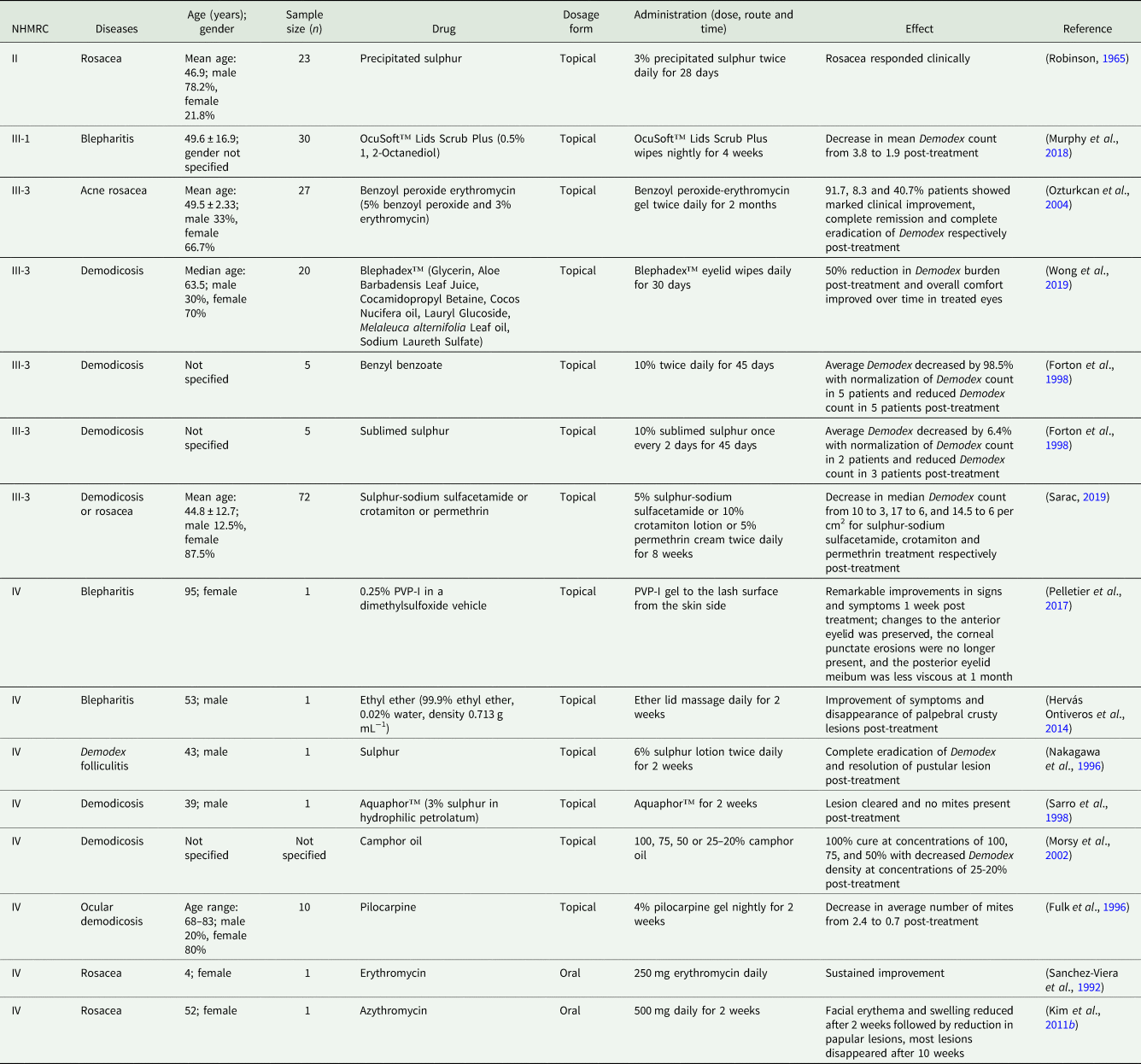
Several topical treatments have been found useful to relieve or control human Demodex conditions (LOE II to IV), such as sulphur (Robinson, Reference Robinson1965; Nakagawa et al., Reference Nakagawa, Sasaki, Fujita, Nishimoto and Takaiwa1996; Forton et al., Reference Forton, Seys, Marchal and Song1998; Sarro et al., Reference Sarro, Hong and Elgart1998; Gao et al., Reference Gao, Di Pascuale, Li, Baradaran-Rafii, Elizondo, Kuo, Raju and Tseng2005; Herron et al., Reference Herron, O'Reilly and Vanderhooft2005), 0.01–0.02% hypochlorous acid (Bachir and Bitton, Reference Bachir and Bitton2015; Roan, Reference Roan2016), 0.25% povidone-iodine gel (Pelletier et al., Reference Pelletier, Capriotti, Stewart and Capriotti2017), 99.9% ethyl-ether solution (Hervás Ontiveros et al., Reference Hervás Ontiveros, Hurtado-Sarrió, Udaondo, García-Delpech, Salom and Díaz-Llopis2014), 2% mercury oxide ointment (Rodríguez et al., Reference Rodríguez, Ferrer and Alió2005; Anane et al., Reference Anane, Mokni and Beltaief2011), 100% alcohol (Gao et al., Reference Gao, Di Pascuale, Li, Baradaran-Rafii, Elizondo, Kuo, Raju and Tseng2005), camphorated oil (Czepita et al., Reference Czepita, Kuzna-Grygiel, Czepita and Grobelny2007; Liu et al., Reference Liu, Sheha and Tseng2010), salicylic acid cream (Hoekzema et al., Reference Hoekzema, Hulsebosch and Bos1995; Karincaoglu et al., Reference Karincaoglu, Bayram, Aycan and Esrefoglu2004), azithromycin (Kim et al., Reference Kim, Oh and Choi2011b), erythromycin (Sanchez-Viera et al., Reference Sanchez-Viera, Hernanz, Sampelayo, Gurbindo, Lecona and Soto-Melo1992), sodium sulfacetamide (Herron et al., Reference Herron, O'Reilly and Vanderhooft2005) and tretinoin (Dominey et al., Reference Dominey, Tschen, Rosen, Batres and Stern1989b). Many of these treatments alone are often insufficiently effective in managing the condition (Salem et al., Reference Salem, El-Shazly, Nabih, El-Bayoumy and Saleh2013). Further investigations are needed to understand their mechanisms of action and toxicities to determine the optimum dosage and length of treatment in demodicosis. The dosage, direction and administration form of miscellaneous treatments showing effectiveness against the human demodicosis are summarized in Table 8.
Miscellaneous treatment dosage and direction in treating human demodicosis

Combination therapy
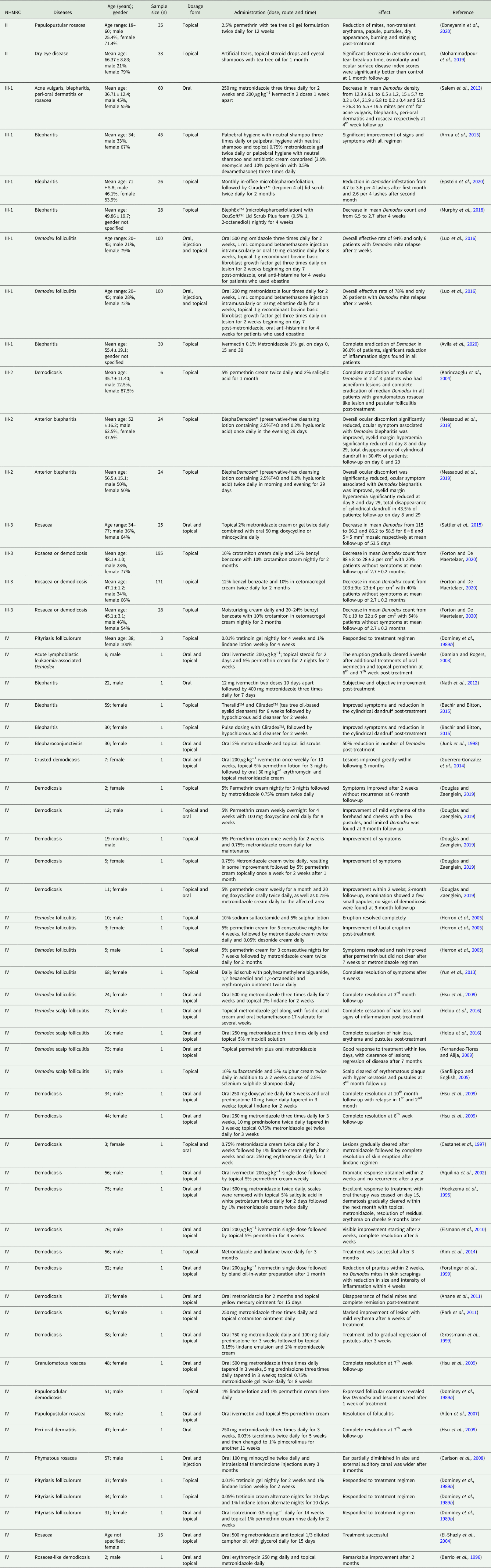
Many combination regimens have been trialled for human demodicosis, especially TTO or T4O with other topical treatments. In a double-blind, randomized controlled clinical trial of Demodex-related rosacea by Ebneyamin et al., twice daily topical 2.5% permethrin with 100% TTO gel for 12 weeks is used to treat Demodex-related rosacea. Demodex density on the intervention side of the face was significantly reduced at week 12 (P value = 0.001) (LOE II). Clinical presentations, symptoms and global assessments showed papules, pustules, non-transient erythema, burning and stinging sensations had improvement in the treatment group after 12 weeks (P values < 0.05) (LOE II). Patients in the intervention group only experienced mild-to-moderate adverse effects that did not result in discontinuation of the treatment (Ebneyamin et al., Reference Ebneyamin, Mansouri, Rajabi, Qomi, Asgharian and Azizian2020). In a triple-blinded randomized controlled clinical trial on dry eye after phacoemulsification cataract surgery by Mohammadpour et al., treatment combinations including daily artificial tears, topical steroid drops and eyesol shampoos with TTO daily for 4 weeks were used in the intervention group and the control group had the same treatment combinations without the TTO. Results demonstrated that a greater significant improvement in tear break-up time test, corrected distance visual acuity, osmolarity and ocular surface disease index score and a dramatic reduction in the number of Demodex, respectively, in the treatment group (LOE II) (Mohammadpour et al., Reference Mohammadpour, Maleki and Khorrami-Nejad2019). A randomized prospective double-masked trial in Demodex blepharitis by Epstein et al. by using T4O lid scrubs with microblepharoexfoliation (MBE) twice daily for 8 weeks as a treatment showed in-office MBE with T4O lid scrubs has no significant improvement over sham scrubs. The results between the intervention and the control group were not statistically meaningful, possibly because of the low sample size of the study. Overall, patients in the treatment group with T4O tolerated the medicated eyelid scrubs well; with only a low incident of transient burning (LOE III-1) (Epstein et al., Reference Epstein, Rosenberg, Stuber, Choi, Donnenfeld and Perry2020). In a multicentre, open, randomized, two-parallel group comparative study by Messaoud et al., a cleaning wipe that contains both T4O 2.5% and hyaluronic acid 0.2% was used to treat Demodex anterior blepharitis daily or twice a day for 29 days. Overall ocular discomfort hyperaemia was significantly reduced from baseline (P < 0.0001) in both groups at day 8 (−3.6 ± 0.3 in daily and −4.0 ± 0.4 in twice daily treatment groups) and day 29 (−5.7 ± 0.4 daily and −6.8 ± 0.7 twice daily treatment groups), respectively (LOE III-2). Eyelid margin hyperaemia improved progressively at day 8 and day 29 as well for both groups (LOE III-2). Total disappearance of cylindrical dandruff was reported in 30.4% of patients in daily and 43.5% in twice daily treatment groups, respectively (LOE III-2). The T4O-based product was well tolerated and patients were willing to continue that for long-term use (Messaoud et al., Reference Messaoud, El Fekih, Mahmoud, Ben Amor, Bannour, Doan and Khairallah2019).
Other combination treatments such as metronidazole, ivermectin and permethrin also were trialled. A single-blind, randomized controlled trial in patients with ocular or dermatological demodicosis, oral metronidazole and ivermectin combined therapy showed a significant reduction in mite count in acne, peri-oral dermatitis, anterior blepharitis and rosacea group compared with the oral ivermectin treatment alone (LOE III-1) (Salem et al., Reference Salem, El-Shazly, Nabih, El-Bayoumy and Saleh2013). This regimen was significantly better at reducing the mite count to the normal level in the rosacea and anterior blepharitis groups (Salem et al., Reference Salem, El-Shazly, Nabih, El-Bayoumy and Saleh2013). In one of the single-blind, randomized clinical trials, the efficacy of metronidazole was compared with ornidazole when paired with the administration of anti-inflammatory agents betamethasone and ebastine of mites folliculitis. Ornidazole had a significantly higher effective rate compared to metronidazole in controlling the disease. Up to 12 weeks after finishing the treatment course, metronidazole-treated patients had significantly higher rates of mite relapse and new lesion occurrence. (LOE III-1) (Luo et al., Reference Luo, Sun, Zhang and Luan2016). The fulminant rosacea-like eruption with multiple D. folliculorum mites show excellent response to oral and topical metronidazole combination treatments, and dermatosis gradually cleared within 1 month, and the residual erythema on the patients’ cheeks was resolved 9 months later (LOE IV) (Hoekzema et al., Reference Hoekzema, Hulsebosch and Bos1995). The oral metronidazole and ivermectin combination therapy also showed subjective and objective improvement in blepharitis (LOE IV) (Nath et al., Reference Nath, Timshina, Thappa and Sinclair2012). A trial of combined oral metronidazole and prednisolone for 3 weeks in conjunction with topical metronidazole and lindane emulsion showed a gradual reduction in pustules in tuberous-pustular demodicosis (LOE IV) (Grossmann et al., Reference Grossmann, Jung and Linse1999). Facial mites disappeared with complete remission without recurrence in rosacea-like demodicosis by using topical and oral metronidazole for 2 months and yellow mercury ointment for 15 days (LOE IV) (Anane et al., Reference Anane, Mokni and Beltaief2011). Topical camphor oil and oral metronidazole were given for 15 days, and satisfactory results were achieved without observable side-effects (LOE IV) (El-Shazly et al., Reference El-Shazly, Hassan, Soliman, Morsy and Morsy2004). Oral ivermectin and topical permethrin were used to treat acute lymphoblastic leukaemia-associated demodicosis (LOE IV). No apparent adverse effects were experienced and eruption resolved 5 weeks later (Damian and Rogers, Reference Damian and Rogers2003). The oral ivermectin and topical permethrin combination regimen were also used for resolution of the rosacea-like folliculitis (LOE IV) (Allen et al., Reference Allen, Davis, Billings and Mousdicas2007). The combination treatment of dosage, direction and administration form showing effectiveness against the human demodicosis are summarized in Table 9.
Combination therapy dosage and direction in treating human demodicosis

Conclusion
There are a large number of reports of human demodicosis indicating sustained interest and needs for efficacious treatments. However, only limited double-blinded randomized controlled trials were done and many treatments have not been compared with each other. Five treatments have emerged but further work is required to vigorously evaluate their efficacy. TTO and T4O, metronidazole, ivermectin and permethrin have shown promising results in reducing mite counts and dermatological symptoms in Demodex infection. TTO or T4O topical treatment should be considered as the first-line therapy because of its satisfactory clinical results with minimal side-effects. Systemic treatments such as oral ivermectin or oral metronidazole could be added, which may also decrease recurrence in complicated cases. As a second-line treatment or in severe cases, topical permethrin is another alternative to be considered as an option based on consistent data showing moderate to satisfactory clinical improvement in Demodex-associated skin condition. However, side-effects such as skin irritation of permethrin should be carefully monitored. Treatment with benzyl benzoate or crotamiton may also be considered as they did demonstrate moderate anti-demodicosis properties. Although these treatments are effective, their repeated use may result in the development of resistance. These problems have highlighted the need for the development of new alternatives. Moreover, the goal of treatment should be to reduce the mite count below a certain threshold and restore the ocular and dermatological ecology to a balanced state. This should control the symptoms and achieve remissions. In refractory cases, such as immunocompromised and systemic disease patients, combination therapies such as TTO or T4O with other topical or systemic treatments may be needed to relieve the symptoms and prevent recurrence. Therefore, further research should focus on the efficacy, formulations and toxicity to improve the miticidal potency and pharmacological stability for human demodicosis.
Financial support
This research received no specific grant from any funding agency, commercial or not-for-profit sectors.
Conflict of interest
All contributing members declare there is no conflict of interest.
Ethical standards
Not applicable.